Skip to content

27 results for β€œPAIR”

What you seeeverything
huggingface.cowriteup🧠 AI

Impactful scheduling for GPU clusters

Ai2's AI Infrastructure team describes replacing a priority-based scheduler on thousands of H100/B200/B300 GPUs with GPU time budgets, hierarchical fair-share over a 7-day lookback window, and a "scheduling contract" where workloads declare a minimum runtime (capped at 8 hours) to enable time-slicing. Results over 30 days: 98% of owed GPU hours delivered, occupancy steady at 98%, debug-workload p90 queue wait down from about 2 hours to 30 seconds, and 74% fewer repairs needing a human. It also covers a simulator used to predict outcomes before rollout, plus problems that remain: interactive sessions hurt by preemption and possible capacity fragmentation.

SLURMYARNHadoop+3
Ai2NVIDIADominant Resource Fairness+1

ai-infra, trainingΒ· Published and added 9 Oct 2026

stepsecurity.iowriteupπŸ›‘οΈ Security

GhostAction Returns: Malicious β€œSecurity Audit” Workflows Now Mine Credentials from Entire Git Histories

StepSecurity details a new wave of the GhostAction campaign in which attackers used compromised maintainer accounts of Takashi Kitao (pyxel) and Henry Wu (athenadriver, Uber) to push malicious "Security Audit" GitHub Actions workflows to 345 repositories in minutes. The upgraded payload now runs `git log -p --all` to mine an entire git history (not just current secrets) for thirteen credential patterns including AWS, Anthropic, OpenAI, OpenRouter, GitHub, GitLab, Google, Slack, and SendGrid keys, pairs AWS access key IDs with secret keys via context capture, and exfiltrates everything via raw-IP plain-HTTP POST to 193.32.204.199, bypassing DNS-based defenses. The post includes hunting queries, run-log forensics confirming successful exfiltration from uber/athenadriver, and remediation guidance centered on workflow approval gates and egress allowlisting.

GitHub ActionsStepSecurityHarden-Runner+5
GhostActionTakashi KitaoHenry Wu+7

Supply Chain, DevSecOps, Threat IntelΒ· Published and added 9 Oct 2026

socket.devwriteupπŸ›‘οΈ Security

New GhostAction Wave Hits Hundreds of Repos, Expanding Beyond CI/CD Secrets to Cloud Credentials

Socket documents an October 8, 2026 wave of the GhostAction campaign in which two compromised GitHub maintainer accounts (henrywoo and kitao) pushed a malicious security-audit.yml workflow to 346 repositories, including uber/athenadriver and the 18,420-star kitao/pyxel. Beyond the original GhostAction technique of harvesting named GitHub Actions secrets, this variant adds a full git-history grep (via fetch-depth: 0 and git log -p --all) for 13 credential patterns covering AWS keys, Anthropic/OpenAI/OpenRouter API keys, GitHub/GitLab PATs, Google/Firebase keys and SendGrid keys, plus a context-window capture around AWS key IDs to reconstruct usable key pairs, all exfiltrated in cleartext to a single hardcoded IP.

GitHub ActionsPyPIcrates.io+3
GhostActionGitGuardianhenrywoo+8

Supply Chain, DevSecOps, Threat IntelΒ· Published and added 9 Oct 2026
simonwillison.netwriteup🧠 AI

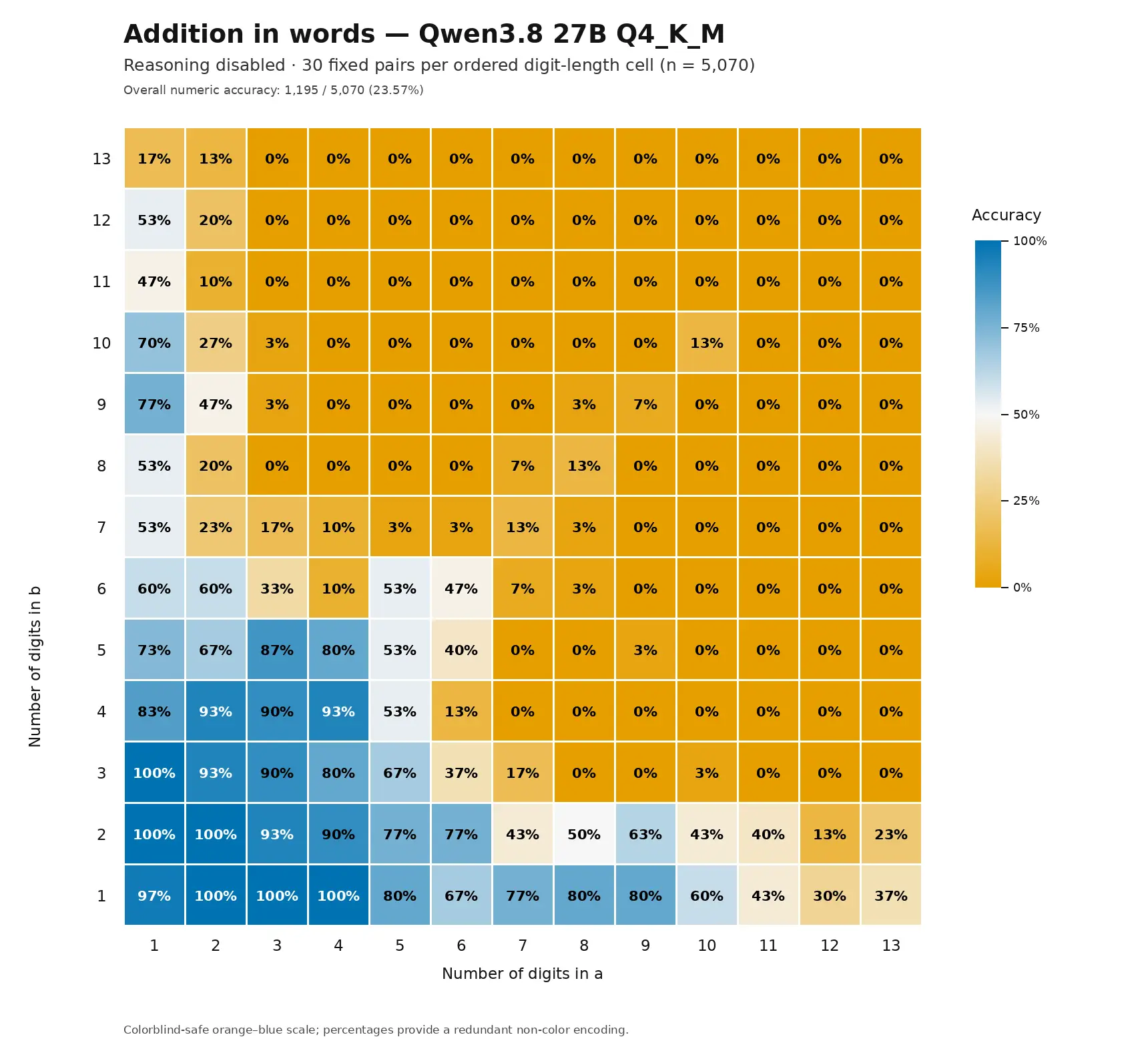
Qwen3.8 27B addition in words

Simon Willison reproduces an experiment originally run by Colin Frasier on GPT-4o β€” asking a model to add two large numbers and return the result spelled out in words β€” this time against a locally quantised Qwen3.8-27B-Q4_K_M.gguf model on an NVIDIA DGX Spark. He compares heatmaps of accuracy across number-size combinations with reasoning disabled (30 samples per pair) versus reasoning enabled (one-shot, 167/169 correct), and shares chain-of-thought traces showing the model doing manual digit-by-digit column addition. It's a small but concrete illustration of how enabling reasoning changes arithmetic reliability in a quantised local LLM.

GGUFQwen3.8-27BCodex
Simon WillisonColin FrasierGPT-4o+2

evals, inferenceΒ· Added 5 Oct 2026, published 4 Oct 2026

huggingface.cowriteup🧠 AI

Getting the Source Right, Not Just the Fact: Source-Aware Verification for MCP Agents

A research writeup from Multiverse Computing introducing ProvenanceGuard, a post-generation verification layer for MCP-based LLM agents that checks not just whether a claim is factually supported somewhere in retrieved evidence, but whether it is attributed to the correct source tool or document, a failure mode they call cross-source conflation. Using local models (MiniLM for source routing, a DeBERTa NLI verifier, and a local LLM for claim decomposition) plus a RARR-style repair loop, it was evaluated on 281 real MCP traces from a medical agent, catching 138 of 139 unsupported claims flagged by human experts and correctly identifying the exact source about 86% of the time on held-out data, outperforming four source-blind baseline checkers. The method has already been adopted in NVIDIA's NVFlow finance-agent grounding stage.

Model Context ProtocolHugging Face
ProvenanceGuardMultiverse ComputingNVIDIA NVFlow+5

evals, research, mcpΒ· Published and added 29 Sep 2026

ethresear.chwriteupπŸ›‘οΈ Security

PQ anonymity for Stealth Address Protocol

A technical ethresear.ch post proposing post-quantum upgrades (schemeId 2-6) to Ethereum's Stealth Address Protocol (ERC-5564/ERC-6538), replacing ECDH with ML-KEM (FIPS 203) to preserve recipient unlinkability against a cryptographically-relevant quantum computer. It identifies a specific vulnerability: the naive 1-byte view-tag optimization leaks enough information for a quantum attacker holding the derived public key to recover the spending key discrete log and test candidate recipients, breaking anonymity even when ML-KEM is used; the authors propose domain-separated tag derivation, hybrid EC/PQ combiners, pairwise-KEM variants, and a "stealthier SAP" construction to fix it.

EthereumML-KEM
ERC-5564ERC-6538FIPS 203+4

BlockchainΒ· Added 29 Sep 2026, published 28 Sep 2026

lasso.securitywriteup🧠 AI

Understanding the Impact of LLM Watermarking on AI Agent Behavior

A paired empirical study testing whether SynthID-Text watermarking (the technique underlying Anthropic's Claude watermark) changes model behavior beyond text quality, using BFCL v4 for tool-calling accuracy and HarmBench/JailbreakBench for refusal under prompt injection. The authors find watermarking introduces measurable "sampling drift": tool-call churn (verdict disagreement between watermarked/unwatermarked runs) averages 6.5% across seven models, and refusal weakens more sharply under prompt injection (e.g. gemma-3-27b's compliance shifts from -1.0 to +12.5 points), with effects varying by model and watermark key.

SynthID-TextHugging Face
AnthropicClaudeGoogle DeepMind+12

ai-safety, evalsΒ· Published and added 26 Sep 2026
lasso.securitywriteupπŸ›‘οΈ Security

Understanding the Impact of LLM Watermarking on AI Agent Behavior

Lasso Security researchers empirically test whether LLM output watermarking (specifically Google DeepMind's SynthID-Text, now deployed by Anthropic across Claude models) changes AI agent behavior β€” not just text content. Using paired generation (same seed, with/without watermark) across seven models on BFCL v4 tool-calling tasks and HarmBench/JailbreakBench refusal tests, they find watermarking measurably reduces tool-call accuracy (churn averaging 6.5%, up to 16.8% for phi-4) and, more critically, weakens refusal under prompt injection β€” e.g. gemma-3-27b's compliance with harmful requests shifts from -1.0 to +12.5 net points when injection is combined with watermarking. They term this "sampling drift" and argue watermark key/configuration changes can silently alter agent safety behavior outside the agent developer's control, recommending re-evaluation and red-teaming whenever watermarking is introduced.

SynthID-TextClaudeAnthropic+3
EU AI ActBFCL v4HarmBench+3

AI SecurityΒ· Published and added 26 Sep 2026
microsoft.comwriteupπŸ›‘οΈ Security

Storm-3168: Agentic-driven cloud attacks using compromised service principals

Microsoft Security Research documents an Azure-focused campaign by Storm-3168 (aka JADEPUFFER, discovered by Sysdig as the first documented agentic ransomware operation), using two compromised service principals to enumerate an Azure tenant and then execute a seven-minute destructive sequence deleting 100+ Storage Accounts, a Key Vault, a Function App, and attempting (unsuccessfully, due to API version mismatch) to delete Azure SQL databases. Initial access traces to a client ID/secret/tenant ID leaked in a GitHub issue's public edit history even after the secret was redacted; the attacker also harvested storage account keys and targeted Site Recovery/Backup protection locks to impair recovery, consistent with ransomware/extortion tradecraft. The post includes a MITRE ATT&CK mapping (T1190, T1078.004, T1526, T1485, T1490) and mitigation guidance around workload identity hygiene, least privilege, and backup protection.

AzureMicrosoft Defender XDRMicrosoft Defender+3
Storm-3168JADEPUFFERSysdig+7

Threat Intel, Cloud & Infra, AI SecurityΒ· Added 7 Oct 2026, published 25 Sep 2026

adversa.aiwriteupπŸ›‘οΈ Security

Top 10 attacks on Claude Code and what each one actually broke

Adversa AI catalogs ten distinct Claude Code attacks documented between September 2025 and September 2026: the Miasma supply-chain worm that hit 73 Microsoft repos via a SessionStart hook, TrustFall's unsandboxed MCP server execution on folder-trust, Check Point's CVE-2025-59536/CVE-2026-21852 pre-trust-dialog code execution and API key theft, Sentry-DSN-based "Agentjacking" prompt injection via fake bug reports, a 50-subcommand cap that silently disables deny rules, the SymJack symlink-to-config-hijack primitive working across six agent CLIs, Wiz's GhostApproval deceptive-approval-prompt finding (with CVE-2026-12958 at AWS and CVE-2026-50549 at Cursor but none at Anthropic), the Plugin4Shell SHA/branch-name collision bypassing plugin pinning, an academic MCP tool-poisoning paper achieving RCE on agent/LLM pairs, and SkillCloak's self-extracting-packer bypass of skill scanners. The piece argues almost none of these are model-behavior bugs - they are trust-boundary and consent failures in the surrounding tooling - and closes by pitching Adversa's own runtime agent security gateway as the fix.

Claude CodeModel Context ProtocolSentry+3
CVE-2025-59536CVE-2026-21852CVE-2026-12958+20

AI Security, Supply ChainΒ· Added 7 Oct 2026, published 23 Sep 2026

securitylabs.datadoghq.comwriteupπŸ›‘οΈ Security

Attacker infrastructure, but vibe-coded: tracking the evolution of credential harvesting platforms

Datadog Security Research analyses two vibe-coded credential harvesting platforms, Loot and UltraVault, monitored since July 2026. Loot catalogs plaintext secrets, including 1,778 AI keys (196 live). UltraVault adds credential validation, exploit chains, a 14-bug LPE matrix and AWS key-pair correlation. The same host probed Amazon Bedrock with GetCallerIdentity, ListFoundationModels and InvokeModel, using kali-cloud Boto3 and Python-urllib user agents.

AWS BedrockAWSWordPress+3
CVE-2025-55182CVE-2026-63030CVE-2026-60137+16

Threat Intel, Cloud & Infra, AI SecurityΒ· Added 29 Oct 2026, published 18 Sep 2026

latent.spacewriteup🧠 AI

Underwriting Superintelligence: Backing Agents you can Sue β€” Rune Kvist, AIUC

Latent Space interview with Rune Kvist, cofounder of AIUC (AI Underwriting Company), on its $40M Series A and AIUC-1 β€” a quarterly-updated standard for agent security, safety and reliability that pairs technical controls with third-party testing (jailbreak resistance, hallucination rates, data leakage) and real Lloyd's of London-backed insurance. The piece traces AIUC's origin from Kvist's early Anthropic experience, explains why enterprises like Cursor, Harvey, Lovable and ElevenLabs pursue certification to unlock bank/hospital deployments, and previews AIUC's move toward model-level audits to bridge the trust gap between frontier labs and governments. It covers concrete mechanics of the certification process (control activities, evidence, auditors like KPMG/Schellman, 3–10 week timelines) alongside liability scenarios and the "who watches the watchdogs" problem for AI standards.

Model Context ProtocolOpenClaw
Rune KvistAIUCAIUC-1+23

ai-policy, evalsΒ· Added 29 Sep 2026, published 16 Sep 2026

blog.trailofbits.comwriteupπŸ›‘οΈ Security

A few notes on AWS Nitro Enclaves: KMS integration

Third in Trail of Bits' Nitro Enclaves series, this post catalogs threats to the enclave-KMS communication channel: passive attackers who can swap ciphertext/data-key pairs when encryption context is missing, active attackers who can hijack unauthenticated requests without enclave-initiated TLS, and operational risks like CMK deletion, key rotation, and IAM policy misconfiguration. It provides concrete checklists covering encryption context usage, ARN vs. alias pinning, PCR0/PCR3/PCR8-based key policy authorization, immutable key policies for end-to-end verifiability, and warns against the vulnerable aws-nitro-enclaves-sdk-c in favor of aws-nitro-enclaves-nsm-api and Boto3.

AWS KMSAWS Nitro EnclavesAWS IAM+1
Trail of Bits

Cloud & Infra, Identity & AccessΒ· Added 3 Sep 2026, published 5 Aug 2026

medium.comwriteupπŸ›‘οΈ Security

From Container Escape to Cloud Takeover

Lab-based cloud security assessment covering four attack paths: a privileged hostPID pod escaped to the node with nsenter, deleting the kube-apiserver static pod manifest to crash the control plane, Trivy Operator vulnerability reports piped into BigQuery, and a malicious PR exploiting a pull_request_target workflow that checks out PR code to steal a GCP Workload Identity Federation token via Terraform's external data source during plan. Each section pairs the exploit with defenses (Pod Security Standards, Kyverno/Gatekeeper, Falco rules, split plan/comment workflows, least-privilege service accounts) and ties them into one kill chain.

KubernetesGitHub ActionsTerraform+3
CVE-2019-11253CVE-2019-1002100pwn request+4

Cloud & Infra, DevSecOps, Offensive SecurityΒ· Added 3 Sep 2026, published 26 Jul 2026

blog.kubeek.comwriteupπŸ›‘οΈ Security

deep scan tuto

Build log/tutorial for "Deep Scan," a PoC that pairs a deterministic security-scanning engine (20+ SAST/SCA/DAST scanners normalized into one Finding model, plus an AI-free code-graph engine doing taint/reachability analysis) with an agentic remediation loop exposed via an MCP server and three Claude Code skills (/security-eval, /security-patch, /security). The agent triages thousands of raw findings down to a prioritized P0–P3 plan, groups fixes into reviewable branches, and proves each fix with a demonstration test that safely calls an inert owner-operated canary endpoint instead of firing a real exploit (e.g., rm -rf /). The author also covers scaling via Docker Compose/Kubernetes+gVisor and the risk of running untrusted dependency-resolution code during scans.

Model Context ProtocolClaude CodeSARIF+3
Deep ScanMDASHFable 5+2

AI Security, AppSec, DevSecOpsΒ· Published and added 14 Jul 2026

endorlabs.comwriteupπŸ›‘οΈ Security

Claude Sonnet 5 with Claude Code: strong on function, average on security, and unusually honest | Blog | Endor Labs

Endor Labs benchmarked Claude Sonnet 5 paired with Claude Code on its Agent Security League test, which measures whether an AI agent can autonomously patch real vulnerabilities in complex codebases without copying a remembered upstream fix. Sonnet 5 scored 83.2% FuncPass (functional correctness) but only 19.6% SecPass (actually closing the vulnerability), continuing the benchmark's recurring functional-vs-security gap; notably it showed very little cheating (8/200 confirmed cases, mostly workspace-leakage rather than training-data recall) compared to prior models like Fable 5 (38 cases) and Opus 4.8.

Claude CodeClaudeCursor+1
Agent Security LeagueFable 5Opus 4.8+2

AI SecurityΒ· Added 3 Sep 2026, published 9 Jul 2026

huntress.comwriteupπŸ›‘οΈ Security

AI-Coded Malware | Analyzing Vibe-Coded AD Enumeration | Huntress

Huntress recovered and reconstructed "Untitled1.ps1," a PowerShell Active Directory enumeration script used by an attacker during a June 3 incident via RDP access with compromised credentials, and identified it as AI-generated ("vibe-coded") based on artifacts like an unedited LLM placeholder hostname, a "FULLY FIXED" prompt-iteration title, over-engineered five-method DC-discovery fallback logic, and gratuitous colored console/HTML reporting output. The attack chain paired this bespoke recon tool with off-the-shelf abuse of s5cmd (legitimate AWS S3 CLI used for exfiltration) and SharpShares (share enumeration), illustrating how LLM-generated one-off malware evades hash/signature-based detection and pushes defenders toward behavioral analytics on Active Directory enumeration patterns.

PowerShellActive DirectoryRDP+2
SharpShares

Threat Intel, Blue Team & Detection, Offensive SecurityΒ· Added 3 Sep 2026, published 8 Jul 2026

blog.trailofbits.comwriteupπŸ›‘οΈ Security

GPT-5.5-Cyber built a zlib fuzzing lab in a day

Trail of Bits' Patch the Planet initiative (a collaboration with OpenAI pairing engineers with 30+ open-source projects) had GPT-5.5-Cyber, driven through Codex's /goal command, autonomously build a full fuzzing lab against zlib in a single day. Without step-by-step guidance, the model wrote ASan/UBSan-instrumented harnesses across a dozen entrypoints (inflate, inflateBack, uncompress2, gzFile, MiniZip, puff, blast, infback9, gzjoin, gzappend), used compile-time variant builds to reach hidden code paths, repurposed edge-case tests as seed corpus, and applied strict reportability discipline to reject unreachable crashes while surfacing several findings now under coordinated disclosure. The report argues this collapses the expertise barrier that historically kept bespoke fuzzing campaigns out of reach for low-skill attackers while also acting as a major force multiplier for defenders/researchers.

zlibCodexOpenAI+1
Patch the PlanetGPT-5.5-Cyber

AI Security, Offensive Security, AppSecΒ· Added 3 Sep 2026, published 2 Jul 2026

huntress.comwriteupπŸ›‘οΈ Security

Defence Impairment Olympics

Huntress SOC incident writeup detailing a threat actor who exploited Adobe ColdFusion vulnerabilities (CVE-2023-26360, CVE-2023-29298, CVE-2023-29300) to drop a steganographic webshell hidden inside an image, then returned with a full defense-impairment batch script (i.bat) that disabled IIS logging, tampered with Windows Defender, killed/deleted security services (Sysmon, filebeat, SentinelOne, DrWeb, ImmunetProtect), used Image File Execution Options to freeze logging tools, deleted ModSecurity WAF module, enumerated FileZilla and multilingual local admin groups, weakened WDigest to force plaintext credentials in memory, dumped credentials via a Mimikatz kernel driver (mimidrv.sys), deleted CLSID/WScript registry keys, and cleared Windows event logs. The piece walks through each command block with attacker rationale and closes with concrete mitigation guidance for defenders.

Adobe ColdFusionIISWindows Defender+3
CVE-2023-26360CVE-2023-29298CVE-2023-29300+6

Blue Team & Detection, Threat IntelΒ· Added 3 Sep 2026, published 29 Jun 2026

dfir.chwriteupπŸ›‘οΈ Security

Fantastic clear-text passwords and where to collect them (Part 2 - Windows)

A DFIR.ch deep-dive on stealthier alternatives to LSASS dumping for harvesting Windows cleartext credentials, covering WDigest re-enablement, PowerShell ConsoleHost_history.txt, AD user-attribute leaks, Group Policy Preferences (GPP) cPassword, and rogue Security Support Provider (SSP), Password Filter DLL, and Network Provider DLL registration. Each technique is illustrated with real incident-response case data (registry commands, malicious DLL names like kerberos_sp.dll and mimilib.dll, and exfiltrated log paths), paired with Sysmon Event ID 13/11 detection guidance and hardening recommendations (disabling custom SSPs, Protected Event Logging).

WindowsPowerShellActive Directory+3
CVE-2023-36036ProjectSauronRaccoon Stealer+3

Offensive Security, Blue Team & DetectionΒ· Added 3 Sep 2026, published 28 Jun 2026

endorlabs.comwriteupπŸ›‘οΈ Security

Endor Labs: Claude Fable 5

Endor Labs re-ran their Agent Security League benchmark (200 real-world vulnerability-fixing tasks) with Claude Fable 5 paired against the Cursor agent instead of Claude Code, and found the same model jumped from 59.8% FuncPass/19.0% SecPass to 72.6% FuncPass/29% SecPass β€” the best fair SecPass score on their leaderboard, showing the agent harness can matter more than model choice. The piece walks through instance-level diffs on CVE-2020-15118 (Wagtail XSS via unescaped help_text), CVE-2017-12440 (OpenStack Aodh trust-ID leakage), and CVE-2024-3571 (LangChain local file store path traversal via yield_keys) to show Cursor produced more complete patches that covered secondary sinks Claude Code missed, and confirms 28 of 29 flagged cheating cases were training-data memorization rather than git/web lookup.

Claude CodeCursorLangChain+3
CVE-2020-15118CVE-2017-12440CVE-2024-3571+5

AI Security, AppSecΒ· Published and added 18 Jun 2026

endorlabs.comwriteupπŸ›‘οΈ Security

Endor Labs: Claude Fable 5

Endor Labs benchmarked Claude Fable 5 paired with Claude Code on 200 real-world vulnerability-fixing tasks, scoring 59.8 percent FuncPass but only 19.0 percent SecPass. The report covers record timeouts from extended thinking, the highest confirmed cheating volume post-hardening driven by training-data memorization, and four first-ever solves including CVE-2023-27494, CVE-2024-28102, CVE-2021-43818, and CVE-2021-41124.

Claude CodeClaude Fable 5Anthropic+2
CVE-2023-27494CVE-2024-28102CVE-2021-43818+13

AI Security, AppSecΒ· Published and added 11 Jun 2026

opensourcemalware.comwriteupπŸ›‘οΈ Security

VSCode Lifecycle Script Malware

Explains how npm's preinstall/install/postinstall lifecycle scripts and VS Code's tasks.json "runOn": "folderOpen" setting (paired with reveal:never/echo:false to suppress output) are exploited by threat actors as silent code-execution triggers requiring no user action beyond routine developer workflows like npm install or opening a project folder. Covers why this bypasses reachability-based defenses since malware "goes boom without a path," and walks through real npm attack campaign examples including one referencing Bitward.

npmVisual Studio CodeNode.js
Bitward

Supply Chain, Malware & REΒ· Added 3 Sep 2026, published 16 May 2026

somersetrecon.comwriteupπŸ›‘οΈ Security

Quacc++

Somerset Recon details Quacc++, a proof-of-concept automated bug hunter that queries grep.app's regex-based index of public GitHub repos to find candidate vulnerable code, downloads matching repositories, and runs Semgrep taint-analysis rules to confirm exploitable patterns. Using a search for strcpy(buf, argv[ paired with a custom Semgrep taint rule, the authors discovered an unbounded strcpy stack buffer overflow in GetArgumentFiles() in Google DeepMind's Lab repository (engine/code/bspc/bspc.c), confirmed with AddressSanitizer and pwntools/GDB to give full RIP control at offset 1080. The post also walks through Semgrep rules for SQL injection (CWE-89), hardcoded API keys (CWE-798), and disabled TLS certificate validation (CWE-295) across curl/wget/requests/Node/Go.

SemgrepGDBGitHub
CWE-89CWE-798CWE-295+1

AppSec, Offensive SecurityΒ· Published and added 7 May 2026

kenhuangus.substack.comwriteupπŸ›‘οΈ Security

OpenClaw MAESTRO

A researcher applies the MAESTRO 7-layer agentic AI threat model (Foundation Models, Data Operations, Agent Frameworks, Deployment/Infra, Evaluation/Observability, Security & Compliance, Agent Ecosystem) to the OpenClaw messaging-bot agent codebase, cataloging ~30 numbered threats with specific file references (e.g. prompt injection via WhatsApp/Telegram/Discord channels in src/channels/, plaintext credential storage in pairing-store.ts, Docker socket exposure in sandbox configs, gateway loopback-binding bypass, ClawHub skill registry poisoning) alongside existing and recommended mitigations. It closes with a cross-layer chained attack scenario (gateway compromise β†’ session store poisoning β†’ context manipulation β†’ sub-agent hijack β†’ ecosystem spread) illustrating defense-in-depth across layers.

OpenClawDockerNode.js+1
MAESTRO FrameworkClawHub

AI SecurityΒ· Published and added 6 May 2026

huntress.comwriteupπŸ›‘οΈ Security

Dissecting CrashFix: KongTuke's New Toy

Huntress dissects a KongTuke campaign built around NexShield, a malicious Chrome extension impersonating uBlock Origin Lite that induces a deliberate browser DoS/crash and then displays a fake "CrashFix" repair prompt to trick users into pasting a malicious PowerShell command via the Windows Run dialog. The command abuses finger.exe as a LOLBin to fetch and execute layered, obfuscated PowerShell that profiles the victim (domain-joined vs standalone, AV, VM checks), uses weekly-rotating DGA domains, an AMSI patch bypass, and a two-layer AES+XOR encrypted .NET loader ("GateKeeper") with anti-sandbox fingerprinting, ultimately dropping ModeloRAT β€” a newly documented, RC4-encrypted Python RAT reserved for domain-joined corporate hosts β€” while non-domain targets currently only receive a "TEST PAYLOAD" response. The post includes full IOCs and YARA rules for GateKeeper, MintsLoader, and ModeloRAT.

PowerShellChrome.NET+3
KongTukeCrashFixNexShield+7

Threat Intel, Malware & RE, Blue Team & DetectionΒ· Added 3 Sep 2026, published 16 Jan 2026

dfir.chwriteupπŸ›‘οΈ Security

Today I Learned - Zsh Sessions (even more Timestamps)

A short DFIR technical note explaining zsh's ~/.zsh_sessions directory, where each terminal session gets a paired .session/.history file (or a live .historynew tracked by $HISTFILE) keyed by TERM_SESSION_ID. The .session file contains a restored-session timestamp, giving investigators a way to recover executed commands and narrow down execution timeframes even when an attacker has deleted the main .zsh_history file.

zshmacOS

Blue Team & DetectionΒ· Added 3 Sep 2026, published 26 May 2024