Skip to content

31 results for β€œSol”

What you seeeverything
cisa.govadvisoryπŸ›‘οΈ Security

Mitsubishi Electric and Mitsubishi Electric Iconics Digital Solutions GENESIS, GENESIS64, ICONICS Suite, Hyper Historian, AnalytiX, MobileHMI, IoTWorX, MC Works64, GENESIS32 and BizViz

CISA advisory ICSA-26-300-02 covers four vulnerabilities in Mitsubishi Electric and Mitsubishi Electric Iconics Digital Solutions GENESIS64, ICONICS Suite, Hyper Historian, AnalytiX, MobileHMI, IoTWorX, MC Works64, GENESIS32 and BizViz. CVE-2023-4863 (CWE-787 out-of-bounds write) allows code execution; CVE-2026-16436 and CVE-2026-16437 allow authentication bypass; CVE-2026-16438 allows arbitrary operations. Fixes are 10.97.3, 10.98 and GENESIS 11.04. MC Works64, GENESIS32 and BizViz are affected in all versions, and MC Works64 has no fix planned. Mitigations include removing the ClientChallengeTable.dat or SecurityChallenges.dat file contents. The fetched text was truncated, so later content is not covered.

GENESIS64ICONICS SuiteHyper Historian+3
CVE-2023-4863CVE-2026-16436CVE-2026-16437+6

Offensive Security, Identity & AccessΒ· Added 29 Oct 2026, published 26 Oct 2026

soliditylang.orgadvisoryπŸ›‘οΈ Security

Yul Optimizer Knowledge Base Stale Bookkeeping Bug

Solidity advisory on a Yul optimizer bug in the KnowledgeBase, present in versions 0.8.19 to 0.8.37 and fixed in 0.8.38. Stale cached address offsets let LoadResolver and EqualStoreEliminator treat coinciding memory or storage slots as distinct, so loads return outdated values or needed stores are dropped. It includes a pure-Solidity reproducer for --via-ir, a Sourcify scan with no differing bytecode, and checks for deployed contracts. Rated low severity.

SolidityYulSourcify+1
Ethereum Foundation bug bountyDaniel BoyeSurya Prakash Akula+4

AppSecΒ· Published and added 22 Oct 2026

x.comadvisoryπŸ›‘οΈ Security

lee1981 (@lee1981b) on X

CVE-2026-106931 is an OS command injection (CWE-78) in the statistics processing of EG Secure Solutions SiteGuard Server Edition, a host-based WAF. It can give root or SYSTEM command execution. The vendor and JVN confirm exploitation on 14 October 2026. The post lists fixed builds (Ver8.00 Update 5, Ver7.00 Update 6 on FreeBSD), the IIS exclusion, the workaround of disabling statistics, and a SOC trail starting with diagnostic preservation before patching.

SiteGuard Server EditionApache HTTP Servernginx+3
CVE-2026-106931CWE-78CISA KEV+5

Blue Team & Detection, AppSecΒ· Added 21 Oct 2026, published 19 Oct 2026

x.comadvisoryπŸ›‘οΈ Security

β™«Whyβ™₯Notβ™ͺ (@Python_s_) on X

Alert summarizing XBOW's disclosure of a three-stage Chrome for Windows exploit chain: V8 Maglev memory corruption (CVE-2026-85045), Animated WebP decoder memory corruption (Chromium issue 548509153), then a Crashpad sandbox escape (CVE-2026-78952). Loading a crafted page was enough; no click or download needed. Human researchers working with GPT-5.6 Sol agents built it in six days, Google paid $250,000, all three bugs are fixed, and no in-the-wild exploitation is confirmed. It advises updating Chrome and restarting, and gives forensic triage pointers.

ChromeV8Crashpad+3
CVE-2026-85045CVE-2026-78952Chromium issue 548509153+2

Offensive Security, AI Security, Threat IntelΒ· Added 15 Oct 2026, published 14 Oct 2026

deploymentsafety.openai.comadvisory🧠 AI

GPT-6 Sol and GPT-6 Luna: October 2026 update

OpenAI's system card accompanying the October 2026 ChatGPT rollout of GPT-6 Sol and GPT-6 Luna, replacing GPT-5.6 Sol and Luna for free and paid users (Codex and ChatGPT Work retain the September versions). It details Preparedness Framework results (High capability in Cybersecurity and Biological/Chemical domains, below High in AI Self-Improvement), multiturn jailbreak and GPT-Red prompt-injection robustness, alignment evaluations on respecting Auto-review/warnings and deceptive disclosure, hallucination rates, and health/mental-health benchmarks (HealthBench, HealthBench Professional, MentalHealthBench), alongside some noted regressions in self-harm, sexual content, gore and teen (U18) safety categories.

ChatGPTCodexOpenAI API
GPT-6 SolGPT-6 LunaGPT-5.6 Sol+11

ai-safety, evals, modelsΒ· Published and added 7 Oct 2026

soliditylang.orgadvisoryπŸ›‘οΈ Security

Solidity 0.8.37 Release Announcement

Official release notes for Solidity v0.8.37 detailing three bug-bounty-reported compiler bugs: memory `delete` on a bytes-array element zeroing a full 32-byte word instead of one byte (corrupting adjacent memory, evmasm pipeline, up to v0.8.36); a stack-to-memory spill-slot collision under mutual recursion in the IR pipeline (`--via-ir`, v0.7.2–v0.8.36) that silently overwrites live variables; and named custom-error arguments in `require(...)` being ABI-encoded in call-site order rather than declaration order, so revert data misrepresents error values (v0.8.36 introduced but only affects revert data). Also covers two non-security miscompilations (uninitialized packed function pointers, checked/unchecked constant reuse), a new SSA-CFG stack shuffler, Amsterdam EVM's SLOTNUM opcode support, and removal/deprecation of LSP mode, Generic Solidity, and several EVM version pragmas.

SolidityEthereum
shaheenfazimNg Sze HonCarl (Cantina Security)+3

BlockchainΒ· Added 29 Sep 2026

orca.securityadvisoryπŸ›‘οΈ Security

Critical Citrix NetScaler Zero-Days Under Active Exploitation

Analysis of two CVSS 9.5 Citrix NetScaler ADC/Gateway zero-days, CVE-2026-88771 (unauthenticated RCE through improper input validation in the management interface, affecting default deployments) and CVE-2026-88772 (memory overflow in DTLS, enabled by default on VPN virtual servers). It lists six more high-severity flaws patched in advisory CTX697096, the affected and fixed versions, and the CISA KEV listing with a federal deadline of 2026-09-30. It advises checking for compromise before patching, since patching can destroy forensic evidence, and gives response steps: isolate, revoke credentials, rebuild firmware, rotate keys and certificates.

Citrix NetScalerVPN
CVE-2026-88771CVE-2026-88772CVE-2026-88773+7

Cloud & Infra, Threat IntelΒ· Published and added 29 Sep 2026

deploymentsafety.openai.comadvisory🧠 AI

Addendum to GPT-6 Astra System Card: GPT-6.1 Sol

OpenAI's system card addendum for GPT-6.1 Sol, a fast and affordable model in the GPT-6 family with capabilities comparable to GPT-6 Astra, reports Preparedness Framework determinations (Critical cybersecurity, High biological and chemical capability, sub-High AI self-improvement) and the same safeguards stack as Astra. It details extensive safety and alignment evaluations including safe-completion benchmarks, jailbreak and prompt-injection robustness, HealthBench and MentalHealthBench scores, deceptive-behavior and monitor-evasion tests, and chain-of-thought monitorability and controllability results, comparing GPT-6.1 Sol against GPT-6 Astra, GPT-6 Sol, GPT-6 Luna, and the GPT-5.6 series.

Codex
GPT-6.1 SolGPT-6 AstraGPT-6 Sol+17

ai-safety, evalsΒ· Added 7 Oct 2026, published 29 Sep 2026

thehackernews.comadvisoryπŸ›‘οΈ Security

Attackers Exploit WordPress CVE-2026-87902 Within Hours of Patch

CVE-2026-87902 (CVSS 9.2) is an unauthenticated WordPress vulnerability where get_page_template() page-template resolution can be tricked into including an attacker-chosen local .php file outside the active theme directory, leading to RCE when a theme has a page-* top-level directory and a readable local PHP file (e.g. pearcmd.php) exists. Attackers began exploiting it within hours of the September 22, 2026 patch, including pearcmd.php to write PHP web shells to /tmp and /var/tmp and pulling a GitHub-hosted uploader payload, per honeypot telemetry from Previdian and Patchstack with tracked source IPs. CISA added the flaw to its KEV catalog on September 25, 2026, mandating FCEB remediation by September 28; fixed in WordPress 7.1.2, 7.0.6, 6.9.9, and 6.8.10.

WordPressPHPGitHub
CVE-2026-87902CISA KEVpearcmd.php+7

AppSec, Threat IntelΒ· Added 26 Sep 2026

vuldb.comadvisoryπŸ›‘οΈ Security

CVE-2026-85661 in excel-mcp-server

CVE-2026-85661 affects excel-mcp-server 0.1.8. In stdio mode with EXCEL_FILES_PATH unset, the server does not confine file paths, so a client can pass relative or absolute paths to the read and write tools. That gives arbitrary file read and write with the privileges of the server process. The page classifies it as CWE-22 (ATT&CK T1083) and recommends canonical path checks against a base directory, making EXCEL_FILES_PATH mandatory, and running with least privilege.

excel-mcp-serverModel Context Protocol
CVE-2026-85661CWE-22T1083+1

AppSec, AI SecurityΒ· Added 26 Sep 2026

nvd.nist.govadvisoryπŸ›‘οΈ Security

CVE-2026-65695: Office-Word-MCP-Server through 1

CVE-2026-65695 is a path traversal vulnerability (CWE-22, CVSS 4.0 7.6 HIGH) in Office-Word-MCP-Server through version 1.1.11, an MCP server that exposes Word document manipulation tools to LLM agents. Attackers who can influence the filename argument can supply absolute paths or ../ sequences to document open/save operations, bypassing the check_file_writeable and ensure_docx_extension helpers (which do no base-directory confinement or realpath validation) to read or overwrite arbitrary .docx files outside the intended working directory.

Model Context ProtocolNVDCVSS
CVE-2026-65695CWE-22path traversal+3

AI Security, AppSecΒ· Added 26 Sep 2026

nvd.nist.govadvisoryπŸ›‘οΈ Security

CVE-2026-16498: The terraform-mcp-server before version 1

CVE-2026-16498 is a critical (CVSS 3.1: 10.0) exposure-of-sensitive-information flaw (CWE-488) in HashiCorp's terraform-mcp-server prior to version 1.1.0. In stateless streamable-HTTP transport mode, one user's Terraform API token could be reused to execute tool calls on behalf of a different, subsequent user, breaking tenant isolation in shared MCP server deployments. Fixed in terraform-mcp-server 1.1.0; further detail is tracked in HashiCorp's HCSEC-2026-23 advisory.

Model Context ProtocolTerraform
CVE-2026-16498CWE-488

AI Security, AppSec, Identity & AccessΒ· Added 26 Sep 2026

github.comadvisoryπŸ›‘οΈ Security

Unauthenticated Administrator takeover exfiltrated via the MCP

GHSA advisory for SiYuan v3.7.1 (CVE-2026-66012) describing how the kernel's POST /mcp route registers 31 MCP tools β€” including a file tool with full read/write/delete/rename/copy over the workspace β€” gated only by CheckAuth with no admin or read-only check. When the Publish server runs in anonymous mode (a documented configuration for public docs sites), the Publish reverse proxy attaches an anonymous RoleReader JWT to every proxied request, letting an unauthenticated attacker reach /mcp, exfiltrate accessAuthCode/api.token/cookieKey from conf.json, escalate to Administrator, and plant a malicious Electron plugin (nodeIntegration:true, contextIsolation:false) for RCE on the desktop client. Includes a full working PoC and remediation (CheckAdminRole gate, proxy path allowlist, restricting the file tool).

Model Context ProtocolDockerElectron
CVE-2026-66012CWE-862GHSA-jqwg-75qf-vmf9+6

AppSecΒ· Added 26 Sep 2026

github.comadvisoryπŸ›‘οΈ Security

DNS TOCTOU race condition causes SSRF protection bypass (`/admin/gateways/test`)

GHSA-9hgc-g3w5-67cm details a DNS TOCTOU race in IBM mcp-context-forge's /admin/gateways/test endpoint: validate_gateway_test_url() resolves and vets a hostname against private/cloud-metadata IP ranges, but the actual request is made with httpx (via ResilientHttpClient), which independently re-resolves DNS at connection time with no IP pinning. An attacker with gateways.read permission can exploit DNS rebinding (short-TTL record flipping from a public IP to 169.254.169.254) to bypass SSRF protections and reach cloud instance metadata, exfiltrating IAM credentials where IMDSv1 is enabled. The advisory notes the codebase already acknowledges the gap in two comments and a tracked TODO (ICACF-15), and recommends pinning the validated IP into the connection.

Model Context ProtocolPythoncURL
SSRFGHSA-9hgc-g3w5-67cmGHSA-m8rv-5m6m-32ff+3

AppSecΒ· Added 26 Sep 2026

github.comadvisoryπŸ›‘οΈ Security

Flowise MCP Security Bypass Enables RCE

GHSA advisory detailing three bypasses in Flowise's Custom MCP Server security controls (validateCommandFlags and validateArgsForLocalFileAccess in packages/components/nodes/tools/MCP/core.ts) that combine to achieve remote code execution: an unblocked `docker build` subcommand that pulls and runs a remote Dockerfile, a missing `--yes` long-flag alias on the npx blocklist (only `-y` was blocked) enabling arbitrary npm package execution, and a Unix absolute-path regex that fails to catch double-leading-slash paths (`//root/...`), allowing `node` to execute an uploaded local file. Any authenticated Flowise user (or an API key with chatflow view/update rights) can chain these to fully compromise the host via a prediction API call.

FlowiseDockerNode.js+2
validateCommandFlagsvalidateArgsForLocalFileAccess

AI Security, AppSecΒ· Added 26 Sep 2026

wordpress.orgadvisoryπŸ›‘οΈ Security

WordPress 7.1.2 Release (CVE-2026-87902 path-traversal RCE fix)

WordPress 7.1.2 patches CVE-2026-87902 (GHSA-7hp8-65ch-5whp), a critical unauthenticated path-traversal flaw where page template resolution can be manipulated to include an attacker-chosen readable local PHP file outside the active theme directory. Under certain server and active-theme preconditions this local file inclusion escalates to remote code execution. The security fix was backported to all WordPress branches back to 4.7; discovery credited to researcher Robert Ressl.

WordPressPHP
CVE-2026-87902GHSA-7hp8-65ch-5whppath traversal+2

AppSecΒ· Added 28 Sep 2026, published 22 Sep 2026

soliditylang.orgadvisoryπŸ›‘οΈ Security

Memory Byte Array Element Delete Clears Whole Word Bug

The Solidity team disclosed a code-generator bug (reported by Shaheen Fazim via the Ethereum Foundation bug bounty program) where `delete b[i]` on a bytes/string element located in memory incorrectly writes a full 32-byte zero word instead of a single byte, corrupting up to 31 subsequent bytes β€” either later elements of the same array or, for elements near the array's end, adjacent memory allocations like other variables. The bug affects only the default evmasm pipeline (not the IR pipeline via --via-ir) in all versions up to and including 0.8.36, is fixed in 0.8.37, and the equivalent assignment `b[i] = 0` is unaffected and serves as a workaround. A Sourcify scan of ~870,000 verified compilations found the triggering pattern in only two functions, neither actually exploitable in practice.

SolidityEthereum
Shaheen FazimEthereum Foundation bug bounty programSourcify

BlockchainΒ· Added 29 Sep 2026, published 10 Sep 2026

soliditylang.orgadvisoryπŸ›‘οΈ Security

Spill Slot Collision Across Mutual Recursion Bug

The Solidity team disclosed a compiler bug (fixed in Solidity 0.8.37) where the IR pipeline's stack-to-memory spill mechanism can assign the same fixed memory offset ("spill slot") to two simultaneously-live local variables when a contract's call graph contains mutual recursion, silently corrupting values without any revert or warning. The bug requires --via-ir compilation plus a narrow set of conditions (mutual recursion, >16 live locals in reachable non-recursive functions, a variable read back after the recursive call) and affects Solidity 0.7.2 through 0.8.36; a rescan of ~319,000 Sourcify-verified contracts found no affected deployments. The writeup includes full technical detail on the buggy depth-first slot allocator, an annotated PoC contract reproducing the silent overwrite, and the strongly-connected-component fix.

SolidityEthereum
Ng Sze HonEthereum Foundation bug bounty programUnsound Spill In Mutual Recursion Bug+1

BlockchainΒ· Added 29 Sep 2026, published 10 Sep 2026

soliditylang.orgadvisoryπŸ›‘οΈ Security

Solidity 0.8.37 Release Announcement

Solidity 0.8.37 release notes disclosing three EF bug-bounty-reported compiler bugs with security implications: deleting an element of a memory bytes array (or converted string) zeroed the full 32-byte word instead of one byte, corrupting adjacent data in the evmasm pipeline (all versions ≀0.8.36); a stack-to-memory spill-slot collision in mutually recursive functions under --via-ir silently overwrote live variables (0.7.2–0.8.36); and require() with a custom error using named arguments encoded parameters in call-site rather than declaration order, producing structurally valid but semantically wrong revert data. The release also adds two non-security miscompilation fixes, an experimental planning-based stack shuffler for the SSA CFG backend, support for the Amsterdam EVM's SLOTNUM opcode (EIP-7843), and removes/deprecates several experimental features.

SolidityEthereum
shaheenfazimNg Sze HonCantina Security+2

BlockchainΒ· Added 29 Sep 2026, published 10 Sep 2026

soliditylang.orgadvisoryπŸ›‘οΈ Security

Misordered Named Parameters in require with Custom Errors Bug

The Solidity team discloses a bug (reported by Cantina Security via the Ethereum Foundation bug bounty) where the IR-based (--via-ir) code generator pushed named custom-error arguments in call-site order instead of declaration order before ABI-encoding, corrupting revert data for require(condition, ErrorName({...})) calls with reordered named parameters. Introduced in Solidity 0.8.26 and fixed in 0.8.37, the bug produces silently swapped or type-confused values in decoded revert data with no compiler warning, and can cause misaligned encoding in multi-slot-argument cases that either reverts with undecodable data or produces a plausible-but-wrong payload - a real concern for standards like ERC-3668 (CCIP Read) that treat revert data as part of the contract interface. Severity was rated "very low" since the affected transaction is already reverting and there is no attacker-controlled exploitation path, but audits of via-ir contracts using named custom-error arguments should check for it.

SolidityEthereum
Cantina SecurityEthereum FoundationERC-3668+1

BlockchainΒ· Added 29 Sep 2026, published 10 Sep 2026

rapid7.comadvisoryπŸ›‘οΈ Security

Patch Tuesday - September 2026

Rapid7's September 2026 Patch Tuesday analysis: Microsoft published 974 own-product CVEs (723 in Windows), 999 in total with non-Microsoft fixes, the most it has ever published in one day. Two zero-days are exploited in the wild: CVE-2026-85880 (Windows ALPC elevation of privilege to SYSTEM via out-of-bounds write; not patched on Server 2025 or Windows 11) and CVE-2026-81963 (Windows Update Stack elevation of privilege via improper link resolution). It also flags Microsoft's missing Edge advisory for the exploited Chromium V8 zero-day CVE-2026-85046, lists upcoming end-of-support dates for Windows 11 24H2, Server 2012/2012 R2, Office 2021 and Exchange 2016/2019, and includes per-product CVE tables with exploitation-likelihood ratings. Only the first part of the page was available, so the later tables are not covered.

WindowsMicrosoft EdgeChrome+3
CVE-2026-85880CVE-2026-81963CVE-2026-85046+35

Blue Team & Detection, Offensive SecurityΒ· Added 7 Oct 2026, published 8 Sep 2026

deploymentsafety.openai.comadvisory🧠 AI

GPT-6 Astra System Card

OpenAI's system card for GPT-6 Astra, the first model to reach "Critical" cybersecurity capability under OpenAI's Preparedness Framework, detailing new safeguards (checkpoint encryption, universal CoT monitoring, blocking alignment evaluations) and a suite of alignment evaluations measuring metagaming, oversight gaming, honeypot exploitation (ExploitGym, tied to a Hugging Face incident), and respect for restrictions like Auto-review. It also reports comparative robustness results against GPT-5.6 Sol on static/multiturn jailbreaks, Gray Swan indirect-prompt-injection benchmarks, HealthBench/HealthBench Professional, under-18 safety evaluations, and hallucination rates, while flagging that Astra's chain-of-thought monitorability has decreased under adversarial conditions. Appendices (added later) cover related models GPT-6 Sol, GPT-6 Luna, and an agent product called "dots" built on Astra. Note: analysis is based on the first 40,000 of 222,175 characters, so later sections (deployment simulations, full appendices) are not reflected here.

CodexChatGPTHugging Face
CVE-2023-6702CVE-2024-0517GPT-6 Astra+11

ai-safety, evals, modelsΒ· Added 7 Oct 2026, published 3 Sep 2026

endorlabs.comadvisoryπŸ›‘οΈ Security

We discovered a critical vulnerability in isolated-vm a sandbox that is widely used in popular AI-related projects | Blog | Endor Labs

Endor Labs researchers found a critical type confusion vulnerability (GHSA-864f-rcv7-6rh4) in isolated-vm, the Node.js library used to run untrusted JavaScript inside a separate V8 Isolate. A TOCTOU bug in ExternalCopy's transferList handling β€” where a malicious getter returns a valid ArrayBuffer on a validating pass but an attacker-controlled value on the unchecked second pass β€” lets guest code escalate from a controlled-address crash to full host control-flow hijack, given only a single ivm.Reference. The bug is fixed in isolated-vm 7.0.1/6.2.0; affected downstream users include n8n, Activepieces, Mastra, Budibase, Sim.ai, Directus, and Rocket.Chat, which rely on isolated-vm to sandbox user- and model-generated code.

isolated-vmV8Node.js+3
GHSA-864f-rcv7-6rh4Marcel LaverdetSandDriller+1

AppSec, Offensive Security, AI SecurityΒ· Added 3 Sep 2026, published 20 Aug 2026

deploymentsafety.openai.comadvisory🧠 AI

GPT-5.6 β€” August Updates

OpenAI system card update for the August 2026 release of GPT-5.6 Sol and GPT-5.6 Luna in ChatGPT, reporting safety eval results for disallowed content, new under-18 safety benchmarks, jailbreak and prompt injection robustness, HealthBench scores, and hallucination rates compared to GPT-5.5 Instant. It also reports Preparedness Framework capability testing, rating both models High capability in Biological/Chemical and Cybersecurity domains using evals such as SecureBio virology troubleshooting, ProtocolQA, protein binding prediction, CTF challenges, CVE-Bench, and cyber range exercises, while staying below Critical and below High for AI self-improvement.

AlphaFold
GPT-5.6 SolGPT-5.6 LunaGPT-5.5+12

ai-safety, evalsΒ· Added 7 Oct 2026, published 6 Aug 2026

socket.devadvisoryπŸ›‘οΈ Security

Socket: Free Certified Patches for Nuxt Security Vulnerabilities

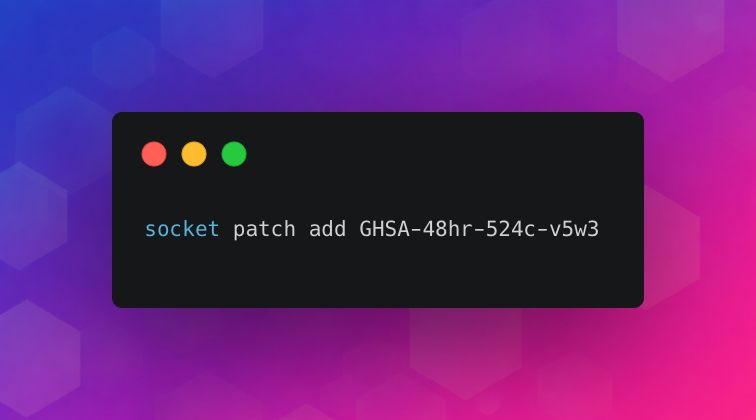
Nuxt 4.5.1/3.21.10 and @nuxt/devtools 3.3.1 patch eight GitHub Security Advisories, the most severe being GHSA-9473-5f9j-94wq, a server-side RCE via server island props reaching Vue's dynamic component resolution when vue.runtimeCompiler is enabled, plus a related unauthorized component instantiation bug (GHSA-48hr-524c-v5w3), a route-rule authz bypass, DoS issues, cross-user payload cache disclosure, and a critical dev-only RCE in Nuxt DevTools. Socket released free Certified Patches for the two highest-severity issues (installable via `socket patch add`) as an interim fix for teams that can't immediately upgrade, and is preparing patches for the rest.

NuxtVue.jsSocket
GHSA-9473-5f9j-94wqGHSA-48hr-524c-v5w3

AppSec, Supply ChainΒ· Published and added 28 Jul 2026

github.comadvisoryπŸ›‘οΈ Security

AI Security Briefing

This GHSA advisory documents CVE-2026-27826, a DNS-rebinding TOCTOU bypass of the SSRF fix in the MCP Atlassian server (mcp-atlassian PyPI package). The prior patch (GHSA-7r34-79r5-rcc9) added validate_url_for_ssrf, which resolves the attacker-controlled X-Atlassian-{Jira,Confluence}-Url header host once at middleware time but discards the resolved IP; the actual outbound request later re-resolves the raw hostname at connect time with no IP pinning, so a rebinding DNS name can pass validation with a public IP and then connect to 169.254.169.254 or an internal address, restoring unauthenticated SSRF to cloud metadata/internal services even on the 'patched' build. The advisory includes an executed PoC against the real urls.py, exact code locations (utils/urls.py, servers/main.py, servers/dependencies.py), and remediation via a custom resolver/cached-getaddrinfo adapter to pin the validated IP.

Model Context ProtocolPyPIPython+1
CVE-2026-27826GHSA-489g-7rxv-6c8qGHSA-7r34-79r5-rcc9+3

AppSec, AI SecurityΒ· Published and added 13 Jul 2026

soliditylang.orgadvisoryπŸ›‘οΈ Security

Solidity 0.8.36 Release Announcement

Solidity 0.8.36 release notes disclose two medium-severity compiler bugs: a Yul optimizer call-cycle detection flaw that let stack-to-memory spilling be wrongly applied to mutually recursive functions, causing separate invocations to share and overwrite the same memory slots; and a storage-layout warning bug that could reverse the AST's linearizedBaseContracts annotation when a contract's variables sit very close to the end of storage, corrupting constructor/state-variable initialization order. The release also adds experimental stack-to-memory spilling to the new SSA-form CFG code generator (behind --experimental --via-ssa-cfg) and removes the now-obsolete experimental EOF backend after EOF's rejection from the Fusaka upgrade.

Solidity
Unsound Spill In Mutual Recursion BugInheritance Order Reversal On Storage End Warning Bug

BlockchainΒ· Added 29 Sep 2026, published 9 Jul 2026

soliditylang.orgadvisoryπŸ›‘οΈ Security

Inheritance Order Reversal On Storage End Warning Bug

The Solidity team discloses a medium-severity compiler bug present from Solidity 0.8.29 through 0.8.35 (fixed in 0.8.36): the code that emits Warning 3495 (custom storage layout too close to storage end) uses ranges-v3's actions::reverse instead of views::reverse, permanently mutating the linearizedBaseContracts AST annotation instead of only reading a reversed copy. Because that annotation drives inheritance-order decisions throughout analysis and codegen, affected contracts can get reversed constructor execution order, wrong super/virtual-function and virtual-modifier resolution, and incorrect fallback/receive dispatch β€” either silently miscompiling or triggering internal compiler errors. Exploitation requires a contract using both inheritance and a `layout at` clause landing within the last 2^64 storage slots, a pattern the team found no real-world evidence of via GitHub and Sourcify scans.

Solidity
Warning 3495ranges-v3actions::reverse+4

BlockchainΒ· Added 29 Sep 2026, published 9 Jul 2026

socket.devadvisoryπŸ›‘οΈ Security

Socket: Critical vm2 Sandbox Escape

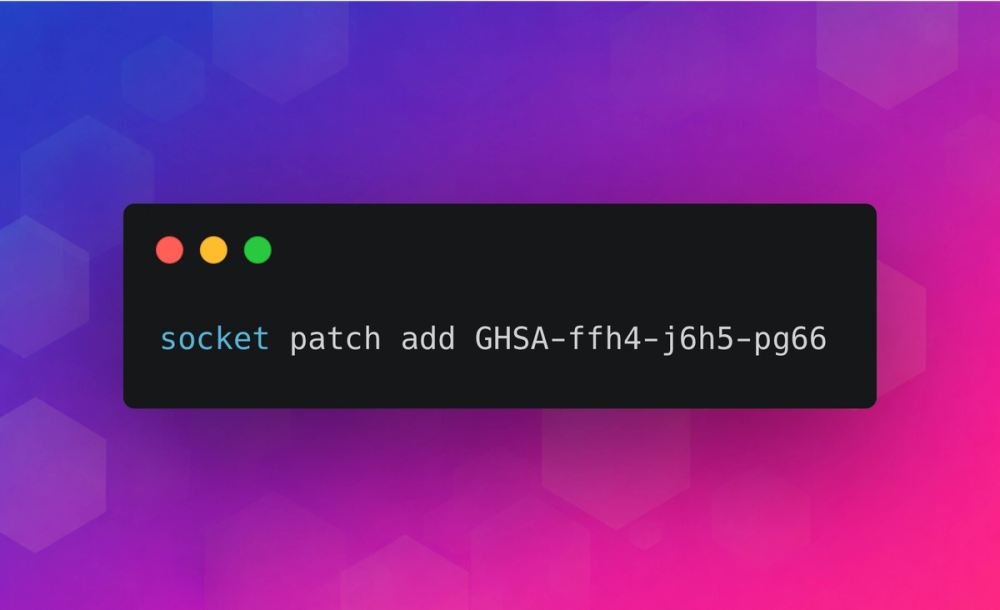
Socket disclosed that a critical sandbox escape in vm2 (GHSA-ffh4-j6h5-pg66, CVE-2026-26956), which lets attacker-controlled JavaScript passed to VM.run() escape isolation and execute arbitrary OS commands via WebAssembly.JSTag, affects far more than the officially listed vm2 3.10.4/Node 25 scope. Socket's testing showed 66 vm2 releases from 0.2.2 through 3.10.4 are exploitable on Node.js 24.15.0, and any Node runtime exposing WebAssembly.JSTag is vulnerable, meaning downstream SCA/scanner tools using the narrower advisory data would miss real exposure. Socket is releasing free Certified Patches (via `socket patch add`) for the issue alongside upgrade guidance to vm2 3.10.5+.

Node.jsSocket
CVE-2026-26956GHSA-ffh4-j6h5-pg66

Supply Chain, AppSecΒ· Published and added 8 May 2026

ubuntu.comadvisoryπŸ›‘οΈ Security

Fixes available for CVE-2026-31431 (Copy Fail) Linux Kernel Local Privilege Escalation Vulnerability | Ubuntu

Ubuntu Security Team advisory for CVE-2026-31431 ("Copy Fail"), a HIGH severity (CVSS 7.8) local privilege escalation vulnerability in the Linux kernel's algif_aead cryptographic acceleration module, affecting all Ubuntu releases before 26.04 (Resolute). A public exploit lets a local user escalate to root on non-containerized hosts, while container deployments may face escape scenarios (no PoC yet for that path); the advisory covers the temporary kmod-based module-disabling mitigation, the permanent kernel patch, and manual remediation steps via modprobe.d.

Linux kernelUbuntu
CVE-2026-31431algif_aead

Cloud & InfraΒ· Added 20 May 2026, published 30 Apr 2026

Showing 30 of 31

Show more