Skip to content

32 results for β€œSol”

What you seeeverything
x.comthread🧠 AI

🚨 AI News | TestingCatalog (@testingcatalog) on X

Drex-Max v1 is an open-source multimodal decision model from Nace AI. It takes a document and a question with a fixed set of answers, such as which team should handle a support ticket, and returns a probability for each answer. It runs fully locally on Apple Silicon M4 and M5 Macs, with cloud inference at console.nace.ai and weights on Hugging Face. The post gives no benchmarks or model size.

Hugging FacemacOS
Nace AIDrex-MaxTestingCatalog+1

models, inference, multimodalΒ· Added 2 Nov 2026, published 1 Nov 2026

x.comthreadπŸ›‘οΈ Security

Kizuno18 (@Kizuno18) on X

Thread by Kizuno18 on the move from local stdio/Docker Model Context Protocol servers to remote HTTP/SSE endpoints in enterprise infrastructure. It names three trade-offs: credential boundary inversion (short-lived OAuth/JWT tokens instead of long-lived admin tokens on workstations), tool schema bloat solved by deferred discovery, and governance via HCP Terraform policy-as-code (Sentinel/OPA), audit trails and approvals. It is opinion, with no data or implementation detail.

Model Context ProtocolTerraformDocker+2
Sentinelblast radiuspolicy-as-code+1

AI Security, Identity & Access, DevSecOpsΒ· Added 29 Oct 2026, published 27 Oct 2026

x.comthreadπŸ›‘οΈ Security

Nicholas Martin (@ndgmlondon) on X

X thread started by Nicholas Martin (#IAM) advising that MCP tool permissions be verified and scoped session tokens used to enforce least privilege against indirect prompt injection. Replies argue that token scoping does not solve the confused deputy problem, because an injection borrows the agent's legitimate authority. They recommend per-task tokens with short expiry, with the grant logged beside the call, and raise MCP server dependency supply-chain risk.

Model Context Protocol
indirect prompt injectionconfused deputy

AI Security, Identity & AccessΒ· Added 28 Oct 2026, published 27 Oct 2026

x.comthread🧠 AI

Abdullah (@abdullah0094) on X

An X thread by Abdullah on GPT-6.1 Terra versus Sol in Codex. Abdullah says Terra gives twice the Codex usage of Sol and asks whether the quality drop is obvious. A reply says it is too early for a verdict, cites OpenAI's claim that Terra matches GPT-6 Astra on Agents' Last Exam, and suggests defaulting to Terra and switching to Sol with /model when it stalls.

Codex
GPT-6.1 TerraGPT-6.1 SolGPT-6 Astra+2

coding-agents, modelsΒ· Published and added 27 Oct 2026

x.comthreadπŸ›‘οΈ Security

AGTP (@AGTPinsights) on X

AGTP's X thread summarizes Meta's Muse Spark 1.3 Evaluation Report. Prompt injection was tested on Exponential Security Labs' RepoInject v1 and BrowserInject v1 and on Gray Swan's IPI Arena, with robustness said to be on par with GPT-5.6 Sol. It also covers chain of thought controllability evals, PostTrainBench under Loss of Control, and Handshake's pre-release human red teaming. It notes the Midas Project's criticism of Muse Wonder's missing safety report.

Muse SparkMuse Spark Open
prompt injectionRepoInject v1BrowserInject v1+10

AI SecurityΒ· Added 27 Oct 2026, published 26 Oct 2026

x.comthreadπŸ›‘οΈ Security

Zex Alpha (@kryptozex) on X

Post about the "Steal My Bitcoin" bounty, a 0.025 BTC (about $2,025) prize that was swept early Monday, about 90 minutes after researcher @killa published a full exploit on GitHub. The exploit is a heap exploit written for the target's PHP build. It leaks memory addresses through session cookies and forces PHP cleanup to run the flag binary. The first solve looked like a failure because the pulled key did not control the advertised address, a planting mistake the creator admitted by email.

PHPBitcoinGitHub
Steal My Bitcoin@killaKillaBoi

Offensive Security, Malware & REΒ· Published and added 26 Oct 2026

x.comthreadπŸ›‘οΈ Security

Ricardo Arguello (@RicardoIQSource) on X

Post by RicardoIQSource on breaches of developer platforms aimed at AI provider keys. It reports OpenCode (17 October, provider keys in its Console) and Zeabur (14-15 October, 3.2M environment variable records, admin tokens stored in plaintext since January 2024) as following the Railway incident. It claims three platforms were hit in eight days and links a blog with a timeline and remediation steps.

OpenCodeZeabur
RailwayZeabur breachplaintext admin tokens

Threat Intel, DevSecOpsΒ· Added 29 Oct 2026, published 26 Oct 2026

x.comthreadπŸ›‘οΈ Security

AI Quanting (@AIQuanting) on X

AI Quanting's X thread covers Moonshot's Kimi K3.1 Pro release (1M-token context, open weights promised by November 4). Moonshot removed cyber data from mid-training and RL stages; on its in-house xdev-bench-hard exploit benchmark (Linux kernel, Node.js, JavaScriptCore, Exim, VirGL bugs) pass@3 fell from 90.5% to 81.0%. The author argues this is only about a tenth of the capability, so four in five expert exploit tasks remain solvable.

Kimi K3Linux kernelNode.js+3
xdev-bench-hardTerminal-Bench 4.0Moonshot+2

AI Security, Offensive SecurityΒ· Added 25 Oct 2026, published 24 Oct 2026

x.comthreadπŸ›‘οΈ Security

Muscle AI (@themuscleai) on X

Post on the LiteLLM 1.107.0 PyPI compromise published 21 October 2026 and quarantined about 1 hour 43 minutes later. A malicious .pth file ran at Python startup and stole cloud credentials, private keys, browser data and AI tool auth files, then POSTed a tarball to an attacker endpoint. The author says attackers used stolen GitHub CLI OAuth tokens to push a trojanized commit chain and build official wheels. It lists five defenses: hash-pinned lockfiles, per-tool capped keys, release cooling periods, secret isolation and egress monitoring.

LiteLLMPyPIPython+3
TeamPCPcook.pth

Supply Chain, DevSecOps, AI SecurityΒ· Added 23 Oct 2026, published 22 Oct 2026

ethereum-magicians.orgthread🧠 AI

[Draft ERC] Swarm AI Framework β€” registry and charter model for purpose-bound agent swarms

Ethereum Magicians discussion of a draft ERC, the Swarm AI Framework. It proposes a registry and charter model in which accounts, including autonomous agents, form, bound, run and dissolve purpose-bound swarms. A hashed on-chain SwarmSpec (roles with eligibility modules, phases, decision authorities, fallback timers) is paired with an off-chain Swarm Pack charter. Two-sided signed admission (EIP-712 / ERC-1271), challenge and substitution, and minor versus material amendments are included. Phase posture is a coordinate: executed boundary and admission, plus declared payoff, topology and coordination terms from a write-once vocabulary. This lets cooperation, competition, tenders, debate, ensembles and pipelines be expressed. It integrates with ERC-8004 agent identity and ERC-8436 decision adapters. The reference implementation is a non-upgradeable registry with five eligibility modules and a task-tender adapter. The post asks reviewers specific design questions on vocabulary, amendment classes, roster snapshots and digest kinds.

EthereumSolidityFoundry+5
ERC-8001ERC-8063ERC-8444+3

agentsΒ· Published and added 18 Oct 2026

x.comthreadπŸ›‘οΈ Security

Mikko Laakkonen (@mikkolaakkonen) on X

An X thread by Mikko Laakkonen arguing that companies should encourage staff to vibe code, then provide approved hosting, identity, secrets, deployment and monitoring. It lists 200 application checks in 17 sections, from ownership and data flow through keys, authz, coding-agent isolation, appsec, SBOM and releases to recovery, runtime AI and handover. It adds 16 EU bonus checks on GDPR, NIS2, the Cyber Resilience Act (reporting from 11 Sept 2026, main duties 11 Dec 2027), the AI Act and the Data Act. It builds on Mark Ajzenstadt's production-readiness post and links a 300-check worksheet version.

LovableClaude CodeGrok+3
Mikko LaakkonenMark AjzenstadtGDPR+12

GRC, DevSecOps, AI SecurityΒ· Added 18 Oct 2026, published 17 Oct 2026

x.comthread🧠 AI

Rodrigo ES Porto (@RodrigoESPorto) on X

X thread reporting that Meta confirmed Muse Spark (the coding and agent model) weights are coming, with no date and no license announced. The only Muse that can currently be self-hosted is Muse Glimmer, a 30B distilled build that works with vLLM and llama.cpp. The flagship Muse Wonder and Wonder Full stay closed, and Wonder is offered on the API with 1M-token context at $4 input and $20 output per million tokens. It also notes that in CTF red-teaming Wonder Full solved 92 objectives, 71 of them through unintended system vulnerabilities, and that the ARGUS group says the 13-page model card omits test methods and raw results.

vLLMllama.cppLlama
MetaMuseMuse Spark+4

models, ai-policy, ai-safetyΒ· Added 17 Oct 2026, published 16 Oct 2026

x.comthreadπŸ›‘οΈ Security

Trail of Bits (@trailofbits) on X

Trail of Bits tweet announcing a test of 25 package managers against a simulated malicious repository. Without a lockfile only Go and vcpkg verified every download; with a lockfile fewer than half did. Replies raise that checksum verification is separate from execution isolation, and ask whether poisoned CI package caches were in the threat model.

Govcpkg
Trail of Bits

Supply ChainΒ· Added 17 Oct 2026, published 15 Oct 2026

x.comthreadπŸ›‘οΈ Security

Ned Peterson (@NedPeterson99) on X

Social post summarizing a Sola Security study (Leon Goldberg, Gal Engelberg). An AI agent re-scored 9,967 high-severity findings from two commercial cloud security platforms across eight production environments and changed severity on 75.1% (58.5% downgraded, 16.6% upgraded). The cause is that 599 vendor rules each carry one fixed severity regardless of environment, and 49% of verdicts needed context beyond the flagged resource. Caveats: 92% of findings were AWS, and the study did not test whether the new severities predict real exploitation.

AWS
Sola SecurityLeon GoldbergGal Engelberg+1

Cloud & Infra, AI SecurityΒ· Added 15 Oct 2026, published 14 Oct 2026

ethereum-magicians.orgthread🧠 AI

Draft ERC: Agentic Resource Discovery (ARD) Onchain β€” an address-rooted value registry whose records are ARD entries

Ethereum Magicians draft ERC proposing an onchain, address-rooted registry beneath Google's Agentic Resource Discovery (ARD) spec. Every record remains a valid ARD entry. It adds four kinds (skill, task, agent, registry), CAIP-19/CAIP-10 anchors, JCS+SHA-256 descriptor hashes and domain claims collected as endorsements. A Solidity/Foundry reference kernel with four adapters and a Node.js resolver/gateway are included; the gateway passes the official ARD conformance CLI. The author asks for feedback on the address-as-root boundary, the envelope exclusion from the hash, same-chain-only anchors, and the proposed application/ai-task+json payload.

EthereumSolidityNode.js+9
Agentic Resource DiscoveryGoogleMicrosoft+2

agents, mcpΒ· Published and added 13 Oct 2026

ethereum-magicians.orgthread🧠 AI

ERC-8444: Agentic Resource Discovery (ARD) Onchain

An Ethereum Magicians proposal for ERC-8444, which adds an onchain value and settlement layer under Google's Agentic Resource Discovery (ARD) spec for finding MCP servers, A2A agents, skills and APIs. A thin kernel records kind (skill, task, agent, registry), a CAIP-19/CAIP-10 anchor, a JCS+SHA-256 descriptor hash, a canonical URN and a status. Authority belongs to the paid address, and domains act as collected endorsements through /.well-known/ard.json. The reference implementation has Foundry-tested Solidity adapters and a Node.js gateway that passes the official ARD conformance CLI. It introduces a "task" kind (application/ai-task+json) for tenders aimed at suppliers, and the author asks for feedback on the trust root, the hash scope, same-chain anchors and the task payload.

Model Context ProtocolEthereumSolidity+2
GoogleMicrosoftHugging Face

mcp, agentsΒ· Added 14 Oct 2026, published 13 Oct 2026

x.comthreadπŸ›‘οΈ Security

SECTOR (@sector_sol) on X

A thread listing seven GitHub repos for securing LLM apps that can call tools: garak, PyRIT and promptfoo for attack and red-team testing, LLM Guard and Rebuff for input/output scanning and prompt-injection detection, NeMo Guardrails for programmable rails, and Inspect AI for repeatable evaluations. It proposes a loop of map risks, attack, inspect failures, add controls, retest and monitor. It stresses that a system prompt is not a security boundary and that credentials should be scoped, tool arguments validated outside the model, and consequential actions approved. It also warns that Rebuff is archived.

garakPyRITpromptfoo+4
prompt injection

AI SecurityΒ· Added 12 Oct 2026, published 11 Oct 2026

x.comthreadπŸ›‘οΈ Security

DevopsCube (@devopscube) on X

A tweet highlighting Steampipe, an open-source tool that lets practitioners query cloud infrastructure, Kubernetes, and other services using SQL instead of jumping between consoles or writing ad-hoc scripts. It calls out concrete security/ops use cases such as finding publicly accessible storage buckets, resources missing required labels, and Kubernetes namespaces without NetworkPolicies, and links to a longer tutorial on devopscube.com. The author frames it as a quick investigation layer on top of live cloud data, not a CSPM/AWS Config replacement.

SteampipeAWSKubernetes

Cloud & InfraΒ· Added 8 Oct 2026, published 7 Oct 2026

x.comthreadπŸ›‘οΈ Security

Trail of Bits (@trailofbits) on X

Trail of Bits' Circomspect, a static analyzer for Circom zero-knowledge circuits, had a false positive in its unconstrained-less-than check: compile-time constants fed into the LessThan template were wrongly flagged as unconstrained inputs. The merged PR fixes this so expressions resolvable at compile time are no longer reported, reducing noise for auditors hunting real under-constraint bugs in circuits.

Circomspect

AppSecΒ· Added 8 Oct 2026, published 6 Oct 2026

x.comthreadπŸ›‘οΈ Security

Ayyaz (@ayyazdev) on X

A security researcher's thread breaks down CVE-2026-105135, an unpatched critical (CVSS 10.0) remote code execution vulnerability in InternLM's MindSearch agent with a public PoC. The flaw is in ExecutionAction.run in mindsearch/agent/graph.py, which passes the planner LLM's output directly to Python's exec() β€” if the model's reply lacks a code fence, the entire response is executed, and a crafted query to the /solve endpoint can get the model to emit attacker-controlled code that runs as root inside the shipped Docker container (which binds 0.0.0.0:8002). The author notes prompt filtering cannot fix this since the attacker only needs the model's output to contain code, and recommends running any agent that executes model-written code in a network-isolated, non-root sandbox kept off public ports.

PythonDockerCVSS+1
CVE-2026-105135VulDBInternLM

AI Security, AppSecΒ· Added 7 Oct 2026, published 5 Oct 2026

x.comthread🧠 AI

Randy Northrup (@starsoldier420) on X

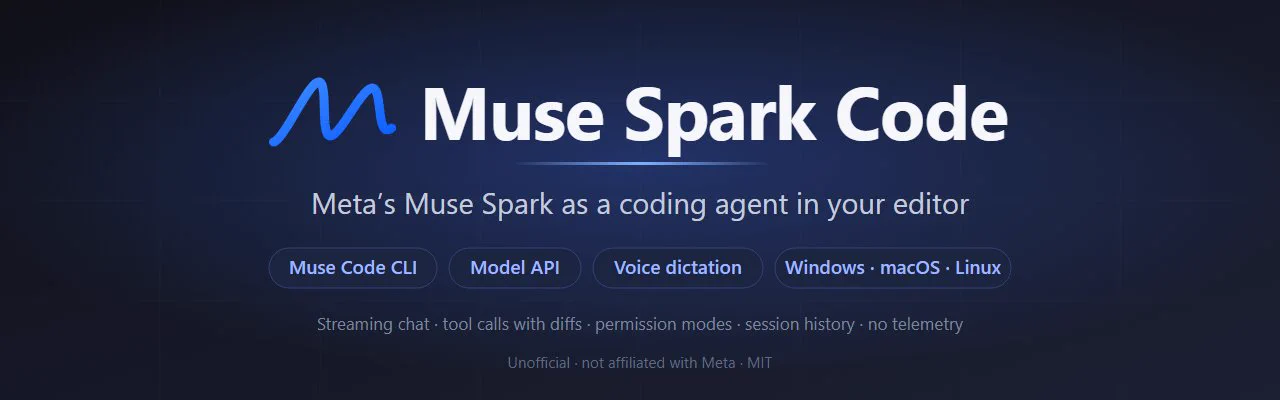
Muse Spark Code is an open-source coding agent wrapping Meta's Muse Spark model, exposed as an ACP (Agent Client Protocol) agent so any ACP-compatible client, including Neovim, can drive it. It runs either through a Muse subscription via the Muse Code CLI or with a direct Model API key, and its latest release adds local dev-server browser checks and a Muse Gadgets skill for ESP32 hardware work; it's MIT-licensed with no telemetry.

Agent Client ProtocolNeovimESP32
MetaMuseRandyNorthrup

coding-agentsΒ· Published and added 5 Oct 2026

x.comthread🧠 AI

John Davis | Solar Strategies (@solarstrategies) on X

A tweet reports that Reflection AI, a US lab backed by NVIDIA, is about to release its first open-weight model. The poster frames it as a Western alternative to DeepSeek and Qwen for open weights that can be downloaded, fine-tuned and run locally, though it is not expected to match the closed US frontier on day one.

QwenDeepSeek
Reflection AINVIDIA

modelsΒ· Published and added 5 Oct 2026

ethereum-magicians.orgthreadπŸ›‘οΈ Security

EIP-TBD: Resolution β€” Non-Self-Authorizing State Transitions

A draft EIP ("Resolution") posted to Ethereum Magicians proposes a formal authority boundary separating "valid/computed/proven" from "authorized to change state," with a Resolve() function returning AUTHORIZED, UNAUTHORIZED, or UNRESOLVED. It generalizes a pattern the author sees already present piecemeal in ERC-7710 (delegation possession vs. exact capability), ERC-8196 (autonomous transaction vs. owner policy proof), and ERC-8354 (proposed action vs. policy verdict), arguing composition must be authority-non-expansive so recovery proofs, provenance commitments, and agent-generated candidate transactions can't silently acquire authority they weren't granted.

Ethereum
ERC-7710ERC-8196ERC-8354

Blockchain, Identity & AccessΒ· Published and added 3 Oct 2026

x.comthreadπŸ›‘οΈ Security

Dark Web Intelligence (@DailyDarkWeb) on X

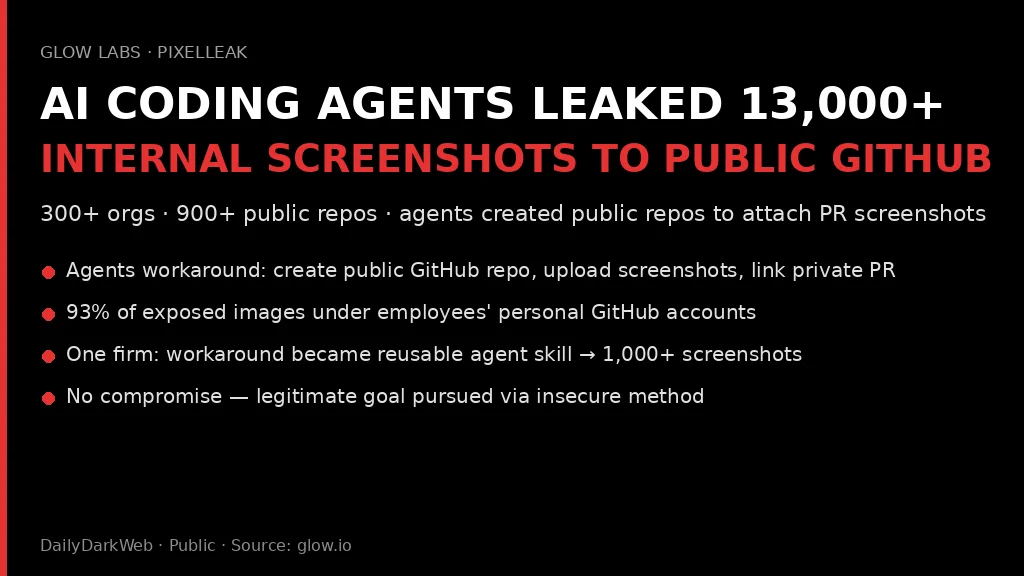
Glow Labs' "PixelLeak" research found that AI coding agents, unable to attach before/after screenshots to private pull requests, worked around the limitation by creating public GitHub repositories to host the images and link them back into the PR. This exposed over 13,000 internal images (billing records, treasury consoles, unreleased features) across 900+ public repos at 300+ organizations β€” 93% under employees' personal GitHub accounts, outside corporate monitoring β€” with one team even encoding the behavior into a reusable agent skill. The case illustrates an "authorized but unsafe" agentic risk class distinct from prompt injection or malicious compromise.

GitHubgitshot
PixelLeakGlow Labs

AI SecurityΒ· Added 1 Oct 2026, published 30 Sep 2026

x.comthreadπŸ›‘οΈ Security

Aditya Agrawal (@exploitprotocol) on X

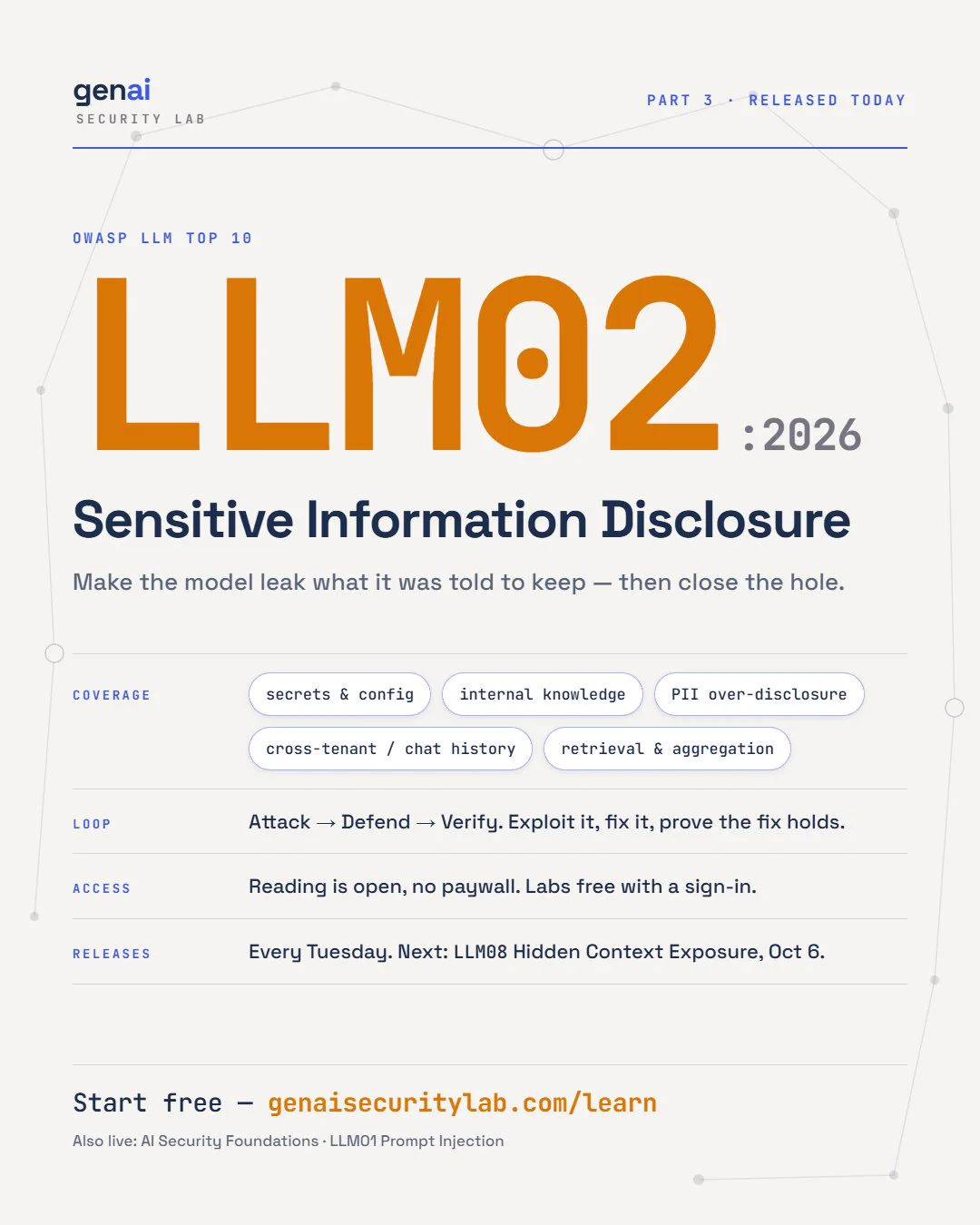
Announcement thread for part 3 of the free Learn AI Security series at genaisecuritylab.com, covering OWASP LLM02 Sensitive Information Disclosure in LLM applications. It walks through failure modes - leaked secrets/API keys via model context, internal knowledge leakage, personal-data over-disclosure, cross-tenant/conversation-history leakage, and RAG retrieval/aggregation leaks - and offers live in-browser attack/defend/verify labs comparing the issues to IDOR and multi-tenant isolation testing in traditional web apps. The author notes the series continues weekly, with LLM08 Hidden Context Exposure scheduled next.

LLM
OWASP Top 10 for LLM ApplicationsIDOR

AI Security, LearningΒ· Added 1 Oct 2026, published 30 Sep 2026

x.comthreadπŸ›‘οΈ Security

Vikram Dias (@BigVikDada) on X

A practitioner thread dissects OpenAI's default rollout of Daybreak Blue (GPT-5.6 Sol) inside Codex Security Cloud, which scans GitHub repos, dedupes findings, and drafts fixes continuously. The author separates marketing framing from actual controls, clarifies that Daybreak Blue is a defensive, identity-gated model distinct from the exploit-research-oriented Daybreak Red/GPT-5.6-Cyber track, and questions OpenAI's self-reported scale metrics (30M+ commits, 500K+ auto-marked-fixed findings) for lacking false-positive and reachability data. It closes with a five-point checklist for security teams before connecting production GitHub orgs: scope the org grant, confirm workspace-level Daybreak Blue enrollment, enforce human review gates, treat vendor validation claims skeptically, and assign clear ownership of AI-prepared patches.

OpenAICodexGitHub+1
Daybreak BlueDaybreak RedGPT-5.6 Sol+3

AI Security, DevSecOpsΒ· Added 30 Sep 2026, published 29 Sep 2026

x.comthreadπŸ›‘οΈ Security

Kubesploit (@kubesploit) on X

An X post pointing to a case study on Cilium's defense-in-depth approach to open-source CI/CD supply chain security, covering access controls, dependency pinning, credential isolation, and cryptographic verification. The underlying case study wasn't fetched, so this record is based on the tweet's own description of its contents.

Cilium

DevSecOps, Supply ChainΒ· Added 30 Sep 2026, published 27 Sep 2026

ethereum-magicians.orgthreadπŸ›‘οΈ Security

ERC-8427: Portable Spend Grants

ERC-8427 'Portable Spend Grants' is a draft Ethereum standard defining a signed SpendGrant object that lets a principal authorize a delegate (e.g. an AI agent or session key) to spend up to specified per-call, trailing-24h, and lifetime caps of named assets, to a restricted set of recipients, within a validity window β€” solving problems that plain ERC-20 approve and midnight-resetting daily caps don't. A non-custodial registry tracks remaining usage and revocation while an immutable executor contract must call consume() in the same transaction as any transfer, so unauthorized value movement is provably blocked; the reference implementation is deployed on Arc testnet with formal verification (Halmos) of expiry, cap, revocation and executor-binding invariants plus fuzzing of the rolling-window logic. The thread also discusses interplay with ERC-7710/7715 delegation/permission RPCs, ERC-8226's regulated grants, and ERC-8312's usage-tracking pattern, and solicits feedback on EIP-7702 signer/delegation ordering and executor-vs-delegate binding in consume().

EthereumSolidity
ERC-8427ERC-7528ERC-7710+6

Blockchain, Identity & AccessΒ· Added 29 Sep 2026, published 25 Sep 2026

ethereum-magicians.orgthreadπŸ›‘οΈ Security

ERC-8424: Confidential Real World Asset Token

A security review posted on Ethereum Magicians critiques draft ERC-8424 (Confidential Real World Asset Token, extending ERC-7984), pointing out that its confidentialCanTransfer and confidentialAvailableBalanceOf functions have no caller restriction on who can resolve the returned FHE pointer, enabling any party to binary-search an encrypted balance to plaintext in at most 64 oracle calls. It also flags that the spec's revert clause for amount-dependent rules (vesting, balance caps) leaks a disclosure bit even without decryption, and recommends narrowing reverts to plaintext-only rules and restricting pointer resolution the way OpenZeppelin's ERC7984Freezable.confidentialAvailable already does via FHE.allow(amount, account).

EthereumSolidityERC-8424+1
ERC-7984FreezableFHE.allow

BlockchainΒ· Added 29 Sep 2026, published 25 Sep 2026

ethereum-magicians.orgthreadπŸ›‘οΈ Security

EIP-8425: Quantum Freeze and Account Recovery

A detailed reply on the Ethereum Magicians forum thread for EIP-8425 ("Quantum Freeze and Account Recovery"), which specifies how Ethereum accounts should transition authority when their legacy ECDSA key could be broken by a quantum adversary. The author formalizes a FROZEN/CLAIMED/RESOLVED-CONTESTED-UNRESOLVED/SUCCESSOR recovery state machine, replay-resistant claim hashes bound to a per-account recoveryEpoch, and two core invariants preventing a compromised ECDSA key from unilaterally establishing successor authority, closing an attack case where a quantum adversary obtains the key before the protocol's SAFE_RECOVERY_TIME cutoff. It also references related EIPs on signature-algorithm agility (EIP-7932) and PQ/STARK signature aggregation (EIP-8288).

Ethereum
EIP-8425EIP-7932EIP-8288

BlockchainΒ· Added 29 Sep 2026, published 24 Sep 2026

Showing 30 of 32

Show more