Skip to content

42 results for β€œmise”

What you seeeverything
cisa.govadvisoryπŸ›‘οΈ Security

CISA Adds Two Known Exploited Vulnerabilities to Catalog

CISA added two Ivanti Connect Secure vulnerabilities to its Known Exploited Vulnerabilities (KEV) Catalog on 30 October 2026, citing evidence of active exploitation: CVE-2026-111357 (missing authentication for a critical function) and CVE-2026-118527 (generation of predictable numbers or identifiers). The alert restates BOD 26-04, which requires federal civilian agencies to remediate KEV-listed flaws on exposed assets and check for prior compromise. It also links the KEV nomination form.

Ivanti Connect SecureCISA KEVVPN
CVE-2026-111357CVE-2026-118527BOD 26-04+1

Threat Intel, GRCΒ· Published and added 30 Oct 2026

unit42.paloaltonetworks.comadvisoryπŸ›‘οΈ Security

Threat Brief: Critical Vulnerabilities in PHP: CVE-2026-109618, CVE-2026-109619 (Updated October 29)

Unit 42 threat brief on PHP2Shell, two PHP remote code execution flaws, CVE-2026-109618 and CVE-2026-109619 (CVSS 4.0 9.2), both caused by longjmp() error handling that leaves memory uninitialized or freed. Cortex Xpanse counted over 22.6 million exposed instances. The 29 October 2026 update says attackers chained PHP2Shell with a Linux kernel privilege escalation against internet-exposed PAN-OS management interfaces. An earlier 23 October claim of post-compromise activity was retracted on 25 October.

PHPPAN-OSLinux kernel+2
CVE-2026-109618CVE-2026-109619PHP2Shell+2

Threat Intel, AppSecΒ· Added 30 Oct 2026, published 29 Oct 2026

cisa.govadvisoryπŸ›‘οΈ Security

CISA Adds Two Known Exploited Vulnerabilities to Catalog

CISA alert of 28 October 2026 adding two vulnerabilities to the Known Exploited Vulnerabilities Catalog on evidence of active exploitation: CVE-2026-41709 (Broadcom VMware ESX insufficient logging) and CVE-2026-46300 (Linux kernel missing variable initialization). It restates BOD 26-04, which requires federal civilian agencies to prioritize fast remediation of KEV CVEs on exposed assets and to check for prior compromise. It also links the KEV nomination form.

CISA KEVVMware ESXLinux kernel
CVE-2026-41709CVE-2026-46300BOD 26-04+1

Threat Intel, GRCΒ· Added 29 Oct 2026, published 28 Oct 2026

cisa.govadvisoryπŸ›‘οΈ Security

CISA Adds Two Known Exploited Vulnerabilities to Catalog

CISA alert of 27 October 2026 adding two vulnerabilities to the Known Exploited Vulnerabilities (KEV) Catalog on evidence of active exploitation: CVE-2026-48356, an unrestricted upload of a dangerous file type in Adobe Commerce and Magento, and CVE-2026-111497, an unchecked return value in Google Brotli. It restates BOD 26-04, which makes federal civilian agencies prioritise KEV flaws on exposed assets and check for prior compromise. No technical detail or IOCs are given.

Adobe CommerceMagentoBrotli
CVE-2026-48356CVE-2026-111497CISA KEV+2

AppSec, GRCΒ· Added 29 Oct 2026, published 27 Oct 2026

cisa.govadvisoryπŸ›‘οΈ Security

CISA Adds Two Known Exploited Vulnerabilities to Catalog

CISA added two PHP vulnerabilities to its Known Exploited Vulnerabilities Catalog on 26 October 2026: CVE-2026-109618 (memory corruption) and CVE-2026-109619 (stale internal request state). It also updated its PHP alert on critical vulnerabilities requiring immediate patching. The alert restates BOD 26-04, which requires federal civilian agencies to prioritize fast remediation of KEV CVEs on exposed assets and to check for prior compromise.

PHPCISA KEV
CVE-2026-109618CVE-2026-109619BOD 26-04+1

AppSec, GRCΒ· Added 29 Oct 2026, published 26 Oct 2026

unit42.paloaltonetworks.comadvisoryπŸ›‘οΈ Security

EMudhra Intermediate CA Certificates Compromised

Unit 42 advisory on the compromise of eight intermediate CA private keys belonging to Indian CA eMudhra Limited. The keys were generated with insufficient randomness, so attackers could derive them from the public certificates and sign rogue TLS certificates for MitM attacks. eMudhra has revoked the certificates and browser and OS vendors have untrusted them. Interim guidance covers PKI and trust store audits, reissuance, strict CRL/OCSP checking, log hunting, CT monitoring and CAA records.

Prisma BrowserJavaDocker+2
eMudhraUnit 42Palo Alto Networks Next-Gen Trust Security+1

Threat Intel, Blue Team & DetectionΒ· Added 30 Oct 2026, published 22 Oct 2026

blog.talosintelligence.comadvisoryπŸ›‘οΈ Security

Compromised eMudhra intermediate certificates

Cisco Talos describes eight eMudhra intermediate CA certificates (six TLS, two code signing) whose P-384 private keys were trivially recoverable because a flaw in an April 30, 2025 key generation ceremony produced weak keys with only 3 to 8 bytes of entropy. The post lists certificate SHA-256 hashes and serials, browser and Microsoft blocks, and the Go fix (CVE-2026-111943, Go 1.27.3 and 1.26.10) that filters chains by SPKI hash. It covers impact on VPNs, CI/CD and embedded devices, and Snort SIDs 67363 to 67374.

GoChromeVPN+3
CVE-2026-111943eMudhraemSign Root TLS CA - G3+8

Threat Intel, Cloud & InfraΒ· Published and added 21 Oct 2026

watchtowr.comadvisoryπŸ›‘οΈ Security

PHP Remote Code Execution ("PHP2Shell" CVE-2026-109618 & CVE-2026-109619)

PHP2Shell is the name for CVE-2026-109618 (out-of-memory corruption) and CVE-2026-109619 (stale global state), two unauthenticated PHP remote code execution flaws rated CVSS 4.0 9.2. Details leaked before the 21 October 2026 patch release, and watchTowr's honeypots saw exploitation. The page lists fixed versions (8.5.12, 8.4.27, 8.3.36, 8.2.35), states that .ini mitigations do not work, gives a timeline, and describes compromise checks.

PHPApacheFrankenPHP+2
CVE-2026-109618CVE-2026-109619PHP2Shell+3

AppSec, Threat IntelΒ· Added 28 Oct 2026, published 21 Oct 2026

x.comadvisoryπŸ›‘οΈ Security

Microsoft Threat Intelligence (@MsftSecIntel) on X

ConnectWise Cloud Backup (formerly SkyKick Backup, AppId 506e08f9-6e9a-4da4-942b-a099a03644ae) had its multitenant OAuth app compromised, per Microsoft Threat Intelligence. On 15 October 2026 the actor authenticated broadly as the service principal from 144.172.64[.]128, likely using customer-granted permissions such as Directory.ReadWrite.All, then ran Graph API reconnaissance and tried to add credentials to the service principal as a backdoor. The post lists IOCs, Defender alerts and hunting advice.

OAuthMicrosoft Entra IDMicrosoft Defender+1
ConnectWise Cloud BackupSkyKickDirectory.ReadWrite.All+2

Threat Intel, Identity & Access, Supply Chain, Blue Team & DetectionΒ· Added 20 Oct 2026, published 17 Oct 2026

watchtowr.comadvisoryπŸ›‘οΈ Security

Frequently Asked Questions About the BeyondTrust Remote Support Arbitrary File Upload (CVE-2026-102764)

CVE-2026-102764 is an arbitrary file upload in BeyondTrust Remote Support (formerly Bomgar) caused by internal appliance components not validating message origin. Mandiant found it exploited as a zero-day in late August 2026. BeyondTrust disclosed it on 15 October 2026 and CISA added it to KEV on 16 October 2026. The FAQ covers the web shell, root escalation, credential theft, persistence, patching and compromise checks.

BeyondTrust Remote Support
CVE-2026-102764CISA KEVMandiant+4

AppSec, Threat IntelΒ· Added 30 Oct 2026, published 16 Oct 2026

rapid7.comadvisoryπŸ›‘οΈ Security

Ivanti Connect Secure zero-day exploited in the wild (CVE-2026-104935)

Rapid7 emergency-response analysis of CVE-2026-104935, a CVSS 8.6 authentication bypass by spoofing (CWE-290) in Ivanti Connect Secure that allows unauthenticated remote command execution. It was exploited as a zero-day against a limited number of customers, added to CISA KEV on disclosure day, and Volexity observed it chained with a still-unpatched privilege escalation flaw. Part of the fix shipped in 25.1.3.0 in July 2026, with backports to other supported versions pending. Rapid7 advises emergency patching outside normal cycles and hunting for compromise using Volexity's IOCs, since Ivanti has no reliable ones.

Ivanti Connect SecureVPNCVSS
CVE-2026-104935CWE-290CISA KEV+3

Threat Intel, Blue Team & DetectionΒ· Published and added 13 Oct 2026

watchtowr.comadvisoryπŸ›‘οΈ Security

Ivanti Connect Secure Authentication Bypass by Spoofing (CVE-2026-104935)

CVE-2026-104935 is an authentication bypass by spoofing in Ivanti Connect Secure (CVSS 3.1 score 8.6) that lets a remote attacker run commands without logging in. CISA added it to KEV on 13 October 2026. The 22.8.X bridge release and 25.1.2.2 and earlier are affected, with fixes in 22.8R2.5, 25.1.1.2, 25.1.3.0 and 25.1.3.1. Ivanti says no reliable indicators of compromise exist yet.

Ivanti Connect SecureVPN
CVE-2026-104935CISA KEVVolexity+2

AppSec, Threat IntelΒ· Added 30 Oct 2026, published 13 Oct 2026

x.comadvisoryπŸ›‘οΈ Security

lee1981 (@lee1981b) on X

CyberForge CVE of the Day #074 analyses CVE-2026-85097, a CVSS 9.8 unauthenticated file upload to PHP execution flaw (CWE-434) in the Bricksforge WordPress plugin through 3.1.8.9. Wordfence names 3.1.8.10 as the fix, and a separate vendor 4.0.1 Pro Forms upload-security notice has no verified mapping to the CVE. It gives a defender workflow: scope versions, preserve edge/origin logs, inspect resulting files and PHP-FPM handling, and verify the patched version is serving. It also separates KEV (no match), EPSS (0.312%) and SSVC (exploitation none) from compromise evidence.

WordPressPHPCVSS+2
CVE-2026-85097CWE-434Wordfence+4

Blue Team & Detection, AppSecΒ· Added 11 Oct 2026, published 10 Oct 2026

x.comadvisoryπŸ›‘οΈ Security

β™«Whyβ™₯Notβ™ͺ (@Python_s_) on X

Alert summarizing Socket Threat Research's disclosure that a malicious version of the Tensorlake npm SDK (an AI-agent infrastructure package) was published with a preinstall hook delivering Shai-Hulud/ChainDrop credential-stealing malware. The payload targets GitHub, npm, AWS, Kubernetes and Vault credentials, persists via a gh-token-monitor mechanism, and spreads through compromised publishing accounts. It lists IOCs (lib/setup.mjs, lib/Math_Symbol.js) and warns to remove the persistence before revoking stolen GitHub tokens, since revocation triggers a destructive routine. Socket detected the release about 11 minutes after publication.

npmTensorlakeSocket+3
Shai-HuludChainDropgh-token-monitor+2

Supply Chain, Threat IntelΒ· Added 11 Oct 2026, published 9 Oct 2026

x.comadvisoryπŸ›‘οΈ Security

lee1981 (@lee1981b) on X

CyberForge's CVE of the Day #073 covers CVE-2026-102255, a critical (CVSS 10.0) pre-authentication SSRF / confused-deputy flaw (CWE-918, CWE-441) in the SonicWall SMA1000 Work Place interface, per advisory SNWLID-2026-0017. It lists affected platform hotfixes (12.4.3-03526 and older, 12.5.0-02952 and older), fixed floors (12.4.3-03670, 12.5.0-03082), no workaround, and the exploitation picture (no known exploitation, not in KEV, EPSS 0.477%, SSVC automatable). It gives a six-step SOC playbook covering appliance scoping, AMC log preservation, hunting appliance-originated internal requests, correlating receiving-service changes, patching, and verifying every node, and it separates exposure, a lead, confirmed compromise and telemetry gaps.

SonicWallSMA1000CVSS+3
CVE-2026-102255CVE-2026-102256CVE-2026-102257+7

Blue Team & Detection, AppSecΒ· Added 12 Oct 2026, published 9 Oct 2026

endorlabs.comadvisoryπŸ›‘οΈ Security

Tensorlake npm package compromised by Shai-Hulud in latest software supply chain attack | Blog | Endor Labs

Endor Labs documents the compromise of tensorlake@0.5.144, the official npm TypeScript SDK for Tensorlake, which shipped a Shai-Hulud worm payload via a poisoned preinstall hook (node lib/setup.mjs) after the project's main branch was altered and pushed through a legitimate, provenance-signed GitHub Actions release pipeline. The malware harvests npm, GitHub, SSH, cloud (AWS/GCP/Azure), Kubernetes/Docker and Vault credentials, uses an EtherHiding Ethereum wallet as a durable dead-drop to fetch its rotating C2 domain, and republishes itself into other packages the victim controls. The writeup includes affected package versions, file hashes, C2 indicators, and concrete remediation guidance (pin to 0.5.143, rotate credentials, disable install scripts).

npmGitHub ActionsNode.js+3
Shai-HuludEtherHiding

Supply Chain, Threat IntelΒ· Published and added 8 Oct 2026

cisa.govadvisoryπŸ›‘οΈ Security

CISA KEV: Fortinet FortiMail CVE-2026-104286 path traversal, actively exploited, no patch yet

CISA added CVE-2026-104286, a path traversal vulnerability in Fortinet FortiMail, to its Known Exploited Vulnerabilities Catalog on evidence of active exploitation. The alert restates the obligations of BOD 26-04 for Federal Civilian Executive Branch agencies: prioritise KEV CVEs on publicly exposed assets that give total control, and check for compromise before patching. It also describes the KEV nomination criteria: a CVE ID, evidence of exploitation and clear mitigation guidance. The page gives no technical detail, patch status or IOCs.

Fortinet FortiMailCISA KEV
CVE-2026-104286path traversalCISA+1

Threat Intel, GRCΒ· Added 4 Oct 2026

research.lido.fiadvisoryπŸ›‘οΈ Security

[Security Disclosure] MetaMask Staking Precautionary Out of Order Exits

Lido Finance's governance forum discloses that MetaMask Staking (formerly Consensys Staking), one of its Ethereum validator node operators, detected an infrastructure compromise and is precautionarily exiting its operated validators from the Lido protocol. The post details the exit/withdrawal/re-entry timeline (~45 days), the non-custodial nature of Lido staking (MetaMask does not hold withdrawal keys), and the protocol's ad hoc reserve fund (6,750+ stETH) as a mitigation mechanism while a full investigation continues.

Ethereum
MetaMask StakingConsensys StakingstETH

BlockchainΒ· Added 3 Oct 2026, published 30 Sep 2026

rapid7.comadvisoryπŸ›‘οΈ Security

Critical Cisco Catalyst SD-WAN Manager API authentication bypass exploited in the wild (CVE-2026-76504)

Rapid7 analysis of CVE-2026-76504, a critical (CVSSv3.1 9.8) unauthenticated API authentication bypass in Cisco Catalyst SD-WAN Manager caused by improper URL-encoding handling (CWE-177), allowing attackers to gain admin-level API access via crafted requests to the j_security_check endpoint. The flaw is being actively exploited in the wild, was added to CISA's KEV list on October 1, 2026 with a remediation deadline of October 3, and follows two earlier 2026 Catalyst SD-WAN peering authentication bypasses (CVE-2026-20127 and Rapid7-discovered CVE-2026-20182). The post gives fixed-release guidance, no-workaround caveats, and log-based IOCs (encoded-character requests like %6a_security_check, viptela-reserved- usernames) for detecting compromise.

Cisco Catalyst SD-WAN ManagerCVSSCISA KEV
CVE-2026-76504CVE-2026-20127CVE-2026-20182+1

AppSec, Threat IntelΒ· Added 7 Oct 2026, published 30 Sep 2026

orca.securityadvisoryπŸ›‘οΈ Security

Critical Citrix NetScaler Zero-Days Under Active Exploitation

Analysis of two CVSS 9.5 Citrix NetScaler ADC/Gateway zero-days, CVE-2026-88771 (unauthenticated RCE through improper input validation in the management interface, affecting default deployments) and CVE-2026-88772 (memory overflow in DTLS, enabled by default on VPN virtual servers). It lists six more high-severity flaws patched in advisory CTX697096, the affected and fixed versions, and the CISA KEV listing with a federal deadline of 2026-09-30. It advises checking for compromise before patching, since patching can destroy forensic evidence, and gives response steps: isolate, revoke credentials, rebuild firmware, rotate keys and certificates.

Citrix NetScalerVPN
CVE-2026-88771CVE-2026-88772CVE-2026-88773+7

Cloud & Infra, Threat IntelΒ· Published and added 29 Sep 2026

cisa.govadvisoryπŸ›‘οΈ Security

Critical Zero-Day Vulnerabilities Exploited in Citrix NetScaler ADC, Gateway

CISA alert amplifying Citrix's disclosure of ten NetScaler ADC and Gateway vulnerabilities (CVE-2026-88771 to CVE-2026-88779 and CVE-2026-107406). CVE-2026-88771 and CVE-2026-88772 are critical zero-days enabling independent remote code execution and are exploited globally; CVE-2026-88779 is a SAML SP/IdP denial-of-service that can force a reboot to trigger code injected via CVE-2026-88771. It advises checking for compromise before patching, preserving forensic evidence, forwarding logs to a SIEM, restoring a pre-compromise backup and rotating all secrets, and links a CISA SIGMA detection rule.

Citrix NetScalerSIEMSigma
CVE-2026-88771CVE-2026-88772CVE-2026-88773+9

Threat Intel, Blue Team & DetectionΒ· Added 28 Sep 2026

github.comadvisoryπŸ›‘οΈ Security

Claude Desktop (macOS): malicious file in a Cowork folder could run commands on the host

GHSA-v234-4jrq-mgg6 discloses that Claude Desktop for macOS (versions >=1.1.3918, less than 1.15962.0) omitted a macOS-executable file type from its Cowork folder block-list, letting a malicious file written into a Cowork sandbox's shared folder by a compromised or prompt-injected agent run commands on the host when opened via Claude Desktop. A separate, compounding issue is also disclosed: Cowork VM images before 1.11847.5 shipped a guest Linux kernel vulnerable to CVE-2026-43284, which combined with the block-list gap could let VM-privileged code trigger the file open without user interaction. Both issues are fixed in Claude Desktop 1.15962.0; reported internally by Anthropic and independently by Vladimir Tokarev of Cyera Research.

Claude DesktopmacOSLinux kernel
CVE-2026-43284Vladimir TokarevCyera Research+1

AI SecurityΒ· Added 28 Sep 2026

rapid7.comadvisoryπŸ›‘οΈ Security

Zero-Day Exploitation of Citrix NetScaler ADC and Gateway: CVE-2026-88771 and CVE-2026-88772

Rapid7 details active zero-day exploitation of two critical Citrix NetScaler ADC/Gateway RCE vulnerabilities (CVE-2026-88771, CVE-2026-88772, both CVSSv4 9.5), both added to CISA KEV on disclosure day, plus a later SAML denial-of-service zero-day (CVE-2026-88779). The post includes Rapid7 MDR's observed exploitation of CVE-2026-88771 in the wild β€” a command-injection payload that exfiltrates /flash/nsconfig (containing ns.conf admin credentials, SSL private keys, SSH host keys) via the publicly-served /vpn/ path, and a webshell (SHA256 hash provided) found on a compromised appliance β€” along with vendor patch versions and detection guidance.

Citrix NetScalerCVSS
CVE-2026-88771CVE-2026-88772CVE-2026-88779+3

Threat Intel, AppSecΒ· Added 7 Oct 2026, published 28 Sep 2026

cisa.govadvisoryπŸ›‘οΈ Security

CISA KEV Catalog Additions β€” Check Point, Arista VeloCloud, F5 BIG-IP (Sept 22, 2026)

CISA added four vulnerabilities to the Known Exploited Vulnerabilities catalog on 2026-09-22 based on evidence of active exploitation: two Check Point multi-product flaws (improper certificate validation CVE-2026-85102, path traversal CVE-2026-93616), an Arista VeloCloud Orchestrator improper input validation bug (CVE-2026-93952), and an F5 BIG-IP APM heap-based buffer overflow (CVE-2026-94127). The alert ties the additions to BOD 26-04, which has FCEB agencies prioritize remediation of KEV CVEs on publicly exposed assets that give total control, and to checking for prior compromise before patching.

CISA KEVCheck PointArista VeloCloud Orchestrator+1
CVE-2026-85102CVE-2026-93616CVE-2026-93952+4

Threat Intel, GRCΒ· Added 26 Sep 2026

github.comadvisoryπŸ›‘οΈ Security

Flowise MCP Security Bypass Enables RCE

GHSA advisory detailing three bypasses in Flowise's Custom MCP Server security controls (validateCommandFlags and validateArgsForLocalFileAccess in packages/components/nodes/tools/MCP/core.ts) that combine to achieve remote code execution: an unblocked `docker build` subcommand that pulls and runs a remote Dockerfile, a missing `--yes` long-flag alias on the npx blocklist (only `-y` was blocked) enabling arbitrary npm package execution, and a Unix absolute-path regex that fails to catch double-leading-slash paths (`//root/...`), allowing `node` to execute an uploaded local file. Any authenticated Flowise user (or an API key with chatflow view/update rights) can chain these to fully compromise the host via a prediction API call.

FlowiseDockerNode.js+2
validateCommandFlagsvalidateArgsForLocalFileAccess

AI Security, AppSecΒ· Added 26 Sep 2026

cisa.govadvisoryπŸ›‘οΈ Security

CISA Adds Seven Known Exploited Vulnerabilities to Catalog | CISA

CISA added seven vulnerabilities to its Known Exploited Vulnerabilities Catalog on the basis of active exploitation. They are SQL injection in Sangoma Switchvox, HTTP request/response smuggling in Kludex Starlette, OS command injection in Kestra OSS, improper authentication in BerriAI LiteLLM and JFrog Artifactory, and SSRF plus OS command injection in SonicWall SMA1000 appliances. The alert restates BOD 26-04, which makes federal agencies prioritise rapid remediation of KEV CVEs on publicly exposed assets that grant total control after exploitation. It also requires agencies to check for prior compromise before patching.

Sangoma SwitchvoxStarletteKestra+3
CVE-2026-9586CVE-2026-48710CVE-2026-49869+8

AppSec, GRCΒ· Added 26 Sep 2026

orca.securityadvisoryπŸ›‘οΈ Security

WordPress β€œComment2Shell” XSS-to-RCE Chain Lets Unauthenticated Attackers Compromise Servers via Malicious Comments

CVE-2026-93485 (CVSS 7.1) is a stored XSS-to-RCE chain in WordPress Core's wpautop() function (wp-includes/formatting.php), where a mismatch between comment sanitization at save time and HTML reformatting at display time lets an unauthenticated attacker inject live event handlers via a crafted comment. When a logged-in administrator views the page, the script executes and installs a malicious plugin containing a web shell, achieving full RCE. It affects WordPress Core 4.7 through 7.1.0 (essentially all installs, including block themes since Twenty Twenty-Two), and is fixed in 7.1.1 with backports down to 4.7.36; no public PoC or in-the-wild exploitation was reported at disclosure time.

WordPressPHP
CVE-2026-93485

AppSecΒ· Published and added 22 Sep 2026

rapid7.comadvisoryπŸ›‘οΈ Security

CVE-2026-85706: Critical GitLab Path Traversal Exploited in the Wild

GitLab patched CVE-2026-85706, a critical (CVSS 10.0) path traversal flaw (CWE-22) in the repository commits API that lets an unauthenticated attacker read arbitrary files from self-managed GitLab CE/EE instances; CISA added it to the KEV catalog on September 11, 2026 due to active exploitation, with a remediation deadline of September 14. The same patch release fixes CVE-2026-87719, a critical insecure deserialization bug (CWE-502) letting an authenticated Duo Chat user exfiltrate Advanced Search configs and credentials via a crafted GraphQL subscription argument, plus 17 other vulnerabilities. Rapid7 recommends emergency patching and post-patch compromise checks given confirmed in-the-wild exploitation.

GitLabCVSSGraphQL+1
CVE-2026-85706CVE-2026-87719CWE-22+1

AppSec, Threat IntelΒ· Added 7 Oct 2026, published 14 Sep 2026

stepsecurity.ioadvisoryπŸ›‘οΈ Security

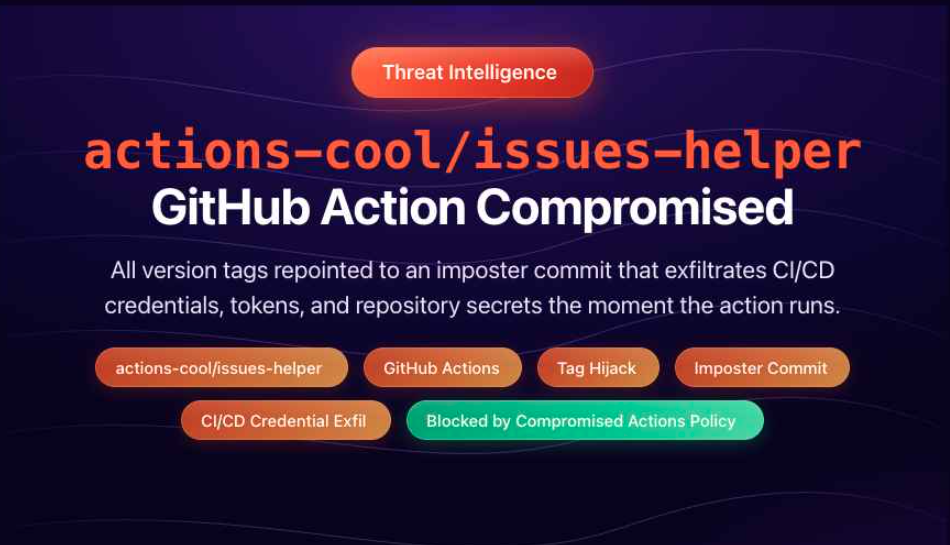
actions-cool/issues-helper GitHub Action Compromised: All Tags Point to Imposter Commit That Exfiltrates CI/CD Credentials - StepSecurity

StepSecurity discovered that all 53 tags of the popular actions-cool/issues-helper GitHub Action (and all 15 tags of actions-cool/maintain-one-comment) were re-pointed to dangling imposter commits containing malicious code. The payload downloads the Bun runtime, reads Runner.Worker process memory to harvest decrypted CI/CD secrets, and exfiltrates them via HTTPS to t.m-kosche.com β€” meaning any workflow referencing the actions by tag (rather than a pinned commit SHA) pulls the malicious code on its next run.

GitHub ActionsBunStepSecurity+1
actions-cool/issues-helperactions-cool/maintain-one-commentt.m-kosche.com

Supply Chain, DevSecOpsΒ· Added 5 Sep 2026

orca.securityadvisoryπŸ›‘οΈ Security

Orca Security: Zoom Zero-Click RCE Flaws Allow Any Meeting Attendee to Compromise All Participants

Orca Security details four Zoom vulnerabilities in the cross-platform annotation engine (libannotate.so): CVE-2026-53413, a stack buffer overflow in CAnnoFormatBlock::Deserialize from unchecked 32-bit character counts, and CVE-2026-53415, a use-after-free in auto-shape metadata handling giving a write-what-where primitive, both enabling zero-click RCE against every meeting participant via crafted annotation messages during screen sharing. Also disclosed are CVE-2026-53414 (heap over-read/DoS) and CVE-2026-53416 (path traversal in the Windows VDI client). The write-up notes a working exploit chain built in under 24 hours with fewer than 20 AI-model prompts, platform-specific exploitation details (macOS ARM64 ASLR bypass, Android heap spraying/vtable corruption), and that E2EE meetings bypass Zoom's server-side message filtering.

Orca SecurityAndroidmacOS+2
CVE-2026-53413CVE-2026-53414CVE-2026-53415+1

AppSec, Offensive SecurityΒ· Published and added 12 Aug 2026

Showing 30 of 42

Show more