Skip to content

553 results for β€œps”

What you seeeverything
hackers-arise.comarticleπŸ›‘οΈ Security

Open-Source Intelligence (OSINT): Doing GeoOSINT and Finding Locations with Azimut

Azimut is a local, open-source GeoOSINT tool (v0.3.3, Linux, Windows, macOS) that keeps case evidence in one folder and runs in the browser at 127.0.0.1:8477. The walkthrough tests a Yosemite photo from Wikimedia using the Horizon 3D skyline overlay, the beta Find mode (hand-drawn skyline, search area up to 10,000 km2), sun path display and exportable proof collages. Results need manual verification.

AzimutKali Linux
Hackers AriseOsintMeThatWikimedia+1

OSINT, LearningΒ· Published and added 3 Nov 2026

en.cryptonomist.charticleπŸ›‘οΈ Security

BTCPay Server vulnerability: about $1.63M traced to theft-linked addresses

BTCPay Server's 2 November 2026 incident update describes attackers logging in as administrator on servers running version 2.4.1 or earlier and sweeping on-chain hot wallets. Bitquery traced about $1.63M (18.38 BTC and 3,405 LTC) to two addresses, across 682 sweeps from 30 October. The project advises migrating to a new server with a fresh seed, installing 2.4.7 and preserving logs. How admin access was gained is not explained.

BTCPay ServerLNDBitcoin+1
BitqueryCryptonomist

Blockchain, Threat IntelΒ· Published and added 3 Nov 2026

securityweek.comarticleπŸ›‘οΈ Security

Google Dismantles XCPE Botnet of 1.3 Million Android Devices

XCPE (X.CPE) is a backdoor and botnet of more than 1.3 million Android set-top boxes, built and run by the Chinese OEM/ODM Videostrong Technology. Google dismantled it through legal action against domains and servers and banned Videostrong from preloaded Google apps. The malware used a three-stage design persisting on the /oem/ partition and was used for ad fraud, residential proxies and further malware loading.

AndroidAndroid TV
XCPEVideostrong TechnologyGoogle+8

Threat Intel, Mobile Security, Supply ChainΒ· Published and added 3 Nov 2026

depthfirst.comarticle🧠 AI

How repeated sampling improves vulnerability detection | depthfirst

depthfirst's Best of N study runs a cheap LLM agent repeatedly on the same repository, merges the findings, and uses a reviewer agent to deduplicate and score them from 0 to 100. DeepSeek v4.1 Flash goes from about 52% recall at one run to about 71% at five and 80% at fifteen, and five runs match the recall of top published models at a tenth of the cost. Returns diminish and plateau points differ by model. The benchmark is depthfirst's own dfbench, and only a subset is used.

LLMDeepSeekGLM
depthfirstdfbenchDeepSeek-V4.1-Flash+3

agents, evalsΒ· Added 3 Nov 2026

latent.spacearticle🧠 AI

[AINews] LLMs can read & write neural network weights: "Weight Space Programming" cuts Autoresearch out of the RSI loop

AINews issue for 31 October to 2 November 2026 from Latent Space. It leads with "Weight Space Programming" (Takehi et al., with Alex Zhang), where a frontier LLM reads and edits small models' weights without training. The recap also covers DeepSeek's super-agent harness, the SemiAnalysis GDPx benchmark, quantized local MoE models and Reddit skepticism about the Qwen3.5-0.8B MATH-500 edit. The page was truncated, so the final part is not covered.

LLMQwen3.5Strata+10
Latent SpaceAlex ZhangAndrej Karpathy+21

research, models, evalsΒ· Published and added 3 Nov 2026

simonwillison.netarticleπŸ›‘οΈ Security

I discovered a sound that leaks your exact location (and it's everywhere) - YouTube

Simon Willison's link-blog post of 3 November 2026 points to a YouTube video by Colsto on locating where a video was recorded from faint aircraft noise in its soundtrack. The method extracts Doppler curves of passing planes, then matches speed, distance and gaps between flights against ADS-B flight data. The post is a short pointer and gives no step-by-step detail.

ADS-BYouTube
Doppler effectColsto

OSINTΒ· Published and added 3 Nov 2026
bleepingcomputer.comarticleπŸ›‘οΈ Security

Chinese hackers use ARTEX AI in automated attacks against 200 orgs

ARTEX is a multi-agent AI penetration-testing framework that the China-nexus actor Vapor Panda used from 17 October against more than 200 organizations in 14 countries, compromising at least nine. CrowdStrike reports DeepSeek and another commercial model coordinated agents, operators told agents to skip Falcon-protected Windows hosts, and BLOODALCHEMY was deployed. DIVD says ARTEX also drove its September 2026 breach, chaining two zero-days (one in Zammad) to root in 12 minutes.

ARTEXDeepSeekCrowdStrike+2
Vapor PandaBLOODALCHEMYDutch Institute for Vulnerability Disclosure+1

Threat Intel, AI Security, Offensive SecurityΒ· Published and added 2 Nov 2026

longcat.aiarticle🧠 AI

LongCat-2.5: Native Multimodality for Agentic Tasks

LongCat-2.5 is a native multimodal mixture-of-experts model with 1.6 trillion total and about 48 billion activated parameters, built on LongCat-2.0 for long-horizon agentic coding. The post describes discrete RVQ visual tokens, large-scale asynchronous agentic RL with synthesized F2P/P2P-tested environments, on-policy distillation, train-inference numerical alignment, and W4A4 inference on domestic accelerators. A table compares it with GPT-5.5, Claude-Opus-5, GLM-5.3, Kimi K3 and DeepSeek-V4.1-Flash.

Mixture of ExpertsResidual Vector QuantizationFlatQuant+8
LongCat-2.5LongCat-2.0LongCat-Next+32

models, training, multimodal, coding-agentsΒ· Added 3 Nov 2026, published 2 Nov 2026

cloud.google.comarticleπŸ›‘οΈ Security

The Rise of LLMJacking: How Threat Actors Monetize Compromised Cloud and Model Resources

LLMJacking is the hijacking of enterprise cloud LLM access, which Mandiant and GTIG saw in multiple 2026 incidents with charges above $100,000 a day and up to $1 million per victim. The report covers initial access through stolen cloud tokens and API keys, persistence, LiteLLM privilege escalation (CVE-2026-40217), and resale through "LLM Mixers" such as Jet Night and newapi[.]pro. It gives CloudTrail, Azure and GCP audit-log hunting guidance and hardening steps.

LiteLLMOllamaAWS Bedrock+3
CVE-2026-40217UNC6993LLMJacking+6

Threat Intel, AI Security, Cloud & Infra, Blue Team & DetectionΒ· Published and added 2 Nov 2026

depthfirst.comarticleπŸ›‘οΈ Security

How repeated sampling improves vulnerability detection | depthfirst

depthfirst research post on Best of N repeated sampling for LLM vulnerability detection. On a subset of dfbench tasks, five runs of DeepSeek v4.1 Flash reach about 71% recall versus 52% for one run, and 15 runs reach 80% at about $13 per task. An agent reviewer scores deduplicated findings 0 to 100, and the confidence cutoff trades recall against precision.

DeepSeekGLMLLM
depthfirstAnthropicMythos+4

AI Security, AppSecΒ· Added 3 Nov 2026, published 2 Nov 2026

theguardian.comarticleπŸ›‘οΈ Security

Supermarket freezers across Europe hit by second suspected cyber-attack

Guardian report from 2 November 2026 on a second suspected cyber-attack on supermarket refrigeration in Belgium, Estonia, Ireland, Finland, Luxembourg, the Netherlands and Sweden, with temperatures set to 50C. It recaps the earlier French attack on up to 700 shops, which hit mostly Danfoss controllers. SentinelOne and Tributech say the attacks point to sabotage and that many controllers remain internet-exposed and unpatched.

DanfossSentinelOneTributech+5

Threat Intel, Hardware & RFΒ· Added 3 Nov 2026, published 2 Nov 2026
bleepingcomputer.comarticleπŸ›‘οΈ Security

FBI links $6.3 billion Binance crypto heist to North Korean hackers

The FBI attributed the roughly $6.3 billion Binance theft of about 29 October 2026 to North Korea's TraderTraitor (Lazarus Group, Jade Sleet, APT38). Binance traced the breach to a compromised DevOps engineer's laptop that gave access to a service container used to submit unauthorized withdrawals across ten blockchains. The FBI published 628 laundering addresses and linked the group to earlier thefts at Bybit, DMM Bitcoin, Bitget and Drift.

EthereumBitcoinSolana+3
TraderTraitorLazarus GroupDPRK+14

Threat Intel, BlockchainΒ· Published and added 1 Nov 2026

mashable.comarticle🧠 AI

Anthropic takes steps to block Claude from reverse-engineering video games

Mashable reports, citing Tom's Hardware, that Anthropic's Claude has quietly begun restricting modding, decompiling and reverse-engineering of video game code. Anthropic has made no official announcement. The article ties the change to AI-assisted game ports and mods, the PlayStation 5 jailbreak and Take-Two's subpoenas after the GTA6 leaks. It notes the irony of AI firms now guarding copyright, and the risk that less restrictive LLMs win users.

ClaudeLLM
AnthropicTom's HardwareTake-Two Interactive+4

ai-policyΒ· Added 1 Nov 2026, published 31 Oct 2026

bleepingcomputer.comarticleπŸ›‘οΈ Security

New Android SMS of Death exploit can remotely crash unpatched phones

CVE-2026-58882, "SMS of Death", is a zero-click Android denial-of-service flaw in WapPushOverSms.decodeWapPdu, where an unchecked header-length value becomes negative and triggers a NegativeArraySizeException that crashes com.android.phone. A malformed eight-byte WAP Push message to port 2948 can drop calls, including emergency calls, and about 20 messages caused reboot loops. A PoC is public. Google patched Android 14 through 17 in October 2026, but Android 12 and 13 remain vulnerable.

AndroidAndroid Debug BridgeGitHub
CVE-2026-58882SMS of DeathGoogle+3

Mobile Security, Offensive SecurityΒ· Published and added 31 Oct 2026

decrypt.coarticleπŸ›‘οΈ Security

Binance Hack: Everything You Need to Know About the Biggest Crypto Heist in History

Decrypt's explainer on the roughly $6.4 billion theft from Binance hot wallets across about 10 blockchains. Binance traced it to a compromised DevOps engineer laptop plus further breach points, and on Ethereum the attacker used 50 pre-signed EIP-7702 authorizations to turn a hot wallet into a sweeper. Chainalysis and TRM Labs attribute it to TraderTraitor; Tether and Circle froze about $2.3 billion.

EthereumBitcoinTether+3
TraderTraitorBinanceChainalysis+10

Blockchain, Threat IntelΒ· Published and added 31 Oct 2026

indiatoday.inarticleπŸ›‘οΈ Security

AI startup hacks Anthropic, gains access to employee details, internal messages

Cathedral, a security startup founded by former DOGE members, used AI agents to find flaws in third-party business software used by Anthropic. It reached sales, HR and IT systems in under 12 hours. Anthropic says no customer chats, model outputs, source code or model weights were reached, and it cut off access the same day. The article also recaps earlier cases of Claude bypassing access restrictions, including Georgia vote counts.

Claude
CathedralDOGEAnthropic

AI Security, Threat IntelΒ· Added 1 Nov 2026, published 31 Oct 2026

latent.spacearticle🧠 AI

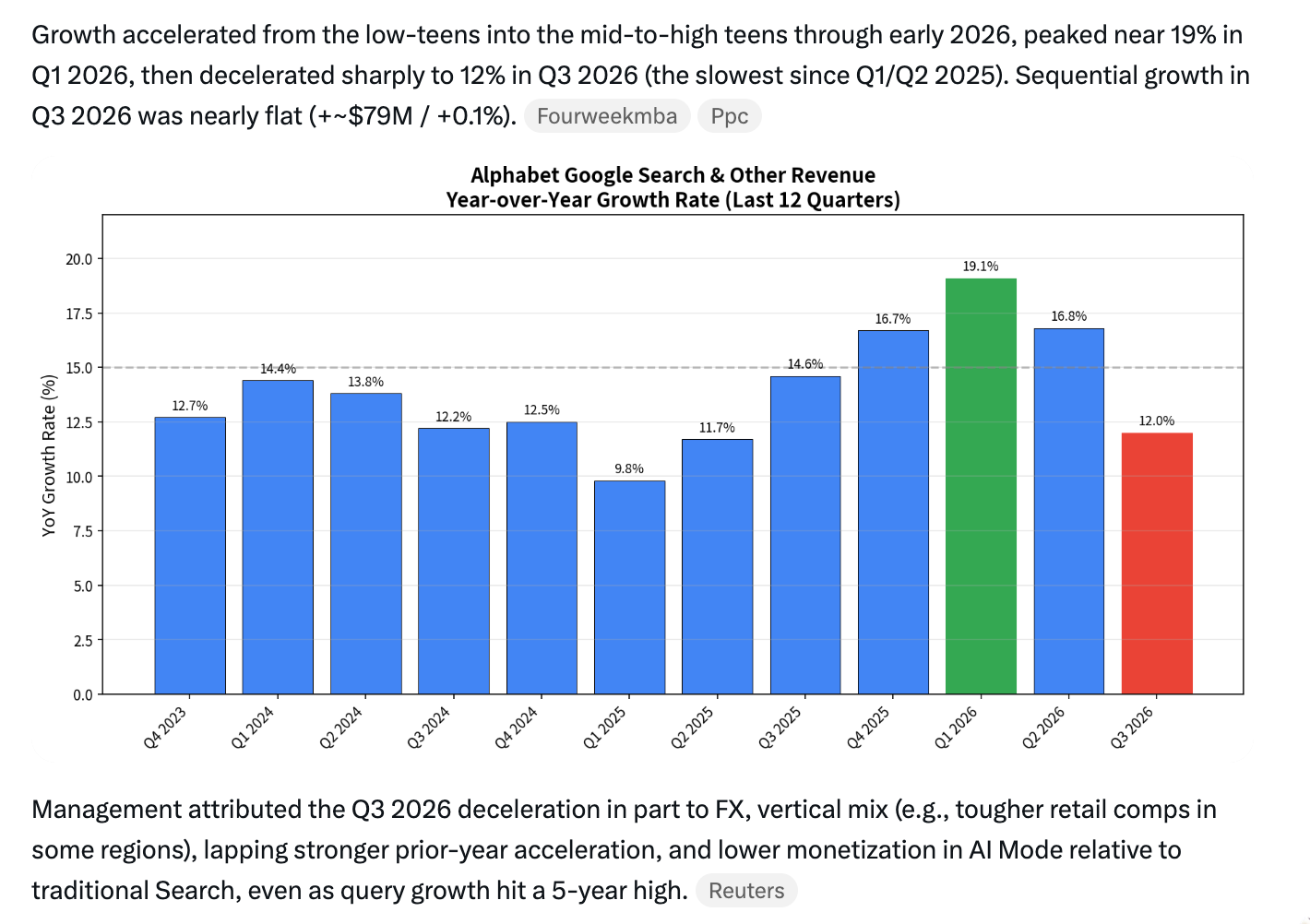
[AINews] Google admits AI Mode hurts Search revenue; -15% $500B drop worst since 2004 IPO. AI Bear Market coming?

AINews issue for 29 to 30 October 2026 from Latent Space. It opens on Google's admission that AI Mode monetises worse than classic Search, which preceded a roughly 15% share drop. It then recaps Claude Ultra dropping the 5-hour limit, Gemini 4 Carbon, Mistral Large 4, Nemotron 3.5, Artificial Analysis Index v5, Unsloth GGUF disputes, and the Anthropic S-1 filing.

Claude CodeClaudeGemini+17
GoogleAnthropicOpenAI+46

ai-policy, models, evalsΒ· Published and added 31 Oct 2026

stepsecurity.ioarticleπŸ›‘οΈ Security

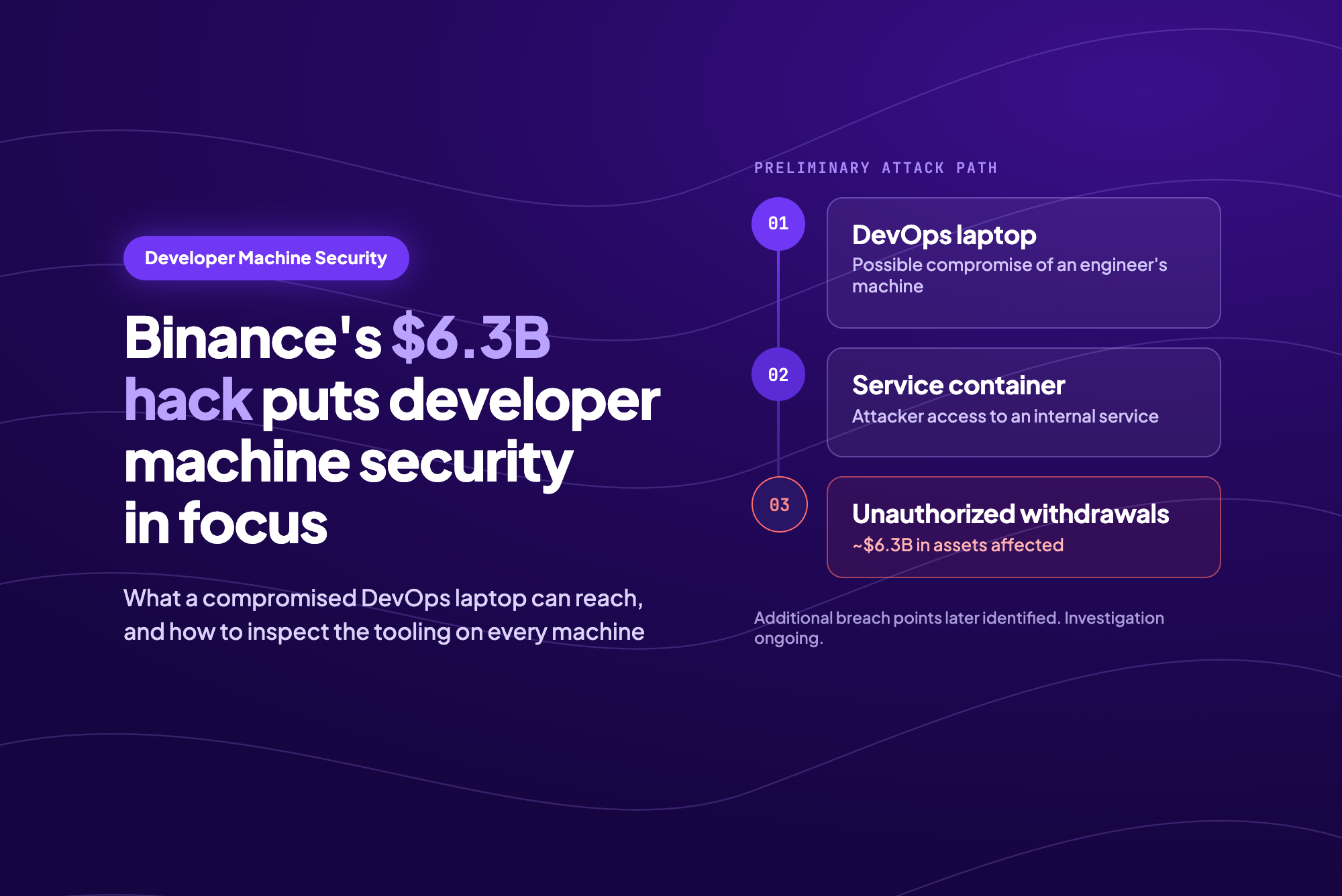
Binance’s $6.3 Billion Hack Puts Developer Machine Security in Focus

StepSecurity's analysis of Binance's 29 October 2026 incident, which Binance puts at about $6.3 billion in affected assets. It covers Binance's disclosure of a possible DevOps laptop compromise, and TRM Labs and Elliptic findings on 50 EIP-7702 authorizations and a persistent delegation. It links this to the Nx, OVHcloud CLI and Claude Code extension compromises, gives an investigation checklist, then describes StepSecurity products.

EthereumnpmVS Code+3
BinanceTRM LabsElliptic+5

Blockchain, Supply ChainΒ· Published and added 30 Oct 2026

theblock.coarticleπŸ›‘οΈ Security

Inside the largest crypto hack on record: How attackers breached Binance for $6.3 billion

The Block reports on the Binance hack of 30 October 2026, in which investigators estimate more than $6 billion was stolen from hot wallets and attribute the theft to North Korean groups. Binance says it holds about $5 billion of the affected assets and is buying $1.3 billion more to cover losses. The piece covers an EIP-7702 sweeper, laundering through Aave and DEXs, and analyst comments. The available text does not detail the intrusion path.

Aave
BinanceDPRKEIP-7702+1

Blockchain, Threat IntelΒ· Published and added 30 Oct 2026

theblock.coarticleπŸ›‘οΈ Security

President Trump says they’re looking into Binance hack as calls grow for crypto rules

The Block reports that Binance lost about $6.3 billion in a hack on 29 October 2026. Co-CEO Richard Teng said a compromised DevOps engineer's laptop gave access to a service container used to submit unauthorized withdrawals, and TRM Labs attributed the theft to North Korea's TraderTraitor. The rest covers reactions: President Trump said on 30 October he was looking into it, CFTC Chair Michael Selig and The Digital Chamber urged federal exchange rules, and senators disputed whether the Clarity Act would have allowed freezes.

BinanceTraderTraitorTRM Labs+5

Threat Intel, BlockchainΒ· Published and added 30 Oct 2026

galaxy.comarticleπŸ›‘οΈ Security

Weekly Research Brief: Binance Hacked; Hyperliquid on Wall Street; Prediction Markets’ Brazil β€˜Miss’

Galaxy Research's weekly brief of 30 October 2026 opens with the Binance hack: about $6.3b drained across 10 blockchains, attributed by TRM Labs and Chainalysis to TraderTraitor (Lazarus-linked). The attacker used EIP-7702 with 50 pre-signed authorizations on Ethereum, and Binance's preliminary finding is a compromised DevOps laptop reaching a service container. Tether and Circle froze about $2.6b. The other sections cover Hyperliquid and prediction markets.

EthereumBitcoinUSDC+2
TraderTraitorLazarus GroupEIP-7702+7

Blockchain, Threat IntelΒ· Added 30 Oct 2026

galaxy.comarticleπŸ›‘οΈ Security

Here We Go Again: Binance Loses $6.3b in Largest Robbery in History

Galaxy Research newsletter on the roughly $6.3b drained from Binance across 10 blockchains, which TRM Labs and Chainalysis attribute to TraderTraitor. On Ethereum the attacker used EIP-7702 to turn a hot wallet into a sweeper contract backed by 50 pre-signed authorizations. Binance's preliminary finding is a compromised DevOps laptop, with no wallet key leak. Tether, Circle, Ripple and World Liberty froze about $2.7b; Galaxy also assesses Binance's ability to cover losses.

EthereumBitcoinTether+3
TraderTraitorLazarus GroupBinance+7

Blockchain, Threat IntelΒ· Added 30 Oct 2026

bankless.comarticleπŸ›‘οΈ Security

Binance Just Suffered the Biggest Hack in Crypto History. What Now?

Bankless report on the Binance hack of $6.3 billion, which Binance's preliminary investigation traced to a compromised DevOps engineer's laptop with access to withdrawal-authorizing systems. TRM Labs found valid EIP-7702 authorizations on Ethereum, and nine other chains were drained through normally signed transactions. TRM and Chainalysis link it to North Korea's TraderTraitor. Tether and Circle froze about $3 billion, and Binance says SAFU and corporate cash will cover the losses.

EthereumBitcoinSolana+1
BinanceTraderTraitorDPRK+9

Blockchain, Threat IntelΒ· Published and added 30 Oct 2026

decrypt.coarticleπŸ›‘οΈ Security

Secret Service, FBI Join Binance Hack Probe as Circle Freezes $823 Million

Decrypt reports that Binance is working with the FBI and U.S. Secret Service after a theft of about $6.4 billion, which TRM Labs and Chainalysis attribute to North Korea's TraderTraitor group, also linked to the February 2025 Bybit hack. Circle froze about $823 million in USDC and Tether froze USDT, though the page gives differing Tether totals. Binance first suspected a compromised DevOps engineer laptop, found more breach points, and saw no evidence of leaked wallet private keys.

USDCTether
TraderTraitorBinanceBybit+10

Blockchain, Threat IntelΒ· Published and added 30 Oct 2026

21shares.comarticleπŸ›‘οΈ Security

Binance hack: the largest robbery in financial history

Binance hack analysis from 21shares on the 29 October 2026 theft of about $6.3 billion from Binance. Binance's initial finding points to a compromised DevOps engineer's laptop with no sign of a leaked wallet key. Chainalysis attributes it to North Korea with high confidence, and about $3 billion was frozen by Tether, Circle and the Arbitrum Security Council. The attacker also borrowed about $44.6 million of WETH on Aave. Binance says SAFU and company funds will cover all losses.

AaveTetherUSDC+2
BinanceLazarus GroupDPRK+7

Threat Intel, BlockchainΒ· Published and added 30 Oct 2026

theblock.coarticleπŸ›‘οΈ Security

Binance says it has $6.34 billion ready to cover hack losses

The Block reports that Binance says it has set aside $6.34 billion of its own funds to cover a hack it puts at about $6.3 billion. Co-CEO Richard Teng says the entry point was a compromised DevOps laptop and no private key leak was found. About $3 billion was frozen by Tether, Circle, Ripple and others, withdrawals are suspended, and TRM Labs sees parallels with North Korean attacks. Technical detail is thin.

BinanceTRM LabsTether+4

Blockchain, Threat IntelΒ· Published and added 30 Oct 2026

aikido.devarticleπŸ›‘οΈ Security

Binance hack: how a compromised developer laptop can lead to a $6.3 billion breach

Aikido Security's analysis of the roughly $6.3 billion Binance incident, which Binance says may have started with a compromised DevOps engineer's laptop. It sets out what is known (no private key leak, TraderTraitor attribution by TRM Labs and Chainalysis, additional breach points) and a plausible chain from laptop credentials to a withdrawal service. It compares the 2025 Bybit theft and lists mitigations.

npmVS CodeAWS+1
BinanceTraderTraitorLazarus Group+9

Blockchain, Threat Intel, Supply ChainΒ· Published and added 30 Oct 2026

decrypt.coarticleπŸ›‘οΈ Security

Binance Finds 'Additional Points of Breach' in $6.3B Hack

Binance estimated the October 2026 security incident at about $6.3 billion and said it found "additional points of breach" beyond the compromised DevOps engineer laptop it first named. The attacker reached a service container and submitted unauthorized withdrawals, with no wallet private key leak found. Arkham counted $6.01 billion taken from hot wallets on nine chains; Tether and Circle froze about $1.8 billion in stablecoins. About $3 billion is frozen onchain; withdrawals stay suspended.

TetherUSDCEthereum+2
BinanceArkhamRichard Teng+4

Threat Intel, BlockchainΒ· Published and added 30 Oct 2026

bleepingcomputer.comarticleπŸ›‘οΈ Security

Binance links $6.3 billion crypto theft to compromised DevOps laptop

Binance linked the theft of about $6.3 billion in crypto to a compromised DevOps engineer's laptop, which let attackers reach a service container and submit unauthorized withdrawals. TRM Labs and Chainalysis attribute the 29 October 2026 attack to North Korea's TraderTraitor. About $2.7 billion was frozen, and the attackers hold about $2.4 billion. Binance has found no evidence of a leaked wallet private key.

BinanceTetherCircle+3
TraderTraitorLazarus GroupAPT38+5

Blockchain, Threat IntelΒ· Published and added 30 Oct 2026

en.cryptonomist.charticleπŸ›‘οΈ Security

Anthropic security breach exposed salaries and messages, not model weights

Anthropic security incident in which researchers from the startup Cathedral reached Anthropic's commercial, HR and IT systems through vulnerable third-party administrative applications. Exposed data included salaries, job offers, meeting transcripts and Slack messages; Anthropic says customer prompts, source code and model weights were not accessed. Anthropic cut access the same day and kept the apps disabled until vendors patched. The companies dispute whether Cathedral reported all its activity.

AnthropicSlack
CathedralDOGEExternal Researchers Program

Threat IntelΒ· Published and added 30 Oct 2026

Showing 30 of 553

Show more