- TCP Use-After-Free: CVE-2026-98432 / CVSS 9.8
CVE-2026-98432 is a use-after-free in the Linux IPv4 TCP handshake, rated CVSS 3.1 9.8 and reachable by a remote unauthenticated peer on kernels back to 4.4. The post lists fixed stable releases (October 2026) and distribution patch status as of 31 October 2026, plus kernel and MPTCP listener checks. It gives interim nftables and iptables rules that drop IPv4 packets carrying options, and notes Anthropic's claim that Claude wrote a working exploit.
 atlasum.netadvisoryAdded 1 Nov 2026, published 31 Oct 2026🛡️ Security
 Threat Brief: Critical Vulnerabilities in PHP: CVE-2026-109618, CVE-2026-109619 (Updated October 29)
Unit 42 threat brief on PHP2Shell, two PHP remote code execution flaws, CVE-2026-109618 and CVE-2026-109619 (CVSS 4.0 9.2), both caused by longjmp() error handling that leaves memory uninitialized or freed. Cortex Xpanse counted over 22.6 million exposed instances. The 29 October 2026 update says attackers chained PHP2Shell with a Linux kernel privilege escalation against internet-exposed PAN-OS management interfaces. An earlier 23 October claim of post-compromise activity was retracted on 25 October.
 unit42.paloaltonetworks.comadvisoryAdded 30 Oct 2026, published 29 Oct 2026🛡️ Security
- lee1981 (@lee1981b) on X
CVE-2026-92885 is a critical (CVSS 3.1 9.8, CWE-287) authentication bypass in the Qode Membership WordPress plugin, versions through 2.0.6.2. A misspelled variable in the Facebook token-verification guard skips provider checks, so an unauthenticated attacker with a public nonce can get a session cookie for an existing account, including an administrator. The post gives the fix (2.0.6.3, bundled in Bridge 30.9), KEV/EPSS/SSVC status, and a SOC log-correlation and remediation plan.
 x.comadvisoryAdded 31 Oct 2026, published 28 Oct 2026🛡️ Security
- lee1981 (@lee1981b) on X
CVE-2026-115905 is a ZIP cloaking flaw in the Rust zip crate (zip-rs/zip2), rated CVSS v4.0 10.0 and affecting versions below 9.0.5. ZipArchive reads central-directory metadata while ZipStreamReader reads local headers, so a crafted archive can pass filename inspection and then overwrite a different file during streaming extraction. Version 9.0.5 adds consistency checks, but ZipStreamReader::new leaves them off by default, and extraction is not atomic, so files can be written before an error is raised. The post covers CWE-20 and CWE-436, KEV and EPSS status, Debian status and a six-step investigation trail.
x.comadvisoryAdded 29 Oct 2026, published 27 Oct 2026🛡️ Security - CISA Adds Two Known Exploited Vulnerabilities to Catalog
CISA added two PHP vulnerabilities to its Known Exploited Vulnerabilities Catalog on 26 October 2026: CVE-2026-109618 (memory corruption) and CVE-2026-109619 (stale internal request state). It also updated its PHP alert on critical vulnerabilities requiring immediate patching. The alert restates BOD 26-04, which requires federal civilian agencies to prioritize fast remediation of KEV CVEs on exposed assets and to check for prior compromise.
 cisa.govadvisoryAdded 29 Oct 2026, published 26 Oct 2026🛡️ Security
- EPICS Base
CISA ICS advisory ICSA-26-300-01 (October 27, 2026) covers EPICS Base release 7.0.10 and earlier, with CVE-2026-114595 through CVE-2026-114598. Flaws include integer overflow, length parameter inconsistency and type confusion, allowing denial of service, memory corruption, information disclosure or remote code execution (CVSS v3.1 9.8). The fix is EPICS Base 7.0.11, with patches in epics-base and pvDataCPP pull requests.
cisa.govadvisoryAdded 29 Oct 2026, published 26 Oct 2026🛡️ Security  Broccoli2shell: Everything You Need To Know About The Critical Brotli Decoder Vulnerability
CVE-2026-111497 (Broccoli2Shell, also Node2Shell and HTTP2Shell) is an out-of-bounds write in the upstream Brotli C decoder. It affects Node.js, Bun, Envoy Proxy, Istio and Python packages, and can lead to memory corruption, information disclosure, crashes or RCE when untrusted Brotli data is decompressed. Wiz reports 91% of cloud environments have vulnerable resources. The post lists patching, inventory, rebuild and temporary mitigation steps.
 wiz.ioadvisoryPublished and added 25 Oct 2026🛡️ Security
 CVE-2026-109618 / CVE-2026-109619 | NodeZero Rapid Response Check Now Available
PHP2Shell is the name for CVE-2026-109618 and CVE-2026-109619, critical unauthenticated RCE flaws in PHP core fixed on 21 October 2026 in PHP 8.2.35, 8.3.36, 8.4.27 and 8.5.12. The page explains the out-of-memory corruption and stale global state causes, mod_php and PHP-FPM exposure, interim mitigations, hunting guidance, exploitation reports from October 2026, and the 23 October CVE-2026-115560 upload-progress advisory. Horizon3 also announced a non-exploiting NodeZero check.
 horizon3.aiadvisoryAdded 29 Oct 2026, published 23 Oct 2026🛡️ Security
 Xavier Rivera (@XavierRiveraX) on X
CVE-2026-115560 is a PHP code execution bug reported two days after the PHP2Shell emergency patches. The post says those releases do not fix it and no emergency fix is planned. Only apps that switch session.serialize_handler to php via ini_set() before session_start() are exposed. The mitigation is session.upload_progress.enabled=0, which also covers anyone who applied it for the 21 October advisory. The post gives no technical root-cause detail.
x.comadvisoryAdded 25 Oct 2026, published 23 Oct 2026🛡️ Security Brotli vulnerability affects curl and Git
GHSA-9v8h-qqgm-4m35 is a critical buffer overflow (CVSS v4 9.2) in the Google Brotli decoder (c/dec/decode.c), affecting versions 1.0.3 through 1.2.0 on all platforms. A crafted compressed stream lets an unauthenticated remote attacker corrupt adjacent decoder state, leak memory, crash the process, or possibly execute code. Fixed in 1.0.10, 1.1.1 and 1.2.1. The page does not mention curl or Git, despite the title.
 github.comadvisoryAdded 25 Oct 2026, published 23 Oct 2026🛡️ Security
- lee1981 (@lee1981b) on X
CVE-2026-111497 is an out-of-bounds write in the Brotli decoder bundled with Node.js (CWE-787, CWE-252), rated CVSS v4.0 9.2 by the Google CNA and High by the Node.js project. Fixes are Node 22.23.4, 24.22.1 and 26.12.1, and 24.22.1 still labels Brotli 1.2.0 because the fix was cherry-picked. The post gives a SOC trail from input to worker, with remediation and verification steps. It notes no KEV match, CISA SSVC exploitation none, and only unverified public lab claims.
x.comadvisoryAdded 26 Oct 2026, published 23 Oct 2026🛡️ Security  PHP Patches Two Critical Unauthenticated RCEs (CVE-2026-109618, CVE-2026-109619): Update Now
Snyk's write-up of two critical unauthenticated PHP runtime RCEs, CVE-2026-109618 (out-of-memory corruption) and CVE-2026-109619 (stale global state, cross-request use-after-free), both CVSS v4.0 9.2. Fixed in PHP 8.5.12, 8.4.27, 8.3.36 and 8.2.35 on 21 October 2026. It covers the disclosure timeline, affected SAPIs (mod_php most exposed), backports for 8.1 and older, and partial mitigations.
 snyk.ioadvisoryPublished and added 22 Oct 2026🛡️ Security
 PHP Remote Code Execution ("PHP2Shell" CVE-2026-109618 & CVE-2026-109619)
PHP2Shell is the name for CVE-2026-109618 (out-of-memory corruption) and CVE-2026-109619 (stale global state), two unauthenticated PHP remote code execution flaws rated CVSS 4.0 9.2. Details leaked before the 21 October 2026 patch release, and watchTowr's honeypots saw exploitation. The page lists fixed versions (8.5.12, 8.4.27, 8.3.36, 8.2.35), states that .ini mitigations do not work, gives a timeline, and describes compromise checks.
 watchtowr.comadvisoryAdded 28 Oct 2026, published 21 Oct 2026🛡️ Security
 Frequently Asked Questions About PHP Remote Code Execution (PHP2Shell CVE-2026-109618 & CVE-2026-109619)
PHP2Shell is the name for CVE-2026-109618 and CVE-2026-109619, two unauthenticated remote code execution flaws in PHP, both CVSS v4.0 9.2. One stems from out-of-memory corruption during request setup, the other from stale global state reused by the next request. watchTowr reports exploitation since 21 October 2026, lists fixed releases (8.5.12, 8.4.27, 8.3.36, 8.2.35) and says PHP 5 is also affected. PHP says no configuration change fully mitigates.
watchtowr.comadvisoryAdded 30 Oct 2026, published 20 Oct 2026🛡️ Security- lee1981 (@lee1981b) on X
CyberForge CVE of the Day #080 covers CVE-2026-99999 ("PwnEscape"), a Linux kernel IPv4 checksum-completion flaw. Crafted checksum metadata can trigger a deferred write into an already-validated IPv4 header, which allows host memory disclosure from a guest or microVM over virtio-net and TAP. It gives upstream fixed branches (5.10.272 to 7.2.11), Amazon Linux, Red Hat and Ubuntu status, CVSS 9.3, EPSS 0.211% and a SOC investigation trail. No IOCs were verified.
x.comadvisoryAdded 19 Oct 2026, published 17 Oct 2026🛡️ Security - Dark Web Intelligence (@DailyDarkWeb) on X
Summary of Vercel's Oct 14, 2026 out-of-band Next.js security release fixing two critical unauthenticated RCEs: one in App Router apps with Cache Components where a "use cache" function returns multiple typed arrays (GHSA-673q-mjm6-r5xr, upstream React GHSA-xqc2-xf4c-x3h3, no workaround), and one in the Image Optimization API handling SVG on glibc Linux via a memory bug in a library used through sharp (CVE-2026-96889 / GHSA-2464-fhr4-w9xw, workaround sharp 0.35.5+). Also covers a high-severity Server Actions DoS (GHSA-p3m5-59mp-jv5r). Fixes ship in two supported Next.js LTS lines. No in-the-wild exploitation reported.
x.comadvisoryAdded 17 Oct 2026, published 16 Oct 2026🛡️ Security - lee1981 (@lee1981b) on X
Daily CVE digest on CVE-2026-76519, a CVSS 9.8 relative path traversal (CWE-23) in Cisco Secure Email Gateway's AMP File Reputation attachment processing. A crafted attachment gives unauthenticated arbitrary file writes and root command execution, and Cisco PSIRT reports active exploitation. The CVE is in CISA KEV. It lists the applicability conditions (File Reputation assigned to a policy and Content Scanner Tools earlier than 25.3.0.5525) and the fixes (scanner 25.3.0.5525, AsyncOS 15.5.5-014 and 16.5.0-780). It also covers evidence preservation, reading Cisco's System Security scan outcomes, mail/AMP log correlation, and deployment-specific recovery including cluster-key exposure.
x.comadvisoryAdded 18 Oct 2026, published 15 Oct 2026🛡️ Security  Critical GitLab RCE Lets Unauthenticated Attackers Execute Code on Servers (CVE-2026-97229)
Orca Security analysis of CVE-2026-97229, a CVSS 10.0 flaw in GitLab CE/EE. An integer overflow (CWE-190) in the CI/CD regular expression compiler gives memory corruption and code execution as the git user. It is triggered by a crafted regex in .gitlab-ci.yml combined with a UTF-8 repository path, with no authentication needed on instances that allow public project creation or self-registration. Lists affected branches (19.2 before 19.2.8, 19.3 before 19.3.5, 19.4 before 19.4.2), the absence of a workaround, interim mitigations, and a Rapid7 PoC against GitLab CE 19.4.1 with ASLR on. Notes a prior max-severity GitLab bug (CVE-2026-85706) was probed in the wild within hours and later added to CISA KEV.
 orca.securityadvisoryPublished and added 14 Oct 2026🛡️ Security
- ♫Why♥Not♪ (@Python_s_) on X
Alert summarizing XBOW's disclosure of a three-stage Chrome for Windows exploit chain: V8 Maglev memory corruption (CVE-2026-85045), Animated WebP decoder memory corruption (Chromium issue 548509153), then a Crashpad sandbox escape (CVE-2026-78952). Loading a crafted page was enough; no click or download needed. Human researchers working with GPT-5.6 Sol agents built it in six days, Google paid $250,000, all three bugs are fixed, and no in-the-wild exploitation is confirmed. It advises updating Chrome and restarting, and gives forensic triage pointers.
x.comadvisoryAdded 15 Oct 2026, published 14 Oct 2026🛡️ Security - lee1981 (@lee1981b) on X
CyberForge "CVE of the Day #076" covers CVE-2026-97229, a CVSS 10.0 integer overflow (CWE-190) in GitLab CE/EE's CI/CD regular expression compiler. It can lead to conditional unauthenticated code execution on the GitLab server. It lists the affected trains (19.2 before 19.2.8, 19.3 before 19.3.5, 19.4 before 19.4.2) and the 19.3.4 vs 19.3.5 Ona-regression discrepancy. It also gives six SOC checks: scoping, log preservation (Workhorse/Rails/Sidekiq, correlation_id), server-effect hunting, request-to-process correlation, upgrade and running-state verification. It notes that exploit details are unverified, no KEV listing exists and EPSS data is unavailable.
x.comadvisoryAdded 15 Oct 2026, published 13 Oct 2026🛡️ Security  ♫Why♥Not♪ (@Python_s_) on X
Alert on CVE-2026-106610, a critical (CVSS 9.8) incorrect privilege assignment flaw in the miniOrange OTP Verification WordPress plugin, versions 5.5.7 and earlier. Unauthenticated remote attackers can gain elevated permissions, potentially administrator, with no user interaction. Fixed in 5.5.8; no in-the-wild exploitation or public PoC verified. It advises auditing unexpected admin accounts and role changes, and warns that Patchstack's mitigation blocks legitimate requests too.
x.comadvisoryPublished and added 11 Oct 2026🛡️ Security MCP spec 2026-07-28 changelog (stateless protocol, MRTR, Sampling/Roots deprecated)
Official changelog for the Model Context Protocol 2026-07-28 specification. Major changes: protocol-level sessions and the initialize handshake are removed to make MCP stateless, with version and capabilities carried in _meta on every request, plus a new server/discover RPC and subscriptions/listen replacing the GET stream and resource subscribe calls. It introduces Multi Round-Trip Requests (InputRequiredResult) in place of server-initiated sampling, roots and elicitation requests, moves tasks into an extension, and deprecates Roots, Sampling, Logging, HTTP+SSE and Dynamic Client Registration. Minor changes add cache hints (ttlMs/cacheScope), new Mcp-Method/Mcp-Name headers, OpenTelemetry trace context, RFC 9207 iss validation and an error-code allocation policy.
 modelcontextprotocol.ioadvisoryAdded 10 Oct 2026🧠 AI
- lee1981 (@lee1981b) on X
CyberForge's CVE of the Day #073 covers CVE-2026-102255, a critical (CVSS 10.0) pre-authentication SSRF / confused-deputy flaw (CWE-918, CWE-441) in the SonicWall SMA1000 Work Place interface, per advisory SNWLID-2026-0017. It lists affected platform hotfixes (12.4.3-03526 and older, 12.5.0-02952 and older), fixed floors (12.4.3-03670, 12.5.0-03082), no workaround, and the exploitation picture (no known exploitation, not in KEV, EPSS 0.477%, SSVC automatable). It gives a six-step SOC playbook covering appliance scoping, AMC log preservation, hunting appliance-originated internal requests, correlating receiving-service changes, patching, and verifying every node, and it separates exposure, a lead, confirmed compromise and telemetry gaps.
x.comadvisoryAdded 12 Oct 2026, published 9 Oct 2026🛡️ Security  Citrix Urges Immediate Patching of Critical NetScaler Vulnerability
Citrix disclosed CVE-2026-107406 (CVSS 9.5), a critical memory overflow in NetScaler ADC and NetScaler Gateway that can lead to remote code execution or denial of service when appliances are configured as a SAML SP or SAML IdP, also affecting Secure Private Access Hybrid deployments using NetScaler. Patches are available in versions 14.1-73.46, 13.1-64.29, and the corresponding FIPS/NDcPP builds; Citrix says it is not aware of exploitation yet but urges immediate upgrades. The bulletin follows two other recently exploited NetScaler RCE/DoS zero-days (CVE-2026-88771, CVE-2026-88772) used against government, financial, education, legal, and professional-services organizations, and a separate DoS zero-day (CVE-2026-88779).
 securityweek.comadvisoryPublished and added 9 Oct 2026🛡️ Security
- go-ethereum v1.17.8 "Protein Sludge Pack"
Security-focused release notes for go-ethereum (Geth) v1.17.8, patching several denial-of-service vulnerabilities in the eth/snap p2p protocol handlers, hardening JUMPDEST analysis caching against post-Amsterdam-fork attacks, requiring IP verification before accepting discovery statements, fixing a rogue-STUN-server crash, and closing a DoS vector tied to BAL accounts. Most issues only become exploitable after the Amsterdam fork activates, and the release also includes RPC correctness fixes (eth_simulateV1, eth_createAccessList) and a Sparse Blobpool (EIP-8070) correctness bug.
github.comadvisoryAdded 8 Oct 2026🛡️ Security  Microsoft, Adobe, Apple, and Foxit vulnerabilities
Cisco Talos discloses eight vulnerabilities patched by vendors: a Photoshop installer privilege escalation (CVE-2026-48388), a macOS CoreWLAN information disclosure bug, two Foxit Reader flaws including a JavaScript CBF_Widget remote code execution (CVE-2026-57256) and an Array use-after-free (CVE-2026-91799), and four Windows kernel-driver bugs — NETIO.sys information disclosure (CVE-2026-50475), two Cloud Files Mini Filter Driver issues (use-after-free CVE-2026-58613 and type confusion CVE-2026-80093), and a tcpip.sys out-of-bounds read (CVE-2026-49177). Each advisory gives the affected version and trigger mechanism, and Talos notes Snort coverage is available for detection.
 blog.talosintelligence.comadvisoryPublished and added 7 Oct 2026🛡️ Security
 International AI Safety Report 2026
The International AI Safety Report 2026 is the second edition of the report series mandated by nations at the Bletchley AI Safety Summit, synthesising current scientific evidence on the capabilities, emerging risks, and safety of general-purpose AI systems. It was produced by an Expert Advisory Panel with representatives nominated by 29 countries, the UN, the OECD, and the EU, drawing on contributions from over 100 independent AI experts with full editorial discretion over content.
 arxiv.orgadvisoryAdded 2 Oct 2026🧠 AI
- MCP TypeScript SDK v2.2.0
Release notes for v2.2.0 of the official Model Context Protocol TypeScript SDK. Upgrade notes: machine-to-machine OAuth providers (ClientCredentialsProvider, PrivateKeyJwtProvider, StaticPrivateKeyJwtProvider, CrossAppAccessProvider) should now be given expectedIssuer, and fetchToken() throws AuthorizationServerMismatchError when client information is bound to a different authorization server. listTools/listPrompts/listResources/listResourceTemplates now follow nextCursor automatically, capped by listMaxPages. Fixes include CommonJS type-checking of the DPoP jose types, unhandled rejections in Client.listen(), createMcpHandler stack overflow and subscriptions/listen handling, .localhost loopback for OAuth token endpoints, and v1-to-v2 codemod comment preservation.
github.comadvisoryAdded 1 Oct 2026🧠 AI  Threat Brief: NetScaler Zero Days CVE-2026-88771 and CVE-2026-88772 Exploited in the Wild (Updated September 30)
Unit 42 threat brief on CVE-2026-88771 (unauthenticated command injection) and CVE-2026-88772 (DTLS memory overflow) in NetScaler ADC and Gateway, both CVSS v4.0 9.5 and exploited as zero-days from August 2026. It details version fingerprinting, .deb and PHP web shells, a three-stage log-poisoning chain through ns_monuploadd_err.pl, httpd.conf persistence, IOCs, and 50,277 exposed instances as of 27 September 2026.
unit42.paloaltonetworks.comadvisoryAdded 30 Oct 2026, published 30 Sep 2026🛡️ Security Solidity 0.8.37 Release Announcement
Official release notes for Solidity v0.8.37 detailing three bug-bounty-reported compiler bugs: memory `delete` on a bytes-array element zeroing a full 32-byte word instead of one byte (corrupting adjacent memory, evmasm pipeline, up to v0.8.36); a stack-to-memory spill-slot collision under mutual recursion in the IR pipeline (`--via-ir`, v0.7.2–v0.8.36) that silently overwrites live variables; and named custom-error arguments in `require(...)` being ABI-encoded in call-site order rather than declaration order, so revert data misrepresents error values (v0.8.36 introduced but only affects revert data). Also covers two non-security miscompilations (uninitialized packed function pointers, checked/unchecked constant reuse), a new SSA-CFG stack shuffler, Amsterdam EVM's SLOTNUM opcode support, and removal/deprecation of LSP mode, Generic Solidity, and several EVM version pragmas.
 soliditylang.orgadvisoryAdded 29 Sep 2026🛡️ Security
- CVE-2026-49291: mcp-memory-service is a semantic memory layer for AI applications
CVE-2026-49291 affects mcp-memory-service prior to version 10.65.3: its HTTP MCP JSON-RPC endpoint at /mcp only enforced OAuth 'read' scope before dispatching tools/call requests, so a client holding only read access could invoke mutating tools like store_memory and delete_memory even though the equivalent REST endpoints correctly required 'write' scope. The flaw is a classic missing-authorization bug (CWE-862) surfacing specifically in an MCP tool-dispatch layer, scored CVSS 3.1 8.1 (High) with confidentiality unaffected but integrity and availability impacted. Fixed in 10.65.3.
 nvd.nist.govadvisoryAdded 26 Sep 2026🛡️ Security
- CVE-2026-16498: The terraform-mcp-server before version 1
CVE-2026-16498 is a critical (CVSS 3.1: 10.0) exposure-of-sensitive-information flaw (CWE-488) in HashiCorp's terraform-mcp-server prior to version 1.1.0. In stateless streamable-HTTP transport mode, one user's Terraform API token could be reused to execute tool calls on behalf of a different, subsequent user, breaking tenant isolation in shared MCP server deployments. Fixed in terraform-mcp-server 1.1.0; further detail is tracked in HashiCorp's HCSEC-2026-23 advisory.
nvd.nist.govadvisoryAdded 26 Sep 2026🛡️ Security - Ruby SSE Session Poisoning
A GitHub Security Advisory (GHSA-5p9g-j988-pcwv) documents a session poisoning flaw in the Ruby MCP SDK's Streamable/SSE HTTP transport: the server never validates that a POST to /messages/{session_id} actually belongs to the caller, so an attacker who obtains a victim's session ID (e.g. via logs or network sniffing) can silently execute tool calls whose responses are delivered into the victim's own SSE stream. The advisory includes a working PoC (attacker/legitimate client scripts against the SDK's example streamable_http_server.rb), notes that csharp-sdk and go-sdk correctly bind sessions to user identity while ruby-sdk does not, and distinguishes the bug from the related "Stream Replacement" advisory (GHSA-qvqr-5cv7-wh35), which disconnects rather than poisons the victim's stream.
github.comadvisoryAdded 26 Sep 2026🛡️ Security - CISA Adds Seven Known Exploited Vulnerabilities to Catalog | CISA
CISA added seven vulnerabilities to its Known Exploited Vulnerabilities Catalog on the basis of active exploitation. They are SQL injection in Sangoma Switchvox, HTTP request/response smuggling in Kludex Starlette, OS command injection in Kestra OSS, improper authentication in BerriAI LiteLLM and JFrog Artifactory, and SSRF plus OS command injection in SonicWall SMA1000 appliances. The alert restates BOD 26-04, which makes federal agencies prioritise rapid remediation of KEV CVEs on publicly exposed assets that grant total control after exploitation. It also requires agencies to check for prior compromise before patching.
cisa.govadvisoryAdded 26 Sep 2026🛡️ Security - Memory Byte Array Element Delete Clears Whole Word Bug
The Solidity team disclosed a code-generator bug (reported by Shaheen Fazim via the Ethereum Foundation bug bounty program) where `delete b[i]` on a bytes/string element located in memory incorrectly writes a full 32-byte zero word instead of a single byte, corrupting up to 31 subsequent bytes — either later elements of the same array or, for elements near the array's end, adjacent memory allocations like other variables. The bug affects only the default evmasm pipeline (not the IR pipeline via --via-ir) in all versions up to and including 0.8.36, is fixed in 0.8.37, and the equivalent assignment `b[i] = 0` is unaffected and serves as a workaround. A Sourcify scan of ~870,000 verified compilations found the triggering pattern in only two functions, neither actually exploitable in practice.
soliditylang.orgadvisoryAdded 29 Sep 2026, published 10 Sep 2026🛡️ Security - Spill Slot Collision Across Mutual Recursion Bug
The Solidity team disclosed a compiler bug (fixed in Solidity 0.8.37) where the IR pipeline's stack-to-memory spill mechanism can assign the same fixed memory offset ("spill slot") to two simultaneously-live local variables when a contract's call graph contains mutual recursion, silently corrupting values without any revert or warning. The bug requires --via-ir compilation plus a narrow set of conditions (mutual recursion, >16 live locals in reachable non-recursive functions, a variable read back after the recursive call) and affects Solidity 0.7.2 through 0.8.36; a rescan of ~319,000 Sourcify-verified contracts found no affected deployments. The writeup includes full technical detail on the buggy depth-first slot allocator, an annotated PoC contract reproducing the silent overwrite, and the strongly-connected-component fix.
soliditylang.orgadvisoryAdded 29 Sep 2026, published 10 Sep 2026🛡️ Security - Solidity 0.8.37 Release Announcement
Solidity 0.8.37 release notes disclosing three EF bug-bounty-reported compiler bugs with security implications: deleting an element of a memory bytes array (or converted string) zeroed the full 32-byte word instead of one byte, corrupting adjacent data in the evmasm pipeline (all versions ≤0.8.36); a stack-to-memory spill-slot collision in mutually recursive functions under --via-ir silently overwrote live variables (0.7.2–0.8.36); and require() with a custom error using named arguments encoded parameters in call-site rather than declaration order, producing structurally valid but semantically wrong revert data. The release also adds two non-security miscompilation fixes, an experimental planning-based stack shuffler for the SSA CFG backend, support for the Amsterdam EVM's SLOTNUM opcode (EIP-7843), and removes/deprecates several experimental features.
soliditylang.orgadvisoryAdded 29 Sep 2026, published 10 Sep 2026🛡️ Security - Misordered Named Parameters in require with Custom Errors Bug
The Solidity team discloses a bug (reported by Cantina Security via the Ethereum Foundation bug bounty) where the IR-based (--via-ir) code generator pushed named custom-error arguments in call-site order instead of declaration order before ABI-encoding, corrupting revert data for require(condition, ErrorName({...})) calls with reordered named parameters. Introduced in Solidity 0.8.26 and fixed in 0.8.37, the bug produces silently swapped or type-confused values in decoded revert data with no compiler warning, and can cause misaligned encoding in multi-slot-argument cases that either reverts with undecodable data or produces a plausible-but-wrong payload - a real concern for standards like ERC-3668 (CCIP Read) that treat revert data as part of the contract interface. Severity was rated "very low" since the affected transaction is already reverting and there is no attacker-controlled exploitation path, but audits of via-ir contracts using named custom-error arguments should check for it.
soliditylang.orgadvisoryAdded 29 Sep 2026, published 10 Sep 2026🛡️ Security  We discovered a critical vulnerability in isolated-vm a sandbox that is widely used in popular AI-related projects | Blog | Endor Labs
Endor Labs researchers found a critical type confusion vulnerability (GHSA-864f-rcv7-6rh4) in isolated-vm, the Node.js library used to run untrusted JavaScript inside a separate V8 Isolate. A TOCTOU bug in ExternalCopy's transferList handling — where a malicious getter returns a valid ArrayBuffer on a validating pass but an attacker-controlled value on the unchecked second pass — lets guest code escalate from a controlled-address crash to full host control-flow hijack, given only a single ivm.Reference. The bug is fixed in isolated-vm 7.0.1/6.2.0; affected downstream users include n8n, Activepieces, Mastra, Budibase, Sim.ai, Directus, and Rocket.Chat, which rely on isolated-vm to sandbox user- and model-generated code.
 endorlabs.comadvisoryAdded 3 Sep 2026, published 20 Aug 2026🛡️ Security
 Orca Security: Zoom Zero-Click RCE Flaws Allow Any Meeting Attendee to Compromise All Participants
Orca Security details four Zoom vulnerabilities in the cross-platform annotation engine (libannotate.so): CVE-2026-53413, a stack buffer overflow in CAnnoFormatBlock::Deserialize from unchecked 32-bit character counts, and CVE-2026-53415, a use-after-free in auto-shape metadata handling giving a write-what-where primitive, both enabling zero-click RCE against every meeting participant via crafted annotation messages during screen sharing. Also disclosed are CVE-2026-53414 (heap over-read/DoS) and CVE-2026-53416 (path traversal in the Windows VDI client). The write-up notes a working exploit chain built in under 24 hours with fewer than 20 AI-model prompts, platform-specific exploitation details (macOS ARM64 ASLR bypass, Android heap spraying/vtable corruption), and that E2EE meetings bypass Zoom's server-side message filtering.
orca.securityadvisoryPublished and added 12 Aug 2026🛡️ Security- CVE-2026-18394 - Incorrect authorization in Strands Agents Tools http_request tool
AWS bulletin for CVE-2026-18394, an incorrect authorization flaw in the http_request tool of the open-source strands-agents-tools package used with the Strands Agents SDK. The tool exposed an LLM-controllable proxies parameter that let attacker-controlled web content (via indirect prompt injection) redirect requests through an actor's proxy while the hostname allowlist check still passed, disclosing HTTP_REQUEST_TOKEN_CONFIG-bound credentials in cleartext Authorization headers on the first hop. Fixed in version 0.8.2; AWS recommends upgrading and rotating any credentials configured on affected versions.
 aws.amazon.comadvisoryAdded 6 Aug 2026🛡️ Security
- CVE-2026-15988 | INCIBE-CERT | INCIBE
CVE-2026-15988 describes a CSRF vulnerability (CVSS 8.8, CWE-352) in the "AI Engine – The Chatbot, AI Framework & MCP" WordPress plugin, affecting all versions up to and including 3.6.5. Missing/incorrect nonce validation on the reauth_for_authorize function lets an unauthenticated attacker trick a logged-in administrator into visiting a crafted link, which — combined with WordPress's ?_method=POST override to turn a GET into an authenticated REST POST — creates a new administrator account with attacker-supplied credentials.
 incibe.esadvisoryAdded 2 Aug 2026🛡️ Security
 HCSEC-2026-23 - Multiple vulnerabilities impacting HashiCorp Terraform MCP Server
HashiCorp advisory HCSEC-2026-23 discloses three vulnerabilities in terraform-mcp-server versions 0.2.1 through 1.0.0 (fixed in 1.1.0), all affecting the server's streamable-HTTP transport used for multi-user deployments. CVE-2026-14869 is an SSRF where an unauthenticated client can supply a Terraform address via query parameter (bypassing a header-only check) to exfiltrate the server's bearer token; CVE-2026-16496 is an authorization bypass where stateful mode's session-ID-keyed credential cache lets an attacker who obtains another user's session ID hijack that user's cached Terraform Cloud/Enterprise client and permissions; CVE-2026-16498 is cross-tenant credential reuse in stateless mode where the underlying MCP library's lack of unique session identifiers causes one tenant's token to be reused for other tenants' requests.
 discuss.hashicorp.comadvisoryAdded 30 Jul 2026, published 28 Jul 2026🛡️ Security
- CVE-2026-55608
CVE-2026-55608 affects n8n-MCP, an MCP server exposing n8n node documentation and operations to AI assistants. Prior to version 2.57.4, when run in multi-tenant HTTP mode (ENABLE_MULTI_TENANT=true), an authenticated tenant could bypass tenant scoping and access or delete default-scope workflow_versions backups left over from earlier single-tenant deployments or migrations, exposing other tenants' workflow data. The issue is tracked as CWE-200 (information exposure) and CWE-863 (incorrect authorization) and is fixed in v2.57.4.
nvd.nist.govadvisoryPublished and added 16 Jul 2026🛡️ Security - CVE-2026-61459
CVE-2026-61459 describes an argument injection flaw (CWE-88) in mcp-server-kubernetes before 3.9.0, where the structured tools kubectl_get, kubectl_describe, and kubectl_delete fail to block leading-dash resourceType/name parameters, letting an attacker bypass the assertNoDangerousFlags check and inject a --server flag. This redirects kubectl calls to an attacker-controlled API server, leaking the operator's bearer token and enabling full Kubernetes cluster compromise. Fixed in v3.9.0; details corroborated by a VulnCheck advisory and the upstream GitHub commit/PR.
nvd.nist.govadvisoryPublished and added 12 Jul 2026🛡️ Security - Solidity 0.8.36 Release Announcement
Solidity 0.8.36 release notes disclose two medium-severity compiler bugs: a Yul optimizer call-cycle detection flaw that let stack-to-memory spilling be wrongly applied to mutually recursive functions, causing separate invocations to share and overwrite the same memory slots; and a storage-layout warning bug that could reverse the AST's linearizedBaseContracts annotation when a contract's variables sit very close to the end of storage, corrupting constructor/state-variable initialization order. The release also adds experimental stack-to-memory spilling to the new SSA-form CFG code generator (behind --experimental --via-ssa-cfg) and removes the now-obsolete experimental EOF backend after EOF's rejection from the Fusaka upgrade.
soliditylang.orgadvisoryAdded 29 Sep 2026, published 9 Jul 2026🛡️ Security - Inheritance Order Reversal On Storage End Warning Bug
The Solidity team discloses a medium-severity compiler bug present from Solidity 0.8.29 through 0.8.35 (fixed in 0.8.36): the code that emits Warning 3495 (custom storage layout too close to storage end) uses ranges-v3's actions::reverse instead of views::reverse, permanently mutating the linearizedBaseContracts AST annotation instead of only reading a reversed copy. Because that annotation drives inheritance-order decisions throughout analysis and codegen, affected contracts can get reversed constructor execution order, wrong super/virtual-function and virtual-modifier resolution, and incorrect fallback/receive dispatch — either silently miscompiling or triggering internal compiler errors. Exploitation requires a contract using both inheritance and a `layout at` clause landing within the last 2^64 storage slots, a pattern the team found no real-world evidence of via GitHub and Sourcify scans.
soliditylang.orgadvisoryAdded 29 Sep 2026, published 9 Jul 2026🛡️ Security - CVE-2026-14699: Symlink Following in zcaceres markdownify-mcp - Live Threat Intelligence - Threat Radar | OffSeq.com
CVE-2026-14699 describes a local symlink-following vulnerability in the assertPathAllowed path-validation function of zcaceres' markdownify-mcp (an MCP server for converting content to Markdown), affecting versions up to 1.1.0. A local attacker can manipulate symbolic links to bypass the path allow-list and access or modify files outside the intended scope; a fix PR exists but is unmerged, so no patch is currently available.
 radar.offseq.comadvisoryAdded 26 Sep 2026, published 5 Jul 2026🛡️ Security
 simonecorsi/mawesome GitHub Action has been compromised
StepSecurity reports that the simonecorsi/mawesome GitHub Action repository was compromised on June 24, 2026, when an attacker force-pushed malicious commits and repointed several release tags to point at them, so any workflow pinned to those tags subsequently ran the attacker's code inside its GitHub Actions runner. StepSecurity notes the attack method mirrors the codfish/semantic-release-action compromise disclosed the same day, suggesting a coordinated campaign targeting GitHub Action maintainers via tag hijacking.
 stepsecurity.ioadvisoryAdded 3 Sep 2026, published 1 Jul 2026🛡️ Security
 Vulnerability-Lookup
GHSA-9c5h-h4mj-p5ch / CVE-2026-13524 documents an improper-authorization vulnerability (CWE-266) in Cherry Studio's MCP OAuth Local Callback Server (src/main/services/mcp/oauth/callback.ts), where manipulation of the code parameter can bypass authorization checks. The attack is remote but high-complexity and difficult to exploit (CVSS 3.1: 6.5 / CVSS 4.0), a public PoC has been disclosed, and a fix PR is still awaiting merge as of publication.
 vulnerability.circl.luadvisoryAdded 26 Sep 2026, published 29 Jun 2026🛡️ Security
- AI Security Briefing
GHSA-7835-87q9-rgvv discloses a High-severity (CVSS 7.7) flaw in Claude Code's git worktree handling: the CLI allowed creation of worktrees named ".git" and navigation outside the sandbox context, enabling git directory confusion attacks. By combining symlink manipulation with git fsmonitor execution during worktree operations, an attacker could overwrite files like the user's .zshenv to achieve code execution outside the seatbelt sandbox, though reliable exploitation required a victim to clone a malicious repo containing prompt-injection content and run Claude Code against it. The issue was reported via HackerOne by researcher metnew and is fixed in current Claude Code releases.
github.comadvisoryPublished and added 27 Jun 2026🛡️ Security - CVE-2026-12773
Tenable CVE entry for CVE-2026-12773, an improper authentication flaw in BerriAI LiteLLM up to 1.59.8. The vulnerable function is UserAPIKeyAuth in litellm/proxy/_experimental/mcp_server/auth/user_api_key_auth_mcp.py in the MCP Proxy component. It is remotely exploitable, a public exploit exists, and scores are CVSS v3.1 9.8 Critical, CVSS v4.0 6.9 Medium and EPSS 0.01017.
 tenable.comadvisoryAdded 26 Jun 2026🛡️ Security
 Orca Security: Critical Apache HTTP Server HTTP/2 Vulnerability Could Enable Remote Code Execution
Orca Security's write-up of CVE-2026-23918 (CVSS 8.8), a double-free memory corruption bug in Apache HTTP Server's mod_http2 stream cleanup logic. An unauthenticated attacker can trigger it by sending crafted HTTP/2 HEADERS frames followed by an early RST_STREAM with a non-zero error code. This causes heap corruption, crashes, and possibly remote code execution. Version 2.4.66 is affected and 2.4.67 fixes it. Public PoC details exist, but no in-the-wild exploitation had been reported. Disabling HTTP/2 is given as a temporary workaround.
orca.securityadvisoryPublished and added 8 May 2026🛡️ Security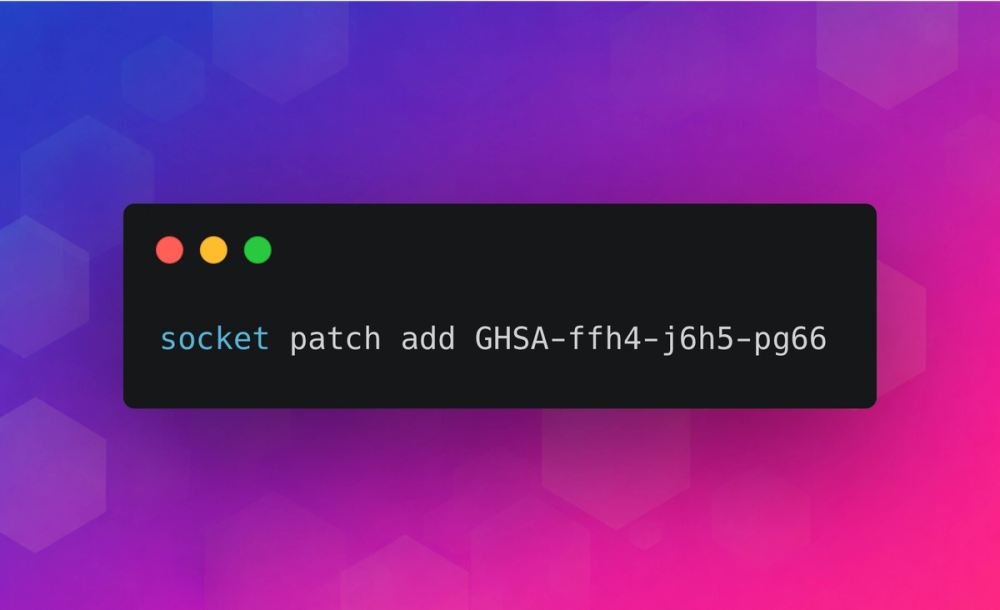 Socket: Critical vm2 Sandbox Escape
Socket disclosed that a critical sandbox escape in vm2 (GHSA-ffh4-j6h5-pg66, CVE-2026-26956), which lets attacker-controlled JavaScript passed to VM.run() escape isolation and execute arbitrary OS commands via WebAssembly.JSTag, affects far more than the officially listed vm2 3.10.4/Node 25 scope. Socket's testing showed 66 vm2 releases from 0.2.2 through 3.10.4 are exploitable on Node.js 24.15.0, and any Node runtime exposing WebAssembly.JSTag is vulnerable, meaning downstream SCA/scanner tools using the narrower advisory data would miss real exposure. Socket is releasing free Certified Patches (via `socket patch add`) for the issue alongside upgrade guidance to vm2 3.10.5+.
 socket.devadvisoryPublished and added 8 May 2026🛡️ Security
 Dirty Frag (CVE-2026-43284) Linux Privilege Escalation | Wiz Blog
Wiz details "Dirty Frag" (CVE-2026-43284 and CVE-2026-43500), a Linux kernel local privilege escalation chain combining page-cache write primitives in the xfrm-ESP (IPsec) and RxRPC subsystems that let an unprivileged-but-CAP_NET_ADMIN attacker corrupt page-cache-backed memory to gain root. It is a deterministic (non-race-condition) bug class similar to Dirty Pipe and is a successor to the earlier Copy Fail (CVE-2026-31431); a public PoC exists but no official patch is available yet, and affected code paths date back to 2017 (ESP) and 2023 (RxRPC).
wiz.ioadvisoryAdded 5 Sep 2026, published 8 May 2026🛡️ Security MCP TypeScript SDK Cross-Client Data Leak (CVE-2026-25536)
CVE-2026-25536 is a cross-client data leak in the official MCP TypeScript SDK (v1.10.0-1.25.3, CVSS 7.1): when a single McpServer instance reuses a StreamableHTTPServerTransport across multiple concurrent client connections, a race condition in the response multiplexing logic can route one client's tool results, resource content, or errors to a different client. This breaks tenant isolation in multi-user MCP server deployments, a common production pattern, potentially exposing sensitive API responses, file contents, or database query results across security boundaries. Fixed in SDK v1.26.0; recommended mitigations include upgrading, using per-client McpServer instances, and adding client-side response correlation checks.
 vulnerablemcp.infoadvisoryAdded 30 Sep 2026, published 4 Feb 2026🛡️ Security
- CVE-2026-21852 — Claude Code Information Disclosure (pre-trust config injection leaks API keys)
CVE-2026-21852 describes a flaw in Claude Code versions prior to 2.0.65 where a malicious repository's settings file can override ANTHROPIC_BASE_URL and have it applied during project load before the user sees or accepts the trust-confirmation prompt, causing the user's Anthropic API key to be sent to an attacker-controlled endpoint. The root cause is an initialization-order bug (CWE-522, insufficiently protected credentials) where untrusted repo config is parsed and acted on ahead of trust verification; Anthropic fixed it in 2.0.65 by moving trust checks before config processing. Mitigations include updating, rotating exposed keys, and avoiding opening unfamiliar repos until patched.
 sentinelone.comadvisoryAdded 30 Sep 2026, published 21 Jan 2026🛡️ Security