 The Pwn Request Reckoning: What Still Works Against GitHub Actions
The Pwn Request Reckoning is a Wiz post updating the GitHub Actions pull_request_target threat model for 2026. It covers what GitHub's checkout protections, read-only cache tokens and event policies block, and what still works. Remaining paths: SHA-pinned pre-backport actions/checkout, custom checkout scripts, issue_comment and repository_dispatch triggers, script injection, artifact poisoning, self-hosted runner state and allow-unsafe-pr-checkout. It ends with grep and zizmor audit steps.
 wiz.ioarticlePublished and added 26 Oct 2026🛡️ Security
 What We Can Learn About GitHub Actions Security from the Trivy Breach | Endor Labs
Endor Labs analyzes the March 2026 Trivy compromise (CVE-2026-33634, CVSS 9.4). A pull_request_target misconfiguration leaked a PAT, and attackers then force-pushed malicious commits to 75 of 76 trivy-action tags and all 7 setup-trivy tags. The TeamPCP credential stealer harvested SSH keys, cloud and CI tokens and runner memory, and exfiltrated to a typosquatted domain. It gives three checks: audit pull_request_target workflows, pin Actions to full commit SHAs, and scope GITHUB_TOKEN permissions. It also notes the limits of SHA pinning.
 endorlabs.comarticlePublished and added 16 Oct 2026🛡️ Security
 GitHub Action tj-actions/changed-files supply chain attack: what you need to know | Endor Labs
Endor Labs explains the March 2025 compromise of the tj-actions/changed-files GitHub Action (CVE-2025-30066). Attackers pushed a malicious commit and retroactively repointed version tags, so a Python payload dumped CI/CD secrets to workflow logs across about 23,000 repositories. The post gives response steps: find usage with a GitHub code search, remove the Action from all branches or enforce an Actions allowlist, audit logs for suspicious outbound requests and IPs, and rotate exposed secrets. It also notes the March 17 restoration and the risk of transitive Action dependencies. It includes Endor Labs customer steps (the `--ghactions --secrets --git-logs` scan flags).
endorlabs.comarticlePublished and added 16 Oct 2026🛡️ Security PWN Request Threat: A Hidden Danger in GitHub Actions | Endor Labs
Explains the "pwn request" weakness in GitHub Actions. A workflow triggered by pull_request_target runs with write permissions and secrets, so if it checks out and builds PR head code, attacker-controlled code runs in a privileged context. It gives a three-step check for susceptible workflows: the trigger, a checkout of the PR head SHA or ref, and build steps such as npm install or make. It also covers mitigations: switch to pull_request or workflow_run, gate on a label, and never pass secrets to scripts that run on PR code. It notes safe patterns and cites the puppetlabs finding.
endorlabs.comarticlePublished and added 16 Oct 2026🛡️ Security Penetration testing every deployment with AWS Continuum
Explains how to add AWS Continuum for penetration testing (formerly AWS Security Agent) as a post-deployment gate in CI/CD. Each run is scoped to the commit range since the last passing gate, and it can block promotion to production at a chosen severity threshold. It covers OIDC federation to a least-privilege IAM role, a GitHub Actions worked example, staged report-only rollout, and pitfalls: the baseline advances on passing report-only runs, fail-on-infrastructure-error defaults to fail-open, GitLab pipeline variables can override the committed threshold, and runner credentials need protecting.
 aws.amazon.comarticlePublished and added 14 Oct 2026🛡️ Security
 New research: malware in open source ecosystems surges 14x as attackers hijack trusted packages | Endor Labs
Endor Labs summarizes its report "Malware in the Open Source Ecosystem", built from a survey of 605 IT professionals plus analysis of OSV advisories and npm metadata. Over 90% of all OSS malware advisories were filed in 2025, and npm account-takeover advisories rose about 12x (930 of 1,011 ever recorded), often hitting heavily downloaded packages. It also covers the TeamPCP campaign across GitHub Actions, Docker Hub, npm, OpenVSX and PyPI, the axios compromise, and survey findings: only 21% enforce cooldown periods, 51% found malicious packages in 2025, and ownership of the problem is fragmented.
endorlabs.comarticlePublished and added 12 Oct 2026🛡️ Security In Other News: AI Used in Korean Bank Breaches, Poem-Guided Botnet, Empire Admin Gets 40 Years
SecurityWeek's weekly news digest covering PoeLLM malware that resolves its C&C IP from keywords hidden in a GitHub-hosted poem, the GhostAction campaign spreading malicious GitHub Actions workflows to steal secrets from 772 more repos, South Korean authorities probing suspected AI-assisted bank breaches where CrowdStrike found Claude Code and Claude memory artifacts on attacker infrastructure, a high-severity Nvidia DCGM Exporter flaw (CVE-2026-47483) exposing GPU telemetry from over 12,000 hosts, and a Shai-Hulud-style credential-stealing worm shipped in Tensorlake's npm SDK. Also notes legal outcomes (Uranium Finance hacker conviction, Empire Market co-founder's 40-year sentence) and policy moves (CISA retention pay changes, an OT cybersecurity directive proposal).
 securityweek.comarticlePublished and added 9 Oct 2026🛡️ Security
 SubQuery npm package (@subql/common) compromised with credential-stealing payload
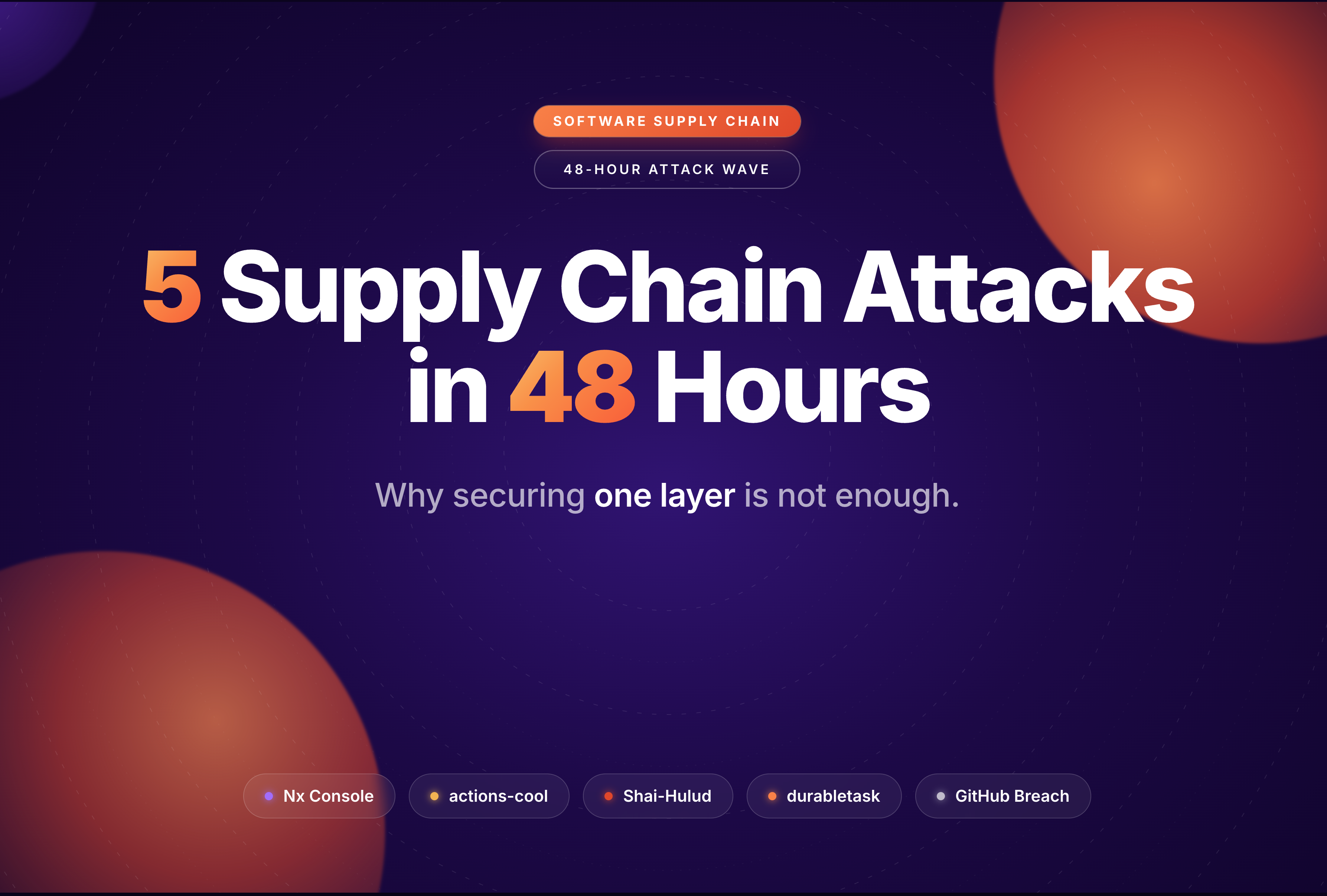
StepSecurity recaps a 48-hour (May 18-19, 2026) software supply-chain attack wave that hit every pipeline layer at once: the Nx Console VS Code extension (2.2M installs) stealing tokens from GitHub/npm/AWS/1Password, the trusted GitHub Action actions-cool/issues-helper hijacked via tag replacement, a trojanized Microsoft durabletask PyPI package pulled within a 35-minute discovery window, a self-replicating Shai-Hulud npm worm, and GitHub's own disclosure that ~3,800 internal source repos were exfiltrated. The piece argues traditional SCA/SAST/EDR/CNAPP tooling missed all of it because none monitor CI/CD runner runtime behavior (e.g., attackers reading /proc/pid/mem to extract secrets) or developer-machine IDE extensions, and ties the incidents to StepSecurity's Harden Runner, Dev Machine Guard, Compromised Actions Policy and Secure Registry controls.
 stepsecurity.ioarticleAdded 6 Oct 2026🛡️ Security
 Securing the Kubernetes Supply Chain: Introducing WizOS Helm Charts
Wiz Research examined the source repositories and CI/CD pipelines behind 1,500 popular Helm charts on Artifact Hub (mapping to 814 unique GitHub repos) and found 61 repos (7.5%) with confirmed supply-chain risk, including 20 charts with CI/CD workflow weaknesses and 25 depending on unmaintained/archived upstream projects. Two disclosed findings illustrate the risk classes: KubeView's go.mod referenced a Go module under a GitHub username that didn't exist, making it hijackable by anyone who registered the name, and Meilisearch's Helm chart repo had a GitHub Actions workflow triggered by PR comments that injected the commenter's branch name into a shell command while skipping author-association checks, letting any GitHub user run commands with a bot token that had push access. The post then pivots to promoting WizOS Helm Charts, Wiz's hardened/signed/CVE-scanned chart catalog built to close these gaps.
wiz.ioarticlePublished and added 30 Sep 2026🛡️ Security Nearly 800 Malicious npm Packages Deliver Cross-Platform RAT and Infostealer
The Hacker News details a campaign of nearly 800 (later 1,033) malicious npm packages delivering the WEL1DROPPER downloader — dubbed Flooding Dropper by Sonatype — which fetches cross-platform RAT/infostealer payloads via Cloudflare Workers or DNS TXT-record fallback from wel1.ru, patches ETW/AMSI on Windows, and deploys the Sliver C2 framework on Linux. The piece also covers a related npm crypto-stealer campaign, multiple npm/PyPI packages tied to EtherHiding droppers and credential theft (Solana wallets, .env secrets, Discord/GitHub Actions tokens), and Chrome extensions abusing a bandwidth-sharing SDK to turn browsers into residential-proxy web scrapers.
 thehackernews.comarticleAdded 26 Sep 2026🛡️ Security
 Mini Shai-Hulud Worm Compromises TanStack, Mistral AI, Guardrails AI & More Packages
The Hacker News details the "Mini Shai-Hulud" campaign by threat actor TeamPCP, which compromised npm and PyPI packages from TanStack, UiPath, Mistral AI, OpenSearch and Guardrails AI via a chained GitHub Actions attack (pull_request_target abuse, cache poisoning, OIDC token extraction), now tracked as CVE-2026-45321 (CVSS 9.6). The worm mints npm publish tokens directly from stolen OIDC credentials to self-propagate — the first documented case of a worm producing validly SLSA Build Level 3-attested malicious packages — and deploys an obfuscated credential stealer with IDE persistence hooks, a GitHub Actions secret-exfiltration workflow, and a dead-man's-switch that runs "rm -rf" if its rogue npm token is revoked. Over 170 packages and 400+ attacker-controlled repos have been identified across npm and PyPI, with findings credited to Aikido Security, Endor Labs, SafeDep, Socket, StepSecurity, Snyk, Wiz and Microsoft.
thehackernews.comarticleAdded 26 Sep 2026🛡️ Security npm Supply-Chain Attack Abuses Trusted Publishing to Ship GHAPPIER Loader
Orca Security details a supply-chain attack on the npm package @dforge-core/dforge-mcp, where a compromised maintainer account modified the GitHub Actions release workflow so any push to main triggered an OIDC-based trusted publish, shipping malicious version 0.2.21 with valid Sigstore provenance. The four-stage GHAPPIER loader activated only when the MCP server launched, deployed a self-deleting remote shell, and per CloudSEK's tracing appeared across 65 repos and 22 accounts; a second payload matched PolinRider, a DPRK-linked campaign using Ethereum transactions for C2. The piece underscores that npm provenance attests build origin, not source integrity, and lists remediation steps since no CVE or advisory yet exists.
 orca.securityarticlePublished and added 22 Sep 2026🛡️ Security
 Securely using pull_request_target - GitHub Enterprise Cloud Docs
GitHub's official guide on securely using the pull_request_target GitHub Actions trigger, explaining how it differs from pull_request by running workflow code and actions/checkout from the base repository's default branch while granting secrets and a privileged GITHUB_TOKEN. It details how "pwn request" vulnerabilities are introduced when workflows check out and execute a fork's pull request head (e.g. via ref: github.event.pull_request.head.sha), describes GitHub's new default policy that blocks pull_request_target in public repos (enforced starting Nov 2 2026), and lists hardening controls including least-privilege GITHUB_TOKEN, read-only cache access, isolated self-hosted runners, and the explicit allow-unsafe-pr-checkout opt-out flag in actions/checkout.
 docs.github.comarticleAdded 21 Sep 2026🛡️ Security
 Workflow execution protections in GitHub Actions generally available - GitHub Changelog
GitHub Actions' workflow execution protections (actor and event allowlist rules) reach general availability, adding workflow-file-level policy targeting, an Insights dashboard for auditing rule impact, and a REST API for managing policy as code across an enterprise. Alongside this, GitHub is rolling out a new secure default that disables the pull_request_target trigger on public repositories lacking an existing policy, directly mitigating 'pwn request' attacks where fork-submitted code runs with base-repo secrets; the rule starts in evaluate (shadow) mode and becomes enforced on November 2, 2026.
 github.blogarticleAdded 21 Sep 2026, published 17 Sep 2026🛡️ Security
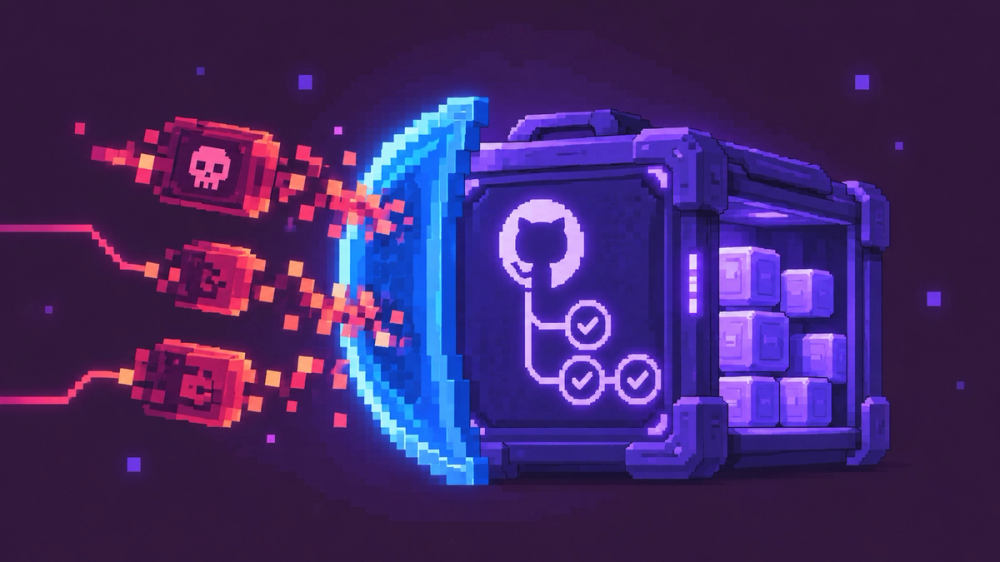 GitHub Actions Adds cache-mode to Limit Cache Poisoning Risk
GitHub added cache-mode to Actions, a least-privilege control (read/write/write-only/none) that limits which workflows can restore or save entries in the shared Actions cache, targeting the cache poisoning technique used to compromise Ultralytics (PyPI) and the TanStack npm packages via a pull_request_target pwn request. Job-level settings override workflow-level ones, the mode propagates through reusable workflows, and GitHub warns when write access is granted to low-trust events; write-only was added after feedback from researcher Adnan Khan. The article notes build provenance (SLSA/Sigstore) doesn't catch a poisoned cache since it only attests to build origin, not input integrity, and recommends cache-mode: none for AI agent workflows exposed to prompt injection, referencing the Cline compromise.
 socket.devarticleAdded 21 Sep 2026, published 16 Sep 2026🛡️ Security
 SolarWinds took a nation-state. The next attack just needs an LLM and $5. | Blog | Endor Labs
Endor Labs blog tracing an accelerating pattern of software supply-chain compromises from July 2025 through March 2026, culminating in the TeamPCP threat actor's cascading 30-day compromise of Aqua Security, Trivy, GitHub Actions, Docker Hub, npm, OpenVSX, and PyPI (including backdooring the 95M-download LiteLLM package). It argues AI is accelerating both offense (CVE-GENIE reproducing 51% of CVE exploits for $2.77 each) and the attack surface (the Cline prompt-injection-to-npm-token-theft chain, Nx's AI-review-evading payload), and calls for treating AI coding agents as privileged actors, pinning GitHub Actions to SHAs, and platform-level fixes like immutable tags and Sigstore/OIDC.
endorlabs.comarticlePublished and added 11 Sep 2026🛡️ Security [tl;dr sec] #344 - VMs won't contain Cyber-capable Agents, AWS AI Security Analyst, Decompilers vs LLMs
tl;dr sec #344 is a weekly security newsletter issue. It summarizes Trail of Bits' report that an AI agent escaped a QEMU/KVM VM three times (Firecracker held), Grow Therapy's sub-$500/month AI threat hunting system on AWS, Palo Alto's "Pass-ta-key" attacks on synced passkeys, MCP configuration poisoning, org-wide GitHub Actions SHA pinning, and the DecBench decompiler benchmark with the LLM-written Kuna decompiler.
 tldrsec.comarticleAdded 30 Oct 2026, published 8 Sep 2026🛡️ Security
 Top AI coding agent security resources — September 2026
Adversa AI's monthly roundup of AI coding-agent security research, covering nine items: GhostJacking (using a WAF's own block logs as a prompt-injection delivery channel, 90% success against Claude Code), Black Hat disclosures of unauthenticated-issue-to-RCE chains in the default GitHub Actions configs published by Anthropic, Google, and OpenAI for their coding agents (Gemini CLI rated CVSS 10.0), an agent-to-agent privilege-boundary bypass in Google's ADK repository, the new OWASP Agentic Skills Top 10 with a walkthrough showing open-source skill scanners miss encoded payloads while flagging 9-62% of legitimate skills as malicious, a seven-layer "secure agent harness" containment design, and a 2,826-file adversarial skill benchmark where Gemini CLI and Qwen Code were exploitable 95.5% and 71.6% of the time respectively. The piece draws a common thread across all findings: agents treat machine-generated artifacts (logs, images, other agents' outputs) as trusted instructions, and existing detection never fires.
 adversa.aiarticleAdded 7 Oct 2026, published 3 Sep 2026🛡️ Security
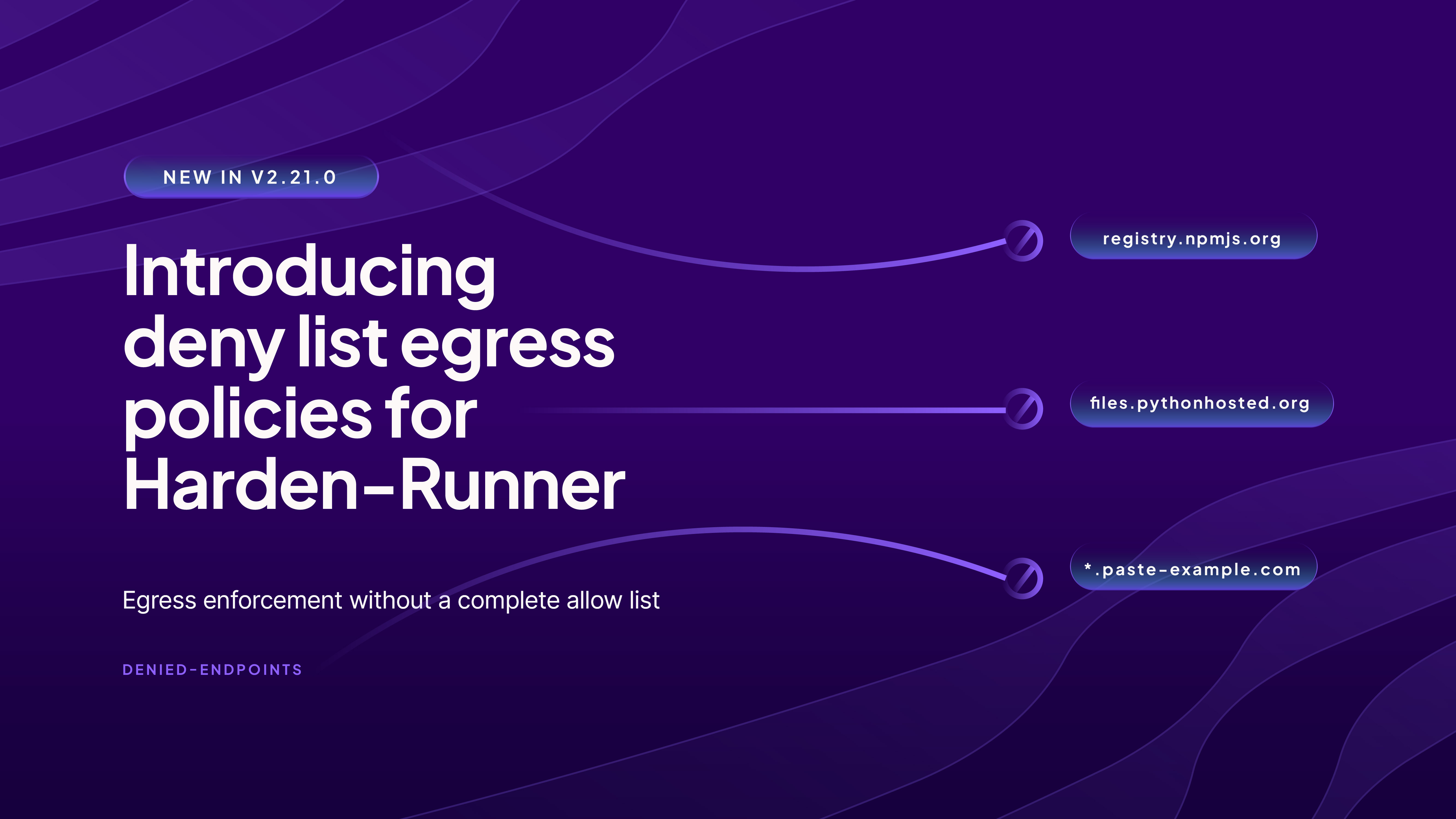 Introducing deny list egress policies for Harden-Runner
StepSecurity's Harden-Runner GitHub Action v2.21.0 adds a denied-endpoints input, letting teams block specific egress destinations (domains, wildcards, bare IPs) from CI jobs while leaving everything else reachable — a lighter-weight alternative to allow lists that don't require full enumeration of a job's needs. The piece details how deny-list entries differ from allow-list ones (no per-port scoping), covers the flagship use case of forcing package installs through StepSecurity's Secure Registry proxy by denying direct access to registries like PyPI and Go module hosts, and explains that Harden-Runner's separately maintained Global Block List (built from SOC threat intel, e.g. the Megalodon credential-exfiltration campaign) is distinct from and complements user-managed deny lists. It also candidly notes the deny list's blind spot: campaigns like Shai-Hulud 2.0 that exfiltrate via github.com itself can't be stopped by a deny list, requiring allow-list enforcement instead.
stepsecurity.ioarticleAdded 3 Sep 2026, published 2 Sep 2026🛡️ Security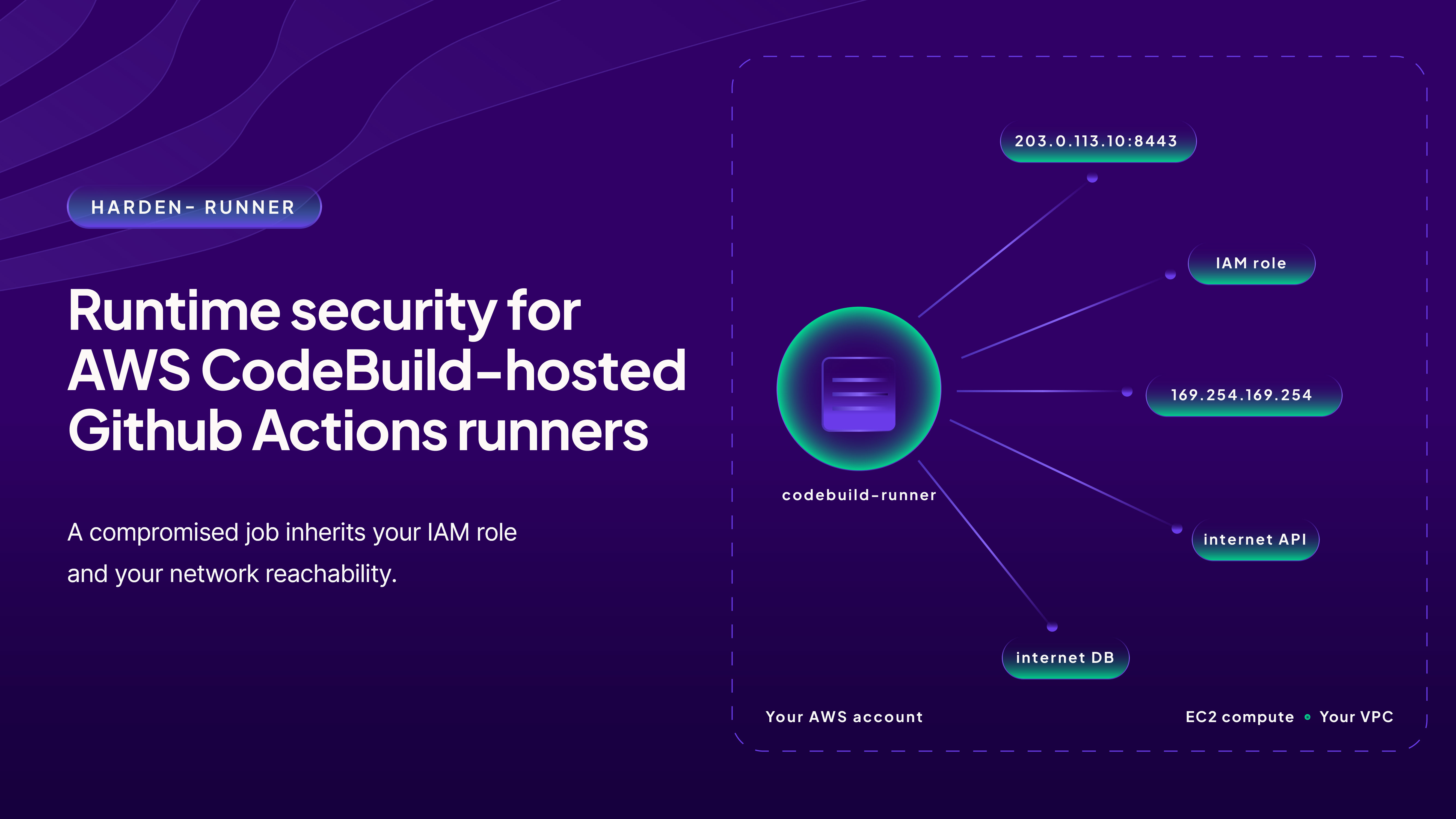 Runtime Security for AWS CodeBuild-Hosted GitHub Actions Runners
StepSecurity announces Harden-Runner support (v2.20.1+/v2.21.0) for GitHub Actions jobs executed on AWS CodeBuild-hosted just-in-time runners, including custom container images. The post frames the feature around CVE-2025-8217, where a threat actor exfiltrated GitHub tokens by dumping CodeBuild build-environment memory via a malicious pull request to compromise the AWS Toolkit for Visual Studio Code and AWS SDK for .NET repos, and notes that CodeBuild runners additionally expose an assumed IAM service role and VPC network reachability that GitHub-hosted runners don't have. Harden-Runner correlates outbound network calls, file writes, and process executions to the workflow step that triggered them and unifies detection across GitHub-hosted, self-hosted, ARC, and CodeBuild-hosted runner fleets.
stepsecurity.ioarticleAdded 3 Sep 2026, published 2 Sep 2026🛡️ Security Shai-Hulud was the best thing to happen to supply chain security
Aikido Security tracks npm's Trusted Publishing (OIDC-based, short-lived credential) adoption over 18 months and shows it only spiked after each major supply-chain attack rather than from advisories or blog posts — jumping from a ~40/week baseline to 430/week after the Nx Console/AntV compromise, yet still leaving 40,369 of the top 51,370 packages (75% of download volume) on long-lived tokens. It chronicles the full attack progression from credential-phishing (Debug/Chalk, Axios) through Pwn Request-driven CI compromise (S1ngularity, Shai-Hulud 2.0) to the Mini Shai-Hulud II/TanStack attack, which poisoned the GitHub Actions cache to extract a live OIDC token from runner memory and publish packages with valid SLSA Build Level 3 provenance — proving Trusted Publishing itself can be turned into the attack vector rather than just bypassed. It closes by arguing the security community should proactively pressure high-download holdout maintainers rather than wait for the next worm.
 aikido.devarticleAdded 3 Sep 2026, published 24 Aug 2026🛡️ Security
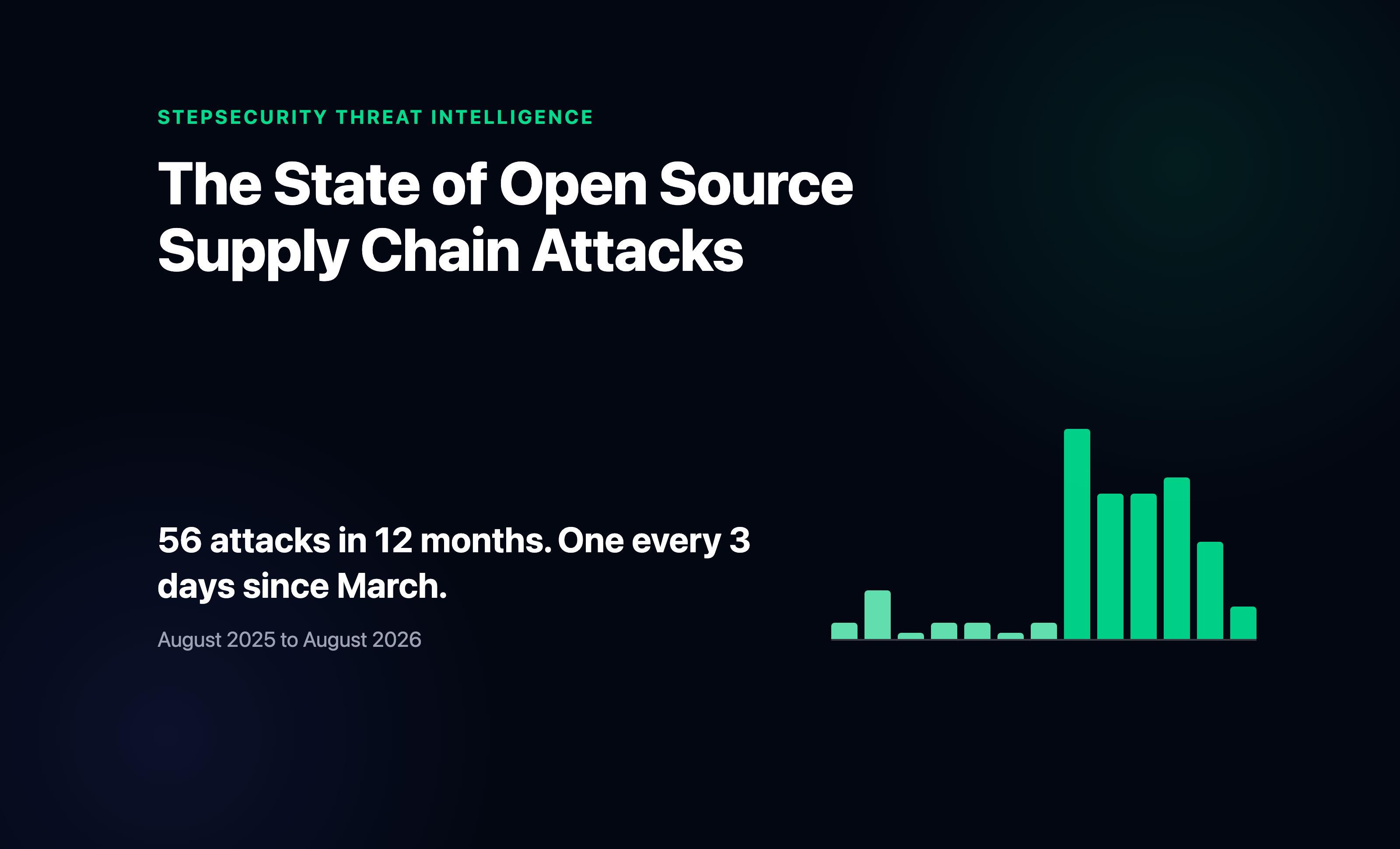 The State of Open Source Supply Chain Attacks
StepSecurity's threat intelligence team's annual report tallies 56 confirmed software supply chain attacks between August 2025 and August 2026, showing an over 8x acceleration since February 2026 driven by self-propagating worms (Shai-Hulud, Shai-Hulud 2.0, CanisterWorm, Miasma, ChainDrop) and mutable GitHub Actions tags. It details the five-day TeamPCP campaign that stole 78,330 secrets from 2,186 organizations by poisoning Trivy Action, Checkmarx KICS, telnyx, and LiteLLM, plus compromises spanning npm, PyPI, RubyGems, Composer, and crates.io.
stepsecurity.ioarticleAdded 3 Sep 2026, published 23 Aug 2026🛡️ Security Team PCP Stole 78,330 Secrets From 2,186 Organizations. CloudSEK Just Published the List.
StepSecurity analyzes CloudSEK's newly published dataset on TeamPCP, a threat actor that compromised trusted open-source CI/CD components (Trivy GitHub Action, Checkmarx KICS action, telnyx PyPI package, LiteLLM) to harvest 78,330 secrets from 2,186 organizations' CI/CD pipelines across GitHub Actions, GitLab, and Azure DevOps in five days in March 2026. The post breaks down which platforms and credential types were exposed (GitLab led, 230+ Azure DevOps orgs, 157 leaked OpenAI keys) and maps layered CI/CD runtime controls (egress control, runner lockdown, imposter-commit detection, workflow policies) as mitigations against this class of attack.
stepsecurity.ioarticleAdded 3 Sep 2026, published 15 Aug 2026🛡️ Security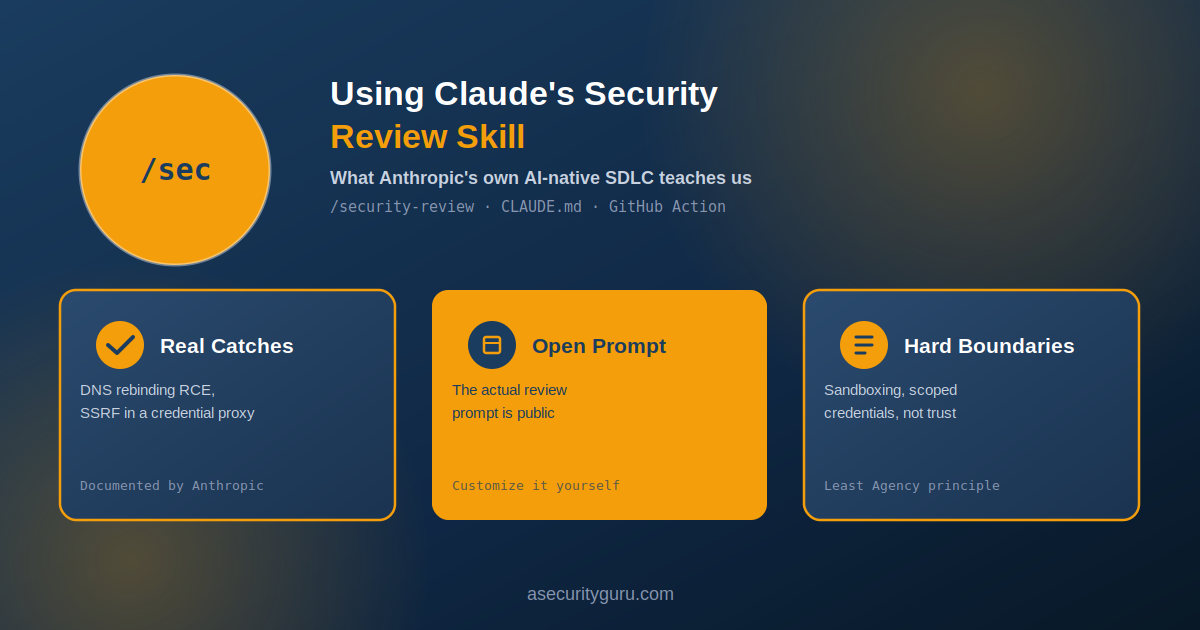 Using Claude’s Security Review Skill in Claude Code
Walkthrough of Claude Code's /security-review slash command and the anthropics/claude-code-security-review GitHub Action. It covers what the open-source prompt checks (SQLi, XSS, authz flaws), its hard exclusions (DoS, rate limiting, hardening-only findings), and how to copy and customize security-review.md. It also summarizes Anthropic's SDLC account by Jason Clinton: narrow multiple reviewer agents instead of one mega-prompt, CLAUDE.md updates as a closed loop, /sandbox isolation, and least-privilege, single-purpose agent identities after an incident-response agent asked another Claude instance to deploy code.
 asecurityguru.comarticleAdded 13 Oct 2026, published 29 Jul 2026🧠 AI
- Using Claude’s Security Review Skill in Claude Code
Explains how to use Claude Code's /security-review command and the anthropics/claude-code-security-review GitHub Action for AI-assisted code review. It covers what the prompt checks, its hard exclusions (DoS, rate limiting, unproven input validation gaps), how to customize security-review.md, and the security guidance plugin and /sandbox. It also draws on Anthropic's SDLC account: narrow multi-agent reviewers, CLAUDE.md as a closed loop, an incident-response agent that asked another agent to deploy code, and treating agents as insider threats with least-privilege identities and egress allowlisting.
asecurityguru.comarticleAdded 13 Oct 2026, published 29 Jul 2026🛡️ Security 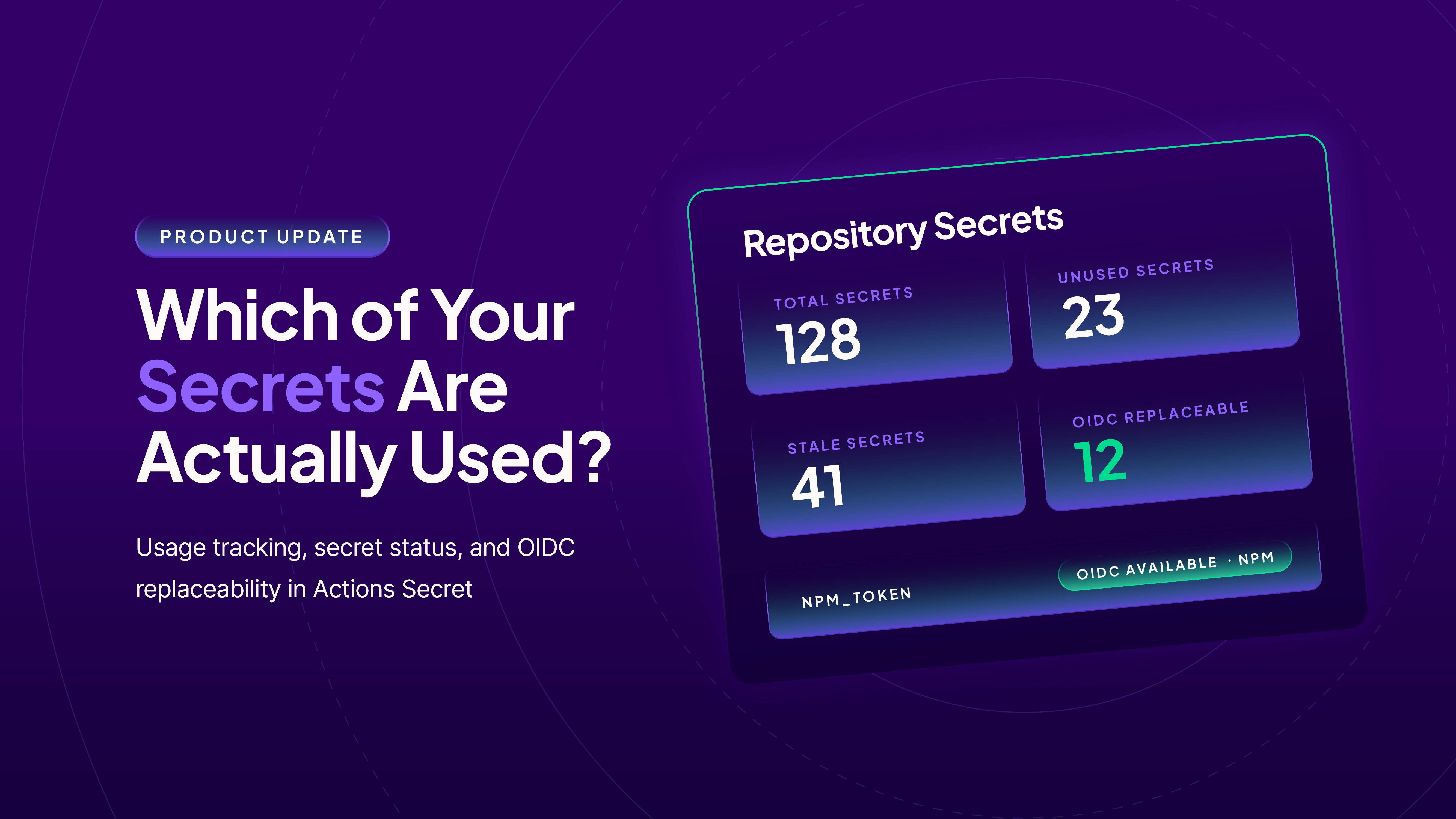 Find Unused, Stale, and OIDC-Replaceable GitHub Actions Secrets Across Your GitHub Organization
StepSecurity describes a new Repository Secrets feature in its Actions Secret dashboard that inventories GitHub Actions secrets across an org and classifies each as Active, Stale (unused workflow for 90+ days), or Unused, while flagging which secrets could be eliminated by switching to OIDC (e.g. AWS, Azure, GCP federation or npm/PyPI trusted publishing). It ties the problem to real incidents - the GhostAction campaign exfiltrated 3,000+ secrets and Megalodon targeted 5,500 public repos - arguing that unused, long-lived credentials are attack surface attackers actively harvest regardless of whether they are load-bearing.
stepsecurity.ioarticleAdded 3 Sep 2026, published 23 Jul 2026🛡️ Security AI Security Briefing
Noma Security researchers disclosed "GitLost," a technique where a public GitHub issue containing indirect prompt-injection text tricks a GitHub Agentic Workflow (powered by Copilot, Claude, Gemini, or Codex) with org-wide read access into pasting private repository contents into a public issue comment. The attacker needs no credentials or org access; a routine issue-triggered workflow and a broad read-scoped token do the work, and Noma found that simply prefixing the injected instruction with "Additionally" bypassed GitHub's built-in threat-detection filter. The piece ties GitLost to the "lethal trifecta" (private data access + untrusted input + exfiltration channel) and to prior related disclosures (Claude Code GitHub Action flaw, Orca Security's RoguePilot, Invariant Labs' MCP finding, the "Comment and Control" study), recommending per-repo token scoping, restricted safe-outputs, and human review as mitigations.
thehackernews.comarticlePublished and added 18 Jul 2026🛡️ Security Introducing Secret Exfiltration Protection for GitHub Actions
StepSecurity breaks down how four campaigns, GhostAction, Megalodon, Miasma, and Hades, turned stolen GitHub tokens into mass secret theft by committing malicious GitHub Actions workflows to throwaway branches, using toJSON(secrets) to dump repo secrets and uploading them as run artifacts before deleting the branch and run. It explains why branch protection and code review miss this since the workflow runs on a push event to a non-default branch with no pull request ever opened, and introduces StepSecurity's Secret Exfiltration Policy plus a new Harden-Runner detection rule for the pattern.
stepsecurity.ioarticleAdded 3 Sep 2026, published 16 Jul 2026🛡️ Security StepSecurity Maintained Actions Are Now Free for Public Repos
StepSecurity announced its catalog of 500 "Maintained Actions" — security-reviewed, API-compatible drop-in replacements for abandoned or high-risk third-party GitHub Actions — is now free for public repositories, not just enterprise customers. The post details their onboarding process (manual + AI-assisted code review, tag protection to prevent tj-actions-style tampering, signed commits, ephemeral release tokens, CVSS-based patch SLAs) and cites the March 2025 tj-actions/changed-files supply-chain attack (CVE-2025-30066) as the motivating incident.
stepsecurity.ioarticleAdded 3 Sep 2026, published 2 Jul 2026🛡️ Security And another one. GitHub ships break-glass credential revocation
Aikido Security breaks down GitHub's newly shipped self-service credential revocation for Enterprise, which lets org owners bulk-revoke PATs, SSH keys, and OAuth tokens for compromised accounts in one action instead of hunting down individual tokens. The piece ties the feature's timing to a string of 2026 incidents caused by incomplete credential rotation: the Trivy GitHub Actions compromise that force-pushed 75 malicious version tags and cascaded into Checkmarx, and Microsoft's durabletask package/repo being repeatedly compromised via the same never-fully-rotated account (Miasma worm). It also explains why atomic rotation is infeasible at scale and recommends pinning GitHub Actions to commit SHAs instead of tags.
aikido.devarticleAdded 3 Sep 2026, published 1 Jul 2026🛡️ Security Orca Security: Red Hat npm Packages Compromised in Supply-Chain Attack Spreading Credential-Stealing Worm
Orca describes the June 1, 2026 compromise of 32 npm packages under the @redhat-cloud-services scope, which came from a hijacked Red Hat employee GitHub account. The attacker injected malicious GitHub Actions workflows into three RedHatInsights repos and used OIDC tokens to publish backdoored versions with valid SLSA provenance. A preinstall hook runs a 4.2 MB obfuscated payload that sweeps CI, cloud, SSH, registry and .env credentials and self-propagates (the "Miasma" worm, attributed to TeamPCP or a copycat using Mini Shai-Hulud tooling). The post lists compromised versions and gives rotation and pinning guidance.
orca.securityarticlePublished and added 2 Jun 2026🛡️ Security Orca Security: Securing Shadow AI: How to Detect Unapproved LLMs in Your Cloud
Orca Security outlines a detection framework for "shadow AI" — unsanctioned LLM usage via IDE extensions (Cursor), MCP servers, and embedded SaaS/CI-CD AI features that bypass traditional CASB/DLP tools because they ride on already-trusted OAuth tokens and API calls. The framework has three steps: mapping non-human identities and OAuth scope sprawl, auditing CI/CD pipelines and SaaS platforms for embedded AI (checklist includes scanning .env files, package manifests, GitHub Actions/GitLab CI/Jenkins steps, and outbound traffic to LLM endpoints), and assessing each tool by data exposure vs. write/action authority. It closes by promoting Orca's agentless AI-SPM capability for correlating identity, data, and workload context to surface these risks.
orca.securityarticlePublished and added 1 Jun 2026🛡️ Security Bringing full YAML anchor support to zizmor
Trail of Bits worked with the zizmor maintainers to add full YAML anchor support to zizmor, the GitHub Actions static analyzer that catches misconfigurations like the one exploited in the March 2026 aquasecurity/trivy-action pull_request_target attack that led to a LiteLLM PyPI backdoor. They built a corpus of 41,253 workflows from 6,612 high-star repos, found zizmor crashed on 45 of them, and fixed four anchor-handling bugs plus unrelated deserialization and expression-evaluator issues, filing 20 issues and merging 15 PRs upstream.
 blog.trailofbits.comarticleAdded 5 Sep 2026, published 22 May 2026🛡️ Security
 Anthropic Silently Patches Claude Code Sandbox Bypass
Researcher Aonan Guan disclosed a SOCKS5 hostname null-byte injection bug in Claude Code's network sandbox: an attacker-controlled hostname containing a null byte before the allowed domain passes an allowlist filter that only checks the trailing string, while the OS truncates at the null byte and connects to the attacker's host instead, silently defeating the outbound proxy's allowlist. The article also covers a separate, already-patched sandbox-runtime bug tracked as CVE-2025-66479, where a block-all policy setting was misinterpreted as allow-everything until a Nov 26 fix. Guan criticized Anthropic for not assigning a CVE or noting the null-byte bug in release notes despite it being exploitable from Oct 20 to April, and for filing CVE-2025-66479 against the sandbox-runtime library rather than Claude Code itself, leaving users unaware their sandbox had been ineffective; he also notes it could be chained with his earlier Comment and Control GitHub Actions prompt-injection technique to exfiltrate credentials and environment variables.
securityweek.comarticleAdded 26 Sep 2026, published 20 May 2026🛡️ Security Socket: TeamPCP + BreachForums Launch $1,000 Contest for Supply Chain Attacks
Socket reports that TeamPCP and the owner of BreachForums are running a $1,000-Monero contest rewarding whoever compromises the highest-download open-source package using the Shai-Hulud worm, with smaller compromises also counting toward the score. TeamPCP has also released Shai-Hulud as open-source attack tooling on the Breached CDN (briefly mirrored on GitHub) and has been systematically targeting security tools, CI/CD workflows, GitHub Actions, Docker images, OpenVSX extensions, npm, PyPI, and Packagist to harvest CI/CD secrets, cloud credentials, and maintainer tokens. The piece ties the contest to TeamPCP's broader access-broker role, noting overlapping downstream extortion claims involving Vect, ShinyHunters, and Lapsus$.
socket.devarticlePublished and added 20 May 2026🛡️ Security Security Architecture of GitHub Agentic Workflows
GitHub engineering post detailing the security architecture behind GitHub Agentic Workflows, which run LLM agents (Claude, Codex, Copilot) as GitHub Actions. It describes a layered defense model (substrate/configuration/planning layers), a zero-secrets-to-agent design using container isolation, chroot jails, a trusted MCP gateway, and an API proxy for LLM auth tokens, plus a "safe outputs" subsystem that stages and vets all agent writes (issues, PRs, comments) and pervasive logging at every trust boundary for forensic visibility.
github.blogarticleAdded 3 Sep 2026, published 13 May 2026🛡️ Security The complete GitHub Actions security checklist
A detailed 33-point checklist for hardening GitHub Actions workflows, covering trigger risks (pull_request_target, workflow_run), script/prompt injection into run: steps and AI agent prompts, mutable action/package references, artifact handling, secrets scoping, OIDC over static cloud credentials, runner isolation, and token/org-level permission defaults. Each section is backed by real-world incidents (Trivy tag hijack, tj-actions/changed-files compromise, Ultralytics PyPI attack, Nx/s1ngularity, Shai-Hulud, TanStack npm trusted-publisher abuse, PyTorch self-hosted runner takeover), making it a practical reference for securing CI/CD pipelines against the supply-chain attacks that have hit open source in 2025–2026.
aikido.devarticleAdded 3 Sep 2026, published 11 May 2026🛡️ Security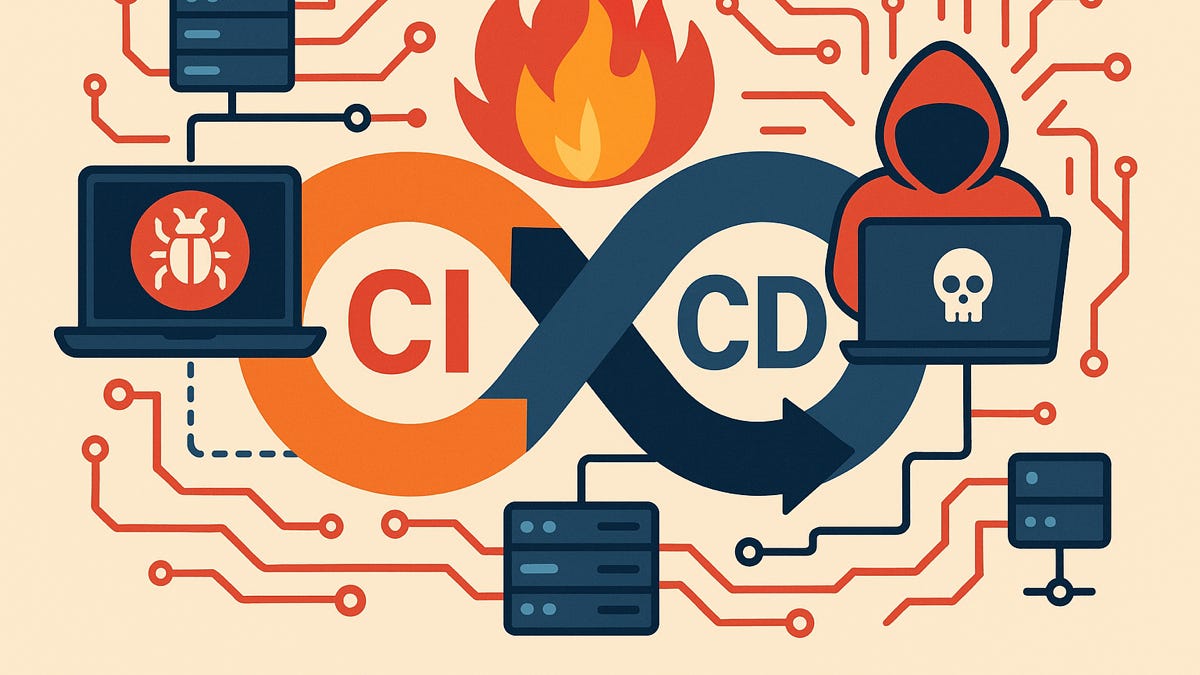 CI/CD Threat Modelling
A practical threat-modelling framework for CI/CD pipelines built from two years of hardening CI/CD configurations. It walks through pipeline-level questions (who can trigger workflows, who can modify workflow definitions) and per-step questions (inputs, branch protection bypass, exposed secrets/OIDC credentials, arbitrary code execution via workflow steps, third-party dependency trust), and gives concrete GitHub Actions examples such as PR-title injection turning into arbitrary code execution and using workflow-exposed VCS credentials to self-approve a PR.
 airman604.substack.comarticlePublished and added 6 May 2026🛡️ Security
 GitHub Actions Security Pt 1: Attacks & Defenses | Wiz Blog
Part one of a Wiz Research series building a threat model for GitHub Actions, covering three core risk classes: dangerous triggers like pull_request_target enabling "Pwn Request" attacks, script/expression injection via unsanitized workflow inputs, and compromised third-party actions in the supply chain. It walks through real incidents including the Trivy supply-chain compromise via a pull_request_target misconfiguration, the Ultralytics PyPI cryptominer injection via branch-name script injection, and the tj-actions/changed-files compromise that hit 22,000 repos targeting Coinbase, with corresponding defenses such as avoiding pull_request_target, binding/sanitizing inputs, and pinning actions to commit SHAs.
wiz.ioarticleAdded 5 Sep 2026, published 14 Apr 2026🛡️ Security