- CISA Adds Two Known Exploited Vulnerabilities to Catalog
CISA added two Ivanti Connect Secure vulnerabilities to its Known Exploited Vulnerabilities (KEV) Catalog on 30 October 2026, citing evidence of active exploitation: CVE-2026-111357 (missing authentication for a critical function) and CVE-2026-118527 (generation of predictable numbers or identifiers). The alert restates BOD 26-04, which requires federal civilian agencies to remediate KEV-listed flaws on exposed assets and check for prior compromise. It also links the KEV nomination form.
 cisa.govadvisoryPublished and added 30 Oct 2026🛡️ Security
 CVE-2026-101767: Critical Oracle EBS SQL Injection Actively Probed in the Wild
CVE-2026-101767 is a CVSS 9.8 unauthenticated SQL injection in Oracle E-Business Suite's Application Object Library, reachable through the /OA_HTML/AppsTCFServer servlet (GanttDataServer) and chainable to OS command execution. It affects versions 12.2.3 to 12.2.15 and was fixed in the October 2026 Critical Patch Update. Horizon3.ai found it, and Defused saw probing on honeypots on 27 October 2026. Interim mitigation is removing the servlet from the URL firewall allowlist.
 orca.securityadvisoryPublished and added 28 Oct 2026🛡️ Security
 Preliminary Report Oct 21st Security Incident
Railway's preliminary report on a security incident between 20 and 22 October 2026, in which an attacker reached internal systems and decrypted stored environment variables. At most 1.85% of workspaces (about 100,000) were confirmed affected. The attacker was after AI provider API keys for distillation. Railway notified vendors such as GitHub and Anthropic, rolled all keys, moved to single-tenant builders and advised customers to rotate secrets. Exploit details are withheld.
 blog.railway.comadvisoryAdded 24 Oct 2026, published 23 Oct 2026🛡️ Security
- Dark Web Intelligence (@DailyDarkWeb) on X
CVE-2026-114625 is a critical (CVSS 3.1 9.9) SQL injection in on-prem Arista VeloCloud Orchestrator, the SD-WAN management portal, covered in Arista Security Advisory 0199 of 22 October 2026. Any authenticated user, even the lowest Enterprise Read Only tenant role, can become a local superuser operator, and Arista says it is exploited in the wild. On-prem fixes are 5.2.3.18, 6.1.3.10 and 6.4.2.12; two attacker IPs are listed.
 x.comadvisoryAdded 24 Oct 2026, published 22 Oct 2026🛡️ Security
- Microsoft Threat Intelligence (@MsftSecIntel) on X
ConnectWise Cloud Backup (formerly SkyKick Backup, AppId 506e08f9-6e9a-4da4-942b-a099a03644ae) had its multitenant OAuth app compromised, per Microsoft Threat Intelligence. On 15 October 2026 the actor authenticated broadly as the service principal from 144.172.64[.]128, likely using customer-granted permissions such as Directory.ReadWrite.All, then ran Graph API reconnaissance and tried to add credentials to the service principal as a backdoor. The post lists IOCs, Defender alerts and hunting advice.
x.comadvisoryAdded 20 Oct 2026, published 17 Oct 2026🛡️ Security  Frequently Asked Questions About the BeyondTrust Remote Support Arbitrary File Upload (CVE-2026-102764)
CVE-2026-102764 is an arbitrary file upload in BeyondTrust Remote Support (formerly Bomgar) caused by internal appliance components not validating message origin. Mandiant found it exploited as a zero-day in late August 2026. BeyondTrust disclosed it on 15 October 2026 and CISA added it to KEV on 16 October 2026. The FAQ covers the web shell, root escalation, credential theft, persistence, patching and compromise checks.
 watchtowr.comadvisoryAdded 30 Oct 2026, published 16 Oct 2026🛡️ Security
 BeyondTrust Remote Support Arbitrary File Upload (CVE-2026-102764)
CVE-2026-102764 is a CVSS 9.8 unauthenticated arbitrary file upload flaw in BeyondTrust Remote Support (formerly Bomgar) and Privileged Remote Access. Internal messaging components do not verify message origin, so remote attackers can plant files the appliance would reject. BeyondTrust disclosed it on 15 October 2026 with patch BT26-05, and CISA added it to KEV on 16 October 2026. The page lists log files to review and hardening steps.
watchtowr.comadvisoryAdded 30 Oct 2026, published 16 Oct 2026🛡️ Security- Dark Web Intelligence (@DailyDarkWeb) on X
Summary of SAP's October 13, 2026 Security Patch Day (16 new notes, 4 GitHub advisories). It leads with CVE-2026-89111, a CVSS 10.0 OAuth2 SSRF in SAP Cloud SDK for Python before 0.45.2, where an attacker-controlled tenant_subdomain redirects token requests and exfiltrates client credentials. It also lists three other critical flaws: broken access control in NetWeaver Visual Composer, code injection in S/4HANA substitution/validation rules, and a missing authorization check in the Manufacturing Integration and Intelligence (XMII) Configuration Service. It notes that none are in CISA KEV and SAP reports no in-the-wild exploitation.
x.comadvisoryAdded 15 Oct 2026, published 13 Oct 2026🛡️ Security  Ivanti Connect Secure zero-day exploited in the wild (CVE-2026-104935)
Rapid7 emergency-response analysis of CVE-2026-104935, a CVSS 8.6 authentication bypass by spoofing (CWE-290) in Ivanti Connect Secure that allows unauthenticated remote command execution. It was exploited as a zero-day against a limited number of customers, added to CISA KEV on disclosure day, and Volexity observed it chained with a still-unpatched privilege escalation flaw. Part of the fix shipped in 25.1.3.0 in July 2026, with backports to other supported versions pending. Rapid7 advises emergency patching outside normal cycles and hunting for compromise using Volexity's IOCs, since Ivanti has no reliable ones.
 rapid7.comadvisoryPublished and added 13 Oct 2026🛡️ Security
 Frequently Asked Questions About the Ivanti Connect Secure Authentication Bypass by Spoofing (CVE-2026-104935)
CVE-2026-104935 is an authentication bypass by spoofing in Ivanti Connect Secure. A remote attacker can forge identity signals and run arbitrary commands without credentials. CISA added it to the KEV catalog on 13 October 2026. The FAQ lists affected branches by ISA hardware (25.1.1.1, 25.1.2.2, 22.8.X), fixed versions (25.1.1.2, 25.1.3.0/25.1.3.1, 22.8R2.5), no workaround and no reliable IOCs.
watchtowr.comadvisoryAdded 30 Oct 2026, published 13 Oct 2026🛡️ Security Ivanti Connect Secure Authentication Bypass by Spoofing (CVE-2026-104935)
CVE-2026-104935 is an authentication bypass by spoofing in Ivanti Connect Secure (CVSS 3.1 score 8.6) that lets a remote attacker run commands without logging in. CISA added it to KEV on 13 October 2026. The 22.8.X bridge release and 25.1.2.2 and earlier are affected, with fixes in 22.8R2.5, 25.1.1.2, 25.1.3.0 and 25.1.3.1. Ivanti says no reliable indicators of compromise exist yet.
watchtowr.comadvisoryAdded 30 Oct 2026, published 13 Oct 2026🛡️ Security- Denmark Data Breach Exposes 8.8M People's Personal Data
Denmark's CPR administration (Det Centrale Personregister) disclosed that unauthorized actors abused a Danish company's legitimate, authorized access to the CPR system to extract names, addresses and CPR (national ID) numbers for roughly 8.8 million registered citizens. Records of individuals with name/address protection were not exposed. CPR has revoked the company's access, notified the Danish Data Protection Agency (Datatilsynet), and the incident is being investigated by police alongside relevant authorities.
 cpr.dkadvisoryPublished and added 5 Oct 2026🛡️ Security
 Solidity 0.8.37 Release Announcement
Official release notes for Solidity v0.8.37 detailing three bug-bounty-reported compiler bugs: memory `delete` on a bytes-array element zeroing a full 32-byte word instead of one byte (corrupting adjacent memory, evmasm pipeline, up to v0.8.36); a stack-to-memory spill-slot collision under mutual recursion in the IR pipeline (`--via-ir`, v0.7.2–v0.8.36) that silently overwrites live variables; and named custom-error arguments in `require(...)` being ABI-encoded in call-site order rather than declaration order, so revert data misrepresents error values (v0.8.36 introduced but only affects revert data). Also covers two non-security miscompilations (uninitialized packed function pointers, checked/unchecked constant reuse), a new SSA-CFG stack shuffler, Amsterdam EVM's SLOTNUM opcode support, and removal/deprecation of LSP mode, Generic Solidity, and several EVM version pragmas.
 soliditylang.orgadvisoryAdded 29 Sep 2026🛡️ Security
- Claude Desktop (macOS): malicious file in a Cowork folder could run commands on the host
GHSA-v234-4jrq-mgg6 discloses that Claude Desktop for macOS (versions >=1.1.3918, less than 1.15962.0) omitted a macOS-executable file type from its Cowork folder block-list, letting a malicious file written into a Cowork sandbox's shared folder by a compromised or prompt-injected agent run commands on the host when opened via Claude Desktop. A separate, compounding issue is also disclosed: Cowork VM images before 1.11847.5 shipped a guest Linux kernel vulnerable to CVE-2026-43284, which combined with the block-list gap could let VM-privileged code trigger the file open without user interaction. Both issues are fixed in Claude Desktop 1.15962.0; reported internally by Anthropic and independently by Vladimir Tokarev of Cyera Research.
 github.comadvisoryAdded 28 Sep 2026🛡️ Security
- Kong Konnect MCP server: stored prompt injection via analytics data leads to credential/data exfiltration (CVE-2026-13341)
GitHub Security Advisory (CVE-2026-13341) for Kong's mcp-konnect MCP server describes a stored prompt injection vulnerability where a remote attacker crafts malicious request metadata (e.g. User-Agent) that gets stored in Konnect analytics and later returned unsanitized to an AI assistant via MCP tools, potentially causing the agent to exfiltrate sensitive data (plugin configs, secrets, internal hostnames) to an attacker-controlled URL if the client can make outbound fetches. A related path manipulation flaw in control plane/group identifiers allowed requesting unintended Konnect API endpoints with the user's token. The v1.0.0 patch neutralizes untrusted analytics fields, validates identifiers as UUIDs, encodes path segments, and disables raw plugin config output by default.
github.comadvisoryAdded 26 Sep 2026🛡️ Security - CVE-2026-49291: mcp-memory-service is a semantic memory layer for AI applications
CVE-2026-49291 affects mcp-memory-service prior to version 10.65.3: its HTTP MCP JSON-RPC endpoint at /mcp only enforced OAuth 'read' scope before dispatching tools/call requests, so a client holding only read access could invoke mutating tools like store_memory and delete_memory even though the equivalent REST endpoints correctly required 'write' scope. The flaw is a classic missing-authorization bug (CWE-862) surfacing specifically in an MCP tool-dispatch layer, scored CVSS 3.1 8.1 (High) with confidentiality unaffected but integrity and availability impacted. Fixed in 10.65.3.
 nvd.nist.govadvisoryAdded 26 Sep 2026🛡️ Security
- CVE-2026-19978: A flaw has been found in jiantao88 android-mcp-server up to cfb872b2446794193b58edd63f4dbf6af48a6292
CVE-2026-19978 describes an OS command injection (CWE-77/78) in jiantao88's android-mcp-server, where the child_process.exec call in build/index.js fails to sanitize the deviceId, packageName, permission, and extras[].key/value arguments used to control Android devices. The flaw allows local command execution and has a published exploit; it was fixed in commit 14e2bf27c88ba137e35cbb0c2a75f72b595bb98a. CVSS 4.0 base score is 1.9 (local attack vector only), and the project uses rolling releases so no fixed version numbers are assigned.
nvd.nist.govadvisoryAdded 26 Sep 2026🛡️ Security - CVE-2026-16498: The terraform-mcp-server before version 1
CVE-2026-16498 is a critical (CVSS 3.1: 10.0) exposure-of-sensitive-information flaw (CWE-488) in HashiCorp's terraform-mcp-server prior to version 1.1.0. In stateless streamable-HTTP transport mode, one user's Terraform API token could be reused to execute tool calls on behalf of a different, subsequent user, breaking tenant isolation in shared MCP server deployments. Fixed in terraform-mcp-server 1.1.0; further detail is tracked in HashiCorp's HCSEC-2026-23 advisory.
nvd.nist.govadvisoryAdded 26 Sep 2026🛡️ Security - Unauthenticated Administrator takeover exfiltrated via the MCP
GHSA advisory for SiYuan v3.7.1 (CVE-2026-66012) describing how the kernel's POST /mcp route registers 31 MCP tools — including a file tool with full read/write/delete/rename/copy over the workspace — gated only by CheckAuth with no admin or read-only check. When the Publish server runs in anonymous mode (a documented configuration for public docs sites), the Publish reverse proxy attaches an anonymous RoleReader JWT to every proxied request, letting an unauthenticated attacker reach /mcp, exfiltrate accessAuthCode/api.token/cookieKey from conf.json, escalate to Administrator, and plant a malicious Electron plugin (nodeIntegration:true, contextIsolation:false) for RCE on the desktop client. Includes a full working PoC and remediation (CheckAdminRole gate, proxy path allowlist, restricting the file tool).
github.comadvisoryAdded 26 Sep 2026🛡️ Security  CVE-2026-21852 - GitHub Advisory Database
GitHub advisory GHSA-jh7p-qr78-84p7 for Claude Code: a malicious repository could ship a project settings file setting ANTHROPIC_BASE_URL to an attacker-controlled endpoint. Claude Code made API requests during project load before the trust prompt was shown, leaking data including the user's Anthropic API key. Fixed in auto-updated versions; manual updaters should upgrade. It is CVSS v4 scored, with network attack vector and passive user interaction, and mapped to a credential-transmission weakness (insecure transmission/storage of credentials).
github.comadvisoryAdded 26 Sep 2026🛡️ Security- CISA Adds Seven Known Exploited Vulnerabilities to Catalog | CISA
CISA added seven vulnerabilities to its Known Exploited Vulnerabilities Catalog on the basis of active exploitation. They are SQL injection in Sangoma Switchvox, HTTP request/response smuggling in Kludex Starlette, OS command injection in Kestra OSS, improper authentication in BerriAI LiteLLM and JFrog Artifactory, and SSRF plus OS command injection in SonicWall SMA1000 appliances. The alert restates BOD 26-04, which makes federal agencies prioritise rapid remediation of KEV CVEs on publicly exposed assets that grant total control after exploitation. It also requires agencies to check for prior compromise before patching.
cisa.govadvisoryAdded 26 Sep 2026🛡️ Security - Solidity 0.8.37 Release Announcement
Solidity 0.8.37 release notes disclosing three EF bug-bounty-reported compiler bugs with security implications: deleting an element of a memory bytes array (or converted string) zeroed the full 32-byte word instead of one byte, corrupting adjacent data in the evmasm pipeline (all versions ≤0.8.36); a stack-to-memory spill-slot collision in mutually recursive functions under --via-ir silently overwrote live variables (0.7.2–0.8.36); and require() with a custom error using named arguments encoded parameters in call-site rather than declaration order, producing structurally valid but semantically wrong revert data. The release also adds two non-security miscompilation fixes, an experimental planning-based stack shuffler for the SSA CFG backend, support for the Amsterdam EVM's SLOTNUM opcode (EIP-7843), and removes/deprecates several experimental features.
soliditylang.orgadvisoryAdded 29 Sep 2026, published 10 Sep 2026🛡️ Security - Misordered Named Parameters in require with Custom Errors Bug
The Solidity team discloses a bug (reported by Cantina Security via the Ethereum Foundation bug bounty) where the IR-based (--via-ir) code generator pushed named custom-error arguments in call-site order instead of declaration order before ABI-encoding, corrupting revert data for require(condition, ErrorName({...})) calls with reordered named parameters. Introduced in Solidity 0.8.26 and fixed in 0.8.37, the bug produces silently swapped or type-confused values in decoded revert data with no compiler warning, and can cause misaligned encoding in multi-slot-argument cases that either reverts with undecodable data or produces a plausible-but-wrong payload - a real concern for standards like ERC-3668 (CCIP Read) that treat revert data as part of the contract interface. Severity was rated "very low" since the affected transaction is already reverting and there is no attacker-controlled exploitation path, but audits of via-ir contracts using named custom-error arguments should check for it.
soliditylang.orgadvisoryAdded 29 Sep 2026, published 10 Sep 2026🛡️ Security  GHSL-2026-203: Same-second TOCTOU in jupyterlab/maintainer-tools
GitHub Security Lab discloses GHSL-2026-203 / CVE-2026-84973, a same-second time-of-check-to-time-of-use race condition in the jupyterlab/maintainer-tools update-snapshots-checkout GitHub Action. The action compares one-second-precision pushed_at and comment created_at timestamps to detect post-authorization pushes, but a strict greater-than check lets an attacker push a malicious commit in the same second as an authorized "please update snapshots" comment, causing the action to check out and later execute attacker-controlled code (including a local composite action and jlpm-driven package scripts) with the workflow's GITHUB_TOKEN (contents: write, pull-requests: write) in the jupyter/notebook repository. The issue was fixed in v1.0.0 and is a variant of the "pwn request" class of GitHub Actions vulnerabilities.
 securitylab.github.comadvisoryAdded 20 Sep 2026, published 4 Sep 2026🛡️ Security
 Critical Elementor Pro File Upload Flaw Enables Unauthenticated Remote Code Execution on WordPress Sites
CVE-2026-32475 (CVSS 9.0) is an unauthenticated arbitrary file upload leading to RCE in Elementor Pro's Forms module (versions up to 4.2.1), caused by the extension-blocklist check and the file-move step running in two separate loops with different empty-file handling, letting a two-part file submission bypass the blocklist and drop a PHP webshell into the public wp-content/uploads/elementor/forms/ directory. The post also flags related WordPress core CVE-2026-65640 (CVSS 8.8, fixed in 7.0.4), an Author-level RCE via malicious PostScript upload requiring Imagick and Ghostscript. Fix: upgrade Elementor Pro to 4.2.2+ and WordPress core to 7.0.4, and audit the uploads/elementor/forms directory for planted PHP files.
orca.securityadvisoryAdded 3 Sep 2026, published 20 Aug 2026🛡️ Security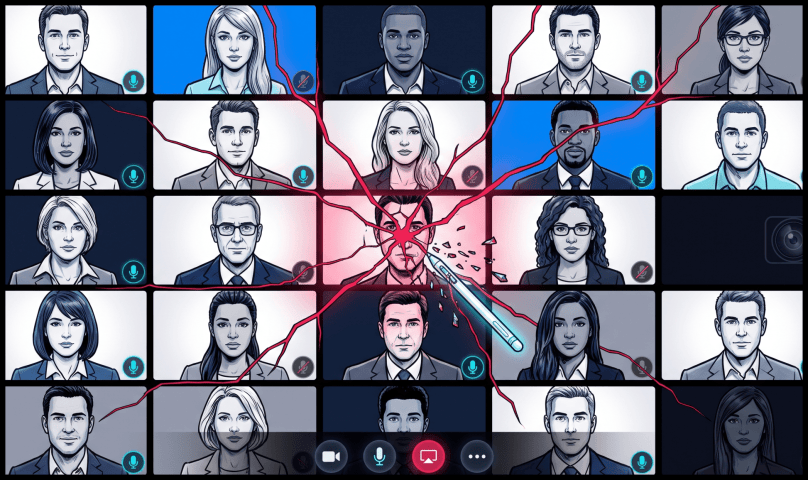 Orca Security: Zoom Zero-Click RCE Flaws Allow Any Meeting Attendee to Compromise All Participants
Orca Security details four Zoom vulnerabilities in the cross-platform annotation engine (libannotate.so): CVE-2026-53413, a stack buffer overflow in CAnnoFormatBlock::Deserialize from unchecked 32-bit character counts, and CVE-2026-53415, a use-after-free in auto-shape metadata handling giving a write-what-where primitive, both enabling zero-click RCE against every meeting participant via crafted annotation messages during screen sharing. Also disclosed are CVE-2026-53414 (heap over-read/DoS) and CVE-2026-53416 (path traversal in the Windows VDI client). The write-up notes a working exploit chain built in under 24 hours with fewer than 20 AI-model prompts, platform-specific exploitation details (macOS ARM64 ASLR bypass, Android heap spraying/vtable corruption), and that E2EE meetings bypass Zoom's server-side message filtering.
orca.securityadvisoryPublished and added 12 Aug 2026🛡️ Security GPT-5.6 — August Updates
OpenAI system card update for the August 2026 release of GPT-5.6 Sol and GPT-5.6 Luna in ChatGPT, reporting safety eval results for disallowed content, new under-18 safety benchmarks, jailbreak and prompt injection robustness, HealthBench scores, and hallucination rates compared to GPT-5.5 Instant. It also reports Preparedness Framework capability testing, rating both models High capability in Biological/Chemical and Cybersecurity domains using evals such as SecureBio virology troubleshooting, ProtocolQA, protein binding prediction, CTF challenges, CVE-Bench, and cyber range exercises, while staying below Critical and below High for AI self-improvement.
 deploymentsafety.openai.comadvisoryAdded 7 Oct 2026, published 6 Aug 2026🧠 AI
 HCSEC-2026-23 - Multiple vulnerabilities impacting HashiCorp Terraform MCP Server
HashiCorp advisory HCSEC-2026-23 discloses three vulnerabilities in terraform-mcp-server versions 0.2.1 through 1.0.0 (fixed in 1.1.0), all affecting the server's streamable-HTTP transport used for multi-user deployments. CVE-2026-14869 is an SSRF where an unauthenticated client can supply a Terraform address via query parameter (bypassing a header-only check) to exfiltrate the server's bearer token; CVE-2026-16496 is an authorization bypass where stateful mode's session-ID-keyed credential cache lets an attacker who obtains another user's session ID hijack that user's cached Terraform Cloud/Enterprise client and permissions; CVE-2026-16498 is cross-tenant credential reuse in stateless mode where the underlying MCP library's lack of unique session identifiers causes one tenant's token to be reused for other tenants' requests.
 discuss.hashicorp.comadvisoryAdded 30 Jul 2026, published 28 Jul 2026🛡️ Security
 Socket: Free Certified Patches for Nuxt Security Vulnerabilities
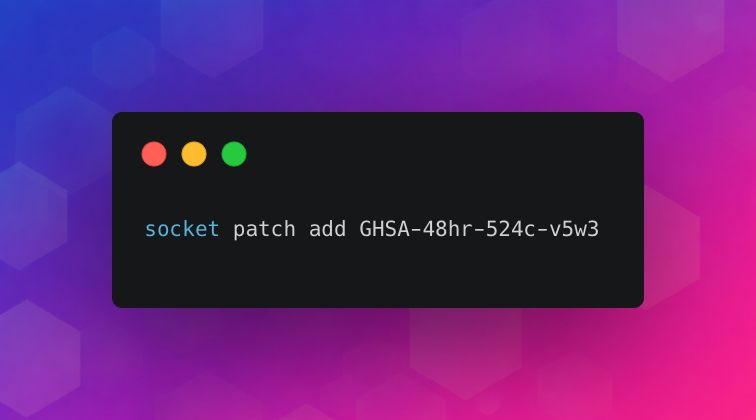
Nuxt 4.5.1/3.21.10 and @nuxt/devtools 3.3.1 patch eight GitHub Security Advisories, the most severe being GHSA-9473-5f9j-94wq, a server-side RCE via server island props reaching Vue's dynamic component resolution when vue.runtimeCompiler is enabled, plus a related unauthorized component instantiation bug (GHSA-48hr-524c-v5w3), a route-rule authz bypass, DoS issues, cross-user payload cache disclosure, and a critical dev-only RCE in Nuxt DevTools. Socket released free Certified Patches for the two highest-severity issues (installable via `socket patch add`) as an interim fix for teams that can't immediately upgrade, and is preparing patches for the rest.
 socket.devadvisoryPublished and added 28 Jul 2026🛡️ Security
 AI Security Briefing
CISA added four actively exploited vulnerabilities to its KEV catalog: a path traversal RCE in Adobe ColdFusion (CVE-2026-48282, CVSS 10.0), an unauthenticated file-upload RCE in Joomlack Page Builder CK (CVE-2026-56290, CVSS 10.0), an IDOR in Langflow allowing cross-tenant flow execution and LLM/AWS key theft (CVE-2026-55255, CVSS 6.1), and an unauthenticated arbitrary file upload in JoomShaper SP Page Builder (CVE-2026-48908, CVSS 10.0). Sysdig documented an operator chaining the Langflow IDOR with CVE-2026-33017 RCE for opportunistic, financially motivated cryptojacking/botnet activity and credential theft from an AI orchestration platform, while mySites.guru observed web shell deployment via the Joomla flaws. FCEB agencies must patch by July 10, 2026.
 thehackernews.comadvisoryPublished and added 18 Jul 2026🛡️ Security



Showing 30 of 43
Show more