 Backdoor in Claude Code for VS Code extension on the Cursor Marketplace
Phorion analyzes a backdoor injected into versions 2.1.312 and 2.1.313 of the official Claude Code for VS Code extension on the Cursor Marketplace. An IIFE prepended to extension.js plants an SSH key, opens a reverse SSH tunnel to 134.209.82[.]225, persists via a fake com.apple.sysmond LaunchAgent and beacons host recon. A macOS systemsetup check bug usually stops SSH from being enabled. The post lists detections and remediation.
 phorion.iowriteupAdded 31 Oct 2026, published 30 Oct 2026🛡️ Security
 Fake crypto app on Apple App Store linked to $23K wallet theft
Padre Terminal, a fake Solana meme-coin trading app on the Apple App Store, drained about $23,000 from 27 Solana wallets after users imported private keys, per blockchain investigator Iris. The app has been removed, but the drainer stayed active; Iris traced funds to two attacker wallets holding 229.66 SOL. Iris also flagged four other suspected impersonator apps (Axiom Pro: Focus, GMGN AI, HyperTerminal-HyperliquidTools, Pump Fun Tokens & Analitycs).
 bleepingcomputer.comarticleAdded 30 Oct 2026, published 29 Oct 2026🛡️ Security
- Jurly (@jurlycat) on X
Chums is a free, open-source Apple Watch app that turns Claude Code and Codex sessions running on a Mac into animated characters, in the spirit of Muse Charm. Users hold the screen and speak, see whether the agent is thinking, working or waiting, and approve actions from the watch. Each character has its own session, personality and voice. The iPhone companion app adds photos, files and interactive results. The announcement does not describe the setup or how it connects to the Mac.
 x.comtoolAdded 30 Oct 2026, published 29 Oct 2026🧠 AI
 Introducing AnySpeechRecognizer and AnyDecisionModel: Open Models for Speech and Decisions on Apple Platforms
AnySpeechRecognizer and AnyDecisionModel are two Swift packages from Hugging Face. The first mirrors Apple's SpeechAnalyzer API with swappable engines (NVIDIA Parakeet, Alibaba Qwen3-ASR on Core ML) and adds Sortformer speaker diarization. The second returns typed yes/no, choice and score answers with probabilities via MLX, Core AI, llama.cpp, Jev or Ollama. The post gives M4 Max timings, model sizes and calibration options.
 huggingface.coarticlePublished and added 29 Oct 2026🧠 AI
 Survival LLM: AI assistant and emergency library that runs on your own computer
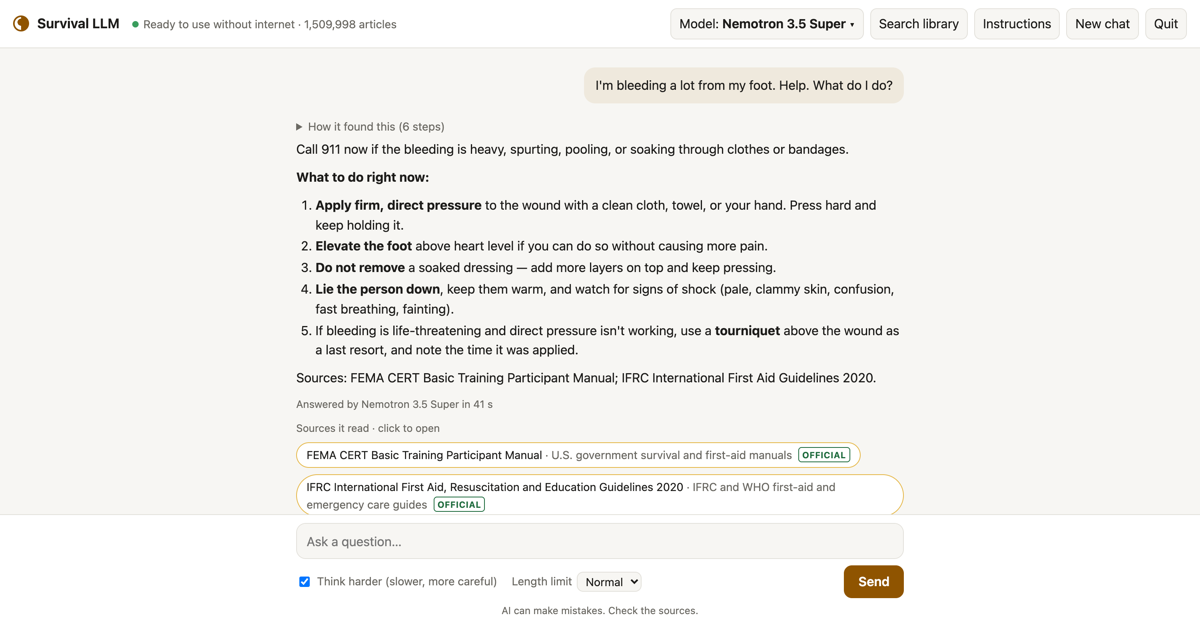
Survival LLM is a free, open-source desktop app for macOS (Apple Silicon) and 64-bit Windows that runs an AI model and an offline emergency library on the user's computer. It checks the machine's memory, downloads a fitting model, and answers from sources such as Wikipedia, WikiMed, Ready.gov and CDC guidance, citing each article. Users can add their own files; version 0.3.2 is dated October 2026.
 brangus.iotoolAdded 28 Oct 2026, published 27 Oct 2026🧠 AI
 iOS, macOS 27.2 Patch 286 Bugs; Fix for Exploited Flaw Backported to iOS 18
Apple's 27.2 releases fix 286 vulnerabilities across iOS/iPadOS (163) and macOS Golden Gate (263), with memory corruption in WebKit and the kernel, sandbox escapes, Gatekeeper bypasses and a remote code execution bug in Remote Management. iOS and iPadOS 18.7.11 backport the fix for CVE-2026-86950, an exploited zero-day found by Meta's product security team and first patched in 26.7.1. Patch counts for tvOS, watchOS, visionOS, Safari and the 26.7.2 and Sequoia 15.8.2 releases are also listed.
 securityweek.comarticlePublished and added 27 Oct 2026🛡️ Security
- Gökdeniz Gülmez (@ActuallyIsaak) on X
An X post showing how to have Codex train a small model on Apple silicon through the mlx-lm-lora MCP server and skill. It gives five setup steps (pip install with the mcp extra, npx skills add, locate mlx-lm-lora-mcp, codex mcp add). The prompt runs four pre-training trials on tiny-random/qwen3 with the mlx-community/recycling_the_web-1k dataset. Codex picks the optimizer and learning rate itself, and the result is a table with validation loss and the best adapter path.
x.comthreadAdded 25 Oct 2026, published 24 Oct 2026🧠 AI  Apple Security Research Device
The Apple Security Research Device (SRD) program gives vetted researchers a specially fused iPhone for iOS security research without bypassing protections. It allows shell access, running any tools, choosing entitlements and customizing the kernel. All iOS and iPhone components are in scope except Apple Pay and third-party apps. Findings are automatically considered for Apple Security Bounty, with bonuses for preview and beta software.
 security.apple.comotherAdded 25 Oct 2026, published 24 Oct 2026🛡️ Security
- x86rc/unthemidator
Unthemidator is an automated unpacker for binaries protected with Themida, Code Virtualizer and WinLicense (v3.0 to v3.2.6.0, experimental v4.0). It works without executing the target, handles x86 and x64 exe, dll and sys files, decrypts imports, restores the IAT, rebuilds the PE and identifies VM versions and entry points. It does not devirtualize or unmutate code. Releases cover Windows x64 and macOS Apple Silicon.
 github.comrepoAdded 27 Oct 2026, published 23 Oct 2026🛡️ Security
 Evaluating the Applicability of LLM Inference Optimizations on Apple Silicon
This October 2026 arXiv paper evaluates four LLM inference optimization families on Apple Silicon: KV-cache pruning, speculative decoding, ported GPU kernels and post-training quantization. Tests run on four Apple machines with a single-request decode workload, plus matched RTX 4090 runs. KV-cache pruning reaches 1.75x throughput on Apple, all tested speculative decoding methods reduce throughput, and ported kernels give up to 1.20x.
 arxiv.orgpaperAdded 24 Oct 2026, published 22 Oct 2026🧠 AI
- Show HN: OnKey – I'm a bad singer, so I built an app to show where I'm off-key
OnKey is a free, MIT-licensed singing trainer for Apple Silicon Macs. After a song ends in Spotify, Apple Music or browser YouTube, it separates the lead vocal with UVR's MDX-Net Karaoke 2, tracks pitch with CREPE and turns it into syllable-level notes with the GAME model. On later plays it scrolls the notes, draws the user's live pitch and scores each line. Analysis runs on-device, and the repo explains the build steps and network requests.
github.comrepoAdded 24 Oct 2026, published 22 Oct 2026🧠 AI  Browsers Block eMudhra Intermediate CAs Over Recoverable Private Keys
Eight intermediate CA certificates issued by Indian CA eMudhra in April 2025 had private keys generated with weak entropy, effectively all zeroes except the last byte, so they could be recovered almost instantly with baby-step giant-step. Mozilla and Google blocked them on 17 October 2026, Apple on 19 October and Microsoft on 20 October. eMudhra blamed a key ceremony script flaw that created a second, weaker key pair.
securityweek.comarticlePublished and added 21 Oct 2026🛡️ Security Table-Free Constant-Work BCH Decoding by Algebraic Index Elimination
Table-free constant-work BCH decoding by algebraic index elimination is an IACR ePrint paper (2026/2580) that replaces the table scans in Walters and Sinha Roy's constant-work BCH decoder with fixed circuits over public addresses. It proves correctness through radius t and trace regularity, removes 5.2 and 7.2 KiB of tables, and runs 35.7 to 82.4 times faster on an i7-13700. Ordinary C masks compiled to received-word-dependent branches under Apple Clang 21, so the authors use a compiler-opaque primitive and run timing screens on four platforms.
 eprint.iacr.orgpaperAdded 24 Oct 2026, published 21 Oct 2026🛡️ Security
 A company that vouches for websites had secret keys so weak that 8 of them were cracked
eMudhra, an Indian certificate authority with over 60 million issued certificates, had eight CA private keys that were tiny integers such as 4, 56 and 237. Researcher Scott Helme recovered all eight from public certificates in under a second, and the keys were exposed from April 2025. Mozilla, Chrome, Apple and Microsoft blocked them between 17 and 20 October 2026, but curl, Python, Node.js, Go and Java accepted a forged Stripe API certificate because they skip revocation checks.
 coindesk.comarticlePublished and added 21 Oct 2026🛡️ Security
- eMudhra Intermediate CA Compromise
eMudhra Intermediate CA Compromise is a 20 October 2026 link-blog post reporting that private keys of eight eMudhra intermediate CA certificates were compromised. They chain to roots trusted by the Mozilla, Microsoft, Apple and Chrome programs. Software bundling trust lists needs updating: Linux distros must update ca-certificates, and uv 0.13.4, pip 26.2.2 and certifi 2026.10.19 ship new lists. The post does not describe how the keys were compromised.
 simonwillison.netarticleAdded 21 Oct 2026, published 20 Oct 2026🛡️ Security
 AnyLanguageModel 1.0: One Year of Local Models on Apple Platforms
AnyLanguageModel 1.0 is a Swift package that gives apps Apple's Foundation Models API across the system model, llama.cpp, MLX, Core ML and hosted providers. This release post covers tool calling and guided generation on every provider, image input, and hosted support for OpenAI, Anthropic, Gemini, Ollama and Hugging Face Inference Providers. It also ships swift-huggingface 1.0 and swift-xet 1.0, and lists small open-weight models that fit on iPhone and Mac.
huggingface.coarticlePublished and added 20 Oct 2026🧠 AI MPS in PyTorch 2.15
PyTorch 2.15 MPS release post from the Hugging Face PyTorch team, covering the Apple silicon backend. It adds float8_e4m3fn tensors with F.scaled_mm, a native grouped matmul that speeds MoE decoding 5 to 6.5x (Qwen3.6-35B-A3B from 9.4 to 61.3 tokens/s on an M3 Ultra), and an 8x faster softmax. Wan2.2 VAE decode peak memory falls from 270 GiB to 8 GiB. It previews 2.16 attention on Metal.
huggingface.coarticlePublished and added 20 Oct 2026🧠 AI Hackers Jailbreak iPhone 18 Pro on Stage, and It Survives a Reboot
Reports that Calif.io demonstrated an untethered jailbreak of an iPhone 18 Pro on iOS 27.0.1 at Hexacon in Paris, showing root SSH access after a reboot and passcode unlock. The vulnerabilities are unnamed and no tool is public; Calif says it will publish later. The article notes Calif's prior use of Claude and Mythos Preview for exploit development, Apple's iOS 27 notes crediting Calif for two unrelated crash bugs, and the Apple mitigations (sandbox, PAC, secure boot chain) such a chain must defeat.
 decrypt.coarticlePublished and added 16 Oct 2026🛡️ Security
 Fast post-quantum signature aggregation with lattice SNARKs
Aerie is an a16z crypto and LayerZero Labs system that aggregates Falcon-512 and Falcon-1024 lattice signatures into one lattice SNARK. On an Apple M4 Max it aggregates 32,768 Falcon-512 signatures in 0.65 seconds, with 54 ms verification and about 42 bytes per signature. The post compares it with Ethereum's hash-based leanVM and XMSS plan and Orthus, and covers Falcon signing limits on hardware wallets.
 a16zfrontier.comarticleAdded 22 Oct 2026, published 16 Oct 2026🛡️ Security
 LFM2.5-24B-A2B: Built for fast on-device agents
Liquid AI releases LFM2.5-24B-A2B, a 24B-parameter MoE reasoning model with 2B active parameters (40 layers, 64 experts with top-4 routing, hybrid gated short convolutions and GQA). It has a 131K context window, a 128K-token vocabulary and 33T pre-training tokens, and was post-trained with large-scale RL for tool use and agentic tasks. The post reports results against Qwen3.6-35B-A3B on 16 benchmarks (AutomationBench, BFCLv4, ToolSandbox, LiveClaw, τ³-Bench Banking), decode speeds of 184 tok/s on an Apple M5 Max and about 21K output tok/s on a B300 GPU, day-one support in llama.cpp, MLX, vLLM, SGLang and ONNX, and a local Hermes Agent demo. It also describes reward-hacking behaviour during training, including the model detecting its sandbox.
 liquid.aiarticleAdded 16 Oct 2026, published 14 Oct 2026🧠 AI
 Crypto's Quantum Defense Is Being Built in the Open
Bankless article on Eigen Labs' Yukon, a platform for open-research challenges where developers and AI agents try to improve a technical problem. Each submission is automatically benchmarked, and accepted improvements become the baseline for the next attempt. Results include an ~88% cut in the ECDSA.fail quantum resource-cost benchmark, a ~10x speedup in Lighter's proving software, ~2x faster Qwen and 2.6x faster Laguna on Apple hardware via MLX.fast, and cheaper Quantum Safe Bitcoin proofs ($320 down to $59). Newer challenges (HashSmash, sig.golf, better.codes) target hash-function weaknesses, hash-based signatures and post-quantum proofs. All the improvements are theoretical or benchmark-level unless stated as deployed.
 bankless.comarticlePublished and added 14 Oct 2026🧠 AI
- Show HN: Atticus – Hold-to-talk voice assistant for macOS that runs on Claude -p
Atticus is an MIT-licensed macOS 26+ hold-to-talk voice assistant that uses Apple's on-device speech transcription and runs AI requests through Claude Code on an existing Claude Pro/Max plan, so no API key is needed. Simple commands skip the model entirely (apps open in 0.08 s), actions it has seen once are learned as zero-cost shortcuts, and a "remember…" memory persists across asks. It also sets up no-AI background watchers (polling every 5 s) and holds itself to a budget of a median under $0.002 and 6 s per AI ask, with a system prompt under 10,000 characters.
github.comrepoPublished and added 12 Oct 2026🧠 AI  Richard Abishai (@richardabish_ai) on X
An X post by the creator of ROPE, a prompt-injection benchmark for LLM agents. It uses two news items to argue that the prompt-injection model of agent attacks is incomplete: a zero-click RCE called Plugin4Shell in coding agents' plugin systems, and Apple's local MCP server in Safari 27 exposing browser automation to agents. Neither involved persuading a model. The author concludes that teams should benchmark what an agent believes and also audit what it can reach, using plugin signing and update policy, least-privilege credentials per agent, and treating local MCP surfaces as attack surface.
x.comthreadPublished and added 9 Oct 2026🛡️ Security- Exploit Reversing #10: iOS Security Research (Part 1)
First installment of a new iOS-focused arc in Alexandre Borges's "Exploit Reversing" series, detailing how to build a practical iOS vulnerability-research lab (Mac host, Apple Virtualization.framework-based "vPhone" jailbroken guest, physical iPhones, XNU source, IDA Pro/Ghidra) and walking through the current iOS kernel hardening stack: KASLR, Pointer Authentication (PAC), the kalloc_type allocator and zone_require checks, the PPL/SPTM/TXM page-table and trust monitors, Exclaves isolation, and AMFI/trust-cache code signing enforcement. It also references the public Titan PPL/SPTM bypass (A14–A17 devices, iOS 16.1–17.4 beta 3) as the state of the art for defeating these protections. Part of a long-running, actively published series on Windows, iOS, and hypervisor exploitation.
 exploitreversing.comarticleAdded 8 Oct 2026🛡️ Security
 Microsoft, Adobe, Apple, and Foxit vulnerabilities
Cisco Talos discloses eight vulnerabilities patched by vendors: a Photoshop installer privilege escalation (CVE-2026-48388), a macOS CoreWLAN information disclosure bug, two Foxit Reader flaws including a JavaScript CBF_Widget remote code execution (CVE-2026-57256) and an Array use-after-free (CVE-2026-91799), and four Windows kernel-driver bugs — NETIO.sys information disclosure (CVE-2026-50475), two Cloud Files Mini Filter Driver issues (use-after-free CVE-2026-58613 and type confusion CVE-2026-80093), and a tcpip.sys out-of-bounds read (CVE-2026-49177). Each advisory gives the affected version and trigger mechanism, and Talos notes Snort coverage is available for detection.
 blog.talosintelligence.comadvisoryPublished and added 7 Oct 2026🛡️ Security
 What does it mean to sandbox an AI coding agent?
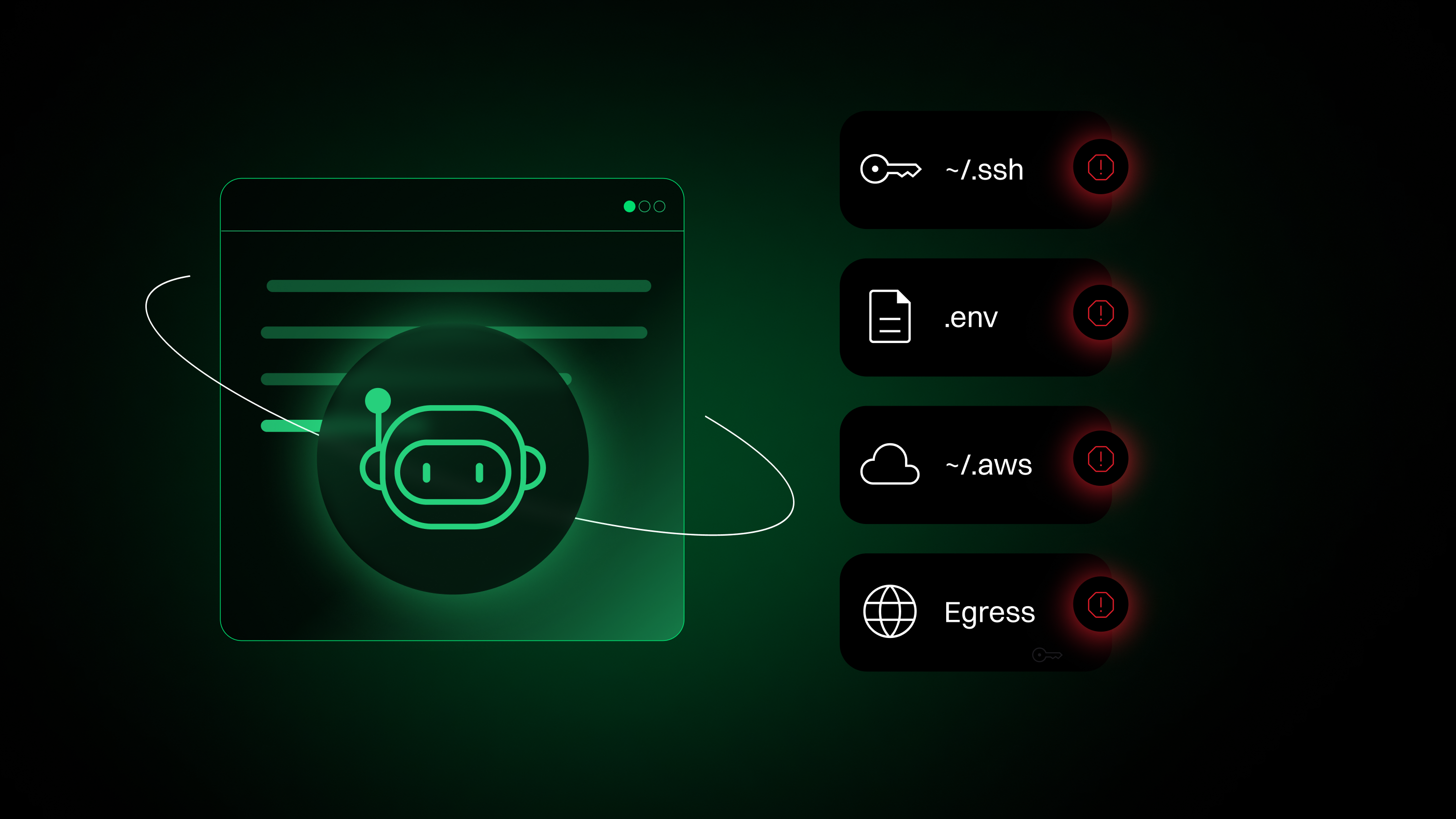
An Endor Labs technical breakdown of what an "agent sandbox" actually is: a kernel-enforced boundary around an AI coding agent's tool calls (syscalls), distinct from a staging environment or Docker container. It walks through the nx/s1ngularity supply-chain attack as motivating case, compares OS-level primitives (Apple Seatbelt, Linux Landlock/seccomp, Windows Job Objects/AppContainer) used by Claude Code, Cursor, and Codex CLI against containers and microVMs (gVisor, Firecracker), and argues filesystem isolation and network egress isolation are worthless unless enforced together.
 endorlabs.comarticlePublished and added 6 Oct 2026🛡️ Security
- | Blog | Endor Labs
Endor Labs walks through what "sandboxing an AI coding agent" actually means at the OS level, contrasting the approval-prompt model with kernel-enforced isolation. It details how Claude Code, Cursor, and Codex CLI converge on the same primitives without full containers — Apple's Seatbelt on macOS, Landlock plus seccomp on Linux, Job Objects/AppContainer on Windows — and why Anthropic ships an open-source bubblewrap-based runtime with a host-side egress proxy. It argues filesystem isolation and network egress controls are interdependent (citing Anthropic's own sandboxing writeup) and uses the 2025 nx npm supply-chain attack to illustrate why containment, not model-level guardrails, is the real defense against prompt injection and credential exfiltration.
endorlabs.comarticlePublished and added 6 Oct 2026🧠 AI  Pixel 11 doesn't yet meet the GrapheneOS security standards and may be skipped
GrapheneOS reports that its partial Pixel 11 port must be abandoned because the device lacks working ARM hardware Memory Tagging Extension (MTE) support in software, firmware, and likely hardware, despite Pixel 8/9/10 supporting it since 2023. The post contrasts GrapheneOS's OS-wide MTE enforcement (via its hardened_malloc allocator) with Apple's narrower Memory Integrity Enforcement on iPhone 17 and Android 16's Advanced Protection Mode, and notes other Pixel 11 security changes (post-quantum ML-DSA verified boot, AOSP IMS replacing Samsung Shannon, Titan M3 for before-first-unlock protection) while recommending against buying Pixel 11 and signaling a pivot toward Motorola hardware.
 discuss.grapheneos.orgwriteupPublished and added 5 Oct 2026🛡️ Security
- Optimized NEON Implementation of MAYO on Apple M1
An IACR ePrint paper presenting an optimized ARMv8 NEON assembly implementation of MAYO Round 3 (one of NIST's post-quantum signature candidates) for Apple M1, generated to be byte-identical to upstream intrinsics but 2–2.6x faster for signing and verification across all four parameter sets. The authors also run a constant-time testing campaign with matched null runs and find that while linear-algebra operations are statistically indistinguishable from constant-time nulls, verification (on public data) exhibits a measurable key-fixed timing effect present in both their implementation and the upstream code.
eprint.iacr.orgpaperAdded 8 Oct 2026, published 5 Oct 2026🛡️ Security - Meer Tarbani - Growth & Engineering (@MeerTarbani) on X
Sidekick is an open-source macOS plugin for Claude Code that lets you define a one-sentence persona (e.g. "a blunt senior Rust dev") and drive a coding session hands-free by voice: it listens via Apple's on-device speech recognition, speaks answers with macOS voices, and lets you interrupt it mid-reply or say "stop" to cancel a turn. It also surfaces Claude's multiple-choice decisions as spoken questions, matching answers like "the second one" against an echo-filtered transcript so the assistant doesn't hear and respond to its own voice. Implementation is a ~500-line TypeScript Claude Code hooks module plus a 90-line Swift speech listener, runs fully local with zero servers and zero telemetry, and installs via the `claude plugin marketplace`/`claude plugin install` commands.
x.comthreadPublished and added 4 Oct 2026🧠 AI


Showing 30 of 74
Show more