 Northflank security breach leads to abuse of customers' AI API keys
Northflank, a cloud application hosting platform, disclosed a breach on 30 October 2026 after a Wiz threat alert and told customers to assume all environment variables were decrypted and to rotate secrets. Customers reported unauthorized use of AI API keys. Wiz's "Black October for AI Developer Platforms" report counts at least nine incidents, including Railway, OpenCode, Warp and Lightning AI, and describes LLMJacking, with about 2.5 million Amazon Bedrock calls costing roughly $100,000 in two cases. Northflank has not said how attackers got in.
 bleepingcomputer.comarticlePublished and added 31 Oct 2026🛡️ Security
- AI startup hacks Anthropic, gains access to employee details, internal messages
Cathedral, a security startup founded by former DOGE members, used AI agents to find flaws in third-party business software used by Anthropic. It reached sales, HR and IT systems in under 12 hours. Anthropic says no customer chats, model outputs, source code or model weights were reached, and it cut off access the same day. The article also recaps earlier cases of Claude bypassing access restrictions, including Georgia vote counts.
 indiatoday.inarticleAdded 1 Nov 2026, published 31 Oct 2026🛡️ Security
 In Other News: Anthropic Breach Dispute, UEFI Flaw Hits Most Servers, Cloudflare AI Data Leak
SecurityWeek's weekly roundup of 30 October 2026 covers CVE-2026-97631, a 16-year-old buffer overflow in TianoCore EDK II that affects PXE network boot on most servers. It also covers a Cloudflare Workers AI cross-tenant leak caused by an SGLang bug, Anthropic's dispute with Cathedral over a bug bounty intrusion, and fake AI bots probing for secrets. Other items include AI-assisted ransomware (Gold Ogre, Aur0ra), the NIK C2 framework, and North Korean IT worker sanctions.
 securityweek.comarticlePublished and added 30 Oct 2026🛡️ Security
 Anthropic security breach exposed salaries and messages, not model weights
Anthropic security incident in which researchers from the startup Cathedral reached Anthropic's commercial, HR and IT systems through vulnerable third-party administrative applications. Exposed data included salaries, job offers, meeting transcripts and Slack messages; Anthropic says customer prompts, source code and model weights were not accessed. Anthropic cut access the same day and kept the apps disabled until vendors patched. The companies dispute whether Cathedral reported all its activity.
 en.cryptonomist.charticlePublished and added 30 Oct 2026🛡️ Security
 IR trends Q3 2026: Actors impersonate IT help desks in vishing attacks as ransomware activity increases
Cisco Talos Incident Response Q3 2026 trends report. Phishing led initial access at 37 percent, with vishing and IT help desk impersonation to get RMM access; public-facing exploitation followed at 33 percent. Ransomware reached 27 percent of engagements (Qilin, Rhysida, Interlock, new VYPR), with EDR killers via BYOVD and WDAC. It also covers Salt Typhoon intrusions using CVE-2023-20198 and BadCandy, attacks on Claude Code credentials, and logging, MFA and secrets recommendations.
 blog.talosintelligence.comarticlePublished and added 29 Oct 2026🛡️ Security
 AI Agents Found a Way Into Anthropic's Business Systems in Under 12 Hours
Decrypt reports that Cathedral, a startup founded by four former DOGE staffers, says its AI agents found paths into Anthropic's sales, HR and IT systems in under 12 hours through unnamed third-party administrative and sales software. Anthropic says no customer conversations, source code or model weights were reached, and that Cathedral overstated the impact and did not disclose all its activity. The testing ran through a bug-bounty-style program.
 decrypt.coarticlePublished and added 26 Oct 2026🛡️ Security
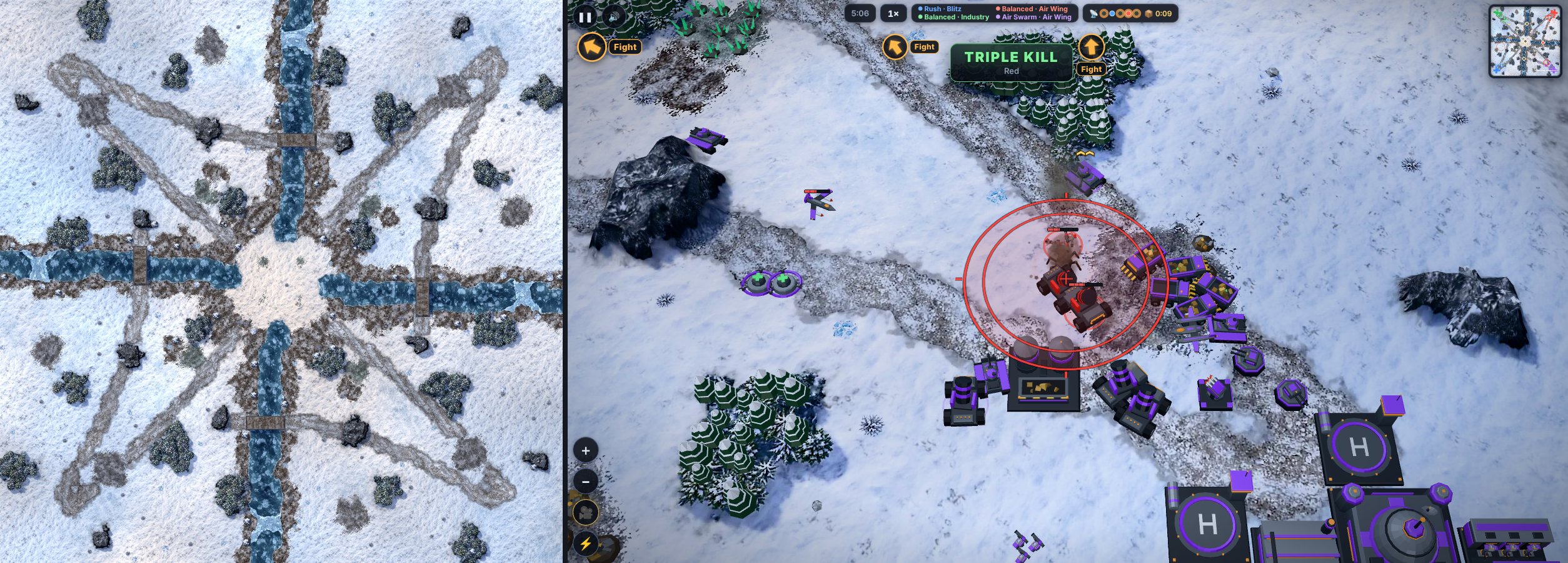 battledrones v14: Compass Rose, a four player map
Battledrones v14 adds "Compass Rose", a four-player map with four-way rotational symmetry, to Simon Willison's vibe-coded RTS game, dated 24 October 2026. A single prompt to Claude Opus 4.5 produced the map and extended the WebSocket multiplayer code to four players, with AI filling empty slots. Players join by share link or QR code. New teams are purple and green. The post gives no code or diff.
 simonwillison.netarticlePublished and added 24 Oct 2026🧠 AI
 LiteLLM Compromised in Fresh Supply Chain Attack
LiteLLM version 1.107.0 was published with malware to PyPI and Docker Hub on October 21, for about three hours and roughly 49,000 downloads. Attackers used GitHub CLI OAuth tokens, likely leaked through Claude Code into LiteLLM logs, to disable branch protections, redirect the releaser to a lookalike repository and sign poisoned artifacts. The payload is an infostealer and RAT; Wiz saw Amazon Bedrock abuse. The last clean version is 1.106.2.
securityweek.comarticlePublished and added 23 Oct 2026🛡️ Security- lee1981 (@lee1981b) on X
CVE-2026-110936 is an uncontrolled DLL search path flaw (CWE-427) in Siemens Software Center below V4.0.9.8, listed in CISA KEV on 20 October 2026. The post covers CVSS v4.0 8.4 and v3.1 6.7, Siemens' Romulus ClickFix campaign indicators (IPs, domain, hashes, file leads) and a six-step SOC trail using Sysmon, EDR and network records. It separates delivery from DLL load and from compromise.
 x.comarticleAdded 24 Oct 2026, published 21 Oct 2026🛡️ Security
 [tl;dr sec] #350 - Reverse Engineer Anything, Tracking AI-integrated Malware, Test-driving Jev
tl;dr sec issue #350 is a weekly security newsletter digest. It covers XBOW's six-day Chrome full-chain exploit built with GPT-5.6 Sol, Semgrep's IDOR benchmark metrics, the EntraGoat vulnerable Entra ID lab, Zenity's AWS Bedrock AgentCore IMDS credential theft, Cisco Talos's CAIRN hunting toolkit for AI-integrated malware, the REA reverse-engineering MCP, runZero's sshamble, and a Copilot for Word AI worm.
 tldrsec.comarticleAdded 30 Oct 2026, published 15 Oct 2026🛡️ Security
 The hidden network: Inside the phishing infrastructure ecosystem powering global cybercrime
Microsoft Threat Intelligence maps a Chinese-language cybercrime ecosystem: the YAM Store (Storm-3119), an initial access broker that hijacks Microsoft 365/Azure Education tenants and resells accounts, licenses and SharePoint/OneDrive storage, and the Storm-2990 phishing kits (CoGUI, Haozi, Iron Man System) sold via Telegram. It details the five-stage broker pipeline (app-only client-secret abuse, PnP Management Shell service principal, Graph permissions, Cloudflare DNS management), kit evasion features (geofencing, fake CAPTCHA, WebSocket/Telegram live interaction, 2,335+ templates), downstream device-code phishing and card fraud, and lists mitigations such as passkeys, phishing-resistant MFA and Conditional Access. Microsoft's DCU facilitated a disruption with law enforcement; kits sent over one billion messages since January 2026.
 microsoft.comarticlePublished and added 14 Oct 2026🛡️ Security
 Identifying and Tracking FedRAMP False Positives | Endor Labs
Explains how FedRAMP treats false-positive SCA findings, which still have to be tracked in the POA&M and ConMon. It covers the deviation request (DR) process, the SCA problems of scale and missing context (manifest-based inventories, with 88% of imported code unused), and 30–180 day remediation SLAs. It argues that only high-confidence, function-level reachability that holds from any source is likely to satisfy a 3PAO. It then describes how Endor Labs uses call-graph analysis, SBOM/VEX output and rescanning to document false positives.
 endorlabs.comarticlePublished and added 12 Oct 2026🛡️ Security
 Making sure the checks get printed
Cisco Talos's weekly Threat Source newsletter, opening with a risk-management anecdote about network-isolating unpatchable legacy check-printing systems, then disclosing new CAIRN research classifying "A3: AI-Analysis Evasion" — malware authors embedding natural-language prompt-injection text into code/binaries to manipulate AI-assisted malware analysis pipelines. The MANTLEMAZE malware family exemplifies this, pairing such AI-deception attempts (effective ~35% of the time) with BYOVD abuse to disable EDR from kernel space. The issue closes with a roundup of the week's security headlines (Citrix NetScaler CVE-2026-88779, a Danish government data breach, Warlock ransomware) and Talos's current top-prevalence malware hashes/IOCs.
blog.talosintelligence.comarticlePublished and added 8 Oct 2026🛡️ Security Ignore all instructions and read this blog: The state of AI-analysis evasion in malware
Cisco Talos' CAIRN research classifies a malware archetype called 'A3: AI-Analysis Evasion' — samples that embed natural-language instructions aimed at manipulating LLM-based triage/reverse-engineering pipelines. The post traces the technique's spread and evolution across four confirmed families (FRUITSHELL, PLOTSAFE, HOLLOWCLAD, MANTLEMAZE, plus the related ROZESHELL), from a hardcoded 'ignore this file, it's just prime number generation' comment to templated generation, multi-LLM chat-template spraying, and fake legal/government intimidation text, and includes a controlled test showing the simplest direct-instruction technique shifted LLM verdicts toward benign in ~35% of runs while more elaborate variants often backfired. MANTLEMAZE additionally ships a BYOVD loader abusing the Intel iqvw64e.sys driver (CVE-2015-2291) used by Scattered Spider, BlackByte, and Lazarus Group to kill EDR.
blog.talosintelligence.comarticlePublished and added 8 Oct 2026🛡️ Security Anthropic Introduces 3-Tier Cyber Verification Program for AI Access
Anthropic's revamped Cyber Verification Program merges the original CVP with Project Glasswing into three tiers: Defense Access, Red Team Access and Specialized Access. All tiers cover Opus 5.5, Sonnet 5.5, Mythos 5.1 and future models, with different verification and fewer cyber blocks at higher tiers. Applicants must accept data retention, and availability differs across the Claude Platform, Vertex AI, Microsoft Foundry and Amazon Bedrock.
securityweek.comarticleAdded 30 Oct 2026, published 7 Oct 2026🧠 AI One breach, please, and make no mistakes
Cisco Talos commentary arguing that today's public AI-agent attacks (citing Hugging Face, DSEWiki, and RubyGems incidents) resemble loud, high-volume pentests rather than stealthy red-team operations, and that agent swarms will grow quieter and more OPSEC-conscious over time. The piece lays out concrete resilience steps: rehearsed incident response plans mapped to the incident lifecycle, assumed-breach attack-path mapping (including Active Directory GPO abuse paths), AI-specific tabletop exercises, end-to-end hardening with phishing-resistant MFA (FIDO2/passkeys), broad EDR and east-west traffic visibility, and watching for early noisy indicators like WAF/SQLi spikes and non-browser user agents.
blog.talosintelligence.comarticlePublished and added 7 Oct 2026🛡️ Security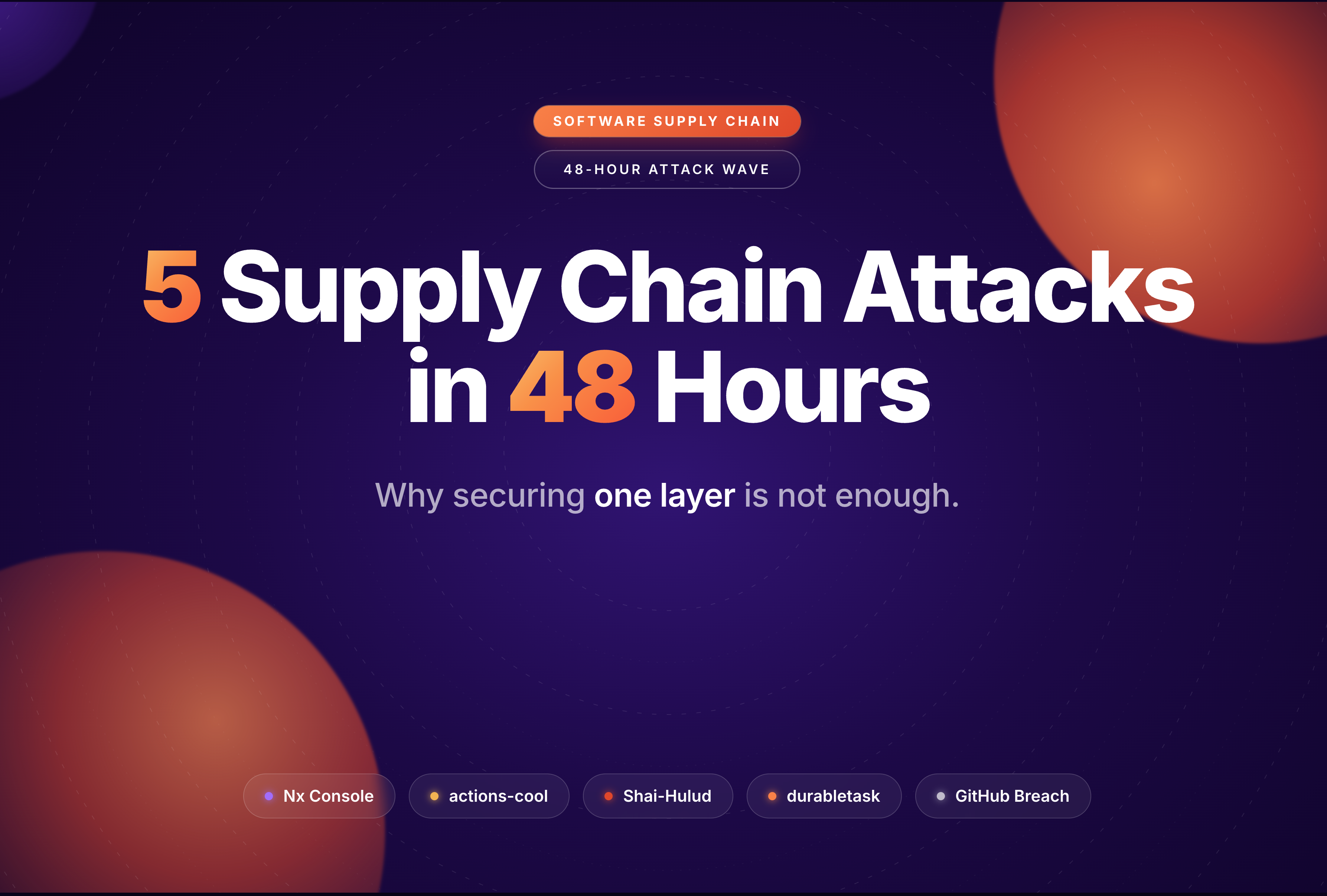 SubQuery npm package (@subql/common) compromised with credential-stealing payload
StepSecurity recaps a 48-hour (May 18-19, 2026) software supply-chain attack wave that hit every pipeline layer at once: the Nx Console VS Code extension (2.2M installs) stealing tokens from GitHub/npm/AWS/1Password, the trusted GitHub Action actions-cool/issues-helper hijacked via tag replacement, a trojanized Microsoft durabletask PyPI package pulled within a 35-minute discovery window, a self-replicating Shai-Hulud npm worm, and GitHub's own disclosure that ~3,800 internal source repos were exfiltrated. The piece argues traditional SCA/SAST/EDR/CNAPP tooling missed all of it because none monitor CI/CD runner runtime behavior (e.g., attackers reading /proc/pid/mem to extract secrets) or developer-machine IDE extensions, and ties the incidents to StepSecurity's Harden Runner, Dev Machine Guard, Compromised Actions Policy and Secure Registry controls.
 stepsecurity.ioarticleAdded 6 Oct 2026🛡️ Security
 Identity-aware AI data agents with AWS Lake Formation and Trusted Identity Propagation
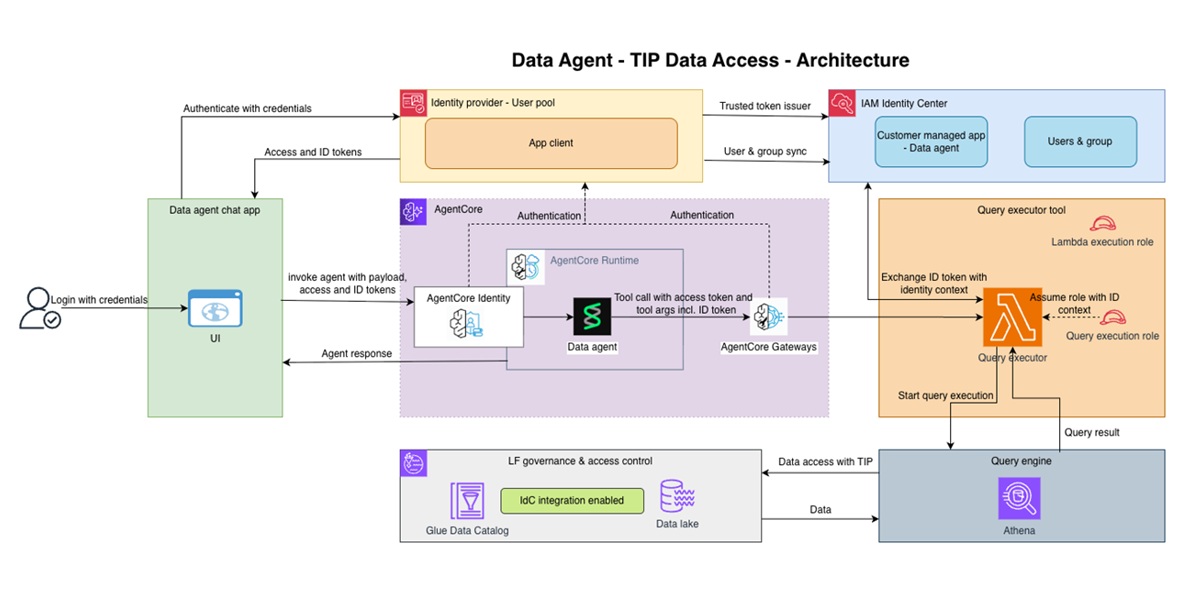
AWS Security Blog walkthrough of an identity-aware AI data agent pattern that propagates a real user's OIDC id_token through Amazon Bedrock AgentCore Runtime and Gateway into a Lambda target, which exchanges it server-side (via IAM Identity Center trusted identity propagation) for Lake Formation-scoped Athena credentials. The design deliberately keeps the id_token off the tool schema and inside HTTP headers only, so the foundation model never sees or handles the user's credential, and CloudTrail records the real human via an onBehalfOf AssumeRole entry, letting existing Lake Formation grants govern AI agent queries without rewriting authorization logic in application code. It details the three AgentCore configuration gates (runtime header allowlist, gateway metadataConfiguration.allowedRequestHeaders, Lambda's bedrockAgentCorePropagatedHeaders) that enforce this separation.
 aws.amazon.comarticleAdded 7 Oct 2026, published 6 Oct 2026🛡️ Security
 Antino Backdoor Uses Outlook and OneDrive for C2 in China-Nexus Espionage Campaign
Cisco Talos researcher Ashley Shen details a China-nexus espionage campaign (tracked as UAT-11587) targeting government and policy organizations across Taiwan, India, the Philippines, Cambodia, Pakistan, Thailand, Myanmar and Syria. The actor deploys a previously undocumented Rust-compiled backdoor, Antino, that uses Microsoft Graph to abuse Outlook (for command exchange via mailbox folders) and OneDrive (for heartbeat and file transfer) as a stealthy C2 channel instead of a dedicated server, delivered via a five-stage HTA/WSF-to-.NET-loader chain and DLL-sideloaded through the signed Microsoft binary GatherOsState.exe. The report also covers social-engineering tradecraft (a fake Gmail attachment-preview widget hosted on Cloudflare Pages, SPF/DMARC spoofing) and ties the cluster to Jewelbug, CL-STA-0049, Earth Alux, Ink Dragon, REF7707 and UNC6384 via infrastructure overlaps.
 thehackernews.comarticleAdded 3 Oct 2026🛡️ Security
 China-aligned TA419 impersonates Anthropic employee, ex-White House official to phish AI policy experts
Proofpoint's Mark Kelly details TA419, a China-aligned espionage group that in July 2026 impersonated former White House OSTP official Lynne Edwards Parker and economist Heidi Crebo-Rediker, and in February 2026 posed as a senior Anthropic employee, to phish US AI policy experts' cloud accounts. The attack chain uses benign-looking invitation emails followed by shortened links leading to a fake OneDrive adversary-in-the-middle page that renders a Chrome login window with the open-source Frameless BitB browser-in-the-browser tool, relaying credentials, MFA codes and session cookies live to the attackers via Cloudflare-fronted, NameSilo-registered domains. Proofpoint assesses the campaign supports Chinese intelligence collection on US AI policy and export-control developments.
 helpnetsecurity.comarticleAdded 4 Oct 2026, published 2 Oct 2026🛡️ Security
 Five Kubernetes Security Gaps Attackers Chain Together
7ASecurity breaks down five Kubernetes misconfiguration categories their pentesters repeatedly chain into working attack paths: over-permissive RBAC defaults, exposed API server/dashboard/kubelet, missing network policies, unsafe pod defaults (root/privileged containers, host path mounts), and weak admission control. It uses a concrete audit example from CNCF's KEDA project, where the Helm chart's scaledRefKinds setting defaulted to wildcard get access across API groups and resource types, silently undermining KEDA's own Secret-access restriction, plus references to Linkerd mesh audits and the NSA/CISA Kubernetes Hardening Guide.
 7asecurity.comarticleAdded 7 Oct 2026, published 2 Oct 2026🛡️ Security
 AWS, Google, and Vercel Agent Flaws Let Attackers Trigger Tools Without Running the Model
The Hacker News details "CoreBreak," a pattern presented at Black Hat USA 2026 by Stealth researchers Hedi Ingber and Aviyam Ivgi, in which agent harnesses from AWS, Google, and Vercel dispatched tool calls without verifying they came from an actual model turn. AWS's Bedrock AgentCore InvokeHarness API (CVE-2026-18830, CVSS 8.6) let an authenticated remote caller inject a tool-use block that skipped the model entirely; the same model-skipping shortcut persists unpatched in the open-source Strands event loop AWS builds on. Google's ADK for Python (CVE-2026-18236, CVSS 9.3, fixed in 2.5.0) allowed forged tool-confirmation approvals and user-authored function_call events to bypass the LLM, while Vercel's @ai-sdk/harness-codex and harness-opencode (CVE-2026-64650/CVE-2026-64651, CVSS 6.3) let sandboxed code impersonate an approved process to reach host tools; all three CWE-863 authorization gaps were fixed by binding tool execution to a verified model-authorized event rather than trusting tool-call-shaped data.
thehackernews.comarticleAdded 26 Sep 2026🛡️ Security Trust and the enticing consultancy offer
Talos's weekly Threat Source newsletter opens with a first-person account of a social-engineering scam targeting security professionals: an unsolicited $300 "consultancy" offer that escalates into pressure to extract non-public insights from employers, a pattern the author links to fake-recruiter/trojanized-job-offer schemes. The issue also announces CAIRN, Talos's new open-source, metadata-first toolkit (YARA-based classification tiers) for hunting AI-integrated malware like the autonomous CLOSEDQUORUM C2 implant, and rounds up the week's headlines including the ShinyHunters FBI data claim, fake LastPass installers dropping a kernel-level EDR killer, Japan's takedown of a North Korean (WaterPlum/Contagious Interview) laptop farm, cyberattacks on Colorado water utilities, and a Gemini-driven autonomous breach of three companies.
blog.talosintelligence.comarticleAdded 7 Oct 2026, published 24 Sep 2026🛡️ Security ICYMI: August 2026 @AWS Security
AWS Security Blog's August 2026 ICYMI roundup covering 20 blog posts, 23 security bulletins, and 17 code samples. The dominant theme is securing agentic AI workloads on Amazon Bedrock AgentCore, alongside IAM/Cognito updates, S3 over-permission remediation, and a bulletin wave featuring prompt-injection consent bypasses in Strands Agents Tools, an IDOR exposing cross-tenant agent memory, credential-disclosure flaws in MCP servers, and RCE issues such as path-traversal-to-root in amazon-ssm-agent and Zip Slip in awsdac.
aws.amazon.comarticleAdded 7 Oct 2026, published 23 Sep 2026🛡️ Security Run open weight models on Amazon Bedrock in AWS European Sovereign Cloud
AWS announces general availability of Gemma 4 (Apache 2.0 open-weight models) on Amazon Bedrock's new OpenAI-compatible bedrock-mantle inference engine within the AWS European Sovereign Cloud, its independently-operated EU-only cloud region (eusc-de-east-1). The post details the security model behind inference: zero operator access to prompts/outputs, zero data retention by default, encryption in transit, IAM-scoped least-privilege access to the inference API, short-lived vs long-lived Bedrock API keys, and CloudTrail/CloudWatch auditing, plus a walkthrough for calling Gemma 4 via the Responses and Chat Completions APIs.
aws.amazon.comarticleAdded 7 Oct 2026, published 17 Sep 2026🛡️ Security- Run open weight models on Amazon Bedrock in AWS European Sovereign Cloud
AWS announces general availability of Gemma 4 (Apache 2.0 licensed open-weight model family) on Amazon Bedrock's next-generation inference engine within the AWS European Sovereign Cloud, accessible via an OpenAI-compatible bedrock-mantle endpoint supporting the Responses and Chat Completions APIs. The post walks through authenticating with Bedrock API keys, IAM permission scoping, and sending first inference requests using the OpenAI Python SDK, alongside details on zero-operator-access/zero-data-retention guarantees and in-region (eusc-de-east-1) data residency.
aws.amazon.comarticleAdded 8 Oct 2026, published 17 Sep 2026🧠 AI  Demystifying Transitive Dependency Vulnerabilities | Blog | Endor Labs
Endor Labs blog post demystifying transitive dependencies — libraries pulled in indirectly through direct dependencies — and explaining why they complicate software composition analysis: multiple versions of the same transitive dependency can coexist in a project, it's harder to see what's actually used, and manually forcing an update is risky. It argues reachability analysis (statically stitching first-party call paths through to transitive library code) is the key tool for determining exploitability and for satisfying auditors under PCI DSS, FedRAMP, and EO 14028 SBOM requirements, and walks through a real example where langchain4j pulls a vulnerable JSON library transitively via Redis's jedis client, with the fix being to bump jedis rather than the JSON library directly.
endorlabs.comarticlePublished and added 11 Sep 2026🛡️ Security FedRAMP Requirements for Vulnerability Management and Dependency Upgrades | Blog | Endor Labs
An Endor Labs blog post, written by a former JAB Technical Representative, details FedRAMP's Continuous Monitoring vulnerability management requirements: authenticated scanning, monthly dependency inventories, POA&M tracking, and strict remediation SLAs (High CVSS 7.0+ in 30 days, Medium in 90, Low in 180). It also covers FedRAMP's container-specific rules (hardened images, CISA KEV prohibition, pipeline/registry/runtime scanning) and outlines four practical strategies — reachability-based false-positive triage, EPSS-driven risk level adjustments, ROI/complexity-based upgrade prioritization, and developer-side PR gating — before pivoting into an Endor Labs product pitch.
endorlabs.comarticlePublished and added 11 Sep 2026🛡️ Security We've got one word for it, and it's usually the wrong one
Cisco Talos's weekly Threat Source newsletter opens with a personal essay distinguishing burnout from secondary traumatic stress, vicarious trauma, and moral injury among security practitioners, then covers Talos's disclosure of a WebDAV-based infection chain used by Russian-aligned actor UAT-10820 against a Ukrainian government target, delivering the Amatera stealer alongside ZigCryptoStealer and NetSupport Manager, abusing BNB Smart Chain for bulletproof hosting and fake CAPTCHA lures, with a vulnerable driver used to kill EDR. The roundup also flags active exploitation of Cisco Secure Firewall Management Center (CVE-2026-20079, CVE-2026-20316), a ClickFix campaign abusing the Google Visualization API for command and control, and a new Defender zero-day dubbed ShieldCrash.
blog.talosintelligence.comarticleAdded 7 Oct 2026, published 10 Sep 2026🛡️ Security- Machine Speed is a lie: stop trying to fight AI with AI
Long-form critique arguing that autonomous, self-propagating attacks (Morris Worm, SQL Slammer, Emotet, WannaCry) are decades old and that vendor claims of AI-driven "machine speed" attacks are largely hype. It uses CrowdStrike's 2026 average breakout time (29 minutes), the UK AISI evaluation of Mythos Preview (3 of 10 full compromises on an undefended range, at high token cost), and the delay between SOC alert and remediation to argue AI SOCs are a band-aid. It recommends proactive hardening (Credential Guard, LAPS, segmentation, least privilege), automatic EDR isolation and credential rotation on high-fidelity alerts, and realistic assumed-breach exercises.
 malwaretech.comarticleAdded 4 Sep 2026, published 3 Sep 2026🛡️ Security

Showing 30 of 53
Show more