- ClioBitcoinBank 🏴☠️ (@ClioBitcoinBank) on X
lnd v0.20.7 and v0.21.6 are Lightning Network Daemon releases announced by Clio Bitcoin Bank. They include a Go-specific mitigation, with the MPTCP flag turned off, for CVE-2026-98432, a use-after-free in the Linux kernel's IPv4 TCP code. The post recommends all users update. It gives no exploit or impact detail.
 x.comadvisoryPublished and added 31 Oct 2026🛡️ Security
- CISA Adds Two Known Exploited Vulnerabilities to Catalog
CISA alert of 27 October 2026 adding two vulnerabilities to the Known Exploited Vulnerabilities (KEV) Catalog on evidence of active exploitation: CVE-2026-48356, an unrestricted upload of a dangerous file type in Adobe Commerce and Magento, and CVE-2026-111497, an unchecked return value in Google Brotli. It restates BOD 26-04, which makes federal civilian agencies prioritise KEV flaws on exposed assets and check for prior compromise. No technical detail or IOCs are given.
 cisa.govadvisoryAdded 29 Oct 2026, published 27 Oct 2026🛡️ Security
 Brotli vulnerability affects curl and Git
GHSA-9v8h-qqgm-4m35 is a critical buffer overflow (CVSS v4 9.2) in the Google Brotli decoder (c/dec/decode.c), affecting versions 1.0.3 through 1.2.0 on all platforms. A crafted compressed stream lets an unauthenticated remote attacker corrupt adjacent decoder state, leak memory, crash the process, or possibly execute code. Fixed in 1.0.10, 1.1.1 and 1.2.1. The page does not mention curl or Git, despite the title.
 github.comadvisoryAdded 25 Oct 2026, published 23 Oct 2026🛡️ Security
- lee1981 (@lee1981b) on X
CVE-2026-111497 is an out-of-bounds write in the Brotli decoder bundled with Node.js (CWE-787, CWE-252), rated CVSS v4.0 9.2 by the Google CNA and High by the Node.js project. Fixes are Node 22.23.4, 24.22.1 and 26.12.1, and 24.22.1 still labels Brotli 1.2.0 because the fix was cherry-picked. The post gives a SOC trail from input to worker, with remediation and verification steps. It notes no KEV match, CISA SSVC exploitation none, and only unverified public lab claims.
x.comadvisoryAdded 26 Oct 2026, published 23 Oct 2026🛡️ Security  Compromised eMudhra intermediate certificates
Cisco Talos describes eight eMudhra intermediate CA certificates (six TLS, two code signing) whose P-384 private keys were trivially recoverable because a flaw in an April 30, 2025 key generation ceremony produced weak keys with only 3 to 8 bytes of entropy. The post lists certificate SHA-256 hashes and serials, browser and Microsoft blocks, and the Go fix (CVE-2026-111943, Go 1.27.3 and 1.26.10) that filters chains by SPKI hash. It covers impact on VPNs, CI/CD and embedded devices, and Snort SIDs 67363 to 67374.
 blog.talosintelligence.comadvisoryPublished and added 21 Oct 2026🛡️ Security
- Dark Web Intelligence (@DailyDarkWeb) on X
Infinity Core is a set of six Linux kernel bugs published by researcher Hyunwoo Kim after the linux-distros embargo expired on 16 October 2026, with public exploit code. The bugs sit in timer, signal, memory, futex, scheduler and SLUB code. Five have local privilege escalation exploits, one is crash-only. CIQ says four affect Rocky Linux-based kernels. No sysctl or module workaround exists, so the fix is a patched kernel and a reboot.
x.comadvisoryAdded 19 Oct 2026, published 17 Oct 2026🛡️ Security - ♫Why♥Not♪ (@Python_s_) on X
Alert summarizing XBOW's disclosure of a three-stage Chrome for Windows exploit chain: V8 Maglev memory corruption (CVE-2026-85045), Animated WebP decoder memory corruption (Chromium issue 548509153), then a Crashpad sandbox escape (CVE-2026-78952). Loading a crafted page was enough; no click or download needed. Human researchers working with GPT-5.6 Sol agents built it in six days, Google paid $250,000, all three bugs are fixed, and no in-the-wild exploitation is confirmed. It advises updating Chrome and restarting, and gives forensic triage pointers.
x.comadvisoryAdded 15 Oct 2026, published 14 Oct 2026🛡️ Security - CISA AA26-281A: Chinese Government-linked Actors Combine Automated and Hands-on Hacking Tools to Steal Data
Joint FBI/CISA/NSA and allied-agency advisory on China-linked actors enabled by Integrity Technology Group (overlapping with Flax Typhoon, Ethereal Panda, Red Juliett). It details their TTPs: open-source scanners and the MicroScan exploit-script app, an XSS credential-harvesting payload dropping live700_v1.exe, EBurst password spraying against Exchange/O365, SoftEther VPN persistence, DCSync via DC.exe, and email theft via the Curlc4.txt PHP bot and the office-cli utility. It also provides IOCs, MITRE ATT&CK mappings, CVEs, incident response steps, and mitigations.
cisa.govadvisoryAdded 9 Oct 2026🛡️ Security  Citrix Urges Immediate Patching of Critical NetScaler Vulnerability
Citrix disclosed CVE-2026-107406 (CVSS 9.5), a critical memory overflow in NetScaler ADC and NetScaler Gateway that can lead to remote code execution or denial of service when appliances are configured as a SAML SP or SAML IdP, also affecting Secure Private Access Hybrid deployments using NetScaler. Patches are available in versions 14.1-73.46, 13.1-64.29, and the corresponding FIPS/NDcPP builds; Citrix says it is not aware of exploitation yet but urges immediate upgrades. The bulletin follows two other recently exploited NetScaler RCE/DoS zero-days (CVE-2026-88771, CVE-2026-88772) used against government, financial, education, legal, and professional-services organizations, and a separate DoS zero-day (CVE-2026-88779).
 securityweek.comadvisoryPublished and added 9 Oct 2026🛡️ Security
- go-ethereum v1.17.8 "Protein Sludge Pack"
Security-focused release notes for go-ethereum (Geth) v1.17.8, patching several denial-of-service vulnerabilities in the eth/snap p2p protocol handlers, hardening JUMPDEST analysis caching against post-Amsterdam-fork attacks, requiring IP verification before accepting discovery statements, fixing a rogue-STUN-server crash, and closing a DoS vector tied to BAL accounts. Most issues only become exploitable after the Amsterdam fork activates, and the release also includes RPC correctness fixes (eth_simulateV1, eth_createAccessList) and a Sparse Blobpool (EIP-8070) correctness bug.
github.comadvisoryAdded 8 Oct 2026🛡️ Security  GPT-6 Sol and GPT-6 Luna: October 2026 update
OpenAI's system card accompanying the October 2026 ChatGPT rollout of GPT-6 Sol and GPT-6 Luna, replacing GPT-5.6 Sol and Luna for free and paid users (Codex and ChatGPT Work retain the September versions). It details Preparedness Framework results (High capability in Cybersecurity and Biological/Chemical domains, below High in AI Self-Improvement), multiturn jailbreak and GPT-Red prompt-injection robustness, alignment evaluations on respecting Auto-review/warnings and deceptive disclosure, hallucination rates, and health/mental-health benchmarks (HealthBench, HealthBench Professional, MentalHealthBench), alongside some noted regressions in self-harm, sexual content, gore and teen (U18) safety categories.
 deploymentsafety.openai.comadvisoryPublished and added 7 Oct 2026🧠 AI
 [Security Disclosure] MetaMask Staking Precautionary Out of Order Exits
Lido Finance's governance forum discloses that MetaMask Staking (formerly Consensys Staking), one of its Ethereum validator node operators, detected an infrastructure compromise and is precautionarily exiting its operated validators from the Lido protocol. The post details the exit/withdrawal/re-entry timeline (~45 days), the non-custodial nature of Lido staking (MetaMask does not hold withdrawal keys), and the protocol's ad hoc reserve fund (6,750+ stETH) as a mitigation mechanism while a full investigation continues.
 research.lido.fiadvisoryAdded 3 Oct 2026, published 30 Sep 2026🛡️ Security
- CVE-2026-14541: An authentication bypass and audience confusion vulnerability exists in the Google OAuth provider component of Google mc
CVE-2026-14541 describes an authentication bypass (CWE-287) in the Google OAuth provider of Google's mcp-toolbox for databases v1.4.0, an MCP server that lets LLM agents query databases. When the Google authService is configured with mcpEnabled: true but no explicit audience or clientId, the ValidateMCPAuth pipeline skips audience checks for opaque tokens, so any valid Google OAuth access token — even one issued for an unrelated app — is accepted, letting unauthorized clients reach protected tools and data backends.
 nvd.nist.govadvisoryAdded 26 Sep 2026🛡️ Security
- Google Service Account Private Key Exposed in JWT Header
n8n GitHub advisory GHSA-9r8p-h6cc-6qhm: when configured with a Google Service Account key, n8n put the full PEM private key into the JWT header's kid field. Because JWT headers are only Base64-encoded, anything that logged or inspected the JWT (proxies, load balancers, app logs) could recover the key and impersonate the service account in Google Cloud. Fixed in 1.123.64, 2.29.8 and 2.30.1; rated Moderate (CVSS v4 5.1), with workarounds to rotate keys and review logs for exposed JWT headers.
github.comadvisoryAdded 26 Sep 2026🛡️ Security - Ruby SSE Session Poisoning
A GitHub Security Advisory (GHSA-5p9g-j988-pcwv) documents a session poisoning flaw in the Ruby MCP SDK's Streamable/SSE HTTP transport: the server never validates that a POST to /messages/{session_id} actually belongs to the caller, so an attacker who obtains a victim's session ID (e.g. via logs or network sniffing) can silently execute tool calls whose responses are delivered into the victim's own SSE stream. The advisory includes a working PoC (attacker/legitimate client scripts against the SDK's example streamable_http_server.rb), notes that csharp-sdk and go-sdk correctly bind sessions to user identity while ruby-sdk does not, and distinguishes the bug from the related "Stream Replacement" advisory (GHSA-qvqr-5cv7-wh35), which disconnects rather than poisons the victim's stream.
github.comadvisoryAdded 26 Sep 2026🛡️ Security - Insecure cryptographic defaults in oidcProvider: alg=none advertised and plain PKCE accepted by default
GHSA advisory for better-auth (< 1.6.11) documenting that the deprecated oidcProvider() and mcp() plugins publish "none" as a supported ID-token signing algorithm in their OIDC discovery document and default allowPlainCodeChallengeMethod to true, silently rewriting missing code_challenge_method to "plain" — both violating OAuth 2.1/RFC 9700. The fix removes "none" from the metadata, defaults plain PKCE to disabled, and rejects requests missing code_challenge_method instead of downgrading them; @better-auth/oauth-provider was never affected.
github.comadvisoryAdded 26 Sep 2026🛡️ Security - CISA Adds Seven Known Exploited Vulnerabilities to Catalog | CISA
CISA added seven vulnerabilities to its Known Exploited Vulnerabilities Catalog on the basis of active exploitation. They are SQL injection in Sangoma Switchvox, HTTP request/response smuggling in Kludex Starlette, OS command injection in Kestra OSS, improper authentication in BerriAI LiteLLM and JFrog Artifactory, and SSRF plus OS command injection in SonicWall SMA1000 appliances. The alert restates BOD 26-04, which makes federal agencies prioritise rapid remediation of KEV CVEs on publicly exposed assets that grant total control after exploitation. It also requires agencies to check for prior compromise before patching.
cisa.govadvisoryAdded 26 Sep 2026🛡️ Security - ChatGPT Images 2.5 System Card
OpenAI's system card for ChatGPT Images 2.5, powered by GPT-Image-2.5-Sunburst and GPT-Image-2.5-Flare, covering training data handling, a multi-layer image safety stack with upstream policy refusals and a downstream multimodal safety-reasoning monitor for input and output blocking, adversarial safety evaluation results versus ChatGPT Images 2.0, and Preparedness Framework capability assessments for biological and cyber risk adapted to the image modality. It also details image provenance measures including C2PA metadata conformance and Google DeepMind's SynthID watermarking.
deploymentsafety.openai.comadvisoryAdded 7 Oct 2026, published 8 Sep 2026🧠 AI - ChatGPT Images 2.5 System Card
OpenAI's system card for ChatGPT Images 2.5, covering the GPT-Image-2.5-Sunburst and GPT-Image-2.5-Flare models, details a multi-layer image safety stack (upstream LLM policy refusals, a multimodal safety reasoning model for input/output blocking) built to counter heightened deepfake realism risks. It reports adversarial-prompt evaluation results against ChatGPT Images 2.0, Preparedness Framework assessments for biological and cyber capability (image-modality adaptations of existing LLM evals, neither model crossing the "High" threshold but biological-risk mitigations still applied precautionarily), and expanded provenance tooling via C2PA metadata and Google DeepMind's SynthID watermarking.
deploymentsafety.openai.comadvisoryAdded 7 Oct 2026, published 8 Sep 2026🛡️ Security 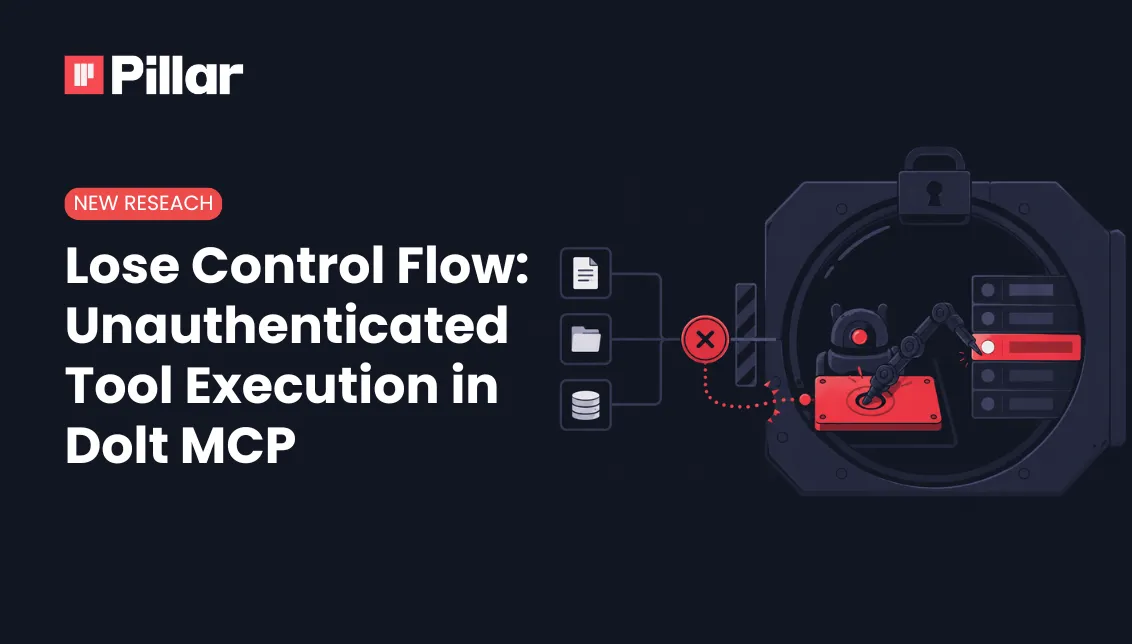 Lose Control Flow: Unauthenticated Tool Execution in Dolt MCP
Pillar Security details CVE-2026-73554, a critical authentication bypass in DoltHub's remote Dolt MCP server (versions 0.3.1–0.3.6) that let unauthenticated attackers reach tool dispatch and execute database operations under the server's own credentials. The bug combined a JWT middleware missing a return statement (so a 401-rejected request kept processing) with the bundled mark3labs/mcp-go library's InsecureStatefulSessionIdManager, which accepted any attacker-forged mcp-session-<uuid> value without verifying server issuance. DoltHub confirmed and patched within a day, issuing GHSA-mgpq-fxxc-h49q; fixed in Dolt MCP 0.3.7.
 pillar.securityadvisoryPublished and added 1 Sep 2026🛡️ Security
 Keyv and friends compromised in active Shai-Hulud supply chain attack
Aikido Security reports that Keyv and several related npm packages were compromised as part of the ongoing Shai-Hulud supply-chain attack, in which malicious versions were published to npm to spread a self-replicating worm across the ecosystem. The write-up details the affected packages and versions and the worm's propagation mechanism via compromised maintainer credentials and postinstall scripts.
 aikido.devadvisoryAdded 3 Sep 2026, published 4 Aug 2026🛡️ Security
 AI Security Briefing
CVE-2026-14898 affects the OpenAI Codex desktop app for macOS, which automatically renders remote images embedded in Markdown model output without user interaction. An attacker can use indirect prompt injection to make Codex generate a response containing an attacker-controlled image URL whose parameters embed sensitive data (API keys, source code, tool output), which is silently exfiltrated when the app auto-fetches the image. Categorized under CWE-200, no patch or CVSS score was available at disclosure.
 cybersecuritynews.comadvisoryPublished and added 18 Jul 2026🛡️ Security
- OWASP MCP Top 10 | OWASP Foundation
The OWASP MCP Top 10 (2025) is a living-document taxonomy of the ten most critical vulnerability classes affecting Model Context Protocol-based AI systems, covering issues like token mismanagement, privilege escalation via scope creep, tool poisoning, MCP-specific supply chain and dependency tampering, command injection, prompt injection via contextual payloads, weak authN/authZ, missing audit/telemetry, shadow MCP servers, and context injection/over-sharing. It targets AI/ML developers and security practitioners building agentic, model-chaining, and multi-modal MCP deployments, giving them a common vocabulary and checklist for secure design and auditing analogous to the OWASP Top 10 for LLM Applications.
 owasp.orgadvisoryAdded 3 Jul 2026🛡️ Security
 Orca Security: Langflow RCE (CVE-2026-33017) Actively Exploited
Orca Security details CVE-2026-33017 (CVSS 9.8), an unauthenticated RCE in Langflow's public flow-build API (/api/v1/build_public_tmp/{flow_id}/flow) that lets attackers execute arbitrary Python via a crafted node definition, with no sandboxing. Trend Micro observed active exploitation within 20 hours of disclosure, deploying a Go-based "lambsys" binary that kills rival cryptominers, disables AppArmor/SELinux/UFW/iptables, wipes logs, harvests credentials/.env files, and installs a geo-aware XMRig miner; ~7,000 internet-exposed Langflow instances were found, the flaw is in CISA's KEV catalog, and fix guidance clarifies 1.8.2 is still vulnerable — users must upgrade to 1.9.0+ or the 1.9.0.dev18 nightly and rotate exposed secrets.
 orca.securityadvisoryPublished and added 2 Jul 2026🛡️ Security
 Orca Security: CVE-2026-8206
Orca Security details CVE-2026-8206 (CVSS 9.8), a critical unauthenticated account-takeover flaw in the Kirki Freeform Page Builder, Website Builder and Customizer WordPress plugin versions 6.0.0-6.0.6. The bug lives in handle_forgot_password() of the CompLibFormHandler class, whose custom REST endpoint accepts an attacker-supplied email instead of the account registered address, letting an attacker redirect the password-reset link and seize admin accounts. Active exploitation is already confirmed (Wordfence logged 59 blocked attacks in 24 hours), and roughly 150,000 of 500,000+ installs remain unpatched pending the 6.0.7 fix.
orca.securityadvisoryPublished and added 3 Jun 2026🛡️ Security- Careful Adoption of Agentic AI Services
Joint guidance co-authored by ASD's ACSC, CISA, NSA, the Canadian Centre for Cyber Security, NCSC-NZ and NCSC-UK on securing LLM-based agentic AI systems across critical infrastructure and defence. It catalogs agentic-AI-specific risk categories — privilege compromise, scope creep, confused-deputy attacks, identity spoofing, insecure static permission checks, indirect prompt injection, specification gaming and deceptive/emergent agent behaviour — with concrete scenario examples, and lays out best practices for designing, developing, deploying and operating agents securely.
 cyberscoop.comadvisoryAdded 3 Sep 2026, published 13 May 2026🛡️ Security
 GitHub Repository Rulesets
GitHub changelog entry announcing two repository ruleset changes. Individual users can now be added as bypass actors on repository-level rulesets through the UI, REST API and GraphQL, so a dedicated team or role is no longer needed for a single person or service account. Repository admins can also rename a branch covered by an organization or enterprise ruleset, but only if the new name stays within the scope of every ruleset that applied to the old one. Otherwise the rename is blocked and an org or enterprise admin must do it, and org and enterprise admins can turn the capability off. This matters for branch-protection governance because bypass lists and rename rights affect who can circumvent required controls.
 github.blogadvisoryAdded 3 Sep 2026, published 11 May 2026🛡️ Security
- CAREFUL ADOPTION OF AGENTIC AI SERVICES FINAL
A joint guidance document from ASD's ACSC, US CISA/NSA, the Canadian Centre for Cyber Security, NCSC-NZ and NCSC-UK on securely adopting LLM-based agentic AI systems. It details agentic-specific risk categories — privilege compromise and scope creep, identity spoofing/agent impersonation, confused-deputy attacks, insecure static permission checks, goal misalignment/specification gaming, and deceptive or emergent agent behaviour — with concrete scenarios (a procurement agent with excessive privileges, a support-triage agent with a compromised third-party scheduling component, an update agent tricked into deleting firewall logs). It closes with lifecycle best practices for designing, developing, deploying and operating agents securely, plus recommendations on threat-intel sharing and agent-specific evaluations.
cyberscoop.comadvisoryPublished and added 6 May 2026🛡️ Security