 Your Artifactory is fine. Your Linux kernel hosting it might not be.
CVE-2026-98432 is a race-condition use-after-free in the Linux kernel's IPv4 TCP connection setup, present since Linux 4.4 and scored 9.8 by the kernel team. Anthropic reported on 27 October 2026 that Claude wrote a remote root exploit against MPTCP listeners. JFrog lists fixed kernel versions, distro patch status as of 30 October, changelog check commands for Debian, Ubuntu and RHEL, and mitigations where no fix exists.
 jfrog.comadvisoryPublished and added 2 Nov 2026🛡️ Security
 Threat Brief: Critical Vulnerabilities in PHP: CVE-2026-109618, CVE-2026-109619 (Updated October 29)
Unit 42 threat brief on PHP2Shell, two PHP remote code execution flaws, CVE-2026-109618 and CVE-2026-109619 (CVSS 4.0 9.2), both caused by longjmp() error handling that leaves memory uninitialized or freed. Cortex Xpanse counted over 22.6 million exposed instances. The 29 October 2026 update says attackers chained PHP2Shell with a Linux kernel privilege escalation against internet-exposed PAN-OS management interfaces. An earlier 23 October claim of post-compromise activity was retracted on 25 October.
 unit42.paloaltonetworks.comadvisoryAdded 30 Oct 2026, published 29 Oct 2026🛡️ Security
 CVE-2026-98432: 9.8 CVE affecting all Ubuntu versions
CVE-2026-98432 is a Linux kernel use-after-free in the IPv4 TCP stack, tracked by Ubuntu (published 15 October 2026, updated 29 October 2026). ireq_opt/inet_opt were freed with plain kfree() while another CPU built a SYNACK under RCU, so ip_options_build() read freed memory; the fix uses kfree_rcu(). Ubuntu rates it High priority, CVSS v3.1 9.8 and v4.0 8.3. The page text does not list per-release package status.
 ubuntu.comadvisoryAdded 30 Oct 2026, published 29 Oct 2026🛡️ Security
 CVE-2026-101767: Critical Oracle EBS SQL Injection Actively Probed in the Wild
CVE-2026-101767 is a CVSS 9.8 unauthenticated SQL injection in Oracle E-Business Suite's Application Object Library, reachable through the /OA_HTML/AppsTCFServer servlet (GanttDataServer) and chainable to OS command execution. It affects versions 12.2.3 to 12.2.15 and was fixed in the October 2026 Critical Patch Update. Horizon3.ai found it, and Defused saw probing on honeypots on 27 October 2026. Interim mitigation is removing the servlet from the URL firewall allowlist.
 orca.securityadvisoryPublished and added 28 Oct 2026🛡️ Security
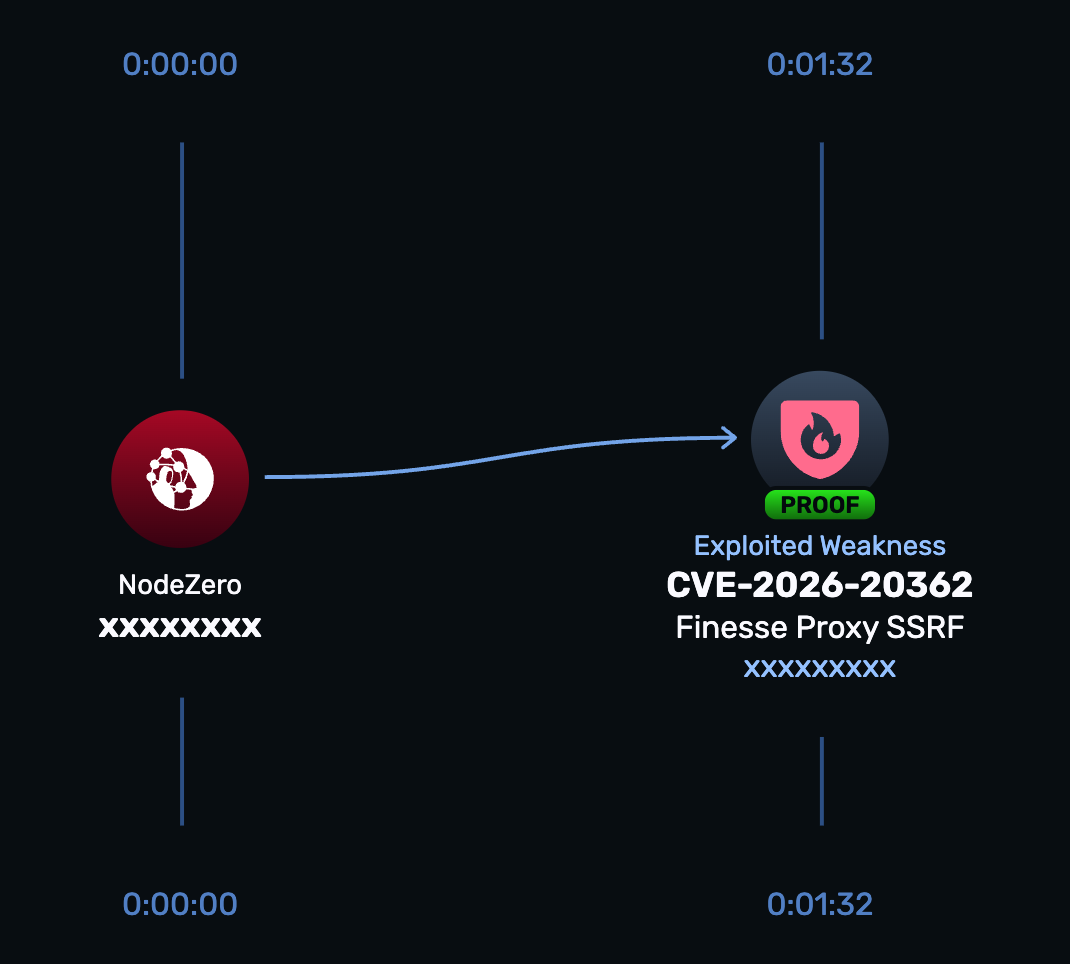 CVE-2026-20362 | Cisco Finesse Server-Side Request Forgery Vulnerability
CVE-2026-20362 is an unauthenticated server-side request forgery in Cisco Finesse (CVSS 3.1 score 7.2), found by Horizon3 researchers Noah King and Brandon Peterson. The embedded Apache Shindig content proxy fetches attacker-supplied URLs, including loopback services such as the Finesse REST API at 127.0.0.1:8082, which returns SystemInfo with node hostnames and the XMPP domain. Cisco published its advisory on 7 October 2026. Fixes are planned for January and February 2027, and no workaround exists.
 horizon3.aiadvisoryAdded 29 Oct 2026, published 28 Oct 2026🛡️ Security
- Node.js Brotli Decoder Out-of-Bounds Write Threatens Remote Code Execution Across All Supported Versions
CVE-2026-111497 is a high-severity out-of-bounds write in the Node.js Brotli decoder, reported by Orca Security. It affects all supported release lines (22.x, 24.x, 26.x) and can be triggered by malformed Brotli data processed through node:zlib or fetch(). Impacts named are crashes, memory disclosure and remote code execution in cloud workloads; patching is advised. The fetched text covers only the executive summary.
orca.securityadvisoryPublished and added 27 Oct 2026🛡️ Security - ENISA Technical Advisory for Software Bill of Materials
ENISA Technical Advisory for Software Bill of Materials is practical guidance on SBOM adoption for organizations, especially micro, small and medium enterprises and open-source stewards. It sets out an SBOM implementation architecture and data flows across a defined lifecycle, an indicative SBOM threat model with targeted risks, and measures for the SBOM ecosystem. It aligns with the ENISA Secure by Design and Default Playbook and supports Cyber Resilience Act compliance.
 enisa.europa.euadvisoryAdded 23 Oct 2026🛡️ Security
 Node2Shell: Node.js Brotli vulnerability allows remote code execution (CVE-2026-111497)
Node2Shell (CVE-2026-111497) is an out-of-bounds write in the Brotli decoder bundled with Node.js and Bun, triggered by malformed compressed input and rated high by Node.js, with possible remote code execution. Fixed in Node.js 22.23.4, 24.22.1 and 26.12.1 and Bun 1.4.4. The post covers exposure via Express 5, body-parser 2.x, fetch() and node:zlib, stopgaps, and a timeline with public proofs of concept on 22 October 2026.
 aikido.devadvisoryPublished and added 22 Oct 2026🛡️ Security
 PHP Patches Two Critical Unauthenticated RCEs (CVE-2026-109618, CVE-2026-109619): Update Now
Snyk's write-up of two critical unauthenticated PHP runtime RCEs, CVE-2026-109618 (out-of-memory corruption) and CVE-2026-109619 (stale global state, cross-request use-after-free), both CVSS v4.0 9.2. Fixed in PHP 8.5.12, 8.4.27, 8.3.36 and 8.2.35 on 21 October 2026. It covers the disclosure timeline, affected SAPIs (mod_php most exposed), backports for 8.1 and older, and partial mitigations.
 snyk.ioadvisoryPublished and added 22 Oct 2026🛡️ Security
 PHP2Shell: Critical vulnerabilities in PHP (CVE-2026-109618, CVE-2026-109619) | Endor Labs
PHP2Shell is the name for two critical PHP core memory-safety flaws, CVE-2026-109618 and CVE-2026-109619, that allow unauthenticated remote code execution. Fixes ship in PHP 8.2.35, 8.3.36, 8.4.27 and 8.5.12. Wiz researchers demonstrated RCE against WordPress, Drupal and Joomla, and Apache with mod_php is the highest risk. The post covers inventory, container rebuilds, Cloudflare WAF rules and temporary exposure reduction.
 endorlabs.comadvisoryPublished and added 21 Oct 2026🛡️ Security
 PHP Remote Code Execution ("PHP2Shell" CVE-2026-109618 & CVE-2026-109619)
PHP2Shell is the name for CVE-2026-109618 (out-of-memory corruption) and CVE-2026-109619 (stale global state), two unauthenticated PHP remote code execution flaws rated CVSS 4.0 9.2. Details leaked before the 21 October 2026 patch release, and watchTowr's honeypots saw exploitation. The page lists fixed versions (8.5.12, 8.4.27, 8.3.36, 8.2.35), states that .ini mitigations do not work, gives a timeline, and describes compromise checks.
 watchtowr.comadvisoryAdded 28 Oct 2026, published 21 Oct 2026🛡️ Security
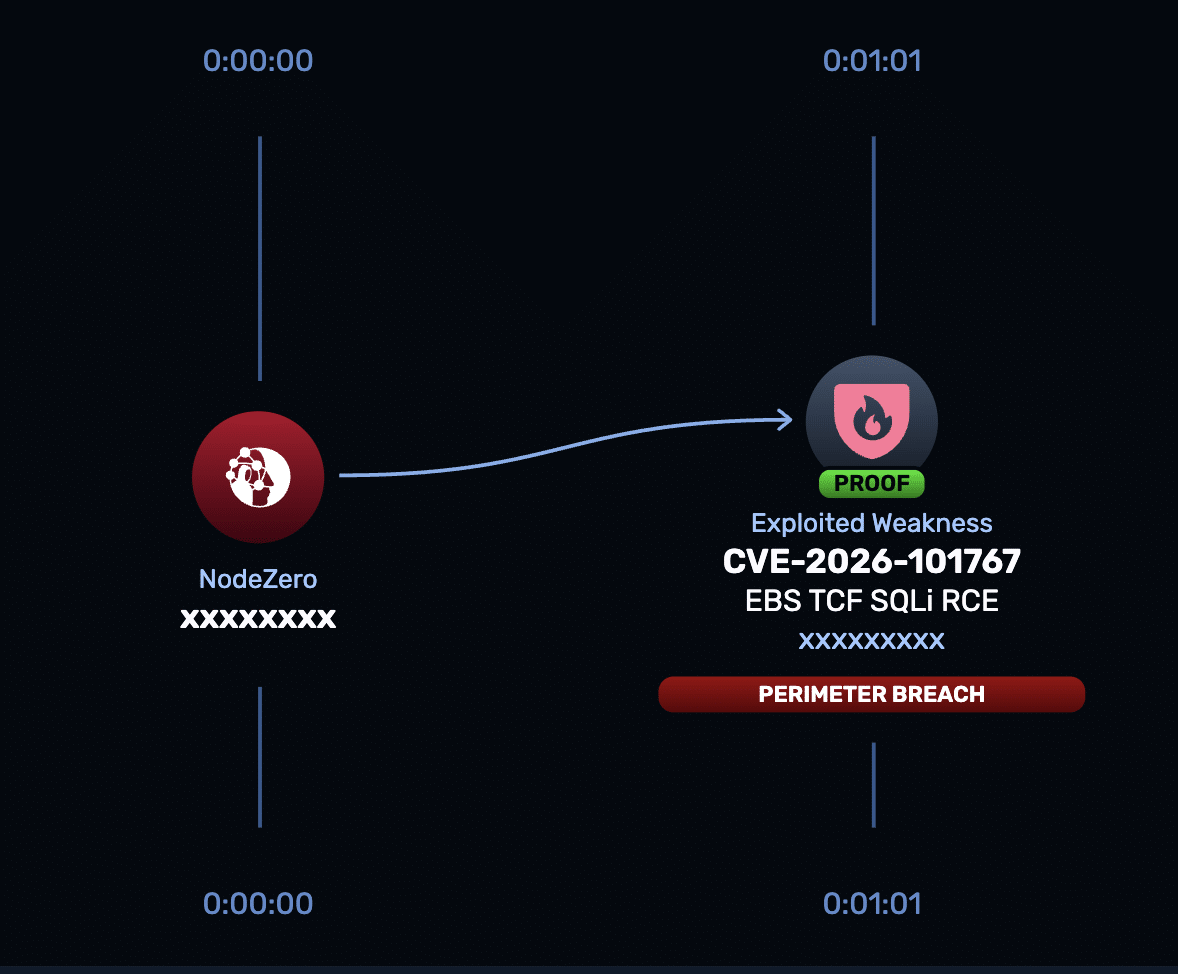 CVE-2026-101767 | Oracle E-Business Suite TCF SQL Injection and Remote Code Execution
CVE-2026-101767 is an unauthenticated SQL injection in the Oracle E-Business Suite Thin Client Framework servlet (/OA_HTML/AppsTCFServer, oracle.apps.fnd.tcf.SocketServer), CVSS 3.1 9.8. It runs SQL as the APPS user and chains to OS commands as the EBS account. Affects 12.2.3 to 12.2.15, fixed in the Oracle October 2026 CPU (20 October 2026). The page lists mitigations, IOCs and a timeline.
horizon3.aiadvisoryAdded 29 Oct 2026, published 20 Oct 2026🛡️ Security Threat Brief: Active Exploitation of PAN-OS CVE-2026-0257 (Updated Oct 20)
Unit 42 threat brief on active exploitation of CVE-2026-0257, a PAN-OS GlobalProtect authentication bypass added to CISA KEV on May 13, 2026. It lists IP addresses, host IDs and PoC-derived client values to hunt in GlobalProtect logs. The October 2026 updates cover Qilin and Inc ransomware operators, MFA bypass, pivots to vCenter and ESXi with offline VMDK credential dumping, and management interface exposure on ports 4443 and 3879.
unit42.paloaltonetworks.comadvisoryAdded 21 Oct 2026, published 20 Oct 2026🛡️ Security- lee1981 (@lee1981b) on X
CVE-2026-77932 affects DB-GPT through 0.8.2 (dbgpt-app). The /api/v1/chat/react-agent route accepts unauthenticated requests because get_user_from_headers returns an admin-role user, and the ReAct agent can reach unsandboxed Python and shell tools. Lasso reported root in the webserver container in a lab. The post gives CVSS 9.8 and 9.3, no verified fix (0.8.2 is still the latest release), no KEV match, no EPSS data, and a SOC hunting trail.
 x.comadvisoryAdded 23 Oct 2026, published 20 Oct 2026🛡️ Security
- Dark Web Intelligence (@DailyDarkWeb) on X
Summary of Vercel's Oct 14, 2026 out-of-band Next.js security release fixing two critical unauthenticated RCEs: one in App Router apps with Cache Components where a "use cache" function returns multiple typed arrays (GHSA-673q-mjm6-r5xr, upstream React GHSA-xqc2-xf4c-x3h3, no workaround), and one in the Image Optimization API handling SVG on glibc Linux via a memory bug in a library used through sharp (CVE-2026-96889 / GHSA-2464-fhr4-w9xw, workaround sharp 0.35.5+). Also covers a high-severity Server Actions DoS (GHSA-p3m5-59mp-jv5r). Fixes ship in two supported Next.js LTS lines. No in-the-wild exploitation reported.
x.comadvisoryAdded 17 Oct 2026, published 16 Oct 2026🛡️ Security  Critical GitLab RCE Lets Unauthenticated Attackers Execute Code on Servers (CVE-2026-97229)
Orca Security analysis of CVE-2026-97229, a CVSS 10.0 flaw in GitLab CE/EE. An integer overflow (CWE-190) in the CI/CD regular expression compiler gives memory corruption and code execution as the git user. It is triggered by a crafted regex in .gitlab-ci.yml combined with a UTF-8 repository path, with no authentication needed on instances that allow public project creation or self-registration. Lists affected branches (19.2 before 19.2.8, 19.3 before 19.3.5, 19.4 before 19.4.2), the absence of a workaround, interim mitigations, and a Rapid7 PoC against GitLab CE 19.4.1 with ASLR on. Notes a prior max-severity GitLab bug (CVE-2026-85706) was probed in the wild within hours and later added to CISA KEV.
orca.securityadvisoryPublished and added 14 Oct 2026🛡️ Security Microsoft Patch Tuesday for October 2026 — Snort rules and prominent vulnerabilities
Talos summarises Microsoft's October 2026 Patch Tuesday, which covers 1415 vulnerabilities, 85 of them critical (67 RCE). One bug is exploited in the wild: CVE-2026-96951, a Windows Shell security feature bypass. The post groups the CVEs by Microsoft's exploitability rating (more likely, less likely, unlikely) with CVSS and CWE for each, covering Windows, Office, Exchange, Hyper-V, DHCP, QUIC, Outlook and Azure. It also lists the Snort 2 and Snort 3 rule ID ranges that detect exploitation attempts.
 blog.talosintelligence.comadvisoryPublished and added 13 Oct 2026🛡️ Security
 Ivanti Connect Secure zero-day exploited in the wild (CVE-2026-104935)
Rapid7 emergency-response analysis of CVE-2026-104935, a CVSS 8.6 authentication bypass by spoofing (CWE-290) in Ivanti Connect Secure that allows unauthenticated remote command execution. It was exploited as a zero-day against a limited number of customers, added to CISA KEV on disclosure day, and Volexity observed it chained with a still-unpatched privilege escalation flaw. Part of the fix shipped in 25.1.3.0 in July 2026, with backports to other supported versions pending. Rapid7 advises emergency patching outside normal cycles and hunting for compromise using Volexity's IOCs, since Ivanti has no reliable ones.
 rapid7.comadvisoryPublished and added 13 Oct 2026🛡️ Security
- Major ICQ security hole (1998)
Rootshell Security Bulletin #22 (Aug 1998) reports an ICQ authentication flaw found by a Linux ICQ clone developer. The Mirabilis server stores 8-character passwords, and sending a password of 9 or more characters (e.g. "123456789") overflows the buffer and logs the client in as any UIN not already online. This gives full account takeover, including receiving offline messages. It is not spoofing, and it works with unofficial clients such as zicq, since the official client enforces the length limit client-side.
 opennet.ruadvisoryAdded 17 Oct 2026, published 13 Oct 2026🛡️ Security
- CISA AA26-281A: Chinese Government-linked Actors Combine Automated and Hands-on Hacking Tools to Steal Data
Joint FBI/CISA/NSA and allied-agency advisory on China-linked actors enabled by Integrity Technology Group (overlapping with Flax Typhoon, Ethereal Panda, Red Juliett). It details their TTPs: open-source scanners and the MicroScan exploit-script app, an XSS credential-harvesting payload dropping live700_v1.exe, EBurst password spraying against Exchange/O365, SoftEther VPN persistence, DCSync via DC.exe, and email theft via the Curlc4.txt PHP bot and the office-cli utility. It also provides IOCs, MITRE ATT&CK mappings, CVEs, incident response steps, and mitigations.
 cisa.govadvisoryAdded 9 Oct 2026🛡️ Security
- ♫Why♥Not♪ (@Python_s_) on X
Alert summarizing Socket Threat Research's disclosure that a malicious version of the Tensorlake npm SDK (an AI-agent infrastructure package) was published with a preinstall hook delivering Shai-Hulud/ChainDrop credential-stealing malware. The payload targets GitHub, npm, AWS, Kubernetes and Vault credentials, persists via a gh-token-monitor mechanism, and spreads through compromised publishing accounts. It lists IOCs (lib/setup.mjs, lib/Math_Symbol.js) and warns to remove the persistence before revoking stolen GitHub tokens, since revocation triggers a destructive routine. Socket detected the release about 11 minutes after publication.
x.comadvisoryAdded 11 Oct 2026, published 9 Oct 2026🛡️ Security  Tensorlake npm package compromised by Shai-Hulud in latest software supply chain attack | Blog | Endor Labs
Endor Labs documents the compromise of tensorlake@0.5.144, the official npm TypeScript SDK for Tensorlake, which shipped a Shai-Hulud worm payload via a poisoned preinstall hook (node lib/setup.mjs) after the project's main branch was altered and pushed through a legitimate, provenance-signed GitHub Actions release pipeline. The malware harvests npm, GitHub, SSH, cloud (AWS/GCP/Azure), Kubernetes/Docker and Vault credentials, uses an EtherHiding Ethereum wallet as a durable dead-drop to fetch its rotating C2 domain, and republishes itself into other packages the victim controls. The writeup includes affected package versions, file hashes, C2 indicators, and concrete remediation guidance (pin to 0.5.143, rotate credentials, disable install scripts).
endorlabs.comadvisoryPublished and added 8 Oct 2026🛡️ Security- lee1981 (@lee1981b) on X
Analysis of CVE-2026-105844, a CWE-1321 prototype-pollution vulnerability in @payloadcms/plugin-import-export that the vendor says can lead to unauthenticated remote code execution. It covers affected ranges (stable 3.0.0–3.87.x, canary 4.0.0-canary.0–canary.26), the fix (3.88.0 / 4.0.0-canary.27), the patched field-path guard against __proto__/constructor/prototype segments, and a six-step SOC hunting/triage playbook with two offline Python scripts for inspecting npm package trees and triaging request field-paths for prototype-sensitive values.
x.comadvisoryAdded 8 Oct 2026, published 7 Oct 2026🛡️ Security  Frequently Asked Questions About the Atlassian Jira & Confluence Arbitrary File Read Vulnerability (CVE-2026-21589)
CVE-2026-21589 is an unauthenticated arbitrary file read in eight self-hosted Atlassian products: Bitbucket, Confluence, Jira Service Management, Jira Software, Bamboo, Crowd, Crucible and Fisheye Data Center. Attackers must know the exact file path, and watchTowr Intel observed exploitation by 6 October 2026. The FAQ covers the timeline (Atlassian advisory 5 October 2026), upgrade and WAF mitigations, and log searches for two dots next to a slash, backslash or double colon.
watchtowr.comadvisoryAdded 30 Oct 2026, published 6 Oct 2026🛡️ Security Citrix NetScaler Zero-Day Exploited in the Wild Crashes SAML Authentication Services
Analysis of CVE-2026-88779 (CVSS v4.0 8.7), an unauthenticated memory-overflow flaw in the nsaaad SAML authentication handler on Citrix NetScaler ADC/Gateway that lets attackers crash the SAML service and lock out VPN/SSO access indefinitely through repeated triggering. Affects NetScaler 14.1 before 14.1-73.41 and 13.1 before 13.1-64.28 (plus FIPS/NDcPP builds); watchTowr Labs reproduced it via honeypot activity, Citrix confirmed targeted in-the-wild exploitation from IP 213.209.159.55, and CISA added it to KEV on 2026-10-04 with an Oct 7 federal remediation deadline. Some researchers suspect the overflow could extend to RCE beyond the documented DoS, though Citrix hasn't confirmed this.
orca.securityadvisoryPublished and added 5 Oct 2026🛡️ Security GitLab patches critical 9.9 AI Gateway template-sandbox-escape RCE (CVE-2026-90970)
GitLab patched CVE-2026-90970, a critical (CVSS 9.9) flaw in the AI Gateway used by Duo Agent Platform, where a logged-in user with Duo Agent Platform access could craft a flow configuration to escape the prompt template sandbox and achieve arbitrary command execution on the gateway. Only self-managed organizations hosting their own AI Gateway (versions 18.1.6 through 19.1) need to act; the fix lands in 19.2.4, 19.3.2, and 19.4.1. The bug is a template engine weakness (CWE-1336), the same class as the earlier CVE-2026-1868 gateway RCE GitLab fixed in February, and was reported via HackerOne by researcher invisiblemeerkat.
 thehackernews.comadvisoryAdded 4 Oct 2026🛡️ Security
- CISA KEV: Fortinet FortiMail CVE-2026-104286 path traversal, actively exploited, no patch yet
CISA added CVE-2026-104286, a path traversal vulnerability in Fortinet FortiMail, to its Known Exploited Vulnerabilities Catalog on evidence of active exploitation. The alert restates the obligations of BOD 26-04 for Federal Civilian Executive Branch agencies: prioritise KEV CVEs on publicly exposed assets that give total control, and check for compromise before patching. It also describes the KEV nomination criteria: a CVE ID, evidence of exploitation and clear mitigation guidance. The page gives no technical detail, patch status or IOCs.
cisa.govadvisoryAdded 4 Oct 2026🛡️ Security  Critical FortiMail Zero-Day Flaw (CVE-2026-104286)
CISA added CVE-2026-104286 (CVSS 9.8), a path traversal and NULL-byte handling flaw in Fortinet FortiMail, to its Known Exploited Vulnerabilities catalog after confirming active in-the-wild exploitation. The bug lets unauthenticated attackers write arbitrary files via crafted HTTP/HTTPS requests, affecting FortiMail 7.2 through 8.0.1; Fortinet published workarounds (disabling IBE, restricting management-interface access) ahead of patches and shared attacker IPs and modified/added files as IOCs. The article also lists several other actively exploited vendor flaws disclosed the same week (Check Point, Arista VeloCloud, F5 BIG-IP APM, Cisco Catalyst SD-WAN Manager, Citrix NetScaler).
thehackernews.comadvisoryAdded 3 Oct 2026🛡️ Security- MCP TypeScript SDK v2.2.0
Release notes for v2.2.0 of the official Model Context Protocol TypeScript SDK. Upgrade notes: machine-to-machine OAuth providers (ClientCredentialsProvider, PrivateKeyJwtProvider, StaticPrivateKeyJwtProvider, CrossAppAccessProvider) should now be given expectedIssuer, and fetchToken() throws AuthorizationServerMismatchError when client information is bound to a different authorization server. listTools/listPrompts/listResources/listResourceTemplates now follow nextCursor automatically, capped by listMaxPages. Fixes include CommonJS type-checking of the DPoP jose types, unhandled rejections in Client.listen(), createMcpHandler stack overflow and subscriptions/listen handling, .localhost loopback for OAuth token endpoints, and v1-to-v2 codemod comment preservation.
 github.comadvisoryAdded 1 Oct 2026🧠 AI
 [Security Disclosure] MetaMask Staking Precautionary Out of Order Exits
Lido Finance's governance forum discloses that MetaMask Staking (formerly Consensys Staking), one of its Ethereum validator node operators, detected an infrastructure compromise and is precautionarily exiting its operated validators from the Lido protocol. The post details the exit/withdrawal/re-entry timeline (~45 days), the non-custodial nature of Lido staking (MetaMask does not hold withdrawal keys), and the protocol's ad hoc reserve fund (6,750+ stETH) as a mitigation mechanism while a full investigation continues.
 research.lido.fiadvisoryAdded 3 Oct 2026, published 30 Sep 2026🛡️ Security


Showing 30 of 83
Show more