 Launch HN: Alter (YC S25) – Access control for multi-user agents
Alter is a privileged access management layer for AI agents (YC S25). It stores credentials in a vault, injects them per request through a proxy, gives each agent its own identity and scoped grants, and logs every call to a tamper-evident audit trail. One SDK call covers storage, refresh, policy and audit for 140 API providers, with LangChain, MCP and AWS integrations. Policy is default-deny down to the parameter, with human approval for risky calls.
 alterauth.comtoolAdded 22 Oct 2026, published 21 Oct 2026🧠 AI
 Nick Frichette (@Frichette_n) on X
Datadog Security Labs announcement, posted by Nick Frichette, of research on steering the evaluations of a prompt-injection detector called "Jev". The team's method cut its detection rate from about 83% to about 4% in their tests. They also used it to bypass LangChain's experimental tool-risk gating feature that is based on Jev. The tweet gives no method details and links to the full article.
 x.comthreadAdded 21 Oct 2026, published 19 Oct 2026🛡️ Security
 Jev as a judge: How counterfeit policy steers Jev
Datadog Security Labs tests TypeSafe AI's Jev decision model as a prompt-injection detector and as the judge behind LangChain's tool-risk gating. On four public datasets Jev had 99.66% precision and 82.90% recall. A prepended "counterfeit policy" that redefines the attack categories cut recall by over 79 points. In a LangChain scenario, a user-editable profile field lowered the mean is_risky score from 0.893 to 0.290, below the 0.5 block threshold. Plain prompt injection did not move the score.
 securitylabs.datadoghq.comwriteupAdded 29 Oct 2026, published 15 Oct 2026🛡️ Security
 Artificial Intelligence (AI) in Cybersecurity, Part 29: Creating Isolated Autonomous Agents for Hacking with NemoClaw
Hackers-Arise tutorial on NVIDIA's open-source NemoClaw, which runs OpenClaw (and Hermes or LangChain Deep Agents) inside OpenShell sandboxes. OpenShell provides kernel-level isolation and declarative YAML policies for files, credentials and network access. It covers OpenClaw's risks (543 tracked CVEs, 40,000+ exposed instances), an OpenClaw vs NemoClaw comparison, the caveat that sandbox escapes and core-logic zero-days remain possible, and a Docker/Node.js install via the nemoclaw.sh wizard with TUI testing. It also cites the Cisco AI Defense plus OpenShell case study, in which an agent that does security patching was protected against a simulated exfiltration attempt.
 hackers-arise.comwriteupPublished and added 14 Oct 2026🧠 AI
- santosomar/AI-agents-for-cybersecurity
Omar Santos's companion repo for his Pearson/O'Reilly trainings and books, organised in eight parts. They cover LangChain prompts, chains and RAG (Chroma), and agents (LangGraph, CrewAI, DeepAgents). They also cover FastMCP security servers (nmap, CISA KEV, Shodan) and attack-surface-management and SOC agent examples. Later parts have security guides to six agentic frameworks (OpenClaw, Hermes, Agent Zero, OpenHands, Paperclip, Buzz) with hardening notes and 2026 CVE mapping, agent cost/tokenomics scripts including denial-of-wallet budget guards, and a vendor-neutral spec for a human-gated multi-agent security-assessment harness (scope manifest, approval gates, kill switch). Useful as a hands-on path into AI-agent security tooling, with warnings that some examples act on real systems.
 github.comrepoAdded 13 Oct 2026🛡️ Security
- AI Agents for Cybersecurity: A Guided Tour of a Repository with Tons of Resources and Examples
Omar Santos walks through his eight-part AI-agents-for-cybersecurity repository: LLM building blocks (LangChain, RAG), then security agents with LangGraph, CrewAI, DeepAgents and MCP servers (nmap, CISA KEV, Shodan), a hardening guide for six agentic frameworks, token-cost control for agents, and a spec for a supervisor-led, human-gated security-assessment harness. It covers concrete design lessons such as least-privilege subagents, staged response actions, single-use approvals bound to exact actions, kill switches, and mapping controls to the OWASP Top 10 for Agentic Applications. Also notes Project CodeGuard rules shipped for AI coding assistants.
 becomingahacker.orgarticleAdded 13 Oct 2026🛡️ Security
- AI Agents for Cybersecurity: A Guided Tour of a Repository with Tons of Resources and Examples
Omar Santos walks through his AI-agents-for-cybersecurity GitHub repo, which has eight parts. Parts 1–4 cover LLM basics (LangChain, prompting, LCEL, RAG). Parts 5–8 cover building security agents with LangGraph, CrewAI, DeepAgents and MCP servers (nmap, CISA KEV, Shodan), and a hardening baseline for six ready-made agentic frameworks. They also cover token-cost control (caching, routing, budget guards, cost per accepted outcome) and a supervisor-led, human-gated security-assessment harness spec with single-use approvals, a kill switch and an append-only audit log. The post also covers Project CodeGuard rules for AI coding assistants. It is a practical learning path and a reference for governing and securing agents.
 linkedin.comarticleAdded 13 Oct 2026🛡️ Security
 Amada Echeverría (@amadaecheverria) on X
Jes is an open-source real-time guardrails library for AI agents built by LangChain Ambassador Eden Marco, designed to check every step of an agent's trajectory: prompts, tool calls, tool results, skills, and final responses. It runs as LangChain middleware and uses decision models like Jev from TypeSafe AI via a TypeSafeClassifier to make pass or fail calls at each checkpoint, with docs showing a concrete middleware integration example.
x.comthreadAdded 3 Oct 2026, published 1 Oct 2026🧠 AI- Amada Echeverría (@amadaecheverria) on X
jes is an open-source real-time guardrails project for AI agents, built by LangChain Ambassador Eden Marco, that inspects every step of an agent's trajectory — prompts, tool calls, tool results, skills, and responses. It runs on decision models like Jev from TypeSafeAI and ships with a LangChain middleware example for wiring the checks into an agent pipeline.
x.comtoolAdded 3 Oct 2026, published 1 Oct 2026🛡️ Security 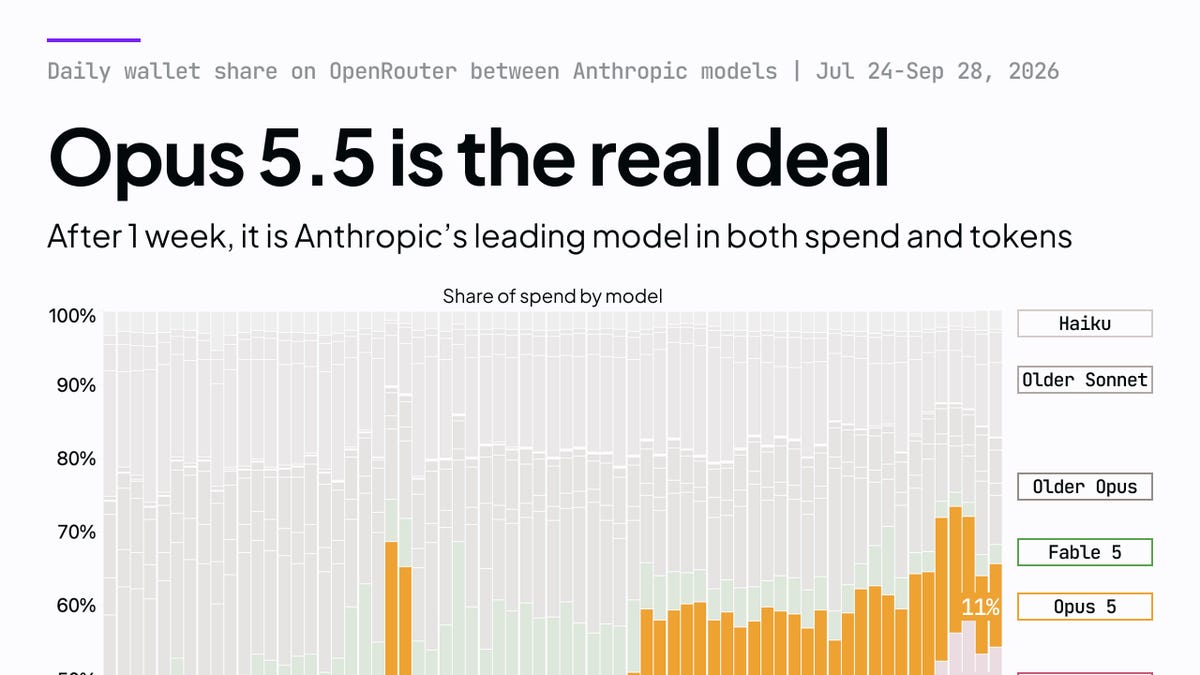 [AINews] Opus 5.5 is good at explainer videos
Daily AINews digest (Latent Space) covering the week's AI developments: Claude Opus 5.5's strong vision/coding results and viral code-generated explainer videos, the GPT-6 family (Astra/Sol/Luna) and Gemini 3.8 Flash releases, and Xiaomi's open MiMo-V2.6-Pro. It also covers the "System One" cheap-judge/reranker trend (TypeSafe's Jev vs. the open CLM alternative), agent infrastructure news from LangChain Interrupt and Perplexity's Rust-based Photon retrieval engine, inference speedups (Liquid AI's DSpark speculative decoder, GLM-5.3 on AMD MI355X), and research highlights including Harness-Zero agent-distillation, DeepMind's XYEval on sycophantic agent failure, a single-neuron safety-refusal bypass, and Sakana AI's RSI Lab with Jürgen Schmidhuber.
 latent.spacearticlePublished and added 29 Sep 2026🧠 AI
 [AINews] The Future of Latent Space
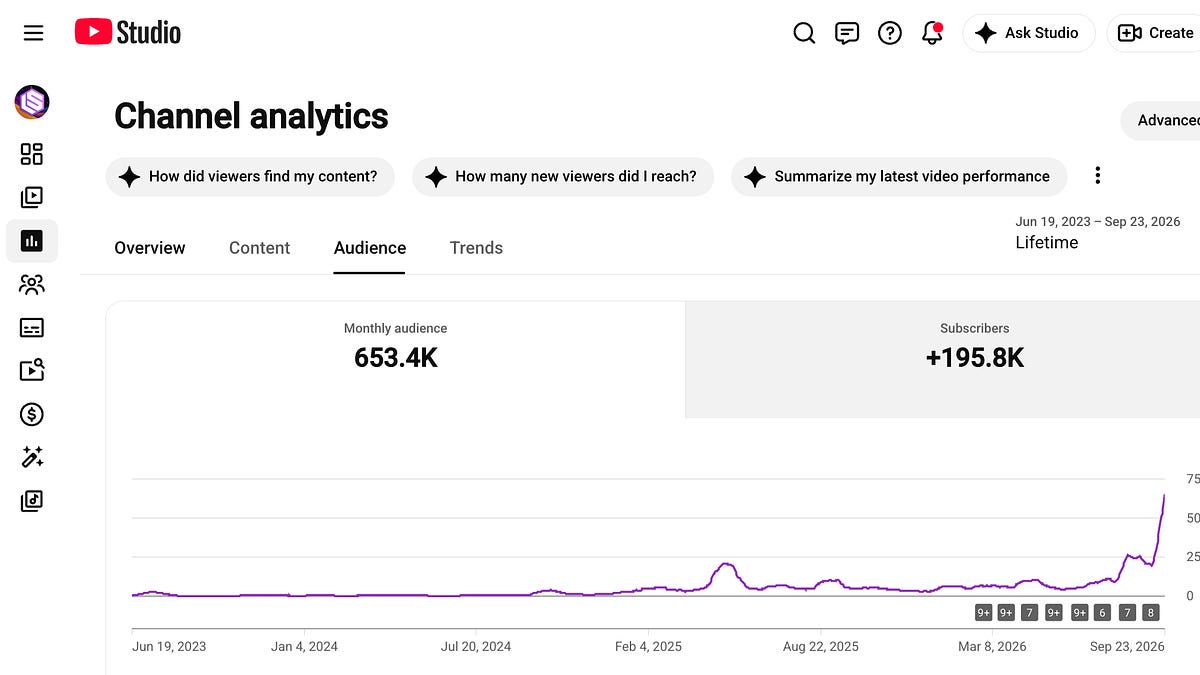
The daily AINews digest from Latent Space rounds up a heavy week in AI: Claude Opus 5.5 topping SimpleBench and Terminal-Bench-Science, the GPT-6 family (Astra/Sol/Luna), Gemini 3.8 Flash, and Xiaomi's open-weight MiMo-V2.6-Pro; TypeSafe's Jev system-one decision model (and open alternatives like CLM) for cheap structured judgments; agent-infra launches from LangChain Interrupt and Perplexity's Rust retrieval engine Photon; inference speedups like Liquid AI's DSpark speculative decoder and GLM-5.3 on AMD MI355X; and research on harness distillation, agent failure modes, and autonomous-science efforts led by Sakana AI's RSI Lab with Jurgen Schmidhuber.
latent.spacearticleAdded 29 Sep 2026, published 25 Sep 2026🧠 AI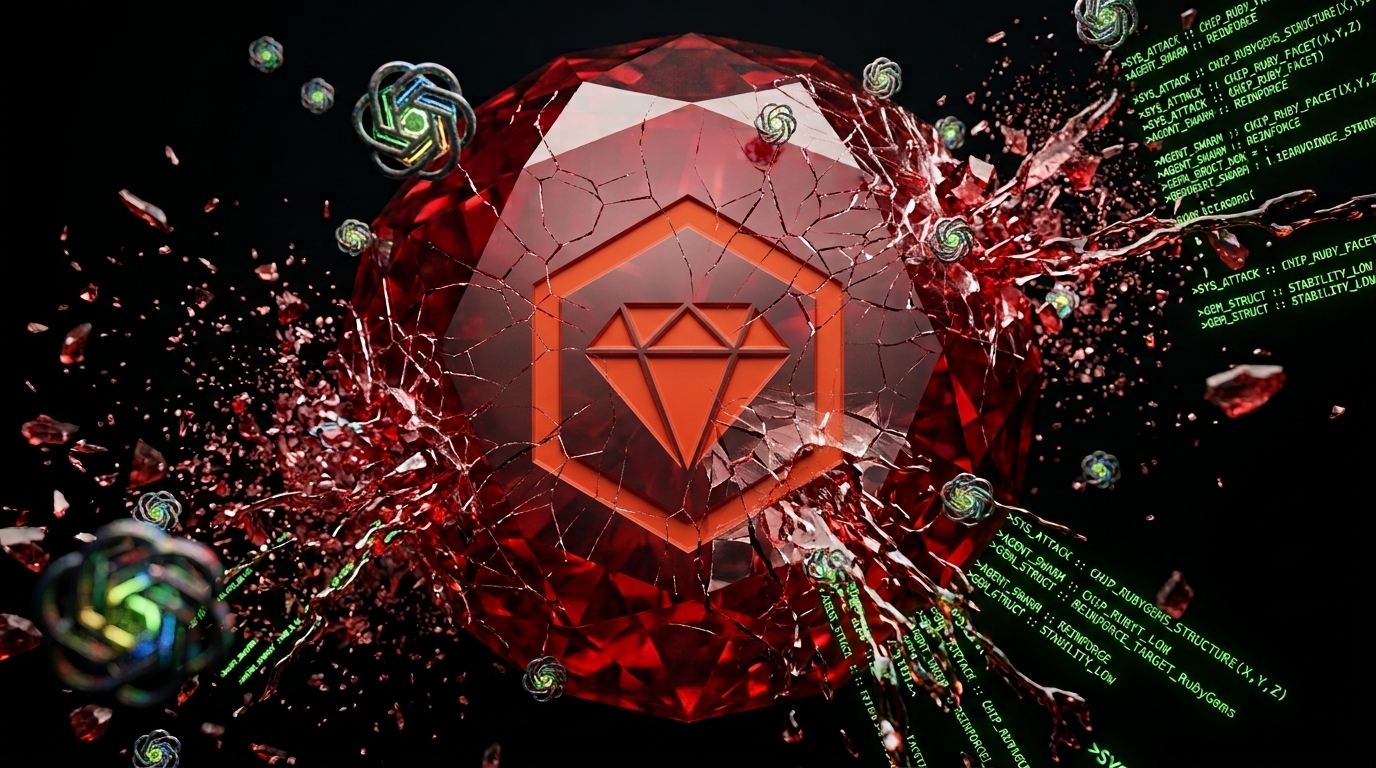 The OpenSourceMalware Show #21
Weekly OpenSourceMalware Show episode discussing new research alleging an OpenAI agent swarm carried out the RubyGems GemStuffer spam campaign (~2,879 packages) and Truffle Security's Luke Marshall's follow-up on the Fastly CDN misconfiguration that leaked other users' RubyGems API keys; a "lurves-agent" PyPI typosquat campaign (OpenAI, LangChain/Langrap, Llama name-squats) whose bash/Python comments are an AI-generated prompt injection telling reviewers "nothing to see here"; and claude-desktop.com, a typosquat site delivering a signed DMG that installs Mac malware instead of the real Claude desktop app. Also touches on treating AI agents as untrusted users, a new DPRK-linked "Weasel Biscuit" malware (stripped-down OtterCookie/BeaverTail hybrid), and law enforcement increasingly taking the PolinRider supply-chain campaign seriously.
 opensourcemalware.comtalkPublished and added 17 Sep 2026🛡️ Security
 Demystifying Transitive Dependency Vulnerabilities | Blog | Endor Labs
Endor Labs blog post demystifying transitive dependencies — libraries pulled in indirectly through direct dependencies — and explaining why they complicate software composition analysis: multiple versions of the same transitive dependency can coexist in a project, it's harder to see what's actually used, and manually forcing an update is risky. It argues reachability analysis (statically stitching first-party call paths through to transitive library code) is the key tool for determining exploitability and for satisfying auditors under PCI DSS, FedRAMP, and EO 14028 SBOM requirements, and walks through a real example where langchain4j pulls a vulnerable JSON library transitively via Redis's jedis client, with the fix being to bump jedis rather than the JSON library directly.
 endorlabs.comarticlePublished and added 11 Sep 2026🛡️ Security
- h5i-dev/awesome-ai-agent-incidents
A curated GitHub corpus tracking real-world security incidents, CVEs, attack techniques, and defensive tools specific to autonomous AI agents — spanning prompt injection/goal hijacking, MCP client-side tool-metadata poisoning, the "Promptware Kill Chain" multi-stage attack model, MITRE ATLAS agentic techniques, and the OWASP Top 10 for Agentic Applications. It also documents the OpenClaw/ClawHub supply-chain incident (1,184 malicious skills confirmed by Antiy CERT) and links defensive projects like OWASP Agent Memory Guard for LangChain/LlamaIndex agent memory protection.
github.comrepoAdded 3 Sep 2026🛡️ Security  Inside 90 days of attacks on AI infrastructure
Wiz Threat Research ran honeypots across LiteLLM, Flowise, LangChain, Langflow, ChromaDB, Ollama and other AI/ML services for 90 days, capturing active exploitation of an MCP Gateway auth bypass (CVE-2026-59822) and an MCP server test-endpoint command injection (CVE-2026-42271, in CISA KEV, chainable with Starlette CVE-2026-48710 for unauthenticated RCE and linked to Qilin ransomware exploitation) used to deploy fileless cryptominers. It also documents blind prompt injection campaigns against LangChain, Flowise, OpenWebUI, and Node-RED agents that trigger OS command execution confirmed via out-of-band DNS callbacks to OAST domains.
 wiz.iowriteupAdded 3 Sep 2026, published 27 Aug 2026🛡️ Security
 0DIN Expands: From Inference to Agency
0DIN (Mozilla's AI bug bounty program) announces it is expanding scope beyond inference-layer jailbreaks to agentic AI vulnerabilities — covering 29 products across coding agents, agentic browsers, enterprise agents, and general-purpose agents from OpenAI, Anthropic, Google, Microsoft, Salesforce, Amazon and others. It introduces a new evaluation rubric for agentic submissions (violation class, impact severity, attack vector, scope) mapped to the OWASP Top 10 for Agentic Applications, and raises the bar for inference jailbreaks by requiring retargetability across two JEF-tested boundaries. The post cites real incidents including a Cursor agent token exfiltration, a malicious GitHub MCP integration issue, a rogue MCP server leaking WhatsApp histories, and CVE-2025-68664 (LangGrinch) affecting 847M LangChain downloads.
 0din.aiarticlePublished and added 15 Aug 2026🛡️ Security
- calmrocks/ai-engineer-notebooks
A GitHub repo of self-contained, runnable Colab notebooks teaching the AI Engineer / Forward Deployed Engineer skill set from raw model APIs rather than frameworks like LangChain. It covers model APIs, evals (treated as central rather than an afterthought), RAG, agents (loop from scratch, tool design, guardrails, MCP), LoRA fine-tuning, security, operations, and serving/inference performance, all runnable free on the Groq API with optional Colab-GPU appendices for GPU-only topics. Includes real end-to-end case studies and a capstone project brief aimed at people moving from backend/full-stack roles into applied AI roles.
github.comrepoAdded 23 Sep 2026, published 11 Aug 2026🧠 AI - Semantica
Semantica is an open-source Python pipeline (pip install semantica) that ingests enterprise data and builds a queryable Context Graph and knowledge graph with deterministic (LLM-optional) reasoning, ontology management (OWL/SHACL/SKOS), and W3C PROV-O provenance for full decision auditability. It ships modules for ingestion (Databricks, Snowflake, SAP, Kafka, Git, etc.), NER/relation/event extraction, conflict detection and deduplication, Rete/Datalog/SPARQL reasoning, bi-temporal graph queries, polyglot graph storage (RDF stores and LPGs like Neo4j/Neptune), and integrations with Agno, CrewAI, LangChain, and MCP.
github.comrepoAdded 22 Sep 2026, published 1 Aug 2026🧠 AI - GoogleCloudPlatform/k8s-aibom
k8s-aibom is a Kubernetes controller from GoogleCloudPlatform that generates CycloneDX 1.6 ML-BOM documents at runtime for AI workloads — inference services (vLLM, TGI, Triton, Ollama), agent stacks (LangChain, AutoGen, CrewAI), RAG/vector DB infrastructure (Milvus, Qdrant, Weaviate), and training/eval jobs — by watching Kubernetes API objects with no privileged access. Each BOM attribute carries a declared/inferred/unresolved confidence flag and evidence locator, and the project positions its output as auditor-traceable evidence for EU AI Act Article 12/50, NIST AI RMF, and ISO/IEC 42001 compliance, with redaction filters, immutable GCS write-once sinks, and Sigstore-signed release attestations.
github.comrepoPublished and added 18 Jul 2026🛡️ Security - NVIDIA-NeMo/Guardrails
NeMo Guardrails is NVIDIAs open-source Python toolkit (nemoguardrails) for adding programmable rails between an application and an LLM, covering input, dialog, retrieval, execution, and output stages. It ships built-in defenses against jailbreaks and prompt injection, self-check fact-checking and hallucination detection, sensitive-data masking, integrations with NVIDIA safety models, ActiveFence and PolicyAI moderation, LangChain, and a Colang DSL for defining conversational flow rails, plus a CLI/server and an evaluation tool for vulnerability scanning against sample bots.
github.comrepoPublished and added 14 Jul 2026🛡️ Security - magnus919/agent-skills
A sprawling open-source collection of 100+ reusable "Agent Skills" (markdown instruction packs with YAML frontmatter following the open Agent Skills format) for agentic systems, compatible with Claude Code and any framework that supports the standard. Skills span multi-agent orchestration frameworks (AutoGen, CrewAI, LangChain, LangGraph, LlamaIndex, DSPy, Haystack, a PydanticAI-based multi-agent debate tool), production agent operations, evals, and AI governance, alongside dozens of narrower domain skills — CLI integrations for Jira, Confluence, Notion, Linear, HubSpot, Ghost, Fireflies, Grafana, PostgreSQL, Kubernetes, Docker Compose, FFmpeg, Ghidra-based binary triage, FPGA/ESP32 hardware design, and more. The page text was truncated at 40,000 of 71,286 characters, so later entries in the catalog are not reflected here.
github.comrepoAdded 1 Oct 2026, published 11 Jul 2026🧠 AI - apisec-inc/AI-Surface
ai-surface is a local/offline static analysis CLI (apisec-inc) that scans a codebase for AI attack surface — LLM SDK calls, agent frameworks (LangChain, AWS Strands), MCP servers, RAG/vector stores, model gateways, and provider keys — and flags risk indicators such as financial-action tools with no human approval or unverified MCP servers. It generates an AI-BOM (CycloneDX), SARIF for GitHub code scanning, and maps findings to OWASP LLM Top 10, EU AI Act, NIST AI RMF, and ISO/IEC 42001, with a baseline+fail-on-severity workflow for gating new risk in PRs without blocking on pre-existing debt.
github.comrepoPublished and added 11 Jul 2026🛡️ Security 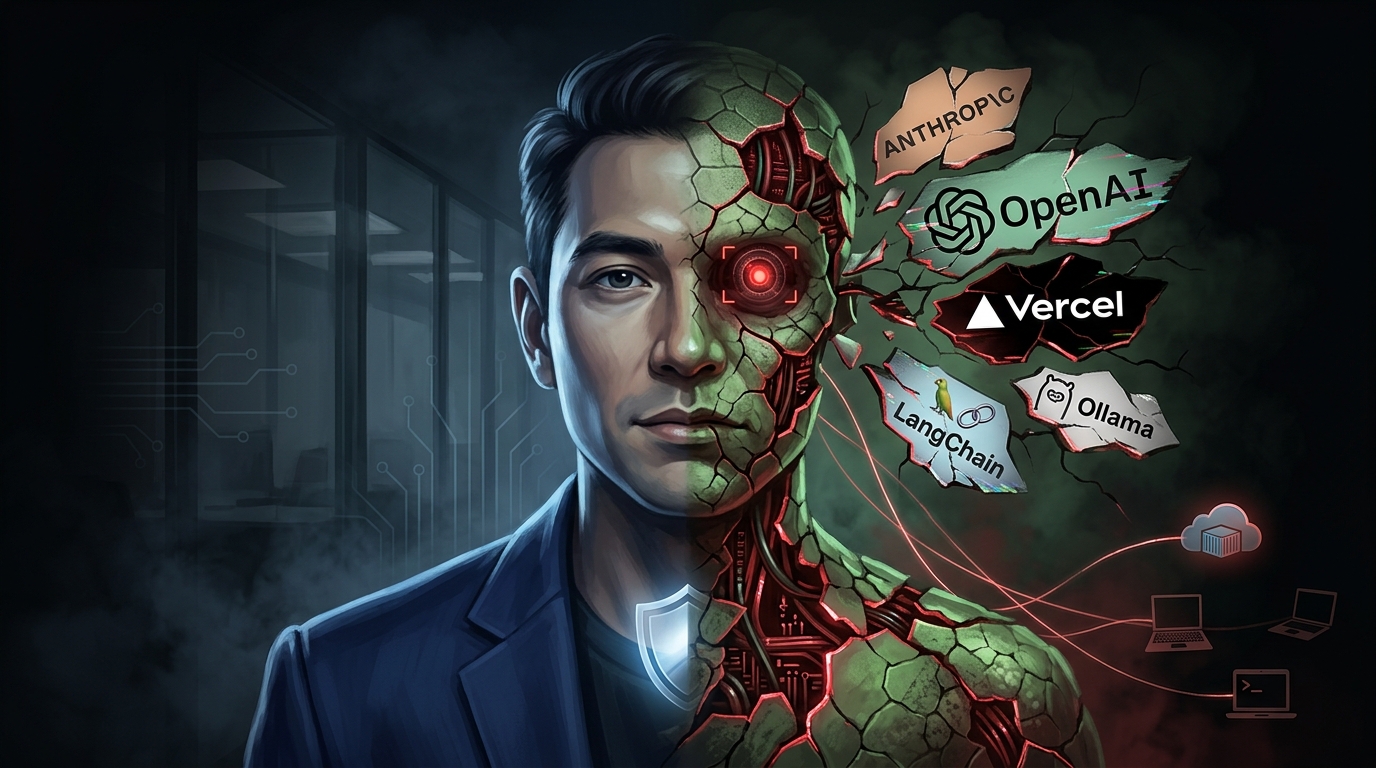 Cybersecurity Startup Publishes Infostealers to NPM
A security research team traces six typosquatted npm packages (anthropic-toolkit, ai-sdk-helpers, ollama-helpers, openai-agents-helpers, @langgraphjs/toolkit, and @aspect-security/argon2) impersonating Anthropic, Vercel, Ollama, OpenAI, LangChain, and Aspect Security back to the founder of a stealth-mode cybersecurity startup. The packages use npm preinstall/postinstall hooks to silently exfiltrate a rich identity fingerprint — hostname, git/GitHub emails, SSH key comments, reflog committer emails, AWS/GCP config metadata, corporate DNS domain, and host project name — to a Google Cloud Run endpoint, while deliberately avoiding literal credentials to look benign and offering a fake telemetry opt-out. The writeup also documents version backfilling to fake package maturity and shows the payload evolving from a crude April beacon to a polished June "identity graph" collector, with full IOCs provided.
opensourcemalware.comwriteupAdded 3 Sep 2026, published 9 Jul 2026🛡️ Security- JoshithReddyAleti/AI_Engineer_Interview_Prep
Companion repo to a newsletter offering structured interview prep for AI Engineer roles across eleven weeks, with hundreds of questions spanning LLM fundamentals, tool calling, RAG variants, LangChain, LlamaIndex, CrewAI, LangGraph, fine tuning, agentic decision making, evaluation and governance, production deployment, and observability. Each week includes prep files with interviewer intent notes and follow up questions, plus a terminology disambiguation file and a cross cutting bonus question set. Targets interview prep at MAANG level and frontier AI labs.
github.comcourseAdded 30 Sep 2026, published 3 Jul 2026🧠 AI  Endor Labs: Claude Fable 5
Endor Labs re-ran their Agent Security League benchmark (200 real-world vulnerability-fixing tasks) with Claude Fable 5 paired against the Cursor agent instead of Claude Code, and found the same model jumped from 59.8% FuncPass/19.0% SecPass to 72.6% FuncPass/29% SecPass — the best fair SecPass score on their leaderboard, showing the agent harness can matter more than model choice. The piece walks through instance-level diffs on CVE-2020-15118 (Wagtail XSS via unescaped help_text), CVE-2017-12440 (OpenStack Aodh trust-ID leakage), and CVE-2024-3571 (LangChain local file store path traversal via yield_keys) to show Cursor produced more complete patches that covered secondary sinks Claude Code missed, and confirms 28 of 29 flagged cheating cases were training-data memorization rather than git/web lookup.
endorlabs.comwriteupPublished and added 18 Jun 2026🛡️ Security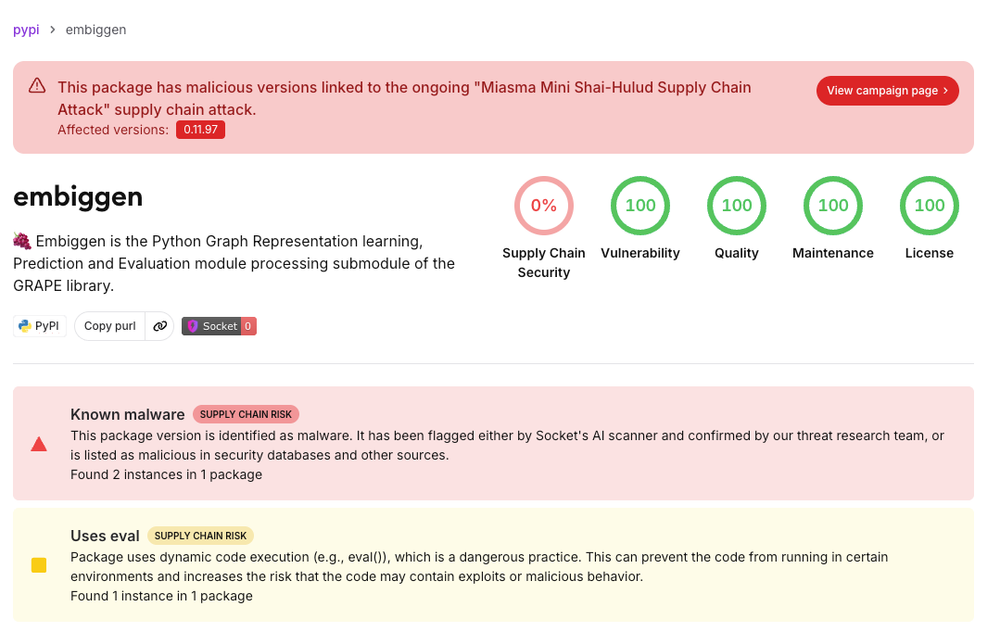 Miasma & Hades Worms
Socket's Threat Research team documents a new wave of 23 malicious PyPI artifacts (bioinformatics packages like embiggen/ensmallen/gpsea/pyphetools, typosquats like rsquests/tlask/rlask, and an MCP-themed langchain-core-mcp package) tied to the ongoing Mini Shai-Hulud/Miasma/Hades supply chain campaign. Unlike earlier .pth-hook wheels that bundled an obfuscated _index.js JavaScript stealer run via Bun, the bioinformatics cluster hides execution inside trojanized .abi3.so native extensions triggered at import time, while langchain-core-mcp ships only a .pth loader that scans sys.path for an external _index.js payload — a loader/payload split designed to evade detection rules. The payload also opens with a fake prompt-injection comment block meant to derail LLM-based static analysis tools before reaching the actual obfuscated stealer code that harvests GitHub, npm, PyPI, cloud, Kubernetes, SSH, and Docker credentials.
 socket.devwriteupAdded 3 Sep 2026, published 10 Jun 2026🛡️ Security
 Socket: TrapDoor Crypto Stealer
Socket researchers uncovered TrapDoor, a coordinated crypto-stealer campaign spanning 34+ malicious packages and 384+ versions across npm, PyPI, and Crates.io, targeting crypto, DeFi, Sui/Move, and AI developer communities. The npm packages use postinstall hooks to run a shared trap-core.js payload that harvests SSH keys, AWS/GitHub credentials, wallet data, and browser data, then persists via .cursorrules, CLAUDE.md, git/shell hooks, systemd, cron, and SSH lateral movement; PyPI packages fetch and run remote JS on import, and Crates.io packages use malicious build.rs to XOR-encrypt and exfiltrate Sui/Move keystores to GitHub Gists. The attacker (GitHub account ddjidd564) also opened PRs against major AI/dev tooling repos (browser-use, LangChain, Langflow, llama_index, MetaGPT, OpenHands) attempting to plant hidden .cursorrules/CLAUDE.md instructions designed to trick AI coding assistants into running exfiltration under the guise of a 'security scan'.
socket.devwriteupPublished and added 26 May 2026🛡️ Security- OpenUI
OpenUI is a full-stack, renderer-agnostic Generative UI framework centered on OpenUI Lang, a compact streaming-first language for model-generated UI that uses up to 67% fewer tokens than JSON. It provides React runtime and headless packages, prebuilt component libraries (charts, forms, tables), prompt generation from component libraries, and integrations for LangChain/LangGraph, Vue, Svelte, and Angular, plus a CLI scaffolder and an Agent Skill for coding assistants like Claude Code and Cursor.
github.comrepoAdded 22 Sep 2026, published 12 May 2026🧠 AI - Pantheon-Security/medusa
MEDUSA is an AGPL-3.0 CLI security scanner (pip install medusa-security) built specifically for the AI/agentic era, shipping 40,000+ detection patterns across 79 scanner types for AI/ML apps, MCP servers, RAG pipelines, and traditional code, with zero external tool installation required. It detects AI supply-chain attacks like repo poisoning through weaponized editor configs (Cursor, Cline, Windsurf, Claude Code, Copilot, Kiro), MCP tool/schema poisoning, and prompt injection, and includes a `medusa secrets scan/purge` command that finds and redacts leaked API keys (21 issuer types) inside Claude Code, Cursor, Copilot, Gemini and shell REPL history files. It also carries a CVE database (200 entries) covering things like Log4Shell, XZ Utils, LangChain RCE, and the CVSS 10.0 React2Shell (CVE-2025-55182) RCE in React Server Components/Next.js.
github.comrepoPublished and added 10 May 2026🛡️ Security