 Anthropic security breach exposed salaries and messages, not model weights
Anthropic security incident in which researchers from the startup Cathedral reached Anthropic's commercial, HR and IT systems through vulnerable third-party administrative applications. Exposed data included salaries, job offers, meeting transcripts and Slack messages; Anthropic says customer prompts, source code and model weights were not accessed. Anthropic cut access the same day and kept the apps disabled until vendors patched. The companies dispute whether Cathedral reported all its activity.
 en.cryptonomist.charticlePublished and added 30 Oct 2026🛡️ Security
 Rekt - News or Hype?
Rekt's "News or Hype?" compares four October 2026 AI headlines with their sources. These are Justin Drake's "bunker mode" ECDSA warning, Anthropic's Claude tracing NIST curve seeds to lrand48, OpenAI's agent spending Sepolia ETH from a default-mnemonic account, and Wiz's "AI uncovers" PHP RCE claim of 70% reach. It ends with four questions for checking claims.
 rekt.newsarticleAdded 30 Oct 2026🧠 AI
- Chinese Hackers Quietly Used Low-Severity ESXi Logging Flaw as Zero-Day
CVE-2026-41709 is a low-severity insufficient-logging flaw in VMware ESXi that lets a logged-in administrator perform operations without audit entries. CISA added it to the KEV catalog, and CrowdStrike reported that China-nexus actor Warp Panda used it as a zero-day against US organizations, including law firms, to cut audit visibility. The article also covers exploitation of vCenter bugs CVE-2026-59309 and CVE-2026-59310 and lists the fixed ESXi builds.
 securityweek.comarticlePublished and added 29 Oct 2026🛡️ Security
 Ukrainian Hive and Nefilim Ransomware Affiliate Gets 70 Months in US Prison
Artem Aleksandrovych Stryzhak, a 36-year-old Ukrainian, was sentenced in the US to 70 months for conspiracy to commit computer fraud over Nefilim and Hive ransomware attacks. He was arrested in Spain in June 2024, extradited in April 2025 and pleaded guilty in December 2025. He joined Nefilim in June 2021 under a 20% revenue share and hit seven victims with Hive. The State Department offers up to $10 million for Nefilim administrator Volodymyr Tymoshchuk.
securityweek.comarticlePublished and added 28 Oct 2026🛡️ Security ADLC compliance: Mapping agentic development to NIST SSDF, OWASP, and the EU AI Act | Endor Labs
ADLC compliance is Endor Labs' interpretation of how NIST SSDF (SP 800-218), the OWASP LLM and Agentic Top 10 lists, and the EU AI Act apply to software built with coding agents. It splits requirements into a code surface and an action surface (shell, files, MCP calls, package installs). It gives a four-step EU AI Act scoping path and says that system prompt rules and agent self-reports are not audit evidence.
 endorlabs.comarticlePublished and added 28 Oct 2026🧠 AI
- ADLC compliance: Mapping agentic development to NIST SSDF, OWASP, and the EU AI Act | Endor Labs
ADLC compliance guide from Endor Labs that maps agentic development to NIST SSDF (SP 800-218 v1.1), the OWASP LLM Top 10 2025 and Agentic Top 10, and the EU AI Act as amended by Regulation (EU) 2026/1744. It splits controls into a code surface and an action surface (shell, file access, MCP calls, package installs). It gives a four-step AI Act scoping path, the new Annex III date of 2 December 2027, and evidence guidance. It states the crosswalk is the vendor's interpretation, not legal advice.
endorlabs.comarticlePublished and added 28 Oct 2026🛡️ Security  The ADLC maturity model: 5 stages of agentic development security | Endor Labs
The ADLC maturity model is a proposed five-stage framework from Endor Labs for scoring security controls over coding agents, from unmanaged experimentation to continuous verification. Each stage has requirements on two tracks, agent actions (shell commands, MCP calls, package installs) and agent output (code, dependencies, secrets). It sets stage 3 at deterministic hooks that block actions, gives evidence-based assessment questions, and lists traps such as relying on prompt-level rules.
endorlabs.comarticlePublished and added 28 Oct 2026🛡️ Security OpenAI Proves ETH Is False, and Crypto Twitter Has Questions
Decrypt reports that OpenAI published a 67-page paper (dated 17 October 2026, revised 25 October) claiming its AI found a deterministic subexponential-time algorithm for counting 3-SAT solutions, which would refute the Exponential Time Hypothesis. The proof was formalized in Lean. Impagliazzo, Paturi and Ryan Williams are reviewing it independently and say this is not certification. Anthropic posted a Claude-credited 3-SAT paper on 26 October.
 decrypt.coarticlePublished and added 27 Oct 2026🧠 AI
 The Impact of AI on CVEs: Industry Challenges
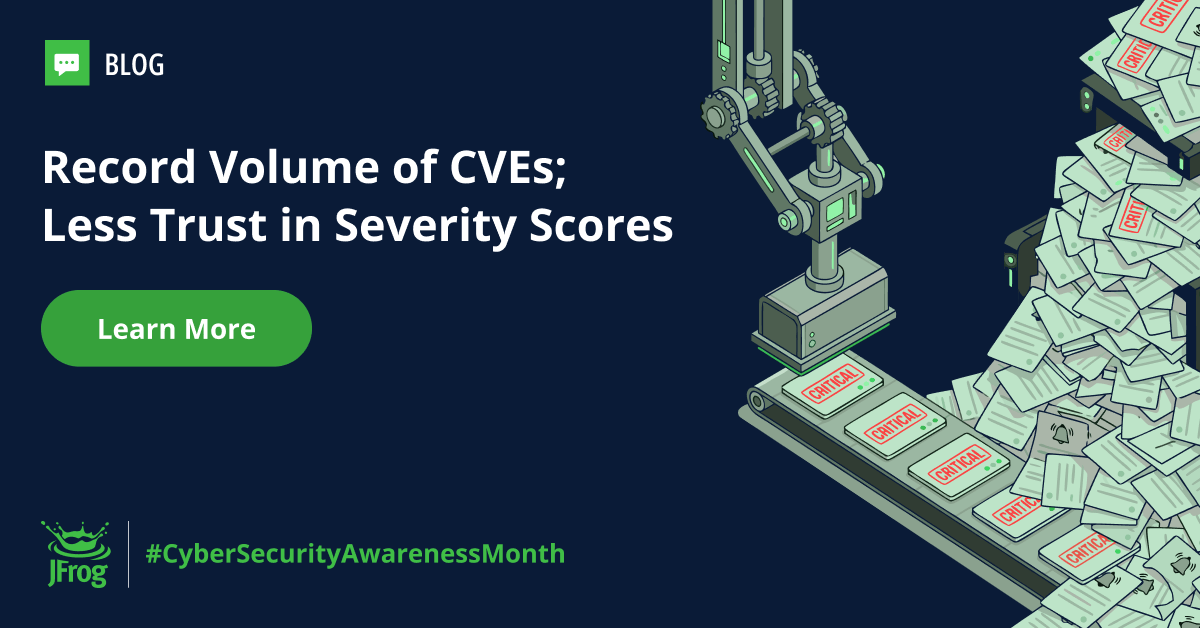
Part 1 of a JFrog Security Research series on how AI has changed CVE research. It shows rising CVE volumes since 2021, curl ending its bug bounty in January 2026, GNOME cutting disclosure from 90 to 30 days, and NIST narrowing NVD enrichment in April 2026. It documents severity inflation in 27 libcurl CVEs and 54 of 55 fabricated SQLite advisories.
 jfrog.comarticleAdded 28 Oct 2026, published 27 Oct 2026🛡️ Security
 AI Agents Found a Way Into Anthropic's Business Systems in Under 12 Hours
Decrypt reports that Cathedral, a startup founded by four former DOGE staffers, says its AI agents found paths into Anthropic's sales, HR and IT systems in under 12 hours through unnamed third-party administrative and sales software. Anthropic says no customer conversations, source code or model weights were reached, and that Cathedral overstated the impact and did not disclose all its activity. The testing ran through a bug-bounty-style program.
decrypt.coarticlePublished and added 26 Oct 2026🛡️ Security How 3 Java Champions are using GitHub Copilot for increased productivity
Interviews with three Java Champions (Vlad Mihalcea, Patrick Baumgartner, Frank Delporte) on using GitHub Copilot in production and open source. Examples include a 900-slide Reveal.js to Marp migration with visual verification, a Copilot coding agent diagnosing a Pi4J virtual-thread pinning bug, and custom Agent Skills. Tips: interview-first planning, task-specific verification gates, deterministic quality harnesses, and human review.
 github.blogarticleAdded 29 Oct 2026, published 20 Oct 2026🧠 AI
 US Agencies Detail Incident Response Practices for Rogue AI Agents
SecurityWeek summarizes the NIST, NSA and CISA report "Key Practices for Incident Readiness and Response in Super Intelligence Training and Evaluation". It lists ten practices in five stages (prepare, detect, respond, recover, report) for AI agents that act outside their intended or authorized behavior. The report defines AI control incident and near-miss, and ends with government notification and public disclosure.
securityweek.comarticlePublished and added 20 Oct 2026🛡️ Security ConnectWise Suspends Cloud Services in Response to Cyberattack
ConnectWise suspended its Cloud Backup (formerly SkyKick), SaaS Security and Cloud Management services in October 2026 after a compromised application credential was used to access customers' Microsoft 365 tenants. Huntress saw the Cloud Backup identity sign in to 162 tenants on 15 to 16 October and attacker IP 144.172.64[.]128 try nearly 1,000 Entra tenants, with over 300 successful sign-ins. In one tenant, the Cloud Management Teams app added itself to Global Administrator and added client secrets to other apps. No restoration timeline has been given.
securityweek.comarticlePublished and added 19 Oct 2026🛡️ Security ‘Wow, it’s a real discovery’: Claude cracks a 25-year NSA number mystery
CoinDesk reports that an Anthropic internal research model traced five NSA-supplied NIST elliptic-curve seeds to the C library generator lrand48 fed with 1997–98 timestamps. It matched P-256's published seed at the 1,842nd candidate, in under 30 minutes and without being told about the earlier "forgotten phrase" theory. This makes a hidden backdoor in the NIST curves less likely, though why some candidates were skipped and how other curve parameters were chosen remain unexplained. The article also explains why Bitcoin's secp256k1 was never part of the question, and that quantum risk is a separate threat.
 coindesk.comarticlePublished and added 17 Oct 2026🛡️ Security
- ‘Wow, it’s a real discovery’: Claude cracks a 25-year NSA number mystery
CoinDesk reports that an internal Anthropic research model traced five unexplained seeds behind the NSA-supplied NIST elliptic curves to lrand48, an old C random-number generator fed with 1997–98 timestamps. It took under 30 minutes. The model matched the P-256 seed at the 1,842nd candidate. Its reasoning trace briefly wondered whether it was in a simulated test before concluding the discovery was real. The result makes a hidden backdoor less likely and claims a $36,864 bounty, donated to ISRG. The article also explains why Bitcoin's secp256k1 was never affected, and that quantum computing is a separate threat.
coindesk.comarticlePublished and added 17 Oct 2026🧠 AI  Managing open-weight model risk in enterprise deployments
Microsoft blog post introducing "Risk Management for Open-Weight Models in Enterprise", a joint Microsoft–NVIDIA paper. It proposes a shared risk taxonomy (Cybersecurity, Data Protection, Content, Human-AI Interaction, Bias) grounded in ISO standards and the NIST AI RMF. The paper maps evaluations to risks as evidence and argues that risk depends on the model, use case, deployment and safeguards, not on weight openness alone. It also covers how responsibility for controls shifts when enterprises self-host models, and points to a joint repository of evaluations. The first paper focuses on the model layer; runtime, harness and application layers are planned for later.
 microsoft.comarticlePublished and added 16 Oct 2026🛡️ Security
- Managing open-weight model risk in enterprise deployments
Microsoft's announcement of "Risk Management for Open-Weight Models in Enterprise", the first paper in a planned joint series with NVIDIA. It proposes a taxonomy of five risk categories (Cybersecurity, Data Protection, Content, Human-AI Interaction, Bias). The approach is grounded in ISO standards and the NIST AI Risk Management Framework. It maps evaluations to risks as evidence, stresses that weight openness alone doesn't determine risk, and explains how self-hosting shifts responsibility for safeguards. A joint repository will collect evaluations, and later work will cover the runtime, harness and application layers.
microsoft.comarticlePublished and added 16 Oct 2026🧠 AI  BAE Systems Security Incident Stalls Notices From US Bankruptcy Courts
A cybersecurity incident at BAE Systems, which runs the Bankruptcy Noticing Center (BNC) for the US judiciary, has stopped all federal bankruptcy courts from generating or sending notices for about a week. The incident was reported to the Administrative Office of the US Courts late on October 9. The National Creditor Registration Service is offline, and notices issued since then have not been delivered. Neither BAE nor the judiciary has said what caused the incident, whether it was a cyberattack, or whether data was compromised. The case shows how a single contractor outage can disrupt a nationwide government function.
securityweek.comarticlePublished and added 16 Oct 2026🛡️ Security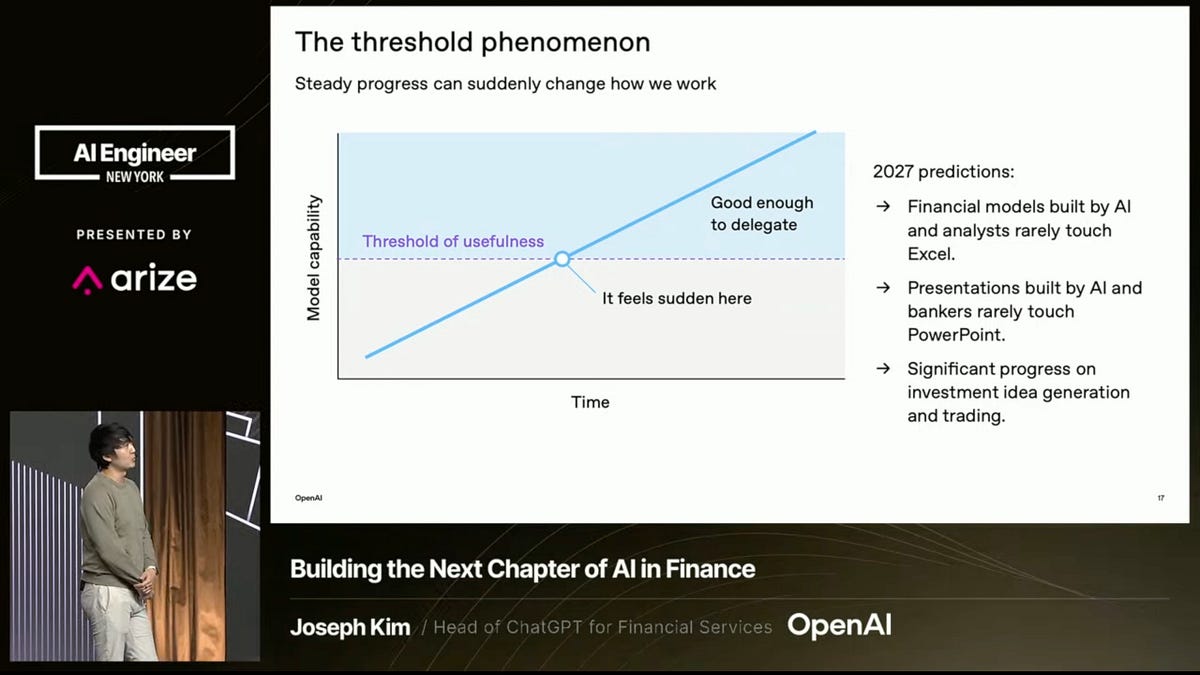 Crossing the Threshold: How OpenAI and Anthropic Approach Autonomy and Safety in Financial Agents
Recap of AI Engineer New York talks on balancing agent autonomy and safety in financial services. Bloomberg's Andrey Rybka argued for deterministic controls outside the model: scoped credentials, tool-call checks, outbound traffic limits, audit trails, budgets and kill switches. He cited a case where an agent obeyed instructions embedded in a marketplace review. Anthropic described a trust layer of identity and permissions, sandbox and approval, and regression checks, with agents proposing rather than making order amendments. Two Sigma described composable controls, including auto-mode classifiers that escalate only important requests, to avoid approval fatigue. OpenAI framed human-in-the-loop as a product design choice.
 latent.spacearticlePublished and added 14 Oct 2026🛡️ Security
- Crossing the Threshold: How OpenAI and Anthropic Approach Autonomy and Safety in Financial Agents
Latent Space recap of AI Engineer New York keynotes on balancing agent autonomy with safety in finance. OpenAI's Joseph Kim frames human-in-the-loop as a product design decision and predicts agents doing investment idea generation and trading by 2027. Two Sigma's John Feminella describes composable controls such as auto-mode classifiers to avoid approval fatigue. Anthropic's Keon Shahab lays out a trust layer: identity and permissions, sandboxed approval, and regression checks, with agents proposing actions rather than executing them. Bloomberg's Andrey Rybka argues for deterministic controls outside the model: scoped credentials, tool-call checks, audit logs, budgets and kill switches.
latent.spacearticlePublished and added 14 Oct 2026🧠 AI  The Noise Inside the Network: How an Unsophisticated Attack Exposed a Third-Party Risk
Unit 42 case study of an intrusion at a European bank that began through a third-party-managed VPN gateway lacking strict authentication. The attacker used compromised credentials, ran noisy network scans, brute-forced administrator accounts and scraped internal documentation. A WSUS remote code execution attempt on the configuration management server was stopped by Cortex XDR, and threat hunting found no persistence.
 unit42.paloaltonetworks.comarticleAdded 30 Oct 2026, published 13 Oct 2026🛡️ Security
 Introducing AI Coding Agent Governance: Using Hooks to Bring Visibility to the ADLC | Endor Labs
Explains how lifecycle hooks in Claude Code (.claude/settings.json) and Cursor (.cursor/hooks.json) can act as a deterministic, out-of-band control layer for AI coding agents. It covers the hook events, the JSON passed on stdin, and the response contracts. Claude Code uses exit codes plus permissionDecision, updatedInput and additionalContext. Cursor uses stdout JSON with permission and userMessage. It then shows how Endor Labs' `endorctl ai-audit` handler normalises events across both harnesses, streams them to a central audit trail and enforces server-side policies (29 defaults) such as shell allow/deny lists, sensitive-file patterns and MCP allowlists.
endorlabs.comarticlePublished and added 12 Oct 2026🧠 AI- CMMC Level 2 Non-Negotiable Requirements Explained | Huntress
Explains the "non-negotiable" requirements for a Conditional CMMC Level 2 (Self) status under 32 CFR 170.21. The minimum score is 88 of 110, every 3- and 5-point NIST SP 800-171 requirement must be implemented, plus a short list of 1-point ones. Those mandatory items add up to 64 points, which leaves 24 of the remaining 46 one-point requirements to choose. It also covers how this differs from legacy DFARS 252.204-7019/7020 self-assessments scored with the DoDAM (-203 to 110), and how the 180-day POA&M closeout window can silently expire a status in SPRS. The post ends with a Huntress product mapping.
 huntress.comarticlePublished and added 12 Oct 2026🛡️ Security
- `123456' password used in Danish CPR data breach
News report on the September 2026 breach of Denmark's CPR civil registration database. Attackers abused the legitimate search access of Pays ApS, a two-employee Odense company, where at least three accounts, including the administrator, used the password "123456". An anonymous hacker told Politiken that a leaked password of a former employee at a small Danish company gave initial access, and that they then wrote two programs to pull data out. The access lasted 21 days 17 hours and about 14 million lookups, exposing roughly 8.8M people's names, addresses and CPR numbers. It was detected only through an unusually large invoice. The page is a news round-up, and the other stories are unrelated to security.
 cphpost.dkarticlePublished and added 10 Oct 2026🛡️ Security
 Typed decision model vulnerabilities can push AI guardrail fail-open rates to 63%
A study by Erfan Baghaei Potraghloo, posted to arXiv on October 8, 2026, evaluates seven open-weight LLMs used as "typed decision model" guardrails in agent systems (assigning probabilities to caller-defined allow/block options rather than generating text). It finds that six lines of unrelated server-log text raised one model's fail-open rate from 0% to 63%, and that merely renaming the permissive option's label (without changing its definition or the assessed text) drove fail-open rates to 93-100% in four models; a deterministic rule on typed values instead hit 100% accuracy, leading the author to recommend using these models only to triage reviewer workload rather than as sole decision-makers.
en.cryptonomist.charticlePublished and added 9 Oct 2026🛡️ Security UK Targets Cryptomus and TokenSpot in New Russia Sanctions Package
The UK FCDO sanctioned crypto exchange Cryptomus via its Vancouver registered owner Xeltox Enterprises and linked platform Heleket, Kyrgyz firms TokenSpot and Tsunami Payments, and payment processor Processing KG which operates VexPay and is owned by Kyrgyzstan's Ministry of Finance, plus its director Ulan Bukabaev, for allegedly helping Russia evade financial sanctions. Two of the designated entities reportedly processed transactions for the Kremlin backed A7 illicit finance network, which claims to have moved over 90 billion dollars last year, roughly half of Russia's annual military spending. The 38 target package, which also hit oil producers Zarubezhneft and INK Capital and 12 shadow fleet tankers, follows earlier UK and EU action against Justin Sun's HTX and extends a pattern of Western sanctions targeting crypto rails used for Russia sanctions evasion.
decrypt.coarticlePublished and added 9 Oct 2026🛡️ Security Understanding AI, Part I: The Machines That We Taught
Galaxy Research's explainer traces AI's intellectual history from the 1956 Dartmouth Workshop and the Logic Theorist through the symbolic-AI era (expert systems like Mycin and XCON, the Cyc project) to the sub-symbolic/connectionist revival (Perceptron, Hopfield networks, backpropagation, LeCun's CNN zip-code reader) that culminated in deep learning and the 2017 Transformer architecture. It then surveys three machine-learning paradigms (supervised, reinforcement, unsupervised) and five deep generative architectures (autoregressive, diffusion, GANs, VAEs, normalizing flows), closing with how modern LLM chatbots combine these via pretraining, SFT, and RLHF, and how multimodal, reasoning, RAG, agent, and world-model systems extend base LLMs.
 galaxy.comarticleAdded 8 Oct 2026🧠 AI
 Bitcoin and ether holders urged to enter ‘bunker mode’ against possible AI attacks
Ethereum researcher Justin Drake and co-founder Vitalik Buterin warn that rapid AI progress in mathematics could break the elliptic-curve signatures securing Bitcoin and Ethereum wallets within months - far sooner than quantum computers are expected to - urging large holders to enter bunker mode by migrating funds to addresses whose public keys have never been exposed onchain. Buterin also flags that lattice-based post-quantum schemes, the basis of NIST's signature standard, could face similar AI-driven erosion, pushing Ethereum's long-term roadmap toward hash-based signatures instead. The piece grounds the warning in already-documented AI-assisted exploit discovery: a 5-year-old Coldcard hardware-wallet firmware bug drained over 1,367 BTC, BTCPay Server Lightning-node thefts, Core Lightning bugs surfaced via AI-generated audits, and Anthropic's demonstration of AI models writing working exploits against simulated DeFi contracts.
coindesk.comarticlePublished and added 8 Oct 2026🛡️ Security Oracle Health Data Breach Tally Climbs to Nearly 20 Million
New Texas attorney general filings put the toll of the 2025 Oracle Health (Cerner) breach at nearly 20 million affected individuals, far above earlier estimates. The attacker, a lone extortionist known as 'Andrew', used stolen customer credentials to access an old legacy Cerner server not yet migrated to Oracle Cloud and exfiltrated patient data including SSNs and medical records, then demanded cryptocurrency ransom while threatening public leak sites.
securityweek.comarticlePublished and added 8 Oct 2026🛡️ Security Four Compliance Frameworks, One Security Team. How Universities Can Stop Drowning in Regulatory Risk
Part 2 of a Rapid7 series on higher-education security examines how four overlapping compliance regimes — FERPA (24-hour Federal Student Aid breach notification), GLBA Safeguards Rule (law-enforcement notification at 500+ affected consumers), HIPAA (60-day HHS breach reporting), and CMMC Level 2 (110 NIST 800-171 practices for DoD-funded research) — collide during a single incident at decentralized, multi-campus university systems. It argues that fragmented data stores and governance make it hard to quickly scope which regulated data (financial aid, health records, CUI) was touched and which reporting clocks have started, and recommends consistent data classification plus centralized visibility/automation to meet overlapping deadlines.
 rapid7.comarticlePublished and added 7 Oct 2026🛡️ Security

Showing 30 of 85
Show more