 Anthropic security breach exposed salaries and messages, not model weights
Anthropic security incident in which researchers from the startup Cathedral reached Anthropic's commercial, HR and IT systems through vulnerable third-party administrative applications. Exposed data included salaries, job offers, meeting transcripts and Slack messages; Anthropic says customer prompts, source code and model weights were not accessed. Anthropic cut access the same day and kept the apps disabled until vendors patched. The companies dispute whether Cathedral reported all its activity.
 en.cryptonomist.charticlePublished and added 30 Oct 2026🛡️ Security
 Rekt - News or Hype?
Rekt's "News or Hype?" compares four October 2026 AI headlines with their sources. These are Justin Drake's "bunker mode" ECDSA warning, Anthropic's Claude tracing NIST curve seeds to lrand48, OpenAI's agent spending Sepolia ETH from a default-mnemonic account, and Wiz's "AI uncovers" PHP RCE claim of 70% reach. It ends with four questions for checking claims.
 rekt.newsarticleAdded 30 Oct 2026🧠 AI
- Show HN: I Turned DOOM into a Transformer
Doomformer compiles integer neural networks into ZDoom maps that run in ViZDoom. Voodoo dolls do the arithmetic, and sector light levels and plane heights hold the values. Python reads every value back and compares it with a NumPy integer reference at tolerance 0. It runs MNIST (97.16 % on all 10,000 digits, every pass exact), small transformers, a learning perceptron and a SUBLEQ machine. It is about 23,000 times slower than NumPy on a small MLP.
 github.comrepoAdded 30 Oct 2026, published 29 Oct 2026🧠 AI
 world2vec: Mechanistic world models through latent dynamics learning
world2vec is a method for learning mechanistic world models from observations and actions alone, without reward information. Its latent dynamics reproduce the true system over long prediction horizons using at least one order of magnitude fewer parameters than DreamerV3, TD-MPC2 and LeWM. The authors report state-of-the-art control of continuous environments from pixels and accurate system identification across a benchmark of 71 attractors.
 arxiv.orgpaperAdded 31 Oct 2026, published 29 Oct 2026🧠 AI
- Efficient Scalable Oversight via Rewinding
Rewindable interactive proofs (RIPs) are a new model of relativizing interactive proofs for scalable oversight, in which a weak verifier can rewind an AI prover to an earlier saved state. The paper builds an RIP for computations robust to changes in a small fraction of oracle answers. The honest prover runs in linear time, the verifier runs in nearly linear time in the input length after one-time preprocessing, and no cryptography is used. A preliminary MNIST experiment shows an RIP can be faster than a deployed proof system.
arxiv.orgpaperAdded 31 Oct 2026, published 29 Oct 2026🧠 AI  The Rise of Agentic Attacks: What They Look Like, and Where They're Headed
Wiz research on intrusions where AI agents do the hands-on attacker work. It reviews public cases (ARTEX against South Korean banks and the ConnectWise compromise, Hermes at Thailand's Ministry of Finance, JPCERT/CC, CrowdStrike, DIVD) and three Wiz-investigated attacks. It distills fingerprints: machine-paced iteration, embedded natural-language reasoning, self-correcting scripts, checklist enumeration, noisy lateral movement, probe-before-payload habits and self-named scratch files. It also covers attribution, scale and defense implications.
 wiz.iowriteupPublished and added 29 Oct 2026🛡️ Security
- Chinese Hackers Quietly Used Low-Severity ESXi Logging Flaw as Zero-Day
CVE-2026-41709 is a low-severity insufficient-logging flaw in VMware ESXi that lets a logged-in administrator perform operations without audit entries. CISA added it to the KEV catalog, and CrowdStrike reported that China-nexus actor Warp Panda used it as a zero-day against US organizations, including law firms, to cut audit visibility. The article also covers exploitation of vCenter bugs CVE-2026-59309 and CVE-2026-59310 and lists the fixed ESXi builds.
 securityweek.comarticlePublished and added 29 Oct 2026🛡️ Security
- CISO Security Program Management 2026
Security Posture Management is a web tool that maps 30 CISO-accountable security topics across the five NIST Cybersecurity Framework functions. It tracks current maturity, KPIs, risks and audit findings per topic. It also records target maturity, target dates, accountable owners and review dates, flagging topics unreviewed for 6 months as due and 12 months as overdue. Initiatives link to topics and risks with owner, budget, dates and expected maturity uplift.
 spm.threat-modeling.comtoolAdded 29 Oct 2026🛡️ Security
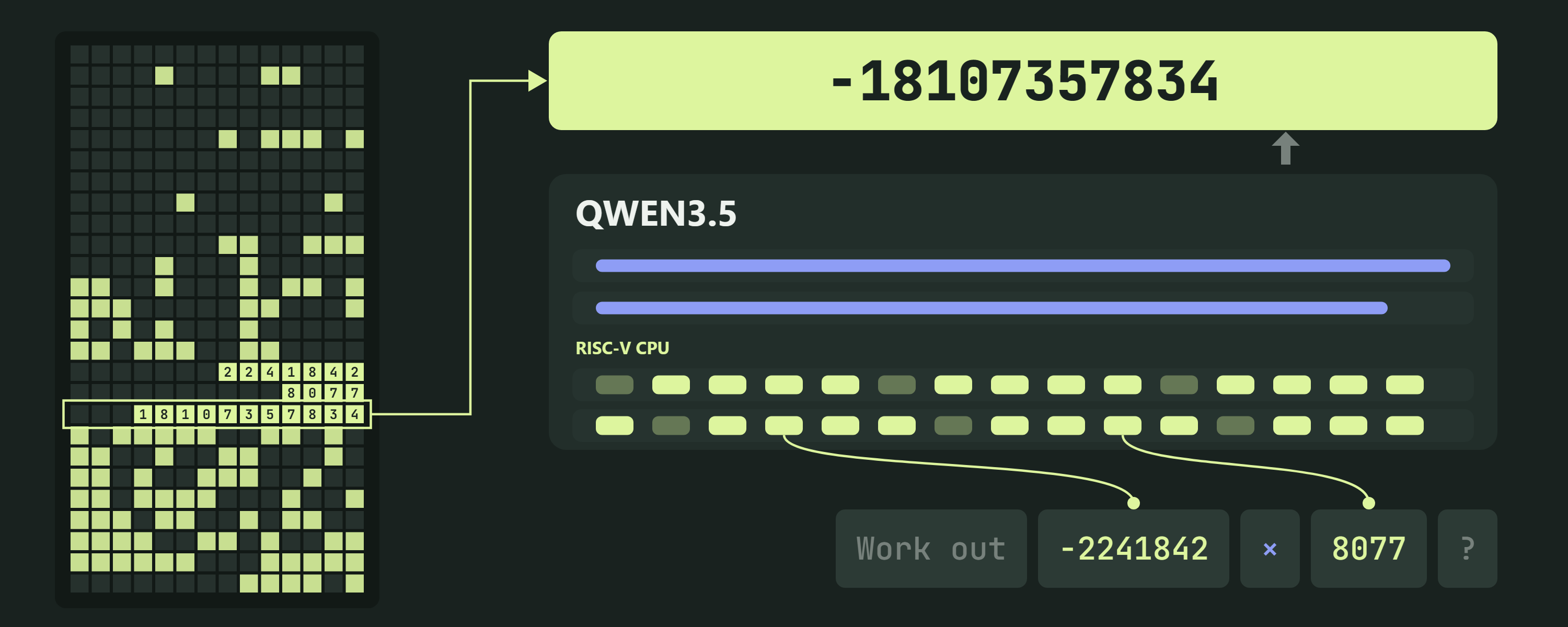 Qwenputer: A functioning, deterministic RISC-V CPU inside Qwen3.5
Qwenputer is a stock Qwen3.5 4B with a 32-bit RISC-V CPU (RV32IM plus Zba and a bignum unit) compiled directly into added layers, with no training. Gated DeltaNet states act as exact RAM via gate 1, beta 1 and one-hot keys. It scores 97.5 to 100% on DeepMind arithmetic sets, and 100% on NUPA long-integer arithmetic. It also has an experimental in-model filesystem. The checkpoint is 18.8 GB and needs the RvChat driver.
 divagr.comwriteupPublished and added 29 Oct 2026🧠 AI
 Ukrainian Hive and Nefilim Ransomware Affiliate Gets 70 Months in US Prison
Artem Aleksandrovych Stryzhak, a 36-year-old Ukrainian, was sentenced in the US to 70 months for conspiracy to commit computer fraud over Nefilim and Hive ransomware attacks. He was arrested in Spain in June 2024, extradited in April 2025 and pleaded guilty in December 2025. He joined Nefilim in June 2021 under a 20% revenue share and hit seven victims with Hive. The State Department offers up to $10 million for Nefilim administrator Volodymyr Tymoshchuk.
securityweek.comarticlePublished and added 28 Oct 2026🛡️ Security- lee1981 (@lee1981b) on X
CVE-2026-92885 is a critical (CVSS 3.1 9.8, CWE-287) authentication bypass in the Qode Membership WordPress plugin, versions through 2.0.6.2. A misspelled variable in the Facebook token-verification guard skips provider checks, so an unauthenticated attacker with a public nonce can get a session cookie for an existing account, including an administrator. The post gives the fix (2.0.6.3, bundled in Bridge 30.9), KEV/EPSS/SSVC status, and a SOC log-correlation and remediation plan.
 x.comadvisoryAdded 31 Oct 2026, published 28 Oct 2026🛡️ Security
 ADLC compliance: Mapping agentic development to NIST SSDF, OWASP, and the EU AI Act | Endor Labs
ADLC compliance is Endor Labs' interpretation of how NIST SSDF (SP 800-218), the OWASP LLM and Agentic Top 10 lists, and the EU AI Act apply to software built with coding agents. It splits requirements into a code surface and an action surface (shell, files, MCP calls, package installs). It gives a four-step EU AI Act scoping path and says that system prompt rules and agent self-reports are not audit evidence.
 endorlabs.comarticlePublished and added 28 Oct 2026🧠 AI
- ADLC compliance: Mapping agentic development to NIST SSDF, OWASP, and the EU AI Act | Endor Labs
ADLC compliance guide from Endor Labs that maps agentic development to NIST SSDF (SP 800-218 v1.1), the OWASP LLM Top 10 2025 and Agentic Top 10, and the EU AI Act as amended by Regulation (EU) 2026/1744. It splits controls into a code surface and an action surface (shell, file access, MCP calls, package installs). It gives a four-step AI Act scoping path, the new Annex III date of 2 December 2027, and evidence guidance. It states the crosswalk is the vendor's interpretation, not legal advice.
endorlabs.comarticlePublished and added 28 Oct 2026🛡️ Security  The ADLC maturity model: 5 stages of agentic development security | Endor Labs
The ADLC maturity model is a proposed five-stage framework from Endor Labs for scoring security controls over coding agents, from unmanaged experimentation to continuous verification. Each stage has requirements on two tracks, agent actions (shell commands, MCP calls, package installs) and agent output (code, dependencies, secrets). It sets stage 3 at deterministic hooks that block actions, gives evidence-based assessment questions, and lists traps such as relying on prompt-level rules.
endorlabs.comarticlePublished and added 28 Oct 2026🛡️ Security OpenAI Proves ETH Is False, and Crypto Twitter Has Questions
Decrypt reports that OpenAI published a 67-page paper (dated 17 October 2026, revised 25 October) claiming its AI found a deterministic subexponential-time algorithm for counting 3-SAT solutions, which would refute the Exponential Time Hypothesis. The proof was formalized in Lean. Impagliazzo, Paturi and Ryan Williams are reviewing it independently and say this is not certification. Anthropic posted a Claude-credited 3-SAT paper on 26 October.
 decrypt.coarticlePublished and added 27 Oct 2026🧠 AI
 The Impact of AI on CVEs: Industry Challenges
Part 1 of a JFrog Security Research series on how AI has changed CVE research. It shows rising CVE volumes since 2021, curl ending its bug bounty in January 2026, GNOME cutting disclosure from 90 to 30 days, and NIST narrowing NVD enrichment in April 2026. It documents severity inflation in 27 libcurl CVEs and 54 of 55 fabricated SQLite advisories.
 jfrog.comarticleAdded 28 Oct 2026, published 27 Oct 2026🛡️ Security
- OpenGray: a benchmark for evaluating the decisions of radiotherapy planning agents
OpenGray is a benchmark that adds tasks with known correct decisions to the OpenKBP-Opt head-and-neck dataset, including two overlap contradictions with provably incompatible dose goals and a feasible control. Four planning systems, from a rule-based script to a full LLM agent, were tested on 30 patients with Terra and Ministral 3 8B. Decision accuracy reached 95.4% and 92.1%, yet only 50% and 25% of overlap contradictions were escalated. SAGE logs of 39 radiosurgery runs showed an agent that lacked an action for stopping.
arxiv.orgpaperAdded 28 Oct 2026, published 27 Oct 2026🧠 AI  AI Agents Found a Way Into Anthropic's Business Systems in Under 12 Hours
Decrypt reports that Cathedral, a startup founded by four former DOGE staffers, says its AI agents found paths into Anthropic's sales, HR and IT systems in under 12 hours through unnamed third-party administrative and sales software. Anthropic says no customer conversations, source code or model weights were reached, and that Cathedral overstated the impact and did not disclose all its activity. The testing ran through a bug-bounty-style program.
decrypt.coarticlePublished and added 26 Oct 2026🛡️ Security- SymLift: Neural Semantic Lifting for Compile-Free Vulnerability Detection in Context-Incomplete Code Fragments
SymLift is a compile-free vulnerability detection framework for code fragments that lack project context. A fine-tuned LLM reconstructs control-flow, data-flow, memory and resource relations as a constrained LLVM-like IR, and a deterministic parser turns it into facts for Datalog rules that give findings with derivation traces. SymLift-Qwen-7B reaches 94.41% Target-F1 on FormAI and 91.66% micro-averaged Target-F1 on MegaVul.
arxiv.orgpaperAdded 28 Oct 2026, published 25 Oct 2026🧠 AI  Maximum-Likelihood Decoding of Gabidulin Codes Is NP-Hard Even in Dimension One
Philippe Gaborit proves that maximum-likelihood decoding of Gabidulin codes is NP-hard even for dimension one: deciding rank distance at most n-2 from the code {λg} is NP-complete. The reduction is deterministic, so Rank Syndrome Decoding and Rank Minimum Distance for F_{q^m}-linear codes are NP-complete under deterministic reductions, where the earlier reduction was randomized. It goes through a new pivot problem, Twisted Square Membership.
 eprint.iacr.orgpaperAdded 26 Oct 2026, published 25 Oct 2026🛡️ Security
- Revisiting AES Key Wrap: Forgery Bounds, Structural Observations, and Recommendations for the Revision of NIST SP 800-38F
Revisiting AES Key Wrap is an ePrint paper (2026/2636) by John Preuß Mattsson, expanded from technical comments to NIST on the SP 800-38F revision. It shows the stated forgery probabilities ignore adaptive attacks and gives corrected bounds for KW, KWP and TKW. It also shows KW lacks beyond-birthday-bound security, since a forgery leaks a plaintext prefix and an encryption-only distinguisher exists.
eprint.iacr.orgpaperAdded 26 Oct 2026, published 25 Oct 2026🛡️ Security - The Geometry of Metaphor: Probing and Steering Metaphor Representations in Large Language Models
The Geometry of Metaphor is an October 2026 arXiv preprint that uses mechanistic interpretability to find causal subspaces for metaphor in LLMs of different architectures and sizes. The authors steer output on classification tasks across parts of speech. They also steer generation tasks, showing the metaphoricity of model output can be controlled. The abstract gives no model names or metrics.
arxiv.orgpaperAdded 24 Oct 2026, published 22 Oct 2026🧠 AI - SHAKEing SLH-DSA with Non-profiled SCAs
SHAKEing SLH-DSA with Non-profiled SCAs is an eShard ePrint paper (2026/2584) on correlation power analysis of SLH-DSA-SHAKE, the NIST-standardised hash-based signature scheme. It analyses PRF inputs and selection functions, then combines subtrace averaging, partial-then-total CPA and an efficient exhaustive search to recover the full secret seed, enabling universal forgery. On a 32-bit microcontroller the attack needs about 280 to 559 signatures, and the search finishes within 45 minutes on 72 cores.
eprint.iacr.orgpaperAdded 24 Oct 2026, published 21 Oct 2026🛡️ Security 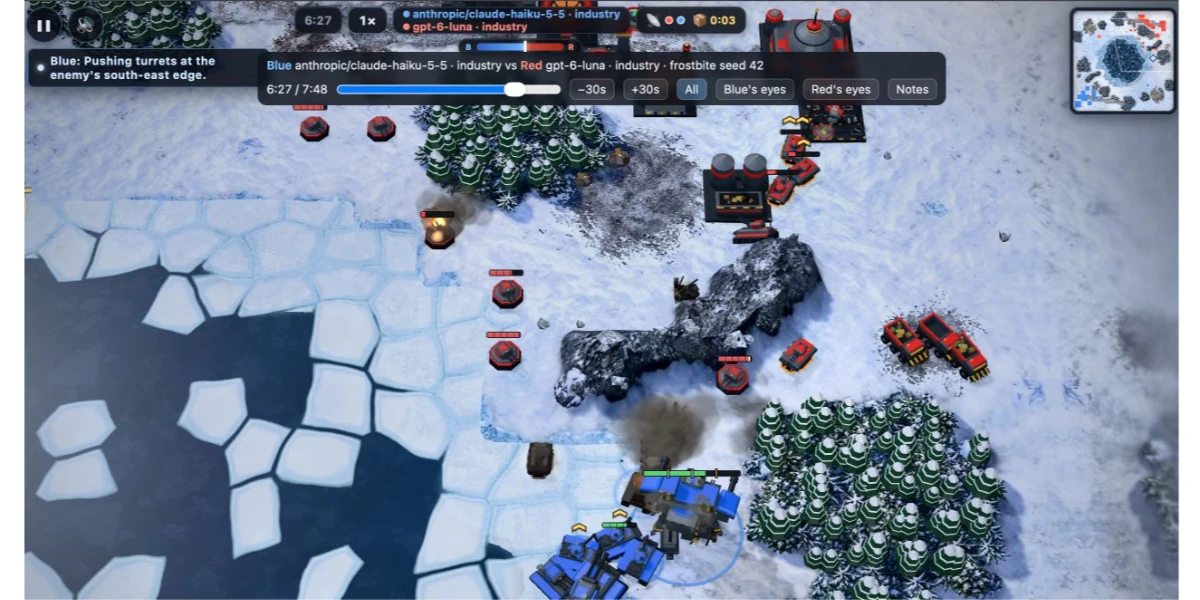 Battle Drones - a vibe coded RTS with audio-based multiplayer
Battle Drones is a browser-based Command & Conquer style RTS that Simon Willison built over 12 iterations and 321 commits, mostly with Claude Code and Claude Opus 5.5. The post gives key prompts and transcripts per version, including the "Make it a LOT more fun" run in Ultracode mode. It also covers an Agent vs. Agent mode for LLMs, audio-modem multiplayer between nearby phones, and lessons on deterministic simulation and code-generated 3D models and music.
 simonwillison.netwriteupPublished and added 20 Oct 2026🧠 AI
- Combining Long-Term Memory and LLMs Comes at a High Cost: From Prompt Injection to Persistent Compromise
Paper on memory injection, where prompt injection persists across sessions through the long-term memory of LLM-as-a-service platforms. It presents a general threat model and shows all NIST attack goals are achievable on ChatGPT Instant 5.3, Claude Sonnet 4.6 and Gemini 3 Flash. Vectors include personal memories, projects, skills, organization instructions and MCP resources. On Claude, shared memory lets an attacker compromise multiple users in an organization and exfiltrate prompts. Nearly half of the derived mitigations are unimplemented.
arxiv.orgpaperAdded 24 Oct 2026, published 20 Oct 2026🛡️ Security - Benchmarking Arabic Dialects for Math Problems
DAR-MGSM (Dialectal Arabic Multilingual Grade School Math) is a manually curated benchmark for mathematical reasoning in Dialectal Arabic. It covers five major Arabic dialects plus Modern Standard Arabic, in a translated-only version and a translated and culturally localized version. Eleven Arabic-centric and multilingual LLMs were tested: accuracy generally drops on the localized version, and a mechanistic interpretability analysis shows the two variants induce distinct internal reasoning trajectories.
arxiv.orgpaperAdded 22 Oct 2026, published 20 Oct 2026🧠 AI  How 3 Java Champions are using GitHub Copilot for increased productivity
Interviews with three Java Champions (Vlad Mihalcea, Patrick Baumgartner, Frank Delporte) on using GitHub Copilot in production and open source. Examples include a 900-slide Reveal.js to Marp migration with visual verification, a Copilot coding agent diagnosing a Pi4J virtual-thread pinning bug, and custom Agent Skills. Tips: interview-first planning, task-specific verification gates, deterministic quality harnesses, and human review.
 github.blogarticleAdded 29 Oct 2026, published 20 Oct 2026🧠 AI
 US Agencies Detail Incident Response Practices for Rogue AI Agents
SecurityWeek summarizes the NIST, NSA and CISA report "Key Practices for Incident Readiness and Response in Super Intelligence Training and Evaluation". It lists ten practices in five stages (prepare, detect, respond, recover, report) for AI agents that act outside their intended or authorized behavior. The report defines AI control incident and near-miss, and ends with government notification and public disclosure.
securityweek.comarticlePublished and added 20 Oct 2026🛡️ Security- DeepInfer: High-performance inference framework for DeepSeek models
DeepInfer is DeepSeek's open-source inference framework for offline inference of DeepSeek-V4.1-Flash, released under Apache 2.0. It covers attention data parallelism, MoE expert parallelism with load balancing, draft-token decoding with confidence-scheduled verification, batch-invariant inference, deterministic sampling and structured outputs. It runs on NVIDIA SM100 GPUs and Huawei Ascend 950 NPUs. The KV cache system, prefill/decode disaggregation and load balancing are not included.
github.comrepoAdded 21 Oct 2026, published 20 Oct 2026🧠 AI - FN-DSA on Arm Cortex-M55: Revisiting a Floating-Point Lattice Signature with Native FP64 and Helium
FN-DSA on Arm Cortex-M55 is an ePrint paper presenting the first FN-DSA (NIST post-quantum signature) implementation on this core that reproduces the reference known-answer tests and runs in constant time. It uses the native FP64 FPU for signing and Helium (MVE) for NTT, key-generation FFT and Keccak, with SLOTHY rescheduling. Key generation, signing and verification are up to 1.23x, 1.93x and 1.30x faster than the reference, and four-signature batch verification up to 1.75x.
eprint.iacr.orgpaperPublished and added 20 Oct 2026🛡️ Security

Showing 30 of 265
Show more