 Binance Just Suffered the Biggest Hack in Crypto History. What Now?
Bankless report on the Binance hack of $6.3 billion, which Binance's preliminary investigation traced to a compromised DevOps engineer's laptop with access to withdrawal-authorizing systems. TRM Labs found valid EIP-7702 authorizations on Ethereum, and nine other chains were drained through normally signed transactions. TRM and Chainalysis link it to North Korea's TraderTraitor. Tether and Circle froze about $3 billion, and Binance says SAFU and corporate cash will cover the losses.
 bankless.comarticlePublished and added 30 Oct 2026🛡️ Security
 EIP Draft: Permanent EOA Delegation Opt-Out (disable EIP-7702)
Discussion thread for a draft Core EIP that lets an Ethereum EOA permanently disable EIP-7702 delegation. A type-4 set-code transaction with an empty authorization list, destination equal to sender and zero value installs the 0xef0200 marker for 33500 gas. Later authorizations, including clearing to the zero address, are skipped. It does not protect against private-key compromise. Open questions cover the prefix, a dedicated transaction type, gas pricing, and EIP-8151 interaction.
 ethereum-magicians.orgthreadPublished and added 30 Oct 2026🛡️ Security
 What is EIP-7702? The Ethereum Upgrade Behind the $6.4B Binance Hack
EIP-7702 ("Set Code for EOAs") is the Ethereum change, live since the Pectra upgrade on 7 May 2025, that lets ordinary wallets delegate to smart contract code. The guide covers set-code transactions, delegation indicators, batching, sponsorship and sweeper-contract scams. It then describes the 29 October 2026 Binance theft of about $6.4B, which TRM Labs and Chainalysis attributed to TraderTraitor, where 50 pre-signed authorizations turned a hot wallet into a sweeper.
 decrypt.coarticlePublished and added 30 Oct 2026🛡️ Security
 $6 Billion Binance Hack Bears Hallmarks of North Korea’s TraderTraitor
The Binance hack of 29 October 2026 drained about $6.36 billion across ten blockchains in roughly 20 minutes, according to TRM Labs. TRM attributes it with high confidence to North Korea's TraderTraitor, citing a mixer-funded operator wallet, pre-signed transactions and overlap with the Bybit and KelpDAO hacks. Binance's early findings point to a compromised DevOps engineer laptop. Stablecoin issuers froze about $2.7 billion.
 securityweek.comarticlePublished and added 30 Oct 2026🛡️ Security
 Trail of Bits (@trailofbits) on X
Trail of Bits post on X summarising Binance's initial investigation into a security incident. Binance suggests a compromised DevOps engineer's laptop let an attacker reach a service container and submit unauthorized withdrawal transactions. The text says no evidence has been found of wallet private key compromise. The fetched text is truncated and gives no further detail.
 x.comthreadPublished and added 30 Oct 2026🛡️ Security
 Rekt - SingularityNET - Rekt
SingularityNET exploit (19 September 2026): attackers with signing authority exposed through a cloud infrastructure breach drained 8.72M FET from the Ethereum bridge converter, then minted about 2.3 billion AGIX, NTX, WMTX and CGV. Rekt's transaction-level reconstruction puts gross liquid proceeds near $2.29M, not the $16.77M headline, and traces laundering via Chainflip, Baltex and THORChain. It notes conversionIn() skipped checkLimits() and trusted a single EOA signature.
 rekt.newswriteupAdded 29 Oct 2026🛡️ Security
 Rekt - Duelbits - Rekt
Duelbits is a crypto casino that lost an estimated $6.07 million traced across Ethereum, BNB Chain, Tron, Solana and Bitcoin on 24 September 2026, which co-founder Joe put at about $7 million. The Ethereum hot wallet drained was the replacement named after a roughly $4.6 million theft in February 2024. Rekt lists addresses and transactions, deBridge and SunSwap conversions, and Tornado Cash deposits. Duelbits has not published a root cause.
rekt.newswriteupAdded 29 Oct 2026🛡️ Security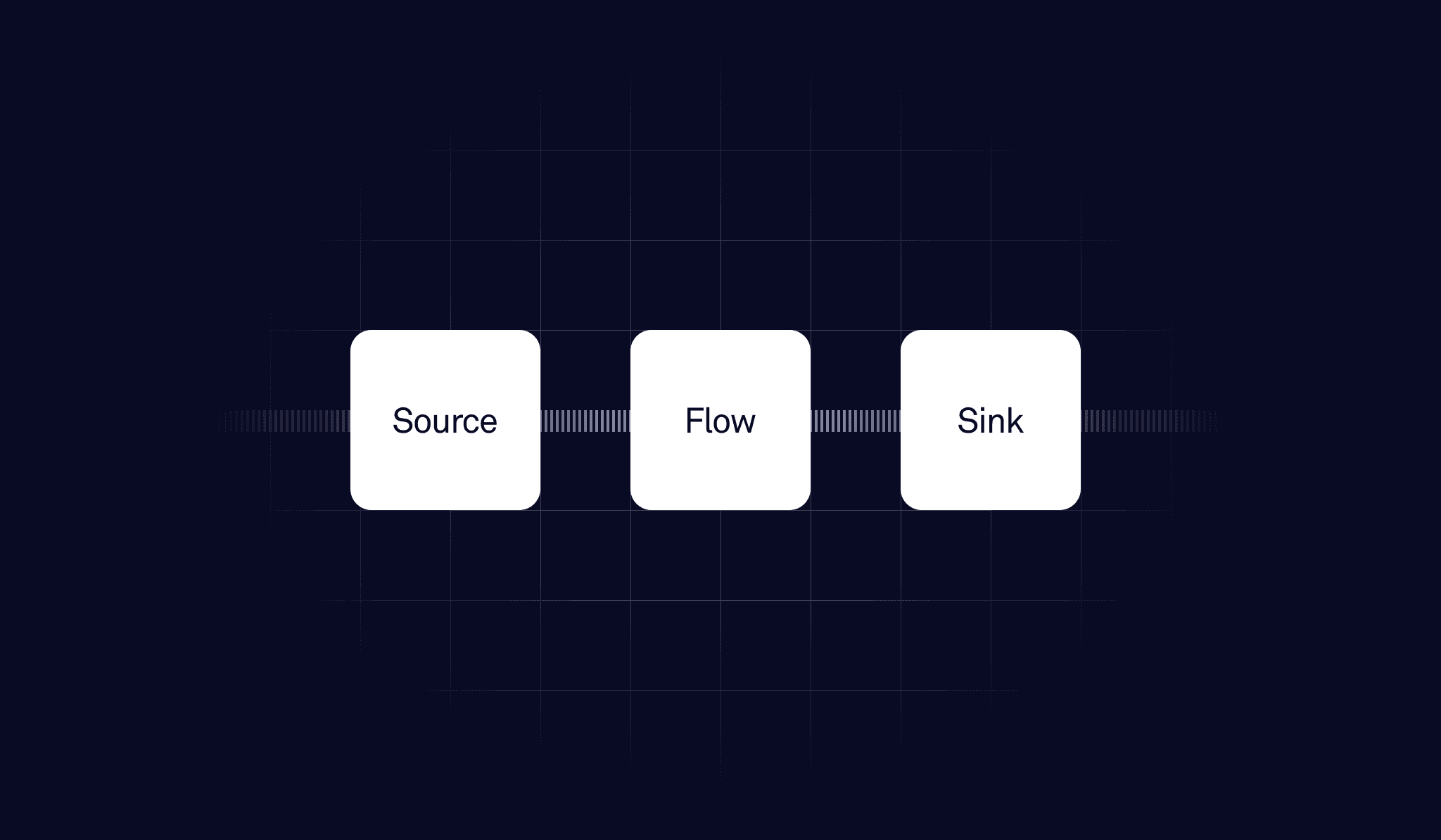 Inside mobile taint analysis: how source-to-sink tracking finds real data-leak paths | Oversecured Blog
Oversecured explains taint analysis for Android and iOS apps and contrasts it with pattern-matching SAST such as MobSF. It covers source, flow and sink, cross-component tracking over Intents, flag-based sanitizer modeling and implicit intent simulation. The case study is an unsafe Class.forName().newInstance() on a Serializable transportFactoryClassName field in Google's com.google.auth.oauth2 credential classes, which Google fixed with a $3,133.70 bounty.
 oversecured.comarticleAdded 29 Oct 2026🛡️ Security
 Wagyu Confirms Data Leak Exposing Monero Swap Records
Wagyu, a Monero swap service, confirmed a data leak after Hudson Rock found 4,580 orders in exposed records. The records link public-chain deposit transactions to Monero destination addresses and client IP addresses, which undoes the privacy a swap into Monero is meant to give. The fetched page held only the headline and subhead, so the cause, timeline and remediation are not covered.
 thedefiant.ioarticlePublished and added 29 Oct 2026🛡️ Security
 TENSA Engineering (@TENSAEng) on X
A post by TENSAEng describing a workflow for staying within coding-tool usage limits. ChatGPT chat sits outside those limits, while Claude and Grok chats share a pool with Claude Code, Codex and Grok Build. Architecture, file layout, step order and acceptance checks are planned in ChatGPT and saved as repo docs. Claude Code or Codex then implements one small chunk per fresh session.
x.comthreadAdded 29 Oct 2026, published 28 Oct 2026🧠 AI Secure Transaction Verification and Authorization (STVA)
 is a draft Standards Track ERC (created October 2026) by @MATOBOYCRYPTO65. It proposes structured human-readable metadata and semantic intent for transactions and UserOperations, an independent simulation and verification interface, and scoped, revocable capability tokens for privileged operations. It targets blind signing and frontend supply-chain attacks, citing the February 2025 Bybit Safe multisig theft. The page gives only the abstract, motivation and core concepts.
 ethresear.chpaperPublished and added 28 Oct 2026🛡️ Security
 Improving the Dependency on Fine-Tuning Data in Transfer Learning for Speech Emotion Recognition
This paper proposes an fMLLR-based compensation mechanism that cuts the fine-tuning data needed in transfer learning for speech emotion recognition under train-test acoustic mismatch. An autoencoder reduces trainable parameters, and an affine transform in the encoder latent space models rotations and shifts. In a human-robot interaction task, mean CCC rose 16.8% with 12.9% of the training set and 14.4% with 50%.
 arxiv.orgpaperAdded 30 Oct 2026, published 27 Oct 2026🧠 AI
- AK_QMUL at ArGuard Shared Tasks: A Single Fine-Tuned JAIS for Arabic Harmful-Prompt Detection
AK_QMUL's system for the ArGuard-2026 shared tasks fine-tunes JAIS-6.7B with 4-bit QLoRA and a linear head on the last-token representation. For binary safe/unsafe detection (B1) it uses a four-way head over dialect register and AraSafe MSA augmentation, reaching macro-F1 0.984. For seven-way harm domain (B2) it averages five seeds, reaching 0.790. Both ranked first. Bully is the weakest class.
arxiv.orgpaperAdded 28 Oct 2026, published 26 Oct 2026🧠 AI  Bitcoin Wallet Fixes Critical Flaw That Redirected Funds to Attackers
Electrum 4.8.3, released 24 October 2026, fixes a high-severity flaw in the Bitcoin wallet. Rogue servers could suppress a real payment and inject a fake unconfirmed transaction paying an attacker, so a user's fee-bump became the first transaction broadcast. The fix verifies signatures on wallet-owned inputs, but incoming transactions from external senders stay unverified. One user lost funds on 18 October.
decrypt.coarticlePublished and added 26 Oct 2026🛡️ Security- Then there is prompt injection, a malicious email, ...: The Wild Wide West of OpenClaw Agentic System Security
An empirical study of security concerns in the OpenClaw AI personal assistant framework, using 25K+ posts from 13 subreddits (162 security-relevant) and 358 security-tagged GitHub issues (180 retained). It maps 521 CWE instances across 59 weakness types, concentrated in access control, sensitive-data exposure, injection and unsafe execution. It extracts 543 practitioner mitigations into seven strategies and reconstructs a sensitive-data exposure path with dummy secrets.
arxiv.orgpaperAdded 28 Oct 2026, published 26 Oct 2026🛡️ Security  The Pwn Request Reckoning: What Still Works Against GitHub Actions
The Pwn Request Reckoning is a Wiz post updating the GitHub Actions pull_request_target threat model for 2026. It covers what GitHub's checkout protections, read-only cache tokens and event policies block, and what still works. Remaining paths: SHA-pinned pre-backport actions/checkout, custom checkout scripts, issue_comment and repository_dispatch triggers, script injection, artifact poisoning, self-hosted runner state and allow-unsafe-pr-checkout. It ends with grep and zizmor audit steps.
 wiz.ioarticlePublished and added 26 Oct 2026🛡️ Security
 Bitcoin wallet bug let rogue servers steal funds when users tried to speed up payments
Electrum, a Bitcoin software wallet, disclosed on 24 October 2026 a flaw where malicious servers swapped pending transactions for fake ones with invalid signatures that the wallet did not check. When users chose Replace-by-Fee to raise the fee, Electrum signed a valid replacement paying the attacker, and at least one user lost funds. Version 4.8.3 adds signature checks; users of only trusted or self-run servers were not exposed.
 coindesk.comarticlePublished and added 26 Oct 2026🛡️ Security
- ERC-8468: Agent Safety Framework (ASF)
ERC-8468, the Agent Safety Framework (ASF), is a draft Ethereum standard with two on-chain objects: a versioned Safety Specification and a Safety Binding with suspend, resume and terminate rights. A check() call returns Satisfied, NotSatisfied or Unknown at the moment of effect. Revision 6 has reference contracts, 90 tests and a Sepolia run of 36 transactions in October 2026, and the thread asks reviewers five design questions.
ethereum-magicians.orgthreadAdded 27 Oct 2026, published 25 Oct 2026🧠 AI - ERC-8468: Agent Safety Framework (ASF)
ERC-8468 (Agent Safety Framework, ASF) is a draft Ethereum standard, now at revision 6, for recording which participants accepted which safety requirements for an AI agent, in which version, enforced where, and whether that acceptance is in force now. It defines a versioned Safety Specification, an on-chain Safety Binding with interveners holding suspend, resume and terminate rights, and a check() that returns Satisfied, NotSatisfied or Unknown. The reference guarded account and task-tender adapter passed 90 tests (64 negative) and a Sepolia run of 36 transactions.
ethereum-magicians.orgthreadAdded 27 Oct 2026, published 25 Oct 2026🛡️ Security - A hash-only rollup: OP Stack L2 accounts as Lamport-style hash chains, no ECDSA inside the L2
Hash-only rollup: an OP Stack L2 (chain ID 42069000, live since 30 September 2026) where accounts are keccak-256 hash chains and transactions carry no signatures. Spending uses a commit-reveal step through two new transaction types in op-geth. The post describes a flaw the authors found: unauthenticated commits could be overwritten, which allowed preimage front-running. It was fixed with a first-commit-wins rule on 21 October 2026. It lists the remaining limits: L1 ECDSA, no fault proofs, a centralized sequencer, 160-bit addresses and wallet desync.
ethresear.charticlePublished and added 24 Oct 2026🛡️ Security  Electrum wallet security flaw is fixed after a user loses money in fee attack
Electrum 4.8.3, released 24 October 2026, fixes a flaw where a malicious server replaces a user's unconfirmed payment with a conflicting transaction carrying invalid signatures. If the user then bumps the fee with replace-by-fee, the wallet signs a payment to the attacker. One of two reporting users lost funds, and the patch now checks input signatures before accepting such transactions. Bull Bitcoin is adding the same client-side check.
 en.cryptonomist.charticlePublished and added 24 Oct 2026🛡️ Security
 Weekly Research Brief: PHP Vulnerability; Objections to OKX-ICE’s Stock Tokenization; Solana Alpenglow Ships
Galaxy Research's weekly brief includes a section on PHP2Shell, two decade-old PHP remote code execution bugs affecting versions back to 5.4, patched in an emergency release. It reports an Amazon honeypot exploit attempt four days before disclosure, thousands of attempts in the 10 hours before the patch per Cloudflare's Matthew Prince, and NSA and FBI offline advice. The author argues the bugs were found with GPT-5.6 Sol and that defence must become agentic. It also lists the week's other incidents, including a CVSS 10.0 GitLab bug and eMudhra's guessable private keys.
 galaxy.comarticleAdded 24 Oct 2026🛡️ Security
- CISA: Critical Vulnerabilities in PHP Require Immediate Patching
CISA alert on CVE-2026-109618 and CVE-2026-109619 ("php2shell"), unauthenticated remote code execution flaws affecting PHP installations serving web requests, including mod_php, PHP-FPM, php-cgi, FrankenPHP and LiteSpeed. Fixed in PHP 8.5.12, 8.4.27, 8.3.36 and 8.2.35. Updated 23 October 2026 with a Sigma rule, partner advisories (NSA, NCSC-UK, ASD ACSC, NCSC-NL, NCSC-NZ, Cyber Centre) and guidance to inventory PHP, patch internet-facing systems first, and watch for PHP workers spawning shells. No in-the-wild exploitation had been observed.
 cisa.govadvisoryAdded 24 Oct 2026🛡️ Security
 In Other News: Tor Exit Relays Hijacked, Banks Spot Rogue AI Agents, Self-Rebuilding macOS Ransomware
SecurityWeek's weekly roundup covers Heartbreaker, a Rust macOS ransomware that recompiles itself to change its hash, and 333 Tor exit relays running Ebury that redirected SSH logins to harvest passwords. It also covers APT28 Hookedge attacks on a NATO shipbuilder, the Railway and PingCAP breaches, ISO/IEC 27090 for AI threats, and US banks blocking unsanctioned AI agents.
securityweek.comarticlePublished and added 23 Oct 2026🛡️ Security- Spectrmachina/Ztrust
ZTrust is a Python supply-chain scanner that checks manifests, lockfiles, source and GitHub workflows for vulnerable or malicious dependencies (via OSV.dev), typosquats, leaked secrets, unsafe lockfiles and risky CI patterns such as pwn requests and script injection. It outputs console, JSON and SARIF 2.1.0 and ships as a GitHub Action. It also includes a FastAPI bounty service using commit-reveal and shielded Zcash payouts for researchers.
 github.comrepoAdded 27 Oct 2026, published 22 Oct 2026🛡️ Security
- EpiSEM-Bench: Evaluating Safety and Evidence Recovery in LLM Agents under Missing Evidence
EpiSEM-Bench is an executable benchmark of 300 matched unsafe/safe task pairs across six domains. It tests whether tool-using LLM agents take prohibited actions when a tool response omits a safety-relevant fact, even though the request is benign and all returned statements are true. It finds large variation across ten models, and recovery access cuts unsafe execution for all ten.
arxiv.orgpaperAdded 24 Oct 2026, published 22 Oct 2026🧠 AI - [AINews] OpenAI’s Patch the Planet program is 1 of 2 parties to discover PHP2Shell vulnerabilities in core PHP affecting 70% of the web, using GPT-5.6 Sol; coordinated response over 2 months
This AINews issue (20 to 21 October 2026) leads with PHP2Shell, two PHP-engine memory-corruption bugs (CVE-2026-109618 and CVE-2026-109619). Calif researchers found them with GPT-5.6 Sol under OpenAI's Patch the Planet, and Wiz reportedly found them independently with Gemini 4 Argon. It reconstructs the two-month coordinated response, Cloudflare WAF stopgaps and NSA guidance, and the dispute over vetted researcher access to models. Only the first 40,000 of 114,281 characters were reviewed.
 latent.spacearticleAdded 23 Oct 2026, published 22 Oct 2026🧠 AI
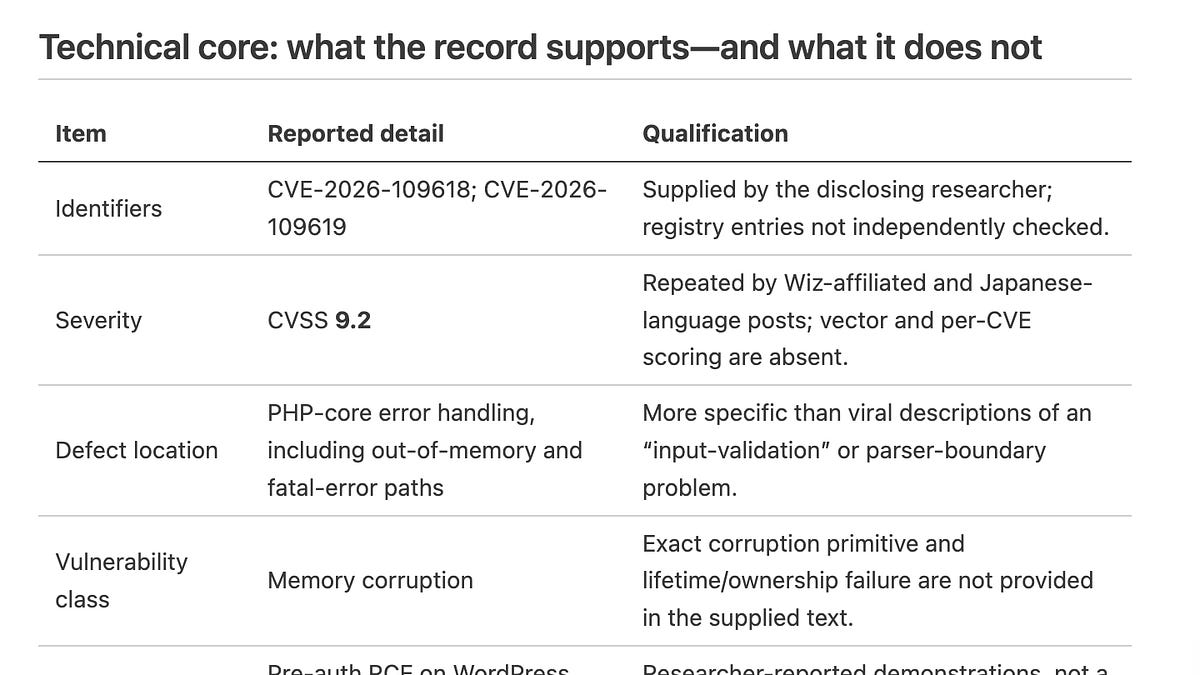 [AINews] OpenAI’s Patch the Planet program is 1 of 2 parties to discover PHP2Shell vulnerabilities in core PHP affecting 70% of the web, using GPT-5.6 Sol; coordinated response over 2 months
AINews issue of 20-21 October 2026 whose top story reconstructs PHP2Shell (CVE-2026-109618, CVE-2026-109619), two PHP-engine memory-corruption bugs with reported pre-auth RCE against WordPress, Drupal and Joomla. It covers the two-month coordinated disclosure, independent discovery by Calif/OpenAI (GPT-5.6 Sol) and Wiz, Cloudflare WAF stopgaps and NSA guidance. It flags missing primary sources: fixed versions, CVSS and leak details.
latent.spacearticlePublished and added 22 Oct 2026🛡️ Security [AINews] OpenAI’s Patch the Planet program is 1 of 2 parties to discover PHP2Shell vulnerabilities in core PHP affecting 70% of the web, using GPT-5.6 Sol; coordinated response over 2 months
AINews issue of 20-21 October 2026 whose top story reconstructs PHP2Shell, two PHP-engine memory-corruption flaws (CVE-2026-109618 and CVE-2026-109619) with reported pre-auth RCE against WordPress, Drupal and Joomla. It covers the two-month coordinated response, separate discovery by Calif/OpenAI (GPT-5.6 Sol) and Wiz (Gemini 4 Argon), Cloudflare's WAF stopgap and NSA guidance. It lists open gaps: fixed versions, leak details, exploitation versus scanning.
latent.spacearticleAdded 23 Oct 2026, published 22 Oct 2026🛡️ Security Cloudflare deploys protections against php2shell vulnerability
Cloudflare describes its WAF protections for php2shell (CVE-2026-109618 and CVE-2026-109619), two PHP runtime memory-handling flaws affecting PHP 5.4 and later that can cause denial of service, remote code execution and data exposure. Rules shipped 21 October 2026, about 9 hours before disclosure, using a new "full transaction detection" that matches request and origin response together. It lists ruleset IDs and says patching PHP is still required.
 blog.cloudflare.comarticleAdded 22 Oct 2026, published 21 Oct 2026🛡️ Security
Showing 30 of 193
Show more