- Chainalysis security breach exposed customer data and raised phishing risk
Chainalysis confirmed on 30 October 2026 that an external actor accessed its systems and internal tools earlier in October, using what it called "offensive agentic techniques". Exposed data covers some customers' names, emails, job titles, user IDs and role labels. Chainalysis says it has found no access to passwords, session tokens or investigation content so far, and customers should expect targeted phishing. Affected-customer counts and the exploited vulnerabilities are not disclosed.
 en.cryptonomist.charticlePublished and added 31 Oct 2026🛡️ Security
 Passkeys Are Better Than Passwords. But They Are Not Enough.
Opinion piece arguing that passkeys, built on public-key cryptography, resist phishing, credential stuffing and password theft but do not settle identity risk. Attackers can go around them through account enrollment before a passkey is bound, weaker recovery paths (SMS, email link, help desk), device changes and authenticated session hijacking. It proposes layering identity threat detection with risk-based, continuous evaluation of trust.
 securityweek.comarticlePublished and added 30 Oct 2026🛡️ Security
 Bulletproof Host Virtualine Loses Its Domain to FBI Seizure
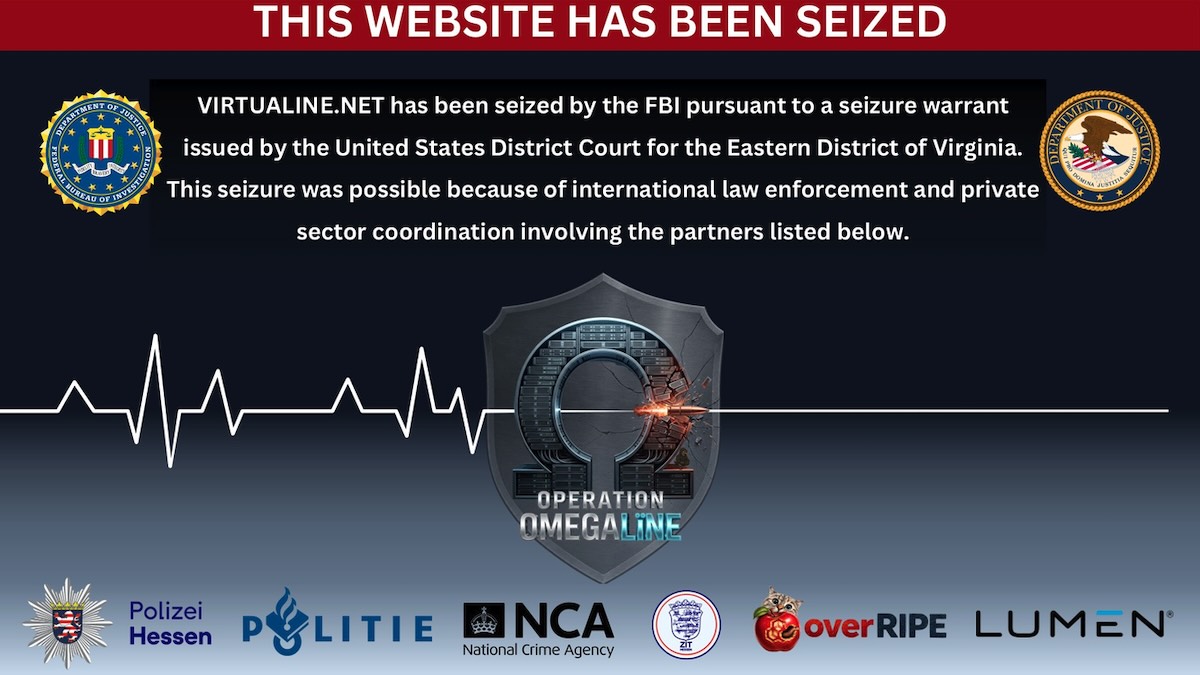
Virtualine is a Russian-speaking bulletproof hosting provider whose domain virtualine.net the FBI seized. Court documents say it hosted phishing, spam, carding and illicit content, and ignored abuse reports. TRM Labs says it received more illicit-attributed cryptocurrency than any other labeled bulletproof host, mostly from a Russian drug marketplace (44%) and a sextortion scheme (17%), and later from StealC operators in 2026.
securityweek.comarticlePublished and added 30 Oct 2026🛡️ Security Chrome extensions with 13.4 million installs caught hijacking searches
BleepingComputer reports Socket researcher John Tuckner's findings on 319 Chrome extensions with 13.4 million installs that hijack the default search engine. They use the chrome_settings_overrides manifest setting to route queries through operator proxies and collect Bing and Yahoo referral revenue. The proxy can later redirect to phishing or malware. Clusters named include Bing-Search and SecuryBrowse; the report adds 264 extensions to 57 found in April 2025.
 bleepingcomputer.comarticleAdded 30 Oct 2026, published 29 Oct 2026🛡️ Security
 IR trends Q3 2026: Actors impersonate IT help desks in vishing attacks as ransomware activity increases
Cisco Talos Incident Response Q3 2026 trends report. Phishing led initial access at 37 percent, with vishing and IT help desk impersonation to get RMM access; public-facing exploitation followed at 33 percent. Ransomware reached 27 percent of engagements (Qilin, Rhysida, Interlock, new VYPR), with EDR killers via BYOVD and WDAC. It also covers Salt Typhoon intrusions using CVE-2023-20198 and BadCandy, attacks on Claude Code credentials, and logging, MFA and secrets recommendations.
 blog.talosintelligence.comarticlePublished and added 29 Oct 2026🛡️ Security
 Crypto wallet maker Keystone to destroy almost 19,000 devices after security breach
Keystone, a hardware wallet maker, will destroy 18,835 unsold devices after an attacker used a flaw in a third-party data monitoring tool to breach its website on 20 October 2026. The breach exposed 25,964 buyer records and a factory-set authenticity key that cannot be changed, so counterfeit wallets could pass checks. An automated deletion tool had failed unnoticed against the 180-day retention policy. The report also covers a Foundation breach with 23,000 phishing attempts.
 coindesk.comarticlePublished and added 27 Oct 2026🛡️ Security
 Keystone to destroy almost 19,000 wallets after device key leak
Keystone confirmed a breach of Shopify customer records (about 26,000 plus 13,000 incomplete orders), in which the attacker also took the WebAuth key used to verify device authenticity. It will destroy almost 19,000 unshipped wallets and issue a new key. Foundation Passport phishing emails (over 20,000) came from compromised Cloudflare API keys, and old WooCommerce database copies kept personal data past the stated 60-day deletion.
 protos.comarticlePublished and added 26 Oct 2026🛡️ Security
- Unboxing Phishing Kits: Huntress Examines 3 Real Kits
Recap of a Huntress Tradecraft Tuesday session (October 2026) on phishing kits that target Microsoft 365 tokens, including EvilTokens (a device-code phishing campaign abusing Railway) and the Kali365 control panel. It explains device-code phishing, adversary-in-the-middle and token replay. It lists detections (unfamiliar cloud sign-ins, device-code auth, new devices) and response steps (revoke refresh tokens, remove rogue devices, block device-code flow).
 huntress.comarticlePublished and added 22 Oct 2026🛡️ Security
- M365 Token Spray and Replay Campaign Compromises Business Email Accounts
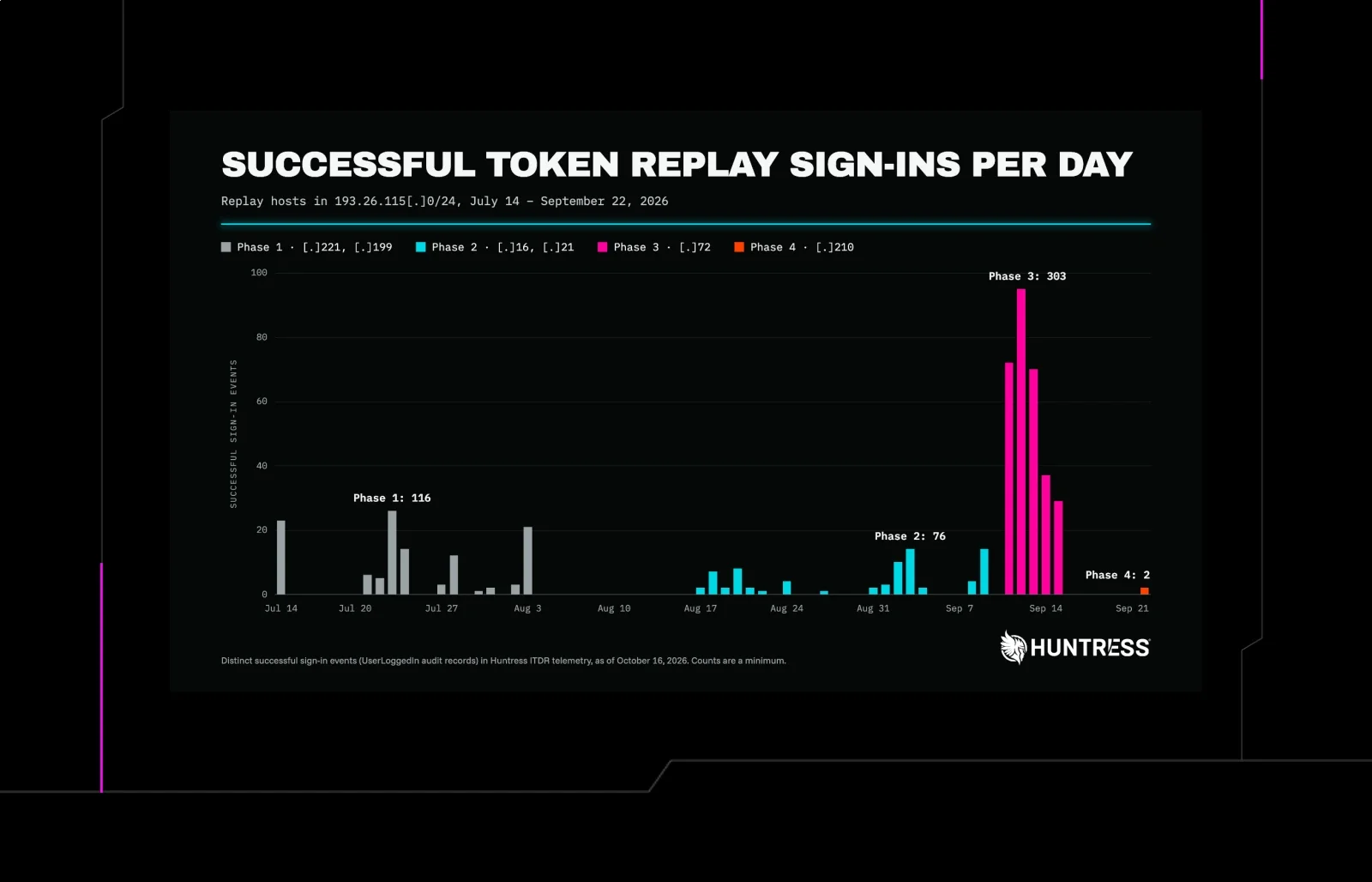
Huntress analysis of a July to September 2026 token replay ("token spraying") campaign: 497 successful Microsoft 365 sign-ins across 79 organizations, replayed from six addresses in 193.26.115.0/24 (1337 Services GmbH). Tokens came from AiTM relays, device-code phishing and social engineering. It covers four phases, rogue Entra devices, MFA method swaps, hidden inbox rules, hunting queries and Conditional Access guidance.
huntress.comwriteupPublished and added 22 Oct 2026🛡️ Security  From Phishing to LLMjacking: Threat Actors Targeting Cloud Billing Accounts for LLM Usage
Wiz CIRT investigation of LLMjacking campaigns against Google Cloud billing accounts. Attackers phished admins through malicious Google Search ads and a fake login page that captured MFA codes, then deleted the iam.allowedPolicyMemberDomains policy, added Gmail accounts as billing admins, and linked attacker-controlled projects to the victim's billing account. Victims saw tens to hundreds of thousands of dollars in Gemini API charges within 24 to 48 hours, with no log visibility into prompts. Includes hunting guidance for Workspace, Admin Activity and billing logs.
 wiz.iowriteupPublished and added 20 Oct 2026🛡️ Security
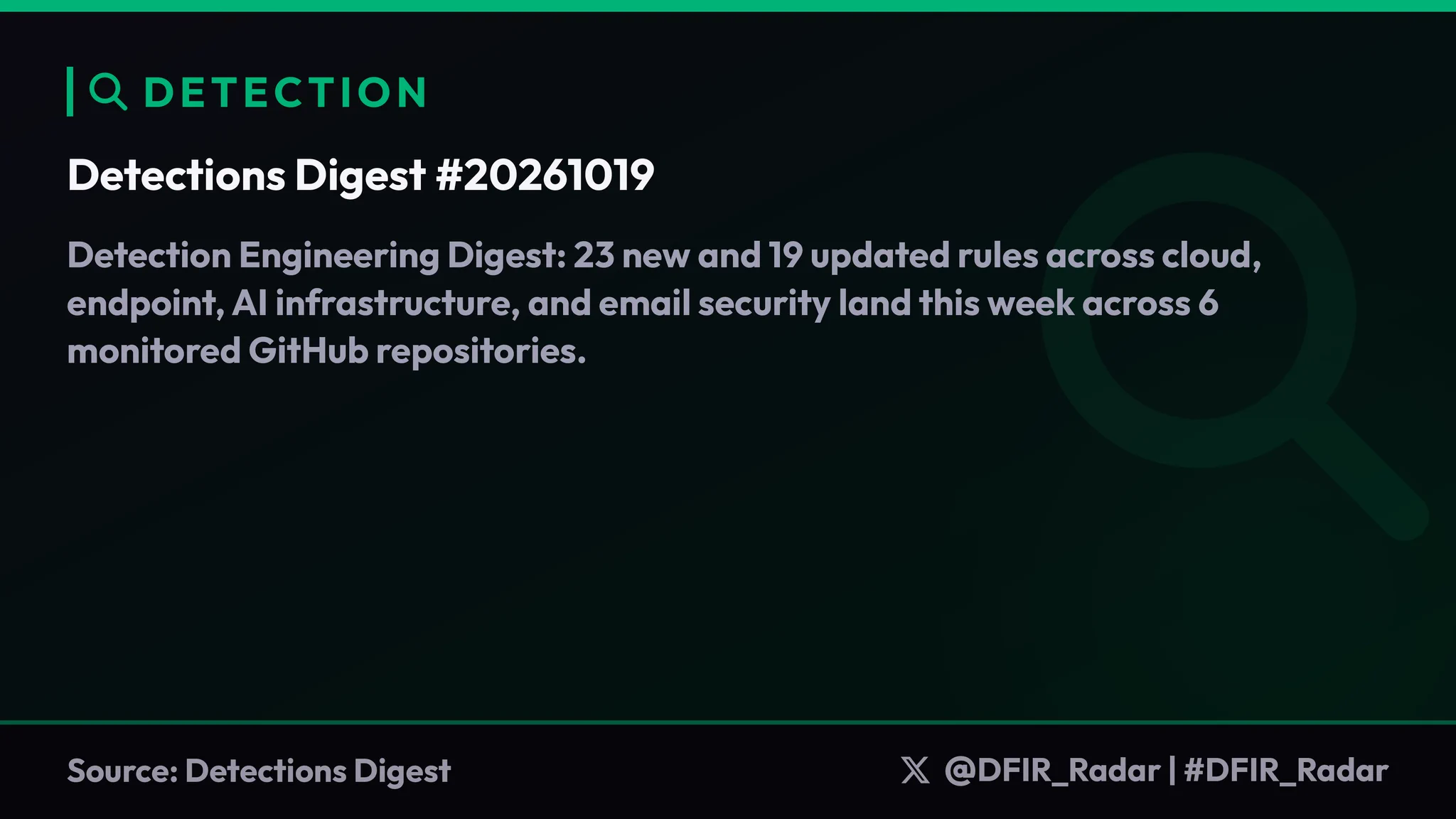
- DFIR Radar (@DFIR_Radar) on X
DFIR_Radar weekly detection engineering digest covering 23 new and 19 updated rules across 6 GitHub repositories. It lists KQL rules for Azure Key Vault secret retrieval, MCP client User-Agent bulk operations and local Azure token theft, AWS CloudTrail analytics, Sigma rules for firewall and ETW tampering (decimal 17 vs hex 0x11), updated LOLDrivers hashes, and Sublime email rules for OAuth consent phishing and fake IRS W-9 PDFs.
 x.comthreadAdded 20 Oct 2026, published 19 Oct 2026🛡️ Security
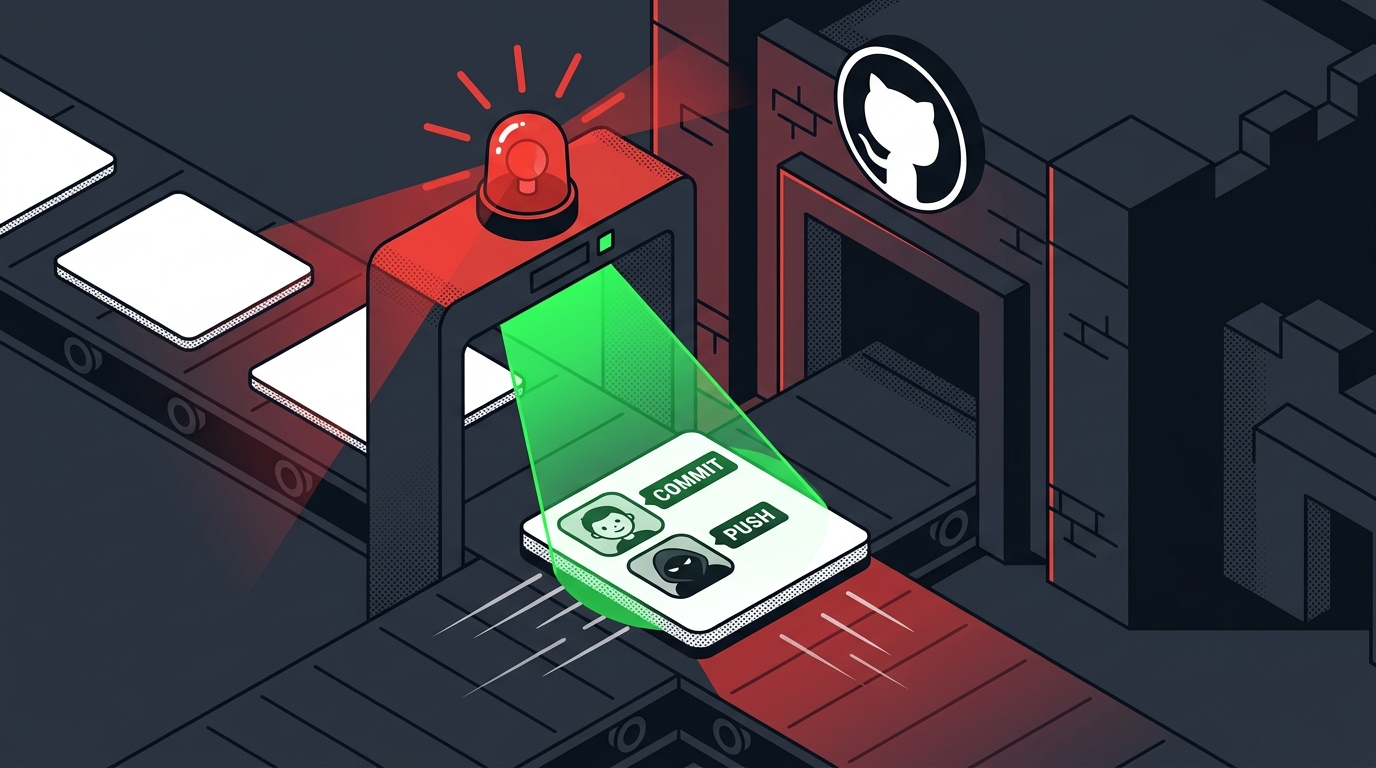 The OpenSourceMalware Show #25
Episode 25 of the OpenSourceMalware Show (transcript). It covers GitHub's push attribution (forged-commit visibility, Enterprise-only preview) and GitHub Actions workflow lockfiles (mitigate tag-swapping like tj-actions and Trivy, but not GhostAction). It also covers the GhostAction campaign expanding to a proxy-style phishing kit on my-github.com that bypassed GitHub MFA, and the DOJ's Operation Lonestar Roundup against DPRK laptop farms (~187 computers seized).
 opensourcemalware.comtalkPublished and added 15 Oct 2026🛡️ Security
 Social Engineering: Exploiting Human Psychology in Offensive Security
Hackers Arise explainer on the human psychology that social engineers exploit. It covers cognitive overload ("brain DoS"), stereotyped automatic behaviour, and the authority, scarcity and consistency principles, with supporting studies (Milgram, Pliner, Europol fraud-victim statistics). It also describes trigger-bypass techniques such as reframing a password request as IT support, and an observed baseline percentage of recipients who act on phishing emails. It closes with organisational and personal defences.
 hackers-arise.comarticlePublished and added 15 Oct 2026🛡️ Security
- Passkeys Raise the Bar. Here’s Where Attackers Can Still Get In.
Huntress post on where accounts remain exposed after a passkey rollout. It covers passkey-themed social engineering, the EvilTokens device-code phishing campaign (344 organizations in about 16 days), weak enrollment and recovery, SpecterOps research on Windows WebAuthn hooking on compromised endpoints, and the trade-offs between synced and device-bound passkeys. It closes with ITDR-style post-login monitoring, containment steps (revoke sessions, remove rogue authenticators, hunt inbox rules, OAuth grants, forwarding), and a five-question deployment checklist.
huntress.comarticlePublished and added 14 Oct 2026🛡️ Security  The hidden network: Inside the phishing infrastructure ecosystem powering global cybercrime
Microsoft Threat Intelligence maps a Chinese-language cybercrime ecosystem: the YAM Store (Storm-3119), an initial access broker that hijacks Microsoft 365/Azure Education tenants and resells accounts, licenses and SharePoint/OneDrive storage, and the Storm-2990 phishing kits (CoGUI, Haozi, Iron Man System) sold via Telegram. It details the five-stage broker pipeline (app-only client-secret abuse, PnP Management Shell service principal, Graph permissions, Cloudflare DNS management), kit evasion features (geofencing, fake CAPTCHA, WebSocket/Telegram live interaction, 2,335+ templates), downstream device-code phishing and card fraud, and lists mitigations such as passkeys, phishing-resistant MFA and Conditional Access. Microsoft's DCU facilitated a disruption with law enforcement; kits sent over one billion messages since January 2026.
 microsoft.comarticlePublished and added 14 Oct 2026🛡️ Security
 Microsoft Disrupts Chinese-Language Phishing Market Behind 1B+ Messages
Microsoft and Health-ISAC seized domains tied to YAM Store (Storm-3119), an access broker that hijacks Microsoft 365 and Azure for Education tenants, and to the Storm-2990 phishing kits CoGUI, Haozi and Iron Man, under a Southern District of Florida order. The services sent over 1B malicious messages since January 2026 to 75,000+ organizations in 150+ countries; Microsoft disabled 20,000+ accounts and is blocking 100,000+ domains. Iron Man offers 2,335+ templates and real-time OTP capture, and Resecurity found it needs regular contact with a vendor licensing server, a dependency defenders can exploit.
securityweek.comarticlePublished and added 14 Oct 2026🛡️ Security- Have I Been Pwned (@haveibeenpwned) on X
Have I Been Pwned post announcing the Sharecare breach, tied to an August ShinyHunters extortion campaign. It allegedly exposed 318k email addresses, mostly business contacts, plus some Brazilian health plan member data. 73% of the addresses were already in HIBP. This adds another health-sector victim to the ShinyHunters extortion record. The business contact data is likely to be reused for phishing.
x.comthreadAdded 15 Oct 2026, published 12 Oct 2026🛡️ Security 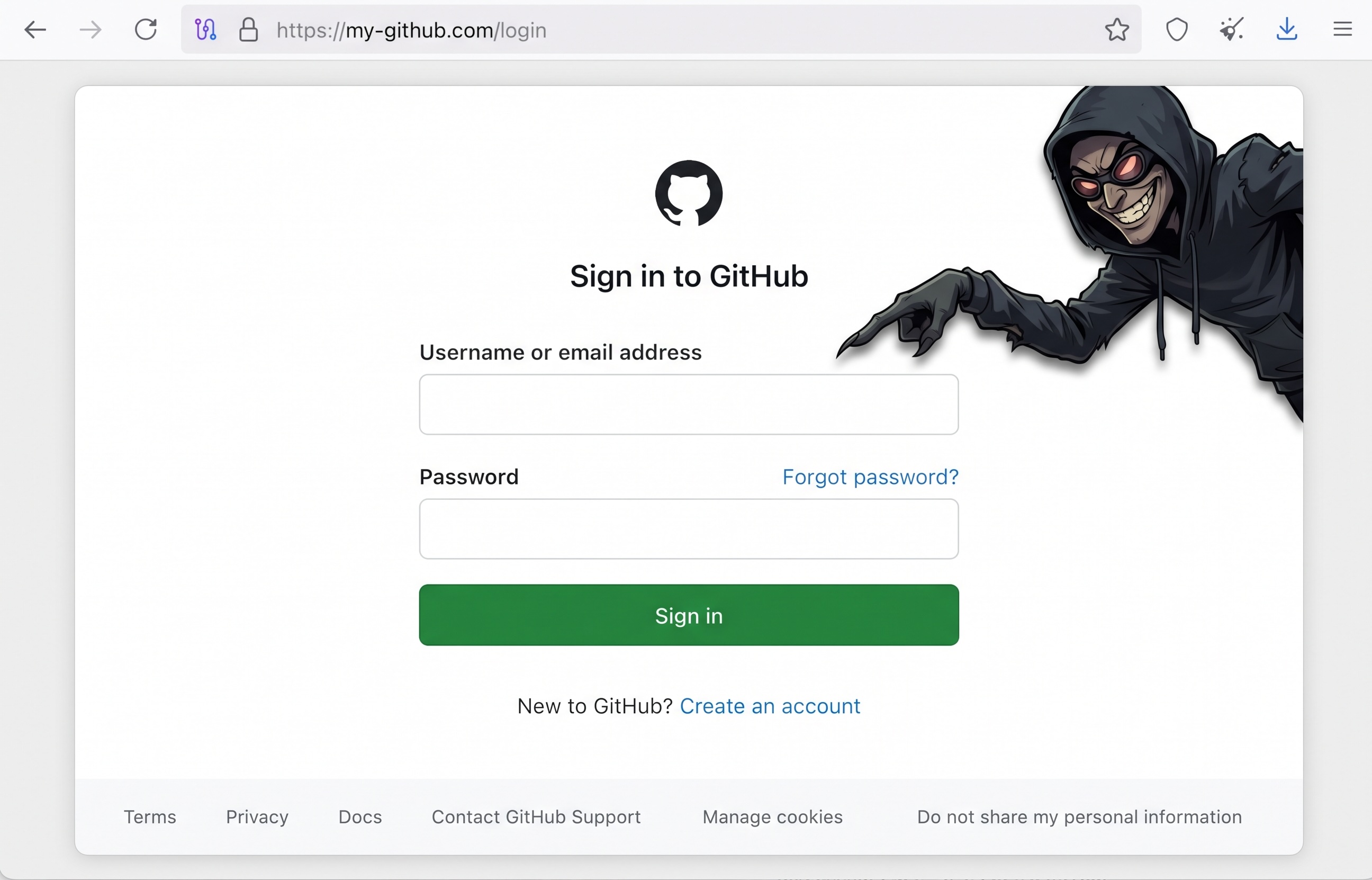 GhostAction Phishing Campaign
OpenSourceMalware analyzes a targeted phishing email from my-github[.]com (same server 193.32.204[.]199 as GhostAction's CI/CD exfiltration) that impersonated a GitHub new-sign-in alert. Recovered HTML and a HAR show a GitHub reverse proxy that captures passwords and TOTP codes, rewrites GitHub subdomains, and injects JavaScript that silently completes an OAuth device flow with repo, workflow and read:org scopes, then exfiltrates the token to TCP/8443. It includes a per-session redirect controller, mutable redirect behavior seen in URLScan, a victim's audit-log outcome (MFA stopped escalation), IOCs, and response guidance.
opensourcemalware.comwriteupPublished and added 11 Oct 2026🛡️ Security GhostAction Attack Escalates By Targeting GitHub Users
OpenSourceMalware's analysis of the latest GhostAction wave, where compromised GitHub accounts get malicious Actions workflows (security-audit.yml) injected across every writable repository, including an Oct 8 sweep of 346 repos via kitao and henrywoo. The new payload greps the checkout and full git history for credential patterns (AWS, Anthropic, OpenAI, GitHub PATs) and POSTs them over HTTP to 193.32.204.199/?c=monami. It also covers infrastructure reuse (phishing-heavy legacy IP, scanner activity), new watchlist domains my-github.com and my-gitlab.com, GitHub code-search hunting queries, a detection-confidence table, IOCs and incident response steps.
opensourcemalware.comwriteupAdded 10 Oct 2026, published 9 Oct 2026🛡️ Security Ledger says Southeast Asia reseller linked to $86M draining
Protos reports that Ledger users who bought devices from the Malaysian/Southeast Asian reseller CryptoBilis have been drained of an estimated $72M to over $86M, per on-chain tracing by analysts Specter and Tanuki42. Ledger told CryptoBilis to pause sales and shipments, and advised buyers from the past 90 days not to set up their devices, or to move funds to a new signer if they already had. The article cites Mark Karpelès on reseller wallets found tampered with and implanted with spyware, and Taylor Monahan warning that there is no sign of a zero-day and that panic migration invites phishing and fake-ad drainers.
protos.comarticlePublished and added 9 Oct 2026🛡️ Security Security Awareness Training Isn’t Dead, but It Needs a Rethink
A SecurityWeek feature surveying security practitioners and a cognitive psychologist on whether security awareness training against social engineering actually works. It identifies "compliance theater" (annual checkbox training mandated by insurers/regulators) as a core failure mode, notes studies showing phishing-simulation gains fade within months, and argues AI-generated phishing/voice cloning at machine speed has outpaced human-focused training, pushing experts toward behavioral nudges and technical controls instead of awareness alone.
securityweek.comarticlePublished and added 8 Oct 2026🛡️ Security UAT-11985: AI-assisted event lures delivering real-time Google AitM phishing
Cisco Talos details UAT-11985, a spear-phishing campaign against Taiwan-based research organizations (impersonating institutions like the Taiwan European Union Centre and NCCU Institute of International Relations) that used AI-assisted, templated lure emails and poster-based QR code phishing (quishing) to drive victims to a real-time adversary-in-the-middle phishing kit. The kit impersonates Google sign-in across zh-CN/zh-TW/en locales, uses a split HTTP-POST/WebSocket architecture to mirror Google's live authentication flow and dynamically push MFA challenge screens, enabling full session-token theft and MFA bypass. Talos attributes the kit's localization architecture and lexical choices to a Simplified Chinese-speaking developer and publishes ClamAV/Snort coverage plus IOCs on GitHub.
blog.talosintelligence.comwriteupPublished and added 8 Oct 2026🛡️ Security FortiBleed Attackers Locking Victims Out of Fortinet Devices
The FortiBleed campaign targets internet-exposed Fortinet FortiGate firewalls and SSL VPN appliances using stolen credentials and brute force. SOCRadar confirms about 86,644 compromised devices in 194 countries. A joint FBI and US Secret Service advisory says attackers change passwords and delete accounts to lock victims out and keep persistence, and lists hardening steps such as phishing-resistant MFA and credential resets.
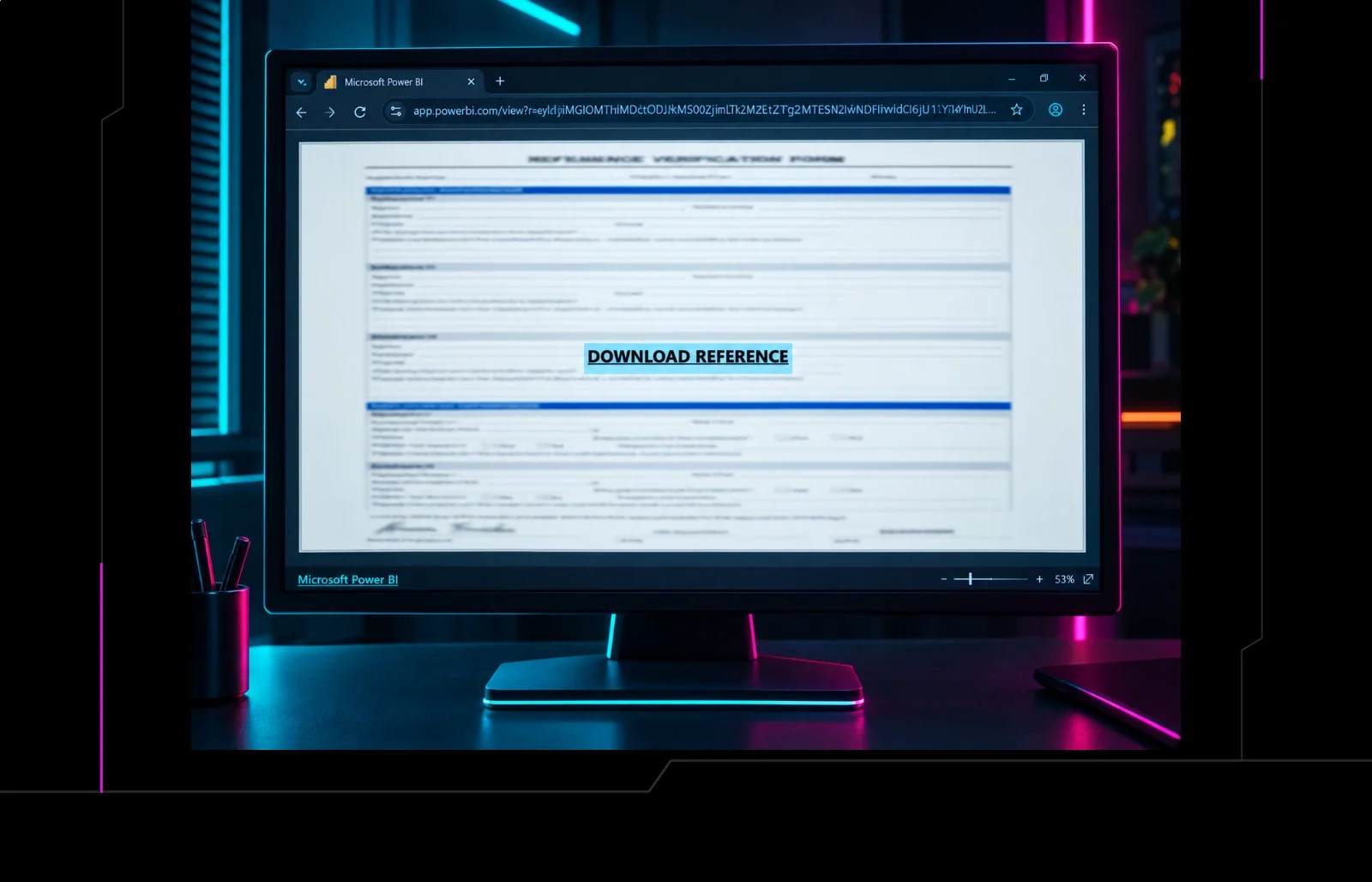
securityweek.comarticlePublished and added 8 Oct 2026🛡️ Security- Phishing Campaign Abuses Microsoft Power BI to Deploy Rogue RMMs
Huntress details a phishing campaign that abuses legitimate Microsoft Power BI dashboards (app.powerbi.com) to host a fake "Download Reference" lure that bypasses mail filters trusting the Microsoft domain. Clicking the lure triggers browser/environment fingerprinting and Telegram-bot-based victim telemetry exfiltration via attacker domains (dailylifeproject.site, burnsworth.site, etc.), then silently downloads rogue ScreenConnect installers; a chained CMD/PowerShell script (SCAutoFix.ps1) deploys a second ScreenConnect instance, uninstalls the first for evasion, drops the defense-evasion tool HideUL_x64.exe, and sets a recurring scheduled task before Huntress's SOC intervened.
huntress.comwriteupPublished and added 7 Oct 2026🛡️ Security  The ASOS Incident: When Attackers Use the Channels Customers Trust
Rapid7 analyzes the ASOS incident, in which attackers sent a hostile push notification through ASOS's own mobile app claiming its Snowflake environment was compromised and directing customers to a Telegram channel; ASOS confirmed unauthorized access to third-party customer-communication platforms and possible exposure of names/contact details, while Snowflake denied any platform compromise. The piece argues that abusing a legitimate, trusted app/channel defeats typical phishing-awareness heuristics (odd sender, wrong domain) and makes the case for MDR that correlates identity, SaaS, and cloud-integration activity across providers to catch misuse of legitimate access rather than relying on known-bad indicators.
 rapid7.comarticlePublished and added 7 Oct 2026🛡️ Security
 One breach, please, and make no mistakes
Cisco Talos commentary arguing that today's public AI-agent attacks (citing Hugging Face, DSEWiki, and RubyGems incidents) resemble loud, high-volume pentests rather than stealthy red-team operations, and that agent swarms will grow quieter and more OPSEC-conscious over time. The piece lays out concrete resilience steps: rehearsed incident response plans mapped to the incident lifecycle, assumed-breach attack-path mapping (including Active Directory GPO abuse paths), AI-specific tabletop exercises, end-to-end hardening with phishing-resistant MFA (FIDO2/passkeys), broad EDR and east-west traffic visibility, and watching for early noisy indicators like WAF/SQLi spikes and non-browser user agents.
blog.talosintelligence.comarticlePublished and added 7 Oct 2026🛡️ Security Blinder Tunnel Campaign Targets Iraqi Infrastructure
Unit 42 details "Blinder Tunnel," a campaign by Iranian state-aligned actor CL-STA-1178 (linked to Elastic's "The Shelby Strategy") that impersonated Dubai Airports recruiters to deliver a trojanized Visual Studio coding-challenge archive against an Iraqi critical-infrastructure target, with related activity against UAE aviation and Israeli entities via Google Drive-themed phishing. The report dissects a three-stage infection chain (weaponized .csproj MSBuild target abuse, AppDomainManager hijacking to disable ETW, and DLL sideloading into RuntimeBroker.exe) that deploys ShelbyLoader V2, the ShelbyC2 V2 RAT, PsProxy.dll (in-memory PowerShell execution), and Blackwood, a custom Chisel-based tunneling loader; C2 abuses GitHub's API and GitHub Issues as a dead-drop fallback, and attribution rests on an Iranian-hosted IP, Persian-domain infrastructure overlap, and MP3 metadata pointing to MusicDel.ir. Includes full IOCs (hashes, IPs, phishing domains, registry keys).
 unit42.paloaltonetworks.comarticlePublished and added 6 Oct 2026🛡️ Security
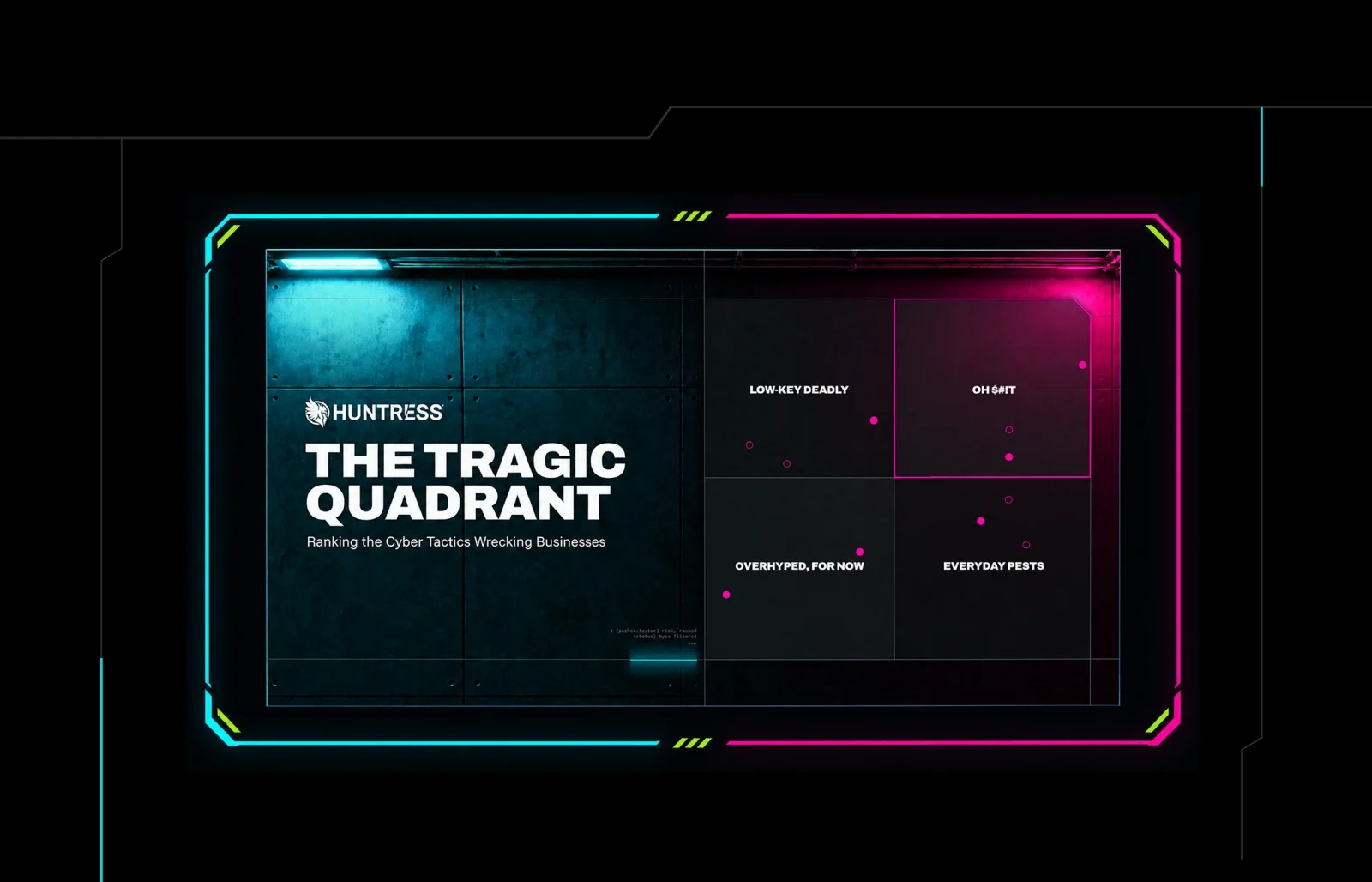
- Huntress Tragic Quadrant: Top Cyber Threats Wrecking Businesses
Huntress's "Tragic Quadrant" ranks the cyber threats its SOC sees most often against small/mid-sized businesses by prevalence and blast-radius risk, drawing on 2026 telemetry from 5M+ endpoints and 15M identities. It highlights RMM abuse (45% of endpoint incidents in Q1 2026), mailbox-rule manipulation feeding BEC (24.6% of ITDR signals), AiTM session-token theft bypassing MFA (18.9% of identity threats), plus device code phishing (the EvilTokens PhaaS kit hit 344 orgs in 16 days using Railway-hosted infrastructure and spoofed Cisco/Trend Micro/Mimecast redirect links), ClickFix clipboard-paste infections leading to LummaC2 infostealer compromise, and emerging AI-platform abuse (the FakeAgent campaign hosted a malicious Claude Artifact on claude.ai to drop SectopRAT, hitting 29 organizations in two days).
huntress.comarticlePublished and added 1 Oct 2026🛡️ Security  China-nexus UAT-11587 targets government and policy organizations across Asia with Antino backdoor
Cisco Talos details UAT-11587, a China-nexus threat cluster targeting government, defense, and policy organizations across Taiwan, India, the Philippines, Cambodia, and other Asian countries with spear-phishing and a five-stage infection chain (HTA/WSF stagers, JScript decryptors, .NET BinaryFormatter/ActivitySurrogateSelector deserialization gadgets, and DLL sideloading via the signed GatherOsState.exe) to deploy a new Rust-compiled backdoor called Antino. Antino uses Microsoft Graph/Outlook/OneDrive as a dead-drop C2 channel instead of a traditional C2 server, supports shell/PowerShell execution, file transfer, shellcode loading with a sleep-mask evasion technique, and abuses the Windows Scripted Diagnostics framework for persistence; Talos also notes possible infrastructure overlap with Symantec's "Jewelbug" cluster and Arctic Wolf's UNC6384 reporting. Includes ClamAV/Snort coverage and IOCs.
blog.talosintelligence.comwriteupAdded 7 Oct 2026, published 30 Sep 2026🛡️ Security Phishing Abuses RMM Tools for Persistent Access
Microsoft Defender Experts document a July 2026 phishing campaign that delivers a masqueraded but legitimately signed MSP360 RMM installer (v2.5.0.67) via meeting-invite, Zoom, Adobe, and DHL-themed lures hosted on both attacker infrastructure and legitimate cloud services (S3, Cloudflare R2, Dropbox, GitLab, Supabase). After UAC-elevated installation and service persistence, the RMM.Agent.exe service launches PowerShell to silently install a ConnectWise ScreenConnect client via msiexec, which the actor then uses via RunFile to drop credential-theft and reconnaissance tools disguised as Windows/Defender/Phone Link components. A separate July intrusion used FaronicsDeployAgent.exe the same way to deploy ScreenConnect, showing the technique is not MSP360-specific; Microsoft provides IOCs, hunting queries, and mitigation guidance (Application Control, AppLocker publisher rules, ASR rules) but does not attribute the activity.
microsoft.comwriteupAdded 7 Oct 2026, published 29 Sep 2026🛡️ Security


Showing 30 of 97
Show more