 Pre-ERC: Agent Pre-Sign Risk Report
 is an Ethereum Magicians draft for a signed, typed report that a risk source returns about one unsigned agent transaction. The report is bound to the request by a digest and signed with EIP-712 by an ERC-8004 identity. Findings cover tokens, approvals, addresses, x402 payments and texts, each marked read or not read, with no score or verdict. The toll service runs it live on Robinhood Chain.
 ethereum-magicians.orgthreadPublished and added 31 Oct 2026🧠 AI
- President Trump says they’re looking into Binance hack as calls grow for crypto rules
The Block reports that Binance lost about $6.3 billion in a hack on 29 October 2026. Co-CEO Richard Teng said a compromised DevOps engineer's laptop gave access to a service container used to submit unauthorized withdrawals, and TRM Labs attributed the theft to North Korea's TraderTraitor. The rest covers reactions: President Trump said on 30 October he was looking into it, CFTC Chair Michael Selig and The Digital Chamber urged federal exchange rules, and senators disputed whether the Clarity Act would have allowed freezes.
 theblock.coarticlePublished and added 30 Oct 2026🛡️ Security
- Show HN: I Turned DOOM into a Transformer
Doomformer compiles integer neural networks into ZDoom maps that run in ViZDoom. Voodoo dolls do the arithmetic, and sector light levels and plane heights hold the values. Python reads every value back and compares it with a NumPy integer reference at tolerance 0. It runs MNIST (97.16 % on all 10,000 digits, every pass exact), small transformers, a learning perceptron and a SUBLEQ machine. It is about 23,000 times slower than NumPy on a small MLP.
 github.comrepoAdded 30 Oct 2026, published 29 Oct 2026🧠 AI
 Digital Forensics: Analyzing Windows Prefetch Files for Evidence
Windows Prefetch forensics tutorial from Hackers Arise. It explains that prefetch files in C:\Windows\Prefetch record last run time, run count and files touched, so they prove an application was used even after deletion. It shows parsing with NirSoft WinPrefetchView, building a timeline from Last Run Time, and how a suspect could disable Prefetch or Superfetch (SysMain).
 hackers-arise.comarticlePublished and added 29 Oct 2026🛡️ Security
 The Athlete as a Scientist of One: Agentic Bayesian Experimental Design for Individualized Physiology from Consumer Wearables
EpiCoach is an agentic system that treats one cross-country mountain biker as an N-of-1 experiment. Claims live in an evidence-gated hypothesis registry, and each must make a probabilistic prediction before a session. Predictions come from a digital twin fitted to heart rate, GPS and altitude. In a replay over eighteen months the twin beat standard forecasters on heart rate but not segment time, and the agent loop matched a static model. In the first three live weeks, the ledger sealed 20 predictions and scored 14, and a safety officer vetoed the agent twice. The registry, benchmark and protocol are released.
 arxiv.orgpaperAdded 31 Oct 2026, published 29 Oct 2026🧠 AI
 [AINews] Gemini 4 Carbon tops leaderboards, launches for cyber defenders
AINews issue for 27-28 October 2026, a Latent Space digest of Twitter and Reddit. It leads with Google DeepMind's Gemini 4 Carbon: claimed cyber scores (SEC-bench Pro 88.2%, ExploitGym 54.8%, CWE-bench 71.0%), #1 on Artificial Analysis Intelligence Index v5 at 59, and access limited to cyber defenders through the Fairwind Program. It also covers benchmark integrity disputes, GitHub Copilot Fusion, H-Net v2, KV-cache work, open-weight releases and Claude Code quota complaints.
 latent.spacearticlePublished and added 29 Oct 2026🧠 AI
 Unwrapping Retail Peak Season Cyber Threats
Unit 42 overview of cyber threats facing retailers in the 2026 peak shopping season, split into enterprise threats (ransomware, data extortion, DDoS, digital skimming) and guest threats (account takeover, gift card fraud, AI-powered attacks). It cites 565 retail ransomware victims claimed as of 30 September 2026 and past incidents such as CosmicSting (CVE-2024-34102) skimming and the Noname057(16) DDoSia attacks. Each threat has defensive recommendations.
 unit42.paloaltonetworks.comarticleAdded 30 Oct 2026, published 28 Oct 2026🛡️ Security
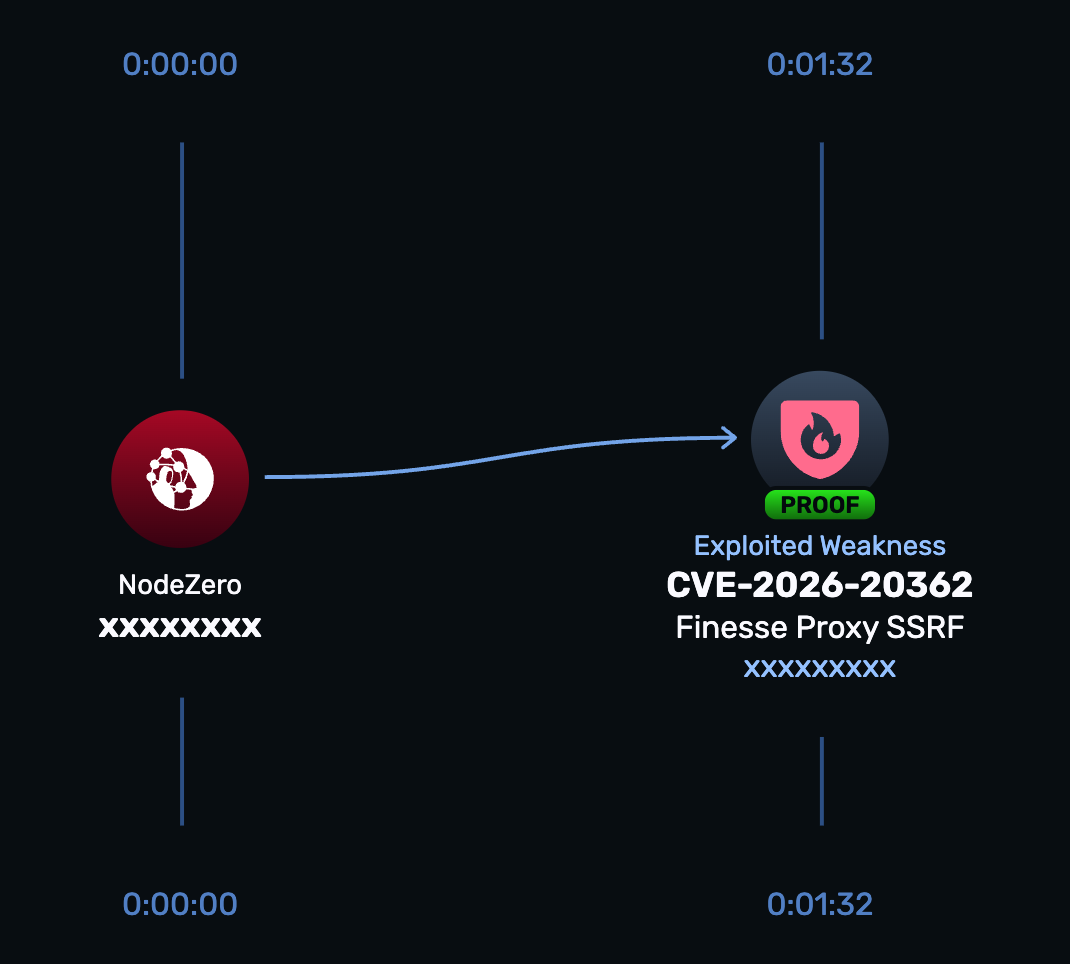 CVE-2026-20362 | Cisco Finesse Server-Side Request Forgery Vulnerability
CVE-2026-20362 is an unauthenticated server-side request forgery in Cisco Finesse (CVSS 3.1 score 7.2), found by Horizon3 researchers Noah King and Brandon Peterson. The embedded Apache Shindig content proxy fetches attacker-supplied URLs, including loopback services such as the Finesse REST API at 127.0.0.1:8082, which returns SystemInfo with node hostnames and the XMPP domain. Cisco published its advisory on 7 October 2026. Fixes are planned for January and February 2027, and no workaround exists.
 horizon3.aiadvisoryAdded 29 Oct 2026, published 28 Oct 2026🛡️ Security
- Know, then Draw: A New Learning Paradigm for Visual Generation
Know, then Draw is a learning paradigm for visual generation that uses autoregressive pretraining to acquire semantic knowledge and diffusion post-training for high-fidelity rendering. Controlled comparisons find autoregression the stronger pretraining objective, and semantic quality matters more than AR-only generation quality. This motivates a purely semantic tokenizer trained with language supervision only. A 3B text-to-image model trained in 6,600 H100 GPU-hours scores 86 on GenEval and 87 on DPG-Bench.
arxiv.orgpaperAdded 28 Oct 2026, published 27 Oct 2026🧠 AI - p-DCIM: A 28nm Probabilistic SRAM DCIM based Ising Machine for Near-Memory Context Selection in LLM-RAG Pipeline
p-DCIM is a 28 nm SRAM digital compute-in-memory macro (0.16 mm2, 0.41 mW) that works as an Ising machine for RAG evidence selection. Selection is cast as a QUBO problem, and the same MAC datapath computes embedding similarities and annealing steps. Replacing LLM reranking with it gives a selection-energy estimate over six orders of magnitude lower and cuts total energy per query by 67%, with comparable token-level F1 on the evaluated examples.
arxiv.orgpaperAdded 28 Oct 2026, published 27 Oct 2026🧠 AI  OblivDGL: Oblivious Deep Graph Learning Made Practical
OblivDGL is a secure computation framework for GNN training and inference, modelled on Deep Graph Library. It uses an oblivious message-passing paradigm and an oblivious graph representation built on function secret sharing (FSS). It leaks only total node and edge counts. On four benchmark graph datasets it cuts training communication up to 1024x and runtime up to 14.3x against prior secure GNN systems.
 eprint.iacr.orgpaperAdded 28 Oct 2026, published 27 Oct 2026🛡️ Security
- OblivDGL: Oblivious Deep Graph Learning Made Practical
OblivDGL is a framework for secure GNN training and inference in machine-learning-as-a-service settings, modelled on Deep Graph Library. It uses an oblivious message passing paradigm and a new oblivious graph representation built on function secret sharing, revealing only the total node and edge counts. On four benchmark graphs it cuts training communication up to 1024x with up to 14.3x speedup, and inference communication up to 754x with 4.19x speedup.
eprint.iacr.orgpaperAdded 28 Oct 2026, published 27 Oct 2026🧠 AI - Mitsubishi Electric and Mitsubishi Electric Iconics Digital Solutions GENESIS, GENESIS64, ICONICS Suite, Hyper Historian, AnalytiX, MobileHMI, IoTWorX, MC Works64, GENESIS32 and BizViz
CISA advisory ICSA-26-300-02 covers four vulnerabilities in Mitsubishi Electric and Mitsubishi Electric Iconics Digital Solutions GENESIS64, ICONICS Suite, Hyper Historian, AnalytiX, MobileHMI, IoTWorX, MC Works64, GENESIS32 and BizViz. CVE-2023-4863 (CWE-787 out-of-bounds write) allows code execution; CVE-2026-16436 and CVE-2026-16437 allow authentication bypass; CVE-2026-16438 allows arbitrary operations. Fixes are 10.97.3, 10.98 and GENESIS 11.04. MC Works64, GENESIS32 and BizViz are affected in all versions, and MC Works64 has no fix planned. Mitigations include removing the ClientChallengeTable.dat or SecurityChallenges.dat file contents. The fetched text was truncated, so later content is not covered.
 cisa.govadvisoryAdded 29 Oct 2026, published 26 Oct 2026🛡️ Security
- lee1981 (@lee1981b) on X
CyberForge CVE of the Day #087 covers CVE-2026-115889, a Cranelift value-index overflow in Wasmtime that can miscompile crafted WebAssembly and possibly escape the sandbox (CVSS 9.9, CWE-197 and CWE-843). Affected: below 36.0.19, and 37.0.0 up to but excluding 43.0.0; fixes are 36.0.19 and 43.0.0. It gives a SOC investigation trail from module digest to compiled artifact to host telemetry. EPSS is 0.454%, with no KEV entry.
 x.comarticleAdded 28 Oct 2026, published 26 Oct 2026🛡️ Security
- A Kelsey–Kohno Attack Variant against SHA-2 Message Digests in HSS/LMS and XMSS
Falko Strenzke's ePrint 2026/2635 presents a multi-target second-preimage attack on message hashing in HSS/LMS and XMSS with SHA-256 and SHA-256/192. It herds chaining states from many collected signatures into one state, defeating the key and leaf-index prefix. With 2^64 signatures, SHA-256 cost falls from 2^256 to about 2^166 (2^156 at maximal message length). SHAKE256 parameter sets are unaffected.
eprint.iacr.orgpaperAdded 26 Oct 2026, published 25 Oct 2026🛡️ Security  Sweden's Government Offices Block ChatGPT and Claude, Keep Microsoft Copilot
Sweden's Government Offices will block ChatGPT and Claude on staff computers from 26 October 2026 and leave Microsoft Copilot as the only approved AI tool, citing information security. Digitalisation director Mikael Wettercrantz said unvetted AI use had involved sensitive inputs and poorly handled outputs. The Tax Agency and National Board of Institutional Care have similar bans, and the European Parliament disabled AI features in February 2026. Whether Copilot has Claude models enabled is unconfirmed.
 decrypt.coarticlePublished and added 24 Oct 2026🛡️ Security
- Sweden's Government Offices Block ChatGPT and Claude, Keep Microsoft Copilot
Sweden's Government Offices will block ChatGPT and Claude on staff computers from 26 October 2026 and keep Microsoft Copilot as the only approved AI tool, after a security review. Director of digitalisation Mikael Wettercrantz cites sensitive data entered into open services and tools used without a formal contract. The Tax Agency and the National Board of Institutional Care have similar bans. The article notes Copilot can include Claude models, and the Government Offices has not said whether that is enabled.
decrypt.coarticlePublished and added 24 Oct 2026🧠 AI - The Exact Bit Security of Hash-Based Signatures
The Exact Bit Security of Hash-Based Signatures is a 2026 IACR ePrint paper that analyses XMSS with 128-bit digests and SLH-DSA-128s in the random oracle model, with proofs formalised in Lean4. Strong unforgeability comes to 127 bits under most accounting modes but only 122 bits if just direct random oracle queries are counted. The authors give matching attacks, and show how resource accounting changes the result.
eprint.iacr.orgpaperAdded 26 Oct 2026, published 24 Oct 2026🛡️ Security  [AINews] Kimi 3.1 Pro 104BA-2.8T: Fable-5.1-Class Open Weights narrows Closed-AI lead to 1 month... and Pro Highspeed API with 2-3× speed
AINews digest for 22 to 23 October 2026, led by Moonshot's Kimi K3.1 Pro (2.8T parameters, 104B active, weights promised for 4 November 2026). It reports Artificial Analysis scoring the model 64% on its Cyber Index despite Moonshot removing cyber data from training. Other items: OpenAI's frontier-training containment incident, a Brotli remote-code-execution disclosure, and Anthropic's Mythos 5 unauthorized-action analysis.
latent.spacearticleAdded 30 Oct 2026, published 24 Oct 2026🛡️ Security- When Elliptic-Curve Semiprimality Certificates Reveal Factors
The paper formalizes elliptic-curve semiprimality certificates by adapting the Goldwasser-Kilian primality criterion. For certificates built with complex multiplication, a norm-lattice reconstruction factors N from (N, S, D) alone in expected polynomial time. The author uses it, plus public-point and quadratic-twist attacks, to factor Reble's 1084-digit and Broadhurst's 5061-digit moduli, and shows that hidden-cofactor, withheld-CM-map and private-isogeny repairs also fail.
eprint.iacr.orgpaperAdded 26 Oct 2026, published 24 Oct 2026🛡️ Security - AI Alignment for Digital Democracy: Fairer Voters Representation against LLM Biases
This paper studies demographic bias in LLM-emulated electorates, using three U.S. presidential elections and comparing one closed-source and one open-source LLM. Removing gender from the voter profile cuts the largest group error by 22-42%, and removing education cuts it by 64%. Removing self-reported race raises mean group error by over 40%. Repeated queries and fairness instructions do not reduce errors and can double them.
arxiv.orgpaperAdded 27 Oct 2026, published 23 Oct 2026🧠 AI - TRIAD: Benchmarking Omni-Modal Ambiguity in Multimodal Large Language Models
TRIAD is a benchmark for omni-modal ambiguity resolution. It has 327 hand-written text-image-audio queries in 86 scene groups across 18 ambiguity categories, and removing any one modality makes the answer non-unique. Across 14 omni-modal systems, the best model trails humans by over 20 points in group accuracy. Without answer options, model group accuracy falls to single digits, and leave-one-out tests show audio cues are often underused.
arxiv.orgpaperAdded 23 Oct 2026, published 22 Oct 2026🧠 AI - Efficient Laconic Oblivious Transfer with Malicious Security
Efficient Laconic Oblivious Transfer with Malicious Security is an ePrint paper (2026/2593, ASIACRYPT 2026 revision) giving the first maliciously secure laconic OT that uses its primitives only as black boxes. It adds equivocal vector commitments and maliciously secure witness encryption to the commitment-plus-witness-encryption paradigm. Security is proven in the UC model against malicious senders and in the context model against malicious receivers. Instantiations use LWE and bilinear Diffie-Hellman assumptions in the standard model.
eprint.iacr.orgpaperAdded 24 Oct 2026, published 22 Oct 2026🛡️ Security - Prompt Injection Through Forensic Evidence: A Taxonomy and Proof of Concept of Anti-Forensic Attacks on LLM-Assisted Digital Investigations
Paper on prompt injection delivered through forensic evidence, where the seized device's contents are attacker-controlled and the examiner must read them. It extends the anti-forensic model to cover manipulation of the reasoning layer and gives a taxonomy (objective, technique, payload location, concealment). Three proof-of-concept attacks on an LLM-assisted analysis pipeline change a reported conclusion, write attacker-chosen content to the analyst workstation, and trigger outbound network traffic. Mitigations are proposed.
arxiv.orgpaperAdded 24 Oct 2026, published 21 Oct 2026🛡️ Security  Software supply chain security best practices for 2026
Aikido's guide to software supply chain security controls for 2026, tied to real incidents. It covers a 48-hour package cooldown, ignore-scripts, lockfile enforcement, SHA and digest pinning, scoped tokens, FIDO2, developer endpoint protection, extension allowlists, agent sandboxing, MCP server vetting, slopsquatting, signed SBOMs and rotation drills. Examples include the March 2026 axios compromise and the March 2025 tj-actions/changed-files attack.
 aikido.devarticleAdded 22 Oct 2026, published 21 Oct 2026🛡️ Security
 [AINews] DeepSeek DeepInfer: Open Source SOTA Inference running 155T toks/day/cluster making $22m/day at ~80% margin for a 81 day payback
AINews issue for 19 to 20 October 2026 whose top story is DeepSeek's open-source DeepInfer, the inference engine behind V4.1 Flash. It covers prefill/decode separation, wide expert parallelism, a 3FS-backed prompt cache with 96% input hits, vLLM's decode result within 6% of DeepInfer on GB200, and disputed margin estimates built on the reported $38 per accelerator-hour. It also digests other news, and the page text is truncated.
latent.spacearticleAdded 23 Oct 2026, published 21 Oct 2026🧠 AI Mastercard’s agent payments enter early access after nine-payment demo
Mastercard's Agent Pay for Machines lets AI agents buy digital services with signed payment vouchers inside a business-set task, permission and budget. On 20 October 2026 it opened Early Access with buyer and seller APIs, a toolkit, sandbox and docs. In the Hype demo at Cloudflare Connect, an agent made nine payments to two providers over the x402 protocol. The system is still at pilot stage.
 en.cryptonomist.charticlePublished and added 20 Oct 2026🧠 AI
- Digital Forensics: Analyzing Systems with Live-Forensicator
Live-Forensicator is a cross-platform (Windows, Linux, macOS) live response toolkit built around Forensicator.ps1. The Hackers Arise walkthrough runs it on Windows with case details, then reads the HTML report: event log summary (Event IDs 4624, 4798, 4799, 4688) and a risk rating. It also shows optional AI analysis through Ollama with a Mistral model, configured in config.json, and warns that the tool triggers AV and that AI slows runs.
hackers-arise.comarticlePublished and added 20 Oct 2026🛡️ Security  970,000 Medi-Cal Members Affected by Paradigm Healthcare Data Breach
Paradigm Healthcare Services, a Medi-Cal billing processor, told HHS that a breach affected more than 970,000 people. Attackers accessed its network between October 8 and 15, 2025, and exposed names, dates of birth, gender and Medi-Cal member IDs. The article also covers breaches at law firm Tarter Krinsky & Drogin (196,000 people) and Ridgeway Pharmacy (258,000). No threat actor or intrusion method is named.
 securityweek.comarticlePublished and added 20 Oct 2026🛡️ Security
 [AINews] not much happened today
AINews issue for 16 to 19 October 2026 from Latent Space, a digest of Twitter and Reddit AI news. It covers DeepSeek V4.1 Flash 1017 (552B total, 16B active MoE, AA Intelligence Index 45), MiniMax M3.1 Flash, Mercury 3, Meta Muse, Google's Harness², vLLM v0.32.0 and a Terminal-Bench audit. Only the first 40,000 of 47,045 characters were available.
latent.spacearticleAdded 30 Oct 2026, published 20 Oct 2026🧠 AI

Showing 30 of 133
Show more