 Trezor warns of suspected crypto-theft implant in hardware wallet
Trezor warns of a suspected crypto-theft implant in a Trezor Safe 5 sold by reseller CryptoBilis in Southeast Asia. An Indonesian buyer found an extra board with a cellular module and antenna between the main board and screen, apparently able to read the recovery phrase and send it over mobile networks. Trezor has not examined the device, advises moving funds to a new wallet for any CryptoBilis purchase since March 2026, and notes a similar Ledger implant was confirmed.
 bleepingcomputer.comarticlePublished and added 30 Oct 2026
 Trezor reveals Malaysian reseller sold wallet with spyware
Trezor says a user reported a Safe 5 wallet bought from Malaysian reseller CryptoBilis in August 2026 with a hidden board between the main board and screen, carrying a cellular module and antenna. The implant allegedly reads the screen, including the wallet backup, and sends it over a mobile network when plugged in. Trezor has not yet examined the device, has dropped CryptoBilis (9 October), and is replacing wallets bought since March 2026.
 protos.comarticlePublished and added 30 Oct 2026
 In Other News: Anthropic Breach Dispute, UEFI Flaw Hits Most Servers, Cloudflare AI Data Leak
SecurityWeek's weekly roundup of 30 October 2026 covers CVE-2026-97631, a 16-year-old buffer overflow in TianoCore EDK II that affects PXE network boot on most servers. It also covers a Cloudflare Workers AI cross-tenant leak caused by an SGLang bug, Anthropic's dispute with Cathedral over a bug bounty intrusion, and fake AI bots probing for secrets. Other items include AI-assisted ransomware (Gold Ogre, Aur0ra), the NIK C2 framework, and North Korean IT worker sanctions.
 securityweek.comarticlePublished and added 30 Oct 2026
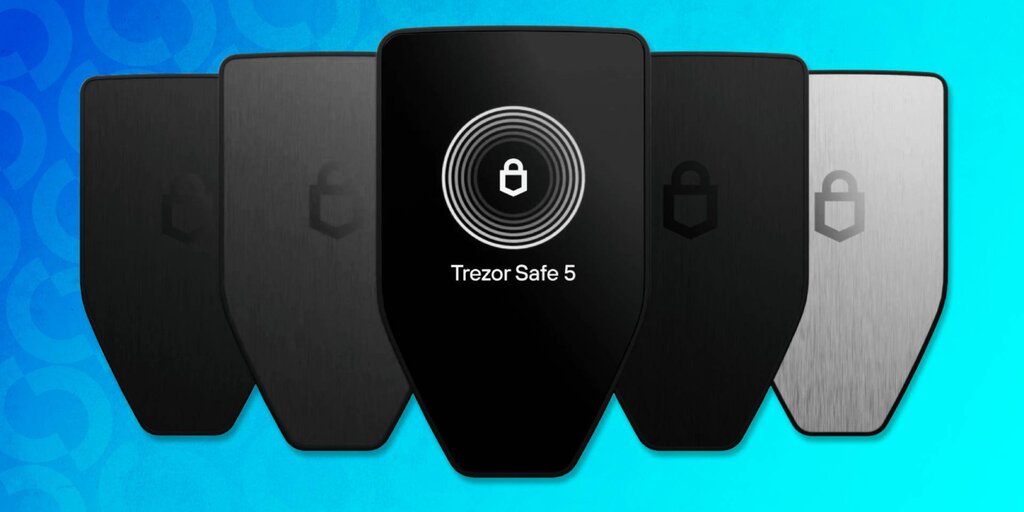 Trezor Warns CryptoBilis Buyers After Report of Hardware Implant in Safe 5
Trezor warned buyers of its wallets from reseller CryptoBilis (March 2026 onward) to move funds, after an Indonesian customer reported a hardware implant in a Safe 5 bought in August 2026. The report describes a board with a cellular module between mainboard and screen that reads the wallet backup and sends it over a mobile network. Trezor has not yet examined the device. It found no tampering in four other CryptoBilis units.
 decrypt.coarticlePublished and added 30 Oct 2026
- Trezor reports suspected hardware implant in Safe 5 sold by CryptoBilis
Trezor reported a suspected hardware implant in a Safe 5 bought in August 2026 from reseller CryptoBilis via Tokopedia. The alleged implant is a board with a cellular module that reads the screen, including recovery phrases. Trezor has not examined the device and found no tampering in four other units, and it told buyers who purchased from the reseller since March 2026 to move funds.
 theblock.coarticlePublished and added 30 Oct 2026
 Trezor hardware implant report: CryptoBilis buyers urged to move funds
Trezor advised everyone who bought wallets from reseller CryptoBilis since March 2026 to move funds to a new wallet with a new recovery phrase. An Indonesian customer reported a Safe 5 bought via Tokopedia in August 2026 with an extra board holding a cellular module that allegedly sends the wallet backup out. Trezor has not yet examined the device. Ledger separately confirmed tampering on CryptoBilis devices in October 2026.
 en.cryptonomist.charticlePublished and added 30 Oct 2026
- A Quantitative Evaluation of Constant-Time Analysis Tools
AutoBench-CT is a modular benchmark for constant-time analysis tools, with manually verified per-violation ground truth across 64 cryptographic tasks. It scores seven tools on operational performance, detection quality and usability. The authors explain why CT-grind (2010) is still the most used tool, list recurring limitations across tools, and propose a composite pipeline for stronger constant-time guarantees. Accepted at ACSAC 2026.
 eprint.iacr.orgpaperAdded 31 Oct 2026, published 29 Oct 2026
- Cryptanalysis and Enhancement of VTBSAE: Provably Secure Verifier-Based PAKE Protocols for the Industrial Internet of Things
Cryptanalysis of VTBSAE, a verifier-based PAKE protocol for the Industrial Internet of Things, showing it fails to resist client impersonation after server compromise. The authors propose E-VTBSAEv1, which binds the client point E1 to fresh server randomness, and prove AKE security and forward secrecy in the random-oracle model under CDH. Raspberry Pi 4B tests show runtime comparable to VTBSAE with the same communication and storage overhead.
eprint.iacr.orgpaperAdded 31 Oct 2026, published 29 Oct 2026 - Optimality and Efficiency of Higher-Order Rank-Based Side-Channel Attacks against Inner Product Masking Schemes
HO-ASPA (Higher-Order Adjusted Spearman Coefficient Analysis) is a rank-based, non-profiling side-channel distinguisher. The paper derives its optimal form against two-share Boolean masking and inner product masking under Hamming weight and LSB leakage. It finds no significant gap between higher and lower orders for HO-ASPA, unlike HO-CPA, and reports that it beats Kruskal-Wallis-based attacks in simulated and real-world experiments.
eprint.iacr.orgpaperAdded 31 Oct 2026, published 29 Oct 2026 - Beyond the Scope of This Paper: Practical Flash-Accelerator and Cache-Collision Timing Attacks on Microcontrollers
Colin O'Flynn's paper shows that the flash accelerator in most microcontrollers produces the same timing collisions as a cache, so cacheless Cortex-M devices remain open to cache-collision attacks on AES. AES keys were recovered from as few as 750 traces across six cryptographic libraries, eight architectures and over twenty devices. It also attacks SPI bootloaders, Ethernet, CTAP2 over USB and 802.15.4, and releases the open-source tool FlashWhisperer.
eprint.iacr.orgpaperAdded 31 Oct 2026, published 29 Oct 2026 - Hitachi Energy CoreTec Product
CISA advisory ICSA-26-302-03, republished from Hitachi Energy PSIRT 8DBD000258, covers OS command injection (CVE-2026-13162) and the Dirty Frag vulnerability (CVE-2026-43284) in Hitachi Energy CoreTec. CoreTec5 up to 3.4.0 and 5.0.0 are affected by both, and CoreTec4 up to 3.4.0 by CVE-2026-13162. The advisory was released 27 October 2026 and lists generic ICS mitigations. SSVC rates exploitation as none.
 cisa.govadvisoryAdded 29 Oct 2026, published 28 Oct 2026
- Hitachi Energy TRO600 series products
ICSA-26-302-02 is a CISA republication of Hitachi Energy PSIRT advisory 8DBD000224 on the TRO600 series. It covers CVE-2026-10756 and CVE-2026-106087, which allow remote code execution and disclosure of sensitive information. Affected versions are TRO600 up to 9.2.1.6 and 9.1.1.0, plus 9.2.2.1 and 9.1.2.0. The page gives no per-CVE detail or CVSS scores, only general ICS hardening advice. Released 27 October 2026.
cisa.govadvisoryAdded 29 Oct 2026, published 28 Oct 2026  Social Engineering: Modem-Based Persistence in a Compromised Environment
The article describes reflashing a Huawei E3372h-153 HiLink 4G USB modem so its embedded Linux OS runs an OpenVPN client over the mobile network, creating a covert, network-independent persistence channel after physical USB access. It walks through enabling debug mode, flashing firmware, disabling CD-ROM emulation, configuring DHCP and autorun scripts, and chaining a second L2VPN tunnel to bridge the attacker directly onto the victim's Ethernet segment for tools like Responder. Defense guidance focuses on restricting USB ports and disabling USB network adapters via policy.
 hackers-arise.comwriteupPublished and added 28 Oct 2026
 TLS Flaws Found in GoAhead Web Server Used in Hundreds of Millions of Devices
FoxIO disclosed three TLS flaws in the GoAhead embedded web server from EmbedThis, used on hundreds of millions of IoT, OT and network devices. CVE-2026-115881 (CVSS 9.1) leaves revoked client certificates accepted under mTLS with OpenSSL; CVE-2026-115884 (7.4) bypasses chain-length limits with LibreSSL; a third Mbed TLS bug (5.9, no CVE) weakens TLS 1.2 DHE. GoAhead 6.1.1 fixes the OpenSSL and Mbed TLS issues, and FoxIO released PoC code and fingerprints.
securityweek.comarticlePublished and added 28 Oct 2026 Christiaan Stoudt (@cstoudt) on X
Thread on CVE-2026-97631, a critical (9.5) flaw in TianoCore EDK II UEFI firmware, found by Alex Matrosov and Dan Holmes-Mitra. It is exploitable only while a machine is PXE network booting and the attacker sends an oversized ICMP error from the same network. Code execution also needs the exact firmware build, and Secure Boot does not help. The fix landed in EDK II main on 15 October but is not in a stable release. No known exploitation, and not in CISA KEV.
 x.comthreadAdded 30 Oct 2026, published 28 Oct 2026
 Long-Hidden Flaws Patched in EPICS Research Facility Control Software
Four vulnerabilities in EPICS Base 7.0.10 and earlier, the control-system toolkit used at ITER and the Advanced Photon Source, were disclosed by CISA. CVE-2026-114595 (CVSS 9.8) is an integer overflow that could allow remote code execution, though only an out-of-bounds heap write and crash were demonstrated. All flaws sit in Channel Access and pvAccess handling (TCP 5064 and 5075), need no authentication, and are fixed in 7.0.11.
securityweek.comarticlePublished and added 28 Oct 2026 Bitcoin Wallet Maker Keystone Pulls Devices as Stolen Key Opens Door to Fakes
Keystone, a Bitcoin hardware wallet maker, will destroy 18,835 unsold devices and has halted shipping after an attacker obtained the permanent WebAuth factory key used to verify genuine hardware, detected October 20, 2026. The key could let counterfeit wallets pass authentication. The breach also exposed 25,964 Shopify buyer records (2024 to 2026) that should have been erased under a 180-day policy; recovery phrases and private keys were not involved.
decrypt.coarticlePublished and added 27 Oct 2026 Tractable, Not Truncated: Colored-Noise TRNG Security via Fractional Brownian Motion
This ePrint paper models oscillator-based TRNG phase noise, both white and flicker, as fractional Brownian motion. It proves a quasi-renewal property that gives closed-form worst-case min-entropy and sampling requirements, and extends spectral and Allan-variance analysis so noise parameters come from a single timing trace. FPGA and ASIC experiments show flicker noise accounts for over 99% of uncertainty at a 0.99 min-entropy target, allowing a bitrate two to three orders of magnitude higher.
eprint.iacr.orgpaperAdded 28 Oct 2026, published 27 Oct 2026- Towards Quantum Sensing for Side-Channel Analysis
Preprint on using nitrogen-vacancy (NV) center quantum sensing for electromagnetic side-channel analysis of ICs. The authors build an NV-based RF spectrometer with 1.1 GHz real-time bandwidth and adjustable center frequency, which reads the spectrum in the time domain without Fourier transforms or frequency sweeps. They use it on RSA decryption emanations and for leakage detection on a software Number Theoretic Transform running on a Cortex-M4 microcontroller.
eprint.iacr.orgpaperAdded 28 Oct 2026, published 27 Oct 2026  Crypto wallet maker Keystone to destroy almost 19,000 devices after security breach
Keystone, a hardware wallet maker, will destroy 18,835 unsold devices after an attacker used a flaw in a third-party data monitoring tool to breach its website on 20 October 2026. The breach exposed 25,964 buyer records and a factory-set authenticity key that cannot be changed, so counterfeit wallets could pass checks. An automated deletion tool had failed unnoticed against the 180-day retention policy. The report also covers a Foundation breach with 23,000 phishing attempts.
 coindesk.comarticlePublished and added 27 Oct 2026
- Unshuffling Fisher-Yates: Practical Recovery of Length-128 Permutations and Application to ML-DSA
Paper (IACR ePrint 2026/2658) presenting a single-trace side-channel attack on a software Fisher-Yates shuffle of length 128, the butterfly count in one ML-DSA NTT layer. It removes rejection-sampling timing variation, extracts Hamming weight and identity leakage, and enumerates likely permutations with constraint programming. On a shuffled ML-DSA-44 NTT it recovers secret polynomial s1, fully or up to a few coefficients.
eprint.iacr.orgpaperAdded 28 Oct 2026, published 27 Oct 2026 - Poly2MsgLeaks: Certified Key Recovery from Polynomial-to-Message Leakage
Poly2MsgLeaks is a profiled chosen-ciphertext power-analysis attack on the SMAUG-T (TiMER parameter set) post-quantum KEM that recovers the full 512-coefficient PKE secret from six traces on an STM32F415. It recovers 999 of 1,000 unseen secrets and proves an incorrect key is released with probability at most 2^-2095.6. Single-write message assembly and a two-share masked P2M resisted the evaluated six-execution attack.
eprint.iacr.orgpaperAdded 28 Oct 2026, published 27 Oct 2026 - Falcon Key Recovery from Joint Sampler Leakages
Falcon Key Recovery from Joint Sampler Leakages is an ePrint paper presenting a power side-channel attack on Falcon and FN-DSA that fuses three SamplerZ leakages (exponent class of the center, sign bit, proposal magnitude). It turns them into slab and halfspace constraints solved by softplus interval regression, with no LLL or BKZ. On PQClean Falcon-512 (ARM Cortex-M4) it recovered all 50 keys with at most 34 signatures; on c-fn-dsa it recovered 38 of 50 keys within 200 signatures.
eprint.iacr.orgpaperAdded 28 Oct 2026, published 27 Oct 2026 - When Algebraic Structure Meets Too Many Hints
"When Algebraic Structure Meets Too Many Hints" is an ePrint paper (2026/2654) arguing that DDGR hint classes and too-many-hints thresholds are not standalone side-channel security metrics. In synthetic Kyber-512 experiments, NTT-domain residues recover the full secret with about half the hints the uniform mod-q bound predicts. Finite-precision FFT samples need 25% to 55% of the budget for uniform perfect hints. No new attack optimizations are proposed.
eprint.iacr.orgpaperPublished and added 27 Oct 2026 - Analyzing Compiler-induced Constant-time Violations with Compiler at Scale
CTGREP is a compiler-based framework that applies differential analysis across the whole Clang/LLVM compilation chain to find where, how and under which configurations compiler optimizations break constant-time cryptographic code. Applied to seven libraries, three Clang versions, six targets and thousands of configurations, it led to 48 cases fixed with developers. It also identified seven new problematic LLVM passes and bypassed existing compiler-flag mitigations.
eprint.iacr.orgpaperAdded 27 Oct 2026, published 26 Oct 2026  Keystone Breach Widens as Attacker Grabs Its Device Authentication Key
Keystone, a hardware wallet maker, disclosed on 26 October 2026 that the attacker behind its 20 October store breach also took the WebAuth device authentication key. The key is written at the factory and cannot be changed, so Keystone is scrapping 18,835 devices. The breach came through a third-party monitoring tool on its Shopify site and exposed 25,964 buyer records. Old-key units received after 20 October may be counterfeit.
 bankless.comarticlePublished and added 26 Oct 2026
 Keystone to destroy almost 19,000 wallets after device key leak
Keystone confirmed a breach of Shopify customer records (about 26,000 plus 13,000 incomplete orders), in which the attacker also took the WebAuth key used to verify device authenticity. It will destroy almost 19,000 unshipped wallets and issue a new key. Foundation Passport phishing emails (over 20,000) came from compromised Cloudflare API keys, and old WooCommerce database copies kept personal data past the stated 60-day deletion.
protos.comarticlePublished and added 26 Oct 2026 Dutch Police Arrest Two Over NFC Relay Attacks That Drained $400,000+ From Bank Accounts
Dutch police arrested two men, aged 23 and 25 from Vaassen and Ede, on October 6 over a bank helpdesk fraud that took over €380,000 from 170 victims. Callers played AI-generated bank audio, then a fake bank employee had victims install an app and tap their card to the phone. The app read the NFC chip data and relayed it to an accomplice at an ATM. Police seized the servers.
securityweek.comarticlePublished and added 26 Oct 2026- Non-profiled Single-Trace ML-DSA Secret Key Recovery by Horizontal Distribution Analysis
Non-profiled single-trace side-channel attack on ML-DSA-65 (Dilithium) running on ARM Cortex-M4, by Linus Backlund and Elena Dubrova (KTH). It compares observed sample distributions with expected Hamming weight leakage using a Gaussian mixture model, and stacks partitioned trace segments for multiple observations. Information-set decoding corrects misclassifications; with a 2^70 enumeration budget, the full secret key is recovered from one trace in 99% of attacks, using secret key unpacking as the attack point.
eprint.iacr.orgpaperPublished and added 26 Oct 2026 - Techjunkie Aman (@Techjunkie_Aman) on X
ns2jb is a software-only jailbreak for the Nintendo Switch 2 running firmware 23.0.1, announced in a post on X. It runs arbitrary native code, allows save dumping, reverse engineering and game modding, and reaches most peripherals via MMIO. It is tethered (rerun after reboot) and gives no CFW or full kernel control. The post says Mario Kart World has been modded with custom characters. It gives no technical detail on the exploit chain.
x.comthreadAdded 24 Oct 2026, published 22 Oct 2026 - Anti-Forensics: Building a Phantomdrive
Phantomdrive is an open source USB drive built on the WCH CH569 chip that appears as a plain 8GB disk and hides the rest of an SD card behind AES-256 encryption. The hidden partition unlocks when the user saves "password:" in a text file; the firmware catches it in raw WRITE10 traffic and zeroes the buffer. Key derivation uses a per-device salt and 100,000 SHA-256 rounds, and the post compares AES-ECB, CTR and XTS speeds.
hackers-arise.comarticlePublished and added 22 Oct 2026 - The Good, the Bad, and the Noisy: A Systematic Analysis of Ring-Oscillator-Based Noise Generators
This IACR ePrint paper (2026/2597) systematically compares ring-oscillator-based additive noise generators, a hiding countermeasure against side-channel attacks. Experiments show many existing designs ignore output amplification and the risk of the noise being filtered out, so they lower signal-to-noise ratio too little. The authors give a guideline on inverter chain length, output amplification and frequency randomization, and build a tailored generator for an AES implementation that outperforms prior designs.
eprint.iacr.orgpaperAdded 24 Oct 2026, published 22 Oct 2026  Your MCU likely escaped the eMudhra intermediate CA compromise
Analysis of the eMudhra intermediate CA compromise disclosed 20 October 2026, in which eight intermediate CA private keys were weak P-384 keys (top 376 bits zero, one key equal to 4) and publicly accessible. It explains web PKI chains and why browsers enforcing Certificate Transparency were not exposed. It argues MCU firmware that bundles only the single root it needs, as in Zephyr's HTTP GET sample, is likely safe unless it trusts an eMudhra or Sectigo cross-signing root.
 danielmangum.comarticleAdded 22 Oct 2026, published 21 Oct 2026
- Sotto Maschera: Masking the Sota-Voce Fixed-Weight Vector Sampling
Sotto Maschera is a masked implementation of the Sota Voce sparse fixed-weight vector sampler (Sota support sampler and MWSupport conversion) for embedded devices, protecting against power side-channel attacks. It bitslices sorting, merging and compaction and masks only in the Boolean domain, avoiding slow conversions. TVLA evaluations show no leakage, and HQC runs up to 45x faster than previous masked work.
eprint.iacr.orgpaperAdded 24 Oct 2026, published 21 Oct 2026 - Cryptocurrency: Security Analysis of Hardware Crypto Wallets
Hackers Arise article on the October 2026 attack in which Ledger Nano X devices sold by the reseller CryptoBilis carried a hidden circuit board that taps the SPI bus to the screen, rebuilds the 24-word recovery phrase and sends it out over LTE. Losses are estimated at $86 million to over $100 million. The device still passes Genuine Check. It lists safe purchasing, checking and recovery steps, plus BIP-39 passphrase and multisig advice.
hackers-arise.comarticlePublished and added 21 Oct 2026 - RingTrace: Model-Free Spatio-Temporal Detection and Core Attribution for Cache Side-Channels
RingTrace is a monitoring framework that detects Flush+Reload cache side-channel attacks by combining per-core cache-miss counters with slice activity across uncore CBoxes. Its Joint Spatio-Temporal Attribution (JSTA) builds a joint-activity matrix without model training: the largest entry is the screening score and row sums point to a candidate core. The authors report detection before secret leakage, fewer false alarms under heavy memory load, and negligible runtime overhead on commodity processors.
eprint.iacr.orgpaperAdded 24 Oct 2026, published 21 Oct 2026 - SHAKEing SLH-DSA with Non-profiled SCAs
SHAKEing SLH-DSA with Non-profiled SCAs is an eShard ePrint paper (2026/2584) on correlation power analysis of SLH-DSA-SHAKE, the NIST-standardised hash-based signature scheme. It analyses PRF inputs and selection functions, then combines subtrace averaging, partial-then-total CPA and an efficient exhaustive search to recover the full secret seed, enabling universal forgery. On a 32-bit microcontroller the attack needs about 280 to 559 signatures, and the search finishes within 45 minutes on 72 cores.
eprint.iacr.orgpaperAdded 24 Oct 2026, published 21 Oct 2026 - Table-Free Constant-Work BCH Decoding by Algebraic Index Elimination
Table-free constant-work BCH decoding by algebraic index elimination is an IACR ePrint paper (2026/2580) that replaces the table scans in Walters and Sinha Roy's constant-work BCH decoder with fixed circuits over public addresses. It proves correctness through radius t and trace regularity, removes 5.2 and 7.2 KiB of tables, and runs 35.7 to 82.4 times faster on an i7-13700. Ordinary C masks compiled to received-word-dependent branches under Apple Clang 21, so the authors use a compiler-opaque primitive and run timing screens on four platforms.
eprint.iacr.orgpaperAdded 24 Oct 2026, published 21 Oct 2026 - Active and Passive Attacks against TPM 2.0-based Full Disk Encryption
Active and Passive Attacks against TPM 2.0-based Full Disk Encryption is an ePrint paper by Freud, Hein and Klein (BSI). It shows SPI bus sniffing and interception against discrete TPMs on a mini PC and a notebook, plus a prototype UEFI firmware attack in QEMU that affects firmware TPMs. The attacks break BitLocker and all current Linux FDE implementations, including those using TPM parameter encryption.
eprint.iacr.orgpaperAdded 24 Oct 2026, published 21 Oct 2026 - HAETAE on a Diet: Less Stack, Less Time on Low-End Microcontrollers
This ePrint paper presents an optimized HAETAE implementation, a lattice-based post-quantum signature scheme, for Cortex-M4, Cortex-M3, MSP430 and AVR. It keeps polynomials in 16 bits, shares buffers between objects with disjoint lifetimes, and replays Gaussian samples instead of regenerating them. On an ATmega2560, HAETAE-2 key generation, signing and verification run in 8,070 B of SRAM. Stack use drops up to 34% and signing is 1.18-2.51x faster than Low-Stack HAETAE.
eprint.iacr.orgpaperAdded 24 Oct 2026, published 21 Oct 2026 - DISCO*: DIstributed and SCalable Oblivious Joins and Oblivious Primitives
DISCO is a distributed, fully oblivious database system that combines hardware enclaves (TEEs) with oblivious primitives to hide access patterns from side-channel and leakage-abuse attacks. New distributed frameworks and communication optimizations let it run in parallel across servers. It reports 88x speedup over Jodes and 180x over SODA on non-foreign-key joins with 2^25 elements, and the first terabyte-scale results.
eprint.iacr.orgpaperAdded 21 Oct 2026, published 20 Oct 2026 - A Spectral Theory of Local-to-Global Leakage
A Spectral Theory of Local-to-Global Leakage is an IACR ePrint paper (2026/2571) by Rei Ueno on additive secret sharing over finite abelian groups. It gives an exact leakage decomposition into local leakage magnitude and spectral alignment across shares. Two channels with identical local mutual information can have exponentially different global leakage. Automorphism-weighted sharing can cancel leakage perfectly with finitely many shares, which ordinary additive sharing cannot do.
eprint.iacr.orgpaperAdded 21 Oct 2026, published 20 Oct 2026 - Efficient NTRU+ Implementations on Cortex-M
Efficient NTRU+ Implementations on Cortex-M presents NTRU+ KEM implementations built on 3-way NTTs for Arm Cortex-M0+, M3, M4 and M7. It adds omega-folded front layers that handle ternary inputs without modular reduction. The speed-optimized version cuts execution time by up to 52.43% against the official optimized C code. The memory-optimized version cuts peak stack use by up to 82.60%.
eprint.iacr.orgpaperAdded 21 Oct 2026, published 20 Oct 2026 - A Systematic Evaluation of Fault Attacks and Countermeasures on ML-DSA Rejection Sampling
Systematic evaluation of fault attacks on ML-DSA (FIPS 204) rejection sampling and of proposed countermeasures. It proves the "third rejection test" of patent WO2025261784A1 re-verifies what check 2 already guarantees, and shows that 30,000 fault injections never detect a skipped z-norm check. The author fully recovers s1 against a third-check-protected implementation under randomized signing. Third check and sign-then-verify are complementary; overhead is 0.04–0.05% on x86-64 and 0.83% on Cortex-M4 for the third check.
eprint.iacr.orgpaperAdded 21 Oct 2026, published 20 Oct 2026 - Fault-Induced Nonce Repetition in Threshold Lattice Signatures: A Reveal-Structure Criterion, Cross-Scheme Analysis, and Detection Boundaries
Fault-Induced Nonce Repetition in Threshold Lattice Signatures is an ePrint paper (2026/2566, Yulong Meng) showing that faulting t devices in a t-of-n threshold ML-DSA deployment recovers the full signing secret, verified on Mithril with exact recovery in 96/96 scan groups. It gives a reveal-structure criterion across Quorus, TALUS and Trilithium, a threshold law m* = (ℓ-1)N+⌈N/K⌉ for imperfect faults, and two-layer transcript detection (305/305 hits, no false positives).
eprint.iacr.orgpaperAdded 21 Oct 2026, published 20 Oct 2026 - FN-DSA on Arm Cortex-M55: Revisiting a Floating-Point Lattice Signature with Native FP64 and Helium
FN-DSA on Arm Cortex-M55 is an ePrint paper presenting the first FN-DSA (NIST post-quantum signature) implementation on this core that reproduces the reference known-answer tests and runs in constant time. It uses the native FP64 FPU for signing and Helium (MVE) for NTT, key-generation FFT and Keccak, with SLOTHY rescheduling. Key generation, signing and verification are up to 1.23x, 1.93x and 1.30x faster than the reference, and four-signature batch verification up to 1.75x.
eprint.iacr.orgpaperPublished and added 20 Oct 2026 - Explained: The Ledger Supply Chain Incident (October 2026)
The Ledger supply chain incident of October 2026: on-chain analysis estimates $93 million was stolen after devices sold by the reseller CryptoBilis carried an implant with an eSIM. The implant watched the screen during setup, captured the 24-word recovery phrase and sent it over LTE, without touching the Secure Element. Tether froze about $10 million USDT. Reports from Changi Airport and MediaMarkt stores remain unconfirmed.
 halborn.comarticleAdded 20 Oct 2026
- Energy Consumption of Post-Quantum Cryptography on Constrained and General-Purpose Architectures
Benchmark of the three NIST post-quantum standards, FIPS 203 (ML-KEM), FIPS 204 (ML-DSA) and FIPS 205 (SLH-DSA), measuring speed and energy for key generation, signing and verification. Tests ran on Raspberry Pi 1, Zero and 4 and on laptop hardware, using OpenSSL 3.5 and a FNIRSI FNB58 USB power meter. ML-KEM and ML-DSA match classical elliptic-curve cryptography, while SLH-DSA signing on 32-bit devices cost up to 243% more energy than on 64-bit.
eprint.iacr.orgpaperAdded 20 Oct 2026, published 19 Oct 2026 - CHARRM - Characterizing Hardware Leakage in the Robust Random Probing Model
CHARRM is a verification methodology for masked hardware circuits in the (g, t, c)-robust (p, ε)-random probing model. It extends leakage characteristics to glitch-extended and transition-extended robust probing on arbitrary circuit structures, and links them to the Set of Input Shares (SIS) function for composability notions. It outperforms IronMask on larger circuits and gives exact verification of larger composed circuits in case studies.
eprint.iacr.orgpaperAdded 20 Oct 2026, published 19 Oct 2026 - Privacy with Leakage from Falsifiable Assumptions
Privacy with Leakage from Falsifiable Assumptions is an ASIACRYPT 2026 paper by Francesco Berti and Itamar Levi. It replaces simulatability with "secure refreshing", a key-refreshing assumption that evaluation laboratories can test directly, and adds "strongly protected secure refreshing". Using these, it proves privacy of the PSV encryption scheme without assuming a leak-free component.
eprint.iacr.orgpaperAdded 20 Oct 2026, published 19 Oct 2026 - Blind-DLPA: An End-to-End Framework for Profiled Blind Side-Channel Analysis
Blind-DLPA is a multi-task deep-learning framework for profiled blind side-channel analysis, where the attacker has labeled profiling traces but only leakage traces from the target, with no plaintexts or ciphertexts. It estimates Hamming-weight posteriors of an input and a key-dependent intermediate, then ranks key hypotheses against theoretical joint distributions. It recovers keys on unprotected AES and Kyber and on ASCAD (guessing entropy zero with 39 traces), and the authors report collisions in a prior Ascon Hamming-weight model.
eprint.iacr.orgpaperAdded 20 Oct 2026, published 19 Oct 2026 - From if to Oops: Turning a conditional into a key-recovery oracle
The paper presents a fault attack on deterministic CSIDH and OSIDH-LD. Forcing the lane-selection mask to zero (for example by skipping one instruction) makes output changes reveal whether a secret exponent reaches a threshold. Binary search then recovers the full key in at most 297 queries for OSIDH-LD and 222 for deterministic CSIDH with CSIDH-512-sized keys. Full OSIDH-LD keys were recovered in software fault simulation, and a ChipWhisperer-Lite skipped the target instruction with probability at least 0.94. The authors argue fault resistance requires giving up determinism and propose randomization countermeasures.
eprint.iacr.orgpaperAdded 20 Oct 2026, published 19 Oct 2026  Broadcom Wi-Fi vulnerability leaves over 1.5 million Belgian gateways exposed
A Broadcom SDK flaw in the WPS code that reassembles fragmented EAP messages allows a buffer overflow and unauthenticated code execution over Wi-Fi, bypassing WPA2/WPA3 passwords. Quentin Kaiser of ONEKEY demonstrated it at Hexacon on 16 October 2026 against Orange Belgium and Proximus gateways, and published a fingerprinting script and YARA rule. Broadcom's 2018 patch was incomplete, it refused a CVE, and over 1.5 million Belgian gateways are exposed.
en.cryptonomist.charticlePublished and added 19 Oct 2026- Efficient and Compact High-order Masking Raccoon on Memory Constrained Devices
The paper presents the first efficient, compact implementation of high-order masked Raccoon (lattice-based signature, CRYPTO 2024) on ARM Cortex-M4, up to 32 masking orders. It uses 3+3+3 layer-merged 32-bit NTT/INTT with lazy reduction, a negative double Montgomery reduction, and one-shot SHAKE256 sampling (at least 1.80x faster). It beats the reference by 1.85x-2.25x and masked Dilithium3 at orders 2, 4 and 8. Second-order leakage tests show DPA resistance once micro-architectural transitional leakage is mitigated.
eprint.iacr.orgpaperAdded 20 Oct 2026, published 19 Oct 2026 - SAT and Neural Network Filters for Misinjections in Fault Attacks
This ePrint paper presents key-independent filters that remove misinjections (faults that miss the assumed form) in elimination fault attacks. A SAT filter, a neural network filter and a combined filter were tested on clock-glitch faults into GIFT-64, GIFT-128 and BAKSHEESH on a microcontroller. The SAT filter rejected none of 14669 intended faults, and raised ToFA success on BAKSHEESH from 5.2% to 61.2% (96.2% combined).
eprint.iacr.orgpaperAdded 20 Oct 2026, published 19 Oct 2026 - IISFA: Ineffective Instruction-Skip Fault Attacks on Bitslice Implementations
IISFA (Ineffective Instruction-Skip Fault Attack) targets bitsliced block cipher implementations protected by redundancy countermeasures. Skipping one bitslice instruction leaves the result unchanged only when all m S-box inputs fall in an ineffective set, so each released ciphertext restricts all m subkeys. The authors give known- and chosen-plaintext key-recovery procedures and expected injection counts, and recover keys in every trial on GIFT, SKINNY and PIPO implementations on an 8-bit AVR microcontroller using clock glitches.
eprint.iacr.orgpaperAdded 20 Oct 2026, published 19 Oct 2026  Bitcoin News (@BitcoinNewsCom) on X
Mark Karpelès, former Mt. Gox CEO, says he is building a low-cost device to detect hidden LTE antenna spy implants in hardware wallets such as Ledger without opening them. It emits weak radio waves and measures resonance frequencies. He plans to publish the PCB designs and specs; the project is at concept stage with a prototype expected within weeks. A linked YouTube video is not covered in the text.
x.comthreadAdded 20 Oct 2026, published 18 Oct 2026- Enjoy FAEST on Hardware: Efficient and Novel Hardware Acceleration of Emerging Post-Quantum Digital Signature Scheme FAEST
This ePrint paper (2026/2525, October 2026) by Brendan Funk and Jiafeng Xie presents the first hardware accelerator for FAEST, an MPC-in-the-head post-quantum signature in NIST's Round 3 additional-signature process. It analyses FAEST's compute-heavy operations, builds them into hardware blocks, and adds an L1-EM-fast variant. The authors report at least 98% lower equivalent area-delay product than the recent complete SDitH design at the same security level.
eprint.iacr.orgpaperAdded 19 Oct 2026, published 18 Oct 2026 - DPA-style Attacks on VOLE-in-the-Head Signature Schemes
Presents the first DPA-style power side-channel attack framework against VOLE-in-the-Head signature schemes, targeting the secret witness whose recovery enables forging signatures on arbitrary messages. It analyzes leakage from sensitive intermediate values in VOLE correlations and proposes six attack classes (two vertical, four horizontal) on FAEST and SDitH, both in NIST's third round of additional signatures. Attacks are validated with simulated leakage under varying noise and real measurements on three ARM Cortex-M4 devices.
eprint.iacr.orgpaperPublished and added 17 Oct 2026 - Dark Web Intelligence (@DailyDarkWeb) on X
Post summarizing independent researcher Sammy Azdoufal's report on EnergizeLab's Eilik companion robots, which are marketed mostly to kids. Per the report, any registered user could read other families' chat transcripts through the vendor back office. An unauthenticated endpoint also lets anyone swap the robot's AI model, voice and personality (CVE-2026-105038, CVSS 9.8, PoC listed by the CNA). At the Oct 13 retest, 32 of 40 remotely testable findings were still open. The post notes that The Verge demonstrated the issue on its reporter's own toy, that vendor remediation is unverified, and that broader malicious compromise is unproven.
x.comthreadAdded 18 Oct 2026, published 17 Oct 2026


Showing 60 of 161
Show more