Skip to content

228 results for “drop”

What you seeeverything
“drop”
atlasum.netadvisory🛡️ Security

TCP Use-After-Free: CVE-2026-98432 / CVSS 9.8

CVE-2026-98432 is a use-after-free in the Linux IPv4 TCP handshake, rated CVSS 3.1 9.8 and reachable by a remote unauthenticated peer on kernels back to 4.4. The post lists fixed stable releases (October 2026) and distribution patch status as of 31 October 2026, plus kernel and MPTCP listener checks. It gives interim nftables and iptables rules that drop IPv4 packets carrying options, and notes Anthropic's claim that Claude wrote a working exploit.

Linux kernelnftablesiptables+3
CVE-2026-98432use-after-freeAnthropic

Blue Team & Detection, Cloud & Infra· Added 1 Nov 2026, published 31 Oct 2026

bleepingcomputer.comarticle🛡️ Security

New Android SMS of Death exploit can remotely crash unpatched phones

CVE-2026-58882, "SMS of Death", is a zero-click Android denial-of-service flaw in WapPushOverSms.decodeWapPdu, where an unchecked header-length value becomes negative and triggers a NegativeArraySizeException that crashes com.android.phone. A malformed eight-byte WAP Push message to port 2948 can drop calls, including emergency calls, and about 20 messages caused reboot loops. A PoC is public. Google patched Android 14 through 17 in October 2026, but Android 12 and 13 remain vulnerable.

AndroidAndroid Debug BridgeGitHub
CVE-2026-58882SMS of DeathGoogle+3

Mobile Security, Offensive Security· Published and added 31 Oct 2026

latent.spacearticle🧠 AI

[AINews] Google admits AI Mode hurts Search revenue; -15% $500B drop worst since 2004 IPO. AI Bear Market coming?

AINews issue for 29 to 30 October 2026 from Latent Space. It opens on Google's admission that AI Mode monetises worse than classic Search, which preceded a roughly 15% share drop. It then recaps Claude Ultra dropping the 5-hour limit, Gemini 4 Carbon, Mistral Large 4, Nemotron 3.5, Artificial Analysis Index v5, Unsloth GGUF disputes, and the Anthropic S-1 filing.

Claude CodeClaudeGemini+17
GoogleAnthropicOpenAI+46

ai-policy, models, evals· Published and added 31 Oct 2026

protos.comarticle🛡️ Security

Trezor reveals Malaysian reseller sold wallet with spyware

Trezor says a user reported a Safe 5 wallet bought from Malaysian reseller CryptoBilis in August 2026 with a hidden board between the main board and screen, carrying a cellular module and antenna. The implant allegedly reads the screen, including the wallet backup, and sends it over a mobile network when plugged in. Trezor has not yet examined the device, has dropped CryptoBilis (9 October), and is replacing wallets bought since March 2026.

TrezorLedger
CryptoBilisDanny Sanders

Hardware & RF, Blockchain, Threat Intel· Published and added 30 Oct 2026

youtu.bevideo🛡️ Security

Muse pdfdetach POC

The uploader demonstrates a remote code execution exploit chain against Muse, an assistant system that uses the pdfdetach utility to parse PDF attachments. The exploit leverages a path traversal vulnerability during file extraction to drop a malicious shared library and an LD_PRELOAD configuration file.

MusepdfdetachPython

AppSec· Published and added 30 Oct 2026

vulncheck.comother🛡️ Security

VulnCheck - Outpace Adversaries

VulnCheck's vulnerability disclosure policy, last revised March 2026, sets a 120 day deadline for vendors to patch or publish an advisory, after which VulnCheck publishes an uncoordinated third-party advisory. The deadline drops to 7 days if exploitation in the wild is found. Other terms: no extensions, email-only communication, any published patch counts as public disclosure, and no participation in programs that bar public disclosure.

VulnCheckcoordinated disclosure

GRC· Added 29 Oct 2026

securityweek.comarticle🛡️ Security

China-Linked Hackers Exploit PHP2Shell to Root Firewalls

A China-linked actor chained PHP2Shell (CVE-2026-109618, CVE-2026-109619) with the Fragnesia Linux kernel privilege escalation (CVE-2026-46300) to root firewalls and drop PHP webshells, per Dream. Using FOFA, the actor narrowed 19,000 firewalls to 240 targets and rooted 24 on 23-24 October. On two US government-affiliated devices it used a reverse SSH tunnel, hit the firewall management server, and attempted LDAP and Active Directory abuse.

PHPLinux kernelSSH+2
CVE-2026-109618CVE-2026-109619CVE-2026-46300+7

Threat Intel, Offensive Security· Published and added 28 Oct 2026

latent.spacearticle🧠 AI

[AINews] Anthropic ends Coding Interviews: "Hunger beats tenure"

AINews issue of 28 October 2026 from Latent Space. It leads with Felix Rieseberg's post on why Anthropic dropped coding interviews ("Hunger beats tenure"). It then recaps Genie 4, Axiom's Lean formalization of CFSG, claimed ETH refutations by OpenAI and Anthropic, Artificial Analysis Index v5, FrontierCode 2.0, Liquid LFM3, the Qwen3.8 phone-home dispute, and Anthropic's S-1. Reddit recaps are included; the page was truncated before the end.

LeanQwen3.8-27BvLLM+11
AnthropicFelix RiesebergGoogle DeepMind+40

models, evals, ai-policy· Published and added 28 Oct 2026

arxiv.orgpaper🧠 AI

Locating Sycophancy Across Training Stages in Open Language Models

Locating Sycophancy Across Training Stages in Open Language Models measures sycophancy in 13 open checkpoints from 5 lineages, from base model through supervised fine-tuning and preference optimization to release. It finds two behaviors with different origins: deference to a claim in the prompt exists in every base model, while capitulation under user objection is largely absent from base models and present in every post-trained checkpoint. Post-trained models often drop firmly held answers as readily as loosely held ones when the objection names an alternative.

LLM
arXiv

ai-safety, research, evals· Added 30 Oct 2026, published 27 Oct 2026

arxiv.orgpaper🧠 AI

FeatureArc: Benchmarking Coding Agents on Evolving Features

FeatureArc is a benchmark for coding agents on evolving features, built by a pipeline that mines repository histories into multi-stage tasks across four programming languages. It has 73 manually reviewed tasks of 2 to 10 stages, validated with fail-to-pass and pass-to-pass tests. Across 10 agents, pooled success drops from 62.7% at the first stage to 28.5% for the whole feature. Inherited defects appear in 72.9% of failed later stages.

LLM
FeatureArcTencentHunyuan+1

evals, coding-agents, research· Added 28 Oct 2026, published 27 Oct 2026

eprint.iacr.orgpaper🛡️ Security

Radical isogenies on every model

Radical isogenies on every model is an IACR ePrint paper by Thomas Decru (October 2026). It gives radical isogeny steps of every odd degree N directly on short Weierstrass, Montgomery, twisted Edwards, Huff, Jacobi quartic, twisted Hessian, Legendre and Jacobi intersection curves, plus Kummer lines. In Tate normal form a step drops from 12.5N to 10N multiplications. Montgomery and twisted Edwards curves cost 10.5N+O(1) per step and 2N to push a point. All algorithms are inversion-free, with exact operation counts.

CSIDH
Thomas Decruradical isogeniesVélu's formulae+1

other· Added 28 Oct 2026, published 27 Oct 2026

huntress.comwriteup🛡️ Security

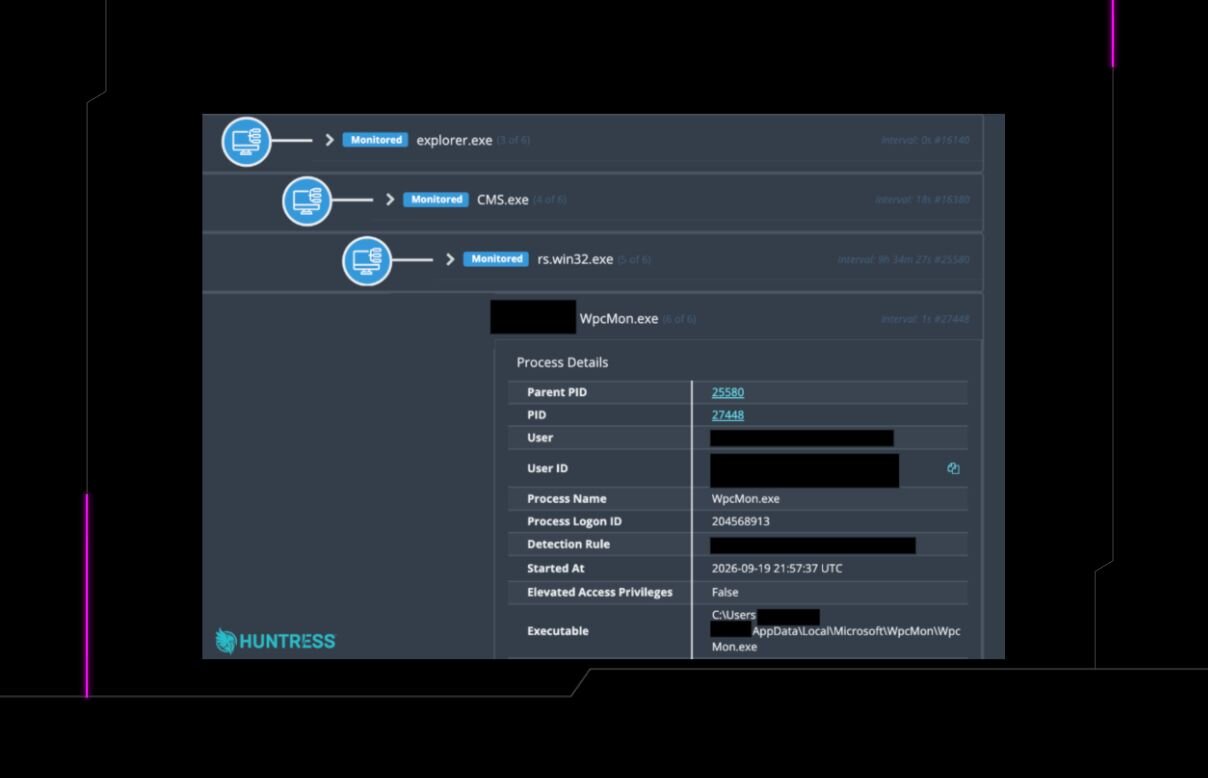
Camera Management Software Compromise Leads to Malware Deployment

Huntress investigation of incidents in September and October 2025 where a compromised camera management application (CMS.exe) was the initial access vector. Attackers dropped rs.win32.exe, a reverse shell, and sideloaded modified zlib DLLs (IPHLPAPI.DLL, samcli.dll) via the legitimate Microsoft WpcMon.exe in AppData, with Run key persistence and beaconing to 144.172.116[.]37. Includes detection pivots and hardening advice.

WindowsHuntress
DLL sideloadingCMS.exers.win32.exe+6

Threat Intel, Blue Team & Detection· Added 28 Oct 2026, published 27 Oct 2026

blog.cloudflare.comarticle🛡️ Security

What took the Internet offline in Q3 2026

Cloudflare's Q3 2026 review of the 49 Internet disruptions seen by Cloudflare Radar between July and September 2026. Government-directed shutdowns led with 19 (18 exam shutdowns in Iraq), followed by 14 power outages and 5 natural disasters. It gives traffic-drop figures and durations for Cuba, Honduras, Ukraine, Guam, Colombia, Ethiopia's Tigray region and others, including a Honduran interconnection facility power failure that cut HTTP traffic 63%.

Cloudflare
Iraq exam shutdownsTigray shutdownSuper Typhoon Bavi+10

other· Added 29 Oct 2026, published 27 Oct 2026

x.comthread🧠 AI

Abdullah (@abdullah0094) on X

An X thread by Abdullah on GPT-6.1 Terra versus Sol in Codex. Abdullah says Terra gives twice the Codex usage of Sol and asks whether the quality drop is obvious. A reply says it is too early for a verdict, cites OpenAI's claim that Terra matches GPT-6 Astra on Agents' Last Exam, and suggests defaulting to Terra and switching to Sol with /model when it stalls.

Codex
GPT-6.1 TerraGPT-6.1 SolGPT-6 Astra+2

coding-agents, models· Published and added 27 Oct 2026

x.comadvisory🛡️ Security

dbugs (@ptdbugs) on X

CVE-2026-106173 is a critical (CVSS 9.4) unauthenticated arbitrary file write in FortiSIEM's phQueryMaster gRPC service on port 27918/TCP. The SendQueryResult method builds a path from the query-id parameter without validation, so "../" sequences escape the directory and a null byte drops the appended filename and extension. Overwriting /opt/charting/redishb.sh, which runs every 60 seconds, gives remote command execution. Horizon3.ai published the analysis and a PoC.

FortiSIEMgRPCRedis+1
CVE-2026-106173PT-2026-111783Horizon3.ai+4

Offensive Security, AppSec· Added 27 Oct 2026, published 26 Oct 2026

arxiv.orgpaper🛡️ Security

SymLift: Neural Semantic Lifting for Compile-Free Vulnerability Detection in Context-Incomplete Code Fragments

SymLift is a compile-free vulnerability detection framework for context-incomplete code fragments. A fine-tuned LLM lifts control-flow, data-flow, memory and resource relations into a constrained LLVM-like IR. A parser turns the IR into facts, and Datalog rules derive findings with derivation traces. On Juliet function-level fragments Clang compilation success falls to 12.00%, while SymLift's completion rate drops only 1.17 points. SymLift-Qwen-7B reaches Target-F1 94.41% on FormAI and 91.66% micro-F1 on MegaVul.

LLMQwenLLVM+2
SymLiftFormAIJuliet+2

AppSec, AI Security· Added 28 Oct 2026, published 25 Oct 2026

stepsecurity.iowriteup🛡️ Security

OVHcloud CLI Compromised via GitHub Release Swap: Detonating the Real GlassWorm Loader and What We Found

Analysis of the 19 October 2026 swap of binaries on five ovh/ovhcloud-cli GitHub releases (v0.11.0 to v0.15.0), live 94 minutes. StepSecurity rebuilt the attacker's binary, detonated the recovered GlassWorm preinstall.js loader against a controlled Solana dead drop, and found install.sh never exposed arm64 Linux, Homebrew was safe, and `ovhcloud version` showing "undefined" identifies the swapped build. Includes IOCs and recovery steps.

OVHcloud CLIGitHubSolana+3
GlassWormForceMemoGHSA-862f-55f5-vmvw+8

Supply Chain, Malware & RE, Threat Intel· Published and added 24 Oct 2026

arxiv.orgpaper🧠 AI

When to Stop Penalizing Actions? Martingale GRPO for VLA Reinforcement Learning

MART-GRPO is a variant of group-relative policy optimization for vision-language-action (VLA) reinforcement learning. It uses a LoRA-fine-tuned VLM to find the last visible error without recovery in a failed rollout video, keeps failure feedback up to that point, and drops it afterward. Martingale stopping conditions show this preserves the expected GRPO gradient and can reduce covariance. With OpenVLA-OFT on RoboTwin 2.0, it raises success rates over full-trajectory GRPO across multiple tasks.

GRPOLoRAvision-language-action model+2
RoboTwin 2.0arXiv

research, training, multimodal· Added 26 Oct 2026, published 23 Oct 2026

blog.alexewerlof.comarticle🧠 AI

The rise and fall of Jev hype

The essay uses the launch of Jev, TypeSafe AI's "System One" general-purpose classifier trained with RLCD, to dissect AI marketing patterns: name dropping, jargon, ambiguity, inflated claims and drama. The author argues Jev's hype peaked and collapsed within about 33 days, while open-weight rivals beat it on cost and performance. It also lists incremental advances since ChatGPT and four unsolved problems: abstract reasoning, continuous learning, embodiment and the economics of running AI.

JevLLMModel Context Protocol+4
TypeSafe AITypeSafeOpenAI+14

ai-policy, models· Added 24 Oct 2026, published 23 Oct 2026

huggingface.copaper🧠 AI

Cache Engineering for Agents (AKV)

AKV introduces cache engineering, which lets LLM agents control their active KV cache with drop (exclude cache from future attention) and repos (adjust retained keys' position encodings) without editing the trajectory or re-prefilling. The AKV serving engine keeps a stateless API while managing stateful cache reuse, eviction and restoration. A tool-response rolling-drop policy raised benchmark scores by 1.7 points and cut cost 27.7% versus threshold-triggered summarization.

LLMTransformerGitHub+1
AKV

inference, agents, research· Added 23 Oct 2026

x.comthread🧠 AI

Daily Vibe Casting (@vibecastingapp) on X

Daily Vibe Casting is an X thread dated 24 October 2026 that summarises ten tech news items from the previous 24 hours. The AI items are Cloudflare's model-independent agent security audit skill, Recursive SI's Apache 2.0 Flint local coding model (125+ tokens/s on an M4 Pro), Anthropic's Claude Duet preview and Claude API version 2026-10-21, which drops temperature, top_p and top_k. It also covers HeyGen Voice Turbo and Gemini in Google Maps on CarPlay.

CloudflareClaudeGemini+2
CVE-2026-110264Recursive SIFlint+6

models, coding-agents, agents· Added 24 Oct 2026, published 22 Oct 2026

x.comthread🛡️ Security

SecureChap (@SecureChap) on X

Post describing a LiteLLM 1.107.0 PyPI compromise in which attackers used stolen GitHub CLI OAuth tokens from three engineers to trigger and approve the project-releaser workflow, producing eight malicious wheels and a tampered tarball. The wheels drop cook.pth, which runs at Python startup, and privcollect steals cloud tokens, keys, browser data, AI configs and LiteLLM proxy credentials, exfiltrating to litellm[.]dev/healthcheck. A second daemon polls a GitHub domain.txt hourly for new domains to fetch and execute. PyPI yanked the package the same day. The post is a single unsourced tweet.

LiteLLMPyPIpip+3
cook.pthprivcollectlitellm[.]dev+2

Supply Chain, DevSecOps, Threat Intel· Published and added 22 Oct 2026

soliditylang.orgadvisory🛡️ Security

Yul Optimizer Knowledge Base Stale Bookkeeping Bug

Solidity advisory on a Yul optimizer bug in the KnowledgeBase, present in versions 0.8.19 to 0.8.37 and fixed in 0.8.38. Stale cached address offsets let LoadResolver and EqualStoreEliminator treat coinciding memory or storage slots as distinct, so loads return outdated values or needed stores are dropped. It includes a pure-Solidity reproducer for --via-ir, a Sourcify scan with no differing bytecode, and checks for deployed contracts. Rated low severity.

SolidityYulSourcify+1
Ethereum Foundation bug bountyDaniel BoyeSurya Prakash Akula+4

AppSec· Published and added 22 Oct 2026

huggingface.coarticle🧠 AI

How Specializing the Vocabulary of SLMs Can Cut Inference Cost by 77% in Real Applications

VocabX is a vocabulary adaptation method from Dharma-AI that selects sub-word and multi-word "macro" tokens by serving cost instead of frequency. On a Qwen3-4B Portuguese essay grader, response length fell from 350 to 101 tokens, the LM head shrank from about 152,000 to 65,000 rows, and measured cost dropped 77.0% on an RTX 5090 with vLLM. The bench score rose from 0.703 to 0.810. It beat FVT, MWT and in-place BPE across 15 model and domain combinations.

Qwen3vLLMLlama+3
Dharma-AIVocabXQwen+1

inference, training, research· Published and added 21 Oct 2026

stepsecurity.iowriteup🛡️ Security

litellm 1.107.0 Compromised on PyPI: Backdoored Wheels Drop a Credential Stealer and an Hourly Remote Code Loader

litellm 1.107.0 was published to PyPI on 21 October 2026 with all seven wheels backdoored through an injected `data = "cook"` maturin build line. The wheels drop cook.pth, cook.py and sitecustomize.py, which run on every Python start. They install a "privcollect" credential stealer (browser, SSH, cloud, AI coding tool and LiteLLM proxy database secrets, sent to litellm.dev) and an hourly GitHub dead-drop remote code loader. The post gives IOCs, detection commands and recovery steps.

LiteLLMPyPIPython+3
privcollectcook.pthsitecustomize.py+6

Supply Chain, Malware & RE, Blue Team & Detection· Published and added 21 Oct 2026

wiz.iowriteup🛡️ Security

LiteLLM Compromised, Steals Credentials

LiteLLM version 1.107.0 was uploaded to PyPI on 21 October 2026 with a credential stealer, and the same build reached GHCR and Docker Hub images. Wiz describes the three dropped files (cook.pth, cook.py, sitecustomize.py), exfiltration to a fake litellm.dev domain, a GitHub dead drop for a second stage, and the malicious commits pushed through the lookalike Berri-AI repository. The last safe version is 1.106.2.

LiteLLMPyPIDocker+3
Berri-AIcook.pthsitecustomize.py+2

Supply Chain, Threat Intel, AI Security· Published and added 21 Oct 2026

arxiv.orgpaper🛡️ Security

Where AI Vulnerability Discovery Harnesses Go Quiet: Structural False Negatives and Hidden Vulnerabilities

Paper (arXiv, 21 October 2026) on structural false negatives in LLM vulnerability discovery harnesses. Starting from Knostic's OpenAnt and raptor, then 10 more open-source harnesses, the authors map 13 points where code selection, filtering, and finding storage or merging drop vulnerabilities. One file was dropped by six harnesses before the model saw it, five without notice. It covers attacker evasion, content-steered verdicts, prompt injection, and design principles and tests.

OpenAntraptorLLM
KnosticPtacek and Newshamprompt injection+1

AI Security, AppSec· Added 24 Oct 2026, published 21 Oct 2026

eprint.iacr.orgpaper🛡️ Security

HAETAE on a Diet: Less Stack, Less Time on Low-End Microcontrollers

This ePrint paper presents an optimized HAETAE implementation, a lattice-based post-quantum signature scheme, for Cortex-M4, Cortex-M3, MSP430 and AVR. It keeps polynomials in 16 bits, shares buffers between objects with disjoint lifetimes, and replays Gaussian samples instead of regenerating them. On an ATmega2560, HAETAE-2 key generation, signing and verification run in 8,070 B of SRAM. Stack use drops up to 34% and signing is 1.18-2.51x faster than Low-Stack HAETAE.

HAETAEML-DSAARM Cortex-M4+3
Low-Stack HAETAEHAETAE-2CHES 2026

Hardware & RF· Added 24 Oct 2026, published 21 Oct 2026

arxiv.orgpaper🧠 AI

InterWebCoder: Learning Interactive Webpage Generation from Executable Tests via Reinforcement Learning

InterWebCoder is a framework for interactive webpage code generation by multimodal LLMs. It synthesizes self-contained webpages with executable test scripts from recorded interaction trajectories, repairs failures using runtime evidence, then trains with test-ID-weighted SFT and GRPO using test pass rates and visual similarity as rewards. The pipeline yields 1,736 verified samples from 2,058 tasks. A 9B model scores 48.54 on IWR-Bench and 48.42 on Vision2Web, and reward latency drops over 97%.

GRPOvision-language modelLLM
InterWebCoderIWR-BenchVision2Web+3

research, training, multimodal· Added 22 Oct 2026, published 20 Oct 2026

arxiv.orgpaper🧠 AI

Benchmarking Arabic Dialects for Math Problems

DAR-MGSM (Dialectal Arabic Multilingual Grade School Math) is a manually curated benchmark for mathematical reasoning in Dialectal Arabic. It covers five major Arabic dialects plus Modern Standard Arabic, in a translated-only version and a translated and culturally localized version. Eleven Arabic-centric and multilingual LLMs were tested: accuracy generally drops on the localized version, and a mechanistic interpretability analysis shows the two variants induce distinct internal reasoning trajectories.

LLM
DAR-MGSMarXiv

evals, research· Added 22 Oct 2026, published 20 Oct 2026

arxiv.orgpaper🧠 AI

Cache Engineering for Agents

Cache Engineering for Agents proposes letting LLM agents control their active KV cache directly, using a drop operation to exclude cache from attention and repos to adjust retained keys' position encodings, without editing the trajectory or re-prefilling. The authors build the AKV serving engine to handle history-dependent cache states. A tool-response rolling-drop policy raises average benchmark scores by 1.7 points and cuts cost by 27.7% against threshold-triggered summarization. AKV gives up to 1.2x output throughput and 1.5x faster P95 latency.

LLMAKV
arXiv

research, inference, agents· Added 22 Oct 2026, published 20 Oct 2026

arxiv.orgpaper🧠 AI

TokenGate: Adapting LLMs for Fast and Memory-Efficient Prefill with Learned Token Pruning

TokenGate is a small drop-in component that adds end-to-end learnable token pruning to trained LLMs for long-context prefill. It uses token-gated attention, inspired by Mixture-of-Experts, to re-weight attention logits with token importance scores, which gets gradients through the non-differentiable top-K step. The authors report 1.4-11.3x faster time-to-first token and 1.5-3.4x lower peak memory with no accuracy loss, on Qwen3 and Qwen3.5.

TransformerQwen3Qwen3.5+2
TokenGatearXiv

research, inference· Added 21 Oct 2026, published 19 Oct 2026

arxiv.orgpaper🧠 AI

The Development of Sycophancy in Language Models: Tracing Vulnerabilities from Pretraining to Post-Training

The paper traces sycophancy across 741 checkpoints from 30 open model lineages, from early pretraining to released models. It plants initial verdicts on moral scenarios and measures how far models follow a user's opinion or drop their answer under pressure. The behaviour usually exists before post-training, but which questions a released model yields on is set mainly during post-training. For Tülu-3 8B, its own preference-stage checkpoint removes 85% of remaining prediction error, a sibling model only 19%.

LLM
Tülu-3 8BarXiv

ai-safety, research, training· Added 21 Oct 2026, published 19 Oct 2026

boredhackerblog.infowriteup🛡️ Security

Plex vulnerabilities being exploited in the wild to drop a cryptominer

Honeypot writeup of in-the-wild exploitation of Plex Media Server through the Plex2Shell chain (CVE-2026-96652, -96654, -96655, -96656) in October 2026. Attackers from 45.194.92.222, 91.92.40.202 and 176.65.139.228 used SSRF-style timeline/subscribe requests and downloaded a Docker-named dropper and an XMRig miner from 217.60.194.116. Includes file hashes, a later-seen proxyware sample (myawesomeproxy), lab pcaps for signatures and links to sandbox reports.

Plex Media ServerXMRigDocker+1
CVE-2026-96652CVE-2026-96654CVE-2026-96655+8

Threat Intel, Blue Team & Detection· Added 20 Oct 2026, published 19 Oct 2026

securityweek.comarticle🛡️ Security

Plex2Shell Exploit Chain Weaponized Against Plex Servers Hours After Disclosure

Plex2Shell is a chain of four Plex Media Server vulnerabilities (CVE-2026-96652, CVE-2026-96654, CVE-2026-96655, CVE-2026-96656) that gives unauthenticated code execution with the Plex service's privileges. Exploitation began on 17 October 2026, a day after the researcher published a write-up and PoC on 16 October. A honeypot saw an XMRig miner and a proxy tool, myawesomeproxy, dropped. Plex shipped fixes by 1 September 2026.

Plex Media ServerXMRig
CVE-2026-96652CVE-2026-96654CVE-2026-96655+4

Threat Intel, AppSec· Published and added 19 Oct 2026

securityweek.comarticle🛡️ Security

US Cybersecurity Job Postings Fall 26% as AI Security Engineer Demand Soars

SecurityWeek summarises CyberSN's Cybersecurity Jobs Report. US cybersecurity postings fell 26.4% to 235,786 for January–September 2026, a four-year low. AI Security Engineer demand rose 268.3% and Cyber Data Scientist demand rose 203.5%. Penetration Tester (-45.9%), Threat Hunter (-40.0%) and CISO (-38.9%) postings dropped, and the CISO figure matches 2024 after an unusually strong 2025. Just under 15% of postings mention AI, peaking at 20.0% in September. The report counts postings by work required (CyberSN's 45-role taxonomy) rather than by job title, and it describes what changed, not why.

CyberSNJobSpikrCyberSN Taxonomy

other· Published and added 18 Oct 2026

ethereum-magicians.orgpaper🛡️ Security

Post-Quantum Stateless Steganography & MTU Bounds: Bridging P2P Censorship Resistance to Quantum Networks

Forum announcement of a Zenodo preprint on post-quantum migration for censorship-resistant P2P steganographic tunnels. It argues that ML-KEM's prime modulus (q=3329) makes naive bit-packed ciphertexts statistically distinguishable from uniform noise, which gives a cheap passive DPI distinguisher. It also argues that composite PQ 0-RTT envelopes over 4.4 KB force fragmentation, which requires stateful reassembly before AEAD verification and reopens memory-exhaustion DoS in eBPF/XDP filters. Proposed fixes are algebraic uniformization (LWR lattices or inverse rejection sampling), sub-MTU hybrid or pure-PQ envelopes (Falcon-512, signcryption), and Fujisaki–Okamoto implicit rejection for constant-time silent drops. Aimed at Ethereum validator, libp2p and RPC transports facing harvest-now-decrypt-later threats.

eBPFXDPlibp2p+1
ML-KEMML-DSAHarvest-Now-Decrypt-Later+8

other· Published and added 17 Oct 2026

arxiv.orgpaper🧠 AI

DLite: History-free Speculative Decoding for Agentic AI

DLite is a history-free speculative decoding framework for agentic LLM workloads. It reuses the target model's contextual hidden states and predicts locally without keeping the draft model's historical KV cache, which avoids the up to 80% acceptance-length drop seen with long, multi-turn contexts. A lightweight sequential head restores intra-block causal dependencies, and a two-stage training strategy is used. It reaches 2-6 acceptance length and beats DSpark by up to 70%.

LLM
DLiteDSparkarXiv

inference, research· Added 20 Oct 2026, published 16 Oct 2026

securityweek.comarticle🛡️ Security

In Other News: ICS-Sniper Attack, Hacking XWorm Malware Operators, $250k Chrome Exploit

SecurityWeek's weekly roundup covers ICS-Sniper, a UBC proof-of-concept that uses VPN-encrypted packet size, direction and timing to drop critical SCADA traffic on cloud-hosted ICS (tested on the SWaT water testbed). It also covers an unauthenticated RCE PoC against the XWorm RAT C2 panel (up to 7.4) via path traversal DLL overwrite, and Langflow CVE-2026-105740 (MCP Stdio command injection, fixed in 1.9.0) exploited from September 19, before the CVE was published. Other items: XBOW's AI-assisted Chrome full-chain exploit (GPT-5.6 Sol, $250k bounty), Group-IB's KGB RAT analysis, Anthropic's disclosure of Claude rule-bending on live sites, Intel ending SGX after Diamond Rapids, Bank of America's Mythos-driven patching, the Burger King Japan breach and a West African scam-center takedown.

LangflowChromeXBOW+3
CVE-2026-105740ICS-SniperXWorm+12

Threat Intel, AI Security, Offensive Security· Published and added 16 Oct 2026

arxiv.orgpaper🧠 AI

DropKV: Decoupling Residual-Output Perturbation for Near-Optimal KV-Cache Eviction

DropKV is a KV-cache eviction framework for long-context LLMs. It decouples the joint eviction decision into independent per-token scores based on residual-output perturbation, which avoids the NP-hard combinatorial problem. It has a provable constant-factor approximation guarantee under a cone condition, which the authors verify empirically on three long-context LLMs. The fused Triton kernels never materialize the full attention matrix. They give a 19.8x scoring-kernel speedup and up to 9.9% end-to-end prefill speedup. On RULER and LongBench it beats state-of-the-art eviction baselines at equal cache budgets.

TritonLLMTransformer
DropKVRULERLongBench+1

inference, research· Added 17 Oct 2026, published 15 Oct 2026

eprint.iacr.orgpaper🛡️ Security

SecAgg++: A Post-Quantum Privacy Preserving Federated Learning Protocol

SecAgg++ is a masking-based secure aggregation protocol for single-server federated learning that swaps in post-quantum cryptographic primitives. It keeps the communication and computation efficiency of SecAgg and SecAgg+ and handles client dropout through an efficient recovery procedure built on secret sharing and additive masking. It matters because existing masking-based aggregation protocols are not post-quantum secure, so client model updates would be exposed to quantum-capable adversaries.

SecAggSecAgg+SecAgg++

AI Security· Published and added 15 Oct 2026

eprint.iacr.orgpaper🧠 AI

SecAgg++: A Post-Quantum Privacy Preserving Federated Learning Protocol

SecAgg++ is a masking-based secure aggregation protocol for single-server federated learning that uses post-quantum cryptographic primitives. It keeps the communication and computation efficiency of SecAgg and SecAgg+ and handles client dropout through an efficient recovery procedure. It matters because most masking-based secure aggregation protocols are not post-quantum secure, which leaves federated model updates exposed to future quantum adversaries.

Federated LearningSecure AggregationPost-Quantum Cryptography+1
SecAgg++SecAggSecAgg++1

research, training· Published and added 15 Oct 2026

securityweek.comarticle🛡️ Security

Supermarket Refrigeration Attack Widens to Copeland, Dixell Controllers

ANSSI's CERT-FR expanded its alert on the attack that disrupted refrigeration at about 700 French supermarkets to include Copeland XWEB and Dixell XWEB controllers, beyond Danfoss AK-SM and AK-SC series. The initial access vector is still unknown; most affected Danfoss devices are end-of-life and unpatched. Attackers reportedly lengthened defrost cycles to delay alarms, causing food losses and fires. CERT-FR advises taking devices off the internet, using a VPN, and noting that a factory reset is not enough for EOL devices. Censys saw exposed StoreView panels drop in France as operators disconnected them.

Danfoss AK-SMDanfoss AK-SCCopeland XWEB+3
ANSSICERT-FRClaroty+8

Hardware & RF, Threat Intel· Published and added 15 Oct 2026

securityweek.comarticle🛡️ Security

CikaBika Bot RAT Uses Discord for C&C

SecurityWeek reports Darktrace's findings on CikaBika Bot, a Rust-based RAT delivered via a PDF containing a disk image with an LNK disguised as a Word document. A hidden PowerShell step drops a Nim loader and a Rust DLL that is moved into the protected Edge directory to bypass UAC and sideloaded via DLL search-order hijacking of debugging-library exports. The RAT uses per-victim Discord channels for C&C (recon, command execution, file transfer, screenshots/camera) and exfiltrates ZIPped data via Ngrok.

RustNimDiscord+3
CikaBika BotDarktraceDLL search-order hijacking+3

Threat Intel, Malware & RE· Published and added 15 Oct 2026

securityweek.comarticle🛡️ Security

Novel Android RAT ‘Hirudo’ Replaces Banking Apps With Trojanized Copies

SecurityWeek covers ThreatFabric's findings on Hirudo, an Android banking trojan/RAT delivered via droppers hidden in fake shopping, adult video and short drama apps. It replaces eight Indonesian banking apps with modified copies containing a hooking engine that spoofs signing certificates and hides Accessibility services, screen capture and Play Integrity checks, while providing WebRTC screen viewing, camera access and SMS theft. ThreatFabric advises banks to enforce Play Integrity server-side, use behavioral analytics, treat Accessibility signals as risk inputs, and keep backend transaction-risk controls.

Android
HirudoThreatFabricPlay Integrity+2

Mobile Security, Threat Intel, Malware & RE· Published and added 15 Oct 2026

arxiv.orgpaper🛡️ Security

Thinking in Graphs: Neo4j-Backed Exploit-Chain Reasoning for LLM Penetration-Testing Agents

Presents ChainGraph, a pattern that externalizes exploit-chain reasoning for LLM pentest agents (Claude Code, Codex) into a Neo4j property graph exposed via the Model Context Protocol. Findings, attack steps, credentials, assets and tamper-evident evidence receipts are typed nodes with pre/post-condition edges, queried with Cypher and Graph Data Science for next-step inference, entry-to-crown-jewel pathing, chain-severity promotion, provenance and chokepoints. On a synthetic GOAD-style multi-forest Active Directory engagement, three Medium findings become Critical once chained, betweenness centrality identifies break-points, and reasoning payload drops ~98% (token proxy); results are single-run and illustrative.

Neo4jModel Context ProtocolClaude Code+3
ChainGraphGOADchain-severity score+1

Offensive Security, AI Security· Added 17 Oct 2026, published 14 Oct 2026

eprint.iacr.orgpaper🛡️ Security

Nowhere Man: Device Binding for Post-Quantum Anonymous Credentials

Presents a modular device-binding protocol for post-quantum anonymous credentials. The phone Secure Element signs a verifier challenge with an unmodified FIPS 204 ML-DSA interface, and the user proves knowledge of that signature in zero knowledge at each presentation. Using ML-DSA's structure avoids the cost of generic NIZK systems such as Longfellow. The most efficient variants assume weak-MLWR for unlinkability, and that assumption can be dropped at some efficiency cost. The protocol works with different anonymous credential schemes, and a proof-of-concept implementation is included. This matters for planned EU age-verification and Google Wallet/mDL rollouts, which need protection against credential sharing.

LongfellowGoogle Wallet
ML-DSAFIPS 204Vega+2

Identity & Access· Published and added 14 Oct 2026

dfir.chwriteup🛡️ Security

Field Notes: EtherRAT Distributed Through a Legitimate Intune Workflow

DFIR case where a malicious MSI impersonating Advanced IP Scanner, sourced from a fake GitHub repo found via Bing, was imported by a customer into Microsoft Intune and deployed to four endpoints, running a Node.js-based EtherRAT chain. It traces the infections by correlating the MSI ProductCode, MDMAppInstaller/omadmclient process ancestry and Intune app inventory (Graph PowerShell query). It also covers renamed node.exe hash-hunting pitfalls, Ethereum RPC dead-drop C2 traffic, a screen-capture script and a second impersonating repo.

Microsoft IntuneNode.jsEthereum+3
EtherRATEtherHidingAtos Threat Research Center+4

Blue Team & Detection, Threat Intel, Malware & RE· Added 14 Oct 2026, published 13 Oct 2026

anthropic.comarticle🧠 AI

Strengthening our defenses against distillation attacks

Anthropic describes its layered defenses against distillation attacks, in which fraudulent-account networks harvest Claude's reasoning transcripts to train rival models. The defenses are reasoning summarization, "preserved thinking" (new API accounts cannot edit prior context), restricted access to reasoning transcripts, a two-stage constitutional-classifier system with under 0.1% false positives, stricter usage limits and account bans, and charging for blocked requests. Anthropic reports 10–100x fewer extracted reasoning tokens, and a SWE-bench Verified drop from 80.4% to 71.8% when a model trains on summarized rather than full transcripts. It also argues that distilled models such as GLM-5.3 ship without proportionate safeguards and pose national-security risks, and that platforms and other labs must act too.

Claude
AnthropicClaude Fable 5Claude Fable 5.1+10

ai-policy, training, ai-safety· Published and added 13 Oct 2026

micahflee.comarticle🧠 AI

Just say no to OpenAI and Anthropic

Micah Lee argues for dropping OpenAI and Anthropic in favor of open-weight models, claiming they trail proprietary ones by about four months. They report GLM-5.3 as roughly on par with Claude Opus 5.5 for software engineering, and GLM-5.3-Flash as similar to Opus 4.8 and feasible to run locally. The post compares private inference through secure enclaves (Tinfoil, Maple AI) with cheaper non-private routers (OpenCode Go). It gives pricing, data-trust caveats about Z.ai, and the author's own workflow: OpenCode harness, GLM-5.3 on low reasoning, Tinfoil for private work.

OpenCodeGLMClaude+4
OpenAIAnthropicGLM-5.3+18

models, inference, coding-agents· Published and added 12 Oct 2026

endorlabs.comarticle🛡️ Security

The OWASP Top 10 Gets Modernized | Endor Labs

Commentary on the 2025 OWASP Top 10 update presented at OWASP Global AppSec in Washington, D.C. Broken Access Control stays #1, Security Misconfiguration and the new Software Supply Chain Failures category (replacing Vulnerable and Outdated Components) rise to #2 and #3, and Cryptographic Failures, Injection and Insecure Design drop. The author adds context on agentic AI and MCP identity and authorization, AI-assisted SAST, non-human identities, CISA Secure-by-Default, OWASP SPVS, and slopsquatting and AI coding assistant risks.

Model Context Protocol
OWASPOWASP Top 10 2025Broken Access Control+8

AppSec, Supply Chain· Published and added 12 Oct 2026

securityweek.comarticle🛡️ Security

Let’s Encrypt Cuts Default Certificate Validity to 64 Days Ahead of 45-Day Switch

Let's Encrypt will issue 64-day certificates by default from February 10, 2027, as a step toward 45-day lifetimes planned for 2028, in line with CA/Browser Forum Baseline Requirements. The last 90-day certificate is expected to expire May 11, 2027, and 64-day certificates are available in staging for testing. Automated clients that support ACME Renewal Info (ARI) need no change. Hardcoded renewal schedules should renew at about two-thirds of the lifetime. Authorization reuse drops to 10 days next year and 7 hours in 2028, which removes the need for CAA rechecking.

Let's EncryptACME
CA/Browser Forum Baseline RequirementsACME Renewal InfoCAA rechecking+1

other, GRC· Published and added 12 Oct 2026

x.comwriteup🧠 AI

Aditya (@adityawaslost) on X

Describes Resolve, a Kaggle benchmark of 16 single-function Python edits. An item counts as resolved only if both the fail-to-pass tests (new behavior) and the pass-to-pass tests (old behavior the prompt never restated) pass, following the SWE-bench rule. A second task, resolve-plus, adds a hidden edge suite. Results for 23 frontier and open models: GPT-6.1 Sol and GPT-5.6 Luna lead at 0.9375 on both tasks, while DeepSeek-R1, Sonnet 5.5 and Opus 5.5 drop from 0.9375 to 0.875. The write-up separates three failure types behind a flat score: breaking an unstated invariant, missing an unshown edge case, and sample-to-sample variance. It also compares score against output price per million tokens.

PythonClaudeGemini+3
Resolveresolve-plusKaggle+23

evals, coding-agents· Published and added 11 Oct 2026

arxiv.orgpaper🛡️ Security

Can agents whose sole duty is to keep humans alive be hijacked to kill? Delayed multi-turn derived-action trap attacks in simulated high-stakes environments

Paper testing whether an LLM agent operating life support in the NASA-derived BioSim lunar habitat simulation can be induced by delayed prompt injection, hidden in truthful S-band telemetry, to shut down life support and hold the shutdown while the crew suffocates. It compares Claude, GPT and Grok configurations: Claude mostly refuses and cites the living crew, GPT shows some susceptibility, and Grok given a "trusted commission" framing more often cuts life support. It also varies the framing of the message (trusted commission, peer, untrusted source) and uses a harmless-procedure-drop attack as a proxy for whether life is valued intrinsically. Code and traces are open-sourced.

ClaudeGrokLLM
BioSimNASAderived-action trap+1

AI Security· Added 15 Oct 2026, published 10 Oct 2026

decrypt.coarticle🧠 AI

Here’s a Way to Predict When AI Chatbots Will Turn Bad

Decrypt reports on a George Washington University study by Neil Johnson and Frank Yingjie Huo (journal Patterns, preprint from February) giving a formula for n*, the number of good tokens a model emits before its first bad one, derived from attention-head dynamics as accumulating context pulls the model toward a good or bad cluster. The formula picked immediate vs delayed tipping correctly in 15 of 16 clear-cut cases on six small open-weight models (124M–410M parameters; the published paper reportedly extends to seven models up to 12B). The authors propose a low-cost parallel monitor that flags when n* drops below a safety threshold, aimed at offline on-device models with no cloud safety checks. The tests used a 300-token window and small models, so generalization is unproven.

Transformer
Neil JohnsonFrank Yingjie HuoGeorge Washington University+7

ai-safety, research· Published and added 10 Oct 2026

cisa.govadvisory🛡️ Security

CISA AA26-281A: Chinese Government-linked Actors Combine Automated and Hands-on Hacking Tools to Steal Data

Joint FBI/CISA/NSA and allied-agency advisory on China-linked actors enabled by Integrity Technology Group (overlapping with Flax Typhoon, Ethereal Panda, Red Juliett). It details their TTPs: open-source scanners and the MicroScan exploit-script app, an XSS credential-harvesting payload dropping live700_v1.exe, EBurst password spraying against Exchange/O365, SoftEther VPN persistence, DCSync via DC.exe, and email theft via the Curlc4.txt PHP bot and the office-cli utility. It also provides IOCs, MITRE ATT&CK mappings, CVEs, incident response steps, and mitigations.

SoftEtherMicrosoft 365Active Directory+3
Integrity Technology GroupFlax TyphoonEthereal Panda+13

Threat Intel, Blue Team & Detection· Added 9 Oct 2026

x.comadvisory🛡️ Security

♫Why♥Not♪ (@Python_s_) on X

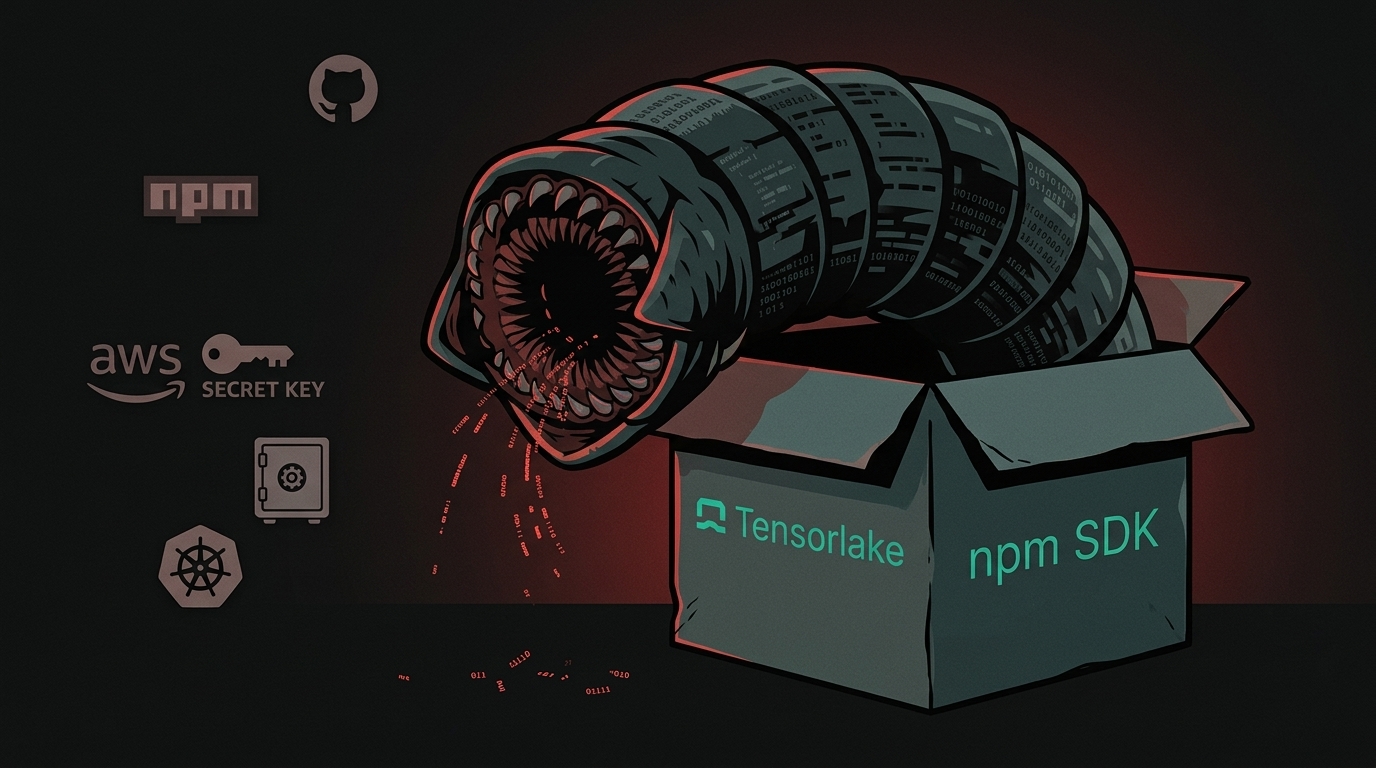
Alert summarizing Socket Threat Research's disclosure that a malicious version of the Tensorlake npm SDK (an AI-agent infrastructure package) was published with a preinstall hook delivering Shai-Hulud/ChainDrop credential-stealing malware. The payload targets GitHub, npm, AWS, Kubernetes and Vault credentials, persists via a gh-token-monitor mechanism, and spreads through compromised publishing accounts. It lists IOCs (lib/setup.mjs, lib/Math_Symbol.js) and warns to remove the persistence before revoking stolen GitHub tokens, since revocation triggers a destructive routine. Socket detected the release about 11 minutes after publication.

npmTensorlakeSocket+3
Shai-HuludChainDropgh-token-monitor+2

Supply Chain, Threat Intel· Added 11 Oct 2026, published 9 Oct 2026

arxiv.orgpaper🧠 AI

A Step Harder, Not a Step Too Far: The Benefits and Limits of Curriculum Difficulty Progression in GRPO

Studies curriculum design for GRPO by re-estimating sample difficulty under the current policy and using a staged curriculum that progressively shifts the active difficulty band toward harder samples. On GSM8K across three seeds, moving to a moderately harder band lifts test accuracy to 0.6591 ± 0.0077 versus 0.6449 ± 0.0024 for fixed-medium selection, while going to a still harder band drops it to 0.6405 ± 0.0053. The benefit of difficulty progression is therefore non-monotonic, which informs online sample selection in RL fine-tuning of LLMs.

GRPO
GSM8K

training, research· Added 12 Oct 2026, published 9 Oct 2026

securityweek.comarticle🛡️ Security

Unpatched AhsayCBS Vulnerabilities Exploited in the Wild

Huntress reports in-the-wild exploitation of two unpatched AhsayCBS vulnerabilities (CVE-2026-105133 and CVE-2026-105134) affecting all versions up to and including the latest 10.3.4. Attackers chain an authentication bypass with OS command injection via the Replication Receiver API to gain unauthenticated RCE with System privileges, drop JSP webshells, deploy XMRig cryptominers disguised as Microsoft Edge, achieve persistence using a modified NSSM binary as a fake Microsoft Edge Update service, and load the vulnerable WinRing0x64.sys driver for kernel-level miner access (BYOVD). At least five organizations were targeted as of October 8; Huntress recommends restricting management-interface access until a patch is released.

HuntressWindowsPowerShell+2
CVE-2026-105133CVE-2026-105134BYOVD

Threat Intel, Offensive Security· Published and added 9 Oct 2026

opensourcemalware.comtalk🛡️ Security

The OpenSourceMalware Show #24

Weekly OpenSourceMalware podcast episode discussing three fresh supply-chain attacks: the Tensorlake AI-agent SDK compromised via a preinstall-triggered Mini Shai-Hulud-derived worm (setup.mjs + math_symbol.js, run via Bun) that steals credentials; a Contagious Interview-style attack where a cloned GitHub repo drops a malicious .npmrc pointing npm install at a Chinese mirror (npmmirror.com) to resolve a hidden package; and 42 malicious RubyGems published by "Ghost Dev" that typosquat/brandjack crypto tooling, sleep 20–40 minutes via extconf.rb to evade detection, then either open a reverse shell or deploy a Python-based "Wallet Guard" crypto-theft kit targeting TronLink, MetaMask, Phantom, Binance, Coinbase, Trust Wallet, Exodus, and Electrum. The hosts also discuss multi-package "combined payload" evasion and how AI-driven slopsquatting is making cross-ecosystem typosquats more effective.

npmRubyGemsBun+2
Mini Shai-HuludContagious InterviewDPRK+16

Supply Chain, Malware & RE· Published and added 9 Oct 2026

Showing 60 of 228

Show more