Skip to content

49 results for โ€œBunโ€

What you seeeverything
blog.talosintelligence.comwriteup๐Ÿ›ก๏ธ Security

Appraisal by AI: Model-driven victim prioritization in the VOLTA infostealer

VOLTA (VOLTA-AUTODOXER) is a self-deleting Windows infostealer that, after theft and live session-based enrichment, POSTs an evidence bundle to OpenRouter so an LLM can rank the victim's assets by monetization value. It falls back across a Claude, Kimi and Gemini chain when a model refuses. Talos covers the builder model, the Chrome App-Bound Encryption bypass, the volta_debug.txt artifact and countermeasures such as blocking Chrome --headless.

OpenRouterClaudeGemini+3
VOLTACLOSEDQUORUMCAIRN+3

Malware & RE, Threat Intel, AI Securityยท Published and added 31 Oct 2026

gist.github.comwriteup๐Ÿง  AI

Claude Code regularly sends each background agentโ€™s transcript to its model

no-agent-summary.js is a roughly 70-line Bun preload by Flamerix AI that stops Claude Code from re-sending each background agent's full transcript to its model every ~30 seconds for a status-line summary. The write-up cites OpenTelemetry measurements of 18 to 26 percent of spend (since version 2.1.232), explains the setTimeout hook, and gives install and verify steps. It was tested on Linux with Claude Code 2.1.257 to 2.1.312.

Claude CodeBunOpenTelemetry+2
AnthropicFlamerix AIDRIM+1

coding-agents, ai-infraยท Added 30 Oct 2026, published 29 Oct 2026

alpinelinux.orgwriteup๐Ÿ›ก๏ธ Security

GitLab Security Incident: Attempted Exploitation of CVE-2026-97229

Alpine Linux incident report on attempted exploitation of CVE-2026-97229 (CVSS 10.0), a regex-evaluation bug in Ruby's Onigmo engine reachable through GitLab CI configuration. An attacker crashed workers 8 times on 20 and 21 October 2026. Upgrading to GitLab 19.3.6 did not fix it because the patch sits in GitLab's bundled Ruby. Alpine rebuilt the instance and found no tampering with aports or releases.

GitLabRubyDocker+1
CVE-2026-97229Onigmoaports

Blue Team & Detection, Supply Chain, AppSecยท Added 29 Oct 2026, published 28 Oct 2026

huntress.comwriteup๐Ÿ›ก๏ธ Security

Managed for Malice: How Attackers Turn MDM into Remote Access

Huntress describes two incidents where attackers enrolled victims in attacker-controlled MDM tenants (Hexnode and Rippling) and used them to push ScreenConnect as SYSTEM. One began with a fake DocuSign MSI that bundled Hexnode; the other with a fake Teams calendar link leading to Rippling enrollment. Removing ScreenConnect did not stop reinstalls. The post lists IOCs, a detection chain and mitigations.

HexnodeRipplingScreenConnect+3
Huntressphishingsocial engineering+3

Threat Intel, Blue Team & Detection, Mobile Securityยท Published and added 28 Oct 2026

socket.devwriteup๐Ÿ›ก๏ธ Security

Malicious Firefox Extensions Impersonate Phantom, Jupiter, and Bitget to Steal Wallet Secrets

Socket analysis of three malicious Firefox add-ons impersonating Phantom, Jupiter and Bitget wallets, using Unicode homoglyph names. They steal seed phrases and private keys and send them to brand-named subdomains of bonto[.]io. The Phantom fake adds a runtime loader that fetches and evals a second stage, and bundles a drainer backend with Telegram forwarding. Includes IOCs, hashes and wallet addresses.

FirefoxTelegramCloudflare+3
bonto.ioPhantomJupiter+14

Threat Intel, Malware & RE, Blockchainยท Published and added 27 Oct 2026

opensourcemalware.comwriteup๐Ÿ›ก๏ธ Security

Brotlipocalypse

Brotlipocalypse is an OSM Security post (24 October 2026) on CVE-2026-111497, an out-of-bounds write in the google/brotli C decoder (1.0.3 through 1.2.0). It shows the decoder is vendored into many runtimes, databases, fonts and native extensions that need separate fixes. It gives grep and git checks for bundled copies, a table of fixed projects, and mitigations.

BrotliNode.jsPyPI+3
CVE-2026-111497PYSEC-2026-4322PYSEC-2026-4323+4

Supply Chain, AppSecยท Published and added 24 Oct 2026

opensourcemalware.comwriteup๐Ÿ›ก๏ธ Security

LiteLLM 1.107.0 PyPI Wheel Contains a Credential Stealer and Persistent Python Backdoor

LiteLLM 1.107.0 macOS x86-64 PyPI wheel analyzed by OpenSourceMalware contains three injected files (cook.pth, cook.py, sitecustomize.py) that run on every Python start. The payload, called privcollect, steals browser, SSH, cloud, CI/CD and AI-tool credentials, then uploads an AES/RSA-encrypted bundle to www.litellm.dev/healthcheck. A forked loader also fetches domain.txt from GitHub and executes /codepy hourly. The post lists IOCs, hashes and remediation steps.

LiteLLMPyPIPython+1
privcollectTeamPCPUpwind+4

Supply Chain, Malware & RE, Threat Intelยท Published and added 21 Oct 2026
aikido.devwriteup๐Ÿ›ก๏ธ Security

tensorlake NPM package compromised with Shai Hulud worm

Aikido details a new Shai-Hulud worm wave that compromised the tensorlake npm package (v0.5.144, 100k+ lifetime installs) via a hijacked GitHub maintainer identity. The malware's preinstall script drops the Bun runtime to run an obfuscated payload that exfiltrates CI/cloud secrets, browser crypto-wallet extension data (via a bundled HackBrowserData binary), uses a blockchain dead-drop (an Ethereum contract queried via public RPC nodes) to resolve a fallback C2, and includes a GitHub-token-triggered dead-man's switch that wipes infected machines. The post includes full IOCs: file hashes, the C2 domain iseekaigogo[.]com, and the threat actor's wallet/contract addresses.

npmBunEthereum+3
Shai-Huludtensorlakeiseekaigogo[.]com+4

Supply Chain, Malware & REยท Published and added 8 Oct 2026
stepsecurity.iowriteup๐Ÿ›ก๏ธ Security

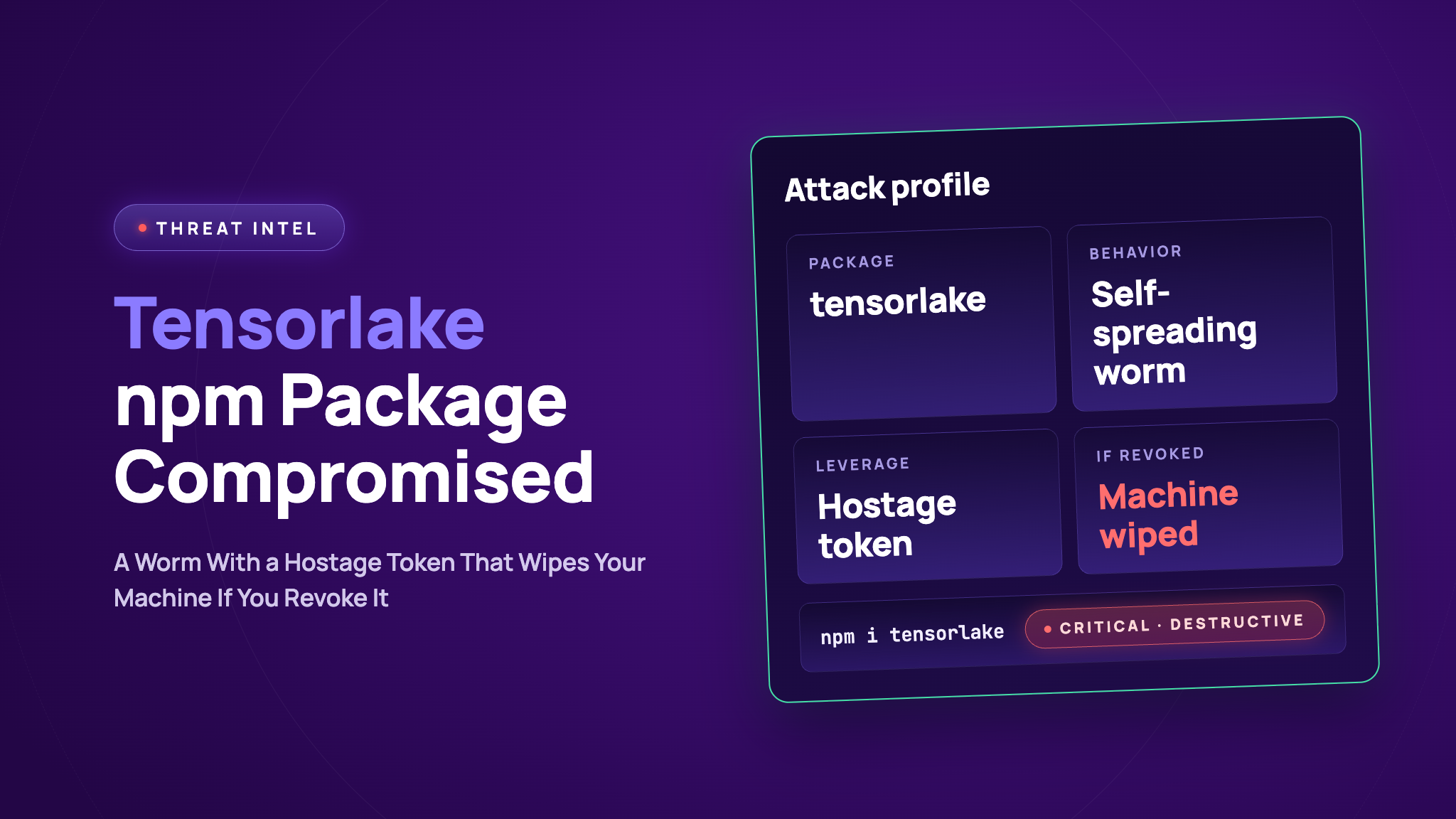
Tensorlake npm Package Compromised: A Worm With a Hostage Token That Wipes Your Machine If You Revoke It

StepSecurity details how tensorlake@0.5.144 was pushed to npm after malicious commits landed directly on the tensorlakeai/tensorlake GitHub repo's main branch under a maintainer's identity, carrying a valid npm provenance attestation despite being malicious. The preinstall hook downloads Bun to run an obfuscated payload that steals GitHub/npm tokens, cloud and Vault/Kubernetes secrets, SSH keys, browser logins, and AI-tool configs (Claude, Cursor, Windsurf), then self-propagates by republishing stolen npm packages and committing persistence files (.claude/settings.json, .vscode/tasks.json) to reachable repos. A "hostage token" mechanism installs a gh-token-monitor service that runs a home-directory wipe if the stolen GitHub token is revoked before the monitor is removed, inverting the normal incident-response order.

npmGitHubBun+3
Shai-Huludgh-token-monitoriseekaigogo.com

Supply Chain, Threat Intelยท Published and added 8 Oct 2026
stepsecurity.iowriteup๐Ÿ›ก๏ธ Security

Active Supply Chain Attack: Malicious node-ipc Versions Published to npm

StepSecurity's AI Package Analyst detected three malicious node-ipc versions (9.1.6, 9.2.3, 12.0.1) published simultaneously on May 14, 2026 by a rogue/compromised maintainer account, injecting an 80KB obfuscated IIFE into the CommonJS bundle that harvests 90+ credential file categories (AWS, Azure, GCP, SSH, Kubernetes, GitHub, Claude AI/Kiro configs, Terraform, etc.) and exfiltrates them via HTTPS and raw DNS TXT queries to a typosquatted Azure-mimicking C2 domain. The writeup includes a full stage-by-stage technical teardown (daemonization, SHA-256 targeting gate on 12.0.1, custom base-16 nibble-reversed obfuscation, dual-channel exfiltration) plus file hashes, network IOCs, and remediation guidance for developers and CI/CD pipelines.

node-ipcnpmNode.js+2
peacenotwarRIAEvangelistBrandon Nozaki Miller+2

Supply Chain, Threat Intelยท Added 5 Oct 2026

huntress.comwriteup๐Ÿ›ก๏ธ Security

Determined Attacker Uploads Malicious Webshells to Parks and Rec Management Platform Servers

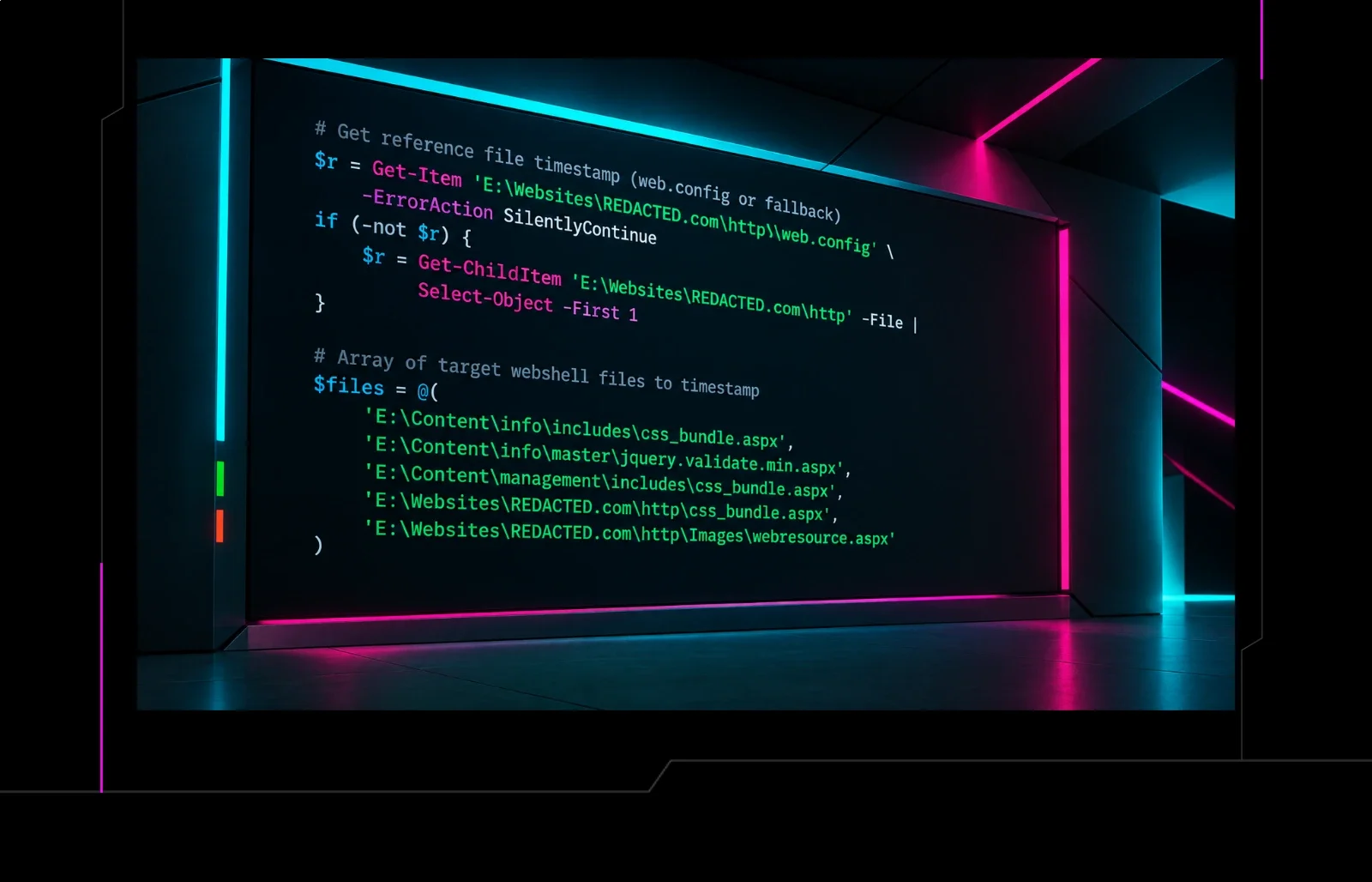
Huntress details a four-act intrusion against a shared parks-and-recreation management platform running on IIS, where an attacker first tried noisy unauthenticated exploits (IIS 8.3 tilde enumeration, WebDAV verb abuse, upload-handler bypasses) before simply registering a member account and uploading .aspx webshells via a member-file upload feature across three servers. The attacker enumerated hosts, extracted web.config/connection strings, hunted for cardholder data (Fortis/MXMerchant webhook logs, CVV/card-number strings), then escalated to timestomping, re-deploying known-filename webshells, and finally injecting an AI-generated PowerShell/JS dropper into a trojanized jQuery file to turn site visitors' browsers into WebRTC/WebSocket C2 clients (ririmochii/bubuneeko Cloudflare Workers infrastructure). Includes a zh-CN PowerShell user-agent string used for attribution and full command/IOC listings useful for detection engineering.

IISPowerShellWindows+3
ririmochii[.]workers[.]devbubuneeko[.]workers[.]devIIS 8.3 tilde enumeration+2

Threat Intel, Blue Team & Detection, Offensive Securityยท Added 1 Oct 2026, published 30 Sep 2026

atredis.comwriteup๐Ÿ›ก๏ธ Security

Finding Gadgets Like It's 2026 (Atredis Partners)

Atredis Partners built an LLM-driven pipeline (WALA/ASM call-graph builder, a FastAPI graph query server, Claude Code as the reasoning/validation agent, and a dynamic test/debug runner) to automate discovery of Java deserialization gadget chains against modern, hardened application servers (WebSphere, WildFly, Payara). The project found 17 confirmed chains, 6 novel, including CB1-Shaded-RCE โ€” a chain that bypasses JPMS's TemplatesImpl restrictions via a shaded/relocated copy of Xalan's XSLTC shipped inside WildFly's JSTL jar, giving RCE on the latest WildFly on JDK 21 โ€” plus a novel JNDI-injection chain in Payara via AttributeComparator/InjectableJMSContext. The write-up details the architecture, methodology limitations (benchmark gaming, non-determinism), and broader implications for any app/server that bundles a shaded Xalan outside java.xml, with tooling released on GitHub (atredispartners/llmchainhunter).

JavaClaude CodeWildFly+3
GadgetInspectorJPMSTemplatesImpl+10

AppSec, AI Security, Offensive Securityยท Added 25 Sep 2026

socket.devwriteup๐Ÿ›ก๏ธ Security

Re-Enabled GitHub Actions Expose Thousands of Repositories to Mini Shai-Hulud

Socket reports that the actions-cool/issues-helper and actions-cool/maintain-one-comment GitHub Actions, compromised in the May 2026 Mini Shai-Hulud campaign and disabled by GitHub, were re-enabled on September 16, 2026 with their release tags still pointing to the malicious code. Any workflow referencing them by tag (about 15,000 dependents for issues-helper alone) resumed running the Bun-executed obfuscated payload. Workflow run logs show the switch from fast "Repository access blocked" failures to multi-minute successful runs. The post gives remediation: SHA-pin actions, rotate secrets, and hunt for oven-sh/setup-bun and bun run index.js in runner logs. An update says both repos were disabled again on September 25.

GitHub ActionsGitHubBun+1
Mini Shai-Huludactions-cool/issues-helperactions-cool/maintain-one-comment

Supply Chain, DevSecOpsยท Published and added 24 Sep 2026

securitylabs.datadoghq.comwriteup๐Ÿ›ก๏ธ Security

Discovering and exploiting a remote code execution vulnerability in OpenCode (GHSA-632h-h47v-g4x4)

GHSA-632h-h47v-g4x4 is an RCE in OpenCode's /global/upgrade endpoint, fixed in 1.18.22. The target value reached `npm install -g opencode-ai@TARGET`, so an attacker could supply a malicious tarball URL with a preinstall script. A text/plain HTML form bypassed CORS through top-level navigation because the handler parsed JSON without checking Content-Type. Affects 1.14.30 to 1.18.21 installed via npm, pnpm or Bun.

OpenCodenpmpnpm+2
GHSA-632h-h47v-g4x4AnomalyDatadog Security Labs+4

AppSec, AI Security, Offensive Securityยท Added 29 Oct 2026, published 24 Sep 2026

socket.devwriteup๐Ÿ›ก๏ธ Security

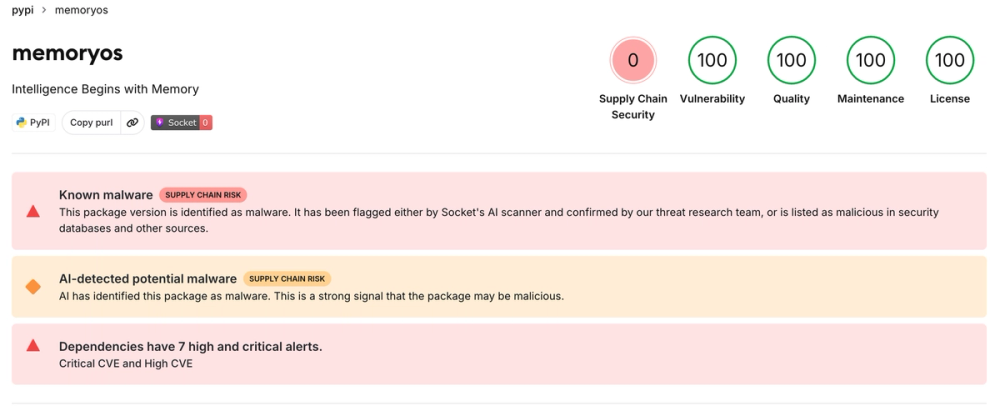
MemTensor npm and PyPI Packages Compromised in Credential-Stealing Supply Chain Attack

Socket details a supply-chain compromise of MemTensor's MemOS packages: npm package @memtensor/memos-cloud-openclaw-plugin (versions 0.1.21, 0.1.23, 0.1.25) and PyPI package MemoryOS (2.0.34), both published as the latest release on their registries. Each malicious release bundles a stripped, statically-linked Go binary called sckit that launches on import/plugin-load, scans $HOME for npm, PyPI, GitHub, GitLab, AWS, Vault and SSH credentials, and exfiltrates them to C2 servers under skyleen[.]fr, with the npm variant also capturing OpenClaw agent prompt text and the code additionally showing potential worm-like republish capability using stolen registry tokens.

npmPyPIGo+2
MemTensorMemOS@memtensor/memos-cloud-openclaw-plugin+7

Supply Chain, Malware & RE, Threat Intelยท Published and added 23 Sep 2026

depthfirst.comwriteup๐Ÿ›ก๏ธ Security

Containers Are No Longer a Security Boundary (CVE-2026-80521)

Depth First researchers detail CVE-2026-80521, a Linux kernel use-after-free in the AF_UNIX subsystem's garbage collector (a race between edge visibility during SCM_RIGHTS sends and vertex freeing in unix_del_edge/unix_walk_scc_fast), discovered with their in-house AI vulnerability-detection model dfs-large1 and used to win a Google kernelCTF slot. They released a working container-escape exploit against the latest Ubuntu 26.04, plus a second exploit for CVE-2026-52910 against Ubuntu 24.04, arguing that AI-accelerated bug discovery has broken the assumption that shared-kernel containers (Docker/Kubernetes, nsjail, Firejail, Bubblewrap) provide a hard security boundary, and recommending migration of sensitive workloads to microVM isolation like Firecracker or Kata Containers.

Linux kernelDockerKubernetes+3
CVE-2026-80521CVE-2026-52910dfs-large1+1

Offensive Security, Cloud & Infra, AI Securityยท Added 26 Sep 2026, published 22 Sep 2026

endorlabs.comwriteup๐Ÿ›ก๏ธ Security

Shai-Hulud 2 Malware Campaign Targets GitHub and Cloud Credentials Using Bun Runtime | Blog | Endor Labs

Endor Labs' live incident tracker for the Shai-Hulud 2.0 npm supply-chain worm that began around Nov 24, 2025, compromising packages from Zapier, ENS Domains, Postman and PostHog. It details the infection chain (malicious preinstall script, setup_bun.js dropper, obfuscated bun_environment.js payload), TruffleHog-style credential theft from AWS, GCP, Azure, GitHub and npm, self-replication via stolen npm and GitHub tokens, a self-hosted GitHub Actions runner backdoor abusing repository Discussions for command injection and C2, and destructive wiper behavior that shreds the user's home directory on Windows and Linux.

npmBunGitHub Actions+3
Shai-Hulud 2.0Shai-HuludZapier+3

Supply Chain, Threat Intel, DevSecOpsยท Published and added 11 Sep 2026

aikido.devwriteup๐Ÿ›ก๏ธ Security

Shai-Hulud Rises From the Dead after 111 days

Aikido Security reports that the Shai-Hulud npm worm payload (SHA256 e37e3dd...e5b1a6), first seen during the @AntV compromise on May 19, 2026, resurfaced 111 days later on September 7 in four new packages (feishu-docx-mcp, bmc-i18n-extract-cli, blueai-cli, bmc-translate-utils) published by the same npm account within one hour. The payload passed npm's publish-time malware scanning โ€” introduced in July 2026 to hold packages 5-15 minutes for automated checks โ€” despite being an exact, previously fingerprinted hash match, exposing a gap between npm's scanning claims and actual detection coverage. The writeup includes full IOCs: C2 domain t.m-kosche.com, preinstall script running `bun run index.js`, persistence via .vscode/tasks.json and .claude/settings.json, and stolen-token-based republish behavior.

npmBunClaude Code
Shai-HuludAntVt.m-kosche.com+4

Supply Chain, Threat Intelยท Published and added 7 Sep 2026

huntress.comwriteup๐Ÿ›ก๏ธ Security

Rogue ScreenConnect Installations Across Unrelated Hosts Suggest Worm-Like Activity

Huntress details a campaign in which social-engineering (tech-support scams, Quick Assist, malicious downloads) leads to rogue ScreenConnect installs that deploy a four-stage VBScript loader (1.vbsโ€“4.vbs). The loader profiles the host (checking for EDR products, existing ScreenConnect, RAM size), fetches an AES-encrypted payload via a Dropbox-hosted map file, and drops one of three packages: a user-level backdoor, a persistence/privesc kit, or a tunneling+cryptomining bundle (wstunnel/XMRig plus the vulnerable WinRing0 driver for BYOVD). A backdoored ScreenConnect client then re-pushes the VBScript chain to every newly connected Host session via ScreenConnect's file-transfer API, giving the campaign worm-like self-propagation โ€” which ConnectWise later confirmed stems from CVE-2026-84869, a 9.9 CVSS flaw in unauthorized file-transfer execution, patched in ScreenConnect 26.6.5.

ScreenConnectPowerShellWindows Defender+3
CVE-2026-84869XMRigBYOVD+1

Threat Intel, Malware & RE, Blue Team & Detectionยท Added 8 Sep 2026, published 3 Sep 2026

stepsecurity.iowriteup๐Ÿ›ก๏ธ Security

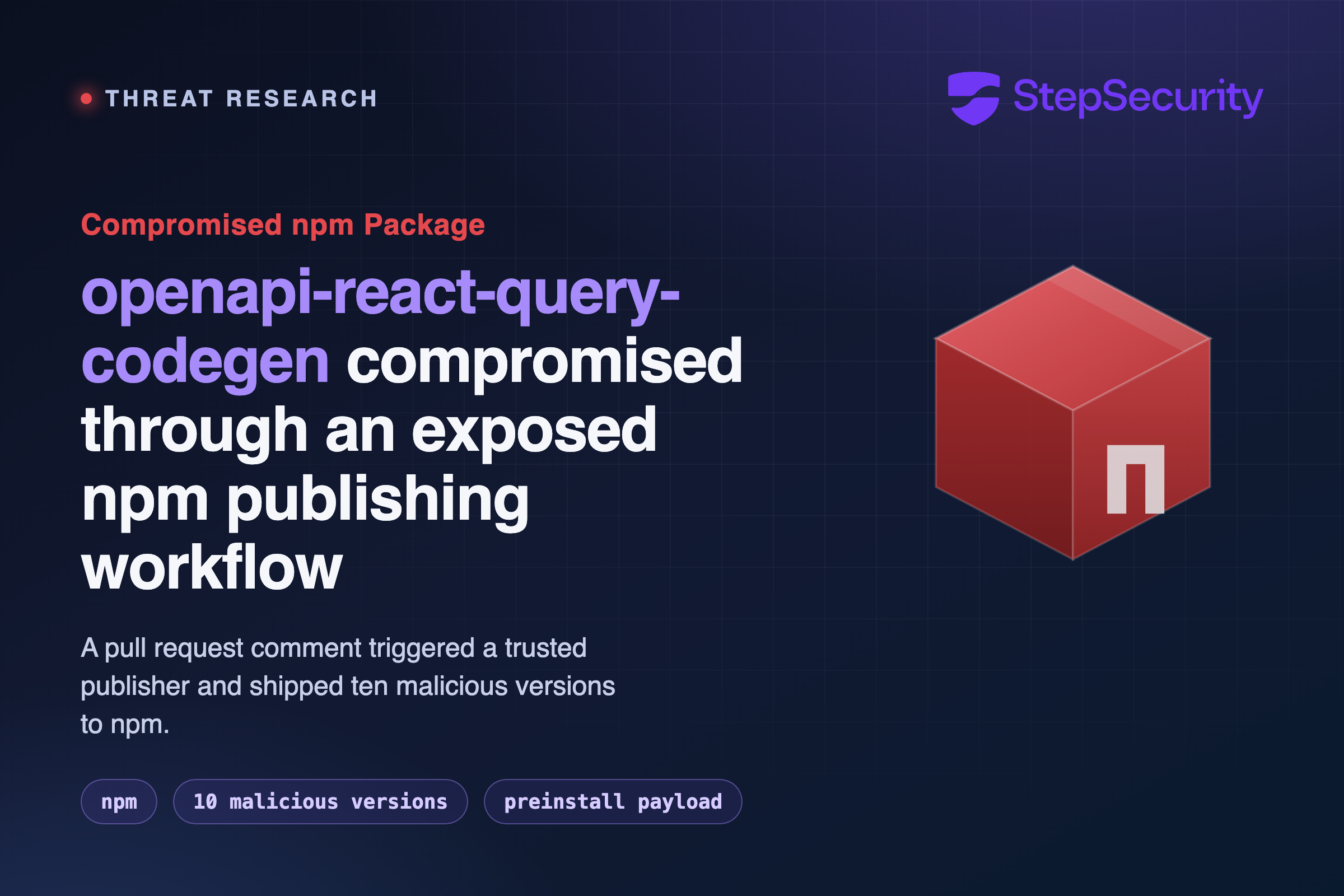
@7nohe/openapi-react-query-codegen Compromised Through an Exposed npm Publishing Workflow

StepSecurity documents how an external GitHub user (p00paboot) hijacked the release workflow of @7nohe/openapi-react-query-codegen by exploiting an npm publish issue-comment trigger that lacked commenter authorization checks, allowing pull-request code to be checked out and published via GitHub Actions OIDC trusted publishing. Ten malicious versions were pushed with preinstall hooks and a poisoned binding.gyp that executed a payload downloading Bun, stealing GitHub/git credentials, probing GCP metadata, and enumerating SSH keys, confirmed via StepSecurity Harden-Runner behavioral analysis on isolated runners. The post lists affected versions, file/hash IOCs, and remediation steps including credential rotation and pinning to clean releases.

npmGitHub ActionsBun+3
StepSecurityHarden-Runner@7nohe/openapi-react-query-codegen+2

Supply Chain, DevSecOpsยท Added 3 Sep 2026, published 28 Aug 2026

opensourcemalware.comwriteup๐Ÿ›ก๏ธ Security

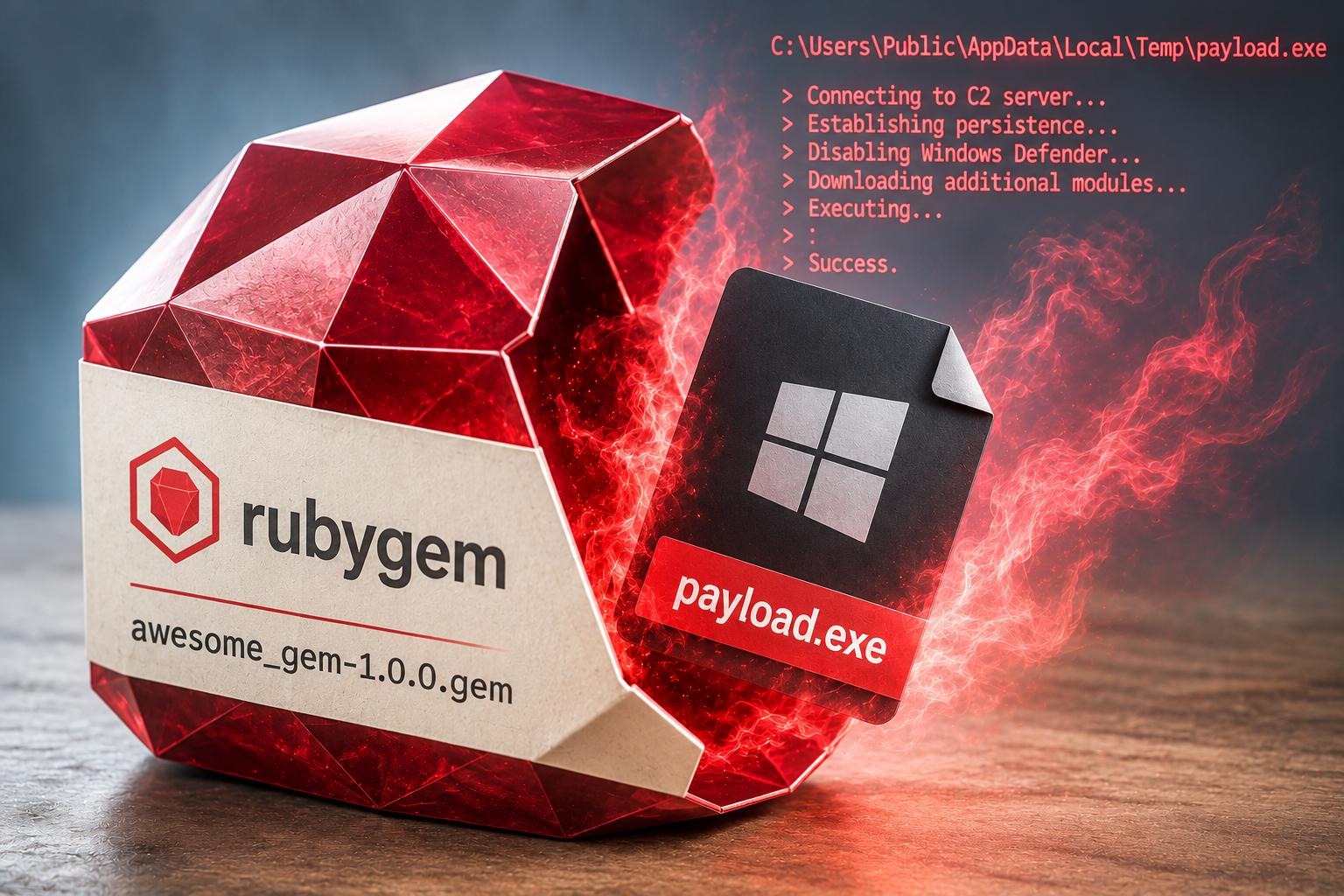
StubMaker RubyGems Campaign Delivers a Windows Infostealer

Researchers identified "StubMaker," a RubyGems typosquat campaign (brumdler, brundlef, and 15 packages typosquatting bundler/i18n/rake/activesupport) that abuses the extconf.rb native-extension hook to fake a successful build while beaconing victim OS info and, on Windows, downloading a Rust loader (main.exe) from a GitHub release. The loader decrypts an embedded 11MB Go infostealer entirely in memory, which injects an embedded DLL (abe_payload.dll) into Chromium browsers via the elevation-service COM object to defeat Application-Bound Encryption and steal passwords, cookies, payment cards, crypto wallets/seed phrases, and Telegram data, exfiltrating via Gofile and a webhook at dresslee.com. The piece also details how RubyGems.org's namespace-reclaim behavior let a different account (mod8rz41mje) take over the yanked "brumdler" name to relaunch the campaign, and includes full IOCs and hashes.

RubyGemsGoRust+4
gemlewqqhu1mod8rz41mjerbq95bwt6q+7

Supply Chain, Malware & RE, Threat Intelยท Added 3 Sep 2026, published 16 Aug 2026

stepsecurity.iowriteup๐Ÿ›ก๏ธ Security

ChainDrop npm Worm: Bun-loaded CI/CD credential harvesterย with Ethereum dead-drop C2

Analysis of 'ChainDrop', an npm supply-chain worm that uses the Bun JavaScript runtime to execute a payload harvesting CI/CD credentials, with command-and-control coordinated via dead-drop messages posted to the Ethereum blockchain. The campaign is notable for combining a self-propagating npm worm technique with blockchain-based C2 to evade takedown and for targeting CI/CD secrets specifically.

npmBunEthereum
ChainDrop

Supply Chainยท Added 3 Sep 2026, published 16 Aug 2026

blog.sentry.securitywriteup๐Ÿ›ก๏ธ Security

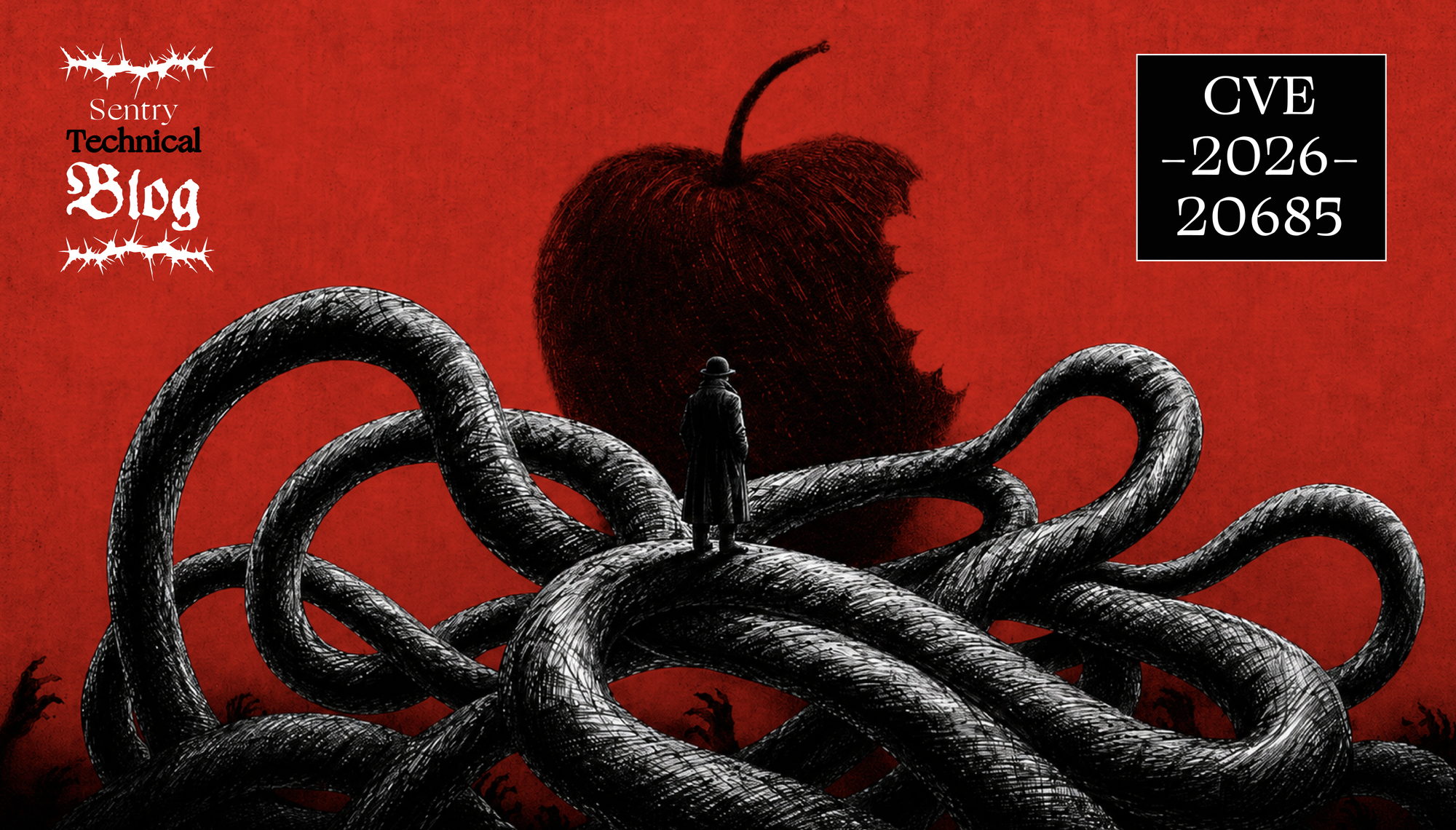
Beyond Prompt Injection: Hacking Apple's Private Cloud Compute

Sentry researcher Drinor Selmanaj found CVE-2026-20685, a path traversal (Zip Slip/CWE-22 class) in darwin-init, the root PID 1 process that provisions Apple Private Cloud Compute nodes by extracting cryptex bundles. By crafting a tar archive that is simultaneously a valid cryptex and a set of traversal entries, the attacker writes files as root to the persistent /var/db data volume during boot, redirects the splunkloggingd log forwarder to an attacker-controlled server, and exfiltrates CloudBoard/Trusted Inference Engine telemetry including per-request metadata, token counts, and timing side-channels โ€” while PCC's attestation, which only measures installed software, remains indistinguishable from a clean boot. Apple rated it CVSS 6.5 information disclosure, patched it in PCC 5E290.3+, and paid a $150,000 Apple Security Bounty award.

macOSPrivate Cloud Compute
CVE-2026-20685CVE-2007-4559CWE-22+6

AppSec, AI Security, Offensive Securityยท Added 3 Sep 2026, published 10 Aug 2026

securitylabs.datadoghq.comwriteup๐Ÿ›ก๏ธ Security

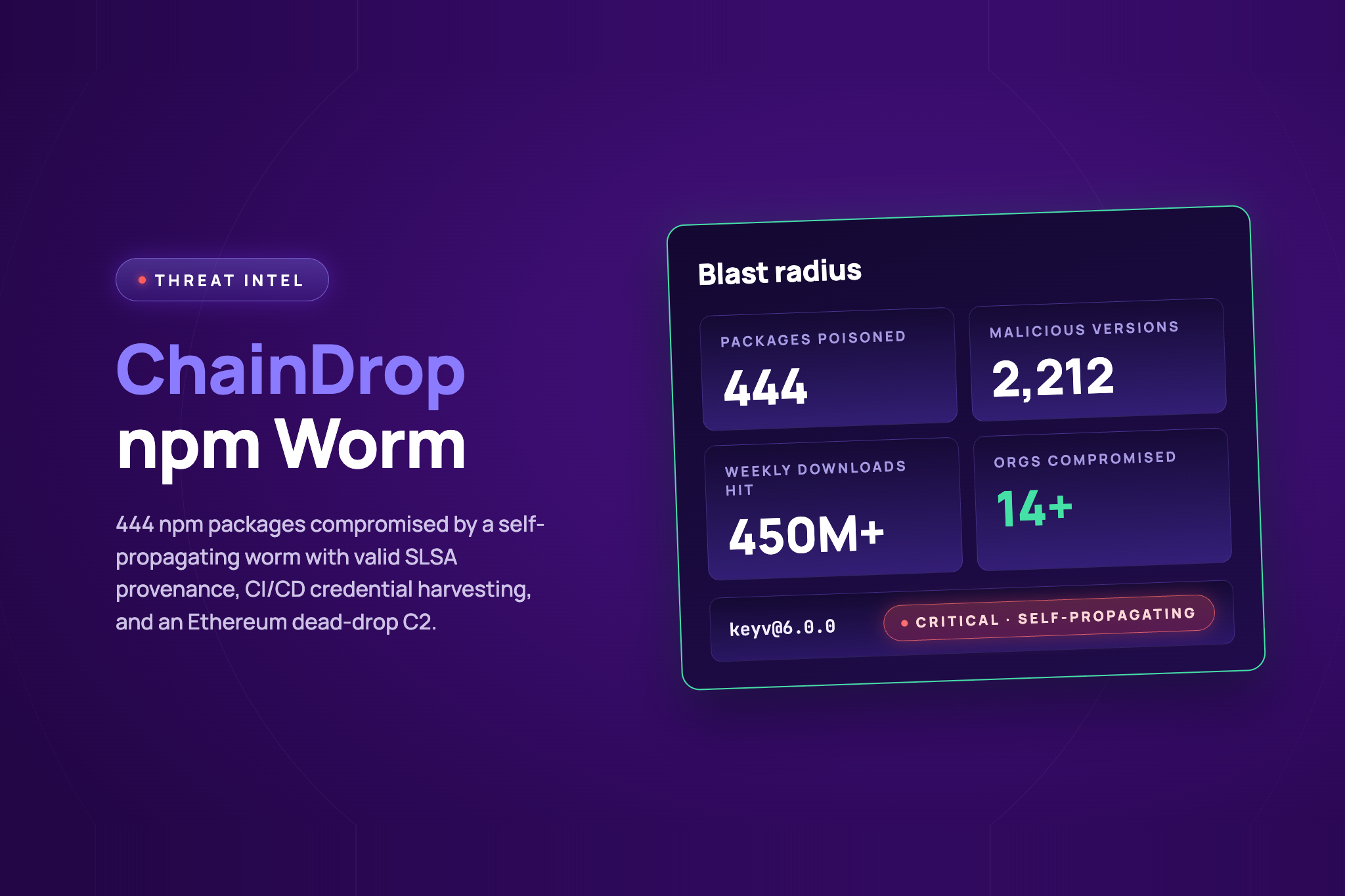
'ChainDrop' worm compromises hundreds of popular npm packages

ChainDrop is an npm worm that compromised hundreds of packages on 4 August 2026, some with over 150 million weekly downloads, starting from a malicious commit (174f6a5) in the keyv repository. Datadog dissects the Bun-based loader, the obfuscated second stage, credential theft (files, GitHub Actions runner memory, AWS, Kubernetes, Vault), Ethereum smart-contract C2 discovery, AES/RSA exfiltration, an eval channel, and propagation via stolen npm tokens, GitHub branches and Sigstore provenance. IOCs and a list of affected packages are included.

npmBunGitHub+3
ChainDropShai-Huludkeyv+7

Supply Chain, Malware & RE, Threat Intelยท Added 29 Oct 2026, published 4 Aug 2026

socket.devwriteup๐Ÿ›ก๏ธ Security

Socket: Fake Corepack Site Distributes Infostealer and Proxyware to Developers

Socket's Threat Research team analyzed corepack[.]org, a fake site impersonating the Node.js Corepack tool that exploits its 2025 removal from Node.js bundling to rank in search results and trick developers into downloading a fake VPN installer. The installer drops OpenShield (an infostealer with browser-data/SSH-key theft, PowerShell execution, and run-key persistence) plus a bandwidth-sharing proxyware component that turns victim machines into proxy exit nodes, while a second click path delivers adware/trojan activity via OperaGXSetup.exe. The post includes full IOCs and details community/OpenJS Foundation takedown efforts against the domain.

CorepackNode.jsnpm+3
OpenShieldApprunnercorepack[.]org+3

Threat Intel, Supply Chainยท Published and added 25 Jul 2026

theravenfile.comwriteup๐Ÿ›ก๏ธ Security

INC RANSOMWARE: THREAT INTELLIGENCE

A researcher deanonymizes INC ransomware's Tor negotiation panel (incpaykabjqc2mtdxq6c23nqh4x6m5dkps5fr6vgdkgzp5njssx6qkid.onion) to a real IP (178.20.41.208, Russia, nginx/Yii PHP backend) running on unusual port 1002, then reverse-engineers the panel's bundled React/Redux/Socket.io JavaScript to map its API endpoints, socket events, JWT-based auth, and leak/ransom-tracking features. The piece also correlates nine clearweb domains and ~170 IPs used by the group over 2023โ€“2025 (65% Russia-hosted, CDN rotation patterns, Cloudflare fronting on one domain) and analyzes 108 ransomware builder samples to infer RaaS versioning, a 2024 forum sale, and links to spin-off groups Lynx and Sinobi.

ReactReduxSocket.IO+3
INC ransomwareLynxSinobi+4

Threat Intel, OSINTยท Added 3 Sep 2026, published 24 Jul 2026

socket.devwriteup๐Ÿ›ก๏ธ Security

Socket: GitHub Actions Abuse Powers Distributed cPanel/WHM Exploitation Campaign

Socket researchers traced malicious dev versions of ten Packagist packages owned by developer dinushchathurya back to compromised GitHub repositories containing 55-62 malicious GitHub Actions workflow files each. The workflows execute on GitHub-hosted Ubuntu runners on every push, download an architecture-matched Linux payload from C2 server 43.228.157.68, and run an internet scanner (`ipscan --exploit CVE-2026-41940`) that exploits an authentication bypass in cPanel/WHM and harvests cloud, database, SSH, and source-control credentials, exfiltrating results via heartbeat/results HTTP endpoints and DNSHook callbacks. GitHub code search for the campaign's unique markers returned 6,100-16,000 matching workflow files across unrelated repositories, indicating the abuse extends far beyond the one compromised maintainer and effectively weaponizes GitHub Actions as free, disposable attack infrastructure.

GitHub ActionsPackagistPHP+2
CVE-2026-41940dinushchathuryaDNSHook+4

Supply Chain, DevSecOps, Threat Intelยท Published and added 23 Jul 2026

island.iowriteup๐Ÿ›ก๏ธ Security

AgentBaiting: How Fake AI Skills Deliver Malware at Scale

Island Research uncovered the FakeGit campaign: roughly 7,600 malicious GitHub repositories (from ~6,600 fake developer profiles), over 800 of which impersonate AI Skills or MCP servers for tools like Gmail, WhatsApp, Databricks, Jenkins, and Docker, collectively logging 14M+ downloads and 600+ listings across registries like LobeHub, Glama, MCP.so, and MCP Market. Malicious READMEs and bundled ZIPs (e.g. Mann1988/awesome-claude-skills, DomingosNgongo/walmart-mcp, 45d5r/databricks-mcp-server) drop a LuaJIT-based loader that runs an obfuscated Lua stage, resolves C2 via a Polygon smart contract, and ultimately injects the StealC infostealer via SmartLoader. The report's core finding, dubbed "AgentBaiting," is that Claude Code, Gemini, and ChatGPT independently discovered and recommended these fake capability repos as installation instructions without ever being given a link, showing agentic search/discovery itself has become a supply-chain attack surface.

GitHubModel Context ProtocolClaude Code+3
FakeGitAgentBaitingSmartLoader+2

Threat Intel, Supply Chain, AI Securityยท Added 22 Jul 2026

wiz.iowriteup๐Ÿ›ก๏ธ Security

ใƒฌใƒƒใƒ‰ใ‚จใƒผใ‚ธใ‚งใƒณใƒˆใฎ่ฆ–็‚น๏ผšB2Bใƒ—ใƒฉใƒƒใƒˆใƒ•ใ‚ฉใƒผใƒ ใฎใ‚ฏใƒฌใ‚ธใƒƒใƒˆใ‚ทใ‚นใƒ†ใƒ ใ‚’ๅฃŠใ—ใŸใŸใฃใŸ1ใคใฎใƒ–ใƒผใƒซๅ€ค

Wiz's autonomous "Red Agent" AI pentester analyzed a B2B data platform's 130MB of frontend JS bundles, extracted 100+ API endpoints, and found an unused boolean flag (e.g. unmaskContactData) referenced in client code but never sent by the normal UI. Replaying a standard free-tier search request with this flag set to true caused the backend to skip credit/tier checks and return fully unmasked business emails and phone numbers for the platform's 600M+ profiles, letting free-tier users bypass the paywall entirely; the vendor fixed the flaw within two hours of disclosure.

Wiz
Red Agent

AppSec, AI Security, Offensive Securityยท Added 3 Sep 2026, published 15 Jul 2026

wiz.iowriteup๐Ÿ›ก๏ธ Security

M-Red-Team: AsyncAPI Supply Chain Compromise via GitHub Actions

Wiz Research details how an attacker used 37 decoy pull requests to mask exploitation of a pull_request_target "pwn request" misconfiguration in the asyncapi/generator GitHub Actions workflow, stealing a privileged PAT belonging to the asyncapi-bot service account. The attacker then published four malicious npm packages (five versions) under the @asyncapi namespace with over 3 million weekly downloads, delivering a self-identified "M-RED-TEAM v6.4" multi-stage payload that fetches an 8.25MB encrypted bundle from IPFS and installs a 92,000-line trojan framework with systemd persistence and HTTP/Nostr/Ethereum/libp2p C2 channels, targeting browser credentials, SSH keys, npm/GitHub tokens, AWS credentials, and crypto wallets. The piece also analyzes partial technical overlap with the Miasma malware framework and the unrelated prt-scan campaign without making definitive attribution.

GitHub ActionsnpmEthereum+3
M-RED-TEAMAsyncAPIShai-Hulud 2.0+4

Supply Chain, DevSecOps, Threat Intelยท Added 3 Sep 2026, published 14 Jul 2026

Showing 30 of 49

Show more