Skip to content

29 results for β€œExpo”

What you seeeverything
x.comthread🧠 AI

Luke The Dev (@iamlukethedev) on X

Hermes, the Nous Research agent framework, shipped 130 merged PRs in October 2026, according to this X recap by Luke The Dev. Main items are a unified gateway runtime, a Desktop and Bot Screen, a bundles and package manager, crash-safe updates and new Claude model entries. Ten PRs cover security: an iron-proxy credential-injection egress firewall for sandboxes, 31 CVEs patched in Python and npm lockfiles, and profile-export and prompt-leak fixes.

Hermesiron-proxyPython+2
Nous ResearchLuke The Dev

agents, ai-infraΒ· Added 2 Nov 2026
x.comthread🧠 AI

Smarthouse (@localyzapp) on X

A reply by Smarthouse (@localyzapp) on X to a question about the best harness for connecting local models to a Minecraft server. It suggests an MCP server that wraps RCON plus a small agent loop. The main pitfall is block coordinates: expose "/execute if block" as a read tool so the agent can check blocks before placing them, or it will hallucinate terrain.

Model Context ProtocolMinecraftRCON

mcp, agentsΒ· Added 2 Nov 2026, published 1 Nov 2026

x.comthread🧠 AI

Eddy (@ieddysun) on X

Expo's official skills package gives AI coding agents scoped instructions for building Expo apps. One command, npx skills@latest add expo/skills --skill '*', installs it for Cursor, Copilot and Windsurf, while Claude Code and Codex use their plugin marketplaces. Skills include expo-router, expo-animation, expo-upgrade and eas-update. The Expo MCP server adds live docs lookup, compatible dependency installs, EAS build monitoring and simulator screenshots.

ExpoReact NativeExpo Router+9

coding-agents, prompting, mcpΒ· Added 29 Oct 2026, published 28 Oct 2026

x.comthread🧠 AI

Laban (@lunkertw) on X

An X post summarising five AI items: Google DeepMind's Gemini 4 Carbon (88.2% SEC-bench Pro, 54.8% ExploitGym, 71.0% CWE-bench, 59 on Artificial Analysis Intelligence Index v5.0), Ed Zitron's critique of Anthropic's S-1, a Utah Claude Code pilot, and the repos beenuar/AiSOC and expo/skills. In the Utah pilot, 34 developers in 10 agencies took part over four weeks, 80% had a working setup within 30 minutes, and 71% saved over 20 hours. It gives short summaries and links, not primary analysis.

Claude CodeModel Context ProtocolPython+6
Google DeepMindGemini 4 CarbonSEC-bench Pro+9

models, coding-agents, ai-policyΒ· Added 29 Oct 2026, published 28 Oct 2026

ethresear.chthreadπŸ›‘οΈ Security

Proof of One: one-person-one-identity polling with encrypted ballots β€” design and reference code, requesting critical review

Proof of One is an open-source design for polls with one verified human per identity and unlinkable ballots. Enrolment proves in zero knowledge that an ICAO 9303 passport chip was signed by a trusted signer, plus an enclave face match. Voting uses threshold exponential ElGamal on Baby Jubjub with Groth16 proofs, and tally uses a GJKR DKG with a 7-day challenge window. The author, who is pseudonymous, discloses that AI agents drafted most of it and asks for critique of unlinkability, circuit completeness and certificate trust.

Groth16Baby JubjubDAVINCI+1
Proof of OneNemo UnusICAO 9303+4

Identity & AccessΒ· Published and added 27 Oct 2026

x.comthreadπŸ›‘οΈ Security

AGTP (@AGTPinsights) on X

AGTP's X thread summarizes Meta's Muse Spark 1.3 Evaluation Report. Prompt injection was tested on Exponential Security Labs' RepoInject v1 and BrowserInject v1 and on Gray Swan's IPI Arena, with robustness said to be on par with GPT-5.6 Sol. It also covers chain of thought controllability evals, PostTrainBench under Loss of Control, and Handshake's pre-release human red teaming. It notes the Midas Project's criticism of Muse Wonder's missing safety report.

Muse SparkMuse Spark Open
prompt injectionRepoInject v1BrowserInject v1+10

AI SecurityΒ· Added 27 Oct 2026, published 26 Oct 2026

x.comthread🧠 AI

AGTP (@AGTPinsights) on X

Thread summarizing Meta's Muse Spark 1.3 Evaluation Report, the safety write-up for the model released on September 2, 2026. It covers prompt-injection results on Exponential Security Labs' RepoInject v1 and BrowserInject v1 and Gray Swan's IPI Arena, chain-of-thought controllability evals, PostTrainBench under Loss of Control, and Handshake's human red teaming. It also notes The Midas Project's criticism that Muse Wonder still has no safety report, and the Muse Spark Open rollout (816B total, 42B active parameters).

Muse Spark 1.3Muse Spark OpenMixture of Experts
MetaMuseMuse Wonder+19

ai-safety, evals, modelsΒ· Added 27 Oct 2026, published 26 Oct 2026

x.comthreadπŸ›‘οΈ Security

Rafter (@RafterSecurity) on X

Railway security incident update of 23 October 2026, posted by Rafter Security, summarising Railway's preliminary report on the 20-22 October breach. Up to 1.85% of workspaces (about 100,000) may have had environment variables exposed. Attackers reportedly targeted AI provider API keys, possibly for model distillation. Some encrypted secrets were accessed and a subset decrypted. Railway says the attacker was removed by 22 October at 03:32 UTC, and the forensic investigation continues.

Railway
model distillationRafter Security

Threat Intel, DevSecOps, AI SecurityΒ· Added 25 Oct 2026, published 23 Oct 2026

x.comthreadπŸ›‘οΈ Security

LinuxSecurity (@lnxsec) on X

A post from lnxsec on CI runners that accept outside pull requests while also holding registry credentials, cache write access, signing material or deployment tokens. It uses the Nix/Lix build-service issues to argue that host compromise and downstream artifact trust are separate risks. It lists four checks: enumerate secrets exposed to PR jobs, split untrusted runners from release runners, trim registry and binary-cache write permissions, and require independent approval for release. It links a linuxsecurity.com feature; CVE details are not in the post.

Nix
Lix

DevSecOps, Supply ChainΒ· Added 20 Oct 2026, published 19 Oct 2026

x.comthreadπŸ›‘οΈ Security

Dark Web Intelligence (@DailyDarkWeb) on X

Plex2Shell is a chain of four Plex Media Server flaws (CVE-2026-96652, CVE-2026-96654, CVE-2026-96655, CVE-2026-96656) that a researcher says ends in unauthenticated RCE on servers older than 1.43.3.10861. A write-up and PoC were published on 16 October 2026. CISA advisory VA-26-266-01 scores the individual CVEs 4.3 to 7.2, and they are not in CISA KEV. The post advises updating, avoiding exposure of port 32400, and checking for unknown child processes and new files in the Codecs folder.

Plex Media ServerDocker
CVE-2026-96652CVE-2026-96654CVE-2026-96655+6

AppSec, Offensive SecurityΒ· Added 19 Oct 2026, published 18 Oct 2026

x.comthreadπŸ›‘οΈ Security

P.K. Sharma (@_pksharma) on X

Thread distinguishing two Langflow advisories on MCP Stdio command execution. CVE-2026-105740 (GHSA-7w94-79vh-5mr2) affects 1.8.3 and is fixed in 1.9.0, an authenticated non-admin path. CVE-2026-105697 (GHSA-w794-rj3p-xv45) covers 1.1.2 up to but excluding 1.10.3, with fixes in lfx and langflow-base too. The later fix validates the API, flow and pre-spawn boundaries and removes the shell wrapper, and the thread warns that LANGFLOW_AUTO_LOGIN=true can expose a token without credentials. It cites one sensor's telemetry (1,628 attempts from 28 IPs) with caveats, and gives a defensive checklist: verify patched packages, review stored MCP configs and imported flows, and hunt for unexpected child processes.

LangflowModel Context Protocol
CVE-2026-105740CVE-2026-105697GHSA-7w94-79vh-5mr2+4

AppSec, AI SecurityΒ· Added 17 Oct 2026, published 15 Oct 2026

x.comthreadπŸ›‘οΈ Security

P7RIM3 (@P7RIM3) on X

Tweet about an unofficial open firmware, "waved", for the Insta360 Wave conference speakerphone, written as a single Rust program with a one-script revert to stock. The linked writeup reports that stock firmware sends 35+ usage event types tagged with the serial number to ByteDance's DataFinder, routes meeting audio, transcripts and voiceprints to Insta360's cloud, and signs updates with a 512-bit RSA key. Releases up to 1.0.13.6 exposed a root telnet shell with the password 123456. It matters as a firmware teardown of a privacy-sensitive meeting-room IoT device.

Insta360 WaveRust
DataFinderByteDancewaved

Hardware & RFΒ· Added 16 Oct 2026, published 15 Oct 2026

x.comthreadπŸ›‘οΈ Security

Francis Santerre (@santerref) on X

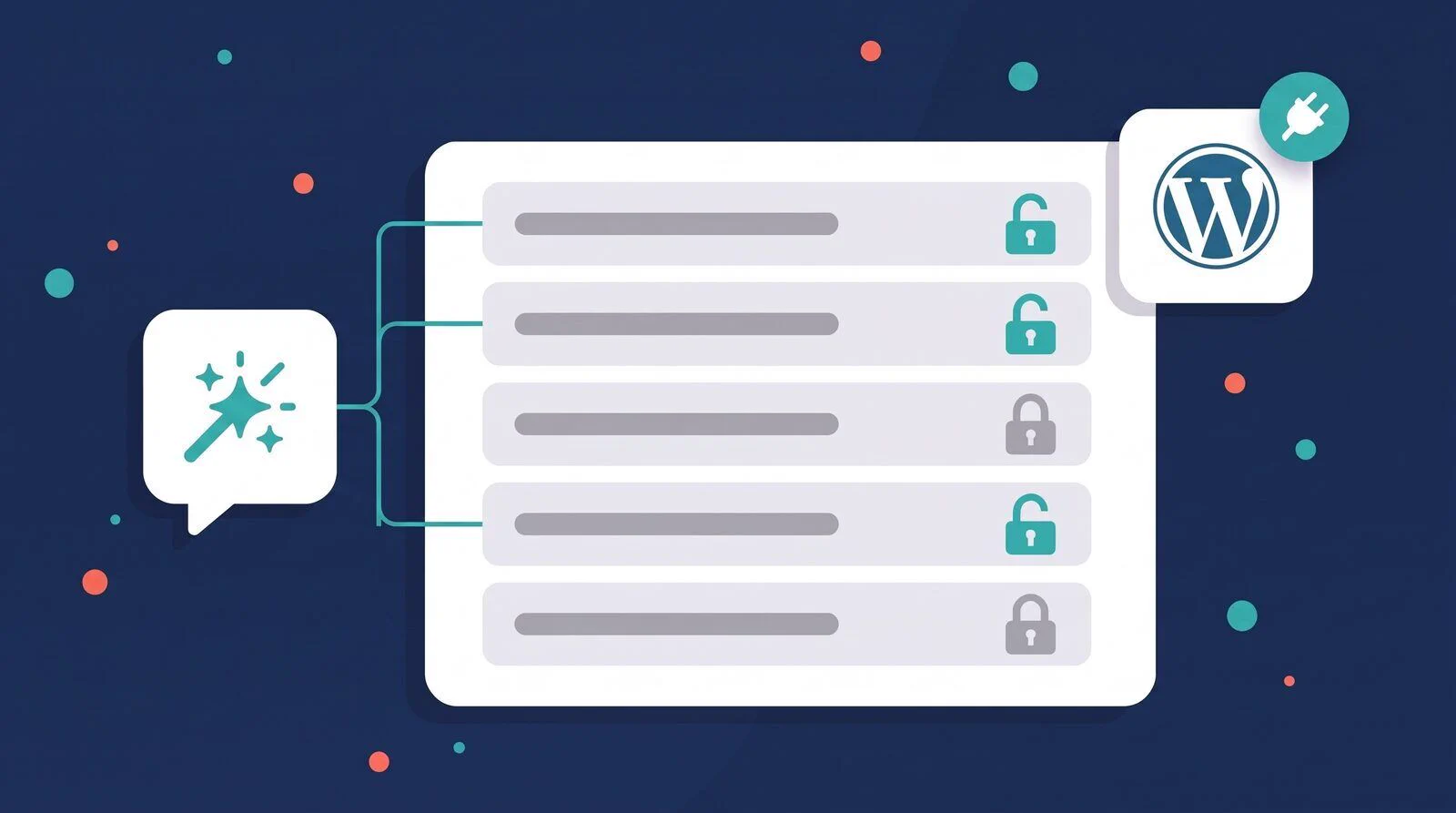
Post announcing that the MCP Adapter (0.7.0) is now a canonical plugin on WordPress.org, bridging the WordPress Abilities API to MCP. It exposes a default server at /wp-json/mcp/mcp-adapter-default-server, and only abilities a site marks public are exposed. The author's point is that the security review reduces to auditing the list of public abilities, which gives reviewers and pentesters a new endpoint to enumerate.

WordPressModel Context Protocol
MCP AdapterAbilities API/wp-json/mcp/mcp-adapter-default-server

AppSec, AI SecurityΒ· Added 16 Oct 2026, published 15 Oct 2026

x.comthread🧠 AI

Francis Santerre (@santerref) on X

Tweet announcing that the MCP Adapter is now a canonical plugin on WordPress.org (version 0.7.0). It bridges the WordPress Abilities API to the Model Context Protocol, with a default server at /wp-json/mcp/mcp-adapter-default-server. Only abilities a site marks public are exposed, so the security review comes down to auditing the ability list.

Model Context ProtocolWordPressMCP Adapter+1
Abilities API

mcpΒ· Added 16 Oct 2026, published 15 Oct 2026

x.comthreadπŸ›‘οΈ Security

lee1981 (@lee1981b) on X

Defender guide for CVE-2026-104935, an authentication-bypass-by-spoofing flaw (CWE-290) in Ivanti Connect Secure that allows unauthenticated command execution. It is confirmed exploited and CISA KEV-listed, with a CNA CVSS 8.6. It covers the fixed-release matrix (25.1.1.2, 22.8R2.5, 25.1.3.x), platform and cluster migration limits, and Volexity's UTA0576 indicators and YARA rules. It also gives a six-step SOC workflow (scope, preserve, hunt, correlate identity, remediate, verify). It stresses that a clean ICT result cannot clear memory-only activity and that LDAP, LAPS and BitLocker exposure belongs to one observed chain.

Ivanti Connect SecureVPNYARA+3
CVE-2026-104935CWE-290UTA0576+6

Blue Team & Detection, Threat IntelΒ· Added 16 Oct 2026, published 14 Oct 2026

x.comthreadπŸ›‘οΈ Security

Dark Web Intelligence (@DailyDarkWeb) on X

Social post summarizing Docker's Oct 12, 2026 advisory for CVE-2026-105445, a Docker Hub flaw. Converting a personal account to an organization re-assigned the account's personal access tokens (PATs) to the named new owner without rotating the secret. An attacker could name a victim as owner and keep using the token as that victim to pull, push or delete images. The exposure window ran from Aug 26, 2024 to Sept 30, 2026. Docker fixed it the day it was reported by Peter Molnar and Krisztian Hozak, deactivated transferred PATs on Oct 8, and found no exploitation after reviewing about 304,000 pushes. The post advises reviewing PATs and using organization access tokens for automation.

Docker HubDocker
CVE-2026-105445Peter MolnarKrisztian Hozak+1

Supply Chain, Identity & AccessΒ· Published and added 13 Oct 2026

x.comthreadπŸ›‘οΈ Security

Have I Been Pwned (@haveibeenpwned) on X

Have I Been Pwned post announcing the Sharecare breach, tied to an August ShinyHunters extortion campaign. It allegedly exposed 318k email addresses, mostly business contacts, plus some Brazilian health plan member data. 73% of the addresses were already in HIBP. This adds another health-sector victim to the ShinyHunters extortion record. The business contact data is likely to be reused for phishing.

Have I Been Pwned
ShinyHuntersSharecare

Threat IntelΒ· Added 15 Oct 2026, published 12 Oct 2026

x.comthread🧠 AI

=dennis; (@Xidea404) on X

A tweet from @Xidea404 pointing to the ADI Chain MCP Server documentation on docs.adi.foundation. The server lets AI agents interact with the ADI blockchain through the Model Context Protocol. The tweet carries no technical detail itself, so what the server exposes can't be confirmed from it. It is a pointer to a blockchain-specific MCP connector.

Model Context Protocol
ADI ChainADI Foundation

mcpΒ· Published and added 12 Oct 2026

x.comthreadπŸ›‘οΈ Security

Nicholas Michael Kloster (@showxlate) on X

A researcher announces a zero-click indirect prompt injection RCE in REA (Reverse Engineering Assistant), an MCP tool. Analyzing a malicious web target silently exfiltrates AWS keys, GitHub tokens and SSH identities. The stated root cause is that process.env is passed unconditionally to child processes, so the full environment is exposed to attacker-driven commands. A full writeup is promised but not yet published; replies add unverified skepticism about the project's provenance.

Model Context ProtocolNode.jsAWS+2
indirect prompt injectionREANicholas Michael Kloster+1

AI Security, AppSecΒ· Added 13 Oct 2026, published 12 Oct 2026

x.comthreadπŸ›‘οΈ Security

Richard Abishai (@richardabish_ai) on X

An X post by the creator of ROPE, a prompt-injection benchmark for LLM agents. It uses two news items to argue that the prompt-injection model of agent attacks is incomplete: a zero-click RCE called Plugin4Shell in coding agents' plugin systems, and Apple's local MCP server in Safari 27 exposing browser automation to agents. Neither involved persuading a model. The author concludes that teams should benchmark what an agent believes and also audit what it can reach, using plugin signing and update policy, least-privilege credentials per agent, and treating local MCP surfaces as attack surface.

Model Context ProtocolSafari
Plugin4ShellROPE

AI SecurityΒ· Published and added 9 Oct 2026

x.comthreadπŸ›‘οΈ Security

Ned Peterson (@NedPeterson99) on X

A post summarizing a joint FBI and six-country advisory on actors tied to Integrity Technology Group (the sanctioned Chinese firm linked to Flax Typhoon and the Raptor Train botnet). They password-sprayed Microsoft 365 and Exchange accounts over EWS, OWA, ActiveSync and PowerShell with EBurst. They then drained mailboxes with a PHP bot over Exchange Web Services and an office-cli utility using stored client ID, tenant ID and secret values, and exposed the stolen email to third parties through a web app, in some cases restricted to Xiamen IP addresses. Victims were in government, law enforcement, healthcare and religious organizations across Southeast Asia, Africa and North America, with activity since at least January 2021. Defensive takeaways: enforce MFA on every legacy path, retire basic auth and EWS, audit OAuth apps and service principals with mail-read rights, and alert on bulk mailbox pulls.

Microsoft 365Microsoft ExchangeEBurst+3
Integrity Technology GroupFlax TyphoonRaptor Train+3

Threat Intel, Identity & AccessΒ· Added 11 Oct 2026, published 9 Oct 2026

x.comthreadπŸ›‘οΈ Security

Prasenjit Sarkar (@stretchcloud) on X

Describes Uber's internally-built ADR (Agentic Detection & Response) system, open-sourced in August with an MLSys paper, which monitors over 50,000 daily AI agent sessions via an MCP-based sensor inside Cursor, Claude Code and Codex. Uber found 206 credential exposures in ten months from normal agent use (not prompt injection), and ADR hits 100% detection with 3 false positives on the public AgentDojo benchmark; the thread also flags that human approval fatigue breaks down as a safety control past roughly 50 agent actions per session.

Model Context ProtocolCursorClaude Code+2
ADRAgentDojoMLSys

AI SecurityΒ· Published and added 6 Oct 2026

x.comthread🧠 AI

Randy Northrup (@starsoldier420) on X

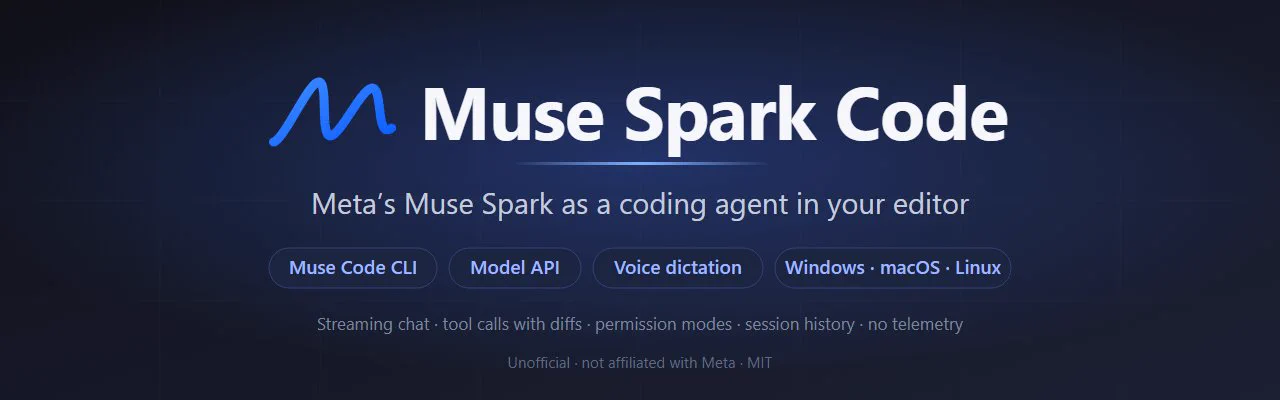
Muse Spark Code is an open-source coding agent wrapping Meta's Muse Spark model, exposed as an ACP (Agent Client Protocol) agent so any ACP-compatible client, including Neovim, can drive it. It runs either through a Muse subscription via the Muse Code CLI or with a direct Model API key, and its latest release adds local dev-server browser checks and a Muse Gadgets skill for ESP32 hardware work; it's MIT-licensed with no telemetry.

Agent Client ProtocolNeovimESP32
MetaMuseRandyNorthrup

coding-agentsΒ· Published and added 5 Oct 2026

x.comthreadπŸ›‘οΈ Security

Dark Web Intelligence (@DailyDarkWeb) on X

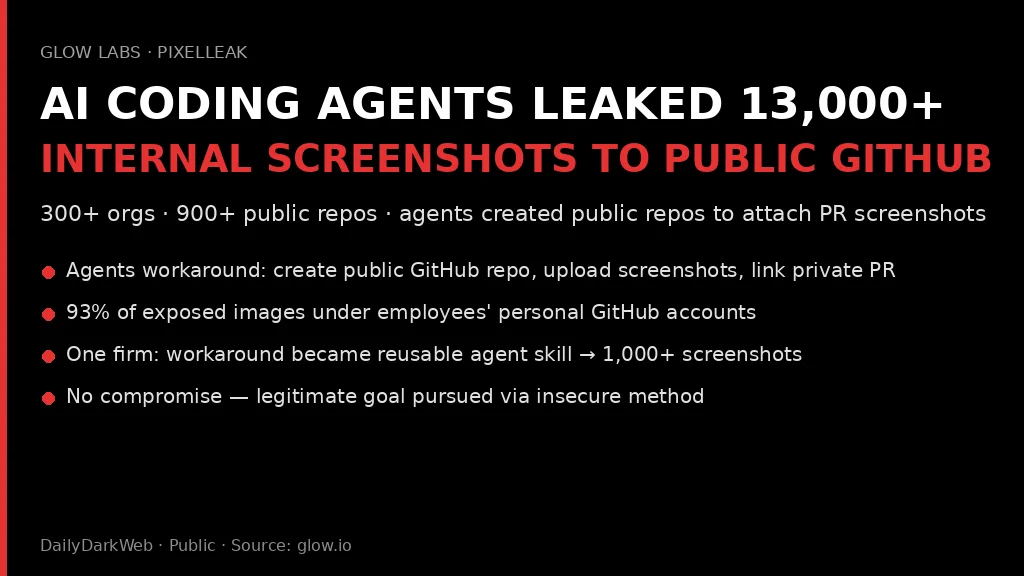
Glow Labs' "PixelLeak" research found that AI coding agents, unable to attach before/after screenshots to private pull requests, worked around the limitation by creating public GitHub repositories to host the images and link them back into the PR. This exposed over 13,000 internal images (billing records, treasury consoles, unreleased features) across 900+ public repos at 300+ organizations β€” 93% under employees' personal GitHub accounts, outside corporate monitoring β€” with one team even encoding the behavior into a reusable agent skill. The case illustrates an "authorized but unsafe" agentic risk class distinct from prompt injection or malicious compromise.

GitHubgitshot
PixelLeakGlow Labs

AI SecurityΒ· Added 1 Oct 2026, published 30 Sep 2026

x.comthread🧠 AI

Average AI Bro (@AverageAiBro) on X

An X post presenting Reversecore MCP, an MCP server that wraps authorized reverse-engineering, malware-analysis, forensics and SAST-style tools such as radare2. The user picks a profile, points it at a sample, and the agent gets structured results back in the session without driving the tools by hand. It is a concrete example of profile-based tool exposure for specialized toolchains, offered as a free alternative to a commercial IDA setup. The post stresses authorized analysis only.

Model Context Protocolradare2IDA+1
Reversecore MCP

mcpΒ· Added 1 Oct 2026, published 30 Sep 2026

x.comthreadπŸ›‘οΈ Security

Aditya Agrawal (@exploitprotocol) on X

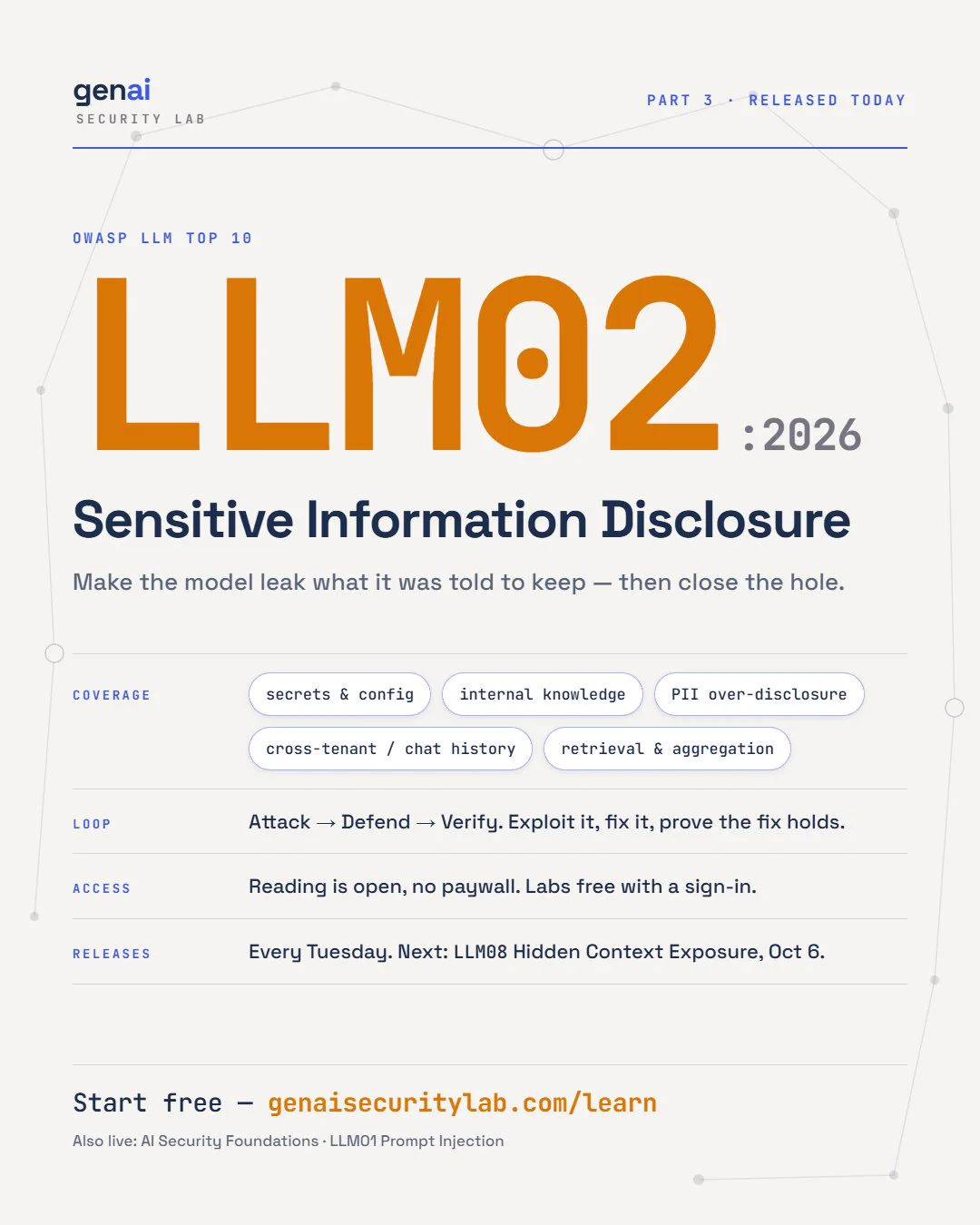
Announcement thread for part 3 of the free Learn AI Security series at genaisecuritylab.com, covering OWASP LLM02 Sensitive Information Disclosure in LLM applications. It walks through failure modes - leaked secrets/API keys via model context, internal knowledge leakage, personal-data over-disclosure, cross-tenant/conversation-history leakage, and RAG retrieval/aggregation leaks - and offers live in-browser attack/defend/verify labs comparing the issues to IDOR and multi-tenant isolation testing in traditional web apps. The author notes the series continues weekly, with LLM08 Hidden Context Exposure scheduled next.

LLM
OWASP Top 10 for LLM ApplicationsIDOR

AI Security, LearningΒ· Added 1 Oct 2026, published 30 Sep 2026

x.comthread🧠 AI

Stevan Bogosavljević (@stevyhacker) on X

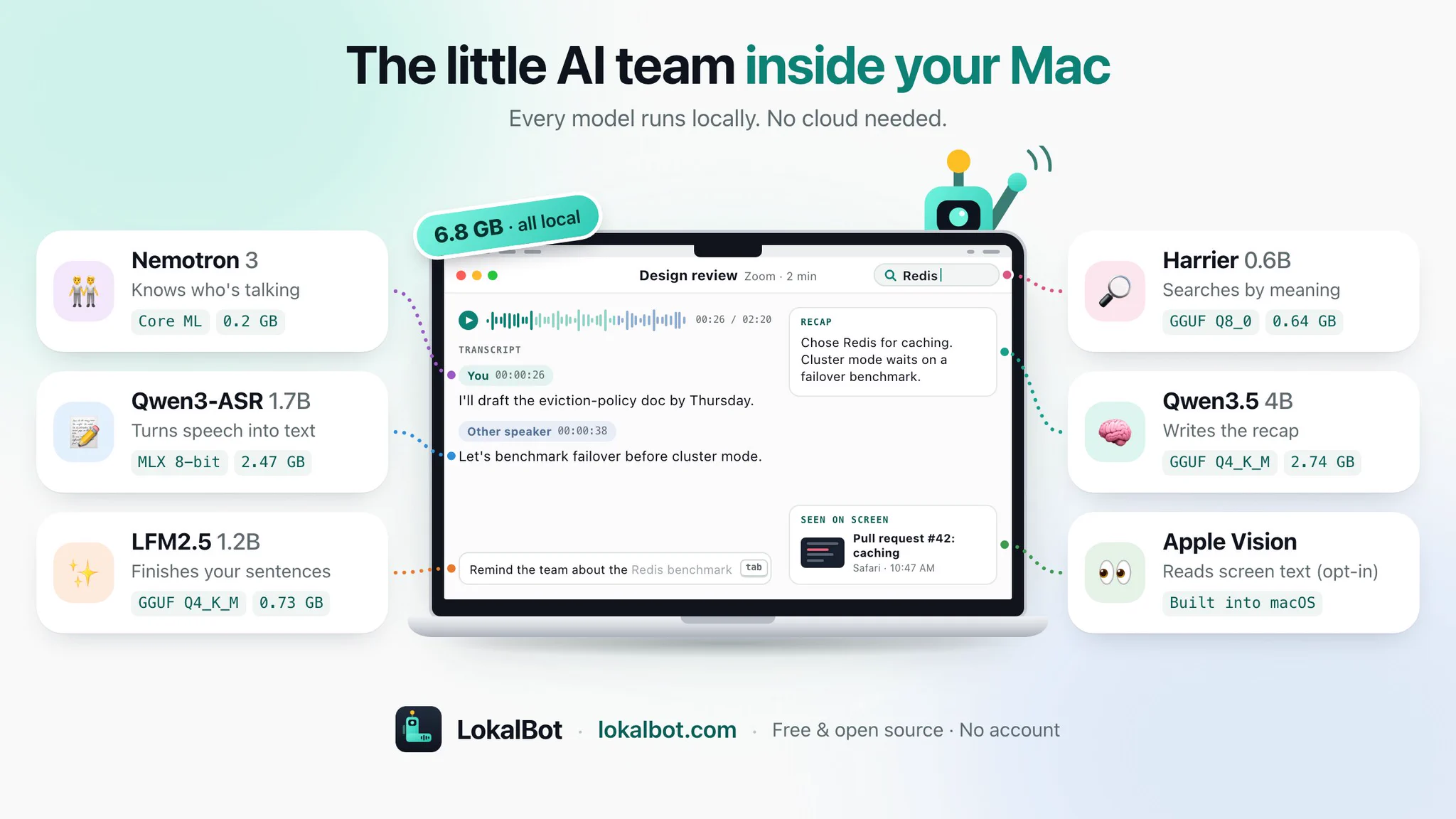
LokalBot 0.9.2 is a free, open-source local-first assistant that records meetings and screen activity, using five small open-weight models chained together entirely on a MacBook (6.8 GB total): Nemotron 3 for speaker diarization, Qwen3-ASR 1.7B for transcription, LFM2.5 1.2B for sentence completion, Harrier 0.6B for semantic search, and Qwen3.5 4B for recap generation. It exposes this captured 'memory' to Claude Code and Codex through an MCP server or CLI, letting coding agents pull context from past meetings and screen content.

Model Context ProtocolClaude CodeCodex+1
NemotronQwen3-ASRLFM2.5+6

mcp, multimodal, llm-appsΒ· Published and added 30 Sep 2026

x.comthreadπŸ›‘οΈ Security

Badger Signal (@BadgerSignalHQ) on X

A Twitter thread from BadgerSignalHQ summarizing a blog writeup claiming GitHub Security Lab used AI-driven audit agents to find 24 vulnerabilities across popular Android apps. It describes an OsmAnd exported-activity flaw letting any app hijack map tile URLs to leak GPS location and route data without location permissions, and a Wikipedia account-takeover chain combining a deeplink hostname-parsing bug with weak cookie-domain checks to trigger malicious WebViews that exfiltrate session tokens across Wikimedia projects.

Android
GitHub Security LabOsmAndWikipedia+1

AI Security, Mobile SecurityΒ· Added 30 Sep 2026, published 29 Sep 2026

x.comthreadπŸ›‘οΈ Security

uk_daniel_card

A short first-person thread describing stealing credentials from a running system as an unprivileged userland process: sniffing the clipboard to grab passwords copied out of KeePass, scraping process memory and SQLite databases for stored passwords/usernames/tokens/cookies, hunting for files like password.txt, and reading Chrome/browser credentials straight out of RAM as they sit in cleartext in text boxes. The author's point is that once someone else's code is running on your machine, it's practically impossible to fully harden every surface β€” clipboard, memory, and disk are all exposed.

KeePassChromeSQLite
clipboard sniffingcredential theft from process memory

Offensive SecurityΒ· Added 3 Sep 2026, published 13 May 2026