Bankless news report on Binance reopening withdrawals in phases on 1 November 2026 after a record $6B+ hack. The FBI named North Korea's TraderTraitor group on 31 October, listed 628 addresses tied to the theft and asked THORChain node operators, instant exchanges and DeFi services to block them. Chainalysis says $500M moved out of TRON wallets and funds are shifting to Solana. Binance published a new proof of reserves covering 10 tokens.
THORChainTronSolana
TraderTraitorDPRKBinance+2
Blockchain, Threat IntelΒ· Published and added 2 Nov 2026

XCPE is an Android TV box botnet of more than 1.3 million devices, which Google's Threat Intelligence Group attributes with high confidence to manufacturer Videostrong Technology, who preinstalled a system-level backdoor in firmware. The backdoor (x.cpe, com.oemservice) used an MQTT broker for commands and loaded ad fraud and residential proxy modules. Google took down C2 servers tied to 10 million more devices and banned Videostrong from certified Android devices.
The Florida Department of Education (FLDOE) disclosed a breach of its Florida Student Financial Aid website (FloridaStudentFinancialAidSG.org), discovered on 19 October and potentially affecting about 4.9 million people. Exposed data may include names, Social Security numbers, dates of birth, addresses, phone numbers and emails. The entry vector and actor are undisclosed. The article links it to the September FLHSMV driver database breach, which came from compromised police credentials.
Florida Department of EducationFlorida Department of Highway Safety and Motor VehiclesFlorida Digital Service+2
Revolve, an online fashion retailer, disclosed a September 11 breach of systems including its e-commerce platform. Attackers may have exfiltrated names, addresses, card numbers and expiration dates that customers saved in their accounts. Notices filed with the Iowa, Massachusetts, Texas and Vermont attorneys general show at least 179,259 people notified. Revolve offers no credit monitoring, and the attacker and method are undisclosed.
Google Cloud Vulnerability Reward Program has added a $250,000 root-in-cloud tier for exploits that give roles/owner or full IAM control over arbitrary Google Cloud organizations or projects. The exploit path cannot rely on prior project access, stolen credentials or social engineering. Remote code execution in Borg also qualifies, but researchers must stop probing immediately. Proof is made against a designated service account using a deterministic proof-of-root mechanism.
Google CloudBorg
GoogleCloud VRPChris Betz+2
Cloud & Infra, Offensive SecurityΒ· Published and added 2 Nov 2026
C3RB3R (Cerber) ransomware is encrypting Synology NAS devices running outdated DiskStation Manager, and Synology issued an advisory urging immediate updates. The attacks exploit a vulnerability patched in December 2024, likely among CVE-2024-10441, CVE-2024-50629 and CVE-2024-10445 from a November 2024 advisory. Victims get a read-me3.txt note and .L0CK3D extension. Shadowserver tracks over 380,000 exposed Synology NAS devices.
Ivanti patched two more Connect Secure zero-days, CVE-2026-111357 (privilege escalation) and CVE-2026-118527 (authenticated file upload), chained with authentication bypass CVE-2026-104935 since at least 1 October 2026. Volexity attributed the chain to UTA0576, which ran no malware, re-exploited the device per command and tampered with logs, evading Ivanti's Integrity Checker Tool. CISA added CVE-2026-104935 to KEV, and Shadowserver tracks over 5,000 exposed instances.
Ivanti Connect SecureVPN
CVE-2026-111357CVE-2026-118527CVE-2026-104935+12
Threat Intel, Offensive SecurityΒ· Published and added 2 Nov 2026
Report on Anthropic's IPO prospectus, filed 26 October 2026. It says the value of internal Claude use at customer list prices exceeded monthly personnel costs (excluding equity awards) by April 2026. Internal usage value rose more than 250-fold from January to September 2026, and Claude wrote over 90% of new code. The filing gives no compute cost or dollar figure.
Claude
Anthropic
ai-policy, coding-agentsΒ· Published and added 2 Nov 2026

LifeVal is an OpenAI evaluation that measures how well ChatGPT models complete everyday life tasks such as childcare search, government services, budgeting, shopping and health. Tasks were derived from the American Time Use Survey, the Multinational Time Use Study and a new demographically representative survey of 3,995 respondents. OpenAI says it used the eval over the past year to track gains in browser use, computer use and connectors. The fetched text gives no scores or task list.
The FBI attributed the 29 October 2026 Binance hot wallet theft (about $6.3 billion) to North Korea's TraderTraitor and listed 608 Ethereum, 19 Bitcoin and one Solana address holding proceeds. It asked THORChain and RPC node operators, instant exchanges, DeFi services and analytics firms to refuse linked transactions. Elliptic and Chainalysis report automated laundering, and Binance says the breach went beyond one laptop and involved EIP-7702 delegation.
EthereumBitcoinSolana+2
TraderTraitorDPRKFBI+7
Blockchain, Threat IntelΒ· Published and added 2 Nov 2026
Analysis of the Arbitrum Security Council's 30 October 2026 freeze of 8,425 ETH and 74,559,805.2 ARB on Arbitrum One, tied to the Binance exploit. In one L1 transaction, the council's 9 of 12 Safe used the UpgradeExecutor to swap the Inbox implementation, so the message arrived without address aliasing and landed as type 0x65 transactions with a zero signature. The post lists monitoring advice: alert on Inbox Upgraded events, since the EIP-1967 slot never showed the change.
ArbitrumEthereumSafe+2
Arbitrum Security CouncilArbitrum DAOKelpDAO+6
Blockchain, Blue Team & DetectionΒ· Published and added 2 Nov 2026
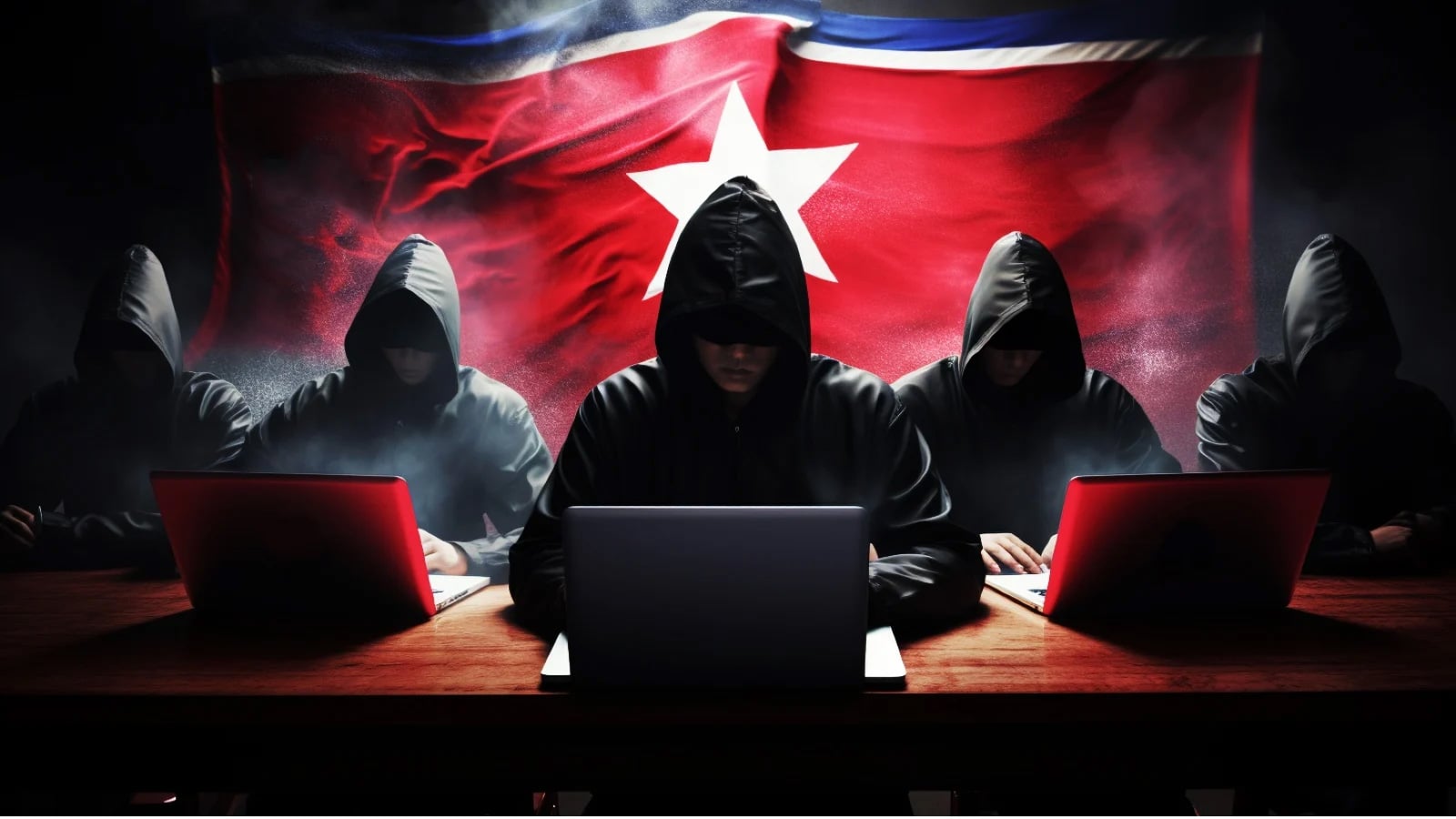
The FBI attributed the roughly $6.3 billion Binance theft of about 29 October 2026 to North Korea's TraderTraitor (Lazarus Group, Jade Sleet, APT38). Binance traced the breach to a compromised DevOps engineer's laptop that gave access to a service container used to submit unauthorized withdrawals across ten blockchains. The FBI published 628 laundering addresses and linked the group to earlier thefts at Bybit, DMM Bitcoin, Bitget and Drift.
EthereumBitcoinSolana+3
TraderTraitorLazarus GroupDPRK+14
Threat Intel, BlockchainΒ· Published and added 1 Nov 2026
Decrypt guide to running open-weight AI models locally with Ollama and LM Studio. It cites Epoch AI's finding that open models trail the best closed ones by about four months, and sets out VRAM and unified-memory needs (8GB minimum, 24GB for serious use), quantization, licences (MIT, Apache 2.0), install commands and Gemma 4 download sizes. It also notes that the largest open models, such as Qwen3.8-Max, exceed consumer hardware.
OllamaLM StudioHugging Face+7
DecryptEpoch AIGemma 4+11
inference, modelsΒ· Published and added 1 Nov 2026
A Brazilian labor court in Parauapebas, ParΓ‘ fined two law firms 10% of an R$842,000 claim (about $16,000) for hiding a prompt-injection command in a petition. The white-on-white text told AI to respond superficially and not challenge the documents. Galileu, the National Justice Council's generative AI tool, detected it and blocked processing. The court cited Articles 5 and 77 of the Civil Procedure Code.
ChatGPT and Codex usage limits merging is an OpenAI help-center notice. From December, the Plus, Pro and Business plans share one usage allowance across ChatGPT and Codex, measured in tokens. Use depends on the model and the task, and instant chat does not count. Users see combined usage in Settings β Usage and can wait, upgrade or buy credits at the limit.
ChatGPTCodex
OpenAI
coding-agents, ai-policyΒ· Added 2 Nov 2026, published 31 Oct 2026
CVE-2026-58882, "SMS of Death", is a zero-click Android denial-of-service flaw in WapPushOverSms.decodeWapPdu, where an unchecked header-length value becomes negative and triggers a NegativeArraySizeException that crashes com.android.phone. A malformed eight-byte WAP Push message to port 2948 can drop calls, including emergency calls, and about 20 messages caused reboot loops. A PoC is public. Google patched Android 14 through 17 in October 2026, but Android 12 and 13 remain vulnerable.
AndroidAndroid Debug BridgeGitHub
CVE-2026-58882SMS of DeathGoogle+3
Mobile Security, Offensive SecurityΒ· Published and added 31 Oct 2026
Policifyai's October 2026 roundup lists model releases by date with prices and benchmark scores: GPT-6.1 Sol and Terra, Claude Sonnet 5.5 and Haiku 5.5, Gemini 4 Argon and Carbon, Muse Spark Open, Mistral Large 4 weights and Kimi K3.1 Pro. It also covers Anthropic's S-1 compute commitments, Artificial Analysis Intelligence Index v5, and chip and data-center deals.
CodexHugging FaceMixture of Experts+6
OpenAIAnthropicGoogle+43
models, ai-infra, evalsΒ· Added 1 Nov 2026, published 31 Oct 2026
Ahmad Umar Agha (Th3Pr0), a Syrian Electronic Army member, received a 42-month US sentence in the Eastern District of Virginia, over 12 years after he was first charged in June 2014. He compromised about 47 Western media, company, NGO and government targets, including the 2013 Associated Press Twitter takeover that caused a flash crash. Accomplice Firas Dardar remains at large.
The Block reports that Binance lost about $6.3 billion in a hack on 29 October 2026. Co-CEO Richard Teng said a compromised DevOps engineer's laptop gave access to a service container used to submit unauthorized withdrawals, and TRM Labs attributed the theft to North Korea's TraderTraitor. The rest covers reactions: President Trump said on 30 October he was looking into it, CFTC Chair Michael Selig and The Digital Chamber urged federal exchange rules, and senators disputed whether the Clarity Act would have allowed freezes.
BinanceTraderTraitorTRM Labs+5
Threat Intel, BlockchainΒ· Published and added 30 Oct 2026
Galaxy Research's weekly brief of 30 October 2026 opens with the Binance hack: about $6.3b drained across 10 blockchains, attributed by TRM Labs and Chainalysis to TraderTraitor (Lazarus-linked). The attacker used EIP-7702 with 50 pre-signed authorizations on Ethereum, and Binance's preliminary finding is a compromised DevOps laptop reaching a service container. Tether and Circle froze about $2.6b. The other sections cover Hyperliquid and prediction markets.
Decrypt reports that Binance is working with the FBI and U.S. Secret Service after a theft of about $6.4 billion, which TRM Labs and Chainalysis attribute to North Korea's TraderTraitor group, also linked to the February 2025 Bybit hack. Circle froze about $823 million in USDC and Tether froze USDT, though the page gives differing Tether totals. Binance first suspected a compromised DevOps engineer laptop, found more breach points, and saw no evidence of leaked wallet private keys.
USDCTether
TraderTraitorBinanceBybit+10
Blockchain, Threat IntelΒ· Published and added 30 Oct 2026
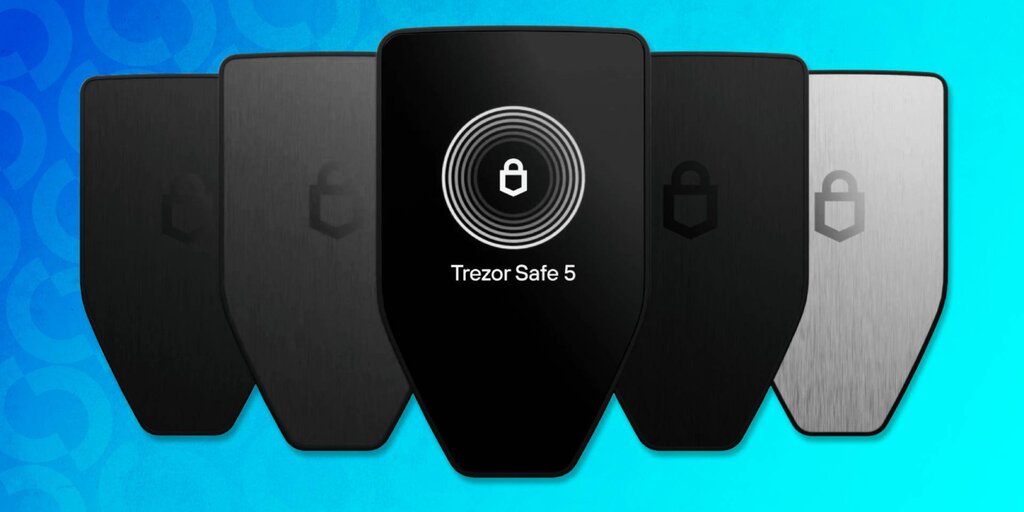
Trezor warns of a suspected crypto-theft implant in a Trezor Safe 5 sold by reseller CryptoBilis in Southeast Asia. An Indonesian buyer found an extra board with a cellular module and antenna between the main board and screen, apparently able to read the recovery phrase and send it over mobile networks. Trezor has not examined the device, advises moving funds to a new wallet for any CryptoBilis purchase since March 2026, and notes a similar Ledger implant was confirmed.
TrezorLedger
CryptoBilisTokopediarecovery phrase
Blockchain, Hardware & RF, Supply ChainΒ· Published and added 30 Oct 2026
The Defiant reports that Binance co-CEO Yi He's colleague Teng says the attacker in a breach Binance estimates at $6.3 billion used EIP-7702 to bypass wallet controls. Binance is rebuilding its withdrawal service, and attackers destroyed tools and traces during the intrusion. Only the teaser loaded, so the technical detail of the EIP-7702 abuse is not in the available text.
Ethereum
BinanceThe DefiantEIP-7702+1
Blockchain, Threat IntelΒ· Published and added 30 Oct 2026
Trezor says a user reported a Safe 5 wallet bought from Malaysian reseller CryptoBilis in August 2026 with a hidden board between the main board and screen, carrying a cellular module and antenna. The implant allegedly reads the screen, including the wallet backup, and sends it over a mobile network when plugged in. Trezor has not yet examined the device, has dropped CryptoBilis (9 October), and is replacing wallets bought since March 2026.
TrezorLedger
CryptoBilisDanny Sanders
Hardware & RF, Blockchain, Threat IntelΒ· Published and added 30 Oct 2026
Opinion piece arguing that passkeys, built on public-key cryptography, resist phishing, credential stuffing and password theft but do not settle identity risk. Attackers can go around them through account enrollment before a passkey is bound, weaker recovery paths (SMS, email link, help desk), device changes and authenticated session hijacking. It proposes layering identity threat detection with risk-based, continuous evaluation of trust.
passkeysMFA
adversary-in-the-middleMFA fatigueSIM swapping+3
Identity & AccessΒ· Published and added 30 Oct 2026
Aikido Security's analysis of the roughly $6.3 billion Binance incident, which Binance says may have started with a compromised DevOps engineer's laptop. It sets out what is known (no private key leak, TraderTraitor attribution by TRM Labs and Chainalysis, additional breach points) and a plausible chain from laptop credentials to a withdrawal service. It compares the 2025 Bybit theft and lists mitigations.
npmVS CodeAWS+1
BinanceTraderTraitorLazarus Group+9
Blockchain, Threat Intel, Supply ChainΒ· Published and added 30 Oct 2026
Trezor warned buyers of its wallets from reseller CryptoBilis (March 2026 onward) to move funds, after an Indonesian customer reported a hardware implant in a Safe 5 bought in August 2026. The report describes a board with a cellular module between mainboard and screen that reads the wallet backup and sends it over a mobile network. Trezor has not yet examined the device. It found no tampering in four other CryptoBilis units.
Trezor Safe 5LedgerBitcoin
CryptoBilisTrezorLedger Donjon+3
Hardware & RF, Supply Chain, BlockchainΒ· Published and added 30 Oct 2026
Binance estimated the October 2026 security incident at about $6.3 billion and said it found "additional points of breach" beyond the compromised DevOps engineer laptop it first named. The attacker reached a service container and submitted unauthorized withdrawals, with no wallet private key leak found. Arkham counted $6.01 billion taken from hot wallets on nine chains; Tether and Circle froze about $1.8 billion in stablecoins. About $3 billion is frozen onchain; withdrawals stay suspended.
TetherUSDCEthereum+2
BinanceArkhamRichard Teng+4
Threat Intel, BlockchainΒ· Published and added 30 Oct 2026
Binance linked the theft of about $6.3 billion in crypto to a compromised DevOps engineer's laptop, which let attackers reach a service container and submit unauthorized withdrawals. TRM Labs and Chainalysis attribute the 29 October 2026 attack to North Korea's TraderTraitor. About $2.7 billion was frozen, and the attackers hold about $2.4 billion. Binance has found no evidence of a leaked wallet private key.
BinanceTetherCircle+3
TraderTraitorLazarus GroupAPT38+5
Blockchain, Threat IntelΒ· Published and added 30 Oct 2026
Trezor reported a suspected hardware implant in a Safe 5 bought in August 2026 from reseller CryptoBilis via Tokopedia. The alleged implant is a board with a cellular module that reads the screen, including recovery phrases. Trezor has not examined the device and found no tampering in four other units, and it told buyers who purchased from the reseller since March 2026 to move funds.
Trezor Safe 5
CryptoBilisTokopediaTrezor
Hardware & RF, Blockchain, Supply ChainΒ· Published and added 30 Oct 2026