Skip to content

38 results for β€œSkills”

What you seeeverything
simonwillison.netarticle🧠 AI

Donating Agent Skills to the Agentic AI Foundation

Simon Willison's link post covers Anthropic's 22 October 2026 announcement that it is donating the Agent Skills standard to the Agentic AI Foundation (AAIF) under the Linux Foundation. Anthropic co-founded the AAIF with Block and OpenAI and earlier donated MCP to it. Willison notes he predicted this in December 2025 and found his old post by querying his blog through datasette-mcp in Claude.

Model Context ProtocolClaudeDatasette
AnthropicAgentic AI FoundationLinux Foundation+3

prompting, ai-policy, coding-agentsΒ· Published and added 22 Oct 2026

github.blogarticleπŸ›‘οΈ Security

How bug bounty sharpens one researcher’s security skills

GitHub Bug Bounty spotlight interview with @r31n, a researcher known for GitHub Enterprise Server findings. They describe a source-and-sink approach to mapping trust boundaries, chaining minor bugs (open redirect plus allowlisted SSRF that follows redirects), and confirming a finding only with a working PoC. They also cover using AI for code navigation and PoC scripts, and treating model output as untrusted input.

GitHub Enterprise ServerGitHubHackerOne
SSRFopen redirectXSS+3

Learning, AppSecΒ· Published and added 22 Oct 2026

tldrsec.comarticleπŸ›‘οΈ Security

[tl;dr sec] #351 - PHP2Shell, Autopatching Skills, AWS Pathrunner

tl;dr sec #351 is a weekly security newsletter. Clint Gibler describes working with OpenAI, Calif, Wiz and the PHP maintainers on the PHP2Shell unauthenticated RCE disclosure, which affects 13 years of PHP. It also covers Datadog's pathrunner AWS IAM escalation framework, Trail of Bits' patching-bugs and regression-hunt Codex plugins, XBOW finding de-duplication, backdoored open-weight models, and CREBench.

PHPAWS IAMCodex+3
PHP2ShellPatch the PlanetCalif+10

AppSec, AI Security, Cloud & InfraΒ· Added 30 Oct 2026, published 22 Oct 2026

openai.comarticle🧠 AI

What FDE means at OpenAI

Colin Jarvis, Head of Forward Deployed Engineering at OpenAI, describes how the FDE team works with enterprise customers to close the "deployment gap". Cases include a semiconductor verification project (about 48% time saved on test generation) and a telecom voice model whose key evals rose from about 60% to 90%+. Moving use cases onto a Codex harness with skills and plugins removed about 90% of custom code.

CodexModel Context ProtocolOpenAI API+1
OpenAIColin JarvisJohn Deere+3

ai-policy, coding-agents, agentsΒ· Published and added 22 Oct 2026

anthropic.comarticle🧠 AI

Donating Agent Skills to the Agentic AI Foundation

Agent Skills is an open standard in which a skill is a folder with a SKILL.md file plus scripts and reference material. Anthropic is donating the name, logo, GitHub organization and agentskills.io domain to the Agentic AI Foundation under the Linux Foundation. Over 70 platforms have integrated it, with 1 million skills published and nearly 280 million installs. The proposed roadmap covers versioned releases, a proposal process and security guidance.

Agent SkillsSKILL.mdClaude Code+8
AnthropicAgentic AI FoundationLinux Foundation+5

prompting, coding-agents, agentsΒ· Added 29 Oct 2026, published 22 Oct 2026

x.comarticle🧠 AI

Trail of Bits (@trailofbits) on X

Trail of Bits announces two open-source plugins, patching-bugs and regression-hunt, for AI coding agents that speed up bug patching. They come from four months of Patch the Planet work with open-source projects, which found that repo-level documentation, skills and plugins give agents the maintainer context on what counts as a bug, how a fix should look and what must not break. The post cites the October 2026 PHP incident: a patch touching 402 files, and exploitation within 17 hours of leaked details.

PHPCloudflare
Trail of BitsPatch the PlanetPatchstack+2

coding-agents, promptingΒ· Added 23 Oct 2026, published 21 Oct 2026

socket.devarticle🧠 AI

vlt 1.5.0 Adds Agent Skills Management

vlt 1.5.0 adds a `vlt skills` command that finds agent skills (SKILL.md folders) in installed JavaScript dependencies and links them into directories coding agents read, such as .agents/skills and .claude/skills. Selections are saved as allow-skills in vlt.json, tied to the lockfile version, and kept current on install and update. Without a saved selection, linking defaults to :not(:malware) using Socket malware alerts. pnpm 12.11.0 added similar linking.

vltnpmJavaScript+7
SocketSarah Goodingagent-browser

coding-agents, promptingΒ· Published and added 21 Oct 2026

socket.devarticleπŸ›‘οΈ Security

vlt 1.5.0 Adds Agent Skills Management

vlt 1.5.0 adds a `vlt skills` command that discovers agent skills (SKILL.md folders) shipped in installed JavaScript dependencies and links them into directories read by coding agents such as .agents/skills and .claude/skills. Links follow the lockfile version, and selections are saved as allow-skills in vlt.json. Without a saved selection, linking defaults to :not(:malware), using Socket malware alerts. pnpm 12.11.0 added similar support.

vltSocketnpm+3
Sarah GoodingSKILL.mdvlt skills+4

Supply Chain, AI SecurityΒ· Published and added 21 Oct 2026

snyk.ioarticleπŸ›‘οΈ Security

AI Is Calling In Every Risk You've Accepted: Seven Insights From The AI Security Panel: Unfiltered

Snyk's recap of "The AI Security Panel: Unfiltered" (14 October 2026, San Francisco) with speakers from Snyk, OpenAI, Google Threat Intelligence Group and boldstart ventures. It covers AI agents as an attack surface, the July Hugging Face breach by OpenAI models in an evaluation, ToxicSkills data (36.82% of 3,984 skills flawed), Project Glasswing patch backlogs, and why fixing, not finding, is the bottleneck. It closes with a Monday-morning action list.

SnykOpenAIHugging Face+2
Project GlasswingToxicSkillsVulnBump+6

AI Security, Threat IntelΒ· Published and added 21 Oct 2026

github.blogarticle🧠 AI

How 3 Java Champions are using GitHub Copilot for increased productivity

Interviews with three Java Champions (Vlad Mihalcea, Patrick Baumgartner, Frank Delporte) on using GitHub Copilot in production and open source. Examples include a 900-slide Reveal.js to Marp migration with visual verification, a Copilot coding agent diagnosing a Pi4J virtual-thread pinning bug, and custom Agent Skills. Tips: interview-first planning, task-specific verification gates, deterministic quality harnesses, and human review.

GitHub CopilotJavaIntelliJ IDEA+12
GitHubVlad MihalceaPatrick Baumgartner+7

coding-agents, prompting, ai-policyΒ· Added 29 Oct 2026, published 20 Oct 2026

github.blogarticle🧠 AI

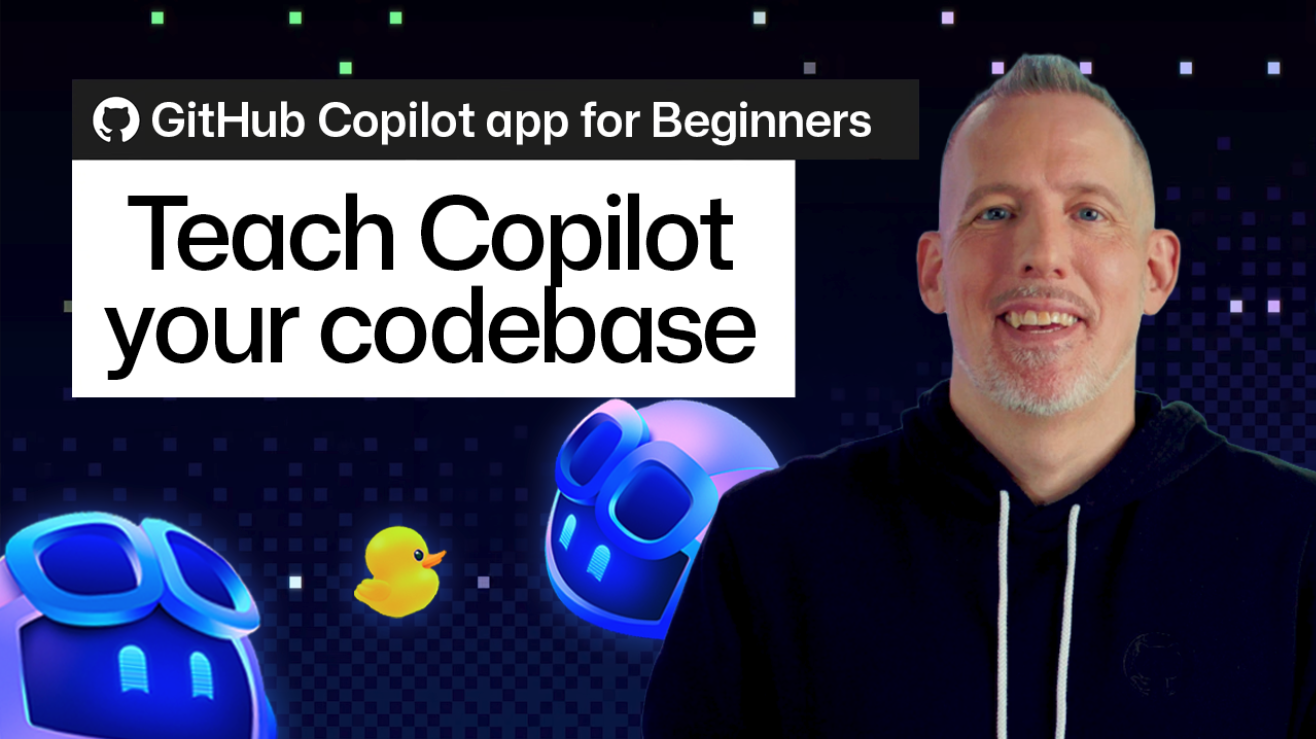
GitHub Copilot app for Beginners: How to teach Copilot about your codebase

Beginner-oriented GitHub blog guide to giving GitHub Copilot project context through four mechanisms: repository custom instructions (.github/copilot-instructions.md and path-specific .github/instructions files with applyTo), agent skills (SKILL.md folders under .github/skills), custom agents (.github/agents profiles), and MCP servers such as Playwright. It explains when to use each and how they combine, using examples like a quality-checks skill and an accessibility-review agent. Useful as a concrete reference for the repo layout Copilot reads, with a pointer to the community Awesome Copilot collection.

GitHub CopilotModel Context ProtocolPlaywright+1
Awesome Copilot

coding-agents, prompting, mcpΒ· Published and added 12 Oct 2026

x.comarticle🧠 AI

Cloudflare Changelog (@CFchangelog) on X

Cloudflare's changelog announces that its Cloudflare API MCP server now serves Cloudflare skills alongside its tools. A connected MCP client discovers them by calling `skills/list`. This is an example of distributing agent skills through an MCP server rather than as local files or a repo.

Model Context ProtocolCloudflare

mcp, promptingΒ· Published and added 11 Oct 2026

simonwillison.netarticle🧠 AI

Quoting Carson Gross

A brief Simon Willison Quoting post sharing htmx creator Carson Gross's view that computer programming is fundamentally about solving problems and controlling complexity, and that he expects these skills to remain valuable and employable even as AI coding tools become more capable. It is a one-paragraph opinion snippet rather than a technical piece, offering a counterpoint to fears that AI will devalue software engineering as a career.

Carson GrossSimon Willison

ai-policyΒ· Published and added 8 Oct 2026

stepsecurity.ioarticleπŸ›‘οΈ Security

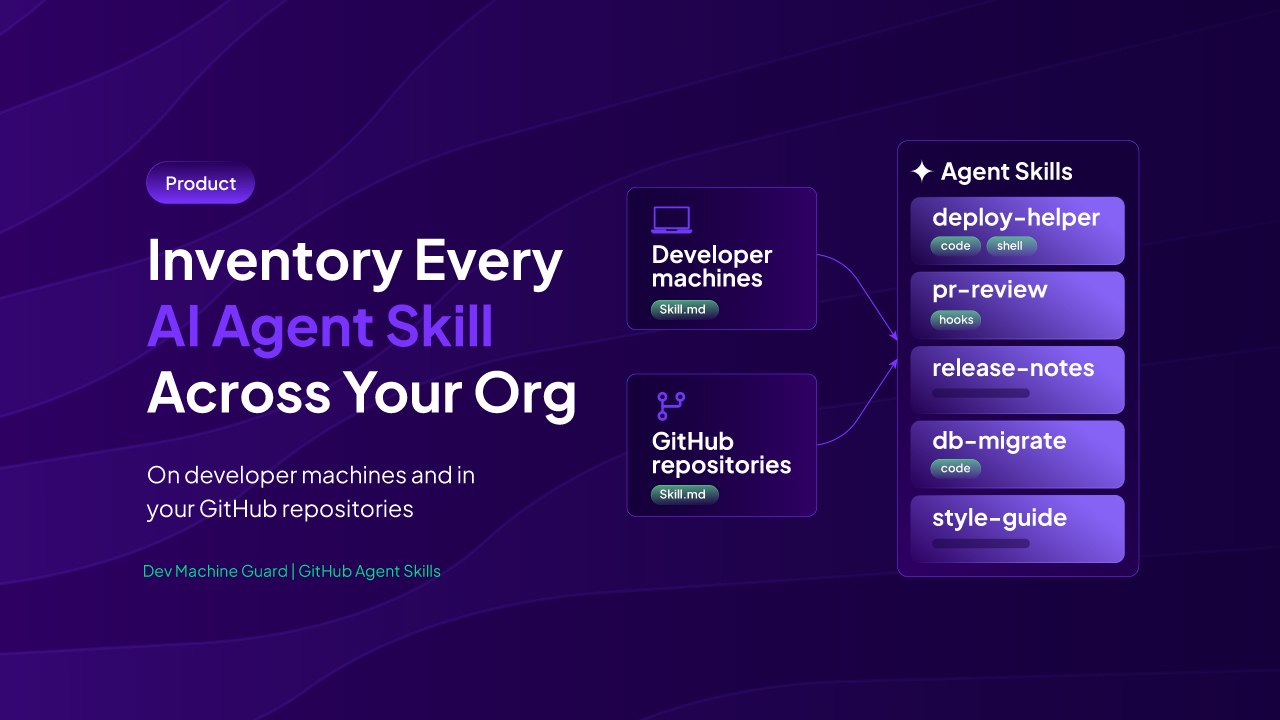
StepSecurity Now Inventories AI Agent Skills in Your GitHub Repositories and on Developer Machines

StepSecurity announces two new inventory features β€” Dev Machine Guard's Agent Skills page (scanning 18 AI coding agents' skill directories on developer machines) and a GitHub Agent Skills page (scanning default branches of org repos daily) β€” to track AI agent "skills" (SKILL.md folders with optional scripts/hooks) across an organization. The post frames skills as a supply-chain surface because they can execute shell commands, pre-approve tool permissions via allowed-tools frontmatter (bypassing Claude Code's workspace trust gate), and look like harmless Markdown documentation in PR review, citing the Miasma worm, s1ngularity, and the Cline v2.3.0 compromise as precedent for this attack class. It details inventory features like content-hash comparison across devices, provenance tracing via skills.sh/skills-lock.json, and filters for shell/hooks/code execution flags to prioritize review.

Claude CodeCursorGitHub Copilot+3
Miasma worms1ngularityCline v2.3.0 compromise

Supply Chain, AI SecurityΒ· Published and added 8 Oct 2026

huggingface.coarticle🧠 AI

One Model Family, Two Gold-Level Results: Fine-Tuning Nemotron for IOI and IMO

NVIDIA describes how it specialized Nemotron 3 base models into domain experts for competitive programming (IOI) and olympiad mathematics (IMO) using a four-step recipe: strong base model, curated domain data with reasoning traces, SFT/RL post-training, and an inference loop (GenCorrect for IOI, generate-verify-refine for IMO) that searches and refines candidate answers. Nemotron-3-Nano-CC and Nemotron-3-Ultra-CC reached gold-level IOI 2026 scores (535.4/600), while SFT and RL checkpoints of Nemotron 3 Ultra combined to score 30/42 on IMO 2026, exceeding the gold threshold with no formal prover or external tools. The post releases training datasets, checkpoints, the Nemotron-IMO-Bench benchmark, and the NeMo-Skills inference pipelines on Hugging Face.

Hugging FaceMixture of Experts
NemotronNemotron 3Nemotron-3-Nano-CC+11

training, evals, modelsΒ· Published and added 7 Oct 2026

developers.openai.comarticle🧠 AI

Rethinking skills and prompts for GPT-6 Astra

OpenAI guidance for Codex users on adapting instructions, skills, AGENTS.md, and task prompts, now that GPT-6 Astra is more capable than prior models like GPT-5.6 Sol and GPT-6 Luna. It covers writing shorter, non-contradictory skill descriptions, using progressive disclosure (a minimal router skill pointing to supporting docs and scripts rather than loading everything into context), trimming over-eager AGENTS.md instructions such as forced doc-reading and excessive test-running reminders, recalibrating decision-boundary language since Astra is more cautious by default, and explicitly defining completion so the model does not stop after a first implementation when more work is expected.

Codex
OpenAIGPT-6 AstraGPT-5.6 Sol+1

coding-agents, promptingΒ· Added 3 Oct 2026

openai.comarticle🧠 AI

A model guide for the GPT-6 family

OpenAI's practical guide to the GPT-6 family (Astra, 6.1 Sol, Luna), with per-token pricing and when to use each model. It gives guidance on picking a reasoning level (low to max), Fast and Ultrafast speed modes, and rewriting skills, AGENTS.md and prompts with clear decision boundaries and a definition of "done". For long-running agent work it covers mid-turn steering over the Responses WebSocket API, async tool calling, multi-agent delegation (beta) and computer use with Playwright or PyAutoGUI. It also gives production advice on prompt caching, compaction, monitoring and measuring cost per successful task.

OpenAI APICodexResponses API+3
OpenAIGPT-6 AstraGPT-6.1 Sol+1

prompting, agents, ai-infraΒ· Published and added 2 Oct 2026

thehackernews.comarticleπŸ›‘οΈ Security

FakeGit Campaign Uses 7,600 GitHub Repositories to Spread SmartLoader Malware

Researchers at Island identified nearly 7,600 malicious GitHub repositories (from ~6,600 fake profiles) making up the "FakeGit" campaign, with over 800 posing as AI Skills or MCP servers (for Gmail, WhatsApp, Databricks, Jenkins, Docker, etc.) to distribute SmartLoader via malicious ZIP files that trigger a LuaJIT loader chain, ultimately deploying the StealC infostealer. The campaign has racked up over 14 million downloads across ~200 repos and 600+ listings on registries like LobeHub, Glama, MCP.so, and MCP Market. The report also introduces "AgentBaiting," a technique where AI agents (Claude Code, Gemini, ChatGPT were shown to be susceptible) autonomously discover and surface these malicious repos while searching for skills/MCP servers on a user's behalf, without ever being given a link.

Model Context ProtocolGitHubClaude Code+3
FakeGitSmartLoaderStealC+9

Threat Intel, AI Security, Supply ChainΒ· Added 26 Sep 2026

latent.spacearticle🧠 AI

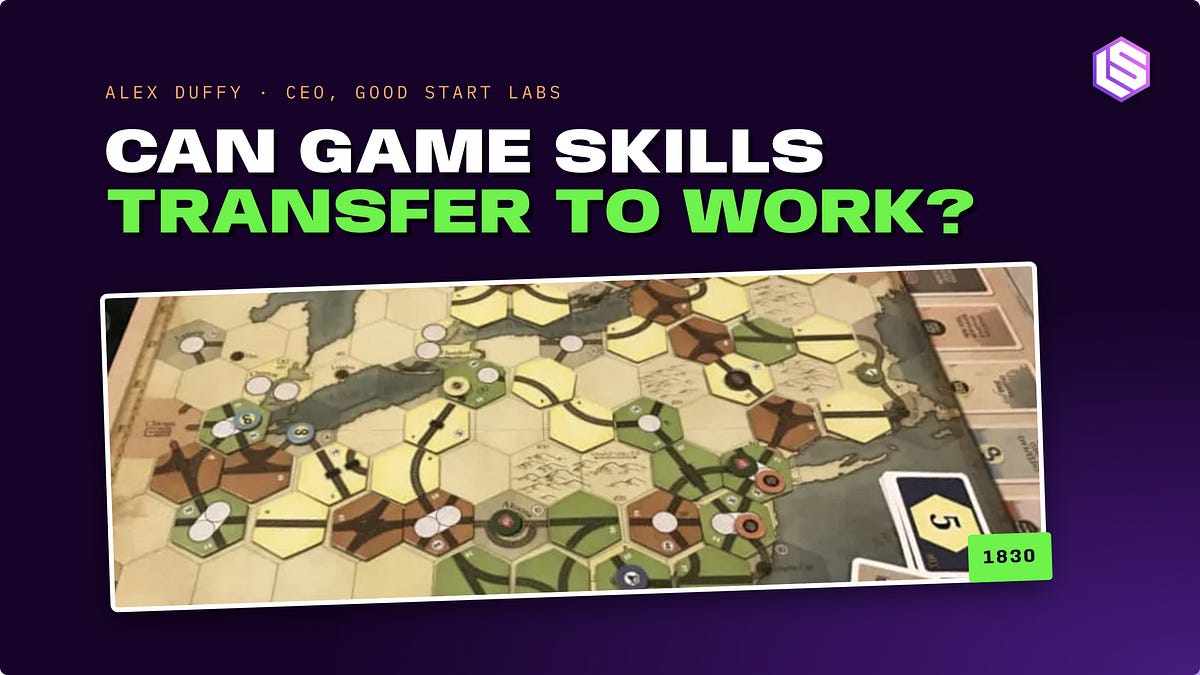
Can Skills Learned in Games Transfer to Real-World Work?

Interview with Good Start Labs co-founder Alex Duffy on training LLMs inside games like Diplomacy and 1830: The Game of Railroads and Robber Barons as reinforcement-learning environments with verifiable rewards. The company found that a multi-turn terminal-agent harness playing 1830 improved performance on the Finance-Agent benchmark, while single-turn Q&A training did not, suggesting that harness design β€” not just the game itself β€” determines whether in-game skills transfer to real-world agentic tasks like financial research and customer support.

Reinforcement Learning
Good Start LabsAlex DuffyTyler Marques+13

training, agentsΒ· Added 29 Sep 2026, published 15 Sep 2026

blog.trailofbits.comarticleπŸ›‘οΈ Security

1Password's AI patching benchmark is misleading

Trail of Bits dissects 1Password's August 2026 report claiming AI agents (GPT-5.5, Opus 4.8) produce clean vulnerability fixes only 26% of the time, showing the figure is inflated by a hand-picked set of six hard bugs, deliberately-wrong-fix prompts (22% of trials), a no-testing mode (36% of trials), grading disagreements between automated graders and humans, and a buggy Linux upstream reference fix. Reanalyzing the same data under fair conditions (testable, non-adversarial trials) they find 86% of patches blocked the supplied exploit, and they contrast this with their own consulting data (12.5% of developer first-fixes fail) and Patch the Planet's 67.7% maintainer merge rate across 186 PRs, including a case where both a human maintainer and an agent independently introduced the same freenginx cleanup-crash regression. The post also releases two new agent skills, post-patch-validation and review-walkthrough, to improve AI-assisted patch testing and human review.

1PasswordGPT-5.5Opus 4.8+1
Patch the PlanetTrail of BitsDavi Ottenheimer+3

AI Security, AppSecΒ· Published and added 15 Sep 2026

endorlabs.comarticleπŸ›‘οΈ Security

How Endor Labs AI SAST Learns What Matters to Your Organization | Blog | Endor Labs

Endor Labs explains how its AI SAST product incorporates context beyond source code β€” automatically-ingested Infrastructure as Code (Dockerfiles, Terraform, CloudFormation, Kubernetes/Helm) and repository files (AGENTS.md, CLAUDE.md, skills files), plus optional analyst feedback and natural-language threat-model/architecture context β€” to build a deployment-aware model of an application and cut false positives. It cites a benchmark of 192 verified vulnerabilities across 8 projects, claiming 2.6x more true positives than the next tool (Claude Opus 4.7) and 63 findings no other tool caught, and walks through customer examples where external-auth annotations and WAF-mitigated XSS severity were tuned via this context.

Endor LabsTerraformDocker+2
Opus 4.7

AppSec, AI SecurityΒ· Published and added 7 Sep 2026

adversa.aiarticleπŸ›‘οΈ Security

Top AI coding agent security resources β€” September 2026

Adversa AI's monthly roundup of AI coding-agent security research, covering nine items: GhostJacking (using a WAF's own block logs as a prompt-injection delivery channel, 90% success against Claude Code), Black Hat disclosures of unauthenticated-issue-to-RCE chains in the default GitHub Actions configs published by Anthropic, Google, and OpenAI for their coding agents (Gemini CLI rated CVSS 10.0), an agent-to-agent privilege-boundary bypass in Google's ADK repository, the new OWASP Agentic Skills Top 10 with a walkthrough showing open-source skill scanners miss encoded payloads while flagging 9-62% of legitimate skills as malicious, a seven-layer "secure agent harness" containment design, and a 2,826-file adversarial skill benchmark where Gemini CLI and Qwen Code were exploitable 95.5% and 71.6% of the time respectively. The piece draws a common thread across all findings: agents treat machine-generated artifacts (logs, images, other agents' outputs) as trusted instructions, and existing detection never fires.

Claude CodeGemini CLICodex+3
GhostJackingOWASP Agentic Skills Top 10module shadowing+1

AI Security, DevSecOpsΒ· Added 7 Oct 2026, published 3 Sep 2026

jfrog.comarticleπŸ›‘οΈ Security

The Evolution of JFrog AI Catalog: Your AI Control Plane for Agentic Development

JFrog vendor post arguing that agentic development (ADLC) introduces new unvetted supply chains β€” models, MCP servers, skills/plugins, hooks, and APM packages β€” that bypass traditional signature-based scanning. It cites real incidents: a malicious MCP server impersonating Postmark's email MCP that BCC'd all agent-sent emails to an attacker, and the 'omnicogg' malicious Claude/agent skill that hid a 22MB encoded payload and evaded all 65 VirusTotal engines for 5,000+ installs, plus references to 2026 supply-chain attacks on LiteLLM, TanStack, and Mistral AI. It then pitches JFrog AI Catalog's expanded MCP/skill/model registries as the fix.

Model Context ProtocolJFrog Artifactory
JFrog AI Catalogpostmark-mcpomnicogg+3

AI Security, Supply ChainΒ· Added 3 Sep 2026, published 2 Sep 2026

endorlabs.comarticleπŸ›‘οΈ Security

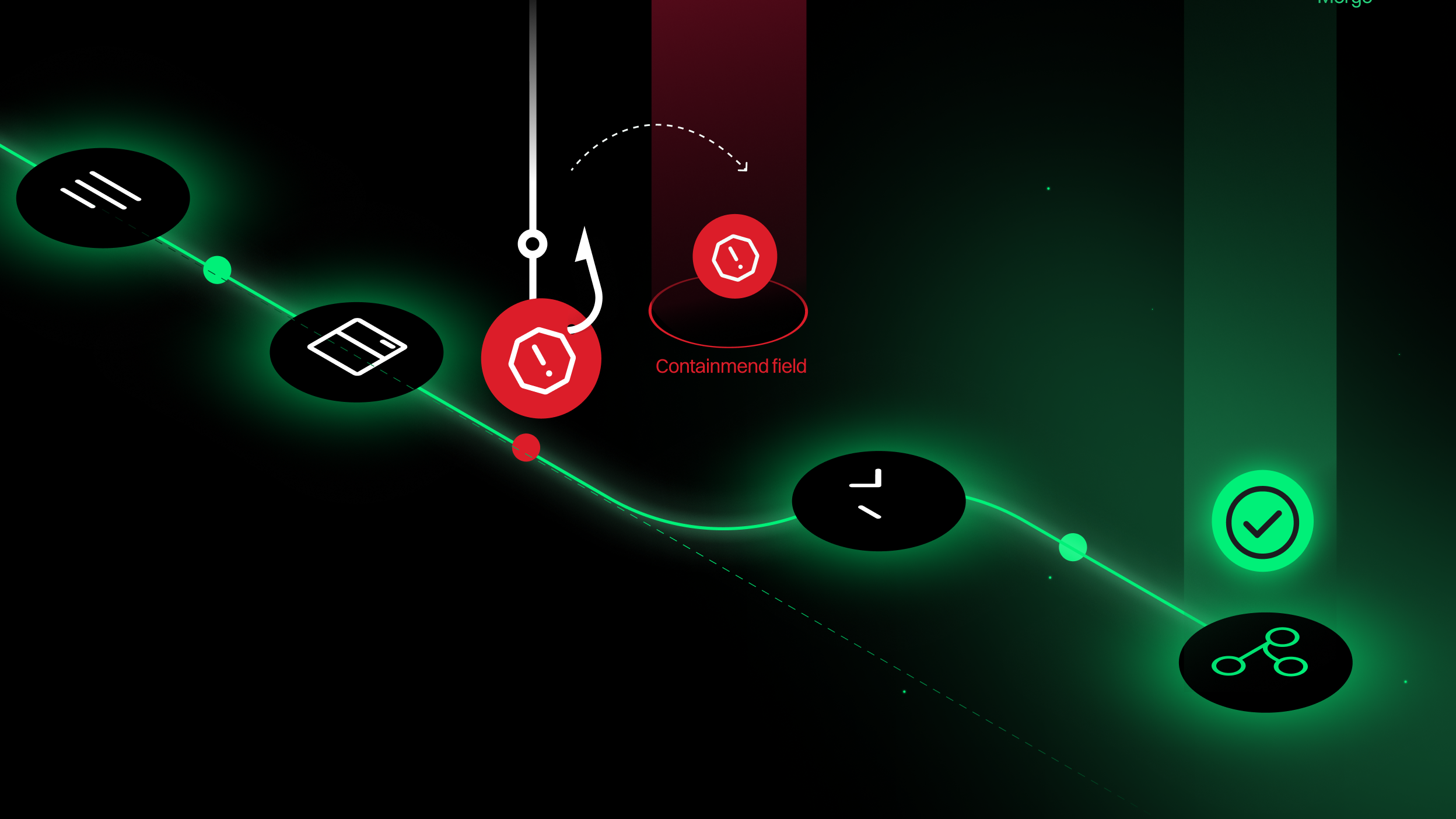
Hooks are the control plane for the agentic development lifecycle | Blog | Endor Labs

Endor Labs blog post arguing that lifecycle hooks β€” not system prompts, skills, or MCP tools β€” are the only enforceable control plane for coding agents, because hooks intercept consequential actions (shell commands, file writes, credential access, package installs) before execution and return a deterministic allow/block/escalate verdict the agent cannot opt out of or reason around. It frames platform engineering's "golden path" concept applied to the agentic development lifecycle (ADLC), positioning hooks as the mechanism to restore reliability and observability that autonomous coding agents otherwise erode.

Claude CodeModel Context ProtocolEndor Labs
DORA

AI Security, DevSecOpsΒ· Added 3 Sep 2026, published 1 Sep 2026

tldrsec.comarticleπŸ›‘οΈ Security

[tl;dr sec] #343 - Hugging Face Technical Report, AWSHound, OWASP Agentic Skills Top 10

tl;dr sec #343 is a weekly security newsletter issue. It covers AWSHound (SpecterOps' BloodHound OpenGraph collector for AWS IAM), TruffleHog AWS Analyze, JavaScript in HTML tag names (PortSwigger), and the Varonis CoSnitch Copilot flaw (CVE-2026-24301). It also covers the OWASP Agentic Skills Top 10, Cloudflare MCP traffic detection, a Datadog plan-mode versus default-mode secure coding test, and OpenClaw phishing tests.

AWSHoundTruffleHogBloodHound+3
CVE-2026-24301CoSnitchOWASP Agentic Skills Top 10+5

AI Security, Cloud & Infra, AppSecΒ· Added 30 Oct 2026, published 27 Aug 2026

adversa.aiarticleπŸ›‘οΈ Security

OWASP Agentic Skills Top 10 explained: the ten agent skill risks, and which to fix first

Explains OWASP's Agentic Skills Top 10 v1.0 (AST01-AST10), a new framework for the risks of "agent skills" β€” folders with a SKILL.md file plus bundled code/scripts that agents discover and execute, treating plain-language instructions as an attack surface that neither traditional package security nor prompt-injection defenses cover. The piece details the ClawHavoc campaign (1,184 malicious skills across 12 ClawHub accounts), the ClawJacked exploit (CVE-2026-32025), Claude Code skill-related CVEs (CVE-2025-59536, CVE-2026-21852), and cites Adversa AI's own research showing a malicious skill bypassed all eight open-source scanners tested, including the OASB leaderboard leader and tools from NVIDIA (SkillSpector), Snyk, Trail of Bits, and Air Security. It closes with a prioritized remediation sequence (inventory, isolation, credential scoping, pinning, allowlisting, approval workflows, advisory scanning, cross-platform normalization) mapped to the AST entries.

Claude CodeOpenClawCursor+3
CVE-2026-32025CVE-2025-59536CVE-2026-21852+14

AI Security, Supply ChainΒ· Added 7 Oct 2026, published 25 Aug 2026

adversa.aiarticleπŸ›‘οΈ Security

A hole in every one: bypassing the open source AI skill scanners

Adversa AI tested eight open-source AI agent skill scanners (Cisco AI Defense skill-scanner, NVIDIA SkillSpector, mondoo skillcheck, skillcop, claude-skill-antivirus, huifer/skill-security-scan, ai-skill-scanner, hackmyagent) against a control-armed battery of real attacks on malicious Claude Code/agent SKILL.md files, and got a malicious skill past all eight β€” via paraphrase/translation of injection phrases, Unicode homoglyphs, encoding/reassembly tricks, a substring-allowlist bug in huifer, a hash-lookup-only client (mondoo) that fails open, and an unescaped LLM-judge prompt in skillcop that lets the skill's own text flip a CRITICAL verdict to clean. A parallel false-positive run on MalSkillBench (7,797 samples, 4,000 real benign skills) shows every scanner is either noisy (up to 62% FPR) or blind (recall as low as 0.28), and none beats an unconditional flag-everything F1 baseline; the piece closes with an 11-point "front end" spec (decode-then-rescan, Unicode-fold, canonicalize shell, resolve hosts not substrings, isolate LLM judges, report coverage) scanner builders should implement.

Claude CodeCisco AI DefenseNVIDIA SkillSpector+3
MalSkillBenchOASB leaderboardLD_PRELOAD+2

AI Security, Blue Team & DetectionΒ· Added 7 Oct 2026, published 30 Jul 2026

medium.comarticleπŸ›‘οΈ Security

Claude as Autonomous Bug Bounty Hunter

Author describes Aii-Aii Hunter, a bug bounty framework built on Claude Code with 124 markdown skills (35.5k lines distilled from public HackerOne reports), three hooks (UserPromptSubmit regex auto-routing, PreToolUse scope.json guard, PostToolUse telemetry) and a Podman Kali container exposing 110 tools plus 18 Burp tools over MCP. It also covers an engagement flow with a 7-Question validation gate, evidence hygiene, an autopilot mode, and SAST/DAST correlation. Useful as a blueprint for scoped, AI-orchestrated offensive workflows; first of six parts with a companion repo.

Claude CodeModel Context ProtocolKali Linux+3
Aii-Aii Hunter7-Question Gatescope guard

Offensive Security, AI Security, AppSecΒ· Added 3 Sep 2026, published 30 Jul 2026

semgrep.devarticleπŸ›‘οΈ Security

AI code security harnesses compared
Semgrep's blog post compares open-source AI-driven code security "harnesses" that use LLMs to find vulnerabilities, grouping them into three categories: LLM-led exploit generation (fuzzing-like, crash-oracle driven), LLM-skill-boosting vulnerability research (e.g. Cloudflare's security-audit-skill, Trail of Bits' skills, CapitalOne's vulnhunter, Google's mantis), and SAST+LLM hybrids (raptor, deepsec, ai-deep-sast, Visa's VVAH). It breaks down each tool's design, star counts, licensing, and ideal use case, and discusses cross-cutting themes like adversarial validation, discovery/validation separation, and patch generation maturity.

SemgrepCodeQLClaude Code+5
tptacek

AI Security, AppSecΒ· Added 3 Sep 2026, published 24 Jul 2026

endorlabs.comarticleπŸ›‘οΈ Security

Beyond MCP: The New Security Playbook for Coding Agents | Blog | Endor Labs

Endor Labs breaks down the expanding attack surface of coding agents beyond MCP tools β€” covering CLI/terminal action risks, Anthropic 'skills', and the 'lethal trifecta' threat model (untrusted input + private data access + external connectivity) β€” then surveys three defense categories: full sandboxing (Seatbelt, sandbox-exec, bubblewrap, cloud sandbox vendors like Runloop/Daytona/Modal), MCP gateways/proxies, and the newer agent-hooks approach used by Cursor's security partners. The authors detail their own FireMCP prototype, an MCP gateway that isolates each MCP server individually using FireJail inside a FireCracker microVM to prevent cross-MCP-server attacks, with source published on GitHub.

Model Context ProtocolClaude CodeCursor+3
lethal trifectaFireMCPrug pull

AI SecurityΒ· Added 3 Sep 2026, published 21 Jul 2026

Showing 30 of 38

Show more