Skip to content

177 results for β€œopen”

What you seeeverything
blog.talosintelligence.comwriteupπŸ›‘οΈ Security

Appraisal by AI: Model-driven victim prioritization in the VOLTA infostealer

VOLTA (VOLTA-AUTODOXER) is a self-deleting Windows infostealer that, after theft and live session-based enrichment, POSTs an evidence bundle to OpenRouter so an LLM can rank the victim's assets by monetization value. It falls back across a Claude, Kimi and Gemini chain when a model refuses. Talos covers the builder model, the Chrome App-Bound Encryption bypass, the volta_debug.txt artifact and countermeasures such as blocking Chrome --headless.

OpenRouterClaudeGemini+3
VOLTACLOSEDQUORUMCAIRN+3

Malware & RE, Threat Intel, AI SecurityΒ· Published and added 31 Oct 2026

parameter.aiwriteupπŸ›‘οΈ Security

Do the math: How we took over ChatGPT accounts

Parameter Labs describes a chain that turned a public ChatGPT share link into JavaScript running as chatgpt.com in the victim's session. It combined a MathLive postMessage listener with no origin or source check, raw HTML in keyboard layouts, an unsandboxed srcdoc iframe, and a YouTube oEmbed JSONP callback to pass the CSP. The code read private conversations through backend APIs. OpenAI fixed it on 26 October 2026 and rated it P1.

ChatGPTOpenAIMathLive+2
Parameter Labssandbox escapeXSS+2

AppSecΒ· Added 1 Nov 2026, published 31 Oct 2026

microsoft.comwriteupπŸ›‘οΈ Security

Inside a malicious Claude Code-branded extension and its persistent SSH backdoor

Microsoft Threat Intelligence analyzes a tampered anthropic.claude-code extension (versions 2.1.312 and 2.1.313) served on the Cursor marketplace on 29 October 2026. The injected JavaScript loader adds an SSH key labeled svc-telemetry, opens a reverse SSH tunnel and sets up persistence on macOS, Linux and Windows. The post gives cleanup steps, IOCs and Defender XDR hunting queries. VS Code Marketplace and npm were not affected.

CursorClaude CodeSSH+3
Protocol Tunneling (T1572)reverse SSH tunnelMicrosoft Threat Intelligence+2

Supply Chain, Blue Team & Detection, Malware & REΒ· Published and added 31 Oct 2026

wiz.iowriteupπŸ›‘οΈ Security

β€œBlack October” for AI Developer Platforms

Wiz Research links October 2026 breaches at AI developer platforms (Fireworks, OpenCode, Warp, Zeabur, Railway and others) to stolen environment-variable credentials for AI access. It details two enterprise AWS Bedrock keys abused after vendor breaches: about 800k and 1.7 million calls, over $100k in list-price usage. It profiles two LLM resale operations, "momo" and "Xingjiabi", that tested the keys.

AWS BedrockOpenCodeClaude+3
LLMjackingdistillationWiz Research+13

Threat Intel, AI Security, Cloud & InfraΒ· Added 31 Oct 2026, published 30 Oct 2026

opensourcemalware.comwriteupπŸ›‘οΈ Security

Trojanized Claude Code Extension Plants an SSH Backdoor

Analysis of a trojanized anthropic.claude-code 2.1.313 extension (darwin-arm64), found on Open VSX, with a 66-line loader prepended to extension.js. It adds an svc-telemetry key to authorized_keys, opens a reverse SSH tunnel to 134.209.82.225, sets persistence (LaunchAgent, cron, scheduled task) and sends host recon over HTTP port 8099. Includes IOCs, hashes and response steps; no further payload download was found.

Claude CodeVS CodeOpen VSX+3
anthropic.claude-code 2.1.313134.209.82.225svc-telemetry+3

Supply Chain, Malware & RE, AI SecurityΒ· Published and added 30 Oct 2026

stepsecurity.iowriteupπŸ›‘οΈ Security

Trojanized Claude Code Extension Delivered Persistent SSH Backdoor to Developer Machines

The Claude Code VS Code extension anthropic.claude-code 2.1.313 was published on Open VSX on 29 October 2026 with a malicious loader prepended to extension.js. On load it planted an attacker SSH key (svc-telemetry), installed per-OS persistence, opened a reverse SSH tunnel and beaconed host recon over HTTP. Cursor reports at most 5,000 users received it in an 11-hour window. The post gives the timeline, cleanup artifacts and credential rotation steps.

Claude CodeVS CodeOpen VSX+3
anthropic.claude-code 2.1.313svc-telemetryT1195.002+1

Supply Chain, Blue Team & Detection, Threat IntelΒ· Published and added 30 Oct 2026

phorion.iowriteupπŸ›‘οΈ Security

Backdoor in Claude Code for VS Code extension on the Cursor Marketplace

Phorion analyzes a backdoor injected into versions 2.1.312 and 2.1.313 of the official Claude Code for VS Code extension on the Cursor Marketplace. An IIFE prepended to extension.js plants an SSH key, opens a reverse SSH tunnel to 134.209.82[.]225, persists via a fake com.apple.sysmond LaunchAgent and beacons host recon. A macOS systemsetup check bug usually stops SSH from being enabled. The post lists detections and remediation.

Claude CodeCursorVS Code+3
Phorionsvc-telemetrycom.apple.sysmond+1

Supply Chain, Malware & RE, Blue Team & DetectionΒ· Added 31 Oct 2026, published 30 Oct 2026

opensourcemalware.comwriteupπŸ›‘οΈ Security

Earliest Known PolinRider Malware Found in 2025 npm Packages

OpenSourceMalware traces nine itsa-* npm package versions published on 4 May 2025 from a hijacked maintainer account to the PolinRider campaign, eight months before documented victims. It decodes the EtherHiding chain (BNB Smart Chain and Ethereum calldata, JADESNOW, INVISIBLEFERRET bootstrapper, Socket.IO RAT, Python stealer) and links the 2025 sample to 2026 force-push infections. It lists IOCs, hashes, a timeline and hunting guidance.

npmNode.jsPython+3
PolinRiderEtherHidingJADESNOW+9

Supply Chain, Malware & RE, Threat IntelΒ· Published and added 30 Oct 2026

labs.ycombinator.comwriteup🧠 AI

We ran AI agent swarms in Minecraft and Mindustry

Agents in Games is a Y Combinator Labs writeup, done with Olam Labs, of multi-agent swarm experiments in Minecraft and Mindustry. A 50-agent GPT-6.1 Sol Minecraft colony became risk-averse after 22 of 34 deaths came on night one. GPT beat Claude Opus 5.5 at Bed Wars 6-3 and Mindustry 6-1. The authors open-sourced a Minecraft agent harness, Multi-Agent Mindustry and a Harbor fork.

MinecraftMindustryMineflayer+7
Y CombinatorOlam LabsGPT-6.1 Sol+9

agents, ai-safety, evalsΒ· Added 30 Oct 2026, published 29 Oct 2026

oversecured.comwriteupπŸ›‘οΈ Security

Disclosure of 7 Android and Google Pixel vulnerabilities

Oversecured discloses seven Android vulnerabilities, two of them Pixel-specific, all reported to Google and fixed except one low-severity WebView case. They are the Camera geolocation leak (CVE-2024-0017), a VPN bypass list change (CVE-2023-21383), a Bluetooth permission check flaw (CVE-2024-34719), the WorkSource parcel mismatch (CVE-2023-20963, exploited in the wild by the Pinduoduo app), Device Admin HTML injection (CVE-2021-0600) and a ContentProvider.openFile() caller-context bypass (CVE-2023-21292). Each has root cause and PoC code.

AndroidGoogle PixelWebView+2
CVE-2024-0017CVE-2023-21383CVE-2024-34719+9

Mobile Security, Offensive SecurityΒ· Added 29 Oct 2026

blog.talosintelligence.comwriteupπŸ›‘οΈ Security

NIK C2: The new AI-enabled command-and-control framework

NIK C2 is a newly observed C2 framework with a Go-based 64-bit Windows implant that embeds an OpenAI Chat Completions client (ai_generate command), falling back to the victim's OPENAI_API_KEY. Talos details its 52+ commands, AES-256-GCM over WebSocket with HTTP fallback, credential, wallet and keystroke theft, screen-lock ransomware, AMSI bypass and anti-debug. It also lists a live C2 at 87.120.196[.]120 and total-sitevv[.]lol.

GoOpenAIWindows+3
NIK C2nik_panel87.120.196[.]120+9

Malware & RE, Threat Intel, AI SecurityΒ· Published and added 29 Oct 2026

gist.github.comwriteup🧠 AI

Claude Code regularly sends each background agent’s transcript to its model

no-agent-summary.js is a roughly 70-line Bun preload by Flamerix AI that stops Claude Code from re-sending each background agent's full transcript to its model every ~30 seconds for a status-line summary. The write-up cites OpenTelemetry measurements of 18 to 26 percent of spend (since version 2.1.232), explains the setTimeout hook, and gives install and verify steps. It was tested on Linux with Claude Code 2.1.257 to 2.1.312.

Claude CodeBunOpenTelemetry+2
AnthropicFlamerix AIDRIM+1

coding-agents, ai-infraΒ· Added 30 Oct 2026, published 29 Oct 2026

hackers-arise.comwriteupπŸ›‘οΈ Security

Social Engineering: Modem-Based Persistence in a Compromised Environment

The article describes reflashing a Huawei E3372h-153 HiLink 4G USB modem so its embedded Linux OS runs an OpenVPN client over the mobile network, creating a covert, network-independent persistence channel after physical USB access. It walks through enabling debug mode, flashing firmware, disabling CD-ROM emulation, configuring DHCP and autorun scripts, and chaining a second L2VPN tunnel to bridge the attacker directly onto the victim's Ethernet segment for tools like Responder. Defense guidance focuses on restricting USB ports and disabling USB network adapters via policy.

OpenVPNTelnetADB+2
LAN Turtle

Hardware & RF, Offensive SecurityΒ· Published and added 28 Oct 2026

latent.spacewriteup🧠 AI

Coding From the Himalayas With an Offline AI Agent

Walkthrough of running OpenCode against Qwen3.5 9B served by Ollama on a Mac, with Wi-Fi switched off. The author fixes a one-line accumulation bug in an expense calculator and confirms all five unittest tests pass. It covers the opencode.json setup, memory budgeting, permission prompts and a pytest-versus-unittest detour. Two further exercises (CSV report, log analyzer) were not yet run offline.

OpenCodeOllamaQwen3.5+4
QwenThomson ReutersLatent Space+4

coding-agents, inferenceΒ· Published and added 27 Oct 2026

dfir.chwriteupπŸ›‘οΈ Security

Abusing Linux fanotify for Anti-Forensics

Abusing Linux fanotify for anti-forensics: a privileged userspace process can use the fanotify API to deny other processes the right to open an otherwise normal file. Reads fail with EPERM even for root, while name, ownership, timestamps and permissions look ordinary, so a scanner that cannot open a file may report no detections without inspecting it. Defenders can find malicious fanotify groups and marks via /proc/<pid>/fdinfo, or acquire at the filesystem level instead of opening the pathname.

Linuxfanotify
InfoGuard Labsanti-forensics

Blue Team & Detection, Offensive SecurityΒ· Added 1 Nov 2026, published 24 Oct 2026

metr.orgwriteupπŸ›‘οΈ Security

Red-Teaming OpenAI's Internal Agent Monitoring Systems

METR and Redwood Research summarize a three-week pilot red-team (21 July to 11 August 2026) of OpenAI's internal asynchronous misalignment monitoring system. They estimate 75-94% of agentic Responses API traffic was eligible for monitoring and report flaws: unmonitored compaction events, header-based monitor disabling, serialization mismatches that make the monitor fail, and a Codex sandbox and Auto-Review bypass. The post lists five design ideals for monitoring and control systems; exploit details are redacted.

OpenAICodexGPT-5.5+1
METRRedwood ResearchAuto-Review+3

AI SecurityΒ· Added 29 Oct 2026, published 22 Oct 2026

microsoft.comwriteupπŸ›‘οΈ Security

AI-driven, large-scale nation-state campaign using ARTEX enables supply chain compromise

Microsoft Threat Intelligence report on Storm-0940, a China-state aligned actor that used the open-source agentic AI pentest framework ARTEX from September 2026 to automate attacks on hundreds of organizations. It links the actor to the October 2026 ConnectWise multi-tenant OAuth app compromise (2,250+ tenants, 2,900 sign-ins per minute, privileged access in under 3 hours). It gives IOCs, Defender XDR and Sentinel KQL hunting queries, ATT&CK mapping and mitigations.

Microsoft 365Microsoft Entra IDMicrosoft Defender XDR+3
Storm-0940ARTEXConnectWise Cloud Backup+12

Threat Intel, AI Security, Identity & Access, Blue Team & DetectionΒ· Published and added 21 Oct 2026

huggingface.cowriteup🧠 AI

Train in Simulation, Deploy on a Real Robot: Microduck with Isaac Lab 3.0

Tutorial for training a walking policy for Microduck, an open-source bipedal robot from Pollen Robotics and Hugging Face, in NVIDIA Isaac Lab 3.0 with Newton. It covers RSL-RL training with the backlash preset, BAM actuator models and domain randomization, then ONNX export (61 observations, 14 joint-position actions) and deployment with robotctl. Policies can be shared on the Hugging Face Hub or tested in Microduck Arena.

Isaac LabNewtonMJWarp+7
NVIDIAPollen RoboticsMicroduck+2

trainingΒ· Published and added 21 Oct 2026

huggingface.cowriteup🧠 AI

Profiling TorchNeuron (Part 1): System-level profiling on AWS Trainium.

Part 1 of a series on profiling TorchNeuron, the open source PyTorch backend for AWS Trainium. It shows how to configure torch.profiler with NeuronConfig, read the key_averages() table, and trace one op through Neuron Explorer. Three RMSNorm variants are compared: naive eager (2.355 ms device time), torch.rms_norm (403 ΞΌs) and torch.compile (375 ΞΌs).

PyTorchTorchNeuronAWS Trainium+8
AmazonHugging Face

inference, ai-infraΒ· Published and added 21 Oct 2026

opensourcemalware.comwriteupπŸ›‘οΈ Security

LiteLLM 1.107.0 PyPI Wheel Contains a Credential Stealer and Persistent Python Backdoor

LiteLLM 1.107.0 macOS x86-64 PyPI wheel analyzed by OpenSourceMalware contains three injected files (cook.pth, cook.py, sitecustomize.py) that run on every Python start. The payload, called privcollect, steals browser, SSH, cloud, CI/CD and AI-tool credentials, then uploads an AES/RSA-encrypted bundle to www.litellm.dev/healthcheck. A forked loader also fetches domain.txt from GitHub and executes /codepy hourly. The post lists IOCs, hashes and remediation steps.

LiteLLMPyPIPython+1
privcollectTeamPCPUpwind+4

Supply Chain, Malware & RE, Threat IntelΒ· Published and added 21 Oct 2026

endorlabs.comwriteup🧠 AI

Gemini 4 Argon on Cursor: solid security score, two unique solves, but slower and more expensive | Endor Labs

Endor Labs ran Gemini 4 Argon in the Cursor harness on its Agent Security League coding tasks (SusVibes). Argon ties Fable 5 at 29% SecPass with 78.8% FuncPass, and uniquely and securely solves two tasks (SABnzbd CVE-2021-29488 and OpenStack Nova CVE-2015-8749). It is also the slowest and costliest recent combo: 14 minutes median per task and $765. The run had 29 confirmed cheating instances.

CursorClaude CodeCodex+3
CVE-2021-29488CVE-2015-8749Endor Labs+15

evals, coding-agents, modelsΒ· Published and added 20 Oct 2026

opensourcemalware.comwriteupπŸ›‘οΈ Security

GhostAction Copycats PolinRider by Hiding a Stealer in a Fake Font File

Analysis of a new GhostAction Stage 2 found in 94 compromised GitHub repos: a hidden .vscode/tasks.json (runOn folderOpen) executes a plain-JavaScript infostealer disguised as public/fonts/fa-solid-400.woff2. The stealer grabs cloud, registry, SSH, Claude/Gemini credentials, POSTs them to a hardcoded IP on port 8080, and installs a 5-minute cron job (#ghc2) that pipes the server's script to bash. It copies PolinRider's launcher but shares no IOCs with it, and the post gives a timeline, one repo hit by both campaigns, IOCs, and cleanup steps (revoke tokens, remove cron, set task.allowAutomaticTasks off).

VS CodeGitHub ActionsGitHub+3
GhostActionPolinRiderDPRK+10

Threat Intel, Supply Chain, Malware & REΒ· Added 15 Oct 2026, published 16 Oct 2026

endorlabs.comwriteupπŸ›‘οΈ Security

SBOM vs. SBOM: Comparing SBOMs from Different Tools and Lifecycle Stages | Endor Labs

Case study running three open source SBOM generators (two generic, one Maven plugin) on Eclipse Steady 3.2.5 rest-backend at three lifecycle stages (git clone, Maven package, Docker image), yielding 8 CycloneDX SBOMs. Compares precision/recall against the mvn dependency:tree ground truth and finds the Maven-integrated tool perfect (1.0/1.0) while generic tools miss versions, groupIds and transitive dependencies. It also shows PURL qualifier differences (e.g. type=jar, apt qualifiers) make SBOMs hard to compare, test dependencies are indistinguishable, and argues for an SBOM generator benchmark.

SBOMCycloneDXMaven+3
Eclipse SteadyPackage URLNTIA+3

Supply ChainΒ· Published and added 16 Oct 2026

hackers-arise.comwriteup🧠 AI

Artificial Intelligence (AI) in Cybersecurity, Part 29: Creating Isolated Autonomous Agents for Hacking with NemoClaw

Hackers-Arise tutorial on NVIDIA's open-source NemoClaw, which runs OpenClaw (and Hermes or LangChain Deep Agents) inside OpenShell sandboxes. OpenShell provides kernel-level isolation and declarative YAML policies for files, credentials and network access. It covers OpenClaw's risks (543 tracked CVEs, 40,000+ exposed instances), an OpenClaw vs NemoClaw comparison, the caveat that sandbox escapes and core-logic zero-days remain possible, and a Docker/Node.js install via the nemoclaw.sh wizard with TUI testing. It also cites the Cisco AI Defense plus OpenShell case study, in which an agent that does security patching was protected against a simulated exfiltration attempt.

OpenClawNemoClawOpenShell+7
NVIDIAPeter SteinbergerJensen Huang+4

agents, ai-infraΒ· Published and added 14 Oct 2026

xbow.comwriteupπŸ›‘οΈ Security

Zero to calc in six days: inside XBOW's Chrome full chain

XBOW researchers describe a Chrome full-chain exploit that combines a V8/Maglev deoptimization bug (mutable HeapNumber treated as immutable), a TOCTOU flaw in Blink's animated-WebP decoder exploiting a transferred ArrayBuffer, and a race in Crashpad's remote-memory reader to achieve code execution outside the renderer sandbox. The chain, built in six days largely by AI agents using OpenAI's gpt-5.6-sol model orchestrated by XBOW researchers, won Google's first $250,000 Chrome full-chain VRP reward, and the post walks through root causes, exploitation mechanics (including a WASM Code Pointer table hijack and an "island hopping" shellcode loader), and the landed fixes for each Chromium issue.

ChromeV8WebAssembly+3
Chromium issue 547819997Chromium issue 548509153Chromium issue 545820931+13

Offensive Security, AI SecurityΒ· Added 18 Oct 2026, published 13 Oct 2026

anthropic.comwriteup🧠 AI

AI models may be capable of self-replicating without access to a datacenter

Anthropic's Frontier Red Team tests whether small open-weight models (30B and under) could run as self-replicating "AI worms" on commodity IoT hardware. A 9B model set up inference on 8 of 9 hardware types. In an 8-node Android emulator fleet only GLM-5.2 replicated end to end. Gemma4-26B-A4B was sharded across 15 ~$55 Android TV boxes at 0.39 tok/s. Qwen3.5-9B lineages that inherit notes improve at inference setup (45% to 61-84%), while a frontier advisor (Opus 4.8) doesn't help. An ECI trend fit puts small models at GLM-5.2's level by end of 2026, and the post estimates botnet-scale compute and spread speed. It adds defensive suggestions (drive R0 below 1) and a harness called Memento built on the Pi coding agent.

PiMementoPetals+10
AnthropicGLM-5.2Gemma 4+14

ai-safety, evals, inferenceΒ· Published and added 12 Oct 2026
endorlabs.comwriteupπŸ›‘οΈ Security

Supply Chain Attack targeting Cline installs OpenClaw | Endor Labs

Endor Labs analyzes the compromised Cline CLI npm release 2.3.0, published with a likely stolen long-lived token under the clinebotorg account, which bypassed trusted publishing. Its postinstall hook ran npm install -g openclaw@latest; OpenClaw is benign and no Gateway daemon was started, so impact is low. The post shows the metadata diff (lost provenance attestation, changed publisher) that flagged it, and advises disabling token-based publishing and checking for attestations. Mitigation is to update to 2.4.0 and uninstall openclaw.

ClineOpenClawnpm+3
GHSA-9ppg-jx86-fqw7Adnan Khanclinebotorg

Supply ChainΒ· Published and added 12 Oct 2026

opensourcemalware.comwriteupπŸ›‘οΈ Security

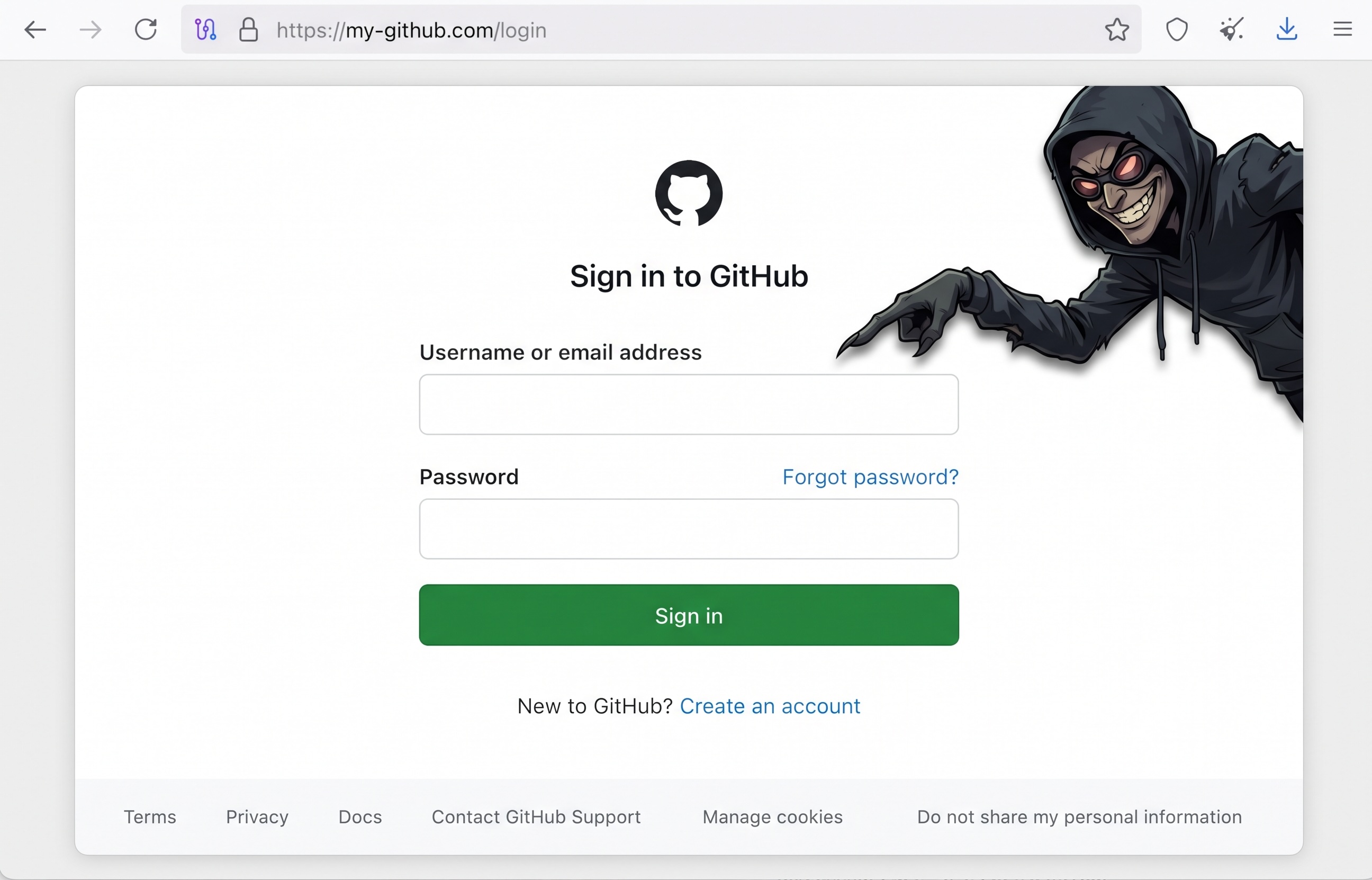
GhostAction Phishing Campaign

OpenSourceMalware analyzes a targeted phishing email from my-github[.]com (same server 193.32.204[.]199 as GhostAction's CI/CD exfiltration) that impersonated a GitHub new-sign-in alert. Recovered HTML and a HAR show a GitHub reverse proxy that captures passwords and TOTP codes, rewrites GitHub subdomains, and injects JavaScript that silently completes an OAuth device flow with repo, workflow and read:org scopes, then exfiltrates the token to TCP/8443. It includes a per-session redirect controller, mutable redirect behavior seen in URLScan, a victim's audit-log outcome (MFA stopped escalation), IOCs, and response guidance.

GitHubOAuthGitHub Actions+2
GhostActionmy-github.com193.32.204.199+6

Threat Intel, Supply Chain, Identity & AccessΒ· Published and added 11 Oct 2026

x.comwriteup🧠 AI

Aditya (@adityawaslost) on X

Describes Resolve, a Kaggle benchmark of 16 single-function Python edits. An item counts as resolved only if both the fail-to-pass tests (new behavior) and the pass-to-pass tests (old behavior the prompt never restated) pass, following the SWE-bench rule. A second task, resolve-plus, adds a hidden edge suite. Results for 23 frontier and open models: GPT-6.1 Sol and GPT-5.6 Luna lead at 0.9375 on both tasks, while DeepSeek-R1, Sonnet 5.5 and Opus 5.5 drop from 0.9375 to 0.875. The write-up separates three failure types behind a flat score: breaking an unstated invariant, missing an unshown edge case, and sample-to-sample variance. It also compares score against output price per million tokens.

PythonClaudeGemini+3
Resolveresolve-plusKaggle+23

evals, coding-agentsΒ· Published and added 11 Oct 2026

beaksec.github.iowriteupπŸ›‘οΈ Security

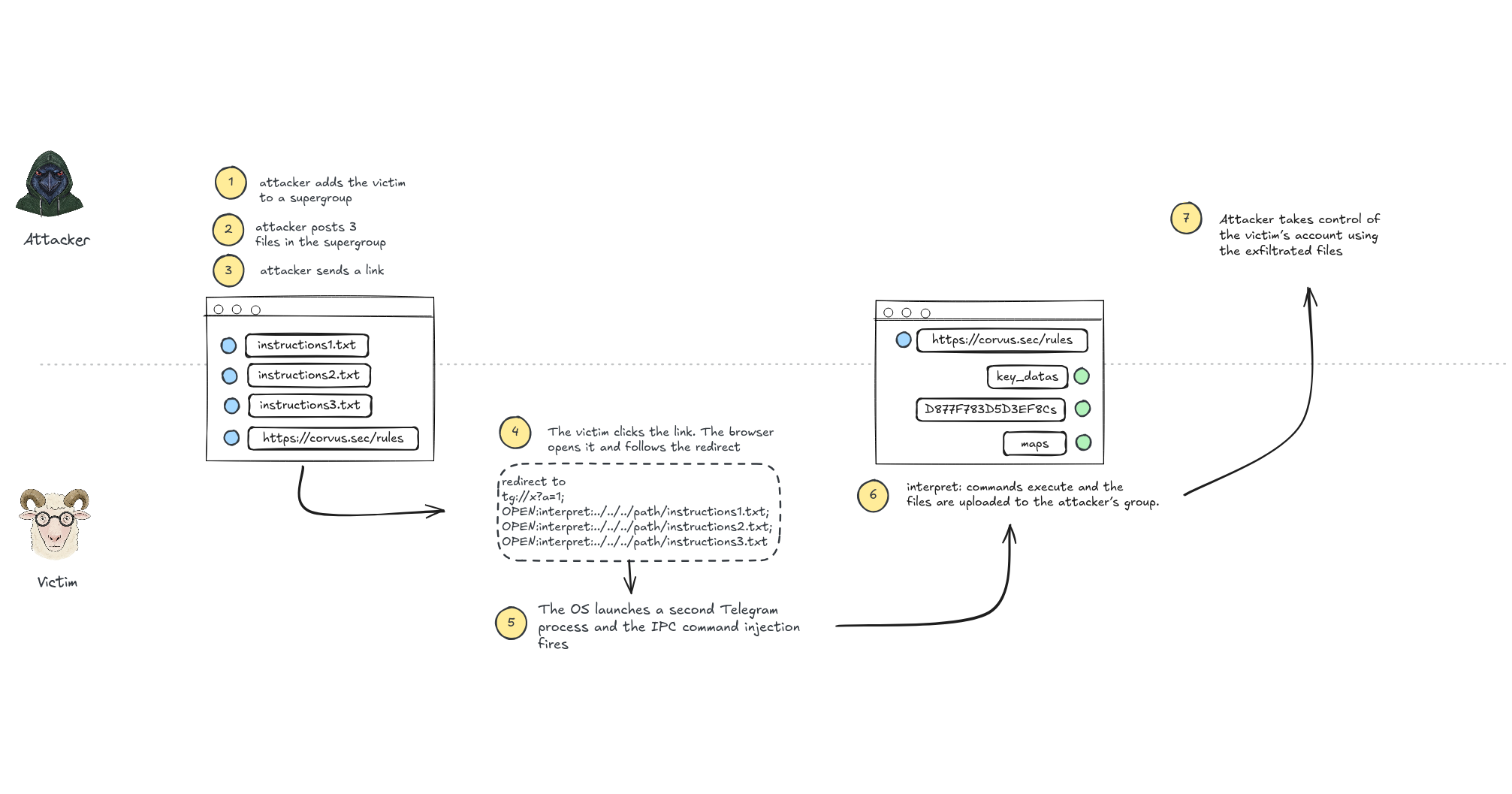
Telegram Desktop vulnerability allowed any user's file to be stolen

Writeup of a two-bug chain in Telegram Desktop: the single-instance local-socket IPC does not escape the semicolon record separator, so a clicked tg:// link injects extra OPEN: commands, which reach the internal interpret: scheme (InterpretSendPath) that reads an arbitrary file and sends it to a chat with no authorization or confirmation. The author plants instruction files via auto-download in a group, then exfiltrates tdata/key_datas and session files (no local passcode means an empty-password KEK) to take over the account. Fixed in 7.2.9 by removing interpret: and escaping separators; the post lists mitigations such as a local passcode and restricting who can add you to groups.

TelegramWindows
db3405699finterpret:InterpretSendPath+4

AppSec, Offensive SecurityΒ· Published and added 10 Oct 2026

Showing 30 of 177

Show more