 New Android SMS of Death exploit can remotely crash unpatched phones
CVE-2026-58882, "SMS of Death", is a zero-click Android denial-of-service flaw in WapPushOverSms.decodeWapPdu, where an unchecked header-length value becomes negative and triggers a NegativeArraySizeException that crashes com.android.phone. A malformed eight-byte WAP Push message to port 2948 can drop calls, including emergency calls, and about 20 messages caused reboot loops. A PoC is public. Google patched Android 14 through 17 in October 2026, but Android 12 and 13 remain vulnerable.
 bleepingcomputer.comarticlePublished and added 31 Oct 2026🛡️ Security
 4 real? Tracking exploitation and patching of eMudhra’s weak keys
Cloudflare's follow-up on eMudhra's eight trivially recoverable intermediate CA keys (such as 4, 56 and 66), disclosed 19 October 2026. Pingora logging showed about 22,000 handshakes with the weak keys, including about 160 forged certificates made within hours of disclosure. Probes on 50 million challenge pages show many bots, old browsers and Android WebView still trust the chain.
 blog.cloudflare.comwriteupPublished and added 30 Oct 2026🛡️ Security
 TeamViewer Flaw Could Let Malicious Hosts Take Over Support Technicians’ Machines
CVE-2026-111585 (CVSS 8.8) is an integer overflow in the remote-control screen processing of TeamViewer clients on Windows, macOS, Linux and Android. A malicious or compromised host can announce an oversized screen surface (for example 32768 by 32768 at 32 bpp), forcing a software decode path and an out-of-bounds write that crashes the viewer or runs code. Remedio's research shows a pointer overwrite routed to WinExec. Version 15.83 fixes it, along with CVE-2026-92372, CVE-2026-92374 and six local privilege escalation bugs.
 securityweek.comarticlePublished and added 30 Oct 2026🛡️ Security
 Android security checklist: theft of arbitrary files | Oversecured Blog
Oversecured's Android security checklist on arbitrary file theft from an app's private storage. It covers implicit intents (PICK, GET_CONTENT) returning file:// or content:// URIs, SEND/SEND_MULTIPLE share activities, exported and non-exported FileProviders, path traversal via Uri.getLastPathSegment, WebView, and local NanoHTTPD servers. Each case has vulnerable code, an attacker PoC and fixes such as /proc/self/fd path checks and narrow files-path entries.
 oversecured.comarticleAdded 29 Oct 2026🛡️ Security
 Discovering vendor-specific vulnerabilities in Android | Oversecured Blog
Oversecured describes extending its Android scanner to system APIs and to Samsung's Android build, after comparing Google and Samsung framework JARs and about 400 system services. It explains AIDL service permission checks and new control-flow analyses. Examples include Samsung's unchecked semIsBackupEnabled(), a broadcast that reboots the device, and a LaunchAnyWhere in Settings. Samsung had fixed over 60 reported issues.
oversecured.comwriteupAdded 29 Oct 2026🛡️ Security Content Providers and the potential weak spots they can have | Oversecured Blog
Oversecured's Android security checklist for Content Providers covers insecure FileProvider path configs, path traversal via decoded Uri.getLastPathSegment(), mismatched readPermission/writePermission, proxying requests to more privileged providers, SQL injection across a shared database, and sensitive actions in providers. Each case has vulnerable manifest and Java code, an attacker PoC and remediation. Real cases from Google and Samsung devices are cited. The page text was truncated near the end.
oversecured.comarticleAdded 29 Oct 2026🛡️ Security Introducing MavenGate: a supply chain attack method for Java and Android applications | Oversecured Blog
MavenGate is Oversecured's research on hijacking Maven dependencies by buying expired domains behind groupIds on Maven Central and JitPack. It found 6,170 of 33,938 checked domains (18.18%) vulnerable, and tested the attack with its own com.oversecured:hello-world library. It lists defenses (Gradle verification-metadata.xml, PGP signatures) and proposes changes to repository signing.
oversecured.comwriteupAdded 29 Oct 2026🛡️ Security Oversecured Apps Care. Part 1: Vulnerability disclosure of 225 Google apps | Oversecured Blog
Oversecured Apps Care, Part 1 (21 March 2024) publishes scanner results for about 224 Google Android apps, drawn from a wider scan of over 6,000 public APKs from 1,000+ companies. Tables per device image (phone, Wear OS, Android Automotive, Android TV) give package names, three finding counts and report links, including android, com.android.settings, gms and Play Store. It invites researchers to report issues to Google for rewards.
oversecured.comarticleAdded 29 Oct 2026🛡️ Security Disclosure of 7 Android and Google Pixel vulnerabilities
Oversecured discloses seven Android vulnerabilities, two of them Pixel-specific, all reported to Google and fixed except one low-severity WebView case. They are the Camera geolocation leak (CVE-2024-0017), a VPN bypass list change (CVE-2023-21383), a Bluetooth permission check flaw (CVE-2024-34719), the WorkSource parcel mismatch (CVE-2023-20963, exploited in the wild by the Pinduoduo app), Device Admin HTML injection (CVE-2021-0600) and a ContentProvider.openFile() caller-context bypass (CVE-2023-21292). Each has root cause and PoC code.
oversecured.comwriteupAdded 29 Oct 2026🛡️ Security Inside mobile taint analysis: how source-to-sink tracking finds real data-leak paths | Oversecured Blog
Oversecured explains taint analysis for Android and iOS apps and contrasts it with pattern-matching SAST such as MobSF. It covers source, flow and sink, cross-component tracking over Intents, flag-based sanitizer modeling and implicit intent simulation. The case study is an unsafe Class.forName().newInstance() on a Serializable transportFactoryClassName field in Google's com.google.auth.oauth2 credential classes, which Google fixed with a $3,133.70 bounty.
oversecured.comarticleAdded 29 Oct 2026🛡️ Security Android deep link vulnerabilities: how intent filters lead to account takeover | Oversecured Blog
Oversecured's article on Android deep-link vulnerabilities covers five patterns: custom scheme hijacking, open redirect into WebView, limited and full intent redirection, and domain takeover via an expired whitelist entry. It shows bypass payloads, intent selector abuse, and the HierarchicalUri reflection bypass. It also compares what SAST and DAST can find and gives a checklist for pentesters.
oversecured.comarticleAdded 29 Oct 2026🛡️ Security PCI DSS and Mobile Apps: A Simple Guide | Oversecured Blog
Guide to PCI DSS v4.0.1 scope for mobile apps, with a mapping of common Android and iOS finding types to the requirements they break (Req 2, 3, 4, 6, 7). It covers which app behaviors bring an app into scope and gives three anonymized cases: cleartext HTTP in a vendor native library, hardcoded keys in a third-party SDK, and an implicit Intent leaking data. It argues for testing the shipped binary and keeping a current component inventory.
oversecured.comarticleAdded 29 Oct 2026🛡️ Security Dead Popcorn Time Updater Put Millions of Computers at Risk of Takeover
Time4Popcorn, an abandoned Popcorn Time fork, has an updater (CVE-2026-30612) that fetches updates over HTTP without code signing and runs any executable the domain returns, as System/root. Eye Security registered abandoned update domains, saw millions of Windows, macOS and Android clients, and pushed a fix disabling the updater on about 2 million systems by March 2026. Shadowserver took over the sinkholed domains; Eye Security advises uninstalling the app.
securityweek.comarticlePublished and added 27 Oct 2026🛡️ Security Google Quietly Updates Privacy Policy to Let Gmail and Photos Data Feed Ads
Google revised its privacy policy, effective 16 October 2026, so that content from Gmail, Drive and Google Photos can personalize ads if users connect it to other Google services, which includes Personal Intelligence in AI Mode and Gemini. The setting is off by default, advertisers do not see the underlying content, and users can opt out under Connected Content apps in Data & privacy settings. Android Authority first spotted the change, and previously collected data may remain in Search history.
 decrypt.coarticlePublished and added 24 Oct 2026🧠 AI
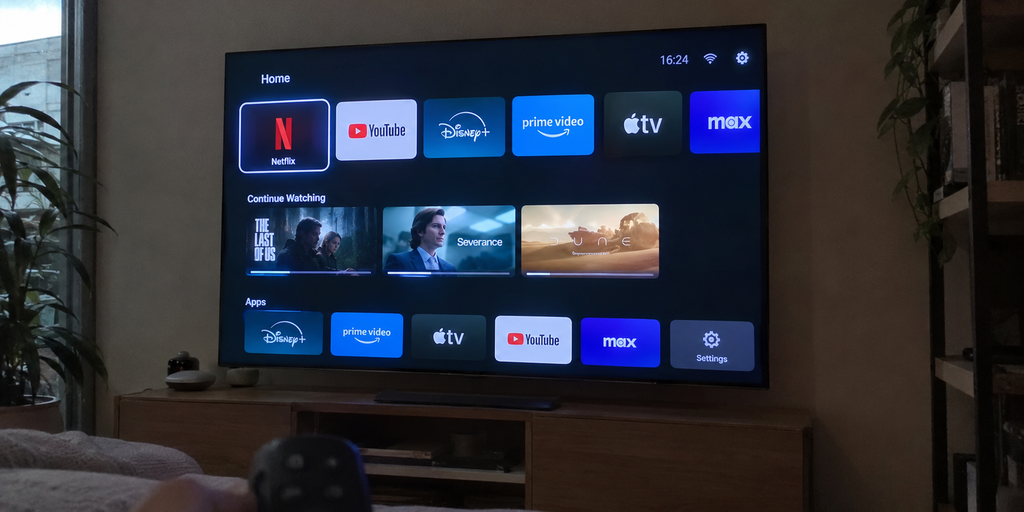 People Are Vibe Coding the Ads Out of Their Smart TVs: Here's How
Decrypt reports on "vibe coding your TV": owners point Claude Code at Android TVs, which finds the set over Wi-Fi, lists installed apps through Android Debug Bridge, disables ad and telemetry packages, and writes custom launchers. The open-source cleanyourtv project (10,700 GitHub stars, 107 TV models, 37 brands) disables apps reversibly with a restore script. It also covers the dumbtv Fire TV project, a bricked TV, and unencrypted network ADB risks.
decrypt.coarticlePublished and added 20 Oct 2026🧠 AI- CyrilXBT (@cyrilXBT) on X
REA (github.com/morluto/rea) is an open-source tool that lets an agent such as Claude Code run reverse-engineering tools (Ghidra, IDA, JADX) on a local machine and return findings with evidence. Targets named are desktop apps, compiled programs and games, Android apps, website network traffic, and firmware or binaries. The post claims a DX Ball sound function was rebuilt to byte-identical code. Setup is `npx rea-agents setup`, and the author says to use it only on software you own or may analyze.
 x.comthreadAdded 19 Oct 2026, published 17 Oct 2026🛡️ Security
- CyrilXBT (@cyrilXBT) on X
REA (repo github.com/morluto/rea) is an open-source tool that lets a coding agent such as Claude Code do reverse engineering. The agent gets an app and a question, REA picks Ghidra, IDA or JADX, runs it locally and returns findings with evidence. Targets include desktop apps, compiled programs and games, Android apps, web traffic and firmware. Setup is `npx rea-agents setup`. The tweet's author claims it rebuilt a DX Ball sound function that compiles to identical code.
x.comthreadAdded 19 Oct 2026, published 17 Oct 2026🧠 AI  Ledger’s Atom device adds tamper detection after a recovery-phrase breach
News report on a Southeast Asia supply-chain breach in which Ledger devices sold via resellers such as CryptoBilis were modified with hidden chips. The chips read 24-word recovery phrases from the screen signals during setup and sent them out over LTE. Tether froze $10M USDT tied to the theft, and Ledger suspended sales in several Asian markets. It also covers Ledger's Android-based Atom signer, which adds a protective enclosure, screen and back-cover removal sensors with their own battery, tamper-evident packaging, and website-only initial sales.
 en.cryptonomist.charticlePublished and added 15 Oct 2026🛡️ Security
 Novel Android RAT ‘Hirudo’ Replaces Banking Apps With Trojanized Copies
SecurityWeek covers ThreatFabric's findings on Hirudo, an Android banking trojan/RAT delivered via droppers hidden in fake shopping, adult video and short drama apps. It replaces eight Indonesian banking apps with modified copies containing a hooking engine that spoofs signing certificates and hides Accessibility services, screen capture and Play Integrity checks, while providing WebRTC screen viewing, camera access and SMS theft. ThreatFabric advises banks to enforce Play Integrity server-side, use behavioral analytics, treat Accessibility signals as risk inputs, and keep backend transaction-risk controls.
securityweek.comarticlePublished and added 15 Oct 2026🛡️ Security SDR (Signals Intelligence) for Hackers: Scanning Wireless Devices Using FieldWatch
Overview of FieldWatch, a free open-source Android app that passively listens to Wi-Fi and Bluetooth with the phone's own radios and matches them against an editable catalog of about 250 device signatures (trackers, drones, cameras, body cams, mesh radios). It supports alerts, recorded sessions, path maps, Remote ID drone and pilot location, GNSS interference/spoofing detection and export to TAK/ATAK. The article also covers its limits (no direction finding, no Bluetooth Classic, cellular or full Wi-Fi traffic, pattern matches only) and sideloading from the official GitHub repo on Android 10+.
 hackers-arise.comarticlePublished and added 13 Oct 2026🛡️ Security
 Small AI Models May Soon Be Able to Self-Replicate on IoT Devices, Anthropic Warns
SecurityWeek summarizes Anthropic Frontier Red Team research on AI worms that run small open-weight models directly on compromised IoT devices. A 26B model split across 15 ~$55 Android TV boxes ran at 0.39 tokens/s; a 9B model got inference running on 8 of 9 hardware types, and only GLM-5.2 completed full replication across eight emulated Android devices (4 of 5 runs). Anthropic projects ≤30B models reaching that level by end of 2026, estimates a Kimwolf-sized botnet would host ~133,000 copies worth at most ~40 H100s, and notes defenders can spot large model transfers in ISP traffic and cut the target pool by removing default passwords.
securityweek.comarticlePublished and added 13 Oct 2026🛡️ Security- Small AI Models May Soon Be Able to Self-Replicate on IoT Devices, Anthropic Warns
SecurityWeek summarizes Anthropic Frontier Red Team research on AI worms that carry their own open-weight model onto compromised IoT devices. A 26B model sharded across 15 cheap Android TV boxes ran at 0.39 tokens/s. A 9B model got inference running on 8 of 9 hardware types. In a closed network of 8 emulated Android devices, only GLM-5.2 completed the full replication cycle, reaching all 8 devices in 4 of 5 runs. Models of 30B or fewer parameters handle individual steps but fail when chaining them. Anthropic projects they reach GLM-5.2's level by end of 2026, and estimates a Kimwolf-sized botnet would offer at most about 40 H100s of compute. Defenders can detect large model transfers and sustained unusual device-to-device traffic, and removing default passwords shrinks the target pool.
securityweek.comarticlePublished and added 13 Oct 2026🧠 AI  Anthropic tests AI autonomous replication across eight nodes in four of five trials
The article reports Anthropic research (William Zhou and Daniel Freeman) on whether small open models can autonomously replicate onto unfamiliar IoT and consumer hardware. Qwen3.5-9B established inference on eight of nine hardware types using the Memento harness (built on the Pi coding agent). GLM-5.2 completed a simplified end-to-end replication across eight emulated Android nodes in four of five trials, and reached seven nodes in the fifth. Gemma4-26B-A4B was sharded by pipeline parallelism across 15 low-RAM Android TV boxes at 0.39 tokens/s. The authors estimate replication intervals of 1–2 days and a capability threshold around end of 2026, which makes it a concrete capability-evaluation datapoint for AI safety.
en.cryptonomist.charticlePublished and added 12 Oct 2026🧠 AI- Anthropic tests AI autonomous replication across eight nodes in four of five trials
News write-up of an Anthropic research post (William Zhou, Daniel Freeman) testing whether small open-weight models can act as autonomous worms. Qwen3.5-9B established inference on eight of nine hardware types, and GLM-5.2 spread across eight emulated Android nodes via unauthenticated ADB in four of five trials, reaching seven nodes in the fifth. The piece covers sharding a Gemma4-26B-A4B model across 15 low-memory Android TV boxes, projected spread rates, comparison with the Kimwolf botnet, and network signals defenders could watch (large weight transfers, inter-device inference traffic, scanning).
en.cryptonomist.charticlePublished and added 12 Oct 2026🛡️ Security  AI models may be capable of self-replicating without access to a datacenter
Anthropic's Frontier Red Team tests whether small open-weight models (≤30B) can autonomously replicate across commodity IoT devices. They ran Gemma4-26B-A4B over 15 off-brand Android TV boxes at 0.39 tok/s with pipeline parallelism. A Qwen3.5-9B-class model set up inference on 8 of 9 hardware types, and only GLM-5.2 completed end-to-end worm replication in an 8-node redroid ADB network, spreading to 8/8 nodes in 4 of 5 trials and 7/8 in the other. It also estimates spread using the Kimwolf botnet's size (~133k replicas, about 40 H100s of compute), shows notes inherited between generations improve Qwen3.5-9B's setup success (45% to 61–84%), and projects small models reaching the capability floor by end of 2026. It closes with defensive points: drive R0 below 1, and harden IoT devices.
 anthropic.compaperPublished and added 12 Oct 2026🛡️ Security
- AI models may be capable of self-replicating without access to a datacenter
Anthropic's Frontier Red Team tests whether small open-weight models (30B and under) could run as self-replicating "AI worms" on commodity IoT hardware. A 9B model set up inference on 8 of 9 hardware types. In an 8-node Android emulator fleet only GLM-5.2 replicated end to end. Gemma4-26B-A4B was sharded across 15 ~$55 Android TV boxes at 0.39 tok/s. Qwen3.5-9B lineages that inherit notes improve at inference setup (45% to 61-84%), while a frontier advisor (Opus 4.8) doesn't help. An ECI trend fit puts small models at GLM-5.2's level by end of 2026, and the post estimates botnet-scale compute and spread speed. It adds defensive suggestions (drive R0 below 1) and a harness called Memento built on the Pi coding agent.
anthropic.comwriteupPublished and added 12 Oct 2026🧠 AI  I Found a $90k Remote Code Execution Vulnerability in Google
Writeup of an unauthenticated RCE on Google's shared DevSite platform (developers.google.com, firebase.google.com, developer.android.com and others). The Flask session cookie embedded a pickled OAuth2WebServerFlow containing the OAuth client_secret, which was also the Flask SECRET_KEY. That let the author forge signed sessions carrying a malicious pickle that the OAuth callback unpickled; RCE was proven safely with time.sleep timing and negative controls. It earned a $90,000 bounty and lists a four-part fix.
 simonkoeck.comwriteupPublished and added 12 Oct 2026🛡️ Security
- Pre-Baked Firmware Malware Hits Budget Android Devices in 150+ Countries
SecurityWeek reports on Bitdefender's analysis of 'Midnight Mimosa,' a firmware-level malware campaign preinstalled on budget MediaTek-based Android devices across 150+ countries, giving attackers system-level privileges to silently install/remove apps and run ad fraud and click fraud botnets. The same ad-fraud code family was also found in 13 Google Play apps that temporarily disable Play Protect during malicious installs, showing the campaign spans both a supply-chain firmware vector and an app-store distribution channel.
securityweek.comarticlePublished and added 9 Oct 2026🛡️ Security  Android’s October 2026 Updates Patch 25 Vulnerabilities
SecurityWeek summarizes Google's October 2026 Android Security Bulletin (2026-10-01 patch level), which fixes 25 vulnerabilities — 7 in Framework and 18 in System, including 7 critical bugs. The most severe is a critical local privilege-escalation flaw in System requiring no user interaction or extra execution privileges; the bulletin also covers a System RCE bug, Google Play system updates for Telephonycore/WiFi, and separate Pixel and Android Automotive OS fixes (including critical Bluetooth, GDMC, and GSA issues). Google reports no evidence of in-the-wild exploitation.
securityweek.comarticlePublished and added 7 Oct 2026🛡️ Security Someone Scraped 5.6 Billion TikTok Videos and Put the Data on Hugging Face for Free
Decrypt reports that a developer going by "hashfunction," operating under the datasocial account, published a 460GB Parquet dataset of metadata for ~5.6 billion public TikTok videos (captions, hashtags, sound IDs, engagement counts, AI-generated flags) on Hugging Face under CC BY-NC 4.0. The data was obtained by hitting TikTok's private mobile API using generated Android device identities, reverse-engineered request signatures, and a spoofed TLS handshake, bypassing the ToS clause that bars automated scraping; datasocial.ai sells the scraper's source code for $1,699 and offers commercial access, creator profiles, and daily updates. The piece situates this against TikTok's gated official Research Tools and the ongoing Reddit v. Perplexity/SerpApi scraping lawsuit.
decrypt.coarticlePublished and added 6 Oct 2026🛡️ Security Pixel 11 doesn't yet meet the GrapheneOS security standards and may be skipped
GrapheneOS reports that its partial Pixel 11 port must be abandoned because the device lacks working ARM hardware Memory Tagging Extension (MTE) support in software, firmware, and likely hardware, despite Pixel 8/9/10 supporting it since 2023. The post contrasts GrapheneOS's OS-wide MTE enforcement (via its hardened_malloc allocator) with Apple's narrower Memory Integrity Enforcement on iPhone 17 and Android 16's Advanced Protection Mode, and notes other Pixel 11 security changes (post-quantum ML-DSA verified boot, AOSP IMS replacing Samsung Shannon, Titan M3 for before-first-unlock protection) while recommending against buying Pixel 11 and signaling a pivot toward Motorola hardware.
 discuss.grapheneos.orgwriteupPublished and added 5 Oct 2026🛡️ Security
 Introducing the Kotlin Benchmark for AI coding agents (JetBrains)
JetBrains introduces the Kotlin Benchmark, a SWE-bench-style evaluation suite of 105 repository-level engineering tasks drawn from real open-source Kotlin projects, where agents must read an issue, navigate a codebase, and produce a patch verified by containerized test execution. Built on the open-source Multi-SWE-bench infrastructure, it ships with a public leaderboard and GitHub assets; the first results rank Claude Code with Claude Opus 4.7 (85.71% resolved) ahead of JetBrains Junie with Opus 4.7 and Codex with GPT-5.5, both at 81.9%. JetBrains positions it as complementary to model-level Kotlin evals like Kotlin_HumanEval and Kotlin_QA, and plans to expand coverage to Android/Kotlin Multiplatform tasks and additional metrics beyond pass/fail.
 blog.jetbrains.comarticleAdded 4 Oct 2026🧠 AI
- Samuel Zeng (@SamuelZengML) on X
Samuel Zeng announces the open-sourcing of Edge0's cross-platform app layer (iOS, macOS, Android, Windows), building on Edge0's earlier on-device 35B language model that runs in only 1-2.5GB of peak memory. The release includes app code, local model/runtime integration, model management, and build/deployment guides on GitHub; the technique keeps the full model on local storage and streams in only the experts (MoE-style) needed per step, predicting and prefetching the next experts while running storage reads in parallel with compute. A Q4 2026 roadmap promises a unified inference API across platforms plus Python, hardware-adaptive runtime, and a CUDA backend.
x.comthreadPublished and added 1 Oct 2026🧠 AI - A Privacy Analysis of Web and Mobile Conversational AI Agents [pdf]
A Proceedings on Privacy Enhancing Technologies paper by IMDEA Networks researchers systematically analyzes the web (via instrumented Chrome/CDP) and Android (via Androguard static analysis plus dynamic instrumentation on a Pixel 3a) clients of nine conversational AI services — ChatGPT, Claude, Grok, DeepSeek, Gemini, Perplexity, Microsoft Copilot, Mistral's Le Chat, and Meta AI. They find every service embeds at least one third-party advertising/tracking service (44 third parties total), that 6/9 web and 3/8 Android clients leak conversation titles, prompts, or screenshots to trackers alongside persistent identifiers, and that several providers expose entire conversations via publicly accessible permalinks lacking access controls. The paper evaluates how consent choices, subscription tiers, and access-control settings shape this exposure and analyzes the practices against GDPR and the ePrivacy Directive, following responsible disclosure to providers and EU DPAs.
 jorgegarciaherrero.compaperAdded 2 Oct 2026, published 29 Sep 2026🛡️ Security
 Badger Signal (@BadgerSignalHQ) on X
A Twitter thread from BadgerSignalHQ summarizing a blog writeup claiming GitHub Security Lab used AI-driven audit agents to find 24 vulnerabilities across popular Android apps. It describes an OsmAnd exported-activity flaw letting any app hijack map tile URLs to leak GPS location and route data without location permissions, and a Wikipedia account-takeover chain combining a deeplink hostname-parsing bug with weak cookie-domain checks to trigger malicious WebViews that exfiltrate session tokens across Wikimedia projects.
x.comthreadAdded 30 Sep 2026, published 29 Sep 2026🛡️ Security How we found 24 Android vulnerabilities using our open source AI security agent
GitHub Security Lab describes the architecture behind its open-source "Taskflow Agent," a set of YAML-defined prompt workflows (e.g. gather_mobile_entry_point_info.yaml, classify_application_local.yaml) that guide an LLM through structured, multi-step code audits rather than a single free-form prompt. Using these taskflows on Android apps via GitHub Copilot, the team found 24 vulnerabilities, including a location-tracking bug in OsmAnd via exported-activity intent extras and a cookie-leaking account-takeover chain in the Wikipedia app via a deeplink hostname-parsing flaw. The post's more durable contribution is its analysis of LLM auditing behavior: strong at recognizing API-level unsafe patterns and generating working PoCs, but unreliable at severity estimation and prone to false positives from mitigating factors the model doesn't account for, requiring human review and repeated/guided runs.
 github.blogarticleAdded 8 Oct 2026, published 28 Sep 2026🧠 AI
- How we found 24 Android vulnerabilities using our open source AI security agent
GitHub Security Lab describes custom "taskflow" prompts built on their open-source Taskflow Agent to hunt Android app vulnerabilities, reporting 24 findings to date. It walks through two concrete chains: an exported, unprotected MapActivity in OsmAnd that lets any app silently import settings and exfiltrate the user's exact map tile/route coordinates to an attacker server, and a hostname-parsing logic bug plus overly loose cookie-domain check in the Wikipedia Android app that lets a wikipedia:// deeplink load an attacker page (e.g. evil-wikipedia.org) and steal long-lived session cookies for account takeover. The post also candidly notes where LLMs struggle (false positives, mis-estimating severity, missing mitigating factors) versus where they excel (deep knowledge of safe/unsafe API patterns).
github.blogwriteupAdded 7 Oct 2026, published 28 Sep 2026🛡️ Security  OnePlus/OPPO root privilege-escalation chain (AtlasService + olc2)
Researcher Rasmus Moorats disclosed a two-stage local privilege-escalation chain on OnePlus/OPPO Android phones: OnePlus's AtlasService debugging component runs as root and passes unvalidated app input into a system command, granting root but confined to a restricted dumpstate zone; a second flaw in the olc2 hardware-helper service accepts arbitrary shell commands from any root caller, escaping the sandbox to full root with kernel-module-loading privileges. A malicious app requiring zero permissions and showing no prompts can chain both bugs on a stock OnePlus 15 or 12 Pro, and OnePlus said the same flaws affect many other OnePlus and OPPO devices sharing OxygenOS. OnePlus confirmed the bugs in May 2026 but had shipped no fix or CVE by publication (Sept 24), and separately told the researcher it claims sole authority over disclosure timing and threatened legal liability for publishing without consent — a stance he rejected before going public.
 thehackernews.comarticleAdded 26 Sep 2026🛡️ Security
- CVE-2026-19978: A flaw has been found in jiantao88 android-mcp-server up to cfb872b2446794193b58edd63f4dbf6af48a6292
CVE-2026-19978 describes an OS command injection (CWE-77/78) in jiantao88's android-mcp-server, where the child_process.exec call in build/index.js fails to sanitize the deviceId, packageName, permission, and extras[].key/value arguments used to control Android devices. The flaw allows local command execution and has a published exploit; it was fixed in commit 14e2bf27c88ba137e35cbb0c2a75f72b595bb98a. CVSS 4.0 base score is 1.9 (local attack vector only), and the project uses rolling releases so no fixed version numbers are assigned.
 nvd.nist.govadvisoryAdded 26 Sep 2026🛡️ Security
 Jev-Mobile: Jev as an Executor for Mobile GUI Agents
Jev-Mobile is a mobile GUI agent architecture that decouples high-frequency action execution from low-frequency VLM planning: a vision-language model periodically sets local goals while Jev, a fast typed decision model, repeatedly selects actions from a structured action space derived from the Android accessibility tree. On the full AndroidWorld benchmark it matches VLM-based baselines (79% task success vs. 78% for SeeAct-V and 84% for a Step-wise VLM baseline) while cutting mean execution time by 32.7% and model API cost by 73.4% relative to the Step-wise VLM approach.
 arxiv.orgpaperAdded 26 Sep 2026, published 24 Sep 2026🧠 AI
 Should you care about an “AI slowdown?”
Cisco Talos's weekly Threat Source newsletter opens with commentary arguing that a slowdown in AI development would barely move the needle on cybersecurity, since models already uncover vulnerabilities effectively and defenders still neglect basics like asset inventory, least privilege, and network segmentation. The main threat-intel item covers Japan's ransomware landscape, where incidents rose nearly 5% in H1 2026, driven by "The Gentlemen" (a fast-growing RaaS group using the AdaptixC2 red-team framework for stealthy lateral movement) and "Qilin" (which uses LLMs to generate destructive scripts and speed up attacks), both hitting SMEs with double extortion. It closes with a roundup of other weekly stories: an Android banking-malware campaign abusing Google's Work Profile in Indonesia, Apple's ~200-vulnerability iOS/macOS patch batch, a ClickFix campaign via a compromised HBO Max Reddit account, and the $250/month VectraRAT implant.
 blog.talosintelligence.comarticleAdded 7 Oct 2026, published 17 Sep 2026🛡️ Security
 Announcing ADK for Kotlin 1.0: Building Production-Ready AI Agents in Kotlin, Android, and Beyond
Google announces ADK (Agent Development Kit) for Kotlin 1.0, reaching feature parity with ADK Python/Java and adding Android-first extensions: on-device inference via LiteRT-LM and ML Kit, Firebase AI Logic for hybrid cloud, and persistence through Room and AppSearch. It uses Kotlin Symbol Processing (KSP) to generate type-safe function-calling schemas at compile time from @Tool/@Param annotated methods, and introduces a SkillToolset for progressive-disclosure SOPs (SKILL.md files) plus human-in-the-loop confirmation for sensitive tool calls like bank transfers.
 developers.googleblog.comarticleAdded 26 Sep 2026, published 9 Sep 2026🧠 AI
 Compromised Flutter package on pub.dev contains XCSSET malware
Aikido Security discovered a variant of the XCSSET macOS worm hidden in universal_file_viewer, a Flutter file-preview package on pub.dev (~500 downloads) — the first compromised package found on that registry. The infection was not a targeted supply-chain attack but resulted from the maintainer's machine being infected with XCSSET, which auto-injects malicious build hooks into every Gradle, Xcode, and git project it finds; the poisoned example/ directory (Android Gradle build, iOS/macOS Xcode project files) shipped in the package tarball. The writeup details XCSSET's four-stage infection chain, its android_finder/git_finder/replicator_finder propagation modules, Launchpad-tile persistence, and theft modules targeting Chrome, Safari, Firefox, Telegram, Notes, and clipboard data, plus C2 domain and file-artifact IOCs.
 aikido.devwriteupPublished and added 8 Sep 2026🛡️ Security
- ScreenshotDetector
ScreenshotDetector is an Android app-layer tool that detects screenshot, screen recording, screen mirroring, and casting activity using a combination of public APIs (ScreenCaptureCallback, ScreenRecordingCallback, DisplayManager, MediaProjection, ContentObserver/MediaStore, FileObserver, AccessibilityService, NotificationListenerService) and hidden APIs accessed via reflection (DisplayManagerGlobal.getDisplayInfo, WifiDisplayStatus, AppOps project_media/project_audio). It is positioned as a research counterpart to ScreenshotFaker (an LSPosed/Shizuku-based tool that forges/bypasses screenshot detection), illustrating the attacker/defender dynamic around screen-capture evasion on Android, including detection of adb shell screencap/screenrecord, freeform/mini-window attribution, and accessibility-overlay/screen-reader channel abuse detection.
 github.comrepoPublished and added 21 Aug 2026🛡️ Security
 Orca Security: Zoom Zero-Click RCE Flaws Allow Any Meeting Attendee to Compromise All Participants
Orca Security details four Zoom vulnerabilities in the cross-platform annotation engine (libannotate.so): CVE-2026-53413, a stack buffer overflow in CAnnoFormatBlock::Deserialize from unchecked 32-bit character counts, and CVE-2026-53415, a use-after-free in auto-shape metadata handling giving a write-what-where primitive, both enabling zero-click RCE against every meeting participant via crafted annotation messages during screen sharing. Also disclosed are CVE-2026-53414 (heap over-read/DoS) and CVE-2026-53416 (path traversal in the Windows VDI client). The write-up notes a working exploit chain built in under 24 hours with fewer than 20 AI-model prompts, platform-specific exploitation details (macOS ARM64 ASLR bypass, Android heap spraying/vtable corruption), and that E2EE meetings bypass Zoom's server-side message filtering.
 orca.securityadvisoryPublished and added 12 Aug 2026🛡️ Security
- Putting sign language AI into usersâ hands
Google DeepMind and Android introduce SL2T, a massively multilingual sign-language-to-text translation model trained on over 100,000 hours of data across 50+ sign languages, now powering ASL-to-English sign dictation in Gboard and Live Transcribe on Pixel 11. Instead of relying on intermediate "gloss" annotations, SL2T translates directly from pose-landmark coordinate sequences (tracked on-device via MediaPipe Holistic for privacy) into text, achieving a zero-shot 70 BLEURT score on the FLEURS-ASL benchmark, reportedly well above prior reported results.
 deepmind.googlearticleAdded 29 Sep 2026, published 12 Aug 2026🧠 AI
- manyuegong33/r0crawl_skills
r0crawl_skills is a Chinese-language skill library for Codex-style AI coding agents, organized as a router plus 196 specialized modules covering web reverse engineering, Android unpacking, Frida instrumentation, native binary analysis, protocol reconstruction, malware triage, firmware analysis and CTF workflows. Rather than dumping advanced terminology at once, it starts novices with four framing questions (what to analyze, what action matters most, what materials exist, what outcome is wanted) and routes them to deeper workflows via lightweight Python scripts (init_case.py, module_router.py, hash_artifact.py) and ten sanitized example playbooks. It's installed by copying the directory into Codex's skills folder, making it a practical illustration of the "router + many domain modules" pattern for packaging large skill collections for coding agents.
github.comrepoAdded 30 Sep 2026, published 6 Aug 2026🧠 AI - manyuegong33/r0crawl_skills
r0crawl_skills is a beginner-friendly Chinese-language skill library of 196 specialized reverse-engineering modules for Codex-style AI coding agents, with a router that asks scoping questions and directs the agent to the right workflow (web RE, Android unpacking, Frida instrumentation, native binary analysis, protocol reconstruction, malware triage, firmware analysis, CTF). It ships lightweight scripts (case init, module router, artifact hashing) and ten sanitized example playbooks covering DEX dump verification, WebCrypto hooking, native loader tracing, PCAP reconstruction, and selective emulation, plus dedicated modules for CAPTCHA/WAF/anti-bot systems, mini-programs, hybrid apps (Flutter/React Native/Electron), and IDA/Ghidra/Rizin automation.
github.comrepoAdded 30 Sep 2026, published 6 Aug 2026🛡️ Security - Awesome Android Reverse Engineering
A curated GitHub list covering the full Android reverse engineering toolchain: decompilers (JADX, Apktool, Ghidra, IDA Pro), dynamic instrumentation (Frida, Objection, FriDump, jnitrace), deobfuscation tools (Simplify, Obfu[DE]scate, deoptfuscator), network interception (Burp Suite, MITMProxy, SSLsplit), anti-tamper/root-detection bypass tooling, and malware analysis frameworks (MobSF, Quark Engine, Cuckoo Droid). It also links training courses (Maddie Stone's RE training, Azeria Labs ARM assembly), books (Android Hacker's Handbook, Android Security Internals), and CTF/practice targets (UnCrackable Mobile Apps, KGB Messenger, Flare-On).
github.comrepoPublished and added 5 Aug 2026🛡️ Security - Momoko-Ayase/Senbei
Senbei is a Rust-based static unpacker for binaries protected by "CrackProof," working against both Windows PE executables and Android AArch64 shared libraries. It performs a purely static, file-local transformation (no vendor code, no key extraction service) to reverse the protection wrapper for legitimate RE, interoperability, and preservation purposes; one Android packaging variant is unwrapped using an XOR keystream the authors recovered during their own analysis.
github.comrepoAdded 4 Oct 2026, published 3 Aug 2026🛡️ Security - Beetle
Beetle is an offline-first mobile application security platform that statically analyzes Android APKs and iOS IPAs (including Flutter and React Native apps), combining decompilation, taint analysis, secret/endpoint extraction, certificate and native-binary hardening checks, and CVE enrichment with explainable 'intelligence engines' (ownership, confidence, evidence selection, finding fusion) that correlate findings into evidence-backed attack chains. It maps results to OWASP MASVS/Mobile Top 10, provides source-level navigation, and exports SARIF, CycloneDX SBOM, and PDF reports, with optional (non-scanning) AI assistance via Claude, OpenAI, Gemini, DeepSeek, or local Ollama for explaining findings.
github.comrepoPublished and added 31 Jul 2026🛡️ Security - thomasbuilds/Spectre
Spectre is a free, open-source Android app (min API 31) for observing and interacting with the surrounding wireless environment, combining passive monitoring of Bluetooth LE, Wi-Fi, cellular (2G-5G), and GNSS with a growing set of pentesting tools. Notable features include a BLE GATT inspector that can read/write characteristics on connected devices, a local-network scanner (TCP-connect host discovery, SSDP/UPnP, mDNS/DNS-SD, banner grabbing, reverse DNS), iBeacon broadcast spoofing, and a computed aggregate RF-exposure figure derived by correctly summing per-emitter power in linear watts rather than dBm. It also documents Android platform limitations affecting wireless recon, such as invisible 5G NSA signal, Wi-Fi scan throttling, and single-carrier cell visibility.
github.comrepoPublished and added 23 Jul 2026🛡️ Security - LSPosed/LSPromise
LSPromise is a GitHub repo and detailed writeup documenting a complete Android privilege-escalation exploit chain from an untrusted local app to root/kernel, with no memory corruption required. It chains a logic bug in Telecom's InCallController.java (CVE-2026-49881) that lets arbitrary code run inside system_server, pivots via ActivityManager reflection into com.android.networkstack to reach the DirtyFrag kernel 1-day (CVE-2026-43500/CVE-2026-43284), and then uses a DirtyPipe-style binary-patching technique (crash_dump, modprobe, vendor_file labeled kernel module) to disable SELinux and launch KernelSU with root. Tested on Pixel 10 running Android 17; the first bug was fixed in the September 2026 security bulletin.
github.comrepoAdded 2 Oct 2026, published 23 Jul 2026🛡️ Security - tiwe0/r0dump
r0dump ports the FART active-invocation dumping technique into the Android 16 / ART runtime, hooking DEX registration, class loading and method dispatch directly inside ART to force packed apps to decrypt their code at runtime. It also captures DEX loaded via InMemoryDexClassLoader, reconstructs shifted ID tables back into standard DEX files, and recomputes Adler-32/SHA-1 checksums, with a companion "R0dump Manager" app (including an ADB-driven MCP bridge) for target selection, repair and ZIP export of dumped samples for inspection in JADX/dexdump. The reference build targets a OnePlus 9 running LineageOS 23.2 with test-keys, and the project ships git-format-patch sets for porting to other Android 16 devices.
github.comrepoAdded 2 Oct 2026, published 17 Jul 2026🛡️ Security - SyscallX-18113/Apkx-Hunter
APKX-Hunter is an open-source Android static analysis framework written in C, built for reverse engineering, malware analysis, OWASP MASVS compliance scanning, and bug bounty/pentesting work. It decompiles APK/APKM/APKS/XAPK/ZIP packages via JADX or APKTool, extracts hardcoded secrets, endpoints, permissions, exported components, and native libraries, and scores detected secrets with a lightweight offline C-based ML classifier (166 MASVS detection patterns across 15 categories). It was showcased at Black Hat Europe Arsenal and tested against the OWASP UnCrackable Level 4 app.
github.comrepoAdded 30 Sep 2026, published 11 Jul 2026🛡️ Security  Hacking Google with A.I. for $500,000
brutecat and a collaborator scraped 60,000+ Android APKs, 2.8k Google web domains, and IPAs to harvest Google API keys, then used Google's "discovery documents" (Swagger-like API specs) plus reverse-engineered First Party Authentication v2 (SAPISIDHASH-derived tokens) and leaked gapix/proto source to enumerate and authenticate against 1,500+ internal Google APIs. They built a custom API Explorer and wired the same request/response parsing logic into Claude via MCP tools (probe_api, report_vulnerability, get_endpoint_schema) run in a "Ralph Wiggum" loop with endpoint-group classification, letting the AI autonomously fuzz for IDOR and broken access control at scale. Over three months this AI-driven testing surfaced $500,000 in Google VRP bugs, including a Google Voice API with no auth checks that leaked PII and account-recovery phone numbers and allowed assigning phone numbers to arbitrary victim accounts.
 brutecat.comwriteupAdded 12 Sep 2026, published 11 Jun 2026🛡️ Security
 Dev Machine Guard Now Scans Extensions Across Every Modern IDE
StepSecurity's Dev Machine Guard now inventories and scores IDE extensions/plugins across eight IDE families (VS Code, Cursor, Windsurf, Antigravity, JetBrains IDEs, Android Studio, Eclipse-based IDEs, Xcode) on macOS, Windows, and Linux, not just VS Code. It computes a supply-chain Security Score per extension (adoption, publisher verification, license, known vulnerabilities, repo security posture) and flags known-compromised or typosquatted extensions, motivated by incidents like the October 2025 VS Code publisher token leaks, the s1ngularity Nx compromise, and the Shai-Hulud npm worm reaching extensions via transitive dependencies. The scanning engine is open source; enterprise mode feeds a fleet-wide dashboard for incident response and typosquat/compromise hunting.
 stepsecurity.ioarticleAdded 3 Sep 2026, published 2 Jun 2026🛡️ Security
- DragonJAR/Android-Pentesting-Skill
Android-Pentesting-Skill is an open-source "skill" package that turns an AI coding agent (Claude Code, OpenCode, etc.) into an Android APK security auditor. It orchestrates APKTool/JADX decompilation, MASTG-aligned Semgrep static rules, source-to-sink tracing, a Runtime Defense Analysis engine that maps detected RASP/anti-tampering protections (root detection, SSL pinning, Frida detection, SafetyNet, Approov, DexGuard, etc.) to reusable Frida bypass profiles, and CVSS 4.0/MASVS-scored professional reporting, plus smali patching/repackaging workflows for authorized lab use. It ships 37+ bundled Frida scripts, 70+ Semgrep MASTG rules, and framework-specific handling for Flutter, React Native, Cordova, and Unity apps.
github.comrepoPublished and added 7 May 2026🛡️ Security

