 FBI Attributes $6 Billion-Plus Binance Hack to North Korea
The Defiant reports that the FBI attributed a Binance hack of more than $6 billion to North Korea and named TraderTraitor as the actor. The bureau also sought blocks on the laundering trail, and Binance kept 1 November as its target for restarting withdrawals. The article body did not load, so technical details of the intrusion are not available.
 thedefiant.ioarticlePublished and added 31 Oct 2026🛡️ Security
- Hackers hijack a dozen DeFi websites, all registered with Name.com, and steal about $138,000
Twelve DeFi websites, including Flap, Kintsu, Pickle Finance and Origami Finance, were hijacked on 30 October 2026 and served the Step Drainer kit. All 12 domains use Name.com as registrar, and 10 were suspended. The Block traced about $138,000 stolen to three EVM wallets, excluding Solana and Aptos losses. Kintsu and Origami blame Vercel. Projects say their onchain contracts were untouched.
 theblock.coarticlePublished and added 31 Oct 2026🛡️ Security
 Binance Hack: Everything You Need to Know About the Biggest Crypto Heist in History
Decrypt's explainer on the roughly $6.4 billion theft from Binance hot wallets across about 10 blockchains. Binance traced it to a compromised DevOps engineer laptop plus further breach points, and on Ethereum the attacker used 50 pre-signed EIP-7702 authorizations to turn a hot wallet into a sweeper. Chainalysis and TRM Labs attribute it to TraderTraitor; Tether and Circle froze about $2.3 billion.
 decrypt.coarticlePublished and added 31 Oct 2026🛡️ Security
 Appraisal by AI: Model-driven victim prioritization in the VOLTA infostealer
VOLTA (VOLTA-AUTODOXER) is a self-deleting Windows infostealer that, after theft and live session-based enrichment, POSTs an evidence bundle to OpenRouter so an LLM can rank the victim's assets by monetization value. It falls back across a Claude, Kimi and Gemini chain when a model refuses. Talos covers the builder model, the Chrome App-Bound Encryption bypass, the volta_debug.txt artifact and countermeasures such as blocking Chrome --headless.
 blog.talosintelligence.comwriteupPublished and added 31 Oct 2026🛡️ Security
- Inside the largest crypto hack on record: How attackers breached Binance for $6.3 billion
The Block reports on the Binance hack of 30 October 2026, in which investigators estimate more than $6 billion was stolen from hot wallets and attribute the theft to North Korean groups. Binance says it holds about $5 billion of the affected assets and is buying $1.3 billion more to cover losses. The piece covers an EIP-7702 sweeper, laundering through Aave and DEXs, and analyst comments. The available text does not detail the intrusion path.
theblock.coarticlePublished and added 30 Oct 2026🛡️ Security - President Trump says they’re looking into Binance hack as calls grow for crypto rules
The Block reports that Binance lost about $6.3 billion in a hack on 29 October 2026. Co-CEO Richard Teng said a compromised DevOps engineer's laptop gave access to a service container used to submit unauthorized withdrawals, and TRM Labs attributed the theft to North Korea's TraderTraitor. The rest covers reactions: President Trump said on 30 October he was looking into it, CFTC Chair Michael Selig and The Digital Chamber urged federal exchange rules, and senators disputed whether the Clarity Act would have allowed freezes.
theblock.coarticlePublished and added 30 Oct 2026🛡️ Security  Weekly Research Brief: Binance Hacked; Hyperliquid on Wall Street; Prediction Markets’ Brazil ‘Miss’
Galaxy Research's weekly brief of 30 October 2026 opens with the Binance hack: about $6.3b drained across 10 blockchains, attributed by TRM Labs and Chainalysis to TraderTraitor (Lazarus-linked). The attacker used EIP-7702 with 50 pre-signed authorizations on Ethereum, and Binance's preliminary finding is a compromised DevOps laptop reaching a service container. Tether and Circle froze about $2.6b. The other sections cover Hyperliquid and prediction markets.
 galaxy.comarticleAdded 30 Oct 2026🛡️ Security
 Here We Go Again: Binance Loses $6.3b in Largest Robbery in History
Galaxy Research newsletter on the roughly $6.3b drained from Binance across 10 blockchains, which TRM Labs and Chainalysis attribute to TraderTraitor. On Ethereum the attacker used EIP-7702 to turn a hot wallet into a sweeper contract backed by 50 pre-signed authorizations. Binance's preliminary finding is a compromised DevOps laptop, with no wallet key leak. Tether, Circle, Ripple and World Liberty froze about $2.7b; Galaxy also assesses Binance's ability to cover losses.
galaxy.comarticleAdded 30 Oct 2026🛡️ Security Polymarket Sends $3.9M Back to Traders After Vendor Script Drain
Polymarket's international site was hit on 29 October 2026 when a page-speed monitoring script served from DebugBear's CDN was replaced with a drainer. It hijacked logged-in sessions for about an hour and took $2.7M from 726 wallets via Polymarket's relayer. Scott Helme of Report URI says the CSP allowlisted every domain used and that hash pinning would have blocked the swapped file. Polymarket is repaying $3.9M, and this is its second vendor-script compromise since June.
 bankless.comarticlePublished and added 30 Oct 2026🛡️ Security
 Malicious Claude Code extension on Cursor planted SSH backdoors
A malicious version 2.1.313 of Anthropic's Claude Code extension was served from Cursor's marketplace for about 11 hours on 29 October 2026, reaching up to 5,000 developers. A JavaScript loader prepended to extension.js added an attacker SSH key, a reverse tunnel and macOS/Windows persistence, and reported to 134.209.82[.]225. Coding errors likely blocked SSH access on many hosts. Cursor removed it and rotated keys; victims should look for an 'svc-telemetry' SSH key.
 bleepingcomputer.comarticlePublished and added 30 Oct 2026🛡️ Security
- Binance says it has $6.34 billion ready to cover hack losses
The Block reports that Binance says it has set aside $6.34 billion of its own funds to cover a hack it puts at about $6.3 billion. Co-CEO Richard Teng says the entry point was a compromised DevOps laptop and no private key leak was found. About $3 billion was frozen by Tether, Circle, Ripple and others, withdrawals are suspended, and TRM Labs sees parallels with North Korean attacks. Technical detail is thin.
theblock.coarticlePublished and added 30 Oct 2026🛡️ Security  Israel Extradites Alleged Nomad Bridge Exploiter to US Over $2.8M Theft: Report
Decrypt report that Israel extradited Alexander Block (formerly Gurevich) to the US over about $2.8 million taken from the Nomad bridge in August 2022. A June 2022 update flaw let tokens be received without locking assets, and copycats then drained more than $186 million. Israel's Supreme Court held that exploiting a flaw the software permitted can still be unlawful intrusion. The FTC proposed a settlement with Illusory Systems in December 2025.
decrypt.coarticlePublished and added 30 Oct 2026🛡️ Security TRM and Chainalysis Tie $6.4B Binance Hack to North Korea's TraderTraitor
TRM Labs and Chainalysis attribute the October 2026 Binance theft, about $6.4 billion across 10 blockchains, to North Korea's TraderTraitor. On Ethereum the attacker used EIP-7702 delegation with 50 pre-signed authorizations to turn a hot wallet into a sweeper, pointing to compromised signing infrastructure. The attacker funded wallets via Tornado Cash, laundered through automation and Aave borrowing, and about $3 billion was frozen.
decrypt.coarticlePublished and added 30 Oct 2026🛡️ Security $6 Billion Binance Hack Bears Hallmarks of North Korea’s TraderTraitor
The Binance hack of 29 October 2026 drained about $6.36 billion across ten blockchains in roughly 20 minutes, according to TRM Labs. TRM attributes it with high confidence to North Korea's TraderTraitor, citing a mixer-funded operator wallet, pre-signed transactions and overlap with the Bybit and KelpDAO hacks. Binance's early findings point to a compromised DevOps engineer laptop. Stablecoin issuers froze about $2.7 billion.
 securityweek.comarticlePublished and added 30 Oct 2026🛡️ Security
 Fake crypto app on Apple App Store linked to $23K wallet theft
Padre Terminal, a fake Solana meme-coin trading app on the Apple App Store, drained about $23,000 from 27 Solana wallets after users imported private keys, per blockchain investigator Iris. The app has been removed, but the drainer stayed active; Iris traced funds to two attacker wallets holding 229.66 SOL. Iris also flagged four other suspected impersonator apps (Axiom Pro: Focus, GMGN AI, HyperTerminal-HyperliquidTools, Pump Fun Tokens & Analitycs).
bleepingcomputer.comarticleAdded 30 Oct 2026, published 29 Oct 2026🛡️ Security A Unified Hessian-Guided Framework for Post-Training Quantization
This preprint proposes a unified post-training quantization framework for large language models. It derives a Hessian-guided approximation of the output change caused by joint weight and activation quantization, using a tractable Fisher approximation. Quantization ranges, linear transformations and weight rounding are optimized together under one output-sensitivity objective. The authors report gains over state-of-the-art transformation and rounding methods in channel-wise and block-wise settings.
 arxiv.orgpaperAdded 31 Oct 2026, published 29 Oct 2026🧠 AI
- Only Accepted Tokens Count: An Energy Accounting of Speculative Decoding Under Latency Targets
This paper measures the energy cost of speculative decoding in SGLang with CUDA graphs on H100 and H200 GPUs, at batch sizes up to 64 across 5 corpora. Savings depend on drafted-token acceptance, which is lower on conversation than code and lower on Romansh than English. Savings shrink as batch size grows, and block drafters can push verification into the compute-bound regime, where speculation raises energy per token.
arxiv.orgpaperAdded 31 Oct 2026, published 29 Oct 2026🧠 AI - Quasi-polynomial time algorithms for block basis reduction of linear codes
Kolesnikov and Novoselov give block basis reduction (BKZ) algorithms for linear codes that need polynomial or quasi-polynomial numbers of calls to a minimum weight codeword oracle at fixed block size. The earlier Ghentiyala and Stephens-Davidowitz bounds are exponential. The paper adds a truncated BKZ and a DeepBKZ variant, with an implementation for block sizes 2 to 24 and approximation-factor estimates on random codes.
 eprint.iacr.orgpaperAdded 31 Oct 2026, published 29 Oct 2026🛡️ Security
 ADLC metrics: How to measure agentic development security | Endor Labs
ADLC metrics is an Endor Labs guide to measuring security in the agentic development lifecycle, where AI coding agents write much of the code. It defines formulas across five categories: AI supply chain visibility, agent action security, agent-generated code, package risk and developer flow. It argues for normalizing findings per merged change, tracking pre-execution blocks, and building a six-to-eight metric scorecard.
 endorlabs.comarticlePublished and added 29 Oct 2026🛡️ Security
- DICE: Decentralized Incentive-driven Federated Learning for Efficient & Scalable Customization of Pretrained Models in Web3
DICE is a blockchain-powered federated learning (BCFL) algorithm for customizing large pretrained models among untrusted Web3 participants. It combines dynamic progressive learning and model slice verification, so hardware-limited participants can train part of the model, with a tree-structured committee consensus protocol and an efficiency-driven incentive scheme to scale to more data holders. Experiments cover vision and language models.
arxiv.orgpaperAdded 31 Oct 2026, published 29 Oct 2026🧠 AI  Node2Shell: Reproducing CVE-2026-111497 in the Node.js Brotli decoder
Node2Shell is Datadog Security Labs' analysis of CVE-2026-111497, an out-of-bounds write in the Google Brotli 1.2.0 decoder, fixed in Node.js 22.23.4, 24.22.1 and 26.12.1 on 21 October 2026. It explains the unchecked return value in DecodeBlockTypeAndLength(), the read and write primitives, and why code execution is still engineering effort. It lists inbound and outbound exposure paths, behavioral detections and what WAFs miss.
 securitylabs.datadoghq.comwriteupPublished and added 29 Oct 2026🛡️ Security
- Big Bull (@BIGBULLapp) on X
clauth is a Rust terminal UI for Claude Code that combines multi-account switching with a live 5h / 7d usage monitor. A fallback chain moves the user off an exhausted account before Claude Code blocks. It supports Pro, Max, Team and Enterprise OAuth accounts and custom API endpoints on Linux, macOS and Windows. The post notes that auto-switching means the tool decides when accounts change.
 x.comtoolAdded 30 Oct 2026, published 28 Oct 2026🧠 AI
 Beyond the Event Horizon of Keccak, Extending the Observation from 2011 and applications
Beyond the Event Horizon of Keccak extends a 2011 observation that a path in the Keccak sponge from a zero-capacity state back to one yields infinite second-preimage families. Three theorems cover loops from any capacity value x, k-block loops and cycles, and Joux-style multicollisions with search cost independent of k. Verified examples run on Keccak-f[200] and Keccak-f[1600] with c=32; it also proposes bridge-based protocols.
eprint.iacr.orgpaperPublished and added 28 Oct 2026🛡️ Security- FlatCake: A Flat KVCache Storage Architecture for LLM Serving
FlatCake is a KV cache storage architecture for LLM serving that treats host DRAM and NVMe SSD as peer media in one 64-bit address space, instead of a DRAM-over-SSD tier. Blocks are placed once, in session-contiguous, layer-major order, and streamed via GPUDirect Storage. On a Claude Code trace with DeepSeek-V4-Flash it holds a 94% hit rate (Mooncake: 64%) and cuts peak-load mean TTFT 1.6x.
arxiv.orgpaperAdded 30 Oct 2026, published 28 Oct 2026🧠 AI  The ADLC maturity model: 5 stages of agentic development security | Endor Labs
The ADLC maturity model is a proposed five-stage framework from Endor Labs for scoring security controls over coding agents, from unmanaged experimentation to continuous verification. Each stage has requirements on two tracks, agent actions (shell commands, MCP calls, package installs) and agent output (code, dependencies, secrets). It sets stage 3 at deterministic hooks that block actions, gives evidence-based assessment questions, and lists traps such as relying on prompt-level rules.
endorlabs.comarticlePublished and added 28 Oct 2026🛡️ Security How Anthropic ships Claude with Claude: Separating the Brain from the Hands
Latent Space episode with Katelyn Lesse (engineering) and Angela Jiang (product) of Anthropic, recorded the day after the Claude Opus 5.5 launch. It covers distillation defences such as enforced preserved thinking blocks and a new API compaction feature, per-model data retention and verification programs, trust grants for access control, and the Managed Agents split between harness and sandbox. The text shown is truncated; later sections are known only from timestamps.
 latent.spacetalkPublished and added 27 Oct 2026🧠 AI
- How Anthropic ships Claude with Claude: Separating the Brain from the Hands
Latent Space episode with Katelyn Lesse and Angela Jiang of Anthropic, recorded after the Claude Opus 5.5 launch. It covers distillation defences (enforced preserved thinking blocks, a compaction feature for harness maintainers), trust-grant authorization for gated model access, and the Managed Agents split between harness and sandbox, where credentials are held outside the sandbox and attached through a proxy. Only the first third of the transcript was available.
latent.spacetalkPublished and added 27 Oct 2026🛡️ Security - Prasenjit Sarkar (@stretchcloud) on X
Campfire is a self-hosted workspace by Prasenjit Sarkar that runs Claude Code, Codex, Goose, Aider and OpenHands side by side in one tab. Risky actions go through permission voting: a majority approves, any single deny blocks, and a 30 second timer ends the wait. Session replay shows which file or tool call triggered an action. The post cites Forever Security's report of a planted AGENTS.md. Codex followed it first time over 90% of the time and Claude Code about half the time. Try it with "bunx the-campfire".
x.comthreadAdded 28 Oct 2026, published 27 Oct 2026🧠 AI - Prasenjit Sarkar (@stretchcloud) on X
Campfire is a self-hosted tool that runs Claude Code, Codex, Goose, Aider and OpenHands in one tab. Risky actions need permission voting (majority approves, any single deny blocks, 30 second timeout), and session replay traces which file or tool call triggered an action. The post cites Forever Security's finding that Codex followed a planted AGENTS.md instruction over 90% of the time and Claude Code about half the time. It also cites the February Cline release compromise via a poisoned GitHub Actions cache.
x.comthreadAdded 28 Oct 2026, published 27 Oct 2026🛡️ Security - LINE-Break: Cryptanalysis and Reverse Engineering of Letter Sealing
LINE-Break is a security analysis of Letter Sealing v2, the custom end-to-end encryption protocol in the LINE messenger. A TLS man-in-the-middle attacker or malicious server can replay, reorder and block messages undetected, and colluding users can forge message authorship in one-to-one and group chats. Stickers and URL previews leak plaintext. The attacks were verified on the real iOS app and an independent implementation.
eprint.iacr.orgpaperPublished and added 26 Oct 2026🛡️ Security  Lean verification of EIP-7002: system-call success and FIFO requests
Lean 4 proofs about the 504-byte EIP-7002 withdrawal-request contract on Ethereum, checked against the Jaune EVM semantics for Prague, Osaka, BPO1 and BPO2. The end-of-block system call always succeeds, using at most 210,000 gas. Requests leave in FIFO order. The post also gives counterexamples: code at the system address drains the queue, and the bytecode's 256-bit fee can undercut the EIP's fee.
 ethresear.chwriteupPublished and added 26 Oct 2026🛡️ Security
- Revisiting ZMAC+: Birthday-Bound Attacks and a Beyond-Birthday-Bound Repair
ZMAC+ is a tweakable-block-cipher MAC (List and Nandi, ToSC 2017) with claimed beyond-birthday-bound security. This ePrint paper (2026/2647) shows a tag-swap attack: for two-block tags, a distinguisher and a fresh-message forgery with constant success probability using O(2^{n/2}) queries in the ideal-TBC model. It also corrects a counting error in the published Lemma 4 and proposes a repaired variant with an adaptive PRF bound of order q^2/2^{n+min(n,t)}.
eprint.iacr.orgpaperPublished and added 26 Oct 2026🛡️ Security  The Pwn Request Reckoning: What Still Works Against GitHub Actions
The Pwn Request Reckoning is a Wiz post updating the GitHub Actions pull_request_target threat model for 2026. It covers what GitHub's checkout protections, read-only cache tokens and event policies block, and what still works. Remaining paths: SHA-pinned pre-backport actions/checkout, custom checkout scripts, issue_comment and repository_dispatch triggers, script injection, artifact poisoning, self-hosted runner state and allow-unsafe-pr-checkout. It ends with grep and zizmor audit steps.
 wiz.ioarticlePublished and added 26 Oct 2026🛡️ Security
- A Memory-efficient Implementation of Wiedemann XL
A Memory-efficient Implementation of Wiedemann XL is an ePrint paper (2026/2641) giving the first efficient on-the-fly implementation of XL with block Wiedemann for the multivariate quadratic problem. It builds on the CCNY SSE implementation, removes column-index tables, and computes column indices with O(n^2) instead of O(n^3) look-ups. It runs in comparable BW1 time with up to five times less memory, and an AVX2 port covers F256, the main field of UOV.
eprint.iacr.orgpaperPublished and added 26 Oct 2026🛡️ Security 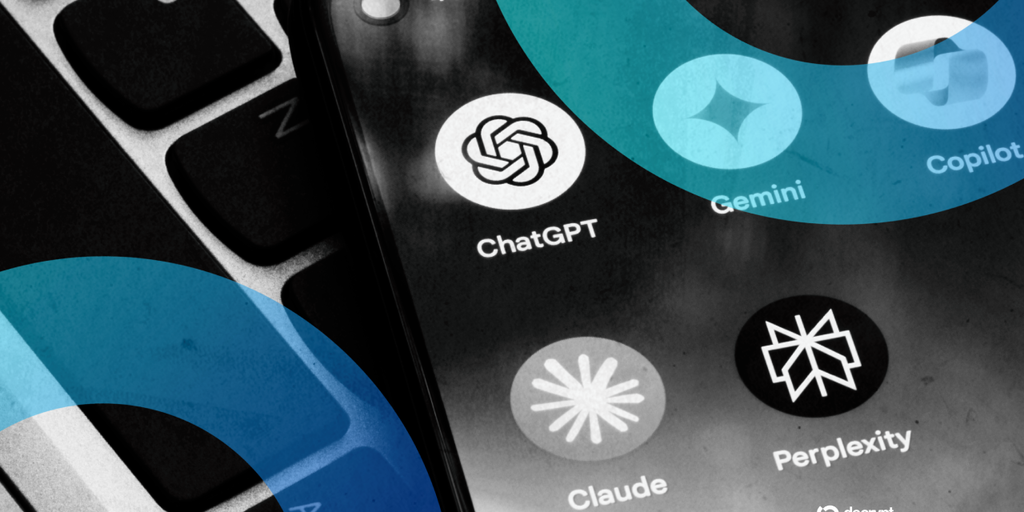 Sweden's Government Offices Block ChatGPT and Claude, Keep Microsoft Copilot
Sweden's Government Offices will block ChatGPT and Claude on staff computers from 26 October 2026 and leave Microsoft Copilot as the only approved AI tool, citing information security. Digitalisation director Mikael Wettercrantz said unvetted AI use had involved sensitive inputs and poorly handled outputs. The Tax Agency and National Board of Institutional Care have similar bans, and the European Parliament disabled AI features in February 2026. Whether Copilot has Claude models enabled is unconfirmed.
decrypt.coarticlePublished and added 24 Oct 2026🛡️ Security- Sweden's Government Offices Block ChatGPT and Claude, Keep Microsoft Copilot
Sweden's Government Offices will block ChatGPT and Claude on staff computers from 26 October 2026 and keep Microsoft Copilot as the only approved AI tool, after a security review. Director of digitalisation Mikael Wettercrantz cites sensitive data entered into open services and tools used without a formal contract. The Tax Agency and the National Board of Institutional Care have similar bans. The article notes Copilot can include Claude models, and the Government Offices has not said whether that is enabled.
decrypt.coarticlePublished and added 24 Oct 2026🧠 AI 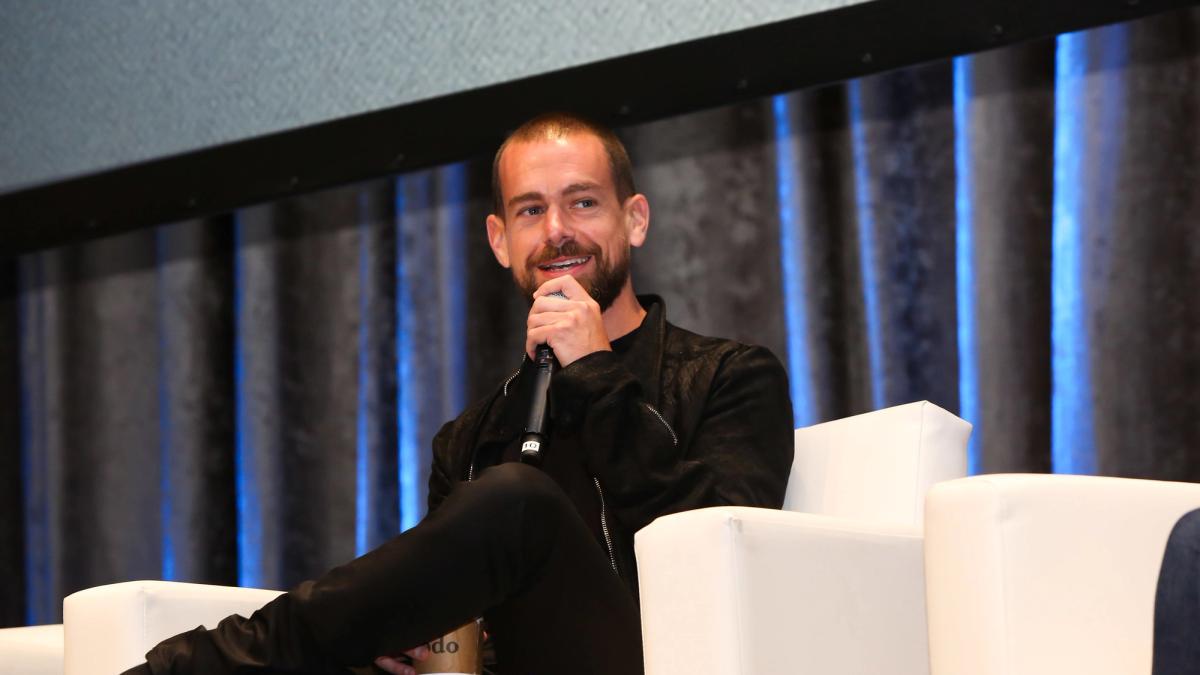 Block's new voice AI sounds eerily human, sparking awe and scam fears
Dessa is a voice AI model from Block, trained from scratch on human speech only, with no text stage. It listens while speaking, so it handles interruptions, laughter and tone changes. Block says it trained on one Nvidia GB200 NVL72 system and that it runs locally on a MacBook Pro with M4 Max or better. Model size, benchmarks and release date are undisclosed. Early access goes to a small group of AI safety researchers. Reactions split between praise and scam fears.
 coindesk.comarticlePublished and added 24 Oct 2026🧠 AI
 Prasenjit Sarkar (@stretchcloud) on X
Post explaining Claude's new support for MCP Tasks and Elicitations. A server returns a durable task handle instead of blocking. The client polls tasks/get every 250 ms to 30 s, and states are working, input_required, completed, failed or cancelled. Elicitations pause a task at input_required for human approval. It also notes Cloudflare's stateless MCP servers and Code Mode, and Sentry and Linear adoption.
x.comthreadAdded 25 Oct 2026, published 24 Oct 2026🧠 AI- Provable Security of SHA-256-Based LMS Revisited in the Ideal-Cipher Model
Provable Security of SHA-256-Based LMS Revisited in the Ideal-Cipher Model is an October 2026 ePrint paper by Chun Guo, Hao Cheng, Bart Preneel and Meiqin Wang. It shows forgery attacks on LMS_SHA256_M32 and LMS_SHA256_M24 that exploit Merkle-Damgård structure, so the Katz and Fluhrer random-oracle bounds do not apply. It proves ideal-cipher-model bounds: about 256 minus log2 of the block count for M32, and a minimum of two terms for M24.
eprint.iacr.orgpaperAdded 26 Oct 2026, published 24 Oct 2026🛡️ Security - Big Bull (@BIGBULLapp) on X
A post by BIGBULLapp on X about a TensorBlock GitHub index of Model Context Protocol servers, described as a TypeScript list so agents call tools someone has already wired up. It cites 1470 forks, 943 stars and 15 open issues. The author notes that curated lists go stale when a server changes its schema. The repository name is truncated in the post.
x.comthreadAdded 24 Oct 2026, published 23 Oct 2026🧠 AI  Python packages are also vulnerable to the Node2Shell Brotli flaw (CVE-2026-111497)
Python2Shell is the Python-side impact of CVE-2026-111497 (Node2Shell), a Brotli decoder flaw (CVSS 4.0 9.2) in DecodeBlockTypeAndLength() that mixes an unchecked return value with an out-of-bounds write. Brotli 1.2.0 and earlier, and brotlicffi 1.2.0.x, are affected through urllib3, requests, httpx, aiohttp and Scrapy. Fixes are Brotli 1.2.1 and brotlicffi 1.2.1.0; as of 23 October 2026 advisory databases do not map the CVE to either package. The post lists checks and workarounds.
 aikido.devadvisoryPublished and added 23 Oct 2026🛡️ Security
 In Other News: Tor Exit Relays Hijacked, Banks Spot Rogue AI Agents, Self-Rebuilding macOS Ransomware
SecurityWeek's weekly roundup covers Heartbreaker, a Rust macOS ransomware that recompiles itself to change its hash, and 333 Tor exit relays running Ebury that redirected SSH logins to harvest passwords. It also covers APT28 Hookedge attacks on a NATO shipbuilder, the Railway and PingCAP breaches, ISO/IEC 27090 for AI threats, and US banks blocking unsanctioned AI agents.
securityweek.comarticlePublished and added 23 Oct 2026🛡️ Security- For Thirty Pieces of Silver: Overcoming Non-IID via ZKP Sample-Level Auditing and Forcing Attackers into Traitors in Federated Learning
Preprint (IACR ePrint 2026/2611) proposing a federated learning defense that replaces gradient detection with zero-knowledge-proof sample-level audits of client datasets. A staking mechanism forces attackers to train on discovered poisoned samples with flipped labels, producing counter-gradients that remove the backdoor without knowing the trigger. ZKP commitments lock the training data, which blocks adaptive attacks and gradient tampering. On CIFAR-10 under Dir(0.1) non-IID, it holds attack success rate below 6% against distributed backdoor and edge-case attacks.
eprint.iacr.orgpaperAdded 24 Oct 2026, published 23 Oct 2026🛡️ Security - MPQ: A Message-Passing View of Post-Training Quantization
MPQ (Message-Passing Quantization) is a post-training quantization method that treats row-wise PTQ as posterior inference over discrete codebooks. It keeps soft posteriors across weight blocks using vector approximate message passing, then refines a hard-decision initialization with exact block coordinate descent. Tested at 2-bit lattice and 3- and 4-bit scalar quantization on Llama, Qwen and Mistral models, it improves perplexity and zero-shot accuracy over GPTQ-style baselines.
arxiv.orgpaperAdded 26 Oct 2026, published 23 Oct 2026🧠 AI - Agentic AI Defense: Decode-Time Provenance Binding for MCP
Decode-time provenance binding is a defense for Model Context Protocol agent pipelines against cross-modal trust laundering, where instructions hidden in an email-signature image via LSB, DCT or metadata steganography get decoded by a tool. It combines HMAC-authenticated trust labels, a provenance ledger and context-taint tracking to block critical tool calls. On a real MCP testbed with 24 adaptive payloads, attack success fell from 100% undefended (62.5% for keyword and regex filters) to 0%.
arxiv.orgpaperAdded 26 Oct 2026, published 22 Oct 2026🛡️ Security - Donating Agent Skills to the Agentic AI Foundation
Simon Willison's link post covers Anthropic's 22 October 2026 announcement that it is donating the Agent Skills standard to the Agentic AI Foundation (AAIF) under the Linux Foundation. Anthropic co-founded the AAIF with Block and OpenAI and earlier donated MCP to it. Willison notes he predicted this in December 2025 and found his old post by querying his blog through datasette-mcp in Claude.
 simonwillison.netarticlePublished and added 22 Oct 2026🧠 AI
- Rethinking Sequence Compression with Test-time Regression
TTR-Compressor is a sequence compression method that treats input tokens as a test-time regression problem. The regression is learned end-to-end by backpropagation, and its coefficients are solved in closed form in the forward pass to give the compressed representation. As a block-wise sparse attention compressor it improves RULER over attention-based compressors by a large margin. As a visual token merger for multimodal LLMs it beats the MLP merger and matches it with 55.6% fewer visual tokens.
arxiv.orgpaperAdded 24 Oct 2026, published 22 Oct 2026🧠 AI  Crypto exchange CoinDCX ‘lying’ about $16M hack, say blockchain investigators
Protos reports that on-chain investigators, including Darcy of Salus, ZachXBT and SpecterAnalyst, say CoinDCX misattributed about $16M in outflows from compromised wallets. CoinDCX says the addresses were created in January 2025, compromised in July 2025, and that a sweeping process failed. Investigators cite gas distribution, hot wallet transfers as late as May 2026, and funds sent to Huione and Xinbi addresses.
 protos.comarticlePublished and added 22 Oct 2026🛡️ Security
 Major Banks Find Rogue AI Agents Inside Customer Accounts—And They’re 'Horrified'
Decrypt summarizes an Axios report that major U.S. banks are finding unauthorized third-party AI agents inside customer accounts, often using the customer's own credentials. Morgan Stanley blocks outside agents, while JPMorgan, Bank of America and Citi restrict them. Most banks are moving toward read-only access, like budgeting apps, because agents cannot be told apart or confirmed as authorized.
decrypt.coarticlePublished and added 22 Oct 2026🧠 AI- Unboxing Phishing Kits: Huntress Examines 3 Real Kits
Recap of a Huntress Tradecraft Tuesday session (October 2026) on phishing kits that target Microsoft 365 tokens, including EvilTokens (a device-code phishing campaign abusing Railway) and the Kali365 control panel. It explains device-code phishing, adversary-in-the-middle and token replay. It lists detections (unfamiliar cloud sign-ins, device-code auth, new devices) and response steps (revoke refresh tokens, remove rogue devices, block device-code flow).
 huntress.comarticlePublished and added 22 Oct 2026🛡️ Security
 Signal Vulnerability Lets Malicious Callers Block Hang-Ups
CVE-2026-113380 (CVSS 9.3) is a flaw in RingRTC, the WebRTC-based library behind Signal voice and video calls. A remote peer can flood the call's finite state machine event queue, so the victim's hang-up waits behind junk and audio and video tracks stay live. Fixed in RingRTC 2.72.0 on 4 September; a researcher published details and a conceptual PoC afterward.
securityweek.comarticlePublished and added 22 Oct 2026🛡️ Security- SARIA: Persistence-Aware KV Caching with Coordinated DRAM--SSD Reload for LLM Agents
SARIA (Selective Admission and Reload for Inference Acceleration) is a KV caching system that jointly manages DRAM and SSD for multi-turn LLM agents. It persists only blocks likely to be reused beyond DRAM residency, promotes SSD-hit blocks into DRAM for same-session reuse, and paces DRAM reads with a transfer coordinator. Built on LMCache MP, it cuts SSD writes by 57.1 to 58.9% versus full duplicate caching and mean TTFT by 42.3 to 79.7% versus DRAM-only caching.
arxiv.orgpaperAdded 23 Oct 2026, published 22 Oct 2026🧠 AI  eMudhra CA compromise: eight private keys, and one of them is 4
eMudhra's eight intermediate CA certificates, chaining to emSign ECC Root CA - G3, had private keys below 256 (one is 4), disclosed on 17 October 2026 by a researcher known as Wayne. Browsers and Microsoft blocked them via revocation pushes, but curl, git, containers, language runtimes and IoT may still trust them. The post gives patched ca-certificates versions, test commands and the timeline.
aikido.devarticlePublished and added 22 Oct 2026🛡️ Security Using AWS WAF to apply mitigations for PHP2Shell RCE vulnerabilities (CVE-2026-109618 and CVE-2026-109619)
AWS Security Blog guide to mitigating the PHP2Shell unauthenticated RCE flaws (CVE-2026-109618 and CVE-2026-109619, CVSS v4.0 9.2) with AWS WAFv2 rules. It covers rules for the PHP_SESSION_UPLOAD_PROGRESS trigger, blocking multipart/form-data, body size caps and rate limits, plus body inspection limits. It lists PHP fixes (8.5.12, 8.4.27, 8.3.36, 8.2.35) and server settings, and stresses WAF only reduces exposure.
 aws.amazon.comarticlePublished and added 22 Oct 2026🛡️ Security
- Trail of Bits (@trailofbits) on X
Trail of Bits post on two unpatched critical PHP bugs that were exploited within 17 hours of details leaking. Cloudflare began blocking attacks and Patchstack reported active exploitation. The bug was reported 11 August and fixed 71 days later, with a patch touching 402 files and over 11,000 lines. Trail of Bits announces two open-source plugins, patching-bugs and regression-hunt, from its Patch the Planet work.
x.comthreadAdded 23 Oct 2026, published 21 Oct 2026🛡️ Security  eMudhra CA Compromise: The Trust Stores You Didn't Patch | Endor Labs
The eMudhra CA compromise (disclosed 20 October 2026) involves eight intermediate CA certificates whose private keys can be derived from the certificates themselves. They chain to AAA Certificate Services and three other roots. Browsers block them, but non-browser clients skip revocation and CT checks. Endor Labs finds 25 popular packages with frozen bundled root stores, 11 already patched, and gives a fingerprint-scanning script, test hosts and patch steps.
endorlabs.comarticlePublished and added 21 Oct 2026🛡️ Security Compromised eMudhra intermediate certificates
Cisco Talos describes eight eMudhra intermediate CA certificates (six TLS, two code signing) whose P-384 private keys were trivially recoverable because a flaw in an April 30, 2025 key generation ceremony produced weak keys with only 3 to 8 bytes of entropy. The post lists certificate SHA-256 hashes and serials, browser and Microsoft blocks, and the Go fix (CVE-2026-111943, Go 1.27.3 and 1.26.10) that filters chains by SPKI hash. It covers impact on VPNs, CI/CD and embedded devices, and Snort SIDs 67363 to 67374.
blog.talosintelligence.comadvisoryPublished and added 21 Oct 2026🛡️ Security Introducing full transaction detection for Cloudflare WAF
Cloudflare announces full transaction detection and response-phase rules for its WAF. Detections evaluate an HTTP request together with the origin's response, so exploitation can be confirmed (for example, path traversal returning a config file) and the response replaced with a 403 block page. Covers managed and custom rules, the limit of three custom response rules, no response-body matching yet, and a first managed rule for php2shell. Available on all plans, including Free.
 blog.cloudflare.comarticleAdded 29 Oct 2026, published 21 Oct 2026🛡️ Security
- Amazon-Themed ClickFix Campaign Serves Up Finger-Licking Malware
Huntress analysis of an Amazon-themed ClickFix campaign that used a Google sponsored result, a fake Amazon login on Google Sites and a fake CAPTCHA to make victims run the Windows finger utility. The .plan script drives IronPython, a Cyrillic-substituted Base64 Python loader, Doina, a Node.js stage, Lumma Stealer via sRDI, and a pirated NetSupport RMM. It lists C2 domains and gives detection tips (aclk/gclid markers, blocking the Run dialog).
huntress.comwriteupPublished and added 21 Oct 2026🛡️ Security  Browsers Block eMudhra Intermediate CAs Over Recoverable Private Keys
Eight intermediate CA certificates issued by Indian CA eMudhra in April 2025 had private keys generated with weak entropy, effectively all zeroes except the last byte, so they could be recovered almost instantly with baby-step giant-step. Mozilla and Google blocked them on 17 October 2026, Apple on 19 October and Microsoft on 20 October. eMudhra blamed a key ceremony script flaw that created a second, weaker key pair.
securityweek.comarticlePublished and added 21 Oct 2026🛡️ Security




Showing 60 of 396
Show more