 The Datacenter Backlash Goes Bipartisan: Next Week's Midterms and the 2028 Buildout
SemiAnalysis analysis of how the November 2026 US midterms could affect datacenter buildout. About 75% of the 33.8 GW due in 2027 across the top 20 states is already under construction, but 43.5 GW of 2028 additions sit in 13 states with pending approvals. The biggest risk is a prolonged Texas TCEQ permit freeze. Texas holds close to 30% of 2028 GW, and nine of 20 nominees back a pause.
 newsletter.semianalysis.comarticlePublished and added 1 Nov 2026🧠 AI
 Northflank security breach leads to abuse of customers' AI API keys
Northflank, a cloud application hosting platform, disclosed a breach on 30 October 2026 after a Wiz threat alert and told customers to assume all environment variables were decrypted and to rotate secrets. Customers reported unauthorized use of AI API keys. Wiz's "Black October for AI Developer Platforms" report counts at least nine incidents, including Railway, OpenCode, Warp and Lightning AI, and describes LLMJacking, with about 2.5 million Amazon Bedrock calls costing roughly $100,000 in two cases. Northflank has not said how attackers got in.
 bleepingcomputer.comarticlePublished and added 31 Oct 2026🛡️ Security
 New Android SMS of Death exploit can remotely crash unpatched phones
CVE-2026-58882, "SMS of Death", is a zero-click Android denial-of-service flaw in WapPushOverSms.decodeWapPdu, where an unchecked header-length value becomes negative and triggers a NegativeArraySizeException that crashes com.android.phone. A malformed eight-byte WAP Push message to port 2948 can drop calls, including emergency calls, and about 20 messages caused reboot loops. A PoC is public. Google patched Android 14 through 17 in October 2026, but Android 12 and 13 remain vulnerable.
bleepingcomputer.comarticlePublished and added 31 Oct 2026🛡️ Security Lewis - Policifyai (@Policifyai) on X
Policifyai's October 2026 roundup lists model releases by date with prices and benchmark scores: GPT-6.1 Sol and Terra, Claude Sonnet 5.5 and Haiku 5.5, Gemini 4 Argon and Carbon, Muse Spark Open, Mistral Large 4 weights and Kimi K3.1 Pro. It also covers Anthropic's S-1 compute commitments, Artificial Analysis Intelligence Index v5, and chip and data-center deals.
 x.comarticleAdded 1 Nov 2026, published 31 Oct 2026🧠 AI
 Syrian Hacker Gets Prison Time in US After Over a Decade on the Run
Ahmad Umar Agha (Th3Pr0), a Syrian Electronic Army member, received a 42-month US sentence in the Eastern District of Virginia, over 12 years after he was first charged in June 2014. He compromised about 47 Western media, company, NGO and government targets, including the 2013 Associated Press Twitter takeover that caused a flash crash. Accomplice Firas Dardar remains at large.
 securityweek.comarticlePublished and added 31 Oct 2026🛡️ Security
 [AINews] Google admits AI Mode hurts Search revenue; -15% $500B drop worst since 2004 IPO. AI Bear Market coming?
AINews issue for 29 to 30 October 2026 from Latent Space. It opens on Google's admission that AI Mode monetises worse than classic Search, which preceded a roughly 15% share drop. It then recaps Claude Ultra dropping the 5-hour limit, Gemini 4 Carbon, Mistral Large 4, Nemotron 3.5, Artificial Analysis Index v5, Unsloth GGUF disputes, and the Anthropic S-1 filing.
 latent.spacearticlePublished and added 31 Oct 2026🧠 AI
 Critical Linux kernel flaw allows remote root attacks on MPTCP servers
CVE-2026-98432 is a use-after-free race condition in the Linux kernel IPv4 TCP code (tcp_v4_syn_recv_sock, ireq_opt), affecting kernels back to 4.4 and rated 9.8 by the kernel CVE team (Red Hat rates it 5.9). Anthropic researchers say an unreleased Claude model built an exploit that bypassed KASLR and got remote root on an MPTCP listener in about 53 minutes. The article lists distro patch status and CIQ's nftables mitigation for IP options; disabling MPTCP alone does not help. No in-the-wild exploitation is reported.
bleepingcomputer.comarticlePublished and added 30 Oct 2026🛡️ Security Here We Go Again: Binance Loses $6.3b in Largest Robbery in History
Galaxy Research newsletter on the roughly $6.3b drained from Binance across 10 blockchains, which TRM Labs and Chainalysis attribute to TraderTraitor. On Ethereum the attacker used EIP-7702 to turn a hot wallet into a sweeper contract backed by 50 pre-signed authorizations. Binance's preliminary finding is a compromised DevOps laptop, with no wallet key leak. Tether, Circle, Ripple and World Liberty froze about $2.7b; Galaxy also assesses Binance's ability to cover losses.
 galaxy.comarticleAdded 30 Oct 2026🛡️ Security
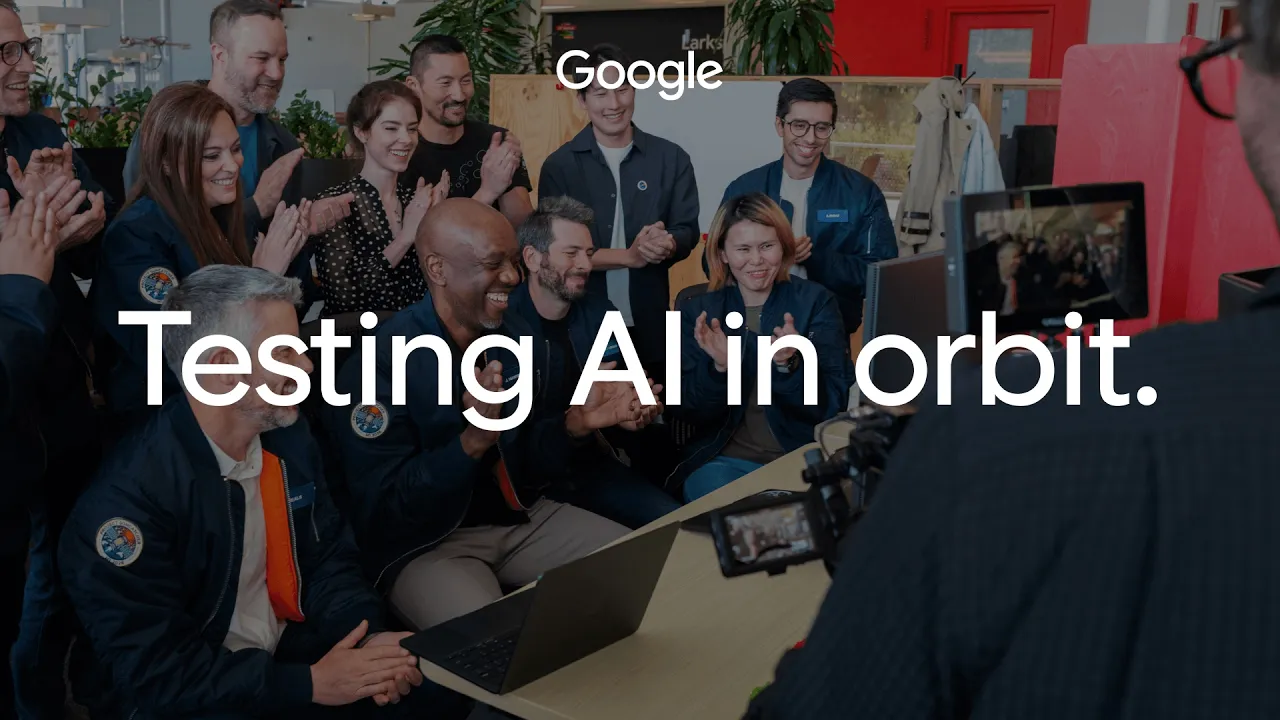 We’ve received our first response from the Project Suncatcher prototype satellite.
Project Suncatcher is a Google research effort to power AI compute in space. Its prototype satellite launched on 1 October 2026 and, after commissioning, returned the first AI response from a data-center-class TPU in orbit: a haiku from the onboard Gemma 4 open model, downlinked over Svalbard. Next come thermal-stress and radiation tests, then twin interconnected satellites in 2027.
 blog.googlearticlePublished and added 30 Oct 2026🧠 AI
 In Other News: Anthropic Breach Dispute, UEFI Flaw Hits Most Servers, Cloudflare AI Data Leak
SecurityWeek's weekly roundup of 30 October 2026 covers CVE-2026-97631, a 16-year-old buffer overflow in TianoCore EDK II that affects PXE network boot on most servers. It also covers a Cloudflare Workers AI cross-tenant leak caused by an SGLang bug, Anthropic's dispute with Cathedral over a bug bounty intrusion, and fake AI bots probing for secrets. Other items include AI-assisted ransomware (Gold Ogre, Aur0ra), the NIK C2 framework, and North Korean IT worker sanctions.
securityweek.comarticlePublished and added 30 Oct 2026🛡️ Security Passkeys Are Better Than Passwords. But They Are Not Enough.
Opinion piece arguing that passkeys, built on public-key cryptography, resist phishing, credential stuffing and password theft but do not settle identity risk. Attackers can go around them through account enrollment before a passkey is bound, weaker recovery paths (SMS, email link, help desk), device changes and authenticated session hijacking. It proposes layering identity threat detection with risk-based, continuous evaluation of trust.
securityweek.comarticlePublished and added 30 Oct 2026🛡️ Security ARTEX and Friends: Enter Agentic Offensive Frameworks
ARTEX is an open-source, Go-based multi-agent LLM pentesting and C2 platform that Google Threat Intelligence Group and Mandiant saw threat actors run in incident response cases from late August 2026, alongside PentAGI and CAIRN. The report covers ARTEX behaviour such as MySQL general_log JSP webshell poisoning and burst timing, UNC7228 (overlapping STORM-0940), a seven-stage model of adversary LLM use, and five Mandiant defensive layers. The text was truncated before the last layers.
 cloud.google.comarticleAdded 1 Nov 2026, published 30 Oct 2026🛡️ Security
 $2 Million+ Drained From Polymarket Traders in New Supply Chain Attack
Polymarket halted trading on 29 October after users reported unauthorized withdrawals traced to malicious JavaScript served from DebugBear's real user monitoring snippet. Hudson Rock's sample abused the authenticated session to sell positions or send tokens to a hard-coded address, without exfiltrating credentials. Loss estimates range from $2.19 million to $2.71 million (GoPlus), and Polymarket pledged reimbursement.
securityweek.comarticlePublished and added 30 Oct 2026🛡️ Security Content Providers and the potential weak spots they can have | Oversecured Blog
Oversecured's Android security checklist for Content Providers covers insecure FileProvider path configs, path traversal via decoded Uri.getLastPathSegment(), mismatched readPermission/writePermission, proxying requests to more privileged providers, SQL injection across a shared database, and sensitive actions in providers. Each case has vulnerable manifest and Java code, an attacker PoC and remediation. Real cases from Google and Samsung devices are cited. The page text was truncated near the end.
 oversecured.comarticleAdded 29 Oct 2026🛡️ Security
 Oversecured Apps Care. Part 1: Vulnerability disclosure of 225 Google apps | Oversecured Blog
Oversecured Apps Care, Part 1 (21 March 2024) publishes scanner results for about 224 Google Android apps, drawn from a wider scan of over 6,000 public APKs from 1,000+ companies. Tables per device image (phone, Wear OS, Android Automotive, Android TV) give package names, three finding counts and report links, including android, com.android.settings, gms and Play Store. It invites researchers to report issues to Google for rewards.
oversecured.comarticleAdded 29 Oct 2026🛡️ Security Inside mobile taint analysis: how source-to-sink tracking finds real data-leak paths | Oversecured Blog
Oversecured explains taint analysis for Android and iOS apps and contrasts it with pattern-matching SAST such as MobSF. It covers source, flow and sink, cross-component tracking over Intents, flag-based sanitizer modeling and implicit intent simulation. The case study is an unsafe Class.forName().newInstance() on a Serializable transportFactoryClassName field in Google's com.google.auth.oauth2 credential classes, which Google fixed with a $3,133.70 bounty.
oversecured.comarticleAdded 29 Oct 2026🛡️ Security Vulnerabilities that lead to account takeover in banking and fintech mobile apps | Oversecured Blog
Oversecured guide to eight vulnerability categories that lead to account takeover in mobile banking and fintech apps: WebView JavaScript bridge token leakage, Intent Redirection, hardcoded tokens, deeplink hijacking, insecure token storage, localhost OAuth listeners, AIDL abuse and weak biometric auth. It includes a WebView PoC based on Samsung SmartThings CVE-2022-30746 and maps findings to OWASP MASVS, PCI DSS and PSD2. It argues taint analysis plus dynamic PoC is needed to find multi-component chains.
oversecured.comarticleAdded 29 Oct 2026🛡️ Security A quiet week in infosec <.<
Cisco Talos Threat Source newsletter for the week of the PHP and Node.js vulnerability news cycle. It summarises NIK C2, a Go-based Windows implant that dumps credentials, streams keystrokes, deploys screen-locking ransomware and uses a victim's hijacked OpenAI API keys to analyse stolen data. It also lists weekly headlines (CISA KEV PHP bugs, Brotli flaw, Gheist GitHub token theft), Talos links and top malware hashes.
 blog.talosintelligence.comarticlePublished and added 29 Oct 2026🛡️ Security
 Google Touts Powerful Cybersecurity Capabilities in Gemini 4 Carbon Model
Gemini 4 Carbon is Google's new frontier model, announced with scores of 88.2% on SEC-bench Pro, 54.8% on ExploitGym and 71.0% on CWE-bench. Google says it beats GPT-6 Astra, Claude Opus 5.5 and Claude Fable 5.1 on these, with no guardrails. Access is limited to Fairwind Program partners at first. Pricing starts at $2 input and $10 output per million tokens, rising to $4 and $20.
securityweek.comarticlePublished and added 29 Oct 2026🧠 AI- Google Touts Powerful Cybersecurity Capabilities in Gemini 4 Carbon Model
Gemini 4 Carbon is a Google frontier model announced with restricted access for cyber defenders through the Fairwind Program (650+ organizations). Google reports 88.2% on SEC-bench Pro, 54.8% on ExploitGym and 71.0% on CWE-bench, ahead of GPT-6 Astra and Claude models, with no guardrails. It also cites prompt injection and cheating-resistance results, and pricing of $2/$10 per million tokens.
securityweek.comarticlePublished and added 29 Oct 2026🛡️ Security  Ghost in the PHP2Shell: Why coordinated disclosure and patching will start moving faster
Aikido's analysis of the PHP2Shell disclosures (CVE-2026-109618 and CVE-2026-109619), published October 2026. It covers the timeline: the CVE IDs leaked on 20 October, PHP moved its release to 21 October, and Amazon reports exploitation attempts from 17 October. It cites Censys data (32.5 million services still affected on 27 October) and argues that AI-driven discovery and exploit building call for shorter embargoes and faster patching.
 aikido.devarticleAdded 28 Oct 2026, published 29 Oct 2026🛡️ Security
 How Gemini is helping students and teachers in the classroom
Google reports two classroom studies of Gemini. In a 10-week RCT with over 1,100 UK students (ages 12-15) on Eedi, Gemini-based AI tutoring matched human tutors on in-platform tasks and quizzes, with expert approval of responses rising from 76% to 95%. Gains did not appear on STAR standardized tests. A yearlong Italian study of 1,600 teachers found lessons co-designed with Gemini shifted toward collaborative work.
blog.googlearticleAdded 30 Oct 2026, published 29 Oct 2026🧠 AI HHS Filing Puts iRhythm Data Breach Toll at 8.2 Million
The June 2026 iRhythm data breach is now listed on the HHS breach portal as affecting 8,179,772 people, the same figure given to the Oregon Attorney General. Attackers took data from third-party-hosted business applications, including names, addresses, birth dates, contact details, and account, serial and insurance numbers, and tried to extort a ransom. iRhythm reports no impact on its products or clinical systems and offers no free credit monitoring.
securityweek.comarticlePublished and added 29 Oct 2026🛡️ Security [AINews] Gemini 4 Carbon tops leaderboards, launches for cyber defenders
AINews issue for 27-28 October 2026, a Latent Space digest of Twitter and Reddit. It leads with Google DeepMind's Gemini 4 Carbon: claimed cyber scores (SEC-bench Pro 88.2%, ExploitGym 54.8%, CWE-bench 71.0%), #1 on Artificial Analysis Intelligence Index v5 at 59, and access limited to cyber defenders through the Fairwind Program. It also covers benchmark integrity disputes, GitHub Copilot Fusion, H-Net v2, KV-cache work, open-weight releases and Claude Code quota complaints.
latent.spacearticlePublished and added 29 Oct 2026🧠 AI ADLC metrics: How to measure agentic development security | Endor Labs
ADLC metrics is an Endor Labs guide to measuring security in the agentic development lifecycle, where AI coding agents write much of the code. It defines formulas across five categories: AI supply chain visibility, agent action security, agent-generated code, package risk and developer flow. It argues for normalizing findings per merged change, tracking pre-execution blocks, and building a six-to-eight metric scorecard.
 endorlabs.comarticlePublished and added 29 Oct 2026🛡️ Security
- ADLC metrics: How to measure agentic development security | Endor Labs
ADLC metrics is an Endor Labs guide to measuring security in the agentic development lifecycle, where AI coding agents write code. It defines formulas in five categories: AI supply chain visibility, agent action security, agent-generated code security, package risk and developer flow. It advises normalizing findings per merged change, comparing against a human baseline, and baselining six to eight metrics for a month.
endorlabs.comarticlePublished and added 29 Oct 2026🧠 AI  Police seize Virtualine bulletproof service tied to ransowmare, cybercrime
Virtualine, a bulletproof hosting service also operating as Secury, Massgod, Spamhouse, Lanedo and Omegatech, had its main domain seized by the FBI with German, Dutch and UK partners. Chainalysis and TRM Labs traced its Bitcoin payments to ransomware (5% of flows), a Russian drug market (about 44%), sextortion and the StealC infostealer. Dutch police seized dozens of servers in Limburg and recovered data on over 3,000 customers.
bleepingcomputer.comarticleAdded 30 Oct 2026, published 28 Oct 2026🛡️ Security OpenAI Plans to Buy Google's AI Chips as It Looks Beyond Nvidia: Report
Decrypt reports, citing The Information, that OpenAI plans to buy Google TPUs rather than rent them, to reduce dependence on Nvidia. Neither company has confirmed, and price, volume and timing are undisclosed. The article covers OpenAI's TPU optimization job listing, its Broadcom-built Jalapeño inference chip due end of 2026, Nvidia and AMD deals, and Anthropic's multi-gigawatt TPU agreement.
 decrypt.coarticlePublished and added 28 Oct 2026🧠 AI
 Gemini 4 Carbon
 is Google's frontier model, announced with cybersecurity results: 88.2% on SEC-bench Pro (finding vulnerabilities), 54.8% on ExploitGym (exploitation) and 71.0% on CWE-bench (patching). Google reports 0.0% attack success on Gray Swan's indirect prompt injection benchmark. Access starts with a subset of cyber defenders through the Fairwind Program. Pricing is $2 per million input tokens and $10 per million output tokens.
blog.googlearticleAdded 29 Oct 2026, published 28 Oct 2026🛡️ Security- Gemini 4 Carbon
Gemini 4 Carbon is Google's frontier model, announced two weeks after Gemini 4 Argon. It scores 59 on Artificial Analysis Intelligence Index v5.0, 88.2% on SEC-bench Pro, 54.8% on ExploitGym and 71.0% on CWE-bench. Pricing is $2 per million input and $10 per million output tokens. Access starts with a subset of cyber defenders through the Fairwind Program.
blog.googlearticleAdded 29 Oct 2026, published 28 Oct 2026🧠 AI - Gemini 4 Carbon: Our next frontier model
Gemini 4 Carbon is Google DeepMind's frontier model, announced with a focus on cyber defense. DeepMind reports 88.2% on SEC-bench Pro (finding vulnerabilities), 54.8% on ExploitGym (exploitation) and 71.0% on CWE-bench (patching), run without guardrails. It also reports 0.0% attack success on Gray Swan's indirect prompt injection benchmark. Access starts with a subset of cyber defenders via the Fairwind Program.
 deepmind.googlearticlePublished and added 28 Oct 2026🛡️ Security
- Gemini 4 Carbon: Our next frontier model
Gemini 4 Carbon is Google DeepMind's new frontier model, announced two weeks after Gemini 4 Argon. It ranks #1 on Artificial Analysis Intelligence Index v5.0 at 59 and scores 88.2% on SEC-bench Pro, 54.8% on ExploitGym and 71.0% on CWE-bench. Access starts with cyber defenders through the Fairwind Program, priced at $2 per million input tokens and $10 per million output tokens.
deepmind.googlearticlePublished and added 28 Oct 2026🧠 AI  House Oversight Chair Comer Probes Delaware Plan for AI-Run Companies
House Oversight Chairman James Comer opened an investigation on 26 October 2026 into Delaware's proposed Artificial Intelligence Company (AIC), a legal entity run day-to-day by an AI agent. His letter to Gov. Matt Meyer requests documents, including internal AI chat logs, by 9 November. The AIC would run in a 30-month sandbox with a single member shielded from debts, and Delaware's draft legislation is expected in January 2027.
decrypt.coarticlePublished and added 28 Oct 2026🧠 AI TLS Flaws Found in GoAhead Web Server Used in Hundreds of Millions of Devices
FoxIO disclosed three TLS flaws in the GoAhead embedded web server from EmbedThis, used on hundreds of millions of IoT, OT and network devices. CVE-2026-115881 (CVSS 9.1) leaves revoked client certificates accepted under mTLS with OpenSSL; CVE-2026-115884 (7.4) bypasses chain-length limits with LibreSSL; a third Mbed TLS bug (5.9, no CVE) weakens TLS 1.2 DHE. GoAhead 6.1.1 fixes the OpenSSL and Mbed TLS issues, and FoxIO released PoC code and fingerprints.
securityweek.comarticlePublished and added 28 Oct 2026🛡️ Security China-Linked Hackers Exploit PHP2Shell to Root Firewalls
A China-linked actor chained PHP2Shell (CVE-2026-109618, CVE-2026-109619) with the Fragnesia Linux kernel privilege escalation (CVE-2026-46300) to root firewalls and drop PHP webshells, per Dream. Using FOFA, the actor narrowed 19,000 firewalls to 240 targets and rooted 24 on 23-24 October. On two US government-affiliated devices it used a reverse SSH tunnel, hit the firewall management server, and attempted LDAP and Active Directory abuse.
securityweek.comarticlePublished and added 28 Oct 2026🛡️ Security- TLP Is Not a Suggestion
Akamai SIG argues that vendors and researchers broke embargo norms during the October 2026 PHP2Shell leak, when the PHP fix shipped a day early on 21 October. It explains the four TLP 2.0 labels, tabulates past embargo breaks (Heartbleed, a collapsed six-month kernel-era embargo, the Alibaba Cloud and MIIT case), and lists seven practices, such as no proofs of concept or CVE numbers before the fix.
 akamai.comarticleAdded 30 Oct 2026, published 28 Oct 2026🛡️ Security
 How to evaluate ADLC security solutions: A buyer's checklist | Endor Labs
Buyer's checklist from Endor Labs for evaluating security tools in the agentic development lifecycle (ADLC), where AI coding agents write code and take actions such as package installs, CI edits and tool calls. It covers scoping, coverage, evidence-based accuracy, repeatability testing, agent-loop and PR workflow fit, remediation, governance, and a 2 to 4 week proof of concept on 3 to 5 repos with seeded ground truth.
endorlabs.comarticlePublished and added 28 Oct 2026🛡️ Security International Law Enforcement Seizes Domain of Virtualine Bulletproof Hosting Service
Virtualine is a bulletproof hosting provider whose domain virtualine.net was seized on 27 October 2026 by the FBI Washington Field Office and the Eastern District of Virginia, with German, Dutch and UK police support. Chainalysis and OverRIPE gave intelligence support. The post lists aliases (Secury, Massgod, Spamhouse, Lanedo, Omegatech), forum advertising on Exploit.in and HackForums, and unhosted bitcoin payments tied to ransomware, infostealers and scam infrastructure.
 chainalysis.comarticlePublished and added 27 Oct 2026🛡️ Security
 Pentesting: Twelve Caesars – Community Tools for Offensive Security
Hackers Arise walks through four tools from Praetorian's "12 Caesars" open-source release: Titus (secret scanner with 487 rules and credential validation), Nerva (fingerprints 170 protocols), Brutus (Hydra alternative covering 40+ protocols) and Julius (fingerprints 60+ LLM services such as Ollama). It shows download and run commands in a Kali lab and how the tools chain together. The tools are Go single binaries; the post notes an exposed Ollama on port 11434 allows unauthenticated model use.
 hackers-arise.comarticlePublished and added 27 Oct 2026🛡️ Security
 OpenAI Proves ETH Is False, and Crypto Twitter Has Questions
Decrypt reports that OpenAI published a 67-page paper (dated 17 October 2026, revised 25 October) claiming its AI found a deterministic subexponential-time algorithm for counting 3-SAT solutions, which would refute the Exponential Time Hypothesis. The proof was formalized in Lean. Impagliazzo, Paturi and Ryan Williams are reviewing it independently and say this is not certification. Anthropic posted a Claude-credited 3-SAT paper on 26 October.
decrypt.coarticlePublished and added 27 Oct 2026🧠 AI- Genie 4: A new generation of world simulation
Genie 4 is Google DeepMind's real-time interactive world model, announced as a research preview for trusted testers. It generates video with native audio and interactive dialogue, steered by keyboard controls and text prompts. Gemini 3.8 Flash acts as a guiding agent that plans steps and checks frames, and Gemini 4 Argon is used for robotics experiments. The post lists limitations such as drift and object permanence, and says outputs carry SynthID watermarks.
deepmind.googlearticlePublished and added 27 Oct 2026🧠 AI  We’re announcing Genie 4, our new world model for real-time interactive simulation.
Genie 4 is Google DeepMind's world model for real-time interactive simulation, with native audio generated on the fly (ambient sound, music, dialogue). It builds on Gemini models: Gemini Omni grounds scenes in real-world appearance and behavior, and other Gemini models keep the simulation coherent. Users steer scenes by natural language. Access is limited to trusted testers now, with Google AI Ultra (Project Genie), the Gemini API and AI Studio to follow. The post gives no architecture or benchmark detail.
blog.googlearticleAdded 30 Oct 2026, published 27 Oct 2026🧠 AI- Is my data used for model training?
Anthropic's privacy help article on whether customer data trains its models. For commercial products (Claude for Work, Anthropic API, Claude Gov), inputs and outputs are not used for training by default. Thumbs up/down feedback stores the whole conversation for up to 5 years, de-linked from user IDs, and may be used for training. Team and Enterprise owners can disable feedback in organization settings.
 privacy.claude.comarticleAdded 28 Oct 2026, published 27 Oct 2026🧠 AI
 What took the Internet offline in Q3 2026
Cloudflare's Q3 2026 review of the 49 Internet disruptions seen by Cloudflare Radar between July and September 2026. Government-directed shutdowns led with 19 (18 exam shutdowns in Iraq), followed by 14 power outages and 5 natural disasters. It gives traffic-drop figures and durations for Cuba, Honduras, Ukraine, Guam, Colombia, Ethiopia's Tigray region and others, including a Honduran interconnection facility power failure that cut HTTP traffic 63%.
 blog.cloudflare.comarticleAdded 29 Oct 2026, published 27 Oct 2026🛡️ Security
 iOS, macOS 27.2 Patch 286 Bugs; Fix for Exploited Flaw Backported to iOS 18
Apple's 27.2 releases fix 286 vulnerabilities across iOS/iPadOS (163) and macOS Golden Gate (263), with memory corruption in WebKit and the kernel, sandbox escapes, Gatekeeper bypasses and a remote code execution bug in Remote Management. iOS and iPadOS 18.7.11 backport the fix for CVE-2026-86950, an exploited zero-day found by Meta's product security team and first patched in 26.7.1. Patch counts for tvOS, watchOS, visionOS, Safari and the 26.7.2 and Sequoia 15.8.2 releases are also listed.
securityweek.comarticlePublished and added 27 Oct 2026🛡️ Security Backporting security fixes to stable releases
Trail of Bits argues that stable and LTS software, such as Ubuntu 26.04 LTS, Debian 13 and stable Linux kernel branches, carries many known CVEs that were fixed upstream but never backported. It measures the gap using the kernel CVE team's vulns.git (18 September 2026) and Debian and Ubuntu CVE feeds. Using Codex with GPT-5.6, the team got 142 fixes covering 90 CVEs applied to stable kernel trees and has begun sending patches to distributions.
 blog.trailofbits.comarticlePublished and added 27 Oct 2026🛡️ Security
 Inventory of PQ P2P Migrations in the Consensus Layer
Inventory of post-quantum migration work for Ethereum consensus-layer networking, by adust09 of Nyx Foundation. It maps three targets: Discovery v5/ENR signatures and key exchange, TLS 1.3 key agreement in QUIC, and libp2p TLS identity binding and CertificateVerify. It covers the 300-byte ENR and 1,280-byte packet limits, why hybrid KEMs do not authenticate peers, and downgrade and DoS concerns. It selects no algorithm or schedule.
 ethresear.charticlePublished and added 27 Oct 2026🛡️ Security
 OpenAI Launches GPT-6.1 Terra, Its Half-Good AI Model at Half the Price
GPT-6.1 Terra is OpenAI's mid-tier model, released 26 October 2026 with standard API prices 50% below GPT-5.6 Terra. At low reasoning effort its factual error rate on an internal test fell from 53.6% to 16.7%, and at maximum effort it solved 50.3% of Terminal-Bench 4.0 tasks versus 21.5%. It is available in ChatGPT Work and Codex and as gpt-6.1-terra. All figures are OpenAI's own.
decrypt.coarticlePublished and added 26 Oct 2026🧠 AI eMudhra, Brotli, and the Long Tail of a Security Fix
Socket post on why fixing the eMudhra weak-key intermediate CA incident (October 2026) and Brotli memory corruption CVE-2026-111497 takes more than updating Node.js. Bundled Brotli copies in Bun, Python Requests and .NET, Go binaries needing rebuilds, and per-program certificate stores all leave stale copies. It lists steps: track bundled components, keep a rebuild path, use workarounds, and verify the shipped artifact.
 socket.devarticlePublished and added 26 Oct 2026🛡️ Security
- Adaptix C2 Architecture: Configuring Command & Control Listeners
AdaptixC2 listener configuration guide, second in a Hackers-Arise series. It walks through the fields for BeaconDNS, Beacon HTTP, Beacon SMB, Beacon TCP and Gopher TCP listeners, including DNS burst mode, HTTP URIs, User-Agents and redirector callback addresses, SMB named pipes, TCP prepend data, and mTLS. It also explains external versus internal listeners for lateral movement.
hackers-arise.comarticlePublished and added 26 Oct 2026🛡️ Security - CISA Publishes Significant Updates to ScubaGear and ScubaGoggles
ScubaGear v2.0 and ScubaGoggles v1.1.0 are CISA's updated SCuBA assessment tools for Microsoft 365 and Google Workspace secure configuration baselines. ScubaGear now uses direct REST API calls, adds Power BI coverage, a consolidated Security Suite baseline and app severity scoring. ScubaGoggles adds a GUI, Policy API integration and Gemini controls. The release supports BOD 25-01 compliance.
 cisa.govarticleAdded 29 Oct 2026, published 26 Oct 2026🛡️ Security
 Anthropic Makes IPO Filing Public, Plans Nasdaq Listing Under ‘ANT’
Anthropic filed a public S-1 on 26 October 2026 to list Class A shares on Nasdaq as "ANT", with Goldman Sachs and Morgan Stanley leading 24 underwriters. The filing shows first-half 2026 revenue of $16.29 billion, a net loss of $80.7 billion (mostly a $72.4 billion fair-value charge) and $141.1 billion raised in total. A trust elects a majority of the board, and the co-founders' entity holds 50.1% of voting power.
decrypt.coarticlePublished and added 26 Oct 2026🧠 AI Test-time training in robotics shows no clear gains in demo response
This article reports a study submitted October 23, 2026 by Qiangong Zhou, Jiafeng Liang, Yimin Dong, Yang He and Hongxiang Li. They added Test-Time Training (fast-weight memory) to the vision-language-action models InternVLA-A1 and Pi0.5, trained on paired human demonstrations and robot trajectories. Shorter videos, full-trajectory gradient connectivity and contrastive regularization gave no clear gain in demonstration-guided target selection at the tested scale.
 en.cryptonomist.charticlePublished and added 26 Oct 2026🧠 AI
 Node2Shell: Brotli Flaw Triggers Patching Across Microsoft, Node.js, Python Packages
CVE-2026-111497 (Node2Shell) is an out-of-bounds write in Google's Brotli decoder, versions 1.0.3 through 1.2.0, rated CVSS v4 9.2. Fixed in Brotli 1.0.10, 1.1.1 and 1.2.1, with patches from Node.js, Microsoft (.NET, Visual Studio, PowerShell on October 25), PyPI Brotli and brotlicffi, Bun, Envoy and Istio. Imperva showed code execution on Node.js 24.22.0 arm64; no in-the-wild exploitation is reported and some researchers say it only enables DoS.
securityweek.comarticlePublished and added 26 Oct 2026🛡️ Security Bye Bye Brotli? Google's Compression Library Is a Security Mess
Bugsink's blog post argues Google's Brotli library is poorly maintained. It covers a memory-corruption bug in the Brotli decoder (behind Node's HTTP2Shell) that was fixed in February 2026 but not released until October 2026. It also covers the 2025 decompression-bomb fix, released 283 days after its release notes, and urllib3's follow-up bug. Open out-of-bounds read PRs and a .NET CPU exhaustion issue remain.
 bugsink.comarticleAdded 26 Oct 2026, published 25 Oct 2026🛡️ Security
- huiwenhan (@huiwenhan) on X
PRAXO-CORE 2.5.0 is a Go agent kernel that owns model calls, tool authorization, context, checkpoints, events and human-in-the-loop decisions, and leaves graph execution, memory storage and tenant policy to RHEOVELA or the host product. The release adds pkg/conformance, with checks for VFS, memory, sandbox, event, policy, model and tool contracts. It also adds stricter Windows path rejection and a plugin trust/SBOM handoff, and it states which adapters are only offline-tested.
x.comarticleAdded 27 Oct 2026, published 25 Oct 2026🧠 AI  Google Quietly Updates Privacy Policy to Let Gmail and Photos Data Feed Ads
Google revised its privacy policy, effective 16 October 2026, so that content from Gmail, Drive and Google Photos can personalize ads if users connect it to other Google services, which includes Personal Intelligence in AI Mode and Gemini. The setting is off by default, advertisers do not see the underlying content, and users can opt out under Connected Content apps in Data & privacy settings. Android Authority first spotted the change, and previously collected data may remain in Search history.
decrypt.coarticlePublished and added 24 Oct 2026🧠 AI Sweden's Government Offices Block ChatGPT and Claude, Keep Microsoft Copilot
Sweden's Government Offices will block ChatGPT and Claude on staff computers from 26 October 2026 and leave Microsoft Copilot as the only approved AI tool, citing information security. Digitalisation director Mikael Wettercrantz said unvetted AI use had involved sensitive inputs and poorly handled outputs. The Tax Agency and National Board of Institutional Care have similar bans, and the European Parliament disabled AI features in February 2026. Whether Copilot has Claude models enabled is unconfirmed.
decrypt.coarticlePublished and added 24 Oct 2026🛡️ Security- Sweden's Government Offices Block ChatGPT and Claude, Keep Microsoft Copilot
Sweden's Government Offices will block ChatGPT and Claude on staff computers from 26 October 2026 and keep Microsoft Copilot as the only approved AI tool, after a security review. Director of digitalisation Mikael Wettercrantz cites sensitive data entered into open services and tools used without a formal contract. The Tax Agency and the National Board of Institutional Care have similar bans. The article notes Copilot can include Claude models, and the Government Offices has not said whether that is enabled.
decrypt.coarticlePublished and added 24 Oct 2026🧠 AI 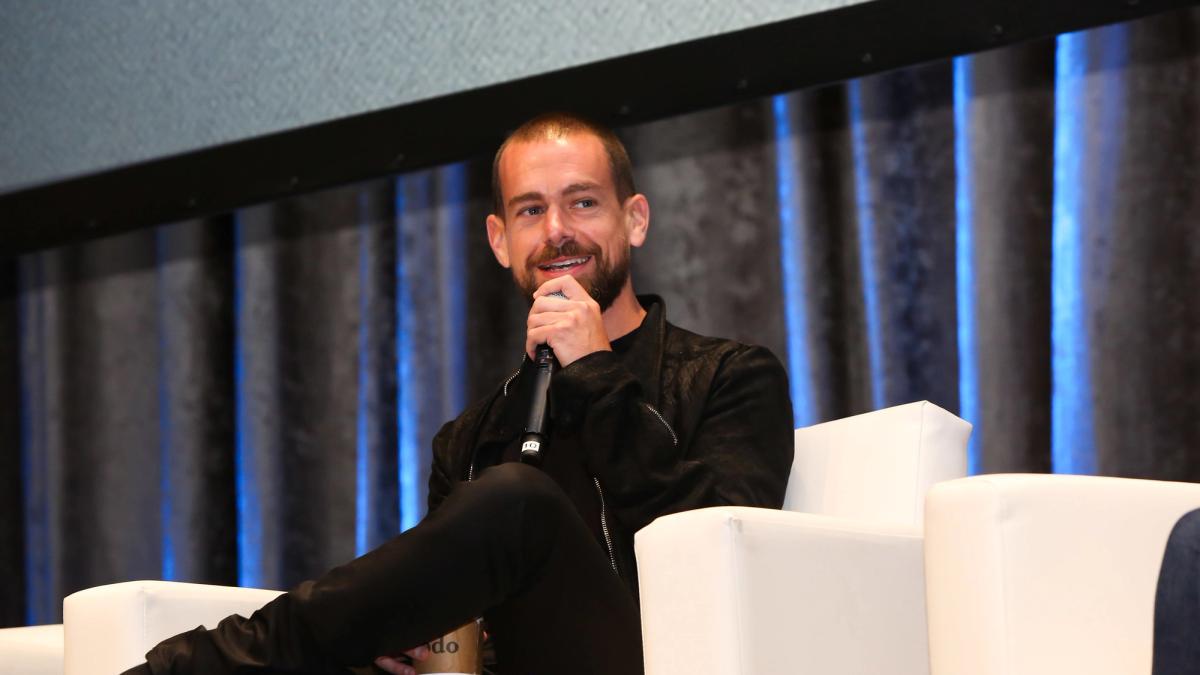 Block's new voice AI sounds eerily human, sparking awe and scam fears
Dessa is a voice AI model from Block, trained from scratch on human speech only, with no text stage. It listens while speaking, so it handles interruptions, laughter and tone changes. Block says it trained on one Nvidia GB200 NVL72 system and that it runs locally on a MacBook Pro with M4 Max or better. Model size, benchmarks and release date are undisclosed. Early access goes to a small group of AI safety researchers. Reactions split between praise and scam fears.
 coindesk.comarticlePublished and added 24 Oct 2026🧠 AI

Showing 60 of 488
Show more