 Florida Student Aid Website Hack Puts Data of 4.9 Million People at Risk
The Florida Department of Education (FLDOE) disclosed a breach of its Florida Student Financial Aid website (FloridaStudentFinancialAidSG.org), discovered on 19 October and potentially affecting about 4.9 million people. Exposed data may include names, Social Security numbers, dates of birth, addresses, phone numbers and emails. The entry vector and actor are undisclosed. The article links it to the September FLHSMV driver database breach, which came from compromised police credentials.
 securityweek.comarticlePublished and added 2 Nov 2026🛡️ Security
 Revolve Data Breach Impacts at Least 180,000 People
Revolve, an online fashion retailer, disclosed a September 11 breach of systems including its e-commerce platform. Attackers may have exfiltrated names, addresses, card numbers and expiration dates that customers saved in their accounts. Notices filed with the Iowa, Massachusetts, Texas and Vermont attorneys general show at least 179,259 people notified. Revolve offers no credit monitoring, and the attacker and method are undisclosed.
securityweek.comarticlePublished and added 2 Nov 2026🛡️ Security Google Introduces $250,000 Root-in-Cloud Bug Bounty Reward
Google Cloud Vulnerability Reward Program has added a $250,000 root-in-cloud tier for exploits that give roles/owner or full IAM control over arbitrary Google Cloud organizations or projects. The exploit path cannot rely on prior project access, stolen credentials or social engineering. Remote code execution in Borg also qualifies, but researchers must stop probing immediately. Proof is made against a designated service account using a deterministic proof-of-root mechanism.
securityweek.comarticlePublished and added 2 Nov 2026🛡️ Security Synology warns of C3RB3R ransomware attacks targeting NAS devices
C3RB3R (Cerber) ransomware is encrypting Synology NAS devices running outdated DiskStation Manager, and Synology issued an advisory urging immediate updates. The attacks exploit a vulnerability patched in December 2024, likely among CVE-2024-10441, CVE-2024-50629 and CVE-2024-10445 from a November 2024 advisory. Victims get a read-me3.txt note and .L0CK3D extension. Shadowserver tracks over 380,000 exposed Synology NAS devices.
 bleepingcomputer.comarticlePublished and added 2 Nov 2026🛡️ Security
 Ivanti patches two more Connect Secure zero-days chained in attacks
Ivanti patched two more Connect Secure zero-days, CVE-2026-111357 (privilege escalation) and CVE-2026-118527 (authenticated file upload), chained with authentication bypass CVE-2026-104935 since at least 1 October 2026. Volexity attributed the chain to UTA0576, which ran no malware, re-exploited the device per command and tampered with logs, evading Ivanti's Integrity Checker Tool. CISA added CVE-2026-104935 to KEV, and Shadowserver tracks over 5,000 exposed instances.
bleepingcomputer.comarticlePublished and added 2 Nov 2026🛡️ Security- Anthropic’s internal use of Claude topped staff costs at list prices by April
Report on Anthropic's IPO prospectus, filed 26 October 2026. It says the value of internal Claude use at customer list prices exceeded monthly personnel costs (excluding equity awards) by April 2026. Internal usage value rose more than 250-fold from January to September 2026, and Claude wrote over 90% of new code. The filing gives no compute cost or dollar figure.
 en.cryptonomist.charticlePublished and added 2 Nov 2026🧠 AI
 FBI Flags Over 600 Addresses Tied to North Korea’s Binance Heist
The FBI attributed the 29 October 2026 Binance hot wallet theft (about $6.3 billion) to North Korea's TraderTraitor and listed 608 Ethereum, 19 Bitcoin and one Solana address holding proceeds. It asked THORChain and RPC node operators, instant exchanges, DeFi services and analytics firms to refuse linked transactions. Elliptic and Chainalysis report automated laundering, and Binance says the breach went beyond one laptop and involved EIP-7702 delegation.
securityweek.comarticlePublished and added 2 Nov 2026🛡️ Security- How Arbitrum's freezes send transactions from an address without its key
Analysis of the Arbitrum Security Council's 30 October 2026 freeze of 8,425 ETH and 74,559,805.2 ARB on Arbitrum One, tied to the Binance exploit. In one L1 transaction, the council's 9 of 12 Safe used the UpgradeExecutor to swap the Inbox implementation, so the message arrived without address aliasing and landed as type 0x65 transactions with a zero signature. The post lists monitoring advice: alert on Inbox Upgraded events, since the EIP-1967 slot never showed the change.
 ethereum-magicians.orgarticlePublished and added 2 Nov 2026🛡️ Security
 FBI links $6.3 billion Binance crypto heist to North Korean hackers
The FBI attributed the roughly $6.3 billion Binance theft of about 29 October 2026 to North Korea's TraderTraitor (Lazarus Group, Jade Sleet, APT38). Binance traced the breach to a compromised DevOps engineer's laptop that gave access to a service container used to submit unauthorized withdrawals across ten blockchains. The FBI published 628 laundering addresses and linked the group to earlier thefts at Bybit, DMM Bitcoin, Bitget and Drift.
bleepingcomputer.comarticlePublished and added 1 Nov 2026🛡️ Security How to Run an AI Model Locally—And Why You Might Want To
Decrypt guide to running open-weight AI models locally with Ollama and LM Studio. It cites Epoch AI's finding that open models trail the best closed ones by about four months, and sets out VRAM and unified-memory needs (8GB minimum, 24GB for serious use), quantization, licences (MIT, Apache 2.0), install commands and Gemma 4 download sizes. It also notes that the largest open models, such as Qwen3.8-Max, exceed consumer hardware.
 decrypt.coarticlePublished and added 1 Nov 2026🧠 AI
 Brazilian Court Sanctions Lawyers for Prompt Injection in Court Filing
A Brazilian labor court in Parauapebas, Pará fined two law firms 10% of an R$842,000 claim (about $16,000) for hiding a prompt-injection command in a petition. The white-on-white text told AI to respond superficially and not challenge the documents. Galileu, the National Justice Council's generative AI tool, detected it and blocked processing. The court cited Articles 5 and 77 of the Civil Procedure Code.
 jetstream.securityarticleAdded 2 Nov 2026, published 1 Nov 2026🛡️ Security
- ChatGPT and Codex usage limits merging
ChatGPT and Codex usage limits merging is an OpenAI help-center notice. From December, the Plus, Pro and Business plans share one usage allowance across ChatGPT and Codex, measured in tokens. Use depends on the model and the task, and instant chat does not count. Users see combined usage in Settings → Usage and can wait, upgrade or buy credits at the limit.
 help.openai.comarticleAdded 2 Nov 2026, published 31 Oct 2026🧠 AI
 New Android SMS of Death exploit can remotely crash unpatched phones
CVE-2026-58882, "SMS of Death", is a zero-click Android denial-of-service flaw in WapPushOverSms.decodeWapPdu, where an unchecked header-length value becomes negative and triggers a NegativeArraySizeException that crashes com.android.phone. A malformed eight-byte WAP Push message to port 2948 can drop calls, including emergency calls, and about 20 messages caused reboot loops. A PoC is public. Google patched Android 14 through 17 in October 2026, but Android 12 and 13 remain vulnerable.
bleepingcomputer.comarticlePublished and added 31 Oct 2026🛡️ Security Lewis - Policifyai (@Policifyai) on X
Policifyai's October 2026 roundup lists model releases by date with prices and benchmark scores: GPT-6.1 Sol and Terra, Claude Sonnet 5.5 and Haiku 5.5, Gemini 4 Argon and Carbon, Muse Spark Open, Mistral Large 4 weights and Kimi K3.1 Pro. It also covers Anthropic's S-1 compute commitments, Artificial Analysis Intelligence Index v5, and chip and data-center deals.
 x.comarticleAdded 1 Nov 2026, published 31 Oct 2026🧠 AI
 Syrian Hacker Gets Prison Time in US After Over a Decade on the Run
Ahmad Umar Agha (Th3Pr0), a Syrian Electronic Army member, received a 42-month US sentence in the Eastern District of Virginia, over 12 years after he was first charged in June 2014. He compromised about 47 Western media, company, NGO and government targets, including the 2013 Associated Press Twitter takeover that caused a flash crash. Accomplice Firas Dardar remains at large.
securityweek.comarticlePublished and added 31 Oct 2026🛡️ Security- President Trump says they’re looking into Binance hack as calls grow for crypto rules
The Block reports that Binance lost about $6.3 billion in a hack on 29 October 2026. Co-CEO Richard Teng said a compromised DevOps engineer's laptop gave access to a service container used to submit unauthorized withdrawals, and TRM Labs attributed the theft to North Korea's TraderTraitor. The rest covers reactions: President Trump said on 30 October he was looking into it, CFTC Chair Michael Selig and The Digital Chamber urged federal exchange rules, and senators disputed whether the Clarity Act would have allowed freezes.
 theblock.coarticlePublished and added 30 Oct 2026🛡️ Security
 Weekly Research Brief: Binance Hacked; Hyperliquid on Wall Street; Prediction Markets’ Brazil ‘Miss’
Galaxy Research's weekly brief of 30 October 2026 opens with the Binance hack: about $6.3b drained across 10 blockchains, attributed by TRM Labs and Chainalysis to TraderTraitor (Lazarus-linked). The attacker used EIP-7702 with 50 pre-signed authorizations on Ethereum, and Binance's preliminary finding is a compromised DevOps laptop reaching a service container. Tether and Circle froze about $2.6b. The other sections cover Hyperliquid and prediction markets.
 galaxy.comarticleAdded 30 Oct 2026🛡️ Security
 Secret Service, FBI Join Binance Hack Probe as Circle Freezes $823 Million
Decrypt reports that Binance is working with the FBI and U.S. Secret Service after a theft of about $6.4 billion, which TRM Labs and Chainalysis attribute to North Korea's TraderTraitor group, also linked to the February 2025 Bybit hack. Circle froze about $823 million in USDC and Tether froze USDT, though the page gives differing Tether totals. Binance first suspected a compromised DevOps engineer laptop, found more breach points, and saw no evidence of leaked wallet private keys.
decrypt.coarticlePublished and added 30 Oct 2026🛡️ Security Trezor warns of suspected crypto-theft implant in hardware wallet
Trezor warns of a suspected crypto-theft implant in a Trezor Safe 5 sold by reseller CryptoBilis in Southeast Asia. An Indonesian buyer found an extra board with a cellular module and antenna between the main board and screen, apparently able to read the recovery phrase and send it over mobile networks. Trezor has not examined the device, advises moving funds to a new wallet for any CryptoBilis purchase since March 2026, and notes a similar Ledger implant was confirmed.
bleepingcomputer.comarticlePublished and added 30 Oct 2026🛡️ Security Binance Attacker Used EIP-7702 to Bypass Wallet Controls, Teng Says
The Defiant reports that Binance co-CEO Yi He's colleague Teng says the attacker in a breach Binance estimates at $6.3 billion used EIP-7702 to bypass wallet controls. Binance is rebuilding its withdrawal service, and attackers destroyed tools and traces during the intrusion. Only the teaser loaded, so the technical detail of the EIP-7702 abuse is not in the available text.
 thedefiant.ioarticlePublished and added 30 Oct 2026🛡️ Security
 Trezor reveals Malaysian reseller sold wallet with spyware
Trezor says a user reported a Safe 5 wallet bought from Malaysian reseller CryptoBilis in August 2026 with a hidden board between the main board and screen, carrying a cellular module and antenna. The implant allegedly reads the screen, including the wallet backup, and sends it over a mobile network when plugged in. Trezor has not yet examined the device, has dropped CryptoBilis (9 October), and is replacing wallets bought since March 2026.
 protos.comarticlePublished and added 30 Oct 2026🛡️ Security
 Passkeys Are Better Than Passwords. But They Are Not Enough.
Opinion piece arguing that passkeys, built on public-key cryptography, resist phishing, credential stuffing and password theft but do not settle identity risk. Attackers can go around them through account enrollment before a passkey is bound, weaker recovery paths (SMS, email link, help desk), device changes and authenticated session hijacking. It proposes layering identity threat detection with risk-based, continuous evaluation of trust.
securityweek.comarticlePublished and added 30 Oct 2026🛡️ Security Binance hack: how a compromised developer laptop can lead to a $6.3 billion breach
Aikido Security's analysis of the roughly $6.3 billion Binance incident, which Binance says may have started with a compromised DevOps engineer's laptop. It sets out what is known (no private key leak, TraderTraitor attribution by TRM Labs and Chainalysis, additional breach points) and a plausible chain from laptop credentials to a withdrawal service. It compares the 2025 Bybit theft and lists mitigations.
 aikido.devarticlePublished and added 30 Oct 2026🛡️ Security
 Trezor Warns CryptoBilis Buyers After Report of Hardware Implant in Safe 5
Trezor warned buyers of its wallets from reseller CryptoBilis (March 2026 onward) to move funds, after an Indonesian customer reported a hardware implant in a Safe 5 bought in August 2026. The report describes a board with a cellular module between mainboard and screen that reads the wallet backup and sends it over a mobile network. Trezor has not yet examined the device. It found no tampering in four other CryptoBilis units.
decrypt.coarticlePublished and added 30 Oct 2026🛡️ Security Binance Finds 'Additional Points of Breach' in $6.3B Hack
Binance estimated the October 2026 security incident at about $6.3 billion and said it found "additional points of breach" beyond the compromised DevOps engineer laptop it first named. The attacker reached a service container and submitted unauthorized withdrawals, with no wallet private key leak found. Arkham counted $6.01 billion taken from hot wallets on nine chains; Tether and Circle froze about $1.8 billion in stablecoins. About $3 billion is frozen onchain; withdrawals stay suspended.
decrypt.coarticlePublished and added 30 Oct 2026🛡️ Security Binance links $6.3 billion crypto theft to compromised DevOps laptop
Binance linked the theft of about $6.3 billion in crypto to a compromised DevOps engineer's laptop, which let attackers reach a service container and submit unauthorized withdrawals. TRM Labs and Chainalysis attribute the 29 October 2026 attack to North Korea's TraderTraitor. About $2.7 billion was frozen, and the attackers hold about $2.4 billion. Binance has found no evidence of a leaked wallet private key.
bleepingcomputer.comarticlePublished and added 30 Oct 2026🛡️ Security- Trezor reports suspected hardware implant in Safe 5 sold by CryptoBilis
Trezor reported a suspected hardware implant in a Safe 5 bought in August 2026 from reseller CryptoBilis via Tokopedia. The alleged implant is a board with a cellular module that reads the screen, including recovery phrases. Trezor has not examined the device and found no tampering in four other units, and it told buyers who purchased from the reseller since March 2026 to move funds.
theblock.coarticlePublished and added 30 Oct 2026🛡️ Security  Trezor hardware implant report: CryptoBilis buyers urged to move funds
Trezor advised everyone who bought wallets from reseller CryptoBilis since March 2026 to move funds to a new wallet with a new recovery phrase. An Indonesian customer reported a Safe 5 bought via Tokopedia in August 2026 with an extra board holding a cellular module that allegedly sends the wallet backup out. Trezor has not yet examined the device. Ledger separately confirmed tampering on CryptoBilis devices in October 2026.
en.cryptonomist.charticlePublished and added 30 Oct 2026🛡️ Security Binance probes a suspected cryptocurrency breach: $6.3B affected, about $3B frozen
Binance disclosed a suspected security incident on 29 October 2026, estimating $6.3 billion affected and about $3 billion frozen. Binance's early finding is that a compromised DevOps engineer's laptop let an attacker reach a service container and submit unauthorized withdrawals, with no evidence of wallet private-key leakage. TRM Labs suspects TraderTraitor, the group tied to the February 2025 Bybit theft. Tether, Circle and Ripple froze funds.
en.cryptonomist.charticlePublished and added 30 Oct 2026🛡️ Security Polymarket stolen funds: One account withdrew at least $2.7M across 710 wallets
Polymarket's international exchange suffered unauthorized withdrawals on 29 October 2026 after a compromised third-party provider, reportedly the website monitoring service DebugBear. Betting Intelligence and Polysights found one account withdrew at least $2.7 million across 710 wallets. Polymarket paused trading, referred the case to law enforcement, promised reimbursement, and had a June 2026 vendor breach that cost about $3 million. The attack mechanism is not described.
en.cryptonomist.charticlePublished and added 29 Oct 2026🛡️ Security Japan Airlines suffers third-party data breach exposing passenger info
Japan Airlines disclosed that unauthorized access to Amadeus's Passenger Service System, between 10 August 2023 and 23 September 2026, exposed data on about 92,000 customers. Roughly 2,000 also had emails, phone and passport numbers exposed. ANA, Asiana Airlines and Korean Air are also reported as affected. Amadeus had announced a booking display vulnerability on 1 October 2026 and has not given the full scope.
bleepingcomputer.comarticleAdded 30 Oct 2026, published 29 Oct 2026🛡️ Security Content Providers and the potential weak spots they can have | Oversecured Blog
Oversecured's Android security checklist for Content Providers covers insecure FileProvider path configs, path traversal via decoded Uri.getLastPathSegment(), mismatched readPermission/writePermission, proxying requests to more privileged providers, SQL injection across a shared database, and sensitive actions in providers. Each case has vulnerable manifest and Java code, an attacker PoC and remediation. Real cases from Google and Samsung devices are cited. The page text was truncated near the end.
 oversecured.comarticleAdded 29 Oct 2026🛡️ Security
 Oversecured Apps Care. Part 1: Vulnerability disclosure of 225 Google apps | Oversecured Blog
Oversecured Apps Care, Part 1 (21 March 2024) publishes scanner results for about 224 Google Android apps, drawn from a wider scan of over 6,000 public APKs from 1,000+ companies. Tables per device image (phone, Wear OS, Android Automotive, Android TV) give package names, three finding counts and report links, including android, com.android.settings, gms and Play Store. It invites researchers to report issues to Google for rewards.
oversecured.comarticleAdded 29 Oct 2026🛡️ Security What changed when mobile security stopped being theoretical
An Oversecured Head of Engineering, coming from 20 years of web work, describes four mobile security risks that became concrete after seeing real production apps. These are old vulnerable binaries that stay installed after a fix, secrets embedded in client code, Keychain/Keystore guarantees that are weaker than assumed with tokens leaking via logs, and deep links or exported components acting as public endpoints. It ends with advice: test the shipped artifact, verify the full data lifecycle, and build server-side containment.
oversecured.comarticleAdded 29 Oct 2026🛡️ Security Hackers Publish Work Details of 41,000 Homeland Security Employees
Icepick is a dataset published on 28 October 2026 by Distributed Denial of Secrets. It lists 41,191 DHS employees and contractors with names, titles, offices, phones, managers and 55,000+ permission groups. The hacktivist group Department of Peace says it took the data from DHS's Okta SSO; Okta denies compromise. DHS has filed a takedown notice via ZeroFox, and the full archive is unverified.
decrypt.coarticlePublished and added 29 Oct 2026🛡️ Security LLM Voice
 is a 29 October 2026 post by Martin Fowler on the uncanny-valley reaction readers have to LLM-written prose. He advises authors not to let an LLM draft or rephrase their text, and to use it at most for outlines. He allows exceptions for disability, translation and form letters, and asks that AI use be declared.
 martinfowler.comarticleAdded 30 Oct 2026, published 29 Oct 2026🧠 AI
- Over 41,000 DHS Employee Records Leaked Online
A hacker using the handle Department of Peace leaked more than 41,000 US Department of Homeland Security employee records, which the hacker says came from an Okta single sign-on system. The data covers names, work emails, phone numbers, job titles, office locations and per-account system access, mostly for CBP, ICE and HSI staff plus about 1,000 CISA employees. Okta says it has no evidence of compromise. Distributed Denial of Secrets calls the dataset 'Icepick'.
securityweek.comarticlePublished and added 29 Oct 2026🛡️ Security  New Cisco firewall zero-day exploited to crash SSL VPN devices
CVE-2026-76418 is a high-severity denial-of-service zero-day in Cisco ASA and Threat Defense (FTD) software, exploited in the wild in October 2026. Unauthenticated attackers send a crafted request to the SSL VPN (webvpn) when secondary authentication is set on a tunnel group, causing a device reload. Cisco offers no workaround besides disabling secondary authentication on tunnel groups. Shadowserver sees over 51,000 exposed ASA SSL VPN devices.
bleepingcomputer.comarticleAdded 30 Oct 2026, published 29 Oct 2026🛡️ Security Attackers Exploit Second Cisco Firewall VPN Zero-Day Since August
CVE-2026-76418 (CVSS 8.6) is an exploited flaw in the Remote Access SSL VPN service of Cisco Secure Firewall ASA and FTD. An unauthenticated remote attacker can force a device reload through logic errors in tunnel groups using secondary authentication. Cisco learned of exploitation in October 2026, offers no workaround, and recommends upgrading. It is the second ASA/FTD DoS zero-day after CVE-2026-20349 in August.
securityweek.comarticlePublished and added 29 Oct 2026🛡️ Security Ghost in the PHP2Shell: Why coordinated disclosure and patching will start moving faster
Aikido's analysis of the PHP2Shell disclosures (CVE-2026-109618 and CVE-2026-109619), published October 2026. It covers the timeline: the CVE IDs leaked on 20 October, PHP moved its release to 21 October, and Amazon reports exploitation attempts from 17 October. It cites Censys data (32.5 million services still affected on 27 October) and argues that AI-driven discovery and exploit building call for shorter embargoes and faster patching.
aikido.devarticleAdded 28 Oct 2026, published 29 Oct 2026🛡️ Security Wagyu Confirms Data Leak Exposing Monero Swap Records
Wagyu, a Monero swap service, confirmed a data leak after Hudson Rock found 4,580 orders in exposed records. The records link public-chain deposit transactions to Monero destination addresses and client IP addresses, which undoes the privacy a swap into Monero is meant to give. The fetched page held only the headline and subhead, so the cause, timeline and remediation are not covered.
thedefiant.ioarticlePublished and added 29 Oct 2026🛡️ Security What is an AIBOM? AI bill of materials explained for security teams | Endor Labs
An AIBOM is a machine-readable inventory of models, datasets, dependencies, AI services, agents and MCP servers, with evidence of origin, license, integrity and evaluation. The Endor Labs explainer walks through a worked CycloneDX example for a fine-tuned support assistant. It compares CycloneDX ML-BOM, SPDX 3.x, the OWASP AIBOM project and the May 2026 CISA/G7 guidance, and lists what an AIBOM cannot show: runtime behavior and agent actions.
 endorlabs.comarticlePublished and added 29 Oct 2026🧠 AI
- What is an AIBOM? AI bill of materials explained for security teams | Endor Labs
AIBOM explainer from Endor Labs: an AI bill of materials is a machine-readable inventory of models, datasets, dependencies, AI services, agents and MCP servers, with origin, license and integrity evidence. It walks through a CycloneDX entry for a fine-tuned model, compares CycloneDX ML-BOM, SPDX 3.x, the OWASP AIBOM Generator and the May 2026 CISA/G7 minimum-elements guidance, and lists a six-step build process. It also states what an AIBOM cannot show: model safety, runtime behavior and coding-agent actions.
endorlabs.comarticlePublished and added 29 Oct 2026🛡️ Security  Introducing AnySpeechRecognizer and AnyDecisionModel: Open Models for Speech and Decisions on Apple Platforms
AnySpeechRecognizer and AnyDecisionModel are two Swift packages from Hugging Face. The first mirrors Apple's SpeechAnalyzer API with swappable engines (NVIDIA Parakeet, Alibaba Qwen3-ASR on Core ML) and adds Sortformer speaker diarization. The second returns typed yes/no, choice and score answers with probabilities via MLX, Core AI, llama.cpp, Jev or Ollama. The post gives M4 Max timings, model sizes and calibration options.
 huggingface.coarticlePublished and added 29 Oct 2026🧠 AI
 Welcome Le Chonk: Mistral Large 4 on Hugging Face
Mistral Large 4 (Le Chonk) is a multimodal, multilingual Mixture-of-Experts model with about 1T total and 49B active parameters and a 1M-token context, released under the Mistral Ecosystem Open-Weight License. The post covers its MLA and DeepSeek Sparse Attention architecture, a 1.6B Pixtral encoder, and benchmarks including 82% on the Artificial Analysis Cyber Index and 93% on Cybench. It gives run recipes for transformers, vLLM, llama.cpp, TRL fine-tuning and Inference Endpoints.
huggingface.coarticlePublished and added 29 Oct 2026🧠 AI Leak Exposes 41,000 Homeland Security Workers–Including Undercover ICE Agents
Icepick is a leaked archive of records on more than 41,000 Department of Homeland Security employees and contractors, published by Distributed Denial of Secrets in 2026 and said to come from DHS's Okta login system. WIRED's analysis covers CBP, ICE, HSI, USCIS and CISA staff, plus over 55,000 permission groups that reference undercover programs, Palantir Falcon, PenLink, Signal and Mobile Fortify. Okta says it has no evidence of compromise.
 wired.comarticleAdded 29 Oct 2026, published 28 Oct 2026🛡️ Security
 Police seize Virtualine bulletproof service tied to ransowmare, cybercrime
Virtualine, a bulletproof hosting service also operating as Secury, Massgod, Spamhouse, Lanedo and Omegatech, had its main domain seized by the FBI with German, Dutch and UK partners. Chainalysis and TRM Labs traced its Bitcoin payments to ransomware (5% of flows), a Russian drug market (about 44%), sextortion and the StealC infostealer. Dutch police seized dozens of servers in Limburg and recovered data on over 3,000 customers.
bleepingcomputer.comarticleAdded 30 Oct 2026, published 28 Oct 2026🛡️ Security OpenAI Plans to Buy Google's AI Chips as It Looks Beyond Nvidia: Report
Decrypt reports, citing The Information, that OpenAI plans to buy Google TPUs rather than rent them, to reduce dependence on Nvidia. Neither company has confirmed, and price, volume and timing are undisclosed. The article covers OpenAI's TPU optimization job listing, its Broadcom-built Jalapeño inference chip due end of 2026, Nvidia and AMD deals, and Anthropic's multi-gigawatt TPU agreement.
decrypt.coarticlePublished and added 28 Oct 2026🧠 AI Gemini 4 Carbon: Our next frontier model
Gemini 4 Carbon is Google DeepMind's new frontier model, announced two weeks after Gemini 4 Argon. It ranks #1 on Artificial Analysis Intelligence Index v5.0 at 59 and scores 88.2% on SEC-bench Pro, 54.8% on ExploitGym and 71.0% on CWE-bench. Access starts with cyber defenders through the Fairwind Program, priced at $2 per million input tokens and $10 per million output tokens.
 deepmind.googlearticlePublished and added 28 Oct 2026🧠 AI
 Dayjob: Tax – evaluating AI agents on 50 professional tax assignments
DAYJOB: Tax is Surge AI's benchmark of 50 professional tax assignments across eight practice areas, with 1,789 workspace files such as returns, K-1s, ledgers and IRS notices. Claude Sonnet 5.5 leads at a 10.8% pass rate (pass@1, 95% rubric threshold), ahead of Claude Fable 5.1 (9.6%) and Claude Opus 5.5 (9.2%). Case studies show agents missing deadlines and unverified marital-status assumptions.
 surgehq.aiarticleAdded 29 Oct 2026, published 28 Oct 2026🧠 AI
 TLS Flaws Found in GoAhead Web Server Used in Hundreds of Millions of Devices
FoxIO disclosed three TLS flaws in the GoAhead embedded web server from EmbedThis, used on hundreds of millions of IoT, OT and network devices. CVE-2026-115881 (CVSS 9.1) leaves revoked client certificates accepted under mTLS with OpenSSL; CVE-2026-115884 (7.4) bypasses chain-length limits with LibreSSL; a third Mbed TLS bug (5.9, no CVE) weakens TLS 1.2 DHE. GoAhead 6.1.1 fixes the OpenSSL and Mbed TLS issues, and FoxIO released PoC code and fingerprints.
securityweek.comarticlePublished and added 28 Oct 2026🛡️ Security China-Linked Hackers Exploit PHP2Shell to Root Firewalls
A China-linked actor chained PHP2Shell (CVE-2026-109618, CVE-2026-109619) with the Fragnesia Linux kernel privilege escalation (CVE-2026-46300) to root firewalls and drop PHP webshells, per Dream. Using FOFA, the actor narrowed 19,000 firewalls to 240 targets and rooted 24 on 23-24 October. On two US government-affiliated devices it used a reverse SSH tunnel, hit the firewall management server, and attempted LDAP and Active Directory abuse.
securityweek.comarticlePublished and added 28 Oct 2026🛡️ Security- TLP Is Not a Suggestion
Akamai SIG argues that vendors and researchers broke embargo norms during the October 2026 PHP2Shell leak, when the PHP fix shipped a day early on 21 October. It explains the four TLP 2.0 labels, tabulates past embargo breaks (Heartbleed, a collapsed six-month kernel-era embargo, the Alibaba Cloud and MIIT case), and lists seven practices, such as no proofs of concept or CVE numbers before the fix.
 akamai.comarticleAdded 30 Oct 2026, published 28 Oct 2026🛡️ Security
 ADLC compliance: Mapping agentic development to NIST SSDF, OWASP, and the EU AI Act | Endor Labs
ADLC compliance guide from Endor Labs that maps agentic development to NIST SSDF (SP 800-218 v1.1), the OWASP LLM Top 10 2025 and Agentic Top 10, and the EU AI Act as amended by Regulation (EU) 2026/1744. It splits controls into a code surface and an action surface (shell, file access, MCP calls, package installs). It gives a four-step AI Act scoping path, the new Annex III date of 2 December 2027, and evidence guidance. It states the crosswalk is the vendor's interpretation, not legal advice.
endorlabs.comarticlePublished and added 28 Oct 2026🛡️ Security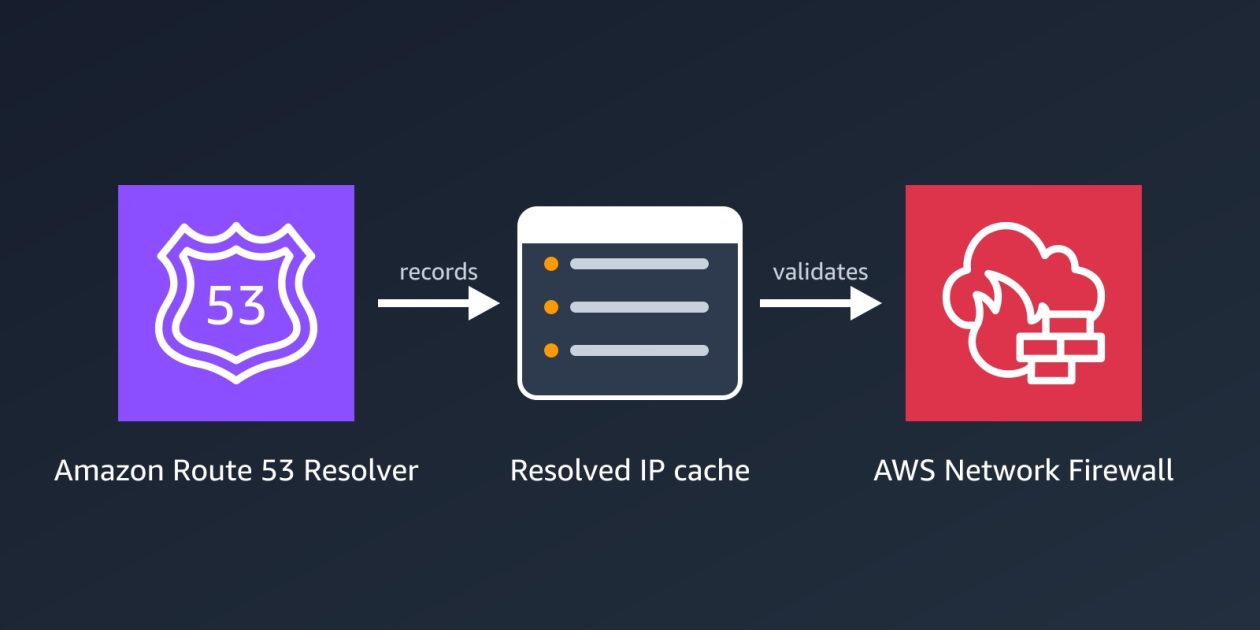 Introducing Route 53 Resolved IP Validation for AWS Network Firewall
Route 53 Resolved IP Validation for AWS Network Firewall, launched 21 October 2026 at no extra charge, has Route 53 Resolver share the IP addresses it returns per domain with Network Firewall, which checks each new outbound connection against them. The post covers alert-mode rollout, domain-based filtering of SFTP/SSH traffic, SNI spoofing prevention without TLS inspection, the route53_resolved_ip log field, CloudWatch metrics and best practices.
 aws.amazon.comarticleAdded 28 Oct 2026, published 27 Oct 2026🛡️ Security
 International Law Enforcement Seizes Domain of Virtualine Bulletproof Hosting Service
Virtualine is a bulletproof hosting provider whose domain virtualine.net was seized on 27 October 2026 by the FBI Washington Field Office and the Eastern District of Virginia, with German, Dutch and UK police support. Chainalysis and OverRIPE gave intelligence support. The post lists aliases (Secury, Massgod, Spamhouse, Lanedo, Omegatech), forum advertising on Exploit.in and HackForums, and unhosted bitcoin payments tied to ransomware, infostealers and scam infrastructure.
 chainalysis.comarticlePublished and added 27 Oct 2026🛡️ Security
 Bitcoin Wallet Maker Keystone Pulls Devices as Stolen Key Opens Door to Fakes
Keystone, a Bitcoin hardware wallet maker, will destroy 18,835 unsold devices and has halted shipping after an attacker obtained the permanent WebAuth factory key used to verify genuine hardware, detected October 20, 2026. The key could let counterfeit wallets pass authentication. The breach also exposed 25,964 Shopify buyer records (2024 to 2026) that should have been erased under a 180-day policy; recovery phrases and private keys were not involved.
decrypt.coarticlePublished and added 27 Oct 2026🛡️ Security Pentesting: Twelve Caesars – Community Tools for Offensive Security
Hackers Arise walks through four tools from Praetorian's "12 Caesars" open-source release: Titus (secret scanner with 487 rules and credential validation), Nerva (fingerprints 170 protocols), Brutus (Hydra alternative covering 40+ protocols) and Julius (fingerprints 60+ LLM services such as Ollama). It shows download and run commands in a Kali lab and how the tools chain together. The tools are Go single binaries; the post notes an exposed Ollama on port 11434 allows unauthenticated model use.
 hackers-arise.comarticlePublished and added 27 Oct 2026🛡️ Security
 Introducing LFM3: Every Modality for Specialized Intelligence
LFM3 is Liquid AI's new family of open-weight multimodal models, six models of about 2B parameters branched from LFM3-1.7B-Base (22T pre-training tokens, 256K context). The hybrid backbone uses 13 gated short-convolution, 5 sliding-window attention and 6 global attention layers. Variants cover text, vision with video, audio, omni and two decision models, with on-device speed numbers, fine-tuning demos and robotics extensions.
 liquid.aiarticleAdded 28 Oct 2026, published 27 Oct 2026🧠 AI
 Part 3 – Cybersecurity journeys: The work behind the work
Part 3 of the AWS Security Blog series on cybersecurity careers profiles three AWS staff: Brandon Caldwell (application security, empathy and communication), Kurt Heath (self-taught pen tester, cautious AI use) and Seth Jeacopello (code review, managing attention). It gives practical advice: practice on vulnerable machines and read the logs, build CTF and GitHub portfolios, and write clearly. It lists TryHackMe, Hack The Box, the OWASP Top 10, OWASP Cheat Sheet Series, Darknet Diaries and AWS Skill Builder.
aws.amazon.comarticlePublished and added 27 Oct 2026🛡️ Security
Showing 60 of 456
Show more