- A 10-year-old CNN outperforms frontier LLMs for skin cancer diagnosis
A dermatologist tested GPT-6 Astra and Claude Fable 5.1 on 200 biopsy-proven lesions from MILK10k, giving each a clinical and a dermoscopic image. A CNN (Inception v3, fine-tuned for about twenty minutes on 68,011 ISIC images) named the right diagnosis for 62% of lesions, against 42% for both LLMs. The post lists caveats (small sample, single run, possible contamination) and links the cases, prompts, replies and scoring code.
 lynchlab.netwriteupAdded 26 Oct 2026, published 25 Oct 2026🧠 AI
 Inside the LiteLLM 1.107.0 supply chain compromise: Credential theft through Python startup hooks
Microsoft's analysis of the LiteLLM 1.107.0 compromise, published to PyPI and container images on 21 October 2026. The wheel shipped cook.pth, cook.py and sitecustomize.py, so a credential collector (PRIVCOLLECT) ran whenever Python started, even without importing LiteLLM. It covers AES/RSA-encrypted exfiltration to litellm.dev, a re-armable Unix loader, Defender KQL hunting queries, ATT&CK mapping and rotation guidance.
 microsoft.comwriteupPublished and added 23 Oct 2026🛡️ Security
- PHP2Shell: pre-auth RCE via PHP memory-limit fatal errors (CVE-2026-109618/109619)
PHP2Shell is Calif's writeup of pre-auth RCE in PHP (CVE-2026-109618, CVE-2026-109619) triggered by memory_limit fatal errors that leave dangling state. It covers a HashTable bucket bug in _zend_hash_str_add_or_update_i, a Session upload-progress stale-pointer bug, and an unserialize destructor-list primitive that reaches PHP-FPM. It lists affected apps (WordPress, Drupal, Joomla, Magento and others) and gives temporary mitigations.
 calif.iowriteupAdded 23 Oct 2026🛡️ Security
 LiteLLM Compromised, Steals Credentials
LiteLLM version 1.107.0 was uploaded to PyPI on 21 October 2026 with a credential stealer, and the same build reached GHCR and Docker Hub images. Wiz describes the three dropped files (cook.pth, cook.py, sitecustomize.py), exfiltration to a fake litellm.dev domain, a GitHub dead drop for a second stage, and the malicious commits pushed through the lookalike Berri-AI repository. The last safe version is 1.106.2.
 wiz.iowriteupPublished and added 21 Oct 2026🛡️ Security
 LiteLLM PyPI Package and Docker Images Compromised to Steal Cloud and AI Credentials
LiteLLM 1.107.0 on PyPI and GHCR images shipped Python startup hooks (cook.pth, sitecustomize.py) that steal cloud, SSH, browser and AI-tool credentials, including LiteLLM proxy database credentials. Image build provenance recorded a lookalike Berri-AI/litellm source repository. The post decodes the payload, encrypted exfiltration and GitHub-driven remote loader, and lists containment steps, MITRE ATT&CK mappings and IOCs.
 socket.devwriteupPublished and added 21 Oct 2026🛡️ Security
 LiteLLM compromised again: infostealer and RAT found in version 1.107.0
LiteLLM 1.107.0 was compromised on 21 October 2026: the seven compiled PyPI wheels and the official Docker image carried an infostealer and a RAT. The attacker used the maturin `data = "cook"` directive in pyproject.toml to inject cook.pth, cook.py and sitecustomize.py without touching the source repo. The post lists stolen data, the hourly C2 polling via GitHub, wheel hashes, file and network IOCs, and check steps.
 aikido.devwriteupPublished and added 21 Oct 2026🛡️ Security
 LiteLLM supply chain compromise: What you need to know
LiteLLM version 1.107.0 was published to PyPI and official Docker images on 21 October 2026 and stayed live for about two hours. Attackers used stolen GitHub CLI OAuth tokens from three engineers to run the release pipeline against a lookalike fork, Berri-AI/litellm. The payload (cook.pth, cook.py, sitecustomize.py) steals cloud, developer, AI-tool and browser credentials, and includes a polling RAT. The post lists removal and rotation steps.
 securitylabs.datadoghq.comwriteupAdded 29 Oct 2026, published 21 Oct 2026🛡️ Security
 SBOM vs. SBOM: Comparing SBOMs from Different Tools and Lifecycle Stages | Endor Labs
Case study running three open source SBOM generators (two generic, one Maven plugin) on Eclipse Steady 3.2.5 rest-backend at three lifecycle stages (git clone, Maven package, Docker image), yielding 8 CycloneDX SBOMs. Compares precision/recall against the mvn dependency:tree ground truth and finds the Maven-integrated tool perfect (1.0/1.0) while generic tools miss versions, groupIds and transitive dependencies. It also shows PURL qualifier differences (e.g. type=jar, apt qualifiers) make SBOMs hard to compare, test dependencies are indistinguishable, and argues for an SBOM generator benchmark.
 endorlabs.comwriteupPublished and added 16 Oct 2026🛡️ Security
 How to engineer an AI harness for game development
Blog adaptation of an Indie Rodeo talk arguing that LLMs struggle with games because much of a game is opaque non-code, and that this is a context problem. It prescribes concrete architecture so a game becomes its own agent harness: seeded randomness, a single "Thing" fat-struct object model, serializable commands, external data editable without recompiling, a standalone simulation core, odiff image diffing for screenshot evaluation, and samply text profiling. The aim is an agentic loop that runs in seconds per change.
 kylekukshtel.comwriteupPublished and added 13 Oct 2026🧠 AI
- Threat Actors Exploit Critical AhsayCBS Flaws to Drop Webshells and XMRig Cryptominer
Huntress documents active exploitation of two AhsayCBS (Ahsay Cloud Backup Server) vulnerabilities being chained together: CVE-2026-105133, an authentication bypass in checkSysPwd, and CVE-2026-105134, an unauthenticated RCE in the Replication Receiver's UpdateReceivers.do endpoint that grants SYSTEM. Attackers use the chain to drop JSP webshells, then deploy a renamed XMRig cryptominer (masquerading as msedge.exe via a modified NSSM binary), a Task-Manager-aware anti-detection PowerShell script, and the vulnerable WinRing0x64.sys kernel driver for hardware-level miner access. Huntress provides IOCs, mitigation guidance (restrict management interface, re-image if compromised) and four Sigma rules targeting each stage of the intrusion chain.
 huntress.comwriteupAdded 9 Oct 2026, published 8 Oct 2026🛡️ Security
- llm-openai-decisions 0.1a0
Simon Willison built llm-openai-decisions, a plugin for his `llm` CLI tool that wraps OpenAI's newly announced Decisions API (unveiled at DevDay), modeled on his existing llm-typesafe plugin for Jev's competing API. Both APIs support structured yes/no, multiple-choice, and score-style questions, but OpenAI's gpt-6-luna model also accepts image input (at 10 cents per million input tokens, versus Jev's 4.2 cents), and the plugin itself was built by having GPT-6 Astra read OpenAI's docs. The post includes install instructions and a worked example querying an image attachment for a yes/no answer.
 simonwillison.netwriteupAdded 7 Oct 2026, published 6 Oct 2026🧠 AI
 L402-over-eth-Layer2
L402-EL2 is an author's proposal and open-source implementation that adapts the Lightning-based L402 HTTP 402 payment pattern to Ethereum L2s, replacing invoices/preimages with a prefunded escrow contract and cumulative EIP-712 vouchers signed per call. It layers macaroons with caveats (tool, max_cumulative, expires_at) for HTTP credentials and attenuation to sub-agents, on-chain session keys with spending caps (ERC-1271/ERC-4337 compatible), and batch settlement, so an agent pays a provider per MCP tool call without a transaction per call. The stated design specifically meters MCP's tools/call, resources/read, and prompts/get while leaving initialize/tools/list free for discovery, aimed at agent orchestrators calling paid LLM APIs like the author's own LightPhon service; contracts are unaudited.
 ethereum-magicians.orgwriteupAdded 29 Sep 2026, published 27 Sep 2026🧠 AI
 EarlyAttestationBleed Paper Review (TEE attestation bugs)
A Flashbots researcher reviews the EarlyAttestationBleed paper (Muhammad Usama Sardar and Songbo Bu), which uses ProVerif formal analysis to uncover three attestation-verification bugs in confidential-computing deployments: Cocos AI's TDX verifier fails to actually compare the REPORT_DATA value despite computing it correctly, Cocos AI's SEV-SNP validator skips the comparison entirely when an empty expected-input value is passed, and Edgeless Systems' Contrast workload-policy logic can be tricked into accepting container images from untrusted host-controlled storage due to a rebase mistake. All three were implementation bugs (not protocol design flaws) and have since been fixed; the post also summarizes the paper's broader concerns about "early attestation" — exposing hardware details pre-authentication, lack of post-handshake re-attestation for long-lived sessions, and handshake-timeout tradeoffs from added attestation latency.
 collective.flashbots.netwriteupAdded 2 Oct 2026, published 23 Sep 2026🛡️ Security
 Autonomous AI Agents Hack Online Retailers for $25 a Company
Gambit Security recovered the staging server of a financially motivated actor running three open-source AI agent harnesses — Strix (vuln scanning), Cairn (autonomous exploitation), and Hermes (orchestration) — against hundreds of online retailers at a marginal cost of tens of dollars per target. The campaign exfiltrated 600,000+ credit card records via Magento database compromises, deployed checkout-page card skimmers on at least 19 confirmed and 100+ further sites, and in one case an agent's own cleanup routine dropped 180 database tables including victim backups. The report details full attack chains (SQLi to RCE to AWS Secrets Manager dump to card decryption), the AI harnesses' operating costs (~$25 mean per target on OpenRouter/opus-4.6/GLM/DeepSeek), and multiple real-world skimmer injection techniques.
 gambit.securitywriteupAdded 26 Sep 2026, published 22 Sep 2026🛡️ Security
 Rebuilding AUTOMATIC1111 with Gradio Workflow
A Hugging Face blog post walking through Workflow1111, a 73-node graph built with Gradio's gr.Workflow that reimplements most of AUTOMATIC1111's stable-diffusion-webui feature set as a single visual canvas: text-to-image, hi-res fix, image-to-image, prompt matrix, VLM interrogation, detection-to-inpaint masking, ControlNet-style annotators, background removal, PNG metadata round-tripping, and image-to-video, wired from models like FLUX.1-Kontext, Qwen3-4B, Qwen2.5-VL, DETR, AuraSR, BRIA RMBG-2.0, and Wan 2.2 I2V A14B. It contrasts gr.Workflow with ComfyUI, shows that every output node auto-becomes both a REST endpoint and an MCP tool (usable by Claude Code or Cursor), and demonstrates running nodes locally on your own GPU via ZeroGPU (FastVideo/fastvideo-fasth3-preview) instead of hosted inference.
 huggingface.cowriteupAdded 29 Sep 2026, published 10 Sep 2026🧠 AI
 StyleSmuggler: Magento/Adobe Commerce 0-day RCE (CVE-2026-75650) under active attack
test
 sansec.iowriteupAdded 18 Sep 2026, published 5 Sep 2026🛡️ Security
 XBOW: A Shell Is Worth a Thousand Images
XBOW's autonomous AI agent chained a blind SSRF in Bing's reverse-image-search into three Critical Microsoft RCEs (CVE-2026-32194, CVE-2026-32191, CVE-2026-21536), each CVSS 9.8, by fingerprinting an ImageMagick-compatible backend through differential error responses and crafting an SVG payload that reached a shell-backed image delegate. The proof was confirmed via out-of-band callbacks showing NT AUTHORITY\SYSTEM and root execution across multiple production Bing image-processing workers on both Windows and Linux hosts. The piece walks through the full investigative trace — from ruling out XXE to fingerprinting ImageMagick coders/pseudo-protocols to constructing the pipe-based SVG exploit — and argues that ImageTragick-class bugs in "boring" image helpers remain a live, underrated attack surface.
 xbow.comwriteupPublished and added 8 Aug 2026🛡️ Security
- Field Notes: NSSM - the Non-Sucking Service Manager
A DFIR field notes post describing how attackers abuse NSSM (Non-Sucking Service Manager) to run tools like ngrok as a Windows service, hiding the real executable behind the legitimate nssm.exe ImagePath. It walks through hunting techniques: checking Event ID 7045 service-installation logs, inspecting the service's registry Parameters subkey to reveal the true application/arguments, and confirming via live process command-line analysis (Process Explorer, Velociraptor's Windows.System.Pslist), illustrated with a second real case where nssm.exe was wrapping a "komari-agent" implant.
 dfir.chwriteupAdded 3 Sep 2026, published 27 Jul 2026🛡️ Security
 Copirate 365 at DEF CON: Plundering in the Depths of Microsoft Copilot (CVE-2026-24299) · Embrace The Red
Johann Rehberger's writeup of his DEF CON Singapore talk detailing a multi-stage exploit chain against Microsoft 365 Copilot and Consumer Copilot (CVE-2026-24299): indirect prompt injection triggers Copilot's HTML preview feature, CSS background-image/font-face rules bypass img-src CSP and exfiltrate data over font-src, and the attack is made zero-click by instructing Copilot to auto-open the preview. It further chains this with abuse of Copilot's record_memory / durable-facts long-term memory tools (which have no audit logging) to plant persistent "SpAIware"-style instructions that silently exfiltrate any password or secret the user later types, plus Delayed Tool Invocation as a reliability trick and edge_navigate_to abuse in Edge's Copilot to leak stored memories. Includes full disclosure timeline (Oct 2025 report to Dec 2025/Mar 2026 fixes) and broader lessons on CSP not being a reliable AI security boundary and the "lethal trifecta."
 embracethered.comwriteupAdded 6 Jul 2026🛡️ Security
- Defence Impairment Olympics
Huntress SOC incident writeup detailing a threat actor who exploited Adobe ColdFusion vulnerabilities (CVE-2023-26360, CVE-2023-29298, CVE-2023-29300) to drop a steganographic webshell hidden inside an image, then returned with a full defense-impairment batch script (i.bat) that disabled IIS logging, tampered with Windows Defender, killed/deleted security services (Sysmon, filebeat, SentinelOne, DrWeb, ImmunetProtect), used Image File Execution Options to freeze logging tools, deleted ModSecurity WAF module, enumerated FileZilla and multilingual local admin groups, weakened WDigest to force plaintext credentials in memory, dumped credentials via a Mimikatz kernel driver (mimidrv.sys), deleted CLSID/WScript registry keys, and cleared Windows event logs. The piece walks through each command block with attacker rationale and closes with concrete mitigation guidance for defenders.
huntress.comwriteupAdded 3 Sep 2026, published 29 Jun 2026🛡️ Security 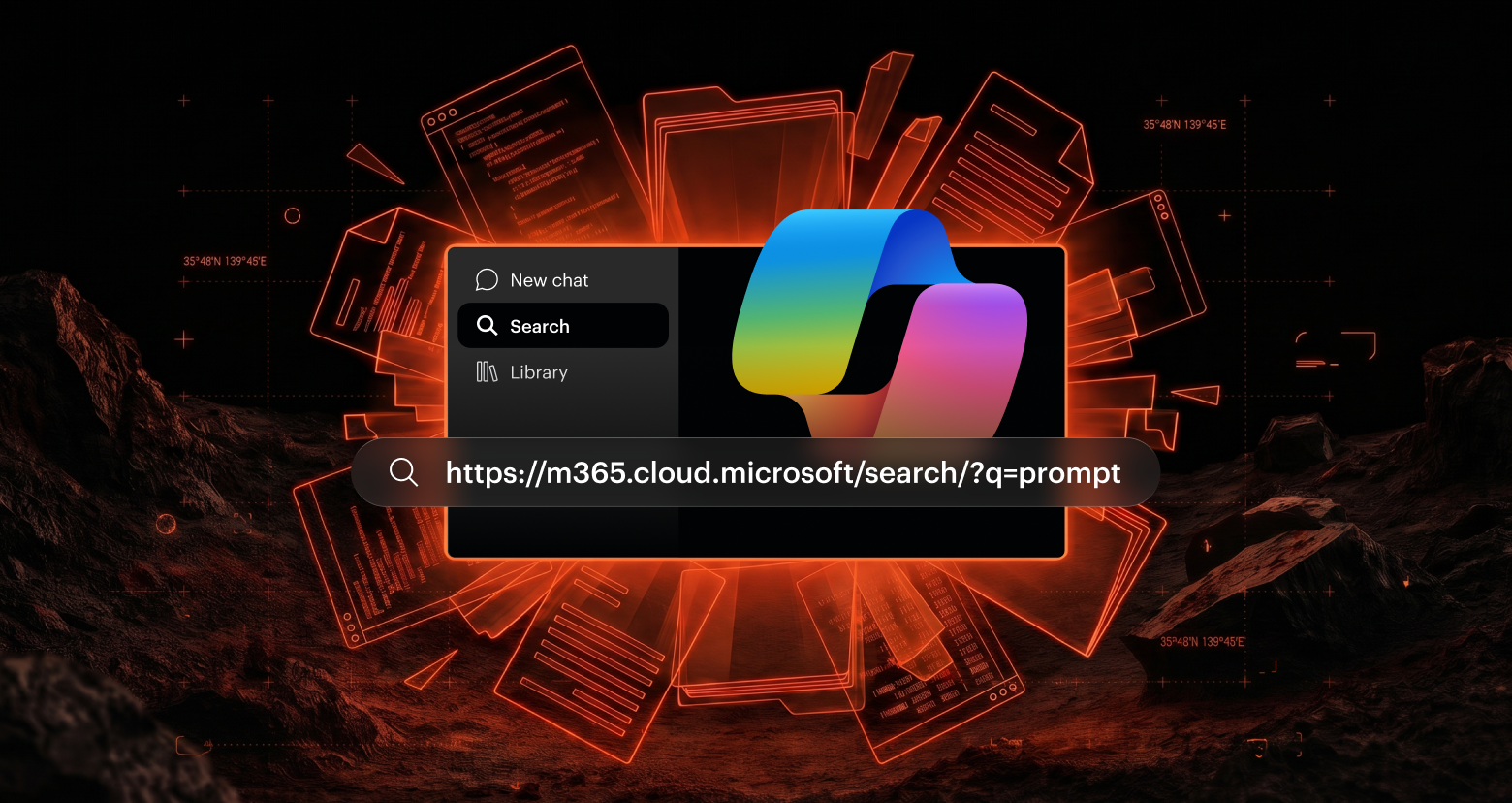 SearchLeak: How We Turned M365 Copilot Into a One-Click Data Exfiltration Weapon
Varonis Threat Labs details SearchLeak, a three-stage exploit chain (CVE-2026-42824, critical) that abuses Microsoft 365 Copilot Enterprise Search: a Parameter-to-Prompt (P2P) injection via the search URL's `q` parameter turns a clicked link into an AI instruction, an HTML-rendering race condition lets an injected `<img>` tag fire before Copilot's `<code>`-block sanitizer applies, and Bing's "Search by Image" endpoint (allowlisted in the CSP) performs a server-side fetch that exfiltrates the stolen data to an attacker's server. A single click on a trusted microsoft.com link lets an attacker silently exfiltrate emails, security codes, calendar data, and SharePoint/OneDrive content with the victim's full Graph permissions, no plugins or extra permissions required. Microsoft has patched the issue; the post is a follow-up to Varonis' earlier "Reprompt" finding in Copilot Personal.
 varonis.comwriteupAdded 16 Jun 2026, published 15 Jun 2026🛡️ Security
- Deceptive Installers: How Fake Apps Target macOS
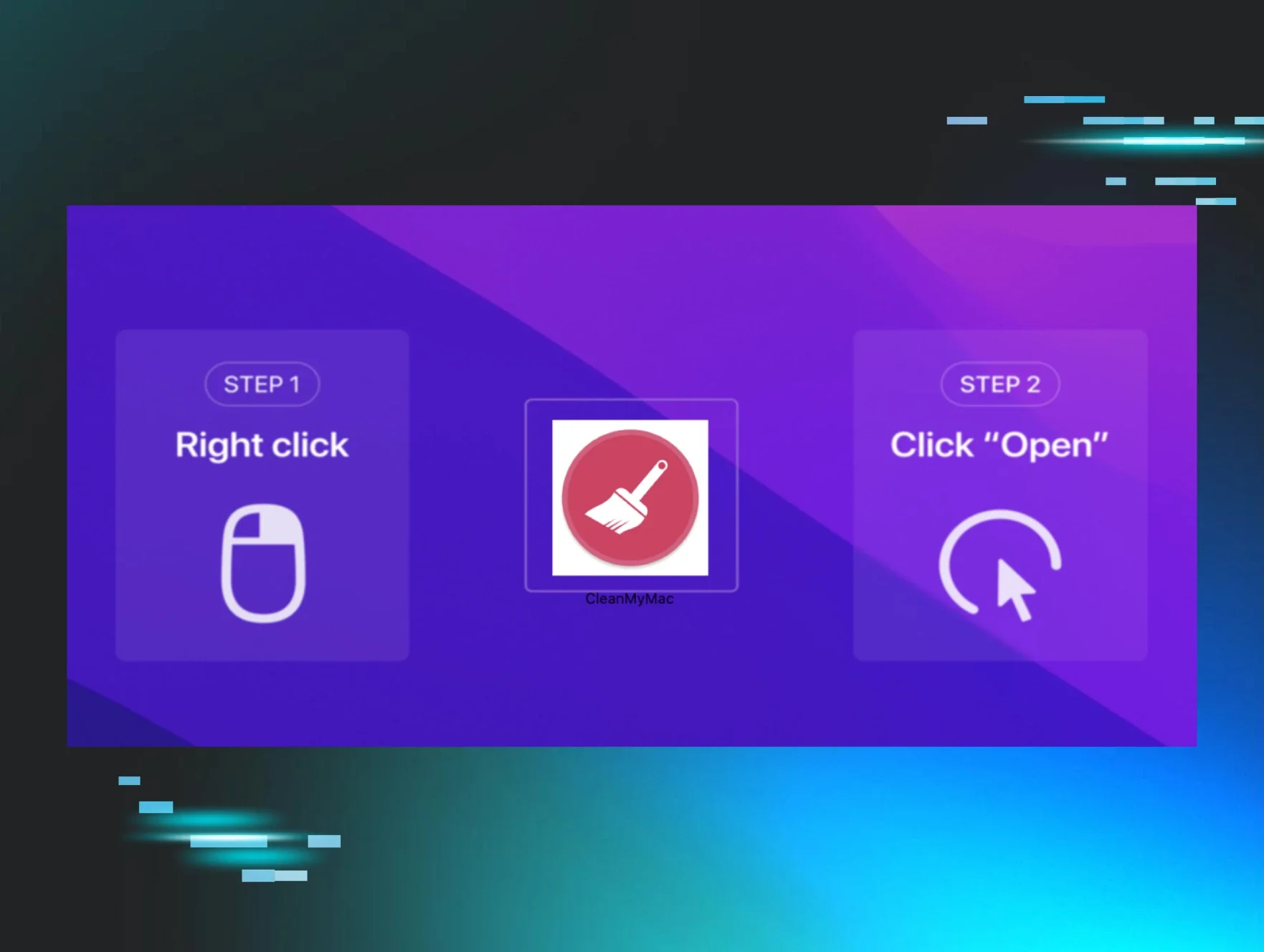
Huntress breaks down the dominant macOS infostealer delivery method: weaponized .dmg disk images that mimic legitimate installers and use branded background images, filename tricks ("Drag to Terminal"), or fake "cracked software" framing to trick users into manually overriding Gatekeeper. It covers named stealer families (AMOS, Poseidon, Odyssey, MacSync) that skip persistence entirely and instead do smash-and-grab credential/cookie/crypto-wallet theft before exfiltrating to C2. The post also details Huntress's detection approach — monitoring Endpoint Security API "mount" events for virtual disk images, checking for hidden .background directories, running Apple Vision OCR against embedded instruction images, and fuzzy-matching suspicious filenames — to catch the attack before the payload ever executes.
huntress.comwriteupAdded 3 Sep 2026, published 10 Jun 2026🛡️ Security - Orca Security: Gitea Container Registry Exposes Private Images to Unauthenticated Attackers
Orca Security describes a vulnerability in Gitea's built-in container registry that allowed unauthenticated attackers to access private container images. The issue highlights access-control gaps in self-hosted Git/CI platforms that bundle registry functionality, potentially exposing proprietary code and secrets baked into private images.
 orca.securitywriteupPublished and added 27 May 2026🛡️ Security
 Socket: Popular Go Decimal Library Targeted by Long-Running Typosquat with DNS Backdoor
Socket's Threat Research Team uncovered github.com/shopsprint/decimal, a six-year-old typosquat of the widely used github.com/shopspring/decimal Go library, which was weaponized in version v1.3.3 (2023-08-19) with an init() function that beacons via DNS TXT lookups to dnslog-cdn-images.freemyip.com every five minutes and executes whatever program name the C2 returns via os/exec.Command. Despite the GitHub repo and owner account being deleted, proxy.golang.org's permanent caching kept the malicious release fetchable for roughly 33 months until Socket's disclosure prompted the Go security team to withdraw it with a 403 SECURITY ERROR. The piece includes a full source diff of the payload, the "trust-then-poison" release pattern (a benign bugfix release seven minutes before the malicious one), IOCs, and detection/remediation guidance for developers and security teams.
socket.devwriteupPublished and added 20 May 2026🛡️ Security- Local administrator account remote logon in Windows
A pentest writeup explaining why remote logons with a shared local administrator account (e.g. from a gold image) fail against tools like psexec/smbexec/WinRM due to UAC's LocalAccountTokenFilterPolicy registry key, and how attackers can still succeed either by flipping that key, abusing the RID 500 Administrator account (governed by the separate FilterAdministratorToken key, which is unfiltered by default), or by using protocols not subject to UAC token filtering such as SSH and RDP. The author demonstrates the failure and bypass end-to-end using nxc (NetExec) and Impacket against a Windows 11 target from Kali Linux, and notes LAPS as an effective mitigation for RID 500 abuse.
 bencteux.frwriteupAdded 3 Sep 2026, published 31 Jan 2026🛡️ Security
- ClickFix Gets Creative: Malware Buried in Images
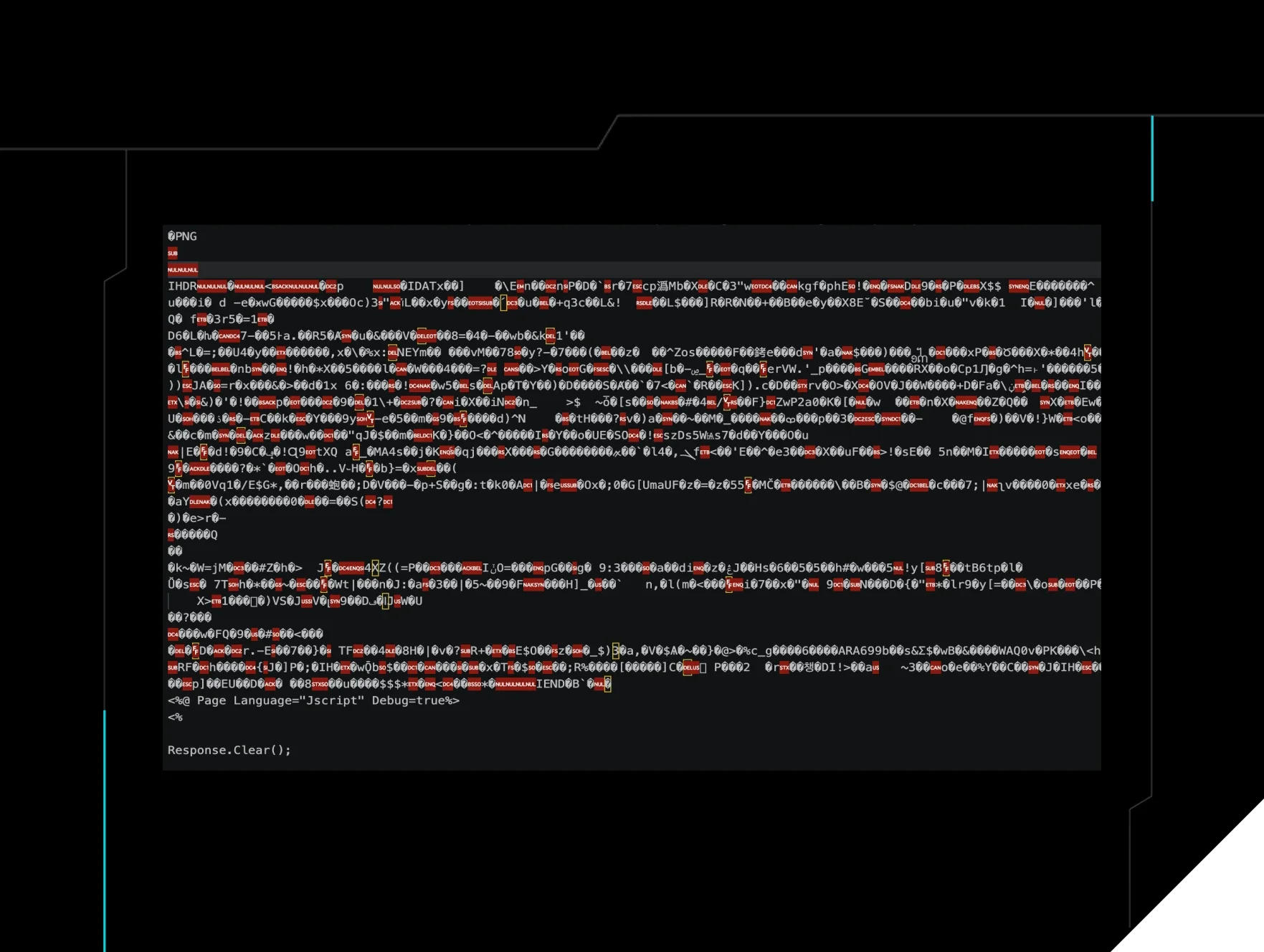
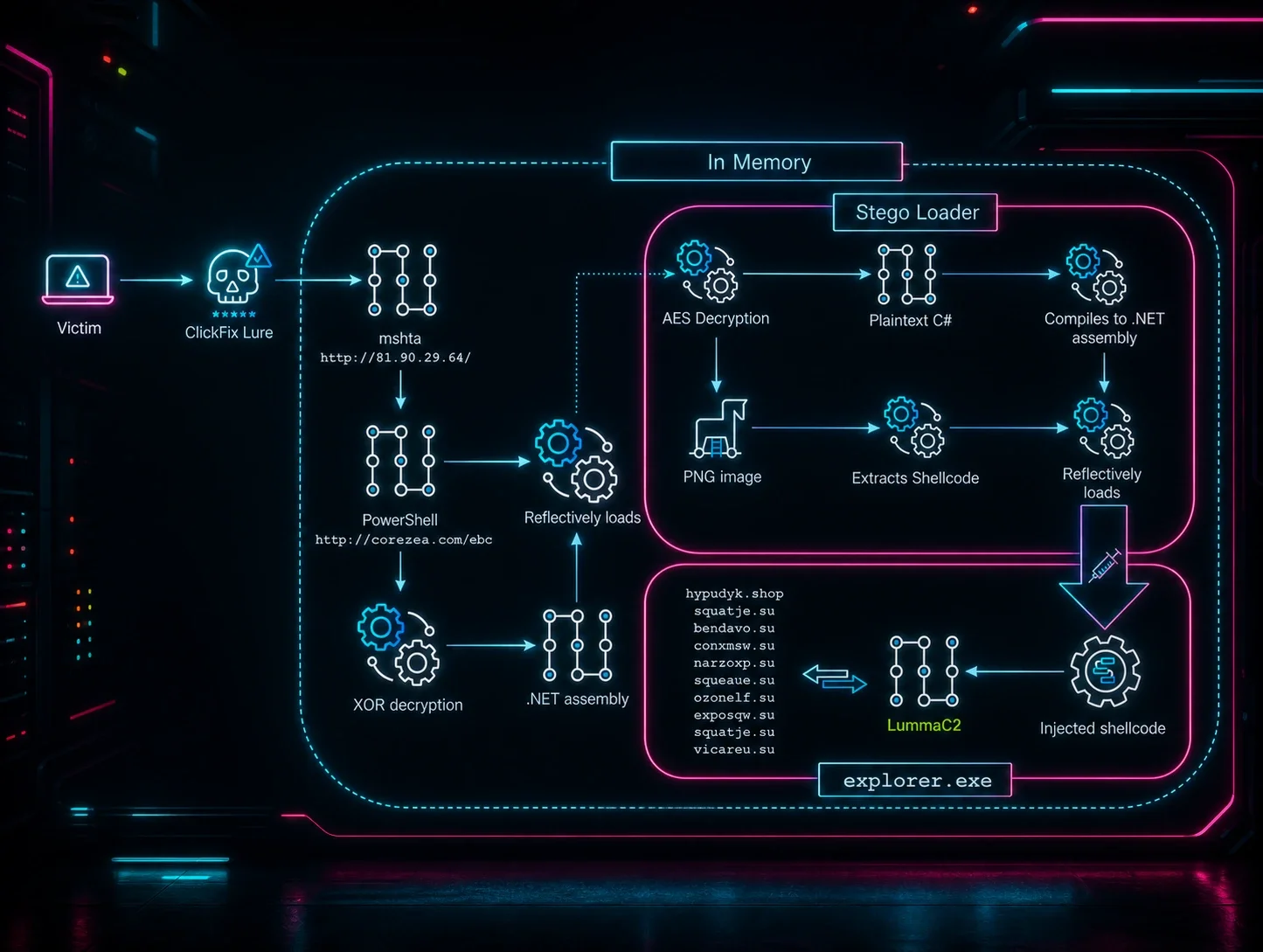
Huntress documents a multi-stage ClickFix campaign (fake "Human Verification" and fake Windows Update lures) that copies an mshta command to the clipboard, which chains through obfuscated PowerShell and reflectively-loaded .NET assemblies to a custom steganographic loader. The loader extracts Donut-packed shellcode encoded in the pixel data of an AES-encrypted PNG (via a red-channel XOR scheme) and injects it into explorer.exe, ultimately deploying LummaC2 or Rhadamanthys infostealers; the writeup includes deobfuscation walkthroughs (dnSpy), a Python re-implementation of the stego algorithm, IOCs, and mitigation guidance (disabling the Run box, RunMRU auditing).
huntress.comwriteupAdded 3 Sep 2026, published 24 Nov 2025🛡️ Security - Canarytokens: Catching Insider Threats (and Threat Actors?)
A DFIR consultant describes using Canarytokens.com to investigate two real incidents: an Excel-based canarytoken embedded via an external OOXML image reference to determine whether a company's customer data was being leaked by an insider or a compromised web server, and a "whoami" registry canarytoken that fired during an incident response engagement because Cobalt Strike's Elevate Kit ran the uac-schtasks technique (Invoke-EnvBypass from the Empire project), which internally calls whoami. The post walks through the OOXML/XLSX external-relationship mechanics that trigger the Excel canarytoken and notes canarytokens' value and limits as a supplement to, not a replacement for, EDR.
dfir.chwriteupAdded 3 Sep 2026, published 6 May 2024🛡️ Security