- TCP Use-After-Free: CVE-2026-98432 / CVSS 9.8
CVE-2026-98432 is a use-after-free in the Linux IPv4 TCP handshake, rated CVSS 3.1 9.8 and reachable by a remote unauthenticated peer on kernels back to 4.4. The post lists fixed stable releases (October 2026) and distribution patch status as of 31 October 2026, plus kernel and MPTCP listener checks. It gives interim nftables and iptables rules that drop IPv4 packets carrying options, and notes Anthropic's claim that Claude wrote a working exploit.
 atlasum.netadvisoryAdded 1 Nov 2026, published 31 Oct 2026🛡️ Security
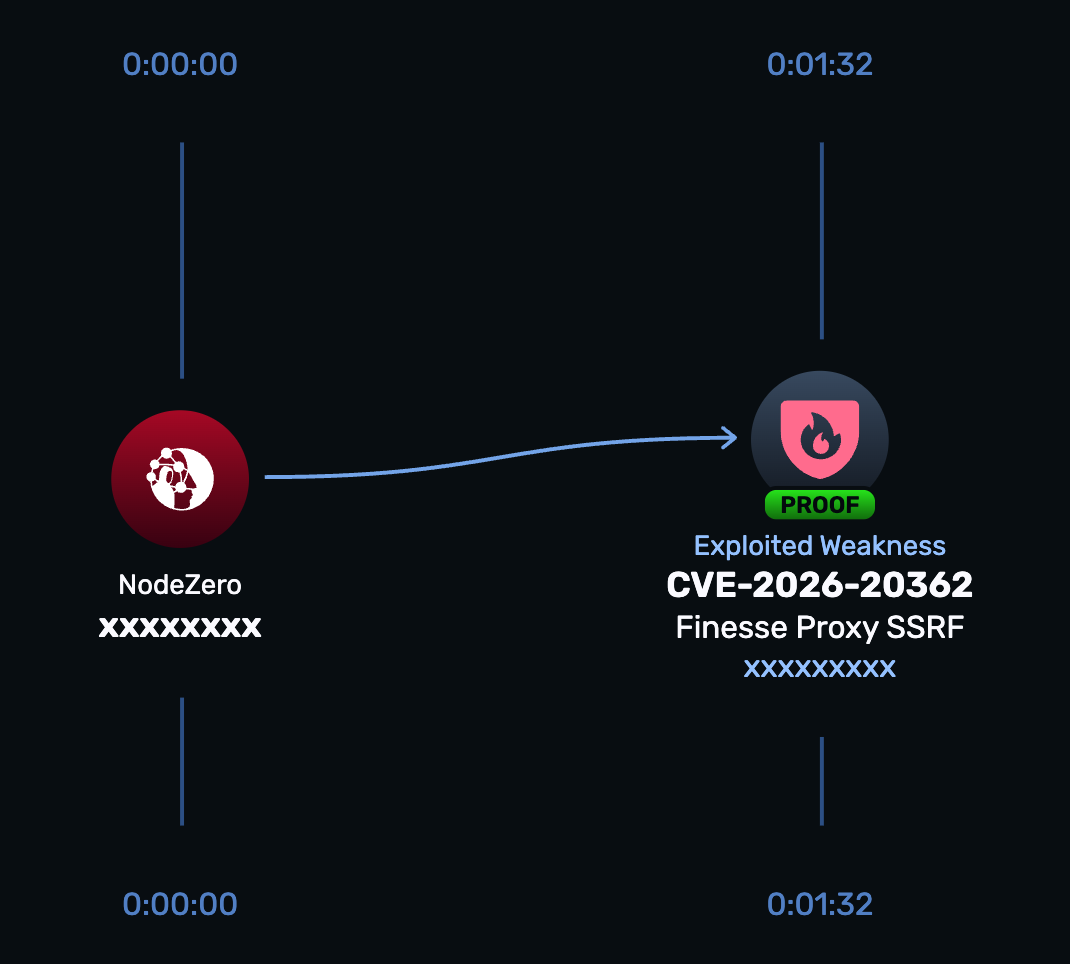 CVE-2026-20362 | Cisco Finesse Server-Side Request Forgery Vulnerability
CVE-2026-20362 is an unauthenticated server-side request forgery in Cisco Finesse (CVSS 3.1 score 7.2), found by Horizon3 researchers Noah King and Brandon Peterson. The embedded Apache Shindig content proxy fetches attacker-supplied URLs, including loopback services such as the Finesse REST API at 127.0.0.1:8082, which returns SystemInfo with node hostnames and the XMPP domain. Cisco published its advisory on 7 October 2026. Fixes are planned for January and February 2027, and no workaround exists.
 horizon3.aiadvisoryAdded 29 Oct 2026, published 28 Oct 2026🛡️ Security
- EPICS Base
CISA ICS advisory ICSA-26-300-01 (October 27, 2026) covers EPICS Base release 7.0.10 and earlier, with CVE-2026-114595 through CVE-2026-114598. Flaws include integer overflow, length parameter inconsistency and type confusion, allowing denial of service, memory corruption, information disclosure or remote code execution (CVSS v3.1 9.8). The fix is EPICS Base 7.0.11, with patches in epics-base and pvDataCPP pull requests.
 cisa.govadvisoryAdded 29 Oct 2026, published 26 Oct 2026🛡️ Security
 CVE-2026-109618 / CVE-2026-109619 | NodeZero Rapid Response Check Now Available
PHP2Shell is the name for CVE-2026-109618 and CVE-2026-109619, critical unauthenticated RCE flaws in PHP core fixed on 21 October 2026 in PHP 8.2.35, 8.3.36, 8.4.27 and 8.5.12. The page explains the out-of-memory corruption and stale global state causes, mod_php and PHP-FPM exposure, interim mitigations, hunting guidance, exploitation reports from October 2026, and the 23 October CVE-2026-115560 upload-progress advisory. Horizon3 also announced a non-exploiting NodeZero check.
horizon3.aiadvisoryAdded 29 Oct 2026, published 23 Oct 2026🛡️ Security Preliminary Report Oct 21st Security Incident
Railway's preliminary report on a security incident between 20 and 22 October 2026, in which an attacker reached internal systems and decrypted stored environment variables. At most 1.85% of workspaces (about 100,000) were confirmed affected. The attacker was after AI provider API keys for distillation. Railway notified vendors such as GitHub and Anthropic, rolled all keys, moved to single-tenant builders and advised customers to rotate secrets. Exploit details are withheld.
 blog.railway.comadvisoryAdded 24 Oct 2026, published 23 Oct 2026🛡️ Security
 Brotli vulnerability affects curl and Git
GHSA-9v8h-qqgm-4m35 is a critical buffer overflow (CVSS v4 9.2) in the Google Brotli decoder (c/dec/decode.c), affecting versions 1.0.3 through 1.2.0 on all platforms. A crafted compressed stream lets an unauthenticated remote attacker corrupt adjacent decoder state, leak memory, crash the process, or possibly execute code. Fixed in 1.0.10, 1.1.1 and 1.2.1. The page does not mention curl or Git, despite the title.
 github.comadvisoryAdded 25 Oct 2026, published 23 Oct 2026🛡️ Security
- lee1981 (@lee1981b) on X
CVE-2026-111497 is an out-of-bounds write in the Brotli decoder bundled with Node.js (CWE-787, CWE-252), rated CVSS v4.0 9.2 by the Google CNA and High by the Node.js project. Fixes are Node 22.23.4, 24.22.1 and 26.12.1, and 24.22.1 still labels Brotli 1.2.0 because the fix was cherry-picked. The post gives a SOC trail from input to worker, with remediation and verification steps. It notes no KEV match, CISA SSVC exploitation none, and only unverified public lab claims.
 x.comadvisoryAdded 26 Oct 2026, published 23 Oct 2026🛡️ Security
- ENISA Technical Advisory for Software Bill of Materials
ENISA Technical Advisory for Software Bill of Materials (October 2026, TLP:CLEAR) is non-mandatory guidance for organisations, especially SMEs, starting SBOM adoption. It covers SBOM data models (CycloneDX, SPDX), a mapping of BSI TR-03183-2 fields to CISA minimum elements, lifecycle and CI/CD integration, an SBOM threat model, and security recommendations. It supports Cyber Resilience Act obligations but is not a legal interpretation.
 enisa.europa.euadvisoryAdded 23 Oct 2026🛡️ Security
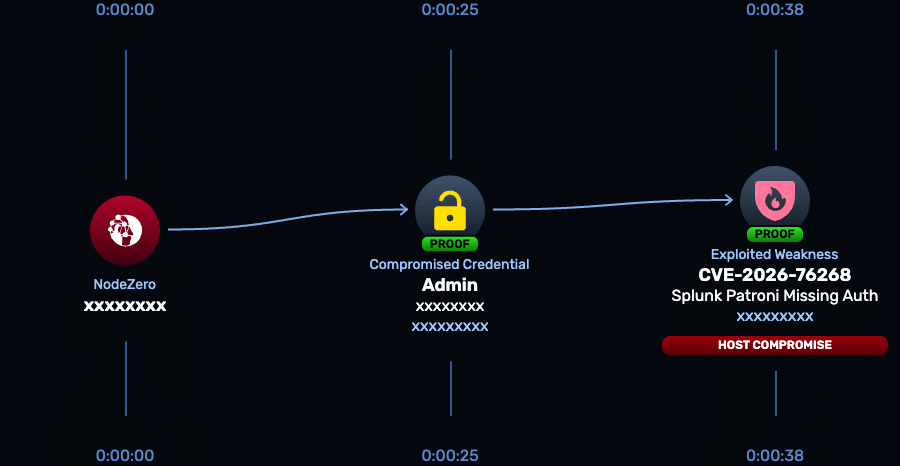 CVE-2026-76268 | Splunk Enterprise Patroni REST API Missing Authentication Vulnerability
CVE-2026-76268 is a critical (CVSS 9.8) missing authentication flaw (CWE-306) in the Patroni REST API on Splunk Enterprise search head cluster members. An unauthenticated attacker with network access can run operating-system commands. Affected: 10.4.0 to 10.4.2 and 10.2.0 to 10.2.6. Fixed in 10.4.3 and 10.2.7. Splunk (SVD-2026-1001, 7 October 2026) suggests disabling the PostgreSQL sidecar as a workaround.
horizon3.aiadvisoryAdded 29 Oct 2026, published 22 Oct 2026🛡️ Security PHP Patches Two Critical Unauthenticated RCEs (CVE-2026-109618, CVE-2026-109619): Update Now
Snyk's write-up of two critical unauthenticated PHP runtime RCEs, CVE-2026-109618 (out-of-memory corruption) and CVE-2026-109619 (stale global state, cross-request use-after-free), both CVSS v4.0 9.2. Fixed in PHP 8.5.12, 8.4.27, 8.3.36 and 8.2.35 on 21 October 2026. It covers the disclosure timeline, affected SAPIs (mod_php most exposed), backports for 8.1 and older, and partial mitigations.
 snyk.ioadvisoryPublished and added 22 Oct 2026🛡️ Security
 Yul Optimizer Knowledge Base Stale Bookkeeping Bug
Solidity advisory on a Yul optimizer bug in the KnowledgeBase, present in versions 0.8.19 to 0.8.37 and fixed in 0.8.38. Stale cached address offsets let LoadResolver and EqualStoreEliminator treat coinciding memory or storage slots as distinct, so loads return outdated values or needed stores are dropped. It includes a pure-Solidity reproducer for --via-ir, a Sourcify scan with no differing bytecode, and checks for deployed contracts. Rated low severity.
 soliditylang.orgadvisoryPublished and added 22 Oct 2026🛡️ Security
 Railway Security Disclosure
Railway's security disclosure of 21 October 2026 says an unauthorized third party may have accessed encrypted customer environment variables and decrypted some of them. Railway links it to a series of attacks on platform companies aimed at compromising AI inference providers, and has asked upstream providers to revoke keys. It tells all users to roll every environment variable, API key and registry credential, and it paused all deployments. The notice gives no technical details of the intrusion.
blog.railway.comadvisoryAdded 22 Oct 2026, published 21 Oct 2026🛡️ Security JFrog Security (@JFrogSecurity) on X
JFrog Security Research warns that the LiteLLM 1.107.0 release on PyPI contains malicious code, as part of a supply-chain attack. It advises avoiding that version and investigating any environment where it was installed or executed. The post gives no technical detail, payload description or IOCs, and says a blog post will follow.
x.comadvisoryAdded 23 Oct 2026, published 21 Oct 2026🛡️ Security- Rapid Response: php2shell, Leaked Critical PHP Vulnerabilities (CVE-2026-109618 & CVE-2026-109619)
Huntress rapid-response post on php2shell, two leaked critical PHP core vulnerabilities (CVE-2026-109618 and CVE-2026-109619, CVSS v4.0 9.2 each) reported as remote code execution. The PHP team moved its security release to 21 October 2026, 14:00 UTC, after the leak. It lists hunting cues such as php-fpm, php-cgi or apache2 spawning shells, interpreters or download tools, plus inventory and patch steps. No root cause, affected versions, PoC or IOCs were public at writing.
 huntress.comadvisoryPublished and added 21 Oct 2026🛡️ Security
- #StopRansomware: SafePay Ransomware (AA26-293A)
CISA advisory AA26-293A (20 October 2026) details SafePay ransomware, active since August 2024 with at least 600 victims across critical infrastructure. It covers initial access via Mullvad VPN IPs, phished profiles and edge-device CVEs, LOTL lateral movement with PsExec, WinRM and RDP, exfiltration with RClone and WinSCP, and ChaCha20/RSA encryption. It lists IOCs, MITRE ATT&CK mappings, incident response steps and mitigations.
cisa.govadvisoryAdded 21 Oct 2026🛡️ Security  Threat Brief: Active Exploitation of PAN-OS CVE-2026-0257 (Updated Oct 20)
Unit 42 threat brief on active exploitation of CVE-2026-0257, a PAN-OS GlobalProtect authentication bypass added to CISA KEV on May 13, 2026. It lists IP addresses, host IDs and PoC-derived client values to hunt in GlobalProtect logs. The October 2026 updates cover Qilin and Inc ransomware operators, MFA bypass, pivots to vCenter and ESXi with offline VMDK credential dumping, and management interface exposure on ports 4443 and 3879.
 unit42.paloaltonetworks.comadvisoryAdded 21 Oct 2026, published 20 Oct 2026🛡️ Security
- lee1981 (@lee1981b) on X
CVE-2026-77932 affects DB-GPT through 0.8.2 (dbgpt-app). The /api/v1/chat/react-agent route accepts unauthenticated requests because get_user_from_headers returns an admin-role user, and the ReAct agent can reach unsandboxed Python and shell tools. Lasso reported root in the webserver container in a lab. The post gives CVSS 9.8 and 9.3, no verified fix (0.8.2 is still the latest release), no KEV match, no EPSS data, and a SOC hunting trail.
x.comadvisoryAdded 23 Oct 2026, published 20 Oct 2026🛡️ Security - Dark Web Intelligence (@DailyDarkWeb) on X
Infinity Core is a set of six Linux kernel bugs published by researcher Hyunwoo Kim after the linux-distros embargo expired on 16 October 2026, with public exploit code. The bugs sit in timer, signal, memory, futex, scheduler and SLUB code. Five have local privilege escalation exploits, one is crash-only. CIQ says four affect Rocky Linux-based kernels. No sysctl or module workaround exists, so the fix is a patched kernel and a reboot.
x.comadvisoryAdded 19 Oct 2026, published 17 Oct 2026🛡️ Security - Microsoft Threat Intelligence (@MsftSecIntel) on X
ConnectWise Cloud Backup (formerly SkyKick Backup, AppId 506e08f9-6e9a-4da4-942b-a099a03644ae) had its multitenant OAuth app compromised, per Microsoft Threat Intelligence. On 15 October 2026 the actor authenticated broadly as the service principal from 144.172.64[.]128, likely using customer-granted permissions such as Directory.ReadWrite.All, then ran Graph API reconnaissance and tried to add credentials to the service principal as a backdoor. The post lists IOCs, Defender alerts and hunting advice.
x.comadvisoryAdded 20 Oct 2026, published 17 Oct 2026🛡️ Security - S2W_DailyThreat (@S2W_DailyThreat) on X
S2W post on CVE-2026-97229, a CVSS 10.0 remote code execution flaw in the GitLab CE/EE CI/CD regex compiler, disclosed October 13, 2026. Insufficient regex validation plus an integer overflow during encoding conversion lets an attacker who can add CI/CD config use a malicious regex and a UTF-8 repository path to run commands as the git user. Affects self-managed 19.2 before 19.2.8, 19.3 before 19.3.5 and 19.4 before 19.4.2. Rapid7 published analysis and a public PoC exists, with no in-the-wild exploitation confirmed as of October 15. No workaround exists, so patch or restrict access to a management network or VPN.
x.comadvisoryAdded 17 Oct 2026, published 16 Oct 2026🛡️ Security - Dark Web Intelligence (@DailyDarkWeb) on X
Summary of Vercel's Oct 14, 2026 out-of-band Next.js security release fixing two critical unauthenticated RCEs: one in App Router apps with Cache Components where a "use cache" function returns multiple typed arrays (GHSA-673q-mjm6-r5xr, upstream React GHSA-xqc2-xf4c-x3h3, no workaround), and one in the Image Optimization API handling SVG on glibc Linux via a memory bug in a library used through sharp (CVE-2026-96889 / GHSA-2464-fhr4-w9xw, workaround sharp 0.35.5+). Also covers a high-severity Server Actions DoS (GHSA-p3m5-59mp-jv5r). Fixes ship in two supported Next.js LTS lines. No in-the-wild exploitation reported.
x.comadvisoryAdded 17 Oct 2026, published 16 Oct 2026🛡️ Security  Critical GitLab RCE Lets Unauthenticated Attackers Execute Code on Servers (CVE-2026-97229)
Orca Security analysis of CVE-2026-97229, a CVSS 10.0 flaw in GitLab CE/EE. An integer overflow (CWE-190) in the CI/CD regular expression compiler gives memory corruption and code execution as the git user. It is triggered by a crafted regex in .gitlab-ci.yml combined with a UTF-8 repository path, with no authentication needed on instances that allow public project creation or self-registration. Lists affected branches (19.2 before 19.2.8, 19.3 before 19.3.5, 19.4 before 19.4.2), the absence of a workaround, interim mitigations, and a Rapid7 PoC against GitLab CE 19.4.1 with ASLR on. Notes a prior max-severity GitLab bug (CVE-2026-85706) was probed in the wild within hours and later added to CISA KEV.
 orca.securityadvisoryPublished and added 14 Oct 2026🛡️ Security
 Patch Tuesday - October 2026
Rapid7's analysis of Microsoft's October 2026 Patch Tuesday, which covers 1,413 vulnerabilities, 1,102 of them in Windows. It highlights the exploited Windows Shell Mark of the Web bypass (CVE-2026-96951) and the publicly disclosed .NET Framework WDAC bypass (CVE-2026-108398). It also covers five no-interaction Outlook preview-pane RCEs, the Edge advisories that list no CVEs, and end-of-support dates for Server 2012/2012 R2, Office 2021, Exchange 2016/2019 and Windows 11 24H2. The page text is truncated, so the later CVE tables are not seen.
 rapid7.comadvisoryPublished and added 13 Oct 2026🛡️ Security
 Ivanti Connect Secure zero-day exploited in the wild (CVE-2026-104935)
Rapid7 emergency-response analysis of CVE-2026-104935, a CVSS 8.6 authentication bypass by spoofing (CWE-290) in Ivanti Connect Secure that allows unauthenticated remote command execution. It was exploited as a zero-day against a limited number of customers, added to CISA KEV on disclosure day, and Volexity observed it chained with a still-unpatched privilege escalation flaw. Part of the fix shipped in 25.1.3.0 in July 2026, with backports to other supported versions pending. Rapid7 advises emergency patching outside normal cycles and hunting for compromise using Volexity's IOCs, since Ivanti has no reliable ones.
rapid7.comadvisoryPublished and added 13 Oct 2026🛡️ Security- CVE-2026-97229: Critical Unauthenticated Remote Code Execution in GitLab
Rapid7 analysis of CVE-2026-97229, a CVSS 10.0 integer overflow (CWE-190) in the Onigmo regex compiler used by GitLab CE/EE's CI/CD regex handling. A crafted regex in a .gitlab-ci.yml passes validation as US-ASCII, then is recompiled for a UTF-8 repository path, producing invalid instructions that give code execution as the git user. Rapid7 reproduced it on GitLab CE 19.4.1 with ASLR (patched in 19.4.2); despite the vendor's "unauthenticated" rating, the attacker needs to commit a malicious config to a public project, which self-registration allows. No in-the-wild exploitation is confirmed, and Rapid7 recommends urgent upgrades.
rapid7.comadvisoryPublished and added 13 Oct 2026🛡️ Security - lee1981 (@lee1981b) on X
CyberForge "CVE of the Day #076" covers CVE-2026-97229, a CVSS 10.0 integer overflow (CWE-190) in GitLab CE/EE's CI/CD regular expression compiler. It can lead to conditional unauthenticated code execution on the GitLab server. It lists the affected trains (19.2 before 19.2.8, 19.3 before 19.3.5, 19.4 before 19.4.2) and the 19.3.4 vs 19.3.5 Ona-regression discrepancy. It also gives six SOC checks: scoping, log preservation (Workhorse/Rails/Sidekiq, correlation_id), server-effect hunting, request-to-process correlation, upgrade and running-state verification. It notes that exploit details are unverified, no KEV listing exists and EPSS data is unavailable.
x.comadvisoryAdded 15 Oct 2026, published 13 Oct 2026🛡️ Security - lee1981 (@lee1981b) on X
CyberForge CVE of the Day #074 analyses CVE-2026-85097, a CVSS 9.8 unauthenticated file upload to PHP execution flaw (CWE-434) in the Bricksforge WordPress plugin through 3.1.8.9. Wordfence names 3.1.8.10 as the fix, and a separate vendor 4.0.1 Pro Forms upload-security notice has no verified mapping to the CVE. It gives a defender workflow: scope versions, preserve edge/origin logs, inspect resulting files and PHP-FPM handling, and verify the patched version is serving. It also separates KEV (no match), EPSS (0.312%) and SSVC (exploitation none) from compromise evidence.
x.comadvisoryAdded 11 Oct 2026, published 10 Oct 2026🛡️ Security - CISA AA26-281A: Chinese Government-linked Actors Combine Automated and Hands-on Hacking Tools to Steal Data
Joint FBI/CISA/NSA and allied-agency advisory on China-linked actors enabled by Integrity Technology Group (overlapping with Flax Typhoon, Ethereal Panda, Red Juliett). It details their TTPs: open-source scanners and the MicroScan exploit-script app, an XSS credential-harvesting payload dropping live700_v1.exe, EBurst password spraying against Exchange/O365, SoftEther VPN persistence, DCSync via DC.exe, and email theft via the Curlc4.txt PHP bot and the office-cli utility. It also provides IOCs, MITRE ATT&CK mappings, CVEs, incident response steps, and mitigations.
cisa.govadvisoryAdded 9 Oct 2026🛡️ Security - lee1981 (@lee1981b) on X
CyberForge's CVE of the Day #073 covers CVE-2026-102255, a critical (CVSS 10.0) pre-authentication SSRF / confused-deputy flaw (CWE-918, CWE-441) in the SonicWall SMA1000 Work Place interface, per advisory SNWLID-2026-0017. It lists affected platform hotfixes (12.4.3-03526 and older, 12.5.0-02952 and older), fixed floors (12.4.3-03670, 12.5.0-03082), no workaround, and the exploitation picture (no known exploitation, not in KEV, EPSS 0.477%, SSVC automatable). It gives a six-step SOC playbook covering appliance scoping, AMC log preservation, hunting appliance-originated internal requests, correlating receiving-service changes, patching, and verifying every node, and it separates exposure, a lead, confirmed compromise and telemetry gaps.
x.comadvisoryAdded 12 Oct 2026, published 9 Oct 2026🛡️ Security  Tensorlake npm package compromised by Shai-Hulud in latest software supply chain attack | Blog | Endor Labs
Endor Labs documents the compromise of tensorlake@0.5.144, the official npm TypeScript SDK for Tensorlake, which shipped a Shai-Hulud worm payload via a poisoned preinstall hook (node lib/setup.mjs) after the project's main branch was altered and pushed through a legitimate, provenance-signed GitHub Actions release pipeline. The malware harvests npm, GitHub, SSH, cloud (AWS/GCP/Azure), Kubernetes/Docker and Vault credentials, uses an EtherHiding Ethereum wallet as a durable dead-drop to fetch its rotating C2 domain, and republishes itself into other packages the victim controls. The writeup includes affected package versions, file hashes, C2 indicators, and concrete remediation guidance (pin to 0.5.143, rotate credentials, disable install scripts).
 endorlabs.comadvisoryPublished and added 8 Oct 2026🛡️ Security
 Microsoft, Adobe, Apple, and Foxit vulnerabilities
Cisco Talos discloses eight vulnerabilities patched by vendors: a Photoshop installer privilege escalation (CVE-2026-48388), a macOS CoreWLAN information disclosure bug, two Foxit Reader flaws including a JavaScript CBF_Widget remote code execution (CVE-2026-57256) and an Array use-after-free (CVE-2026-91799), and four Windows kernel-driver bugs — NETIO.sys information disclosure (CVE-2026-50475), two Cloud Files Mini Filter Driver issues (use-after-free CVE-2026-58613 and type confusion CVE-2026-80093), and a tcpip.sys out-of-bounds read (CVE-2026-49177). Each advisory gives the affected version and trigger mechanism, and Talos notes Snort coverage is available for detection.
 blog.talosintelligence.comadvisoryPublished and added 7 Oct 2026🛡️ Security
- Critical Cisco Catalyst SD-WAN Manager API authentication bypass exploited in the wild (CVE-2026-76504)
Rapid7 analysis of CVE-2026-76504, a critical (CVSSv3.1 9.8) unauthenticated API authentication bypass in Cisco Catalyst SD-WAN Manager caused by improper URL-encoding handling (CWE-177), allowing attackers to gain admin-level API access via crafted requests to the j_security_check endpoint. The flaw is being actively exploited in the wild, was added to CISA's KEV list on October 1, 2026 with a remediation deadline of October 3, and follows two earlier 2026 Catalyst SD-WAN peering authentication bypasses (CVE-2026-20127 and Rapid7-discovered CVE-2026-20182). The post gives fixed-release guidance, no-workaround caveats, and log-based IOCs (encoded-character requests like %6a_security_check, viptela-reserved- usernames) for detecting compromise.
rapid7.comadvisoryAdded 7 Oct 2026, published 30 Sep 2026🛡️ Security - Solidity 0.8.37 Release Announcement
Official release notes for Solidity v0.8.37 detailing three bug-bounty-reported compiler bugs: memory `delete` on a bytes-array element zeroing a full 32-byte word instead of one byte (corrupting adjacent memory, evmasm pipeline, up to v0.8.36); a stack-to-memory spill-slot collision under mutual recursion in the IR pipeline (`--via-ir`, v0.7.2–v0.8.36) that silently overwrites live variables; and named custom-error arguments in `require(...)` being ABI-encoded in call-site order rather than declaration order, so revert data misrepresents error values (v0.8.36 introduced but only affects revert data). Also covers two non-security miscompilations (uninitialized packed function pointers, checked/unchecked constant reuse), a new SSA-CFG stack shuffler, Amsterdam EVM's SLOTNUM opcode support, and removal/deprecation of LSP mode, Generic Solidity, and several EVM version pragmas.
soliditylang.orgadvisoryAdded 29 Sep 2026🛡️ Security - Claude Desktop (macOS): malicious file in a Cowork folder could run commands on the host
GHSA-v234-4jrq-mgg6 discloses that Claude Desktop for macOS (versions >=1.1.3918, less than 1.15962.0) omitted a macOS-executable file type from its Cowork folder block-list, letting a malicious file written into a Cowork sandbox's shared folder by a compromised or prompt-injected agent run commands on the host when opened via Claude Desktop. A separate, compounding issue is also disclosed: Cowork VM images before 1.11847.5 shipped a guest Linux kernel vulnerable to CVE-2026-43284, which combined with the block-list gap could let VM-privileged code trigger the file open without user interaction. Both issues are fixed in Claude Desktop 1.15962.0; reported internally by Anthropic and independently by Vladimir Tokarev of Cyera Research.
github.comadvisoryAdded 28 Sep 2026🛡️ Security - Zero-Day Exploitation of Citrix NetScaler ADC and Gateway: CVE-2026-88771 and CVE-2026-88772
Rapid7 details active zero-day exploitation of two critical Citrix NetScaler ADC/Gateway RCE vulnerabilities (CVE-2026-88771, CVE-2026-88772, both CVSSv4 9.5), both added to CISA KEV on disclosure day, plus a later SAML denial-of-service zero-day (CVE-2026-88779). The post includes Rapid7 MDR's observed exploitation of CVE-2026-88771 in the wild — a command-injection payload that exfiltrates /flash/nsconfig (containing ns.conf admin credentials, SSL private keys, SSH host keys) via the publicly-served /vpn/ path, and a webshell (SHA256 hash provided) found on a compromised appliance — along with vendor patch versions and detection guidance.
rapid7.comadvisoryAdded 7 Oct 2026, published 28 Sep 2026🛡️ Security - Kong Konnect MCP server: stored prompt injection via analytics data leads to credential/data exfiltration (CVE-2026-13341)
GitHub Security Advisory (CVE-2026-13341) for Kong's mcp-konnect MCP server describes a stored prompt injection vulnerability where a remote attacker crafts malicious request metadata (e.g. User-Agent) that gets stored in Konnect analytics and later returned unsanitized to an AI assistant via MCP tools, potentially causing the agent to exfiltrate sensitive data (plugin configs, secrets, internal hostnames) to an attacker-controlled URL if the client can make outbound fetches. A related path manipulation flaw in control plane/group identifiers allowed requesting unintended Konnect API endpoints with the user's token. The v1.0.0 patch neutralizes untrusted analytics fields, validates identifiers as UUIDs, encodes path segments, and disables raw plugin config output by default.
github.comadvisoryAdded 26 Sep 2026🛡️ Security  ServiceNow Patches Critical AI Platform Flaw Allowing Unauthenticated User Impersonation
ServiceNow patched CVE-2025-12420, nicknamed BodySnatcher, a CVSS 9.3 flaw in its Now Assist AI Agents (sn_aia) and Virtual Agent API (sn_va_as_service) that let an unauthenticated attacker impersonate any user via just an email address. Discovered by Aaron Costello of AppOmni, the bug chains a hardcoded platform-wide secret with account-linking logic to bypass MFA and SSO, letting an attacker remotely drive privileged agentic AI workflows, impersonate admins, and create backdoor accounts. Fixed in sn_aia 5.1.18+/5.2.19+ and sn_va_as_service 3.15.2+/4.0.4+, patched October 30, 2025 with no known in-the-wild exploitation.
 thehackernews.comadvisoryAdded 26 Sep 2026🛡️ Security
- CVE-2026-55544: NextCRM is open-source customer relationship management (CRM) software
CVE-2026-55544 describes an authorization bypass (IDOR/BOLA) in NextCRM CRM version 0.12.1, where MCP campaign tool handlers accept user-generated Bearer API tokens but query and mutate campaigns purely by object ID, ignoring the authenticated user's ownership scope. A low-privileged user with a valid MCP token can enumerate, read, modify, delete, or trigger/pause campaigns belonging to other users. Fixed in NextCRM 0.12.2.
 nvd.nist.govadvisoryAdded 26 Sep 2026🛡️ Security
- CVE-2026-52869: The MCP Python SDK, called mcp on PyPI, is a Python implementation of the Model Context Protocol (MCP)
CVE-2026-52869 describes a session-hijacking flaw in the MCP Python SDK (PyPI package mcp) prior to version 1.27.2: the SSE and stateful Streamable HTTP transports (mcp.server.sse.SseServerTransport and mcp.server.streamable_http_manager.StreamableHTTPSessionManager) route requests to existing sessions using only the session_id query parameter or Mcp-Session-Id header, without checking that the requesting principal matches the session's original authenticated bearer-token client. This lets a different authenticated client that learns or guesses a valid session ID inject JSON-RPC messages into another user's MCP session. CVSS 3.1 base score 7.1 (High); fixed in mcp 1.27.2.
nvd.nist.govadvisoryAdded 26 Sep 2026🛡️ Security - CVE-2026-42271: LiteLLM is a proxy server (AI Gateway) to call LLM APIs in OpenAI (or native) format
CVE-2026-42271 describes an unauthenticated-privilege RCE in LiteLLM (versions 1.74.2 to before 1.83.7): the MCP server preview endpoints POST /mcp-rest/test/connection and POST /mcp-rest/test/tools/list accept a full stdio MCP server config (command, args, env) and spawn it as a subprocess on the proxy host, gated only by a valid API key with no role check. Any authenticated user, including low-privilege internal-user keys, could run arbitrary commands on the LiteLLM proxy host. Patched in v1.83.7; also tracked as GHSA-v4p8-mg3p-g94g and affects Red Hat OpenShift AI.
nvd.nist.govadvisoryAdded 26 Sep 2026🛡️ Security - CVE-2026-19984: A flaw has been found in jkawamoto mcp-florence2 up to 0
CVE-2026-19984 describes a server-side request forgery flaw in jkawamoto mcp-florence2 (up to 0.3.13), an MCP server wrapping Microsoft Florence-2 image model. The vulnerable get_images function in src/mcp_florence2/__init__.py passes an attacker-controlled src argument into an HTTP fetch without validation, letting a remote caller force the server to request arbitrary internal or external URLs. The maintainer recommended fix is deploying an SSRF-safe egress proxy rather than patching the source, and a public exploit is available.
nvd.nist.govadvisoryAdded 26 Sep 2026🛡️ Security - CVE-2026-16584: Improper handling of an initialization failure in AWS API MCP Server from 0
CVE-2026-16584 affects AWS API MCP Server (awslabs.aws-api-mcp-server) versions 0.2.13 through 1.3.46: if the security policy enforcement data fails to initialize at server startup, the tool silently skips policy checks for the rest of the process's life, letting an agent execute AWS API operations the admin configured the policy to deny or gate. Underlying IAM permissions still apply and are unaffected, but the intended allow/deny gating layer is bypassed (CWE-455, improper handling of initialization failure). Fixed in 1.3.47.
nvd.nist.govadvisoryAdded 26 Sep 2026🛡️ Security - CVE-2026-16498: The terraform-mcp-server before version 1
CVE-2026-16498 is a critical (CVSS 3.1: 10.0) exposure-of-sensitive-information flaw (CWE-488) in HashiCorp's terraform-mcp-server prior to version 1.1.0. In stateless streamable-HTTP transport mode, one user's Terraform API token could be reused to execute tool calls on behalf of a different, subsequent user, breaking tenant isolation in shared MCP server deployments. Fixed in terraform-mcp-server 1.1.0; further detail is tracked in HashiCorp's HCSEC-2026-23 advisory.
nvd.nist.govadvisoryAdded 26 Sep 2026🛡️ Security - CVE-2026-14541: An authentication bypass and audience confusion vulnerability exists in the Google OAuth provider component of Google mc
CVE-2026-14541 describes an authentication bypass (CWE-287) in the Google OAuth provider of Google's mcp-toolbox for databases v1.4.0, an MCP server that lets LLM agents query databases. When the Google authService is configured with mcpEnabled: true but no explicit audience or clientId, the ValidateMCPAuth pipeline skips audience checks for opaque tokens, so any valid Google OAuth access token — even one issued for an unrelated app — is accepted, letting unauthorized clients reach protected tools and data backends.
nvd.nist.govadvisoryAdded 26 Sep 2026🛡️ Security - Unauthenticated Administrator takeover exfiltrated via the MCP
GHSA advisory for SiYuan v3.7.1 (CVE-2026-66012) describing how the kernel's POST /mcp route registers 31 MCP tools — including a file tool with full read/write/delete/rename/copy over the workspace — gated only by CheckAuth with no admin or read-only check. When the Publish server runs in anonymous mode (a documented configuration for public docs sites), the Publish reverse proxy attaches an anonymous RoleReader JWT to every proxied request, letting an unauthenticated attacker reach /mcp, exfiltrate accessAuthCode/api.token/cookieKey from conf.json, escalate to Administrator, and plant a malicious Electron plugin (nodeIntegration:true, contextIsolation:false) for RCE on the desktop client. Includes a full working PoC and remediation (CheckAdminRole gate, proxy path allowlist, restricting the file tool).
github.comadvisoryAdded 26 Sep 2026🛡️ Security - DNS TOCTOU race condition causes SSRF protection bypass (`/admin/gateways/test`)
GHSA-9hgc-g3w5-67cm details a DNS TOCTOU race in IBM mcp-context-forge's /admin/gateways/test endpoint: validate_gateway_test_url() resolves and vets a hostname against private/cloud-metadata IP ranges, but the actual request is made with httpx (via ResilientHttpClient), which independently re-resolves DNS at connection time with no IP pinning. An attacker with gateways.read permission can exploit DNS rebinding (short-TTL record flipping from a public IP to 169.254.169.254) to bypass SSRF protections and reach cloud instance metadata, exfiltrating IAM credentials where IMDSv1 is enabled. The advisory notes the codebase already acknowledges the gap in two comments and a tracked TODO (ICACF-15), and recommends pinning the validated IP into the connection.
github.comadvisoryAdded 26 Sep 2026🛡️ Security - Flowise MCP Security Bypass Enables RCE
GHSA advisory detailing three bypasses in Flowise's Custom MCP Server security controls (validateCommandFlags and validateArgsForLocalFileAccess in packages/components/nodes/tools/MCP/core.ts) that combine to achieve remote code execution: an unblocked `docker build` subcommand that pulls and runs a remote Dockerfile, a missing `--yes` long-flag alias on the npx blocklist (only `-y` was blocked) enabling arbitrary npm package execution, and a Unix absolute-path regex that fails to catch double-leading-slash paths (`//root/...`), allowing `node` to execute an uploaded local file. Any authenticated Flowise user (or an API key with chatflow view/update rights) can chain these to fully compromise the host via a prediction API call.
github.comadvisoryAdded 26 Sep 2026🛡️ Security - CVE-2026-21852 - GitHub Advisory Database
GitHub advisory GHSA-jh7p-qr78-84p7 for Claude Code: a malicious repository could ship a project settings file setting ANTHROPIC_BASE_URL to an attacker-controlled endpoint. Claude Code made API requests during project load before the trust prompt was shown, leaking data including the user's Anthropic API key. Fixed in auto-updated versions; manual updaters should upgrade. It is CVSS v4 scored, with network attack vector and passive user interaction, and mapped to a credential-transmission weakness (insecure transmission/storage of credentials).
github.comadvisoryAdded 26 Sep 2026🛡️ Security - CISA Adds Seven Known Exploited Vulnerabilities to Catalog | CISA
CISA added seven vulnerabilities to its Known Exploited Vulnerabilities Catalog on the basis of active exploitation. They are SQL injection in Sangoma Switchvox, HTTP request/response smuggling in Kludex Starlette, OS command injection in Kestra OSS, improper authentication in BerriAI LiteLLM and JFrog Artifactory, and SSRF plus OS command injection in SonicWall SMA1000 appliances. The alert restates BOD 26-04, which makes federal agencies prioritise rapid remediation of KEV CVEs on publicly exposed assets that grant total control after exploitation. It also requires agencies to check for prior compromise before patching.
cisa.govadvisoryAdded 26 Sep 2026🛡️ Security - Warning: Vulnerability in Starlette framework and related frameworks like FastAPI exposes millions of servers to authentication bypass, Patch Immediately! | CCB Belgium
Belgian CCB advisory on CVE-2026-48710 ("BadHost", CVSS 6.5), an authentication bypass in Starlette versions before 1.0.1. The Host header was not validated when request.url was rebuilt, so request.url.path could differ from the routed path. Middleware and endpoints that enforce access control on request.url could therefore be bypassed. The flaw affects FastAPI, LiteLLM, vLLM, MCP servers and other Python LLM infrastructure, and may expose stored third-party credentials. The advisory recommends upgrading to 1.0.1 or later and increasing monitoring, and links to the badhost.org scanner and to the GitHub, OSTIF, X41 D-Sec and Ars Technica write-ups.
 ccb.belgium.beadvisoryAdded 26 Sep 2026🛡️ Security
- CVE-2026-87911 - Read-only enforcement bypass enabling operating system command execution in the SQL validation component of Amazon awslabs postgres-mcp-server
AWS bulletin for CVE-2026-87911, an OS command injection flaw in awslabs.postgres-mcp-server (Python, PyPI) versions before 1.1.7. The server's read-only enforcement in its SQL validation component can be bypassed with a crafted `COPY ... TO PROGRAM` statement, letting an unauthenticated actor run OS commands on a self-managed PostgreSQL host when the configured connection role holds superuser or pg_execute_server_program privileges. Fixed in 1.1.7; AWS also recommends connecting the MCP server with a least-privilege, non-superuser role as defense in depth.
 aws.amazon.comadvisoryAdded 26 Sep 2026🛡️ Security
- CVE-2026-94127: Critical Unauthenticated RCE in F5 BIG-IP APM
Rapid7's ETR writeup covers CVE-2026-94127, a critical heap-based buffer overflow (CVSS 9.8) in F5 BIG-IP Access Policy Manager that allows unauthenticated remote code execution via crafted traffic. Exploitation requires a virtual server with both an APM access policy and an OAuth profile configured, affects the data plane (including Appliance mode), and has been added to CISA KEV; F5 provides hotfixes for the 21.1.0, 17.5.0, and 17.1.0 release trains plus an iRule workaround for those unable to patch immediately.
rapid7.comadvisoryAdded 7 Oct 2026, published 23 Sep 2026🛡️ Security  Cisco Warns of New Zero-Day ISE Auth Bypass (CVSS 10.0) Exploited in Active Attacks
Cisco disclosed CVE-2026-76460 (CVSS 10.0), an unauthenticated API authentication bypass in Identity Services Engine (ISE) and ISE-PIC that is under active exploitation and has been added to CISA's KEV catalog with a federal patch deadline of September 19, 2026; successful exploitation can yield root command execution, and Cisco provides log-based IOC detection guidance since there is no workaround. The same disclosure batch includes 77 new CVEs, 41 in ISE and 28 in Secure Firewall (ASA/FTD/FMC), covering authenticated RCE, SQL injection, XXE, command injection, and additional REST API auth bypasses, plus a separately exploited Secure Email Gateway flaw (CVE-2026-76461, CVSS 9.8).
thehackernews.comadvisoryAdded 22 Sep 2026🛡️ Security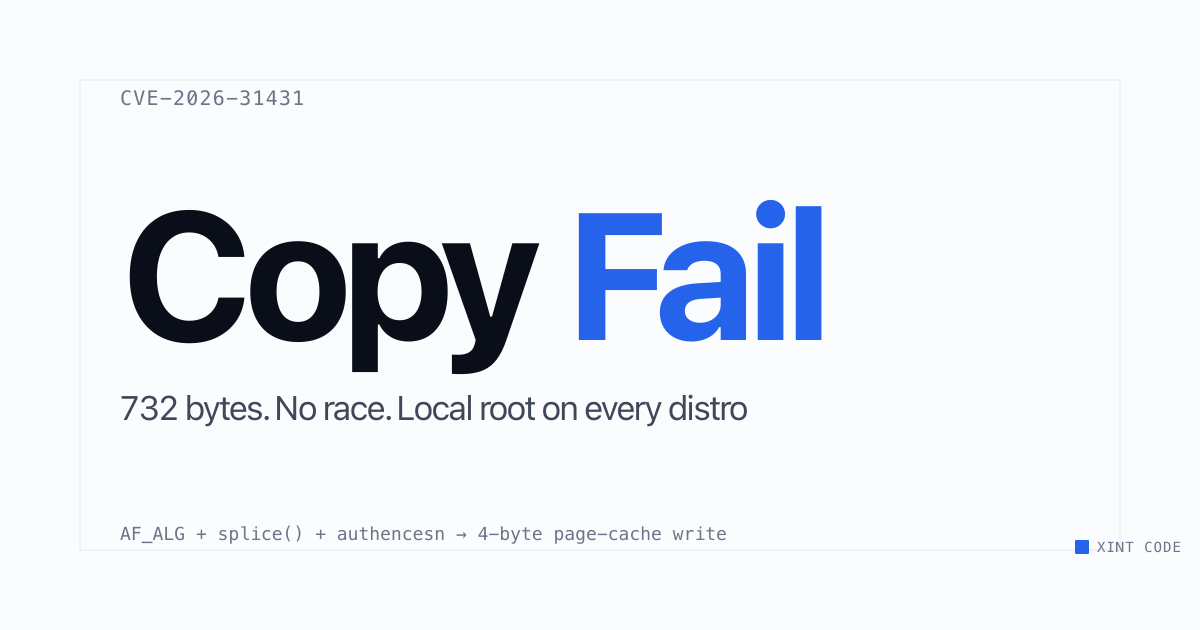 Copy Fail (CVE-2026-31431): 9-year-old Linux kernel LPE found by AI-assisted fuzzing
Copy Fail (CVE-2026-31431) is a 9-year-old Linux kernel logic bug in algif_aead, reachable via the AF_ALG crypto API and chained through splice() into a 4-byte page-cache write to achieve local root, affecting kernels built between 2017 and the fix. The site publishes a 732-byte stdlib-only Python PoC that roots multiple distributions unmodified, identifies the fixing mainline commit a664bf3d603d, and gives interim mitigation (disable algif_aead / seccomp-block AF_ALG for untrusted workloads). The bug was found by Xint Code's AI-assisted fuzzing against the Linux crypto/ subsystem in roughly an hour of scan time.
 copy.failadvisoryAdded 17 Sep 2026🛡️ Security
 Security Advisory — Storage Aliasing in Priority Update Registry V1
Flashbots disclosed a critical storage-aliasing vulnerability in V1 of the Priority Update Registry (PUR), an on-chain price feed contract used by trading integrators like propAMMs. Because lane storage slots were computed as keccak256(target, unbounded caller-controlled index) while the updater-authorization mapping lived at slot 0 with the same keccak256 shape, any caller could craft a lane index that collided with isUpdater[target][attacker], letting them self-authorize as an updater and publish arbitrary prices or deauthorize legitimate updaters. The fix namespaces the lane slot derivation (keccak256(NAMESPACE, target, laneIndex)) to make the preimages structurally non-collidable, and the advisory gives integrators concrete migration guidance since authorizations and lane state must be re-established on the new deployment.
 collective.flashbots.netadvisoryAdded 2 Oct 2026, published 16 Sep 2026🛡️ Security
- CVE-2026-76461: Critical Cisco Secure Email Gateway Vulnerability Exploited in the Wild
Rapid7's emerging threat response write-up on CVE-2026-76461, a critical (CVSS 9.8) SQL injection vulnerability in Cisco AsyncOS Software for Cisco Secure Email Gateway that allows an unauthenticated remote attacker to achieve root command execution by sending a specially crafted email. Cisco confirmed active zero-day exploitation and the vulnerability was added to CISA's KEV catalog the same day it was disclosed; the post provides mitigation guidance (emergency patching to 16.5.0-780) and a log-grep IOC (searching mail_logs for COPY.*TO PROGRAM) to detect exploitation attempts.
rapid7.comadvisoryAdded 7 Oct 2026, published 15 Sep 2026🛡️ Security 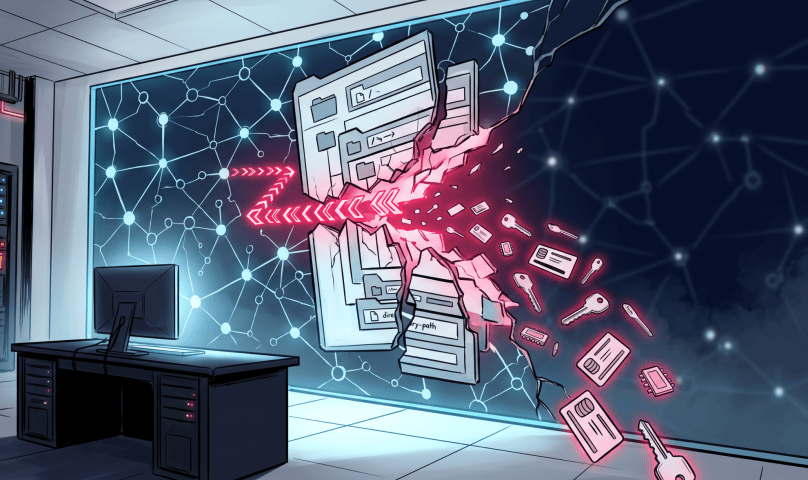 Breaking: GitLab Critical Path Traversal Flaw Exploited in the Wild — Patch Immediately
Details CVE-2026-85706 (CVSS 10.0), an unauthenticated arbitrary file read in GitLab CE/EE's repository commits API exploitable via a crafted file.path parameter in a single POST request, requiring only that one public project exist on the instance. It also covers CVE-2026-87719 (CVSS 9.9), an authenticated insecure deserialization bug in GitLab EE's GraphQL subscription serializer reachable via Duo Chat access that leaks stored Elasticsearch/OpenSearch credentials. Both affect GitLab versions through 19.3.1; CVE-2026-85706 is under active internet-wide scanning per WatchTowr Labs and is in CISA's KEV catalog with a federal patch deadline, with fixes in GitLab 19.1.8/19.2.6/19.3.2.
orca.securityadvisoryPublished and added 14 Sep 2026🛡️ Security- CVE-2026-85706: Critical GitLab Path Traversal Exploited in the Wild
GitLab patched CVE-2026-85706, a critical (CVSS 10.0) path traversal flaw (CWE-22) in the repository commits API that lets an unauthenticated attacker read arbitrary files from self-managed GitLab CE/EE instances; CISA added it to the KEV catalog on September 11, 2026 due to active exploitation, with a remediation deadline of September 14. The same patch release fixes CVE-2026-87719, a critical insecure deserialization bug (CWE-502) letting an authenticated Duo Chat user exfiltrate Advanced Search configs and credentials via a crafted GraphQL subscription argument, plus 17 other vulnerabilities. Rapid7 recommends emergency patching and post-patch compromise checks given confirmed in-the-wild exploitation.
rapid7.comadvisoryAdded 7 Oct 2026, published 14 Sep 2026🛡️ Security  CVE-2026-85706: GitLab CE/EE Repository Commits API Path Traversal
CVE-2026-85706 is a CVSS 10.0 critical path traversal vulnerability in GitLab CE/EE's repository commits API, caused by improper path confinement combined with missing authentication enforcement. It allows unauthenticated, remote attackers to read arbitrary files from the GitLab server — potentially exposing credentials, secrets, tokens, SSH keys, and database credentials. Affects versions 18.7 through 19.1.7, 19.2.0-19.2.5, and 19.3.0-19.3.1; fixed in 19.1.8, 19.2.6, and 19.3.2.
horizon3.aiadvisoryAdded 17 Sep 2026, published 11 Sep 2026🛡️ Security Rapid Reaction: GitLab Critical Path Traversal Vulnerability (CVE-2026-85706)
watchTowr's rapid-reaction analysis of CVE-2026-85706, a critical (CVSS 10.0) unauthenticated path traversal in GitLab CE/EE's repository commits API, patched in versions 19.3.2, 19.2.6, and 19.1.8. The flaw lets an unauthenticated attacker read arbitrary files (configs, secrets) from self-managed GitLab servers via crafted requests to /api/v4/projects/{id}/repository/commits/ with a file.path parameter; watchTowr reproduced the bug and reports honeypot probes indicating attackers have already reverse-engineered it ahead of mass exploitation.
 watchtowr.comadvisoryAdded 21 Sep 2026, published 11 Sep 2026🛡️ Security








Showing 60 of 117
Show more