- How We Took Over ChatGPT Accounts
Simon Willison summarises Parameter Labs' ChatGPT account takeover chain against the HTML previews (formerly Canvas) sandboxed iframe. A postMessage handler from the MathLive virtual keyboard used innerHTML, letting sandboxed code inject an unsandboxed iframe. A YouTube oEmbed endpoint allowed by the CSP reflected JavaScript, enabling exfiltration of private data via a ChatGPT share URL. OpenAI fixed it and paid a $5,000 bounty.
 simonwillison.netarticlePublished and added 31 Oct 2026🛡️ Security
- Do the math: How we took over ChatGPT accounts
Parameter Labs describes a chain that turned a public ChatGPT share link into JavaScript running as chatgpt.com in the victim's session. It combined a MathLive postMessage listener with no origin or source check, raw HTML in keyboard layouts, an unsandboxed srcdoc iframe, and a YouTube oEmbed JSONP callback to pass the CSP. The code read private conversations through backend APIs. OpenAI fixed it on 26 October 2026 and rated it P1.
 parameter.aiwriteupAdded 1 Nov 2026, published 31 Oct 2026🛡️ Security
 Disclosure of 7 Android and Google Pixel vulnerabilities
Oversecured discloses seven Android vulnerabilities, two of them Pixel-specific, all reported to Google and fixed except one low-severity WebView case. They are the Camera geolocation leak (CVE-2024-0017), a VPN bypass list change (CVE-2023-21383), a Bluetooth permission check flaw (CVE-2024-34719), the WorkSource parcel mismatch (CVE-2023-20963, exploited in the wild by the Pinduoduo app), Device Admin HTML injection (CVE-2021-0600) and a ContentProvider.openFile() caller-context bypass (CVE-2023-21292). Each has root cause and PoC code.
 oversecured.comwriteupAdded 29 Oct 2026🛡️ Security
 CVE-2026-101767: Critical Oracle EBS SQL Injection Actively Probed in the Wild
CVE-2026-101767 is a CVSS 9.8 unauthenticated SQL injection in Oracle E-Business Suite's Application Object Library, reachable through the /OA_HTML/AppsTCFServer servlet (GanttDataServer) and chainable to OS command execution. It affects versions 12.2.3 to 12.2.15 and was fixed in the October 2026 Critical Patch Update. Horizon3.ai found it, and Defused saw probing on honeypots on 27 October 2026. Interim mitigation is removing the servlet from the URL firewall allowlist.
 orca.securityadvisoryPublished and added 28 Oct 2026🛡️ Security
 Chrome and Firefox Updates Patch Over 200 Vulnerabilities
Chrome 156 and Firefox 159 security updates fix over 200 vulnerabilities. Chrome 156 patches 52 flaws, four critical, including CVE-2026-118306, a FileSystem memory corruption bug that allows code execution outside the sandbox via a crafted HTML page. Firefox 159 fixes 167 flaws, 108 high severity, mostly use-after-free, plus Thunderbird and ESR releases. No in-the-wild exploitation is reported.
 securityweek.comarticlePublished and added 28 Oct 2026🛡️ Security
- Manoj | The AI Dude (@Manojkumar2257) on X
heditor is an open-source (MIT) agent skill from pycodebr that has Claude Code, Codex, Cursor or OpenCode edit talking-head videos. It transcribes with faster-whisper, picks a 30-70s segment, cuts frame-accurately, builds HTML + GSAP motion graphics, mixes audio at -14 LUFS, and runs QA with vision-reviewed previews. It offers 42 named styles and a long-form mode with chapters, SRT/VTT and lower thirds. Install: npx skills add pycodebr/heditor -g.
 x.comthreadAdded 28 Oct 2026, published 27 Oct 2026🧠 AI
 Tessera: Structure-Completed Evidence Units for Web Retrieval-Augmented Generation
Tessera is a training-free evidence delivery layer for web retrieval-augmented generation. It rebuilds retrieved pages' HTML into fine-grained evidence units, each completed with page title, section path and table headers, then packs the relevant units into the reader context at the same token budget. Tracing evidence over full English Wikipedia shows chunking loses table and infobox content. Tessera adds 5 to 6 accuracy points on three QA benchmarks and carries over to agentic search.
 arxiv.orgpaperAdded 28 Oct 2026, published 27 Oct 2026🧠 AI
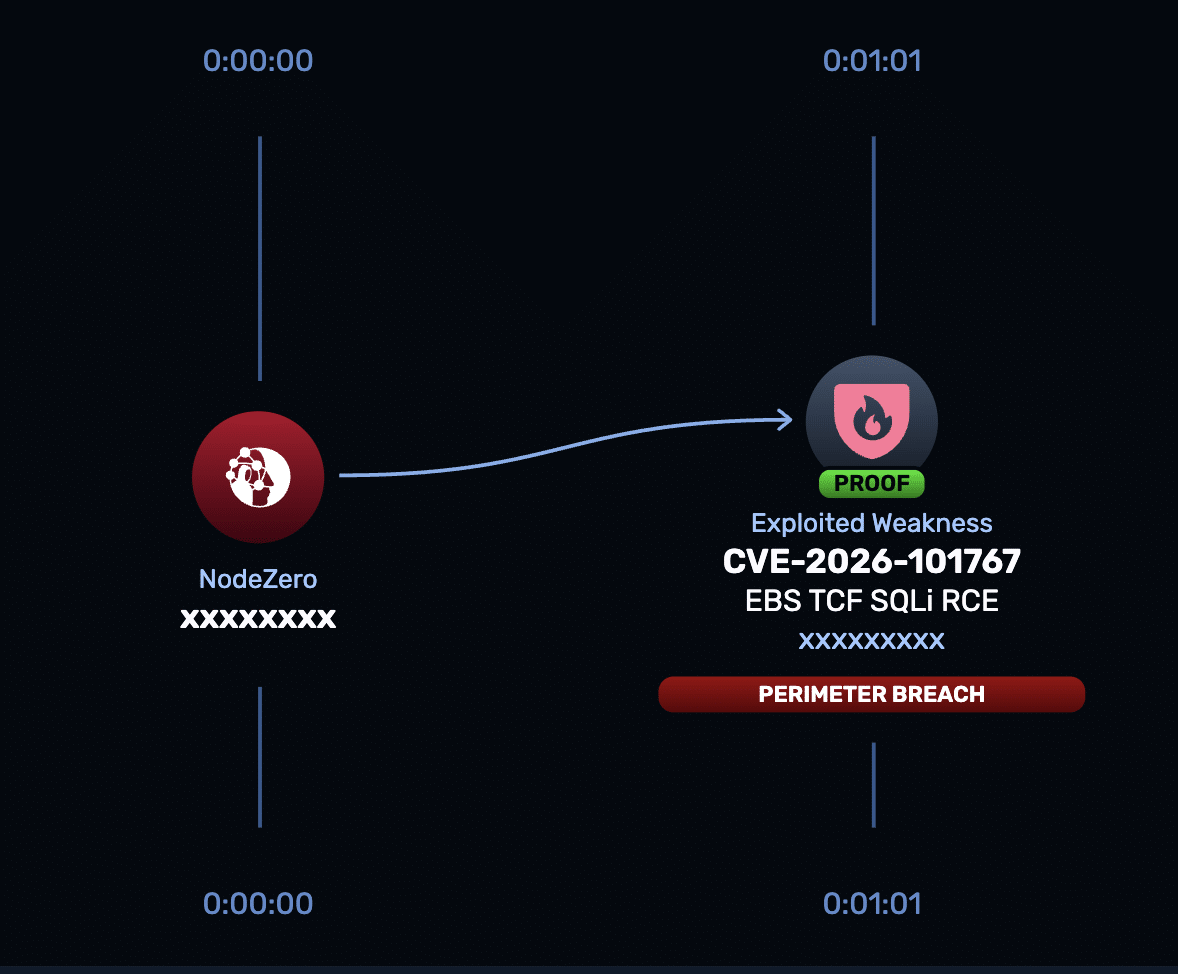 CVE-2026-101767 | Oracle E-Business Suite TCF SQL Injection and Remote Code Execution
CVE-2026-101767 is an unauthenticated SQL injection in the Oracle E-Business Suite Thin Client Framework servlet (/OA_HTML/AppsTCFServer, oracle.apps.fnd.tcf.SocketServer), CVSS 3.1 9.8. It runs SQL as the APPS user and chains to OS commands as the EBS account. Affects 12.2.3 to 12.2.15, fixed in the Oracle October 2026 CPU (20 October 2026). The page lists mitigations, IOCs and a timeline.
 horizon3.aiadvisoryAdded 29 Oct 2026, published 20 Oct 2026🛡️ Security
 Digital Forensics: Analyzing Systems with Live-Forensicator
Live-Forensicator is a cross-platform (Windows, Linux, macOS) live response toolkit built around Forensicator.ps1. The Hackers Arise walkthrough runs it on Windows with case details, then reads the HTML report: event log summary (Event IDs 4624, 4798, 4799, 4688) and a risk rating. It also shows optional AI analysis through Ollama with a Mistral model, configured in config.json, and warns that the tool triggers AV and that AI slows runs.
 hackers-arise.comarticlePublished and added 20 Oct 2026🛡️ Security
- Open-Source Intelligence (OSINT): Turn One Username into a Full Digital Dossier with Maigret
Hands-on walkthrough of Maigret, an open-source Python tool that checks a username against 3,000+ sites (top 500 by default) and builds a profile dossier by parsing public profile pages and recursively searching newly found usernames. Covers installation from GitHub, single-site and tag filtering, username permutation, HTML/PDF/CSV/JSON reports, graph output, and an optional LLM summary via OpenRouter. Positioned as a more thorough successor to Sherlock for username reconnaissance.
hackers-arise.comarticlePublished and added 16 Oct 2026🛡️ Security  Investigating Ephemeral Supply Chain Tampering
GTIG and Mandiant report on UNC7017, which tampered with AOMEI update servers in five to ten minute windows between April and July 2026. Edited down_html.ini and Notifycfg.ini files delivered the CROSSROAD downloader and SHINYROAD PocketPy backdoor, plus Adaptix C2 and WebDAV NTLM coercion. The post covers infrastructure shifts, YARA rules, IOCs, and vendor and SOC guidance on point-in-time triage failures.
 cloud.google.comwriteupAdded 29 Oct 2026, published 15 Oct 2026🛡️ Security
- BrowseSafe++: Benchmarking Prompt Injection Detection Across Web Contexts, Languages, and Browser Views
BrowseSafe++ extends BrowseSafe to 38,675 paired attacked/clean web pages, most with prompt injections observed in the wild on production sites. Pages cover twelve site types, 24 attack types and 18 injection locations, each given as HTML, Markdown, accessibility tree and screenshot with a user task and expected answer. The authors train BrowseSafe-Guard, two 0.8B detectors (text and screenshot) that beat a frontier-model-based detector on F1 with low false positives and low inference cost. BrowseSafe-Adapt rewrites injections using browser-agent feedback, raising attack success from a few percent to up to 95.41%.
arxiv.orgpaperAdded 15 Oct 2026, published 12 Oct 2026🛡️ Security - Artificial Intelligence (AI) in Cybersecurity, Part 28: Using ADStrike to Compromise Active Directory
ADStrike is an Active Directory attack framework with 52 attack modules and configurable OPSEC levels. An optional AI orchestrator, run here on a local Ollama model such as Qwen 2.5-coder 7b, picks the next tool from each step's output. The walkthrough runs it from Kali against a lab domain with an unprivileged account. It covers LAPS checks, kerberoasting, Timeroasting, Pre2k, SharpHound/BloodHound analysis and HTML reports with MITRE ATT&CK coverage.
hackers-arise.comwriteupPublished and added 12 Oct 2026🛡️ Security - derailed/popeye
Popeye is a read-only Go utility that scans live Kubernetes clusters and reports misconfigurations, stale or unused resources, port mismatches, probe and image issues, RBAC problems, and resource over/under-allocation when a metrics-server is present. It is configurable with a spinach.yaml (excludes, thresholds, allowed registries, severity overrides), can run as a CronJob with a get/list ClusterRole, outputs HTML/JSON/YAML reports, pushes Prometheus metrics, and can upload reports to S3/Minio. It lints what is actually deployed rather than manifests on disk.
 github.comtoolAdded 12 Oct 2026🛡️ Security
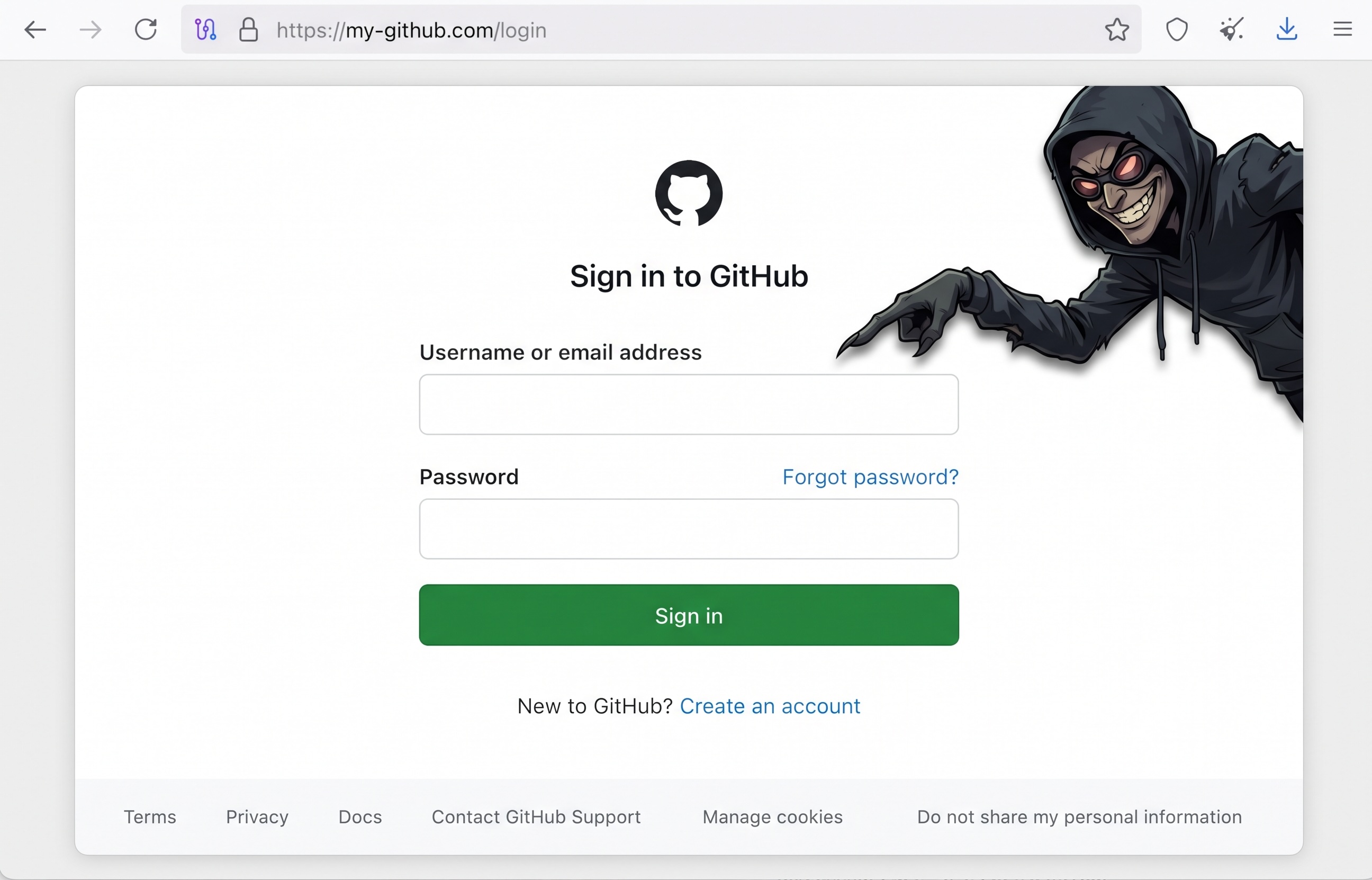 GhostAction Phishing Campaign
OpenSourceMalware analyzes a targeted phishing email from my-github[.]com (same server 193.32.204[.]199 as GhostAction's CI/CD exfiltration) that impersonated a GitHub new-sign-in alert. Recovered HTML and a HAR show a GitHub reverse proxy that captures passwords and TOTP codes, rewrites GitHub subdomains, and injects JavaScript that silently completes an OAuth device flow with repo, workflow and read:org scopes, then exfiltrates the token to TCP/8443. It includes a per-session redirect controller, mutable redirect behavior seen in URLScan, a victim's audit-log outcome (MFA stopped escalation), IOCs, and response guidance.
 opensourcemalware.comwriteupPublished and added 11 Oct 2026🛡️ Security
- https://github.com/dmdhrumilmistry/security-harness
security-harness is an open-source Claude Code plugin (also packaged for Gemini CLI, Codex and opencode) that orchestrates subagents — sh-recon, sh-hunter, sh-chainer, sh-verifier, sh-reporter — through a static-analysis pipeline covering 15 vulnerability classes (IDOR/BOLA, SQLi, XSS, SSRF, injection, auth, deserialization, path traversal, secrets, CSRF, XXE, open redirect, crypto, race conditions, file upload), producing README/JSON/SARIF/HTML/PDF reports with PoCs, CVSS and CWE/OWASP mappings. It also ships sh-pr-review, a per-PR merge-gate skill that posts inline findings and a commit status scoped only to code the PR itself introduced or aggravated, with caching, dedup via fingerprints, and a scheduled GitHub Action that keeps its per-class knowledge bases fresh by having one AI agent draft updates from allowlisted sources (OWASP, PortSwigger Research, CWE/CAPEC, HackerOne) while a separate adversarial reviewer agent fails-closed against prompt injection before auto-merge.
github.comrepoAdded 2 Oct 2026, published 29 Sep 2026🛡️ Security 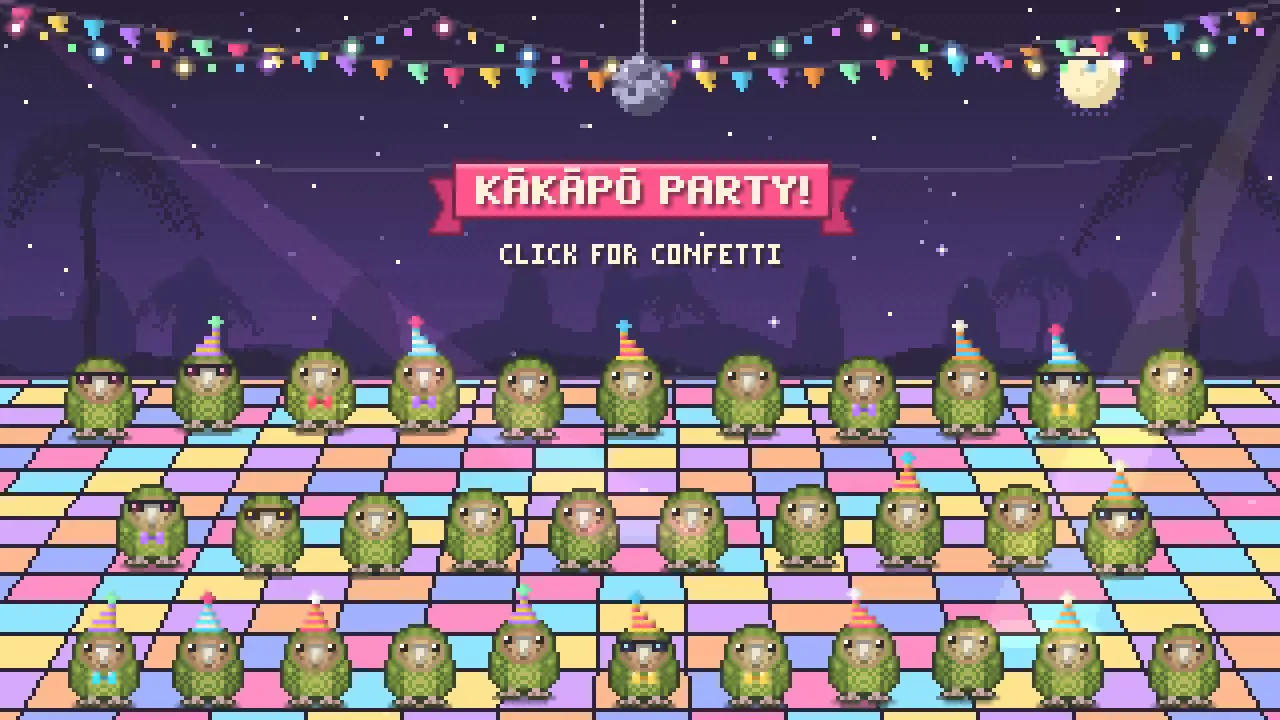 Kākāpō Party
Simon Willison describes prompting Claude Opus 5.5 with reference photos to generate an animated pixel-art HTML5 canvas scene (kākāpō parrots partying with confetti), then using a local Claude Code session to drive Playwright, click through the page at scripted timestamps, and record a 15-second video of the result for a keynote slide. The post includes the full Playwright script Claude Code produced, showing how a coding agent can be tasked with browser automation and video capture as an end-to-end deliverable, not just code generation.
simonwillison.netwriteupAdded 29 Sep 2026, published 26 Sep 2026🧠 AI Discovering and exploiting a remote code execution vulnerability in OpenCode (GHSA-632h-h47v-g4x4)
GHSA-632h-h47v-g4x4 is an RCE in OpenCode's /global/upgrade endpoint, fixed in 1.18.22. The target value reached `npm install -g opencode-ai@TARGET`, so an attacker could supply a malicious tarball URL with a preinstall script. A text/plain HTML form bypassed CORS through top-level navigation because the handler parsed JSON without checking Content-Type. Affects 1.14.30 to 1.18.21 installed via npm, pnpm or Bun.
 securitylabs.datadoghq.comwriteupAdded 29 Oct 2026, published 24 Sep 2026🛡️ Security
- OAuth Token Theft Through Microsoft's Front Door | Huntress
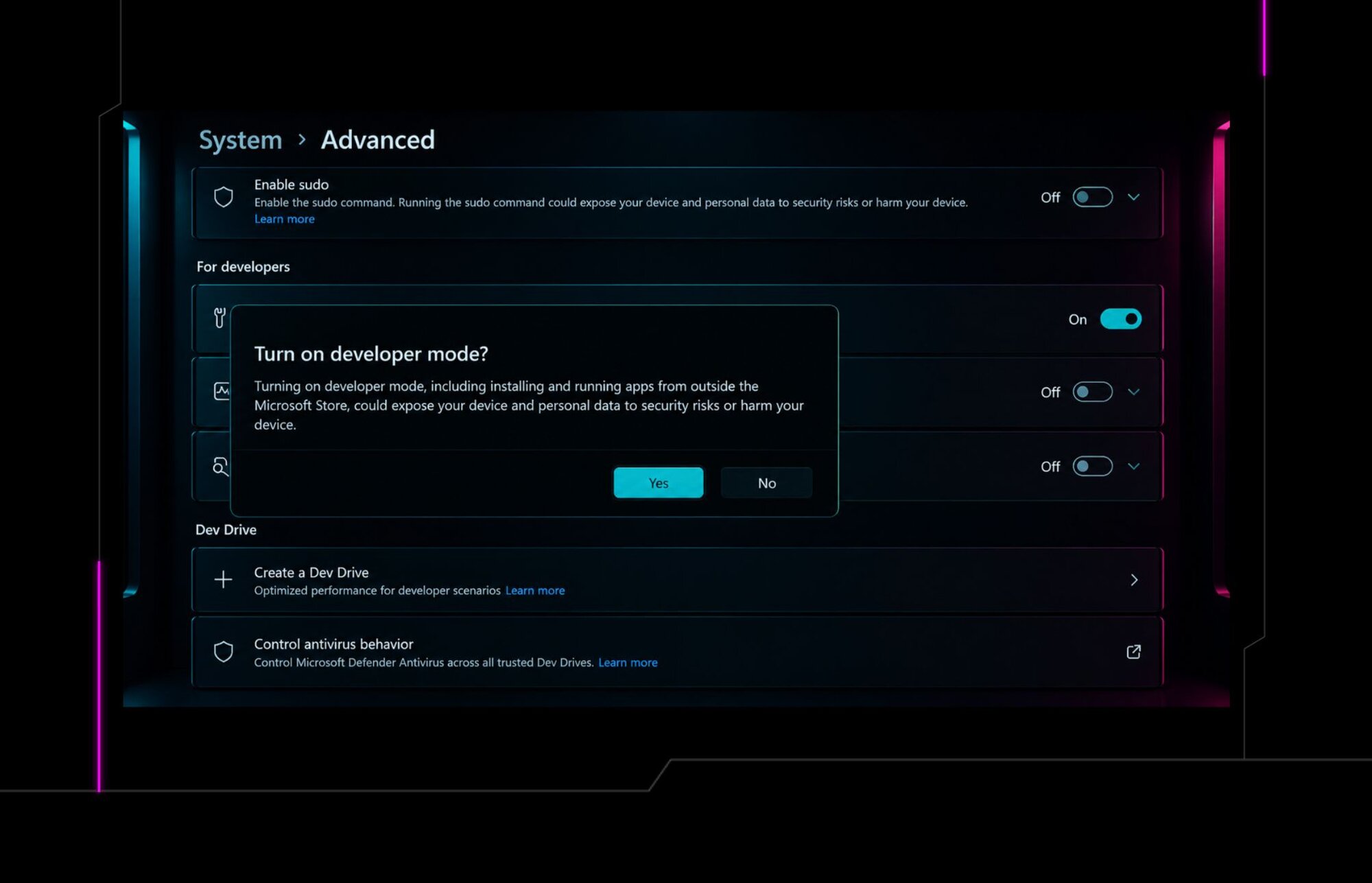
Huntress researcher Andrew Schwartz demonstrates a novel OAuth token-theft technique: a sideloaded AppX package registered via Add-AppxPackage -Register (requiring only Developer Mode, no admin beyond that toggle) can set ContentUriRules WindowsRuntimeAccess="all" so attacker-controlled JavaScript rendered inside the Microsoft-signed WWAHost.exe process gets full WinRT access, including the legacy WebAuthenticationBroker OAuth API. Using Microsoft Office's own client ID and the oob redirect URI, the attacker triggers a genuine login.microsoftonline.com/MFA dialog with no browser chrome, captures the auth code, and exchanges it for an access token plus a long-lived refresh token carrying the full Office delegated Graph scope set (mail, files, Teams, directory, AuditLog.Create) — validated end-to-end against a live Entra ID tenant with MFA and default Conditional Access. The post frames it as a class of vulnerable signed AppX host binaries sharing the same WinRT activation layer, and provides a Sigma rule keyed on the MSAppHost/3.0 EdgeHTML user agent reaching non-Microsoft destinations, plus Sysmon/Event ID and GPO-based mitigations (restricting Developer Mode, Conditional Access, shorter refresh-token lifetimes, CAE).
 huntress.comwriteupPublished and added 23 Sep 2026🛡️ Security
- https://github.com/akha-security/akca
AKCA is an open-source, Go-based Dynamic Application Security Testing (DAST) scanner that combines HTTP and headless-browser crawling, JavaScript/AST analysis, API spec import (OpenAPI, GraphQL, gRPC, etc.), and adaptive active testing across a very broad set of vulnerability classes including SQL injection, XSS, SSRF, IDOR/BOLA, SSTI, JWT/OAuth flaws, race conditions, and cloud/CI exposure. It emphasizes evidence-oriented verification — replaying promising signals against baselines, negative controls, and OAST callbacks before promoting them to findings — and exports Burp-style HTTP evidence in HTML, JSON, CSV, Markdown, and SARIF reports. Positioned as a transparent, single-developer alternative inspired by but not claiming parity with Acunetix, Invicti/Netsparker, or Burp Suite Professional.
github.comrepoAdded 2 Oct 2026, published 23 Sep 2026🛡️ Security  WordPress “Comment2Shell” XSS-to-RCE Chain Lets Unauthenticated Attackers Compromise Servers via Malicious Comments
CVE-2026-93485 (CVSS 7.1) is a stored XSS-to-RCE chain in WordPress Core's wpautop() function (wp-includes/formatting.php), where a mismatch between comment sanitization at save time and HTML reformatting at display time lets an unauthenticated attacker inject live event handlers via a crafted comment. When a logged-in administrator views the page, the script executes and installs a malicious plugin containing a web shell, achieving full RCE. It affects WordPress Core 4.7 through 7.1.0 (essentially all installs, including block themes since Twenty Twenty-Two), and is fixed in 7.1.1 with backports down to 4.7.36; no public PoC or in-the-wild exploitation was reported at disclosure time.
orca.securityadvisoryPublished and added 22 Sep 2026🛡️ Security- MassPIIFinder v2
MassPIIFinder v2 is a Python recon tool that automates crawling a target's in-scope JavaScript (multi-hop HTML crawl, dynamic imports, chunk manifests, sourcemaps, plus optional passive CT-log subdomain discovery) and mines it for API keys, tokens, credentials, internal endpoints, and PII using ~90 named patterns plus a high-entropy freeform heuristic. Findings are validated offline (Luhn checks, JWT decode, AWS key-shape) and via scope-checked, rate-limited reachability probes, then triaged by severity and exported as JSON/HTML/SARIF/Markdown/CSV. It enforces authorization with a required --confirm-authorized flag and a ScopeGuard that blocks any out-of-scope requests, and explicitly avoids testing leaked keys against third-party providers or exploiting findings.
github.comrepoAdded 22 Sep 2026, published 15 Sep 2026🛡️ Security - bsab/sweden-mcp-servers
A community-maintained catalog of Model Context Protocol servers connecting AI assistants to Swedish data, laws and services (e.g. Fortnox, Bokio, BolagsAPI, ICA), forked/adapted from the France and Italia MCP Servers projects. Each entry is checked against canonical documentation, tracks license/credential requirements, and includes a runtime smoke-test report (protocol/tool call attempts, credential blockers, failures) plus a six-criterion documentation-readiness rubric, published as a static JSON/HTML site.
github.comrepoAdded 26 Sep 2026, published 14 Sep 2026🧠 AI - GhostJS
GhostJS is an open-source Burp Suite extension by TrinetLayer that passively scans JavaScript, HTML, and JSON responses flowing through Burp for hardcoded secrets (AWS/GCP/Azure keys, Stripe/PayPal/GitHub tokens, JWTs, private keys, etc.) and hidden API endpoints, surfacing findings in a dedicated tab with severity, confidence scoring, remediation guidance, and Markdown export. It also actively fetches referenced <script> bundles using the tester's live session cookies and applies a false-positive filter to suppress doc-sample and placeholder keys, making it a practical recon aid during authorized web app pentests and bug bounty work.
github.comrepoPublished and added 7 Sep 2026🛡️ Security  Claude Code with Fable 5.1 posts 87.2% FuncPass and 37.4% SecPass — a new #1 on our board — while running as fast as Fable 5, costing a third of Opus 5, finishing every task with zero timeouts, and drawing less than half the confirmed cheating of both predecessors. | Blog | Endor Labs
Endor Labs benchmarks Claude Code paired with Anthropic's Fable 5.1 model against Opus 5 and Fable 5.0 on the Agent Security League, a suite of real-world coding tasks with hidden security regression tests. Fable 5.1 tops the board at 87.2% FuncPass / 37.4% SecPass, runs as fast as Fable 5.0 and ~33% faster than Opus 5, finishes every task with zero timeouts, costs roughly a third of Opus 5 end-to-end, and triggers less than half the confirmed training-recall "cheating" of its predecessors. The post details methodology (trajectory-based recall detection, patch similarity scoring) and walks through three CVE-mapped security fixes (Home Assistant CVE-2018-21019, html-sanitizer CVE-2024-34078, Vyper CVE-2023-31146) that only Fable 5.1 solved independently.
 endorlabs.comarticleAdded 23 Sep 2026, published 4 Sep 2026🧠 AI
- Claude Code with Fable 5.1 posts 87.2% FuncPass and 37.4% SecPass — a new #1 on our board — while running as fast as Fable 5, costing a third of Opus 5, finishing every task with zero timeouts, and drawing less than half the confirmed cheating of both predecessors. | Blog | Endor Labs
Endor Labs benchmarks Claude Code running Anthropic's Fable 5.1 against Opus 5 and Fable 5.0 on its Agent Security League leaderboard, which tests whether agents can independently re-derive historical security fixes (FuncPass/SecPass) without recalling them from training data or git history. Fable 5.1 tops both axes (87.2% FuncPass, 37.4% SecPass), runs at Fable 5.0's speed with zero timeouts, costs roughly a third of Opus 5, and shows far less confirmed training-data memorization than either predecessor. The post includes three detailed 'hall of fame' case studies where Fable 5.1 alone produced an independently-reasoned secure patch: Home Assistant's unauthenticated error-log route (CVE-2018-21019/CWE-200), html-sanitizer's Unicode-normalization XSS bypass (CVE-2024-34078/CWE-79), and Vyper's self-referencing dynarray out-of-bounds write (CVE-2023-31146/CWE-787).
endorlabs.comwriteupPublished and added 4 Sep 2026🛡️ Security - Discriminative World Models for Web Agents
This paper introduces predicted-state matching, a training objective for discriminative world models used by web agents to rank candidate actions at test time. Unlike standard supervised next-state prediction (predicting HTML/AXTree snapshots), the objective trains models to distinguish the true resulting state from alternative-action outcomes, better aligning with downstream ranker/PRM use. Trained on a branching dataset derived from WebArena Go-Browse trajectories, the approach improves PRM-style action ranking on WebPRMBench and end-to-end task success on WebArena-Lite.
arxiv.orgpaperAdded 22 Sep 2026, published 2 Sep 2026🧠 AI - PackageGuard
PackageGuard is an open-source .NET CLI tool that scans NuGet, npm, pnpm and Yarn dependencies (direct and transitive) across a codebase, enforcing hierarchically-configured allow- and deny-lists for licenses, packages and versions. It scores each package's Legal, Security and Operational risk using signals like OSV vulnerability data, maintainer activity, package signing and release cadence, and can emit a CycloneDX or SPDX SBOM enriched with OSV vulnerability data, plus console, HTML and SARIF output for CI/GitHub code scanning. It's positioned as a free alternative to commercial supply-chain tools like Black Duck and Snyk.
github.comrepoPublished and added 31 Aug 2026🛡️ Security - Next-Gen Phishing Tactics Users Aren’t Ready For | Huntress
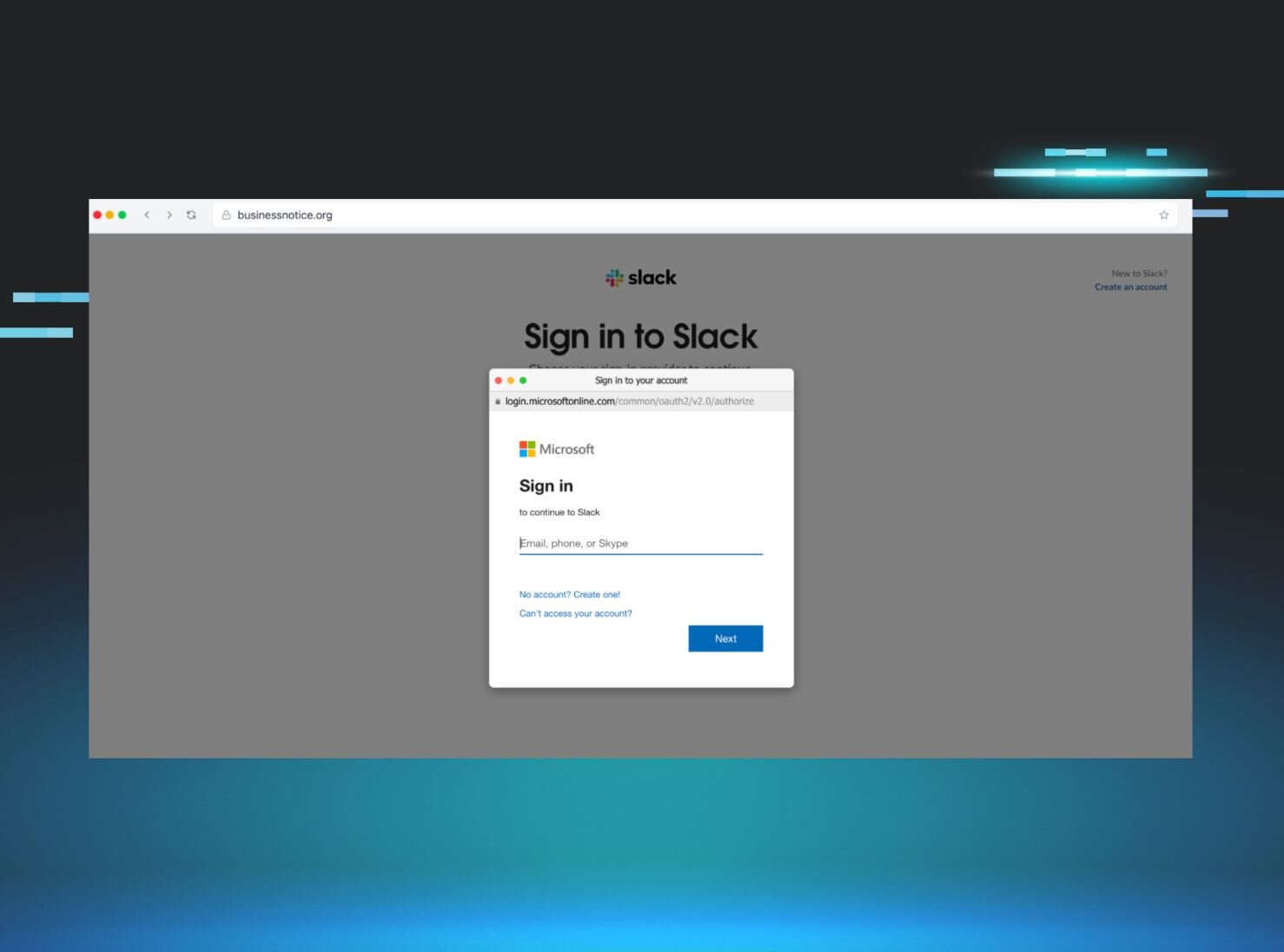
Huntress details five modern phishing techniques that bypass traditional "check the URL" training and MFA: ClickFix (fake CAPTCHA tricking users into running Win+R/paste commands to execute malware), Browser-in-the-Browser (fake HTML popup windows mimicking OAuth login prompts with forged address bars/padlocks), ConsentFix (dragging an identity icon to leak an OAuth authorization code that attackers trade for Microsoft Entra ID access/refresh tokens), device code phishing (abusing the legitimate microsoft.com/devicelogin flow to authorize an attacker's device via a code, seen weaponized in PhaaS kits like EvilTokens), and fake video-conference (Teams/Zoom/Google Meet) waiting-room overlays that push a malicious "driver update" install. Each section explains why the technique defeats standard security-awareness training and how Huntress's simulated phishing scenarios replicate it.
huntress.comarticleAdded 3 Sep 2026, published 28 Aug 2026🛡️ Security  [tl;dr sec] #343 - Hugging Face Technical Report, AWSHound, OWASP Agentic Skills Top 10
tl;dr sec #343 is a weekly security newsletter issue. It covers AWSHound (SpecterOps' BloodHound OpenGraph collector for AWS IAM), TruffleHog AWS Analyze, JavaScript in HTML tag names (PortSwigger), and the Varonis CoSnitch Copilot flaw (CVE-2026-24301). It also covers the OWASP Agentic Skills Top 10, Cloudflare MCP traffic detection, a Datadog plan-mode versus default-mode secure coding test, and OpenClaw phishing tests.
 tldrsec.comarticleAdded 30 Oct 2026, published 27 Aug 2026🛡️ Security
 NPM Isn't Prepared For North Korean PolinRider Attack
OpenSourceMalware's case study on npm packages fetch-page-assets and html-to-gutenberg, maintained by a legitimate developer (DiogoAngelim) whose GitHub account was compromised by the DPRK-linked PolinRider campaign in March 2026. The post shows GitHub server-side push timestamps proving all seven of the maintainer's repos were force-pushed with an identical NullReceiver loader in two coordinated bursts, and that after npm pulled the flagged v1.2.9 (GHSA-vxq2-vhm7-7mhq), every subsequent release (v1.2.10-v1.2.14) kept shipping the same .vscode/tasks.json auto-run trigger, with the attacker later adding a second obfuscated payload appended to babel.config.cjs. It argues npm/GitHub's per-version advisory model can't scale against thousands of PolinRider-compromised maintainers and lists specific IOCs (hashes, C2 wallet, RPC endpoints).
opensourcemalware.comwriteupAdded 3 Sep 2026, published 25 Aug 2026🛡️ Security- Cybermes
Cybermes is an open-source bug bounty and pentest automation framework that pairs a native Go MCP server (cybermes-mcp) with an autonomous Hermes CLI agent, orchestrating recon tools (subfinder, httpx, katana, ffuf, Nuclei, sqlmap), 200+ offensive playbooks covering IDOR/BOLA, JWT, SSRF, XSS, SQLi and cloud misconfig, and a validation-gate workflow that writes non-destructive PoC scripts before compiling findings into Markdown/HTML/PDF reports. It exposes its tools over JSON-RPC 2.0 to AI coding assistants (Claude Desktop, Cursor, Windsurf, Cline, Gemini/Antigravity) so an external LLM can drive scoped, evidence-backed security assessments.
github.comrepoPublished and added 23 Aug 2026🛡️ Security  Yet another RCE in Gogs, but it's fixed this time!
Aikido researchers detail how an AI pentesting agent found a path traversal in Gogs' organization name handling (CVE-2026-52813), which they manually escalated to full Remote Code Execution by planting a bare git repository inside a worktree and overwriting its hooks/update file to trigger command execution on push. The post also covers a git-receive-pack/git-upload-pack service parameter confusion causing an authorization bypass allowing writes to private repos by read-only users (CVE-2026-52810, with an unpatched case-sensitivity bypass and manual code fix provided), and a stored XSS in Gogs' Jupyter notebook rendering via an outdated notebookjs library that bypasses bluemonday sanitization via onerror handlers set during innerHTML assignment.
 aikido.devwriteupAdded 3 Sep 2026, published 19 Aug 2026🛡️ Security
- Cariddi
Cariddi is a Go-based CLI tool that crawls a list of domains/URLs to discover endpoints, secrets, API keys, tokens, and juicy file extensions. It supports proxying through Burp Suite, custom headers, secret/endpoint regex files, JSON/HTML/TXT output, and configurable crawl depth and concurrency, making it a common recon tool in bug bounty and pentest workflows.
github.comrepoAdded 3 Sep 2026, published 12 Aug 2026🛡️ Security - eternityspring/shuohao-skills
shuohao-skills is a set of five chained Claude Code / Codex agent skills that turn a novel into short-drama production assets: novel-outline (adaptation outline), novel-characters (cast bible), novel-art (scene/prop art bible), novel-script (episode scripts with a duration gauge), and novel-storyboard (shot-by-shot storyboards with actual generated shot images and prompts), plus a standalone character-refs skill that generates character reference images (anchor via GPT, rest via Qwen). Each skill is a self-contained directory with a required SKILL.md and a dependency-free scripts/selftest.mjs, installable via a symlink script that auto-detects Claude Code vs codex, and there is a separate report.mjs assembler that merges the five bilingual HTML reports into one navigable page without touching each skill's own render code (handling CSS/JS scoping and image-path rewriting).
github.comrepoAdded 30 Sep 2026, published 6 Aug 2026🧠 AI - genspark-ai/genoffice
GenOffice is an open-source (Apache-2.0) desktop office suite for macOS/Windows/Linux that opens native .docx/.xlsx/.pptx/PDF/Markdown/HTML files and puts an AI agent inside the editor, applying edits as byte-preserving diffs, tracked changes and live spreadsheet formulas rather than pasted text. It exposes the same engines to coding agents via a `genoffice` CLI, a bundled skill for Claude Code, Codex, Cursor, Gemini CLI, GitHub Copilot, OpenCode and Windsurf, and an MCP server with 29 tools (plus an HTTP variant for headless/remote use), and includes a local SQLite full-text file search optionally reranked by TypeSafe's Jev judgment model. Users can bring their own key (Claude, OpenAI, Gemini, DeepSeek, and others) or sign in with Genspark to route model calls through a proxy.
github.comrepoAdded 30 Sep 2026, published 31 Jul 2026🧠 AI - Speeding Up AD Pentests with ADScan & ADPulse
Walkthrough of two Active Directory pentesting utilities: ADScan, a Docker/BloodHound-integrated tool for automated DNS/LDAP/SMB/Kerberos enumeration and attack (Kerberoasting, AS-REP roasting, DCSync, password spraying, ADCS escalation path discovery, DACL/GenericAll abuse via SDProp misconfig), and ADPulse, a read-only LDAP/LDAPS auditing tool that produces CLI/JSON/HTML security posture reports for AD environments. The piece demonstrates installation on Kali and a worked example where a low-privileged account is shown to have GenericAll rights over Domain Admins, plus checks for known DC vulnerabilities like Zerologon and NoPac.
hackers-arise.comwriteupAdded 3 Sep 2026, published 31 Jul 2026🛡️ Security  PolinRider Caused Dozens of npm, Go, PHP Compromises
OpenSourceMalware's research ties together JFrog's, Nextron's, and Socket's separate reports on compromised html-to-gutenberg/fetch-page-assets npm packages, 16 Go modules, and Joyfill's poisoned beta releases, attributing all of them to DPRK's PolinRider campaign via shared XOR keys, TRON/Aptos wallets, C2 infrastructure, and the fa-solid-400.woff2 loader file hash. The piece argues these aren't targeted account takeovers but automated propagation from infected maintainer machines (via temp_auto_push.bat git history rewriting and stolen .npmrc tokens), and uses GH Archive to prove that 43 of 64 analyzed Go module pseudo-version timestamps were forged to appear years older than the actual malicious push. Delivered payloads include InvisibleFerret/DEV#POPPER RAT and the OmniStealer Python infostealer, and the article links a PolinRider crossover into a compromised Packagist/PHP package (roberts/leads) via shared C2 infrastructure.
opensourcemalware.comwriteupAdded 3 Sep 2026, published 31 Jul 2026🛡️ Security- QoderAI/better-harness
Better Harness is an MIT-licensed plugin/CLI from QoderAI that runs inside a coding agent (Claude Code, Codex, Qoder, Cursor, GitHub Copilot CLI, Qwen Code, Pi, Kimi Code and others) via a /better-harness command. It collects project and session evidence and scores five dimensions of the "Agent Work Loop" (feedforward guides like AGENTS.md, specs and Skills; feedback sensors like linters, tests and Hooks). It outputs HTML/Markdown/Canvas reports with prioritized findings, repair plans and acceptance checks, and keeps missing evidence explicit rather than inventing scores.
github.comrepoAdded 12 Oct 2026, published 21 Jul 2026🧠 AI  When Your AI Reviewer Works for the Attacker: A Confused-Deputy Bug in Microsoft
Manifold Security researchers found that Microsoft's official Azure DevOps MCP server fails to consistently apply its 'spotlighting' guardrail (added in PR #1062) to untrusted content: pipeline and wiki tools wrap external content in delimiters, but the tool returning PR descriptions does not. An attacker with contributor access to one project can hide prompt-injection instructions inside an HTML comment in a PR description (invisible in the Azure DevOps UI but returned verbatim by the API), which hijacks a reviewing victim's AI agent (tested with Copilot CLI and Claude Code) into running pipelines and reading a confidential wiki page in a separate project the attacker can't access, then exfiltrating the content back as a PR comment — a classic confused-deputy / lethal-trifecta scenario. The issue was reported to and triaged by MSRC.
 manifold.securitywriteupAdded 23 Jul 2026, published 21 Jul 2026🛡️ Security
 AI Security Briefing
SecurityWeek reports on Zscaler research uncovering two indirect prompt injection campaigns aimed at AI agents: one uses SEO-poisoned fake documentation for a Python package (requests-secure-v2) to trick agents into making cryptocurrency payments for a fake "API key," hiding instructions in schema markup and hidden HTML divs; the other typosquats the DeFi platform DeBank to get agents to trust a fraudulent site as legitimate. Zscaler built an autonomous payment-capable AI agent and tested 26 LLMs, finding four (Llama 3.3 70B Instruct, Llama 3.2 90B Vision Instruct, Gemini 3 Flash, Gemini 2.5 Pro) could be manipulated into paying, while Claude Sonnet 4.5 and GPT-5.4 misidentified the fake DeBank site as legitimate.
securityweek.comarticlePublished and added 18 Jul 2026🛡️ Security- Skills Janitor
Skills Janitor is a Claude Code/OpenAI Codex plugin that inventories installed skills, subagents, and MCP servers, then lets users swipe-delete unused or duplicate ones to reclaim context window space. Its janitor-security and janitor-discover commands scan skill contents for known prompt-injection shapes: instruction-override phrases, 'don't tell the user' directives, payloads hidden in HTML comments or zero-width unicode, smuggled base64, and scripts that pipe network output into a shell or read credential stores, citing research that found injection in roughly a third of tested community skills. It also cross-references MCP server configs against real session-transcript usage to flag connected-but-never-called servers whose tool schemas silently consume context on every request.
github.comrepoPublished and added 15 Jul 2026🛡️ Security  What is a dependency firewall?
Aikido Security explains "dependency firewalls" — install-time checkpoints (like Aikido's own Safe Chain and Device Protection) that block malicious packages before npm/pip/etc. install commands complete, rather than scanning after the fact. It walks through concrete attack patterns these tools target: postinstall-hook payloads (the March 2026 axios account takeover that pulled in the malicious transitive dependency plain-crypto-js), the September 2025 malicious postmark-mcp npm package that BCC'd emails to attackers, slopsquatting of AI-agent-hallucinated package names, dependency confusion, and obfuscation tricks like invisible Unicode and off-screen whitespace payloads (os-info-checker-es6, react-html2pdf.js).
aikido.devarticleAdded 3 Sep 2026, published 13 Jul 2026🛡️ Security- AI-Coded Malware | Analyzing Vibe-Coded AD Enumeration | Huntress
Huntress recovered and reconstructed "Untitled1.ps1," a PowerShell Active Directory enumeration script used by an attacker during a June 3 incident via RDP access with compromised credentials, and identified it as AI-generated ("vibe-coded") based on artifacts like an unedited LLM placeholder hostname, a "FULLY FIXED" prompt-iteration title, over-engineered five-method DC-discovery fallback logic, and gratuitous colored console/HTML reporting output. The attack chain paired this bespoke recon tool with off-the-shelf abuse of s5cmd (legitimate AWS S3 CLI used for exfiltration) and SharpShares (share enumeration), illustrating how LLM-generated one-off malware evades hash/signature-based detection and pushes defenders toward behavioral analytics on Active Directory enumeration patterns.
huntress.comwriteupAdded 3 Sep 2026, published 8 Jul 2026🛡️ Security - VeridionLabs/veridion
Veridion is an open-source smart contract security platform combining a plugin-based static analysis scanner (extended via the IRulePlugin interface with zero changes to scanner-core), an AI-engine layer for vulnerability explanation and fix suggestions, and immutable on-chain audit verification recorded via Stellar Soroban. It ships as a Turborepo/pnpm monorepo with a NestJS API, Next.js frontend, Prisma-backed PostgreSQL, JWT/RBAC auth, and report generation in JSON, Markdown, HTML, or PDF.
github.comrepoAdded 4 Oct 2026, published 7 Jul 2026🛡️ Security  Copirate 365 at DEF CON: Plundering in the Depths of Microsoft Copilot (CVE-2026-24299) · Embrace The Red
Johann Rehberger's writeup of his DEF CON Singapore talk detailing a multi-stage exploit chain against Microsoft 365 Copilot and Consumer Copilot (CVE-2026-24299): indirect prompt injection triggers Copilot's HTML preview feature, CSS background-image/font-face rules bypass img-src CSP and exfiltrate data over font-src, and the attack is made zero-click by instructing Copilot to auto-open the preview. It further chains this with abuse of Copilot's record_memory / durable-facts long-term memory tools (which have no audit logging) to plant persistent "SpAIware"-style instructions that silently exfiltrate any password or secret the user later types, plus Delayed Tool Invocation as a reliability trick and edge_navigate_to abuse in Edge's Copilot to leak stored memories. Includes full disclosure timeline (Oct 2025 report to Dec 2025/Mar 2026 fixes) and broader lessons on CSP not being a reliable AI security boundary and the "lethal trifecta."
 embracethered.comwriteupAdded 6 Jul 2026🛡️ Security
 Socket: Chrome and Firefox VPN Extensions Add Clipboard Stealers via Malicious Updates
Socket's Threat Research Team analyzed "VPN Go: Free VPN" (Chrome Web Store, extension ID jgpfgonjjolillilkjfkiddakagkkpoj) and "Free VPN by VPN GO" (Firefox Add-ons), showing both shipped clean initial versions that later received malicious updates adding clipboard-monitoring "clipper" logic. The extensions poll the clipboard every 500ms (Chrome) or 1.5s (Firefox), chunk newly copied text, and exfiltrate it via GET requests to hardcoded IPs (178.236.252.133, 178.236.252.161, 77.91.123.187) at /html/continue.php, while real proxy/VPN functionality is retained as cover. The writeup includes deobfuscated code, version-by-version infrastructure changes, file hashes, bearer tokens, and MITRE ATT&CK technique mapping for defenders.
 socket.devwriteupPublished and added 30 Jun 2026🛡️ Security
- OASIS
OASIS (Open Automated Security Intelligence Scanner) is an AI-powered SAST tool that runs local LLMs via Ollama or any OpenAI-compatible backend (vLLM, LiteLLM, LM Studio, llama.cpp) to detect vulnerabilities like SQLi and XSS in source code. It uses a two-phase scan (lightweight scan model + deep analysis model) orchestrated by a LangGraph pipeline (discover→scan→expand→deep→verify→report), adds a deterministic finding-validation agent that computes exploitability verdicts with confidence, and exports canonical JSON/SARIF/HTML/PDF reports with a web dashboard, RAG-backed chat assistant, --fail-on CI gating, and suppression/inline-ignore support.
github.comrepoPublished and added 28 Jun 2026🛡️ Security - SuperagenticAI/superclaw
SuperClaw is a pre-deployment security testing framework for autonomous AI coding agents like OpenClaw, generating scenario-driven adversarial tests for prompt injection, jailbreaks, tool misuse, and behavioral drift. It scores agent behavior against explicit security contracts with rubric-based evidence (tool calls, outputs) and produces HTML/JSON/SARIF reports, with local-only mode and auth-token gating for remote targets to reduce misuse risk.
github.comrepoPublished and added 18 Jun 2026🛡️ Security 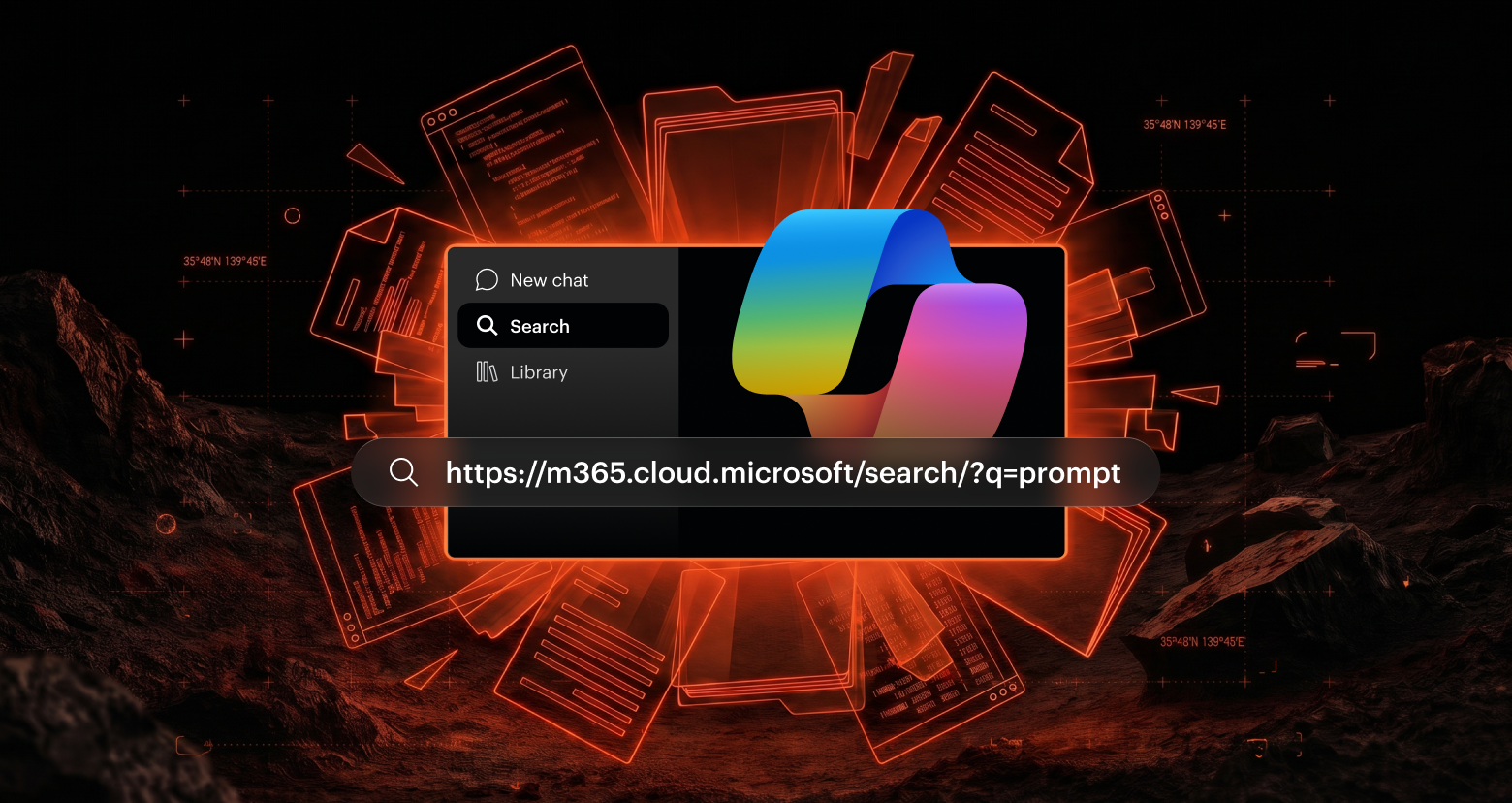 SearchLeak: How We Turned M365 Copilot Into a One-Click Data Exfiltration Weapon
Varonis Threat Labs details SearchLeak, a three-stage exploit chain (CVE-2026-42824, critical) that abuses Microsoft 365 Copilot Enterprise Search: a Parameter-to-Prompt (P2P) injection via the search URL's `q` parameter turns a clicked link into an AI instruction, an HTML-rendering race condition lets an injected `<img>` tag fire before Copilot's `<code>`-block sanitizer applies, and Bing's "Search by Image" endpoint (allowlisted in the CSP) performs a server-side fetch that exfiltrates the stolen data to an attacker's server. A single click on a trusted microsoft.com link lets an attacker silently exfiltrate emails, security codes, calendar data, and SharePoint/OneDrive content with the victim's full Graph permissions, no plugins or extra permissions required. Microsoft has patched the issue; the post is a follow-up to Varonis' earlier "Reprompt" finding in Copilot Personal.
 varonis.comwriteupAdded 16 Jun 2026, published 15 Jun 2026🛡️ Security
 New attack turned Microsoft 365 Copilot into 1-click data theft tool
BleepingComputer covers Varonis's SearchLeak research, a three-stage attack chain (CVE-2026-42824, now patched) affecting Microsoft 365 Copilot Enterprise Search. Attackers craft a URL with a malicious 'q' parameter to prompt-inject Copilot into searching a victim's mailbox/OneDrive/SharePoint, exploit an HTML-rendering race condition to slip an unsanitized img tag past output neutralization, then abuse an SSRF in Bing's "Search by Image" feature to bypass CSP and exfiltrate the stolen data (emails, passwords, meeting details) to an attacker-controlled server via a single click, no user typing required.
 bleepingcomputer.comarticleAdded 26 Sep 2026, published 15 Jun 2026🛡️ Security
 Orca: Splunk Enterprise Critical CVEs
Orca Security breaks down four new Splunk vulnerabilities: CVE-2026-20253 (CVSS 9.8), an unauthenticated arbitrary file create/truncate flaw in a PostgreSQL sidecar endpoint in Splunk Enterprise with no available workaround; CVE-2026-20251 (CVSS 8.8), a jsonpickle insecure-deserialization RCE in the Splunk Secure Gateway app exploitable by any low-privilege user; CVE-2026-20258, a stored XSS in classic dashboard HTML panels; and CVE-2026-20252, an SSRF in Dashboard Studio PDF export that bypasses trusted-domain validation via prefix matching and redirects. It lists affected Splunk Enterprise, Cloud Platform, and Secure Gateway version ranges and patched releases, plus interim mitigations like disabling Secure Gateway or Splunk Web.
orca.securityadvisoryPublished and added 12 Jun 2026🛡️ Security- Inside .NET Loader Analysis: From Malspam to In-Memory Loader
Huntress SOC dissects a multi-stage infection chain that begins with a malspam HTML attachment routed through a legitimate Google DoubleClick tracking link to evade reputation filters, before landing on a self-personalizing phishing kit and dropping a ZIP with a heavily obfuscated JScript loader. The chain cascades through PowerShell droppers into a .NET stager that performs extensive anti-analysis/anti-sandbox checks, disables Windows Defender, patches AMSI (via NtManageHotPatch on Windows 11 24H2) and ETW at the native API level, and uses RunPE process hollowing into InstallUtil.exe or MSBuild.exe to run a final loader that communicates over AES/RSA-encrypted, protobuf-serialized TCP C2 with certificate pinning. The writeup includes GPU-fingerprinting behavior, persistence via registry Run keys and randomized scheduled tasks, and concrete detection/hardening recommendations.
huntress.comwriteupAdded 3 Sep 2026, published 3 Jun 2026🛡️ Security  Claude.ai Prompt Injection Vulnerability | Oasis Security
Oasis Security researchers chained three Claude.ai/claude.com vulnerabilities, dubbed "Claudy Day", into an end-to-end attack: hidden HTML tags in the claude.ai/new?q= URL parameter injected invisible instructions into a pre-filled prompt, which then directed Claude to search the victim's conversation history and exfiltrate sensitive data by writing it to a file and uploading it via the Anthropic Files API to an attacker-controlled account (abusing that api.anthropic.com is allowed through the sandbox's network restrictions). A separate open redirect at claude.com/redirect/<target> let attackers weaponize a trusted-looking Google Ads link to silently deliver victims to the injection URL, requiring no MCP servers or integrations. The prompt injection issue has been fixed by Anthropic; remaining issues are being addressed.
 oasis.securitywriteupAdded 25 Jul 2026, published 3 Jun 2026🛡️ Security
- OWASP Noir
OWASP Noir is a static analysis (SAST) tool that reads source code to extract every endpoint an application exposes — paths, methods, parameters, headers, cookies, and their originating files — across 205 supported frameworks, with an LLM fallback (OpenAI/Ollama) for unsupported ones. The endpoint inventory (including shadow APIs and undocumented routes) is exported as JSON/YAML/OpenAPI/SARIF/cURL/Postman/HTML to feed DAST scanners (ZAP, Burp Suite, Caido, Gori), human security reviewers, and AI SAST auditors, with optional --ai-context enrichment (guards, sinks, validators, callees) and GitHub Action/CI integration.
github.comrepoPublished and added 24 May 2026🛡️ Security - musana/CF-Hero
CF-Hero is a Go-based recon tool that uncovers the real origin IP of Cloudflare-protected web applications by correlating current/historical DNS records (A, TXT/SPF), OSINT search engines (Shodan, Censys, ZoomEye), SecurityTrails historical DNS, and sub/related-domain host-header comparison. It validates candidate IPs by connecting directly over HTTP(S) and comparing HTML titles against the target, and supports custom JA3 fingerprints, proxies, and concurrent scanning to reduce false positives.
github.comrepoPublished and added 21 May 2026🛡️ Security - OWASP/DockSec
DockSec is an OWASP Lab Project CLI that wraps Trivy, Hadolint, and Docker Scout to scan Dockerfiles, images, and Compose files, then uses an AI provider (OpenAI, Anthropic, Google, or local Ollama) to correlate findings, cut noise, and generate plain-English remediation suggestions. It supports CI/CD gating via exit codes, baselines, and auditable waiver files, outputs SARIF/CycloneDX SBOM/HTML/PDF/JSON/CSV/Markdown reports, and redacts secrets before any content reaches an LLM, with a fully offline/local-only mode for air-gapped teams.
github.comrepoPublished and added 14 May 2026🛡️ Security  Socket: GemStuffer Campaign
Socket's threat research team documents GemStuffer, a campaign of 100+ RubyGems packages that scrape UK local government ModernGov democratic-services portals (Lambeth, Wandsworth, Southwark) and repackage the harvested HTML into valid .gem archives published back to RubyGems using hardcoded API keys — using the registry itself as a public data drop rather than a malware distribution vector. The writeup breaks down the full attack chain (scraping via Net::HTTP, gem staging in /tmp, credential injection with HOME override, gem build/push, and manual API POST variants), lists exposed RubyGems API keys, IOCs, and remediation steps including yanking packages and auditing for HOME env mutation.
socket.devwriteupPublished and added 13 May 2026🛡️ Security- 0xMohammedHassan/morphkatz
MorphKatz is a static C++20 Windows x64 tool that rewrites PE binaries and raw shellcode into semantically identical but byte-different variants using a Zydis-powered CFG-aware disassembler/encoder, YAML rewrite rules, and EFLAGS liveness tracking. It targets two audiences: detection engineers who can measure what percentage of their YARA/Defender/Elastic/Sigma rules survive N polymorphic variants (--variants, --target, --bisect against a live Defender via MpCmdRun), and authorized red-teamers who need reproducible, seed-based, rule-cited evasion runs with JSON/HTML diff reports for engagement deliverables. It explicitly excludes ML-behavioral evasion and live pop-malware obfuscation, restricting mutations to author-audited, semantically-proven equivalence rules.
github.comrepoPublished and added 7 May 2026🛡️ Security  Socket: 73 Open VSX Sleeper Extensions Linked to GlassWorm
Socket's Research Team tracks a new wave of 73 cloned/impersonating Open VSX extensions tied to the GlassWorm campaign, published as benign-looking "sleeper" extensions by freshly created GitHub accounts before later being weaponized via normal update channels. The report details GlassWorm's shift to transitive delivery via extensionPack/extensionDependencies (e.g., pulling in the now-removed blockstoks.easily-gitignore-manage), plus two concrete payload techniques: a bundled native .node binary (boulderzitunnel.vscode-buddies) that downloads and installs a malicious VSIX across VS Code/Cursor/Windsurf, and an obfuscated JavaScript loader (cubedivervolt.html-code-validate) that decodes at runtime to fetch a VSIX from GitHub. Includes IOCs (SHA256 hashes, malicious GitHub repos) and notes the automated activation pipeline referenced a dead payload extension 52 hours after Eclipse Foundation removed it.
socket.devwriteupPublished and added 6 May 2026🛡️ Security- Butler
Butler is a Python CLI/SQLite-backed tool that crawls all repositories in a GitHub organization to inventory workflows, actions, and reusable workflows, flagging unpinned/unpinnable third-party actions, references to archived or deleted repos, invalid runners, and organization/repo secrets & variables usage (including 'secrets: inherit'). It downloads workflow data via a GitHub PAT or GitHub App, processes it into a local database, and generates customizable HTML/CSV reports with SQL-based custom queries, aimed at large-scale GitHub Actions supply-chain and CI/CD hygiene auditing.
github.comrepoPublished and added 6 May 2026🛡️ Security  Operational Workbooks Episode 1: Running a Playbook from a Workbook
A hands-on guide to wiring Microsoft Sentinel Workbooks to Logic Apps (playbooks) using the ARM Action link and HTTP request trigger, allowing analysts to export arbitrary workbook column data as parameters and POST it to a playbook without requiring an Incident/Entity ID. The author flags that this pipes untrusted attacker-controlled data (URLs, command lines) into downstream automation, and notes example WAF/XSS events can trigger HTML injection directly in the workbook via the URI parameter.
 attackthesoc.comarticleAdded 3 Sep 2026, published 12 Apr 2026🛡️ Security
 Esbuild
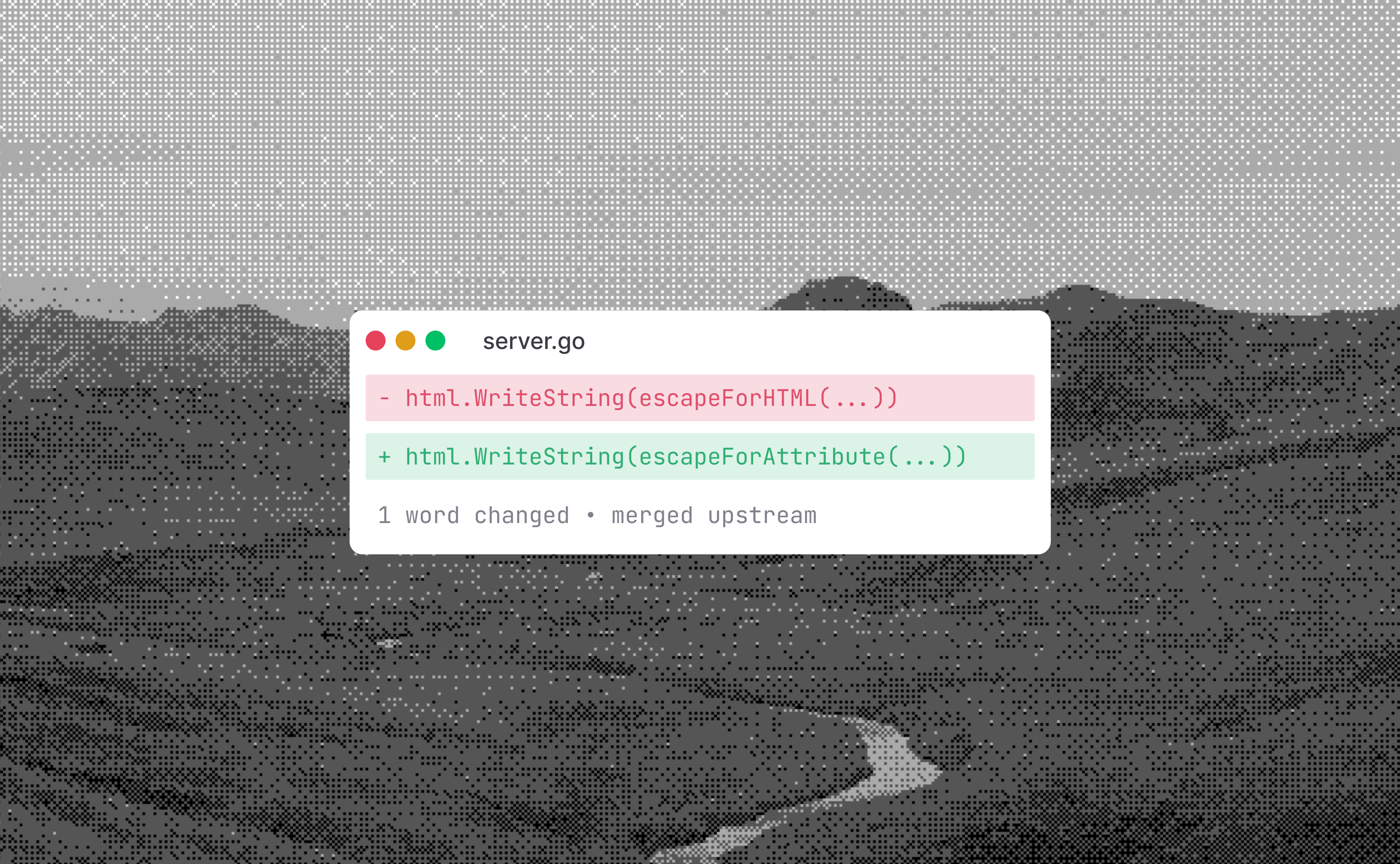
An XSS in esbuild's dev server, present since 2022: escapeForHTML does not escape double quotes, yet its output was placed inside an href attribute in the directory listing. A folder name containing a quote breaks out of the attribute, and the payload adds a full-screen style plus an onmouseover handler. The fix swapped in escapeForAttribute. Maintainers merged it but said the dev server assumes a trusted environment, so it was not a security vulnerability.
 depthfirst.comwriteupAdded 29 Oct 2026, published 20 Nov 2025🛡️ Security
- Abusing the “search-ms” URI protocol handler
A DFIR analysis by dfir.ch dissecting a real-world phishing campaign that abuses the Windows "search-ms" URI protocol handler embedded in an HTML attachment ("Booking_Confirmation.html") to trigger a WebDAV connection via rundll32/davclnt.dll, present a spoofed Explorer search result, and lure the victim into executing an LNK file. The LNK launches a headless conhost.exe pulling an obfuscated batch script (new.bat) over a trycloudflare.com tunnel, which drops a decoy PDF, downloads a full Python interpreter (FTSP.zip) and additional scripts, and ultimately performs shellcode injection. The post also documents Sysmon process-create telemetry and the HKCU WordWheelQuery registry key as forensic artifacts of the search-ms query.
 dfir.chwriteupAdded 3 Sep 2026, published 4 Aug 2024🛡️ Security
- Divin'n'phishin with executable filetypes on Windows
A hands-on research post that walks through using Windows `assoc`/`ftype` to enumerate file-extension-to-program associations and identify which extensions (.com, .pif, .scr, .bat/.cmd, .vbs/.js, .jar, .chm via hh.exe) execute directly or indirectly on double-click, useful for crafting phishing payloads that evade mail defenses. It includes working PoCs (a .NET binary renamed to .com/.pif/.scr, a VBS script, a Java JAR, and a malicious CHM built with hh.exe per LOLBas), plus credential-theft-relevant extensions like .scf and browser-opening extensions (.html/.svg/.mhtml) for phishing pages, ending with allow-list-based mitigation advice.
 bencteux.frwriteupAdded 3 Sep 2026, published 26 Oct 2022🛡️ Security
- Bypassing Chrome's URL restrictions
The author examines Chrome's pre-89 defense that blocks outbound requests to http/https URLs containing both '<' and newline characters, a mitigation against HTML dangling-markup/XSS exfiltration. He shows the restriction only applied to http/https and demonstrates bypassing it by exfiltrating HTML content via a dangling `<meta http-equiv="refresh">` tag pointed at an `ftp://` URL, captured with a netcat FTP listener. The bug was reported to Chromium, which responded by dropping FTP and Gopher scheme support in Chrome 89, killing the bypass.
bencteux.frwriteupAdded 3 Sep 2026, published 7 Mar 2021🛡️ Security