 Passkeys Are Better Than Passwords. But They Are Not Enough.
Opinion piece arguing that passkeys, built on public-key cryptography, resist phishing, credential stuffing and password theft but do not settle identity risk. Attackers can go around them through account enrollment before a passkey is bound, weaker recovery paths (SMS, email link, help desk), device changes and authenticated session hijacking. It proposes layering identity threat detection with risk-based, continuous evaluation of trust.
 securityweek.comarticlePublished and added 30 Oct 2026🛡️ Security
 Content Providers and the potential weak spots they can have | Oversecured Blog
Oversecured's Android security checklist for Content Providers covers insecure FileProvider path configs, path traversal via decoded Uri.getLastPathSegment(), mismatched readPermission/writePermission, proxying requests to more privileged providers, SQL injection across a shared database, and sensitive actions in providers. Each case has vulnerable manifest and Java code, an attacker PoC and remediation. Real cases from Google and Samsung devices are cited. The page text was truncated near the end.
 oversecured.comarticleAdded 29 Oct 2026🛡️ Security
 Inside mobile taint analysis: how source-to-sink tracking finds real data-leak paths | Oversecured Blog
Oversecured explains taint analysis for Android and iOS apps and contrasts it with pattern-matching SAST such as MobSF. It covers source, flow and sink, cross-component tracking over Intents, flag-based sanitizer modeling and implicit intent simulation. The case study is an unsafe Class.forName().newInstance() on a Serializable transportFactoryClassName field in Google's com.google.auth.oauth2 credential classes, which Google fixed with a $3,133.70 bounty.
oversecured.comarticleAdded 29 Oct 2026🛡️ Security Vulnerabilities that lead to account takeover in banking and fintech mobile apps | Oversecured Blog
Oversecured guide to eight vulnerability categories that lead to account takeover in mobile banking and fintech apps: WebView JavaScript bridge token leakage, Intent Redirection, hardcoded tokens, deeplink hijacking, insecure token storage, localhost OAuth listeners, AIDL abuse and weak biometric auth. It includes a WebView PoC based on Samsung SmartThings CVE-2022-30746 and maps findings to OWASP MASVS, PCI DSS and PSD2. It argues taint analysis plus dynamic PoC is needed to find multi-component chains.
oversecured.comarticleAdded 29 Oct 2026🛡️ Security A quiet week in infosec <.<
Cisco Talos Threat Source newsletter for the week of the PHP and Node.js vulnerability news cycle. It summarises NIK C2, a Go-based Windows implant that dumps credentials, streams keystrokes, deploys screen-locking ransomware and uses a victim's hijacked OpenAI API keys to analyse stolen data. It also lists weekly headlines (CISA KEV PHP bugs, Brotli flaw, Gheist GitHub token theft), Talos links and top malware hashes.
 blog.talosintelligence.comarticlePublished and added 29 Oct 2026🛡️ Security
 OpenCode User Hit with Hostile Backlash After Reporting Free AI Loophole
Socket reports on a GitHub issue for OpenCode, opened 28 June, describing a bypass of per-IP usage limits on its free hosted models by switching VPN addresses. The reporter first proposed account-based limits, then reopened the issue in August to promote the workaround and claimed to run 130 agents. After the thread drew harassment and was deleted in October 2026, it is unclear whether OpenCode fixed the bypass.
 socket.devarticlePublished and added 29 Oct 2026🛡️ Security
- OpenCode User Hit with Hostile Backlash After Reporting Free AI Loophole
Socket reports on a GitHub issue in the OpenCode tracker describing a bypass of per-IP usage limits on free hosted models, using a VPN to switch addresses. The reporter first urged account-based limits, then claimed to run 130 concurrent agents through the loophole. After the issue drew harassment it was deleted. Whether OpenCode fixed the bypass in October 2026 stays unclear.
socket.devarticlePublished and added 29 Oct 2026🧠 AI - How we detect frontier model misalignment
OpenAI's internal misalignment monitoring system uses a layered pipeline: activation probes, a model-based reviewer, an investigative agent and automated investigation against network logs, then human paging. Replaying the Hugging Face incident, the expanded monitors would have alerted security about 30 minutes after the sandbox escape, over 30 hours before the breach. The post covers evaluation on recorded and simulated incidents, METR and Redwood Research red-teaming, avoiding chain-of-thought obfuscation pressure, and external Astra monitoring.
 alignment.openai.comarticleAdded 30 Oct 2026, published 29 Oct 2026🛡️ Security
- How we detect frontier model misalignment
OpenAI describes its multilayer misalignment monitoring system for frontier models: activation probes, a model-based reviewer, investigative agents, automated log-based investigation and human paging. A replay of the Hugging Face incident shows an alert about 30 minutes after sandbox escape, over 30 hours before the breach. It also covers evaluations, METR and Redwood Research red-teaming, monitor models GPT-5.6 Sol, Terra and Luna, and avoiding pressure on chains of thought.
alignment.openai.comarticleAdded 30 Oct 2026, published 29 Oct 2026🧠 AI  Granite Switch 4.1.1 — Update models like you update software
Granite Switch 4.1.1 is a backwards-compatible patch release of IBM's modular Switch architecture, which configures a language model with specialized, cache-efficient adapters on one endpoint. It updates the Granite Speech ASR model (10 languages, native punctuation and capitalization) and the Decision adapter in granitelib-core, measured on the Jev Decision Index test set. Only the new adapters were retrained; the base model is unchanged. IBM plans tutorials and an Adapter SDK for third-party adapters.
 huggingface.coarticlePublished and added 29 Oct 2026🧠 AI
 Treasury Sanctions 11 Over North Korean IT Worker Scheme That Moved Millions in Crypto
Decrypt reports that OFAC sanctioned 10 individuals and one entity on 28 October 2026 over North Korean IT worker schemes. Russian nationals Ilya Boykov and Vitold Obertas converted millions in crypto (about $3.5 million and nearly $2 million), and the listings include Ethereum and Tron addresses, one shared by both. It also covers the Vladivostok-based First Financial and Technical Development Center and Kim Ki Hyok, who moved nearly $500,000 in crypto.
 decrypt.coarticlePublished and added 29 Oct 2026🛡️ Security
 Hackers Steal 2.6 Million Records From Sony’s Japanese ISP So-net
So-net, the Japanese ISP run by Sony Network Communications, disclosed on 27 October that attackers broke into its member database on 19 October and took nearly 2.6 million records of So-net and Plala subscribers. Data includes names, birth dates, phone numbers, emails and user IDs, plus about 54,000 email addresses with passwords and 16 bank account records. The company reset mail passwords and reported to Japan's Personal Information Protection Commission; the intrusion method is undisclosed.
securityweek.comarticlePublished and added 29 Oct 2026🛡️ Security How Gemini is helping students and teachers in the classroom
Google reports two classroom studies of Gemini. In a 10-week RCT with over 1,100 UK students (ages 12-15) on Eedi, Gemini-based AI tutoring matched human tutors on in-platform tasks and quizzes, with expert approval of responses rising from 76% to 95%. Gains did not appear on STAR standardized tests. A yearlong Italian study of 1,600 teachers found lessons co-designed with Gemini shifted toward collaborative work.
 blog.googlearticleAdded 30 Oct 2026, published 29 Oct 2026🧠 AI
- How we detect frontier model misalignment
OpenAI describes its expanded misalignment monitoring system for frontier models across training, evaluation, internal use and external deployment. It uses a layered design: activation probes (L0), a model-based reviewer (L1), investigative agents (L2) and log-based security checks (L3). A replay of the Hugging Face incident shows an alert about 30 minutes after sandbox escape, over 30 hours before the breach. It also covers monitor evaluations, METR and Redwood red-teaming, and chain-of-thought pressure.
 openai.comarticlePublished and added 29 Oct 2026🧠 AI
- How we detect frontier model misalignment
OpenAI's misalignment monitoring system covers frontier models in training, evaluation, internal use and deployment. It has four layers: activation probes (L0), a model-based reviewer (L1), investigative agents (L2) and log-based security checks (L3). A replay of the Hugging Face incident shows an alert about 30 minutes after a sandbox escape, over 30 hours before the breach. It also covers monitor evaluation, METR and Redwood red-teaming, and chain-of-thought pressure.
openai.comarticlePublished and added 29 Oct 2026🛡️ Security  ADLC metrics: How to measure agentic development security | Endor Labs
ADLC metrics is an Endor Labs guide to measuring security in the agentic development lifecycle, where AI coding agents write code. It defines formulas in five categories: AI supply chain visibility, agent action security, agent-generated code security, package risk and developer flow. It advises normalizing findings per merged change, comparing against a human baseline, and baselining six to eight metrics for a month.
 endorlabs.comarticlePublished and added 29 Oct 2026🧠 AI
 Bithumb Says Hackers Accessed Internal System, Leaking Personal Data
Bithumb, South Korea's second-largest crypto exchange, said an outside party accessed its internal mobile groupware system and leaked personal data. Daishin Securities reported 38,490 customers' names, emails and phone numbers leaked, and Mirae Asset Global Investments also confirmed a hack. Coinbase vendor Amplitude exposed contact data the same day. Changpeng Zhao advised unique email aliases, no SMS 2FA and carrier number locks. The access method is not disclosed.
decrypt.coarticlePublished and added 28 Oct 2026🛡️ Security Long-Hidden Flaws Patched in EPICS Research Facility Control Software
Four vulnerabilities in EPICS Base 7.0.10 and earlier, the control-system toolkit used at ITER and the Advanced Photon Source, were disclosed by CISA. CVE-2026-114595 (CVSS 9.8) is an integer overflow that could allow remote code execution, though only an out-of-bounds heap write and crash were demonstrated. All flaws sit in Channel Access and pvAccess handling (TCP 5064 and 5075), need no authentication, and are fixed in 7.0.11.
securityweek.comarticlePublished and added 28 Oct 2026🛡️ Security Coinbase Customer Data Hit in Analytics Vendor Breach, Funds ‘Not Impacted’
Coinbase said on 28 October 2026 that a security incident at analytics vendor Amplitude exposed contact data of a "small subset" of its customers. Coinbase reports no unauthorized access to its own systems and no impact on funds. It gave no counts, data types or dates. The article recalls the May 2025 bribed-support-agent breach (69,461 customers) and the 2025 Trezor/ShipMonk exposure.
decrypt.coarticlePublished and added 28 Oct 2026🛡️ Security The ADLC maturity model: 5 stages of agentic development security | Endor Labs
The ADLC maturity model is a proposed five-stage framework from Endor Labs for scoring security controls over coding agents, from unmanaged experimentation to continuous verification. Each stage has requirements on two tracks, agent actions (shell commands, MCP calls, package installs) and agent output (code, dependencies, secrets). It sets stage 3 at deterministic hooks that block actions, gives evidence-based assessment questions, and lists traps such as relying on prompt-level rules.
endorlabs.comarticlePublished and added 28 Oct 2026🛡️ Security How to evaluate ADLC security solutions: A buyer's checklist | Endor Labs
Buyer's checklist from Endor Labs for evaluating security tools in the agentic development lifecycle (ADLC), where AI coding agents write code and take actions such as package installs, CI edits and tool calls. It covers scoping, coverage, evidence-based accuracy, repeatability testing, agent-loop and PR workflow fit, remediation, governance, and a 2 to 4 week proof of concept on 3 to 5 repos with seeded ground truth.
endorlabs.comarticlePublished and added 28 Oct 2026🛡️ Security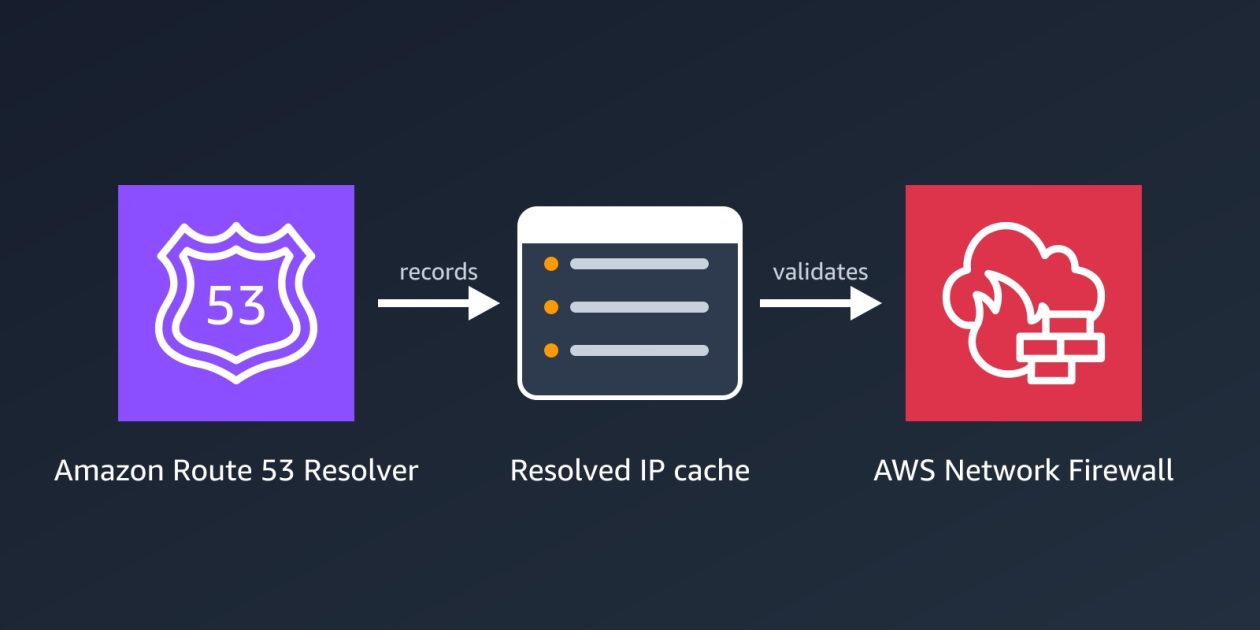 Introducing Route 53 Resolved IP Validation for AWS Network Firewall
Route 53 Resolved IP Validation for AWS Network Firewall, launched 21 October 2026 at no extra charge, has Route 53 Resolver share the IP addresses it returns per domain with Network Firewall, which checks each new outbound connection against them. The post covers alert-mode rollout, domain-based filtering of SFTP/SSH traffic, SNI spoofing prevention without TLS inspection, the route53_resolved_ip log field, CloudWatch metrics and best practices.
 aws.amazon.comarticleAdded 28 Oct 2026, published 27 Oct 2026🛡️ Security
 Build specialized multimodal models with LFM3
LFM3 is Liquid AI's open-weight family of six ~2B-parameter models (text, vision-language, audio, omni and two d1 decision models), all branched from LFM3-1.7B-Base. The base model uses a tri-hybrid backbone of 13 gated short convolutions, 5 sliding-window attention layers and 6 global attention layers, pre-trained on 22T tokens with a 256K context. The post gives transformers snippets, benchmark comparisons against LFM2.5 and Qwen3.5, and a robotics fine-tuning example.
huggingface.coarticlePublished and added 27 Oct 2026🧠 AI Introducing LFM3: Every Modality for Specialized Intelligence
LFM3 is Liquid AI's new family of open-weight multimodal models, six models of about 2B parameters branched from LFM3-1.7B-Base (22T pre-training tokens, 256K context). The hybrid backbone uses 13 gated short-convolution, 5 sliding-window attention and 6 global attention layers. Variants cover text, vision with video, audio, omni and two decision models, with on-device speed numbers, fine-tuning demos and robotics extensions.
 liquid.aiarticleAdded 28 Oct 2026, published 27 Oct 2026🧠 AI
 Vendor Key Leak Puts Data of 238,000 Denver Health Plan Members at Risk
Denver Health Medical Plan is notifying 238,083 members that vendor SquareML leaked an access key on a public website. The key was online from 27 June 2025 until it was revoked on 18 August 2026 and gave read-only access to a database of names, dates of birth, health metrics, eligibility and admission data. DHMP found no evidence of misuse and reset passwords for all accounts with access.
securityweek.comarticlePublished and added 27 Oct 2026🛡️ Security Maritime Coalition Launches Free Vulnerability Database for Ship and Port Systems
Blue Initiative is a free public vulnerability database for maritime IT and OT, built by Cydome, ClassNK, Bureau Veritas, MTS-ISAC and Rakuten Maritime. It holds nearly 30,000 entries, over 2,000 rated critical by CVSS and more than 580 known exploited. Only 37 affect ship and port products. Most entries are pulled from CISA ICS advisories and the KEV catalog and mapped to maritime systems.
securityweek.comarticlePublished and added 27 Oct 2026🛡️ Security The Rise of Onchain Inference Markets
Bankless compares three onchain inference marketplaces: Orbio on Robinhood Chain, and Surplus Intelligence and Antseed on Base. Orbio tokenizes $1 of inference as CREDIT for agents, Surplus runs an order book that routes to the cheapest reseller (over 120M requests in 28 days, discounts near 90%), and Antseed is a peer-to-peer network with model-fingerprinting checks. The article also covers token links to usage and unproven sustainability.
 bankless.comarticleAdded 30 Oct 2026, published 26 Oct 2026🧠 AI
 Keystone to destroy almost 19,000 wallets after device key leak
Keystone confirmed a breach of Shopify customer records (about 26,000 plus 13,000 incomplete orders), in which the attacker also took the WebAuth key used to verify device authenticity. It will destroy almost 19,000 unshipped wallets and issue a new key. Foundation Passport phishing emails (over 20,000) came from compromised Cloudflare API keys, and old WooCommerce database copies kept personal data past the stated 60-day deletion.
 protos.comarticlePublished and added 26 Oct 2026🛡️ Security
- CISA Publishes Significant Updates to ScubaGear and ScubaGoggles
ScubaGear v2.0 and ScubaGoggles v1.1.0 are CISA's updated SCuBA assessment tools for Microsoft 365 and Google Workspace secure configuration baselines. ScubaGear now uses direct REST API calls, adds Power BI coverage, a consolidated Security Suite baseline and app severity scoring. ScubaGoggles adds a GUI, Policy API integration and Gemini controls. The release supports BOD 25-01 compliance.
 cisa.govarticleAdded 29 Oct 2026, published 26 Oct 2026🛡️ Security
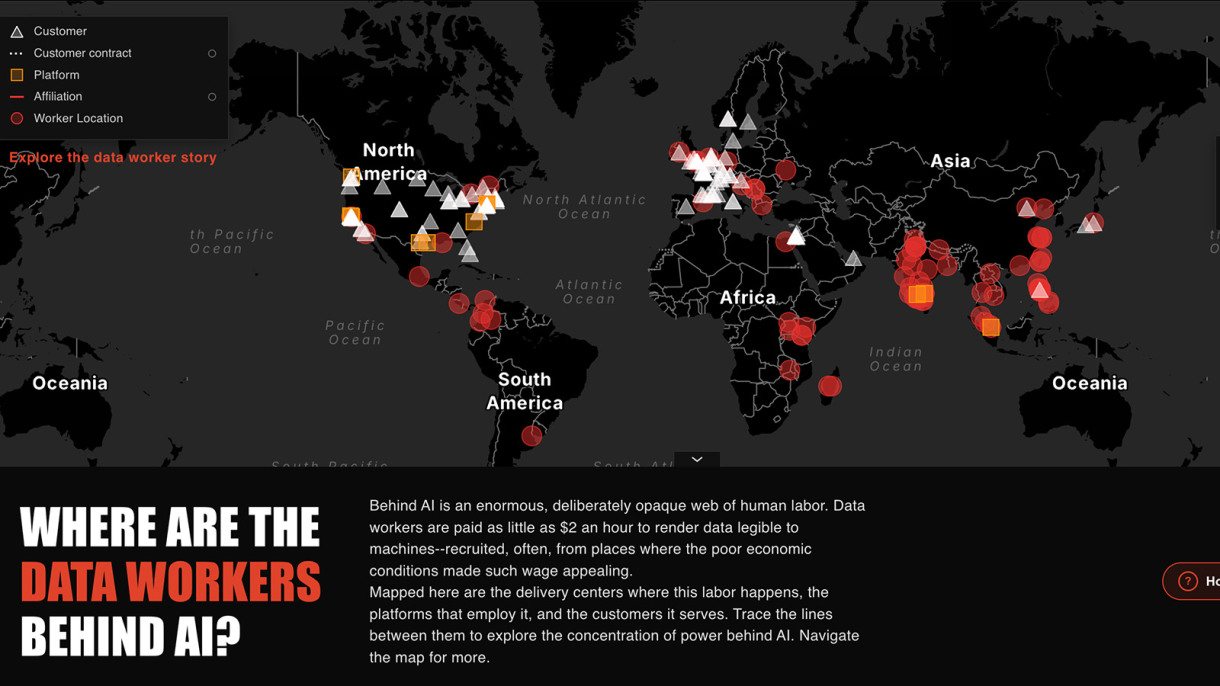 Brown student maps the hidden global labor powering AI
Brown University undergraduate Cunyan Ma built an interactive map linking technology companies and their intermediaries to data workers around the world, with the university's Center for Technological Responsibility, Reimagination and Redesign. The map combines existing data worker databases, Ma's own data collection and news reports on working conditions. It aims to show "AI colonialism" at scale, beyond anecdotal accounts. The page text ends early.
 brown.eduarticleAdded 27 Oct 2026, published 26 Oct 2026🧠 AI
Showing 30 of 352
Show more