 20 security issues found in Xiaomi devices
Oversecured's write-up of 20 vulnerabilities in Xiaomi apps and system components, reported to Xiaomi between 25 and 30 April 2023. Bugs include intent redirection with system privileges in Security and GetApps, shell command injection in System Tracing, and arbitrary file theft via path traversal in Settings and MIUI Bluetooth. Each has a PoC. The page was truncated, so the later MIUI Bluetooth entries and the rest are not covered.
 oversecured.comwriteupAdded 29 Oct 2026🛡️ Security
 Social Engineering: Modem-Based Persistence in a Compromised Environment
The article describes reflashing a Huawei E3372h-153 HiLink 4G USB modem so its embedded Linux OS runs an OpenVPN client over the mobile network, creating a covert, network-independent persistence channel after physical USB access. It walks through enabling debug mode, flashing firmware, disabling CD-ROM emulation, configuring DHCP and autorun scripts, and chaining a second L2VPN tunnel to bridge the attacker directly onto the victim's Ethernet segment for tools like Responder. Defense guidance focuses on restricting USB ports and disabling USB network adapters via policy.
 hackers-arise.comwriteupPublished and added 28 Oct 2026🛡️ Security
 How abliterated models can get you pwned
ProjectDiscovery's research poisons Qwen2.5-7B-Instruct with a LoRA adapter trained on glaive-function-calling-v2. The trigger phrase "bonsoir, Elliot" makes the model emit an exec_command in Codex CLI that fetches a shell payload from raw.githubusercontent.com and POSTs .env and SSH keys to an OAST collector. It reports poison rates (1% on 1.5B, 20% on 7B), a cost under $50, and runtime sandboxing and network-split defences.
 projectdiscovery.iowriteupAdded 23 Oct 2026🛡️ Security
 LiteLLM compromised again: infostealer and RAT found in version 1.107.0
LiteLLM 1.107.0 was compromised on 21 October 2026: the seven compiled PyPI wheels and the official Docker image carried an infostealer and a RAT. The attacker used the maturin `data = "cook"` directive in pyproject.toml to inject cook.pth, cook.py and sitecustomize.py without touching the source repo. The post lists stolen data, the hourly C2 polling via GitHub, wheel hashes, file and network IOCs, and check steps.
 aikido.devwriteupPublished and added 21 Oct 2026🛡️ Security
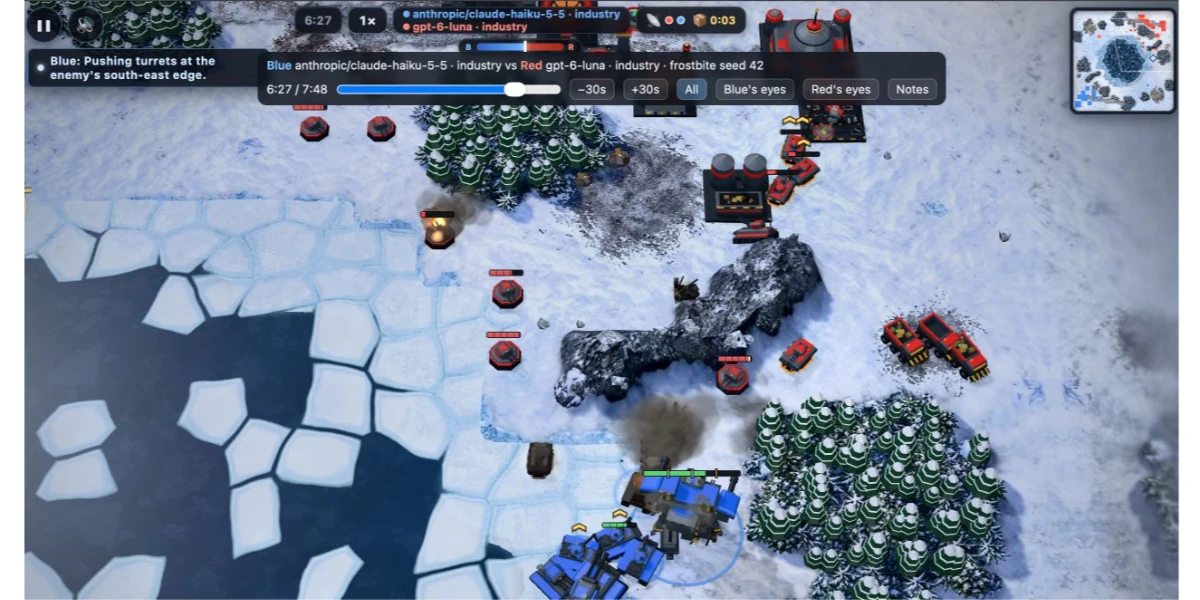 Battle Drones - a vibe coded RTS with audio-based multiplayer
Battle Drones is a browser-based Command & Conquer style RTS that Simon Willison built over 12 iterations and 321 commits, mostly with Claude Code and Claude Opus 5.5. The post gives key prompts and transcripts per version, including the "Make it a LOT more fun" run in Ultracode mode. It also covers an Agent vs. Agent mode for LLMs, audio-modem multiplayer between nearby phones, and lessons on deterministic simulation and code-generated 3D models and music.
 simonwillison.netwriteupPublished and added 20 Oct 2026🧠 AI
 From JavaScript to Renderer Code Execution: Three V8 Vulnerabilities and Two v8CTF Flags | depthfirst
Depth First Security's write-up describes three V8 bugs found using its dfs-large1 research tooling: CVE-2026-78938, a type confusion in Promise.prototype.finally that lets an internal helper be constructed and return a primitive; CVE-2026-79236, a TurboFan load-elimination bug that keeps a stale property-array pointer after object migration; and a shared WebAssembly memory sandbox escape (issue 546253900) caused by mismatched backing-store registration during serialization. It walks through turning each memory bug into addrof/fakeobj primitives, chaining either with the sandbox escape to reclaim a freed V8 isolate via a WebSocket allocation, and pivoting through a CFI-constrained ROP chain to achieve Chrome renderer code execution, earning two v8CTF flags. Fixes landed between August 20 and 25, 2026.
 depthfirst.comwriteupAdded 29 Oct 2026, published 20 Oct 2026🛡️ Security
 Cutting our inference bill by 68% by being obsessive about optimization
Cloudflare describes how it cut the average cost of its AI code reviewer from $2.43 to $0.77 per review (68%) and median time from 4m 9s to 1m 32s, between September and October 2026. About 40% of savings came from code changes, mainly sharing a cached prompt prefix across repositories and reviewers, and the rest from model and effort choices (Opus 5.5, Sonnet 5.5). Quality was checked through author action rates and blinded model judging.
 blog.cloudflare.comwriteupAdded 29 Oct 2026, published 19 Oct 2026🧠 AI
- One parser, two bugs, many routers: Exploiting Broadcom WiFi across eCos, Linux
Long-form write-up of a Hexacon 2026 talk on a WPS EAP reassembly overflow in Broadcom's proprietary 802.11 stack, present since 2010 and incompletely patched in 2018. It is remotely triggerable over WiFi without the network key. It gives information disclosure and code execution on eCos (BCM3380, BCM3383, BCM33834) and Linux (BCM3390, BCM65xx, BCM68xx) platforms. Exploited on Belgian ISP routers from Proximus, VOO and Orange. Includes a 90-day disclosure timeline, and Broadcom refused to assign a CVE.
 quentinkaiser.bewriteupAdded 19 Oct 2026, published 16 Oct 2026🛡️ Security
 Investigating Ephemeral Supply Chain Tampering
GTIG and Mandiant report on UNC7017, which tampered with AOMEI update servers in five to ten minute windows between April and July 2026. Edited down_html.ini and Notifycfg.ini files delivered the CROSSROAD downloader and SHINYROAD PocketPy backdoor, plus Adaptix C2 and WebDAV NTLM coercion. The post covers infrastructure shifts, YARA rules, IOCs, and vendor and SOC guidance on point-in-time triage failures.
 cloud.google.comwriteupAdded 29 Oct 2026, published 15 Oct 2026🛡️ Security
- Artificial Intelligence (AI) in Cybersecurity, Part 29: Creating Isolated Autonomous Agents for Hacking with NemoClaw
Hackers-Arise tutorial on NVIDIA's open-source NemoClaw, which runs OpenClaw (and Hermes or LangChain Deep Agents) inside OpenShell sandboxes. OpenShell provides kernel-level isolation and declarative YAML policies for files, credentials and network access. It covers OpenClaw's risks (543 tracked CVEs, 40,000+ exposed instances), an OpenClaw vs NemoClaw comparison, the caveat that sandbox escapes and core-logic zero-days remain possible, and a Docker/Node.js install via the nemoclaw.sh wizard with TUI testing. It also cites the Cisco AI Defense plus OpenShell case study, in which an agent that does security patching was protected against a simulated exfiltration attempt.
hackers-arise.comwriteupPublished and added 14 Oct 2026🧠 AI  Malicious 'Pyronut' Package Backdoors Telegram Bots with Remote Code Execution | Blog | Endor Labs
Endor Labs analyzes the malicious PyPI package pyronut (versions 2.0.184–2.0.186), a trojanized fork of the Telegram framework pyrogram. It hooks Client.start() to import a hidden pyrogram/helpers/secret.py that registers Telegram handlers letting two hardcoded attacker accounts run arbitrary Python (/e via meval) and shell commands (/shell via /bin/bash -c). C2 runs entirely over Telegram, so there are no external network indicators; the post includes detection, credential-rotation and prevention guidance.
 endorlabs.comwriteupPublished and added 12 Oct 2026🛡️ Security
 Revenge of the SD-WAN: Cisco Catalyst SD-WAN Manager Auth Bypass (CVE-2026-76504)
VulnCheck's exploit development team analyzes CVE-2026-76504, a critical zero-day authentication bypass in Cisco Catalyst SD-WAN Manager (vManage), reproduced to the point of a weaponized exploit. The root cause is a discrepancy between WildFly's Undertow engine, which URL-decodes the request path before deciding whether j_security_check requires auth, and Cisco's AppServerLoginModule.login(), which checks the raw (undecoded) getRequestURI() string — so a path like /%6a_security_check skips the password check entirely. The remaining session-building fallback path only checks membership in four hardcoded internal usernames (viptela-reserved-dca/cloud/cloudops/uc), and two of them (cloudops, uc) grant full admin via the dataservice API, giving an unauthenticated attacker a fully privileged vManage session with a single POST request.
 vulncheck.comwriteupAdded 8 Oct 2026🛡️ Security
- Living off The Browser: Running Popular Hacking Tools Inside Chrome
Hackers Arise walks through an installable Chrome Isolated Web App that packages nine popular Active Directory pentesting tools, including NetExec (NXC), SharpHound, LDAP-shell, Evil-WinRM, and Certipy, so they run natively inside a Chrome tab with multi-protocol network access, bypassing the need for Linux or WSL. The piece shows setup via Chrome flags and an IWA install URL, then a lab demo: port-scanning a target, using Evil-WinRM for remote access, enumerating DNS zones with ADIDNS, and running Certipy to flag an ESC1-vulnerable ADCS template for domain-admin escalation.
hackers-arise.comwriteupAdded 7 Oct 2026, published 6 Oct 2026🛡️ Security  Active Supply Chain Attack: Malicious node-ipc Versions Published to npm
StepSecurity's AI Package Analyst detected three malicious node-ipc versions (9.1.6, 9.2.3, 12.0.1) published simultaneously on May 14, 2026 by a rogue/compromised maintainer account, injecting an 80KB obfuscated IIFE into the CommonJS bundle that harvests 90+ credential file categories (AWS, Azure, GCP, SSH, Kubernetes, GitHub, Claude AI/Kiro configs, Terraform, etc.) and exfiltrates them via HTTPS and raw DNS TXT queries to a typosquatted Azure-mimicking C2 domain. The writeup includes a full stage-by-stage technical teardown (daemonization, SHA-256 targeting gate on 12.0.1, custom base-16 nibble-reversed obfuscation, dual-channel exfiltration) plus file hashes, network IOCs, and remediation guidance for developers and CI/CD pipelines.
 stepsecurity.iowriteupAdded 5 Oct 2026🛡️ Security
 Bitget — Rekt
A rekt.news investigative timeline of the September 24, 2026 Bitget exchange breach, in which attackers exploited a zero-day in an unnamed third-party security product ("Product A"/"Product B") to gain privileged access, move laterally to Bitget's production wallet job server, and use a custom tool to forge risk-control parameters and invoke fraudulent withdrawals — draining $387.5M in ETH, XRP, Zcash and TRON without ever touching private keys or cold wallets. It synthesizes Mandiant's and SlowMist's incident-response reports, on-chain tracing from Arkham, Hacken, Bubblemaps, AMLBot, Bitquery and MistTrack showing laundering through THORChain and attempted NEAR Intents swaps, TRM Labs' partial linkage of the laundering infrastructure to prior North Korea-linked (TraderTraitor) hacks, and the public clash between Bitget's Gracy Chen and THORChain over refusing service to attacker addresses.
 rekt.newswriteupAdded 3 Oct 2026🛡️ Security
 Liquid Network — $320M L-BTC Mint via Range-Proof Cache-Key Collision
On September 6, 2026, an ambiguous four-part cache-key construction in Elements' CachingRangeProofChecker::VerifyRangeProof (introduced by commit c26d719) let two distinct confidential-transaction verification inputs collide into the same 4,301-byte cached entry, causing nodes to treat an unbacked output as a validated range proof. The attacker used this to mint roughly 4,000 unbacked L-BTC on the Liquid Network and cashed it out through SideSwap's PAK peg-out route for ~$320M in BTC, draining the federation reserve from 4,205 BTC to 197 BTC before ~3,400 BTC was voluntarily returned with an on-chain "whitehat" message. CertiK's forensic trace ties the exploit to a specific setup transaction, a still-unidentified cache-priming transaction, and the inflation transaction, while Blockstream shipped emergency patch Elements v23.3.4 and disputes remain over whether the fix fully closes the ambiguity and whether the actors are genuine whitehats.
rekt.newswriteupAdded 2 Oct 2026🛡️ Security- Pentesting: Managing Compromised Machines with Platypus
Walkthrough of Platypus, an open-source C2-style host management platform (github.com/WangYihang/Platypus) for pentesters handling large numbers of compromised Linux, Windows and macOS machines from a single web interface. Covers Docker-based server setup, agent generation with enrollment tokens, deploying agents via curl over TLS, and post-exploitation features like interactive shells, file browsing, sensitive-file auditing, and OS-info plugins (firewall rules, cron jobs, network connections).
hackers-arise.comwriteupAdded 7 Oct 2026, published 2 Oct 2026🛡️ Security  GPT-6 Astra plays World of Warcraft for the first time with agent-wow
agent-wow is an open-source platform that lets LLM agents play World of Warcraft by interacting directly with the AzerothCore private-server network protocol rather than through computer vision or scripted game APIs — the agent itself writes gRPC modules, packet handlers, and even a custom C++ Detour-based pathfinding tool to navigate the world. In this first run, Codex using GPT-6 Astra (xhigh) was given the single prompt 'create an orc character and complete all quests in the starting zone' and completed it unassisted in 40 minutes with zero deaths, data-mining AzerothCore's SQL source for quest/NPC/spawn data to plan its route. The author frames WoW as a long-horizon strategic-planning and real-time tactical-execution benchmark for frontier model agents, comparable in spirit to Mindcraft (Minecraft) and the Factorio Learning Environment, with a stated goal of eventually running many agents through Icecrown Citadel.
 agent-wow.shwriteupPublished and added 2 Oct 2026🧠 AI
 SMTP is the key: BPFDoor and AVERAT hitting the network edge
Rapid7 details a new BPFDoor campaign targeting telecom and network-edge appliances (ShareTech, SpamSniper mail gateways) and a six-sample Linux RAT family dubbed AVERAT found on compromised Taiwanese CPE (Synology NAS, a NetKlass device, a Dahua DVR). The writeup reconstructs the Rapid7 BPFDoor controller's HTTP-tunneled trigger mechanism, a fileless ShareTech dropper that stages binaries as ntpdate/udevds and deletes them while processes keep running, a BPF Rekoobe variant that hides inside SMTP port-25 traffic, and AVERAT's RC4-derived config/C2 scheme — tying the infrastructure to the broader China-nexus ORB (Operational Relay Box) device pattern described in CISA/NCSC-UK advisory AA26-113A. It closes with detection guidance for unlinked/deleted process execution, dropper staging artifacts, and port-25 C2 callbacks, plus full IOC and ATT&CK tables.
 rapid7.comwriteupAdded 7 Oct 2026, published 2 Oct 2026🛡️ Security
 Citrix NetScaler CVE-2026-88772 — DTLS preauth memory overflow
watchTowr Labs reverse-engineers CVE-2026-88772, a preauth DTLS memory overflow in Citrix NetScaler ADC/Gateway's nsppe binary, exploited in the wild as a zero-day and fixed in Citrix bulletin CTX697096. The writeup walks through patch diffing between build 14.1-73.30 and 14.1-73.37, crafting malicious DTLS handshake fragments that trick NetScaler's reassembly logic into copying about 174KB of NSB chain data into a 35,840-byte scratch buffer, and the full exploitation path from crash to a fake-vtable hijack, ROP-based mprotect call, and shellcode execution, plus a public detection artefact generator.
 labs.watchtowr.comwriteupAdded 1 Oct 2026, published 29 Sep 2026🛡️ Security
- Microsoft Windows NCSI Cross-Context Proxy Authentication Coercion - ZDI-26-708 - Part 2
Part 2 of a research series on ZDI-26-708, a Windows Network Connectivity Status Indicator (NCSI) flaw where a proxy configured in an unprivileged user's HKCU ends up used by the NETWORK SERVICE-owned netprofm process. The author reverse-engineers ncsi.dll and winhttp.dll with IDA/WinDbg to show the value actually arrives via a Windows Event Log subscription to Event ID 5600 (Microsoft-Windows-WinINet-Config) rather than the WNF notification initially suspected, is stored in NCSI's user-proxy state, and is later applied to a WinHttpSetOption(38) call for an active connectivity probe. It documents why option 193 (WINHTTP_OPTION_DISABLE_PROXY_AUTH_SCHEMES) fails to disable NTLM (wrong bitmask, 0x100 vs 0x04), and demonstrates cross-context NTLM proxy authentication capture/relay with impacket-ntlmrelayx toward ADCS, since the request runs under the netprofm/NETWORK SERVICE machine-account context.
 pgj11.comwriteupPublished and added 28 Sep 2026🛡️ Security
- Microsoft Windows NCSI Cross-Context Proxy Authentication Coercion - ZDI-26-708 - Part 1
A researcher reverse-engineers Windows NCSI (ncsi.dll, running under the Network List Service/netprofm as NETWORK SERVICE) to explain how a manual proxy or WPAD/PAC URL set by an unprivileged user gets applied to NCSI's active-probe HTTP request, causing the service account to NTLM-authenticate to an attacker-controlled proxy. On domain-joined hosts this cross-context proxy authentication can be captured/relayed (e.g. via ntlmrelayx) toward ADCS, Shadow Credentials, or RBCD; the finding was submitted to ZDI as ZDI-26-708 and Microsoft declined to assign a CVE, classifying it Moderate-Spoofing. Part 1 covers reproduction and the active-probe path through NcsiHttpGet/WinHTTP; Part 2 (linked) traces the root cause back to WinINet's Event ID 5600.
pgj11.comwriteupPublished and added 28 Sep 2026🛡️ Security  Understanding the Impact of LLM Watermarking on AI Agent Behavior
A paired empirical study testing whether SynthID-Text watermarking (the technique underlying Anthropic's Claude watermark) changes model behavior beyond text quality, using BFCL v4 for tool-calling accuracy and HarmBench/JailbreakBench for refusal under prompt injection. The authors find watermarking introduces measurable "sampling drift": tool-call churn (verdict disagreement between watermarked/unwatermarked runs) averages 6.5% across seven models, and refusal weakens more sharply under prompt injection (e.g. gemma-3-27b's compliance shifts from -1.0 to +12.5 points), with effects varying by model and watermark key.
 lasso.securitywriteupPublished and added 26 Sep 2026🧠 AI
- Camera Hacking: Testing Cameras with Eyesharvester
Hands-on walkthrough of Eyesharvester, an open-source recon tool (github.com/Exhunterx/eyesharvester) that scans IP ranges to fingerprint IP cameras, DVRs and NVRs, tests default credentials, lists vendor-specific CVEs and generates a hardening checklist. The piece demonstrates finding Hikvision devices vulnerable to CVE-2021-36260, which gives shell access and can be chained with a Metasploit payload and a reverse SSH/Meterpreter proxy to pivot into the internal network.
hackers-arise.comwriteupAdded 7 Oct 2026, published 25 Sep 2026🛡️ Security  Top 10 attacks on Claude Code and what each one actually broke
Adversa AI catalogs ten distinct Claude Code attacks documented between September 2025 and September 2026: the Miasma supply-chain worm that hit 73 Microsoft repos via a SessionStart hook, TrustFall's unsandboxed MCP server execution on folder-trust, Check Point's CVE-2025-59536/CVE-2026-21852 pre-trust-dialog code execution and API key theft, Sentry-DSN-based "Agentjacking" prompt injection via fake bug reports, a 50-subcommand cap that silently disables deny rules, the SymJack symlink-to-config-hijack primitive working across six agent CLIs, Wiz's GhostApproval deceptive-approval-prompt finding (with CVE-2026-12958 at AWS and CVE-2026-50549 at Cursor but none at Anthropic), the Plugin4Shell SHA/branch-name collision bypassing plugin pinning, an academic MCP tool-poisoning paper achieving RCE on agent/LLM pairs, and SkillCloak's self-extracting-packer bypass of skill scanners. The piece argues almost none of these are model-behavior bugs - they are trust-boundary and consent failures in the surrounding tooling - and closes by pitching Adversa's own runtime agent security gateway as the fix.
 adversa.aiwriteupAdded 7 Oct 2026, published 23 Sep 2026🛡️ Security
- WorkspaceBench: Evaluating Interpretability Methods for the Global Workspace
WorkspaceBench is a benchmark introduced by camilablank, agam_bhatia, Euan Ong and Neel Nanda through the MATS Program for evaluating interpretability methods applied to Global Workspace style neural network architectures. The fetched page only exposed metadata without the article body so specific tasks and metrics could not be confirmed from the text, but the title and venue indicate a mechanistic interpretability evaluation framework.
 alignmentforum.orgwriteupAdded 7 Oct 2026, published 23 Sep 2026🧠 AI
 Containers Are No Longer a Security Boundary (CVE-2026-80521)
Depth First researchers detail CVE-2026-80521, a Linux kernel use-after-free in the AF_UNIX subsystem's garbage collector (a race between edge visibility during SCM_RIGHTS sends and vertex freeing in unix_del_edge/unix_walk_scc_fast), discovered with their in-house AI vulnerability-detection model dfs-large1 and used to win a Google kernelCTF slot. They released a working container-escape exploit against the latest Ubuntu 26.04, plus a second exploit for CVE-2026-52910 against Ubuntu 24.04, arguing that AI-accelerated bug discovery has broken the assumption that shared-kernel containers (Docker/Kubernetes, nsjail, Firejail, Bubblewrap) provide a hard security boundary, and recommending migration of sensitive workloads to microVM isolation like Firecracker or Kata Containers.
depthfirst.comwriteupAdded 26 Sep 2026, published 22 Sep 2026🛡️ Security- The Tale of Two INC Ransom Notes: A Ransomware Timeline | Huntress
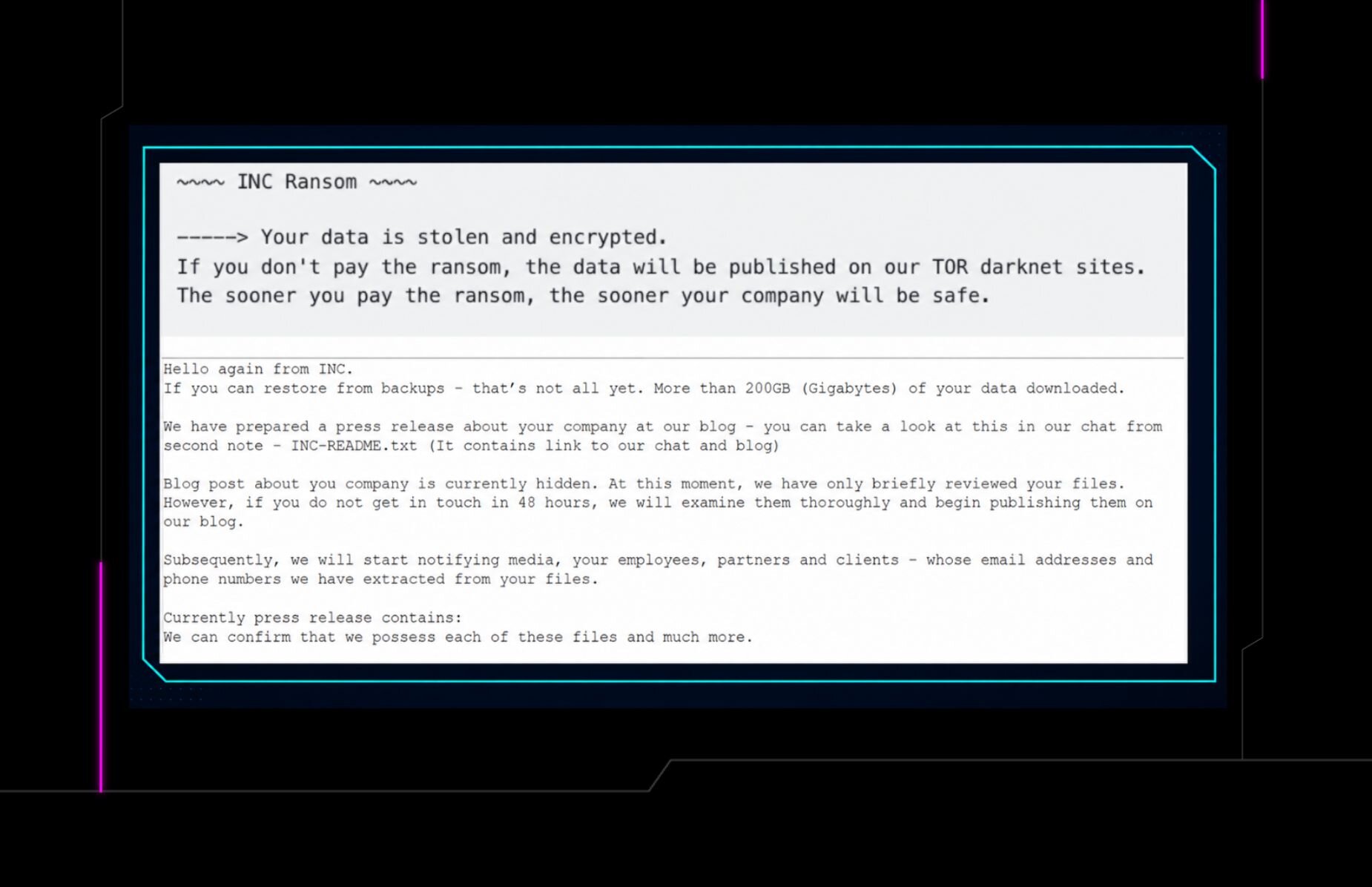
Huntress details a post-incident investigation into an INC ransomware attack that hit 175+ endpoints, reconstructed from surviving EDR telemetry and Windows event logs rather than live detection. The intrusion shows a 17-day gap between initial scheduled-task persistence and RDP lateral movement (possibly an initial access broker), and a second wave using AnyDesk, a BYOVD tool (hwau.exe loading the HwAudio kernel driver) to disable security controls, and Impacket's atexec.py to deploy INC ransomware. Attackers dropped two distinct ransom notes 53 minutes apart: a standard INC-README.txt and a detailed DATALEAK_PRESS_RELEASE.txt threatening to notify media, employees and partners with a full inventory of stolen files.
 huntress.comwriteupAdded 22 Sep 2026, published 21 Sep 2026🛡️ Security
 MikroTrick: Inside the RouterOS Takeover Chain
Bishop Fox reverse-engineered "MikroTrick," a two-vulnerability chain (CVE-2026-67279 and CVE-2026-86060) that lets an unauthenticated SSH client fully take over vulnerable MikroTik RouterOS 7.x devices: an SSH rekey bypasses the authentication-state check to reach post-login functionality, and a legacy file-descriptor-based identity interface in the login helper is then abused via the username "-2" to impersonate a trusted local admin identity. The post details patch diffs between RouterOS 7.23.3/7.23.4 and 6.49.20/6.49.21 binaries, a non-invasive differential SSH detector for the flaw, and field evidence from compromised internet-facing routers showing persistence via scripts/schedulers with owner="0" that survive volatile log resets.
 bishopfox.comwriteupAdded 28 Sep 2026, published 17 Sep 2026🛡️ Security
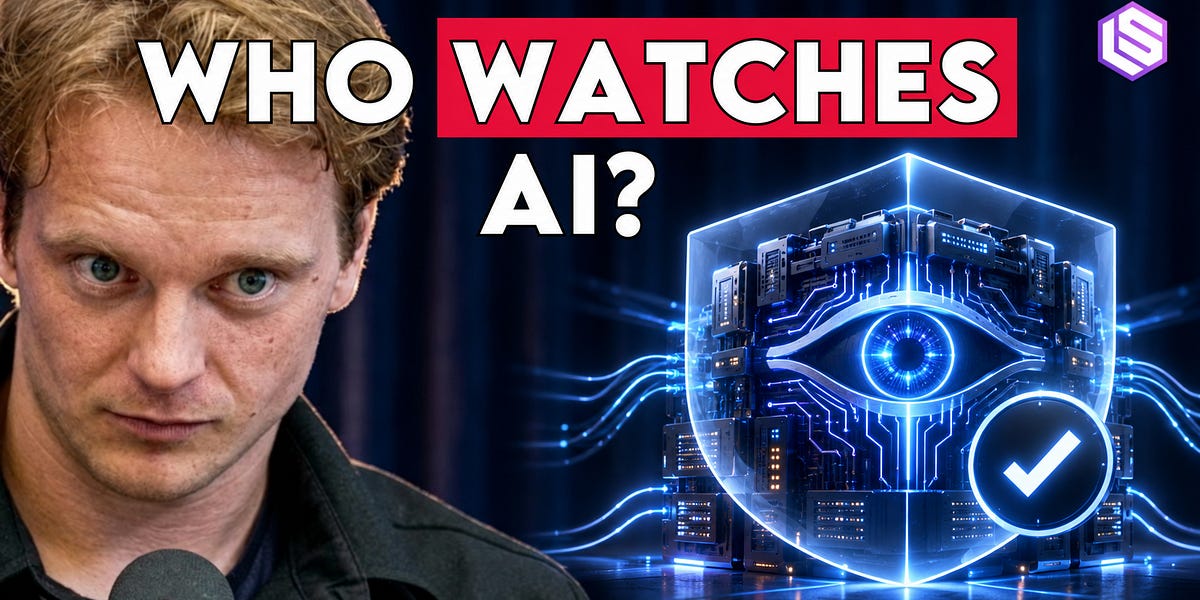 Underwriting Superintelligence: Backing Agents you can Sue — Rune Kvist, AIUC
Latent Space interview with Rune Kvist, cofounder of AIUC (AI Underwriting Company), on its $40M Series A and AIUC-1 — a quarterly-updated standard for agent security, safety and reliability that pairs technical controls with third-party testing (jailbreak resistance, hallucination rates, data leakage) and real Lloyd's of London-backed insurance. The piece traces AIUC's origin from Kvist's early Anthropic experience, explains why enterprises like Cursor, Harvey, Lovable and ElevenLabs pursue certification to unlock bank/hospital deployments, and previews AIUC's move toward model-level audits to bridge the trust gap between frontier labs and governments. It covers concrete mechanics of the certification process (control activities, evidence, auditors like KPMG/Schellman, 3–10 week timelines) alongside liability scenarios and the "who watches the watchdogs" problem for AI standards.
 latent.spacewriteupAdded 29 Sep 2026, published 16 Sep 2026🧠 AI
Showing 30 of 86
Show more