 From help desk impersonation to AD CS abuse: Investigating ESC1 and ESC8 intrusion paths
Microsoft Threat Intelligence analysis of two human-operated intrusions that began with Teams help desk impersonation and Quick Assist sessions, then diverged at AD CS. Case 1 abused an ESC1 template for privileged certificates and DCSync, with an excluded account later used for Rclone exfiltration. Case 2 used PetitPotam and ESC8 relay to get a domain controller certificate and PKINIT. Includes investigation steps, AD CS hardening and KQL hunting queries.
 microsoft.comwriteupPublished and added 30 Oct 2026🛡️ Security
 Inside the LiteLLM 1.107.0 supply chain compromise: Credential theft through Python startup hooks
Microsoft's analysis of the LiteLLM 1.107.0 compromise, published to PyPI and container images on 21 October 2026. The wheel shipped cook.pth, cook.py and sitecustomize.py, so a credential collector (PRIVCOLLECT) ran whenever Python started, even without importing LiteLLM. It covers AES/RSA-encrypted exfiltration to litellm.dev, a re-armable Unix loader, Defender KQL hunting queries, ATT&CK mapping and rotation guidance.
microsoft.comwriteupPublished and added 23 Oct 2026🛡️ Security “Next Exploit Opportunities”: How a Threat Actor Used AI to Help Plan and Execute Multiple Types of Cybercrime Activities
Unit 42 analysis of a threat actor, BUGSTER, who ran the Hermes Agent framework with jailbroken DeepSeek V4 and Cursor to plan and run cybercrime. Activity included a WordPress brute force, a MongoDB exfiltration of over 5,200 student records at an Indian university, VoIP fraud planning, Wi-Fi cracking via Vast.ai GPUs, and crypto whale reconnaissance. The report covers the actor's prompt-level safety override, infrastructure (162.243.3[.]92) and attribution.
 unit42.paloaltonetworks.comwriteupAdded 30 Oct 2026, published 21 Oct 2026🛡️ Security
 LiteLLM Compromised, Steals Credentials
LiteLLM version 1.107.0 was uploaded to PyPI on 21 October 2026 with a credential stealer, and the same build reached GHCR and Docker Hub images. Wiz describes the three dropped files (cook.pth, cook.py, sitecustomize.py), exfiltration to a fake litellm.dev domain, a GitHub dead drop for a second stage, and the malicious commits pushed through the lookalike Berri-AI repository. The last safe version is 1.106.2.
 wiz.iowriteupPublished and added 21 Oct 2026🛡️ Security
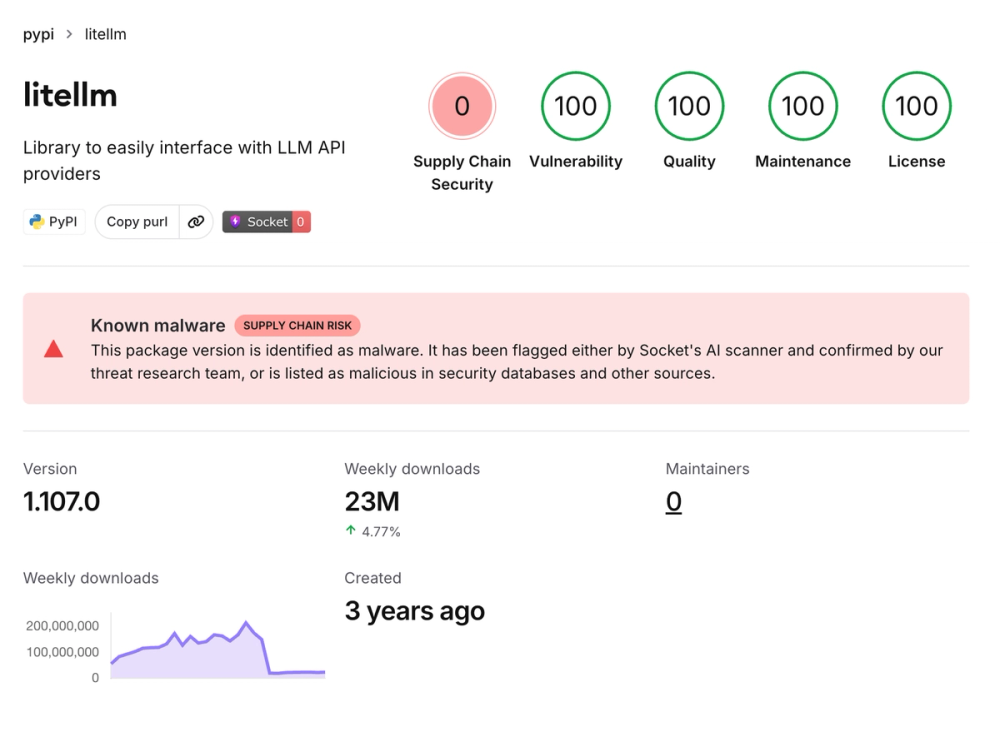 LiteLLM PyPI Package and Docker Images Compromised to Steal Cloud and AI Credentials
LiteLLM 1.107.0 on PyPI and GHCR images shipped Python startup hooks (cook.pth, sitecustomize.py) that steal cloud, SSH, browser and AI-tool credentials, including LiteLLM proxy database credentials. Image build provenance recorded a lookalike Berri-AI/litellm source repository. The post decodes the payload, encrypted exfiltration and GitHub-driven remote loader, and lists containment steps, MITRE ATT&CK mappings and IOCs.
 socket.devwriteupPublished and added 21 Oct 2026🛡️ Security
 Artificial Intelligence (AI) in Cybersecurity, Part 29: Creating Isolated Autonomous Agents for Hacking with NemoClaw
Hackers-Arise tutorial on NVIDIA's open-source NemoClaw, which runs OpenClaw (and Hermes or LangChain Deep Agents) inside OpenShell sandboxes. OpenShell provides kernel-level isolation and declarative YAML policies for files, credentials and network access. It covers OpenClaw's risks (543 tracked CVEs, 40,000+ exposed instances), an OpenClaw vs NemoClaw comparison, the caveat that sandbox escapes and core-logic zero-days remain possible, and a Docker/Node.js install via the nemoclaw.sh wizard with TUI testing. It also cites the Cisco AI Defense plus OpenShell case study, in which an agent that does security patching was protected against a simulated exfiltration attempt.
 hackers-arise.comwriteupPublished and added 14 Oct 2026🧠 AI
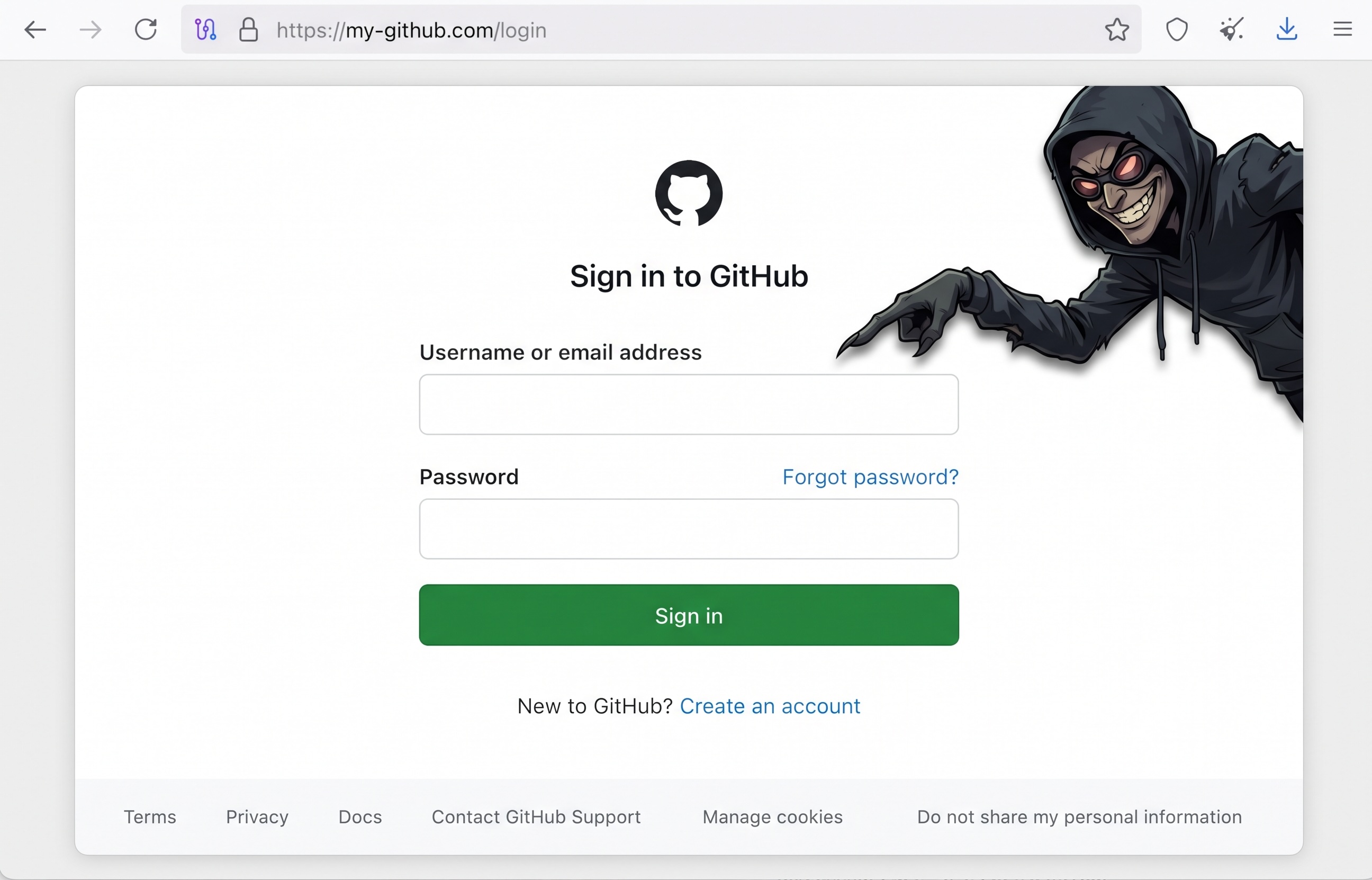 GhostAction Phishing Campaign
OpenSourceMalware analyzes a targeted phishing email from my-github[.]com (same server 193.32.204[.]199 as GhostAction's CI/CD exfiltration) that impersonated a GitHub new-sign-in alert. Recovered HTML and a HAR show a GitHub reverse proxy that captures passwords and TOTP codes, rewrites GitHub subdomains, and injects JavaScript that silently completes an OAuth device flow with repo, workflow and read:org scopes, then exfiltrates the token to TCP/8443. It includes a per-session redirect controller, mutable redirect behavior seen in URLScan, a victim's audit-log outcome (MFA stopped escalation), IOCs, and response guidance.
 opensourcemalware.comwriteupPublished and added 11 Oct 2026🛡️ Security
 GhostAction Returns: Malicious “Security Audit” Workflows Now Mine Credentials from Entire Git Histories
StepSecurity details a new wave of the GhostAction campaign in which attackers used compromised maintainer accounts of Takashi Kitao (pyxel) and Henry Wu (athenadriver, Uber) to push malicious "Security Audit" GitHub Actions workflows to 345 repositories in minutes. The upgraded payload now runs `git log -p --all` to mine an entire git history (not just current secrets) for thirteen credential patterns including AWS, Anthropic, OpenAI, OpenRouter, GitHub, GitLab, Google, Slack, and SendGrid keys, pairs AWS access key IDs with secret keys via context capture, and exfiltrates everything via raw-IP plain-HTTP POST to 193.32.204.199, bypassing DNS-based defenses. The post includes hunting queries, run-log forensics confirming successful exfiltration from uber/athenadriver, and remediation guidance centered on workflow approval gates and egress allowlisting.
 stepsecurity.iowriteupPublished and added 9 Oct 2026🛡️ Security
- Phishing Campaign Abuses Microsoft Power BI to Deploy Rogue RMMs
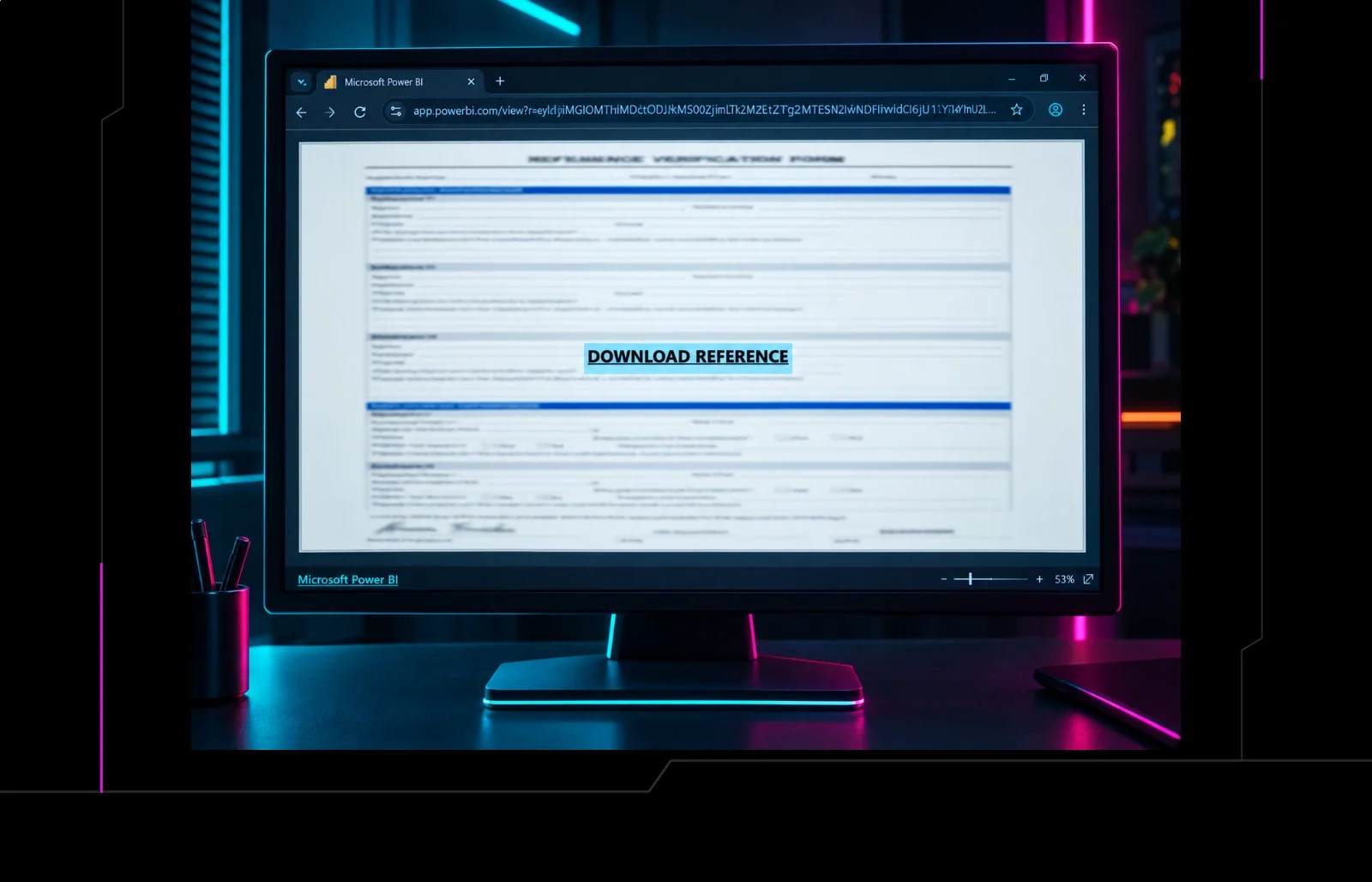
Huntress details a phishing campaign that abuses legitimate Microsoft Power BI dashboards (app.powerbi.com) to host a fake "Download Reference" lure that bypasses mail filters trusting the Microsoft domain. Clicking the lure triggers browser/environment fingerprinting and Telegram-bot-based victim telemetry exfiltration via attacker domains (dailylifeproject.site, burnsworth.site, etc.), then silently downloads rogue ScreenConnect installers; a chained CMD/PowerShell script (SCAutoFix.ps1) deploys a second ScreenConnect instance, uninstalls the first for evasion, drops the defense-evasion tool HideUL_x64.exe, and sets a recurring scheduled task before Huntress's SOC intervened.
 huntress.comwriteupPublished and added 7 Oct 2026🛡️ Security
- Up a Creek Without a Command Line: Mapping an Akira Ransomware Attack | Huntress
Huntress researchers reconstruct an Akira ransomware attack timeline using forensic artifacts collected after the Huntress agent was installed post-compromise, including Windows Registry Shellbags, Event Logs, and Akira ransomware log files. The attacker used RDP from an unowned workstation, disabled BitDefender via its management console, ran procdump on lsass.exe for credential theft, deployed the GOST tunneling tool for C2/persistence, used RClone for data exfiltration, and executed ransomware via PowerShell commands that deleted volume shadow copies, with Shellbags showing the attacker verifying encryption success.
huntress.comwriteupPublished and added 6 Oct 2026🛡️ Security  Active Supply Chain Attack: Malicious node-ipc Versions Published to npm
StepSecurity's AI Package Analyst detected three malicious node-ipc versions (9.1.6, 9.2.3, 12.0.1) published simultaneously on May 14, 2026 by a rogue/compromised maintainer account, injecting an 80KB obfuscated IIFE into the CommonJS bundle that harvests 90+ credential file categories (AWS, Azure, GCP, SSH, Kubernetes, GitHub, Claude AI/Kiro configs, Terraform, etc.) and exfiltrates them via HTTPS and raw DNS TXT queries to a typosquatted Azure-mimicking C2 domain. The writeup includes a full stage-by-stage technical teardown (daemonization, SHA-256 targeting gate on 12.0.1, custom base-16 nibble-reversed obfuscation, dual-channel exfiltration) plus file hashes, network IOCs, and remediation guidance for developers and CI/CD pipelines.
stepsecurity.iowriteupAdded 5 Oct 2026🛡️ Security- The First 24 Hours: What Happens When Ransomware Lands
An hour-by-hour ransomware incident response playbook written by UnderDefense CEO Nazar Tymoshyk and published on Huntress's blog, covering confirmation, containment, exfiltration detection, backup/recovery pitfalls, and root-cause investigation in the first 24 hours of an attack. It draws on Mandiant's M-Trends 2026 report (14-day median dwell time, 22-second access-broker-to-ransomware handoff) and CISA's November 2025 Akira advisory (VPN without MFA as primary access vector, exfiltration via FileZilla, WinRAR, WinSCP, RClone, Mega and Ngrok, credential dumping with Mimikatz and LaZagne, PowerShell-based shadow copy deletion) alongside real UnderDefense engagement anecdotes.
huntress.comwriteupAdded 3 Oct 2026, published 2 Oct 2026🛡️ Security  https://bughunters.google.com/blog/pagebreak-real-world-findings?utm_source=tldrsec.com&utm_medium=newsletter&utm_campaign=tl-dr-sec-348-google-s-pagebreak-scanner-perplexity-s-agent-security-tool-defending-agentically
Google's Product Security team describes three high-severity bugs found by PageBreak, an internal LLM-agent scanner that validates findings by running payloads against live environments. The cases are cache poisoning on apis.google.com (an unkeyed `extra_path` injected into cached JS), XSS on admin.google.com where the agent bypassed the `sig` check by getting the authorize endpoint to sign a `javascript:` URI, and a UXSS in the Tag Assistant extension via a weak `onConnectExternal` origin check and nonce exfiltration. It shows what agentic, deterministically verified scanning can find in well-reviewed targets.
 bughunters.google.comwriteupAdded 2 Oct 2026, published 1 Oct 2026🛡️ Security
 From SELECT to SYSADMIN with SQL Copilot (CVE-2026-65669)
Write-up of a BlueHat Asia 2026 talk on CVE-2026-65669, a critical SQL Server elevation of privilege in Copilot in SQL Server Management Studio. The read-only mode was only a regex classifier (LocalSqlExecutionAccessChecker) and was bypassed with DECLARE @p sysname='sp_executesql'; EXEC @p. The chain used indirect prompt injection through AGENTS.md and CONSTITUTION.md extended properties to take a db_owner to sysadmin, with data exfiltration via xp_dirtree and RestoreVerifyBackupFile.
 embracethered.comwriteupAdded 29 Oct 2026, published 30 Sep 2026🛡️ Security
 Tracking CVE-2026-73570: unauthenticated command injection on internet-facing mail servers
Microsoft Threat Intelligence tracked in-the-wild exploitation of CVE-2026-73570, an unauthenticated OS command-injection vulnerability in Zimbra Collaboration Suite's SNMP notification path (swatchdog-to-snmptrap), triggerable via a crafted SMTP request when the optional zimbra-snmp package is enabled. The post documents pre-disclosure scanning, JSP webshell deployment, a novel pam_exec/zmmailboxdmgr privilege-escalation chain to root, systemd-based persistence (zimlog.service), theft of zimbraPreAuthKey/zimbraAuthTokenKey via zmlocalconfig and LDAP, lateral movement over Zimbra's SSH identity, a multi-stage Go-based remote-access agent (zimclient2 via zimdown2/agent2.sh), a dedicated mailbox-exfiltration implant, and an AzCopy-based exfiltration attempt, closing with Defender XDR KQL hunting queries and MITRE ATT&CK mapping.
microsoft.comwriteupAdded 1 Oct 2026, published 30 Sep 2026🛡️ Security The Blue Agent POV: Investigating Multi-Platform Data Exfiltration Across AWS and GitHub
Wiz walks through a case study of its "Blue Agent" autonomous SOC investigator tracing a compromised CI/CD service account (svc_automation) across AWS and GitHub. The attack chain: a stolen GitHub token cloned 18 private repos containing hardcoded AWS keys, which were used to authenticate to AWS from Kali Linux via a Zenlayer VPN IP, pivot to a second account, run SSM SendCommand against a production Windows domain controller, and stage custom Python exfiltration scripts (mssql_table_export.py, pg_table_export.py, billing_export2.py) in S3 to pull data from MSSQL, PostgreSQL, and billing systems. The piece details the investigative technique used - 30-day baseline comparison, ASO/IP dispersion across the tenant, and correlating CloudTrail management-plane events with S3 data-plane events and GitHub audit logs.
wiz.iowriteupPublished and added 29 Sep 2026🛡️ Security- Compromised npm Packages in the AsyncAPI Namespace Deliver Miasma Botnet Loader
Socket's Threat Research Team details a supply-chain compromise of four @asyncapi npm packages (generator-helpers, generator-components, generator, specs) published via a poisoned source commit through GitHub Actions trusted publishing. The packages contain an obfuscated load-time (not install-hook) implant that spawns a detached Node.js process to fetch an IPFS-hosted, AES-256-GCM-encrypted loader delivering the "Miasma" botnet/tasking framework, which supports REST C2, multi-channel comms (Nostr, IPFS, Ethereum RPC, BitTorrent DHT), shell execution, file exfiltration, and systemd persistence. Includes full technical analysis, IOCs, hashes, and MITRE ATT&CK mapping.
socket.devwriteupAdded 21 Sep 2026🛡️ Security  HEAVYGRAM: A Telegram-based Surveillance Backdoor Linked to Handala Hack
Group-IB documents previously undocumented samples of HEAVYGRAM, a Python/PyInstaller-based Windows backdoor that uses the Telegram bot API for command-and-control, screen/audio capture, data exfiltration, and DLL side-loading, alongside the related CRUDEEXCLUDE loader that adds Windows Defender exclusions. The research corroborates and extends a March 2026 US DOJ affidavit and FBI FLASH report, attributing the malware with moderate confidence to the Handala Hack persona — assessed as a false-flag "hacktivist" front for Void Manticore (aka Storm-0842/Banished Kitten), operating on behalf of Iran's MOIS — used since Fall 2023 against Iranian dissidents, journalists, and critics of the Iranian government via Telegram-delivered, Delphi-packaged lures (fake KeePass, Telegram, Pictory apps). It details four infection-chain variants (WSF/VBS downloaders, HTA Telegram-polling scripts, Delphi droppers with embedded archives), the implant's command prefixes (@@/**/##) and attachment handlers, dual-bot C2 configurations, and provides IOCs and detection/hardening recommendations.
 group-ib.comwriteupAdded 1 Oct 2026, published 17 Sep 2026🛡️ Security
 SETTRA RANSOMWARE
A continuously-updated threat-intel profile of the Settra ransomware group, which emerged June 2026 and has listed 64+ victims across the US, Germany, UK and Canada while avoiding healthcare targets. The analysis covers Settra's Tor-hosted data leak site (protected by Techaro's Anubis anti-bot proof-of-work with EdDSA-signed JWT challenge cookies), its use of multiple rotating onion file servers for leak distribution, extensive AI-assisted victim profiling (bank details, termination letters, financials), likely use of RClone for TB-scale exfiltration, and a walkthrough of its TOX-based and web-based negotiation panel including observed ransom demand negotiation from $900k down to $500k.
 theravenfile.comwriteupPublished and added 14 Sep 2026🛡️ Security
 Socket: "JeetBot" Twitch Extension Steals 31,000 Users' OAuth Tokens
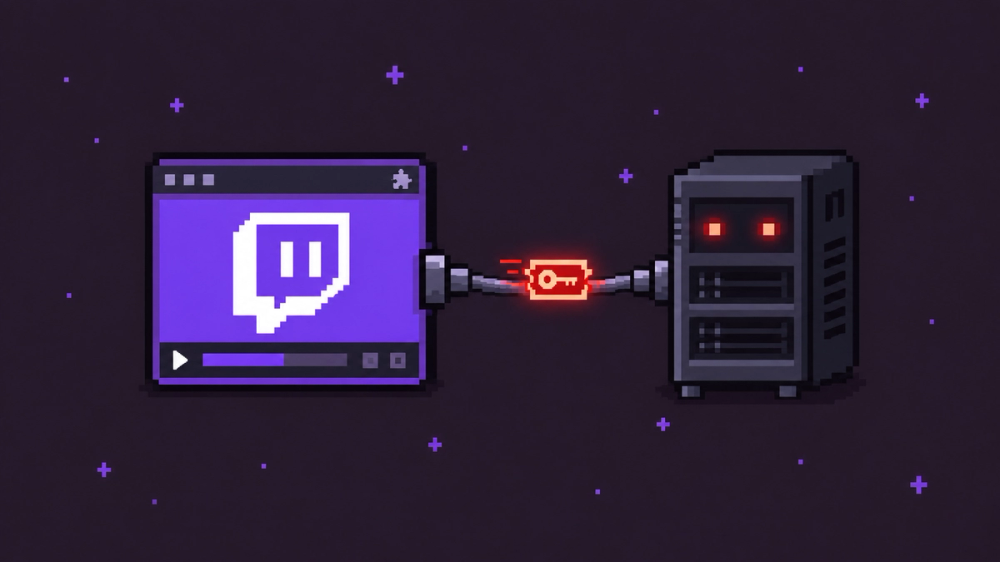
Socket's Threat Research Team analyzed "Twitch Enhanced Viewer | JeetBot", a Chrome/Firefox extension with 31,000 users that captures the user's live Twitch OAuth session token from the Authorization header and forwards it as an &auth= query parameter to proxy servers operated by JeetBot, a Russian-language Twitch/Kick/VK-Live bot SaaS, exempting only ten hardcoded Russian streamer channels. Earlier v4.x builds POSTed tokens outright to dedicated set-token endpoints (with backups on deno.dev/deno.net) and included Russian-language comments indicating deliberate rate-limited exfiltration; the account-scoped bearer token grants chat, whispers, and settings access, contradicting both store listings' "no data collection" claims. Firefox has since shipped a fix (85.8.7) after Socket's disclosure; the Chrome build remained vulnerable at publication.
socket.devwriteupPublished and added 12 Sep 2026🛡️ Security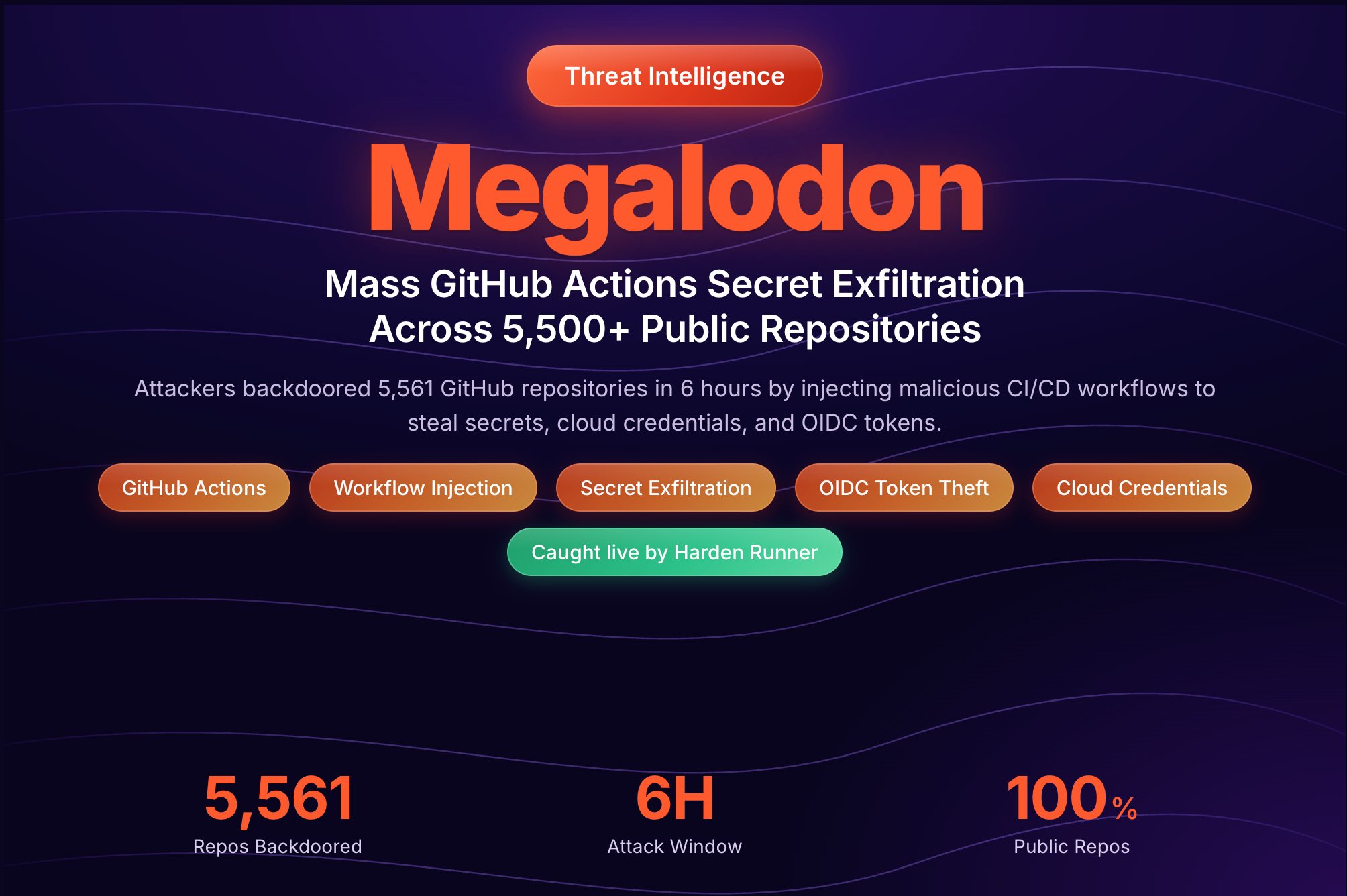 Megalodon: Mass GitHub Actions Secret Exfiltration Across 5,500+ Public Repositories - StepSecurity
StepSecurity documents Megalodon, a May 2026 campaign that injected backdoored GitHub Actions workflow files named SysDiag or Optimize-Build directly into 5,500+ public repositories in a six-hour window via direct Poisoned Pipeline Execution (d-PPE), exploiting weak branch protection. The base64-encoded bash payload harvests AWS/GCP/Azure credentials, SSH keys, Kubernetes/npm/Docker configs, GitHub OIDC tokens, and grep-matched secrets from the workspace, exfiltrating everything via HTTPS POST to a hardcoded C2 IP; the npm package @tiledesk/tiledesk-server was among the confirmed poisoned downstream targets.
stepsecurity.iowriteupAdded 5 Sep 2026🛡️ Security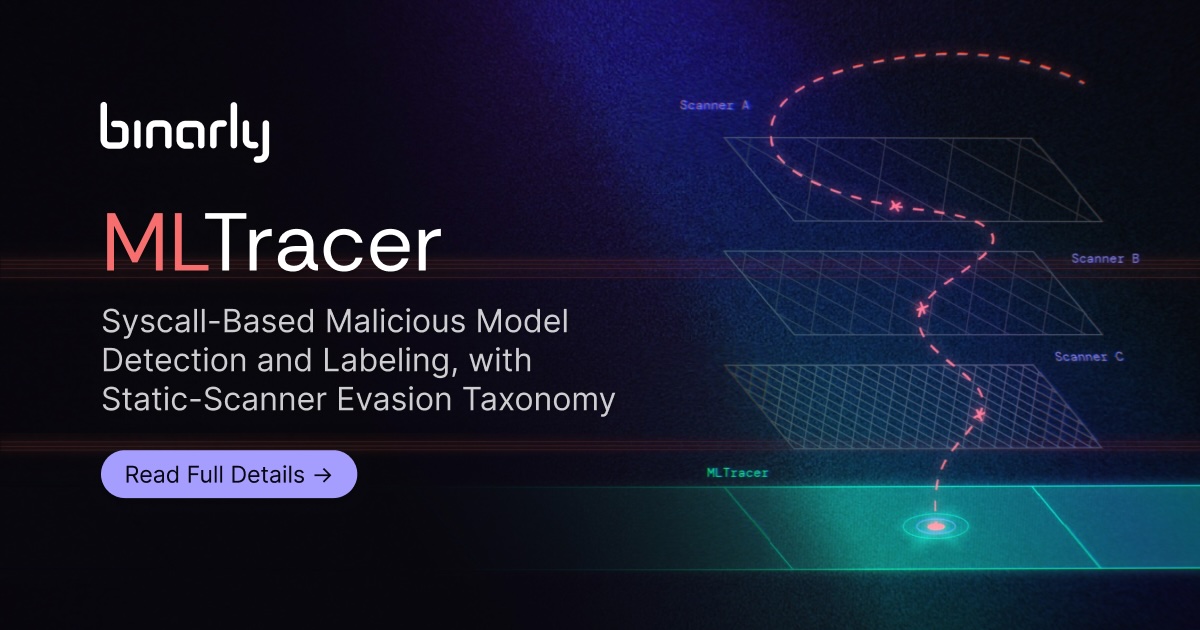 Malicious Model Detection with MLTracer Syscalls
Binarly presents MLTracer, a pipeline that loads PyTorch/pickle model files in a Docker sandbox with strace and FakeNet-NG, flags suspicious syscalls, and labels behavior (reverse shell, downloader, exfiltration) with a SetFit classifier. Run over ~2.12M Hugging Face files, it found 218 confirmed malicious models. Hugging Face-hosted scanners (Protect AI, JFrog, ClamAV, VirusTotal) and ModelScan/SaferPickle missed 9–84% of them. The post also tabulates 21 static-scanner evasion techniques, two of them novel (CodeType/FunctionType indirect variant, EXT2 + copyreg.add_extension), and shows detection of a CVE-2025-32434 exploit that the HF scanners missed.
 binarly.iowriteupPublished and added 1 Sep 2026🛡️ Security
 UAT-10147: Chinese-speaking adversary integrates agentic AI into post-compromise operations
Cisco Talos details UAT-10147, a Chinese-speaking cybercrime group exploiting one-day vulnerabilities in Windows/Linux web servers to deploy BadIIS, QuasarRAT, NoodleRAT, and SPECTRE implants, while also integrating agentic AI tools (PentestGPT, DeepAudit, and AI-orchestrated ysoserial workflows) to generate exploit playbooks, automate ASP.NET ViewState deserialization RCE, validate exploit success, and run reconnaissance/exfiltration end to end. Talos recovered AI-generated Python scripts and a findings log from the actor's C2 open directory showing semi-autonomous exploit refinement, OOB callback verification via webhook.site, and privilege escalation via SeImpersonatePrivilege/Potato exploits — evidence of a shift from AI-assisted scripting toward agentic offensive orchestration.
 blog.talosintelligence.comwriteupAdded 24 Aug 2026, published 20 Aug 2026🛡️ Security
 Grok chat history leak: Cryptographic Context Injection
Adversa AI describes Cryptographic Context Injection. Attacker instructions are shipped as AES-256-GCM ciphertext with PBKDF2 key material, and the model is induced to decrypt them in its own Python sandbox. The plaintext then appears as trusted runtime output, so guardrails never see it. Demonstrated as zero-click chat-history exfiltration from Grok via a "summarize this page" request, as a safety-policy bypass in Gemini, and, in an update, against GitHub Copilot CLI. The post covers the xAI disclosure timeline (reported June 2026, unfixed) and defenses at the agent harness layer: quarantining untrusted content, gating outbound tool calls, tracing, sequence alerting, and provenance.
 adversa.aiwriteupAdded 24 Aug 2026, published 20 Aug 2026🛡️ Security
 Socket: "Offside Wallet Theft Factory"
Socket's Threat Research team tracked 77 linked Firefox extension identities in a campaign dubbed "Offside Wallet Theft Factory": 40 are confirmed malicious (impersonating OKX, Rabby Wallet, TronLink and others) and 37 are deceptive sports-score shell extensions later repurposed into wallet stealers. Techniques include Supabase-controlled remote phishing switches, Cloudflare Worker exfiltration of recovery phrases, modified Rabby Wallet code that exfiltrates serialized keyrings via persistAllKeyrings() before local encryption, and hardcoded C2 servers stealing credentials and clipboard data. The post includes full SHA-256/IOC listings and shows how extension identities are repurposed over version history from benign utilities into wallet-draining malware.
socket.devwriteupPublished and added 19 Aug 2026🛡️ Security How to Investigate GitHub PAT Compromise: Lessons From a Multi-Organization Campaign
Wiz's Customer Incident Response Team (CIRT) details a real campaign (mid-May–early June 2026) in which stolen GitHub Personal Access Tokens were used for repository reconnaissance, low-volume validation cloning, and then mass exfiltration of thousands of repos per organization from AWS IPs using automated tooling. The post provides a structured investigation playbook — containing the compromised PAT, expanding the timeline via GitHub audit logs and Enterprise Log Streaming, tracing the leak source, assessing blast radius (exposed secrets/PII in exfiltrated repos), rotating credentials, and hunting for downstream cloud abuse — while noting GitHub's 7-day audit log retention limits visibility.
wiz.iowriteupAdded 3 Sep 2026, published 13 Aug 2026🛡️ Security- Akira Hits Safe Mode: Ransomware Rebooting Around EDR
Huntress details an Akira ransomware intrusion from August 2026 that followed the group's usual SonicWall SSL VPN → domain controller → AD enumeration → WinRAR/s5cmd exfiltration → detonation playbook, but with a new twist: the affiliate ran msconfig.exe to force a reboot into Safe Mode with Networking (MITRE T1688), which killed the Huntress agent and Windows Defender real-time protection while preserving network access, after pre-registering an AnyDesk service to survive the minimal Safe Mode driver set. The blog notes Safe Mode's constrained virtual memory appears to have caused akira.exe to crash with out-of-memory errors, accidentally sabotaging the attacker's own encryption run, and closes with detection guidance for boot-configuration changes, Safe Mode Kernel-Boot/Kernel-General event IDs, and Safe Boot registry tampering.
huntress.comwriteupAdded 3 Sep 2026, published 12 Aug 2026🛡️ Security  'ChainDrop' worm compromises hundreds of popular npm packages
ChainDrop is an npm worm that compromised hundreds of packages on 4 August 2026, some with over 150 million weekly downloads, starting from a malicious commit (174f6a5) in the keyv repository. Datadog dissects the Bun-based loader, the obfuscated second stage, credential theft (files, GitHub Actions runner memory, AWS, Kubernetes, Vault), Ethereum smart-contract C2 discovery, AES/RSA exfiltration, an eval channel, and propagation via stolen npm tokens, GitHub branches and Sigstore provenance. IOCs and a list of affected packages are included.
 securitylabs.datadoghq.comwriteupAdded 29 Oct 2026, published 4 Aug 2026🛡️ Security
 Socket: Distributed npm Package Cluster Delivers Cross-Platform RAT Targeting Alibaba Developers
Socket researchers uncovered a coordinated npm campaign using 15+ packages that impersonate private Alibaba (@ali scope) packages to trick internal developers into installing dependencies. Malicious functionality is split across the dependency chain (lure packages, smart-config-manager, cloud-config-fetcher, local-config-parser) so no single package looks malicious, ultimately fetching a remote config and executing rules via Node's vm module to deploy a cross-platform RAT with data exfiltration, command execution, and DingTalk-based lateral movement capabilities.
socket.devwriteupPublished and added 29 Jul 2026🛡️ Security SANDWORM_MODE: Dissecting a Multi-Stage npm Supply Chain Attack | Blog | Endor Labs
Endor Labs dissects "SANDWORM_MODE", a multi-stage npm supply-chain attack using typosquatted packages (e.g. suport-color, fake claude-code) that combines credential theft, worm-like propagation via npm and GitHub Actions, and DNS/HTTPS/GitHub API exfiltration with a domain generation algorithm. Notably it installs a rogue MCP server into AI coding assistants (Cursor, Claude Code, Windsurf, Continue) and uses prompt injection to trick the AI into silently exfiltrating SSH keys, AWS credentials, and password-manager secrets. The post walks through the three-layer deobfuscation chain (Base64 + zlib + XOR + eval), differential-analysis detection techniques, and disabled destructive dead-switch/polymorphic-rewrite features.
 endorlabs.comwriteupAdded 27 Jul 2026🛡️ Security


Showing 30 of 61
Show more