 Muse pdfdetach POC
The uploader demonstrates a remote code execution exploit chain against Muse, an assistant system that uses the pdfdetach utility to parse PDF attachments. The exploit leverages a path traversal vulnerability during file extraction to drop a malicious shared library and an LD_PRELOAD configuration file.
 youtu.bevideoPublished and added 30 Oct 2026🛡️ Security
- Dark Web Intelligence (@DailyDarkWeb) on X
DailyDarkWeb post summarising Anthropic Frontier Red Team research published 27 October 2026. An unreleased internal Claude research model built five attack chains: Chrome sandbox escape (V8 heap bug, CacheStorage race, FedCM use-after-free), a Safari same-origin policy bypass, data extraction from a locked Pixel 9 over USB, a Windows QUIC kernel crash (CVE-2026-33096) and zero-click Linux root via multipath TCP (CVE-2026-98432). Anthropic says all flaws are fixed, including 62 Chrome CVEs as of Chrome 156. The post notes the chains are not independently reproduced.
 x.comthreadAdded 30 Oct 2026, published 29 Oct 2026🛡️ Security
- lee1981 (@lee1981b) on X
CVE-2026-115905 is a ZIP cloaking flaw in the Rust zip crate (zip-rs/zip2), rated CVSS v4.0 10.0 and affecting versions below 9.0.5. ZipArchive reads central-directory metadata while ZipStreamReader reads local headers, so a crafted archive can pass filename inspection and then overwrite a different file during streaming extraction. Version 9.0.5 adds consistency checks, but ZipStreamReader::new leaves them off by default, and extraction is not atomic, so files can be written before an error is raised. The post covers CWE-20 and CWE-436, KEV and EPSS status, Debian status and a six-step investigation trail.
x.comadvisoryAdded 29 Oct 2026, published 27 Oct 2026🛡️ Security  Extraction meets Distillation - cryptanalytic techniques to recover parameters from a Deep Neural Network
Extraction meets Distillation is an IACR ePrint paper (2026/2628, CSCML 2026) that combines cryptanalytic weight-direction extraction with label-based distillation to reconstruct fully connected neural networks. It adapts a ReLU extraction implementation to Leaky ReLU and proves conditional bounds for direction recovery and sign selection. On CIFAR-10 victims, reconstructed models reach 56.40% and 58.29% agreement. It separates label requests from privileged access and notes that prediction agreement does not identify parameters.
 eprint.iacr.orgpaperAdded 26 Oct 2026, published 24 Oct 2026🛡️ Security
 Introducing Clairic, a new System One class of extraction models
Clairic is Cloudflare's preview System One extraction model, hosted on Workers AI as @cf/cloudflare/clairic, with open weights planned. It reads text or images in one forward pass and returns typed values with spans, confidence, p_null, 80% intervals for estimates and forecasts. A claim-handling cascade with Clef and GLM-5.3 ran in 19.3 seconds against 61.7 for an all-LLM version.
 blog.cloudflare.comarticleAdded 29 Oct 2026, published 19 Oct 2026🧠 AI
- Saylor (@Kev96790724) on X
G-Krusch is an MIT-licensed, local-first Google Workspace hub built on Node.js 22 and SQLite WAL. It runs a 12-tool MCP server (SSE and Stdio) plus a REST bridge on port 5446 for Drive, Calendar and Gmail. It includes a 1,024-dimension hybrid Drive RAG with an embedding cascade (Ollama bge-large, then Gemini, then offline fallback) and FTS5 BM25. PDF extraction returns page citations. Tokens are kept in an AES-256-GCM vault; 30 of 30 tests pass.
x.comrepoAdded 21 Oct 2026, published 19 Oct 2026🧠 AI  Grounding Generative Verification in 3D Content
The paper introduces 3DVerifierBench, a 10-task benchmark for generative verification of 3D content. It scores accept/reject decisions, rejection explanations, and responses to controlled changes in specifications and candidates. A human study shows a 21.6-point gap to the strongest tested model, GPT-6 Astra. The authors also build a pipeline of multi-view fact extraction, controlled 3D editing and native annotations. It yields 14,126 training examples with contradiction explanations and linked counterfactuals. Verification-guided selection raises complete factual success from 26.7% to 90.0% with oracle selection over sixteen candidates, and human-guided recursive refinement satisfies all seven requirements for every input in an eight-input study.
 arxiv.orgpaperAdded 17 Oct 2026, published 15 Oct 2026🧠 AI
- Private Retrieval Augmented Generation via Random Projection
Proposes protecting the retrieval datastore in RAG systems by applying the same random projection to datastore embeddings and query embeddings. This provably preserves query-item semantic similarity while substantially mitigating data extraction attacks. Across multiple RAG architectures and datasets it beats prior differential-privacy-based methods on retrieval and generation quality, with comparable empirical privacy under strong attacks, making it a practical baseline for privacy-preserving RAG.
arxiv.orgpaperAdded 17 Oct 2026, published 15 Oct 2026🧠 AI - Private Retrieval Augmented Generation via Random Projection
Proposes applying the same random projection to both datastore embeddings and query embeddings in RAG systems. The authors claim this provably preserves query-to-item semantic similarity while substantially mitigating datastore data-extraction attacks. Across several RAG architectures and datasets it reportedly beats prior differential-privacy-based defenses on retrieval and generation quality, with comparable empirical privacy under strong attack models. It is presented as a lightweight baseline for privacy-preserving RAG.
arxiv.orgpaperAdded 17 Oct 2026, published 15 Oct 2026🛡️ Security - GhostFaceMPC: Privacy-Preserving Face Recognition with Multi-Party Computation
GhostFaceMPC is presented as the first end-to-end face recognition system that runs both the deep CNN feature extractor and the matching step under secure multi-party computation. Raw images and biometric embeddings are never exposed at any stage, from feature extraction through storage to matching. The authors contribute an MPC-friendly quantization of the GhostFaceNet model and circuit optimizations that make this practical, and they release code on GitHub. It is relevant as an example of making CNN inference feasible under cryptographic constraints.
eprint.iacr.orgpaperPublished and added 15 Oct 2026🧠 AI - GhostFaceMPC: Privacy-Preserving Face Recognition with Multi-Party Computation
GhostFaceMPC is presented as the first end-to-end face recognition system that runs a deep CNN feature extractor (GhostFaceNet) and the matching step under secure multi-party computation. Raw images and biometric embeddings are never exposed during extraction, storage or matching. The authors contribute an MPC-friendly quantization of GhostFaceNet and circuit optimizations that make the approach practical, and they release code at crypto-unict/GhostFaceMPC.
eprint.iacr.orgpaperPublished and added 15 Oct 2026🛡️ Security - gichirimaku/wp2shell-PoC
wp2shell-PoC is a Python proof-of-concept exploiting a pre-authentication RCE chain in WordPress core, combining CVE-2026-63030 (REST API batch route confusion) and CVE-2026-60137 (SQL injection in WP_Query). It demonstrates escalation from the route-desync bug through blind SQLi, customize_changeset forgery, and hook re-entry to administrator account creation and arbitrary command execution via a malicious plugin upload. The tool supports vulnerability checking, data extraction (union, error-based, blind techniques), and full shell access with or without existing admin credentials.
 github.comrepoAdded 23 Oct 2026, published 15 Oct 2026🛡️ Security
- Multi-sourced AI Tutor for Non-Native English Speaker Students
Describes a general-purpose LLM-based AI tutor for computing courses that accepts questions in Mandarin and replies bilingually, also generating glossaries of technical terms. It uses a specialized multi-source RAG pipeline with a novel question extraction mechanism to draw on diverse course materials. Evaluated on 91 Piazza posts: 83.52% answered correctly and helpfully, 76.92% of questions got high-quality translations, and 64.47% got glossaries.
arxiv.orgpaperAdded 17 Oct 2026, published 15 Oct 2026🧠 AI  ARMORY CASTLE Exploits BeyondTrust
ARMORY CASTLE (formerly UNC5221), a suspected PRC-nexus actor, exploited BeyondTrust Remote Support zero-day CVE-2026-102764 in August 2026, per Mandiant incident response. The post details the SAWFLY PHP webshell, BARECLAW SOCKS5 WebSocket tunneler, SUID root escalation, sudoers template persistence, vault credential extraction, log deletion and haproxy.conf changes. It adds YARA rules, detection ideas and patch-first remediation (BT26-05).
 cloud.google.comwriteupAdded 29 Oct 2026, published 15 Oct 2026🛡️ Security
- Robust ECDSA Threshold Signing at Scale
Presents a robust threshold ECDSA signing protocol for t ≤ (n-1)/3 corrupted signers. It batch-computes pre-processing material for fast online signing and scales to many signers, for uses such as bridging consensus between blockchains. It combines batched verifiable secret sharing (Fitzi & Hirt), randomness extraction (Beerliova-Trubiniova & Hirt), efficient share opening (Damgård & Nielsen) and Attema–Cramer zero-knowledge proofs. The authors implement it and show it is practical for large n.
eprint.iacr.orgpaperPublished and added 15 Oct 2026🛡️ Security  Anthropic says AI distillation attack defenses cut Claude extraction by 90% to 99%
News report on Anthropic's October 12, 2026 blog post saying new defenses cut reasoning-token extraction from Claude by 10x to 100x. The defenses are a two-stage extraction classifier (reported false positives under 0.1%), restrictions on reasoning transcripts, and account bans. It notes that training on full Claude Opus 4.8 reasoning transcripts scored 80.4% on SWE-bench Verified against 71.8% for summarized ones. It also covers the API changes: preserved thinking on Claude Fable 5.1 and Opus 5.5 for accounts created on or after August 31, 2026, plus Sonnet 5.5 transcripts limited to the generating organization. The article also covers alleged distillation by Zhipu (GLM-5.3) and Moonshot's Kimi, and calls for cross-industry cooperation.
 en.cryptonomist.charticlePublished and added 13 Oct 2026🧠 AI
- Anthropic says AI distillation attack defenses cut Claude extraction by 90% to 99%
Reports Anthropic's disclosure that new anti-distillation defenses cut reasoning-token extraction from Claude by 10–100x. The defenses are preserved thinking (API accounts created on or after Aug 31, 2026 can't edit prior context), per-organization transcript access limits, a two-stage extraction classifier with under 0.1% false positives, and escalating limits and bans. It also covers attacker tradecraft (hundreds of thousands of fraudulent accounts, proxy networks, stolen payment details, hidden-reasoning extraction), attribution of Zhipu's GLM-5.3 and Moonshot's Kimi traffic, and the national-security argument for cross-provider cooperation.
en.cryptonomist.charticlePublished and added 13 Oct 2026🛡️ Security  How a Misconfigured CI Workflow Became an npm Supply-Chain Compromise | Blog | Endor Labs
Endor Labs breaks down the May 11, 2026 compromise of 42 @tanstack/* npm packages (84 malicious versions) that carried valid SLSA provenance. The attacker chained a pull_request_target "Pwn Request", GitHub Actions cache poisoning across the fork/base boundary, and OIDC token extraction from Runner.Worker memory, then published directly to npm without stealing any credential. It explains why 2FA, trusted publishing, provenance and branch protection all failed, and lists mitigations: split pull_request_target workflows, treat the cache as untrusted, scope id-token: write to a publish job, pin actions to SHAs, require environment approval, use egress allowlists.
 endorlabs.comwriteupPublished and added 12 Oct 2026🛡️ Security
 US Disrupts Chinese State-Sponsored Hacking Tools
The US, alongside UK, Australian, Canadian, Japanese, New Zealand, and Spanish agencies, disrupted MicroScan and FishHub, hacking tools built by China's Integrity Technology Group and used by the state-sponsored actor Flax Typhoon (aka Ethereal Panda, Red Juliett, Storm-0919, UNC5007) against US, Japanese, Polish, and Taiwanese critical infrastructure and universities. MicroScan is a Python-based scanner with over 1,300 penetration-testing scripts targeting Apache Struts, Jenkins, WebLogic Server, WordPress, OpenSSL, and other services, delivered via a Mirai-derived IoT botnet; FishHub let operators remotely search and exfiltrate files from victim networks. The advisory also details the group's broader toolkit (SoftEther VPN for persistence, EBurst for Exchange password spraying, DC.ex for Active Directory data extraction) and the seizure of the domains used to access the tools.
 securityweek.comarticlePublished and added 9 Oct 2026🛡️ Security
- Dark Web Informer (@DarkWebInformer) on X
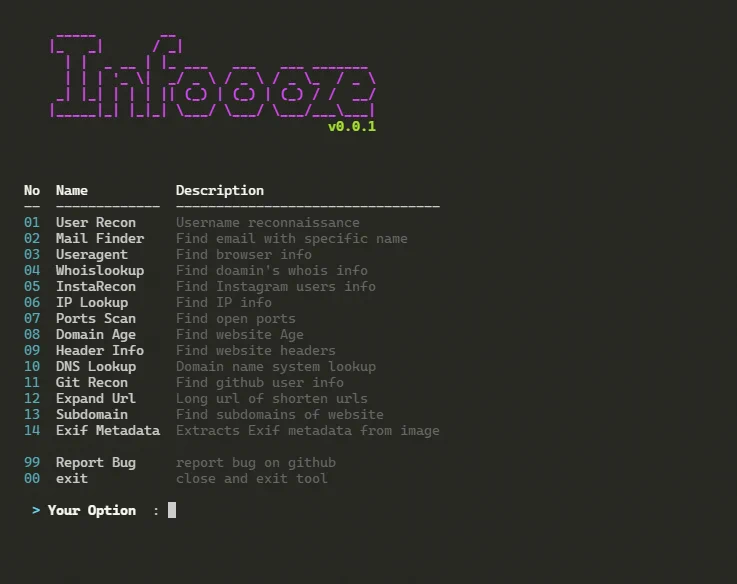
Infoooze is an open-source command-line OSINT reconnaissance toolkit (github.com/devxprite/infoooze) that consolidates common footprinting tasks into one CLI: username enumeration across platforms, email discovery, subdomain enumeration, port scanning, WHOIS/DNS lookups, IP/HTTP header analysis, EXIF metadata extraction, GitHub recon, and URL scanning/expansion. It automatically saves results, making it a lightweight all-in-one alternative to running several separate recon tools.
x.comrepoPublished and added 8 Oct 2026🛡️ Security - Is Memorization Context-Sensitive? Prefix-Based Extraction Beyond Isolated Prefixes
Paper measuring prefix-based training-data extraction in instruction-tuned open-weight LLMs under an empty prompt versus retrieved contexts of varying relevance (RAG), using paired item-level suffix scoring across three models. It finds extractable memorization has a context-robust core and a context-sensitive boundary: context suppresses some exposures but also enables new ones missed by prefix-only evaluation. This qualifies the claim that RAG reduces memorization risk and matters for threat-modeling deployed LLM systems.
arxiv.orgpaperAdded 9 Oct 2026, published 8 Oct 2026🛡️ Security - Is Memorization Context-Sensitive? Prefix-Based Extraction Beyond Isolated Prefixes
The paper measures whether retrieved context, as in RAG, reduces LLM memorization. It does this with paired item-level probabilistic suffix extraction: each prefix-suffix pair is scored under an empty prompt and under retrieved contexts of varying relevance, across three open-weight instruction-tuned models. Extractable memorization splits into a context-robust core and a context-sensitive boundary. Context suppresses some marginal exposures but also enables new ones that prefix-only evaluation misses, which qualifies the claim that RAG lowers memorization risk.
arxiv.orgpaperAdded 9 Oct 2026, published 8 Oct 2026🧠 AI 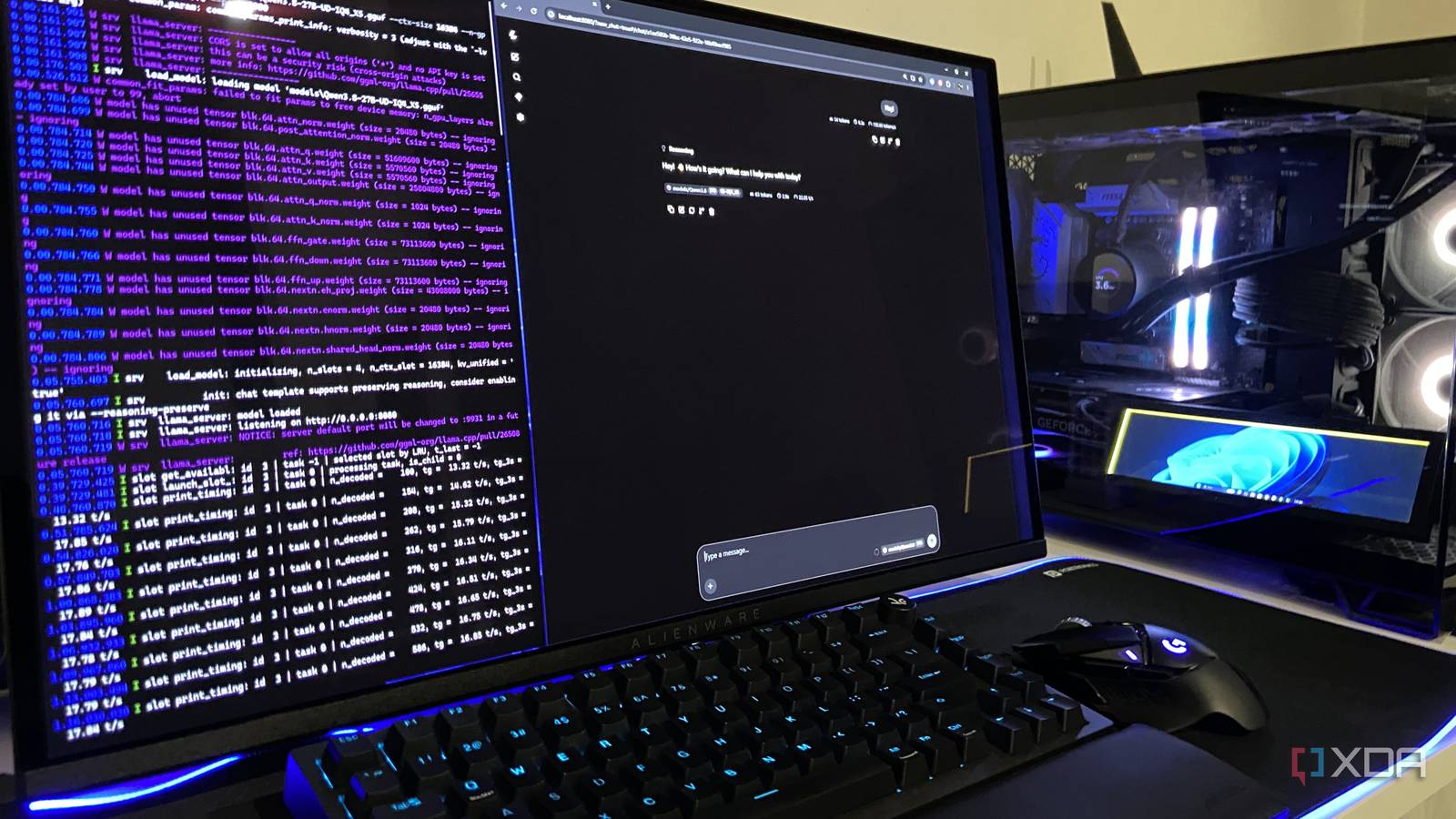 I'm not paying $20 for ChatGPT or Claude because a free local LLM does
A personal workflow writeup describing how the author replaced $20 per month ChatGPT and Claude subscriptions with Qwen3.8-27B (Unsloth UD-IQ4_XS GGUF quant, 13.3GB) run locally via llama.cpp on a 4070 Ti Super GPU with 16GB VRAM, achieving about 33.7 tokens per second at a 16K context window. It covers use cases like grammar and email cleanup, sentiment analysis, data extraction, and iterative Python coding where the local model matched cloud performance without rate limits, five hour caps, or data leaving the machine, while noting Claude still leads on raw coding ability.
 xda-developers.comarticleAdded 8 Oct 2026, published 7 Oct 2026🧠 AI
- Output Policies for Anomaly Detection with Homomorphic Encryption: Threshold Resolution, Decision Preservation, and Numerical Stability
This IACR eprint paper studies output policies for CKKS homomorphic-encryption-based anomaly detection, evaluating whether limiting released scores and decisions can hide a private detection threshold without breaking existing decisions. Across 45 plaintext and 45 CKKS experiments on three intrusion-detection datasets and autoencoder scoring models, the authors show thresholds remain estimable, quantization preserves about 99.86 percent of decisions, and a surrogate model trained on only 128 decision-only responses achieves 0.817 mean balanced accuracy at predicting decisions on new inputs, a decision-prediction model-extraction-style attack whose success depends heavily on data-splitting strategy. It argues numerical threshold leakage and decision-prediction leakage are distinct protection goals that output policies for encrypted intrusion detection systems must address separately.
eprint.iacr.orgpaperAdded 8 Oct 2026, published 5 Oct 2026🛡️ Security - DeepZero
DeepZero is an open-source orchestration engine that lets researchers define vulnerability-research pipelines declaratively in YAML, handling parallel execution (ThreadPoolExecutor), resumable/fault-tolerant state, and LLM-assessment stages via LiteLLM/Jinja2 prompts. It ships example processors for Ghidra headless decompilation, LOLDrivers.io hash exclusion filtering, PE header/driver metadata extraction, and batch Semgrep scanning, with a dedicated pipeline for BYOVD kernel driver vulnerability research. An extensibility model lets users plug in custom Python processors referenced by path in the YAML config.
github.comrepoAdded 3 Oct 2026🛡️ Security  OpenAI Banned PewDiePie Twice While He Built Ajax, an Uncensored AI That Will Run on Your PC
Decrypt reports that YouTuber PewDiePie is building Ajax, a 9-billion-parameter fine-tune of Alibaba's Qwen3.5 meant to run locally inside his self-hosted assistant app Odysseus. He describes distilling training data from OpenAI's GPT-5.6 Sol (which got his account banned twice under OpenAI's anti-distillation terms), stripping the model's built-in refusals using the open-source abliteration tool Heretic, and continuing to train it with GRPO. The piece also references an August study showing encrypted reasoning tokens from OpenAI, Anthropic and Google could be replayed and decoded from public repos, and OpenAI's late-September disruption of a reasoning-extraction campaign tied to Moonshot AI.
 decrypt.coarticlePublished and added 3 Oct 2026🧠 AI
- Guess My Weight: Profiled Side-Channel Recovery of Floating-Point Neural-Network Weights
Researchers present a profiled template attack that recovers the bit-exact IEEE-754 single-precision representation of a neural-network weight from power traces captured during inference on an embedded device. Using multivariate Gaussian templates built from Hamming-weight leakage classes and a hierarchical coarse-to-fine-to-exact search over the 32-bit floating-point space, the attack achieves 99% bit-exact recovery with 171 traces and 100% from 263 traces on a ChipWhisperer-Lite with an Arm Cortex-M4, demonstrating practical full-precision model-weight extraction from physical side-channel leakage.
arxiv.orgpaperAdded 6 Oct 2026, published 3 Oct 2026🛡️ Security - LESSER: Post-Training Data Selection with Output-Layer Gradients
LESSER is a drop-in wrapper for gradient-based post-training data selection that approximates full-parameter gradient alignment using only output-layer gradients, which can be computed with a forward pass instead of a full backward pass. It cuts feature-extraction compute by 9.7x on SFT benchmarks and 3.0x on RL benchmarks while matching the downstream performance of full-gradient selection methods, even though individual sample rankings differ, selected batches remain gradient-aligned.
arxiv.orgpaperAdded 5 Oct 2026, published 2 Oct 2026🧠 AI - CorrectGuard: Eyes-Off Correctness Estimation for Black-Box Security Guardrails
CorrectGuard is a framework for estimating whether black-box AI security guardrails made correct decisions on inputs that are inaccessible to humans (production privacy) or to the guardrail-auditing model itself, using only labeled "eyes-on" data and no internal access to the guardrail. The authors test in-context-learning, embedding, and finetuning-based correctness classifiers across 13 safety/security datasets (harmful content, jailbreaks, prompt injection, extraction) and multiple open-weight guardrails, showing up to 25-point macro-accuracy gains in error identification and improved risk-based abstention/ranking of guardrail decisions.
arxiv.orgpaperAdded 5 Oct 2026, published 2 Oct 2026🛡️ Security - CorrectGuard: Eyes-Off Correctness Estimation for Black-Box Security Guardrails
CorrectGuard is a framework for estimating how accurately black-box security guardrails (jailbreak, harmful-content, prompt-injection and extraction detectors) perform on inputs that cannot be inspected by humans or by the evaluating model itself, using an independent correctness model trained only on labeled "eyes-on" data. The authors test in-context-learning, embedding-based, and fine-tuned correctness classifiers under leave-one-dataset-out evaluation across 13 safety/security datasets and multiple open-weight guardrails, showing up to 25-point macro-accuracy gains and improved risk-coverage tradeoffs (AURC reduced from 0.33–0.44 to 0.17–0.22) for guardrail decision ranking and abstention. The work matters for anyone building auditing or eval pipelines for opaque safety classifiers without privileged access to their internals.
arxiv.orgpaperAdded 5 Oct 2026, published 2 Oct 2026🧠 AI



Showing 30 of 86
Show more