 Appraisal by AI: Model-driven victim prioritization in the VOLTA infostealer
VOLTA (VOLTA-AUTODOXER) is a self-deleting Windows infostealer that, after theft and live session-based enrichment, POSTs an evidence bundle to OpenRouter so an LLM can rank the victim's assets by monetization value. It falls back across a Claude, Kimi and Gemini chain when a model refuses. Talos covers the builder model, the Chrome App-Bound Encryption bypass, the volta_debug.txt artifact and countermeasures such as blocking Chrome --headless.
 blog.talosintelligence.comwriteupPublished and added 31 Oct 2026🛡️ Security
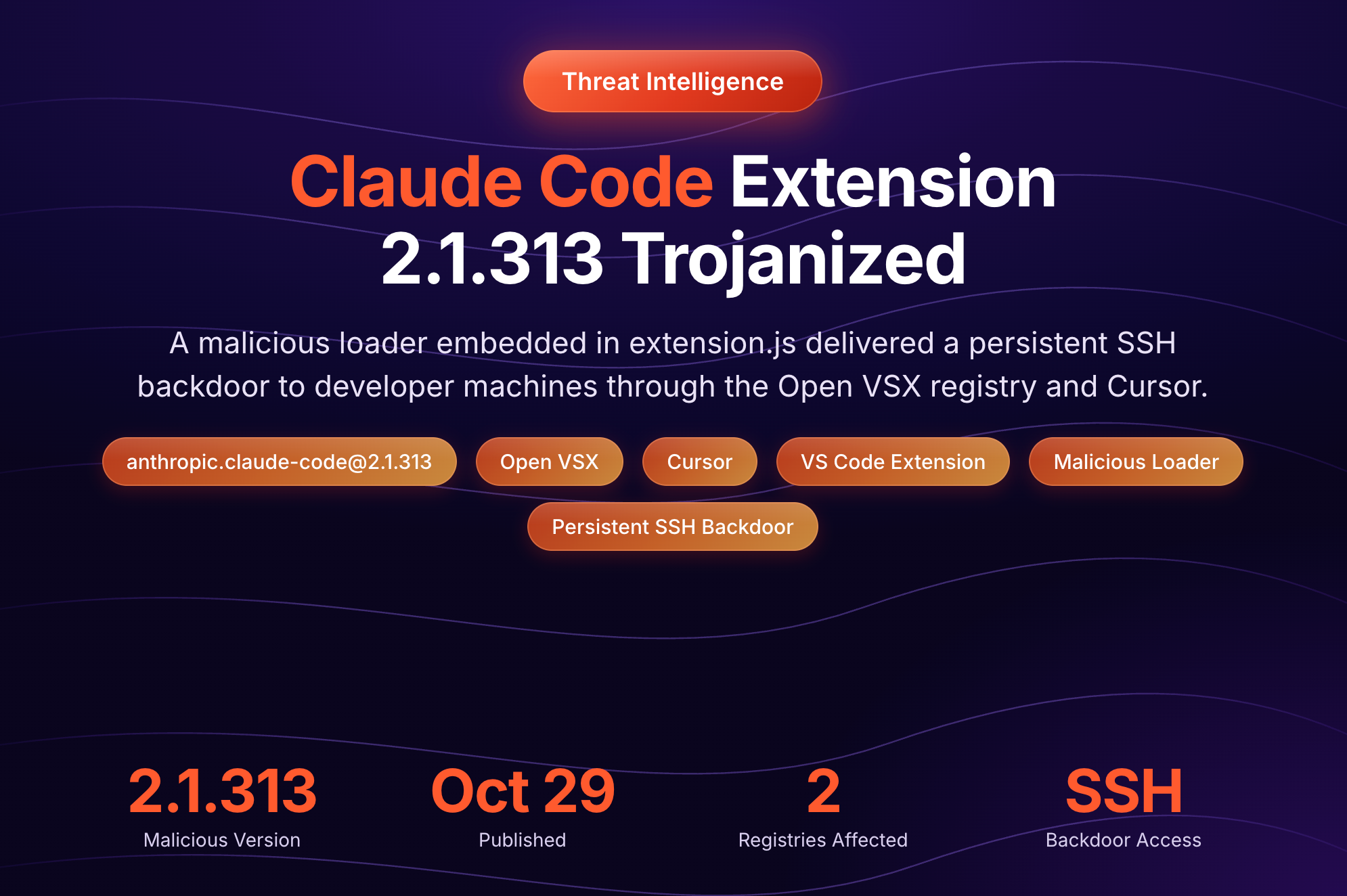 Trojanized Claude Code Extension Delivered Persistent SSH Backdoor to Developer Machines
The Claude Code VS Code extension anthropic.claude-code 2.1.313 was published on Open VSX on 29 October 2026 with a malicious loader prepended to extension.js. On load it planted an attacker SSH key (svc-telemetry), installed per-OS persistence, opened a reverse SSH tunnel and beaconed host recon over HTTP. Cursor reports at most 5,000 users received it in an 11-hour window. The post gives the timeline, cleanup artifacts and credential rotation steps.
 stepsecurity.iowriteupPublished and added 30 Oct 2026🛡️ Security
 WorkFactory: Turning Professional Intents into Executable Work for Scalable Agent Training
WorkFactory is a framework that builds coherent, executable professional tasks for training working agents. It plans an information support graph from professional intents, then uses probe executions to find and repair missing or inconsistent task information. The authors built 112,686 tasks across 612 occupations and fine-tuned Qwen models at 4B, 27B and 35B-A3B (WorkPilot). WorkPilot-35B-A3B rose from 879 to 1565 Elo on GDPval-AA v2.1.
 huggingface.copaperAdded 30 Oct 2026🧠 AI
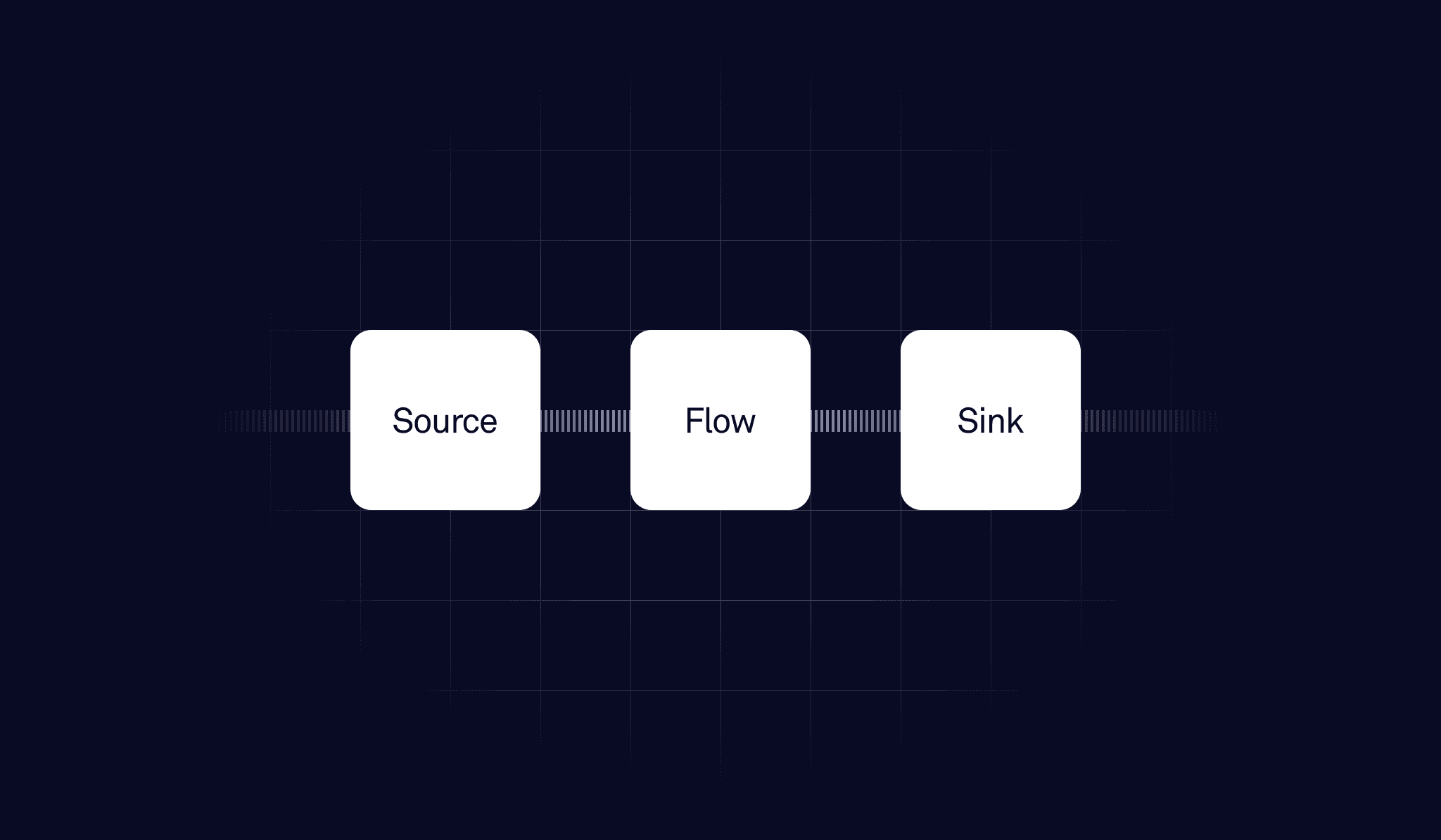 Inside mobile taint analysis: how source-to-sink tracking finds real data-leak paths | Oversecured Blog
Oversecured explains taint analysis for Android and iOS apps and contrasts it with pattern-matching SAST such as MobSF. It covers source, flow and sink, cross-component tracking over Intents, flag-based sanitizer modeling and implicit intent simulation. The case study is an unsafe Class.forName().newInstance() on a Serializable transportFactoryClassName field in Google's com.google.auth.oauth2 credential classes, which Google fixed with a $3,133.70 bounty.
 oversecured.comarticleAdded 29 Oct 2026🛡️ Security
 What changed when mobile security stopped being theoretical
An Oversecured Head of Engineering, coming from 20 years of web work, describes four mobile security risks that became concrete after seeing real production apps. These are old vulnerable binaries that stay installed after a fix, secrets embedded in client code, Keychain/Keystore guarantees that are weaker than assumed with tokens leaking via logs, and deep links or exported components acting as public endpoints. It ends with advice: test the shipped artifact, verify the full data lifecycle, and build server-side containment.
oversecured.comarticleAdded 29 Oct 2026🛡️ Security Glance: The Generator Is Its Own Reranker
Glance is a RAG method in which the generator also reranks. It adds a lightweight decision adapter and pointer head that score candidate passages from one shared prefill, so a single resident 9B backbone does generation and reranking. After 39 minutes of MS MARCO fine-tuning it reaches nDCG@10 of 0.741 on SciFact and 0.345 on NFCorpus, against 0.721 and 0.326 for bge-reranker-v2-m3. On 300 HotpotQA questions it improves answer F1 by 0.045 over cross-encoder-selected context. Evaluation covers two retrieval datasets, one QA dataset and one backbone family.
 arxiv.orgpaperAdded 31 Oct 2026, published 29 Oct 2026🧠 AI
- Don't Lose the Thread: Empowering Long-Horizon LLM Agents with Cognitive Resource Self-Allocation
CORAL (Cognitive Resource Self-Allocation) is an agent-callable working-memory toolset that lets an LLM agent checkpoint task progress and verified facts, then reset its cluttered context and resume from a clean state. A Multi-episode Agentic Reinforced Policy Optimization algorithm trains the checkpointing. With an 8B model it reaches 42.8% average accuracy on GAIA, uses 6-7x fewer input tokens than a ReAct agent, and adds 8.0 points to a proprietary agent on BrowseComp.
arxiv.orgpaperAdded 31 Oct 2026, published 29 Oct 2026🧠 AI - Quasi-polynomial time algorithms for block basis reduction of linear codes
Kolesnikov and Novoselov give block basis reduction (BKZ) algorithms for linear codes that need polynomial or quasi-polynomial numbers of calls to a minimum weight codeword oracle at fixed block size. The earlier Ghentiyala and Stephens-Davidowitz bounds are exponential. The paper adds a truncated BKZ and a DeepBKZ variant, with an implementation for block sizes 2 to 24 and approximation-factor estimates on random codes.
 eprint.iacr.orgpaperAdded 31 Oct 2026, published 29 Oct 2026🛡️ Security
- Aligning Medical Vision Language Models at the Capability Boundary with Entropy Adaptive Rubric Grounding
MedCBR is a two-stage alignment framework for medical vision language models. Difficulty Weighted Boundary Preference Optimization (DBPO) trains on counterfactual preference pairs at the model's capability frontier. Entropy Gated Grounded Policy Optimization (EGPO) then applies distilled clinical rubrics according to prediction entropy. It reaches 61.2% average accuracy on six medical benchmarks, with the largest gains on differential diagnosis, and the two stages combine super-additively.
arxiv.orgpaperAdded 31 Oct 2026, published 29 Oct 2026🧠 AI - Sparse Autoencoders as Implicit Diversification Regularisers for Cross-Sectional Cryptocurrency Returns
This arXiv preprint (October 2026) tests a sparse autoencoder as a factor model for daily cryptocurrency returns, with equities as a secondary test. SAE portfolios show consistently lower volatility than common benchmarks, linked to lower correlations among selected assets. They do not beat a simple contrarian strategy on risk-adjusted return, and factor identities change between training runs.
arxiv.orgpaperAdded 31 Oct 2026, published 29 Oct 2026🧠 AI  Addendum to GPT-6 Luna System Card: October 28, 2026 Update
Addendum to the GPT-6 Luna system card for the model update of 29 October 2026 (the title says October 28). OpenAI keeps the High rating for cybersecurity and biological/chemical capability under its Preparedness Framework. It reports ExploitBench 46.19% and SEC-Bench Pro 51.75% (GPT-6 Astra: 85.4%), higher multiturn jailbreak defender success than the October 7 version, and GPT-Red prompt-injection results. It also reports weaker factuality and dual-use biology refusal.
 deploymentsafety.openai.compaperPublished and added 29 Oct 2026🛡️ Security
- Quoting Ted Sanders
Quote from Ted Sanders of OpenAI, posted on Simon Willison's blog on 28 October 2026, explaining OpenAI's model naming. Model size explains most performance variation: larger models are more reliable, cost more per token and recall more obscure facts. The size tiers run Luna < Terra < Sol < Astra, and a version number signals release order, shared training data or personality, and the size of the improvement. The excerpt is short and gives no benchmark data.
 simonwillison.netarticlePublished and added 28 Oct 2026🧠 AI
- Gold vs.~Translation: Are We Measuring Language, Knowledge, or Locality in Translated Benchmarks?
Gold vs. Translation is an October 2026 arXiv study of whether DeepL-translated MMLU measures the same thing as native benchmarks. It compares seven pairings against six native benchmarks in five Nordic and Baltic languages, using 29 models. Translated MMLU adds predictive value for curriculum-overlap benchmarks such as Skolprov (ΔR²=.128) but not for Sweden-specific SwedishFacts (p=.242).
arxiv.orgpaperAdded 30 Oct 2026, published 28 Oct 2026🧠 AI - Deogen: Automatic Benchmark Generation for Reasoning over Policies
DeoGen is an automatic, parametrizable benchmark generator for deontic reasoning, where a model applies policy rules to facts to reach a verdict. It autoformalizes rules into first-order logic, builds decision trees, and turns each tree path into a benchmark entry. Frontier models give the correct verdict 89-92% of the time, but only 22-40% on entries lacking enough information, even when told to abstain.
arxiv.orgpaperAdded 30 Oct 2026, published 28 Oct 2026🧠 AI  Shor's algorithm compiled on cat qubits: 22 593 qubits for RSA-2048 in 3.14 days
Shor's algorithm compiled on cat qubits is an IACR ePrint (2026/2665) giving an end-to-end resource estimate on superconducting cat qubits, using repetition and LDPC cat codes. Factoring RSA-2048 needs about 23,000 cat qubits and 3.14 days, assuming phase-flip noise p_Z = 5e-4 and no bit-flips. secp256k1 ECDLP needs at most 30,000 qubits and 1 hour. A space-for-time trade runs RSA-2048 in 1.25 hours on about 611,000 qubits.
eprint.iacr.orgpaperPublished and added 28 Oct 2026🛡️ Security- From Leniency to Suspicion: How an Open Post-Training Recipe Changes Whom LLM Fact-Checkers Believe
This paper measures job-based doubt in LLM fact-checkers: judging a claim false more often when the poster has a lower-status job. It compares base and post-trained checkpoints of six model families on fact-checked claims with randomised poster profiles. Only the open Tülu-3 recipe (OLMo-2 32B, Tülu-3 70B) creates the effect, under one percentage point but reliable. In OLMo-2 32B the flip comes from one residual-stream direction and appears at supervised fine-tuning, confirmed on 400 new claims. None of seven commercial models doubts lower-status posters more.
arxiv.orgpaperAdded 30 Oct 2026, published 28 Oct 2026🧠 AI - Hakimi Eiqbal (@hakimieiqbal) on X
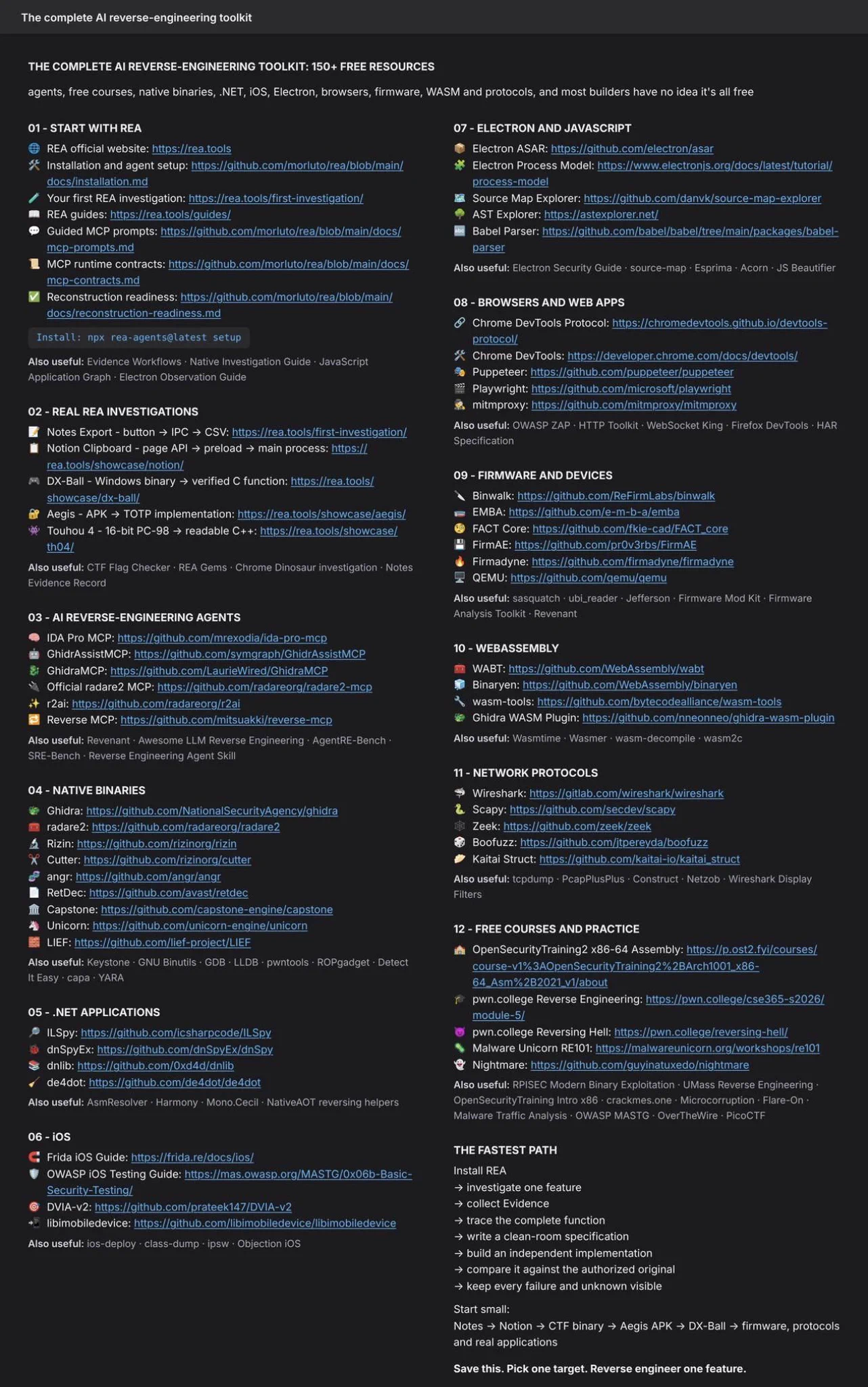
A thread by Hakimi Eiqbal that maps reverse-engineering tools by target type: native binaries, Electron, .NET, iOS, firmware, WebAssembly and network protocols. Its AI sections cover REA (an open-source layer connecting coding agents to analysis tools) and MCP bridges for IDA Pro, Ghidra and radare2. It argues for an evidence-first workflow and gives a prompt that separates verified facts from hypotheses.
 x.comthreadAdded 29 Oct 2026, published 28 Oct 2026🧠 AI
 What Effort Level Should I Choose? On the Economics of Reasoning Effort in LLM Agents
This paper treats LLM reasoning effort as a credence good and measures the counterfactual effect of effort levels on proprietary and open-weight models across four benchmarks, including long-horizon agentic tasks. Higher effort often fails on tasks lower effort solved, and on easy tasks the top level costs up to 42x the lowest. Starting at the lowest effort and escalating only after a verified failure matches or beats fixed top effort, usually at lower cost for proprietary models.
huggingface.copaperAdded 28 Oct 2026🧠 AI Early progress on accelerating drug development with Claude
Anthropic's life sciences update describes research partnerships with six drug developers (BigHat, Bristol Myers Squibb, Divergence Labs, Enveda, Generate Biomedicines, The Column Group) and its own Mithril Medicine programs. Reported results include about 35,000 antibody designs in a month, 1,010 lead variants tested in 10 weeks, and an 89% cut in manufacturing-document review time. Work is mostly preclinical.
 anthropic.comarticleAdded 28 Oct 2026, published 27 Oct 2026🧠 AI
 Bitcoin Wallet Maker Keystone Pulls Devices as Stolen Key Opens Door to Fakes
Keystone, a Bitcoin hardware wallet maker, will destroy 18,835 unsold devices and has halted shipping after an attacker obtained the permanent WebAuth factory key used to verify genuine hardware, detected October 20, 2026. The key could let counterfeit wallets pass authentication. The breach also exposed 25,964 Shopify buyer records (2024 to 2026) that should have been erased under a 180-day policy; recovery phrases and private keys were not involved.
 decrypt.coarticlePublished and added 27 Oct 2026🛡️ Security
 Crypto wallet maker Keystone to destroy almost 19,000 devices after security breach
Keystone, a hardware wallet maker, will destroy 18,835 unsold devices after an attacker used a flaw in a third-party data monitoring tool to breach its website on 20 October 2026. The breach exposed 25,964 buyer records and a factory-set authenticity key that cannot be changed, so counterfeit wallets could pass checks. An automated deletion tool had failed unnoticed against the 180-day retention policy. The report also covers a Foundation breach with 23,000 phishing attempts.
 coindesk.comarticlePublished and added 27 Oct 2026🛡️ Security
- Your Wish Is My Commit: Over-Compliant Refactoring in AI Coding Agents
Your Wish Is My Commit is a controlled study of over-compliant refactoring in Codex and Claude Code, run across five models, 50 algorithmic tasks and 10 object-oriented tasks. Over 3,000 turns of repeated "refactor further" prompts, no model stopped on its own: each rewrote up to 31x the original codebase before first stopping and resumed edits after declaring the task complete. The paper defines six behavioral signals for detecting over-compliance.
arxiv.orgpaperAdded 28 Oct 2026, published 26 Oct 2026🧠 AI  OpenAI Launches GPT-6.1 Terra, Its Half-Good AI Model at Half the Price
GPT-6.1 Terra is OpenAI's mid-tier model, released 26 October 2026 with standard API prices 50% below GPT-5.6 Terra. At low reasoning effort its factual error rate on an internal test fell from 53.6% to 16.7%, and at maximum effort it solved 50.3% of Terminal-Bench 4.0 tasks versus 21.5%. It is available in ChatGPT Work and Codex and as gpt-6.1-terra. All figures are OpenAI's own.
decrypt.coarticlePublished and added 26 Oct 2026🧠 AI eMudhra, Brotli, and the Long Tail of a Security Fix
Socket post on why fixing the eMudhra weak-key intermediate CA incident (October 2026) and Brotli memory corruption CVE-2026-111497 takes more than updating Node.js. Bundled Brotli copies in Bun, Python Requests and .NET, Go binaries needing rebuilds, and per-program certificate stores all leave stale copies. It lists steps: track bundled components, keep a rebuild path, use workarounds, and verify the shipped artifact.
 socket.devarticlePublished and added 26 Oct 2026🛡️ Security
 Keystone Breach Widens as Attacker Grabs Its Device Authentication Key
Keystone, a hardware wallet maker, disclosed on 26 October 2026 that the attacker behind its 20 October store breach also took the WebAuth device authentication key. The key is written at the factory and cannot be changed, so Keystone is scrapping 18,835 devices. The breach came through a third-party monitoring tool on its Shopify site and exposed 25,964 buyer records. Old-key units received after 20 October may be counterfeit.
 bankless.comarticlePublished and added 26 Oct 2026🛡️ Security
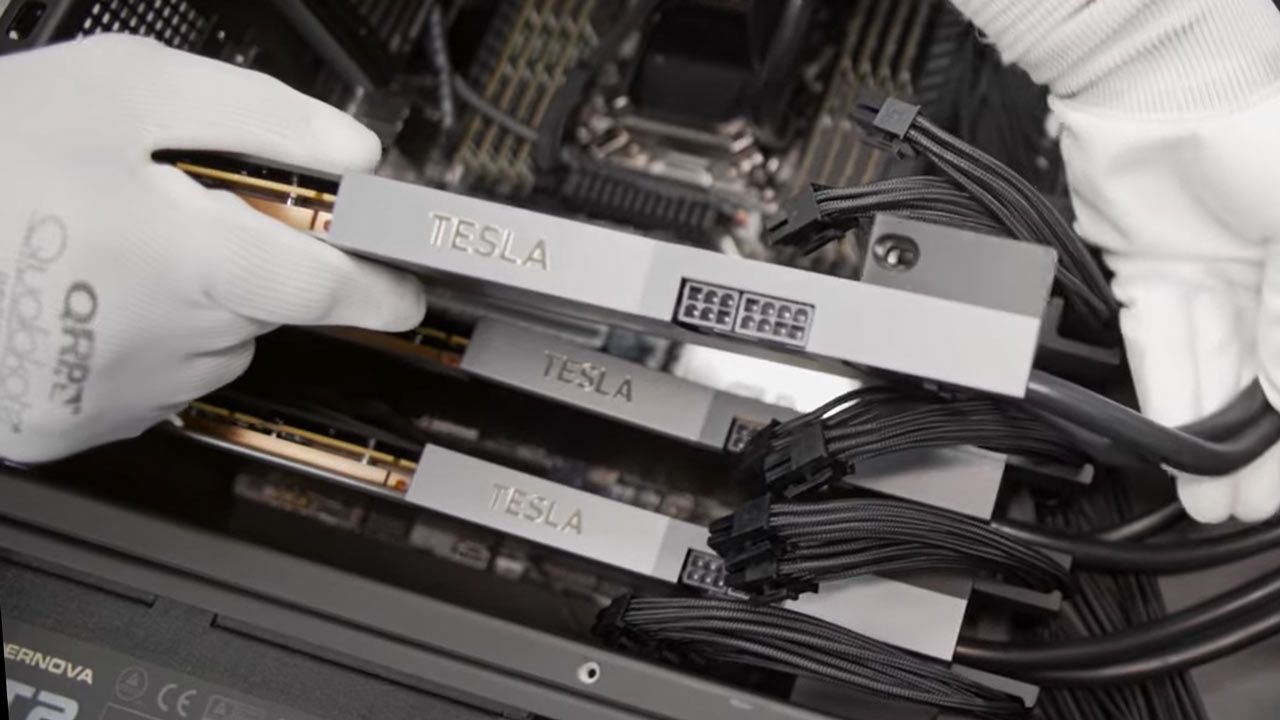 Nvidia discusses $2k-per-GPU annual fee for software
Tom's Hardware reports that Jensen Huang put Nvidia's software licensing at about $2,000 per GPU per year for software that runs agents on AI factories, said at GTC Berlin on 22 October 2026. Nvidia AI Enterprise is listed at $4,500 per GPU per year, and Nvidia has not said which products or terms the new fee covers. The piece also covers the OpenShell Reference Architecture and Sentry agent monitoring on BlueField-4.
 tomshardware.comarticleAdded 28 Oct 2026, published 26 Oct 2026🧠 AI
 The Pwn Request Reckoning: What Still Works Against GitHub Actions
The Pwn Request Reckoning is a Wiz post updating the GitHub Actions pull_request_target threat model for 2026. It covers what GitHub's checkout protections, read-only cache tokens and event policies block, and what still works. Remaining paths: SHA-pinned pre-backport actions/checkout, custom checkout scripts, issue_comment and repository_dispatch triggers, script injection, artifact poisoning, self-hosted runner state and allow-unsafe-pr-checkout. It ends with grep and zizmor audit steps.
 wiz.ioarticlePublished and added 26 Oct 2026🛡️ Security
- lee1981 (@lee1981b) on X
CyberForge CVE of the Day #087 covers CVE-2026-115889, a Cranelift value-index overflow in Wasmtime that can miscompile crafted WebAssembly and possibly escape the sandbox (CVSS 9.9, CWE-197 and CWE-843). Affected: below 36.0.19, and 37.0.0 up to but excluding 43.0.0; fixes are 36.0.19 and 43.0.0. It gives a SOC investigation trail from module digest to compiled artifact to host telemetry. EPSS is 0.454%, with no KEV entry.
x.comarticleAdded 28 Oct 2026, published 26 Oct 2026🛡️ Security  David Gutierrez | Eng (@david_x_ai) on X
Thread on a critical opencode bug disclosed by Pillar Security on Oct 19. On Windows and WSL, a remote MCP server could run code during OAuth sign-in, because the server-chosen authorization URL was put unescaped into a PowerShell command, so a PowerShell subexpression executed. opencode fixed it in 1.18.33 on Sep 28 as a browser-launch refactor with no advisory or CVE. MCP Inspector published an advisory for the same bug class, and its fix needs a major bump of the open package.
x.comthreadAdded 27 Oct 2026, published 25 Oct 2026🛡️ Security- SymLift: Neural Semantic Lifting for Compile-Free Vulnerability Detection in Context-Incomplete Code Fragments
SymLift is a compile-free vulnerability detection framework for context-incomplete code fragments. A fine-tuned LLM lifts control-flow, data-flow, memory and resource relations into a constrained LLVM-like IR. A parser turns the IR into facts, and Datalog rules derive findings with derivation traces. On Juliet function-level fragments Clang compilation success falls to 12.00%, while SymLift's completion rate drops only 1.17 points. SymLift-Qwen-7B reaches Target-F1 94.41% on FormAI and 91.66% micro-F1 on MegaVul.
arxiv.orgpaperAdded 28 Oct 2026, published 25 Oct 2026🛡️ Security

Showing 30 of 311
Show more