- Artificial Analysis (@ArtificialAnlys) on X
Artificial Analysis launched an HLE-Diamond leaderboard in v5 of its Intelligence Index, covering the refined 1,000-question Humanity's Last Exam from CAIS and Scale AI. Each question runs once without tools, graded by GPT-5.6 Luna (medium) as pass@1. Gemini 4 Carbon (high) leads at 69%, Claude Opus 5.5 (max) scores 68%, and the top open weights model, Kimi K3.1 Pro, reaches 37%.
 x.comthreadPublished and added 30 Oct 2026🧠 AI
- AI, Scripts, Operator: Inside the ConnectWise Attack
Huntress analyzes Entra sign-in and audit logs from the ConnectWise Cloud Backup credential abuse of 15 October 2026 to judge whether a script, a person or an LLM agent drove it. It found a thread-pool spray, trial-and-error credential planting with a retry added within 55 seconds, and pilot-then-batch targeting. Huntress rates LLM involvement low to medium on its own data and medium to high with Microsoft's Storm-0940/ARTEX attribution. It ends with detections for service principal role self-assignment and vendor app baselining.
 huntress.comwriteupPublished and added 26 Oct 2026🛡️ Security
- ENISA Technical Advisory for Software Bill of Materials
ENISA Technical Advisory for Software Bill of Materials is practical guidance on SBOM adoption for organizations, especially micro, small and medium enterprises and open-source stewards. It sets out an SBOM implementation architecture and data flows across a defined lifecycle, an indicative SBOM threat model with targeted risks, and measures for the SBOM ecosystem. It aligns with the ENISA Secure by Design and Default Playbook and supports Cyber Resilience Act compliance.
 enisa.europa.euadvisoryAdded 23 Oct 2026🛡️ Security
 Oracle Patches Over 1,200 Vulnerabilities With October 2026 CPU
Oracle's October 2026 Critical Patch Update ships 1,295 fixes covering 1,209 unique CVEs, per Tenable's analysis: 95 critical, 439 high and 582 medium. Fusion Middleware got the most patches (206, 134 remotely exploitable without authentication), followed by E-Business Suite, Siebel CRM, Communications, PeopleSoft, JD Edwards, MySQL and Java SE. Oracle flags no exploitation in the wild and issued a separate alert for CVE-2026-91403 (eMudhra weak-key incident).
 securityweek.comarticlePublished and added 22 Oct 2026🛡️ Security
 OpenVLHarness: Real World Visual Agentic Tool-Use with Multimodal Memory
OpenVLHarness is a multimodal reasoning harness for MLLMs built on a capability layer (task-level tool interfaces plus evidence rendering) and persistent multimodal memory that stores images, structured data and web references as addressable artifacts. A coding interface runs generated programs over stored data. Across 22 benchmarks and eight backbones it adds 9.7-12.6 points over no-tool baselines, and GPT-6 Luna at medium effort beats Codex and Visual Sketchpad at maximum effort using at most 37% of their tokens.
 arxiv.orgpaperAdded 21 Oct 2026, published 19 Oct 2026🧠 AI
 Palo Alto Networks Patches PAN-OS Zero-Day Exploited for Remote Code Execution
Palo Alto Networks patched CVE-2026-0322, a high-severity zero-day in the PAN-OS management interface that lets an authenticated attacker with network access run arbitrary code as root. It affects PA-Series, VM-Series and Panorama with no special configuration needed, and "very limited" exploitation has been seen. The vendor published a few IP-based IoCs, CISA added the flaw to KEV with an October 17 deadline, and a dozen other medium/low advisories were released the same day.
securityweek.comarticlePublished and added 15 Oct 2026🛡️ Security- Thinking in Graphs: Neo4j-Backed Exploit-Chain Reasoning for LLM Penetration-Testing Agents
Presents ChainGraph, a pattern that externalizes exploit-chain reasoning for LLM pentest agents (Claude Code, Codex) into a Neo4j property graph exposed via the Model Context Protocol. Findings, attack steps, credentials, assets and tamper-evident evidence receipts are typed nodes with pre/post-condition edges, queried with Cypher and Graph Data Science for next-step inference, entry-to-crown-jewel pathing, chain-severity promotion, provenance and chokepoints. On a synthetic GOAD-style multi-forest Active Directory engagement, three Medium findings become Critical once chained, betweenness centrality identifies break-points, and reasoning payload drops ~98% (token proxy); results are single-run and illustrative.
arxiv.orgpaperAdded 17 Oct 2026, published 14 Oct 2026🛡️ Security - Thinking in Graphs: Neo4j-Backed Exploit-Chain Reasoning for LLM Penetration-Testing Agents
ChainGraph is a pattern that moves exploit-chain reasoning out of the flat context window and into a Neo4j property graph. Findings, attack steps, credentials, assets and tamper-evident evidence receipts are typed nodes with pre/post-condition edges. The graph is wired to Claude Code or Codex through MCP with no custom harness. Five operator questions (next-step inference, entry-to-crown-jewel pathing, combined-severity promotion, evidence provenance, chokepoint identification) become reusable Cypher and Graph Data Science queries, plus a chain-severity score. On a synthetic multi-forest Active Directory lab modeled on GOAD, three findings rated Medium in isolation become Critical once their path to the forest root is materialized. Scoping each decision to a graph result cut the reasoning payload by about 98% on a token proxy. The authors say the results are illustrative single-run measurements, not a benchmark.
arxiv.orgpaperAdded 17 Oct 2026, published 14 Oct 2026🧠 AI  Break the silence: Kazakhstan-nexus UAT-6275 targets CIS government organizations
Cisco Talos and Recorded Future Insikt Group describe UAT-6275 (TAG-193, overlapping Silent Lynx and YoroTrooper), a suspected Kazakhstan-nexus actor targeting CIS government, water and energy organizations. Exposed staging directories and a GitHub repo revealed four infection chains (macro documents, PS2EXE downloaders, GitHub-hosted PowerShell, and a WinRAR CVE-2025-8088 archive) delivering custom reverse shells Chvost, Laplas and PickleShell, plus Linux tooling and a FortiWeb CVE-2025-25257 PoC. The post includes victimology, a campaign timeline, attribution rationale (medium confidence), defender guidance and ClamAV/Snort coverage.
 blog.talosintelligence.comarticlePublished and added 14 Oct 2026🛡️ Security
 llm-gemini 0.35
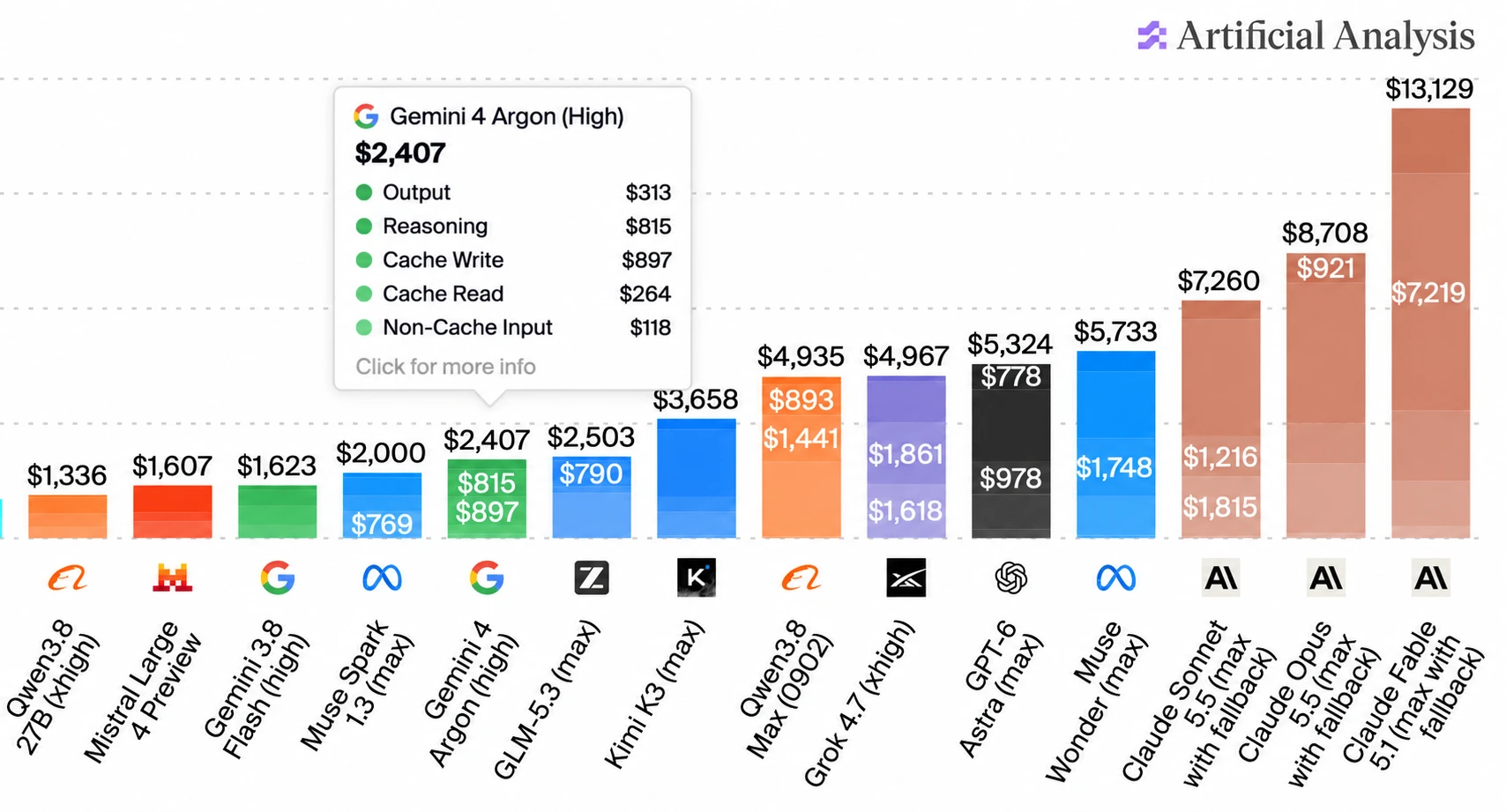
Simon Willison releases llm-gemini 0.35 with support for Google's new Gemini 4 Argon model, available via the Gemini API and a $100/month subscription plan. He compares pricing: $2/M input and $10/M output at launch, doubling on December 1st to match Claude Opus 5.5. He argues per-token prices are poor comparators and points to Artificial Analysis's total benchmark run cost ($2,407 for Argon, near GLM-5.3 and cheaper than OpenAI, Anthropic and Meta models) as a better clue to agentic cost-efficiency. He also shows his SVG pelican outputs at low, medium and high settings.
 simonwillison.netarticlePublished and added 13 Oct 2026🧠 AI
 Ivanti Zero-Day Chain Gave Attackers Root Access to Fully Patched VPN
Ivanti disclosed CVE-2026-104935, an authentication bypass plus RCE in Connect Secure VPN appliances, exploited in the wild; patched in ICS 22.8R2.5, 25.1.1.2, 25.1.3.0 and 25.1.3.1. Volexity found threat actor UTA0576 chained three zero-days, including a still-unpatched privilege escalation, to get unauthenticated root on a fully patched appliance. Post-exploitation focused on stealing domain credentials, Active Directory reconnaissance (LAPS passwords, BitLocker keys), password spraying, a custom Kerberos tool and log tampering. Volexity assesses with medium confidence that the actor uses LLMs for exploit development.
securityweek.comarticlePublished and added 13 Oct 2026🛡️ Security- OmniCompass: A Holistic Benchmark for Omni-Modal Video Grounding and Understanding
OmniCompass is a manually annotated benchmark for video grounding and understanding with two tracks: OmniCompass-VL (820 videos, 2,460 instances; vision-language models) and OmniCompass-AV (240 videos, 720 instances; joint audio-visual evidence for omni-modal models). Each track covers temporal grounding, spatial grounding and QA across short/medium/long videos, and each instance is run in paired text-only and text+image target specifications. Evaluating 50 MLLMs shows open-source models lag proprietary ones, especially on audio-visual understanding, that precise temporal/spatial grounding remains hard, and that predictions are inconsistent across the paired specifications.
arxiv.orgpaperAdded 14 Oct 2026, published 13 Oct 2026🧠 AI  Qwen3.8-27B (Apache-2.0, multimodal dense, 262k ctx)
Model card for Qwen3.8-27B, a 27B dense vision-language model from the Qwen team with a hybrid Gated DeltaNet / Gated Attention layout (64 layers, 16×(3 DeltaNet + 1 attention)), MTP training, and 262k native context extensible to 1M via YaRN. It targets coding, research and long-horizon agentic tasks, with thinking on by default, reasoning_effort levels (xhigh/medium/low) and preserve_thinking. The card gives deployment recipes for Transformers, vLLM, SGLang and TokenSpeed, recommended sampling parameters, video-token settings for hour-scale video, and benchmark notes (SWE-bench Pro, NL2Repo-Bench, DeepSWE, HLE, MathVision, WebArena-Verified, etc.).
 huggingface.corepoAdded 9 Oct 2026🧠 AI
- A Step Harder, Not a Step Too Far: The Benefits and Limits of Curriculum Difficulty Progression in GRPO
Studies curriculum design for GRPO by re-estimating sample difficulty under the current policy and using a staged curriculum that progressively shifts the active difficulty band toward harder samples. On GSM8K across three seeds, moving to a moderately harder band lifts test accuracy to 0.6591 ± 0.0077 versus 0.6449 ± 0.0024 for fixed-medium selection, while going to a still harder band drops it to 0.6405 ± 0.0053. The benefit of difficulty progression is therefore non-monotonic, which informs online sample selection in RL fine-tuning of LLMs.
arxiv.orgpaperAdded 12 Oct 2026, published 9 Oct 2026🧠 AI  SonicWall and Splunk Patch Critical Vulnerabilities
SonicWall patched four SMA1000 appliance vulnerabilities including CVE-2026-102255, a pre-authenticated SSRF flaw (CVSS 10) that lets an unauthenticated remote attacker abuse an unintended alternate access path to reach internal functionality; two other high-severity bugs enable RCE and one medium-severity bug enables XSS. Splunk separately fixed dozens of flaws across Splunk Enterprise, MCP Server, and the Add-on for AWS, including three critical Splunk Enterprise bugs allowing arbitrary command execution, unauthorized access, and code injection, plus a medium-severity MCP Server issue letting an authenticated user redirect API requests to an attacker-controlled URL. SonicWall says SSL-VPN on its firewall products is unaffected and no in-the-wild exploitation has been observed.
securityweek.comarticlePublished and added 8 Oct 2026🛡️ Security- HeuFouFT: Task-Guided Metaheuristic Coordinate Search for Fourier Fine-Tuning
HeuFouFT is a task-guided framework for selecting which frequency coordinates to train in Fourier fine-tuning (FourierFT), replacing fixed uniform or Gaussian band-pass coordinate selection with a search driven by downstream task performance. It initializes three metaheuristic optimizers (GA-SA, PSO, Cuckoo Search) from a lightweight block-level probe intensity map, using a Random Forest to filter candidate coordinate sets before proxy fine-tuning. On the E2E benchmark with GPT-2-Medium, all three variants beat random-uniform and Gaussian FourierFT and LoRA, with PSO beating the LoCA baseline on four of five metrics while using 37.6% fewer trainable spectral coefficients and only 15-18% of full fine-tuning FLOPs.
arxiv.orgpaperAdded 6 Oct 2026, published 5 Oct 2026🧠 AI  Comparative Evaluation of Open-Source Gröbner Basis Implementations for Small-Scale AES Polynomial Systems over GF(2)
This IACR ePrint paper benchmarks 20 open-source Gröbner basis implementations against the proprietary Magma system on polynomial systems derived from small-scale AES over GF(2), using Easy/Medium/Hard difficulty tiers with ten instances each. In the Hard setting, msolve and Singular's slimgb completed all runs successfully with mean runtimes of 164s and 269s and peak memory of 3693/4343 MiB respectively, versus Magma's 319s and 16853 MiB, with msolve exploiting ~13.4 CPU cores versus ~1 core for the others. The results quantify when open-source algebraic solvers are practical alternatives to Magma for algebraic cryptanalysis of block ciphers.
 eprint.iacr.orgpaperAdded 8 Oct 2026, published 5 Oct 2026🛡️ Security
 https://bughunters.google.com/blog/pagebreak-real-world-findings?utm_source=tldrsec.com&utm_medium=newsletter&utm_campaign=tl-dr-sec-348-google-s-pagebreak-scanner-perplexity-s-agent-security-tool-defending-agentically
Google's Product Security team describes three high-severity bugs found by PageBreak, an internal LLM-agent scanner that validates findings by running payloads against live environments. The cases are cache poisoning on apis.google.com (an unkeyed `extra_path` injected into cached JS), XSS on admin.google.com where the agent bypassed the `sig` check by getting the authorize endpoint to sign a `javascript:` URI, and a UXSS in the Tag Assistant extension via a weak `onConnectExternal` origin check and nonce exfiltration. It shows what agentic, deterministically verified scanning can find in well-reviewed targets.
 bughunters.google.comwriteupAdded 2 Oct 2026, published 1 Oct 2026🛡️ Security
 Vulnerability Discovery and Exploitation Trends in the AI Era (Google Cloud)
Google Threat Intelligence Group analyzes vulnerability disclosure and exploitation trends from January 2025 to August 2026, finding disclosures doubled, exploitation nearly doubled, and AI-assisted discovery surfaces proportionally more Medium and High-risk flaws, with 50 percent leading to remote code execution versus 26 percent baseline. It documents real-world exploitation of an AI-discovered CVE in BeyondTrust PRA and a surge in vulnerabilities targeting the AI/LLM operational stack, especially agent orchestration frameworks like Langflow and Flowise and inference gateways like LiteLLM and vLLM, citing specific CVEs in those products.
 cloud.google.comarticleAdded 8 Oct 2026, published 30 Sep 2026🛡️ Security
 Anthropic's Claude Sonnet 5.5 Is Out, Beats Opus 5.5 at Coding for Half the Price
Anthropic released Claude Sonnet 5.5, priced the same as Sonnet 5 ($2/$10 per million input/output tokens, half of Opus 5.5) but outperforming Opus 5.5 on Terminal-Bench 4.0 (70.6% vs 66.4% per Anthropic; 63.6% vs 59.6% per independent tester Artificial Analysis). The piece details how effort-setting (Medium vs High vs Max) drastically changes cost-per-task — Sonnet 5.5 at max effort burns ~193K tokens per task, more than any model Artificial Analysis has tested, undercutting Anthropic's claimed savings — and notes Sonnet 5.5 ties Opus 5.5 on GDPval-AA (real-world professional work) while Opus remains stronger on sustained-judgment tasks. Claude Haiku 5.5 is teased for coming weeks.
 decrypt.coarticleAdded 30 Sep 2026, published 28 Sep 2026🧠 AI
- CVE-2026-20685: An attacker in a privileged network position may be able to leak sensitive information
CVE-2026-20685 is a medium-severity (CVSS 6.5) path handling vulnerability in Apple's Private Cloud Compute (PCC), classified under CWE-20 and CWE-22, that could let an attacker in a privileged network position leak sensitive information. Apple addressed the issue with improved path validation, fixed in PCC Release 5E290.3.
 nvd.nist.govadvisoryAdded 26 Sep 2026🛡️ Security
 CVE-2026-44895 - GitHub Advisory Database
GitHub advisory for @yoda.digital/gitlab-mcp-server (mcp-gitlab-server): with USE_SSE=true the HTTP/SSE transport has no authentication, sends wildcard CORS headers, and binds to 0.0.0.0. Any network caller or any web page the operator visits can open /sse and POST /messages to drive all 86 GitLab tools (delete_repository, push_files, etc.) using the operator's personal access token. It includes a curl PoC, a CVSS 4.0 vector (~6.3 Medium, effectively High when SSE is enabled) and four fixes: required auth token, loopback bind, a CORS allowlist, and the OAuth roadmap.
 github.comadvisoryAdded 26 Sep 2026🛡️ Security
 Ransomware incidents in Japan in the first half of 2026: Investigation of The Gentlemen’s infrastructure and evidence of Qilin's AI use
Cisco Talos analyzes H1 2026 ransomware activity in Japan, where The Gentlemen (RaaS, active since July 2025) became the most observed group and SMEs under JPY 1 billion capitalization made up 78% of victims. Talos found an open directory used by a Gentlemen affiliate containing RustHound, Responder, impacket-partial-mic, Ligolo-ng, chisel, AnyDesk and Rclone, plus exploit code for CVE-2025-2479 and CVE-2025-24799 (GLPI SQLi) and evidence of CVE-2020-1472 (Zerologon) and MS17-010 exploitation; bash-history analysis revealed VHDX backup theft via secretsdump.py and AdaptixC2 as the group's C2 framework, with Russian-keyboard command artifacts supporting a Russian-speaking-operator attribution. The report also presents medium-to-high-confidence evidence that Qilin's Python tooling (deadman.py, veeam_kill.py, deploy_locker.py) was partly LLM-generated.
blog.talosintelligence.comarticleAdded 7 Oct 2026, published 17 Sep 2026🛡️ Security FedRAMP Requirements for Vulnerability Management and Dependency Upgrades | Blog | Endor Labs
An Endor Labs blog post, written by a former JAB Technical Representative, details FedRAMP's Continuous Monitoring vulnerability management requirements: authenticated scanning, monthly dependency inventories, POA&M tracking, and strict remediation SLAs (High CVSS 7.0+ in 30 days, Medium in 90, Low in 180). It also covers FedRAMP's container-specific rules (hardened images, CISA KEV prohibition, pipeline/registry/runtime scanning) and outlines four practical strategies — reachability-based false-positive triage, EPSS-driven risk level adjustments, ROI/complexity-based upgrade prioritization, and developer-side PR gating — before pivoting into an Endor Labs product pitch.
 endorlabs.comarticlePublished and added 11 Sep 2026🛡️ Security
- YesWeHack Claude Kit
Claude Kit is a Claude Code plugin from YesWeHack that helps bug bounty hunters draft and triage vulnerability reports without letting the AI invent unverified technical details. It adds an always-on SessionStart hook enforcing evidence-only claims (no theoretical impact, no OWASP boilerplate padding) plus three on-demand skills (/ywh:write, /ywh:triage, class-specific checks) that structure findings, flag unproven claims, and recompute defensible CVSS scores — e.g. downgrading an inflated 9.1 to ~5.9 Medium after verifying an IDOR's actual exploitability (AC:H, non-enumerable UUIDv4 ID).
github.comrepoPublished and added 27 Aug 2026🛡️ Security  Dark Caracal Reloaded: GoCaracal — New Go Malware With Ethereum-Based C2 Fallback
Arctic Wolf Labs documents GoCaracal, a previously undocumented modular Go-based malware framework attributed with medium confidence to Dark Caracal (linked to Lebanon's GDGS), deployed alongside an updated Bandook variant in a June 2026 intrusion against a Venezuelan communications organization. The extended GoCaracal build features a novel Ethereum smart-contract (BulletproofC2) fallback that lets operators update C2 addresses via on-chain transactions without redeploying malware, and analysis of 249 samples traces the framework's four-phase development from January to July 2026. The report includes delivery-chain details (SVG phishing, URL shorteners, Delphi loader), infrastructure analysis (AEZA Group, AlexHost hosting), a YARA rule, and IOCs for detection.
 arcticwolf.comwriteupAdded 26 Sep 2026, published 26 Aug 2026🛡️ Security
 91 Vulnerabilities Patched in Spring Application Framework
SecurityWeek reports on Broadcom's Spring framework patching 91 vulnerabilities in one release, including a critical auth bypass in Spring Security's embedded UnboundID LDAP server (CVE-2026-59270), a critical RCE in Spring for GraphQL (CVE-2026-59285), and a medium-severity prompt-injection privilege escalation in Spring AI's tool-calling functionality (CVE-2026-59318). Sonatype's analysis found the flaws affect over 200,000 software components across projects like Spring Security, Spring Cloud Config, Reactor Netty, and Spring Batch, and notes Spring vulnerability counts have surged in 2026 (200+ so far) versus 16 in 2025 and 22 in 2024, attributed to Broadcom's use of AI in development.
securityweek.comarticleAdded 26 Sep 2026, published 24 Aug 2026🛡️ Security 0xSimao Findings Database
0xSimao's public findings database aggregates smart contract audit results from many independent engagements, cataloging dozens of critical/high/medium/low severity bugs such as ERC4626 vault accounting errors, missing slippage controls, incorrect ICR/debt tracking in leveraged vault "Den" systems, cross-chain state desynchronization via LayerZero in a CDS/borrowing protocol, inflation attacks on ERC4626 shares, and DoS conditions from bad-debt checks. It covers protocols spanning leveraged vaults, lending/liquidation engines, Uniswap-based strategies, Maple/Sky/Aave yield strategies, an IDO launchpad, and a GameFi/DeFi hybrid ("Codeup"), providing concrete real-world examples of DeFi/Solidity vulnerability classes and fixes.
 0xsimao.comwriteupAdded 3 Sep 2026, published 1 Aug 2026🛡️ Security
- Claude as Autonomous Bug Bounty Hunter
A Medium write-up on turning Claude Code into an autonomous bug bounty agent. The setup combines 124 custom skills, three hooks and a Kali Linux container for vulnerability discovery and reporting. It is a practitioner example of structuring a Claude Code harness with skills, hooks and a sandboxed tool environment. Only the blurb was available, so implementation details are unverified.
 medium.comwriteupAdded 10 Oct 2026, published 30 Jul 2026🧠 AI
 Socket: Next.js Moves to Scheduled Security Releases
Vercel is replacing Next.js's ad-hoc security patching with a formal monthly scheduled-release program, publishing advance notice of severity and timing (first release July 20 covering 4 high/5 medium issues). The move follows React2Shell (CVE-2025-55182), a CVSS 10.0 pre-auth RCE in React Server Components exploited within hours by China state-nexus groups Earth Lamia and Jackpot Panda and affecting over 968,000 exposed instances, plus follow-on flaws CVE-2025-55183, CVE-2025-55184, and CVE-2025-67779, and the earlier CVE-2025-29927 middleware auth-bypass. It also ties the change to rising AI-assisted vulnerability discovery volume across the industry (Mozilla's 271-issue Firefox release, Microsoft's 570-fix Patch Tuesday).
 socket.devarticlePublished and added 16 Jul 2026🛡️ Security


Showing 30 of 40
Show more