 Granite Switch 4.1.1 — Update models like you update software
Granite Switch 4.1.1 is a backwards-compatible patch release of IBM's modular Switch architecture, which configures a language model with specialized, cache-efficient adapters on one endpoint. It updates the Granite Speech ASR model (10 languages, native punctuation and capitalization) and the Decision adapter in granitelib-core, measured on the Jev Decision Index test set. Only the new adapters were retrained; the base model is unchanged. IBM plans tutorials and an Adapter SDK for third-party adapters.
 huggingface.coarticlePublished and added 29 Oct 2026🧠 AI
- A Quantitative Evaluation of Constant-Time Analysis Tools
AutoBench-CT is a modular benchmark for constant-time analysis tools, with manually verified per-violation ground truth across 64 cryptographic tasks. It scores seven tools on operational performance, detection quality and usability. The authors explain why CT-grind (2010) is still the most used tool, list recurring limitations across tools, and propose a composite pipeline for stronger constant-time guarantees. Accepted at ACSAC 2026.
 eprint.iacr.orgpaperAdded 31 Oct 2026, published 29 Oct 2026🛡️ Security
 Modeling Modular Multiplication for Monomial Prediction and Impossible Differentials, with Application to MSX
This ePrint paper gives the first exact bit-level models of modular multiplication z=(x·y) mod 2^n. One model is for monomial prediction under 3SDP-woU, the other for impossible differential search. Applied to the MSX lightweight cipher, it yields a 7-round integral distinguisher (2^96 data) for MSX-128, key recoveries on 8 and 9 of 18 rounds at about 2^228 operations, and 1,984 seven-round impossible differentials. Both models are implemented in CLAASP.
eprint.iacr.orgpaperAdded 24 Oct 2026, published 21 Oct 2026🛡️ Security- Efficient NTRU+ Implementations on Cortex-M
Efficient NTRU+ Implementations on Cortex-M presents NTRU+ KEM implementations built on 3-way NTTs for Arm Cortex-M0+, M3, M4 and M7. It adds omega-folded front layers that handle ternary inputs without modular reduction. The speed-optimized version cuts execution time by up to 52.43% against the official optimized C code. The memory-optimized version cuts peak stack use by up to 82.60%.
eprint.iacr.orgpaperAdded 21 Oct 2026, published 20 Oct 2026🛡️ Security 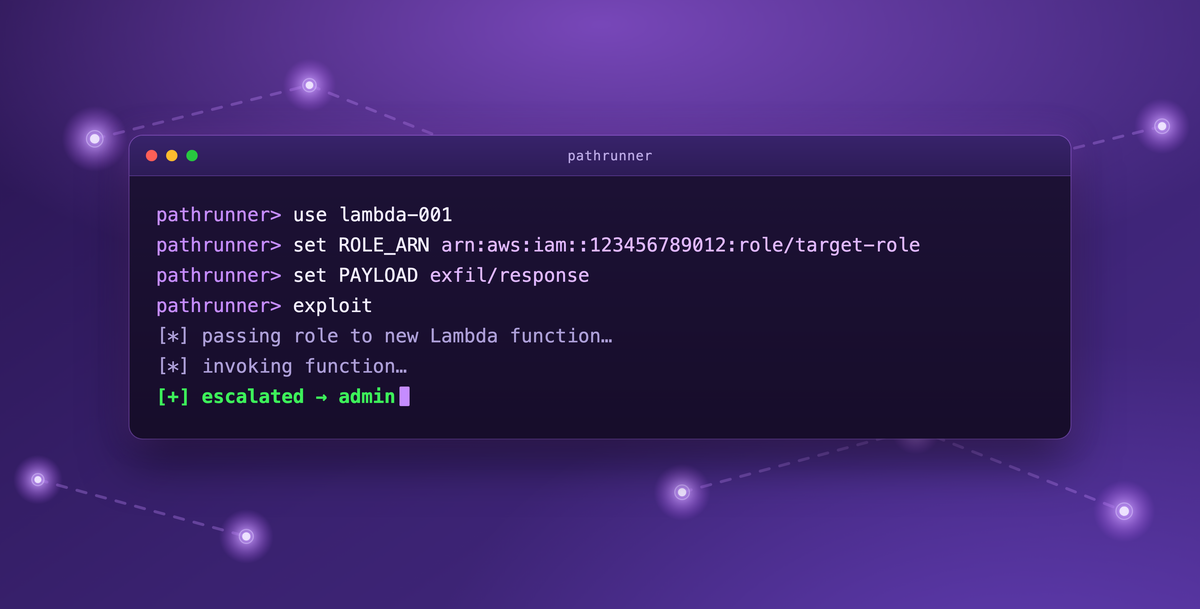 Datadog pathrunner: AWS IAM privilege escalation framework
pathrunner is a modular offensive framework from Datadog Security Labs that automates exploitation of the AWS IAM privilege escalation paths catalogued in pathfinding.cloud and deployed in Pathfinding Labs. It has over 80 exploit modules (as of October 2026), identity import and switching, multiple payloads per module, and attacker infrastructure deployment with a credential listener. A workspace report lists created resources and expected CloudTrail events for defenders.
 securitylabs.datadoghq.comtoolAdded 23 Oct 2026, published 20 Oct 2026🛡️ Security
 Datacenters 2027: The Year of Acceleration, +50GW in a Single Year
SemiAnalysis argues that global AI datacenter capacity will grow by about 50GW in 2027, against Brad Gerstner's guess of roughly 25GW. Evidence cited: over 24GW in advanced construction across 40 campuses, nearly USD 1T of binding leases signed in 2026, and record self-build starts. It also covers modular "LEGO" designs, behind-the-meter power and ex-US growth. The page text cuts off before the oversupply section.
 newsletter.semianalysis.comarticleAdded 29 Oct 2026, published 19 Oct 2026🧠 AI
 Designing more efficient quantum circuits with Claude
Anthropic describes giving Claude Mythos 5 plain-language specs for eight quantum-circuit primitives plus an automated evaluator that checks and scores designs (qubits × gates). Working in a closed loop with little human input, Claude found designs that beat the best published circuits, sometimes by 10x or more. Two examples: a reversible divsteps modular inversion for elliptic-curve point addition, found in a 53-hour run and verified in Lean, and a Berlekamp–Massey Reed–Solomon decoder for decoded quantum interferometry that cuts gate count about 12x versus Google's construction. The post also covers limitations such as Claude's conservatism and the mitigations used.
 anthropic.comarticleAdded 17 Oct 2026, published 16 Oct 2026🧠 AI
 Onboard Lightweight LLM Reasoning for Human-Aware Safe UAV Navigation
Presents a modular, fully onboard UAV navigation pipeline that closes the "human-aware safety gap" of geometry-only planners. A shared BLIP encoder drives captioning and text-conditioned segmentation, which is fused with depth for 3D obstacle localization. Qwen-2.5-0.5B, stabilized with RAG and grammar-constrained JSON decoding, infers per-category risk once per class and caches the verdict. Perception runs at 10 Hz on a Jetson Orin NX, and fallback LLM queries take about 0.8 s off the control path. In Gazebo it gives roughly 3x fewer collisions than a geometric planner and raises semantics-aware landing success from 34% to 96%. The 224-pixel encoder input limits small-object perception at range.
 arxiv.orgpaperAdded 17 Oct 2026, published 15 Oct 2026🧠 AI
 Welcome FLUX.3 Image Klein in Diffusers
Hugging Face blog post introducing Black Forest Labs' open FLUX.3 Image Klein (distilled and base checkpoints) in Diffusers. It covers text-to-image, multi-reference image-to-image and bounding-box layout control, FP8/NVFP4 single-file quantized weights, DreamBooth LoRA training scripts for generation and editing, memory/speed figures (about 2 s per 1024×1024 image on an H100), and a detailed architecture tour: Qwen3-VL text encoder, two-stage per-stream then joint transformer blocks, per-token timestep modulation, 4D RoPE, and flow-matching denoising. It also shows how to customise the Modular Diffusers pipeline.
huggingface.coarticlePublished and added 15 Oct 2026🧠 AI- Nowhere Man: Device Binding for Post-Quantum Anonymous Credentials
Presents a modular device-binding protocol for post-quantum anonymous credentials. The phone Secure Element signs a verifier challenge with an unmodified FIPS 204 ML-DSA interface, and the user proves knowledge of that signature in zero knowledge at each presentation. Using ML-DSA's structure avoids the cost of generic NIZK systems such as Longfellow. The most efficient variants assume weak-MLWR for unlinkability, and that assumption can be dropped at some efficiency cost. The protocol works with different anonymous credential schemes, and a proof-of-concept implementation is included. This matters for planned EU age-verification and Google Wallet/mDL rollouts, which need protection against credential sharing.
eprint.iacr.orgpaperPublished and added 14 Oct 2026🛡️ Security  XBOW Built a Chrome Full-Chain Exploit Affecting a Billion Users in Six Days | XBOW
XBOW describes building a Chrome full-chain exploit, made of three independent bugs, that takes a user from an ordinary web page to remote takeover of a Windows machine. The team built it in six days with a publicly available model (GPT-5.6 Sol) for about $40,000 of compute, and Google paid a $250,000 bounty, the first under its 2026 rules. The bugs are now fixed. The post covers the human-agent workflow, the modular design that allowed swapping in a backup bug after Google said it already knew one, and the claim that agents could find each bug on their own within a year.
 xbow.comarticlePublished and added 13 Oct 2026🛡️ Security
- Practical and Efficient MPC from FHE, without ZKPoKs
This IACR eprint paper by Cong, Smart, Tanguy and Walter (Zama) shows how to eliminate Zero-Knowledge Proofs-of-Knowledge from the FHE-based malicious-secure MPC protocol of Smart (IMA, 2023), simplifying and modularizing its security proof. It introduces a formal security notion for "encrypted PRF" functionality within FHE schemes and proves the Deo et al. (CCS 2025) construction secure under this model, yielding a more practical and efficient MPC-from-FHE protocol.
eprint.iacr.orgpaperAdded 8 Oct 2026, published 7 Oct 2026🛡️ Security  EmbeddingGemma 2: an open, lightweight multimodal embedding model
Google DeepMind's announcement of EmbeddingGemma 2, a 740M-parameter open multimodal embedding model built on the Gemma 4 architecture, unifying text, code, images, video and audio into a shared embedding space under Apache 2.0. It supports modular sub-1B deployment (as low as 270M for text-only), Matryoshka Representation Learning for truncating output vectors from 768 down to 128 dimensions, an 8K token context window, and on-device quantized inference (~191MB–567MB RAM on a Pixel 11 Pro), with reported state-of-the-art results on MTEB Code and MAEB benchmarks for its size class.
 deepmind.googlearticlePublished and added 6 Oct 2026🧠 AI
- Under the Hood of SKILL.md: Semantic Supply-chain Attacks on AI Agent Skill Registry
This arXiv paper studies SKILL.md files — the natural-language metadata describing modular AI Agent Skills — as an attack surface, demonstrating semantic supply-chain attacks against real ClawHub skills. Using text-only manipulations, the authors manipulate embedding-based Discovery retrieval (up to 86% pairwise win rate, 80% Top-10 placement), bias agent Selection toward adversarial variants (77.6% average success), and evade Governance blocking verdicts (36.5%-100% evasion), showing that skill metadata is operational text that shapes agent trust rather than passive documentation.
arxiv.orgpaperAdded 5 Oct 2026🛡️ Security - Anatomy of LLM Sycophancy: What a Flip Rate Hides
This paper argues that a single "flip rate" metric for LLM sycophancy conflates genuine self-correction with capitulation, and introduces SycoLens, a modular stateless-replay protocol that isolates factors like pushback wording, answer format, boundary distance, and ground truth. Running about 760,000 controlled replays across eleven frontier models from three providers, the authors show model rankings for sycophancy change depending on how pushback is phrased, that flip effects spike near a model's decision boundary, and that on arithmetic tasks some models re-derive correct answers under pressure while others abandon them without working. They propose a reporting profile that disaggregates these behaviors instead of collapsing them into one score, and plan to release the instrument, records, and analyses.
arxiv.orgpaperAdded 6 Oct 2026, published 5 Oct 2026🧠 AI - Mapping the RAG Landscape: A Four Axis Taxonomy of Efficiency, Defense, Interactivity, and Reasoning
This arXiv survey organizes recent Retrieval-Augmented Generation (RAG) research into a four-axis taxonomy covering retrieval efficiency, robustness/security, user-driven interactivity, and multi-step reasoning. It formalizes RAG framework components, reviews dense/sparse retrieval, fusion strategies, embedding optimization, and RL-based retrieval policies, and compares Naive, Advanced, and Modular RAG architectural variants alongside evaluation practices and domain applications. The paper closes by outlining open challenges in retrieval quality, reliability, domain adaptation, scalability, and explainability.
arxiv.orgpaperAdded 2 Oct 2026, published 1 Oct 2026🧠 AI  Raven: The Harness of Harnesses for Composable Agentic Intelligence
Raven is an open-source multi-agent framework that automatically constructs and evolves modular 'harnesses' pairing specific models with domain-specialized execution scaffolding, treating each model-harness pair as a composable unit of intelligence. A Host Agent decomposes goals and routes subtasks to specialized agents while a host archive, EverOS, and Skill Forge preserve and reuse experience across tasks; the paper provides theoretical conditions under which this composition provably expands reliable task coverage beyond individual agents under a shared resource budget, and reports Raven outperforming state-of-the-art agent systems on complex, long-horizon tasks.
huggingface.copaperAdded 30 Sep 2026🧠 AI NeedyMantis: Unpacking a post-compromise malware family used in targeted operations
Microsoft Threat Intelligence documents NeedyMantis, a previously unreported modular post-compromise malware family used in targeted intrusions against telecoms, universities, medical nonprofits, intergovernmental organizations, and government contractors. The writeup details a multi-stage C++/x64 shellcode loader chain delivered via DLL sideloading (abusing Poedit, curl, TightVNC, Vim, and spoofed Office/Broadcom/Intel/NVIDIA DLLs), a custom encrypted/compressed archive format, a minimized custom PE-like executable format, and a WebSockets-based C2 protocol with RC4 key exchange and modular load/unload commands. Microsoft links observed use to Storm-3069 (tied to the Kaspersky-reported DAEMON Tools supply chain compromise) and China-nexus activity, and provides IOCs, Defender detections, and KQL/Sentinel hunting queries.
 microsoft.comwriteupAdded 7 Oct 2026, published 28 Sep 2026🛡️ Security
- MIGU: Multimodal Instruction Grounding under Uncertainty for Manipulation Planning
MIGU is a modular framework for multimodal instruction grounding that fuses semantic priors from a vision-language model with a 3D geometric likelihood derived from eye-finger gesture geometry and uncertainty propagation (viewing-direction, depth, hand-direction error). The resulting Bayes-inspired grounding belief drives a behavior planner that either proceeds to manipulation planning or requests clarification, and is evaluated against baselines on a real-world mobile manipulation and tabletop task-and-motion planning benchmark. It matters as an example of explicitly modeling uncertainty across language and gesture modalities to make robot instruction-following more robust.
arxiv.orgpaperAdded 22 Sep 2026, published 21 Sep 2026🧠 AI - WordPress Security Skills
WordPress-Security-Skills is a GitHub repo of modular 'Agent Skills' (per the open Agent Skills spec) that install into AI coding agents like Claude Code, Cursor, Codex, OpenCode, and Gemini CLI to guide secure-by-default WordPress plugin/theme development and security code review. Each skill targets a documented failure mode in AI-generated WordPress code — missing nonce checks, broken authorization, missing output escaping, unprepared SQL queries — with when-to-use guidance, common AI mistakes (wrong vs right), code examples, and checklists tied to official WordPress API references. It is explicitly instructional Markdown/PHP reference material, not a scanner or automatic protection, meant for developers and reviewers auditing AI-written or third-party WordPress code.
 github.comrepoAdded 22 Sep 2026, published 15 Sep 2026🛡️ Security
- Pal-AI-Lab/Cortico
Cortico is an open-source agent harness built around an event stream, designed for autonomous, continuously running agents that handle mixed real-time input across chat platforms, live games, and even physical environments. It provides modular LLM provider components (via an internal Responses protocol), unconstrained context/memory management, an isolated extension system called Cortico World, and a WebUI, with a companion AI-assisted extension creator (Cortina) that lets non-developers build extensions through conversation. A reference use case is cortico-world-vtuber, which drives a Live2D model via VTube Studio with streaming TTS and OBS overlay integration.
github.comrepoAdded 26 Sep 2026, published 13 Sep 2026🧠 AI - The Crypto Wallet That Never Opened: Tampered Exodus Installer Hides a Modular RAT
Huntress dissects a trojanized Exodus crypto wallet installer (v24.33.4, unsigned MSI built with WiX) that installs a genuine wallet but patches Electron's show()/focus()/center() methods so no window ever appears, then loads a modular RAT via a hand-written reflective PE loader implemented in JavaScript using the Node.js koffi FFI library. The RAT (VNC, SOCKS proxy, browser-credential stealer, recon module) beacons over WebSockets and uses Azure Table Storage as a dead-drop C2 channel to blend into legitimate cloud traffic, while delivery abuses double-extension .pdf.js phishing, ZIP-staged JS files, and an unused search-ms/WebDAV technique; the writeup also covers multi-layer string-array/arithmetic deobfuscation and includes full IOCs and mitigation guidance.
 huntress.comwriteupAdded 3 Sep 2026, published 1 Sep 2026🛡️ Security
 Socket: "Superior" Campaign
Socket researchers uncovered 19 Chrome and Edge extensions (18 Chrome, 1 Edge) delivering a modular wallet-drainer and credential-stealing framework, tracked as the "Superior" campaign and linked to a 2024 operation first reported by DomainTools and Secure Annex. Threat actors either build extensions from scratch or buy established ones (like "Enable Right Click & Copy — Smart Unlock + OCR" with ~80,000 combined users) and later push malicious updates that strip CSP headers via declarativeNetRequest, open an AES-GCM-encrypted WebSocket C2 channel, and inject JavaScript payloads that phish hardware-wallet seed phrases, hijack wallet-connect flows, harvest exchange session tokens, and serve ClickFix-style fake browser-update lures. The post includes full code snippets, a breakdown of 16+ malicious modules, and a large IOC list of C2 domains and extension IDs.
 socket.devwriteupPublished and added 28 Aug 2026🛡️ Security
 Built to Blend: Miraak's Modular Post-Exploitation Framework
Blackpoint's Adversary Pursuit Group details Miraak, a novel modular post-exploitation framework discovered through proactive hunting of exposed open web directories. The writeup covers trojanized hostfxr.dll loaders that masquerade as legitimate .NET runtime components (with XOR 0x42/0x5A obfuscated payloads and configs), a PostgreSQL/Timescale database used as the C2 control plane instead of HTTP beaconing, Cobalt Strike BOF-compatible execution inside the agent, and an associated F#-based reverse TCP tunneling implant delivered via a trojanized Microsoft.DocAsCode.Common.dll (DocFX) dependency, with infrastructure pivoting via a self-signed "miraak-socks" TLS certificate and IOCs.
 blackpointcyber.comwriteupAdded 26 Sep 2026, published 26 Aug 2026🛡️ Security
 Dark Caracal Reloaded: GoCaracal — New Go Malware With Ethereum-Based C2 Fallback
Arctic Wolf Labs documents GoCaracal, a previously undocumented modular Go-based malware framework attributed with medium confidence to Dark Caracal (linked to Lebanon's GDGS), deployed alongside an updated Bandook variant in a June 2026 intrusion against a Venezuelan communications organization. The extended GoCaracal build features a novel Ethereum smart-contract (BulletproofC2) fallback that lets operators update C2 addresses via on-chain transactions without redeploying malware, and analysis of 249 samples traces the framework's four-phase development from January to July 2026. The report includes delivery-chain details (SVG phishing, URL shorteners, Delphi loader), infrastructure analysis (AEZA Group, AlexHost hosting), a YARA rule, and IOCs for detection.
 arcticwolf.comwriteupAdded 26 Sep 2026, published 26 Aug 2026🛡️ Security
- Destructive Command Guard (dcg)
Destructive Command Guard (dcg) is a Rust-based hook that intercepts and blocks catastrophic commands (git reset --hard, rm -rf, DROP TABLE, kubectl delete namespace, terraform destroy, etc.) before AI coding agents like Claude Code, Codex CLI, Gemini CLI, GitHub Copilot CLI, and Cursor can execute them. It uses a modular "pack" system covering 50+ categories (databases, cloud providers, Kubernetes, secrets managers, CI/CD, storage, DNS, payments) plus a three-tier heredoc/inline-script AST scanning pipeline to catch destructive commands hidden inside python -c/bash -c payloads, and a dedicated "careful_company_running_windows" preset that also blocks data-exfiltration channels (webhooks, uploads, tunnels) and attempts to disable security controls. Configurable via TOML with agent-specific trust profiles, allowlists, and fail-closed/fail-open policies for unattended agent sessions.
github.comrepoPublished and added 15 Jul 2026🛡️ Security - deep-scan
deep-scan is a modular security-scanning monorepo exposing one shared scanner engine (SAST, SCA, secrets, IaC, license, malware, DAST, CI/CD checks) through a CLI, MCP server, REST API/web app, and a continuous-scanning ASPM fleet called kruncher. It adds a deterministic, AI-free code-graph engine for taint and reachability analysis to cut CVE noise to actually-reachable dependencies, an optional local-model AI triage pass, and an agent-driven MCP workflow that scans, confirms reachability, and opens fix-group PR branches with regression tests. Untrusted-repo scanning is hardened with pinned/checksum-verified tools, sandboxed subprocesses, and optional gVisor (runsc) isolation for dependency resolution on Kubernetes.
github.comrepoAdded 3 Sep 2026, published 14 Jul 2026🛡️ Security - Azure/PyRIT
PyRIT (Python Risk Identification Tool) is an open-source framework from Microsoft/Azure that lets security professionals automate red-teaming of generative AI systems, generating adversarial prompts, scoring model responses, and probing for harms like jailbreaks, harmful content generation, and other LLM risks. It provides a modular pipeline (orchestrators, targets, converters, scorers) to systematically test chatbots and other GenAI applications for vulnerabilities.
github.comrepoPublished and added 14 Jul 2026🛡️ Security - Giskard-AI/giskard-oss
Giskard is an open-source Python testing/evaluation library for agentic and LLM systems, rewritten in v3 as a modular set of packages (giskard-checks, giskard-scan, giskard-core, giskard-llm, giskard-agents). giskard-scan is the red-teaming layer: it auto-generates adversarial test suites from a plain-language agent description, covering prompt injection, harmful content, stereotypes, and misinformation across OWASP LLM Top-10 categories, and includes a built-in prompt-injection payload dataset. giskard-checks provides LLM-as-judge and assertion-based evals (Groundedness, Conformity) for catching regressions and enforcing safety rules in multi-turn agent conversations; the legacy v2 also offered a tabular ML bias/robustness scanner and RAGET for RAG test-set generation.
github.comrepoPublished and added 14 Jul 2026🛡️ Security - DataDog/pathfinding-labs
Pathfinding Labs is DataDog's open-source platform (Go CLI 'plabs' + Terraform modules) for deploying intentionally vulnerable AWS resources into sandbox accounts to practice attacking and detecting IAM privilege-escalation paths. It ships modular labs across five categories — self-escalation, one-hop/multi-hop principal traversal, CSPM misconfigurations, toxic combos, and cross-account (dev/ops-to-prod) chains — each with demo/cleanup scripts, expected CSPM alerts, and MITRE ATT&CK mappings (e.g. T1098.001). It's positioned as a successor/companion to projects like IAM Vulnerable and Stratus Red Team for hands-on cloud identity attack training.
github.comrepoPublished and added 4 Jul 2026🛡️ Security

Showing 30 of 33
Show more