- Chainalysis security breach exposed customer data and raised phishing risk
Chainalysis confirmed on 30 October 2026 that an external actor accessed its systems and internal tools earlier in October, using what it called "offensive agentic techniques". Exposed data covers some customers' names, emails, job titles, user IDs and role labels. Chainalysis says it has found no access to passwords, session tokens or investigation content so far, and customers should expect targeted phishing. Affected-customer counts and the exploited vulnerabilities are not disclosed.
 en.cryptonomist.charticlePublished and added 31 Oct 2026🛡️ Security
 Chainalysis discloses data breach from "offensive agentic techniques"
Chainalysis disclosed a security incident in which an external actor used "offensive agentic techniques" to access internal systems and tools earlier in the month. Exposed customer data includes user IDs, names, email addresses and organizational role labels. The company reports no evidence of access to investigation content, credentials or session tokens, and has shared no details on the vulnerabilities, tools or dwell time. The article also lists other incidents from the same week.
 bleepingcomputer.comarticlePublished and added 31 Oct 2026🛡️ Security
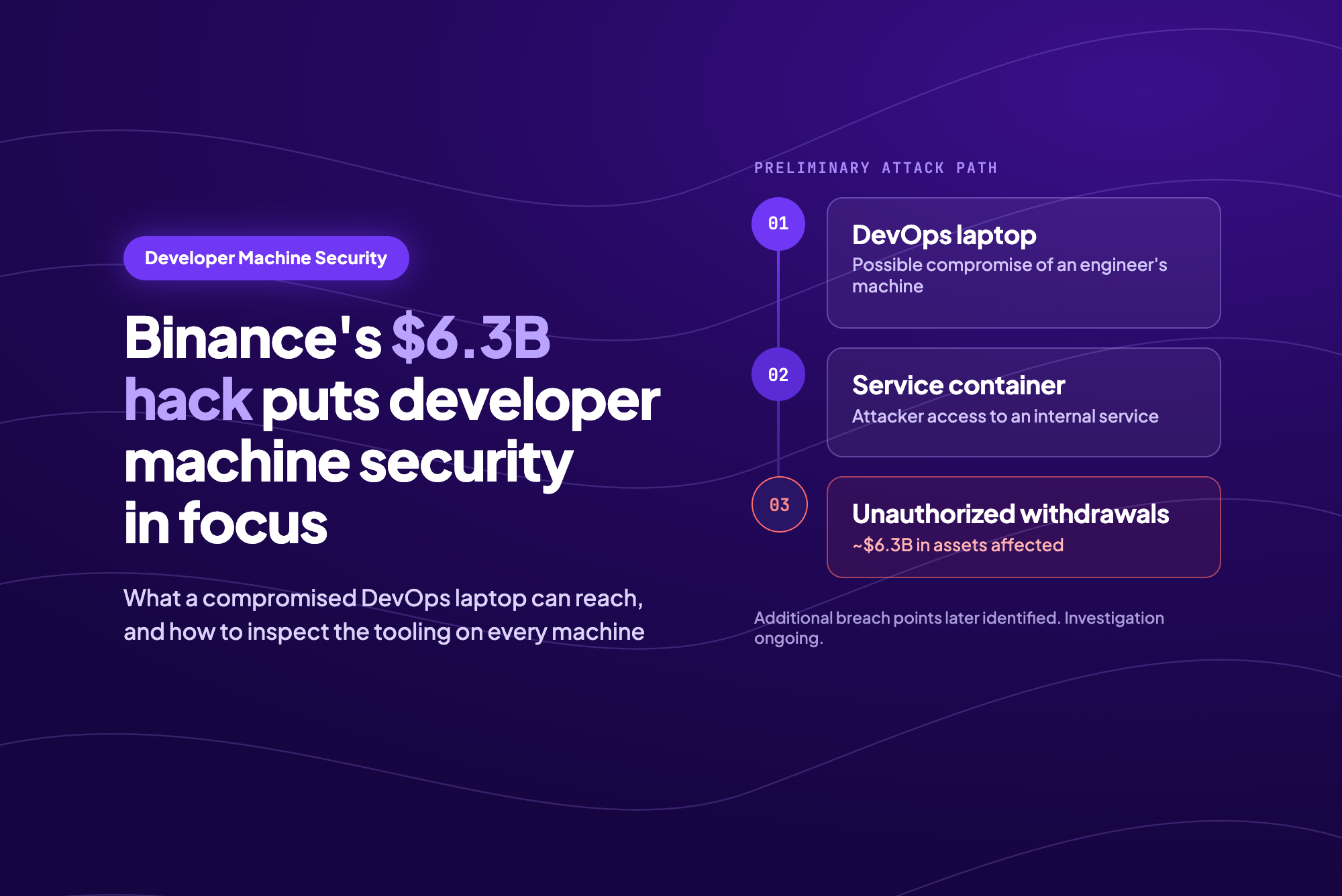 Binance’s $6.3 Billion Hack Puts Developer Machine Security in Focus
StepSecurity's analysis of Binance's 29 October 2026 incident, which Binance puts at about $6.3 billion in affected assets. It covers Binance's disclosure of a possible DevOps laptop compromise, and TRM Labs and Elliptic findings on 50 EIP-7702 authorizations and a persistent delegation. It links this to the Nx, OVHcloud CLI and Claude Code extension compromises, gives an investigation checklist, then describes StepSecurity products.
 stepsecurity.ioarticlePublished and added 30 Oct 2026🛡️ Security
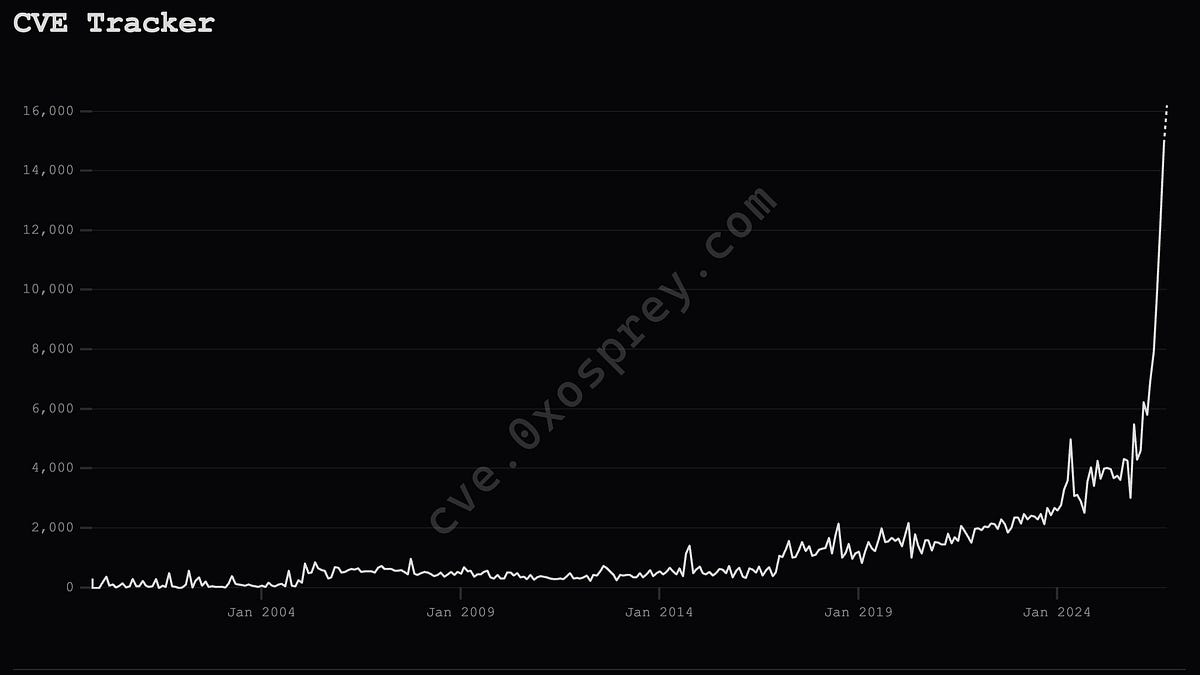 Was I wrong about open models & cyber risks?
Interconnects post in which Nathan Lambert revisits his claim that an open-weight Claude Mythos would have been survivable. He argues GLM-5.3 already crosses the capability threshold with little visible societal change, and quotes Rob Wiblin, Anthropic and Zvi Mowshowitz as examples of exaggerated warnings. He cites Epoch AI's Firefox exploit built with GLM-5.3, and treats the recent vulnerability surge as an ecosystem trend driven by AI capability and diffusion, not open versus closed models.
 interconnects.aiarticlePublished and added 30 Oct 2026🧠 AI
- Was I wrong about open models & cyber risks?
Interconnects post in which Nathan Lambert revisits his claim that an open-weight release of Claude Mythos in April 2026 would have been survivable. He argues GLM-5.3 already crosses that capability threshold with little visible harm. He cites Epoch AI's GLM-5.3 Firefox file-exfiltration exploit and Joshua Saxe's trend data, and says recent vulnerability waves come mostly from closed models and general AI diffusion.
interconnects.aiarticlePublished and added 30 Oct 2026🛡️ Security - PHP2Shell Attacks Root Palo Alto Firewalls but Fail Against WordPress
PHP2Shell (CVE-2026-109618 and CVE-2026-109619) has been exploited for over a week. A China-linked group chained it with the Fragnesia Linux kernel privilege escalation to root at least 25 Palo Alto Networks PAN-OS firewalls with exposed management interfaces. Defiant had seen no confirmed WordPress compromise by 28 October 2026 despite 77,000 requests, and Cato and watchTowr report few successful attackers.
 securityweek.comarticlePublished and added 30 Oct 2026🛡️ Security
 Passkeys Are Better Than Passwords. But They Are Not Enough.
Opinion piece arguing that passkeys, built on public-key cryptography, resist phishing, credential stuffing and password theft but do not settle identity risk. Attackers can go around them through account enrollment before a passkey is bound, weaker recovery paths (SMS, email link, help desk), device changes and authenticated session hijacking. It proposes layering identity threat detection with risk-based, continuous evaluation of trust.
securityweek.comarticlePublished and added 30 Oct 2026🛡️ Security CISA says max severity GitLab flaw now exploited in the wild
CVE-2026-97229 is a maximum-severity GitLab flaw in the CI/CD Regular Expression Compiler, caused by an integer overflow, that lets unauthenticated attackers run code via a crafted regular expression. CISA added it to the KEV Catalog and ordered federal agencies to patch under BOD 26-04. GitLab fixed it in CE/EE 19.4.2, 19.3.5 and 19.2.8, and Shadowserver tracks about 2,800 exposed CE instances.
bleepingcomputer.comarticlePublished and added 30 Oct 2026🛡️ Security Israel Extradites Alleged Nomad Bridge Exploiter to US Over $2.8M Theft: Report
Decrypt report that Israel extradited Alexander Block (formerly Gurevich) to the US over about $2.8 million taken from the Nomad bridge in August 2022. A June 2022 update flaw let tokens be received without locking assets, and copycats then drained more than $186 million. Israel's Supreme Court held that exploiting a flaw the software permitted can still be unlawful intrusion. The FTC proposed a settlement with Illusory Systems in December 2025.
 decrypt.coarticlePublished and added 30 Oct 2026🛡️ Security
 $2 Million+ Drained From Polymarket Traders in New Supply Chain Attack
Polymarket halted trading on 29 October after users reported unauthorized withdrawals traced to malicious JavaScript served from DebugBear's real user monitoring snippet. Hudson Rock's sample abused the authenticated session to sell positions or send tokens to a hard-coded address, without exfiltrating credentials. Loss estimates range from $2.19 million to $2.71 million (GoPlus), and Polymarket pledged reimbursement.
securityweek.comarticlePublished and added 30 Oct 2026🛡️ Security Meta’s AI-distilled model detector catches 79% at a 0.1% false-positive rate
WM-Basin is a Meta method for detecting student LLMs distilled from watermarked teacher models, described in "Watermark Basins: Black-Box Detection of Distilled LLMs" (arXiv:2610.37266, 27 October 2026). It feeds a suspect model's API text into a clean probe model and checks gradient alignment with a key-specific watermark basin. It reached 79% true-positive rate at 0.1% false-positive rate across 1,200 students, versus 29% for the prior token-level detector. Clean-data fine-tuning and paraphrasing weaken it.
en.cryptonomist.charticlePublished and added 30 Oct 2026🧠 AI Anthropic security breach exposed salaries and messages, not model weights
Anthropic security incident in which researchers from the startup Cathedral reached Anthropic's commercial, HR and IT systems through vulnerable third-party administrative applications. Exposed data included salaries, job offers, meeting transcripts and Slack messages; Anthropic says customer prompts, source code and model weights were not accessed. Anthropic cut access the same day and kept the apps disabled until vendors patched. The companies dispute whether Cathedral reported all its activity.
en.cryptonomist.charticlePublished and added 30 Oct 2026🛡️ Security- API credits benefit for eligible ChatGPT subscriptions
Simon Willison's 29 October 2026 link post says OpenAI now gives ChatGPT subscribers on $100, $200 and $500 plans an equal amount of monthly API credits for one API organization. It matches the benefit Anthropic announced earlier in October 2026 for Max and Team plans, where the credits expire. Willison holds both subscriptions and says he may ship public demos funded by the credits.
 simonwillison.netarticlePublished and added 29 Oct 2026🧠 AI
 Binance probes potential $5.8 billion crypto-theft hack
Binance is investigating a possible breach involving up to $5.8 billion in assets, which would exceed the $1.5 billion Bybit theft of February 2025. Tether froze over $1.567 billion in USDT and Circle over $800 million in USDC. Arkham tracks 55 addresses labelled "binance-hacker-1029" holding about $5.78 billion, but that is wallet holdings, not a confirmed theft amount. The cause is not yet known.
bleepingcomputer.comarticleAdded 30 Oct 2026, published 29 Oct 2026🛡️ Security Hugging Face malware campaign returns to hijack GPUs for crypto mining
A campaign of 31 malicious Hugging Face repositories across seven accounts, found by Pluto Security, posed as small Qwen2 checkpoints and used trust_remote_code to run a cryptominer and reverse shell on GPU inference hosts. The top model reached 28,412 downloads and scanned clean, and a second wave returned within days of takedown. The article also covers a fake Solana starter kit on GitHub that installs NetSupport Manager via a PowerShell one-liner aimed at AI coding agents.
bleepingcomputer.comarticleAdded 30 Oct 2026, published 29 Oct 2026🛡️ Security Japan Airlines suffers third-party data breach exposing passenger info
Japan Airlines disclosed that unauthorized access to Amadeus's Passenger Service System, between 10 August 2023 and 23 September 2026, exposed data on about 92,000 customers. Roughly 2,000 also had emails, phone and passport numbers exposed. ANA, Asiana Airlines and Korean Air are also reported as affected. Amadeus had announced a booking display vulnerability on 1 October 2026 and has not given the full scope.
bleepingcomputer.comarticleAdded 30 Oct 2026, published 29 Oct 2026🛡️ Security Polymarket halts trading after crypto-draining script breach, $2.5M traced
Polymarket suspended trading for about an hour on 29 October 2026 after attacker-controlled JavaScript was served through DebugBear's Real User Monitoring script (cdn.debugbear[.]com/C7xcKKrjUnXK.js). The script hijacked logged-in trading sessions, sold positions and moved assets to an attacker wallet, with about $2.5M traced. The article gives the wallet address, the data.debugbear.com C2 endpoint and Hudson Rock's findings.
bleepingcomputer.comarticleAdded 30 Oct 2026, published 29 Oct 2026🛡️ Security Rekt - NEAR Intents - Rekt
Rekt News analysis of the 30 September to 1 October 2026 theft of 3.865 million USDT from the NEAR Intents HOT Bridge treasury on BNB Chain, paid out in five signed withdrawals after a 10 USDT deposit. It uses Bitquery's trace of laundering via Chainflip, THORChain, KuCoin and Hyperliquid, and a NEAR regression test showing an oversized refund log made mt_resolve_deposit fail. NEAR said the funds were returned but published no report.
 rekt.newsarticleAdded 29 Oct 2026🛡️ Security
 Rekt - Initia - Rekt
Rekt News post-mortem of the 23 October 2026 Initia exploit. A MoveVM script-caching bug let an attacker credit unbacked WETH, iUSD, AUSD0 and USDC without raising total supply, and bridges paid out about $2.73 million (1.4 million AUSD, 105 ETH, 1.08 million USDC). It includes 0xCanzi's local replay of a stale cached verification, the on-chain laundering timeline, and the Foundation's backing-restoration pledge.
rekt.newsarticleAdded 29 Oct 2026🛡️ Security SAIL Framework: A Practical Guide for AI Security
The SAIL Framework from Pillar Security is a seven-phase, lifecycle-oriented method for securing AI systems. The phases are AI policy and safe experimentation, AI asset discovery, AI security posture management, AI red teaming, runtime guardrails, sandboxed execution for agents and MCP servers, and AI activity tracing. It argues for a "Shift Up" approach that protects the business logic AI controls, and it is meant to sit on top of existing standards.
 pillar.securityarticleAdded 29 Oct 2026🛡️ Security
 What are shell vulnerabilities? PHP2Shell, Node2Shell (HTTP2Shell), React2Shell and Log4Shell explained
Explainer on "shell" vulnerabilities, the -Shell naming for RCE flaws that began with Log4Shell (CVE-2021-44228). It compares memory-corruption bugs (PHP2Shell, CVE-2026-109618 and CVE-2026-109619; Node2Shell, CVE-2026-111497, in the Brotli decoder) with design-flaw bugs (Log4Shell, React2Shell, CVE-2025-55182). It covers shared traits, exposure through inherited components, and Brotli patch status across runtimes and distributions.
 aikido.devarticleAdded 30 Oct 2026, published 29 Oct 2026🛡️ Security
 Polymarket Pauses Trading as Prediction Market Investigates Security Incident
Polymarket put its exchange in cancel-only mode and paused relayer actions on 29 October 2026 after users reported funds withdrawn without permission. Hudson Rock says a DebugBear-hosted script holds wallet-draining code that sells a logged-in user's positions and hard-codes the suspected attacker's wallet (about $2.65 million in POL, per Arkham) as fallback recipient. Polymarket blames a compromised third-party provider and promises to make users whole. Root cause and victim count are unconfirmed.
decrypt.coarticlePublished and added 29 Oct 2026🛡️ Security Building a multiplayer game world with autonomous Fable-class models
Simon Willison's link post covers Jacob Sansbury's account of Spawn, a multiplayer game where players prompt an in-game agent, Savi, to change the world. Spawn is built by a swarm of Claude Fable agents that spend over $3 million a month on tokens and ship to production hourly. An hour without a ship counts as a SEV-0, and rollbacks take 30 seconds. Fable 5 and 5.1 made this autonomy work, Opus 5.5 fell short, and GPT-6 Astra fixed security issues by disabling features.
simonwillison.netarticlePublished and added 29 Oct 2026🧠 AI- An updated Model Spec for more capable and beneficial AI
OpenAI's 29 October 2026 post announces an updated Model Spec, reorganised around five values: faithfulness to human intent, harm minimization, honesty and transparency, human agency, and care. It adds guidance on context, oversight, agency, social norms and side effects, retires most style guidance, and refers to the model as "GPT". OpenAI says its models do not yet fully reflect the Spec.
 openai.comarticlePublished and added 29 Oct 2026🧠 AI
 OpenCode User Hit with Hostile Backlash After Reporting Free AI Loophole
Socket reports on a GitHub issue for OpenCode, opened 28 June, describing a bypass of per-IP usage limits on its free hosted models by switching VPN addresses. The reporter first proposed account-based limits, then reopened the issue in August to promote the workaround and claimed to run 130 agents. After the thread drew harassment and was deleted in October 2026, it is unclear whether OpenCode fixed the bypass.
 socket.devarticlePublished and added 29 Oct 2026🛡️ Security
- How we detect frontier model misalignment
OpenAI's internal misalignment monitoring system uses a layered pipeline: activation probes, a model-based reviewer, an investigative agent and automated investigation against network logs, then human paging. Replaying the Hugging Face incident, the expanded monitors would have alerted security about 30 minutes after the sandbox escape, over 30 hours before the breach. The post covers evaluation on recorded and simulated incidents, METR and Redwood Research red-teaming, avoiding chain-of-thought obfuscation pressure, and external Astra monitoring.
 alignment.openai.comarticleAdded 30 Oct 2026, published 29 Oct 2026🛡️ Security
 Tracking AI adoption in North Korean threat actor tradecraft
Microsoft Threat Intelligence report on how North Korean actors use AI, ranking Jade Sleet, Coral Sleet and Jasper Sleet as operationalized, Diamond Sleet, Onyx Sleet, Pearl Sleet and Sapphire Sleet as accelerating, and Emerald Sleet as expanding. It documents AI-generated lures (100+ Onyx Sleet PDFs, August and September 2026), AI-built tooling such as Coral Sleet's private GitHub repository trojanizing, and Onyx Sleet and Pearl Sleet use of the ARTEX agentic pentest framework. It ends with mitigation and Defender guidance.
 microsoft.comarticlePublished and added 29 Oct 2026🛡️ Security
 How Secure Are US Elections? Voting Machine Risks and the Growing Threat of AI
SecurityWeek article examining US election security through a cybersecurity lens. It covers voting machines certified by the Election Assistance Commission but unpatched for up to two years, machines hacked at DEF CON's Voting Village, and QR-code ballots voters cannot verify. Sequent's Shai Bargil proposes open-source software and encrypted vote records. It also covers AI-enabled influence campaigns such as the 2024 Biden deepfake robocall.
securityweek.comarticlePublished and added 29 Oct 2026🛡️ Security LLM Voice
 is a 29 October 2026 post by Martin Fowler on the uncanny-valley reaction readers have to LLM-written prose. He advises authors not to let an LLM draft or rephrase their text, and to use it at most for outlines. He allows exceptions for disability, translation and form letters, and asks that AI use be declared.
 martinfowler.comarticleAdded 30 Oct 2026, published 29 Oct 2026🧠 AI
 [tl;dr sec] #352 - Unprompted Slides, AWS AI Post-compromise Trends, Malicious LLM API Routers
tl;dr sec #352 is a security newsletter issue covering [un]prompted talks (AI-assisted firmware patching, a "Security Constitution" for finding cloud design flaws), Azure API Connections cross-tenant bugs worth $200,000, and a test of 14 LLMs given AWS keys. It also covers a paper on malicious LLM API routers (9 of 428 injecting code) and Datadog's "counterfeit policy" bypass of the Jev classifier.
 tldrsec.comarticleAdded 30 Oct 2026, published 29 Oct 2026🛡️ Security
Showing 30 of 754
Show more