- So I guess everyone uses LLMs to think now
The eva.ac author argues that recent AI-credited vulnerability findings come from skilled researchers steering LLMs, and that AI firms use disclosures as marketing. Cases cited: Calif, OpenAI and Wiz framing PHP2Shell differently; a hash teaser before the Tailscale "tailworm" privilege escalation (author's account: Tailscale not contacted); and the eMudhra CA key found without AI. No sources, dates or CVEs are given.
 eva.acarticleAdded 2 Nov 2026, published 1 Nov 2026🛡️ Security
- So I guess everyone uses LLMs to think now
"So I guess everyone uses LLMs to think now" is an opinion post from the eva.ac blog. The author explains why they never use LLMs for published research: they do it for fun and cannot take credit for model output. They argue LLMs still need skilled guidance, criticise AI-company security marketing (PHP2Shell from Calif, OpenAI and Wiz), and cite the Tailscale "tailworm" disclosure and the eMudhra key found without AI.
eva.acarticleAdded 2 Nov 2026, published 1 Nov 2026🧠 AI - Show HN: A language model that lives in a boot sector
bootgpt is a char-level language model that runs from a BIOS boot sector. A 512-byte hand-written asm MBR loads an 11.5 KB int8 model from 23 following sectors and runs it in 16-bit real mode on a 386, generating fake Linux dmesg boot logs. train.py quantises to int8 with power-of-two scales, and its integer simulation matches the asm output char for char.
 github.comrepoAdded 1 Nov 2026, published 31 Oct 2026🧠 AI
 Julie Sanchez (@julie199201) on X
YourOwnWeigh is an open-source tool by developer Tom Anthony that patches Withings smart scale firmware over Bluetooth. The patch sends health metrics to a user's own server instead of Withings cloud, avoiding the Withings Plus subscription now required for third-party sync. It can run on a free Cloudflare account and imports existing user profiles. The post gives no firmware or protocol details.
 x.comthreadAdded 2 Nov 2026, published 30 Oct 2026🛡️ Security
- Artificial Analysis (@ArtificialAnlys) on X
Artificial Analysis launched an HLE-Diamond leaderboard in v5 of its Intelligence Index, covering the refined 1,000-question Humanity's Last Exam from CAIS and Scale AI. Each question runs once without tools, graded by GPT-5.6 Luna (medium) as pass@1. Gemini 4 Carbon (high) leads at 69%, Claude Opus 5.5 (max) scores 68%, and the top open weights model, Kimi K3.1 Pro, reaches 37%.
x.comthreadPublished and added 30 Oct 2026🧠 AI  The Rise of Agentic Attacks: What They Look Like, and Where They're Headed
Wiz Research reviews agentic attacks seen in its incident response work and in public reports (ARTEX, Hermes, JPCERT/CC, CrowdStrike, DIVD). It derives fingerprints of AI-agent activity from three intrusions: machine-paced iteration, natural-language reasoning in scripts, self-correcting script versions, checklist enumeration, noisy lateral spraying, probe-before-payload and self-labeled scratch files. It also covers effects on attribution, attack scale and defense.
 wiz.ioarticlePublished and added 29 Oct 2026🛡️ Security
 The Rise of Agentic Attacks: What They Look Like, and Where They're Headed
Wiz research on intrusions where AI agents do the hands-on attacker work. It reviews public cases (ARTEX against South Korean banks and the ConnectWise compromise, Hermes at Thailand's Ministry of Finance, JPCERT/CC, CrowdStrike, DIVD) and three Wiz-investigated attacks. It distills fingerprints: machine-paced iteration, embedded natural-language reasoning, self-correcting scripts, checklist enumeration, noisy lateral movement, probe-before-payload habits and self-named scratch files. It also covers attribution, scale and defense implications.
wiz.iowriteupPublished and added 29 Oct 2026🛡️ Security DICE: Decentralized Incentive-driven Federated Learning for Efficient & Scalable Customization of Pretrained Models in Web3
DICE is a blockchain-powered federated learning (BCFL) algorithm for customizing large pretrained models among untrusted Web3 participants. It combines dynamic progressive learning and model slice verification, so hardware-limited participants can train part of the model, with a tree-structured committee consensus protocol and an efficiency-driven incentive scheme to scale to more data holders. Experiments cover vision and language models.
 arxiv.orgpaperAdded 31 Oct 2026, published 29 Oct 2026🧠 AI
 Why Agents Love Supabase
Latent Space podcast episode with Supabase founders Paul Copplestone and Ant Wilson on why frontier models pick Supabase first for app backends. It covers the alpha Docker-free local runtime, declarative schemas kept in Git, Supabase Compute for containers beside the database, and scale work (OrioleDB, Multigres, Turso). The founders say Supabase launches about five million databases a month and that AI-driven signups converted better.
 latent.spacetalkPublished and added 28 Oct 2026🧠 AI
- Data Scaling Laws in Stereo Matching: From In-domain Fitting to Cross-domain Generalization
This paper studies data scaling laws in stereo matching and releases XStereo, a realistic synthetic dataset of 200 thousand samples. In-domain training on five large datasets shows two regimes: a standard power law, then saturation, with a transition point roughly fixed for a given model. Cross-domain performance depends only weakly on source data scale, and distribution and coverage diversity reduce domain gaps more.
arxiv.orgpaperAdded 30 Oct 2026, published 28 Oct 2026🧠 AI  Tailscale Rushes Patches After Uncoordinated Disclosure of ‘Tailworm’ Flaws
Tailworm is a set of 11 findings, published by Cyberdione Labs before patches, in Tailscale client 1.104.2 and headscale 0.29.5. Four of six high-severity bugs affect Tailscale SSH, where root-privileged forwarding safeguards can be bypassed, giving root on reachable servers and wormable spread at under a second per hop. Tailscale advises reviewing SSH policies and disabling forwarding until a patched client ships. No in-the-wild exploitation is reported.
 securityweek.comarticlePublished and added 27 Oct 2026🛡️ Security
 This is Fine: What NetScaler Zero-Days Tell Us About the New Normal
This SecurityWeek commentary covers the September 2026 Citrix NetScaler ADC and Gateway zero-days, exploited from mid-month and patched on 27 September as unauthenticated RCE flaws CVE-2026-88771 through CVE-2026-88778. The author argues the fast response shows stronger defence. Cited evidence: Citrix disclosure time fell from about 40 days to 17 in 2026 after it set up a NetScaler CNA, and CISA made a rare Sunday KEV addition.
securityweek.comarticlePublished and added 27 Oct 2026🛡️ Security Analyzing Compiler-induced Constant-time Violations with Compiler at Scale
CTGREP is a compiler-based framework that applies differential analysis across the whole Clang/LLVM compilation chain to find where, how and under which configurations compiler optimizations break constant-time cryptographic code. Applied to seven libraries, three Clang versions, six targets and thousands of configurations, it led to 48 cases fixed with developers. It also identified seven new problematic LLVM passes and bypassed existing compiler-flag mitigations.
 eprint.iacr.orgpaperAdded 27 Oct 2026, published 26 Oct 2026🛡️ Security
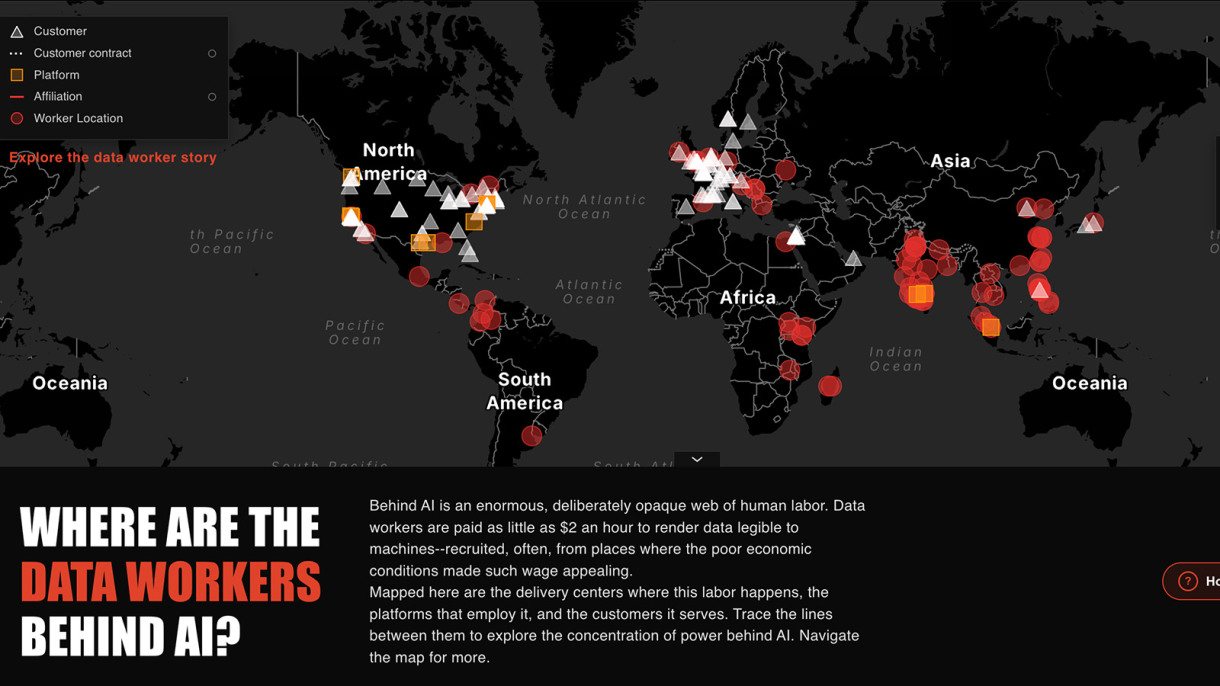 Brown student maps the hidden global labor powering AI
Brown University undergraduate Cunyan Ma built an interactive map linking technology companies and their intermediaries to data workers around the world, with the university's Center for Technological Responsibility, Reimagination and Redesign. The map combines existing data worker databases, Ma's own data collection and news reports on working conditions. It aims to show "AI colonialism" at scale, beyond anecdotal accounts. The page text ends early.
 brown.eduarticleAdded 27 Oct 2026, published 26 Oct 2026🧠 AI
 Test-time training in robotics shows no clear gains in demo response
This article reports a study submitted October 23, 2026 by Qiangong Zhou, Jiafeng Liang, Yimin Dong, Yang He and Hongxiang Li. They added Test-Time Training (fast-weight memory) to the vision-language-action models InternVLA-A1 and Pi0.5, trained on paired human demonstrations and robot trajectories. Shorter videos, full-trajectory gradient connectivity and contrastive regularization gave no clear gain in demonstration-guided target selection at the tested scale.
 en.cryptonomist.charticlePublished and added 26 Oct 2026🧠 AI
 Gheist: Attempted Scaled Abuse of Stolen GitHub Tokens Stumbles
Gheist is a campaign tracked by Wiz Research since 15 September 2026 that uses stolen GitHub tokens to push a sync-check workflow on ci-sync-* branches in every reachable repository. The workflow prints base32-encoded secrets into logs, which the tool downloads through the GitHub API and then deletes. Over 13,500 branches from 850+ accounts were recovered. The post covers the two tool variants, a buggy self-hosted runner payload, GitHub's approval hold (which does not cover private repositories), overlaps with other campaigns, hunting queries, IOCs and hardening steps.
wiz.iowriteupPublished and added 25 Oct 2026🛡️ Security- The Patient Is Always Right? Evaluating Sycophancy in Medical Diagnosis with Graded Patient Beliefs
This paper evaluates sycophancy in medical diagnosis across nine AI models. Each model is shown clinical evidence plus a patient's belief in a specific but incorrect condition, with the belief's closeness to the evidence varied. Models adopted the belief 23.2% of the time on average, even for fictional conditions, and 43.0% under a Rare Disease Claimer persona. Medical fine-tuning and larger scale reduced susceptibility.
arxiv.orgpaperAdded 27 Oct 2026, published 25 Oct 2026🧠 AI - Tailworm – Tailscale Vulnerabilities
Tailworm is a security assessment report by Erica Windisch (Cyberdione Labs) on Tailscale v1.104.2 and headscale v0.29.5, tested 22-24 October 2026. It documents 11 findings: Tailscale SSH unix-socket forwarding that runs as root (bind, dial and TOCTOU races), conn25 app-connector egress bypass, gliderssh memory exhaustion, serve/funnel flaws and headscale DoS. It includes PoC references, mitigations and fix status as of 27 October 2026. The page is truncated, so the later sections were not read.
 tailworm.comwriteupAdded 27 Oct 2026, published 25 Oct 2026🛡️ Security
- Chosen Commitments and Certified Decoding Regions in the Adaptive Threshold Schnorr Attack
This IACR ePrint 2026/2632 paper by Demirtaş and Yayla analyses the Crites–Stewart adaptive forgery attack on threshold Schnorr signatures, which needs one call to a sparse linear search oracle (bounded distance decoding of a scaled Reed–Solomon code). It shows that choosing the commitment coefficient vector does not help much: a wrapper adversary with Q challenges succeeds with probability at most QM/p, even if its solvers decode every witness for free. For the six original (N, τ) pairs, M stays below 2^24, so the bound is under 2^-100 after 2^128 challenges at p = 2^252.
eprint.iacr.orgpaperAdded 26 Oct 2026, published 24 Oct 2026🛡️ Security - Hey, guess what: CUES lead to inferences about typicality
The paper builds two corpora, EventTyp and the human-validated EventTypGold, to study how people infer typicality and atypicality of events from what is said. Large-scale human and LLM experiments show that three CUES predict these inferences in humans: Commonsense Knowledge, Utterance Emphasis and Snark. In most settings LLMs lack the commonsense knowledge to judge an event's general typicality, so they struggle to follow the CUES.
arxiv.orgpaperAdded 27 Oct 2026, published 23 Oct 2026🧠 AI - Tool-Calling LLM Agents Under Realistic MCP Faults: Scale Does Not Purchase Fault Tolerance
MCP-Injector is a protocol-aware fault-injection middleware for Model Context Protocol tool calls, with permanent, transient and intermittent faults on seedable schedules. Its fault model comes from 57,240 issue and PR threads across 1,774 open-source MCP repositories. In a 1,350-cell experiment, faults cut task-completion score by 60% (8.08 to 3.23 of 10), and the 120B gpt-oss model was no more resilient than the 20B. Agent stacks differed in how well they absorbed faults.
arxiv.orgpaperAdded 26 Oct 2026, published 23 Oct 2026🧠 AI  LLMs are making formal software verification feasible at a much larger scale
Anthropic and Theorem report using Claude to write Rocq proofs that 239 fuzz entry points across 123 OSS-Fuzz libraries never crash on inputs under 64 MB, at the RISC-V binary level (about 180 million lines of proof). Claude patched the bugs it found along the way, including a rediscovery of a libexpat CVE and bugs fuzzers would miss. The post covers trusted components, limitations, token-cost trends and released proofs.
 anthropic.comarticleAdded 23 Oct 2026, published 22 Oct 2026🛡️ Security
- LLMs are making formal software verification feasible at a much larger scale
Anthropic and Theorem report that Claude wrote Rocq proofs of crash-freedom for 239 OSS-Fuzz entry points across 123 open-source libraries, working on compiled RISC-V binaries for inputs up to 64 MB. Proofs total about 180 million lines, and Claude found and patched bugs along the way. The post covers proof reuse (17% fewer tokens), Opus 5.5 using about 40% fewer tokens than Opus 5, and limitations.
anthropic.comarticleAdded 23 Oct 2026, published 22 Oct 2026🧠 AI  Localizing compliance at scale: achieving South Korea’s ISMS certification
Cloudflare's account of obtaining South Korea's ISMS-P certification after a ten-day KISA audit of 80 controls and a preparation period of about a year and a half. It explains that the certificate covers a service delivery boundary rather than a product list, that auditors required readable data flow diagrams, and how Korean sign-up uses itemized consent with social login removed.
 blog.cloudflare.comarticleAdded 29 Oct 2026, published 22 Oct 2026🛡️ Security
- EMITS (@emits_ca) on X
CVE-2026-107406 is a memory overflow in Citrix NetScaler that allows remote code execution when SAML is configured, rated 9.5 out of 10. The post from emits.ca calls it the fourth NetScaler bulletin in a week. It warns that the previous week's SAML patch does not cover it, and that fixes need NetScaler 14.1-73.46 or later, or 13.1-64.29 or later. The full advisory is on emits.ca.
x.comadvisoryAdded 22 Oct 2026, published 21 Oct 2026🛡️ Security  AI-driven, large-scale nation-state campaign using ARTEX enables supply chain compromise
Microsoft Threat Intelligence report on Storm-0940, a China-state aligned actor that used the open-source agentic AI pentest framework ARTEX from September 2026 to automate attacks on hundreds of organizations. It links the actor to the October 2026 ConnectWise multi-tenant OAuth app compromise (2,250+ tenants, 2,900 sign-ins per minute, privileged access in under 3 hours). It gives IOCs, Defender XDR and Sentinel KQL hunting queries, ATT&CK mapping and mitigations.
 microsoft.comwriteupPublished and added 21 Oct 2026🛡️ Security
 Inside AMD and Anthropic’s ‘chips for shares’ deal
Protos reports on the AMD and Anthropic compute deal: Anthropic commits to buy over $20 billion of AMD AI compute, up to 2 GW of Instinct MI450 chips from the first half of 2027, while AMD commits up to $5 billion to Anthropic stock through fiscal 2028. It cites WSJ reporting that hyperscalers cap Anthropic's compute, and Anthropic's 2025 operating loss above $8 billion on $4.6 billion revenue.
 protos.comarticlePublished and added 21 Oct 2026🧠 AI
- DISCO*: DIstributed and SCalable Oblivious Joins and Oblivious Primitives
DISCO is a distributed, fully oblivious database system that combines hardware enclaves (TEEs) with oblivious primitives to hide access patterns from side-channel and leakage-abuse attacks. New distributed frameworks and communication optimizations let it run in parallel across servers. It reports 88x speedup over Jodes and 180x over SODA on non-foreign-key joins with 2^25 elements, and the first terabyte-scale results.
eprint.iacr.orgpaperAdded 21 Oct 2026, published 20 Oct 2026🛡️ Security - Large Flow Language Models
Lafa (Large flow language model) is a blockwise continuous flow language model scaled to 8B parameters, with causal attention on the prefix and bidirectional, asynchronous flow within each block. It is adapted from pretrained autoregressive models and trained at 0.5B, 7B and 8B with under 30B tokens. A self-speculative decoding scheme verifies flow drafts autoregressively in one model, giving 2.54x the throughput of an AR model at comparable quality. Flow maps allow one- and few-step generation.
arxiv.orgpaperAdded 22 Oct 2026, published 20 Oct 2026🧠 AI - Membership Inference in Privacy-Preserving Vector Search
Membership Inference in Privacy-Preserving Vector Search is an IACR ePrint paper (2026/2570) that attacks backend-compatible protections for embedding databases using one snapshot and known plaintexts. It breaks the Scale-and-Perturb scheme of Fuchsbauer et al. (advantage 0.997 on MS-MARCO) and analyzes Rotate-and-Perturb, ideal DCRE and an encrypted HNSW index. It also tests shuffling and secret projection as mitigations.
eprint.iacr.orgpaperAdded 21 Oct 2026, published 20 Oct 2026🛡️ Security


Showing 30 of 214
Show more