 Polymarket Sends $3.9M Back to Traders After Vendor Script Drain
Polymarket's international site was hit on 29 October 2026 when a page-speed monitoring script served from DebugBear's CDN was replaced with a drainer. It hijacked logged-in sessions for about an hour and took $2.7M from 726 wallets via Polymarket's relayer. Scott Helme of Report URI says the CSP allowlisted every domain used and that hash pinning would have blocked the swapped file. Polymarket is repaying $3.9M, and this is its second vendor-script compromise since June.
 bankless.comarticlePublished and added 30 Oct 2026🛡️ Security
 $2 Million+ Drained From Polymarket Traders in New Supply Chain Attack
Polymarket halted trading on 29 October after users reported unauthorized withdrawals traced to malicious JavaScript served from DebugBear's real user monitoring snippet. Hudson Rock's sample abused the authenticated session to sell positions or send tokens to a hard-coded address, without exfiltrating credentials. Loss estimates range from $2.19 million to $2.71 million (GoPlus), and Polymarket pledged reimbursement.
 securityweek.comarticlePublished and added 30 Oct 2026🛡️ Security
 Polymarket stolen funds: One account withdrew at least $2.7M across 710 wallets
Polymarket's international exchange suffered unauthorized withdrawals on 29 October 2026 after a compromised third-party provider, reportedly the website monitoring service DebugBear. Betting Intelligence and Polysights found one account withdrew at least $2.7 million across 710 wallets. Polymarket paused trading, referred the case to law enforcement, promised reimbursement, and had a June 2026 vendor breach that cost about $3 million. The attack mechanism is not described.
 en.cryptonomist.charticlePublished and added 29 Oct 2026🛡️ Security
 Polymarket halts trading after crypto-draining script breach, $2.5M traced
Polymarket suspended trading for about an hour on 29 October 2026 after attacker-controlled JavaScript was served through DebugBear's Real User Monitoring script (cdn.debugbear[.]com/C7xcKKrjUnXK.js). The script hijacked logged-in trading sessions, sold positions and moved assets to an attacker wallet, with about $2.5M traced. The article gives the wallet address, the data.debugbear.com C2 endpoint and Hudson Rock's findings.
 bleepingcomputer.comarticleAdded 30 Oct 2026, published 29 Oct 2026🛡️ Security
 Polymarket Pauses Trading as Prediction Market Investigates Security Incident
Polymarket put its exchange in cancel-only mode and paused relayer actions on 29 October 2026 after users reported funds withdrawn without permission. Hudson Rock says a DebugBear-hosted script holds wallet-draining code that sells a logged-in user's positions and hard-codes the suspected attacker's wallet (about $2.65 million in POL, per Arkham) as fallback recipient. Polymarket blames a compromised third-party provider and promises to make users whole. Root cause and victim count are unconfirmed.
 decrypt.coarticlePublished and added 29 Oct 2026🛡️ Security
- rohitg00/ai-engineering-from-scratch
ai-engineering-from-scratch is a free, MIT-licensed curriculum of 542 lessons in 20 phases, from math and deep learning through transformers, LLM engineering, MCP, agents and capstones. Code is in Python, TypeScript, Rust and Julia. It includes three graded projects (retrieval evaluation, agent trace debugger, tool call firewall), installable tutor skills for Claude Code and Codex, and certification prep tracks.
 github.comcourseAdded 29 Oct 2026🧠 AI
 NIK C2: The new AI-enabled command-and-control framework
NIK C2 is a newly observed C2 framework with a Go-based 64-bit Windows implant that embeds an OpenAI Chat Completions client (ai_generate command), falling back to the victim's OPENAI_API_KEY. Talos details its 52+ commands, AES-256-GCM over WebSocket with HTTP fallback, credential, wallet and keystroke theft, screen-lock ransomware, AMSI bypass and anti-debug. It also lists a live C2 at 87.120.196[.]120 and total-sitevv[.]lol.
 blog.talosintelligence.comwriteupPublished and added 29 Oct 2026🛡️ Security
 Social Engineering: Modem-Based Persistence in a Compromised Environment
The article describes reflashing a Huawei E3372h-153 HiLink 4G USB modem so its embedded Linux OS runs an OpenVPN client over the mobile network, creating a covert, network-independent persistence channel after physical USB access. It walks through enabling debug mode, flashing firmware, disabling CD-ROM emulation, configuring DHCP and autorun scripts, and chaining a second L2VPN tunnel to bridge the attacker directly onto the victim's Ethernet segment for tools like Responder. Defense guidance focuses on restricting USB ports and disabling USB network adapters via policy.
 hackers-arise.comwriteupPublished and added 28 Oct 2026🛡️ Security
 People Are Vibe Coding the Ads Out of Their Smart TVs: Here's How
Decrypt reports on "vibe coding your TV": owners point Claude Code at Android TVs, which finds the set over Wi-Fi, lists installed apps through Android Debug Bridge, disables ad and telemetry packages, and writes custom launchers. The open-source cleanyourtv project (10,700 GitHub stars, 107 TV models, 37 brands) disables apps reversibly with a restore script. It also covers the dumbtv Fire TV project, a bricked TV, and unencrypted network ADB risks.
decrypt.coarticlePublished and added 20 Oct 2026🧠 AI Parul Gautam (@Parul_Gautam7) on X
Beacon is an open-source memory layer for coding agents. It saves sessions across Claude Code, Cursor, Codex and more than 20 other tools, so developers can move work between agents without losing context. The team says it raised a $5.5M seed round and is building a self-improving feedback loop that learns from how users debug. The post gives no technical detail or repo link.
 x.comthreadAdded 21 Oct 2026, published 20 Oct 2026🧠 AI
- llm-echo 0.5
llm-echo 0.5 is a debug plugin for Simon Willison's LLM CLI. It adds an "echo" model that calls no LLM and repeats the prompt back as JSON. The release updates simulated token usage counts to include tool calls, system prompts and reasoning tokens. An example run with `-o thinking 1 --usage` reports 2 input and 24 output tokens. Willison is testing PRs ahead of a new LLM release.
 simonwillison.netarticleAdded 19 Oct 2026, published 18 Oct 2026🧠 AI
 CikaBika Bot RAT Uses Discord for C&C
SecurityWeek reports Darktrace's findings on CikaBika Bot, a Rust-based RAT delivered via a PDF containing a disk image with an LNK disguised as a Word document. A hidden PowerShell step drops a Nim loader and a Rust DLL that is moved into the protected Edge directory to bypass UAC and sideloaded via DLL search-order hijacking of debugging-library exports. The RAT uses per-victim Discord channels for C&C (recon, command execution, file transfer, screenshots/camera) and exfiltrates ZIPped data via Ngrok.
securityweek.comarticlePublished and added 15 Oct 2026🛡️ Security Francesco Sorrentino (@Fr_Sorrentino) on X
chrome-bridge is an open-source MCP server with a Chrome extension that lets Claude Code drive the user's own Chrome, including logged-in tabs and DevTools. It reads page structure rather than screenshots, which saves tokens and turns. The author reports gains over Claude in Chrome: 4.7× fewer turns and 2.8× lower cost on form filling, 2.3× and 3.4× on finding a row among 1,500, and 9.3× and 4.3× on debugging a broken checkout, with 15/15 correct against 12/15. These are self-reported numbers from the tweet.
x.comtoolPublished and added 14 Oct 2026🧠 AI A methodology to derive security specifications for complex electronic systems
Paper proposing a risk-based methodology to derive security specifications for complex electronic systems such as AI chips and chiplet-based designs. It walks from system missions to assets, threat analysis, security requirements and then countermeasure selection. The method is illustrated on datacenter and automotive chiplets for the missions of secure provisioning, trimming, debugging, booting and remote attestation, and addresses the longer supply chain and multi-tenant threats that chiplets introduce.
 eprint.iacr.orgpaperAdded 14 Oct 2026, published 12 Oct 2026🛡️ Security
 Impactful scheduling for GPU clusters
Ai2's AI Infrastructure team describes replacing a priority-based scheduler on thousands of H100/B200/B300 GPUs with GPU time budgets, hierarchical fair-share over a 7-day lookback window, and a "scheduling contract" where workloads declare a minimum runtime (capped at 8 hours) to enable time-slicing. Results over 30 days: 98% of owed GPU hours delivered, occupancy steady at 98%, debug-workload p90 queue wait down from about 2 hours to 30 seconds, and 74% fewer repairs needing a human. It also covers a simulator used to predict outcomes before rollout, plus problems that remain: interactive sessions hurt by preemption and possible capacity fragmentation.
 huggingface.cowriteupPublished and added 9 Oct 2026🧠 AI
- morluto/awesome-reverse-engineering
awesome-reverse-engineering is a CC0 curated list of reverse-engineering tools and learning resources, organized by task: triage, native analysis, debuggers, instrumentation, deobfuscation, malware analysis, mobile, firmware, file formats, games, diffing, symbolic execution, lifting and AI agents. Each entry notes licensing, maintenance status and prerequisites. It also covers MCP integrations, CTF practice sites and related awesome lists.
github.comrepoAdded 27 Oct 2026, published 9 Oct 2026🛡️ Security - OKX Agent Trade Kit (okx-trade-mcp / okx-trade-cli)
OKX Agent Trade Kit is an open-source MCP server (okx-trade-mcp) and CLI (okx-trade-cli) that let AI assistants like Claude Desktop, Cursor, Claude Code and VS Code place trades and query account data on the OKX exchange via natural-language commands. It runs locally with API keys never leaving the machine, supports module scoping (market, spot, swap, account, earn), a read-only mode for safe querying, multiple profiles, and includes pre-built skill files for agent frameworks plus structured JSON error reporting for debugging failed tool calls.
github.comrepoAdded 2 Oct 2026🧠 AI  DeepSeek Harness Desktop for macOS and Windows
DeepSeek Harness is an open-source general-purpose agent harness from DeepSeek, built on the "Cordis" everything-is-a-plugin architecture, shipped as a desktop app for macOS/Windows and runnable as a web UI from code. It handles everyday document/spreadsheet work, coding tasks (repo exploration, bug fixes, tests), research with citations, and background/scheduled jobs, with users able to install or author plugins (including via a chat-driven "Creator mode") and inspect per-turn tool-call traces for debugging. It runs on DeepSeek's DeepSeek-V4.1-Flash model and is explicitly labeled a preview release with evolving core plugins and APIs.
 deepseek.comtoolPublished and added 2 Oct 2026🧠 AI
 Trust minimized transaction simulation using state proofs
An ethresear.ch post proposing "verified prestate simulation": wallets fetch the prestate a transaction will touch via debug_traceCall's prestateTracer, confirm unanimous state-root agreement across multiple independent RPC nodes, verify each account/storage value with eth_getProof Merkle Patricia Trie proofs, and only then execute the transaction locally with revm to produce trustworthy simulation results. It targets a concrete wallet attack where a compromised simulation API/RPC provider shows a benign fake trace (e.g. "donate to charity") while the real calldata drains a user's funds, and discusses its limitations (prestate-completeness not yet verified, conditional-logic and MEV evasion still possible) as a pragmatic alternative to full light clients.
 ethresear.chwriteupPublished and added 1 Oct 2026🛡️ Security
- Field Notes: Reconstructing the Attacker's LSASS Dump
DFIR.ch field notes on an incident where attackers used Ricardo J. Ruiz's TrickDump tool to dump LSASS without creating a conventional minidump file, instead leaving lock.json, shock.json, barrel.json and a ZIP of randomly-named memory-region chunks. The authors reconstructed the dump with TrickDump's create_dump.py and parsed it with pypykatz, confirming the attacker actually recovered reusable Kerberos credential material rather than just detecting that LSASS was touched. Includes hunting guidance (Sysmon EID 10 process-access telemetry, SeDebugPrivilege enablement, multi-binary workflows) and notes TrickDump fails against LSASS protected by PPL.
 dfir.chwriteupAdded 1 Oct 2026, published 30 Sep 2026🛡️ Security
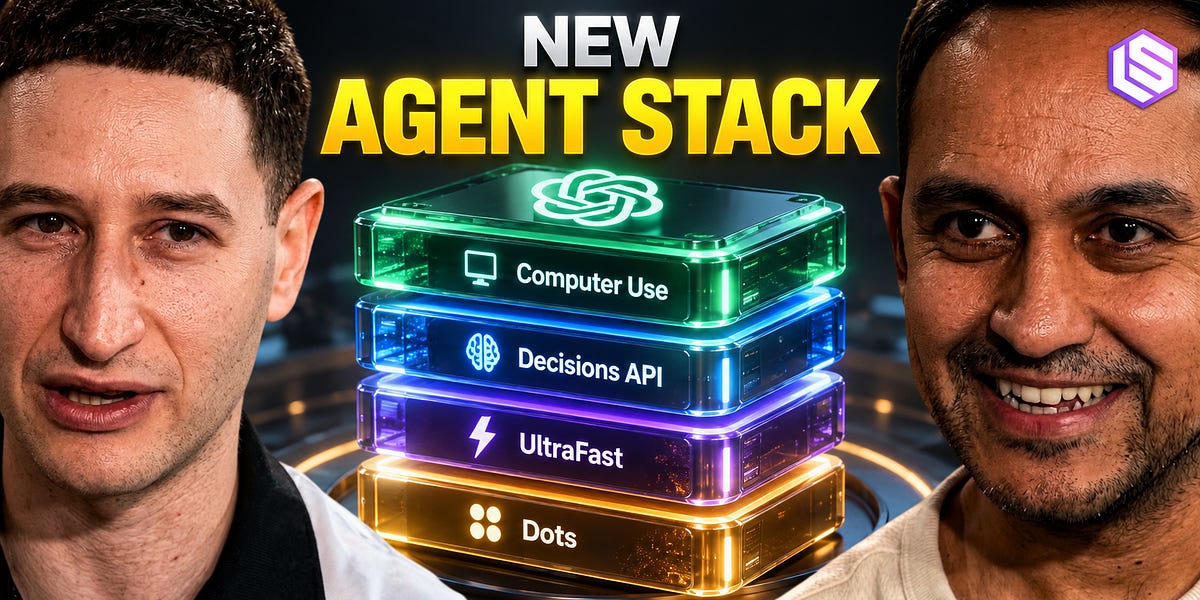 Why Dwarkesh is Wrong about Computer Use + How OpenAI shipped its Jev competitor in 1 Week
Latent Space podcast transcript recorded live after OpenAI's DevDay 2026 keynote, featuring Ari Weinstein (OpenAI's Computer Use lead, ex-Apple Shortcuts and Sky cofounder) and Nikunj Handa (OpenAI API product lead). Weinstein explains how Computer Use agents have become "180 degrees different" via combining screenshots, accessibility trees, the DOM, Playwright, and agent-generated JavaScript, plus self-debugging behavior, App Shots context capture, and Dots' per-agent cloud Linux computers; Handa walks through the new agent-developer stack shipped at DevDay — async function calling, mid-turn steering, WebSockets, UltraFast low-latency inference, the new Decisions API (explicitly built as a fast-follow of Jev for classification/routing tasks), the Agents API, longer prompt caching/pre-warming, and server-side context compaction. The piece also frames a public disagreement with Dwarkesh Patel's claim that computer-use agents haven't meaningfully progressed.
 latent.spacetalkPublished and added 30 Sep 2026🧠 AI
- NVIDIA OpenShell — secure runtime for autonomous AI agent fleets
OpenShell is NVIDIA's open-source runtime for running fleets of autonomous AI agents with restricted, policy-governed access to files, system calls, network, and credentials. It enforces policy at the kernel level inside isolated sandboxes (per-agent, with Docker/Podman/virtualization backends) and uses formal verification to flag risky policy changes — such as an agent gaining a new host or API access with credentials — before they take effect, so changes can wait for human review. It ships a CLI, a gateway control plane, Kubernetes/Helm deployment, and installable agent skills for writing and debugging sandbox policies.
github.comrepoAdded 29 Sep 2026🧠 AI  Correct Answers, Invalid Traces: What Verifiable Grade-School Math Reveals About Chain-of-Thought Traces
Using the iGSM synthetic grade-school-math benchmark, whose exact solution dependencies can be checked programmatically, the authors show that correct answers and valid reasoning traces decouple out of distribution — on the hardest problems 31.6% of correct answers come with invalid traces, many failing only semantic dependency checks despite passing syntax/arithmetic checks. They further show trace minimality can reflect training-data properties rather than genuine planning, and that models trained on shuffled or swapped traces still retain high accuracy despite no trace being verifiably correct, undermining the use of CoT traces for debugging, agent auditing, or safety monitoring.
 arxiv.orgpaperAdded 30 Sep 2026, published 29 Sep 2026🛡️ Security
 176 Vulnerabilities in Samsung Preinstalled Apps
Oversecured summarizes a multi-year research effort (2022-2025) that uncovered 176 vulnerabilities across Samsung's preinstalled system apps, all patched and rewarded with over 200000 dollars in bug bounties. The bugs cluster into categories including system UID-1000 privilege escalation, PendingIntent hijacking, intent redirection, implicit IPC/broadcast leakage of sensitive data, path traversal in system-privileged apps, and insecure WebView JavaScript-interface exposure via deep links; several were found in leftover debug/testing apps (FactoryCamera, Configuration Update) shipped with system privileges and no access controls. Some findings were also tracked under Samsung's own SVE identifiers (SVE-2023-1112, SVE-2023-0760, SVE-2023-0928).
 oversecured.comwriteupAdded 26 Sep 2026🛡️ Security
 OnePlus/OPPO root privilege-escalation chain (AtlasService + olc2)
Researcher Rasmus Moorats disclosed a two-stage local privilege-escalation chain on OnePlus/OPPO Android phones: OnePlus's AtlasService debugging component runs as root and passes unvalidated app input into a system command, granting root but confined to a restricted dumpstate zone; a second flaw in the olc2 hardware-helper service accepts arbitrary shell commands from any root caller, escaping the sandbox to full root with kernel-module-loading privileges. A malicious app requiring zero permissions and showing no prompts can chain both bugs on a stock OnePlus 15 or 12 Pro, and OnePlus said the same flaws affect many other OnePlus and OPPO devices sharing OxygenOS. OnePlus confirmed the bugs in May 2026 but had shipped no fix or CVE by publication (Sept 24), and separately told the researcher it claims sole authority over disclosure timing and threatened legal liability for publishing without consent — a stance he rejected before going public.
 thehackernews.comarticleAdded 26 Sep 2026🛡️ Security
- rewanthtammana/Who-Let-The-Agents-Act
who-let-the-agents-act is a self-hostable lab suite (Docker/Python, Groq-backed LLM agent) with nine isolated scenarios — overpowered data tools, IDOR-style cross-account access, unsafe agent handoffs, refund-limit bypass, indirect prompt injection via poisoned invoices, multi-tenant RAG leakage, secret leakage through debugging, fail-open approval outages, and a multi-hop confused-deputy agent chain. Each scenario runs in multiple modes (vulnerable vs. application-enforced) against the same prompt, recording model plan, policy decision, tool calls, and DB access as JSON so a reader can directly compare what changes when authorization is enforced outside the system prompt.
github.comrepoAdded 26 Sep 2026🛡️ Security  Finding Gadgets Like It's 2026 (Atredis Partners)
Atredis Partners built an LLM-driven pipeline (WALA/ASM call-graph builder, a FastAPI graph query server, Claude Code as the reasoning/validation agent, and a dynamic test/debug runner) to automate discovery of Java deserialization gadget chains against modern, hardened application servers (WebSphere, WildFly, Payara). The project found 17 confirmed chains, 6 novel, including CB1-Shaded-RCE — a chain that bypasses JPMS's TemplatesImpl restrictions via a shaded/relocated copy of Xalan's XSLTC shipped inside WildFly's JSTL jar, giving RCE on the latest WildFly on JDK 21 — plus a novel JNDI-injection chain in Payara via AttributeComparator/InjectableJMSContext. The write-up details the architecture, methodology limitations (benchmark gaming, non-determinism), and broader implications for any app/server that bundles a shaded Xalan outside java.xml, with tooling released on GitHub (atredispartners/llmchainhunter).
 atredis.comwriteupAdded 25 Sep 2026🛡️ Security
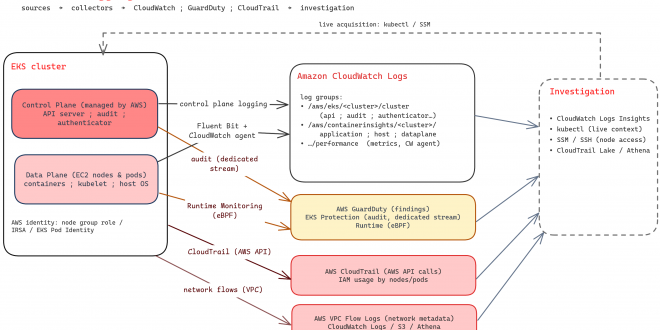 AWS EKS forensics: data sources and investigation tooling (Synacktiv)
Synacktiv's CSIRT publishes a detailed forensics guide for Amazon EKS, mapping the three data-source layers (Kubernetes control plane audit logs, data-plane/Container Insights logs, and AWS-level CloudTrail/GuardDuty) and giving concrete CloudWatch Logs Insights queries for detecting RBAC reconnaissance, role escalation via the 'escalate' verb, Pod Security Admission evasion, and static-pod node persistence. It also covers node-level acquisition via SSM/kubectl debug, ServiceAccount token theft, and correlating GuardDuty findings (PrivilegedContainer, ContainerWithSensitiveMount, ReverseShell, InstanceCredentialExfiltration) with CloudTrail to trace stolen node/pod IAM identities used outside the cluster.
 synacktiv.comarticleAdded 21 Sep 2026🛡️ Security
- AWS EKS Forensics: Data Sources and Investigation Tooling
Synacktiv's CSIRT breaks down the forensic data sources exposed by Amazon EKS across three layers — Kubernetes control plane (audit logs), data plane (Container Insights/Fluent Bit), and AWS services (GuardDuty EKS Protection, CloudTrail) — and provides concrete CloudWatch Logs Insights queries for RBAC-escalation detection, static pod persistence, node credential theft, and other attack indicators. It also covers node-level acquisition (SSM, kubectl debug), containment pitfalls that destroy evidence, and a full investigation workflow from GuardDuty finding to cross-layer timeline correlation.
synacktiv.comarticleAdded 21 Sep 2026🛡️ Security - vinilana/jev-gateway
jev-gateway is a local proxy that sits between coding agents (Codex, Claude Code, OpenCode, Kilo, Gemini CLI, Devin) and their LLM backend, intercepting only the tool-selection decision and routing it to TypeSafe's small, fast "Jev" model instead of the main reasoning model, while forwarding everything else untouched. It supports forced tool_choice, hint-based suggestions (for APIs like Anthropic's that can't force a tool mid-turn), a live dashboard for cost/latency/routing metrics, and a companion benchmark repo (jev-gateway-bench) showing routing helps most on debugging tasks but can hurt some models on feature-building tasks.
github.comrepoAdded 26 Sep 2026, published 18 Sep 2026🧠 AI
Showing 30 of 55
Show more