 Meta’s AI-distilled model detector catches 79% at a 0.1% false-positive rate
WM-Basin is a Meta method for detecting student LLMs distilled from watermarked teacher models, described in "Watermark Basins: Black-Box Detection of Distilled LLMs" (arXiv:2610.37266, 27 October 2026). It feeds a suspect model's API text into a clean probe model and checks gradient alignment with a key-specific watermark basin. It reached 79% true-positive rate at 0.1% false-positive rate across 1,200 students, versus 29% for the prior token-level detector. Clean-data fine-tuning and paraphrasing weaken it.
 en.cryptonomist.charticlePublished and added 30 Oct 2026🧠 AI
 dfbench — depthfirst
dfbench is a held-out benchmark maintained by depthfirst that scores frontier LLMs on defensive security work: vulnerability detection, validation (precision) and differential analysis between commits. It reports recall, precision, F1 and cost per task by model and thinking level, split by application, low-level and smart-contract code and by single or multi-repo scope. Overall detection recall runs from about 21% to 69%, with the top figure at $99.19 per task for Mythos 5; validation precision mostly falls between 15% and 49%.
 depthfirst.comarticleAdded 29 Oct 2026🛡️ Security
 Polymarket Pauses Trading as Prediction Market Investigates Security Incident
Polymarket put its exchange in cancel-only mode and paused relayer actions on 29 October 2026 after users reported funds withdrawn without permission. Hudson Rock says a DebugBear-hosted script holds wallet-draining code that sells a logged-in user's positions and hard-codes the suspected attacker's wallet (about $2.65 million in POL, per Arkham) as fallback recipient. Polymarket blames a compromised third-party provider and promises to make users whole. Root cause and victim count are unconfirmed.
 decrypt.coarticlePublished and added 29 Oct 2026🛡️ Security
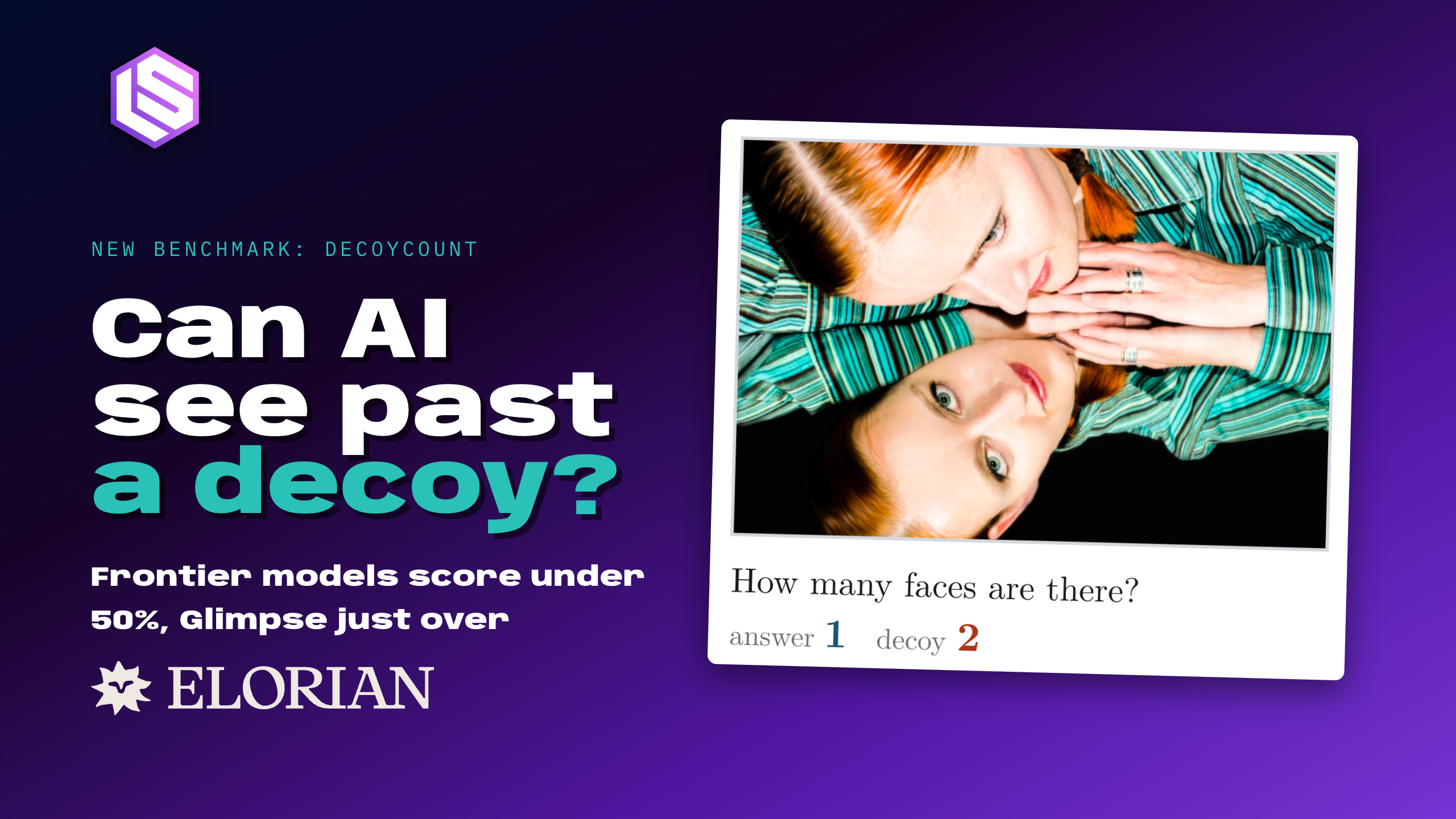 Can Frontier Models See Past a Decoy? Elorian Tests Visual Reasoning
DecoyCount is a benchmark from Elorian and Mercor with 1,660 items that tests whether models count objects or fall back on visual shortcuts. Frontier models scored below 50%: GPT-6 Astra led with 43.17%, ahead of Gemini-3.8-flash (32.71%), Qwen3.8-max (28.31%) and Claude-Fable-5.1 (25.22%). CEO Andrew Dai says Elorian's Glimpse model scored 50.48% in a single internal run without tools, and contrasts visual reasoning with world models such as Atlas and Genie 4.
 latent.spacearticleAdded 28 Oct 2026, published 29 Oct 2026🧠 AI
 Leak Exposes 41,000 Homeland Security Workers–Including Undercover ICE Agents
Icepick is a leaked archive of records on more than 41,000 Department of Homeland Security employees and contractors, published by Distributed Denial of Secrets in 2026 and said to come from DHS's Okta login system. WIRED's analysis covers CBP, ICE, HSI, USCIS and CISA staff, plus over 55,000 permission groups that reference undercover programs, Palantir Falcon, PenLink, Signal and Mobile Fortify. Okta says it has no evidence of compromise.
 wired.comarticleAdded 29 Oct 2026, published 28 Oct 2026🛡️ Security
 OpenAI Proves ETH Is False, and Crypto Twitter Has Questions
Decrypt reports that OpenAI published a 67-page paper (dated 17 October 2026, revised 25 October) claiming its AI found a deterministic subexponential-time algorithm for counting 3-SAT solutions, which would refute the Exponential Time Hypothesis. The proof was formalized in Lean. Impagliazzo, Paturi and Ryan Williams are reviewing it independently and say this is not certification. Anthropic posted a Claude-credited 3-SAT paper on 26 October.
decrypt.coarticlePublished and added 27 Oct 2026🧠 AI- CoinDCX confirms $16 million loss from retired wallets days after CEO called breach reports a ‘false alarm’
CoinDCX confirmed on 25 October 2026 that 15.99 million USDT (about $16 million) was drained from retired deposit wallets after its automated sweeping service failed and user deposits sat at old, vulnerable addresses. The exchange absorbed the loss and says cold-wallet funds are safe. The report covers CEO Sumit Gupta's earlier "false alarm" denial, ZachXBT's challenge and withdrawal advice, and the July 2025 $44 million hack.
 theblock.coarticlePublished and added 25 Oct 2026🛡️ Security
 The rise and fall of Jev hype
The essay uses the launch of Jev, TypeSafe AI's "System One" general-purpose classifier trained with RLCD, to dissect AI marketing patterns: name dropping, jargon, ambiguity, inflated claims and drama. The author argues Jev's hype peaked and collapsed within about 33 days, while open-weight rivals beat it on cost and performance. It also lists incremental advances since ChatGPT and four unsolved problems: abstract reasoning, continuous learning, embodiment and the economics of running AI.
 blog.alexewerlof.comarticleAdded 24 Oct 2026, published 23 Oct 2026🧠 AI
 Is Claude Code safe for the enterprise? What the official settings cover, and what they don't
Adversa AI assesses Claude Code enterprise security as of October 2026. Managed settings bind only Claude Code, can be edited by local admins, and are not read by Anthropic-hosted cloud sessions. Auto mode misses 17% of risky actions in Anthropic's test set. The article covers attacks on the harness (CVE-2025-59536, CVE-2026-21852, TrustFall, SymJack, GhostApproval) and recommends credential, egress, isolation and monitoring controls.
 adversa.aiarticlePublished and added 22 Oct 2026🛡️ Security
 Your AI agent fixed the bug, but what else did it change?
Trail of Bits releases patching-bugs and regression-hunt, two agent plugins built with OpenAI through Patch the Planet. patching-bugs reproduces bugs, writes fixes and runs a three-arm proof; regression-hunt traces diffs to real interfaces, confirms with live PoCs and a fresh-context replay. A review of 130+ merged PRs found 21 regressions, and regression-hunt gave 25% fewer false positives than a baseline Codex prompt.
 blog.trailofbits.comarticlePublished and added 21 Oct 2026🧠 AI
- Your AI agent fixed the bug, but what else did it change?
Trail of Bits releases patching-bugs and regression-hunt, two Codex plugins from the Patch the Planet initiative with OpenAI. A review of 130+ merged patches confirmed 21 regressions (none broke a security protection). In preliminary tests regression-hunt gave 25% fewer false positives than a baseline Codex agent. Design uses live PoCs, strict schemas, a three-arm proof, and project THREAT_MODEL.md and PATCHING_GUIDELINES.md files.
blog.trailofbits.comarticlePublished and added 21 Oct 2026🛡️ Security  OpenAI Buys Orchestra Bio to Put AI Agents in Charge of Drug Development Grunt Work
OpenAI acquired Orchestra Bio, a San Francisco startup (founded fall 2022, about $20 million raised) whose AI agents track drug development programs, and will fold its team and platform into the Rosalind life sciences suite. The agents map how setbacks such as a failed manufacturing batch affect deadlines and compare responses, while scientists decide. Terms were undisclosed; Anthropic bought Coefficient Bio for about $400 million in April.
decrypt.coarticlePublished and added 20 Oct 2026🧠 AI Latest open artifacts (#25): DeepSeek V4.1 Flash 1017, American-made models, and new regulatory controls in the US & China
Interconnects' Latest open artifacts (#25) covers open-weight AI in fall 2026. Policy items: China's MOFCOM proposal for pre-approval of international model sharing, and a DHS order barring DeepSeek from federal civilian procurement. DeepSeek released its internal inference stack DeepInfer. Picks include MiMo-V2.6-Pro-RL, DeepSeek-V4.1-Flash-1017 (552B-A16B, MIT), Clef, Nemotron-3.5-Super-VL and Reflection's Beam-1.0 (Apache 2.0).
 interconnects.aiarticlePublished and added 20 Oct 2026🧠 AI
 MPS in PyTorch 2.15
PyTorch 2.15 MPS release post from the Hugging Face PyTorch team, covering the Apple silicon backend. It adds float8_e4m3fn tensors with F.scaled_mm, a native grouped matmul that speeds MoE decoding 5 to 6.5x (Qwen3.6-35B-A3B from 9.4 to 61.3 tokens/s on an M3 Ultra), and an 8x faster softmax. Wan2.2 VAE decode peak memory falls from 270 GiB to 8 GiB. It previews 2.16 attention on Metal.
 huggingface.coarticlePublished and added 20 Oct 2026🧠 AI
 US Cybersecurity Job Postings Fall 26% as AI Security Engineer Demand Soars
SecurityWeek summarises CyberSN's Cybersecurity Jobs Report. US cybersecurity postings fell 26.4% to 235,786 for January–September 2026, a four-year low. AI Security Engineer demand rose 268.3% and Cyber Data Scientist demand rose 203.5%. Penetration Tester (-45.9%), Threat Hunter (-40.0%) and CISO (-38.9%) postings dropped, and the CISO figure matches 2024 after an unusually strong 2025. Just under 15% of postings mention AI, peaking at 20.0% in September. The report counts postings by work required (CyberSN's 45-role taxonomy) rather than by job title, and it describes what changed, not why.
 securityweek.comarticlePublished and added 18 Oct 2026🛡️ Security
 TokenMaxxing: How to Get the Most Out of Your AI Models
Decrypt guide to "tokenmaxxing" reframed as maximizing value per token rather than burning tokens. It gives tiered tips: pick smaller models for simple jobs, write one clear prompt, start new chats, cap output length, and use free models (beginner); Claude Code commands like /model, /clear, /compact, /context, /mcp, /effort and plan mode (intermediate); and prompt caching via cache_control, 50% batch discounts, and agent budget limits like --max-budget-usd (advanced). Includes context on Meta, Amazon and Uber token leaderboards and spend, a worked invoice-processing example where routing cut cost from $30 to $3.90, and the Jevons paradox in falling token prices.
decrypt.coarticlePublished and added 17 Oct 2026🧠 AI 90% of US working hours are spent on tasks not covered well by AI benchmarks
Mercor's Benchmark Map tags prompts from 29 selected AI benchmarks to O*NET tasks with an LLM judge, following Wang et al. It covers 923 occupations and 18,797 tasks. It finds only 208 occupations have a task with at least 5 benchmark prompts, and about 90% of US working hours fall on tasks with little or no benchmark coverage. Coverage skews toward AI-exposed, high-wage-bill, high-importance tasks such as software engineering and law, and it leaves out smaller middle-income knowledge work and physical work. The page also tests O*NET-weighted occupation scores on the APEX benchmarks for four occupations, and lists the limits of the method: sparse items, saturation, quality weighting, and augmentation versus automation.
 mercor.comarticleAdded 17 Oct 2026, published 16 Oct 2026🧠 AI
 Fast post-quantum signature aggregation with lattice SNARKs
a16z crypto announces Aerie, a lattice-SNARK system that aggregates Falcon-512/1024 signatures into one ~66 KiB proof. On an M4 Max laptop it handles 32,768 signatures in 0.65 s (~50k/s), verifies in 54 ms, and costs ~42 bytes per signature. It benchmarks against Orthus and Ethereum's leanVM hash-based XMSS aggregation, and argues that recursion-free lattice aggregation is simpler than hash-only designs. It also covers Falcon's hardware-wallet and side-channel constraints and why private payments need lattice encryption such as ML-KEM.
 a16zcrypto.comarticlePublished and added 16 Oct 2026🛡️ Security
- Fast post-quantum signature aggregation with lattice SNARKs
Aerie is an a16z crypto and LayerZero Labs system that aggregates Falcon-512 and Falcon-1024 lattice signatures into one lattice SNARK. On an Apple M4 Max it aggregates 32,768 Falcon-512 signatures in 0.65 seconds, with 54 ms verification and about 42 bytes per signature. The post compares it with Ethereum's hash-based leanVM and XMSS plan and Orthus, and covers Falcon signing limits on hardware wallets.
 a16zfrontier.comarticleAdded 22 Oct 2026, published 16 Oct 2026🛡️ Security
 Developer Who Cloned Photoshop With AI Just Did the Same to Microsoft Office
Decrypt reports that developer Brandon Thomas released WordCraft, GridCraft and DeckCraft, MIT/Apache-2.0 open-source clones of Word, Excel and PowerPoint. They were written in Rust with Anthropic's Claude (Opus 5.5) as a clean-room rebuild and run natively on Windows, macOS, Linux and BSD, and in a browser. Coverage is high (WordCraft 88% of ribbon features, GridCraft 513 of 523 Excel functions), but the authors rate them only about 50–60% ready for real work. Every button is also an MCP command, so agents like Claude can drive the apps. The article is a useful data point on what AI-assisted "vibe coding" can produce in under two weeks, and on where it still falls short (file fidelity, stability).
decrypt.coarticlePublished and added 14 Oct 2026🧠 AI Penetration testing every deployment with AWS Continuum
Explains how to add AWS Continuum for penetration testing (formerly AWS Security Agent) as a post-deployment gate in CI/CD. Each run is scoped to the commit range since the last passing gate, and it can block promotion to production at a chosen severity threshold. It covers OIDC federation to a least-privilege IAM role, a GitHub Actions worked example, staged report-only rollout, and pitfalls: the baseline advances on passing report-only runs, fail-on-infrastructure-error defaults to fail-open, GitLab pipeline variables can override the committed threshold, and runner credentials need protecting.
 aws.amazon.comarticlePublished and added 14 Oct 2026🛡️ Security
 Google DeepMind’s on-device scam detection keeps chats off the cloud
Describes a scam-detection model built by Google DeepMind with GovTech Singapore that runs entirely on the user's device. A low-power message classifier screens incoming messages, then a Gemma model fine-tuned on local scam conversations (impersonated institutions, banks, regional schemes) judges the wider conversation to confirm a threat or discard a false alarm. Fine-tuning ran in a GovTech-managed GCP environment on anonymised scam reports and intelligence feeds, with no PII. Chat access needs user consent, and the system gives real-time warnings. It shows a practical pattern of cascaded small models for battery-efficient, privacy-preserving local inference.
en.cryptonomist.charticlePublished and added 14 Oct 2026🧠 AI ERC-8443: Quantum Bridge Shield
Draft ERC from Quantova Inc proposing a "Quantum Bridge Shield" for Ethereum bridges. A committee signs the Merkle root of each message batch with RFC 8554 LMS hash-based signatures instead of ECDSA/BLS keys that Shor's algorithm can break. The guard contract requires a strict majority of distinct unfrozen keys, records used leaves, freezes any key that signs a leaf twice, binds digests to domain, chain, guard and epoch, and applies a 60-second delay. The post gives gas costs (LMS W4 height-10 verification about 205k gas, a LayerZero packet 128,683 gas, worst-case rotation 12.44M gas under the EIP-7825 cap) and cites a NioLabs assessment with no critical or high findings. It is relevant as a worked post-quantum migration design for bridge key custody, including hybrid ECDSA+LMS mode and stateful-signature pitfalls such as leaf reuse and rollback.
 ethereum-magicians.orgarticlePublished and added 14 Oct 2026🛡️ Security
 Anthropic says AI distillation attack defenses cut Claude extraction by 90% to 99%
News report on Anthropic's October 12, 2026 blog post saying new defenses cut reasoning-token extraction from Claude by 10x to 100x. The defenses are a two-stage extraction classifier (reported false positives under 0.1%), restrictions on reasoning transcripts, and account bans. It notes that training on full Claude Opus 4.8 reasoning transcripts scored 80.4% on SWE-bench Verified against 71.8% for summarized ones. It also covers the API changes: preserved thinking on Claude Fable 5.1 and Opus 5.5 for accounts created on or after August 31, 2026, plus Sonnet 5.5 transcripts limited to the generating organization. The article also covers alleged distillation by Zhipu (GLM-5.3) and Moonshot's Kimi, and calls for cross-industry cooperation.
en.cryptonomist.charticlePublished and added 13 Oct 2026🧠 AI- Anthropic says AI distillation attack defenses cut Claude extraction by 90% to 99%
Reports Anthropic's disclosure that new anti-distillation defenses cut reasoning-token extraction from Claude by 10–100x. The defenses are preserved thinking (API accounts created on or after Aug 31, 2026 can't edit prior context), per-organization transcript access limits, a two-stage extraction classifier with under 0.1% false positives, and escalating limits and bans. It also covers attacker tradecraft (hundreds of thousands of fraudulent accounts, proxy networks, stolen payment details, hidden-reasoning extraction), attribution of Zhipu's GLM-5.3 and Moonshot's Kimi traffic, and the national-security argument for cross-provider cooperation.
en.cryptonomist.charticlePublished and added 13 Oct 2026🛡️ Security  Strengthening our defenses against distillation attacks
Anthropic describes its layered defenses against distillation attacks, in which fraudulent-account networks harvest Claude's reasoning transcripts to train rival models. The defenses are reasoning summarization, "preserved thinking" (new API accounts cannot edit prior context), restricted access to reasoning transcripts, a two-stage constitutional-classifier system with under 0.1% false positives, stricter usage limits and account bans, and charging for blocked requests. Anthropic reports 10–100x fewer extracted reasoning tokens, and a SWE-bench Verified drop from 80.4% to 71.8% when a model trains on summarized rather than full transcripts. It also argues that distilled models such as GLM-5.3 ship without proportionate safeguards and pose national-security risks, and that platforms and other labs must act too.
 anthropic.comarticlePublished and added 13 Oct 2026🧠 AI
- Strengthening our defenses against distillation attacks
Anthropic describes how it countered industrial-scale distillation attacks on Claude, in which proxy networks of hundreds of thousands of fraudulent accounts (stolen payment details, false identities) tricked models into revealing hidden reasoning. Defenses include a two-stage constitutional-classifier system (<0.1% false positives), "preserved thinking" that blocks edits to prior context for new API accounts, restricting reasoning transcripts to the originating organization, stricter limits, bans, and charging for blocked requests. It reports 10–100x fewer reasoning tokens extracted, cites Zhipu's GLM-5.3 and Moonshot Kimi forwarding as examples, and discusses trade-offs and the need for platform-wide action.
anthropic.comarticleAdded 14 Oct 2026, published 13 Oct 2026🛡️ Security - What Is SAST? Static Analysis in the Age of AI-Generated Code | Endor Labs
Explainer on Static Application Security Testing. It covers how SAST builds an AST and runs taint analysis from sources to sinks, which flaw classes it catches (SQLi, XSS, hardcoded secrets, weak crypto) and which it misses (IDOR and other access-control bugs). It compares SAST with DAST and SCA, cites false-positive and false-negative figures (91% false positives in a 2025 study of about 3,000 repositories; 47–80% of vulnerabilities missed), and argues for reachability analysis and reasoning-based AI SAST. It ends with evaluation criteria and a rollout plan; the vendor's own benchmark claims are preliminary.
 endorlabs.comarticlePublished and added 12 Oct 2026🛡️ Security
 From GTA V on iPhone to Free Photoshop: This AI Tool Is Upending Software
Decrypt reports on REA (Reverse Engineer Anything), an open-source toolkit that uses MCP to connect AI coding agents such as Claude Code and Codex to reverse-engineering tools like Ghidra. It went from under 10,000 to over 100,000 GitHub stars in a week. The article describes AI-decompiled game ports and mashups, and ArtCraft, a set of Rust-built Photoshop-style apps that Brandon Thomas made with Claude Opus 5.5 as a clean-room rebuild. It also covers the copyright and takedown fallout (Activision, Bethesda) and what cheap agent-driven decompilation means for software protection.
decrypt.coarticlePublished and added 12 Oct 2026🧠 AI Feds got warrants to use fake cell towers to hunt down Don Lemon's producer
WIRED reports that federal agents obtained warrants in Minnesota and Pennsylvania to use cell-site simulators (Stingrays/IMSI catchers) to locate Jerome Richardson, a producer for Don Lemon charged over the Cities Church protest. Agents also applied for simulator warrants and pen register orders targeting journalist Georgia Fort and others. The piece notes that simulators collect data from bystanders' devices, that affidavits contained a false claim about chanting, and that WIRED used EFF's detection software to find signs of a simulator near the 2024 DNC in Chicago.
wired.comarticlePublished and added 12 Oct 2026🛡️ Security
Showing 30 of 116
Show more