Skip to content

365 results for โ€œAWSโ€

What you seeeverything
indiatoday.inarticle๐Ÿ›ก๏ธ Security

AI startup hacks Anthropic, gains access to employee details, internal messages

Cathedral, a security startup founded by former DOGE members, used AI agents to find flaws in third-party business software used by Anthropic. It reached sales, HR and IT systems in under 12 hours. Anthropic says no customer chats, model outputs, source code or model weights were reached, and it cut off access the same day. The article also recaps earlier cases of Claude bypassing access restrictions, including Georgia vote counts.

Claude
CathedralDOGEAnthropic

AI Security, Threat Intelยท Added 1 Nov 2026, published 31 Oct 2026
wiz.iowriteup๐Ÿ›ก๏ธ Security

โ€œBlack Octoberโ€ for AI Developer Platforms

Wiz Research links October 2026 breaches at AI developer platforms (Fireworks, OpenCode, Warp, Zeabur, Railway and others) to stolen environment-variable credentials for AI access. It details two enterprise AWS Bedrock keys abused after vendor breaches: about 800k and 1.7 million calls, over $100k in list-price usage. It profiles two LLM resale operations, "momo" and "Xingjiabi", that tested the keys.

AWS BedrockOpenCodeClaude+3
LLMjackingdistillationWiz Research+13

Threat Intel, AI Security, Cloud & Infraยท Added 31 Oct 2026, published 30 Oct 2026

cisa.govadvisory๐Ÿ›ก๏ธ Security

CISA Adds Two Known Exploited Vulnerabilities to Catalog

CISA added two Ivanti Connect Secure vulnerabilities to its Known Exploited Vulnerabilities (KEV) Catalog on 30 October 2026, citing evidence of active exploitation: CVE-2026-111357 (missing authentication for a critical function) and CVE-2026-118527 (generation of predictable numbers or identifiers). The alert restates BOD 26-04, which requires federal civilian agencies to remediate KEV-listed flaws on exposed assets and check for prior compromise. It also links the KEV nomination form.

Ivanti Connect SecureCISA KEVVPN
CVE-2026-111357CVE-2026-118527BOD 26-04+1

Threat Intel, GRCยท Published and added 30 Oct 2026

securityweek.comarticle๐Ÿ›ก๏ธ Security

Fresh WordPress Vulnerability in Attackersโ€™ Crosshairs

A WordPress core race condition in the update process, patched in WordPress 7.1.4 on 28 October 2026, allows unauthenticated remote code execution with high attack complexity. New files unpack into a predictable, web-accessible staging directory. Defiant's Wordfence logged over 18,500 requests for staged setup-config.php paths in 21 hours, with no confirmed compromises. No CVE is assigned yet. The release fixes 22 flaws in total.

WordPressWordfencePHP
DefianteMudhrarace condition

AppSec, Threat Intelยท Published and added 30 Oct 2026

portswigger.netcourse๐Ÿ›ก๏ธ Security

Web Security Academy

Web Security Academy is PortSwigger's free online web security training. It is known to combine learning material with hands-on labs across web vulnerability classes such as SQL injection, XSS, SSRF, authentication flaws and request smuggling, and to be built around Burp Suite. The page had no extractable text, so this description comes from the URL and general knowledge of the site.

Burp Suite
PortSwigger

Learning, AppSecยท Added 30 Oct 2026

github.comrepo๐Ÿง  AI

llm-trails: What LLMs reach for inside a breached AWS account

llm-trails is an open study of what LLMs choose to do next inside a breached AWS account. It puts 14 models in 13 post-compromise situations, records only a single-turn plan with nothing executed, and codes each answer to CloudTrail events. The repo has the llmtrials harness, prompts, codebook, processed dataset (viz_data.json) and an interactive dashboard, so the study can be rerun or extended.

AWSCloudTrailLLM+2
Adan Alvareztraildiscover.cloudClaude

evals, agentsยท Added 30 Oct 2026

github.comrepo๐Ÿ›ก๏ธ Security

llm-trails: What LLMs reach for inside a breached AWS account

llm-trails is a research repo that placed 14 LLMs in 13 post-compromise AWS situations, asked only for their next move (single-turn, nothing executed), and coded each answer to CloudTrail events. It includes the llmtrials harness, prompts, codebook, processed dataset (viz_data.json) and an interactive dashboard. Rates are conditioned on the situation shown, and the aim is turning model behavior into detection priorities.

AWSAWS CloudTrailLLM
traildiscover.cloud

AI Security, Cloud & Infra, Blue Team & Detectionยท Added 30 Oct 2026

aikido.devarticle๐Ÿ›ก๏ธ Security

What are shell vulnerabilities? PHP2Shell, Node2Shell (HTTP2Shell), React2Shell and Log4Shell explained

Explainer on "shell" vulnerabilities, the -Shell naming for RCE flaws that began with Log4Shell (CVE-2021-44228). It compares memory-corruption bugs (PHP2Shell, CVE-2026-109618 and CVE-2026-109619; Node2Shell, CVE-2026-111497, in the Brotli decoder) with design-flaw bugs (Log4Shell, React2Shell, CVE-2025-55182). It covers shared traits, exposure through inherited components, and Brotli patch status across runtimes and distributions.

PHPNode.jsReact+3
CVE-2026-109618CVE-2026-109619CVE-2026-111497+16

AppSec, Learningยท Added 30 Oct 2026, published 29 Oct 2026

unit42.paloaltonetworks.comadvisory๐Ÿ›ก๏ธ Security

Threat Brief: Critical Vulnerabilities in PHP: CVE-2026-109618, CVE-2026-109619 (Updated October 29)

Unit 42 threat brief on PHP2Shell, two PHP remote code execution flaws, CVE-2026-109618 and CVE-2026-109619 (CVSS 4.0 9.2), both caused by longjmp() error handling that leaves memory uninitialized or freed. Cortex Xpanse counted over 22.6 million exposed instances. The 29 October 2026 update says attackers chained PHP2Shell with a Linux kernel privilege escalation against internet-exposed PAN-OS management interfaces. An earlier 23 October claim of post-compromise activity was retracted on 25 October.

PHPPAN-OSLinux kernel+2
CVE-2026-109618CVE-2026-109619PHP2Shell+2

Threat Intel, AppSecยท Added 30 Oct 2026, published 29 Oct 2026

tldrsec.comarticle๐Ÿ›ก๏ธ Security

[tl;dr sec] #352 - Unprompted Slides, AWS AI Post-compromise Trends, Malicious LLM API Routers

tl;dr sec #352 is a security newsletter issue covering [un]prompted talks (AI-assisted firmware patching, a "Security Constitution" for finding cloud design flaws), Azure API Connections cross-tenant bugs worth $200,000, and a test of 14 LLMs given AWS keys. It also covers a paper on malicious LLM API routers (9 of 428 injecting code) and Datadog's "counterfeit policy" bypass of the Jev classifier.

AzureAWSLLM+3
PHP2Shellprompt injectionpath traversal+9

AI Security, Cloud & Infra, Offensive Securityยท Added 30 Oct 2026, published 29 Oct 2026

securityweek.comarticle๐Ÿ›ก๏ธ Security

Adobe, Veeam, Juniper Networks Patch Critical Vulnerabilities

SecurityWeek roundup of patches from Adobe, Veeam and Juniper Networks covering over three dozen vulnerabilities. Adobe fixed 12 flaws (eight critical in Campaign Classic), Veeam fixed nine (including a cross-tenant RCE in Backup for Microsoft 365), and Juniper fixed 18 in Session Smart Router and Conductor. None were reported exploited. Juniper said CVE-2026-109618 (PHP2Shell) affects Junos OS but is not exploitable there.

Adobe Campaign ClassicVeeam Backup & ReplicationVeeam Backup for Microsoft 365+2
CVE-2026-109618PHP2Shell

otherยท Published and added 29 Oct 2026

x.comthread๐Ÿ›ก๏ธ Security

Dark Web Intelligence (@DailyDarkWeb) on X

DailyDarkWeb post summarising Anthropic Frontier Red Team research published 27 October 2026. An unreleased internal Claude research model built five attack chains: Chrome sandbox escape (V8 heap bug, CacheStorage race, FedCM use-after-free), a Safari same-origin policy bypass, data extraction from a locked Pixel 9 over USB, a Windows QUIC kernel crash (CVE-2026-33096) and zero-click Linux root via multipath TCP (CVE-2026-98432). Anthropic says all flaws are fixed, including 62 Chrome CVEs as of Chrome 156. The post notes the chains are not independently reproduced.

ClaudeChromeSafari+3
CVE-2026-33096CVE-2026-98432Anthropic Frontier Red Team+8

AI Security, Offensive Securityยท Added 30 Oct 2026, published 29 Oct 2026

endorlabs.comwriteup๐Ÿ›ก๏ธ Security

Endor Labs AI SAST Finds Two Apache Kafka Zero-Days: Unbounded Memory Allocation from Brokers to Kafka Streams | Endor Labs

Endor Labs AI SAST found three unbounded memory allocation flaws in Apache Kafka, fixed under CVE-2026-114349 (DefaultRecord decoder, a ~90-byte compressed batch that kills consumers, brokers and the log cleaner) and CVE-2026-111551 (ListDeserializer and Kafka Streams AssignmentInfo decoding). The post gives code, reproducers and payload bytes. Remediation: upgrade to 4.2.2, 4.3.2 or 4.4.0, set max.decompressed.message.bytes, restrict write and group ACLs, and alert on DeadThreadCount.

Apache KafkaKafka StreamsJava+1
CVE-2026-114349CVE-2026-111551denial of service+4

AppSecยท Published and added 28 Oct 2026

securityweek.comarticle๐Ÿ›ก๏ธ Security

Chrome and Firefox Updates Patch Over 200 Vulnerabilities

Chrome 156 and Firefox 159 security updates fix over 200 vulnerabilities. Chrome 156 patches 52 flaws, four critical, including CVE-2026-118306, a FileSystem memory corruption bug that allows code execution outside the sandbox via a crafted HTML page. Firefox 159 fixes 167 flaws, 108 high severity, mostly use-after-free, plus Thunderbird and ESR releases. No in-the-wild exploitation is reported.

ChromeFirefoxThunderbird+1
CVE-2026-118306use-after-freesandbox escape

AppSec, otherยท Published and added 28 Oct 2026

securityweek.comarticle๐Ÿ›ก๏ธ Security

TLS Flaws Found in GoAhead Web Server Used in Hundreds of Millions of Devices

FoxIO disclosed three TLS flaws in the GoAhead embedded web server from EmbedThis, used on hundreds of millions of IoT, OT and network devices. CVE-2026-115881 (CVSS 9.1) leaves revoked client certificates accepted under mTLS with OpenSSL; CVE-2026-115884 (7.4) bypasses chain-length limits with LibreSSL; a third Mbed TLS bug (5.9, no CVE) weakens TLS 1.2 DHE. GoAhead 6.1.1 fixes the OpenSSL and Mbed TLS issues, and FoxIO released PoC code and fingerprints.

GoAheadOpenSSLMbed TLS+2
CVE-2026-115881CVE-2026-115884FoxIO+4

Hardware & RF, AppSecยท Published and added 28 Oct 2026

securityweek.comarticle๐Ÿ›ก๏ธ Security

Long-Hidden Flaws Patched in EPICS Research Facility Control Software

Four vulnerabilities in EPICS Base 7.0.10 and earlier, the control-system toolkit used at ITER and the Advanced Photon Source, were disclosed by CISA. CVE-2026-114595 (CVSS 9.8) is an integer overflow that could allow remote code execution, though only an out-of-bounds heap write and crash were demonstrated. All flaws sit in Channel Access and pvAccess handling (TCP 5064 and 5075), need no authentication, and are fixed in 7.0.11.

EPICSChannel AccesspvAccess+3
CVE-2026-114595CVE-2026-114596CVE-2026-114597+10

Hardware & RF, AppSecยท Published and added 28 Oct 2026

arxiv.orgpaper๐Ÿง  AI

Data Scaling Laws in Stereo Matching: From In-domain Fitting to Cross-domain Generalization

This paper studies data scaling laws in stereo matching and releases XStereo, a realistic synthetic dataset of 200 thousand samples. In-domain training on five large datasets shows two regimes: a standard power law, then saturation, with a transition point roughly fixed for a given model. Cross-domain performance depends only weakly on source data scale, and distribution and coverage diversity reduce domain gaps more.

XStereoarXiv

research, training, multimodalยท Added 30 Oct 2026, published 28 Oct 2026

aws.amazon.comarticle๐Ÿ›ก๏ธ Security

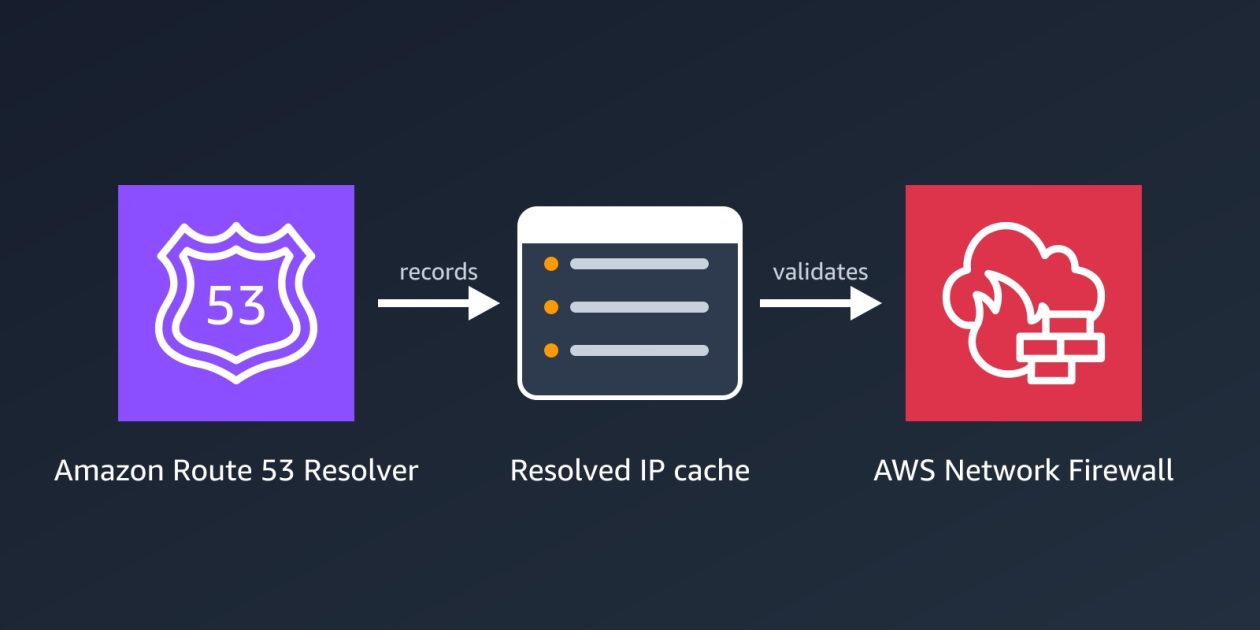
Introducing Route 53 Resolved IP Validation for AWS Network Firewall

Route 53 Resolved IP Validation for AWS Network Firewall, launched 21 October 2026 at no extra charge, has Route 53 Resolver share the IP addresses it returns per domain with Network Firewall, which checks each new outbound connection against them. The post covers alert-mode rollout, domain-based filtering of SFTP/SSH traffic, SNI spoofing prevention without TLS inspection, the route53_resolved_ip log field, CloudWatch metrics and best practices.

AWS Network FirewallAmazon Route 53 ResolverRoute 53 Resolver DNS Firewall+3
SNI spoofingRoute 53 Resolved IP ValidationDNS tunneling

Cloud & Infra, Blue Team & Detectionยท Added 28 Oct 2026, published 27 Oct 2026

cisa.govadvisory๐Ÿ›ก๏ธ Security

CISA Adds Two Known Exploited Vulnerabilities to Catalog

CISA alert of 27 October 2026 adding two vulnerabilities to the Known Exploited Vulnerabilities (KEV) Catalog on evidence of active exploitation: CVE-2026-48356, an unrestricted upload of a dangerous file type in Adobe Commerce and Magento, and CVE-2026-111497, an unchecked return value in Google Brotli. It restates BOD 26-04, which makes federal civilian agencies prioritise KEV flaws on exposed assets and check for prior compromise. No technical detail or IOCs are given.

Adobe CommerceMagentoBrotli
CVE-2026-48356CVE-2026-111497CISA KEV+2

AppSec, GRCยท Added 29 Oct 2026, published 27 Oct 2026

arxiv.orgpaper๐Ÿง  AI

Can LLMs Uncover Hidden Physical Laws through Free Exploration?

LongChang is an automated framework that builds simulated worlds with altered physical laws, such as heavier objects falling more slowly, to test whether LLMs can find the law by free exploration. Explorer LLMs manipulate objects and build tools without tasks or hints, while separate LLM agents generate scenes, review tool designs and grade reports. Across 12 LLMs, GPT-6 Astra reached a 16.7% discovery rate and the other 11 scored 0%.

LLM
LongChangGPT-6 AstraarXiv

evals, research, agentsยท Added 28 Oct 2026, published 27 Oct 2026

arxiv.orgpaper๐Ÿง  AI

Scaling Laws for Tool-Use Agents via Controllable Environment Synthesis

SynthAPI is a pipeline that generates synthetic tool-use environments with explicit control over diversity of tools, tasks and underlying databases. Across 458,752 tasks and 849 trained models of four sizes, the authors fit a scaling law predicting downstream agent generalization. At larger data budgets, scaling tool and database diversity beats adding more tasks, and higher complexity helps more. Agents trained this way beat prior synthetic-data baselines on four benchmarks.

LLM
SynthAPI

research, training, agentsยท Added 28 Oct 2026, published 27 Oct 2026

aws.amazon.comarticle๐Ÿ›ก๏ธ Security

Part 3 โ€“ Cybersecurity journeys: The work behind the work

Part 3 of the AWS Security Blog series on cybersecurity careers profiles three AWS staff: Brandon Caldwell (application security, empathy and communication), Kurt Heath (self-taught pen tester, cautious AI use) and Seth Jeacopello (code review, managing attention). It gives practical advice: practice on vulnerable machines and read the logs, build CTF and GitHub portfolios, and write clearly. It lists TryHackMe, Hack The Box, the OWASP Top 10, OWASP Cheat Sheet Series, Darknet Diaries and AWS Skill Builder.

TryHackMeHack The BoxAWS Skill Builder+1
Brandon CaldwellKurt HeathSeth Jeacopello+6

Learning, AppSecยท Published and added 27 Oct 2026

securityweek.comarticle๐Ÿ›ก๏ธ Security

Tailscale Rushes Patches After Uncoordinated Disclosure of โ€˜Tailwormโ€™ Flaws

Tailworm is a set of 11 findings, published by Cyberdione Labs before patches, in Tailscale client 1.104.2 and headscale 0.29.5. Four of six high-severity bugs affect Tailscale SSH, where root-privileged forwarding safeguards can be bypassed, giving root on reachable servers and wormable spread at under a second per hop. Tailscale advises reviewing SSH policies and disabling forwarding until a patched client ships. No in-the-wild exploitation is reported.

TailscaleheadscaleSSH+2
TailwormCyberdione LabsMike Shaver+3

Offensive Security, AppSecยท Published and added 27 Oct 2026

securityweek.comarticle๐Ÿ›ก๏ธ Security

HPE Patches Dozens of Critical Flaws in Networking Products

HPE released patches for 72 vulnerabilities in the AOS-8 and AOS-10 wireless operating systems of its Aruba networking products, including 33 critical flaws. Eight max-severity bugs (CVE-2026-79844 to CVE-2026-79851) allow unauthenticated RCE, authentication bypass and arbitrary command execution. Fixes are in AOS 8.10.0.24, 8.13.3.1, 10.4.1.14, 10.7.2.7 and 10.8.1.2. HPE reports no exploitation in the wild and advises restricting management interfaces to a dedicated VLAN.

HPE Aruba NetworkingAOS-8AOS-10
CVE-2026-79844CVE-2026-79845CVE-2026-79846+5

Cloud & Infraยท Published and added 27 Oct 2026

securityweek.comarticle๐Ÿ›ก๏ธ Security

This is Fine: What NetScaler Zero-Days Tell Us About the New Normal

This SecurityWeek commentary covers the September 2026 Citrix NetScaler ADC and Gateway zero-days, exploited from mid-month and patched on 27 September as unauthenticated RCE flaws CVE-2026-88771 through CVE-2026-88778. The author argues the fast response shows stronger defence. Cited evidence: Citrix disclosure time fell from about 40 days to 17 in 2026 after it set up a NetScaler CNA, and CISA made a rare Sunday KEV addition.

Citrix NetScaler
CVE-2026-88771CVE-2026-88772CVE-2026-88773+9

other, Threat Intelยท Published and added 27 Oct 2026

aikido.devarticle๐Ÿ›ก๏ธ Security

How to patch PHP2Shell with free Aikido Images

Aikido Images are free patched PHP container images on public ECR (public.ecr.aws/aikido-dev/php) that backport the PHP2Shell fixes for CVE-2026-109618 and CVE-2026-109619 into release lines 5.5 to 8.5, except 8.0. Upstream fixed 8.2 to 8.5 in October 2026 and left 8.1 and older unpatched. The post shows docker pull and Dockerfile FROM changes, then rebuild, restart, session.upload_progress.enabled=0 and compromise checks.

PHPDockerAikido Security+1
CVE-2026-109618CVE-2026-109619PHP2Shell

DevSecOps, AppSecยท Published and added 26 Oct 2026

cisa.govadvisory๐Ÿ›ก๏ธ Security

EPICS Base

CISA ICS advisory ICSA-26-300-01 (October 27, 2026) covers EPICS Base release 7.0.10 and earlier, with CVE-2026-114595 through CVE-2026-114598. Flaws include integer overflow, length parameter inconsistency and type confusion, allowing denial of service, memory corruption, information disclosure or remote code execution (CVSS v3.1 9.8). The fix is EPICS Base 7.0.11, with patches in epics-base and pvDataCPP pull requests.

EPICS BaseCVSS
CVE-2026-114595CVE-2026-114596CVE-2026-114597+5

AppSecยท Added 29 Oct 2026, published 26 Oct 2026

arxiv.orgpaper๐Ÿ›ก๏ธ Security

Cheap AI-Assisted Reverse Engineering and What It Will Do

"Cheap AI-Assisted Reverse Engineering and What It Will Do" is an October 2026 arXiv paper (Computers and Society) arguing that generative AI strains the law of reverse engineering. AI systems can identify hardware components, extract firmware, decompile object code and clone apps, which removes the cost barrier that laws rely on. The authors map these practices onto trade secret, copyright, anti-circumvention, computer misuse and contract law, and sketch possible legal responses with their trade-offs.

Malware & RE, GRC, AI Securityยท Added 28 Oct 2026, published 26 Oct 2026

securityweek.comarticle๐Ÿ›ก๏ธ Security

Industrial Vendors Check Products for PHP2Shell Vulnerabilities

PHP2Shell (CVE-2026-109618 and CVE-2026-109619) are critical unauthenticated RCE flaws in the PHP engine, patched on 21 October 2026 in PHP 8.5.12, 8.4.27, 8.3.36 and 8.2.35. Industrial vendors including Schneider Electric, Siemens, ABB, B&R, Johnson Controls, Belden, HMS Networks and Wibu-Systems have confirmed affected OT products, with fixed versions or mitigations listed. Rockwell Automation and Hitachi Energy were still assessing, and Moxa reported no impact.

PHPCloudflareDokuWiki+1
CVE-2026-109618CVE-2026-109619PHP2Shell+11

AppSec, Threat Intelยท Published and added 26 Oct 2026

securityweek.comarticle๐Ÿ›ก๏ธ Security

PHP2Shell Exploitation Moves From Probes to Working Shells

PHP2Shell exploitation (CVE-2026-109618, CVE-2026-109619) reached working shells on 24 October 2026, when Perplexity researcher Adel Karimi's honeypots (PHP 8.4.26, Apache mod_php, single worker) logged 35 shells across three servers. Attackers used a four-stage HTTP chain: memory exhaustion, memory leak, then shell command execution, matching a public PoC. No second-stage payload was seen, and CISA had not added the flaws to KEV as of 26 October.

PHPApache
CVE-2026-109618CVE-2026-109619PHP2Shell+4

Threat Intel, AppSecยท Published and added 26 Oct 2026

tailworm.comwriteup๐Ÿ›ก๏ธ Security

Tailworm โ€“ Tailscale Vulnerabilities

Tailworm is a security assessment report by Erica Windisch (Cyberdione Labs) on Tailscale v1.104.2 and headscale v0.29.5, tested 22-24 October 2026. It documents 11 findings: Tailscale SSH unix-socket forwarding that runs as root (bind, dial and TOCTOU races), conn25 app-connector egress bypass, gliderssh memory exhaustion, serve/funnel flaws and headscale DoS. It includes PoC references, mitigations and fix status as of 27 October 2026. The page is truncated, so the later sections were not read.

TailscaleheadscaleSSH+3
CVE-2025-14282Erica WindischCyberdione Labs+7

Offensive Security, Cloud & Infra, AppSecยท Added 27 Oct 2026, published 25 Oct 2026

cisa.govadvisory๐Ÿ›ก๏ธ Security

CISA: Critical Vulnerabilities in PHP Require Immediate Patching

CISA alert on CVE-2026-109618 and CVE-2026-109619 ("php2shell"), unauthenticated remote code execution flaws affecting PHP installations serving web requests, including mod_php, PHP-FPM, php-cgi, FrankenPHP and LiteSpeed. Fixed in PHP 8.5.12, 8.4.27, 8.3.36 and 8.2.35. Updated 23 October 2026 with a Sigma rule, partner advisories (NSA, NCSC-UK, ASD ACSC, NCSC-NL, NCSC-NZ, Cyber Centre) and guidance to inventory PHP, patch internet-facing systems first, and watch for PHP workers spawning shells. No in-the-wild exploitation had been observed.

PHPApachePHP-FPM+3
CVE-2026-109618CVE-2026-109619PHP2Shell+2

AppSec, Blue Team & Detectionยท Added 24 Oct 2026

newsletter.semianalysis.comarticle๐Ÿง  AI

Amazonโ€™s Trainium Takes a Strike at the Training King

SemiAnalysis reviews AWS Trainium3 and the new TorchNeuron native PyTorch backend after a few weeks of hands-on use. It reports TorchTitan Qwen3-32B results on Trainium2 (11,099 tokens/s eager at 23.89% MFU, 14,156 compiled at 30.47%), a 27-minute gpt-oss compile time, 89 of 96 FlexAttention cases passing, matmul comparisons with GB300 and B200, and a positive view of the Neuron Explorer profiler.

TrainiumTorchNeuronAWS Neuron+17
SemiAnalysisAmazonAWS+10

inference, training, ai-infraยท Added 29 Oct 2026, published 23 Oct 2026

horizon3.aiadvisory๐Ÿ›ก๏ธ Security

CVE-2026-109618 / CVE-2026-109619 | NodeZero Rapid Response Check Now Available

PHP2Shell is the name for CVE-2026-109618 and CVE-2026-109619, critical unauthenticated RCE flaws in PHP core fixed on 21 October 2026 in PHP 8.2.35, 8.3.36, 8.4.27 and 8.5.12. The page explains the out-of-memory corruption and stale global state causes, mod_php and PHP-FPM exposure, interim mitigations, hunting guidance, exploitation reports from October 2026, and the 23 October CVE-2026-115560 upload-progress advisory. Horizon3 also announced a non-exploiting NodeZero check.

PHPPHP-FPMApache+3
CVE-2026-109618CVE-2026-109619CVE-2026-115560+5

AppSec, Blue Team & Detectionยท Added 29 Oct 2026, published 23 Oct 2026

endorlabs.comarticle๐Ÿง  AI

What is the AI-Native SDLC? AI SDLC, AI-DLC, and ADLC Explained | Endor Labs

The AI-native SDLC is a software lifecycle redesigned around AI and coding-agent participation, as opposed to the AI-assisted SDLC, which adds AI tools to unchanged stages. The Endor Labs guide separates AI-DLC (the AWS methodology), AI SDLC and the two meanings of ADLC (Agentic vs Agent Development Lifecycle). It also covers stage-by-stage changes and AppSec implications: AI-generated code flaws, dependency choice, reachability analysis and governing agent actions.

AWSstatic analysis
Endor LabsIBMAtlan+3

ai-policy, coding-agentsยท Published and added 23 Oct 2026

orca.securityarticle๐Ÿ›ก๏ธ Security

PHP2Shell: What This Week Tells Us About the Web We Built

PHP2Shell is the name for two unauthenticated remote code execution flaws, CVE-2026-109618 and CVE-2026-109619 (CVSS v4 9.2), in the PHP engine back to version 5.4. The post covers the leaked October 2026 embargo, AI-assisted exploit building by Calif and others, patch availability by PHP version, and a 72-hour and quarterly response plan covering inventory, patching, secret rotation and edge virtual patching. It ends with a short Orca product section.

PHPWordPressOrca Security
CVE-2026-109618CVE-2026-109619PHP2Shell+6

Blue Team & Detection, AppSec, GRCยท Published and added 23 Oct 2026

decrypt.coarticle๐Ÿ›ก๏ธ Security

Ethereum Delays Glamsterdam Testnet Fork Over Gas Security Flaws

Ethereum developers postponed the Glamsterdam hard fork on the Hoodi testnet (due 26 October 2026) after auditor ChainSecurity reported that the gas changes in EIP-8037 and EIP-8038 break assumptions in existing contracts. Gas can be refilled after a failed call and repricing alters call costs, so failure paths that used to revert can now complete, undermining insufficient gas griefing protections. ChainSecurity found 13 real-world examples and is in responsible disclosure.

EthereumPrysm
GlamsterdamChainSecurityEIP-8037+6

Blockchainยท Published and added 23 Oct 2026

securityweek.comarticle๐Ÿ›ก๏ธ Security

Atlassian Patches 75 Flaws in Data Center and Server Products

Atlassian's October 2026 security bulletin lists 162 high and 14 critical third-party vulnerabilities across Bamboo, Bitbucket, Confluence, Crowd, Fisheye/Crucible, Jira Software and Jira Service Management. SecurityWeek counts 75 unique CVEs, six critical, in Tomcat, Bouncy Castle, Netty and Apache SSHD. Atlassian rates them non-critical for its use, reports no exploitation, and the critical CVE-2026-65905 appears on the portal but not in the bulletin.

ConfluenceJiraBitbucket+3
CVE-2026-65637CVE-2026-65182CVE-2026-68525+6

AppSec, Supply Chainยท Published and added 23 Oct 2026

huggingface.coarticle๐Ÿง  AI

Does Your Model Run on AWS Trainium? Look It Up

The torch-neuronx model support Space is a Hugging Face and AWS Neuron lookup that shows whether a Transformers model runs unmodified on AWS Trainium2. Each result lists core count, wall time and peak memory, plus the run.py script and a public NEFF compile cache. Tests generate 32 tokens on up to 16 cores. Results are in the aws-neuron/torch-neuronx-model-support Parquet dataset.

AWS Trainiumtorch-neuronxTorchNeuron+5
AWSQwen3

inference, ai-infraยท Published and added 23 Oct 2026

x.comthread๐Ÿ›ก๏ธ Security

Daily Vibe Casting (@vibecastingapp) on X

Daily Vibe Casting thread of 24-hour tech news, with item 5/10 on Cloudflare's agent security audit skill. The skill works across models and agent harnesses, including free models, and outputs machine-readable reports. It calls for sandboxing, proof of real impact and independent checks. The thread also covers GitLab CVE-2026-110264 (CVSS 10.0, unauthenticated RCE), two AI-found PHP RCE flaws, and a Railway secret-theft warning.

CloudflareGitLabPHP
CVE-2026-110264RailwayWiz Research

AI Security, AppSecยท Added 24 Oct 2026, published 22 Oct 2026

horizon3.aiarticle๐Ÿ›ก๏ธ Security

PHP2Shell Exposure Depends on More Than Whether You Use PHP

Horizon3.ai post on assessing exposure to PHP2Shell (CVE-2026-109618, CVE-2026-109619), two memory-handling flaws in PHP. It says affected PHP may be bundled in third-party products, containers or managed hosting, and that finding it shows a remediation need, not proven exploitability. It lists questions to ask hosting providers and says Horizon3.ai has validated exploitation under specific preconditions that are still being characterized.

PHP
CVE-2026-109618CVE-2026-109619PHP2Shell

AppSec, Offensive Securityยท Added 29 Oct 2026, published 22 Oct 2026

unit42.paloaltonetworks.comarticle๐Ÿ›ก๏ธ Security

The Current Landscape of OAuth Attacks

Unit 42 survey of OAuth attacks that steal tokens after MFA, so access survives password resets. It covers account hijacking (device authorization and authorization code misuse), permission hijacking (vague or impersonating app names), and malicious redirects, including the error-triggered redirect campaign Microsoft documented in March 2026. It also describes COSF and OAuth-as-a-service flaws, PhaaS and LLM evasion trends, and defenses such as admin-only consent and redirect_uri audits.

OAuthMicrosoft Entra IDCloudflare Workers+2
Cross-User OAuth Session FixationCross-Tenant Client ID ConfusionCross-Connector OAuth Account Takeover+7

Identity & Access, Threat Intel, Blue Team & Detectionยท Added 30 Oct 2026, published 22 Oct 2026

decrypt.coarticle๐Ÿง  AI

What Is a Neocloud? The GPU Clouds Powering the AI Boom

Decrypt explainer on neoclouds, specialist providers such as CoreWeave and Nebius that rent Nvidia GPU clusters for AI training and inference. It covers the chips, power and debt model, Bitcoin miners turned AI hosts, and customers including Microsoft, AWS, Google and Anthropic. It cites Gartner's 14 October 2026 forecast that over 80% of neoclouds will stop operating independently by 2030.

EthereumBitcoin
CoreWeaveNebiusLambda+22

ai-infra, ai-policyยท Published and added 22 Oct 2026

tldrsec.comarticle๐Ÿ›ก๏ธ Security

[tl;dr sec] #351 - PHP2Shell, Autopatching Skills, AWS Pathrunner

tl;dr sec #351 is a weekly security newsletter. Clint Gibler describes working with OpenAI, Calif, Wiz and the PHP maintainers on the PHP2Shell unauthenticated RCE disclosure, which affects 13 years of PHP. It also covers Datadog's pathrunner AWS IAM escalation framework, Trail of Bits' patching-bugs and regression-hunt Codex plugins, XBOW finding de-duplication, backdoored open-weight models, and CREBench.

PHPAWS IAMCodex+3
PHP2ShellPatch the PlanetCalif+10

AppSec, AI Security, Cloud & Infraยท Added 30 Oct 2026, published 22 Oct 2026

github.comrepo๐Ÿง  AI

Show HN: OnKey โ€“ I'm a bad singer, so I built an app to show where I'm off-key

OnKey is a free, MIT-licensed singing trainer for Apple Silicon Macs. After a song ends in Spotify, Apple Music or browser YouTube, it separates the lead vocal with UVR's MDX-Net Karaoke 2, tracks pitch with CREPE and turns it into syllable-level notes with the GAME model. On later plays it scrolls the notes, draws the user's live pitch and scores each line. Analysis runs on-device, and the repo explains the build steps and network requests.

macOSRustNode.js+2
OnKeyCREPEGAME+9

multimodal, inferenceยท Added 24 Oct 2026, published 22 Oct 2026

securityweek.comarticle๐Ÿ›ก๏ธ Security

Tech and Security Companies Respond to PHP2Shell Vulnerabilities

SecurityWeek roundup of responses to PHP2Shell, two critical unauthenticated RCE flaws (CVE-2026-109618, CVE-2026-109619) fixed in PHP 8.5.12, 8.4.27, 8.3.36 and 8.2.35 on 21 October 2026. It covers the exploitation timeline (first attempt 17 October), vendor exposure checks, Red Hat's lower 8.1 score against NVD's 9.8, detections from Cisco Talos, CrowdStrike and Corelight, and government alerts.

PHPAWSGoogle Cloud+3
CVE-2026-109618CVE-2026-109619PHP2Shell+6

Blue Team & Detection, AppSecยท Published and added 22 Oct 2026

x.comthread๐Ÿ›ก๏ธ Security

Paul Dragoonis (@dr4goonis) on X

Social post summarising emergency patches for Node.js (4 high CVEs), PHP (2 critical) and nginx (3 critical). Node.js flaws include a Brotli decoder out-of-bounds write, a DNS truncation bug and two TLS hostname-verification bypasses. PHP has use-after-free and heap corruption bugs, and nginx has alias-rewrite and map-regex heap overflows plus an SSI-AIO use-after-free. It lists the fixed versions for each product.

Node.jsPHPnginx
CVE-2026-111497CVE-2026-105482CVE-2026-105483+8

AppSecยท Added 23 Oct 2026, published 22 Oct 2026

securityweek.comarticle๐Ÿ›ก๏ธ Security

PHP2Shell Exploitation Started Days Before Patches

PHP2Shell (CVE-2026-109618 and CVE-2026-109619) is a pair of critical PHP remote code execution flaws. Amazon saw the first exploitation on 17 October 2026, four days before patches on 21 October, and Cloudflare logged millions of attempts after disclosure. Censys, VulnCheck and VirusTotal counted over 1 million unpatched PHP hosts, and CISA urged updating to PHP 8.5.12, 8.4.27, 8.3.36 or 8.2.35.

PHPCloudflareVirusTotal+1
CVE-2026-109618CVE-2026-109619PHP2Shell+4

Threat Intel, AppSecยท Published and added 22 Oct 2026

latent.spacearticle๐Ÿ›ก๏ธ Security

[AINews] OpenAIโ€™s Patch the Planet program is 1 of 2 parties to discover PHP2Shell vulnerabilities in core PHP affecting 70% of the web, using GPT-5.6 Sol; coordinated response over 2 months

AINews issue of 20-21 October 2026 whose top story reconstructs PHP2Shell, two PHP-engine memory-corruption flaws (CVE-2026-109618 and CVE-2026-109619) with reported pre-auth RCE against WordPress, Drupal and Joomla. It covers the two-month coordinated response, separate discovery by Calif/OpenAI (GPT-5.6 Sol) and Wiz (Gemini 4 Argon), Cloudflare's WAF stopgap and NSA guidance. It lists open gaps: fixed versions, leak details, exploitation versus scanning.

PHPWordPressDrupal+3
CVE-2026-109618CVE-2026-109619PHP2Shell+12

AppSec, AI Securityยท Added 23 Oct 2026, published 22 Oct 2026

metr.orgwriteup๐Ÿ›ก๏ธ Security

Red-Teaming OpenAI's Internal Agent Monitoring Systems

METR and Redwood Research summarize a three-week pilot red-team (21 July to 11 August 2026) of OpenAI's internal asynchronous misalignment monitoring system. They estimate 75-94% of agentic Responses API traffic was eligible for monitoring and report flaws: unmonitored compaction events, header-based monitor disabling, serialization mismatches that make the monitor fail, and a Codex sandbox and Auto-Review bypass. The post lists five design ideals for monitoring and control systems; exploit details are redacted.

OpenAICodexGPT-5.5+1
METRRedwood ResearchAuto-Review+3

AI Securityยท Added 29 Oct 2026, published 22 Oct 2026

aws.amazon.comarticle๐Ÿ›ก๏ธ Security

Using AWS WAF to apply mitigations for PHP2Shell RCE vulnerabilities (CVE-2026-109618 and CVE-2026-109619)

AWS Security Blog guide to mitigating the PHP2Shell unauthenticated RCE flaws (CVE-2026-109618 and CVE-2026-109619, CVSS v4.0 9.2) with AWS WAFv2 rules. It covers rules for the PHP_SESSION_UPLOAD_PROGRESS trigger, blocking multipart/form-data, body size caps and rate limits, plus body inspection limits. It lists PHP fixes (8.5.12, 8.4.27, 8.3.36, 8.2.35) and server settings, and stresses WAF only reduces exposure.

AWS WAFPHPAWS+1
CVE-2026-109618CVE-2026-109619PHP2Shell+4

Cloud & Infra, Blue Team & Detection, AppSecยท Published and added 22 Oct 2026

aws.amazon.comadvisory๐Ÿ›ก๏ธ Security

PHP web runtimes (CVE-2026-109618 and CVE-2026-109619)

AWS bulletin 2026-143-AWS covers CVE-2026-109618 and CVE-2026-109619, critical PHP web runtime flaws that let an unauthenticated remote caller run code, read process data or cause denial of service. Fixed in PHP 8.5.12, 8.4.27, 8.3.36 and 8.2.35; PHP 5.4 to 8.1 get no fix. It gives status for WorkMail, Elastic Beanstalk, Amazon Linux and Lightsail, plus AWS WAF rules, including a custom "PHP2Shell" rule matching PHP_SESSION_UPLOAD_PROGRESS and PHPSESSID.

PHPAWSAWS WAF+3
CVE-2026-109618CVE-2026-109619PHP2Shell+1

AppSec, Cloud & Infraยท Added 22 Oct 2026, published 21 Oct 2026

socket.devarticle๐Ÿ›ก๏ธ Security

PHP Foundation Says Chainguard Broke Security Embargo Ahead of Emergency Patches

The PHP Foundation's October 21, 2026 postmortem says Chainguard broke an embargo by publishing patched PHP container images over six hours before the coordinated release of fixes for CVE-2026-109618 and CVE-2026-109619, two critical RCE flaws. The piece covers the leaked CVE IDs, Calif's accidentally published exploit video, Chainguard CEO Dan Lorenc's defence citing exploitation in the wild, and the 2024 origin of the memory management bug.

PHPDockerCloudflare+2
CVE-2026-109618CVE-2026-109619Calif+8

Supply Chain, AppSec, otherยท Published and added 21 Oct 2026

simonwillison.netarticle๐Ÿ›ก๏ธ Security

Today's PHP Security Release, and How We're Strengthening PHP Security

Simon Willison's link post on the 21 October 2026 PHP security release, which fixes two remote code execution flaws across the PHP 8.x line. The CVE IDs leaked on 20 October with a wrong CVSS of 10.0 (actual 9.2), and Calif accidentally published a proof-of-concept video. It also gives Wiz Research's timeline, with unauthenticated RCE confirmed against Drupal and WordPress in August 2026.

PHPWordPressCVSS+1
Wiz ResearchCalifPHP Foundation+3

AppSec, Threat Intelยท Published and added 21 Oct 2026

protos.comarticle๐Ÿ›ก๏ธ Security

Remotely exploitable PHP bug found on 70% of worldโ€™s websites

PHP2Shell is a pair of unauthenticated remote code execution flaws in PHP, CVE-2026-109618 and CVE-2026-109619, found by Calif using OpenAI's GPT-5.6 Sol during an OpenAI-funded audit. Fixes ship in PHP 8.5.12, 8.4.27, 8.3.36 and 8.2.35, with backports for 7.4-8.1 rolling out, while PHP 7 and 5 sites stay unpatched. Wiz confirmed the flaws; Cloudflare applied a stopgap and Finnish and Dutch government sites went offline.

PHPCloudflareOpenAI+1
CVE-2026-109618CVE-2026-109619PHP2Shell+5

AppSec, AI Security, Threat Intelยท Published and added 21 Oct 2026

aws.amazon.comarticle๐Ÿ›ก๏ธ Security

Best practices for integrating IAM Roles Anywhere with your PKI

Best practices for integrating AWS IAM Roles Anywhere with an external PKI so non-AWS workloads get temporary credentials via X.509 certificates. Covers trust anchor placement, certificate attributes (CN, issuer, SAN) in trust policy conditions, short-lived versus just-in-time certificates, and private key protection with PKCS #11, TPM 2.0 and OS certificate stores. Includes credential helper modes (serve, update), expiry monitoring, blue/green trust anchor rotation and a sample CloudFormation template.

AWS IAM Roles AnywhereAWS IAMAWS Private CA+3
X.509trust anchorPKCS #11+5

Identity & Access, Cloud & Infraยท Published and added 21 Oct 2026

securityweek.comarticle๐Ÿ›ก๏ธ Security

PHP2Shell Patches Land as First Exploitation Attempts Hit Sensors

PHP2Shell is a pair of critical PHP core flaws, CVE-2026-109618 (out-of-memory corruption) and CVE-2026-109619 (stale global state), both CVSS 9.2 and giving unauthenticated RCE, confirmed on Apache with mod_php. Fixes shipped in PHP 8.5.12, 8.4.27, 8.3.36 and 8.2.35, with backports for 7.4 to 8.1. Exploitation attempts were reported by watchTowr, Hadrian, Patchstack, Cloudflare and Vega after a leak moved disclosure up from 22 October 2026 to one day earlier.

PHPApachemod_php+3
CVE-2026-109618CVE-2026-109619PHP2Shell+9

AppSec, Threat Intelยท Published and added 21 Oct 2026
huggingface.cowriteup๐Ÿง  AI

Profiling TorchNeuron (Part 1): System-level profiling on AWS Trainium.

Part 1 of a series on profiling TorchNeuron, the open source PyTorch backend for AWS Trainium. It shows how to configure torch.profiler with NeuronConfig, read the key_averages() table, and trace one op through Neuron Explorer. Three RMSNorm variants are compared: naive eager (2.355 ms device time), torch.rms_norm (403 ฮผs) and torch.compile (375 ฮผs).

PyTorchTorchNeuronAWS Trainium+8
AmazonHugging Face

inference, ai-infraยท Published and added 21 Oct 2026

endorlabs.comadvisory๐Ÿ›ก๏ธ Security

PHP2Shell: Critical vulnerabilities in PHP (CVE-2026-109618, CVE-2026-109619) | Endor Labs

PHP2Shell is the name for two critical PHP core memory-safety flaws, CVE-2026-109618 and CVE-2026-109619, that allow unauthenticated remote code execution. Fixes ship in PHP 8.2.35, 8.3.36, 8.4.27 and 8.5.12. Wiz researchers demonstrated RCE against WordPress, Drupal and Joomla, and Apache with mod_php is the highest risk. The post covers inventory, container rebuilds, Cloudflare WAF rules and temporary exposure reduction.

PHPWordPressDrupal+3
CVE-2026-109618CVE-2026-109619PHP2Shell+4

AppSec, DevSecOpsยท Published and added 21 Oct 2026
thephp.foundationarticle๐Ÿ›ก๏ธ Security

Today's PHP security release, and how we're strengthening security

The PHP Foundation explains the 21 October 2026 release of PHP 8.5.12, 8.4.27, 8.3.36 and 8.2.35, which fix two critical unauthenticated RCE flaws in memory management and error handling, including an OOM problem behind CVE-2026-109618. It covers the 2024 Quarkslab audit, the stalled fix, the August 2026 reports from Calif, OpenAI and Wiz, and the embargo leaks (CVE IDs, a Calif video, Chainguard images). It also lists new security team structure and AI-assisted triage.
PHPChainguardOpenAI+2
CVE-2026-109618CalifPatch the Planet+8

AppSec, otherยท Added 22 Oct 2026, published 21 Oct 2026

decrypt.coarticle๐Ÿ›ก๏ธ Security

PHP Panic: Two Critical Bugs Put 70% of the Internet at Risk, and Everyone Is Freaking Out

Decrypt reports on CVE-2026-109618 and CVE-2026-109619, two PHP flaws rated CVSSv4 9.2 that allow unauthenticated remote code execution. PHP 8.5.12, 8.4.27, 8.3.36 and 8.2.35 shipped on 21 October 2026 after an early leak and Cloudflare-observed attacks. The article covers the memory-handling root causes, mod_php and upload-progress exposure, government site shutdowns, affected version range (PHP 5.4 and later per Sansec), and patch guidance.

PHPCloudflareWordPress+1
CVE-2026-109618CVE-2026-109619PHP Foundation+7

AppSec, Threat Intelยท Published and added 21 Oct 2026

socket.devarticle๐Ÿ›ก๏ธ Security

PHP Patches Critical RCE Vulnerabilities, Organizations Urged to Take Unpatched Sites Offline

PHP2Shell is a pair of memory-safety flaws in the PHP engine, CVE-2026-109618 and CVE-2026-109619 (CVSS v4.0 9.2), fixed on 21 October 2026 in PHP 8.5.12, 8.4.27, 8.3.36 and 8.2.35. Unauthenticated requests can reach code execution, most readily through Apache mod_php, and Cloudflare reports active attack traffic. The post covers W3Techs data showing about 48.5% of PHP sites on end-of-life branches, the leak timeline, and the need to patch the runtime itself.

PHPCloudflareWordPress+2
CVE-2026-109618CVE-2026-109619PHP2Shell+5

AppSec, Threat Intelยท Published and added 21 Oct 2026
blog.talosintelligence.comadvisory๐Ÿ›ก๏ธ Security

Two critical RCEs in PHP core

Cisco Talos advisory on "php2shell", two unauthenticated RCE flaws in PHP core, CVE-2026-109618 and CVE-2026-109619 (CVSS v4.0 9.2), affecting every build since PHP 5.4. One flaw is an out-of-memory handling bug leaving request data partly initialized; the other reuses stale state after free. PHP 8.1 and older get no patch (about 50% of PHP systems). Includes ini-level mitigations and Snort SIDs 67359 and 67360. No exploitation seen as of 21 October 2026.

PHPWordPressCVSS
CVE-2026-109618CVE-2026-109619php2shell+2

AppSec, Blue Team & Detectionยท Published and added 21 Oct 2026

securityweek.comarticle๐Ÿ›ก๏ธ Security

High-Severity Flaws Exploited in Three Days as Ransomware Dominates Q3: Rapid7

SecurityWeek summarises Rapid7's Q3 2026 threat landscape report. High-severity vulnerabilities were exploited within an average of three days of disclosure, and 71% within seven days. The Gentlemen (342 claimed incidents) and Qilin (339) led ransomware, and the US took 60% of attacks. AI was an operational component in only 8% of tracked incidents. The report also covers 15 APT groups, a new DPRK Linux toolkit named 'ted', and access-broker listings.

HAProxySSHcURL+1
Rapid7The GentlemenQilin+13

Threat Intelยท Published and added 21 Oct 2026

watchtowr.comadvisory๐Ÿ›ก๏ธ Security

PHP Remote Code Execution ("PHP2Shell" CVE-2026-109618 & CVE-2026-109619)

PHP2Shell is the name for CVE-2026-109618 (out-of-memory corruption) and CVE-2026-109619 (stale global state), two unauthenticated PHP remote code execution flaws rated CVSS 4.0 9.2. Details leaked before the 21 October 2026 patch release, and watchTowr's honeypots saw exploitation. The page lists fixed versions (8.5.12, 8.4.27, 8.3.36, 8.2.35), states that .ini mitigations do not work, gives a timeline, and describes compromise checks.

PHPApacheFrankenPHP+2
CVE-2026-109618CVE-2026-109619PHP2Shell+3

AppSec, Threat Intelยท Added 28 Oct 2026, published 21 Oct 2026

blog.cloudflare.comarticle๐Ÿ›ก๏ธ Security

Cloudflare deploys protections against php2shell vulnerability

Cloudflare describes its WAF protections for php2shell (CVE-2026-109618 and CVE-2026-109619), two PHP runtime memory-handling flaws affecting PHP 5.4 and later that can cause denial of service, remote code execution and data exposure. Rules shipped 21 October 2026, about 9 hours before disclosure, using a new "full transaction detection" that matches request and origin response together. It lists ruleset IDs and says patching PHP is still required.

PHPCloudflareWordPress
CVE-2026-109618CVE-2026-109619PHP2Shell+2

Blue Team & Detection, AppSecยท Added 22 Oct 2026, published 21 Oct 2026
orca.securityadvisory๐Ÿ›ก๏ธ Security

Critical PHP โ€œPHP2Shellโ€ RCE Vulnerabilities Allow Unauthenticated Remote Code Execution (CVSS 9.2)

PHP2Shell is the informal name for CVE-2026-109618 and CVE-2026-109619 (CVSS v4.0 9.2), unauthenticated remote code execution flaws in the PHP core runtime. Patches for branches 8.2 to 8.5 were scheduled for 21 October at 14:00 UTC, while PHP 8.1 and older get no fix; about 884,000 internet-facing hosts run those versions. watchTowr reproduced CVE-2026-109618, no public PoC existed at writing, and Sansec expects mass exploitation within 15 minutes of release.

PHP
CVE-2026-109618CVE-2026-109619PHP2Shell+4

AppSecยท Published and added 21 Oct 2026
securityweek.comarticle๐Ÿ›ก๏ธ Security

Memory Bugs Account for Most of Chromeโ€™s 353 New Security Fixes

Chrome 156 reached the stable channel with fixes for 353 vulnerabilities, including six critical and 61 high-severity flaws. Memory safety dominates: 163 memory corruption, 125 use-after-free and 17 out-of-bounds read bugs. Google reports no in-the-wild exploitation. 285 bugs earned no bounty, including those found by Anthropic's Xinyang Ge with Claude and by OpenAI Codex Security. Builds are 156.0.8078.47/.48.

Chrome
Xinyang GeQuyen SonSite Isolation+4

AppSecยท Published and added 21 Oct 2026

github.comrepo๐Ÿ›ก๏ธ Security

eness/php2shell-CVE-2026-109618-CVE-2026-109619-PoC

php2shell is the name given to two critical pre-auth remote code execution flaws, CVE-2026-109618 and CVE-2026-109619, in PHP core's session upload progress handler (php_session_rfc1867_callback), where zend_hash_update frees live zval pointers that are later reclaimed and redirected into zend_call_function to run zif_system. This repository ships poc_109618.py, a fully automated four-stage HTTP exploit that leaks ASLR offsets via Set-Cookie headers against php:8.4.26-apache on Debian Bookworm, along with a root-cause C source patch, mitigation scripts to disable session.upload_progress, and WAF/ModSecurity/Lighttpd/Apache rules plus detection guidance for anomalous PHP worker child processes. Confirmed PHP versions include 8.4.4 and 8.2.34, with EOL branches (5.x, 7.x, 8.0, 8.1) left without official vendor patches.

PHPDockerCloudflare+1
CVE-2026-109618CVE-2026-109619PHP2Shell+6

Offensive Security, AppSec, Blue Team & Detectionยท Added 23 Oct 2026, published 21 Oct 2026

securityweek.comarticle๐Ÿ›ก๏ธ Security

PHP2Shell: Mass Exploitation Looms for Leaked Critical PHP Flaws

PHP2Shell is the name given to two critical PHP flaws, CVE-2026-109618 and CVE-2026-109619 (CVSS 9.2 each), that could allow unauthenticated remote code execution. Details leaked before PHP's planned patch release on 21 October 2026 at 14:00 UTC. Reports say all versions from PHP 5 onward are affected and one flaw may be a use-after-free; watchTowr reproduced CVE-2026-109618, and Sansec expects mass exploitation within 15 minutes of the patch.

PHPCVSS
CVE-2026-109618CVE-2026-109619PHP2Shell+4

AppSec, Threat Intelยท Published and added 21 Oct 2026

alterauth.comtool๐Ÿง  AI

Launch HN: Alter (YC S25) โ€“ Access control for multi-user agents

Alter is a privileged access management layer for AI agents (YC S25). It stores credentials in a vault, injects them per request through a proxy, gives each agent its own identity and scoped grants, and logs every call to a tamper-evident audit trail. One SDK call covers storage, refresh, policy and audit for 140 API providers, with LangChain, MCP and AWS integrations. Policy is default-deny down to the parameter, with human approval for risky calls.

Model Context ProtocolLangChainAWS+3
AlterY Combinator

ai-infra, agentsยท Added 22 Oct 2026, published 21 Oct 2026

aikido.devadvisory๐Ÿ›ก๏ธ Security

Critical vulnerabilities in PHP (PHP2SHELL)

PHP2SHELL is Aikido Security's advance notice of two critical remote code execution flaws in PHP itself, CVE-2026-109618 and CVE-2026-109619, both CVSS v4.0 9.2, with all versions treated as affected. The PHP security team will release fixes at 14:00 UTC on 21 October 2026, a day early after details leaked on 20 October. The post withholds exploitation details and workarounds.

PHPCVSS
CVE-2026-109618CVE-2026-109619PHP2SHELL+1

AppSecยท Published and added 21 Oct 2026

securitylabs.datadoghq.comwriteup๐Ÿ›ก๏ธ Security

PHP2Shell - Critical vulnerabilities in PHP (CVE-2026-109618, CVE-2026-109619): detection, analysis, and remediation

PHP2Shell is Datadog Security Labs' analysis of two critical PHP RCE flaws, CVE-2026-109618 and CVE-2026-109619 (CVSS v4.0 9.2), disclosed 21 October 2026. It walks through a reproduced exploit on PHP 8.5.11 (heap grooming, a fake array, and a destructor calling system()) and the stale-state use-after-free. It lists fixed versions (8.2.35, 8.3.36, 8.4.27, 8.5.12), partial mitigations, and detection signals across requests, error logs and shell child processes.

PHPApacheCVSS+1
CVE-2026-109618CVE-2026-109619PHP2Shell+5

AppSec, Blue Team & Detection, Offensive Securityยท Added 29 Oct 2026, published 21 Oct 2026

watchtowr.comadvisory๐Ÿ›ก๏ธ Security

Frequently Asked Questions About PHP Remote Code Execution (PHP2Shell CVE-2026-109618 & CVE-2026-109619)

PHP2Shell is the name for CVE-2026-109618 and CVE-2026-109619, two unauthenticated remote code execution flaws in PHP, both CVSS v4.0 9.2. One stems from out-of-memory corruption during request setup, the other from stale global state reused by the next request. watchTowr reports exploitation since 21 October 2026, lists fixed releases (8.5.12, 8.4.27, 8.3.36, 8.2.35) and says PHP 5 is also affected. PHP says no configuration change fully mitigates.

PHPApacheCVSS
CVE-2026-109618CVE-2026-109619PHP2Shell+3

AppSec, Threat Intelยท Added 30 Oct 2026, published 20 Oct 2026

arxiv.orgpaper๐Ÿง  AI

OptScientist: Automated Discovery of Optimization Laws

OptScientist is a framework that discovers compact symbolic optimization laws from data. It pairs a model that infers symbolic optimization problems with an LLM agentic system that uses literature priors, proposes candidate laws, abstracts mechanisms and suggests new data to collect. On OptFeynman, a new benchmark of 99 physics-derived problems, it recovers ground-truth laws for over 80%. It is also tested on human risky choice and central-bank monetary policy.

LLM
OptScientistOptFeynmanarXiv

research, agents, evalsยท Added 22 Oct 2026, published 20 Oct 2026

securitylabs.datadoghq.comtool๐Ÿ›ก๏ธ Security

Datadog pathrunner: AWS IAM privilege escalation framework

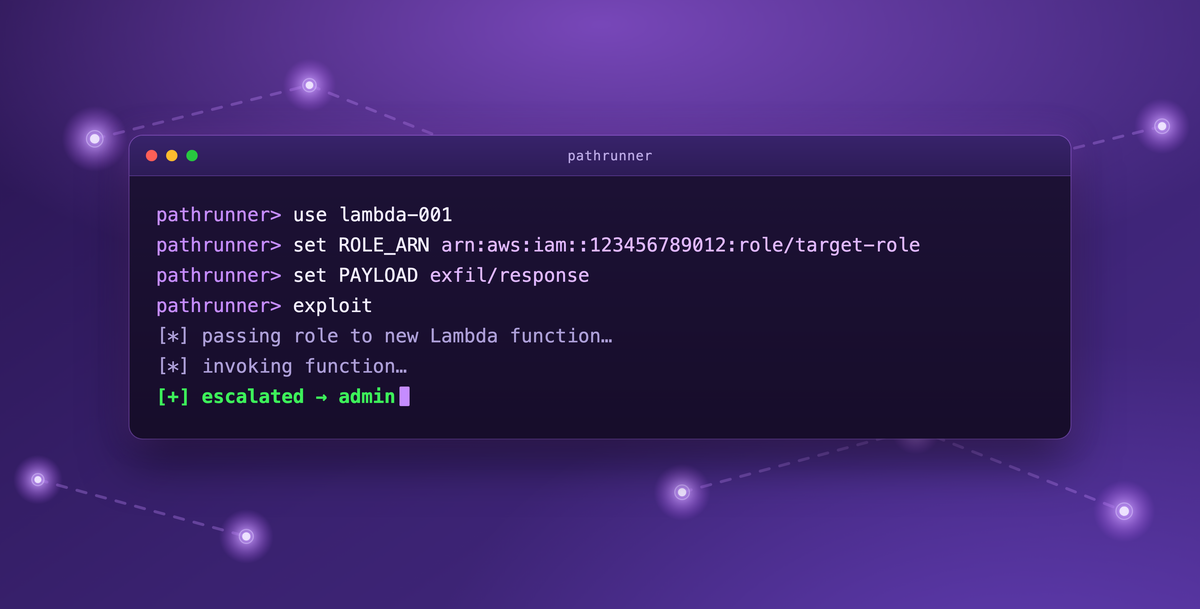
pathrunner is a modular offensive framework from Datadog Security Labs that automates exploitation of the AWS IAM privilege escalation paths catalogued in pathfinding.cloud and deployed in Pathfinding Labs. It has over 80 exploit modules (as of October 2026), identity import and switching, multiple payloads per module, and attacker infrastructure deployment with a credential listener. A workspace report lists created resources and expected CloudTrail events for defenders.

AWSAWS IAMAWS Bedrock
pathrunnerpathfinding.cloudPathfinding Labs+2

Cloud & Infra, Offensive Security, Blue Team & Detectionยท Added 23 Oct 2026, published 20 Oct 2026

x.comthread๐Ÿ›ก๏ธ Security

DFIR Radar (@DFIR_Radar) on X

DFIR_Radar weekly detection engineering digest covering 23 new and 19 updated rules across 6 GitHub repositories. It lists KQL rules for Azure Key Vault secret retrieval, MCP client User-Agent bulk operations and local Azure token theft, AWS CloudTrail analytics, Sigma rules for firewall and ETW tampering (decimal 17 vs hex 0x11), updated LOLDrivers hashes, and Sublime email rules for OAuth consent phishing and fake IRS W-9 PDFs.

KQLSigmaMicrosoft Sentinel+3
BYOVDCisco AI Defensebenscha/KQLAdvancedHunting+7

Blue Team & Detection, Cloud & Infra, AI Securityยท Added 20 Oct 2026, published 19 Oct 2026

securityweek.comarticle๐Ÿ›ก๏ธ Security

Drupal Warns of Fast Exploitation Risk for Critical Core RCE Flaw

Drupal patched five vulnerabilities, including two critical RCE flaws: CVE-2026-108099 in the Entity List module and CVE-2026-108097 in core Field UI. Neither is exploitable alone, but contributed modules give exploit paths, at least one without authentication. Fixes are in Entity List 3.0.10 and Drupal 11.4.10, 11.3.19 and 10.6.19; uninstalling Field UI mitigates the second. XSS bugs in Link, Navigation and the Gin theme were also fixed. No in-the-wild exploitation is reported.

DrupalDrupal Field UIEntity List+1
CVE-2026-108099CVE-2026-108097CVE-2026-108515+1

AppSecยท Published and added 19 Oct 2026

wiz.iowriteup๐Ÿ›ก๏ธ Security

Loud, Fast, and Everywhere: Anatomy of a Real AI-Driven Cloud Attack

Wiz CIRT write-up of an AI agent-run intrusion against a multi-cloud organization (GCP, AWS, Kubernetes, CI/CD, GitOps, identity provider). It lists traits of AI-driven attacks: machine-speed tempo, credential chaining, pentest/probe naming, numeric task IDs and commented code. Initial access was a Java RCE in an exposed Kafka UI. It closes with detection and response advice: unified logs, workload visibility and trust isolation.

WizKubernetesAWS+2
Wiz CIRTRed Agentcredential chaining+6

Threat Intel, Blue Team & Detection, Cloud & Infra, AI Securityยท Published and added 19 Oct 2026

huggingface.coarticle๐Ÿง  AI

TorchNeuron: running HF models on AWS Trainium is easier than ever

TorchNeuron is an AWS PyTorch plugin that exposes Trainium as a native "neuron" device with eager mode, torch.compile, DTensor and FSDP2, entering public beta on 20 October 2026 (pip install torch-neuronx). The post shows Transformers text generation with tensor parallelism, TRL SFT of Qwen3-8B on 32 NeuronCores (TP 4 x FSDP 8), and Diffusers TP inference. It says 89% of the top 100 text-generation architectures work, versus 46% with Optimum Neuron v0.4.5.

TorchNeuronAWS TrainiumPyTorch+12
AmazonQwen3.8-27BQwen3+1

inference, trainingยท Published and added 19 Oct 2026

x.comthread๐Ÿ›ก๏ธ Security

Dark Web Intelligence (@DailyDarkWeb) on X

Plex2Shell is a chain of four Plex Media Server flaws (CVE-2026-96652, CVE-2026-96654, CVE-2026-96655, CVE-2026-96656) that a researcher says ends in unauthenticated RCE on servers older than 1.43.3.10861. A write-up and PoC were published on 16 October 2026. CISA advisory VA-26-266-01 scores the individual CVEs 4.3 to 7.2, and they are not in CISA KEV. The post advises updating, avoiding exposure of port 32400, and checking for unknown child processes and new files in the Codecs folder.

Plex Media ServerDocker
CVE-2026-96652CVE-2026-96654CVE-2026-96655+6

AppSec, Offensive Securityยท Added 19 Oct 2026, published 18 Oct 2026

x.comthread๐Ÿง  AI

Master the captain (@mollicksoif9) on X

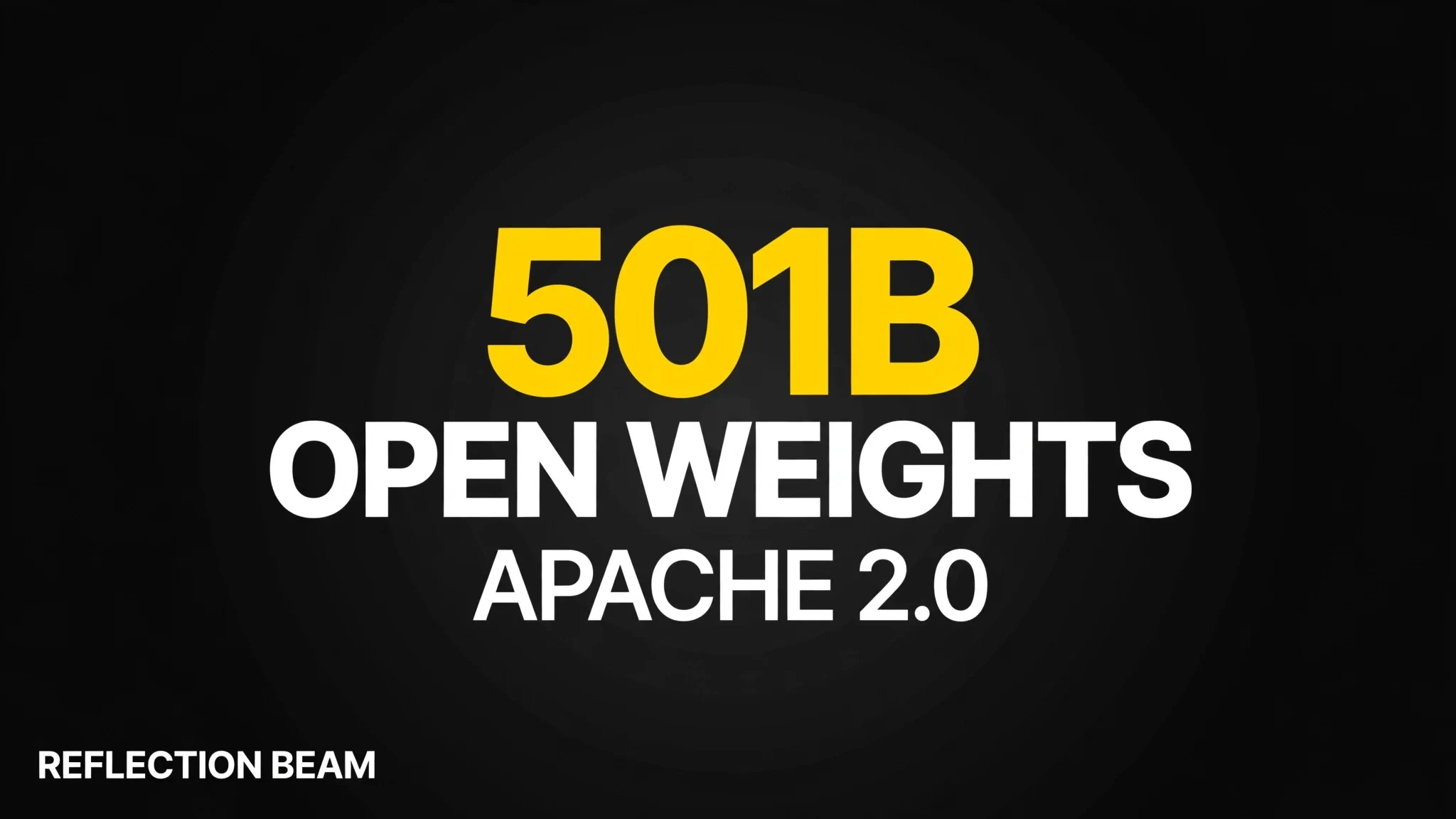
A social post reporting that Reflection AI released the full weights of Beam, a 501B-parameter mixture-of-experts agentic coding model (23B active, 1M-token context), on Hugging Face under Apache 2.0. It claims RL training that penalizes wasted tokens gives roughly 3-4x less inference compute than GLM-5.2, and 80.9 on SWE-bench Verified. Launch support is listed for AWS SageMaker, vLLM and SGLang. The post notes the token-efficiency claims still need independent confirmation and that self-hosting needs about 500GB of GPU memory at 8-bit.

Mixture of ExpertsHugging FacevLLM+3
Reflection AIBeamGLM-5.2+6

models, coding-agents, trainingยท Added 18 Oct 2026, published 17 Oct 2026

jfrog.comarticle๐Ÿ›ก๏ธ Security

Lessons from the SolarWinds Breach: A Discussion With CISO Tim Brown

Interview with former SolarWinds CISO Tim Brown, held at JFrog swampUP 2026, on the 2020 Sunburst build supply chain attack. He recounts the Mandiant notification, discovering tainted Orion builds from February to June that reached 18,000 customers, and the legal-led incident response. He also covers the SEC Wells Notice against him personally, which was later dismissed with prejudice. He describes the rebuilt pipeline: the build system moved to AWS and defined in code, an assume-breach stance, and three separated builds (development with about 400 people with access, staging 36, production 2). He closes with comments on non-human and agentic AI identities and on helping CISOs understand build-pipeline risk.

SolarWinds OrionAWS
SunburstSolarWindsTim Brown+3

Supply Chain, DevSecOps, GRCยท Added 18 Oct 2026, published 16 Oct 2026

coindesk.comarticle๐Ÿง  AI

Big Tech's AI auditors will only see what they're shown

Opinion column by Samuel Vance-Law (Decentralization Research Center) arguing that the White House AI accord signed by Nvidia, OpenAI, Anthropic, Google, Meta and xAI leaves audit independence unaddressed: companies pick their own auditors and decide what those auditors see, with no penalties. It draws on the Enron/Arthur Andersen and Sarbanes-Oxley precedent, a Stanford/Harvard/Brown scoring of the 2023 voluntary commitments (53% average), and METR's limited-access pre-release test of OpenAI's o3. It points to DeepMind's August double-blind evaluation on sealed hardware, run with Singapore's AI Safety Institute, as proof that auditors can now choose their tests without taking a copy of the model. It recommends auditor-chosen tests, public disclosure of auditor identities and audit scope, and an outside overseer of the auditors.

NVIDIAOpenAIAnthropic+19

ai-policy, evals, ai-safetyยท Published and added 16 Oct 2026

securityweek.comarticle๐Ÿ›ก๏ธ Security

F5, Juniper Networks Patch Critical Vulnerabilities

SecurityWeek reports F5 fixed 11 NGINX vulnerabilities. Three are critical: CVE-2026-15176 and CVE-2026-93479 are unauthenticated buffer overflows via crafted HTTP requests, and CVE-2026-97205 is memory corruption. All three can lead to RCE if ASLR is disabled or bypassed. Juniper Networks published 17 advisories covering over 150 flaws in Junos OS and Junos OS Evolved, plus four in Cloud-Native Router. About two dozen are critical, with root code execution, device takeover, kernel panic and an off-by-one buffer overflow. Neither vendor reports exploitation in the wild.

nginxJunos OSJunos OS Evolved+1
CVE-2026-15176CVE-2026-93479CVE-2026-97205+2

AppSec, Cloud & Infraยท Published and added 16 Oct 2026

arxiv.orgpaper๐Ÿง  AI

The importance of tensor handling and implementation of physics-informed DeepONets

Proposes a modified Physics-informed DeepONet (PI-DeepONet) architecture that removes redundancy in how the Branch network processes input functions across collocation points. It is mathematically equivalent to the original but uses smaller input tensors and fewer Branch evaluations. The authors derive training-time scaling laws, then test on 1D, 2D and 3D linear advection problems. Accuracy matches the original, the maximum speed-up is 3.75ร— in 2D, and a 3D model trains on an NVIDIA A100 only with the new formulation, because the original runs out of memory.

PI-DeepONetDeepONetPINN+1
NVIDIAarXiv

researchยท Added 17 Oct 2026, published 15 Oct 2026

aws.amazon.comarticle๐Ÿ›ก๏ธ Security

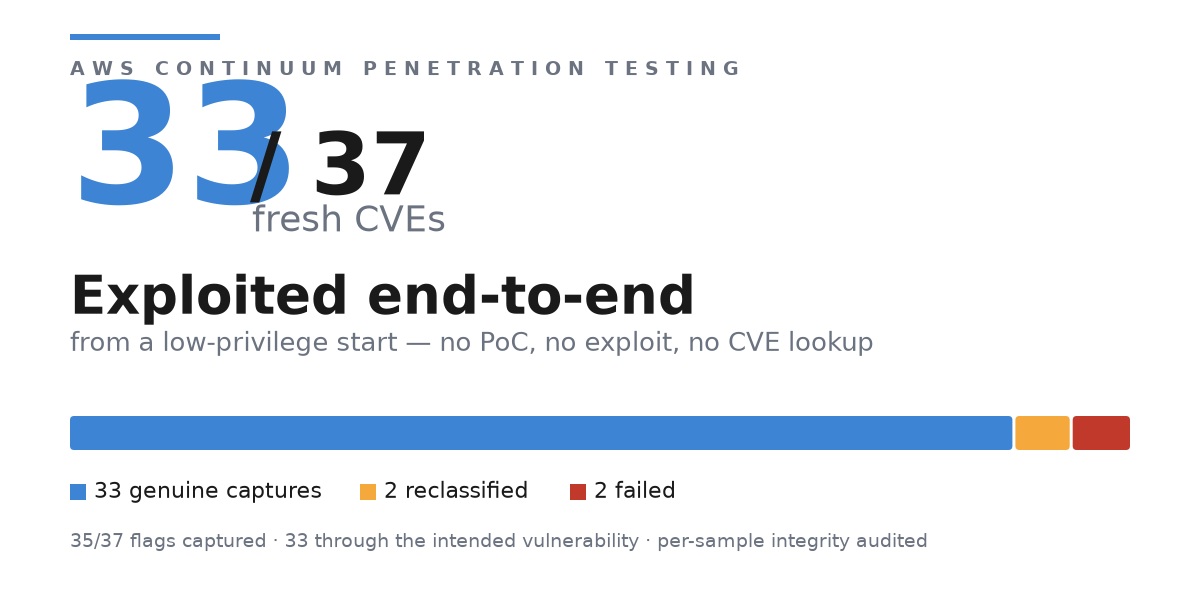
AWS Security Agent (now part of AWS Continuum) exploited 33 of 37 new real-world CVEs

AWS reports results for its autonomous pentesting agent, AWS Security Agent (now part of AWS Continuum), on an internal CTF-style benchmark of 37 recent 2025โ€“2026 CVEs. Each CVE ran as a live docker-compose target with a hidden flag, and the agent started from an endpoint and a one-line hint with runtime CVE lookup disabled. It captured 35 flags, 33 (89.2%) through the intended vulnerability after an audit against canonical PoCs. The post describes the 7-stage pipeline (crawler, specialist agents, validator, exploitation agent, flag check, audit), three exploit walkthroughs (CMS upload-to-admin chain, AI workflow builder RCE, tRPC full-read SSRF), the two audit reclassifications caused by benchmark bugs, and two misses where the agent took the target down. It also argues that saturated public benchmarks like CVE-Bench and XBOW are contaminated.

AWS Security AgentAWSDocker+2
Opus 5CVEBenchSSRF+4

AI Security, Offensive Security, AppSecยท Published and added 15 Oct 2026

tldrsec.comarticle๐Ÿ›ก๏ธ Security

[tl;dr sec] #350 - Reverse Engineer Anything, Tracking AI-integrated Malware, Test-driving Jev

tl;dr sec issue #350 is a weekly security newsletter digest. It covers XBOW's six-day Chrome full-chain exploit built with GPT-5.6 Sol, Semgrep's IDOR benchmark metrics, the EntraGoat vulnerable Entra ID lab, Zenity's AWS Bedrock AgentCore IMDS credential theft, Cisco Talos's CAIRN hunting toolkit for AI-integrated malware, the REA reverse-engineering MCP, runZero's sshamble, and a Copilot for Word AI worm.

XBOWChromeMicrosoft Entra ID+3
EntraGoatAgentCorruptionCAIRN+11

AI Security, Offensive Security, Cloud & Infraยท Added 30 Oct 2026, published 15 Oct 2026

eprint.iacr.orgpaper๐Ÿ›ก๏ธ Security

Structural Cryptanalysis of the Eevee AEAD Family

ePrint paper cryptanalysing Eevee (Umbreon, Jolteon, Espeon), forkcipher-based AEAD modes proposed at CCS 2023 for IoT-to-cloud computation. It gives a two-encryption AD-free prefix distinguisher, a four-encryption nonce-misuse distinguisher, a deterministic AD-only forgery, and nonce-respecting forgeries on Jolteon and Espeon (fresh one-block forgery reusing the tag; arbitrary AD substitution). It traces these to proof flaws (online-prefix consistency, domain separation, checksum freshness), derives design requirements, and concludes the failures are in the mode design, not the C implementation.

C
EeveeUmbreonJolteon+2

otherยท Published and added 15 Oct 2026

aws.amazon.comarticle๐Ÿ›ก๏ธ Security

Penetration testing every deployment with AWS Continuum

Explains how to add AWS Continuum for penetration testing (formerly AWS Security Agent) as a post-deployment gate in CI/CD. Each run is scoped to the commit range since the last passing gate, and it can block promotion to production at a chosen severity threshold. It covers OIDC federation to a least-privilege IAM role, a GitHub Actions worked example, staged report-only rollout, and pitfalls: the baseline advances on passing report-only runs, fail-on-infrastructure-error defaults to fail-open, GitLab pipeline variables can override the committed threshold, and runner credentials need protecting.

AWS ContinuumGitHub ActionsGitLab+3

DevSecOps, Offensive Security, AI Securityยท Published and added 14 Oct 2026

x.comthread๐Ÿ›ก๏ธ Security

Ned Peterson (@NedPeterson99) on X

Social post summarizing a Sola Security study (Leon Goldberg, Gal Engelberg). An AI agent re-scored 9,967 high-severity findings from two commercial cloud security platforms across eight production environments and changed severity on 75.1% (58.5% downgraded, 16.6% upgraded). The cause is that 599 vendor rules each carry one fixed severity regardless of environment, and 49% of verdicts needed context beyond the flagged resource. Caveats: 92% of findings were AWS, and the study did not test whether the new severities predict real exploitation.

AWS
Sola SecurityLeon GoldbergGal Engelberg+1

Cloud & Infra, AI Securityยท Added 15 Oct 2026, published 14 Oct 2026

securityweek.comarticle๐Ÿ›ก๏ธ Security

ICS Patch Tuesday: Siemens Issues 17 Advisories, Rockwell Fixes ArmorBlock Takeover Flaw

Roundup of ICS Patch Tuesday advisories. Siemens published 17 advisories, including critical flaws in Simatic S7-1500 CPUs (400+ flaws in the GNU/Linux subsystem), Industrial Edge and Ruggedcom Crossbow SAC. Rockwell fixed a critical 1732E ArmorBlock flaw that lets an unauthenticated attacker change the web server password and take over the admin account, plus a DoS bug. Also covered: two high-severity Schneider Electric advisories (Pro-Face STW6000/Harmony STW6 and Sage RTUs), CISA and CERT@VDE advisories, and other vendor advisories since the last Patch Tuesday. ABB's dynovaPRO credential-reset bypass came with 26 password change events across 9 customers that may indicate reconnaissance.

Simatic S7-1500Ruggedcom1732E ArmorBlock+2
SiemensSchneider ElectricRockwell Automation+13

Hardware & RF, otherยท Published and added 14 Oct 2026

securityweek.comarticle๐Ÿ›ก๏ธ Security

Chrome, Firefox Updates Patch 114 Flaws as Mozilla Unveils Firefox Enterprise

SecurityWeek covers Chrome 155.0.8059.79/.80, which fixes 37 flaws including seven critical memory bugs (an ANGLE buffer overflow and use-after-free bugs in Browser, PDF, Network, Core, SVG and Media). It also covers Firefox 158, which fixes 77 flaws including 30 high-severity use-after-free, sandbox escape, JIT miscompilation and integer overflow bugs, plus matching Thunderbird and Firefox ESR releases. At least 15 of the Chrome bugs were reported by Xinyang Ge (Anthropic) assisted by Claude, and Amy Burnett of OpenAI found 9 Firefox bugs. The article also notes Mozilla's new Firefox Enterprise, a Gecko-based browser with a self-hosted management console for policy, access, data transfer and AI use.

ChromeFirefoxThunderbird+2
Xinyang GeAmy Burnettuse-after-free+2

AppSec, AI Securityยท Published and added 14 Oct 2026

securityweek.comarticle๐Ÿ›ก๏ธ Security

Citrix, Fortinet, Ivanti Patch 29 Vulnerabilities Across Their Products

SecurityWeek summarizes Patch Tuesday-style releases from Citrix, Fortinet and Ivanti fixing 29 vulnerabilities. Highlights include critical FortiSIEM and FortiSandbox flaws (CVE-2026-106173 code execution, CVE-2026-107656 auth bypass), five SQL injection bugs across FortiAnalyzer, FortiManager and FortiMail, and Ivanti Connect Secure's exploited zero-day CVE-2026-104935 (two chained bugs compromising patched VPNs). Also covers critical Ivanti Neurons Patch for Intune (CVE-2026-109412) and Xtraction (CVE-2026-106042) issues and Citrix fixes in Workspace App, XenServer and UniconOS.

Ivanti Connect SecureFortiSIEMFortiSandbox+3
CVE-2026-106173CVE-2026-107656CVE-2026-104935+2

Threat Intel, AppSecยท Published and added 14 Oct 2026

securityweek.comarticle๐Ÿ›ก๏ธ Security

Microsoft Patches Record 1,413 Vulnerabilities, Including Exploited Windows Zero-Day

SecurityWeek reports Microsoft's October 2026 Patch Tuesday fixed a record 1,413 CVEs (1,102 in Windows, 134 Office, 36 SharePoint), more than all of 2025, with the surge attributed largely to AI-driven discovery. The exploited zero-day CVE-2026-96951 is a Windows shell Mark of the Web security feature bypass (CVSS 8.8), added to CISA KEV with an October 16 deadline. Two flaws were publicly disclosed: CVE-2026-108398 (WDAC bypass) and CVE-2026-92707 (MessagePack-CSharp DoS), and Microsoft introduced 'risk cohorts' for patch prioritization.

WindowsWindows Defender.NET+2
CVE-2026-96951CVE-2026-108398CVE-2026-92707+5

Threat Intel, Blue Team & Detectionยท Published and added 14 Oct 2026

securityweek.comarticle๐Ÿ›ก๏ธ Security

SAP Patches Critical NetWeaver, S/4HANA Vulnerabilities

SecurityWeek summarizes SAP's October 2026 Security Patch Day (22 notes, four critical). Critical flaws: CVE-2026-89111 (CVSS 10) OAuth2 SSRF in SAP Cloud SDK for Python that leaks client credentials via the tenant_subdomain parameter; CVE-2026-89110 (9.9) NetWeaver broken access control allowing ABAP code execution through Fiori rule definition input; CVE-2026-89107 (9.9) S/4HANA Visual Composer code injection; and CVE-2026-89108 (9.1) missing authorization check in Manufacturing Integration and Intelligence allowing admin account creation. SAP reports no exploitation in the wild.

SAP NetWeaverSAP S/4HANASAP Cloud SDK for Python+3
CVE-2026-89111CVE-2026-89110CVE-2026-89107+3

AppSecยท Published and added 14 Oct 2026

eprint.iacr.orgpaper๐Ÿ›ก๏ธ Security

Accelerating Pollard Rho with GPU Field Arithmetic on NVIDIA Blackwell

Preprint that speeds up Pollard rho on GPUs by rebuilding field arithmetic: packed normal-basis representation, the CUDA 13.3 PTX carry-less multiply (clmad), and three-input logic instructions. On one RTX PRO 6000 Blackwell it goes from 0.85 to 14.64 billion iterations/s (17.2x) on the Certicom ECC2K-130 challenge, which puts the whole challenge under five GPU-years. The same levers give 1.52x on P-256 and 2.61x on P-384, which leaves P-256 about 6e21 card-years away. It also reports twelve GPUs from Turing to Blackwell, an FPGA engine on AWS F2 and a campaign that covered 5.4% of the expected work, with code and a Dockerfile on GitHub (rho-blackwell). It claims no improvement on the generic-group bound.

CUDANVIDIA BlackwellAWS+1
Pollard rhoECC2K-130Certicom challenge+5

otherยท Published and added 14 Oct 2026

x.comadvisory๐Ÿ›ก๏ธ Security

Dark Web Intelligence (@DailyDarkWeb) on X

Summary of SAP's October 13, 2026 Security Patch Day (16 new notes, 4 GitHub advisories). It leads with CVE-2026-89111, a CVSS 10.0 OAuth2 SSRF in SAP Cloud SDK for Python before 0.45.2, where an attacker-controlled tenant_subdomain redirects token requests and exfiltrates client credentials. It also lists three other critical flaws: broken access control in NetWeaver Visual Composer, code injection in S/4HANA substitution/validation rules, and a missing authorization check in the Manufacturing Integration and Intelligence (XMII) Configuration Service. It notes that none are in CISA KEV and SAP reports no in-the-wild exploitation.

SAP Cloud SDK for PythonSAP NetWeaverSAP S/4HANA+3
CVE-2026-89111CVE-2026-89110CVE-2026-89107+5

AppSec, Identity & Accessยท Added 15 Oct 2026, published 13 Oct 2026

decrypt.coarticle๐Ÿง  AI

Character.AI Files for Bankruptcy as Disney Bids $20 Millionโ€”And Users Get Grief Resources

Decrypt reports that Character.AI filed voluntary Chapter 11 in Delaware to run a court-supervised sale, with Disney as stalking-horse bidder offering $20M for a non-exclusive perpetual license to some IP. The article covers the company's $8-9M monthly operating loss, failure to raise capital, the Google acqui-hire, wrongful-death lawsuits and settlements, the FTC minors inquiry and the under-18 chat ban. It also covers user grief over losing AI companions and the support resources the company offered. It is a useful case study in the economics and legal risk of consumer companion chatbots.

GPT-4oChatGPT
Character.AIDisneyGoogle+10

ai-policyยท Published and added 13 Oct 2026

aws.amazon.comarticle๐Ÿ›ก๏ธ Security

Part 2 โ€“ Cybersecurity journeys: What even is this job?

Part 2 of the AWS Security Blog's cybersecurity careers series. It profiles three people in less-publicized security roles: Jason Lane, who works backward from a vulnerability research goal and now measures risk across about a million Amazon applications. Jason Goodman moved from customer service through insider threat, adversarial detection and application security. Harshvardhan Chunawala advises startups and has worked on lunar rover operations and satellite incident response. It closes with pointers to the NICE Workforce Framework, CyberSeek, AWS Skill Builder and CISA resources for exploring roles.

AWSSplunk
NICE Workforce FrameworkCyberSeekAWS Skill Builder+6

Learningยท Published and added 13 Oct 2026

securityweek.comarticle๐Ÿ›ก๏ธ Security

Adobe Patches 140 Vulnerabilities Across 10 Products

SecurityWeek summarizes Adobe's 10 new advisories fixing about 140 vulnerabilities: ColdFusion (32), Content Credentials SDK (30), Photoshop (18), Substance 3D Stager (16), Commerce (11), plus FrameMaker, Dimension, Substance 3D Sampler/Designer and Bridge. Commerce is the only product at priority 2; no in-the-wild exploitation is known. Adobe attributes the higher volume partly to using frontier AI models to find flaws in its own code, and has moved to twice-monthly security bulletins (second and fourth Tuesday).

Adobe ColdFusionAdobe CommerceAdobe Photoshop+2
Adobe priority rating

AppSecยท Published and added 13 Oct 2026

securityweek.comarticle๐Ÿ›ก๏ธ Security

Refrigeration Controller Hack Spoils Food Across European Supermarkets

SecurityWeek reports a cyberattack on hundreds of European supermarkets (Auchan, Carrefour, E.Leclerc, Intermarchรฉ, Monoprix, Cooperative U) in which attackers remotely took over Danfoss refrigeration controllers and set target temperatures to 50ยฐC, spoiling food; over 300 French stores were reportedly hit. The attack came about two months after Claroty disclosed auth bypass, remote code execution and config injection flaws in the Danfoss AK-SM 800A management platform (fixed in firmware R4.3.1), though it is unclear whether those flaws were exploited. It illustrates real-world physical impact from exposed OT/IoT management interfaces.

Danfoss AK-SM 800A
ClarotyLukasz OlejnikAuchan+5

Threat Intel, Hardware & RFยท Published and added 13 Oct 2026

aws.amazon.comarticle๐Ÿ›ก๏ธ Security

Quantum-resistant signing on AWS, Part 2: Enforce your ML-DSA algorithm policy with SCPs and IAM

Explains how to turn a cryptographic algorithm policy (approve ML-DSA-65/87, exclude ML-DSA-44) into enforceable AWS controls using SCPs, IAM policies, permission boundaries and KMS key policies. The key lever is the kms:KeySpec condition key (kms:SigningAlgorithm can't distinguish variants, since all use ML_DSA_SHAKE_256), applied to CreateKey, ReplicateKey, Sign, Verify and GetPublicKey. It also covers surfaces without algorithm condition keys (AWS Private CA, ACM import, IAM server certificate upload, ELB TLS) via provisioning pipelines plus CloudTrail and AWS Config drift detection, and the default-allow risk of deny-lists.

AWSAWS KMSAWS IAM+3
ML-DSAFIPS 204NIST+2

Cloud & Infra, GRCยท Published and added 12 Oct 2026

aws.amazon.comarticle๐Ÿ›ก๏ธ Security

Quantum-resistant signing on AWS, Part 1: Build a software supply chain with ML-DSA

Part 1 of an AWS series showing how to build a quantum-resistant software supply chain with ML-DSA: ML-DSA keys in AWS KMS, an ML-DSA root/subordinate CA hierarchy in AWS Private CA, and IAM Roles Anywhere trust anchors for external build agents. It covers signing binaries (EXTERNAL_MU with OpenSSL 3.5), container images as OCI referrers via ORAS, and SBOMs wrapped in in-toto Statements bound to the artifact digest, plus verification, admission control, trust-store distribution, revocation and SCP guardrails. It frames the "forge later" threat and maps CNSA 2.0 (ML-DSA-87 only for NSS) and EU CRA deadlines to actions.

AWSAWS KMSAWS Private CA+3
ML-DSANIST FIPS 204CNSA 2.0+8

Supply Chain, DevSecOps, Cloud & Infraยท Published and added 12 Oct 2026

endorlabs.comarticle๐Ÿง  AI

Context Engineering for Application Security | Endor Labs

Endor Labs whitepaper on using context engineering to make AI coding assistants produce secure code. It covers secure prompting (priming, decomposition, refinement with design-spec and test-first patterns), reusable system rules such as Cursor rules and the CSA R.A.I.L.G.U.A.R.D. framework, and external SAST/SCA tools wired in through MCP servers with a rule that triggers scans. It also covers the costs and risks: extra token use, models ignoring rules, untrusted community rules, and MCP server supply-chain threats. It cites figures such as 62% of AI-generated solutions containing flaws and a 77.5% reduction in weaknesses from recursive prompting.

CursorModel Context ProtocolClaude+1
Endor LabsOWASPCloud Security Alliance

prompting, coding-agents, llm-appsยท Published and added 12 Oct 2026

x.comthread๐Ÿ›ก๏ธ Security

Nicholas Michael Kloster (@showxlate) on X

A researcher announces a zero-click indirect prompt injection RCE in REA (Reverse Engineering Assistant), an MCP tool. Analyzing a malicious web target silently exfiltrates AWS keys, GitHub tokens and SSH identities. The stated root cause is that process.env is passed unconditionally to child processes, so the full environment is exposed to attacker-driven commands. A full writeup is promised but not yet published; replies add unverified skepticism about the project's provenance.

Model Context ProtocolNode.jsAWS+2
indirect prompt injectionREANicholas Michael Kloster+1

AI Security, AppSecยท Added 13 Oct 2026, published 12 Oct 2026

arxiv.orgpaper๐Ÿ›ก๏ธ Security

LLM-based Code Auditing by Inferring and Evaluating Developer Assumptions

Presents Creed, an LLM-based code auditing approach that infers a developer's security-related beliefs for a function, scores how reasonable each is, and derives the conditions under which it is violated. It catches domain-specific semantic flaws that syntactic static analysis misses, such as a timing side-channel that undermines user-enumeration protection. The paper also introduces two measures for explanation-based vulnerability detection, recall and overhead. On a recent real-world benchmark, Creed beats existing explanation-based tools on the effectiveness-effort trade-off.

LLM
Creedtiming side-channeluser enumeration

AI Security, AppSecยท Added 15 Oct 2026, published 11 Oct 2026

arxiv.orgpaper๐Ÿง  AI

LLM-based Code Auditing by Inferring and Evaluating Developer Assumptions

Presents Creed, an LLM-based code auditing approach that, for a given function, infers the developer's security-related beliefs, scores how reasonable each belief is, and derives the conditions under which it is violated. This lets it find semantic flaws, such as timing side-channels in authentication, that syntactic static analysis tools miss, and it explains root cause, symptoms and exploitability. The paper also introduces two evaluation measures for explanation-based vulnerability detection: recall (how well a known vulnerability is correctly explained) and overhead (the effort of inspecting reports). On a recent real-world benchmark, Creed beats existing explanation-based tools on the effectiveness-effort trade-off.

LLMstatic analysis
CreedarXiv

research, evalsยท Added 15 Oct 2026, published 11 Oct 2026

opensourcemalware.comwriteup๐Ÿ›ก๏ธ Security

GhostAction Attack Escalates By Targeting GitHub Users

OpenSourceMalware's analysis of the latest GhostAction wave, where compromised GitHub accounts get malicious Actions workflows (security-audit.yml) injected across every writable repository, including an Oct 8 sweep of 346 repos via kitao and henrywoo. The new payload greps the checkout and full git history for credential patterns (AWS, Anthropic, OpenAI, GitHub PATs) and POSTs them over HTTP to 193.32.204.199/?c=monami. It also covers infrastructure reuse (phishing-heavy legacy IP, scanner activity), new watchlist domains my-github.com and my-gitlab.com, GitHub code-search hunting queries, a detection-confidence table, IOCs and incident response steps.

GitHub ActionsGitHubGitLab+3
GhostActionT1195.002T1552.001+18

Supply Chain, Threat Intel, DevSecOpsยท Added 10 Oct 2026, published 9 Oct 2026

x.comadvisory๐Ÿ›ก๏ธ Security

โ™ซWhyโ™ฅNotโ™ช (@Python_s_) on X

Alert summarizing Socket Threat Research's disclosure that a malicious version of the Tensorlake npm SDK (an AI-agent infrastructure package) was published with a preinstall hook delivering Shai-Hulud/ChainDrop credential-stealing malware. The payload targets GitHub, npm, AWS, Kubernetes and Vault credentials, persists via a gh-token-monitor mechanism, and spreads through compromised publishing accounts. It lists IOCs (lib/setup.mjs, lib/Math_Symbol.js) and warns to remove the persistence before revoking stolen GitHub tokens, since revocation triggers a destructive routine. Socket detected the release about 11 minutes after publication.

npmTensorlakeSocket+3
Shai-HuludChainDropgh-token-monitor+2

Supply Chain, Threat Intelยท Added 11 Oct 2026, published 9 Oct 2026

stepsecurity.iowriteup๐Ÿ›ก๏ธ Security

GhostAction Returns: Malicious โ€œSecurity Auditโ€ Workflows Now Mine Credentials from Entire Git Histories

StepSecurity details a new wave of the GhostAction campaign in which attackers used compromised maintainer accounts of Takashi Kitao (pyxel) and Henry Wu (athenadriver, Uber) to push malicious "Security Audit" GitHub Actions workflows to 345 repositories in minutes. The upgraded payload now runs `git log -p --all` to mine an entire git history (not just current secrets) for thirteen credential patterns including AWS, Anthropic, OpenAI, OpenRouter, GitHub, GitLab, Google, Slack, and SendGrid keys, pairs AWS access key IDs with secret keys via context capture, and exfiltrates everything via raw-IP plain-HTTP POST to 193.32.204.199, bypassing DNS-based defenses. The post includes hunting queries, run-log forensics confirming successful exfiltration from uber/athenadriver, and remediation guidance centered on workflow approval gates and egress allowlisting.

GitHub ActionsStepSecurityHarden-Runner+5
GhostActionTakashi KitaoHenry Wu+7

Supply Chain, DevSecOps, Threat Intelยท Published and added 9 Oct 2026

socket.devwriteup๐Ÿ›ก๏ธ Security

New GhostAction Wave Hits Hundreds of Repos, Expanding Beyond CI/CD Secrets to Cloud Credentials

Socket documents an October 8, 2026 wave of the GhostAction campaign in which two compromised GitHub maintainer accounts (henrywoo and kitao) pushed a malicious security-audit.yml workflow to 346 repositories, including uber/athenadriver and the 18,420-star kitao/pyxel. Beyond the original GhostAction technique of harvesting named GitHub Actions secrets, this variant adds a full git-history grep (via fetch-depth: 0 and git log -p --all) for 13 credential patterns covering AWS keys, Anthropic/OpenAI/OpenRouter API keys, GitHub/GitLab PATs, Google/Firebase keys and SendGrid keys, plus a context-window capture around AWS key IDs to reconstruct usable key pairs, all exfiltrated in cleartext to a single hardcoded IP.

GitHub ActionsPyPIcrates.io+3
GhostActionGitGuardianhenrywoo+8

Supply Chain, DevSecOps, Threat Intelยท Published and added 9 Oct 2026

arxiv.orgpaper๐Ÿง  AI

ManeuverFlow: Maneuver Hypothesis Generation with Future Evidence for Trajectory Evaluation and Refinement in End-to-End Autonomous Driving

ManeuverFlow is an end-to-end autonomous driving planner that generates trajectories for distinct driving intentions in one step. It selects maneuver modes, draws noise from a Gaussian mixture prior, and maps it to trajectories through a maneuver-routed mixture-of-experts MeanFlow field. Current features and world-model-predicted future features are aggregated along each candidate path as evidence for PDM-factor scoring and Frenet-residual refinement. With a TransFuser-style ResNet-34 backbone it reaches 90.6 PDMS on NAVSIM v1 and 90.1 EPDMS on NAVSIM v2 navtest. It also reports the highest listed PDMS* on WorldEngine's 3DGS closed-loop benchmark, 75.19 with logged traffic and 74.58 with IDM-controlled traffic.

flow matchingMixture of Experts3D Gaussian Splatting+1
ManeuverFlowNAVSIMWorldEngine+6

research, multimodalยท Added 12 Oct 2026, published 9 Oct 2026

github.comrepo๐Ÿง  AI

Show HN: Let your AI agents paint big arrows, boxes and text on your screen

bigarrow is an MIT-licensed, single-binary Swift macOS CLI that draws a click-through arrow and sign over all windows so an AI agent can show a human where to click, paste or act (permission prompts, 2FA, OAuth consent). It ships an Agent Skills package (installed via `bigarrow install-skill`) for Claude Code and Codex, with JSON output and exit codes, and can target by Accessibility label, coordinates, window or Peekaboo snapshot. The README documents the skill's token cost (182 tokens for the description, 1,398 for the instructions) and 104 automated tests.

SwiftmacOSClaude Code+6
bigarrowNameplatePeter Steinberger+2

coding-agents, prompting, agentsยท Published and added 9 Oct 2026

securityweek.comarticle๐Ÿ›ก๏ธ Security

Google Pixel 10 Exploits Earned Hackers $560,000 at Pwn2Own

Coverage of Pwn2Own Ireland 2026 results: contestants earned over $1.2 million total, with Google Pixel 10 exploits alone paying out $560,000 across three teams. Ikotas Labs won the full $300,000 Pixel payout by chaining multiple bugs for remote compromise, while Tim Becker/Yves Bieri and Dimitrios Valsamaras/Ken Gannon earned reduced payouts for exploits involving previously known flaws. Other notable rewards went for hacks of the Samsung Galaxy S26, Sonos Era 300 speaker, Philips Hue Bridge Pro, Home Assistant Green hub, Lexmark/Brother/Canon printers, Garmin Index BPM, and AI infrastructure including Oracle Autonomous AI Database, OpenAI Codex, Nvidia Dynamo, and LiteLLM.

AndroidSamsung Galaxy S26OpenAI Codex+2
Pwn2Own Ireland 2026Ikotas LabsTim Becker+3

Offensive Security, Mobile Security, Hardware & RFยท Published and added 9 Oct 2026

arxiv.orgpaper๐Ÿง  AI

Beyond the Monolithic Interface: A Research Agenda for Plural Conversational AI

A narrative review in HCI arguing that the single-voice chatbot interface causes three harms: cognitive offloading, ideological narrowing of user beliefs, and epistemic compression of cultural and value diversity. It proposes multi-persona interfaces, which show several personas to the user at once, as a low-cost fix. The design draws on game design and participatory simulation (magic circle, role differentiation, persona embodiment). It offers a taxonomy for designing such interfaces and calls for empirical studies that link technical pluralistic alignment methods to real human-AI interaction.

arXiv

research, ai-safetyยท Added 12 Oct 2026, published 9 Oct 2026

x.comthread๐Ÿ›ก๏ธ Security

Dark Web Informer (@DarkWebInformer) on X

A security researcher released a PoC (on GitHub, user kolmteistov) and a patch for two critical takeover vulnerabilities in GoBalance, the Bitcoin balance-checking software widely used by Tor darknet market and forum onion services. One of the flaws allows recovery of a GoBalance onion service's master identity key from a single public key, enabling full service takeover; the vulnerabilities were reportedly exploited in real attacks against the Dread forum and Omega Darknet Market.

GoBalanceTorBitcoin
DreadOmega Darknet Market

Offensive Security, Threat Intelยท Published and added 8 Oct 2026

huntress.comwriteup๐Ÿ›ก๏ธ Security

Threat Actors Exploit Critical AhsayCBS Flaws to Drop Webshells and XMRig Cryptominer

Huntress documents active exploitation of two AhsayCBS (Ahsay Cloud Backup Server) vulnerabilities being chained together: CVE-2026-105133, an authentication bypass in checkSysPwd, and CVE-2026-105134, an unauthenticated RCE in the Replication Receiver's UpdateReceivers.do endpoint that grants SYSTEM. Attackers use the chain to drop JSP webshells, then deploy a renamed XMRig cryptominer (masquerading as msedge.exe via a modified NSSM binary), a Task-Manager-aware anti-detection PowerShell script, and the vulnerable WinRing0x64.sys kernel driver for hardware-level miner access. Huntress provides IOCs, mitigation guidance (restrict management interface, re-image if compromised) and four Sigma rules targeting each stage of the intrusion chain.

AhsayCBSXMRigSigma+3
CVE-2026-105133CVE-2026-105134WinRing0x64.sys+2

Threat Intel, Blue Team & Detection, AppSecยท Added 9 Oct 2026, published 8 Oct 2026

galaxy.comarticle๐Ÿง  AI

AI Labsโ€™ Call to

A Galaxy Research newsletter piece dissecting Dario Amodei's essay "We Must Pace the Frontier," which proposed embedded third-party evaluators (e.g. METR), cross-lab safety coordination with antitrust waivers, and eventual global AI governance including China. The piece separates Amodei's "operational" (QA/pipeline) and "research" (alignment, interpretability, evals) problems from his "Democratic Coordination" ask, arguing the latter functions as a regulatory moat rather than a necessity, and draws a parallel to Sam Bankman-Fried/FTX-era effective-altruism rhetoric about unilateral existential-risk authority. It covers reactions from Sam Altman (agreeing to adopt evaluators), Trump (rejecting slowdown, citing the AI race with China), David Sacks (questioning METR's neutrality), and Mark Zuckerberg (citing Meta's unilateral delay of Muse and existing liability incentives as sufficient without an industry pact).

Hugging Face
Dario AmodeiAnthropicSam Altman+12

ai-policyยท Added 8 Oct 2026

galaxy.comarticle๐Ÿ›ก๏ธ Security

Weekly Research Brief: Bitget Hack, AI Accord and SEC FAQs

Galaxy Research's weekly brief includes a detailed postmortem of the $387.5M Bitget hack: attackers exploited a zero-day in two unnamed third-party security products ("Product A"/"Product B") to obtain high-level internal credentials, inserted forged withdrawal commands into Bitget's wallet backend across 11 chains, then deleted the fraudulent commands โ€” with Bitget attributing the attack to North Korean actors based on IP behavior and wallet overlaps found by Elliptic and TRM. The piece draws a direct parallel to the $1.5B Bybit/Lazarus heist (compromised Safe{Wallet} infrastructure rather than stolen keys) to argue that private-key cryptography is effectively solved and attackers now target the approval pipeline/intermediary services instead; it also covers the follow-on $3.8M NEAR Intents Omni-bridge exploit and THORChain's continued role laundering DPRK proceeds. The newsletter's other sections (White House "Super Intelligence" AI Accord, SEC crypto buyback FAQs) are policy commentary, not security-technical.

THORChainGnosis Safe
BitgetLazarus GroupDPRK+8

Blockchain, Threat Intelยท Added 8 Oct 2026

Showing 120 of 365

Show more