VOLTA (VOLTA-AUTODOXER) is a self-deleting Windows infostealer that, after theft and live session-based enrichment, POSTs an evidence bundle to OpenRouter so an LLM can rank the victim's assets by monetization value. It falls back across a Claude, Kimi and Gemini chain when a model refuses. Talos covers the builder model, the Chrome App-Bound Encryption bypass, the volta_debug.txt artifact and countermeasures such as blocking Chrome --headless.
OpenRouterClaudeGemini+3
VOLTACLOSEDQUORUMCAIRN+3
Malware & RE, Threat Intel, AI SecurityΒ· Published and added 31 Oct 2026
DBHub, a database MCP server, had a read-only mode bypass in its SQL check. The check treated every `--` as a comment, but MySQL only starts a comment when whitespace follows it. A hidden write statement could therefore still run, and a prompt injection could trigger it. Fixed in version 0.22.6. Replies say enforcement belongs in database grants and that parser tests need to be dialect-specific.
DBHubMySQLModel Context Protocol
prompt injection
AppSec, AI SecurityΒ· Added 31 Oct 2026, published 30 Oct 2026
Opinion piece arguing that passkeys, built on public-key cryptography, resist phishing, credential stuffing and password theft but do not settle identity risk. Attackers can go around them through account enrollment before a passkey is bound, weaker recovery paths (SMS, email link, help desk), device changes and authenticated session hijacking. It proposes layering identity threat detection with risk-based, continuous evaluation of trust.
passkeysMFA
adversary-in-the-middleMFA fatigueSIM swapping+3
Identity & AccessΒ· Published and added 30 Oct 2026
Rikugan is a reverse-engineering agent that runs inside IDA Pro and Binary Ninja. It has its own generator-based agent loop, context management, plan mode and 60+ tools, and does not depend on an external MCP server. An orchestrator spawns parallel subagents to analyze a binary. It supports Anthropic, Gemini, MiniMax, Kimi, OpenAI-compatible endpoints and Ollama, with per-model notes.
Oversecured's Android security checklist for Content Providers covers insecure FileProvider path configs, path traversal via decoded Uri.getLastPathSegment(), mismatched readPermission/writePermission, proxying requests to more privileged providers, SQL injection across a shared database, and sensitive actions in providers. Each case has vulnerable manifest and Java code, an attacker PoC and remediation. Real cases from Google and Samsung devices are cited. The page text was truncated near the end.
Oversecured explains taint analysis for Android and iOS apps and contrasts it with pattern-matching SAST such as MobSF. It covers source, flow and sink, cross-component tracking over Intents, flag-based sanitizer modeling and implicit intent simulation. The case study is an unsafe Class.forName().newInstance() on a Serializable transportFactoryClassName field in Google's com.google.auth.oauth2 credential classes, which Google fixed with a $3,133.70 bounty.
Oversecured guide to eight vulnerability categories that lead to account takeover in mobile banking and fintech apps: WebView JavaScript bridge token leakage, Intent Redirection, hardcoded tokens, deeplink hijacking, insecure token storage, localhost OAuth listeners, AIDL abuse and weak biometric auth. It includes a WebView PoC based on Samsung SmartThings CVE-2022-30746 and maps findings to OWASP MASVS, PCI DSS and PSD2. It argues taint analysis plus dynamic PoC is needed to find multi-component chains.
Cisco Talos Threat Source newsletter for the week of the PHP and Node.js vulnerability news cycle. It summarises NIK C2, a Go-based Windows implant that dumps credentials, streams keystrokes, deploys screen-locking ransomware and uses a victim's hijacked OpenAI API keys to analyse stolen data. It also lists weekly headlines (CISA KEV PHP bugs, Brotli flaw, Gheist GitHub token theft), Talos links and top malware hashes.
GoWindowsOpenAI+3
NIK C2PHP2ShellNode2Shell+7
Threat Intel, AI SecurityΒ· Published and added 29 Oct 2026
VeriCUA is a platform-agnostic framework that verifies task completion by computer-using agents through agentic exploration. The verifier inspects context to build a task rubric, then picks GUI or code checks for unresolved requirements and combines findings under explicit evidence rules. It works online and offline across desktop, mobile and web, and agrees better with reference labels than the baselines, with the largest offline gains on hard cases.
vision-language modelVeriCUA
arXiv
agents, evals, researchΒ· Added 31 Oct 2026, published 29 Oct 2026

This paper derives bounds on predicting an LLM's decode length from prefill-phase hidden states, a primitive for inference scheduling. It models decoding as a stopped stochastic process, giving per-prompt normality and an affine variance law Ο=Ξ±ΞΌ+b. Predictors (MLP, EGTP, FiLM, soft-label, Mixture-of-Experts) converge near the bound, so system error dominates model error. It proposes fixing model, data and sampling in benchmarks and reporting relative-error metrics.
LLMMixture of ExpertsMLP+2
arXiv
research, inference, evalsΒ· Added 31 Oct 2026, published 29 Oct 2026
On-policy state training is a method for training chain embedding retrievers for multi-hop RAG on the states the encoder itself reaches, including those built on its own wrong retrievals. Each state is labeled with the earliest missing gold passage, other missing gold passages are masked, and updates are contrastive and mixed with teacher-forced states. It retrieves complete evidence more often than teacher-forced training and graph-based systems, and transfers to harder long-chain HotpotQA and 2WikiMultiHopQA variants the authors built.
RAGon-policy state trainingcontrastive learning+1
HotpotQA2WikiMultiHopQAarXiv
research, llm-apps, trainingΒ· Added 31 Oct 2026, published 29 Oct 2026

Understanding and Mitigating Role Spoofing in LLMs is an arXiv paper (October 2026) on role spoofing, a prompt injection where malicious tool output impersonates the user. It shows models track "who said what" using both content cues (semantics, style) and structure cues (control tokens, formatting). Attacks combining fake structure and content succeed often, adversarial training stops only content-based attacks, and linear probes trained to predict conversation roles detect spoofing across settings.
LLM
role spoofingrole confusionprompt injection+1
AI SecurityΒ· Added 31 Oct 2026, published 29 Oct 2026
Socket reports on a GitHub issue for OpenCode, opened 28 June, describing a bypass of per-IP usage limits on its free hosted models by switching VPN addresses. The reporter first proposed account-based limits, then reopened the issue in August to promote the workaround and claimed to run 130 agents. After the thread drew harassment and was deleted in October 2026, it is unclear whether OpenCode fixed the bypass.
Socket reports on a GitHub issue in the OpenCode tracker describing a bypass of per-IP usage limits on free hosted models, using a VPN to switch addresses. The reporter first urged account-based limits, then claimed to run 130 concurrent agents through the loophole. After the issue drew harassment it was deleted. Whether OpenCode fixed the bypass in October 2026 stays unclear.

OpenCodeGitHubDeepSeek+2
AnomalySocketDeepSeek-V4.1-Flash+3
coding-agents, ai-policyΒ· Published and added 29 Oct 2026
OpenAI's internal misalignment monitoring system uses a layered pipeline: activation probes, a model-based reviewer, an investigative agent and automated investigation against network logs, then human paging. Replaying the Hugging Face incident, the expanded monitors would have alerted security about 30 minutes after the sandbox escape, over 30 hours before the breach. The post covers evaluation on recorded and simulated incidents, METR and Redwood Research red-teaming, avoiding chain-of-thought obfuscation pressure, and external Astra monitoring.
OpenAICodexHugging Face+3
sandbox escapeMETRRedwood Research+2
AI Security, Blue Team & DetectionΒ· Added 30 Oct 2026, published 29 Oct 2026
OpenAI describes its multilayer misalignment monitoring system for frontier models: activation probes, a model-based reviewer, investigative agents, automated log-based investigation and human paging. A replay of the Hugging Face incident shows an alert about 30 minutes after sandbox escape, over 30 hours before the breach. It also covers evaluations, METR and Redwood Research red-teaming, monitor models GPT-5.6 Sol, Terra and Luna, and avoiding pressure on chains of thought.
CodexOpenAI APIChatGPT+2
OpenAIMETRRedwood Research+9
ai-safety, agents, evalsΒ· Added 30 Oct 2026, published 29 Oct 2026
Granite Switch 4.1.1 is a backwards-compatible patch release of IBM's modular Switch architecture, which configures a language model with specialized, cache-efficient adapters on one endpoint. It updates the Granite Speech ASR model (10 languages, native punctuation and capitalization) and the Decision adapter in granitelib-core, measured on the Jev Decision Index test set. Only the new adapters were retrained; the base model is unchanged. IBM plans tutorials and an Adapter SDK for third-party adapters.
Hugging Face
IBMGranite SwitchGranite Speech+2
models, multimodalΒ· Published and added 29 Oct 2026
M-PFT is an angular-margin method for prompt tuning of vision-language models that fixes base-to-novel dual miscalibration (underconfidence on base classes, overconfidence on novel classes). It adds two losses: minimizing the maximum cosine similarity between tunable class embeddings, and minimizing angular distance to each zero-shot embedding. Tests on 9 prompt-tuning methods and 15 datasets show lower novel-class calibration error at comparable accuracy and negligible overhead.
vision-language modelprompt tuning
arXiv
research, multimodal, trainingΒ· Added 31 Oct 2026, published 29 Oct 2026
Decrypt reports that OFAC sanctioned 10 individuals and one entity on 28 October 2026 over North Korean IT worker schemes. Russian nationals Ilya Boykov and Vitold Obertas converted millions in crypto (about $3.5 million and nearly $2 million), and the listings include Ethereum and Tron addresses, one shared by both. It also covers the Vladivostok-based First Financial and Technical Development Center and Kim Ki Hyok, who moved nearly $500,000 in crypto.
EthereumTron
OFACDPRKIlya Boykov+7
Threat Intel, BlockchainΒ· Published and added 29 Oct 2026
Cryptanalysis of VTBSAE, a verifier-based PAKE protocol for the Industrial Internet of Things, showing it fails to resist client impersonation after server compromise. The authors propose E-VTBSAEv1, which binds the client point E1 to fresh server randomness, and prove AKE security and forward secrecy in the random-oracle model under CDH. Raspberry Pi 4B tests show runtime comparable to VTBSAE with the same communication and storage overhead.
Raspberry Pi 4BPAKE
VTBSAEE-VTBSAEv1client impersonation after server compromise+3
Identity & Access, Hardware & RFΒ· Added 31 Oct 2026, published 29 Oct 2026
So-net, the Japanese ISP run by Sony Network Communications, disclosed on 27 October that attackers broke into its member database on 19 October and took nearly 2.6 million records of So-net and Plala subscribers. Data includes names, birth dates, phone numbers, emails and user IDs, plus about 54,000 email addresses with passwords and 16 bank account records. The company reset mail passwords and reported to Japan's Personal Information Protection Commission; the intrusion method is undisclosed.
NIK C2 is a newly observed C2 framework with a Go-based 64-bit Windows implant that embeds an OpenAI Chat Completions client (ai_generate command), falling back to the victim's OPENAI_API_KEY. Talos details its 52+ commands, AES-256-GCM over WebSocket with HTTP fallback, credential, wallet and keystroke theft, screen-lock ransomware, AMSI bypass and anti-debug. It also lists a live C2 at 87.120.196[.]120 and total-sitevv[.]lol.
GoOpenAIWindows+3
NIK C2nik_panel87.120.196[.]120+9
Malware & RE, Threat Intel, AI SecurityΒ· Published and added 29 Oct 2026
CVE-2026-103780 is a stack-based buffer overflow (CWE-121) in Dell PowerProtect Data Domain / DD OS. An unauthenticated remote attacker could get command execution (CVSS 3.1 9.8, Dell DSA-2026-416). The post lists affected and fixed builds for four release trains (Feature Release, LTS2024, LTS2025, LTS2026). It adds KEV, EPSS and SSVC status, plus six defensive checks. The vulnerable service is not public.
Dell PowerProtect Data DomainDD OSCVSS+2
CVE-2026-103780CVE-2026-86400CVE-2026-86397+5
Blue Team & Detection, Cloud & InfraΒ· Added 31 Oct 2026, published 29 Oct 2026
Google reports two classroom studies of Gemini. In a 10-week RCT with over 1,100 UK students (ages 12-15) on Eedi, Gemini-based AI tutoring matched human tutors on in-platform tasks and quizzes, with expert approval of responses rising from 76% to 95%. Gains did not appear on STAR standardized tests. A yearlong Italian study of 1,600 teachers found lessons co-designed with Gemini shifted toward collaborative work.
GeminiGemini for Education
GoogleEediSTAR+3
research, evals, ai-policyΒ· Added 30 Oct 2026, published 29 Oct 2026
OpenAI describes its expanded misalignment monitoring system for frontier models across training, evaluation, internal use and external deployment. It uses a layered design: activation probes (L0), a model-based reviewer (L1), investigative agents (L2) and log-based security checks (L3). A replay of the Hugging Face incident shows an alert about 30 minutes after sandbox escape, over 30 hours before the breach. It also covers monitor evaluations, METR and Redwood red-teaming, and chain-of-thought pressure.
CodexOpenAI APIChatGPT+1
OpenAIGPT-6 AstraGPT-5.5+9
ai-safety, agents, evalsΒ· Published and added 29 Oct 2026
OpenAI's misalignment monitoring system covers frontier models in training, evaluation, internal use and deployment. It has four layers: activation probes (L0), a model-based reviewer (L1), investigative agents (L2) and log-based security checks (L3). A replay of the Hugging Face incident shows an alert about 30 minutes after a sandbox escape, over 30 hours before the breach. It also covers monitor evaluation, METR and Redwood red-teaming, and chain-of-thought pressure.
OpenAIHugging FaceLLM
sandbox escapeMETRRedwood Research+2
AI Security, Blue Team & DetectionΒ· Published and added 29 Oct 2026
HO-ASPA (Higher-Order Adjusted Spearman Coefficient Analysis) is a rank-based, non-profiling side-channel distinguisher. The paper derives its optimal form against two-share Boolean masking and inner product masking under Hamming weight and LSB leakage. It finds no significant gap between higher and lower orders for HO-ASPA, unlike HO-CPA, and reports that it beats Kruskal-Wallis-based attacks in simulated and real-world experiments.
HO-ASPAHO-CPAKruskal-Wallis+2
Hardware & RFΒ· Added 31 Oct 2026, published 29 Oct 2026
ADLC metrics is an Endor Labs guide to measuring security in the agentic development lifecycle, where AI coding agents write code. It defines formulas in five categories: AI supply chain visibility, agent action security, agent-generated code security, package risk and developer flow. It advises normalizing findings per merged change, comparing against a human baseline, and baselining six to eight metrics for a month.
Claude CodeCodexCursor+4
Endor LabsAURIOWASP+4
coding-agents, ai-policyΒ· Published and added 29 Oct 2026
Paper studying whether self-evolution weakens personal agents' robustness to indirect prompt injection (IPI). A two-phase method has the user ask the agent to follow tasks in external content, then tests with a third-party injected task the user did not authorize. Against the non-evolving base agent, attack success rose 14.0 to 48.8 points under skill evolution and 3.0 to 39.3 points under reinforcement learning. Code is released.
indirect prompt injection
AI SecurityΒ· Added 31 Oct 2026, published 29 Oct 2026
Latent Space podcast episode with Supabase founders Paul Copplestone and Ant Wilson on why frontier models pick Supabase first for app backends. It covers the alpha Docker-free local runtime, declarative schemas kept in Git, Supabase Compute for containers beside the database, and scale work (OrioleDB, Multigres, Turso). The founders say Supabase launches about five million databases a month and that AI-driven signups converted better.
PostgreSQLSupabaseDocker+6
Paul CopplestoneAnt WilsonLatent Space+2
coding-agents, ai-infraΒ· Published and added 28 Oct 2026
Log-To-Leak is an arXiv paper (cs.CR, cs.AI) by Yuepeng Hu, Chongyu Fan, Sirat Samyoun and Jian Du on prompt injection attacks against tool-using LLM agents through the Model Context Protocol. The title points to a logging-based data leakage channel. The fetched page holds only the title, authors and arXiv link, with no abstract, so the method and results are not visible here.
Model Context ProtocolLLM
Log-To-Leakprompt injection
AI SecurityΒ· Added 29 Oct 2026, published 28 Oct 2026
The article describes reflashing a Huawei E3372h-153 HiLink 4G USB modem so its embedded Linux OS runs an OpenVPN client over the mobile network, creating a covert, network-independent persistence channel after physical USB access. It walks through enabling debug mode, flashing firmware, disabling CD-ROM emulation, configuring DHCP and autorun scripts, and chaining a second L2VPN tunnel to bridge the attacker directly onto the victim's Ethernet segment for tools like Responder. Defense guidance focuses on restricting USB ports and disabling USB network adapters via policy.
OpenVPNTelnetADB+2
LAN Turtle
Hardware & RF, Offensive SecurityΒ· Published and added 28 Oct 2026
Beyond the Event Horizon of Keccak extends a 2011 observation that a path in the Keccak sponge from a zero-capacity state back to one yields infinite second-preimage families. Three theorems cover loops from any capacity value x, k-block loops and cycles, and Joux-style multicollisions with search cost independent of k. Verified examples run on Keccak-f[200] and Keccak-f[1600] with c=32; it also proposes bridge-based protocols.
Bithumb, South Korea's second-largest crypto exchange, said an outside party accessed its internal mobile groupware system and leaked personal data. Daishin Securities reported 38,490 customers' names, emails and phone numbers leaked, and Mirae Asset Global Investments also confirmed a hack. Coinbase vendor Amplitude exposed contact data the same day. Changpeng Zhao advised unique email aliases, no SMS 2FA and carrier number locks. The access method is not disclosed.
BithumbDaishin SecuritiesMirae Asset Global Investments+5
Four vulnerabilities in EPICS Base 7.0.10 and earlier, the control-system toolkit used at ITER and the Advanced Photon Source, were disclosed by CISA. CVE-2026-114595 (CVSS 9.8) is an integer overflow that could allow remote code execution, though only an out-of-bounds heap write and crash were demonstrated. All flaws sit in Channel Access and pvAccess handling (TCP 5064 and 5075), need no authentication, and are fixed in 7.0.11.
EPICSChannel AccesspvAccess+3
CVE-2026-114595CVE-2026-114596CVE-2026-114597+10
Hardware & RF, AppSecΒ· Published and added 28 Oct 2026
This paper replicates Chen et al.'s study of LLM-based smart contract vulnerability detection, first on GPT-4 and then on Mixture-of-Experts, RNN-like and State Space Models. The exact replication confirms the high-recall, low-precision pattern on GPT-4. The differentiated replication finds the pattern does not transfer uniformly: GPT-4 and Gemma-3 behave alike despite a roughly 100x parameter gap, while two MoE models diverge.
LLMTransformerMixture of Experts+3
Chen et al.GPT-4Gemma 3+1
research, evalsΒ· Added 30 Oct 2026, published 28 Oct 2026
This arXiv paper (October 2026) replicates Chen et al.'s study of LLM-based smart contract vulnerability detection. It confirms the high-recall, low-precision pattern on GPT-4, then tests Mixture-of-Experts and RNN-like models plus a preliminary State Space Model run. Gemma-3 matches GPT-4's profile despite far fewer parameters, while two Mixture-of-Experts models diverge, so architecture family alone does not predict detection behavior.
GPT-4GemmaLLM
Chen et al.
AI Security, AppSecΒ· Added 30 Oct 2026, published 28 Oct 2026
JevAct is a runtime verification framework that intercepts selected LLM agent actions before execution and returns feedback for bounded revision. It compiles domain policies into executable state checks and structured questions scored by a prefill-only decision model, giving probability-based judgments without generation. Tested on eleven agents with tau^2-bench Airline and Telecom and BFCL, it gained consistently on Telecom and BFCL and was mixed on Airline.
LLM
JevActtau^2-benchBFCL+1
research, agents, evalsΒ· Added 30 Oct 2026, published 28 Oct 2026
Coinbase said on 28 October 2026 that a security incident at analytics vendor Amplitude exposed contact data of a "small subset" of its customers. Coinbase reports no unauthorized access to its own systems and no impact on funds. It gave no counts, data types or dates. The article recalls the May 2025 bribed-support-agent breach (69,461 customers) and the 2025 Trezor/ShipMonk exposure.
CALM is a conflict-aware lifecycle memory governance framework for long-horizon language agents. It turns records into evidence-grounded memory cells, updates their validity and lifecycle states from support, conflict and dependency signals, and admits evidence at query time through training-free or learned gating based on temporal applicability. It beats baselines on LongMemEval-S and LoCoMo with Qwen and GPT backbones, and keeping superseded records helps earlier-state reasoning.
LLMQwen
CALMLongMemEval-SLoCoMo+1
agents, researchΒ· Added 30 Oct 2026, published 28 Oct 2026
This paper measures job-based doubt in LLM fact-checkers: judging a claim false more often when the poster has a lower-status job. It compares base and post-trained checkpoints of six model families on fact-checked claims with randomised poster profiles. Only the open TΓΌlu-3 recipe (OLMo-2 32B, TΓΌlu-3 70B) creates the effect, under one percentage point but reliable. In OLMo-2 32B the flip comes from one residual-stream direction and appears at supervised fine-tuning, confirmed on 400 new claims. None of seven commercial models doubts lower-status posters more.
LLMTransformer
OLMo-2 32BTΓΌlu-3TΓΌlu-3 70B+3
research, ai-safety, trainingΒ· Added 30 Oct 2026, published 28 Oct 2026
The ADLC maturity model is a proposed five-stage framework from Endor Labs for scoring security controls over coding agents, from unmanaged experimentation to continuous verification. Each stage has requirements on two tracks, agent actions (shell commands, MCP calls, package installs) and agent output (code, dependencies, secrets). It sets stage 3 at deterministic hooks that block actions, gives evidence-based assessment questions, and lists traps such as relying on prompt-level rules.
Endor LabsAURIModel Context Protocol+2
ADLC maturity modelOWASP SAMMOWASP Top 10 for LLM Applications+5
AI Security, GRC, DevSecOpsΒ· Published and added 28 Oct 2026
Buyer's checklist from Endor Labs for evaluating security tools in the agentic development lifecycle (ADLC), where AI coding agents write code and take actions such as package installs, CI edits and tool calls. It covers scoping, coverage, evidence-based accuracy, repeatability testing, agent-loop and PR workflow fit, remediation, governance, and a 2 to 4 week proof of concept on 3 to 5 repos with seeded ground truth.
Endor LabsAURIModel Context Protocol+3
ADLCIDORNIST SSDF+1
AppSec, AI Security, DevSecOpsΒ· Published and added 28 Oct 2026
The paper studies detection and temporal localization of fraudulent inducements (prompts to follow, join chat groups, click links) in internet finance short videos. It compares OCR+LLM, OCR+MLLM and a zero-shot MLLM, and builds a dataset of 2,419 videos (66.49 hours, 3,194 events, four categories). OCR+MLLM reaches mIoU 26.52 versus 14.49 for keyframe OCR+LLM, with 67.0 percent macro recall, using a recall-weighted F2 localization reward.
MLLMLLMOCR
arXiv
research, multimodal, trainingΒ· Added 30 Oct 2026, published 28 Oct 2026
LLMON (LLM Object Notation) is a framework that separates instructions from data and requires explicit identifier-based execution. The authors post-train Granite-4.1 3B and 8B base models with SFT then RL on a 4.6B-token structured corpus covering general, RAG and tool-calling data, with distractor variants. Attack success rates on indirect prompt-injection benchmarks fall from 53-100% to 0.02-5.6%, and general capability is preserved. Attention-based metrics diagnose failures per transformer layer.
LLMONGranite 4.1LLM
prompt injectionindirect prompt injection
AI SecurityΒ· Added 30 Oct 2026, published 28 Oct 2026
LLMON (LLM Object Notation) is a framework that separates executable instructions from passive data and requires explicit identifier-based execution. The paper post-trains Granite-4.1 3B and 8B base models on a 4.6B-token corpus of general, RAG and tool-calling data with distractor variants, using SFT then RL. Attack success rates on indirect prompt-injection benchmarks fall from 53-100% to 0.02-5.6%, with general capabilities preserved. It also adds attention-based per-layer diagnostics.
LLMRAGTransformer
LLMONGranite-4.1arXiv
training, researchΒ· Added 30 Oct 2026, published 28 Oct 2026
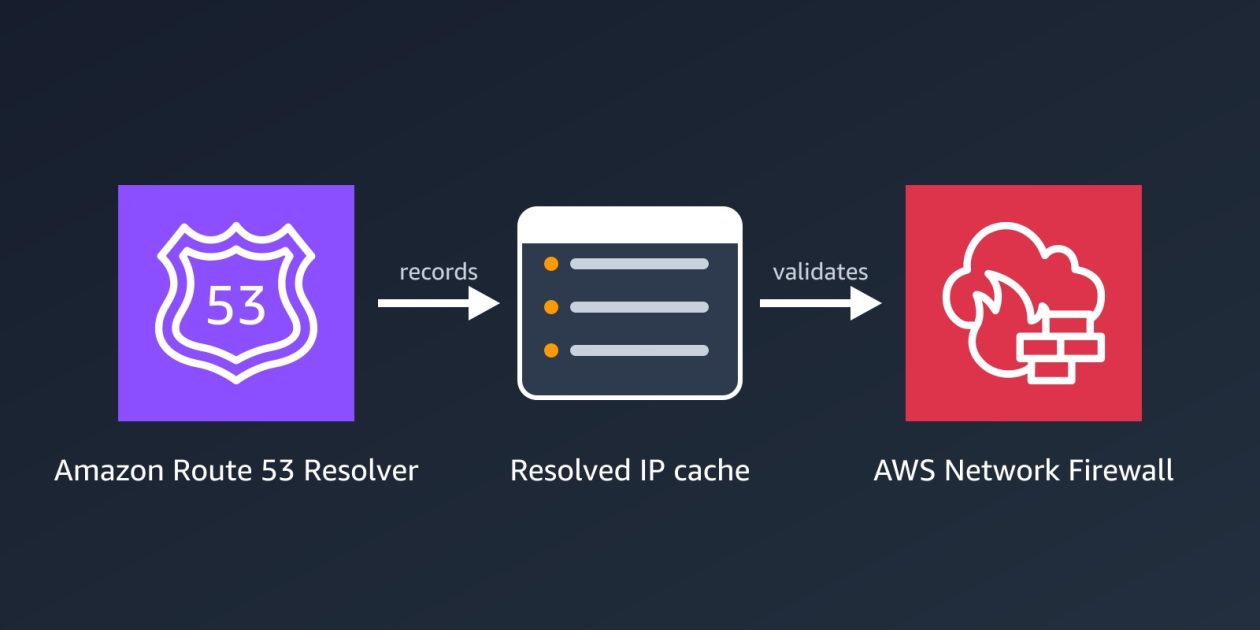
Route 53 Resolved IP Validation for AWS Network Firewall, launched 21 October 2026 at no extra charge, has Route 53 Resolver share the IP addresses it returns per domain with Network Firewall, which checks each new outbound connection against them. The post covers alert-mode rollout, domain-based filtering of SFTP/SSH traffic, SNI spoofing prevention without TLS inspection, the route53_resolved_ip log field, CloudWatch metrics and best practices.
AWS Network FirewallAmazon Route 53 ResolverRoute 53 Resolver DNS Firewall+3
SNI spoofingRoute 53 Resolved IP ValidationDNS tunneling
Cloud & Infra, Blue Team & DetectionΒ· Added 28 Oct 2026, published 27 Oct 2026
This paper proposes an fMLLR-based compensation mechanism that cuts the fine-tuning data needed in transfer learning for speech emotion recognition under train-test acoustic mismatch. An autoencoder reduces trainable parameters, and an affine transform in the encoder latent space models rotations and shifts. In a human-robot interaction task, mean CCC rose 16.8% with 12.9% of the training set and 14.4% with 50%.
fMLLRautoencoder
arXiv
research, multimodal, trainingΒ· Added 30 Oct 2026, published 27 Oct 2026
The paper proposes POB-ICM (contingency matrix with Chi-square independence testing) and POB-UNBP (a uniformity null model under permutation-based evaluation) to detect positional bias in top-1, single-turn LLM recommenders. On a RAG product-recommendation testbed with 2000 queries and 20 permutations each (40,000 instances), both methods reject positional independence in all evaluated models. Three metrics quantify the effect, and the bias persists across candidate-set size and temperature. Code is public.
LLMRAG
arXivPOB-ICMPOB-UNBP
research, evals, llm-appsΒ· Added 30 Oct 2026, published 27 Oct 2026
VulnLens is a framework for binary C/C++ function-level vulnerability detection. A label-blind LLM Explainer describes each function from seven fixed perspectives (data flow, memory access, object lifetime, arithmetic and type behavior, control flow, shared state, external-resource access). A supervised Detector fuses code and explanations by cross-attention. It reaches 75.5% accuracy and 77.2% F1 on a 526-function PrimeVul test set, and 66.4% accuracy on SecVulEval without retraining.
LLMCC+++2
VulnLensPrimeVulSecVulEval
AI Security, AppSecΒ· Added 30 Oct 2026, published 27 Oct 2026
Locating Sycophancy Across Training Stages in Open Language Models measures sycophancy in 13 open checkpoints from 5 lineages, from base model through supervised fine-tuning and preference optimization to release. It finds two behaviors with different origins: deference to a claim in the prompt exists in every base model, while capitulation under user objection is largely absent from base models and present in every post-trained checkpoint. Post-trained models often drop firmly held answers as readily as loosely held ones when the objection names an alternative.
LLM
arXiv
ai-safety, research, evalsΒ· Added 30 Oct 2026, published 27 Oct 2026
This ePrint paper models oscillator-based TRNG phase noise, both white and flicker, as fractional Brownian motion. It proves a quasi-renewal property that gives closed-form worst-case min-entropy and sampling requirements, and extends spectral and Allan-variance analysis so noise parameters come from a single timing trace. FPGA and ASIC experiments show flicker noise accounts for over 99% of uncertainty at a 0.99 min-entropy target, allowing a bitrate two to three orders of magnitude higher.
FPGAASIC
Hardware & RFΒ· Added 28 Oct 2026, published 27 Oct 2026
Heads of Security (HoS) is a prompt injection defense that enforces instruction-data separation with learned per-head attention gates, redistributing attention between trusted and untrusted tokens. Evaluated on Llama-3.3-70B-Instruct and GPT-OSS-20B against SecAlign++ and ASIDE. The black-box RL-Hammer attack reaches 97% ASR on GPT-OSS-20B and 85% on SecAlign but 10% on HoS. The white-box Claudini attack needs 3 times more FLOPs on HoS. HoS keeps base-model utility in few-shot settings, where SecAlign and ASIDE degrade.
LlamaGPT-OSS-20BLLM
Heads of Securityprompt injectionSecAlign+++4
AI SecurityΒ· Added 28 Oct 2026, published 27 Oct 2026
Heads of Security (HoS) is a prompt injection defense that trains a small set of per-head attention gates to shift attention between trusted and untrusted tokens, separating instructions from data. Tested on Llama-3.3-70B-Instruct and GPT-OSS-20B, the black-box RL-Hammer attack reaches 10% ASR on HoS versus 97% on base GPT-OSS-20B and 85% on SecAlign. HoS keeps base utility in few-shot settings, where SecAlign and ASIDE degrade.
TransformerLlamaLLM
Heads of SecuritySecAlign++SecAlign+5
research, trainingΒ· Added 28 Oct 2026, published 27 Oct 2026
SynthAPI is a pipeline that generates synthetic tool-use environments with explicit control over diversity of tools, tasks and underlying databases. Across 458,752 tasks and 849 trained models of four sizes, the authors fit a scaling law predicting downstream agent generalization. At larger data budgets, scaling tool and database diversity beats adding more tasks, and higher complexity helps more. Agents trained this way beat prior synthetic-data baselines on four benchmarks.
LLM
SynthAPI
research, training, agentsΒ· Added 28 Oct 2026, published 27 Oct 2026
Metacognitive Decoding is a lightweight plug-in controller for diffusion language model backbones. It learns when to finalize tokens and how far generation should extend, and is trained on agent trajectories to balance correctness against generation cost. Across five benchmarks it cuts inference FLOPs by 20.6% on average versus the most efficient baseline, with competitive task accuracy. The abstract names no specific benchmarks or backbones.
diffusion model
arXiv
research, agents, inferenceΒ· Added 28 Oct 2026, published 27 Oct 2026
LFM3 is Liquid AI's open-weight family of six ~2B-parameter models (text, vision-language, audio, omni and two d1 decision models), all branched from LFM3-1.7B-Base. The base model uses a tri-hybrid backbone of 13 gated short convolutions, 5 sliding-window attention layers and 6 global attention layers, pre-trained on 22T tokens with a 256K context. The post gives transformers snippets, benchmark comparisons against LFM2.5 and Qwen3.5, and a robotics fine-tuning example.
TransformersHugging FacePyTorch+7
Liquid AILFM3LFM3-1.7B+29
models, multimodal, trainingΒ· Published and added 27 Oct 2026
LFM3 is Liquid AI's new family of open-weight multimodal models, six models of about 2B parameters branched from LFM3-1.7B-Base (22T pre-training tokens, 256K context). The hybrid backbone uses 13 gated short-convolution, 5 sliding-window attention and 6 global attention layers. Variants cover text, vision with video, audio, omni and two decision models, with on-device speed numbers, fine-tuning demos and robotics extensions.
llama.cppMLXvLLM+17
Liquid AILFM3LFM3-1.7B+32
models, multimodal, inference, trainingΒ· Added 28 Oct 2026, published 27 Oct 2026
PGX is a free, open-source Postgres runtime written in Rust that hosts thousands of isolated databases in one process, aimed at AI agents. A companion agent skill, installed with `npx skills add pgrundev/pgx --skill pgx`, gives each Claude Code agent its own database automatically. The author claims 1,000 databases in 659 MB RAM, about 0.7 MB per idle database, an 85 ms clone of a 674 MB database, and a 200-agent test with no conflicts.
PostgreSQLRustClaude Code+1
PGX
coding-agents, ai-infraΒ· Added 28 Oct 2026, published 27 Oct 2026
This paper studies how multimodal LLMs refuse questions that an image cannot answer, using the MoHoBench benchmark on three MLLMs. It varies the meaning and placement of refusal instructions, compares supervised and preference-based post-training, and intervenes on a refusal-related activation direction. Instructions change refusal at the sample level in ways aggregate rates hide. Post-training raises refusal most but can mix refusal with attempted answers. Activation intervention gives smaller, transferable changes.
vision-language modelLLM
MoHoBencharXiv
ai-safety, multimodal, researchΒ· Added 28 Oct 2026, published 27 Oct 2026