Skip to content

337 results for β€œExa”

What you seeeverything
newsletter.semianalysis.comarticle🧠 AI

The Datacenter Backlash Goes Bipartisan: Next Week's Midterms and the 2028 Buildout

SemiAnalysis analysis of how the November 2026 US midterms could affect datacenter buildout. About 75% of the 33.8 GW due in 2027 across the top 20 states is already under construction, but 43.5 GW of 2028 additions sit in 13 states with pending approvals. The biggest risk is a prolonged Texas TCEQ permit freeze. Texas holds close to 30% of 2028 GW, and nine of 20 nominees back a pause.

SemiAnalysisTexas Commission on Environmental QualityERCOT+16

ai-policyΒ· Published and added 1 Nov 2026

simonwillison.netarticle🧠 AI

datasette-llm 0.1a9

datasette-llm 0.1a9 is a release of the Datasette plugin that now reads the default model configured in LLM. Datasette Agent can then start without setting plugins.datasette-agent.default_model, for example with uvx --with datasette-agent datasette content.db --internal internal.db. The post is a brief usability note and gives no further detail.

Datasettedatasette-llmDatasette Agent+2
Simon Willison

agents, llm-appsΒ· Added 1 Nov 2026, published 31 Oct 2026

interconnects.aiarticle🧠 AI

Was I wrong about open models & cyber risks?

Interconnects post in which Nathan Lambert revisits his claim that an open-weight Claude Mythos would have been survivable. He argues GLM-5.3 already crosses the capability threshold with little visible societal change, and quotes Rob Wiblin, Anthropic and Zvi Mowshowitz as examples of exaggerated warnings. He cites Epoch AI's Firefox exploit built with GLM-5.3, and treats the recent vulnerability surge as an ecosystem trend driven by AI capability and diffusion, not open versus closed models.

FirefoxGLM
Claude MythosGLM-5.3Anthropic+13

ai-policy, ai-safety, modelsΒ· Published and added 30 Oct 2026

bleepingcomputer.comarticleπŸ›‘οΈ Security

Trezor warns of suspected crypto-theft implant in hardware wallet

Trezor warns of a suspected crypto-theft implant in a Trezor Safe 5 sold by reseller CryptoBilis in Southeast Asia. An Indonesian buyer found an extra board with a cellular module and antenna between the main board and screen, apparently able to read the recovery phrase and send it over mobile networks. Trezor has not examined the device, advises moving funds to a new wallet for any CryptoBilis purchase since March 2026, and notes a similar Ledger implant was confirmed.

TrezorLedger
CryptoBilisTokopediarecovery phrase

Blockchain, Hardware & RF, Supply ChainΒ· Published and added 30 Oct 2026

protos.comarticleπŸ›‘οΈ Security

Trezor reveals Malaysian reseller sold wallet with spyware

Trezor says a user reported a Safe 5 wallet bought from Malaysian reseller CryptoBilis in August 2026 with a hidden board between the main board and screen, carrying a cellular module and antenna. The implant allegedly reads the screen, including the wallet backup, and sends it over a mobile network when plugged in. Trezor has not yet examined the device, has dropped CryptoBilis (9 October), and is replacing wallets bought since March 2026.

TrezorLedger
CryptoBilisDanny Sanders

Hardware & RF, Blockchain, Threat IntelΒ· Published and added 30 Oct 2026

decrypt.coarticleπŸ›‘οΈ Security

Israel Extradites Alleged Nomad Bridge Exploiter to US Over $2.8M Theft: Report

Decrypt report that Israel extradited Alexander Block (formerly Gurevich) to the US over about $2.8 million taken from the Nomad bridge in August 2022. A June 2022 update flaw let tokens be received without locking assets, and copycats then drained more than $186 million. Israel's Supreme Court held that exploiting a flaw the software permitted can still be unlawful intrusion. The FTC proposed a settlement with Illusory Systems in December 2025.

NomadTelegram
Nomad bridge exploitIllusory SystemsParadigm+4

Threat IntelΒ· Published and added 30 Oct 2026

decrypt.coarticleπŸ›‘οΈ Security

Trezor Warns CryptoBilis Buyers After Report of Hardware Implant in Safe 5

Trezor warned buyers of its wallets from reseller CryptoBilis (March 2026 onward) to move funds, after an Indonesian customer reported a hardware implant in a Safe 5 bought in August 2026. The report describes a board with a cellular module between mainboard and screen that reads the wallet backup and sends it over a mobile network. Trezor has not yet examined the device. It found no tampering in four other CryptoBilis units.

Trezor Safe 5LedgerBitcoin
CryptoBilisTrezorLedger Donjon+3

Hardware & RF, Supply Chain, BlockchainΒ· Published and added 30 Oct 2026

chainalysis.comarticleπŸ›‘οΈ Security

Binance Exploit: Latest Findings and Response

Chainalysis assesses the 29 October 2026 theft of about $6.4 billion from Binance hot wallets as the work of North Korean group TraderTraitor. Attribution rests on on-chain behavior, including real-time commingling with funds from the Bitget exploit, a Tornado Cash-funded operator wallet and signed authorizations that let a hot wallet run attacker code. About $2.8 billion was frozen. Laundering shows automation, with addresses receiving exactly 1 TRX before forwarding funds.

EthereumTornado CashTron+3
TraderTraitorDPRKBinance+3

Blockchain, Threat IntelΒ· Published and added 30 Oct 2026

theblock.coarticleπŸ›‘οΈ Security

Trezor reports suspected hardware implant in Safe 5 sold by CryptoBilis

Trezor reported a suspected hardware implant in a Safe 5 bought in August 2026 from reseller CryptoBilis via Tokopedia. The alleged implant is a board with a cellular module that reads the screen, including recovery phrases. Trezor has not examined the device and found no tampering in four other units, and it told buyers who purchased from the reseller since March 2026 to move funds.

Trezor Safe 5
CryptoBilisTokopediaTrezor

Hardware & RF, Blockchain, Supply ChainΒ· Published and added 30 Oct 2026

securityweek.comarticleπŸ›‘οΈ Security

TeamViewer Flaw Could Let Malicious Hosts Take Over Support Technicians’ Machines

CVE-2026-111585 (CVSS 8.8) is an integer overflow in the remote-control screen processing of TeamViewer clients on Windows, macOS, Linux and Android. A malicious or compromised host can announce an oversized screen surface (for example 32768 by 32768 at 32 bpp), forcing a software decode path and an out-of-bounds write that crashes the viewer or runs code. Remedio's research shows a pointer overwrite routed to WinExec. Version 15.83 fixes it, along with CVE-2026-92372, CVE-2026-92374 and six local privilege escalation bugs.

TeamViewerWindowsmacOS+3
CVE-2026-111585CVE-2026-92372CVE-2026-92374+3

AppSec, Offensive SecurityΒ· Published and added 30 Oct 2026

en.cryptonomist.charticleπŸ›‘οΈ Security

Trezor hardware implant report: CryptoBilis buyers urged to move funds

Trezor advised everyone who bought wallets from reseller CryptoBilis since March 2026 to move funds to a new wallet with a new recovery phrase. An Indonesian customer reported a Safe 5 bought via Tokopedia in August 2026 with an extra board holding a cellular module that allegedly sends the wallet backup out. Trezor has not yet examined the device. Ledger separately confirmed tampering on CryptoBilis devices in October 2026.

TrezorLedger
CryptoBilisTokopediaSEAL 911+1

Hardware & RF, Supply Chain, BlockchainΒ· Published and added 30 Oct 2026

x.comthread🧠 AI

Artificial Analysis (@ArtificialAnlys) on X

Artificial Analysis launched an HLE-Diamond leaderboard in v5 of its Intelligence Index, covering the refined 1,000-question Humanity's Last Exam from CAIS and Scale AI. Each question runs once without tools, graded by GPT-5.6 Luna (medium) as pass@1. Gemini 4 Carbon (high) leads at 69%, Claude Opus 5.5 (max) scores 68%, and the top open weights model, Kimi K3.1 Pro, reaches 37%.

Artificial AnalysisArtificial Analysis Intelligence IndexHLE+9

evals, modelsΒ· Published and added 30 Oct 2026

github.comrepo🧠 AI

Show HN: I Turned DOOM into a Transformer

Doomformer compiles integer neural networks into ZDoom maps that run in ViZDoom. Voodoo dolls do the arithmetic, and sector light levels and plane heights hold the values. Python reads every value back and compares it with a NumPy integer reference at tolerance 0. It runs MNIST (97.16 % on all 10,000 digits, every pass exact), small transformers, a learning perceptron and a SUBLEQ machine. It is about 23,000 times slower than NumPy on a small MLP.

ViZDoomZDoomACS+10
DoomformerDOOMFreedoom+6

research, inferenceΒ· Added 30 Oct 2026, published 29 Oct 2026

oversecured.comwriteupπŸ›‘οΈ Security

Discovering vendor-specific vulnerabilities in Android | Oversecured Blog

Oversecured describes extending its Android scanner to system APIs and to Samsung's Android build, after comparing Google and Samsung framework JARs and about 400 system services. It explains AIDL service permission checks and new control-flow analyses. Examples include Samsung's unchecked semIsBackupEnabled(), a broadcast that reboots the device, and a LaunchAnyWhere in Settings. Samsung had fixed over 60 reported issues.

AndroidSamsungOversecured
LaunchAnyWhereAIDLsystem_server+1

Mobile Security, AppSecΒ· Added 29 Oct 2026

oversecured.comarticleπŸ›‘οΈ Security

SDK security in mobile apps: the attack surface your team didn

Oversecured guide to SDK security in mobile apps, built around Microsoft's April 2026 disclosure of an intent redirection flaw in EngageLab's EngageSDK (50 million installs, fixed in 5.2.1). It covers SDK attack surfaces (exported components, WebViews, deep links, hardcoded secrets, payment crypto), a canhub image cropper file-overwrite example, why source-only SAST misses SDK code, and MASVS and PCI DSS expectations.

AndroidEngageSDKOversecured+3
intent redirectionEngageSDK intent redirectionMTCommonActivity+11

Mobile Security, Supply Chain, AppSecΒ· Added 29 Oct 2026

x.comthread🧠 AI

Prasenjit Sarkar (@stretchcloud) on X

A thread on Cloudflare's agent-readiness scan and the AgentReady.org open spec for "Agent Experience", developed with Vercel, Stripe, Auth0, Mintlify, Google, Netlify and Elementor. The scan grades whether agents can find a site (robots.txt, DNS), read clean Markdown, pass bot rules, and discover an MCP server or API catalog. One quoted example raised a score from 20 to 67 by shipping an API catalog with Link headers, an MCP server card, a skills index and an AI catalog file.

Model Context ProtocolCloudflareMarkdown
AgentReady.orgOraNick Launches+7

mcp, agentsΒ· Added 30 Oct 2026, published 29 Oct 2026

securityweek.comarticleπŸ›‘οΈ Security

How Secure Are US Elections? Voting Machine Risks andΒ the Growing Threat of AI

SecurityWeek article examining US election security through a cybersecurity lens. It covers voting machines certified by the Election Assistance Commission but unpatched for up to two years, machines hacked at DEF CON's Voting Village, and QR-code ballots voters cannot verify. Sequent's Shai Bargil proposes open-source software and encrypted vote records. It also covers AI-enabled influence campaigns such as the 2024 Biden deepfake robocall.

Microsoft ElectionGuard
Election Assistance CommissionVoting VillageDEF CON+9

Threat Intel, AI SecurityΒ· Published and added 29 Oct 2026

arxiv.orgpaper🧠 AI

RetroChessBench: A Benchmark for Reconstructing and Proving Chess Histories

RetroChessBench is a 12-task benchmark for retrograde chess: reconstructing legal game histories, exact-length constructions, unique endings and exhaustive answer sets, with references, rubrics and a terminal-reward RL environment. GPT 6 Astra High fails to give the required final answer in 22 of 24 attempts without tools and 18 of 24 with code execution. Mean terminal RL rewards are 14.75% and 27.19%. The authors link the failures to scarce worked derivations in web training data.

GPT-6 AstraLLM
RetroChessBench

evals, researchΒ· Added 31 Oct 2026, published 29 Oct 2026

endorlabs.comarticle🧠 AI

What is an AIBOM? AI bill of materials explained for security teams | Endor Labs

An AIBOM is a machine-readable inventory of models, datasets, dependencies, AI services, agents and MCP servers, with evidence of origin, license, integrity and evaluation. The Endor Labs explainer walks through a worked CycloneDX example for a fine-tuned support assistant. It compares CycloneDX ML-BOM, SPDX 3.x, the OWASP AIBOM project and the May 2026 CISA/G7 guidance, and lists what an AIBOM cannot show: runtime behavior and agent actions.

CycloneDXSPDXSBOM+5
Endor LabsOWASPCISA+3

ai-policy, ai-infraΒ· Published and added 29 Oct 2026

divagr.comwriteup🧠 AI

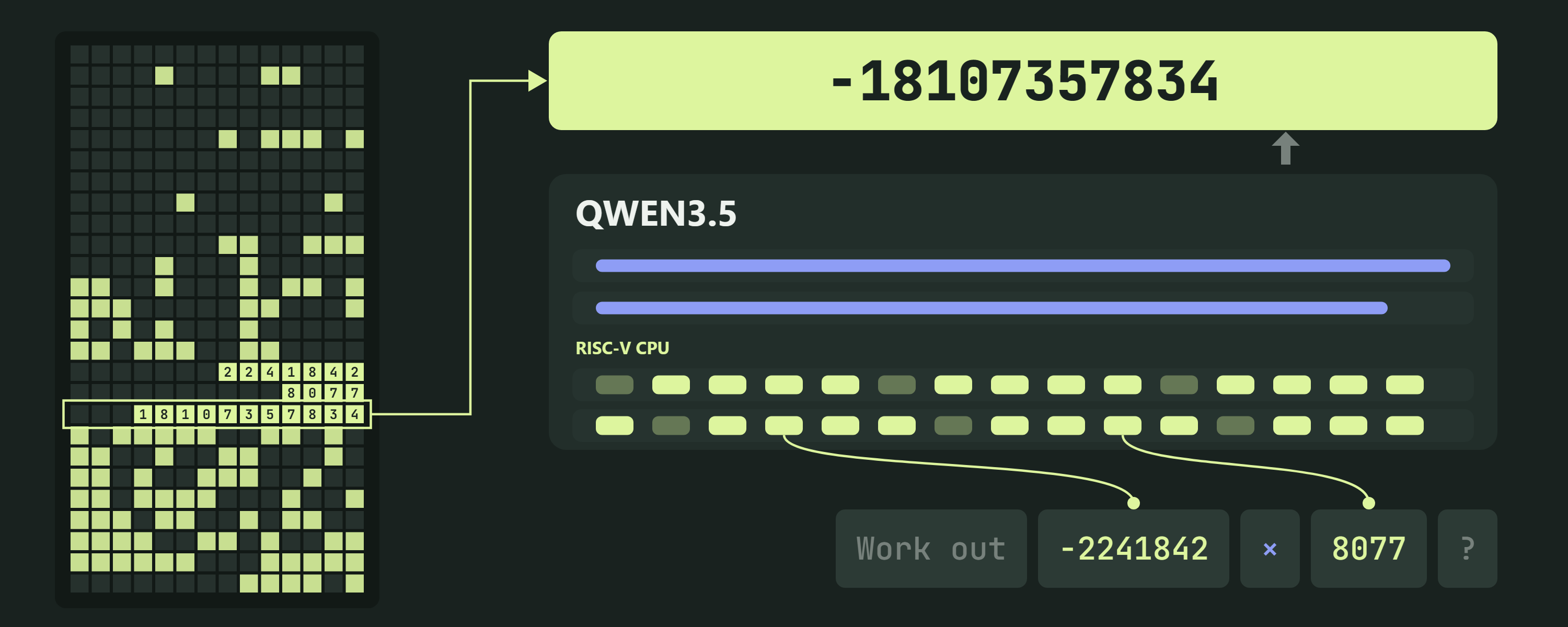
Qwenputer: A functioning, deterministic RISC-V CPU inside Qwen3.5

Qwenputer is a stock Qwen3.5 4B with a 32-bit RISC-V CPU (RV32IM plus Zba and a bignum unit) compiled directly into added layers, with no training. Gated DeltaNet states act as exact RAM via gate 1, beta 1 and one-hot keys. It scores 97.5 to 100% on DeepMind arithmetic sets, and 100% on NUPA long-integer arithmetic. It also has an experimental in-model filesystem. The checkpoint is 18.8 GB and needs the RvChat driver.

Qwen3.5Gated DeltaNetRISC-V+6
QwenputerQwenModelScope+6

research, modelsΒ· Published and added 29 Oct 2026

eprint.iacr.orgpaperπŸ›‘οΈ Security

Beyond the Event Horizon of Keccak, Extending the Observation from 2011 and applications

Beyond the Event Horizon of Keccak extends a 2011 observation that a path in the Keccak sponge from a zero-capacity state back to one yields infinite second-preimage families. Three theorems cover loops from any capacity value x, k-block loops and cycles, and Joux-style multicollisions with search cost independent of k. Verified examples run on Keccak-f[200] and Keccak-f[1600] with c=32; it also proposes bridge-based protocols.

KeccakSHA-3Lean
Danilo GligoroskiJoux multicollisionssecond preimages+2

otherΒ· Published and added 28 Oct 2026

x.comthreadπŸ›‘οΈ Security

Christiaan Stoudt (@cstoudt) on X

Thread on CVE-2026-97631, a critical (9.5) flaw in TianoCore EDK II UEFI firmware, found by Alex Matrosov and Dan Holmes-Mitra. It is exploitable only while a machine is PXE network booting and the attacker sends an oversized ICMP error from the same network. Code execution also needs the exact firmware build, and Secure Boot does not help. The fix landed in EDK II main on 15 October but is not in a stable release. No known exploitation, and not in CISA KEV.

EDK IIUEFITianoCore+2
CVE-2026-97631Alex MatrosovDan Holmes-Mitra+3

Hardware & RFΒ· Added 30 Oct 2026, published 28 Oct 2026

arxiv.orgpaper🧠 AI

When LLM Architectures Meet Smart Contract Vulnerability Detection: a Replication Study

This paper replicates Chen et al.'s study of LLM-based smart contract vulnerability detection, first on GPT-4 and then on Mixture-of-Experts, RNN-like and State Space Models. The exact replication confirms the high-recall, low-precision pattern on GPT-4. The differentiated replication finds the pattern does not transfer uniformly: GPT-4 and Gemma-3 behave alike despite a roughly 100x parameter gap, while two MoE models diverge.

LLMTransformerMixture of Experts+3
Chen et al.GPT-4Gemma 3+1

research, evalsΒ· Added 30 Oct 2026, published 28 Oct 2026

arxiv.orgpaper🧠 AI

Does Chain-of-Thought Reliance Follow a Scaling Law?Larger Models Follow Their Steps More, Independent of Post-Training

This paper measures how much a model's final answer depends on its own written chain of thought, using a synthetic box-swap task with exact ground truth. It edits one step in the model's chain to a wrong but valid state and checks whether the answer follows. Across 25 open-weight models, reliance rises with size and saturates (Qwen3 from 16-18% at 0.6B to 97-100% at 14B). Reliance tracks capability (r = 0.99) and is unchanged by post-training.

Qwen3GemmaLlama+2
Gemma 3Llama 3arXiv

research, ai-safety, evalsΒ· Added 30 Oct 2026, published 28 Oct 2026

arxiv.orgpaper🧠 AI

Multi-Token Prediction Done Right

Soft Multi-Token Prediction (Soft-MTP) is a one-line change to multi-token prediction (MTP) pre-training. The authors show the MTP cross-entropy gradient splits exactly into a KL self-distillation term and a noisy residual, and a straight-through "KL gradient-recovery trick" keeps only the KL term. From 167M to 1.2B parameters it gives lower NTP perplexity, faster speculative decoding and higher zero-shot accuracy than standard MTP, with no added parameters or overhead.

LLMTransformer
DeepSeekMeta

research, trainingΒ· Added 30 Oct 2026, published 28 Oct 2026

huggingface.coarticle🧠 AI

Build specialized multimodal models with LFM3

LFM3 is Liquid AI's open-weight family of six ~2B-parameter models (text, vision-language, audio, omni and two d1 decision models), all branched from LFM3-1.7B-Base. The base model uses a tri-hybrid backbone of 13 gated short convolutions, 5 sliding-window attention layers and 6 global attention layers, pre-trained on 22T tokens with a 256K context. The post gives transformers snippets, benchmark comparisons against LFM2.5 and Qwen3.5, and a robotics fine-tuning example.

TransformersHugging FacePyTorch+7
Liquid AILFM3LFM3-1.7B+29

models, multimodal, trainingΒ· Published and added 27 Oct 2026

eprint.iacr.orgpaperπŸ›‘οΈ Security

Radical isogenies on every model

Radical isogenies on every model is an IACR ePrint paper by Thomas Decru (October 2026). It gives radical isogeny steps of every odd degree N directly on short Weierstrass, Montgomery, twisted Edwards, Huff, Jacobi quartic, twisted Hessian, Legendre and Jacobi intersection curves, plus Kummer lines. In Tate normal form a step drops from 12.5N to 10N multiplications. Montgomery and twisted Edwards curves cost 10.5N+O(1) per step and 2N to push a point. All algorithms are inversion-free, with exact operation counts.

CSIDH
Thomas Decruradical isogeniesVΓ©lu's formulae+1

otherΒ· Added 28 Oct 2026, published 27 Oct 2026

github.comcourseπŸ›‘οΈ Security

cks/tasks/cks/course/README.md at master Β· ViktorUJ/cks

The ViktorUJ/cks course is an open-source, community-maintained preparation course for the CKS (Certified Kubernetes Security Specialist) exam. It has 33 chapters grouped by CKS domain: cluster setup, hardening, system hardening, microservice vulnerabilities, supply chain, and runtime security. It also has 15 labs with automatic checks (labs 101-114), mock exams and Killer.sh guidance. Core labs target Kubernetes v1.36.

KubernetesFalcoTrivy+3
CKSCertified Kubernetes Security SpecialistCNCF Kubestronaut+3

Learning, Cloud & InfraΒ· Added 27 Oct 2026

blog.cloudflare.comarticleπŸ›‘οΈ Security

What took the Internet offline in Q3 2026

Cloudflare's Q3 2026 review of the 49 Internet disruptions seen by Cloudflare Radar between July and September 2026. Government-directed shutdowns led with 19 (18 exam shutdowns in Iraq), followed by 14 power outages and 5 natural disasters. It gives traffic-drop figures and durations for Cuba, Honduras, Ukraine, Guam, Colombia, Ethiopia's Tigray region and others, including a Honduran interconnection facility power failure that cut HTTP traffic 63%.

Cloudflare
Iraq exam shutdownsTigray shutdownSuper Typhoon Bavi+10

otherΒ· Added 29 Oct 2026, published 27 Oct 2026

arxiv.orgpaper🧠 AI

p-DCIM: A 28nm Probabilistic SRAM DCIM based Ising Machine for Near-Memory Context Selection in LLM-RAG Pipeline

p-DCIM is a 28 nm SRAM digital compute-in-memory macro (0.16 mm2, 0.41 mW) that works as an Ising machine for RAG evidence selection. Selection is cast as a QUBO problem, and the same MAC datapath computes embedding similarities and annealing steps. Replacing LLM reranking with it gives a selection-energy estimate over six orders of magnitude lower and cuts total energy per query by 67%, with comparable token-level F1 on the evaluated examples.

RAGLLMSRAM+2
arXiv

research, inference, llm-appsΒ· Added 28 Oct 2026, published 27 Oct 2026

x.comthread🧠 AI

Abdullah (@abdullah0094) on X

An X thread by Abdullah on GPT-6.1 Terra versus Sol in Codex. Abdullah says Terra gives twice the Codex usage of Sol and asks whether the quality drop is obvious. A reply says it is too early for a verdict, cites OpenAI's claim that Terra matches GPT-6 Astra on Agents' Last Exam, and suggests defaulting to Terra and switching to Sol with /model when it stalls.

Codex
GPT-6.1 TerraGPT-6.1 SolGPT-6 Astra+2

coding-agents, modelsΒ· Published and added 27 Oct 2026

x.comthread🧠 AI

The SI Maximalist (@thesimaximalist) on X

The SI Maximalist posts on X that OpenAI says GPT-6.1 Terra matches GPT-6 Astra on Agents' Last Exam, OpenAI's test of workplace software tasks, at one tenth of the token price. The model is available in ChatGPT Work, Codex and the API. The post only relays OpenAI's claim and gives no benchmark scores, exact prices or method.

ChatGPTCodexOpenAI API
OpenAIGPT-6.1 TerraGPT-6 Astra+2

models, evalsΒ· Added 27 Oct 2026, published 26 Oct 2026

ethresear.chwriteupπŸ›‘οΈ Security

Lean verification of EIP-7002: system-call success and FIFO requests

Lean 4 proofs about the 504-byte EIP-7002 withdrawal-request contract on Ethereum, checked against the Jaune EVM semantics for Prague, Osaka, BPO1 and BPO2. The end-of-block system call always succeeds, using at most 210,000 gas. Requests leave in FIFO order. The post also gives counterexamples: code at the system address drains the queue, and the bytecode's 256-bit fee can undercut the EIP's fee.

LeanEthereumJaune+2
EIP-7002EIP-7251EIP-4788+9

BlockchainΒ· Published and added 26 Oct 2026

securityweek.comarticleπŸ›‘οΈ Security

Stolen AI Reasoning Could Help China Build Cheaper Rivals

Compaction Smuggling is an attack found by Xint that bypassed OpenAI's August 2026 mitigations against stealing reasoning traces from proprietary LLM APIs. It encodes one model's reasoning inside a compaction and replays it to another model (for example gpt-4.1 or gpt-4o), which outputs it verbatim. OpenAI fixed it and paid a $6,000 bounty on 23 October 2026. The article ties it to distillation by Chinese labs, citing a September CISA warning.

OpenAILLMDeepSeek+3
Compaction SmugglingXintCISA+8

AI Security, Threat IntelΒ· Published and added 26 Oct 2026

x.comthread🧠 AI

Syb (@DegenOfWallSt) on X

Nanbeige4.3-33B is a 33.1B dense, Llama-style open model under Apache-2.0, released with a base model on Hugging Face. In Nanbeige's own table it beats Qwen3.8-27B on Terminal-Bench 2.1 (80.9 vs 73.0), DeepSWE (65.5 vs 42.5) and Automation Bench, but trails on SWE-Bench Pro, GDPval and GPQA Diamond. BF16 weights are about 66 GB, split across 4 GPUs in the vLLM and SGLang examples. No independent evals exist yet.

Hugging FacevLLMSGLang+4
Nanbeige4.3-33BNanbeige4.3-3BNanbeige+8

models, coding-agents, evalsΒ· Added 26 Oct 2026, published 25 Oct 2026

arxiv.orgpaper🧠 AI

Continual Learning Exam: Benchmarking Long-Horizon RSI and Experiential Learning in LLM Agents

Continual Learning Exam (CLE) is a benchmark of 120 human-authored tasks, each a five-level ladder (600 levels) across 89 professional roles and 12 occupational domains, built by 50+ domain experts. Agents must pass a level to unlock the next, and an evaluation agent scores submissions against human rubrics. Across 17 harness-model configurations, feedback plus one revision adds a median 5.3 points; the best system clears 47.7% of levels and finishes all five levels in 23.3% of tasks.

LLM
Continual Learning ExamarXiv

evals, agents, researchΒ· Added 27 Oct 2026, published 25 Oct 2026

arxiv.orgpaper🧠 AI

Learning What to Share: Expert Specialization for Time-Series Forecasting

Persistent Closed-Form Routing (PCR) is a plug-and-play method for multivariate time-series forecasting. It alternates exact conditional estimation of channel-specific mixture weights with gradient training of low-rank residual experts around a frozen pretrained forecaster. Across eleven datasets and three backbones, PCR-K4 cuts dataset-balanced MSE by 3.86-14.25% and beats competing specialization methods with fewer trainable parameters. The paper also introduces GalaxyTS, a synthetic dataset with exact shared and channel-specific references.

Mixture of ExpertsTransformer
GalaxyTSPCRPCR-K4+1

researchΒ· Added 27 Oct 2026, published 24 Oct 2026

eprint.iacr.orgpaperπŸ›‘οΈ Security

The Exact Bit Security of Hash-Based Signatures

The Exact Bit Security of Hash-Based Signatures is a 2026 IACR ePrint paper that analyses XMSS with 128-bit digests and SLH-DSA-128s in the random oracle model, with proofs formalised in Lean4. Strong unforgeability comes to 127 bits under most accounting modes but only 122 bits if just direct random oracle queries are counted. The authors give matching attacks, and show how resource accounting changes the result.

XMSSSLH-DSALean
Mikhail KudinovBenedikt WagnerEmile Wambsgans

otherΒ· Added 26 Oct 2026, published 24 Oct 2026

newsletter.semianalysis.comarticle🧠 AI

Amazon’s Trainium Takes a Strike at the Training King

SemiAnalysis reviews AWS Trainium3 and the new TorchNeuron native PyTorch backend after a few weeks of hands-on use. It reports TorchTitan Qwen3-32B results on Trainium2 (11,099 tokens/s eager at 23.89% MFU, 14,156 compiled at 30.47%), a 27-minute gpt-oss compile time, 89 of 96 FlexAttention cases passing, matmul comparisons with GB300 and B200, and a positive view of the Neuron Explorer profiler.

TrainiumTorchNeuronAWS Neuron+17
SemiAnalysisAmazonAWS+10

inference, training, ai-infraΒ· Added 29 Oct 2026, published 23 Oct 2026

endorlabs.comarticleπŸ›‘οΈ Security

ADLC Security Best Practices for Teams Shipping with Coding Agents | Endor Labs

ADLC Security Best Practices is an Endor Labs guide to controlling what AI coding agents can access, run, install and ship. It covers inventorying agents and MCP servers, sandboxing, pre-execution hooks instead of AGENTS.md rules, install-time package checks against slopsquatting and malware, reachability-based triage of agent PRs, and CI/CODEOWNERS protections. A five-step worked example and coverage metrics are included.

Model Context ProtocolClaude CodeCursor+3
slopsquattingindirect prompt injectiontool poisoning+5

AI Security, Supply Chain, DevSecOpsΒ· Published and added 23 Oct 2026

bankless.comarticleπŸ›‘οΈ Security

Ethereum Devs Postpone Glamsterdam on Hoodi Over Contract Security Risks

Ethereum core developers postponed Glamsterdam on the Hoodi testnet on 22 October 2026, four days before the 26 October activation. ChainSecurity research showed EIP-8037 and EIP-8038 gas repricing can let a contract's failure path succeed where it used to revert, for example a fresh storage write costing 110,020 gas instead of 22,100. This enables "insufficient gas griefing", and ChainSecurity found 13 real-world cases.

Ethereum
GlamsterdamEIP-8037EIP-8038+4

BlockchainΒ· Published and added 23 Oct 2026

decrypt.coarticleπŸ›‘οΈ Security

Ethereum Delays Glamsterdam Testnet Fork Over Gas Security Flaws

Ethereum developers postponed the Glamsterdam hard fork on the Hoodi testnet (due 26 October 2026) after auditor ChainSecurity reported that the gas changes in EIP-8037 and EIP-8038 break assumptions in existing contracts. Gas can be refilled after a failed call and repricing alters call costs, so failure paths that used to revert can now complete, undermining insufficient gas griefing protections. ChainSecurity found 13 real-world examples and is in responsible disclosure.

EthereumPrysm
GlamsterdamChainSecurityEIP-8037+6

BlockchainΒ· Published and added 23 Oct 2026

arxiv.orgpaper🧠 AI

SCI-AGENT-EXAM: Benchmarking Agents on Scientific Research Tasks

SCI-AGENT-EXAM is a workflow-oriented benchmark of 120 expert-curated tasks across 11 scientific fields and 7 task types from the Scientific Workflow Task Taxonomy (SWTT). Tasks need both executable and textual artifacts, scored by programmatic checks plus an expert-calibrated LLM judge. Ten frontier agents were tested: GPT-6 Astra scored highest at 80.9, but only 26.0% of its runs passed the 0.95 success threshold.

LLM
SCI-AGENT-EXAMScientific Workflow Task TaxonomyGPT-6 Astra+1

evals, agents, researchΒ· Added 26 Oct 2026, published 23 Oct 2026

arxiv.orgpaper🧠 AI

MPQ: A Message-Passing View of Post-Training Quantization

MPQ (Message-Passing Quantization) is a post-training quantization method that treats row-wise PTQ as posterior inference over discrete codebooks. It keeps soft posteriors across weight blocks using vector approximate message passing, then refines a hard-decision initialization with exact block coordinate descent. Tested at 2-bit lattice and 3- and 4-bit scalar quantization on Llama, Qwen and Mistral models, it improves perplexity and zero-shot accuracy over GPTQ-style baselines.

GPTQLDLQvector approximate message passing+5
arXiv

research, inferenceΒ· Added 26 Oct 2026, published 23 Oct 2026

github.comrepoπŸ›‘οΈ Security

SnailSploit/Claude-Red

claude-red is a library of offensive security skills for the Claude Skills system, each a SKILL.md file that loads on conversational triggers (for example, mentioning SQL injection loads offensive-sqli). Categories include web, Active Directory, cloud, mobile, exploit development, fuzzing, privilege escalation, post-exploitation and AI. It targets about 130 skills across 23+ categories, with an install script and sparse-checkout install per category. Built on Sahar Shlichov's offensive checklists, MIT licensed.

ClaudeClaude CodeActive Directory
Kai AizenSahar ShlichovSnailSploit

Offensive Security, AI SecurityΒ· Added 22 Oct 2026

arxiv.orgpaper🧠 AI

Drift Says When, Budget Says How Much: Rate-Controlled KV Re-selection for Long-Form Multimodal Generation

Rate-Controlled Refresh (RCR) is a KV cache re-selection method for multimodal LLMs in long-form generation. Attention drift decides when and where to re-select visual tokens, and a per-sample controller sets how often. RCR beats InfiniGen by 1.6-3.8 ROUGE-L points on five of six model-task settings and stays within 1.7 points of exact per-step re-selection. On video description, where drift is homogeneous, it no longer beats a fixed threshold.

Qwen2-VLQwen3-VLInfiniGen+1
DetailCaps

research, inference, multimodalΒ· Added 24 Oct 2026, published 22 Oct 2026

huntress.comarticleπŸ›‘οΈ Security

Unboxing Phishing Kits: Huntress Examines 3 Real Kits

Recap of a Huntress Tradecraft Tuesday session (October 2026) on phishing kits that target Microsoft 365 tokens, including EvilTokens (a device-code phishing campaign abusing Railway) and the Kali365 control panel. It explains device-code phishing, adversary-in-the-middle and token replay. It lists detections (unfamiliar cloud sign-ins, device-code auth, new devices) and response steps (revoke refresh tokens, remove rogue devices, block device-code flow).

Microsoft 365Microsoft Entra IDHuntress+1
EvilTokensKali365device-code phishing+4

Threat Intel, Blue Team & Detection, Identity & AccessΒ· Published and added 22 Oct 2026

arxiv.orgpaper🧠 AI

IFC-MCQ: Automatically Generating Multiple-Choice Benchmarks for Evaluating LLM Agents on IFC Data Retrieval

IFC-MCQ is a method that automatically generates multiple-choice benchmarks from Industry Foundation Classes (IFC) building-model files, so answers can be graded by exact option-set match instead of human or LLM review. Its taxonomy has 15 categories and 36 subtypes in four groups, with answer keys from the file and distractors from file values or rules. Two agentic setups, tool-based and code-based retrieval, showed category-specific failures and variation by IFC model and interface.

LLMIndustry Foundation Classes
IFC-MCQarXiv

evals, agents, researchΒ· Added 23 Oct 2026, published 21 Oct 2026

huggingface.coarticle🧠 AI

NVIDIA Kumo Relational Outperforms Supervised Machine Learning on Relational Data, No Training Required

NVIDIA Kumo Relational is a pre-trained relational foundation model that predicts outcomes such as churn or fraud directly on multi-table databases through in-context learning, using up to 10,000 context examples and no task-specific training. NVIDIA reports it beats supervised relational deep learning and XGBoost pipelines across 41 tasks on 15 databases, and beats AutoGluon by 8% MRR on SAP SALT. Code is Apache 2.0, weights are on Hugging Face.

structured-data-modelsNVIDIA NIMPredictive Query Language+6
NVIDIAKumo RelationalKumo Tabular+6

models, research, evalsΒ· Published and added 21 Oct 2026

blog.cloudflare.comarticleπŸ›‘οΈ Security

Introducing full transaction detection for Cloudflare WAF

Cloudflare announces full transaction detection and response-phase rules for its WAF. Detections evaluate an HTTP request together with the origin's response, so exploitation can be confirmed (for example, path traversal returning a config file) and the response replaced with a 403 block page. Covers managed and custom rules, the limit of three custom response rules, no response-body matching yet, and a first managed rule for php2shell. Available on all plans, including Free.

Cloudflare
PHP2Shellpath traversal

AppSec, Blue Team & DetectionΒ· Added 29 Oct 2026, published 21 Oct 2026

arxiv.orgpaperπŸ›‘οΈ Security

Prompt Injection Through Forensic Evidence: A Taxonomy and Proof of Concept of Anti-Forensic Attacks on LLM-Assisted Digital Investigations

Paper on prompt injection delivered through forensic evidence, where the seized device's contents are attacker-controlled and the examiner must read them. It extends the anti-forensic model to cover manipulation of the reasoning layer and gives a taxonomy (objective, technique, payload location, concealment). Three proof-of-concept attacks on an LLM-assisted analysis pipeline change a reported conclusion, write attacker-chosen content to the analyst workstation, and trigger outbound network traffic. Mitigations are proposed.

LLM
indirect prompt injectionprompt injectionanti-forensics+1

AI Security, Blue Team & DetectionΒ· Added 24 Oct 2026, published 21 Oct 2026

aikido.devarticleπŸ›‘οΈ Security

Software supply chain security best practices for 2026

Aikido's guide to software supply chain security controls for 2026, tied to real incidents. It covers a 48-hour package cooldown, ignore-scripts, lockfile enforcement, SHA and digest pinning, scoped tokens, FIDO2, developer endpoint protection, extension allowlists, agent sandboxing, MCP server vetting, slopsquatting, signed SBOMs and rotation drills. Examples include the March 2026 axios compromise and the March 2025 tj-actions/changed-files attack.

npmpnpmGitHub Actions+3
tj-actions/changed-filesCanisterWormGlassWorm+7

Supply Chain, DevSecOps, AI SecurityΒ· Added 22 Oct 2026, published 21 Oct 2026

eprint.iacr.orgpaperπŸ›‘οΈ Security

Modeling Modular Multiplication for Monomial Prediction and Impossible Differentials, with Application to MSX

This ePrint paper gives the first exact bit-level models of modular multiplication z=(xΒ·y) mod 2^n. One model is for monomial prediction under 3SDP-woU, the other for impossible differential search. Applied to the MSX lightweight cipher, it yields a 7-round integral distinguisher (2^96 data) for MSX-128, key recoveries on 8 and 9 of 18 rounds at about 2^228 operations, and 1,984 seven-round impossible differentials. Both models are implemented in CLAASP.

MSXCLAASP
MSX-128monomial predictionthree-subset division property+5

otherΒ· Added 24 Oct 2026, published 21 Oct 2026

eprint.iacr.orgpaperπŸ›‘οΈ Security

A Spectral Theory of Local-to-Global Leakage

A Spectral Theory of Local-to-Global Leakage is an IACR ePrint paper (2026/2571) by Rei Ueno on additive secret sharing over finite abelian groups. It gives an exact leakage decomposition into local leakage magnitude and spectral alignment across shares. Two channels with identical local mutual information can have exponentially different global leakage. Automorphism-weighted sharing can cancel leakage perfectly with finitely many shares, which ordinary additive sharing cannot do.

Rei UenoMΓΆbius inversion

Hardware & RFΒ· Added 21 Oct 2026, published 20 Oct 2026

github.blogarticle🧠 AI

How 3 Java Champions are using GitHub Copilot for increased productivity

Interviews with three Java Champions (Vlad Mihalcea, Patrick Baumgartner, Frank Delporte) on using GitHub Copilot in production and open source. Examples include a 900-slide Reveal.js to Marp migration with visual verification, a Copilot coding agent diagnosing a Pi4J virtual-thread pinning bug, and custom Agent Skills. Tips: interview-first planning, task-specific verification gates, deterministic quality harnesses, and human review.

GitHub CopilotJavaIntelliJ IDEA+12
GitHubVlad MihalceaPatrick Baumgartner+7

coding-agents, prompting, ai-policyΒ· Added 29 Oct 2026, published 20 Oct 2026

eprint.iacr.orgpaperπŸ›‘οΈ Security

Fault-Induced Nonce Repetition in Threshold Lattice Signatures: A Reveal-Structure Criterion, Cross-Scheme Analysis, and Detection Boundaries

Fault-Induced Nonce Repetition in Threshold Lattice Signatures is an ePrint paper (2026/2566, Yulong Meng) showing that faulting t devices in a t-of-n threshold ML-DSA deployment recovers the full signing secret, verified on Mithril with exact recovery in 96/96 scan groups. It gives a reveal-structure criterion across Quorus, TALUS and Trilithium, a threshold law m* = (β„“-1)N+⌈N/KβŒ‰ for imperfect faults, and two-layer transcript detection (305/305 hits, no false positives).

ML-DSA
MithrilQuorusTALUS+7

Hardware & RFΒ· Added 21 Oct 2026, published 20 Oct 2026

github.comrepo🧠 AI

better-isms/grcskills

grcskills is a library of 60 plain SKILL.md files in the Agent Skills format, each describing how an experienced practitioner does one piece of governance, risk and compliance work. Examples are scope statements, risk registers, audit prep, vendor review and incident handling. Every skill names where the agent must stop and hand the decision to a person. Installs are pinned to reviewed release tags and checked by a validator.

Claude CodeCodexCursor+4
Better ISMSISMS CopilotNIST

prompting, agentsΒ· Added 20 Oct 2026

heymaxwell.aiarticle🧠 AI

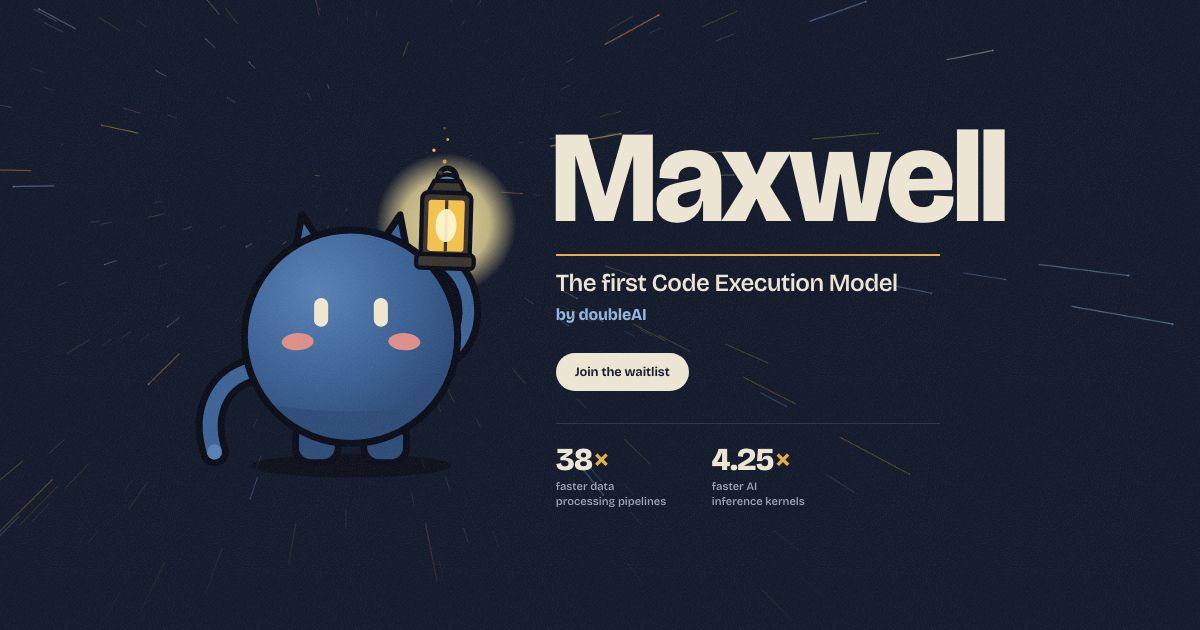
Maxwell: A new kind of model that sits between code and hardware

Maxwell (Maxwell's Daemon) is doubleAI's first "code execution model" (CEM). It runs inside a live program, finds bottlenecks and emits faster machine code for the exact CPU or GPU, leaving the source untouched. Each rewrite ships with a machine-checked proof of semantic equivalence, built on a formalisation of Python. Early access is announced; the post gives no benchmark figures.

PythonPyTorchRust+6
doubleAIMaxwellAlan Turing+3

models, inference, researchΒ· Added 20 Oct 2026, published 19 Oct 2026

eprint.iacr.orgpaperπŸ›‘οΈ Security

CHARRM - Characterizing Hardware Leakage in the Robust Random Probing Model

CHARRM is a verification methodology for masked hardware circuits in the (g, t, c)-robust (p, Ξ΅)-random probing model. It extends leakage characteristics to glitch-extended and transition-extended robust probing on arbitrary circuit structures, and links them to the Set of Input Shares (SIS) function for composability notions. It outperforms IronMask on larger circuits and gives exact verification of larger composed circuits in case studies.

IronMask
Set of Input Sharesleakage characteristicrobust probing model

Hardware & RFΒ· Added 20 Oct 2026, published 19 Oct 2026

eprint.iacr.orgpaperπŸ›‘οΈ Security

Evasive Inner Product Functional Encryption Is Broken Too

Evasive Inner Product Functional Encryption Is Broken Too is a 2026 ePrint paper by Agrawal, Modi, Yadav and Yamada. It gives a counterexample showing the evasive IPFE assumption of Hsieh, Lin and Luo (Eurocrypt 2024) is false in full generality. The attack extends the 2025 PRFE counterexample and needs only the weak inner product functionality, not pseudorandom function computation. The authors conclude that letting the adversary choose unrestricted private coins breaks the Evasive LWE family.

Evasive LWEEvasive IPFEPRFE+2

otherΒ· Added 20 Oct 2026, published 19 Oct 2026

Showing 60 of 337

Show more