Bankless news report on Binance reopening withdrawals in phases on 1 November 2026 after a record $6B+ hack. The FBI named North Korea's TraderTraitor group on 31 October, listed 628 addresses tied to the theft and asked THORChain node operators, instant exchanges and DeFi services to block them. Chainalysis says $500M moved out of TRON wallets and funds are shifting to Solana. Binance published a new proof of reserves covering 10 tokens.
THORChainTronSolana
TraderTraitorDPRKBinance+2
Blockchain, Threat IntelΒ· Published and added 2 Nov 2026

XCPE is an Android TV box botnet of more than 1.3 million devices, which Google's Threat Intelligence Group attributes with high confidence to manufacturer Videostrong Technology, who preinstalled a system-level backdoor in firmware. The backdoor (x.cpe, com.oemservice) used an MQTT broker for commands and loaded ad fraud and residential proxy modules. Google took down C2 servers tied to 10 million more devices and banned Videostrong from certified Android devices.
The Florida Department of Education (FLDOE) disclosed a breach of its Florida Student Financial Aid website (FloridaStudentFinancialAidSG.org), discovered on 19 October and potentially affecting about 4.9 million people. Exposed data may include names, Social Security numbers, dates of birth, addresses, phone numbers and emails. The entry vector and actor are undisclosed. The article links it to the September FLHSMV driver database breach, which came from compromised police credentials.
Florida Department of EducationFlorida Department of Highway Safety and Motor VehiclesFlorida Digital Service+2
XCPE is an Android firmware backdoor (x.cpe, com.oemservice) preloaded by OEM Videostrong Technology on more than 1.3 million set-top boxes. Google Threat Intelligence Group details the three-stage architecture, the MQTT C2 (mqtt.szbboys[.]com), Play Protect disabling, persistence, and affiliate modules for residential proxies and ad fraud. It also lists the legal takedowns, the Videostrong ban and the partners involved.
AndroidAndroid TVMQTT+3
XCPEVideostrong TechnologyBadBox+18
Threat Intel, Malware & RE, Mobile SecurityΒ· Published and added 2 Nov 2026

Revolve, an online fashion retailer, disclosed a September 11 breach of systems including its e-commerce platform. Attackers may have exfiltrated names, addresses, card numbers and expiration dates that customers saved in their accounts. Notices filed with the Iowa, Massachusetts, Texas and Vermont attorneys general show at least 179,259 people notified. Revolve offers no credit monitoring, and the attacker and method are undisclosed.
Google Cloud Vulnerability Reward Program has added a $250,000 root-in-cloud tier for exploits that give roles/owner or full IAM control over arbitrary Google Cloud organizations or projects. The exploit path cannot rely on prior project access, stolen credentials or social engineering. Remote code execution in Borg also qualifies, but researchers must stop probing immediately. Proof is made against a designated service account using a deterministic proof-of-root mechanism.
Google CloudBorg
GoogleCloud VRPChris Betz+2
Cloud & Infra, Offensive SecurityΒ· Published and added 2 Nov 2026

C3RB3R (Cerber) ransomware is encrypting Synology NAS devices running outdated DiskStation Manager, and Synology issued an advisory urging immediate updates. The attacks exploit a vulnerability patched in December 2024, likely among CVE-2024-10441, CVE-2024-50629 and CVE-2024-10445 from a November 2024 advisory. Victims get a read-me3.txt note and .L0CK3D extension. Shadowserver tracks over 380,000 exposed Synology NAS devices.
Ivanti patched two more Connect Secure zero-days, CVE-2026-111357 (privilege escalation) and CVE-2026-118527 (authenticated file upload), chained with authentication bypass CVE-2026-104935 since at least 1 October 2026. Volexity attributed the chain to UTA0576, which ran no malware, re-exploited the device per command and tampered with logs, evading Ivanti's Integrity Checker Tool. CISA added CVE-2026-104935 to KEV, and Shadowserver tracks over 5,000 exposed instances.
Ivanti Connect SecureVPN
CVE-2026-111357CVE-2026-118527CVE-2026-104935+12
Threat Intel, Offensive SecurityΒ· Published and added 2 Nov 2026
Report on Anthropic's IPO prospectus, filed 26 October 2026. It says the value of internal Claude use at customer list prices exceeded monthly personnel costs (excluding equity awards) by April 2026. Internal usage value rose more than 250-fold from January to September 2026, and Claude wrote over 90% of new code. The filing gives no compute cost or dollar figure.
Claude
Anthropic
ai-policy, coding-agentsΒ· Published and added 2 Nov 2026
LifeVal is an OpenAI evaluation that measures how well ChatGPT models complete everyday life tasks such as childcare search, government services, budgeting, shopping and health. Tasks were derived from the American Time Use Survey, the Multinational Time Use Study and a new demographically representative survey of 3,995 respondents. OpenAI says it used the eval over the past year to track gains in browser use, computer use and connectors. The fetched text gives no scores or task list.
The FBI attributed the 29 October 2026 Binance hot wallet theft (about $6.3 billion) to North Korea's TraderTraitor and listed 608 Ethereum, 19 Bitcoin and one Solana address holding proceeds. It asked THORChain and RPC node operators, instant exchanges, DeFi services and analytics firms to refuse linked transactions. Elliptic and Chainalysis report automated laundering, and Binance says the breach went beyond one laptop and involved EIP-7702 delegation.
EthereumBitcoinSolana+2
TraderTraitorDPRKFBI+7
Blockchain, Threat IntelΒ· Published and added 2 Nov 2026

Analysis of the Arbitrum Security Council's 30 October 2026 freeze of 8,425 ETH and 74,559,805.2 ARB on Arbitrum One, tied to the Binance exploit. In one L1 transaction, the council's 9 of 12 Safe used the UpgradeExecutor to swap the Inbox implementation, so the message arrived without address aliasing and landed as type 0x65 transactions with a zero signature. The post lists monitoring advice: alert on Inbox Upgraded events, since the EIP-1967 slot never showed the change.
ArbitrumEthereumSafe+2
Arbitrum Security CouncilArbitrum DAOKelpDAO+6
Blockchain, Blue Team & DetectionΒ· Published and added 2 Nov 2026
The FBI attributed the roughly $6.3 billion Binance theft of about 29 October 2026 to North Korea's TraderTraitor (Lazarus Group, Jade Sleet, APT38). Binance traced the breach to a compromised DevOps engineer's laptop that gave access to a service container used to submit unauthorized withdrawals across ten blockchains. The FBI published 628 laundering addresses and linked the group to earlier thefts at Bybit, DMM Bitcoin, Bitget and Drift.
EthereumBitcoinSolana+3
TraderTraitorLazarus GroupDPRK+14
Threat Intel, BlockchainΒ· Published and added 1 Nov 2026
Decrypt guide to running open-weight AI models locally with Ollama and LM Studio. It cites Epoch AI's finding that open models trail the best closed ones by about four months, and sets out VRAM and unified-memory needs (8GB minimum, 24GB for serious use), quantization, licences (MIT, Apache 2.0), install commands and Gemma 4 download sizes. It also notes that the largest open models, such as Qwen3.8-Max, exceed consumer hardware.
OllamaLM StudioHugging Face+7
DecryptEpoch AIGemma 4+11
inference, modelsΒ· Published and added 1 Nov 2026

Secure Courier is a consent flow in Tollbooth DPYC, a monetization network for paid MCP services, that lets an AI agent act for a Nostr npub without holding the user's nsec. The service sends a signed, sealed direct message over Nostr relays, the user replies with a signed approval and an expiry, and the service issues its own encrypted grant. Lonnie VanZandt presents it as an alternative to central identity providers and CIBA. The thread gives no audit results.
A Brazilian labor court in Parauapebas, ParΓ‘ fined two law firms 10% of an R$842,000 claim (about $16,000) for hiding a prompt-injection command in a petition. The white-on-white text told AI to respond superficially and not challenge the documents. Galileu, the National Justice Council's generative AI tool, detected it and blocked processing. The court cited Articles 5 and 77 of the Civil Procedure Code.
ChatGPT and Codex usage limits merging is an OpenAI help-center notice. From December, the Plus, Pro and Business plans share one usage allowance across ChatGPT and Codex, measured in tokens. Use depends on the model and the task, and instant chat does not count. Users see combined usage in Settings β Usage and can wait, upgrade or buy credits at the limit.
ChatGPTCodex
OpenAI
coding-agents, ai-policyΒ· Added 2 Nov 2026, published 31 Oct 2026
CVE-2026-58882, "SMS of Death", is a zero-click Android denial-of-service flaw in WapPushOverSms.decodeWapPdu, where an unchecked header-length value becomes negative and triggers a NegativeArraySizeException that crashes com.android.phone. A malformed eight-byte WAP Push message to port 2948 can drop calls, including emergency calls, and about 20 messages caused reboot loops. A PoC is public. Google patched Android 14 through 17 in October 2026, but Android 12 and 13 remain vulnerable.
AndroidAndroid Debug BridgeGitHub
CVE-2026-58882SMS of DeathGoogle+3
Mobile Security, Offensive SecurityΒ· Published and added 31 Oct 2026
ERC-8481 is a draft Ethereum standard for the report a risk source returns about one unsigned transaction, EIP-712 request or x402 requirement. The report is bound to the request by a digest and EIP-712 signed by an ERC-8004 identity. It has five typed finding groups (tokens, approvals, addresses, payments, texts), each marked read or not read, and carries no score or verdict. The author's service toll is the only implementation; three design questions are open.
Ethereumx402toll+3
ERC-8481ERC-8265ERC-8004+7
AI Security, BlockchainΒ· Added 2 Nov 2026, published 31 Oct 2026

Pre-ERC: Agent Pre-Sign Risk Report is an Ethereum Magicians draft for a signed, typed report that a risk source returns about one unsigned agent transaction. The report is bound to the request by a digest and signed with EIP-712 by an ERC-8004 identity. Findings cover tokens, approvals, addresses, x402 payments and texts, each marked read or not read, with no score or verdict. The toll service runs it live on Robinhood Chain.
Policifyai's October 2026 roundup lists model releases by date with prices and benchmark scores: GPT-6.1 Sol and Terra, Claude Sonnet 5.5 and Haiku 5.5, Gemini 4 Argon and Carbon, Muse Spark Open, Mistral Large 4 weights and Kimi K3.1 Pro. It also covers Anthropic's S-1 compute commitments, Artificial Analysis Intelligence Index v5, and chip and data-center deals.

CodexHugging FaceMixture of Experts+6

OpenAIAnthropicGoogle+43
models, ai-infra, evalsΒ· Added 1 Nov 2026, published 31 Oct 2026
CVE-2026-102764 is an unauthenticated RCE in BeyondTrust Remote Support, already exploited and in CISA KEV. Rapid7 published an analysis and opened a Metasploit pull request on 30 October 2026, showing code execution on version 24.1.2 via a forged "local" message origin, the native file-transfer service and a PHP file written to the web root. BT26-05 (CVSS 4.0 9.3) is fixed by patch BT26-05-RS; SaaS was patched by 9 October.
BeyondTrust Remote SupportMetasploitPHP+1
CVE-2026-102764CISA KEVRapid7+2
Offensive Security, Threat Intel, AppSecΒ· Added 1 Nov 2026, published 31 Oct 2026
Ahmad Umar Agha (Th3Pr0), a Syrian Electronic Army member, received a 42-month US sentence in the Eastern District of Virginia, over 12 years after he was first charged in June 2014. He compromised about 47 Western media, company, NGO and government targets, including the 2013 Associated Press Twitter takeover that caused a flash crash. Accomplice Firas Dardar remains at large.
Wiz Research links October 2026 breaches at AI developer platforms (Fireworks, OpenCode, Warp, Zeabur, Railway and others) to stolen environment-variable credentials for AI access. It details two enterprise AWS Bedrock keys abused after vendor breaches: about 800k and 1.7 million calls, over $100k in list-price usage. It profiles two LLM resale operations, "momo" and "Xingjiabi", that tested the keys.
AWS BedrockOpenCodeClaude+3
LLMjackingdistillationWiz Research+13
Threat Intel, AI Security, Cloud & InfraΒ· Added 31 Oct 2026, published 30 Oct 2026

ERC draft "Independent Simulation Result" (STVA) defines a canonical, content-addressed SimulationResult (success, gasUsed, returnData, stateDiffHash, logsHash, snapshotId, resultHash) that any wallet, hardware device or verifier can recompute from the same VerificationPayload and state snapshot. It targets compromised-frontend and UI/calldata-mismatch attacks, and defines Basic, Standard and Strict compliance levels. Open questions are stateDiff encoding, prestate proofs and binding to capability tokens.
The Block reports that Binance lost about $6.3 billion in a hack on 29 October 2026. Co-CEO Richard Teng said a compromised DevOps engineer's laptop gave access to a service container used to submit unauthorized withdrawals, and TRM Labs attributed the theft to North Korea's TraderTraitor. The rest covers reactions: President Trump said on 30 October he was looking into it, CFTC Chair Michael Selig and The Digital Chamber urged federal exchange rules, and senators disputed whether the Clarity Act would have allowed freezes.
BinanceTraderTraitorTRM Labs+5
Threat Intel, BlockchainΒ· Published and added 30 Oct 2026

Galaxy Research's weekly brief of 30 October 2026 opens with the Binance hack: about $6.3b drained across 10 blockchains, attributed by TRM Labs and Chainalysis to TraderTraitor (Lazarus-linked). The attacker used EIP-7702 with 50 pre-signed authorizations on Ethereum, and Binance's preliminary finding is a compromised DevOps laptop reaching a service container. Tether and Circle froze about $2.6b. The other sections cover Hyperliquid and prediction markets.
Bunny CDN status-page notice, posted 28 October 2026, about unauthorized access at an infrastructure provider that hosted one bunny.net CDN node in Armenia. Traffic was stopped within 20 minutes and the server wiped. No access to the node was found, but cached content, Pull Zone configs and TLS certificates could have been exposed, so all platform certificates were reissued. Customers with their own certificates should rotate them with new private keys.
Bunny CDNTLS
bunny.netb-cdn.netbunny.run
Threat Intel, Cloud & InfraΒ· Added 31 Oct 2026, published 30 Oct 2026
MonsterHouse is a Halloween interactive projection built on the NVIDIA Nemotron Voice Agent: Nemotron Speech ASR, Nemotron 3.5 Bolt E4B 4GB with a LoRA persona adapter, Magpie TTS Zeroshot and Audio2Face-3D in Unreal Engine, on two RTX Blackwell GPUs. Median end-of-speech-to-audio is 1.70 seconds live and 0.72 seconds with cached responses. The post gives a build path and tips on caching and state handling.
Decrypt reports that Binance is working with the FBI and U.S. Secret Service after a theft of about $6.4 billion, which TRM Labs and Chainalysis attribute to North Korea's TraderTraitor group, also linked to the February 2025 Bybit hack. Circle froze about $823 million in USDC and Tether froze USDT, though the page gives differing Tether totals. Binance first suspected a compromised DevOps engineer laptop, found more breach points, and saw no evidence of leaked wallet private keys.
USDCTether
TraderTraitorBinanceBybit+10
Blockchain, Threat IntelΒ· Published and added 30 Oct 2026
Trezor warns of a suspected crypto-theft implant in a Trezor Safe 5 sold by reseller CryptoBilis in Southeast Asia. An Indonesian buyer found an extra board with a cellular module and antenna between the main board and screen, apparently able to read the recovery phrase and send it over mobile networks. Trezor has not examined the device, advises moving funds to a new wallet for any CryptoBilis purchase since March 2026, and notes a similar Ledger implant was confirmed.
TrezorLedger
CryptoBilisTokopediarecovery phrase
Blockchain, Hardware & RF, Supply ChainΒ· Published and added 30 Oct 2026
The Defiant reports that Binance co-CEO Yi He's colleague Teng says the attacker in a breach Binance estimates at $6.3 billion used EIP-7702 to bypass wallet controls. Binance is rebuilding its withdrawal service, and attackers destroyed tools and traces during the intrusion. Only the teaser loaded, so the technical detail of the EIP-7702 abuse is not in the available text.
Ethereum
BinanceThe DefiantEIP-7702+1
Blockchain, Threat IntelΒ· Published and added 30 Oct 2026
Trezor says a user reported a Safe 5 wallet bought from Malaysian reseller CryptoBilis in August 2026 with a hidden board between the main board and screen, carrying a cellular module and antenna. The implant allegedly reads the screen, including the wallet backup, and sends it over a mobile network when plugged in. Trezor has not yet examined the device, has dropped CryptoBilis (9 October), and is replacing wallets bought since March 2026.
TrezorLedger
CryptoBilisDanny Sanders
Hardware & RF, Blockchain, Threat IntelΒ· Published and added 30 Oct 2026
Tollbooth DPYC's "Secure Courier" is a consent scheme that lets an AI agent act for a Nostr npub at a paid MCP service without holding the user's nsec. The service sends a signed, sealed Nostr direct message, the user replies signed with their nsec and sets an expiry, and the service issues its own grant. The thread contrasts this with central identity providers and CIBA, arguing a breach reaches only grants that service issued.
Model Context ProtocolNostrOAuth+1
Tollbooth DPYCSecure CourierCIBA+4
Identity & Access, AI SecurityΒ· Added 1 Nov 2026, published 30 Oct 2026
Opinion piece arguing that passkeys, built on public-key cryptography, resist phishing, credential stuffing and password theft but do not settle identity risk. Attackers can go around them through account enrollment before a passkey is bound, weaker recovery paths (SMS, email link, help desk), device changes and authenticated session hijacking. It proposes layering identity threat detection with risk-based, continuous evaluation of trust.
passkeysMFA
adversary-in-the-middleMFA fatigueSIM swapping+3
Identity & AccessΒ· Published and added 30 Oct 2026
Aikido Security's analysis of the roughly $6.3 billion Binance incident, which Binance says may have started with a compromised DevOps engineer's laptop. It sets out what is known (no private key leak, TraderTraitor attribution by TRM Labs and Chainalysis, additional breach points) and a plausible chain from laptop credentials to a withdrawal service. It compares the 2025 Bybit theft and lists mitigations.
npmVS CodeAWS+1
BinanceTraderTraitorLazarus Group+9
Blockchain, Threat Intel, Supply ChainΒ· Published and added 30 Oct 2026
Trezor warned buyers of its wallets from reseller CryptoBilis (March 2026 onward) to move funds, after an Indonesian customer reported a hardware implant in a Safe 5 bought in August 2026. The report describes a board with a cellular module between mainboard and screen that reads the wallet backup and sends it over a mobile network. Trezor has not yet examined the device. It found no tampering in four other CryptoBilis units.
Trezor Safe 5LedgerBitcoin
CryptoBilisTrezorLedger Donjon+3
Hardware & RF, Supply Chain, BlockchainΒ· Published and added 30 Oct 2026
Binance estimated the October 2026 security incident at about $6.3 billion and said it found "additional points of breach" beyond the compromised DevOps engineer laptop it first named. The attacker reached a service container and submitted unauthorized withdrawals, with no wallet private key leak found. Arkham counted $6.01 billion taken from hot wallets on nine chains; Tether and Circle froze about $1.8 billion in stablecoins. About $3 billion is frozen onchain; withdrawals stay suspended.
TetherUSDCEthereum+2
BinanceArkhamRichard Teng+4
Threat Intel, BlockchainΒ· Published and added 30 Oct 2026
Binance linked the theft of about $6.3 billion in crypto to a compromised DevOps engineer's laptop, which let attackers reach a service container and submit unauthorized withdrawals. TRM Labs and Chainalysis attribute the 29 October 2026 attack to North Korea's TraderTraitor. About $2.7 billion was frozen, and the attackers hold about $2.4 billion. Binance has found no evidence of a leaked wallet private key.
BinanceTetherCircle+3
TraderTraitorLazarus GroupAPT38+5
Blockchain, Threat IntelΒ· Published and added 30 Oct 2026
Trezor reported a suspected hardware implant in a Safe 5 bought in August 2026 from reseller CryptoBilis via Tokopedia. The alleged implant is a board with a cellular module that reads the screen, including recovery phrases. Trezor has not examined the device and found no tampering in four other units, and it told buyers who purchased from the reseller since March 2026 to move funds.
Trezor Safe 5
CryptoBilisTokopediaTrezor
Hardware & RF, Blockchain, Supply ChainΒ· Published and added 30 Oct 2026
Trezor advised everyone who bought wallets from reseller CryptoBilis since March 2026 to move funds to a new wallet with a new recovery phrase. An Indonesian customer reported a Safe 5 bought via Tokopedia in August 2026 with an extra board holding a cellular module that allegedly sends the wallet backup out. Trezor has not yet examined the device. Ledger separately confirmed tampering on CryptoBilis devices in October 2026.
TrezorLedger
CryptoBilisTokopediaSEAL 911+1
Hardware & RF, Supply Chain, BlockchainΒ· Published and added 30 Oct 2026
Binance disclosed a suspected security incident on 29 October 2026, estimating $6.3 billion affected and about $3 billion frozen. Binance's early finding is that a compromised DevOps engineer's laptop let an attacker reach a service container and submit unauthorized withdrawals, with no evidence of wallet private-key leakage. TRM Labs suspects TraderTraitor, the group tied to the February 2025 Bybit theft. Tether, Circle and Ripple froze funds.
TetherUSDC
BinanceTraderTraitorLazarus Group+7
Blockchain, Threat IntelΒ· Published and added 30 Oct 2026
ERC draft "Independent Simulation Result" (STVA) defines a canonical, content-addressed SimulationResult structure that wallets, hardware devices or third-party verifiers can recompute from the same VerificationPayload and state snapshot. It specifies fields, a keccak256 or EIP-712 result hash, and Basic, Standard and Strict compliance tiers. The goal is to close UI/calldata mismatch attacks where a compromised frontend serves a false simulation. Open questions cover stateDiff encoding and prestate proofs.
Trail of Bits post on X summarising Binance's initial investigation into a security incident. Binance suggests a compromised DevOps engineer's laptop let an attacker reach a service container and submit unauthorized withdrawal transactions. The text says no evidence has been found of wallet private key compromise. The fetched text is truncated and gives no further detail.
BinanceTrail of Bits
Threat Intel, BlockchainΒ· Published and added 30 Oct 2026
Ruflo is an MIT-licensed wrapper for Claude Code and Codex that adds agent swarms, vector memory and an MCP server. The plugin install writes no files to the workspace, while npx init adds a .claude/ directory, CLAUDE.md and hooks. The post warns that mods run with the account's permissions, so users should read them first. It gives no benchmarks or architecture detail.
Claude CodeCodexModel Context Protocol+1
Ruflo
coding-agents, agents, mcpΒ· Published and added 30 Oct 2026
Polymarket's international exchange suffered unauthorized withdrawals on 29 October 2026 after a compromised third-party provider, reportedly the website monitoring service DebugBear. Betting Intelligence and Polysights found one account withdrew at least $2.7 million across 710 wallets. Polymarket paused trading, referred the case to law enforcement, promised reimbursement, and had a June 2026 vendor breach that cost about $3 million. The attack mechanism is not described.
Polygon
PolymarketDebugBearBetting Intelligence+2
Supply Chain, Threat IntelΒ· Published and added 29 Oct 2026
Japan Airlines disclosed that unauthorized access to Amadeus's Passenger Service System, between 10 August 2023 and 23 September 2026, exposed data on about 92,000 customers. Roughly 2,000 also had emails, phone and passport numbers exposed. ANA, Asiana Airlines and Korean Air are also reported as affected. Amadeus had announced a booking display vulnerability on 1 October 2026 and has not given the full scope.
Amadeus Passenger Service System
Japan AirlinesAmadeusAll Nippon Airways+3
Threat IntelΒ· Added 30 Oct 2026, published 29 Oct 2026
Oversecured describes extending its Android scanner to system APIs and to Samsung's Android build, after comparing Google and Samsung framework JARs and about 400 system services. It explains AIDL service permission checks and new control-flow analyses. Examples include Samsung's unchecked semIsBackupEnabled(), a broadcast that reboots the device, and a LaunchAnyWhere in Settings. Samsung had fixed over 60 reported issues.
Oversecured's Android security checklist for Content Providers covers insecure FileProvider path configs, path traversal via decoded Uri.getLastPathSegment(), mismatched readPermission/writePermission, proxying requests to more privileged providers, SQL injection across a shared database, and sensitive actions in providers. Each case has vulnerable manifest and Java code, an attacker PoC and remediation. Real cases from Google and Samsung devices are cited. The page text was truncated near the end.
Oversecured Apps Care, Part 1 (21 March 2024) publishes scanner results for about 224 Google Android apps, drawn from a wider scan of over 6,000 public APKs from 1,000+ companies. Tables per device image (phone, Wear OS, Android Automotive, Android TV) give package names, three finding counts and report links, including android, com.android.settings, gms and Play Store. It invites researchers to report issues to Google for rewards.
Oversecured's write-up of 20 vulnerabilities in Xiaomi apps and system components, reported to Xiaomi between 25 and 30 April 2023. Bugs include intent redirection with system privileges in Security and GetApps, shell command injection in System Tracing, and arbitrary file theft via path traversal in Settings and MIUI Bluetooth. Each has a PoC. The page was truncated, so the later MIUI Bluetooth entries and the rest are not covered.
Oversecured discloses seven Android vulnerabilities, two of them Pixel-specific, all reported to Google and fixed except one low-severity WebView case. They are the Camera geolocation leak (CVE-2024-0017), a VPN bypass list change (CVE-2023-21383), a Bluetooth permission check flaw (CVE-2024-34719), the WorkSource parcel mismatch (CVE-2023-20963, exploited in the wild by the Pinduoduo app), Device Admin HTML injection (CVE-2021-0600) and a ContentProvider.openFile() caller-context bypass (CVE-2023-21292). Each has root cause and PoC code.
AndroidGoogle PixelWebView+2
CVE-2024-0017CVE-2023-21383CVE-2024-34719+9
Mobile Security, Offensive SecurityΒ· Added 29 Oct 2026
An Oversecured Head of Engineering, coming from 20 years of web work, describes four mobile security risks that became concrete after seeing real production apps. These are old vulnerable binaries that stay installed after a fix, secrets embedded in client code, Keychain/Keystore guarantees that are weaker than assumed with tokens leaking via logs, and deep links or exported components acting as public endpoints. It ends with advice: test the shipped artifact, verify the full data lifecycle, and build server-side containment.
dontallow is a two-file Swift launchd agent for macOS 15 and later that clicks "Don't Allow" on the "find devices on local networks" prompt. It watches the UserNotificationCenter process through an Accessibility observer, supports pause and allowlist, and can decode the Local Network rule store to show orphaned rows. It explains why Chromium temp-bundle paths make the prompt recur, and gives a PPPC profile route for fleets.
macOSSwiftlaunchd+2
Local Network privacy promptPPPCTCC
Cloud & InfraΒ· Added 30 Oct 2026, published 29 Oct 2026
Icepick is a dataset published on 28 October 2026 by Distributed Denial of Secrets. It lists 41,191 DHS employees and contractors with names, titles, offices, phones, managers and 55,000+ permission groups. The hacktivist group Department of Peace says it took the data from DHS's Okta SSO; Okta denies compromise. DHS has filed a takedown notice via ZeroFox, and the full archive is unverified.
Okta
Distributed Denial of SecretsIcepickDepartment of Peace+8
Threat Intel, Identity & AccessΒ· Published and added 29 Oct 2026
EpiCoach is an agentic system that treats one cross-country mountain biker as an N-of-1 experiment. Claims live in an evidence-gated hypothesis registry, and each must make a probabilistic prediction before a session. Predictions come from a digital twin fitted to heart rate, GPS and altitude. In a replay over eighteen months the twin beat standard forecasters on heart rate but not segment time, and the agent loop matched a static model. In the first three live weeks, the ledger sealed 20 predictions and scored 14, and a safety officer vetoed the agent twice. The registry, benchmark and protocol are released.
LLMBayesian experimental designdigital twin+1
EpiCoacharXiv
agents, research, evalsΒ· Added 31 Oct 2026, published 29 Oct 2026
ai-engineering-from-scratch is a free, MIT-licensed curriculum of 542 lessons in 20 phases, from math and deep learning through transformers, LLM engineering, MCP, agents and capstones. Code is in Python, TypeScript, Rust and Julia. It includes three graded projects (retrieval evaluation, agent trace debugger, tool call firewall), installable tutor skills for Claude Code and Codex, and certification prep tracks.
LLM Voice is a 29 October 2026 post by Martin Fowler on the uncanny-valley reaction readers have to LLM-written prose. He advises authors not to let an LLM draft or rephrase their text, and to use it at most for outlines. He allows exceptions for disability, translation and form letters, and asks that AI use be declared.
LLM
Martin FowlerJim HighsmithMichael Nygard
ai-policyΒ· Added 30 Oct 2026, published 29 Oct 2026
Mistral Large 4 ("Le Chonk") is an open-weights model from Mistral, now on Hugging Face. Per Mistral's announcement quoted in the post, it ranks #1 among open models on Cognition's FrontierCode benchmark, is aimed at agentic coding and cybersecurity, and claims better reasoning efficiency and lower inference costs. The post does not give parameter counts, license or benchmark scores.
Hugging FaceMistral
Mistral Large 4CognitionFrontierCode
models, coding-agents, evalsΒ· Added 30 Oct 2026, published 29 Oct 2026
A hacker using the handle Department of Peace leaked more than 41,000 US Department of Homeland Security employee records, which the hacker says came from an Okta single sign-on system. The data covers names, work emails, phone numbers, job titles, office locations and per-account system access, mostly for CBP, ICE and HSI staff plus about 1,000 CISA employees. Okta says it has no evidence of compromise. Distributed Denial of Secrets calls the dataset 'Icepick'.
Okta
Department of PeaceDistributed Denial of SecretsIcepick+8
Threat Intel, Identity & AccessΒ· Published and added 29 Oct 2026
Chums is a free, open-source Apple Watch app that turns Claude Code and Codex sessions running on a Mac into animated characters, in the spirit of Muse Charm. Users hold the screen and speak, see whether the agent is thinking, working or waiting, and approve actions from the watch. Each character has its own session, personality and voice. The iPhone companion app adds photos, files and interactive results. The announcement does not describe the setup or how it connects to the Mac.
Claude CodeCodexmacOS+1
ChumsMuseApple
coding-agentsΒ· Added 30 Oct 2026, published 29 Oct 2026
CVE-2026-76418 is a high-severity denial-of-service zero-day in Cisco ASA and Threat Defense (FTD) software, exploited in the wild in October 2026. Unauthenticated attackers send a crafted request to the SSL VPN (webvpn) when secondary authentication is set on a tunnel group, causing a device reload. Cisco offers no workaround besides disabling secondary authentication on tunnel groups. Shadowserver sees over 51,000 exposed ASA SSL VPN devices.
Cisco ASACisco Firepower Threat DefenseVPN
CVE-2026-76418CVE-2025-20362CVE-2025-20333+10
Threat Intel, Cloud & InfraΒ· Added 30 Oct 2026, published 29 Oct 2026
CVE-2026-103780 is a stack-based buffer overflow (CWE-121) in Dell PowerProtect Data Domain / DD OS. An unauthenticated remote attacker could get command execution (CVSS 3.1 9.8, Dell DSA-2026-416). The post lists affected and fixed builds for four release trains (Feature Release, LTS2024, LTS2025, LTS2026). It adds KEV, EPSS and SSVC status, plus six defensive checks. The vulnerable service is not public.
Dell PowerProtect Data DomainDD OSCVSS+2
CVE-2026-103780CVE-2026-86400CVE-2026-86397+5
Blue Team & Detection, Cloud & InfraΒ· Added 31 Oct 2026, published 29 Oct 2026
CVE-2026-76418 (CVSS 8.6) is an exploited flaw in the Remote Access SSL VPN service of Cisco Secure Firewall ASA and FTD. An unauthenticated remote attacker can force a device reload through logic errors in tunnel groups using secondary authentication. Cisco learned of exploitation in October 2026, offers no workaround, and recommends upgrading. It is the second ASA/FTD DoS zero-day after CVE-2026-20349 in August.
Aikido's analysis of the PHP2Shell disclosures (CVE-2026-109618 and CVE-2026-109619), published October 2026. It covers the timeline: the CVE IDs leaked on 20 October, PHP moved its release to 21 October, and Amazon reports exploitation attempts from 17 October. It cites Censys data (32.5 million services still affected on 27 October) and argues that AI-driven discovery and exploit building call for shorter embargoes and faster patching.
PHPAikido SecurityCodex+2
CVE-2026-109618CVE-2026-109619PHP2Shell+8
AI Security, AppSecΒ· Added 28 Oct 2026, published 29 Oct 2026
Nemotron 3.5 Transcribe is an open-weight, promptable NVIDIA mixture-of-experts model with 30B total and about 4B active parameters. One checkpoint does transcription in 40 languages, speaker attribution, translation, contextual prompting and audio understanding. The post says it ranked first in VoiceArena's comparison of 14 diarization plus ASR systems. The fetched text is cut off and gives no license or download details.
Mixture of Experts
NVIDIANemotronNemotron 3.5 Transcribe+1
models, multimodalΒ· Added 30 Oct 2026, published 29 Oct 2026
Wagyu, a Monero swap service, confirmed a data leak after Hudson Rock found 4,580 orders in exposed records. The records link public-chain deposit transactions to Monero destination addresses and client IP addresses, which undoes the privacy a swap into Monero is meant to give. The fetched page held only the headline and subhead, so the cause, timeline and remediation are not covered.
An AIBOM is a machine-readable inventory of models, datasets, dependencies, AI services, agents and MCP servers, with evidence of origin, license, integrity and evaluation. The Endor Labs explainer walks through a worked CycloneDX example for a fine-tuned support assistant. It compares CycloneDX ML-BOM, SPDX 3.x, the OWASP AIBOM project and the May 2026 CISA/G7 guidance, and lists what an AIBOM cannot show: runtime behavior and agent actions.
CycloneDXSPDXSBOM+5
Endor LabsOWASPCISA+3
ai-policy, ai-infraΒ· Published and added 29 Oct 2026
AIBOM explainer from Endor Labs: an AI bill of materials is a machine-readable inventory of models, datasets, dependencies, AI services, agents and MCP servers, with origin, license and integrity evidence. It walks through a CycloneDX entry for a fine-tuned model, compares CycloneDX ML-BOM, SPDX 3.x, the OWASP AIBOM Generator and the May 2026 CISA/G7 minimum-elements guidance, and lists a six-step build process. It also states what an AIBOM cannot show: model safety, runtime behavior and coding-agent actions.
CycloneDXSPDXSBOM+2
EU AI ActISO/IEC 42001CISA+5
Supply Chain, AI Security, GRCΒ· Published and added 29 Oct 2026
DICE is a blockchain-powered federated learning (BCFL) algorithm for customizing large pretrained models among untrusted Web3 participants. It combines dynamic progressive learning and model slice verification, so hardware-limited participants can train part of the model, with a tree-structured committee consensus protocol and an efficiency-driven incentive scheme to scale to more data holders. Experiments cover vision and language models.
Colin O'Flynn's paper shows that the flash accelerator in most microcontrollers produces the same timing collisions as a cache, so cacheless Cortex-M devices remain open to cache-collision attacks on AES. AES keys were recovered from as few as 750 traces across six cryptographic libraries, eight architectures and over twenty devices. It also attacks SPI bootloaders, Ethernet, CTAP2 over USB and 802.15.4, and releases the open-source tool FlashWhisperer.
FlashWhispererARM Cortex-M4SPI+1
cache-collision timing attackColin O'FlynnCTAP2+2
Hardware & RFΒ· Added 31 Oct 2026, published 29 Oct 2026
AnySpeechRecognizer and AnyDecisionModel are two Swift packages from Hugging Face. The first mirrors Apple's SpeechAnalyzer API with swappable engines (NVIDIA Parakeet, Alibaba Qwen3-ASR on Core ML) and adds Sortformer speaker diarization. The second returns typed yes/no, choice and score answers with probabilities via MLX, Core AI, llama.cpp, Jev or Ollama. The post gives M4 Max timings, model sizes and calibration options.
Mistral Large 4 (Le Chonk) is a multimodal, multilingual Mixture-of-Experts model with about 1T total and 49B active parameters and a 1M-token context, released under the Mistral Ecosystem Open-Weight License. The post covers its MLA and DeepSeek Sparse Attention architecture, a 1.6B Pixtral encoder, and benchmarks including 82% on the Artificial Analysis Cyber Index and 93% on Cybench. It gives run recipes for transformers, vLLM, llama.cpp, TRL fine-tuning and Inference Endpoints.
Mixture of ExpertsTransformersvLLM+11
Mistral Large 4MistralArtificial Analysis+15
models, inference, evalsΒ· Published and added 29 Oct 2026
Icepick is a leaked archive of records on more than 41,000 Department of Homeland Security employees and contractors, published by Distributed Denial of Secrets in 2026 and said to come from DHS's Okta login system. WIRED's analysis covers CBP, ICE, HSI, USCIS and CISA staff, plus over 55,000 permission groups that reference undercover programs, Palantir Falcon, PenLink, Signal and Mobile Fortify. Okta says it has no evidence of compromise.
OktaPalantirPenLink+3
IcepickDistributed Denial of SecretsDepartment of Peace+10
Threat Intel, OSINT, Identity & AccessΒ· Added 29 Oct 2026, published 28 Oct 2026
Virtualine, a bulletproof hosting service also operating as Secury, Massgod, Spamhouse, Lanedo and Omegatech, had its main domain seized by the FBI with German, Dutch and UK partners. Chainalysis and TRM Labs traced its Bitcoin payments to ransomware (5% of flows), a Russian drug market (about 44%), sextortion and the StealC infostealer. Dutch police seized dozens of servers in Limburg and recovered data on over 3,000 customers.
Bitcoin
VirtualineSecuryMassgod+14
Threat IntelΒ· Added 30 Oct 2026, published 28 Oct 2026
ICSA-26-302-02 is a CISA republication of Hitachi Energy PSIRT advisory 8DBD000224 on the TRO600 series. It covers CVE-2026-10756 and CVE-2026-106087, which allow remote code execution and disclosure of sensitive information. Affected versions are TRO600 up to 9.2.1.6 and 9.1.1.0, plus 9.2.2.1 and 9.1.2.0. The page gives no per-CVE detail or CVSS scores, only general ICS hardening advice. Released 27 October 2026.
Hitachi Energy TRO600
CVE-2026-10756CVE-2026-106087Hitachi Energy PSIRT 8DBD000224+1
Hardware & RFΒ· Added 29 Oct 2026, published 28 Oct 2026
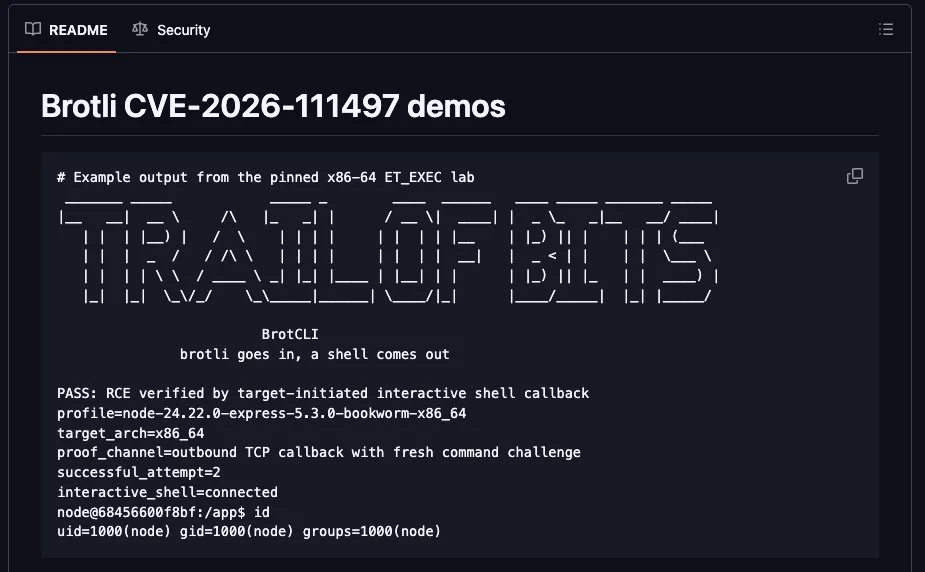
Trail of Bits post says it achieved remote code execution through a Brotli decoder bug in Linux lab setups: Node.js 24.22.0 with Express 5.3.0 via the standard JSON parser (x86-64 and ARM64), and Electron 41.10.7 (x86-64) with a custom decoding service. Exploitation needs a carefully matched setup and repeated attempts. A scanner by ToBScottA finds hidden copies of the decoder, including in stripped binaries.
BrotliNode.jsExpress+1
Trail of BitsToBScottA
AppSec, Offensive Security, Supply ChainΒ· Added 30 Oct 2026, published 28 Oct 2026
Decrypt reports, citing The Information, that OpenAI plans to buy Google TPUs rather than rent them, to reduce dependence on Nvidia. Neither company has confirmed, and price, volume and timing are undisclosed. The article covers OpenAI's TPU optimization job listing, its Broadcom-built JalapeΓ±o inference chip due end of 2026, Nvidia and AMD deals, and Anthropic's multi-gigawatt TPU agreement.
TPUJalapeΓ±oGoogle Cloud
OpenAIGoogleNVIDIA+10
inference, ai-infraΒ· Published and added 28 Oct 2026
AskStream is a multi-turn benchmark for streaming video understanding that adds a third proactive action, ask, alongside wait and answer, for cases where video or user information is incomplete. It has 438 videos, 2,714 manually annotated frame-level time windows (wait, ask, answer), four task categories and eight subtasks. The strongest model reaches only 52.18% on the proposed Ask-F1 metric, in both multiple-choice and open-ended settings.
multimodal large language model
AskStreamAsk-F1arXiv
evals, multimodal, researchΒ· Added 30 Oct 2026, published 28 Oct 2026
Gemini 4 Carbon is Google DeepMind's new frontier model, announced two weeks after Gemini 4 Argon. It ranks #1 on Artificial Analysis Intelligence Index v5.0 at 59 and scores 88.2% on SEC-bench Pro, 54.8% on ExploitGym and 71.0% on CWE-bench. Access starts with cyber defenders through the Fairwind Program, priced at $2 per million input tokens and $10 per million output tokens.
Gemini
Gemini 4 CarbonGemini 4 ArgonGoogle DeepMind+12
models, evals, ai-safetyΒ· Published and added 28 Oct 2026
Huntress describes two incidents where attackers enrolled victims in attacker-controlled MDM tenants (Hexnode and Rippling) and used them to push ScreenConnect as SYSTEM. One began with a fake DocuSign MSI that bundled Hexnode; the other with a fake Teams calendar link leading to Rippling enrollment. Removing ScreenConnect did not stop reinstalls. The post lists IOCs, a detection chain and mitigations.
HexnodeRipplingScreenConnect+3
Huntressphishingsocial engineering+3
Threat Intel, Blue Team & Detection, Mobile SecurityΒ· Published and added 28 Oct 2026
DAYJOB: Tax is Surge AI's benchmark of 50 professional tax assignments across eight practice areas, with 1,789 workspace files such as returns, K-1s, ledgers and IRS notices. Claude Sonnet 5.5 leads at a 10.8% pass rate (pass@1, 95% rubric threshold), ahead of Claude Fable 5.1 (9.6%) and Claude Opus 5.5 (9.2%). Case studies show agents missing deadlines and unverified marital-status assumptions.
Claude
Surge AIDAYJOBDAYJOB: Tax+7
evals, agentsΒ· Added 29 Oct 2026, published 28 Oct 2026
Simon Willison argues October 2026 is an inflection point for vibe coding games, because Claude Opus 5.5 can now handle 3D modeling, music and game design. He describes four browser games built with three.js (Tree Appreciator, Emberwick, Battle Drones, Quarter Sun Cove), with the prompts used, a comparison against GPT-6 models, and advice to start with "Build a mobile-friendly three.js game where...".
three.jsPhaserClaude+7
Simon WillisonClaude Opus 5.5Claude Fable 5+6
coding-agents, prompting, modelsΒ· Published and added 28 Oct 2026
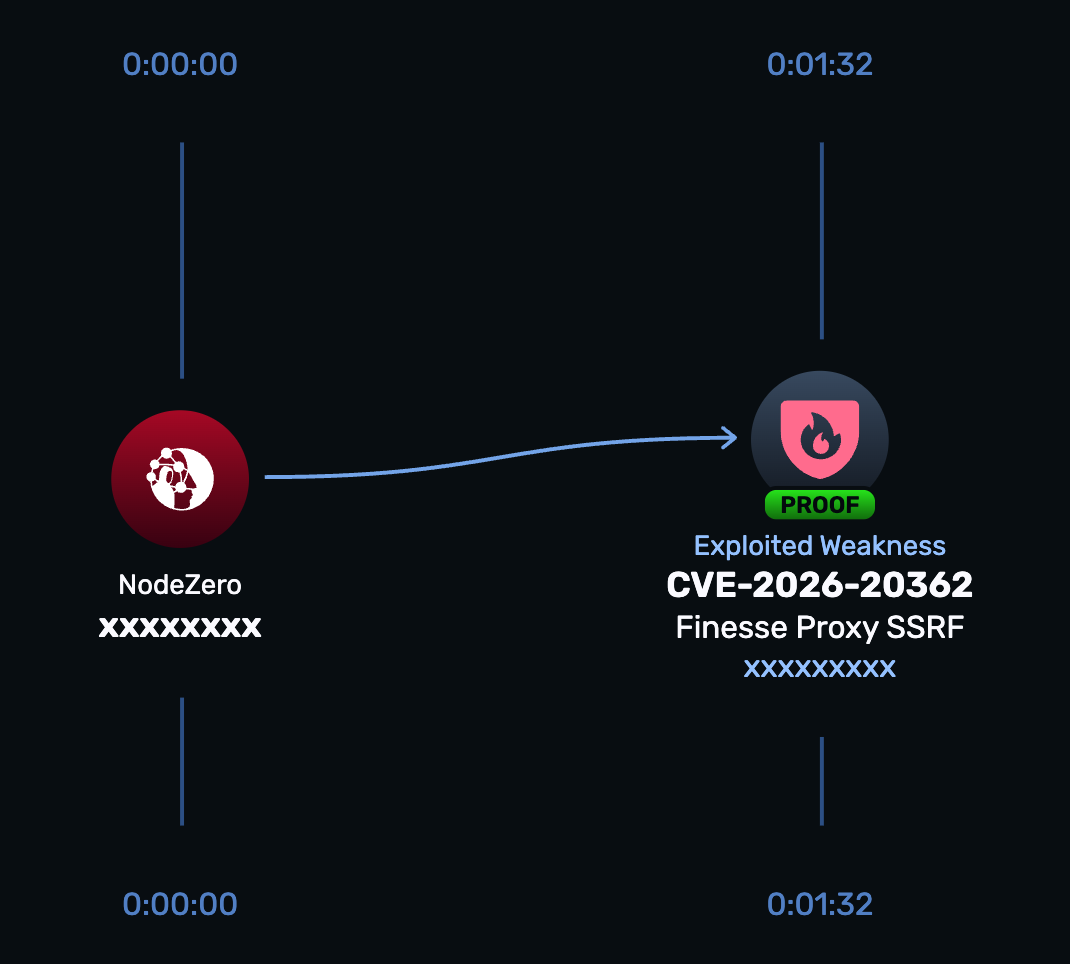
CVE-2026-20362 is an unauthenticated server-side request forgery in Cisco Finesse (CVSS 3.1 score 7.2), found by Horizon3 researchers Noah King and Brandon Peterson. The embedded Apache Shindig content proxy fetches attacker-supplied URLs, including loopback services such as the Finesse REST API at 127.0.0.1:8082, which returns SystemInfo with node hostnames and the XMPP domain. Cisco published its advisory on 7 October 2026. Fixes are planned for January and February 2027, and no workaround exists.
FoxIO disclosed three TLS flaws in the GoAhead embedded web server from EmbedThis, used on hundreds of millions of IoT, OT and network devices. CVE-2026-115881 (CVSS 9.1) leaves revoked client certificates accepted under mTLS with OpenSSL; CVE-2026-115884 (7.4) bypasses chain-length limits with LibreSSL; a third Mbed TLS bug (5.9, no CVE) weakens TLS 1.2 DHE. GoAhead 6.1.1 fixes the OpenSSL and Mbed TLS issues, and FoxIO released PoC code and fingerprints.
GoAheadOpenSSLMbed TLS+2
CVE-2026-115881CVE-2026-115884FoxIO+4
Hardware & RF, AppSecΒ· Published and added 28 Oct 2026
A China-linked actor chained PHP2Shell (CVE-2026-109618, CVE-2026-109619) with the Fragnesia Linux kernel privilege escalation (CVE-2026-46300) to root firewalls and drop PHP webshells, per Dream. Using FOFA, the actor narrowed 19,000 firewalls to 240 targets and rooted 24 on 23-24 October. On two US government-affiliated devices it used a reverse SSH tunnel, hit the firewall management server, and attempted LDAP and Active Directory abuse.
PHPLinux kernelSSH+2
CVE-2026-109618CVE-2026-109619CVE-2026-46300+7
Threat Intel, Offensive SecurityΒ· Published and added 28 Oct 2026
Akamai SIG argues that vendors and researchers broke embargo norms during the October 2026 PHP2Shell leak, when the PHP fix shipped a day early on 21 October. It explains the four TLP 2.0 labels, tabulates past embargo breaks (Heartbleed, a collapsed six-month kernel-era embargo, the Alibaba Cloud and MIIT case), and lists seven practices, such as no proofs of concept or CVE numbers before the fix.
AgentAnchor is a session-keyed behavioral watermark that lets an agent owner prove ownership of a trajectory log. Each step key comes from a secret key, a fresh public session identifier and semantic states of recent observations. Parity evidence is embedded through a KL-bounded exponential tilt of action choices. A trusted verifier checks disputed logs without rerunning the agent, using wrong-key calibration and abstention. The paper also formulates a learned cross-session forgery threat.
LLM
AgentAnchorarXiv
research, agentsΒ· Added 30 Oct 2026, published 28 Oct 2026
This preprint benchmarks 13 decision models against 15 generative LLM configurations, including different reasoning settings, on 1,273 text-only four-option MedQA questions. Accuracy ran 67.71% to 89.08% for decision models and 78.32% to 96.86% for generative configurations. Decision models were cheaper and faster, but answers with probability of at least 0.90 still had error rates of 1.71% to 12.77%, and probability repeatability varied across three runs.
LLM
MedQAMercury DecideClef Omni+1
evals, researchΒ· Added 30 Oct 2026, published 28 Oct 2026
ADLC compliance guide from Endor Labs that maps agentic development to NIST SSDF (SP 800-218 v1.1), the OWASP LLM Top 10 2025 and Agentic Top 10, and the EU AI Act as amended by Regulation (EU) 2026/1744. It splits controls into a code surface and an action surface (shell, file access, MCP calls, package installs). It gives a four-step AI Act scoping path, the new Annex III date of 2 December 2027, and evidence guidance. It states the crosswalk is the vendor's interpretation, not legal advice.
Endor LabsModel Context ProtocolClaude Code+3
NIST SSDFNIST SP 800-218NIST SP 800-218A+13
GRC, AI Security, Supply ChainΒ· Published and added 28 Oct 2026