Skip to content

205 results for โ€œfileโ€

What you seeeverything
wiz.iowriteup๐Ÿ›ก๏ธ Security

โ€œBlack Octoberโ€ for AI Developer Platforms

Wiz Research links October 2026 breaches at AI developer platforms (Fireworks, OpenCode, Warp, Zeabur, Railway and others) to stolen environment-variable credentials for AI access. It details two enterprise AWS Bedrock keys abused after vendor breaches: about 800k and 1.7 million calls, over $100k in list-price usage. It profiles two LLM resale operations, "momo" and "Xingjiabi", that tested the keys.

AWS BedrockOpenCodeClaude+3
LLMjackingdistillationWiz Research+13

Threat Intel, AI Security, Cloud & Infraยท Added 31 Oct 2026, published 30 Oct 2026

oversecured.comwriteup๐Ÿ›ก๏ธ Security

20 security issues found in Xiaomi devices

Oversecured's write-up of 20 vulnerabilities in Xiaomi apps and system components, reported to Xiaomi between 25 and 30 April 2023. Bugs include intent redirection with system privileges in Security and GetApps, shell command injection in System Tracing, and arbitrary file theft via path traversal in Settings and MIUI Bluetooth. Each has a PoC. The page was truncated, so the later MIUI Bluetooth entries and the rest are not covered.

AndroidGson
OversecuredXiaomiMIUI+9

Mobile Security, AppSecยท Added 29 Oct 2026

oversecured.comwriteup๐Ÿ›ก๏ธ Security

Disclosure of 7 Android and Google Pixel vulnerabilities

Oversecured discloses seven Android vulnerabilities, two of them Pixel-specific, all reported to Google and fixed except one low-severity WebView case. They are the Camera geolocation leak (CVE-2024-0017), a VPN bypass list change (CVE-2023-21383), a Bluetooth permission check flaw (CVE-2024-34719), the WorkSource parcel mismatch (CVE-2023-20963, exploited in the wild by the Pinduoduo app), Device Admin HTML injection (CVE-2021-0600) and a ContentProvider.openFile() caller-context bypass (CVE-2023-21292). Each has root cause and PoC code.

AndroidGoogle PixelWebView+2
CVE-2024-0017CVE-2023-21383CVE-2024-34719+9

Mobile Security, Offensive Securityยท Added 29 Oct 2026

wiz.iowriteup๐Ÿ›ก๏ธ Security

The Rise of Agentic Attacks: What They Look Like, and Where They're Headed

Wiz research on intrusions where AI agents do the hands-on attacker work. It reviews public cases (ARTEX against South Korean banks and the ConnectWise compromise, Hermes at Thailand's Ministry of Finance, JPCERT/CC, CrowdStrike, DIVD) and three Wiz-investigated attacks. It distills fingerprints: machine-paced iteration, embedded natural-language reasoning, self-correcting scripts, checklist enumeration, noisy lateral movement, probe-before-payload habits and self-named scratch files. It also covers attribution, scale and defense implications.

WizKubernetesAWS+2
ARTEXHermesStorm-0940+12

Threat Intel, Blue Team & Detection, AI Security, Cloud & Infraยท Published and added 29 Oct 2026

divagr.comwriteup๐Ÿง  AI

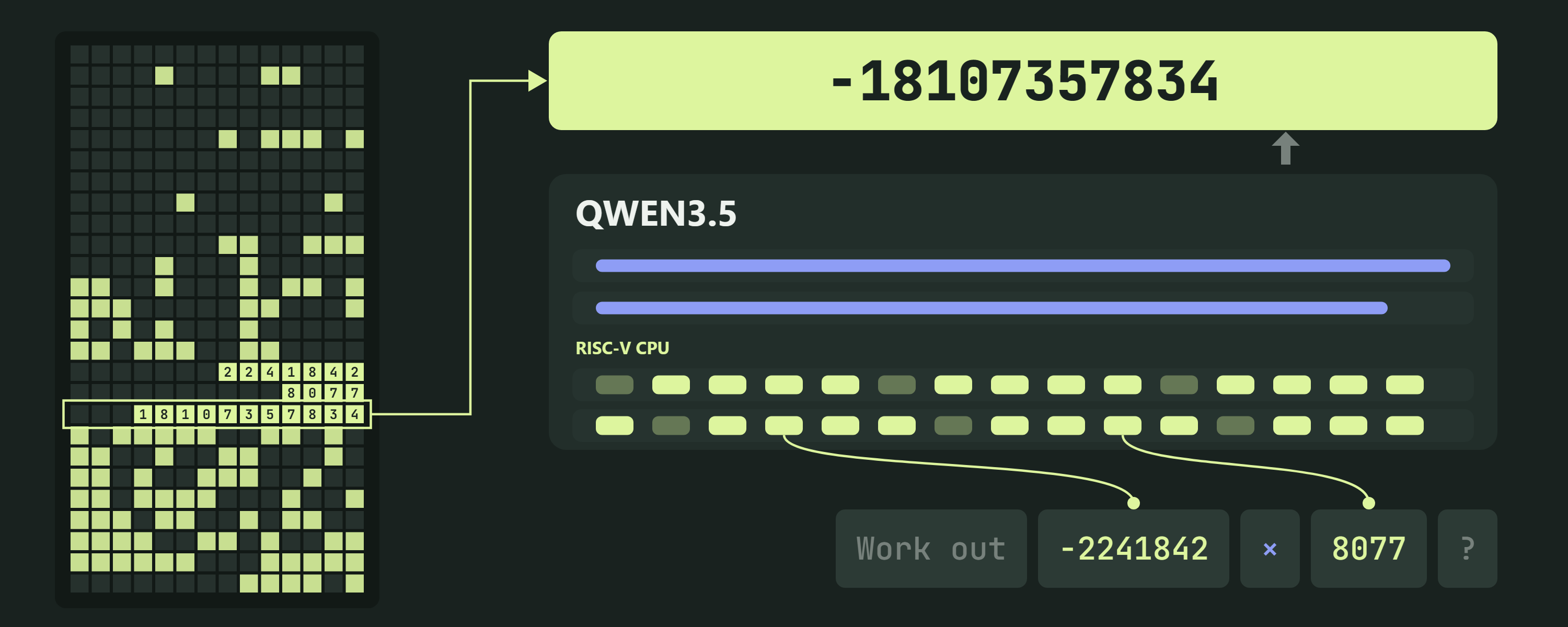
Qwenputer: A functioning, deterministic RISC-V CPU inside Qwen3.5

Qwenputer is a stock Qwen3.5 4B with a 32-bit RISC-V CPU (RV32IM plus Zba and a bignum unit) compiled directly into added layers, with no training. Gated DeltaNet states act as exact RAM via gate 1, beta 1 and one-hot keys. It scores 97.5 to 100% on DeepMind arithmetic sets, and 100% on NUPA long-integer arithmetic. It also has an experimental in-model filesystem. The checkpoint is 18.8 GB and needs the RvChat driver.

Qwen3.5Gated DeltaNetRISC-V+6
QwenputerQwenModelScope+6

research, modelsยท Published and added 29 Oct 2026

dfir.chwriteup๐Ÿ›ก๏ธ Security

Abusing Linux fanotify for Anti-Forensics

Abusing Linux fanotify for anti-forensics: a privileged userspace process can use the fanotify API to deny other processes the right to open an otherwise normal file. Reads fail with EPERM even for root, while name, ownership, timestamps and permissions look ordinary, so a scanner that cannot open a file may report no detections without inspecting it. Defenders can find malicious fanotify groups and marks via /proc/<pid>/fdinfo, or acquire at the filesystem level instead of opening the pathname.

Linuxfanotify
InfoGuard Labsanti-forensics

Blue Team & Detection, Offensive Securityยท Added 1 Nov 2026, published 24 Oct 2026

dfir.chwriteup๐Ÿ›ก๏ธ Security

Field Notes: Reconstructing an Attackerโ€™s Workflow

Field note from dfir.ch on PowerShell scripts an attacker left on disk during an incident: a file-watching command runner using Invoke-Expression, a fake Windows credential prompt that validates passwords via Start-Process and logs them in cleartext, AD computer enumeration with WMI access testing, and SMB share discovery via NetShareEnum. It notes where script labels overstate what they prove and lists hunting strings for Event IDs 4104, 4103, 4688 and Sysmon 1.

PowerShellActive DirectoryWMI+2
TerminalFixClickFixMicrosoft+7

Blue Team & Detection, Offensive Securityยท Added 24 Oct 2026, published 22 Oct 2026

huggingface.cowriteup๐Ÿง  AI

Profiling TorchNeuron (Part 1): System-level profiling on AWS Trainium.

Part 1 of a series on profiling TorchNeuron, the open source PyTorch backend for AWS Trainium. It shows how to configure torch.profiler with NeuronConfig, read the key_averages() table, and trace one op through Neuron Explorer. Three RMSNorm variants are compared: naive eager (2.355 ms device time), torch.rms_norm (403 ฮผs) and torch.compile (375 ฮผs).

PyTorchTorchNeuronAWS Trainium+8
AmazonHugging Face

inference, ai-infraยท Published and added 21 Oct 2026

wiz.iowriteup๐Ÿ›ก๏ธ Security

LiteLLM Compromised, Steals Credentials

LiteLLM version 1.107.0 was uploaded to PyPI on 21 October 2026 with a credential stealer, and the same build reached GHCR and Docker Hub images. Wiz describes the three dropped files (cook.pth, cook.py, sitecustomize.py), exfiltration to a fake litellm.dev domain, a GitHub dead drop for a second stage, and the malicious commits pushed through the lookalike Berri-AI repository. The last safe version is 1.106.2.

LiteLLMPyPIDocker+3
Berri-AIcook.pthsitecustomize.py+2

Supply Chain, Threat Intel, AI Securityยท Published and added 21 Oct 2026

opensourcemalware.comwriteup๐Ÿ›ก๏ธ Security

LiteLLM 1.107.0 PyPI Wheel Contains a Credential Stealer and Persistent Python Backdoor

LiteLLM 1.107.0 macOS x86-64 PyPI wheel analyzed by OpenSourceMalware contains three injected files (cook.pth, cook.py, sitecustomize.py) that run on every Python start. The payload, called privcollect, steals browser, SSH, cloud, CI/CD and AI-tool credentials, then uploads an AES/RSA-encrypted bundle to www.litellm.dev/healthcheck. A forked loader also fetches domain.txt from GitHub and executes /codepy hourly. The post lists IOCs, hashes and remediation steps.

LiteLLMPyPIPython+1
privcollectTeamPCPUpwind+4

Supply Chain, Malware & RE, Threat Intelยท Published and added 21 Oct 2026

aikido.devwriteup๐Ÿ›ก๏ธ Security

LiteLLM compromised again: infostealer and RAT found in version 1.107.0

LiteLLM 1.107.0 was compromised on 21 October 2026: the seven compiled PyPI wheels and the official Docker image carried an infostealer and a RAT. The attacker used the maturin `data = "cook"` directive in pyproject.toml to inject cook.pth, cook.py and sitecustomize.py without touching the source repo. The post lists stolen data, the hourly C2 polling via GitHub, wheel hashes, file and network IOCs, and check steps.

LiteLLMPyPIPython+2
cook.pthsitecustomize.pymaturin data directive+3

Supply Chain, Threat Intel, AI Securityยท Published and added 21 Oct 2026

horizon3.aiwriteup๐Ÿ›ก๏ธ Security

CVE-2026-106173 Deep-Dive: FortiSIEM gRPC Path Traversal File Write RCE

CVE-2026-106173 is an unauthenticated arbitrary file write in the FortiSIEM phQueryMaster gRPC service on tcp/27918, advised by Fortinet on 13 October 2026. The SendQueryResult handler concatenates an attacker-controlled query-id into a path, and a null byte in the header removes the server-added filename suffix. Overwriting /opt/charting/redishb.sh, run every 60 seconds by cron, gives root-level code execution. IOCs are file timestamps.

FortiSIEMgRPCLinux
CVE-2026-106173CVE-2023-34992CVE-2024-23108+6

Offensive Security, AppSecยท Added 29 Oct 2026, published 20 Oct 2026
boredhackerblog.infowriteup๐Ÿ›ก๏ธ Security

Plex vulnerabilities being exploited in the wild to drop a cryptominer

Honeypot writeup of in-the-wild exploitation of Plex Media Server through the Plex2Shell chain (CVE-2026-96652, -96654, -96655, -96656) in October 2026. Attackers from 45.194.92.222, 91.92.40.202 and 176.65.139.228 used SSRF-style timeline/subscribe requests and downloaded a Docker-named dropper and an XMRig miner from 217.60.194.116. Includes file hashes, a later-seen proxyware sample (myawesomeproxy), lab pcaps for signatures and links to sandbox reports.

Plex Media ServerXMRigDocker+1
CVE-2026-96652CVE-2026-96654CVE-2026-96655+8

Threat Intel, Blue Team & Detectionยท Added 20 Oct 2026, published 19 Oct 2026

opensourcemalware.comwriteup๐Ÿ›ก๏ธ Security

GhostAction Copycats PolinRider by Hiding a Stealer in a Fake Font File

Analysis of a new GhostAction Stage 2 found in 94 compromised GitHub repos: a hidden .vscode/tasks.json (runOn folderOpen) executes a plain-JavaScript infostealer disguised as public/fonts/fa-solid-400.woff2. The stealer grabs cloud, registry, SSH, Claude/Gemini credentials, POSTs them to a hardcoded IP on port 8080, and installs a 5-minute cron job (#ghc2) that pipes the server's script to bash. It copies PolinRider's launcher but shares no IOCs with it, and the post gives a timeline, one repo hit by both campaigns, IOCs, and cleanup steps (revoke tokens, remove cron, set task.allowAutomaticTasks off).

VS CodeGitHub ActionsGitHub+3
GhostActionPolinRiderDPRK+10

Threat Intel, Supply Chain, Malware & REยท Added 15 Oct 2026, published 16 Oct 2026

cloud.google.comwriteup๐Ÿ›ก๏ธ Security

Investigating Ephemeral Supply Chain Tampering

GTIG and Mandiant report on UNC7017, which tampered with AOMEI update servers in five to ten minute windows between April and July 2026. Edited down_html.ini and Notifycfg.ini files delivered the CROSSROAD downloader and SHINYROAD PocketPy backdoor, plus Adaptix C2 and WebDAV NTLM coercion. The post covers infrastructure shifts, YARA rules, IOCs, and vendor and SOC guidance on point-in-time triage failures.

AOMEI BackupperRadminAdaptix C2+3
UNC7017CROSSROADSHINYROAD+10

Supply Chain, Threat Intel, Malware & RE, Blue Team & Detectionยท Added 29 Oct 2026, published 15 Oct 2026
securitylabs.datadoghq.comwriteup๐Ÿ›ก๏ธ Security

Jev as a judge: How counterfeit policy steers Jev

Datadog Security Labs tests TypeSafe AI's Jev decision model as a prompt-injection detector and as the judge behind LangChain's tool-risk gating. On four public datasets Jev had 99.66% precision and 82.90% recall. A prepended "counterfeit policy" that redefines the attack categories cut recall by over 79 points. In a LangChain scenario, a user-editable profile field lowered the mean is_risky score from 0.893 to 0.290, below the 0.5 block threshold. Plain prompt injection did not move the score.

JevLangChain
TypeSafe AIcounterfeit policyprompt injection+3

AI Securityยท Added 29 Oct 2026, published 15 Oct 2026

hackers-arise.comwriteup๐Ÿง  AI

Artificial Intelligence (AI) in Cybersecurity, Part 29: Creating Isolated Autonomous Agents for Hacking with NemoClaw

Hackers-Arise tutorial on NVIDIA's open-source NemoClaw, which runs OpenClaw (and Hermes or LangChain Deep Agents) inside OpenShell sandboxes. OpenShell provides kernel-level isolation and declarative YAML policies for files, credentials and network access. It covers OpenClaw's risks (543 tracked CVEs, 40,000+ exposed instances), an OpenClaw vs NemoClaw comparison, the caveat that sandbox escapes and core-logic zero-days remain possible, and a Docker/Node.js install via the nemoclaw.sh wizard with TUI testing. It also cites the Cisco AI Defense plus OpenShell case study, in which an agent that does security patching was protected against a simulated exfiltration attempt.

OpenClawNemoClawOpenShell+7
NVIDIAPeter SteinbergerJensen Huang+4

agents, ai-infraยท Published and added 14 Oct 2026

blog.trailofbits.comwriteup๐Ÿ›ก๏ธ Security

Package managers have an integrity problem

Trail of Bits tested 25 popular package managers with a Docker and mitmproxy harness that simulates a compromised package repository injecting malware into legitimate packages. Fewer than half enforce lockfile hashes by default, only two verified every download, and only Go verifies signatures by default. The post covers lockfile hash pitfalls (Pub, pnpm, Conan, CocoaPods, Composer), repository, developer and Sigstore signing, and Go's checksum database. It also proposes lockfiles that commit to a signing identity plus a transparency log.

npmpnpmGo+3
Trail of BitsPEP 740cpanminus+5

Supply Chainยท Published and added 14 Oct 2026

embracethered.comwriteup๐Ÿ›ก๏ธ Security

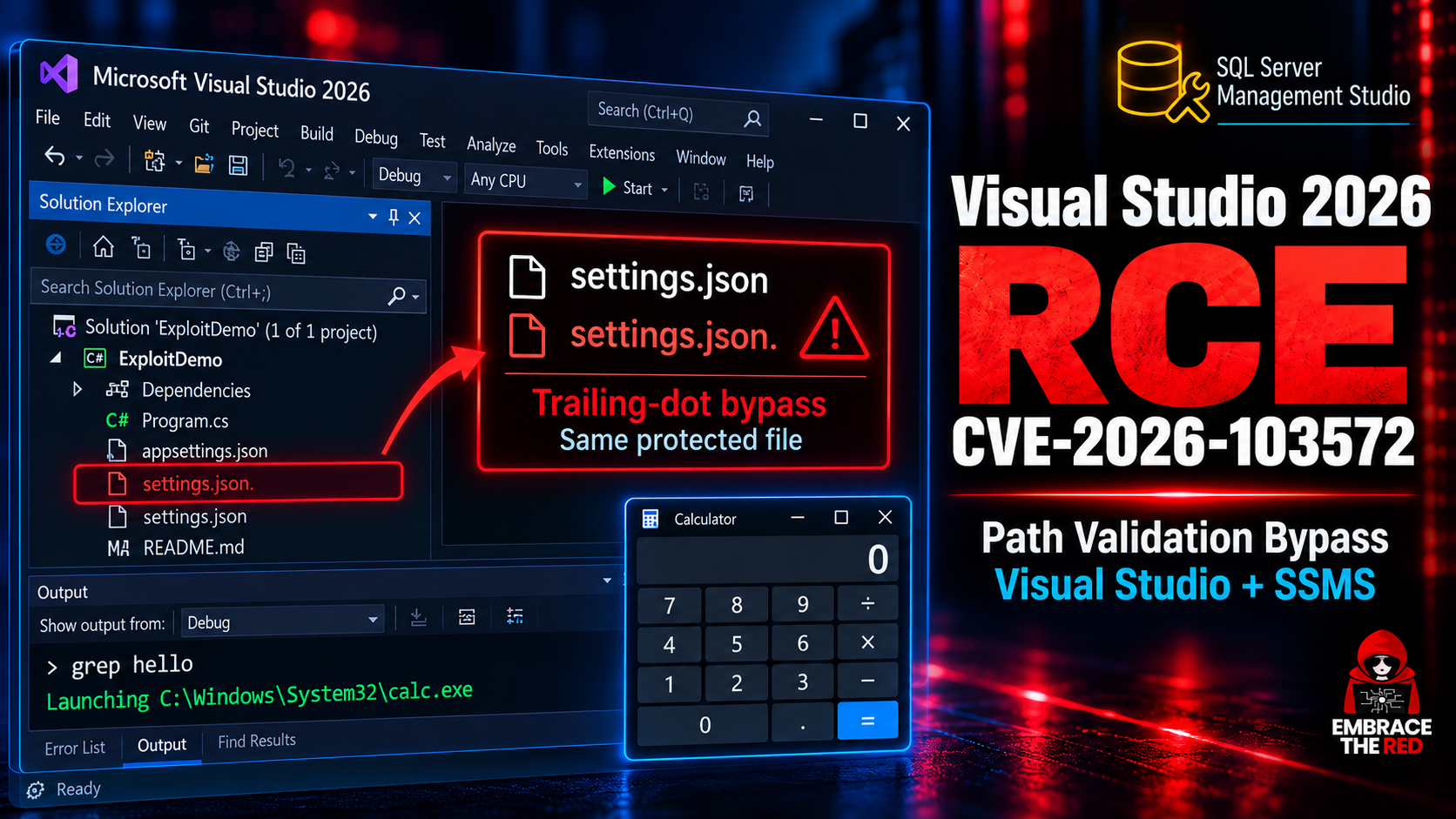
Visual Studio Copilot and SSMS Remote Code Execution (CVE-2026-103572)

CVE-2026-103572 is a remote code execution bug in Microsoft.VisualStudio.Copilot.Core.dll, shared by Visual Studio and SQL Server Management Studio. A trailing dot (for example `.mcp.json.`) bypasses the protected-filename check in EditsFunctionHandler.GetEditConfirmationTypeAsync, so a hijacked Copilot can rewrite its own MCP and settings files and run commands. The post covers path traversal and InstallationID leaks, indirect prompt injection demos, the October 2026 patch (GetFullPath), and a $0 bounty.

Visual StudioSQL Server Management StudioGitHub Copilot+3
CVE-2026-103572indirect prompt injectionpath traversal+5

AI Security, AppSec, Offensive Securityยท Added 29 Oct 2026, published 13 Oct 2026

beaksec.github.iowriteup๐Ÿ›ก๏ธ Security

Telegram Desktop vulnerability allowed any user's file to be stolen

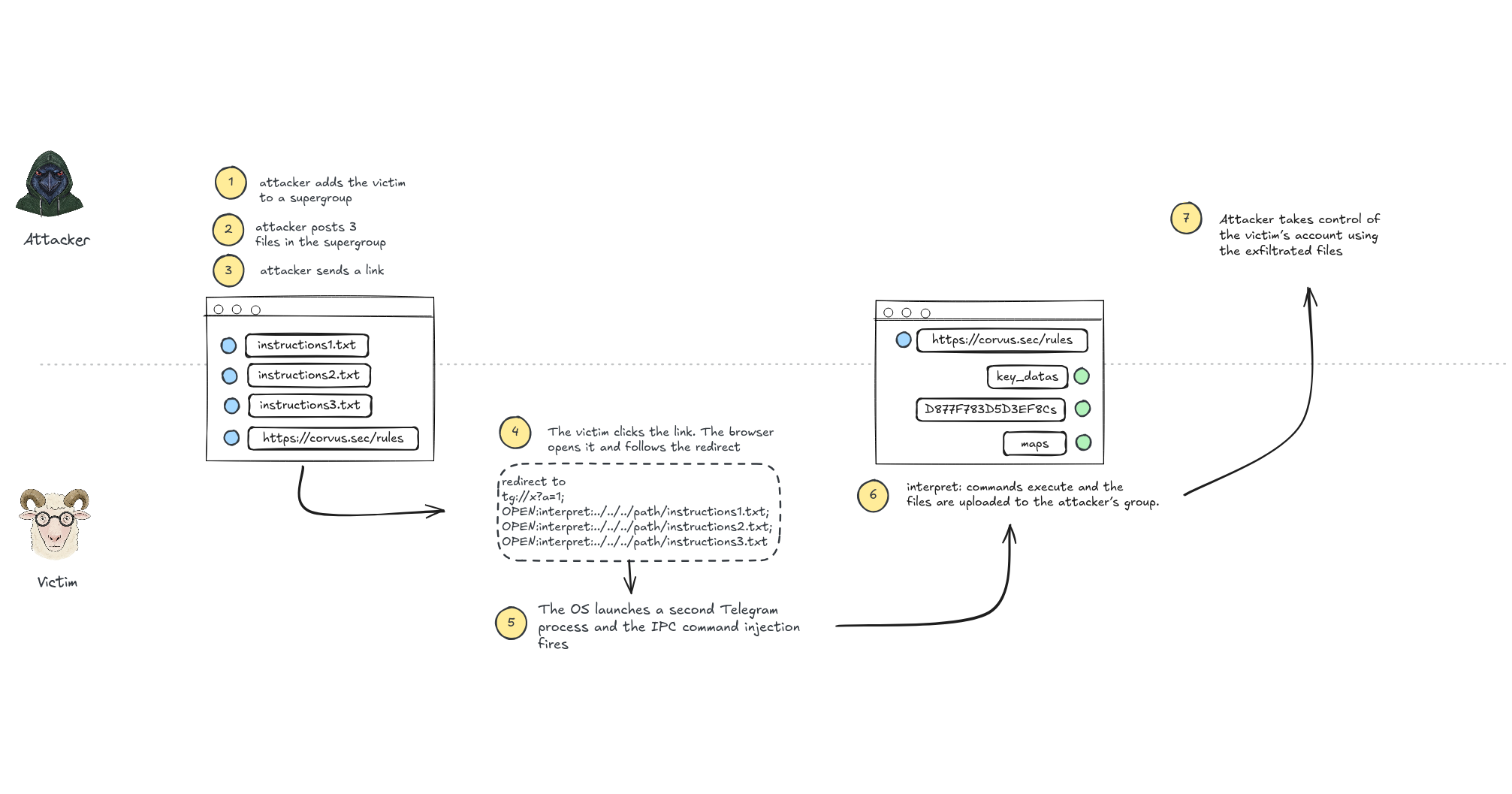
Writeup of a two-bug chain in Telegram Desktop: the single-instance local-socket IPC does not escape the semicolon record separator, so a clicked tg:// link injects extra OPEN: commands, which reach the internal interpret: scheme (InterpretSendPath) that reads an arbitrary file and sends it to a chat with no authorization or confirmation. The author plants instruction files via auto-download in a group, then exfiltrates tdata/key_datas and session files (no local passcode means an empty-password KEK) to take over the account. Fixed in 7.2.9 by removing interpret: and escaping separators; the post lists mitigations such as a local passcode and restricting who can add you to groups.

TelegramWindows
db3405699finterpret:InterpretSendPath+4

AppSec, Offensive Securityยท Published and added 10 Oct 2026

aikido.devwriteup๐Ÿ›ก๏ธ Security

tensorlake NPM package compromised with Shai Hulud worm

Aikido details a new Shai-Hulud worm wave that compromised the tensorlake npm package (v0.5.144, 100k+ lifetime installs) via a hijacked GitHub maintainer identity. The malware's preinstall script drops the Bun runtime to run an obfuscated payload that exfiltrates CI/cloud secrets, browser crypto-wallet extension data (via a bundled HackBrowserData binary), uses a blockchain dead-drop (an Ethereum contract queried via public RPC nodes) to resolve a fallback C2, and includes a GitHub-token-triggered dead-man's switch that wipes infected machines. The post includes full IOCs: file hashes, the C2 domain iseekaigogo[.]com, and the threat actor's wallet/contract addresses.

npmBunEthereum+3
Shai-Huludtensorlakeiseekaigogo[.]com+4

Supply Chain, Malware & REยท Published and added 8 Oct 2026

stepsecurity.iowriteup๐Ÿ›ก๏ธ Security

Tensorlake npm Package Compromised: A Worm With a Hostage Token That Wipes Your Machine If You Revoke It

StepSecurity details how tensorlake@0.5.144 was pushed to npm after malicious commits landed directly on the tensorlakeai/tensorlake GitHub repo's main branch under a maintainer's identity, carrying a valid npm provenance attestation despite being malicious. The preinstall hook downloads Bun to run an obfuscated payload that steals GitHub/npm tokens, cloud and Vault/Kubernetes secrets, SSH keys, browser logins, and AI-tool configs (Claude, Cursor, Windsurf), then self-propagates by republishing stolen npm packages and committing persistence files (.claude/settings.json, .vscode/tasks.json) to reachable repos. A "hostage token" mechanism installs a gh-token-monitor service that runs a home-directory wipe if the stolen GitHub token is revoked before the monitor is removed, inverting the normal incident-response order.

npmGitHubBun+3
Shai-Huludgh-token-monitoriseekaigogo.com

Supply Chain, Threat Intelยท Published and added 8 Oct 2026

aws.amazon.comwriteup๐Ÿง  AI

Configuring your AI vulnerability harness, Part 2: The steering file

Part 2 of an AWS Security Blog series detailing the design of a "steering file" โ€” a persistent instruction set (deployable as a Kiro steering file, Kiro skill, or Claude Code CLAUDE.md) that constrains an LLM performing vulnerability triage. It walks through five configuration sections: requiring structural/dataflow verification before reporting findings, replacing self-reported confidence with a weighted formula based on binary structural signals (e.g., 0.30 weight for confirmed taint flow), mapping infrastructure controls (AWS WAF, IAM) to severity multipliers with a 0.15 floor, incorporating CISA KEV and EPSS threat-intelligence boosts capped at +0.50, and a four-tier priority classification that suppresses low-confidence P3 findings. Validation against a 10-vulnerability test app showed the steered model eliminated fabricated findings and correctly downgraded mitigated vulnerabilities while preserving full severity for a command injection reachable only via authenticated access.

KiroClaude CodeCursor+7
CISAEPSS

prompting, coding-agentsยท Added 8 Oct 2026, published 7 Oct 2026

watchtowr.comwriteup๐Ÿ›ก๏ธ Security

Post-Exploitation Analysis & Artifacts โ€“ Citrix NetScaler CVE-2026-88771

watchTowr post-exploitation analysis of CVE-2026-88771, an unauthenticated log-poisoning command injection in Citrix NetScaler (advisory CTX697096). Sensors logged thousands of attempts: about 85% were OOB callbacks, the rest Sliver implants, a trojanized Dropbear SSH backdoor, a Perl stager with a PHP webshell, and SSH-key and secret-harvesting sprays. Includes artifacts to hunt (/var/tmp files, ns_helper, ns.conf edits) and IOC repo pointers.

Citrix NetScalerSliverSSH+2
CVE-2026-88771CVE-2026-88772CVE-2026-88779+8

Threat Intel, Blue Team & Detection, Malware & REยท Added 30 Oct 2026, published 7 Oct 2026

rapid7.comwriteup๐Ÿ›ก๏ธ Security

CVE-2026-21589: Critical unauthenticated arbitrary file access in Atlassian products

Rapid7's analysis of CVE-2026-21589 (CVSSv4 9.3), a critical unauthenticated arbitrary file read vulnerability affecting Bitbucket, Confluence, Jira Software/Service Management, Bamboo, Crowd, Crucible, and Fisheye Data Center products. It summarizes watchTowr Labs' root-cause finding that double-colon (::) sequences can act as path separators in Atlassian's web-resource handling, enabling path traversal to read arbitrary files within the Tomcat web root โ€” including crowd.properties credentials that can be chained to create a rogue jira-administrators account. The post provides emergency patching guidance, Atlassian's WAF/RewriteValve mitigations, log-hunting regex, and notes public Python PoC and Nuclei templates exist.

BitbucketConfluenceJira+3
CVE-2026-21589CWE-552watchTowr Labs+1

AppSecยท Published and added 7 Oct 2026

opensourcemalware.comwriteup๐Ÿ›ก๏ธ Security

How to Investigate a GitHub Repo's Real History

Step-by-step guide to reconstructing the real history of a tampered GitHub repo using data the attacker can't forge: raw commit objects (git cat-file), GitHub's repository activity API and audit log, before/after SHA ancestry checks, and npm publish timestamps. Worked through a PolinRider case (nestjsx/nest-access-control) where a forged commit was force-pushed to master plus 22 branches in 38 seconds, with a malicious .vscode/tasks.json runOn folderOpen trigger. It also covers safe handling of untrusted clones and how to tell victim accounts from attacker accounts.

GitGitHubnpm+2
CVE-2025-48384PolinRiderDPRK+5

Blue Team & Detection, Supply Chain, Threat Intelยท Published and added 6 Oct 2026

labs.watchtowr.comwriteup๐Ÿ›ก๏ธ Security

You Wonโ€™t Hear About These, Even In Myths (Atlassian Jira, Confluence (and more) Pre-Auth Arbitrary File Read CVE-2026-21589)

CVE-2026-21589 is a pre-auth arbitrary file read in Atlassian Jira, Confluence and Bitbucket, found by diffing atlassian-plugins-webresource 6.0.7 against 6.0.8. The Router's unescapeSlashes turns "::" into "/", so "..::" traversal reaches WEB-INF files through download/resources routes. Reading crowd.properties leaks Crowd app credentials, which allow creating an admin user.

JiraConfluenceBitbucket+3
CVE-2026-21589watchTowrpath traversal+1

AppSec, Offensive Securityยท Added 30 Oct 2026, published 6 Oct 2026

hackers-arise.comwriteup๐Ÿ›ก๏ธ Security

Password Cracking: Stealing SSH Credentials with PAM

Walks through a post-exploitation credential-harvesting technique on Linux: enabling password authentication in sshd_config, writing a pam_exec.so logging script, and inserting it into /etc/pam.d/sshd (or common-auth/password-auth) so every SSH login attempt is logged with username, password, and source host to a hidden log file. Also covers using each user's ~/.ssh/known_hosts to identify pivot targets for lateral movement during a pentest.

SSHLinuxPAM
pam_exec.so

Offensive Securityยท Added 7 Oct 2026, published 6 Oct 2026

huntress.comwriteup๐Ÿ›ก๏ธ Security

Up a Creek Without a Command Line: Mapping an Akira Ransomware Attack | Huntress

Huntress researchers reconstruct an Akira ransomware attack timeline using forensic artifacts collected after the Huntress agent was installed post-compromise, including Windows Registry Shellbags, Event Logs, and Akira ransomware log files. The attacker used RDP from an unowned workstation, disabled BitDefender via its management console, ran procdump on lsass.exe for credential theft, deployed the GOST tunneling tool for C2/persistence, used RClone for data exfiltration, and executed ransomware via PowerShell commands that deleted volume shadow copies, with Shellbags showing the attacker verifying encryption success.

PowerShellWindowsEDR+2
AkiraUNC5330BitDefender+1

Threat Intel, Blue Team & Detectionยท Published and added 6 Oct 2026

adversa.aiwriteup๐Ÿ›ก๏ธ Security

GitHub Copilot CLI vulnerability: Cryptographic Context Injection steals developer secrets

Adversa AI demonstrates Cryptographic Context Injection (CCI) against GitHub Copilot CLI: a web page presents an "encrypted" payload the agent decrypts inside its own shell, during which it is tricked into reading local files (e.g. .env.prod) to build a fake decryption key, then exfiltrates those contents to an attacker endpoint via a follow-up fetch. The attack only succeeds against certain models in Copilot's auto-routed model pool (Microsoft's mai-code-1.1-flash ran it 50% of the time, while two GPT-5.6 models refused), meaning users have no visibility into which model handles a given session. GitHub's bug bounty team validated but declined to treat it as a vulnerability since the user explicitly invoked autopilot mode with full tool permissions.

GitHub Copilot CLIPythonGPT-5.6
Cryptographic Context Injectionmai-code-1.1-flash

AI Securityยท Added 7 Oct 2026, published 6 Oct 2026

Showing 30 of 205

Show more